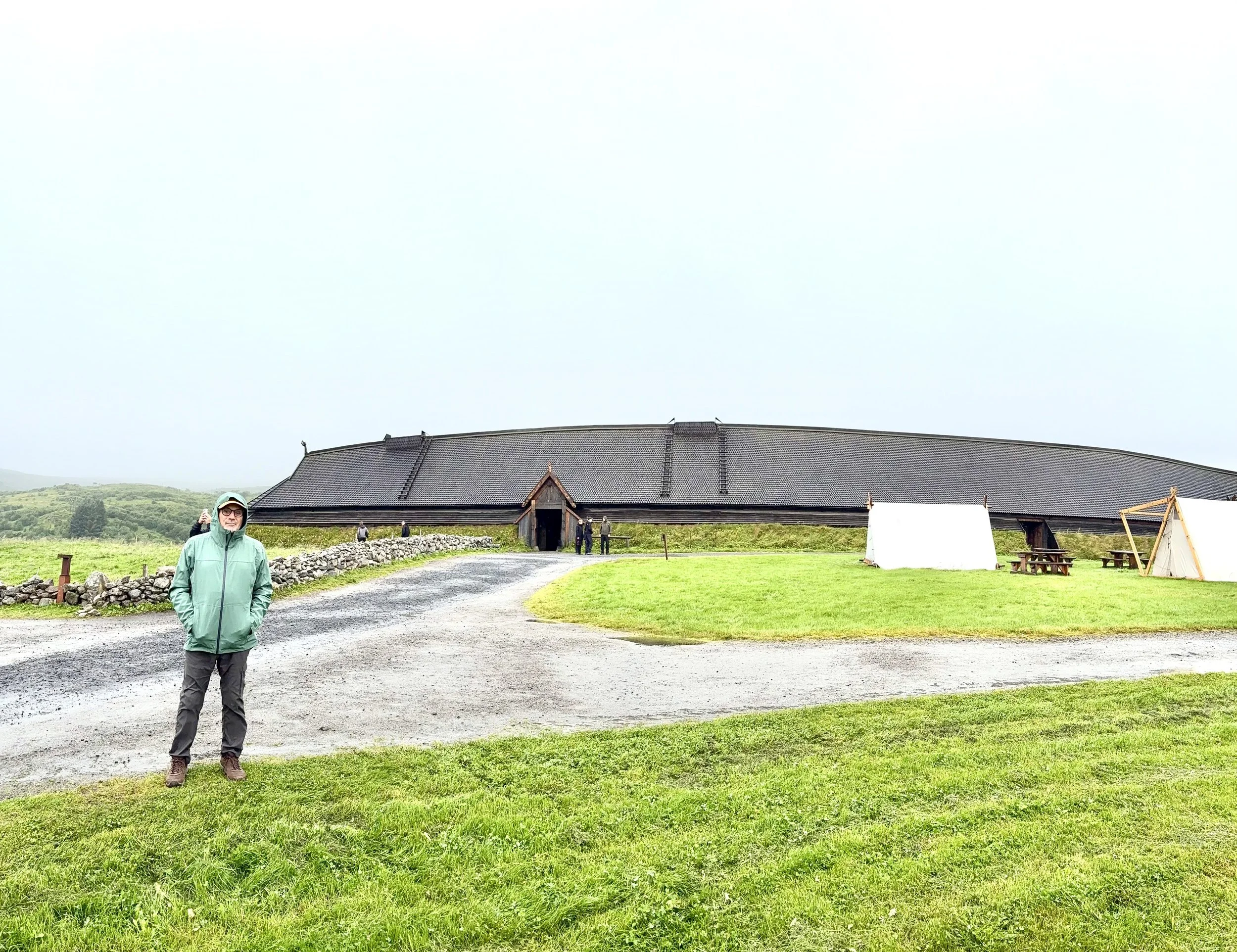
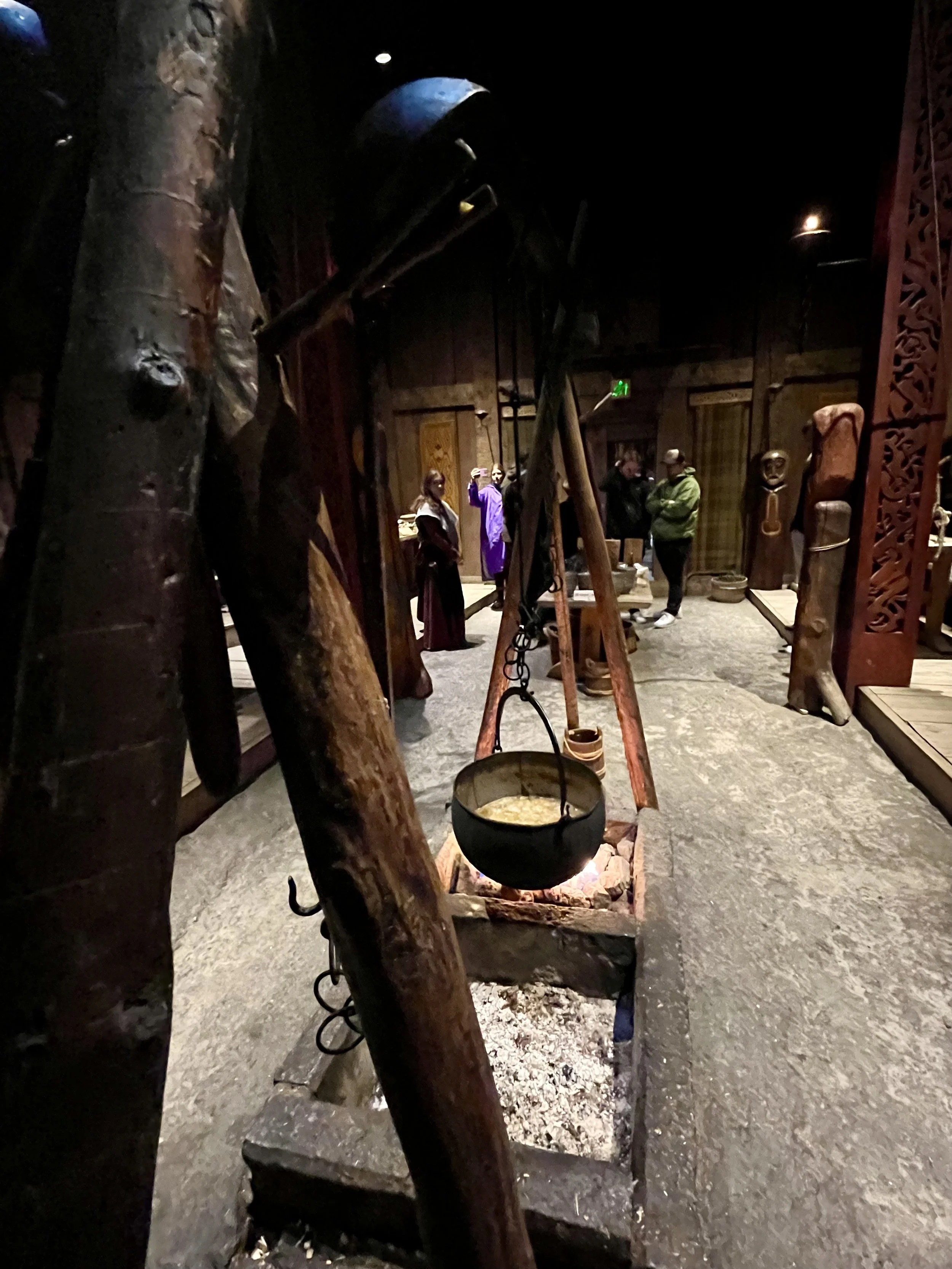
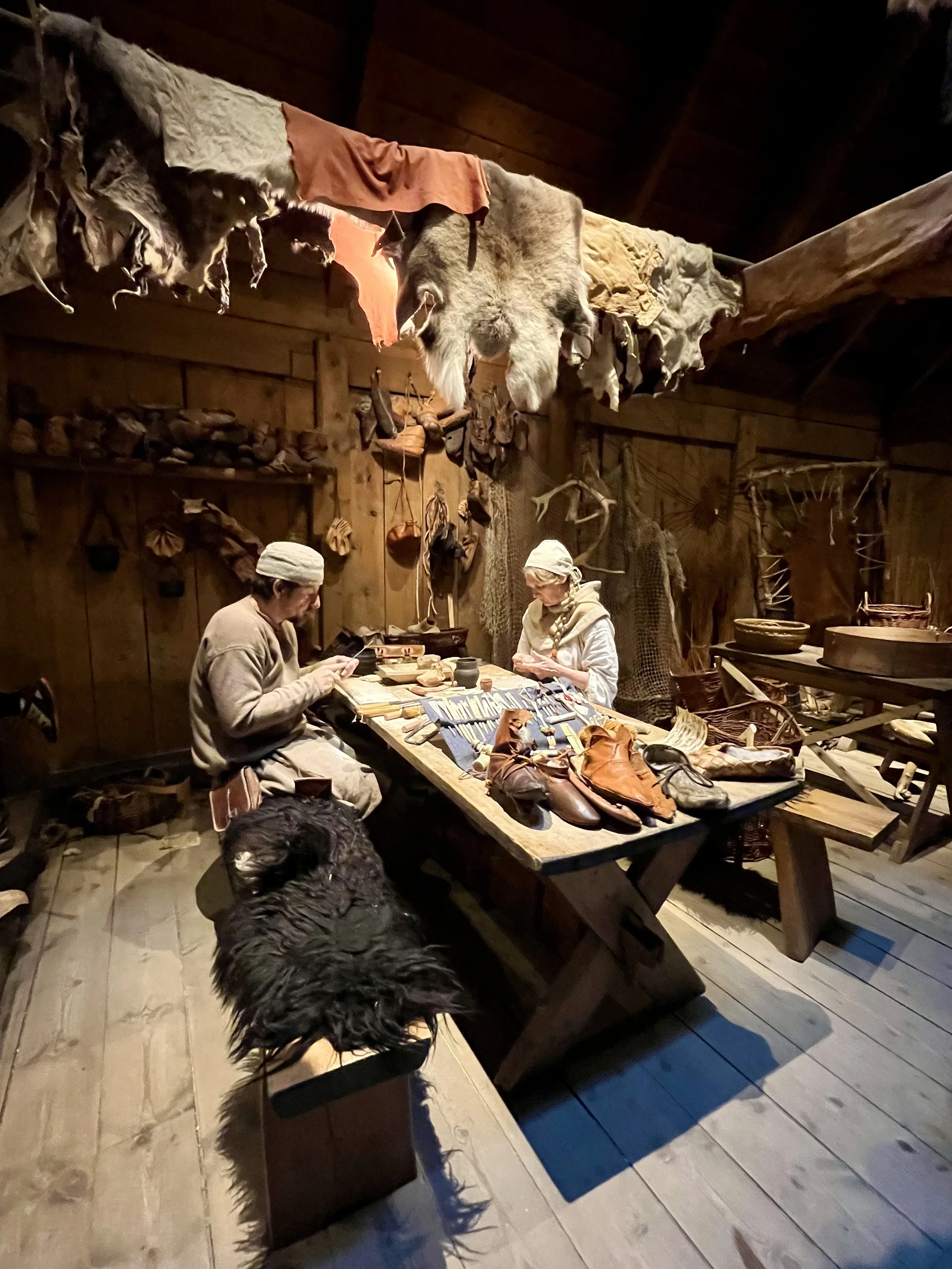
The long house at the Viking Museum
lots of sheep and lambs
It is a Rain Day. One of the few we have suffered thus far this entire trip. In fact, the Norge saying “there is no bad weather, just bad clothing”. Luckily, we have enjoyed straight sunshine with a few partly cloudy days the entire trip. But now, the rain will be here all day. This is the normal weather in Norway, and the Lofeton region.
We check out of the nice Airbnb at noon. We sleep in and take time cleaning up, packing, and stowing luggage. Frank gets to drive the diesel SUV to our first destination, another, “The Viking Museum,” and then south for 150 miles to the southern tip of peninsula tip of Lofoten. The trip will take 4 days, staying in two locations.
In the car we check wiper controls, lights, heat and defrost controls, and heated seats. We have our rain gear handy. Off we go on the narrow streets and highways, E10 mostly, due northwest. Only some parts of E10 have painted center lines. It is a scenic drive. We keep to the posted driving speed on these wet curvy roads. The speed limit ranges from 60 km to 80 km, but we keep to 60 km most of the drive. Only once did we get a flash-to-pass signal.
We make good time and as we approach the museum we see scores of others looking for a reprieve from the rain. The lots were full, we ended up crossing the road to park at the nearby Mom & Pop roadside café (or might have been the Road Warriors juke joint).
From the road the museum building(s) gives an incredible impression of extended length with class canopy. Our first stop inside is theater to enjoy a 3-part dramatization of the life of the true tribal leader and his future wife who lived on the farm that was situated on this very parcel. That’s cool.
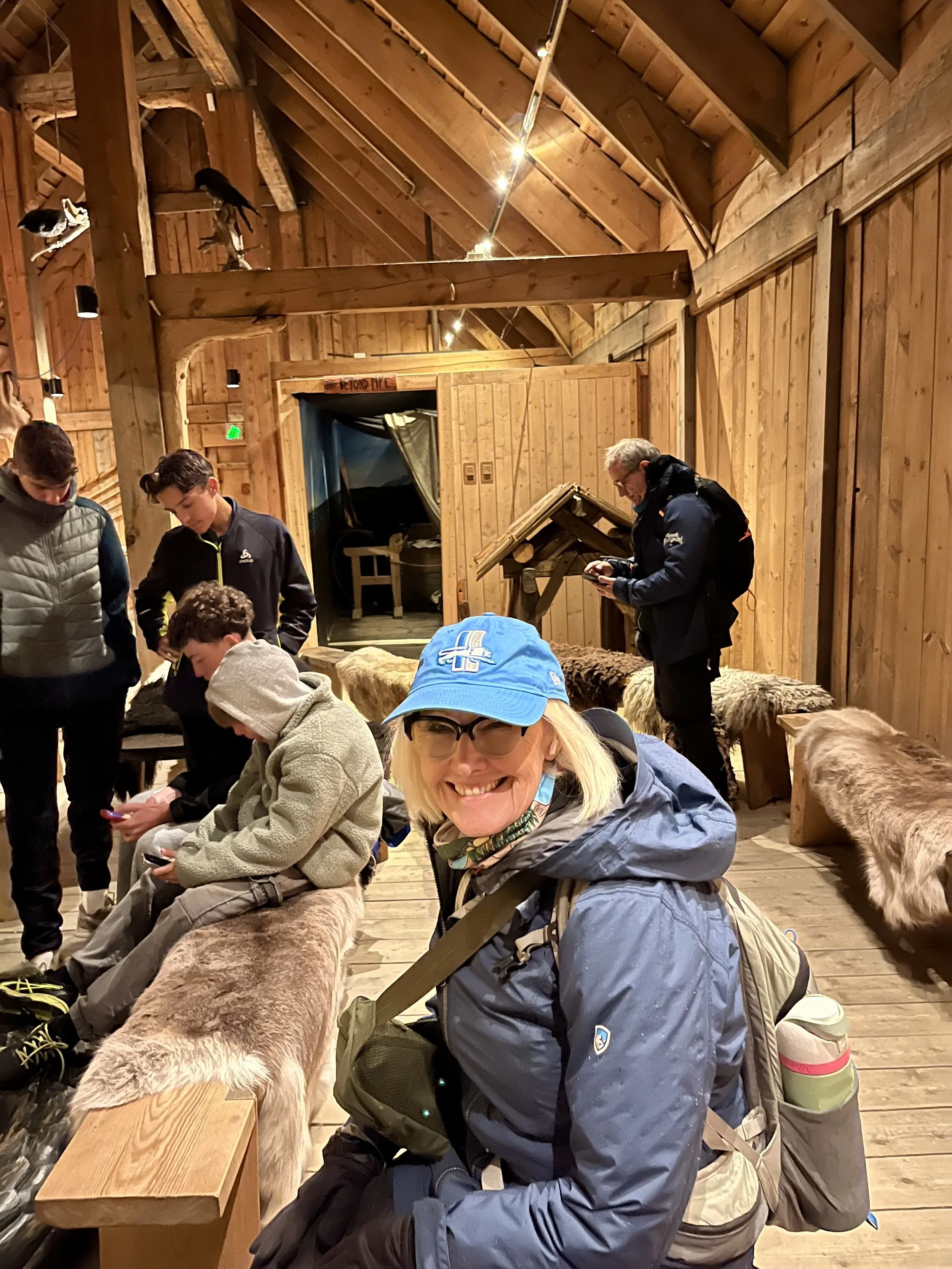
In the long house
Later, the Tribal Leader decides to leave Norway for political reasons and sail to Iceland for a new life. The politics of the time put each tribe under pressure to succumb to the strongest leaders who sought to be King of Norway. Our leader chose not to face such intimidation and abandoned the farm. The third part of the story comes to the late 20th century. A modern-day farmer is tilling the parcel soil with a tractor and blade when approached by an archeologist who the farmer grants the opportunity to mill around. Nothing uncovered. Later, as the farmer is tilling, he find artifacts and contacts scientists. What follows is an international archeological dig that leads to the discovery of the largest Viking long house found complete with artifacts. In the museum there are two rooms of displayed artifacts, tiny things like arrow heads, broken pots, etc, etc and 2 swords.
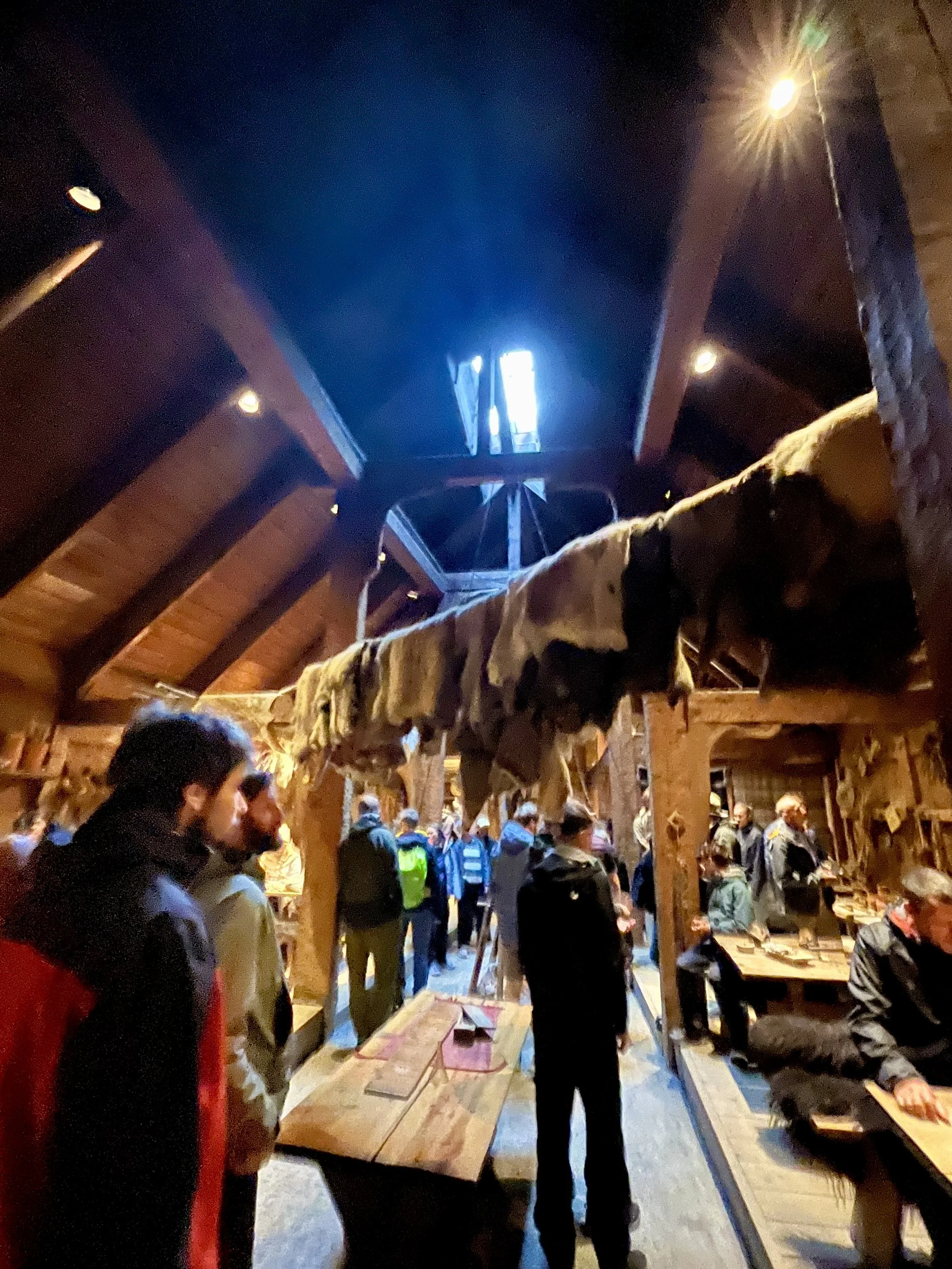
The dig continues for 20+ years and finally they make this replica “long house” and the museum. We enter the long house, which is impressive and listened to a knowledgable guide, saw re-creators, and could see separated areas of the living quarters for cooking, weaving, bedrooms, and for meetings with leader.
Janet enjoyed the museum, full of information on how they lived and survived. Frank felt the presentations were informational as one would expect, and imaginative, but not awe inspiring.
Below photos are of the long house
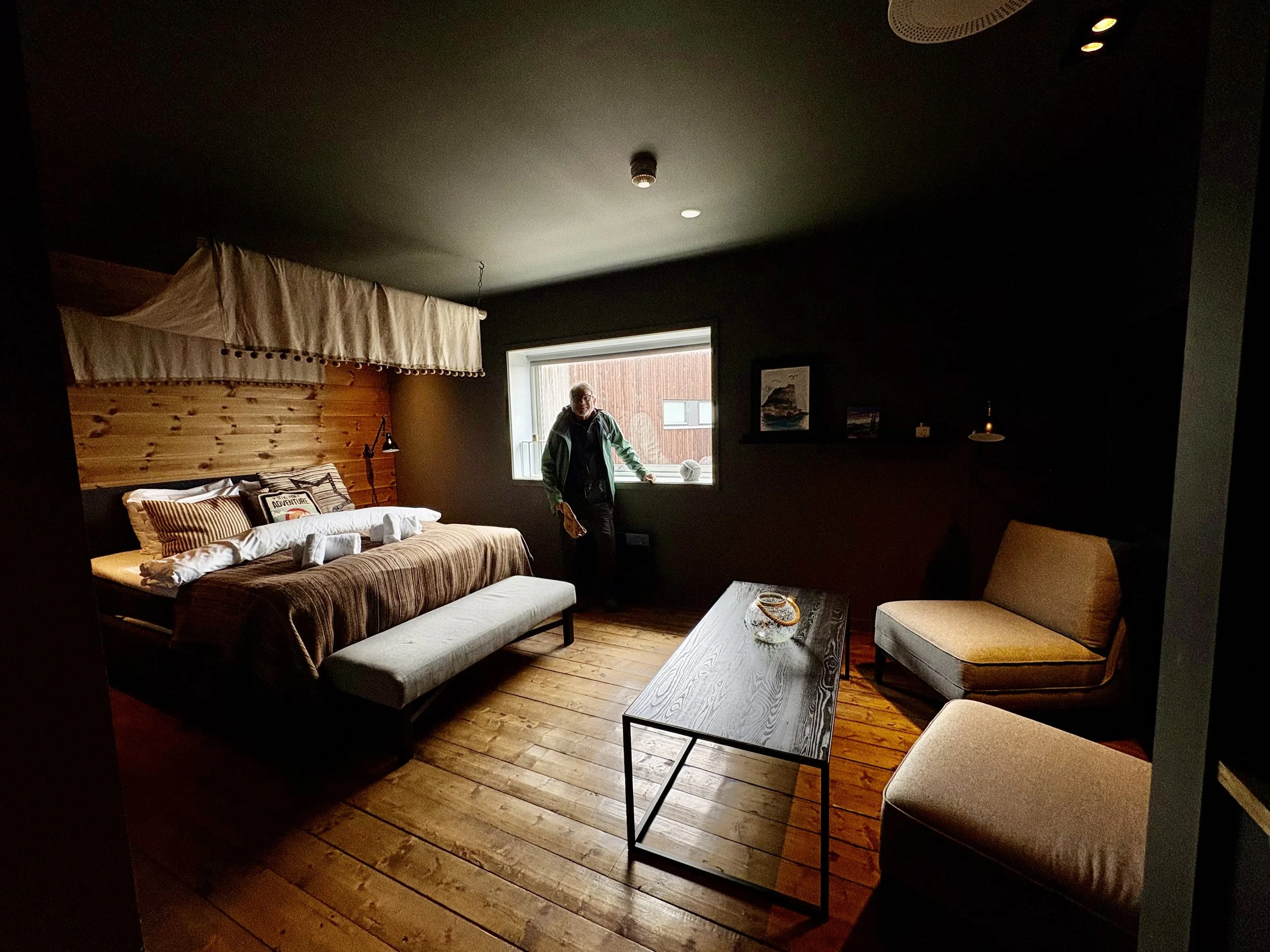
Our room
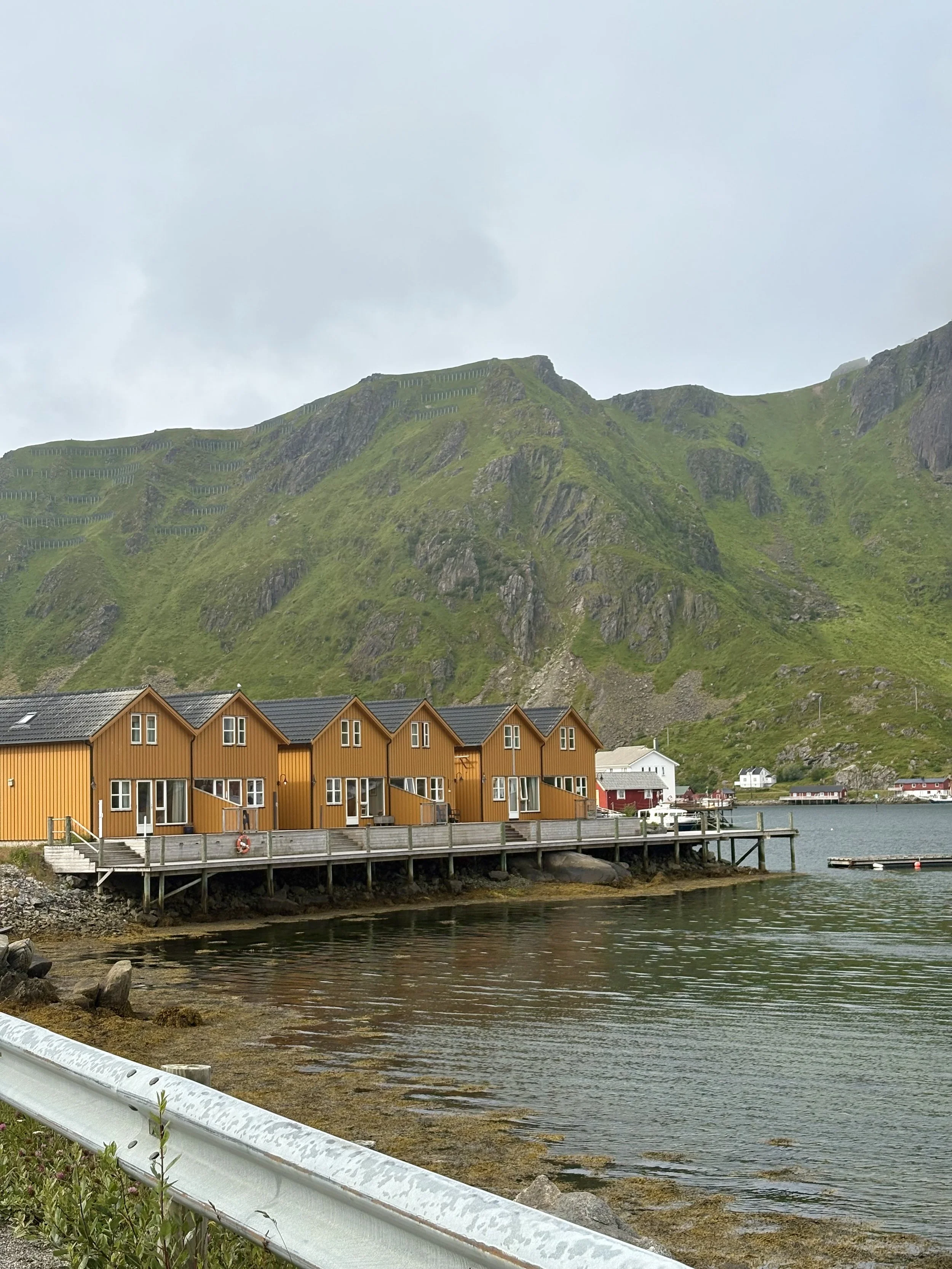
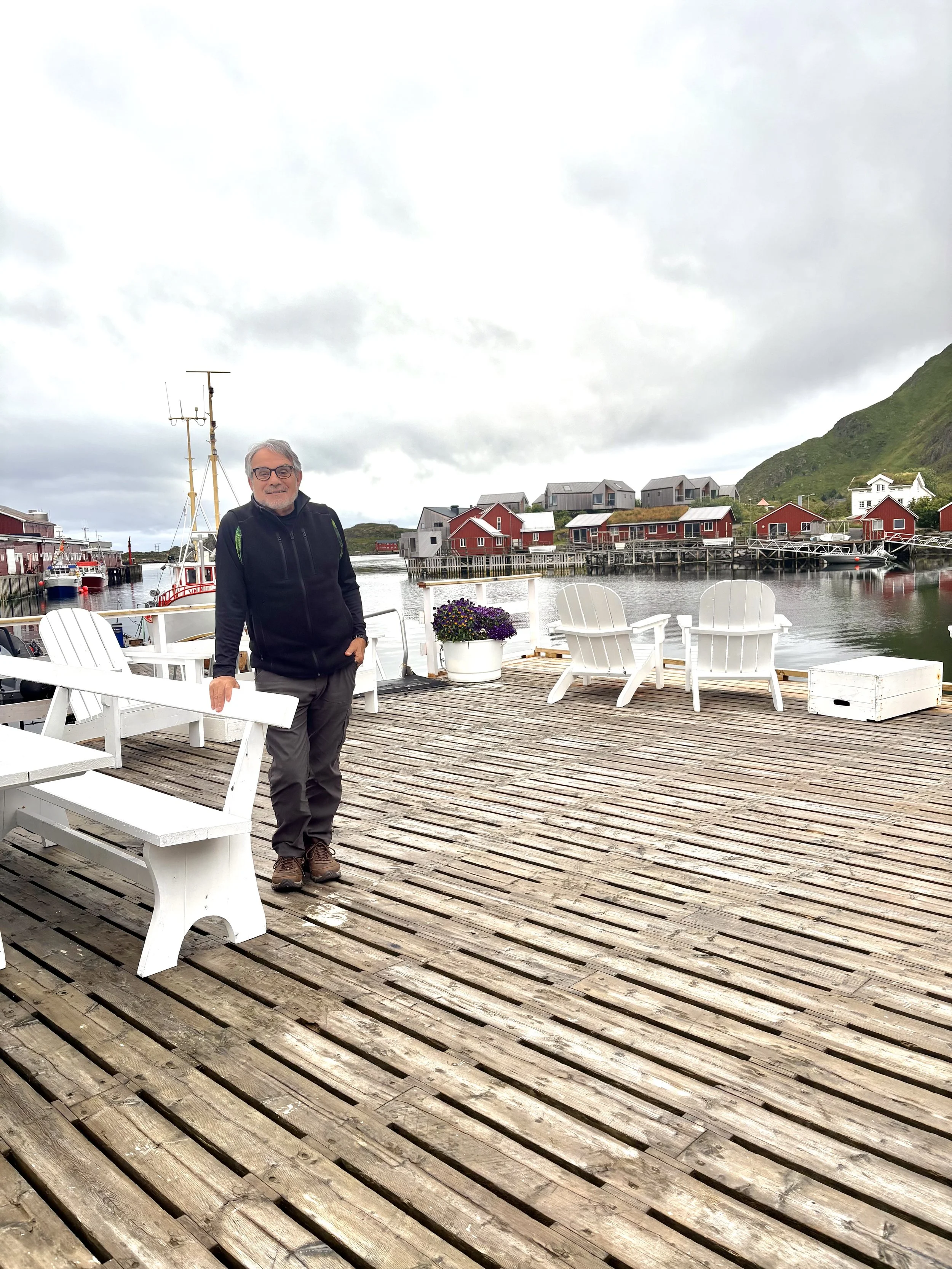
Next stop is the village of Ballstad. This small coastal town is on the coast of a small island nestled between two fjords and the North Sea. This is the launching point for our excursions in the south side of the Lofoten island. We are splurging on a wonderful hotel on the water with a 4-star restaurant. Ballstad is 190 acres with a population is 900. We are staying at the Sosiden Brygge Robuer a complex that is both hotel and Robuer, resting on a calm inlet lake, with some private boats on hand and with shoreside saunas. Our room is very modern with rustic chic décor.
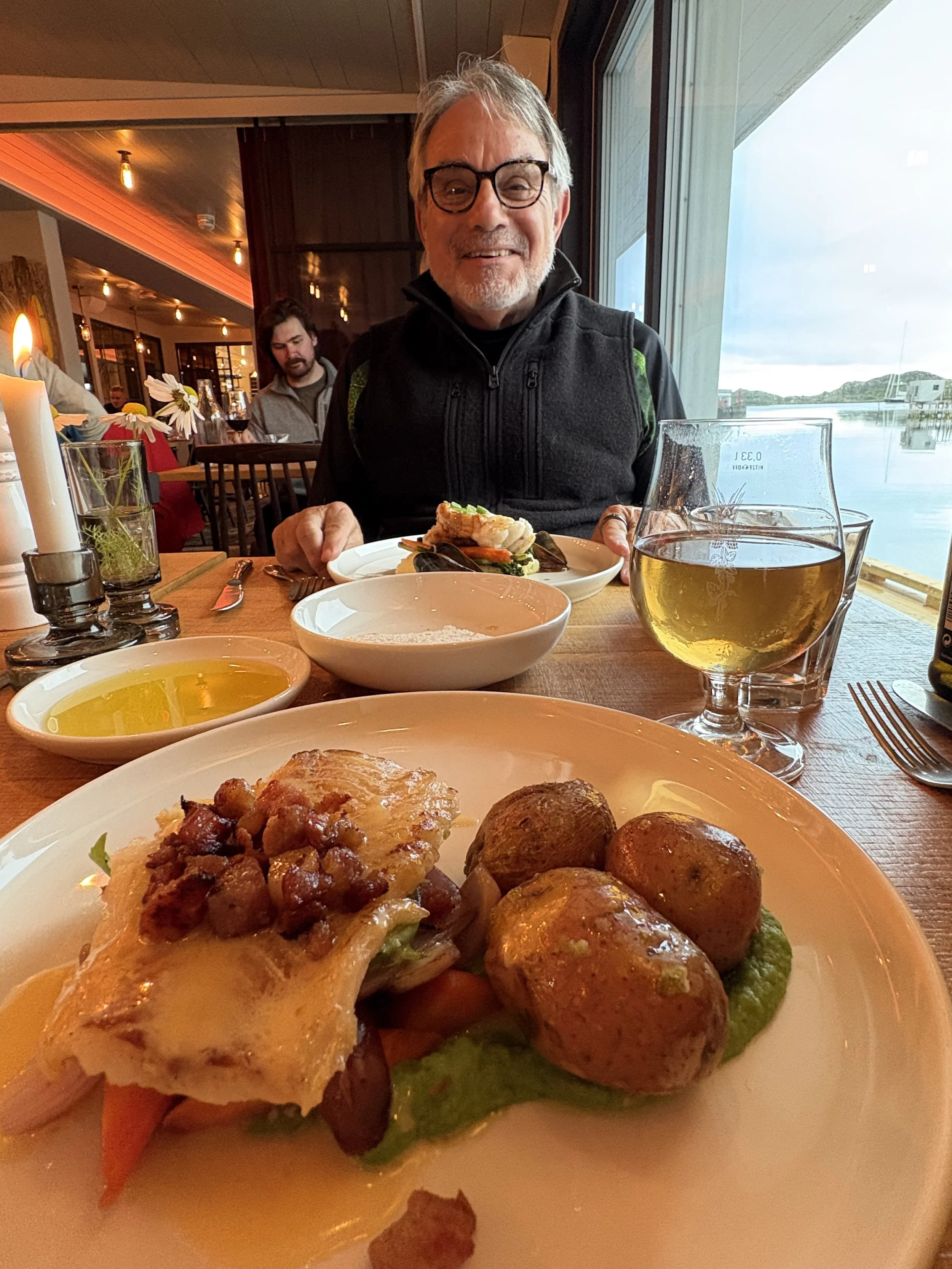
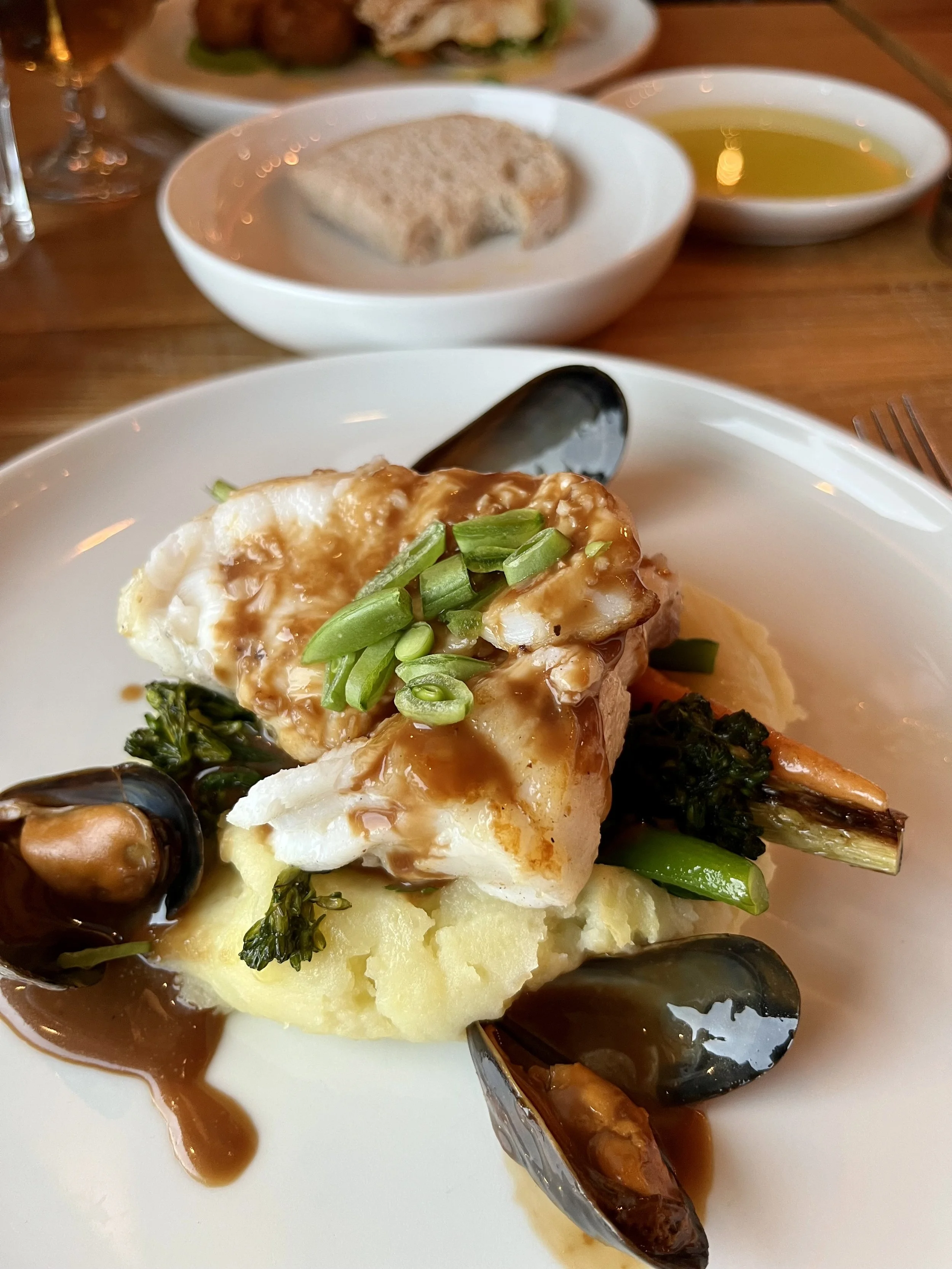
We arrived early evening, after freshened up we go to our formal dinner. The food is traditional Norwegian, mostly fish. Frank ordered catch of the day, monk fish with sauce, veggies, and potato purée. An unusual choice served beautifully. We have seen monk at fish markets—ugly looking—had to try it along with a glass of Rose’ and really enjoyed. The fish was mild with the texture of lobster but not as flavorful.
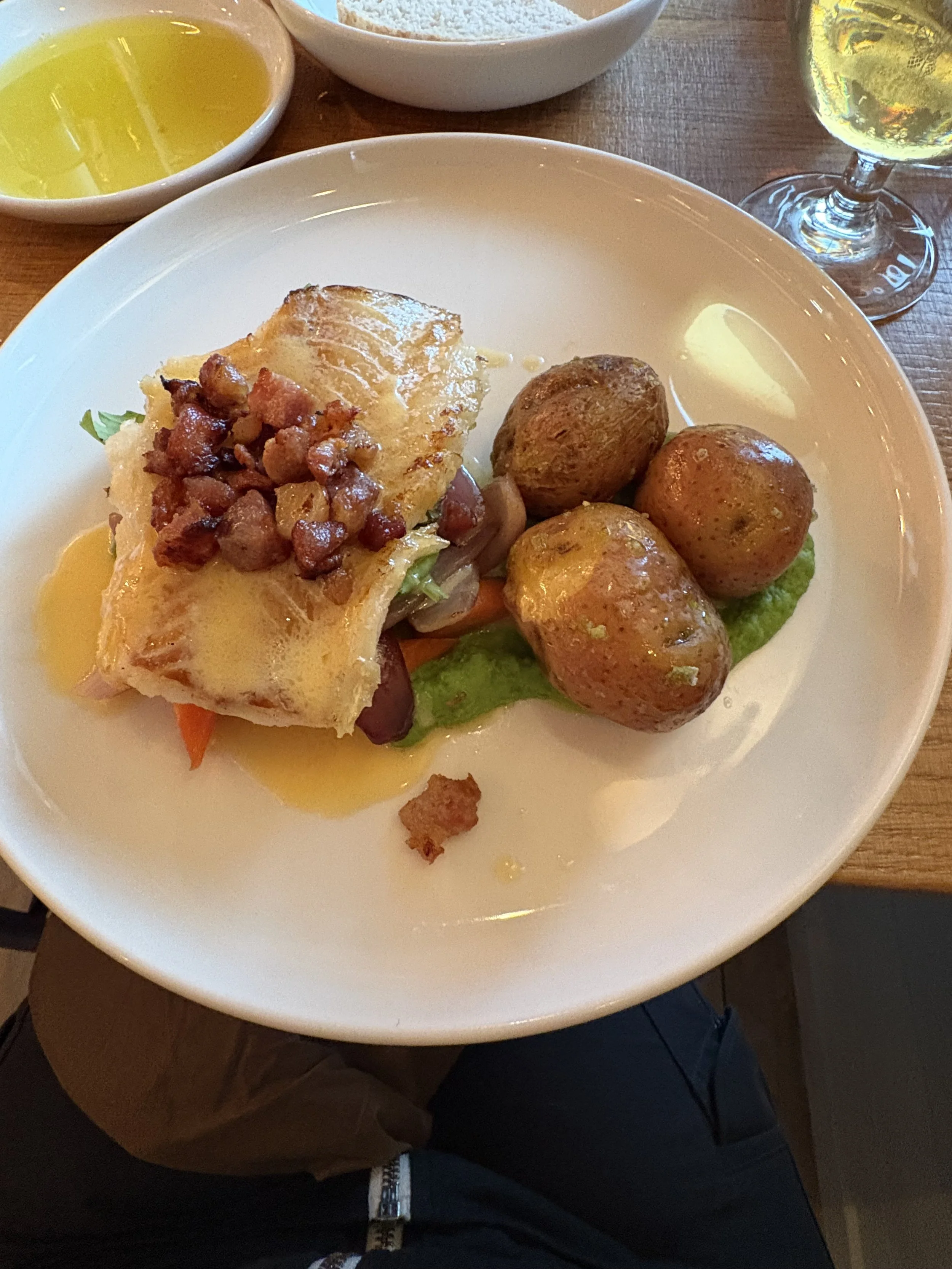
Janet challenged herself and ordered stockfish with veggies and potatoes. It was prepared beautifully, but clearly is an acquired taste, somewhat tough and chewy with a strong fish flavor. It was topped with bacon, which always helps!
We digress to Stockfish
Since arriving in Bergen, we have been hearing about stockfish, why? Because a major part of the economy of Norway, now and for centuries. Stockfish is Cod. Each year from January to April, the Cod return to the Norwegian coastal waters to spawn. Tens of thousands of fish come each season. The Cod is dried on racks and due to the climate, does not need salt to cure. You can see hundreds of wood lattice drying racks near the water. Stockfish can last up to 30 years. To eat you must soak for days. Janet wonders just how old her Stockfish dinner was!
More to come about Stockfish..
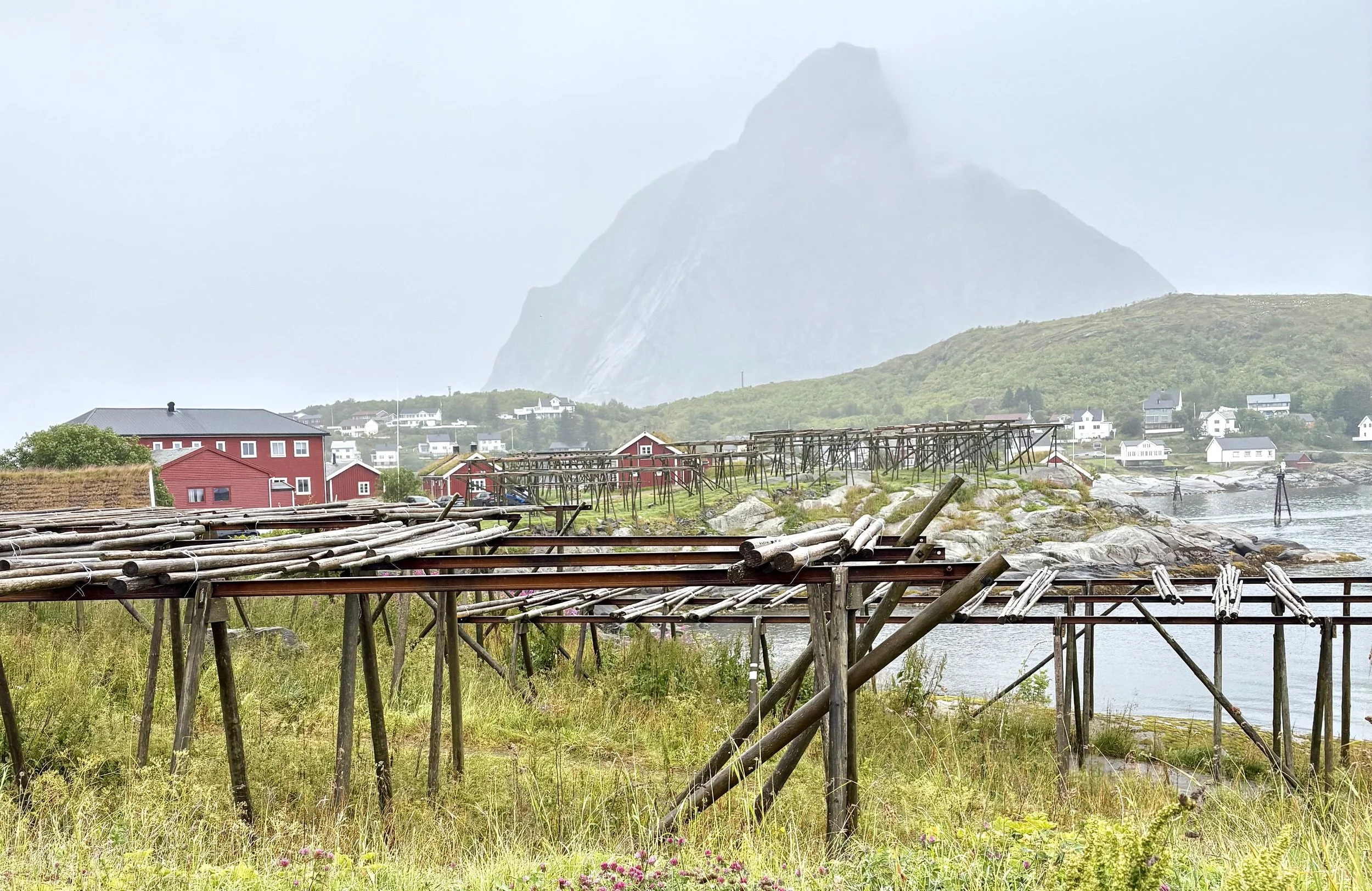
Stockfish drying racks
WWII bunker
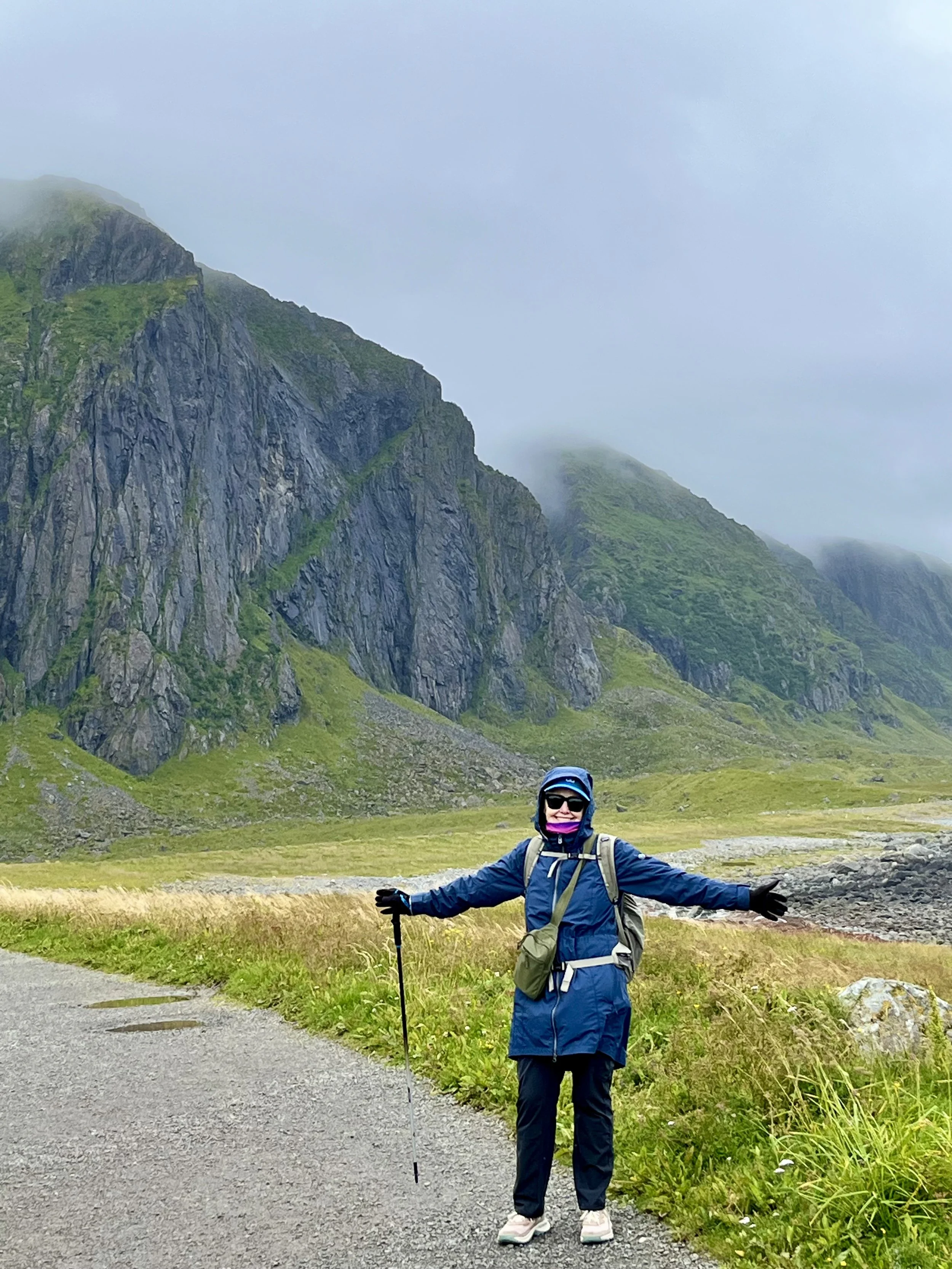
We wake early and after a great breakfast leave for a day of hiking. This area is a top hiking destination, and the islands is full of hikers, campers and all sizes of motor homes with colorfully clad people trudging up and down the trails. Most of the hikes are challenging with steep climbs, requiring hours to complete. We decided early on that we would stick to the moderate or easy hikes. We complete two beach hikes and travel to one other surfing beach by car, no hike here. A total of 17,000 steps for the day, plenty for us. The hikes are beautiful, muddy, lots of sheep and sheep dung. The first hike also included an old German WWII bunker and a small monument of a head.
See photos below
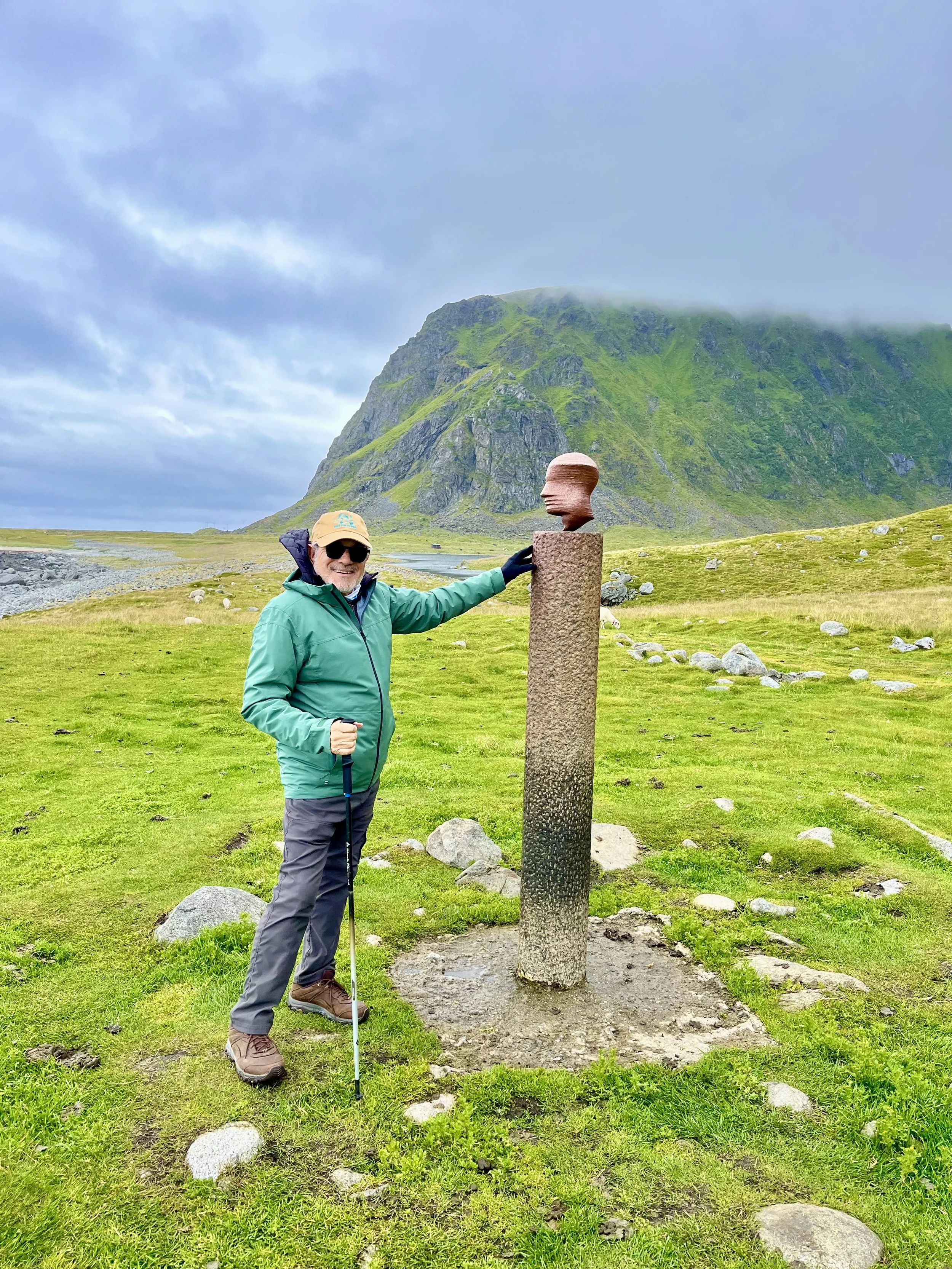
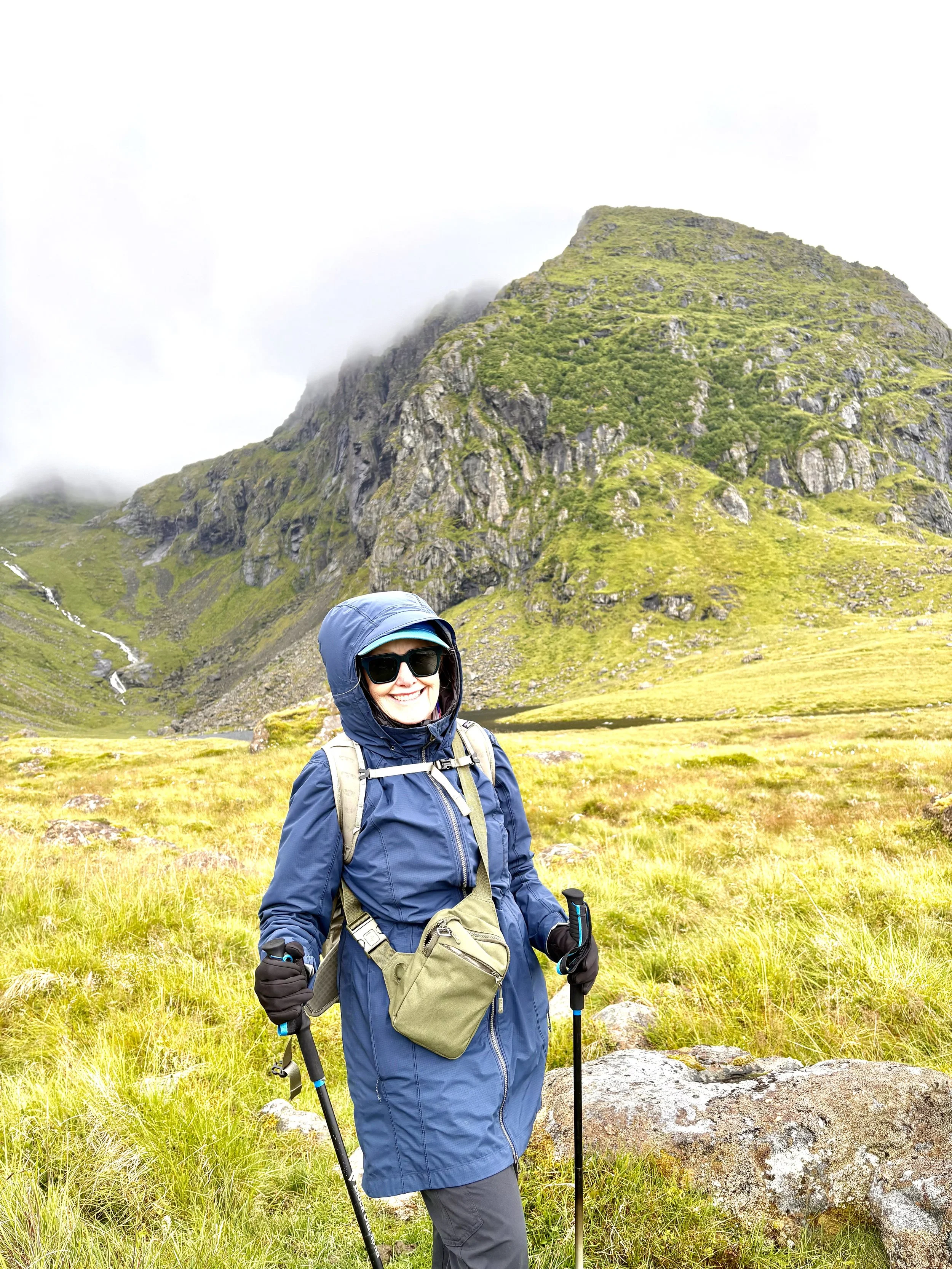
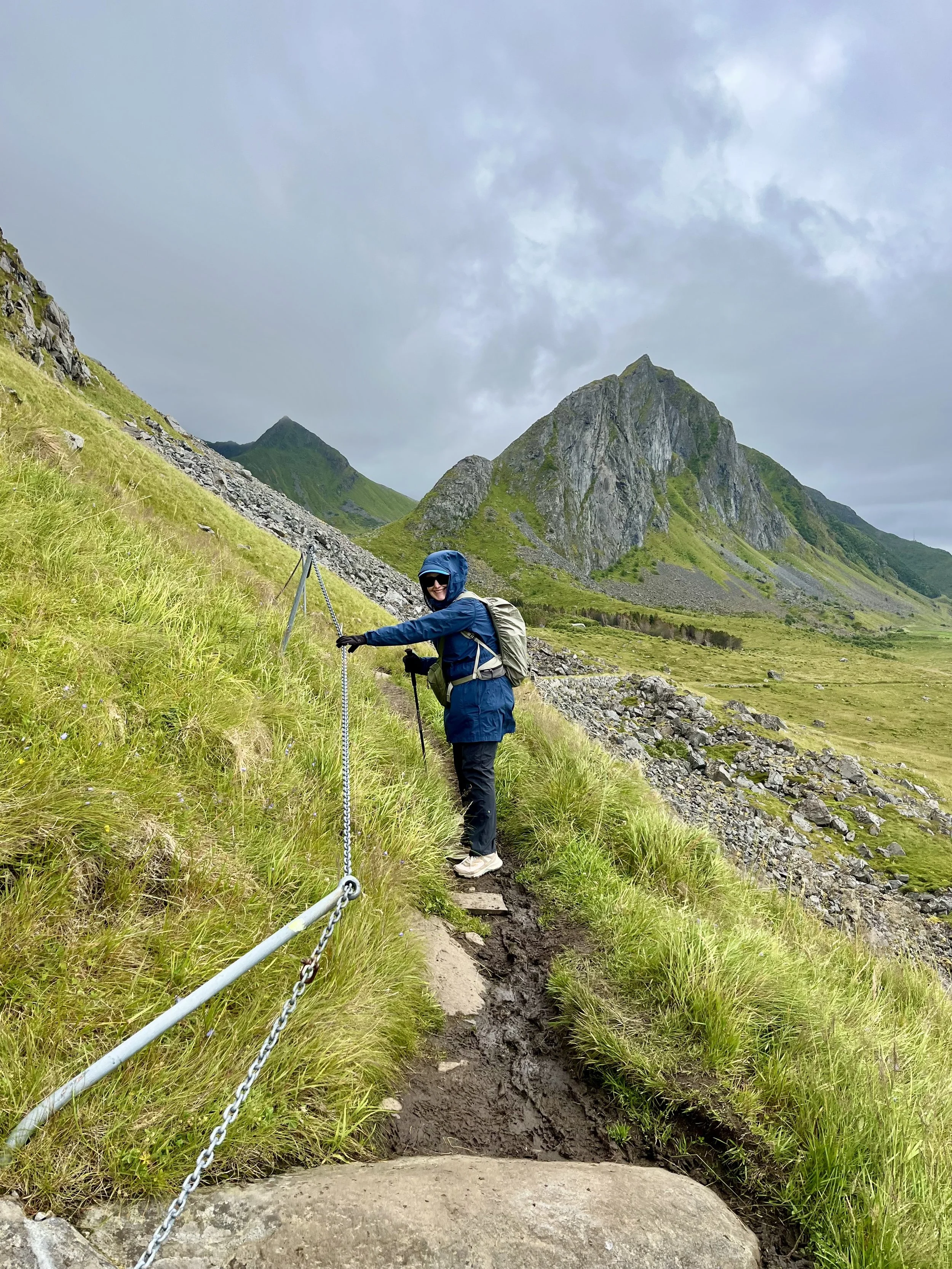
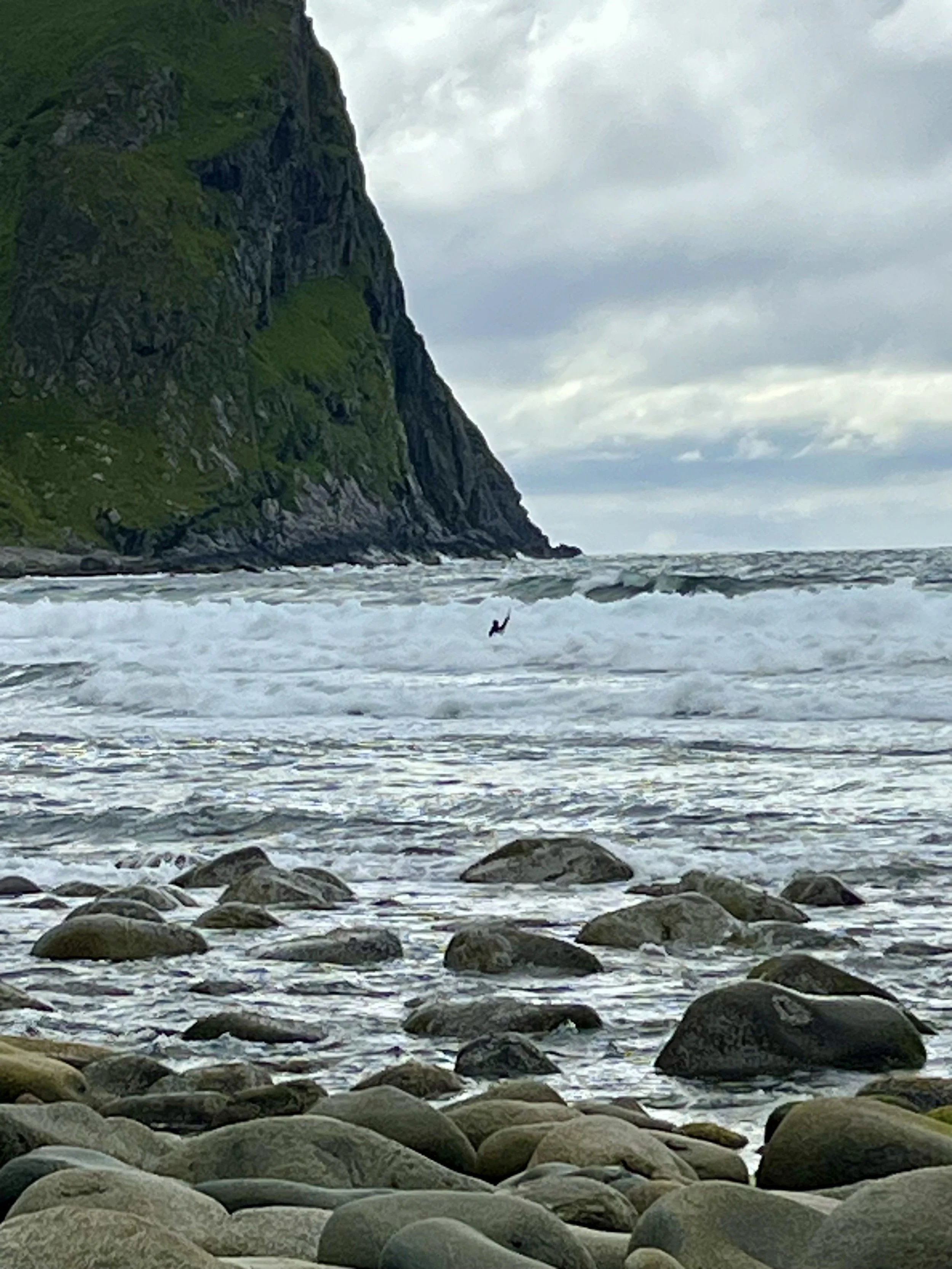
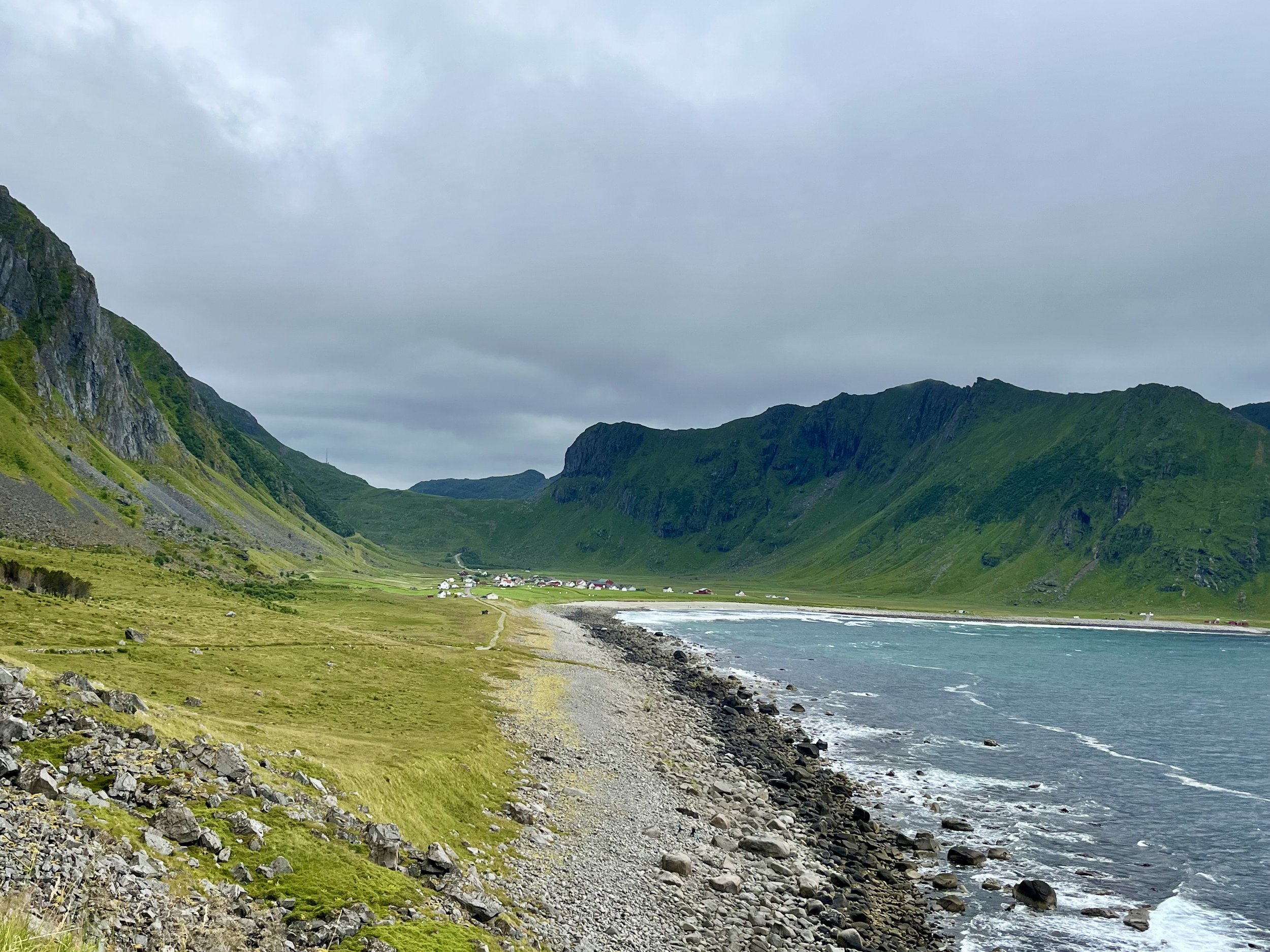
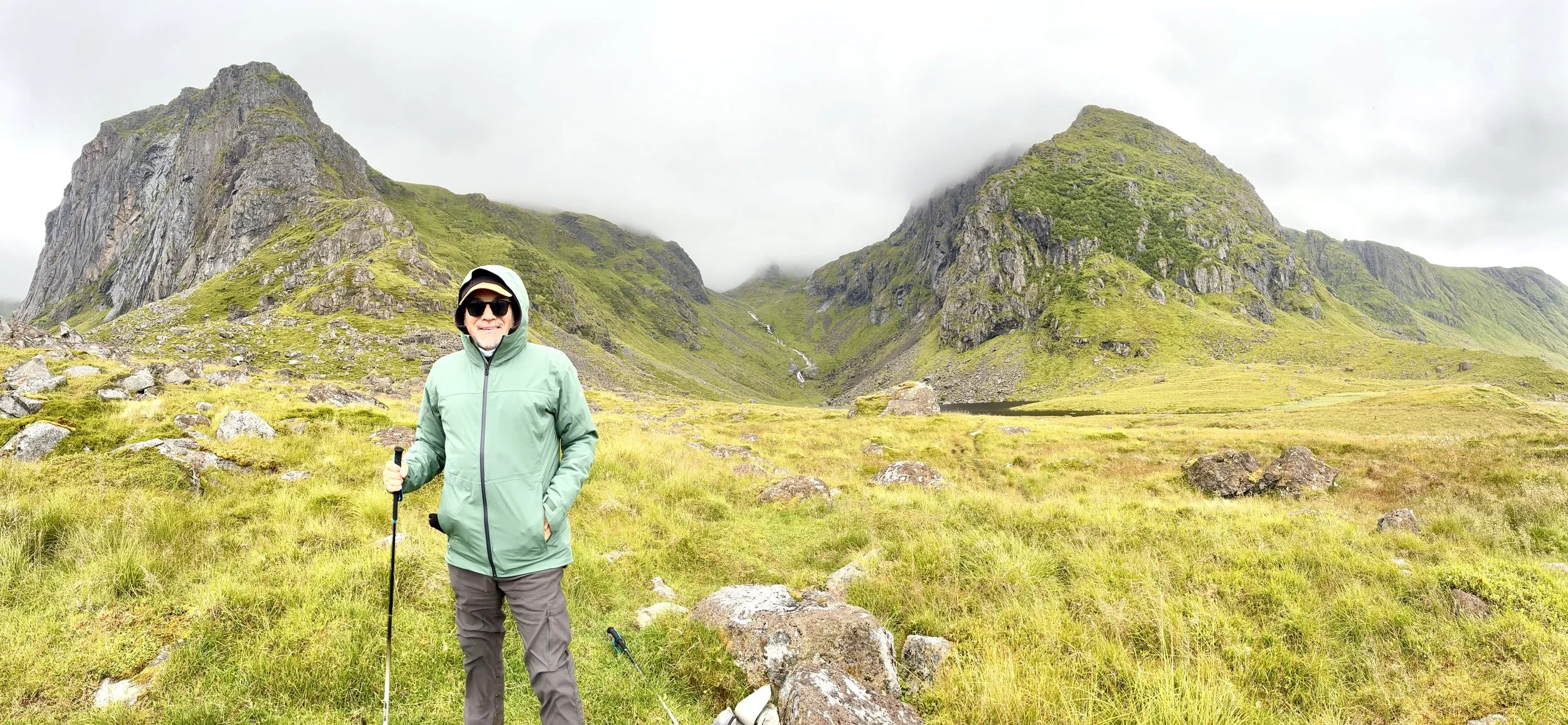
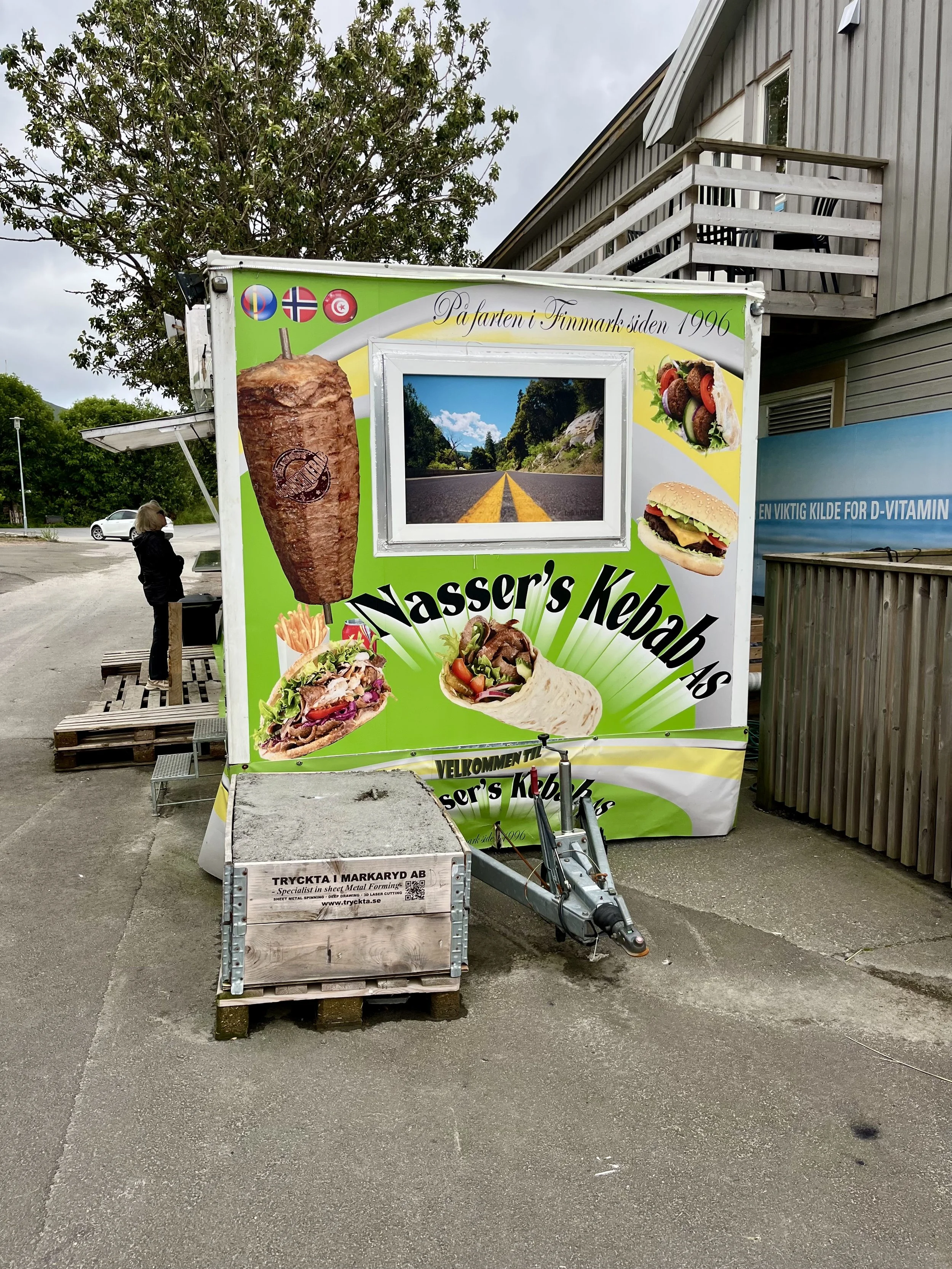
We head back through the tunnels and found a great kabob takeout for dinner, rest, blogging and some Netflix downtime.
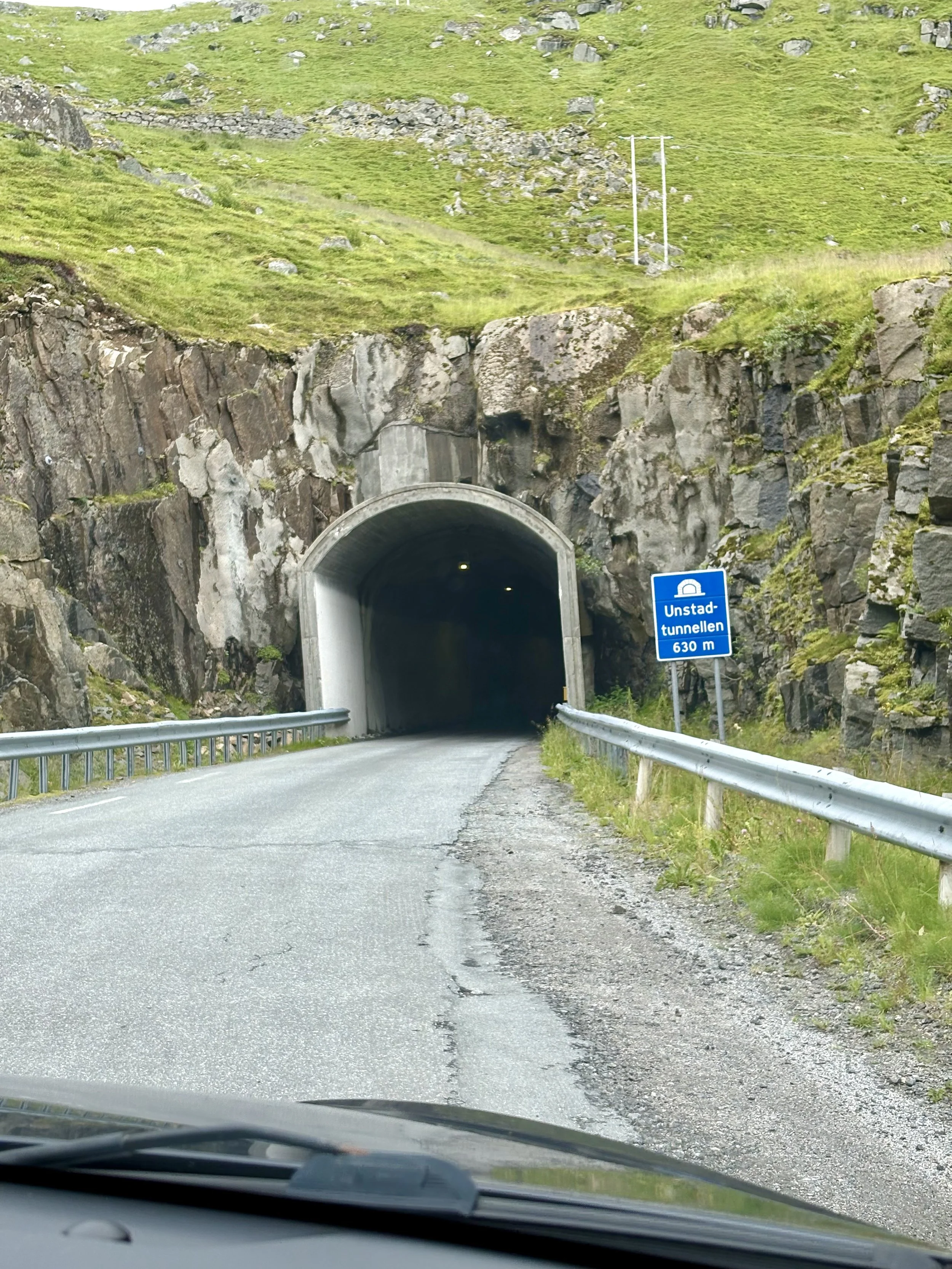
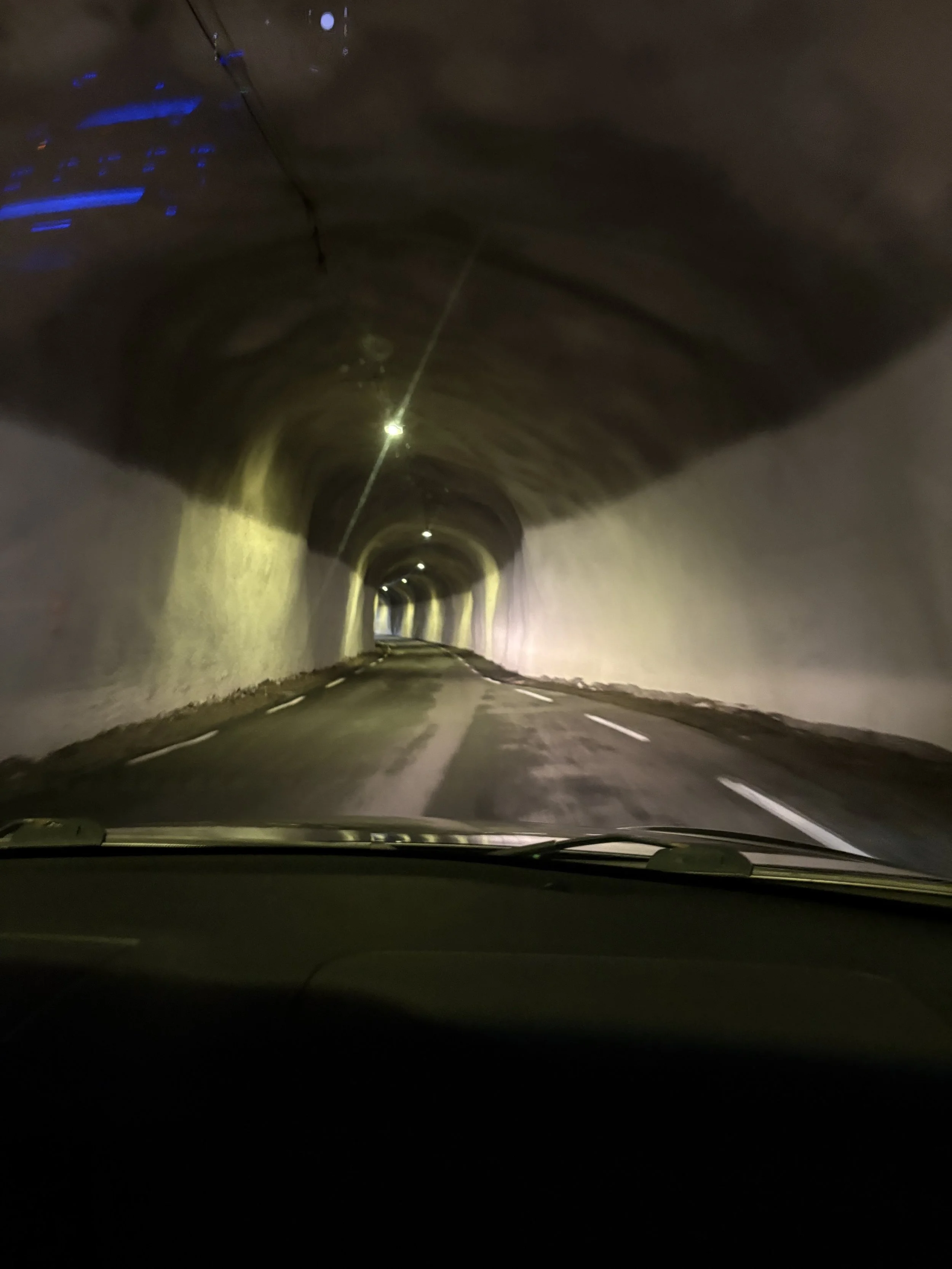
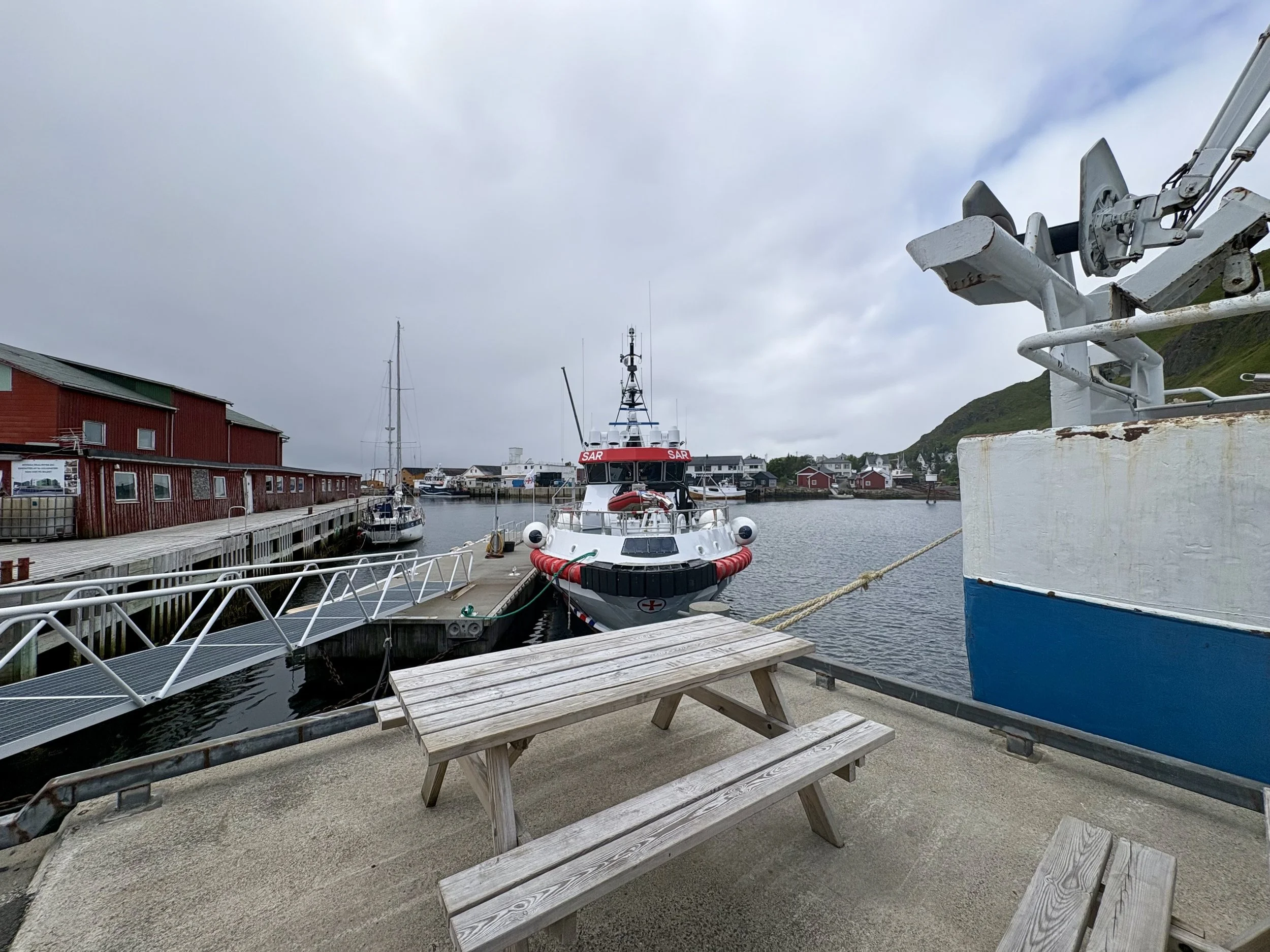
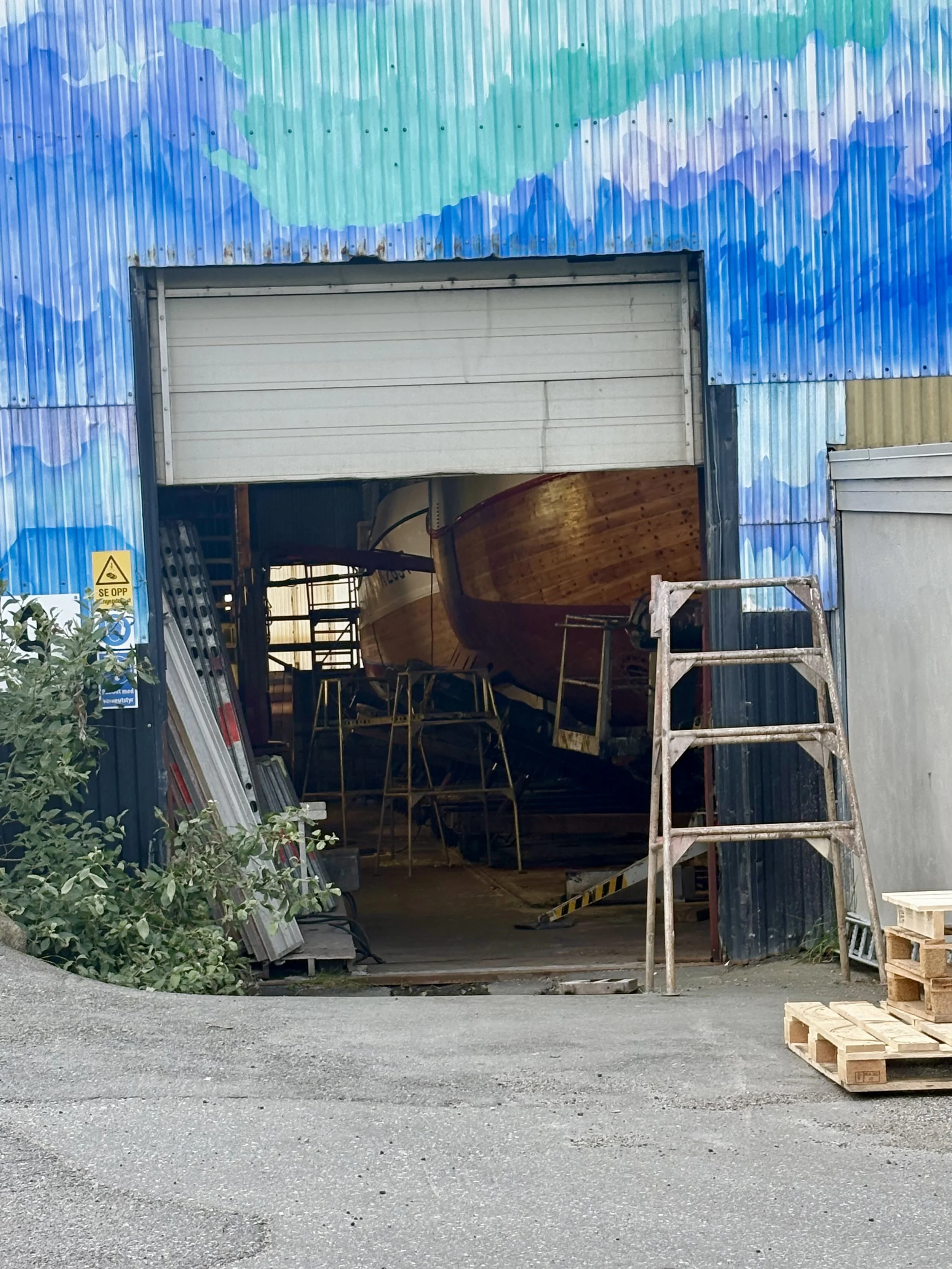
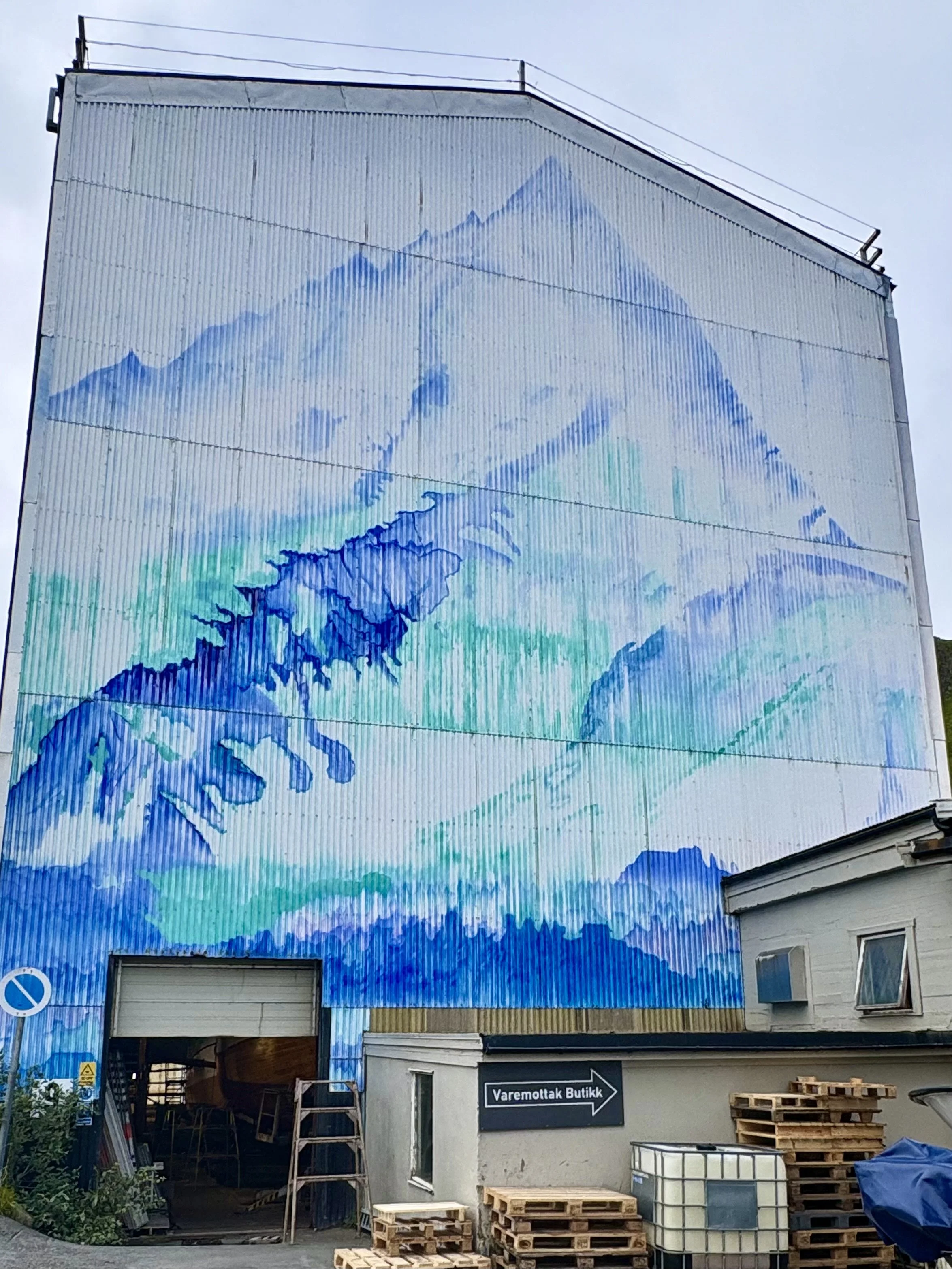
Next day, it is time to depart Ballstad and continue south. Before we leave, we do one last tour around the bay. This is really a beautiful place. In addition to the tourism, they have a a small working shipyard, below see a warehouse with 2 wooden boats being worked on.