2 Days in Lima Peru

I awoke at 6:30 am on the outskirts of Lima, the capital city of Peru, a/k/a City of Kings, with a population of 8 million. With the morning traffic and city sprawl it took an additional 2 hours to get to the second bus station near our destination: “Miraflores” district, by the shore line.

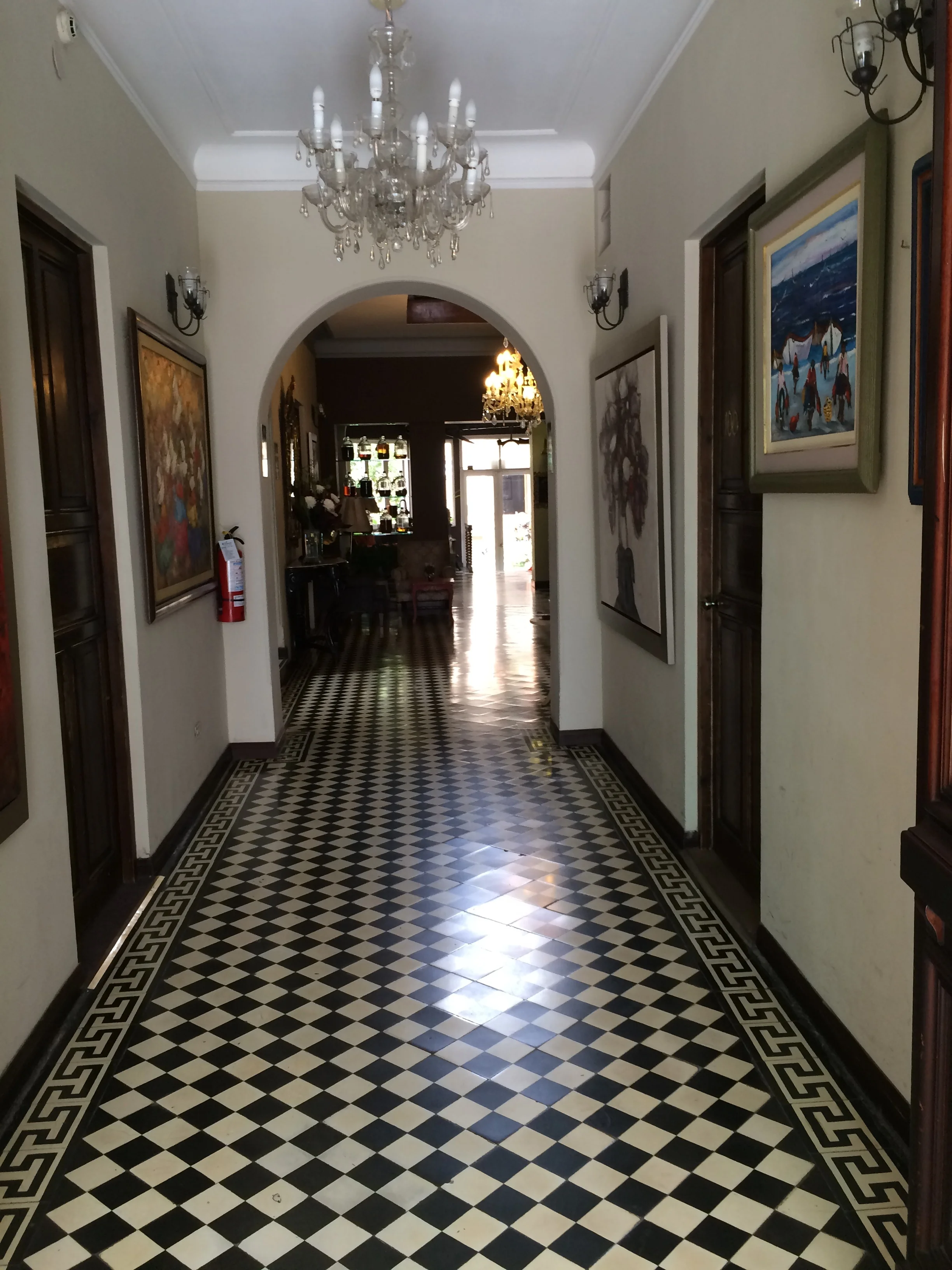
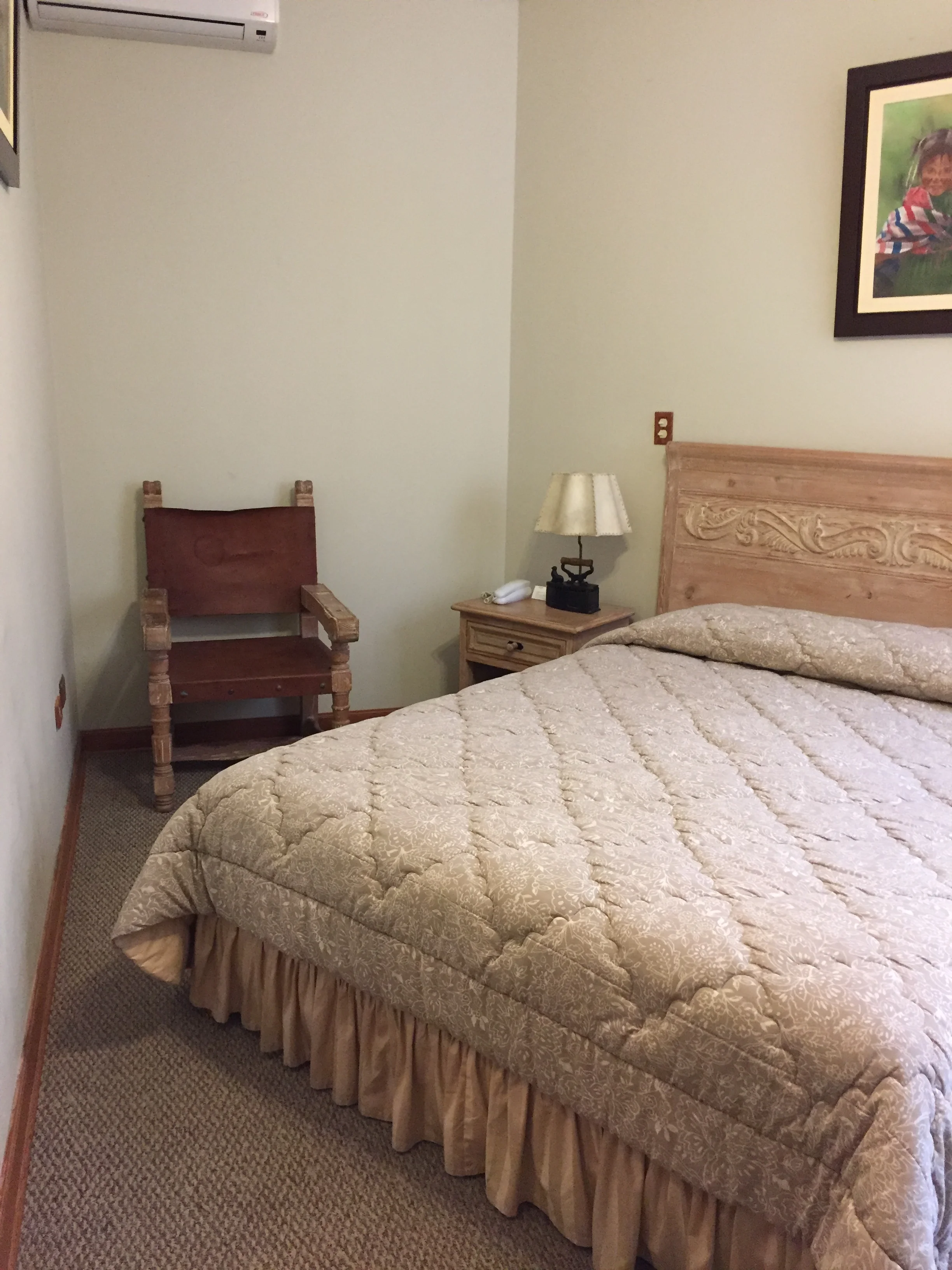
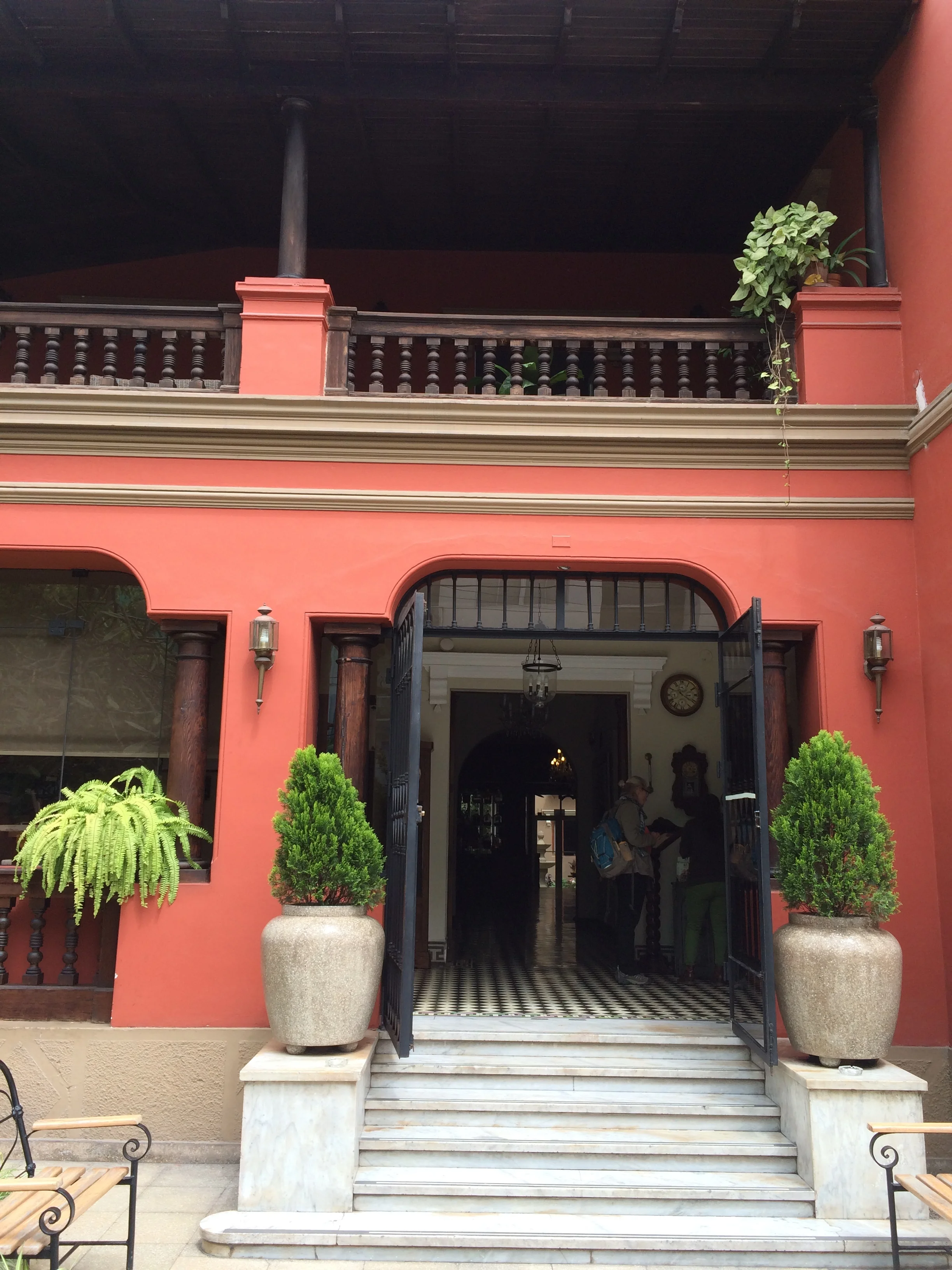
We grabbed our luggage, got a cab, and arrived at the Antigua Hotel. The area was great and so was the hotel —polished Spanish traditional—with very friendly staff, personal touches, a nice restaurant, parlor sitting areas and big cups of coffee.  In this area, Sheratons and Hiltons are available, but the Antigua Hotel is the place for me and I am sure for Janet, too.
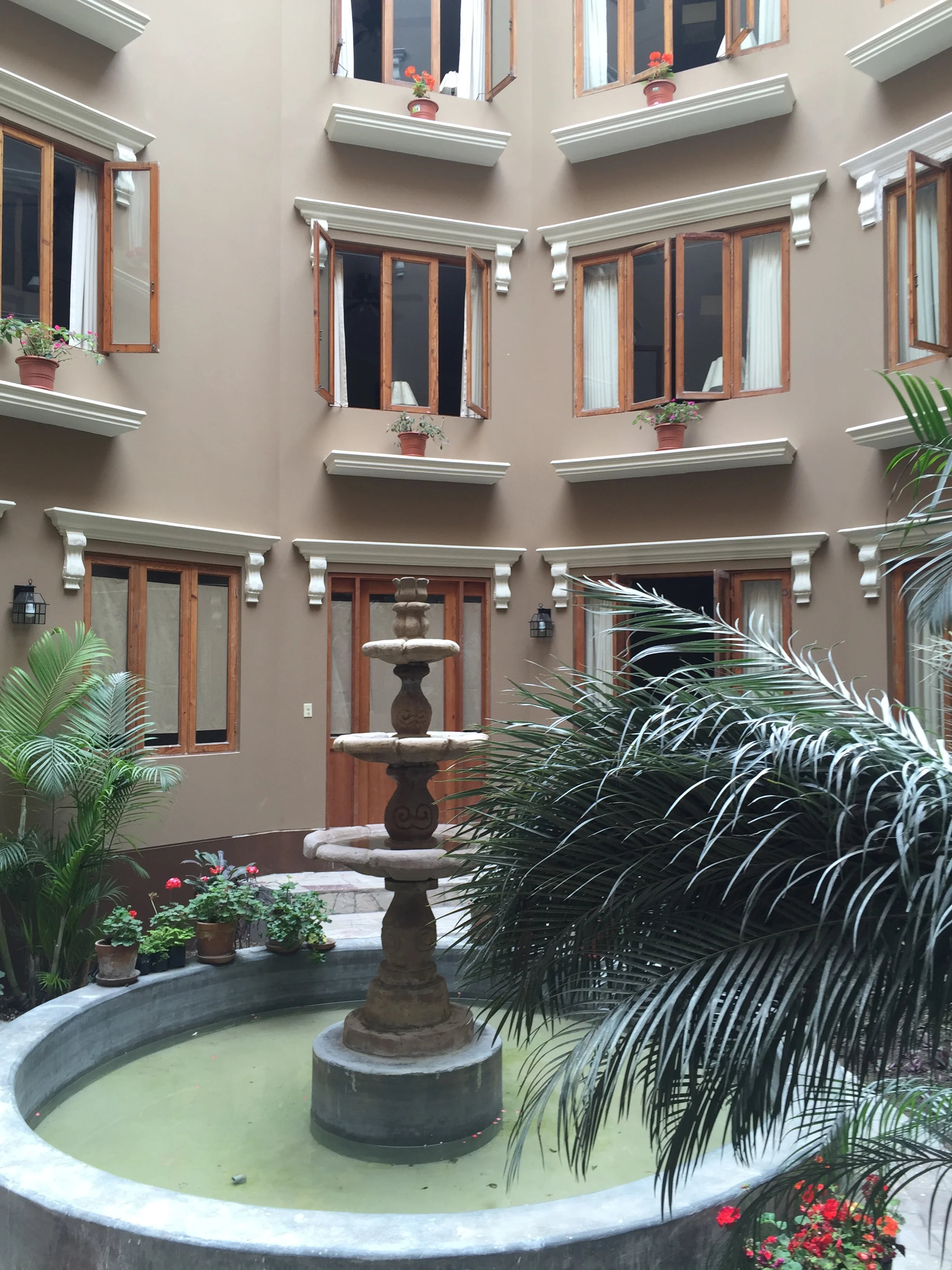
 

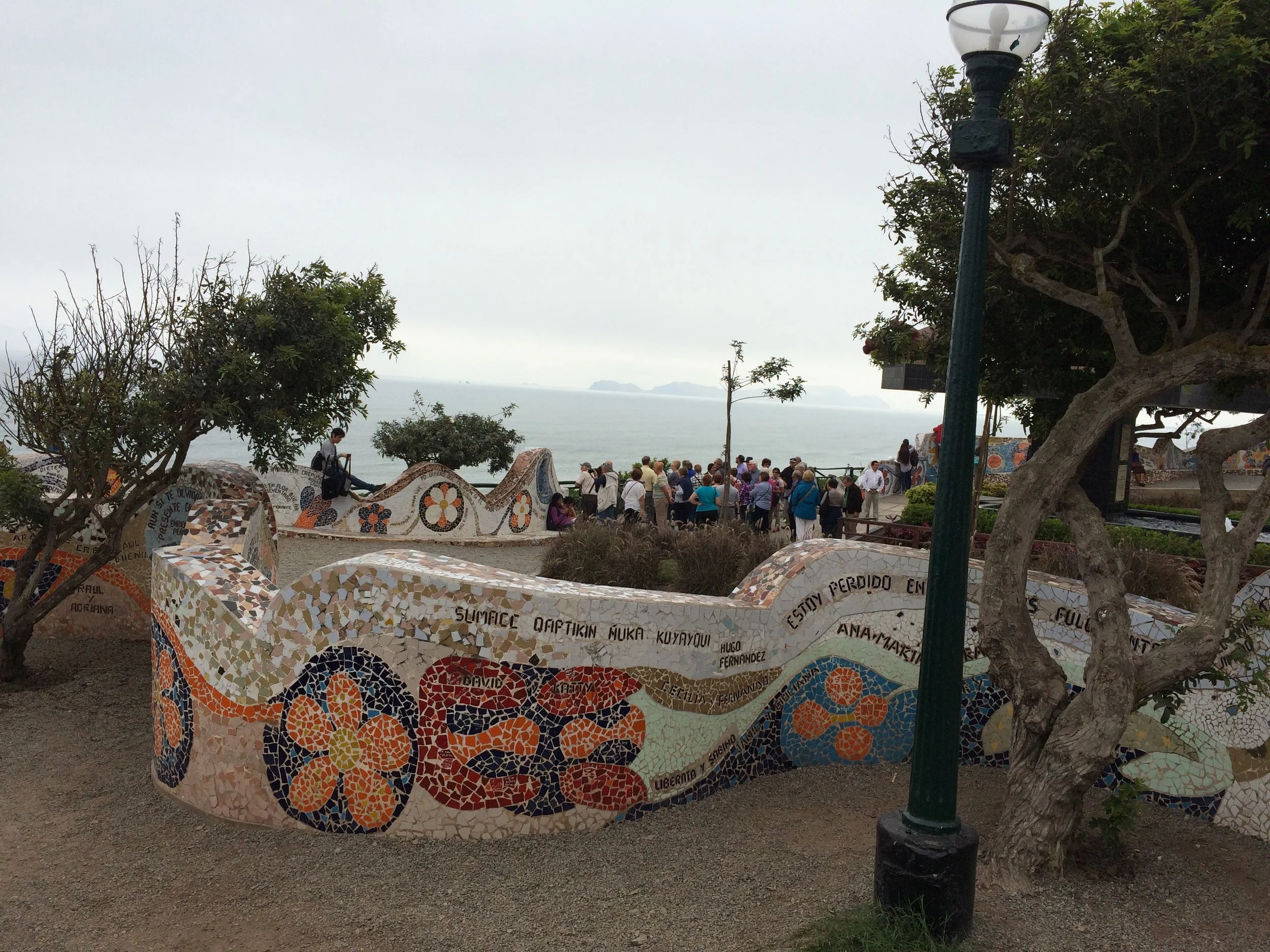
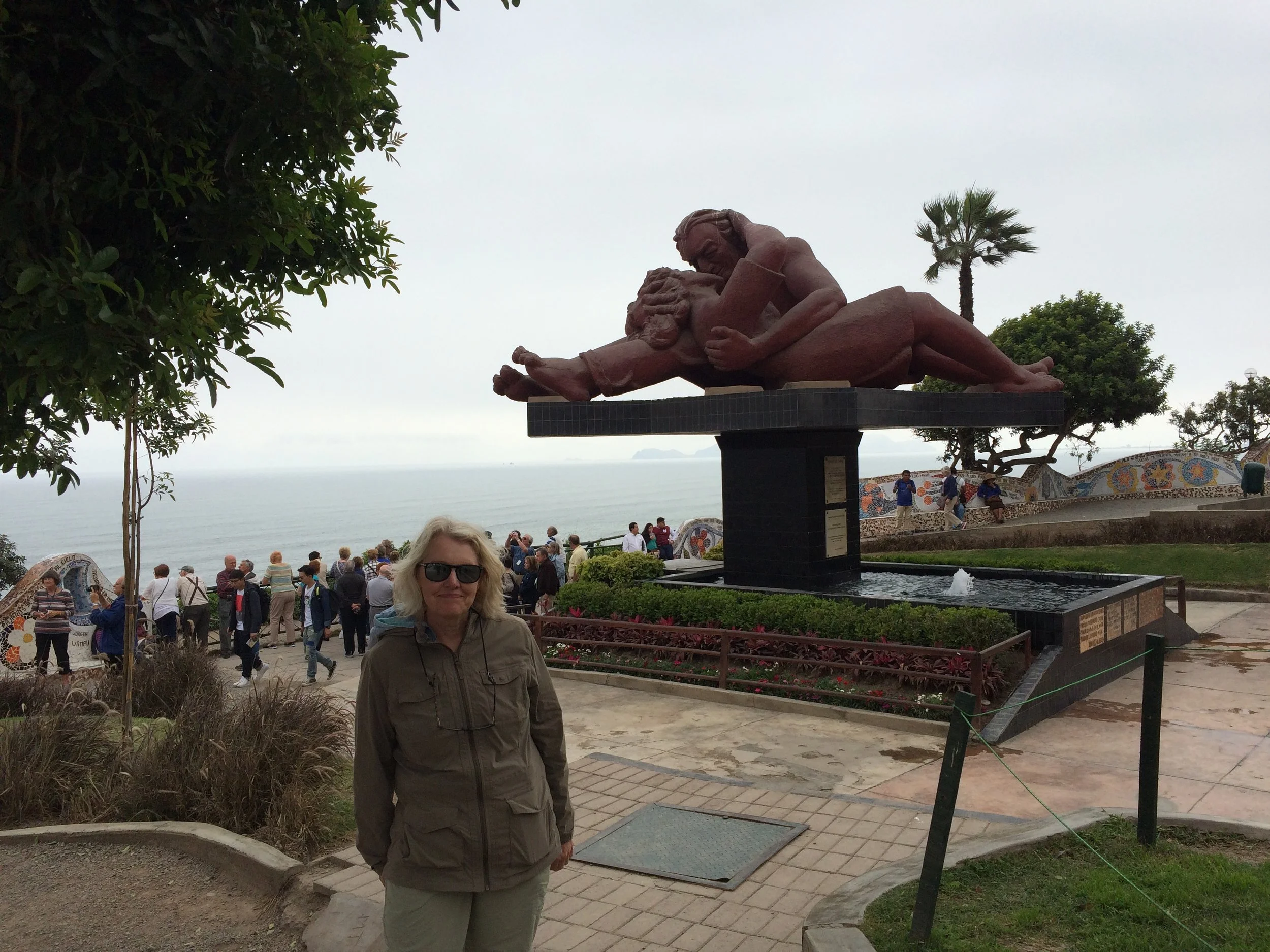
We walked the neighborhood until our official check in at 11:00 am; Stopped at a wonderful pastry shop for some breakfast or in my case, a sweet éclair. We later freshened up. In the afternoon we plan to take a tour of Lima’s historic city center. We wanted to avoid the We were transported by van and our guide was “Juan”. We started at “Lover’s Park” on the waterfront; a place named for the giant sculpture of a couple in an embrace (fully clothed). The park was surrounded by a wall that reflected the artist’s friendship with the famous Spanish artist and architect Goudy, who designed a park in Barcelona with the same images. We were lucky to have seen the original.

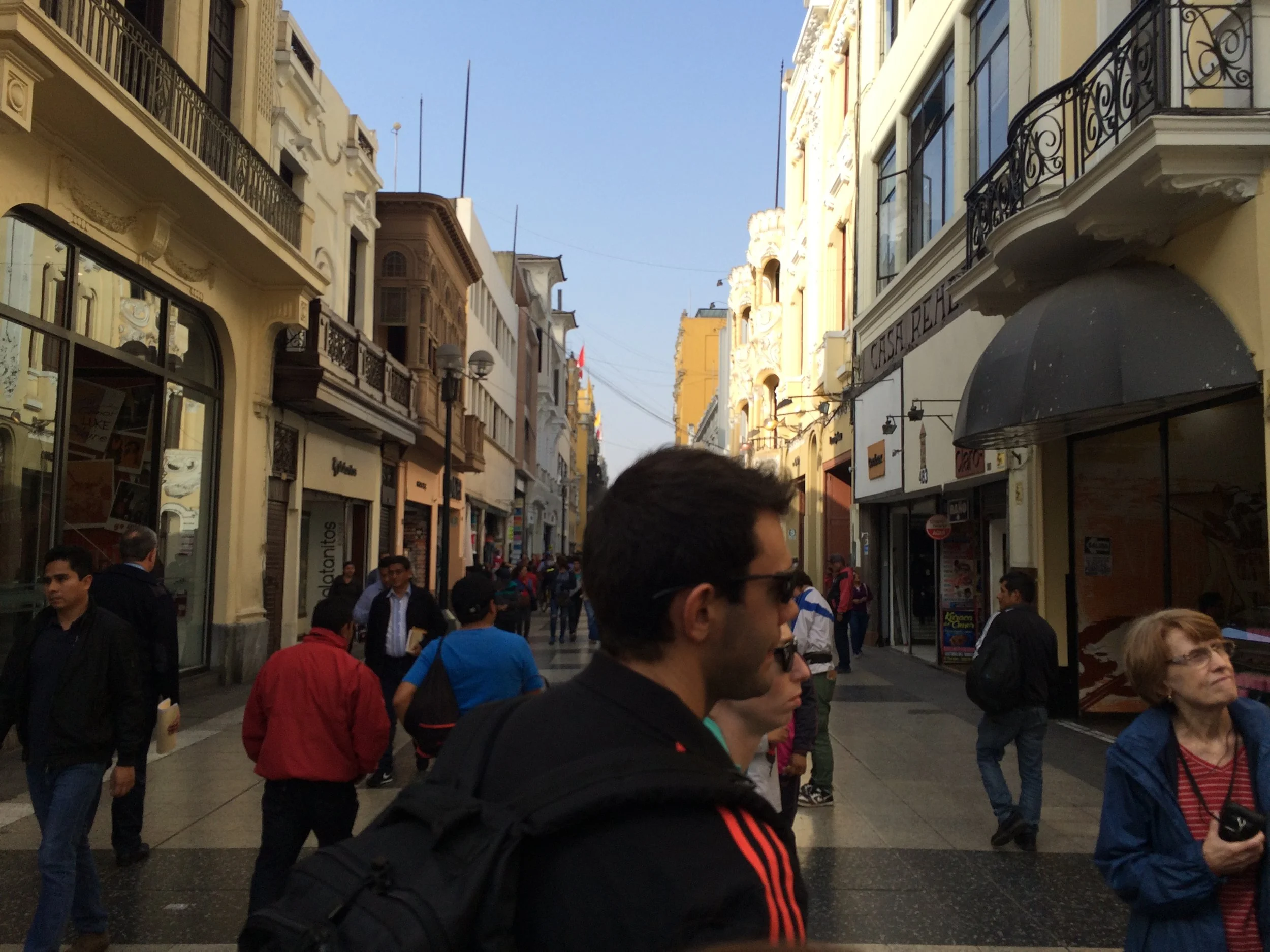
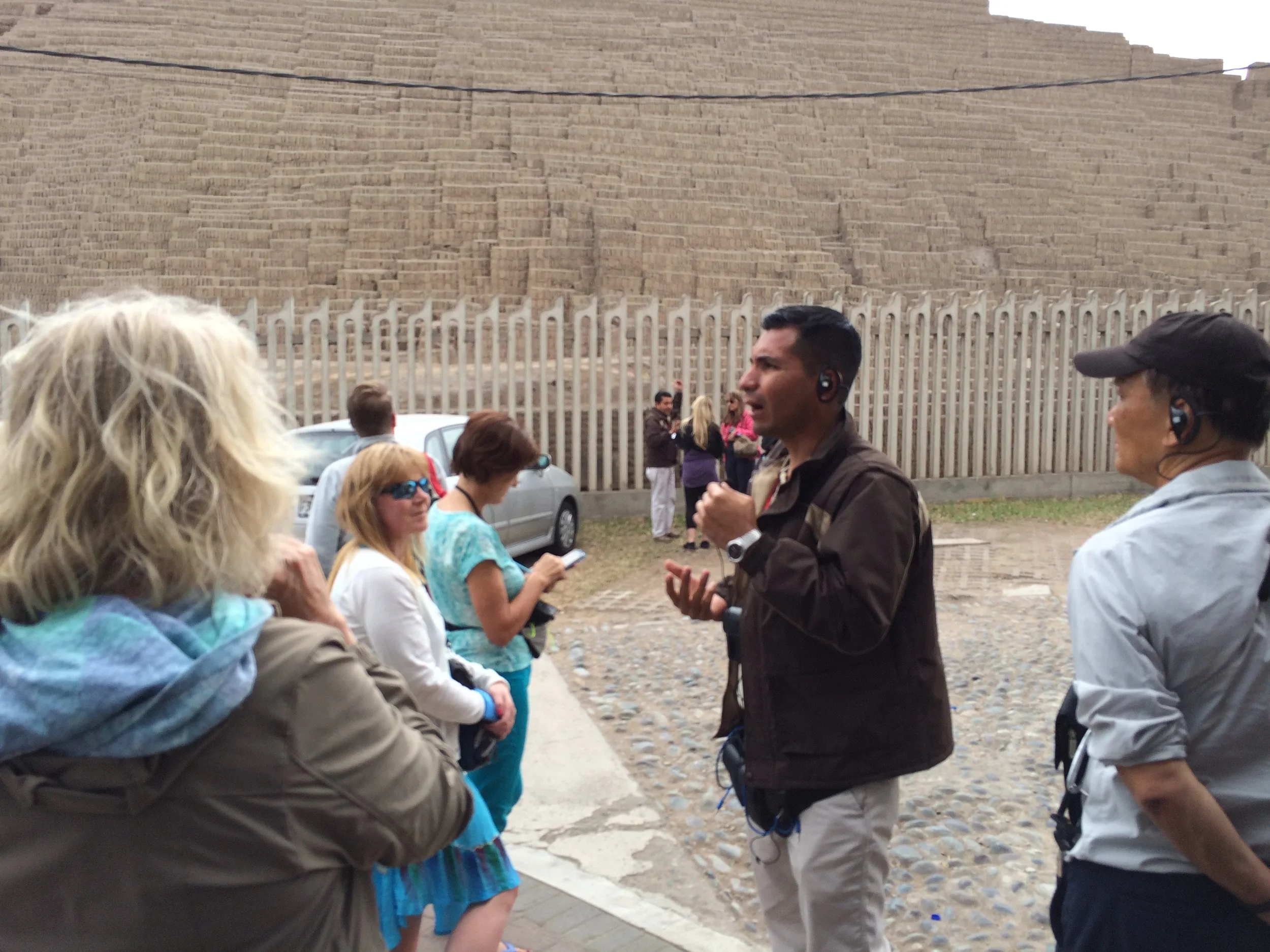
At this park we were surrounded by many customary bus tour groups.  A lot of Tauck Tours, etc., etc. I think the energy level is at a different place. This exposure made me thankful and more satisfied that I went on this trip now, and did not wait. We then went to the Lima central square which is elaborate and surrounded by the St. Francis Cathedral and historic Government buildings. We traveled inside and what made the area most interesting to me was the Moorish influence in the architecture and finishes. Peru was influenced by Spain and the Moors of northern Africa had invaded Spain and set the tone. The finishes were very similar to the Alcázar of Seville, Spain (this is the land of Dorn in Game of Thrones). The buildings had elaborate 2nd,3rd and 4 storied wood balconies/bay windows affixed to stone and mason buildings. Again, the Moorish influence at the time of construction. Ladies of the Royal Court would not disclose their faces in public, so they would view the activity in the street through the cut outs in the Balconies. Apparently, if in public they would mask their faces. We were able to visit the ornate rectory and the Christian catacombs under St. Francis. There were real bones and skulls resting in certain alcoves. ( no photos allowed). One interesting point was that many of these alcoves were circular, wide, and deep for the purpose of acting as shock absorbers in case of earth quakes. We also observed Huac Puciliana, a 400AD site of an adobe pyramid built by the Lima Tribe; one of the 87 cultures.

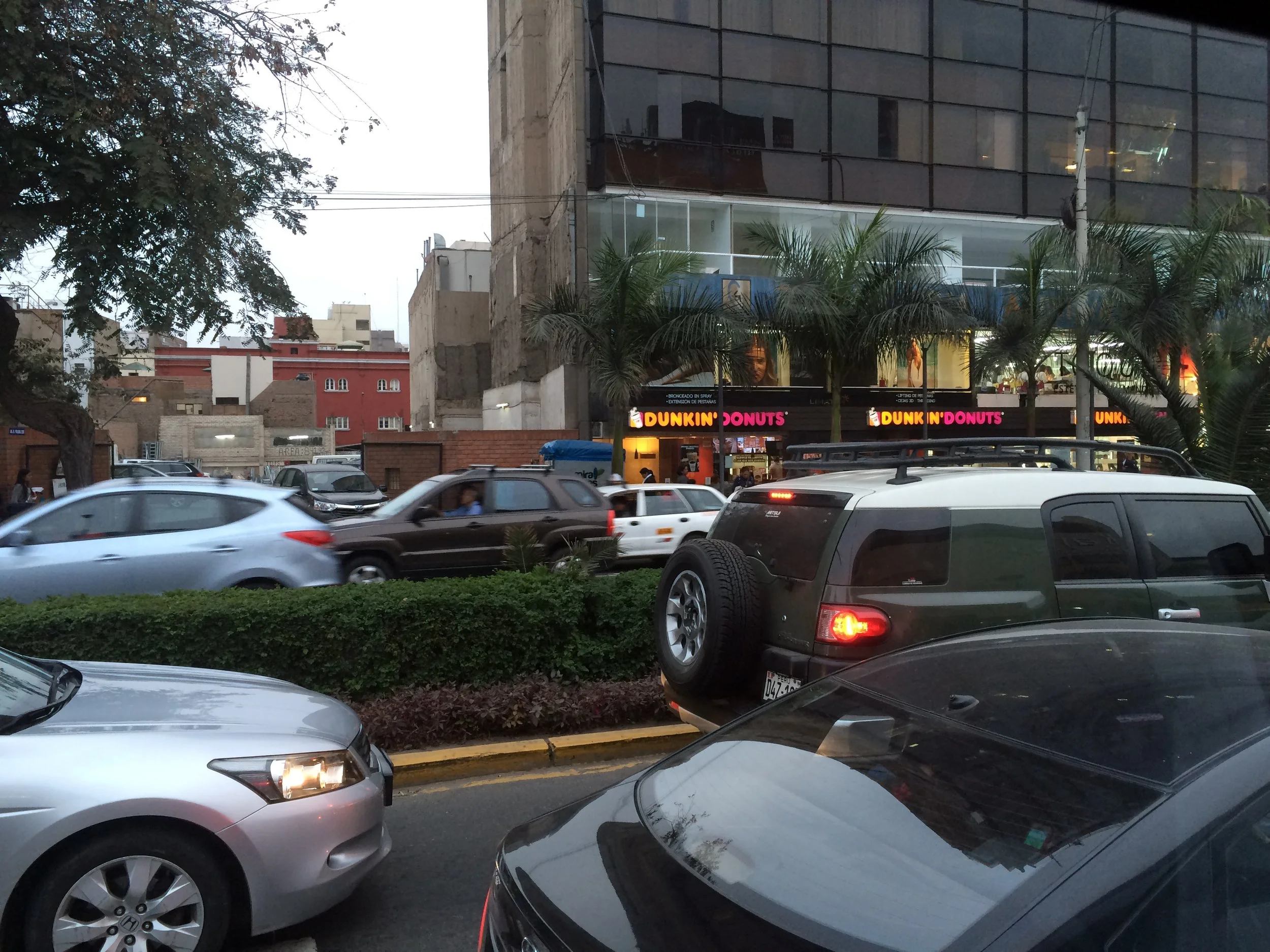
Even with our small group the movement around the city of Lima is slow and cumbersome. This is a sprawling metropolis which uses buses for mass transit–separate express bus lanes—but still a bazillion cars weaving in and out of traffic with a constant honking. We got caught in the afternoon rush hour which begins at 4:00 and goes to 8:00 pm. We called it quits; not having enough energy for bargaining at the grand market—what fun is that. 
After a little nap (many of you may have saw a photo of me sprawled out faced down—but remember I spent the entire night in a bus), we walked the close part of Miraflores neighborhood. The streets were hoping; the traffic was crazy. Our short term goal was to find this novel quick casual eatery known as “Sr. Saltado”. It is kind of like a cross between Pei Wei and Noodles & Company in the States, with a Spanish spice and flavor profile. It was a piping hot mixture of noodles, vegetables, spices and selected meats. Very good! As we walked home to the Antigua Hotel, we again stopped at the Chocolate Café to get carry-out pastries and coffee—con leche for Janet, the usual for me.   This gave us time to watch CNN and the debates. 

Our first "fast food" in Peru

A newspaper with the US debate coverage

Next day the front page of the newspapers covered the debate. We noticed the news stand because we decided to take the taxi (S/20) to the Cruz Del Sur autobus estacion and get tickets for our next three (3) legs locked down—Paracas, Nasca, and Cuzco; avoiding the hassle which had us using the Via bus line. We had the dates and destinations written out and the Cruz representative was a manager who was using our order as a teaching opportunity for a new employee. It was a good dialogue. FYI-Cruz Del Sur is a great Peru bus company—they also book tours—Linea is ok too.

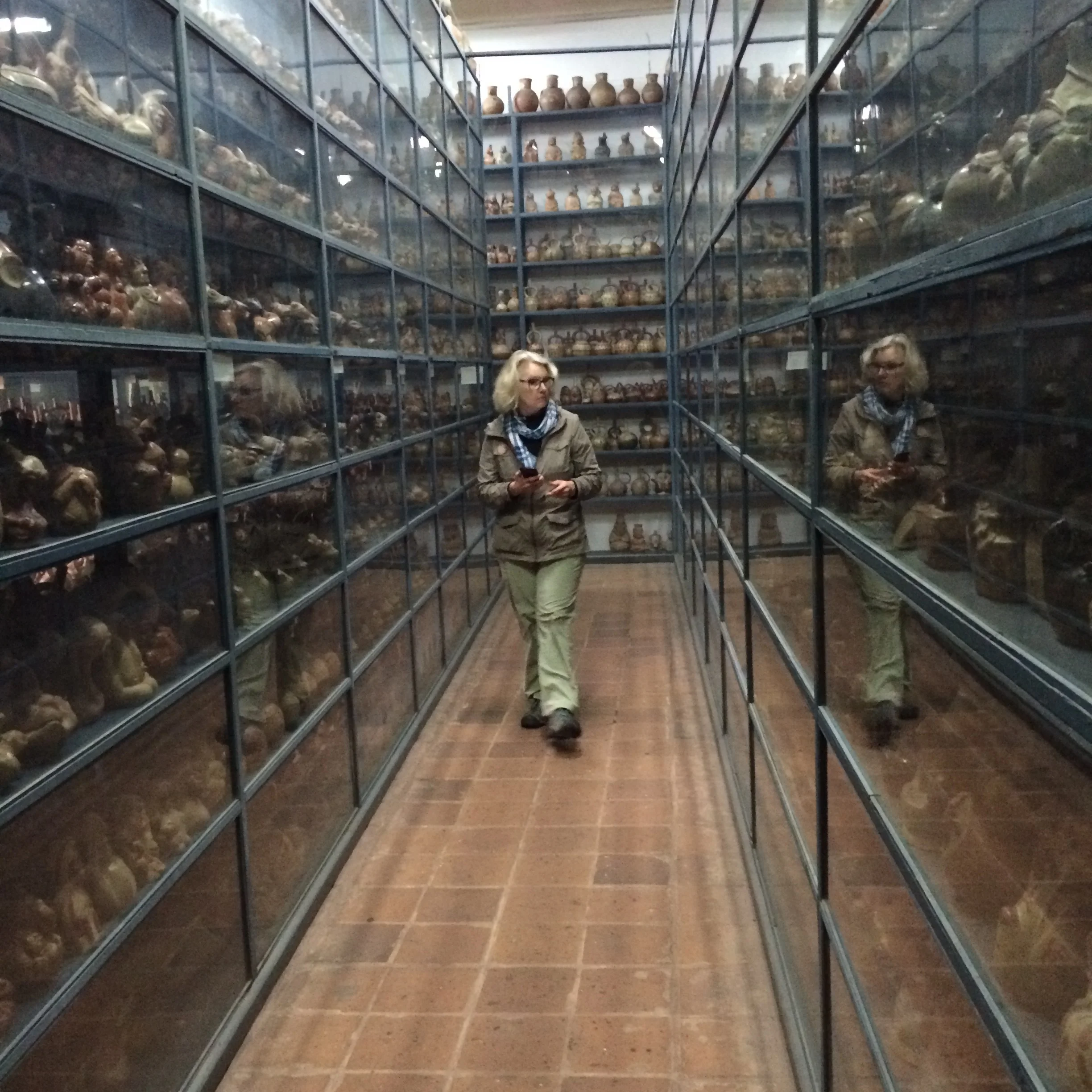
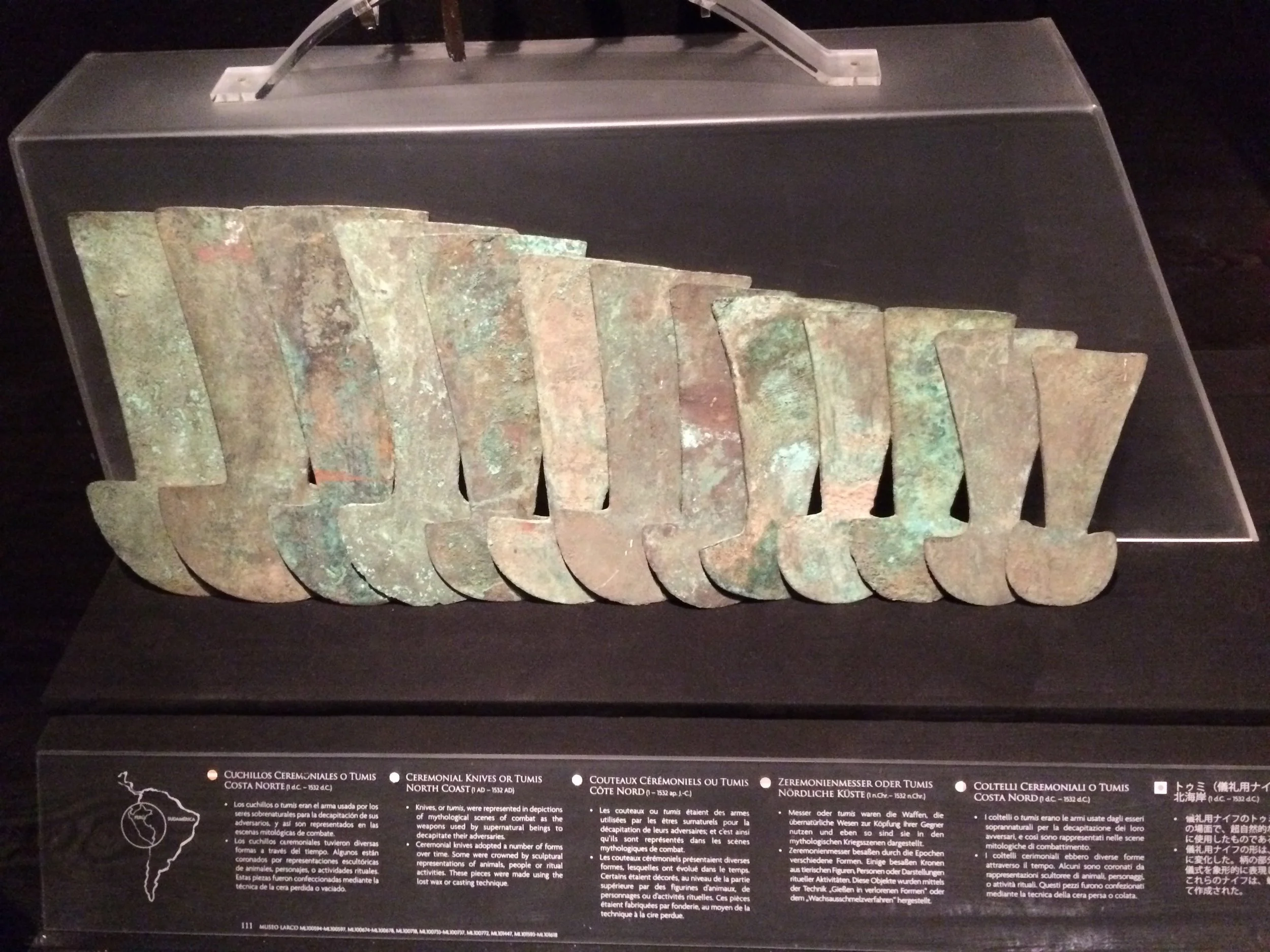
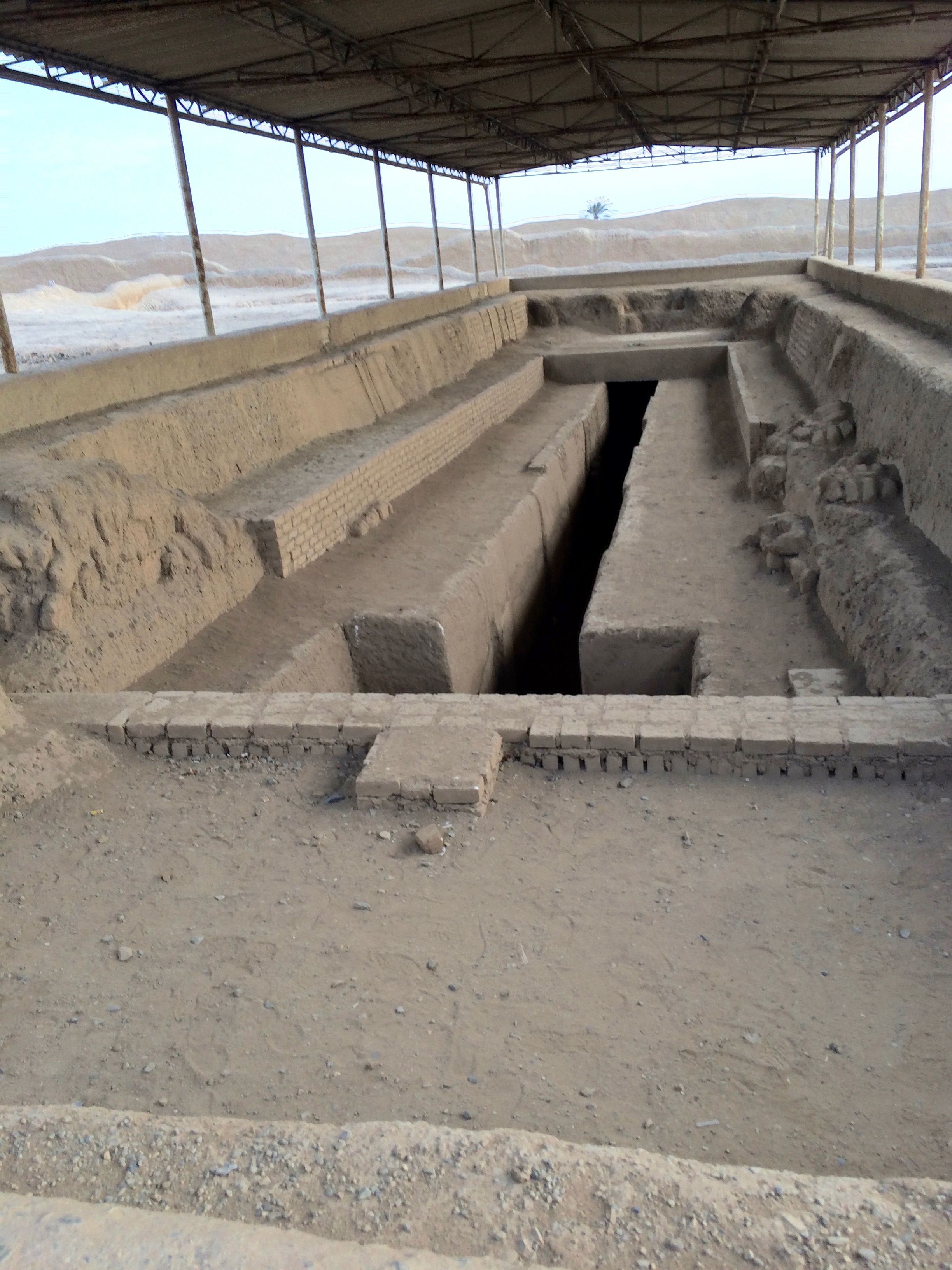
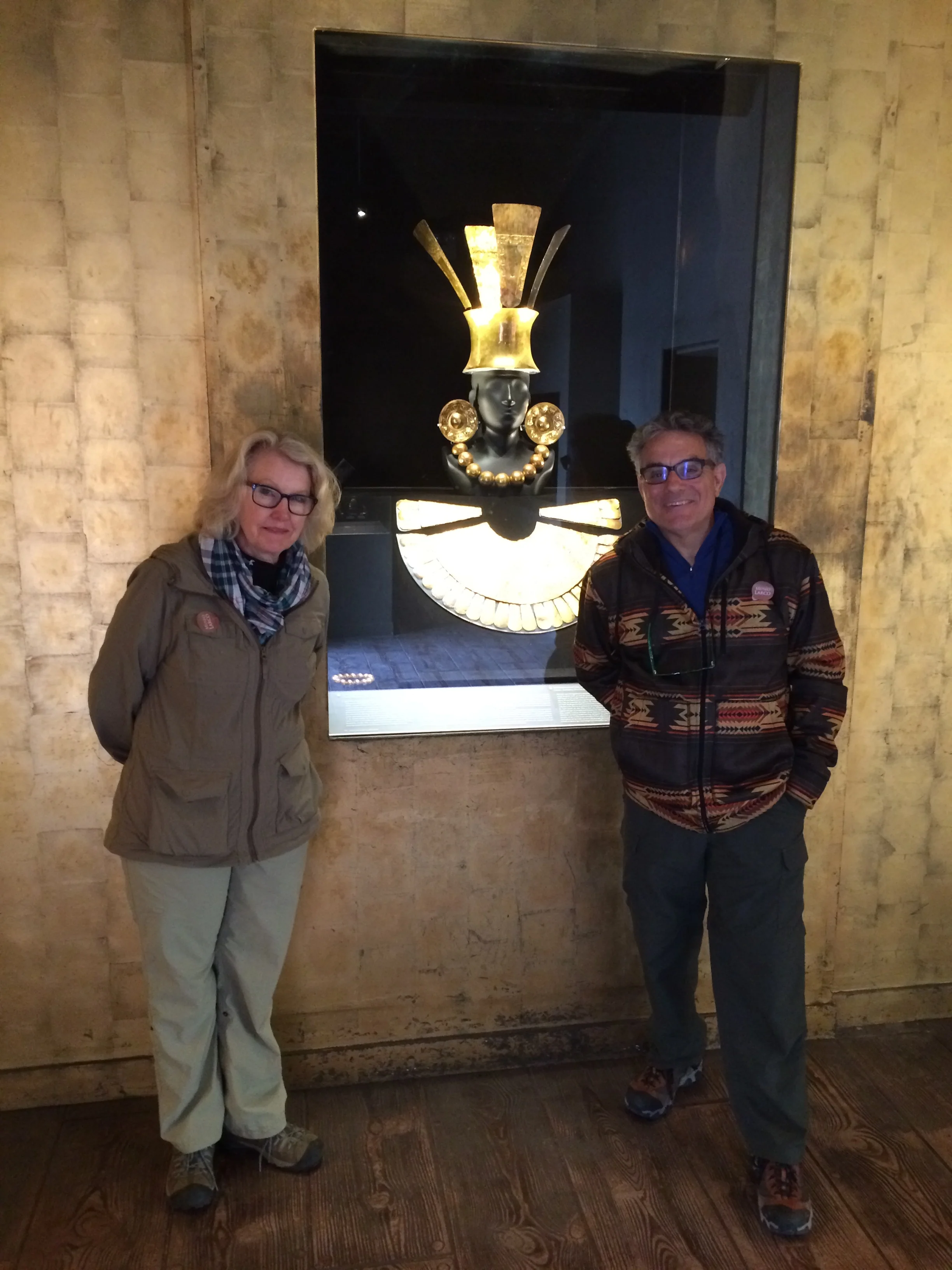
We continued our last day in Lima; taking a taxi from Cruz to the Museum Larco, a/k/a Museo Larco. Here, our guide “Michael Angelo”-he said- walked and talked us through the art, ceramic pottery, and displays of many of the total 87 Peruvian cultures. He was quick to point out that the Incas, who spanned the period from the 1100’s to the 1400’s, had only a relatively short reigning empire of 150 years. The so-called pre-Columbian tribes existed for centuries from 1000 BC to 300 BC; where settlements and evidence of the domestication of animals has been found. Between AD 100 and 700 metal work, pottery and textiles were advanced by the Moche, a civilization that built inverted pyramids, we saw, nearly 1500 years ago near Trujillio. At this time the Nazcas sculptured their famous lines in the desert. In the next four hundred years the Chinu thrived and built the city of Chan Chan, that we visited.   

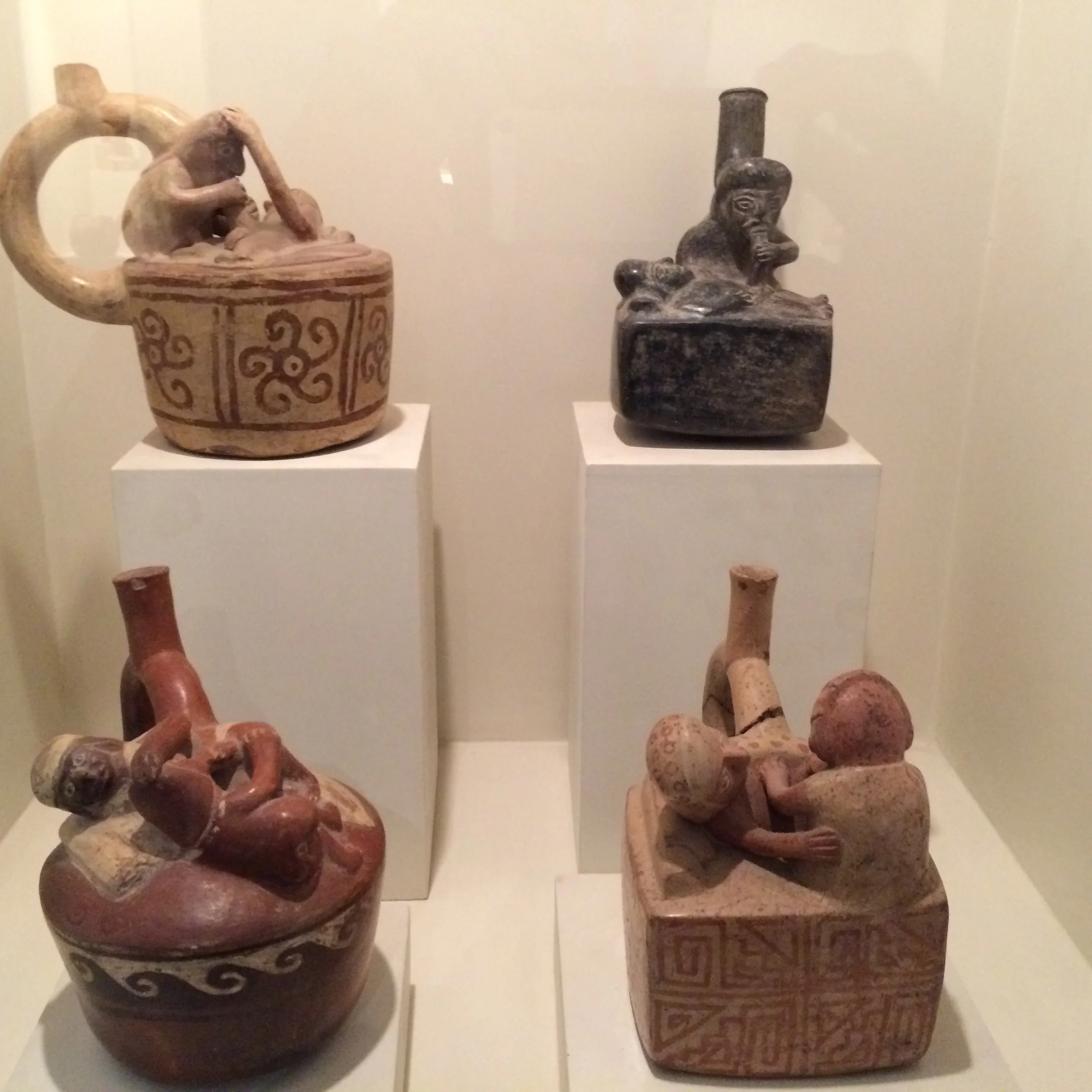
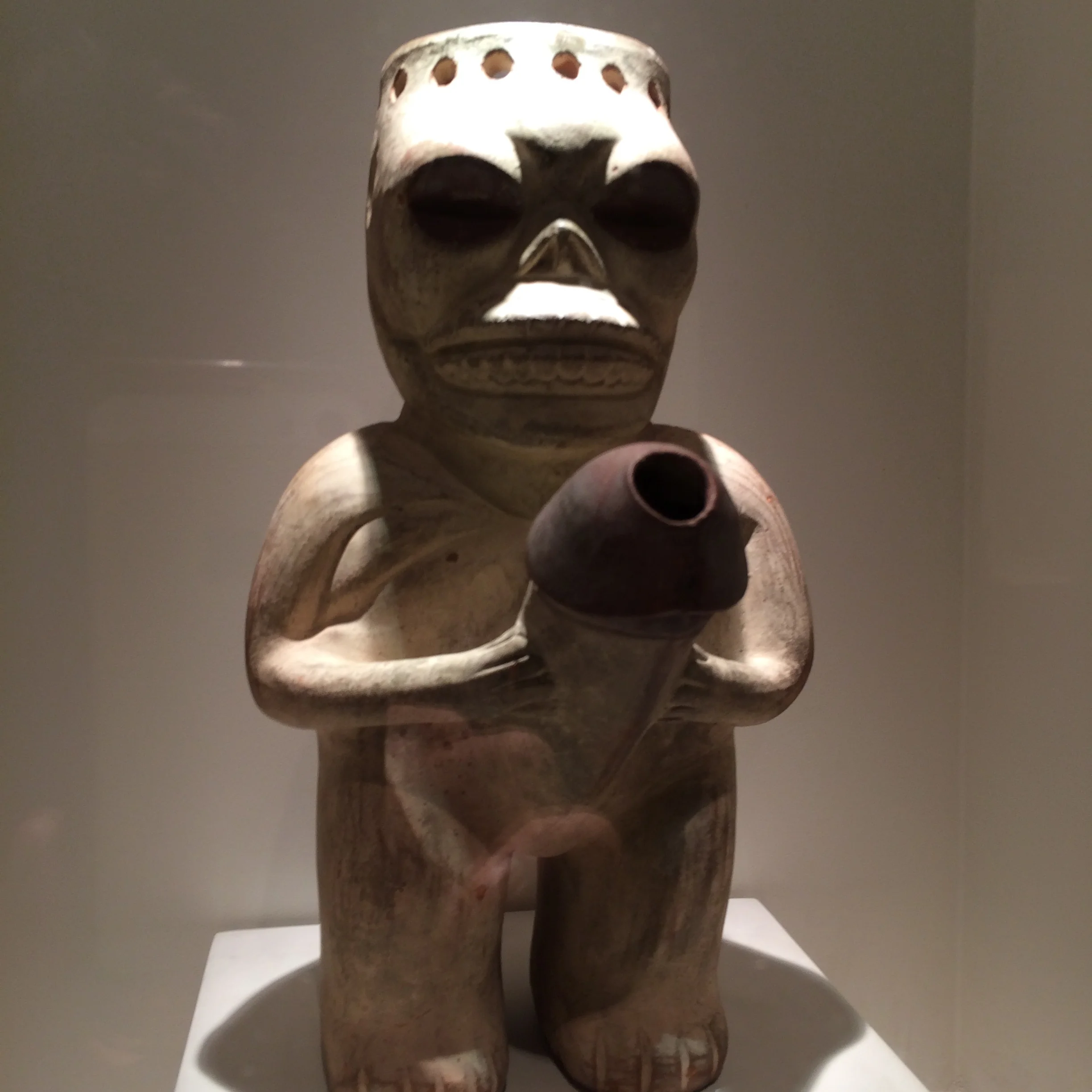
This museum has a separate section displaying a collection of pre-Columbian erotic pottery. Keep the school kids at bay. This pottery is remarkably explicit. The sexual practices of Peruvian men, women, animals, and skeletons in all combinations is pretty  kinky. The sexuality deals mostly with the concept of renewing the fluids that create life both in persons and in crops—at least that is what I was told. But some of those activities and positions really challenge the concept.

We left “Michael Angelo” and walked off to “Roky’s”, a broasted chicken joint with great fries and avocado salad ( I have not had a bad avocado salad yet), on our way to the second museum, Museum of the Nation. We declined a taxi and walked the 10 or so blocks.

This Museo de la Nacion also presents Peru’s many pre-historic civilizations, including the Nazca, Minoche, Chinu, and Inca that Janet and I will come across on our travels. It really is amazing what the various tribes and cultures of Peru were able to accomplish. We taxied home for another S/20, and thought we might stay in and work on the blog. This time we ate dinner at the Antigua—very nice—updated our notes and packed for our move to Paracas.


Off to Paracas
Huanchaco Peru

Frank at the beach, these are boats made from reeds

When you travel to Trujillo, you do so for the archeological history. We awoke from our all night bus trip at 5:30 am and arrived at 6:15 am. The best bus sleep I’ve ever had. Out of the bus-catch a cab. We chose to decompress and actually stay at the nearby beach town of Huanchaco. I used my Spanish “Dime la coste Hauna Chauncs? Response S/20. “OK”, I said. (S/20 = $7). We were booked at Casa La Amelia, a small place right on the beach, near the portion of the waterfront favored by less experienced surfer dudes and chicas from around the world. The waves really do crash into shore. The ocean water is cold. The weather is funny—overcast until noon in this month-no sunshine until late afternoon.  But when the sun is out, it is like paradise. And that is what I liked about the place. I could sit on the second story deck in front of my bungalow and watch/hear the waves crash and write notes. At dusk, the sun set directly over the double gates of the property.  Our bungalow was very bohemian, rustic and basic, which Janet did not care for. We had a separate private bath, which had polished cement walls.  The place would have been better suited for guys only, like deer camp. I think our proprietor was concerned about our outlook at the level of amenities for this surfer hang out.   We left early, but the town was inviting, the restaurants were good, the view spectacular, and the tour groups friendly. I think if we had moved a little to the north side of town and upgraded, we all would have been satisfied. 
Huanchaco Peru from above

Point-Counter Point from Janet

I (Janet) selected Casa Amelia for the location, on the beach.  The reviews in Booking.com were very good and it was cheap, $20 per night.  The reality is this location is for and reviewed by young broke surfers.  Frank is being kind in his review, waking up on our first morning, cold due to no heat and only 2 blankets supplied, I suggested we cut our trip to Huanchaco by one day and use some of our points for a nice hotel in Lima, Frank jumped at this idea.  See photos below

Our lunch show

Our HuanchacoTour company was great. We made arrangement for site visits the next morning. We could leave our suit cases in storage with them while on the trip. Big relief, so we checked out of Casa La Amelia and had an early breakfast at “Surf Burger”. Great omelets, with entertaining graffiti and prose drawn by would be authors all over the walls. The owner was a charmer from Oklahoma, USA. We talked about the town and got tips for our future travel.  The van arrived and we made an instant friendship with a charming Spanish lady from Barcelona. We knew she would be fun when she could not hold back a wide smile when I, Frank, struck my head while entering the van. I chuckled and made a joke, and she picked up on it. We all later shared a table at lunch. She had discovered a fixed price 3 course meal for us at the “Sombraros Restaurant”. It had a stage with Spanish style tap/flamingo dancers. Great fun! 

In the morning we went to the Moche ruins. In the afternoon we went to the Chinu ruins.

Here is a brief, unofficial, history lesson: The renowned Incas of Spanish Conquistador fame, were only an important Peruvian culture for 150 years. The Chinu and Moche pre-date the Incas and thrived for 800 years. The Moche were at the point of collapse and absorbed contemporaneously with the rise of the Inca military conquests. There were actually 87 distinct tribal cultures in Peru, separated by time and the size of the land mass of Peru which is geographically separated into 3 areas: coastal, mountain and jungle.   Some of these tribes lived and survived hundreds of years before Jesus (BC) walked the earth. Janet and I are going to study these tribes more as time permits. The Museum Larco and the National Museum of Anthropology in Lima will do nicely.
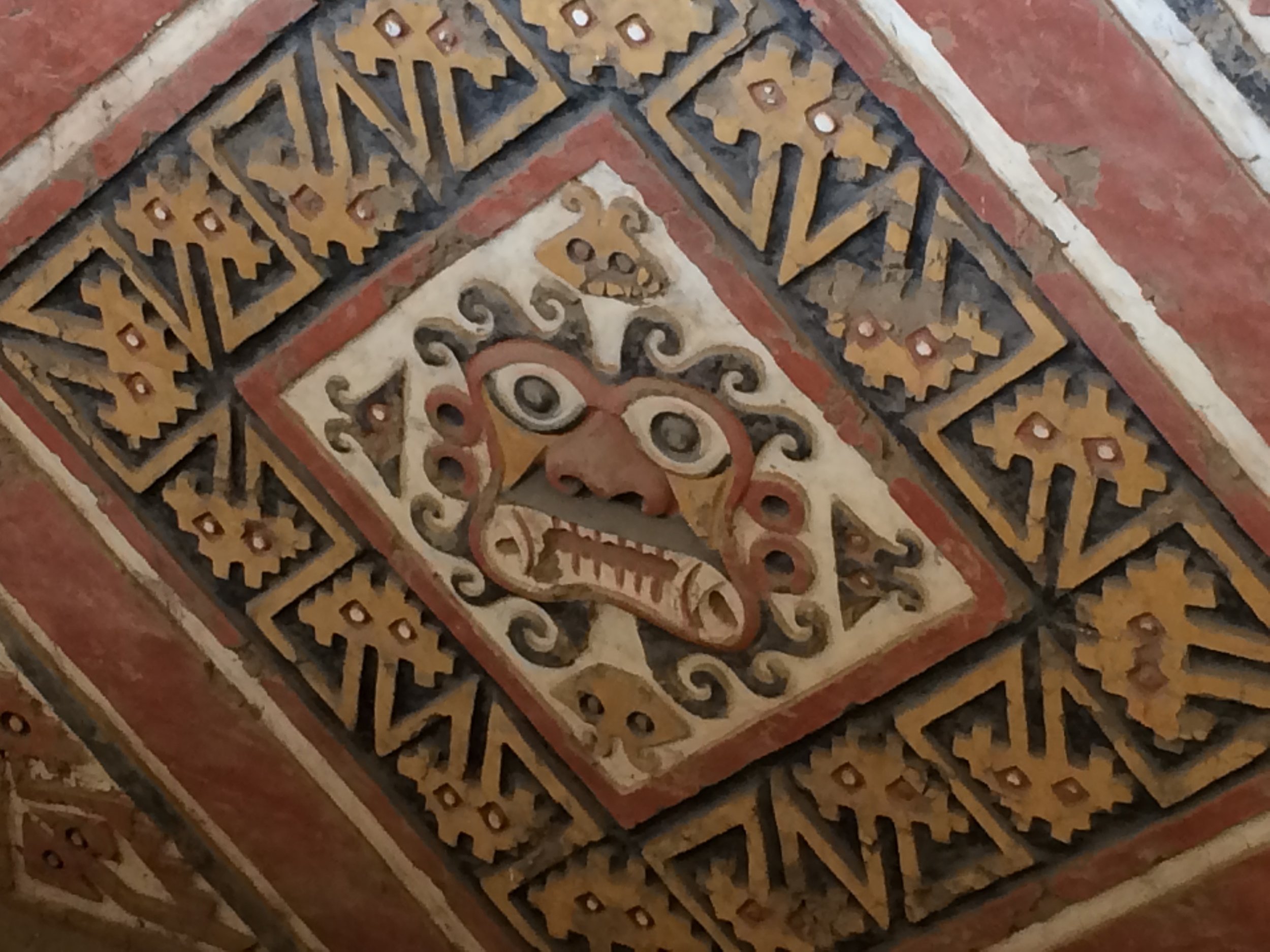
Right now, we are simply awe struck by the Moche temple and city site. The walls are painted or frescoed in bright red colors with the face of its god repeated with varying expressions—anger, sadness, happiness, and reverence. Like most of these tribes believe, the world is broken into 3 levels: The sky as represented by prominent birds; the earth as represented by animals, mostly felines; and the underworld represented by snakes, lizards, and dragons. Many of the paintings and artifacts depict men and women interacting with the creatures of these 3 levels, some sexually, some reverently, some merged in form. The weather (i.e., winter solstice) and ocean currents are recognized and charted. When El Nino strikes and crops are destroyed, the gods must be appeased, so sacrifices are made. The Moche chose to honor the gods by combat between their greatest warriors. The winner must knock the head dress off of his opponent and secure him. The vanquished is sedated by the priest (coca plant) and then partially decapitated so the blood gushes. 

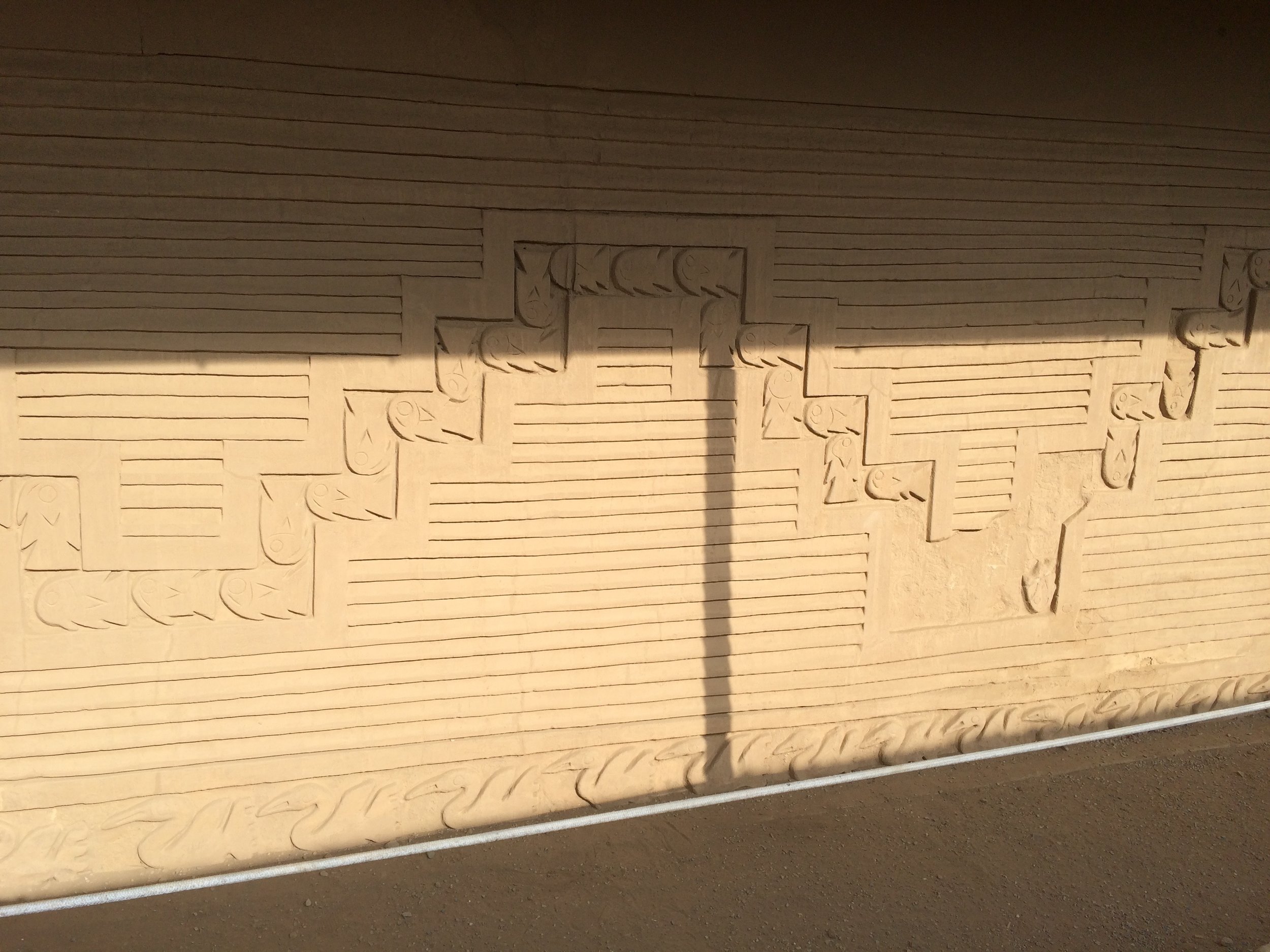
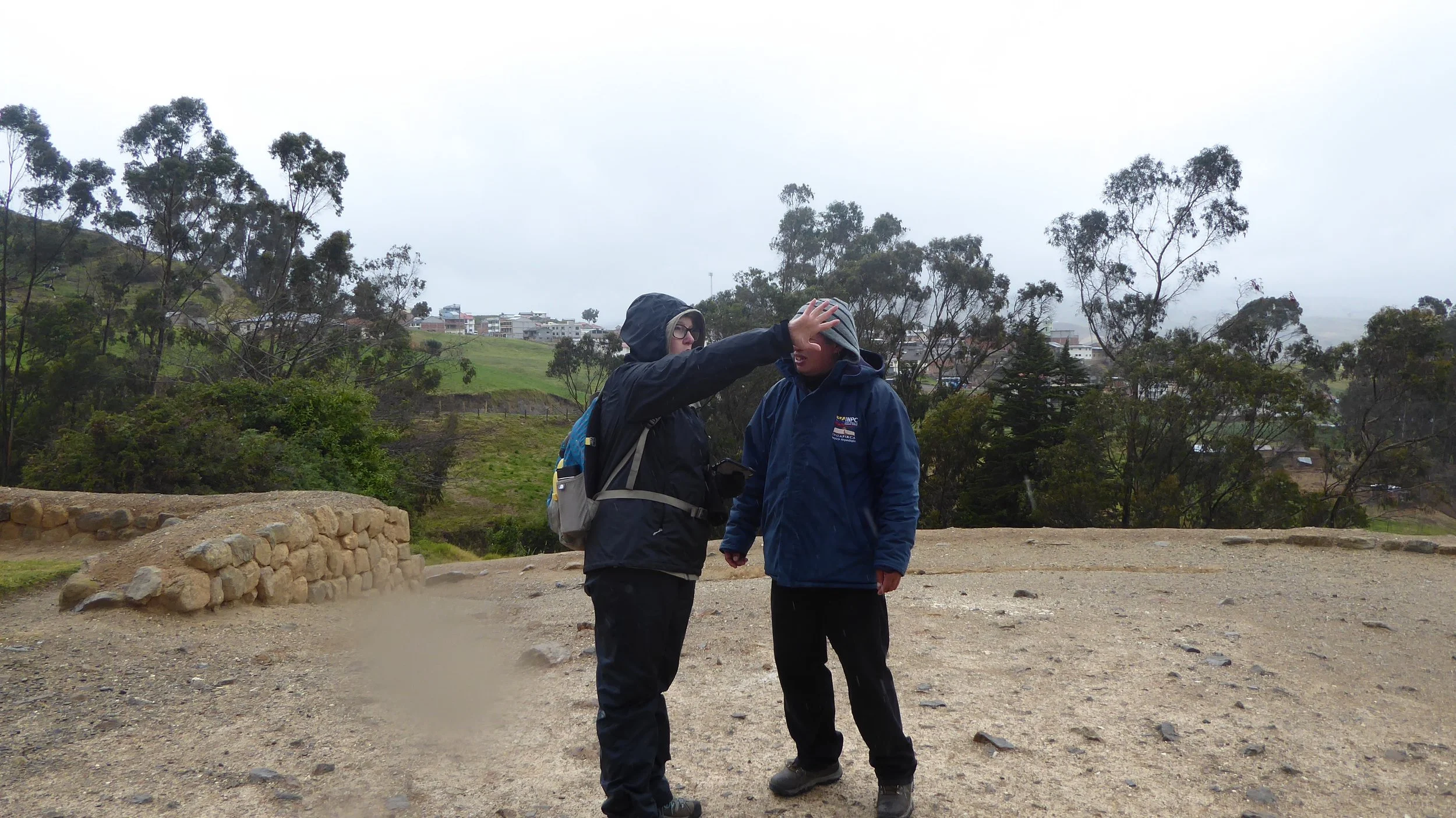
The Chinu temples are not as ornate, but the site of the city is far larger housing the Temple of the Sun and then the Temple of the Moon. The Chinu generally sacrifice young women, because their gender represents the re-birth of the earth. At the temple of the moon, the bodies are cascaded down into the large reflecting pool. The Chinu site also sports an intricate weaving pattern that represents the fisherman of the coast. The day is full of information and we were lucky to have our English speaking guide, Rafael, (see picture) and his friend Greta, from Switzerland. We paid for an English speaking guide. But surprise, we were the only ones really with him, like a private tour for 7 hours (10-5), while the rest of the large Spanish group (30) had a separate guide.

The tour was to travel to Huanchaco to give others a chance to see the beach town. Rafael agreed to take our luggage from storage back to the office in Trujillo, only 5 blocks from our Via bus station. He saved us S/20 and a bunch of extra time. We parted ways with several big hugs and handshakes—nice young man.  Note: we booked our bus later then we should have for Sunday travel. Thus, the best carriers were filled and we then chose Via, which still offered a semi-cami or 160-degree chair/bed. The bus was sufficient. We checked in at 10:30 pm and we fell asleep quickly.

Next stop Lima Peru.

A great meal with the sunset

The bus ride from Ecuador to Peru

The van to Loja, good thing we had Mary protecting us

We left Cuenca early Wednesday September 17.  We expected the full trip to our first stop in Peru to be over 24 hours so the plan was an over-night stop in the town of Loja, Ecuador.  At our hosts suggestion we opted for a private van transport to Loja, this avoided the dirty Ecuador buses that stop every few minutes for passengers and food vendors trying to sell us something.  The ride was better, but the driver also went at top speed up and down the mountains, so fast that is was necessary to hold on or you would slam against the side of the van.  Frank managed to sleep, I tried hard to focus on my book on tape since all other forms of entertainment were out of the question. 

As we traveled south the landscape got dry and the towns and houses changed to very rural and very poor.  Most homes had no windows, only dirt, garbage and stray dogs in the yards, always small children running around. 

We arrived in Loja in the early afternoon and after some challenges our taxi found the hostel we selected by the bus station, so we could be close for our early morning departure. This was not a great hostel, next time we stay in the town, not by the bus station. 

We left Loja at 7 am traveling again on the Ecuadorian style bus, bumpy, dirty and now we were in the first row seats, no leg room, no air conditioning, a really miserable ride.  After 4 hours we stopped just outside of the border for lunch.  Frank and I opted to eat our peanut butter ( manta) and jelly sandwiches I prepared and did not venture out into the town. 

At the border we were instructed to get off the bus and stand in a line at one window to a small house to complete our Ecuadorian paperwork.  Once this was completed we then had to walk across the border, a road with a very small river, or stream by American standards to another window to complete the Peru paperwork.  It was hot, very dry and the total process took around 2 hours to process around 20 people; not a cattle call.  Needless to say it was an exasperating experience. True to our traveler voyage we were with 2 other backpackers, from Germany and Denmark, nice guys and we passed the time sitting on the side of the dirt road, chatting about long-term travel, Frank always the jokester, asked the guy from Germany if he could tell the border guard in Spanish : "if he does not let us into the country, we cannot spend money"-- very funny, the guy declined, but they both laughed. "Well, I got you to smile, me too", said Frank.

Back on hot bus for another 4 hours the town of Piura Peru, the plan was to have 2 more stops, each ride 4 hours.  Piura was large, hot and had several large sections with hundreds of steel corrugated shacks surrounded by a wall with the name of the area.  We were reminded of "Soweto" in Johannesburg South Africa. 

Frank with his beer at the Chinese restaurant

The bus stations in Peru are small depots servicing single bus companies, like car rentals in the States.  Once we arrived we needed to go to several bus companies and check the times for the onward journey.  We had no Peru money yet. The city was large and we had our heavy bags, uneven streets and sidewalks and people everywhere, so we opted to pay a tuk tuk, which was a motorcycle with a seat behind it to take us to what we thought was the best company.  Our Danish friend helped our negotiation to get the guy to take $1 coin from Ecuador. No luck at the depot-- the bus for the next town was hours away without a guarantee that we could get to our final destination.  So back on anther tuk tuk, this time with the help of 2 female police officers, to another bus station where they had a direct 8 hour bus.  We had missed the bus on our plan and the next bus did not leave for 6 hours and traveled all night, but they told us they were running a “special” only 50 sols per ticket, a bargain.  We made a quick decision and purchased the ticket with visa. We still needed cash money.  Our luck continued, a bank was next store, and air conditioned!! We were able to get our Peruvian Sol’s. Next , we needed food. Our agent at the bus station recommended an Asian restaurant ( Chifka) across the street, it turned out to be good food and Frank was able to get a very cold beer, perfect after the long hot day on the bus.  After a few hours hanging out at the Chinese restaurant watching Peruvian game shows in Spanish we opted to go back to the bus station and watched “Rat Race” on the IPOD.  What a hilarious movie.  I am sure we were the sight, wearing our headphones and  laughing and laughing at the bus station.

Our all night bus

The bus was a different world from the buses in Ecuador.  Large leather seats that recline to almost flat, bottled water, a meal, a movie in English.  (Did we mention that on all the buses in Ecuador they play bad shoot 'em up movies in Spanish, very loud.  Claude van Damme and the like).  We slept all the way to Trujillo, Peru.


Total travel time from Cuenca Ecuador to Trujillo Peru – 48 hours

Time on buses – 22 hours

4 peanut butter and jelly sandwiches, 6 bottles of water, and the best beer ever in a Chinese restaurant.

What we did in Cuenca

We checked out of Banos the night before using a credit card for the first time (5% up charge); we wanted to preserve our cash. Having cash, and especially smaller bills is always an issue. We left early in the morning, walked to the bus station; We like to leave early because there is little traffic when wheeling the bags. We paid a little more to get an express bus; no roadside stops but direct to Cuenca.  Between the constant stops, food peddlers and excess exhaust, we are fed up with Ecuador buses and wanted an easy 4 hour trip.  However, after about 2 hours the main road was closed and the driver had to back up and try different roads through small farm towns.  But as would be expected we ran into a dead end. Our driver was skilled; he turned our large bus around by Y-turn in the tiny front yards of 2 peasant home. He didn’t kill one chicken or dog, but he sure entertained the neighbors who stopped their chores to watch. We actually clapped when he was done.

The Bus Station were I almost lost Frank

At one point, the bus stopped at a small depot for a quick break, Frank exited the bus for a comfort break and to buy some soda (at my request).  After a few minutes, the bus started to pull out of the station, without Frank or a French man sitting by us.  Frantic the Frenchman's son and I got into a very heated argument not to leave, the boy actually was straddling the bus steps and the sidewalk trying to keep the bus from moving.  The Frenchman came back first and upon realizing Frank was nowhere to be found, ran back into the station to find him.  I am sure he would be at that station, no money, passport or wife if that Frenchman did not help.

I was running toward the bus at the same time I saw the Frenchman. He motioned "common on". I was trying to buy two cokes, but this little old sales lady would not let me take the bottles--again i was faced with a person that poured the coke into 2 plastic bags and tied a straw into the bag. Tic-Tic, Tic-Toc. I was breathing hard and felt stressed out as I jumped on the bus.   

Finally, we arrived in Cuenca at dusk after 8 hours; these delays we have found are common. We hailed a taxi for a drive to “Cuenca Rooms”. I became a little jittery when the taxi guy didn’t know where it was and had to call dispatch. We drove far from the bus station and I said to Janet: “Maybe we need a place with an actual name”.  In any event, we drove into the university district and once we walked in our proprietor Juan, greeted us. We met his wife Gabrielle the next morning. This place was clearly the best place we had stayed, having very modern fixtures and a European nature. We sighed with relief. 

Between discussions with our host and trip advisor we successfully found a nice small bar on the river that advertised full coverage for all US football, so off we went on time for the MSU/Notre Dame Saturday night game.  US television is a problem in South America, most networks and Amazon Prime is blocked.  The owner of this bar was an American and he streamed all football games through a purchased web-site. It was great to see the game, but NCAA football clearly is not a draw in Ecuador, we were the only people in the bar for most of the game, the bar staff, mostly Ecuadorians did think we were funny when we jumped to cheer the goals and the ultimate MSU victory.  The bar owner invited us back on Sunday for all day streaming of NFL Red Zone, assuring us that he gets a big crowd for the pro games, but we declined in favor of visiting our new destination.

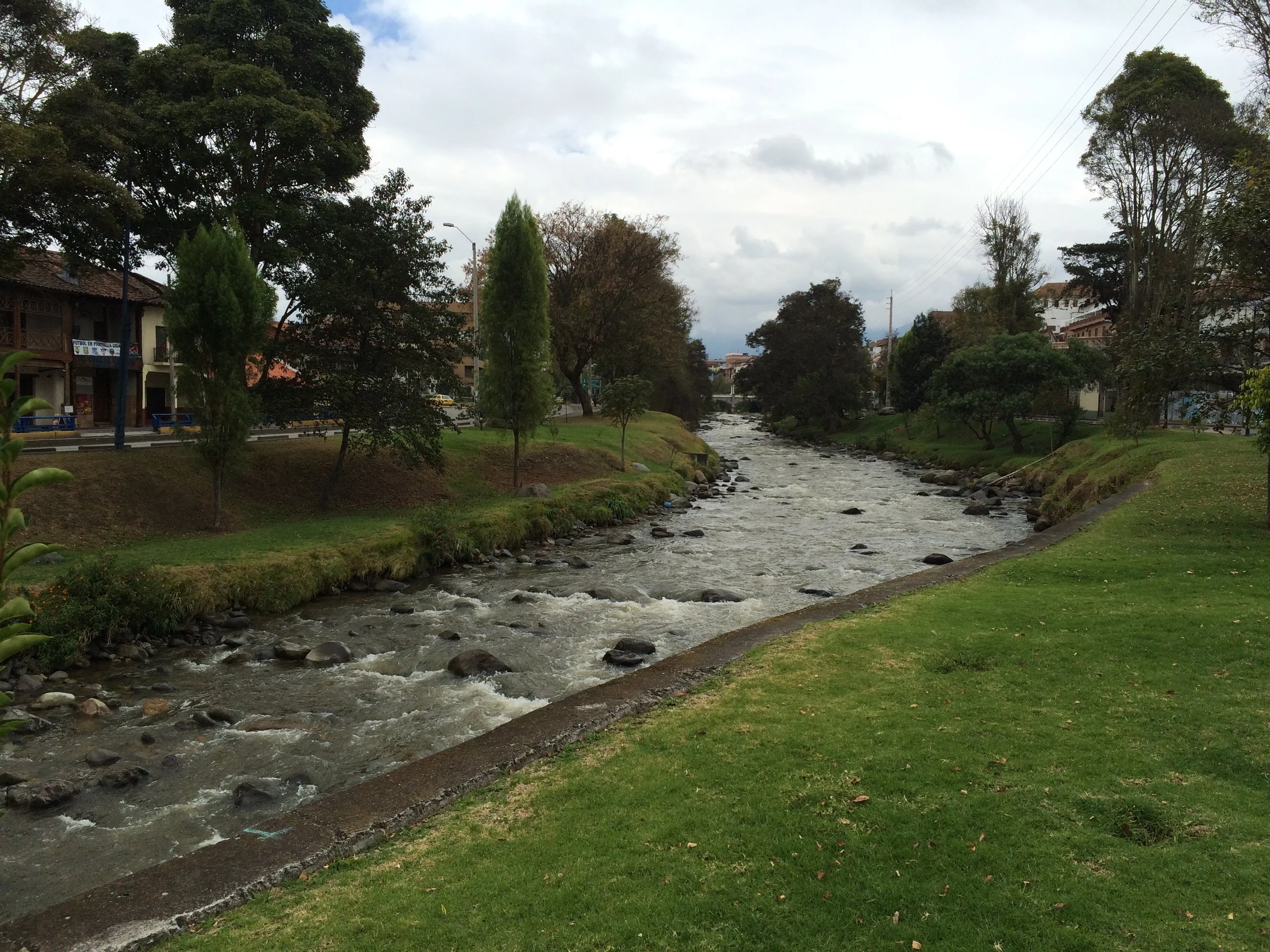
One of our plans is to tour the larger cities using free walking tours so on our first day in Cuenca we found a tour starting in the main square, as most of them do.  This tour was small, just 4 of us total and our local guide who spoke very good English.  The tour was great, we had a great overview of the city including a trip to the local market with food samples, see Frank below with our samples, a trip to the Panama Hat Factory and a small INCA ruin right in the city. 

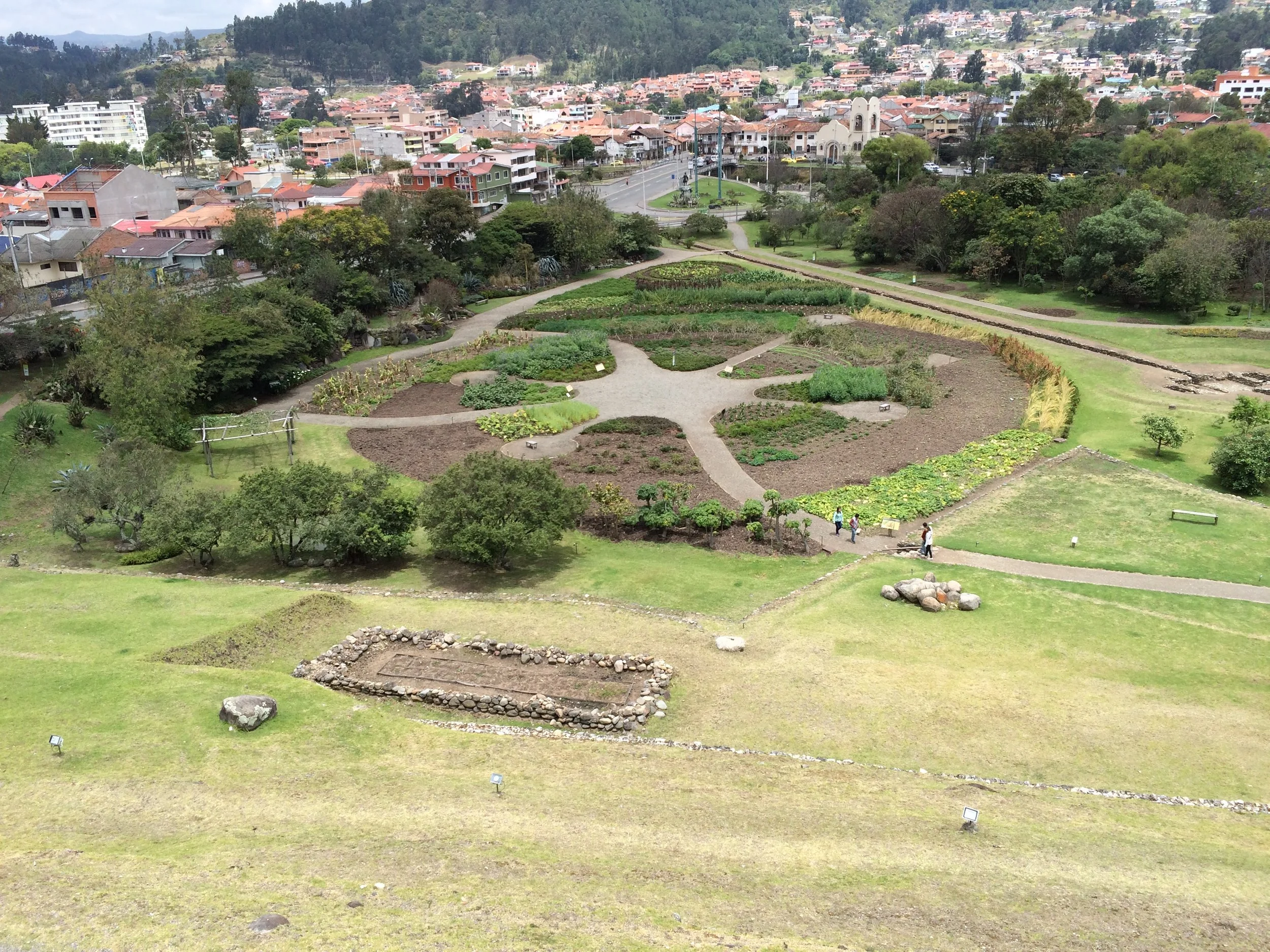
Our second day in Cuenca began with big plans to visit our first large INCA ruin, on our own without a tour guide.  Prior to leaving Janet had thoroughly researched how to take the local bus, where the site was and how to get an English speaking guide at the site.   By doing this on our own we expected the total cost would be $25, verses the $100 per person the tour companies charge. 

So off we went in a taxi to the bus station, just a little late for the 9:00 am direct route bus.  We have already mentioned that our Spanish is bad which is really bad when you are in a hurry. 

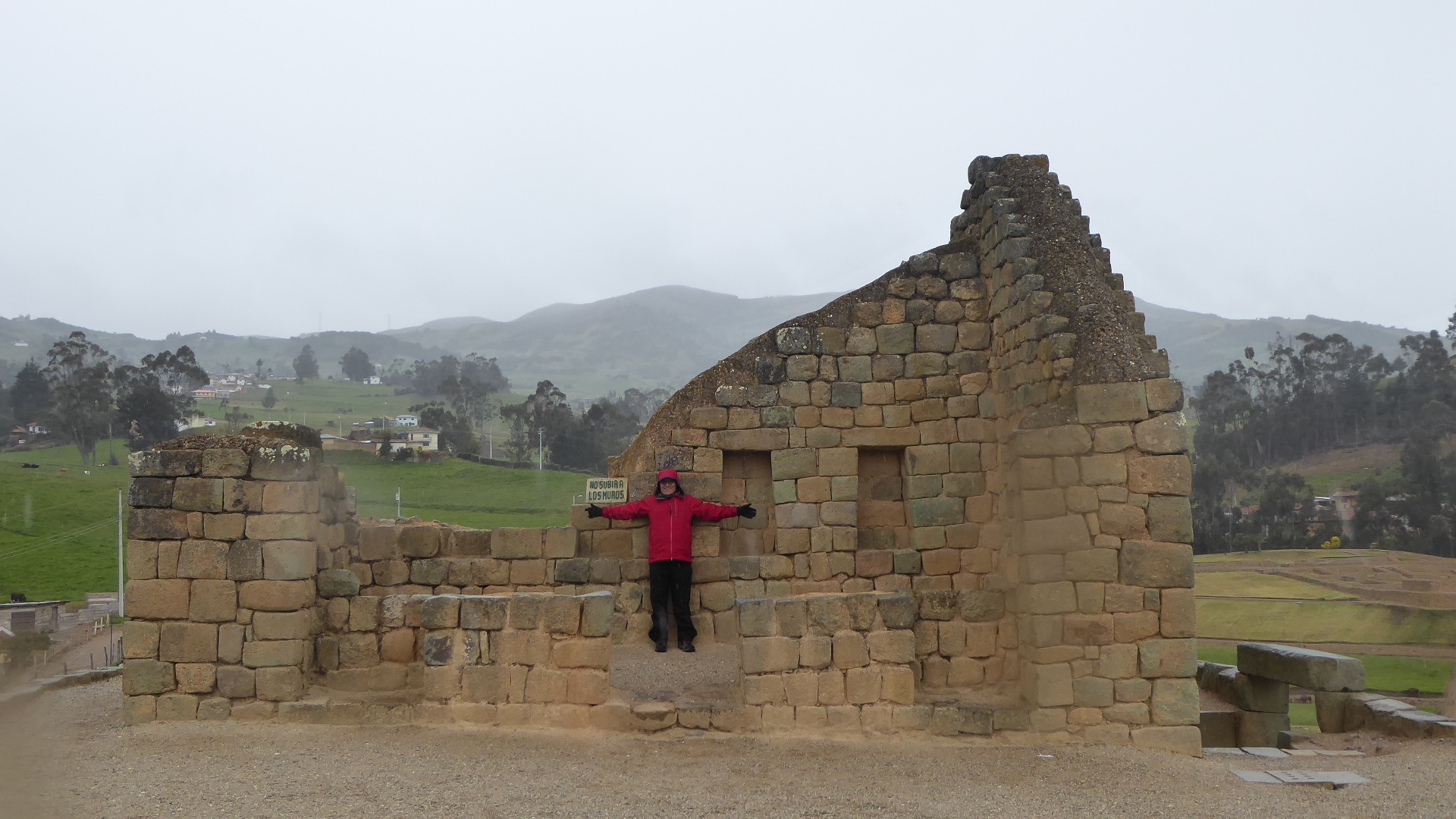
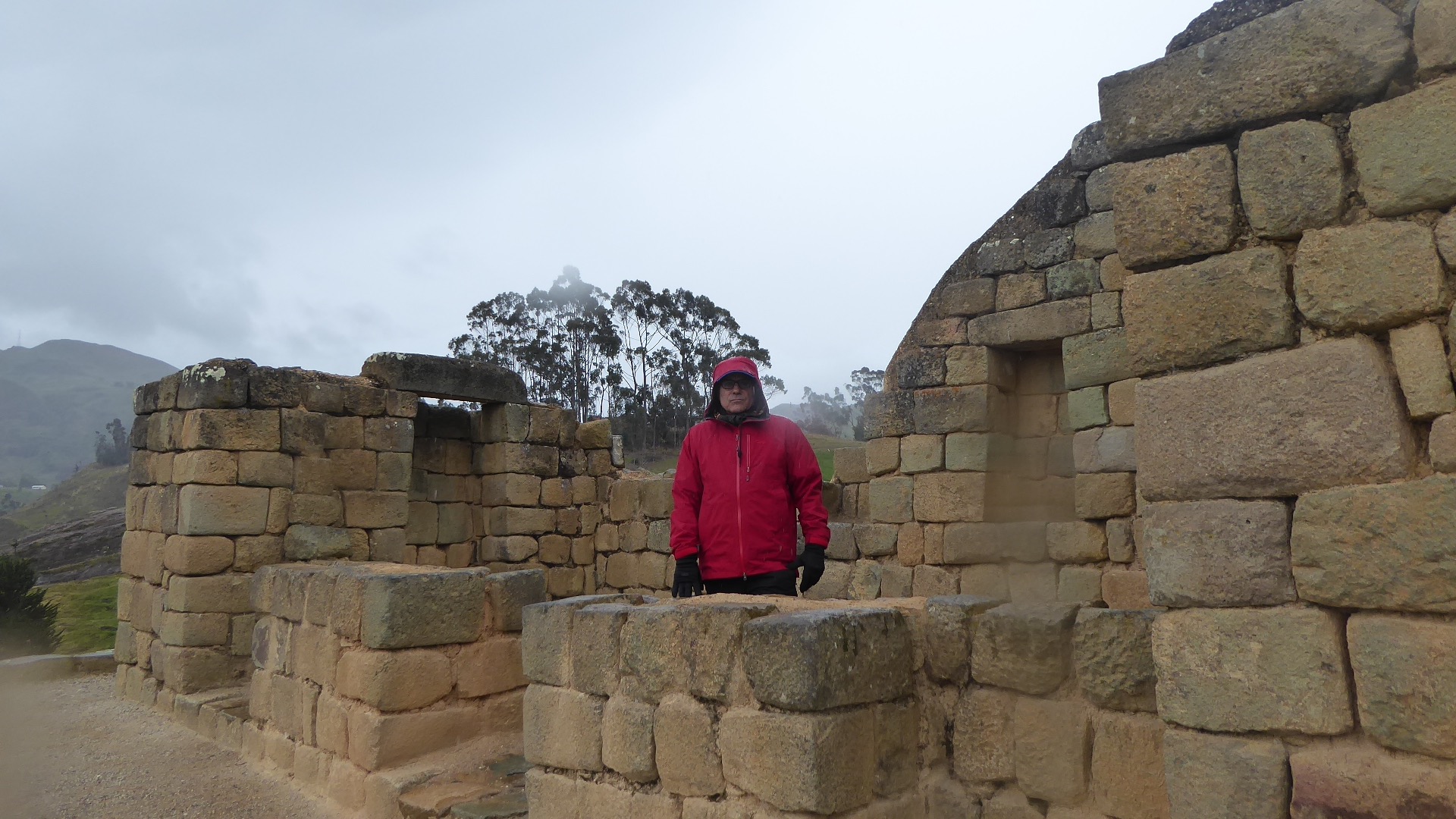
At the bus station we went to the information booth to inquire what bus company to buy the tickets, after some searching we managed to find the office, used google translate to purchase the ticket, wait for the attendant to find change for our $20 bill and she directed us, we thought, to where to go, with 10 minutes to spare.  As we tried to enter the bus loading area we were stopped at a metal turnstile with an attendant that waived us away, we thought upstairs? so now we start running, from one end of the station to the other, I am sure we were a funny site, this station only had local people and here Frank and I are running back and forth trying to figure out how to get to the bus.  The issue was the turnstile, you have to put in a dime to get through, that was all we had to do, add one measly dime.  So once we paid we go to our bus dock at 8:59 and, no buss, already gone, too bad, they all leave EARLY in Ecuador. After some loud discussions, hand jesters and pointing at our watch, we got a refund for the fare and were directed to take the “transfer bus” to a secondary town where we could change to the bus that takes us to the site.  Long story, but we did make it and this bus was truly a "chicken" bus, old, windows too dirty to see out of, twice the amount of black smoke.  On the upside the people on the bus, all locals, were great, giving us instructions at each stop, how long we had to go, and after TWO hours we made it to the ruin, just in time for a major downpour!  But I try to always be prepared so we took out our rain coats and pants and requested our tour guild, The attendant looked very surprised that we wanted to proceed, but after a small wait a tour guide with very good English showed up and we got a private 45-minute tour, in the rain.  It was great, just like football games.  We showed up 45 minutes early for the direct bus and had no issues finding our way home.  Dinner was very good burgers and fries, after an 8 hour outing Frank pronounced he needed comfort food.

Lunch at the local market

On our last day in Cuenca, we took it easy, one museum visit and back to the local market for a traditional lunch.  Lunch was very good, but did not sit well on our tummies and we had our first issues with food, not great for the next day of full bus travel.

Overall Cuenca was a great city, a nice mixture of INCA, Spanish and European.  We felt very safe walking at night and our B&B was the best stay so far.

What we did in Banos

Banos (pop. 15000); is a very popular tourist destination. Some of our traveling friends thought it too touristy, but I liked the town. We woke up in Mindo at 5:00 am to catch the earliest bus. We walked a few blocks to the station by 6:00 am, bought our tickets, had coffee at the only open restaurant in town at that hour, and loaded up prior to the 6:30 departure. Buses are always on time here. The attendant reminded us to keep our backpacks close, with bigger luggage placed in under storage.  We met a nice French couple. Typically, we found that even the bus stations do not have change for larger bills, i.e. $20’s, and this was the dilemma this couple faced. She asked “Polle vue Francais”, I said “No”, I can’t even spell that phrase. We suggested she go to the same coffee shop which she did not know was open. She knew English and got her change and later she and her fiancé’ became friendly, helpful, and traveling companions. She spoke Spanish too.

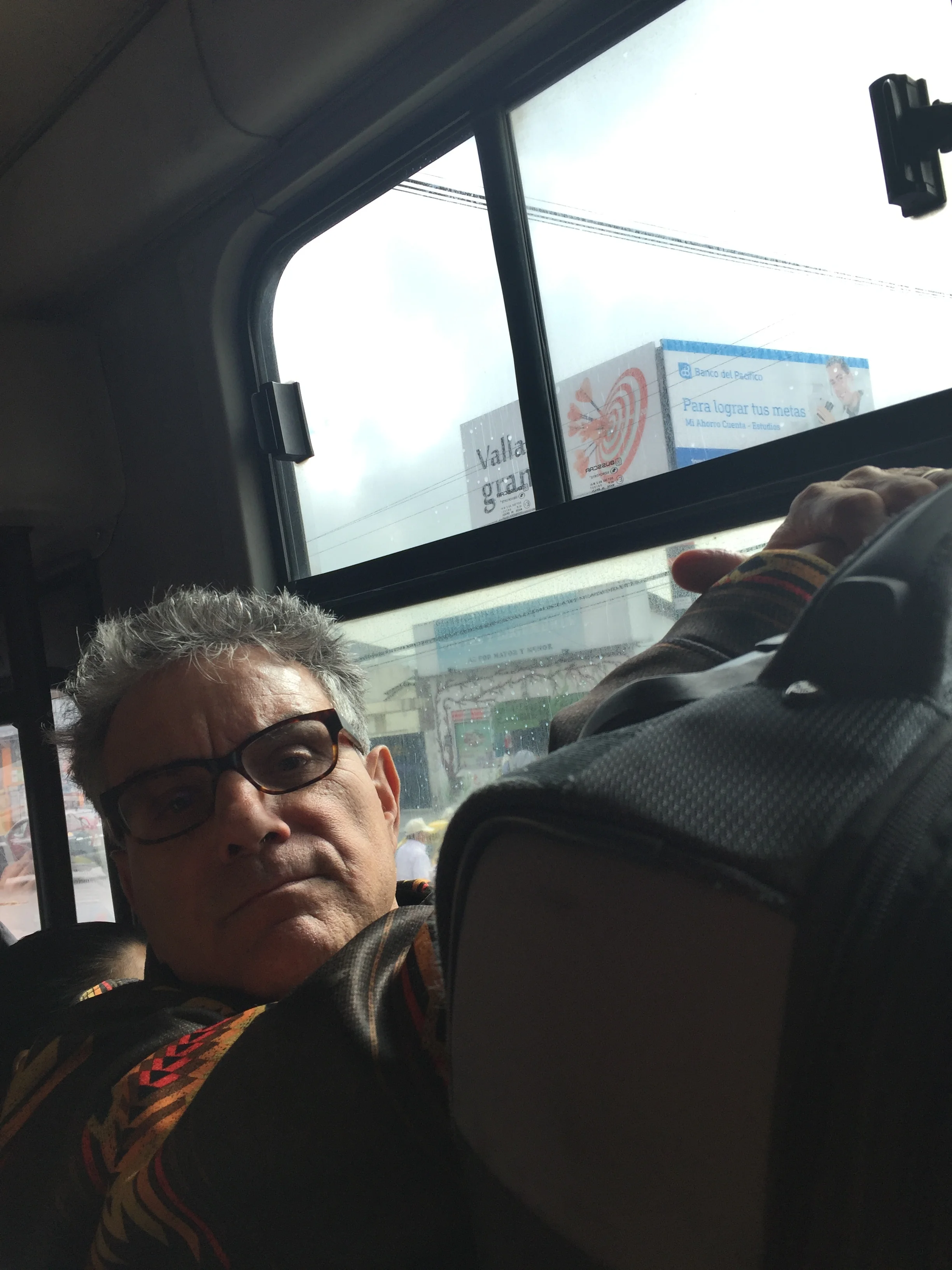
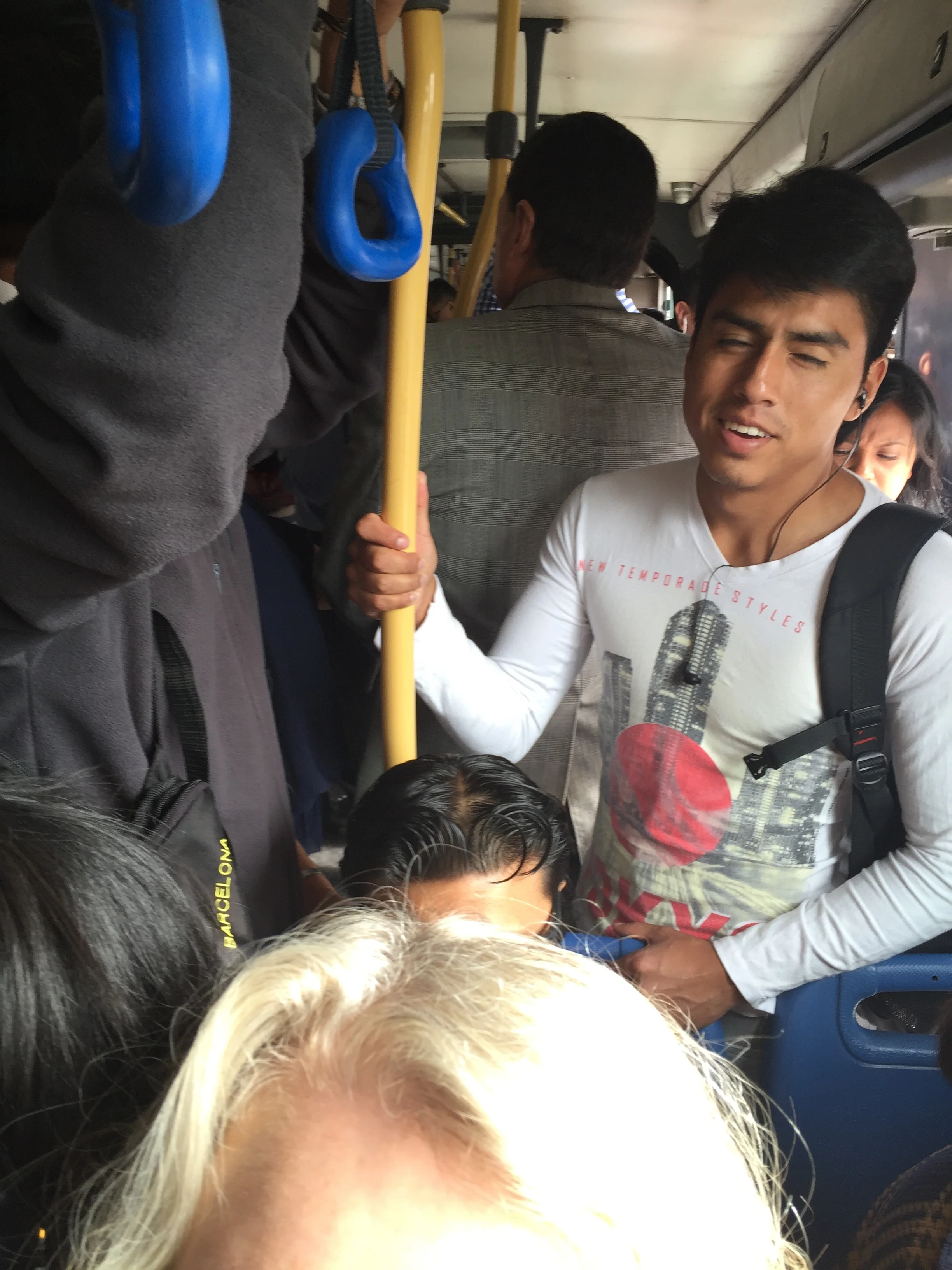
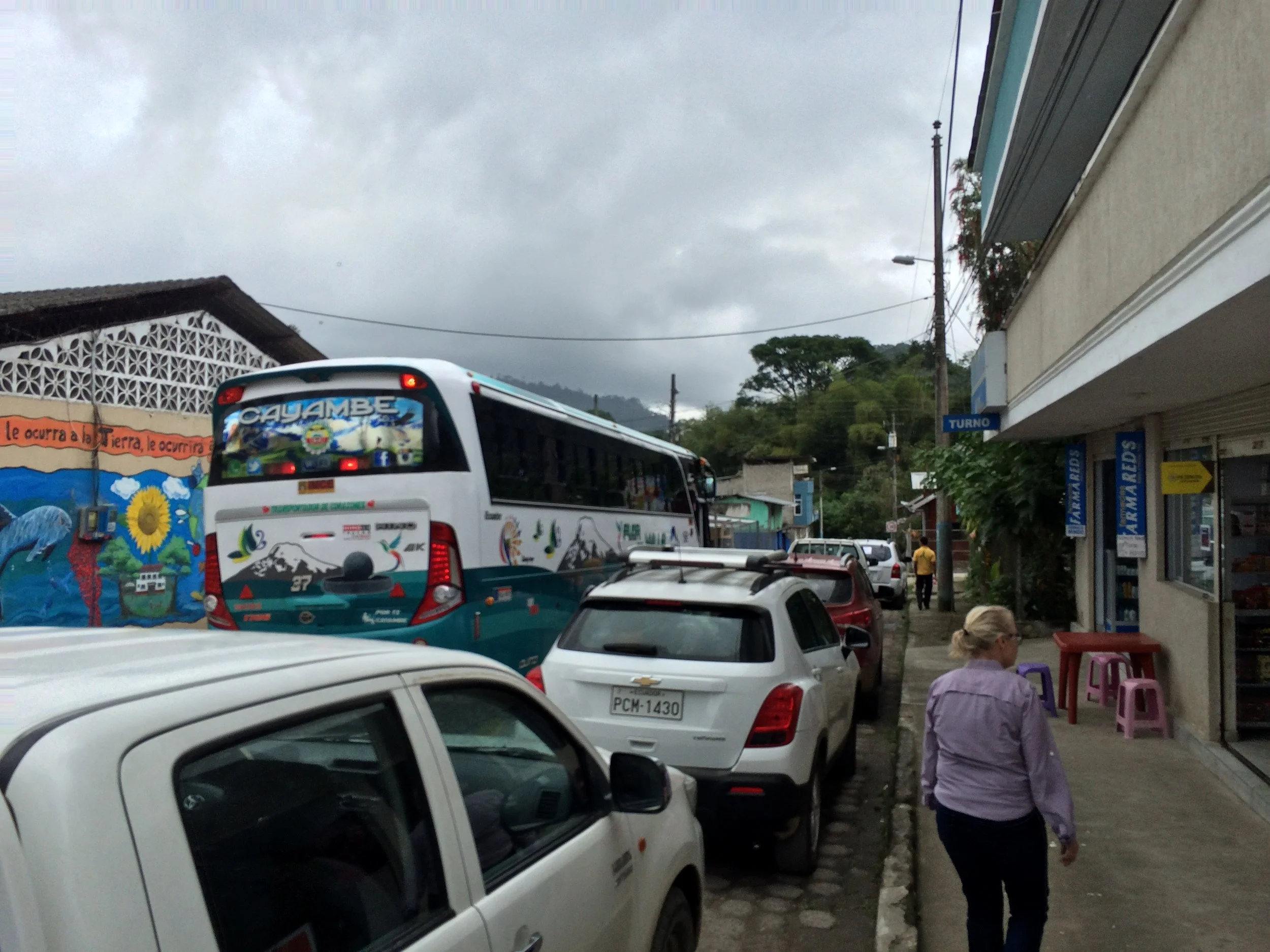
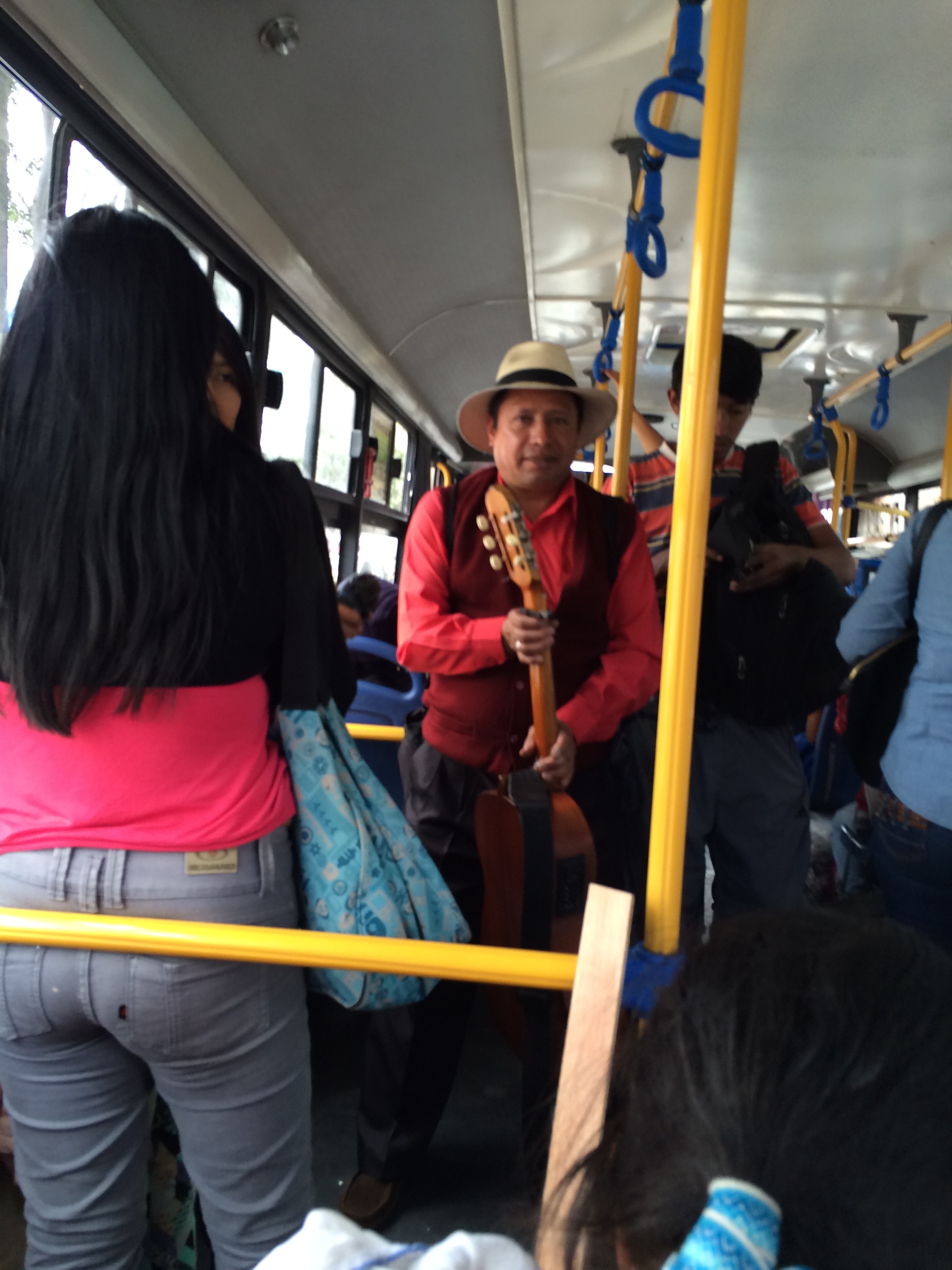
We left Mindo in a nice travel bus; again no chickens, but had to transfer buses once we returned to Quito’s Ofelia Depot in order to get to the real big bus terminal in Quemba, in city south. This is where the fun began. Janet offered/suggested we share a taxi. They said OK, but seemed hesitant and hinted to taking a connecting local bus. I picked up on the que and we agreed—we would take the bus for $25 cents per person.   Trying to get on board a local bus and get a  narrow seat with our suitcases and backpack is crazy; no room to maneuver. The French girl chuckled: “ You want me to take your picture”? I agreed this was comical. See pictures above.  A little later the bus cleared and I stood up conversing with the guy, It turns out The airline lost the girl’s luggage, forcing her to buy piece meal items. After 5 days, they were exasperated since they were carrying very expensive mountaining equipment. I think they wanted to conserve money in case they had to replace more equipment. We hope it works out for them. We got to Quemba station and parted company—yet another great experience with fellow travelers.

Janet and I got on the bus to Banos. It left right on time for our 2 ½ hour trip. This is not a city bus, but it can be described as local. We stop at various ”Parada” for extra passengers and often uniformed school age children.  This is common everywhere. All these buses also allow vendors on the bus for 5 minutes to sell food and drink; vendors get on at one stop and get off at the next several stops—and I guess they walk back or cross the street for the opposite direction bus. Janet has noted: “Thisreally the ultimate fast food industry supply chain. Food, food, food is always at hand and available in buses and on every street corner. I want to make it clear that the vendors are not in your face or harassing—these are sellers. A simple “no” or wave off, or ignore, will do nicely. Of course if you want something, it is a handy system. On the buses they sell mostly cookies, but on the streets I’ve observed that you get small amounts of fish, pork, beef, chicken, or Guinee pigs, mixed with vegetables and rice or bananas. This seems from my limited experience to be a vegetarian friendly society. 

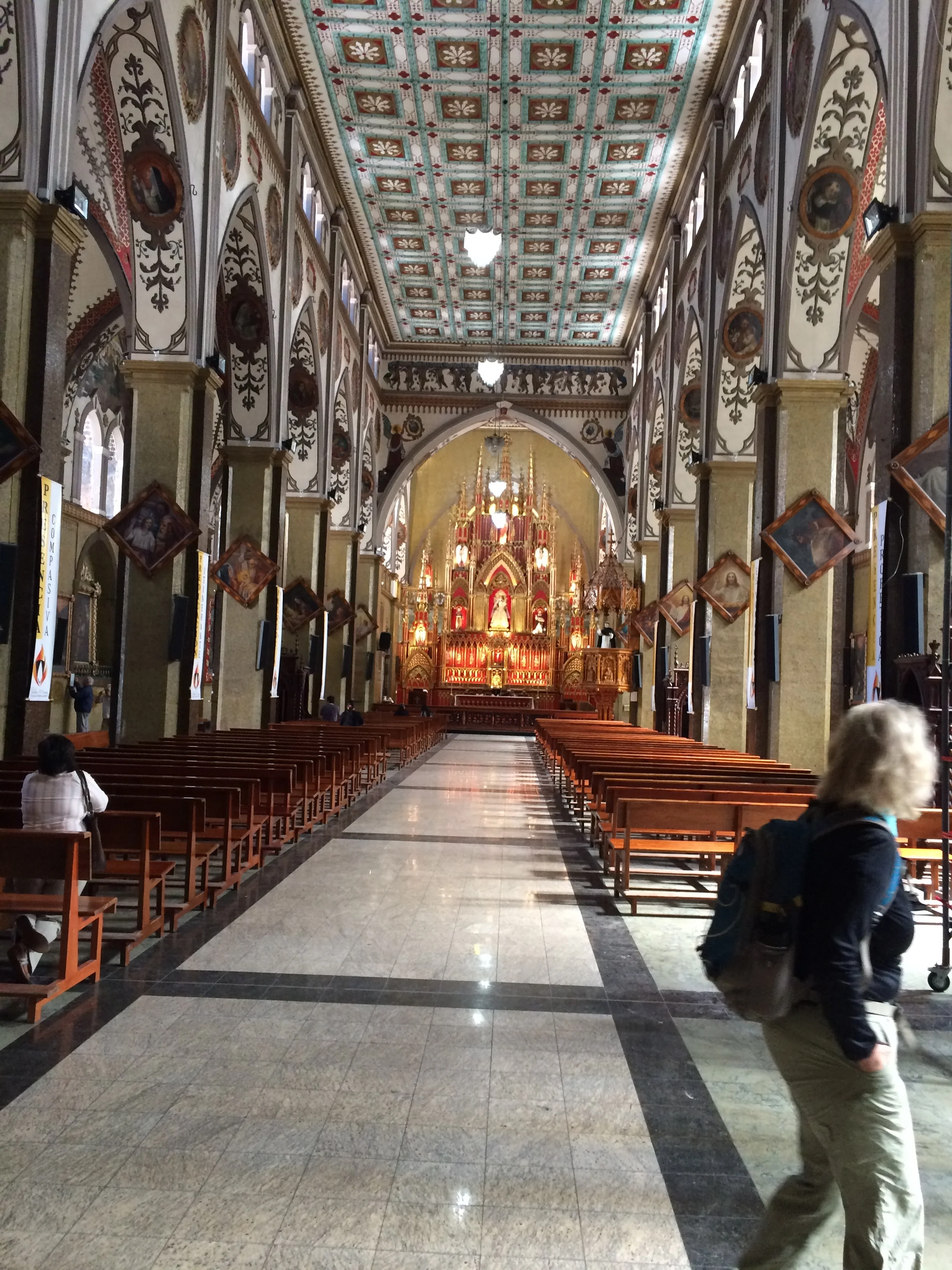
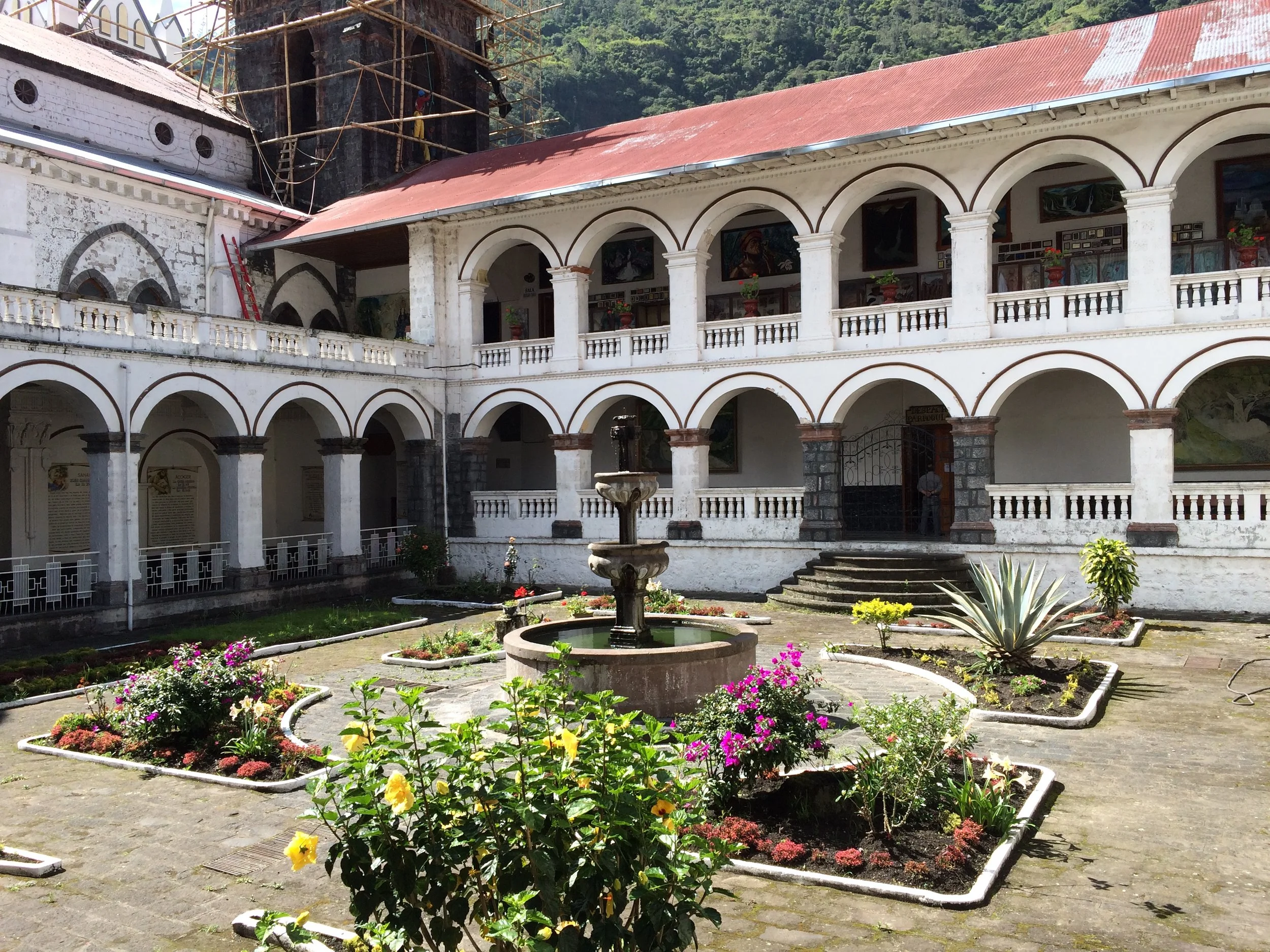
We arrived at Banos. Took a quick walk to the phone store to get new sim card and minutes; now we can call within Ecuador. Then went to the Farmacia for “stamps” and on a short walk toCasa La Real. This is a nice town. If “touristy” means very little graffiti and many restaurant, bars, and adventure outfitters, then I’m all for it. The Casa La Real Hostel is built in the traditional Ecuador style. It is a little tired in its décor, but the view from our balcony is worth a million. We see a large green mountain face in close proximity with a lengthy waterfall flowing from the peak down to street level. It is lite up for evening viewing.  Our proprietor and assistant are very attentive, make wonderful “North Americano” breakfasts, with eggs, toast, fresh squeezed juices, and strong Ecuadorian coffee --with or without la leche. I knew I really liked the place, despite décor, when I put my face in the pillow and it smelled of fresh laundry. 


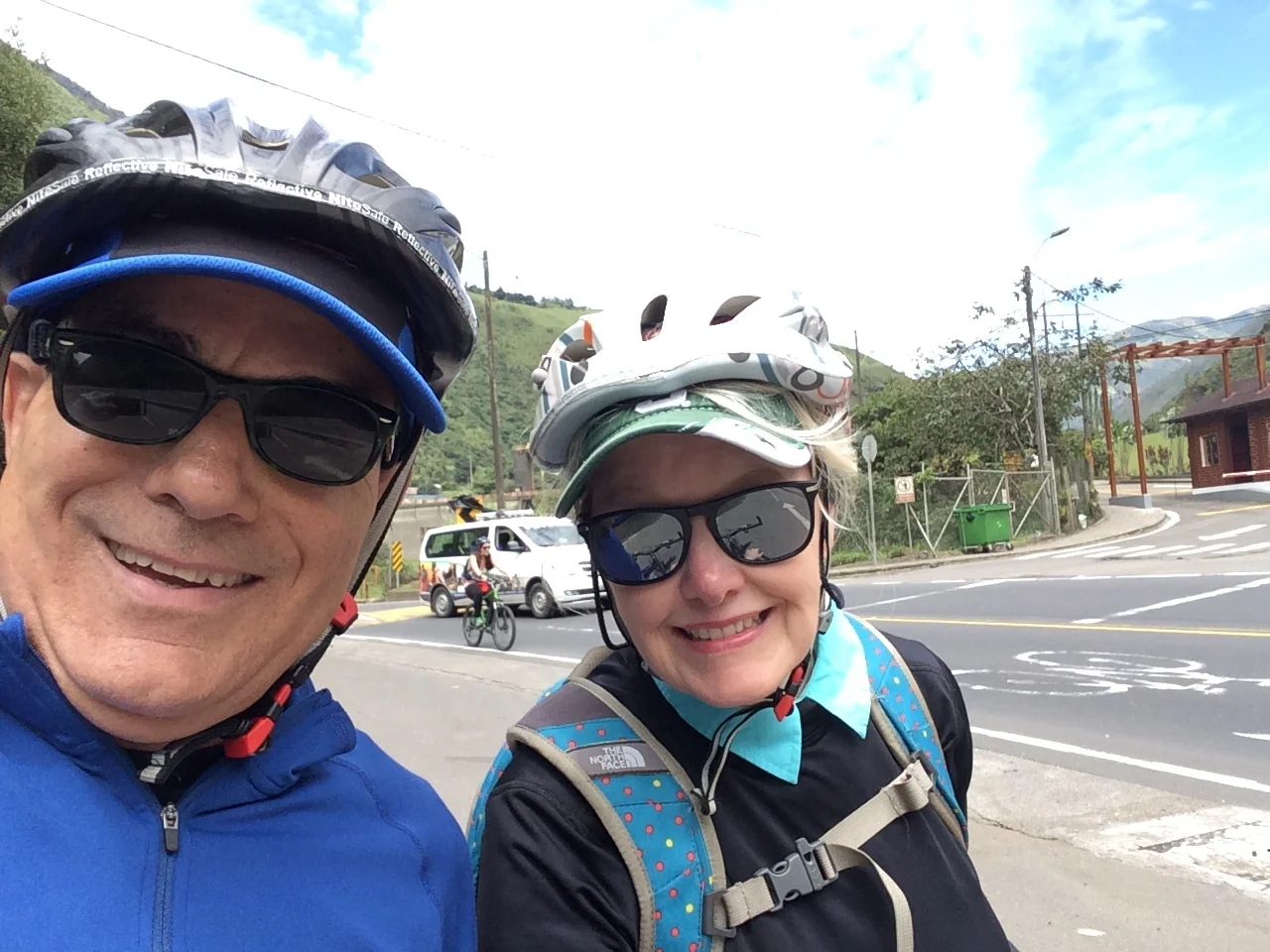
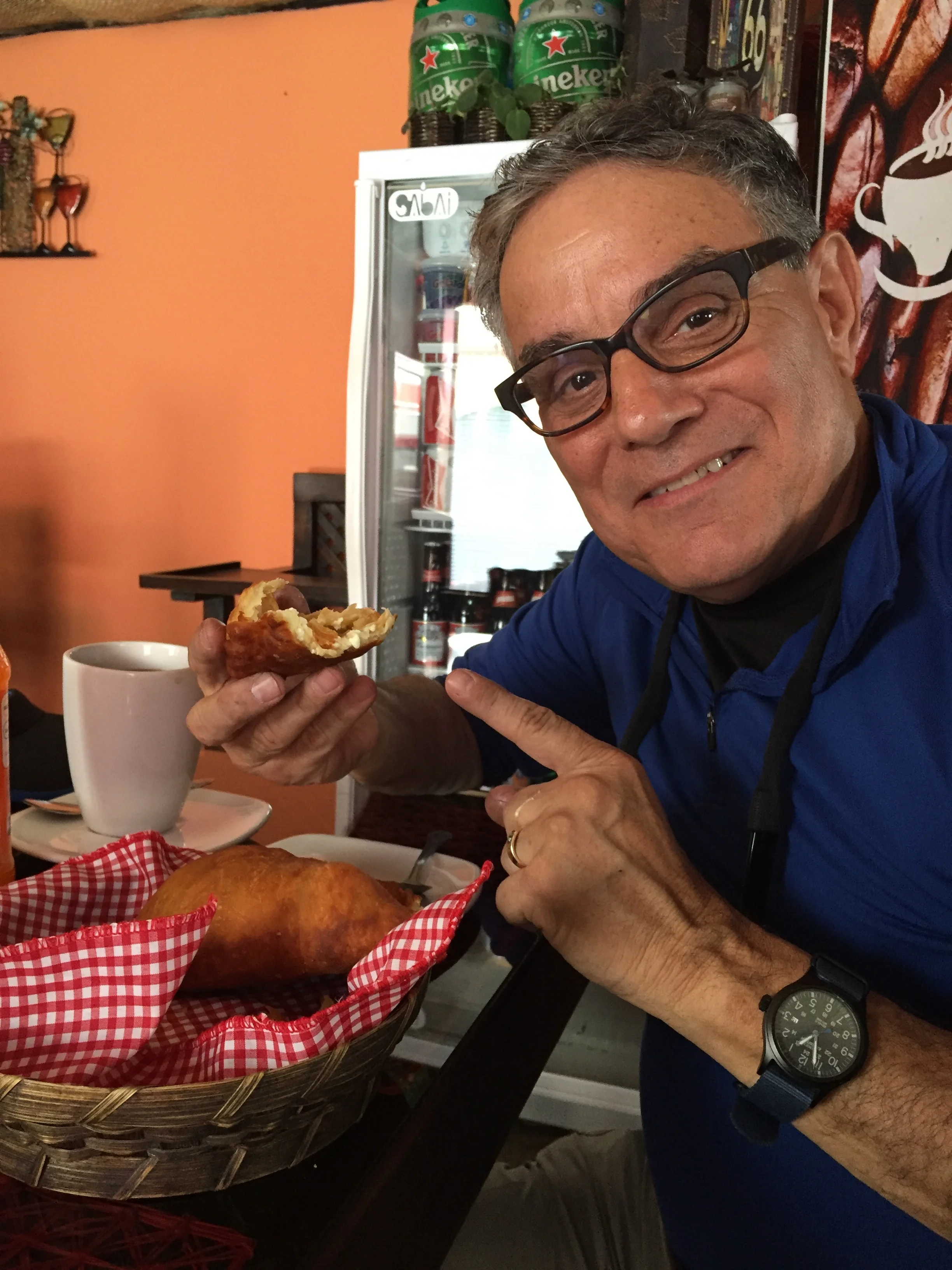
Up early in the morning we toured the town and visited a really nice local church, then we were off for our first bike ride.  The plan was to rent bikes and ride to see 5 waterfalls, then take the bus back, total trip is 17 km.  It really felt good to be back on bikes and out of the stinky buses.  But at 10 km, as I was peddling behind Frank I could see the chain dangling.  Darn, after several inspections it was clear that the chain was bent and our peddling was over.  We took the local bus back to the town and bike shop and opted to scrap the bike trip and back to the bus!!  While we waited for the local tourist bus, we wandered into a small café for lunch and had our best meal yet, our first empanadas.  After ordering we watched our young hostess make them from scratch starting with rolling the dough, they were pure heaven and was just what we needed after the bike meltdown.

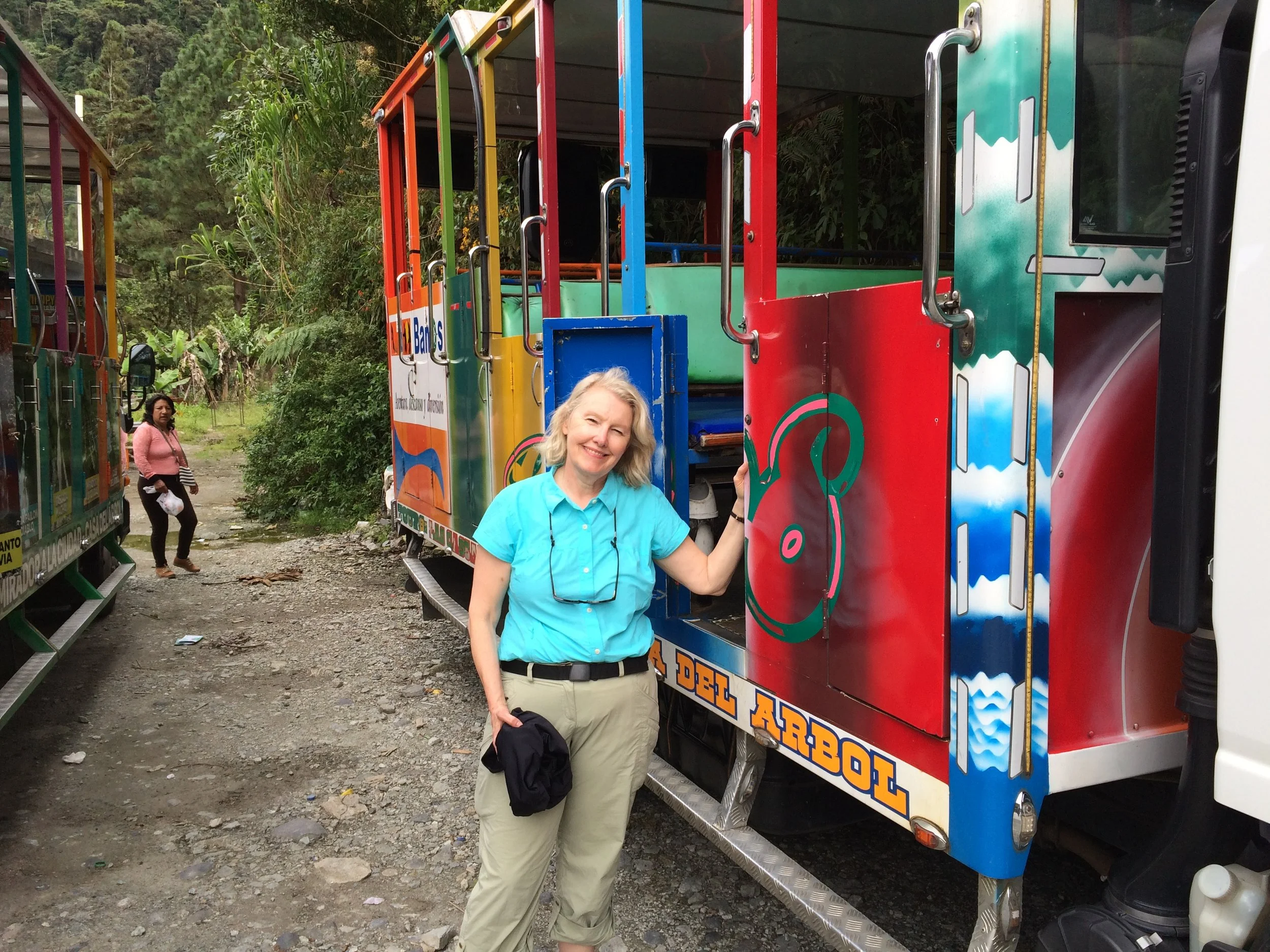
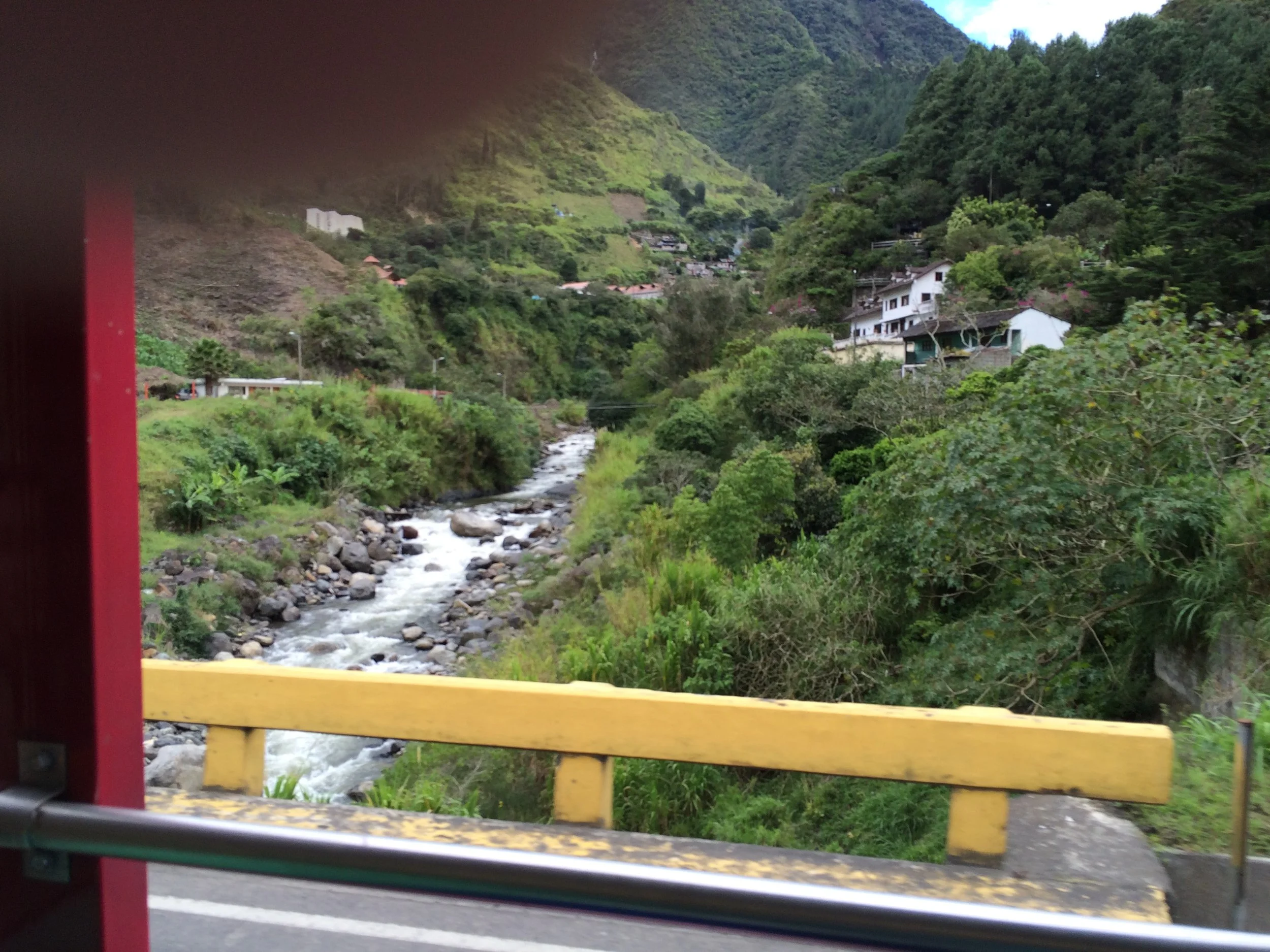
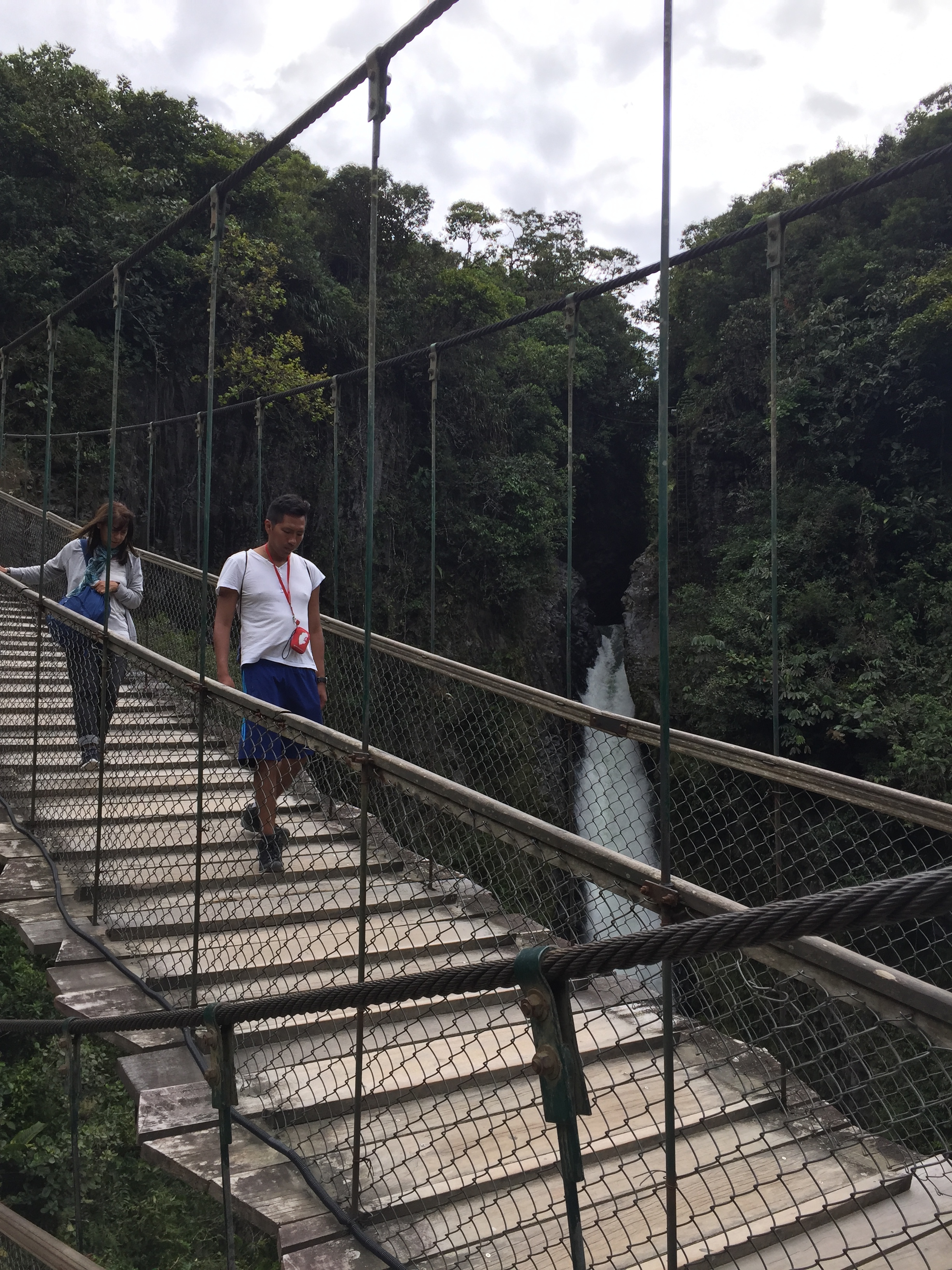
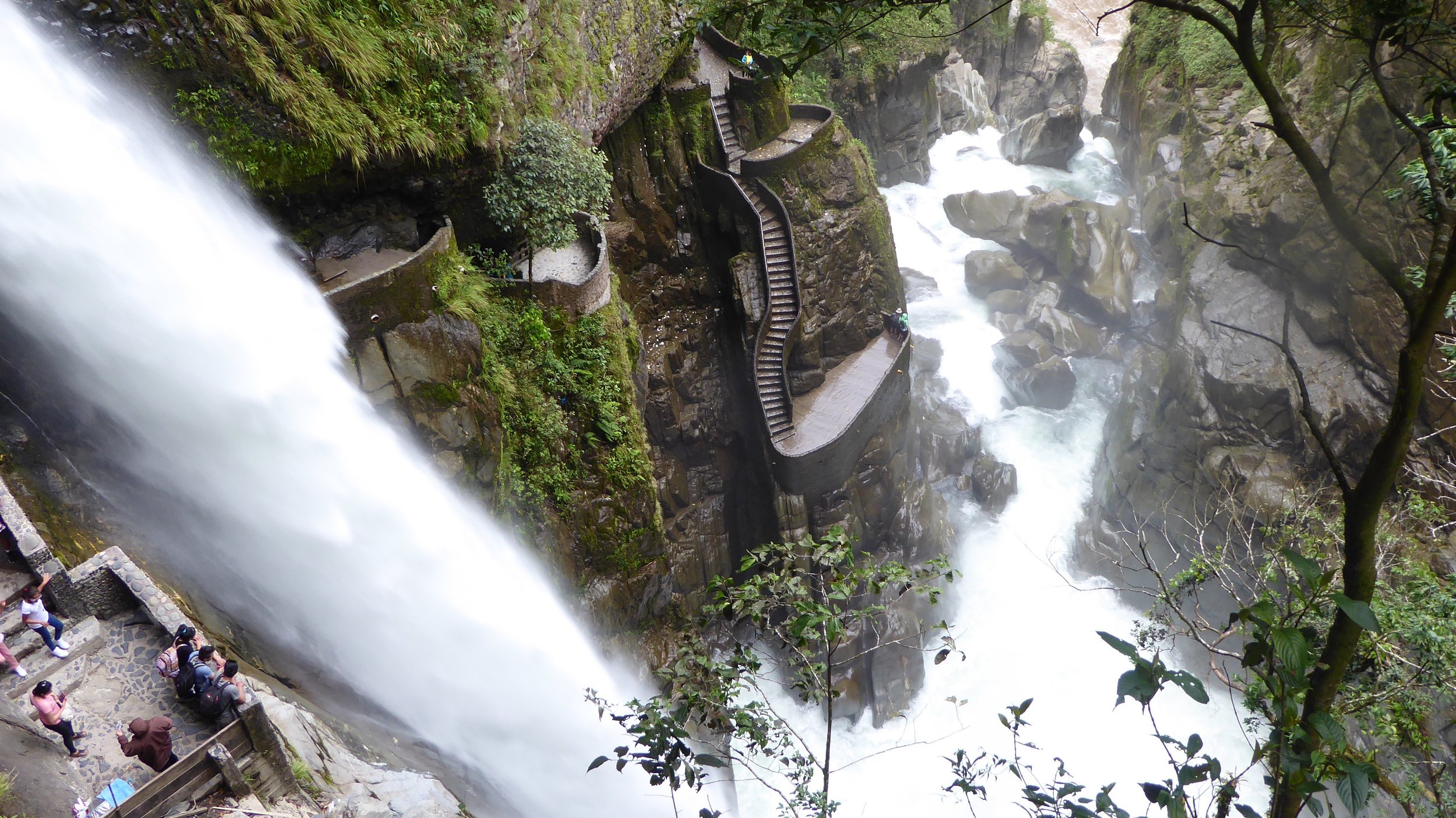
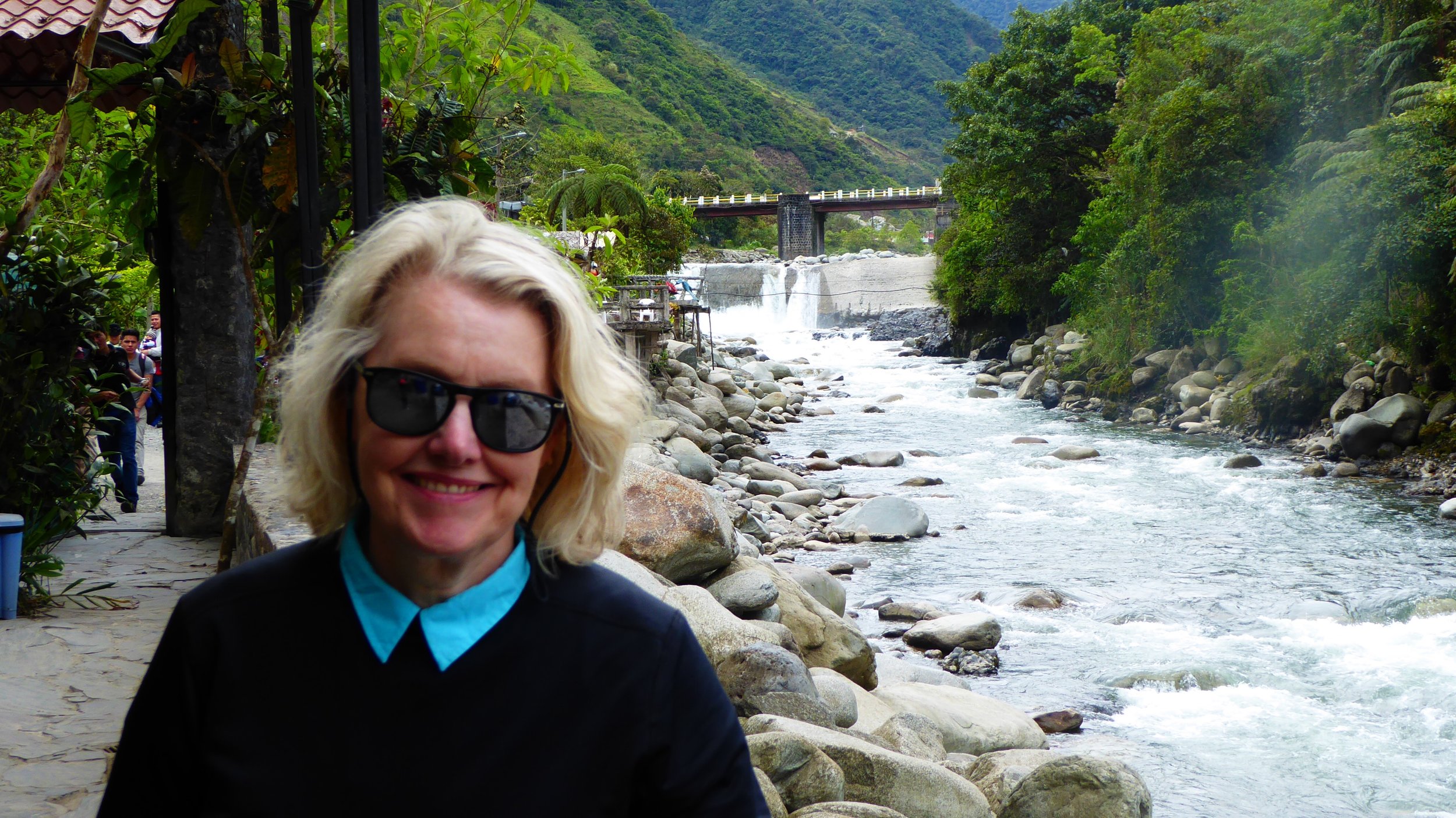
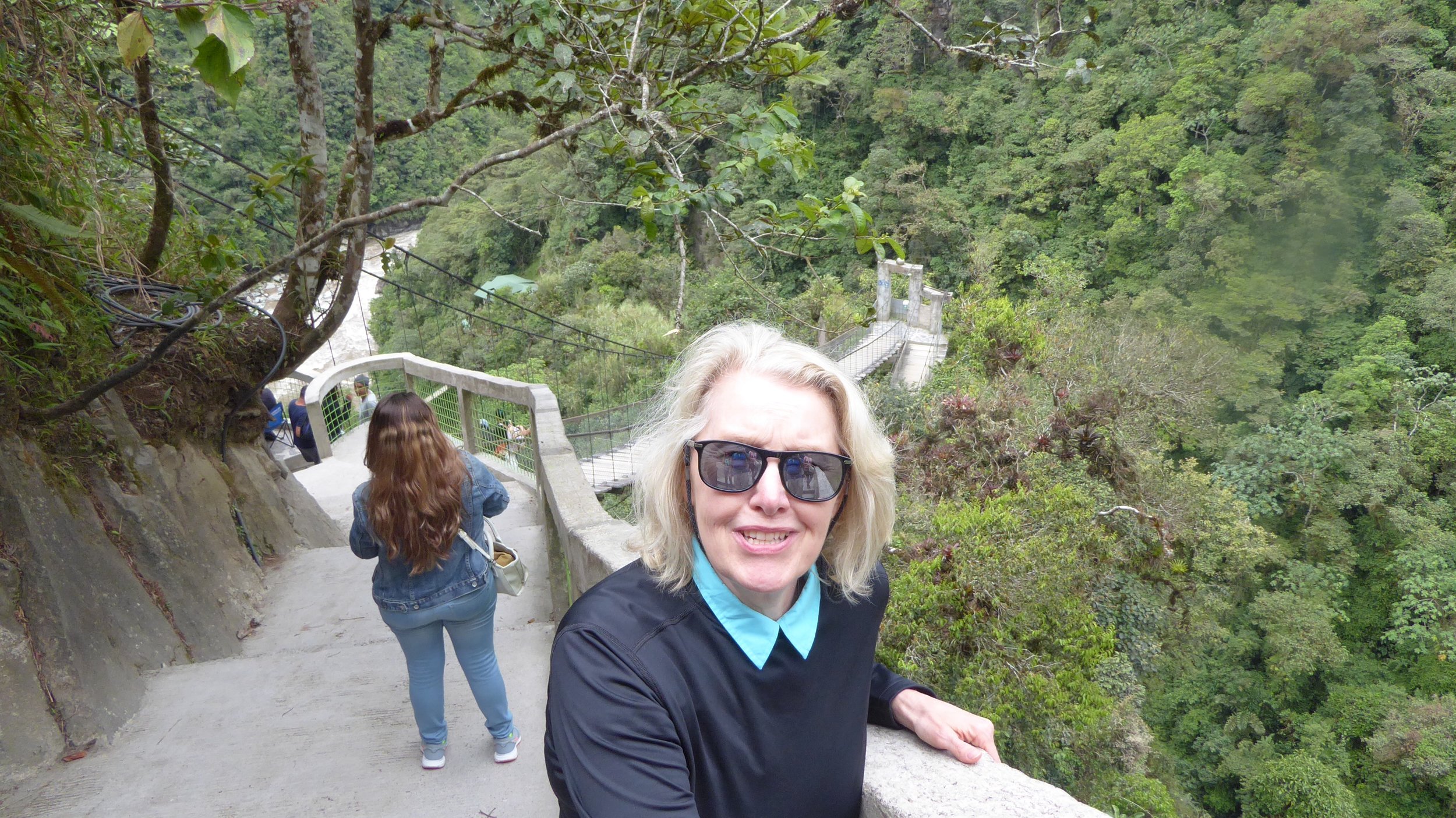
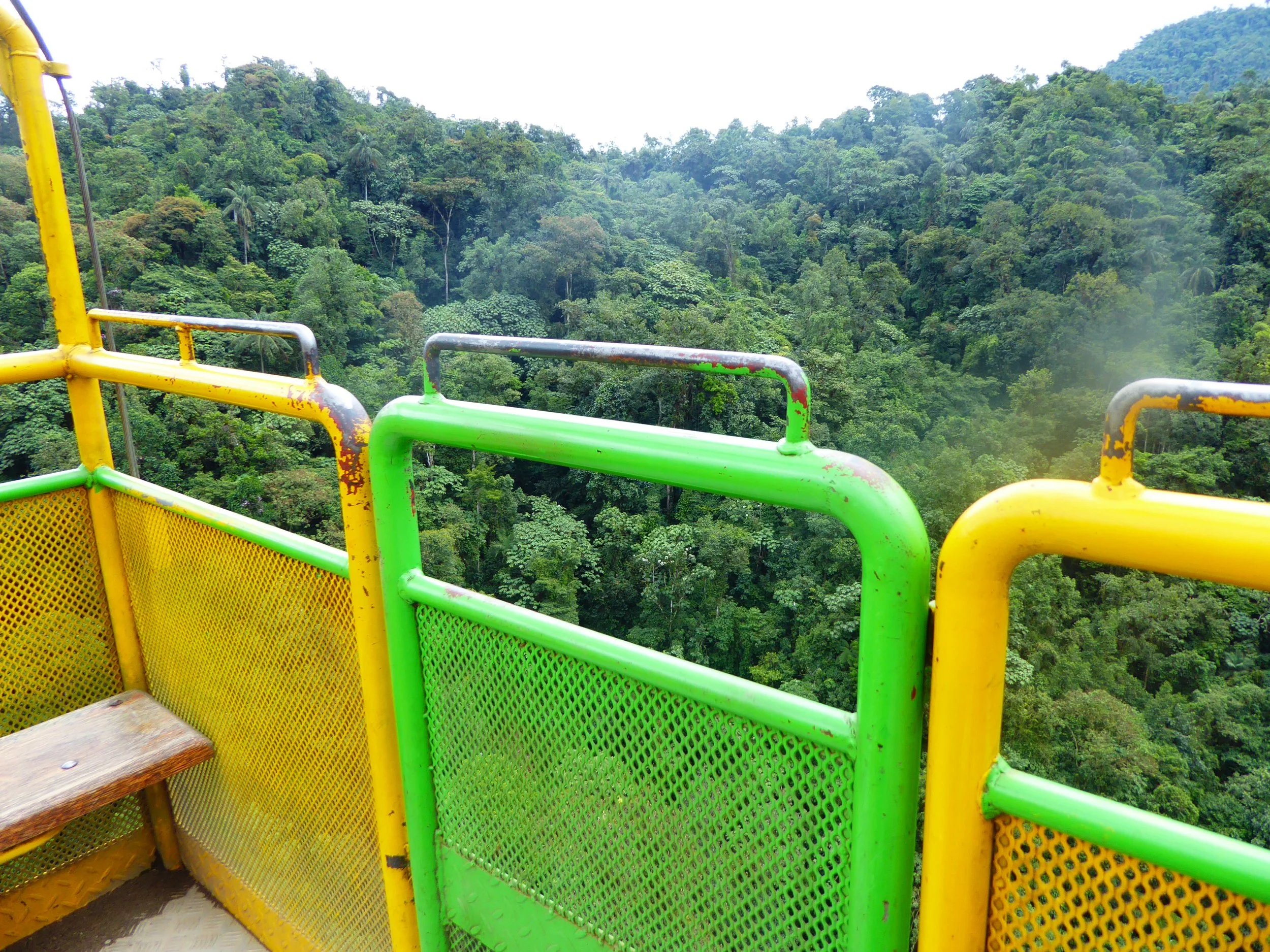
Even in a bus the waterfalls were outstanding, we were the only non-Spanish speakers on the bus and the guide spoke no English but the beauty did not need any explaination. We also we took a 4 person gondola zip-line across the wide ravine of the river. What was most amazing was the stop at a park where we walked down a bazillion stone steps, crossed several rope bridges, and reached the bottom and went behind the most magnificent waterfall—much larger than any we had approached before.  Of course, we made some friends. Three Ecuadorians, one who had studied in the US, where on the trip. When they wanted to zip line they asked us to watch their belongings. I felt good about that.

Casa La Real is near 2 of the 3 hot spring bath houses, so after our long day we opted to give it a go.  You wear a swim suit and must rent a shower cap (unless you carry one around). We changed and then walked into a large pool which was heated by the springs. Several local women complained to the attendant that the water was too frio—turn up the heat—(open the valves) he did so—and we got toasty. While sitting on the pool wall seat in this mineral bath, a young couple wadded passed. Janet heard them speak English and asked if they were Americano. “No, I’m Australian” he responded; “no, I’m Canadian” she said. Again we chatted it up—such nice young people. They were riding horses up the mountain trails to the waterfalls. Stereo typically, I asked if she was from Calgary. “No, I’m from Ontario, but I love horses and ride a lot”. The Australian man, ruggedly handsome,  had sought to study Urban Planning, but was a little disheartened by the engineering side and perspective at the school he attended. This gave rise to an easy opportunity to talk about my oldest son who when applying for his Master degree in UP, wrote a creative essay about how his travels around the world had given him a fresh perspective about city solutions. Maybe the young man could pursue the same coarse. We said good bye and went on to the little hot tub pool which was boiling hot.  Ouch, but I did submerge to my shoulders for a few seconds, then out to shower and off to dinner. 

We got back to town to rest, recuperate, and to find a dinner restaurant.

Our preferred restaurant was booked, so we tried a nearby establishment that looked nice from the outside and advertised that it was run by a Danish/Ecuadorian couple. We were served by the wife who also was from San Francisco. I found out real fast that she did not care for Mrs. Hood. I thought they may have had something in common, but no. We should have left then, but it was dark and we were tired. She was trying to upsell us and the meal was edible but overpriced. She was not in a good mood and she was also angry about American politics.

This is the deal—you may like it or not—the Danish gal, the Quito proprietor, the butterfly lady, and the Casa La Real proprietor, are concerned about Trump and his possible future relationship with South America. The Danish gal was downright belligerent @ Trump. But, no one really speaks about Hillary, either. Some may watch the debates.

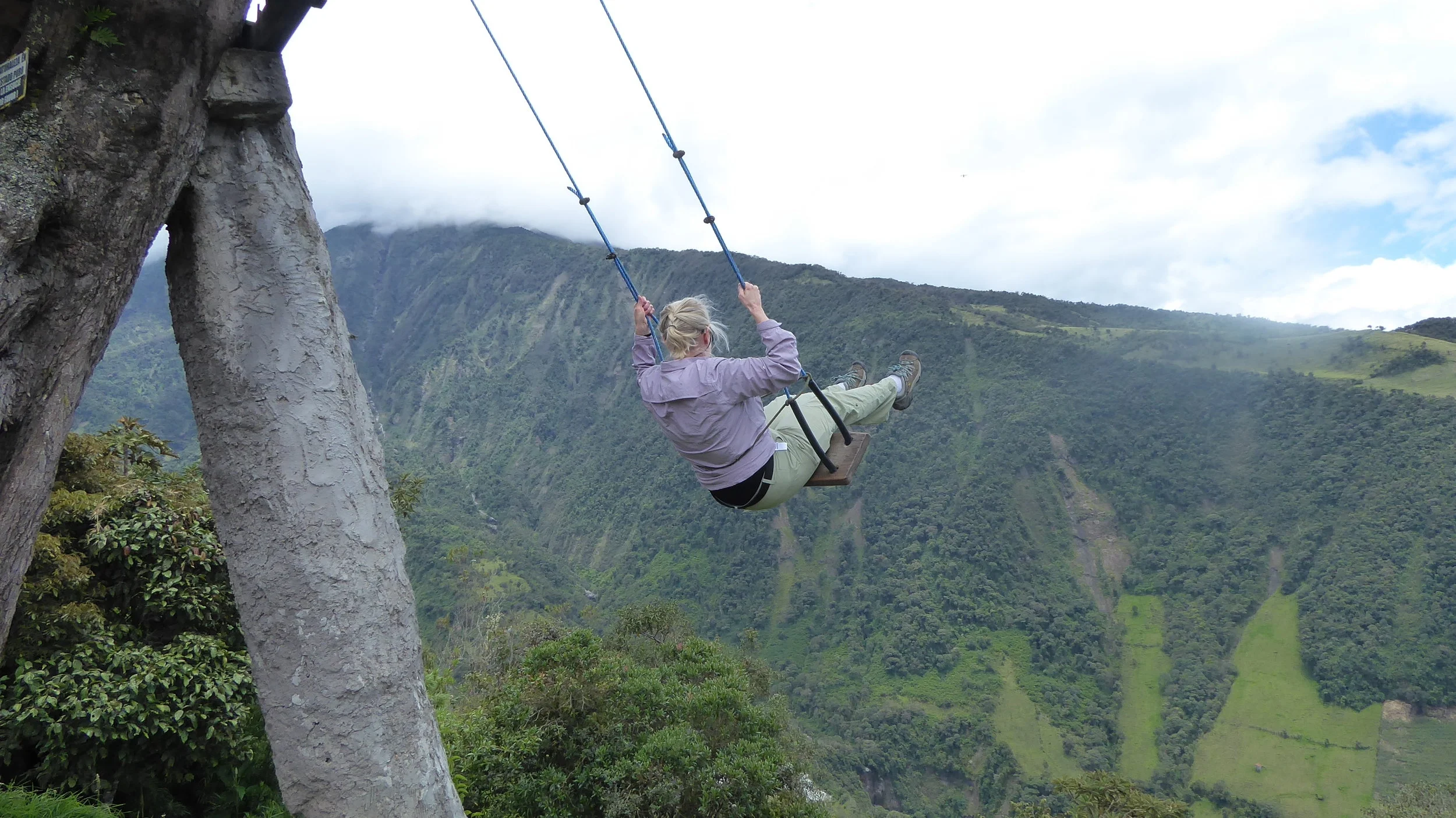
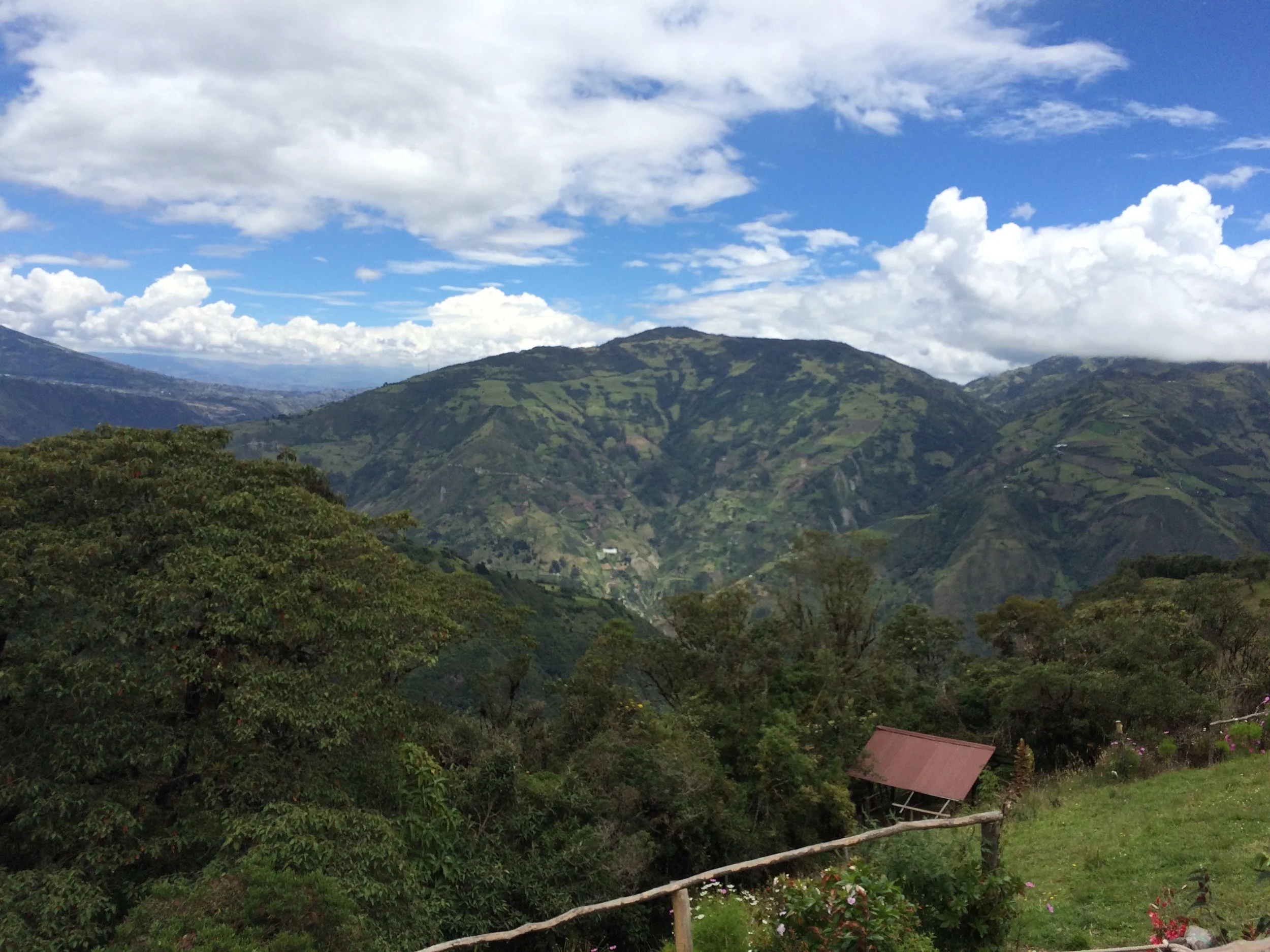
The next day we went to the Swing Park, where one of the main attractions is to swing out over the cliff. It was fun. There were other amusements like small zip-lines. It reminded me of a dating location; lots of young couples and families having fun.

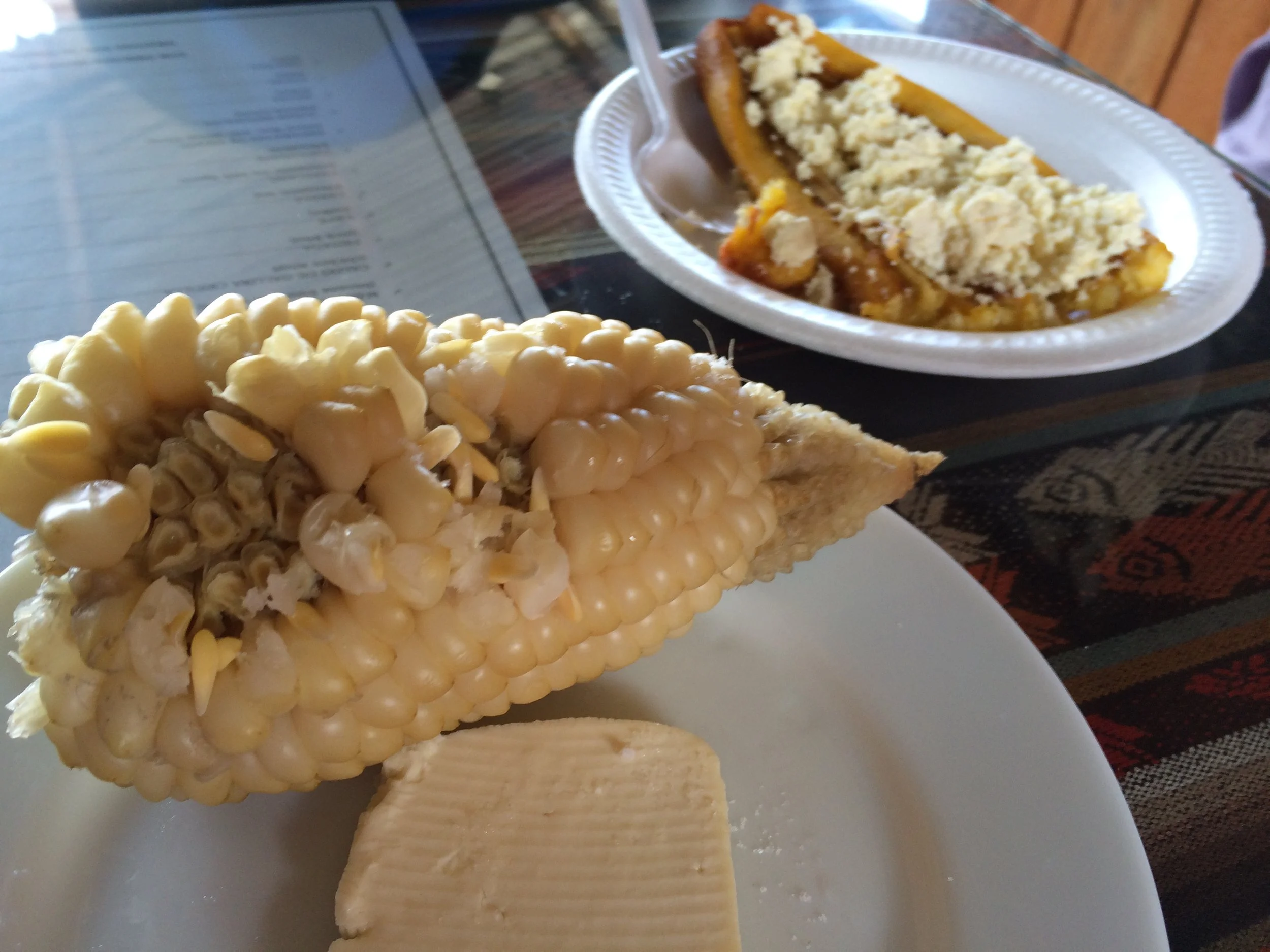
We ate an unusual lunch. White corn on the cob with large kernels with a slice of rich white cheese and a fried Banana cut lengthwise  sprinkled with crumbled cheese.   We thought we were ordering hot chocolate, but enjoyed the meal anyways. . Now we were fueled and ready to complete our planned walking trek back to Banos. We had a map.

The original route is on the left, a direct path from the cross, we ended up across the mountain and down the steep trail


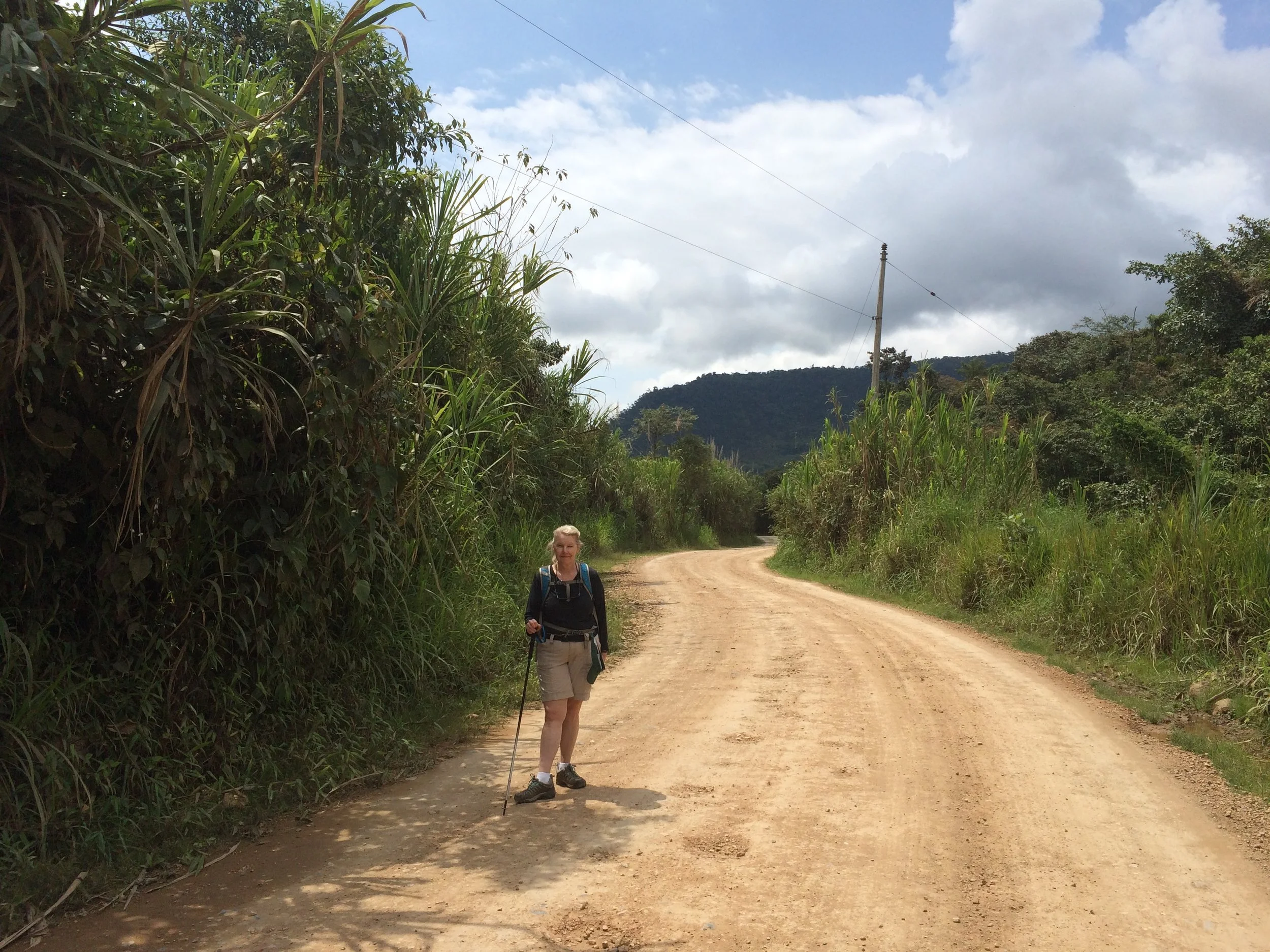
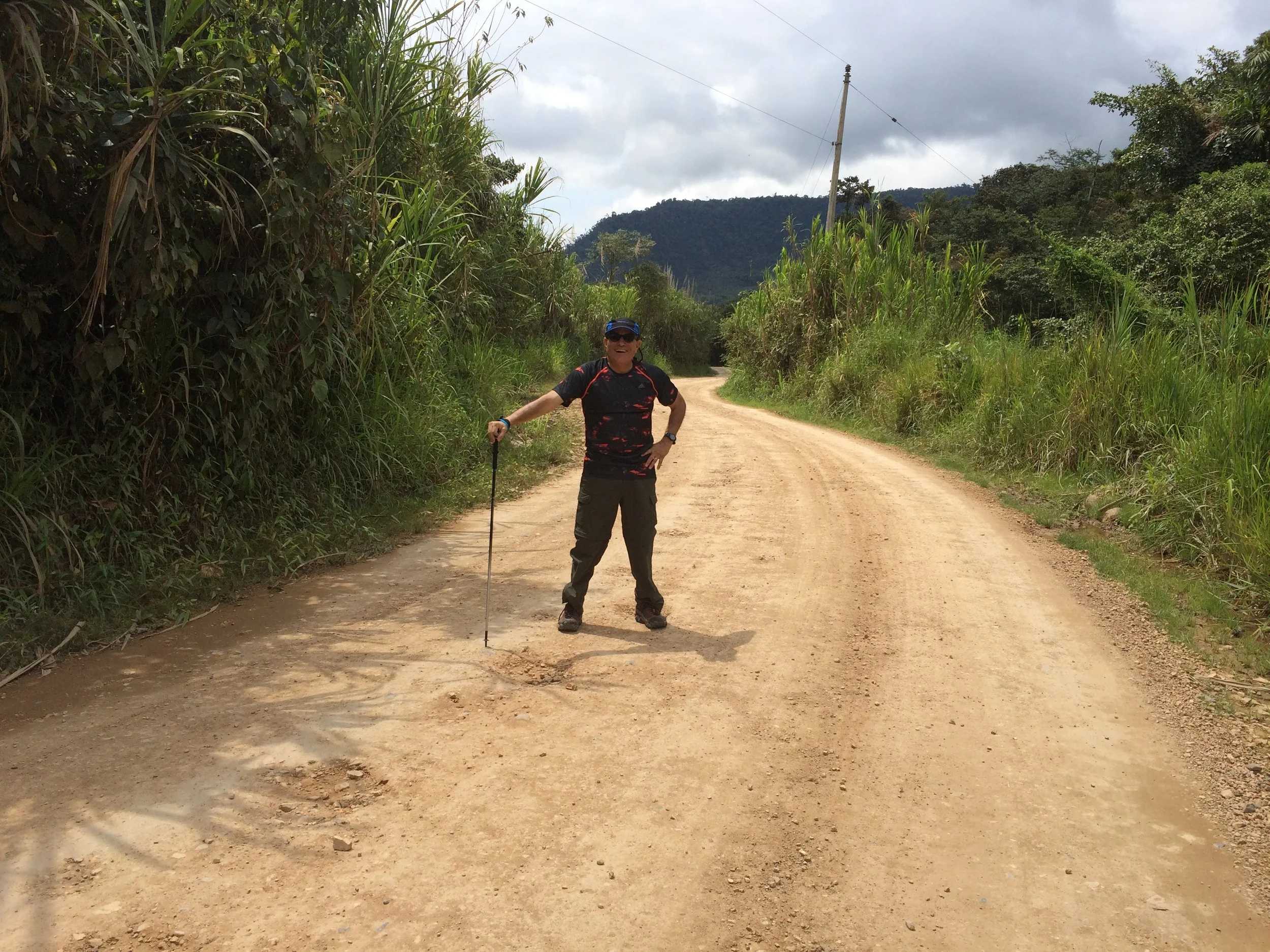
After verifying our route, heads up, we started walking the paved road on which we had arrived.  We trekked by many farmhouses, chicken coups, and a curious dog here and there. We walked 2 miles and luckily Janet saw a hidden sign (covered by sugar cane plants) that directed us to the landmark church. We walked passed the church, found a narrow dirt road and a sign for Banos. All is good. We are moving pretty fast now and make it to the crest of the mountain overlooking the city.  Our Hostel is to the far right; the path is to the right. As we descend a female hiker, German, passes us going up the path. I ask for verification of the route to Banos. “Yeh, Yeh, just go down the steps and someone will direct you.” We came out of the woods and saw actual steps, but to the left, we expected a switch back. A nearby house did not have an evident path to the right. We went left—down the stairs, but the path started to ascend. Frank wanted to go back to the house, but Janet convinced him a switch back was coming. We kept going and the path got steeper. Looking at our map we realized we had crossed over to a more challenging trek—rated quite hard. But what the heck, we had our poles, it was still light, and our pace was controlled. As we walked we moved to the far end of the city opposite to our hostel. Finally, we saw a trail marker! Hooray! But after an hour passed the clouds were rolling in and dusk was falling. We then met a EC man, a student I think, who was coming up from Banos. He says “Poco Tiempa”, which I interpret as take a slow pace on this steep path. We kept pushing.  I felt my first “hot spot” on the sole of my foot, tightened my laces, and sipped some water.

 Switchback-- switch back-- switch back. We make it to the far end of town. It must have been a 10-mile trek. Our legs were tired but not stressed out. We felt exhilarated and kind of proud to finish (sweaty and dirty too). See the map of our trek.  We treated ourselves to a wonderful Tapas dinner—nice wine. The owner was from Spain so we talked about our visit to Barcelona and Seville. It was a good experience and our best dinner to date. Next we are off to Cuenca.


Time to go again, Banos was great, but once again, an early morning, back to the bus station and we are now off to Cuenca

What we did in Mindo

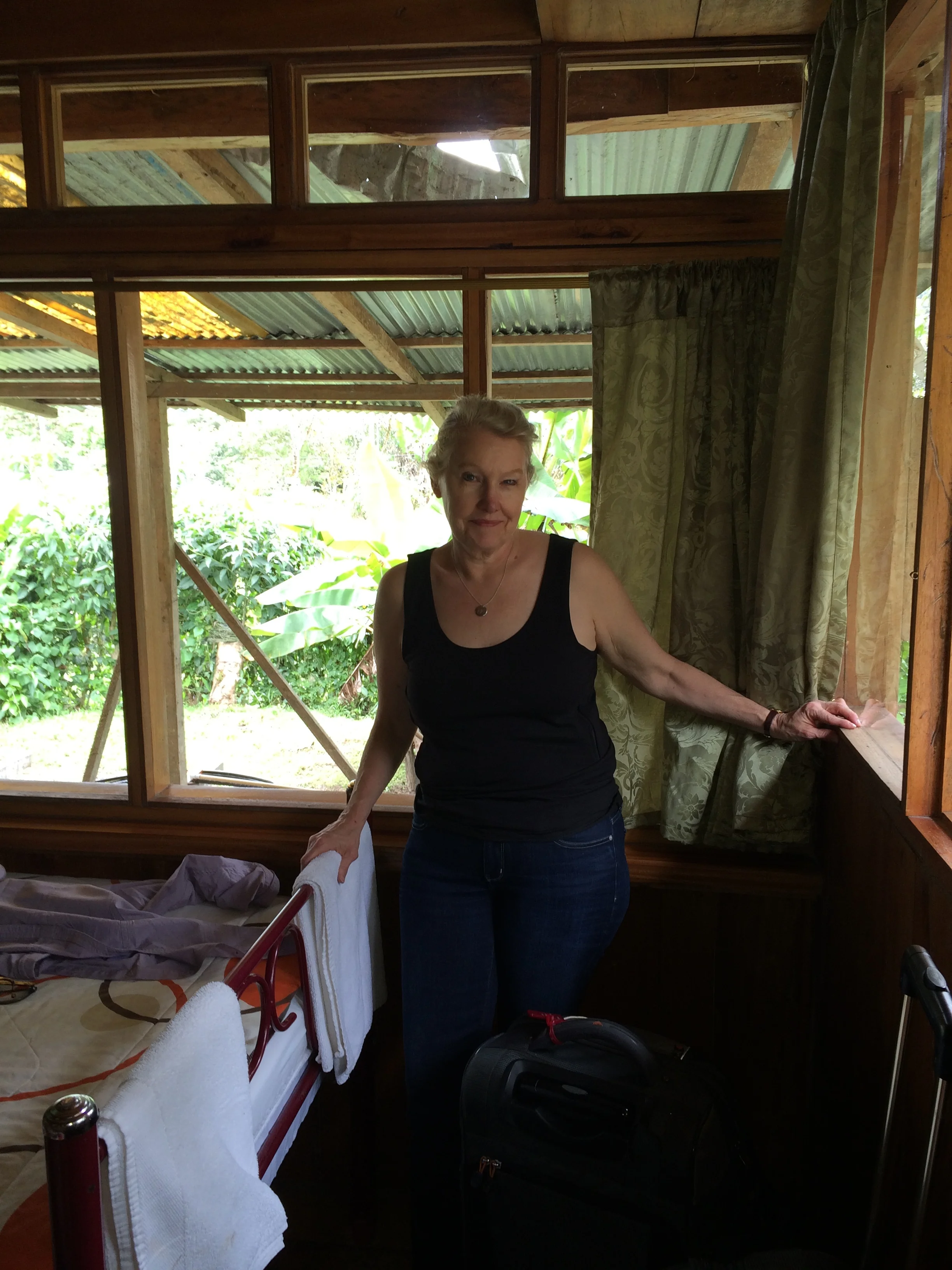
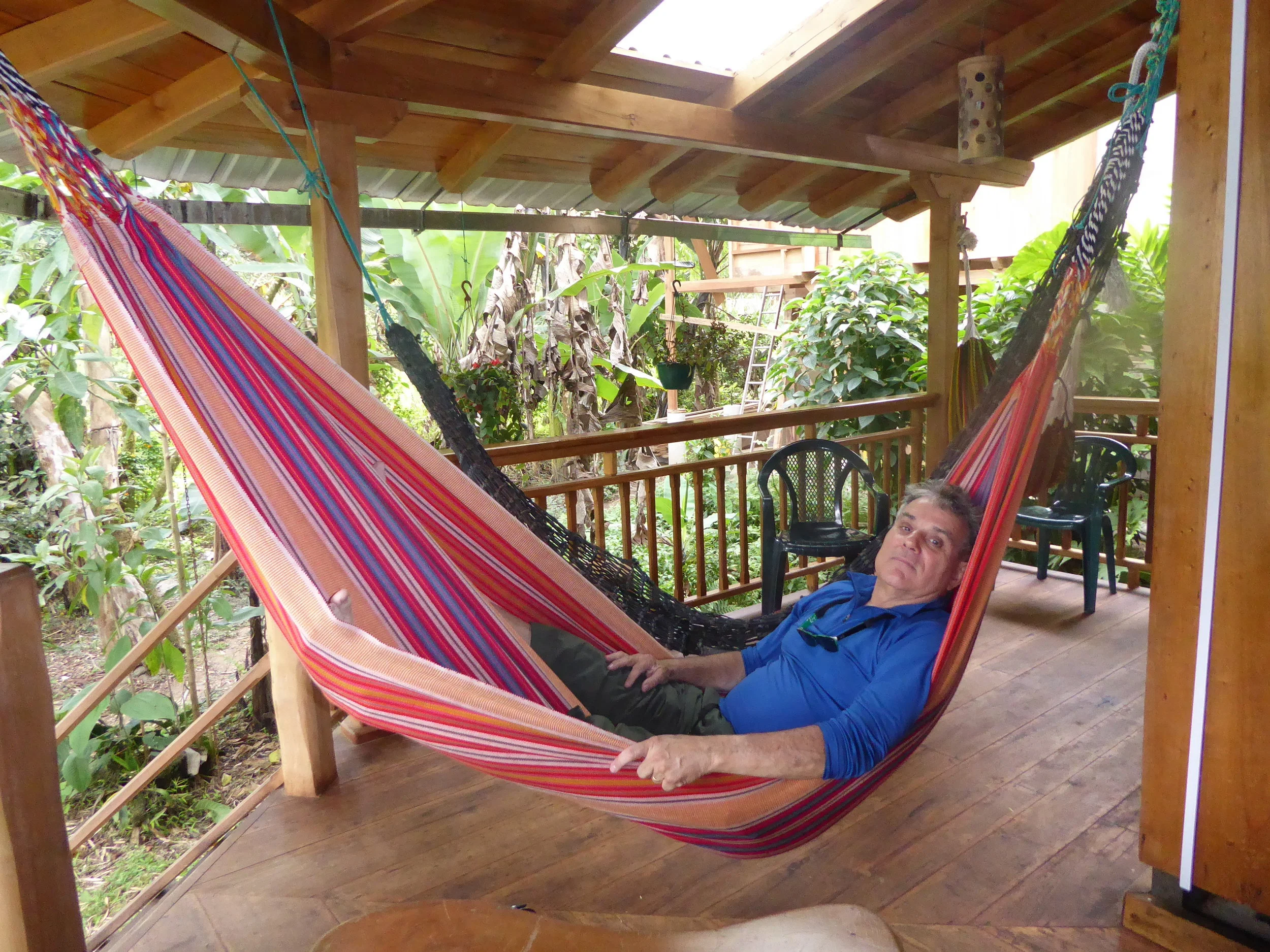
Our trip to Mindo started out with a 2 hour bus ride up and down the hills and around the curves at top speed, I have never liked roller coasters, but now think I am ready to tackle Cedar Point.  We stayed at a cabin type hostel, Casa La Cecelia.  Our first room offered was small without a bathroom, the shared bathroom had a concrete floor and a single hanging light bulb, I though it was fine, Janet had us move rooms to cabin with a porch, hammock and a private bathroom, $5 more per night, there goes the budget!!   No TV's this time.

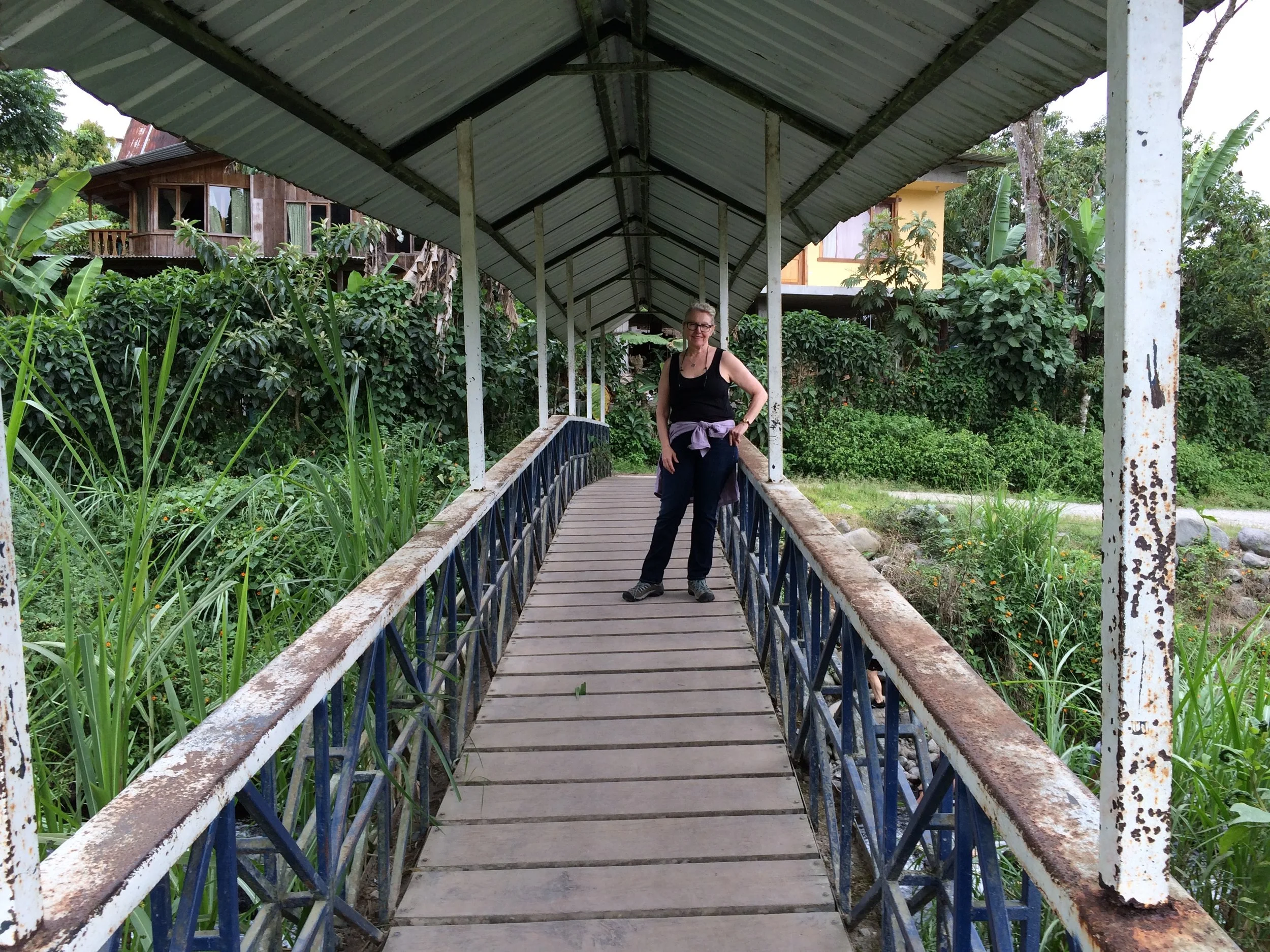
Frank on the Bus and the bus station in Quito above and our hostel and arrival in town below

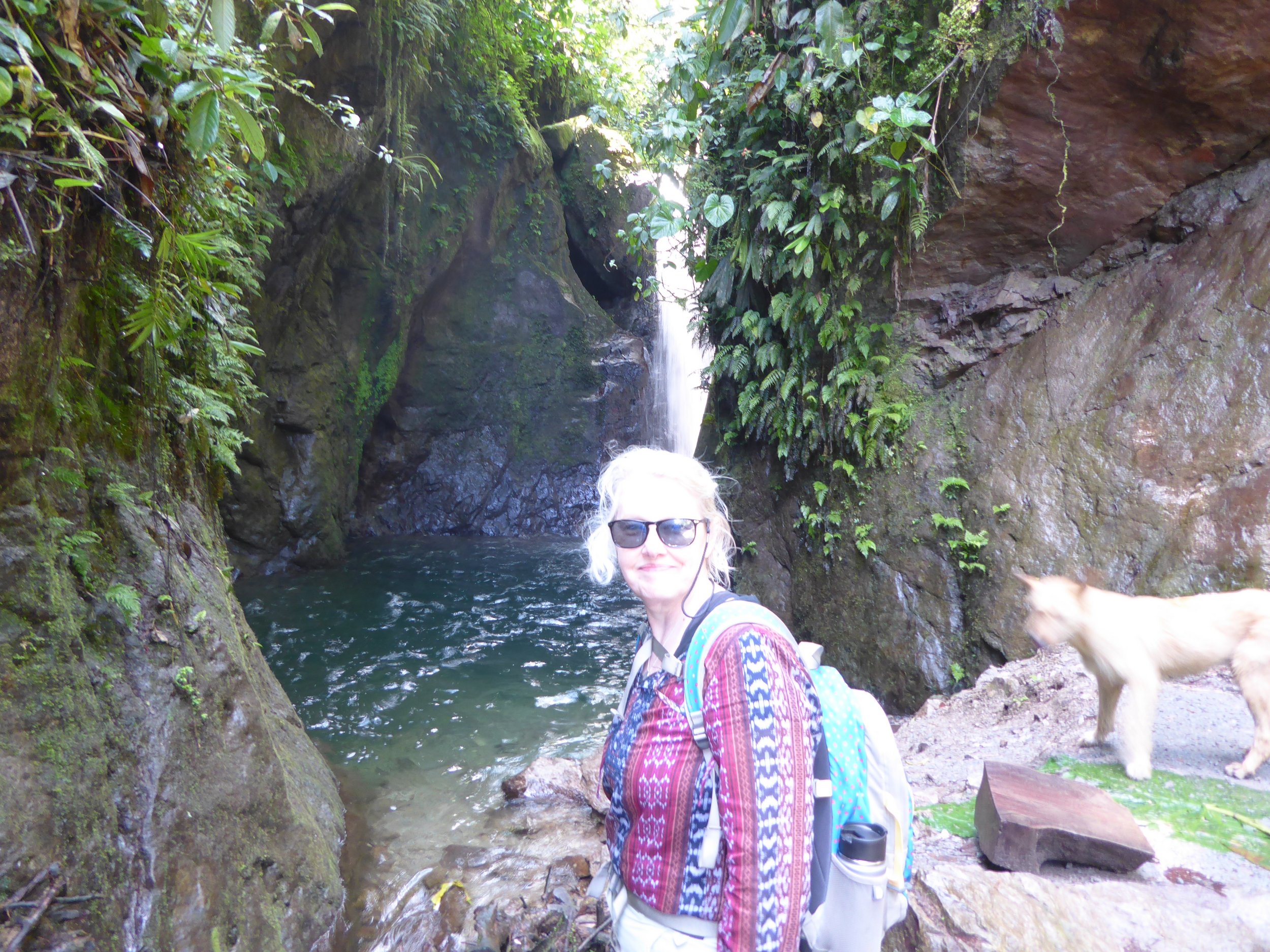
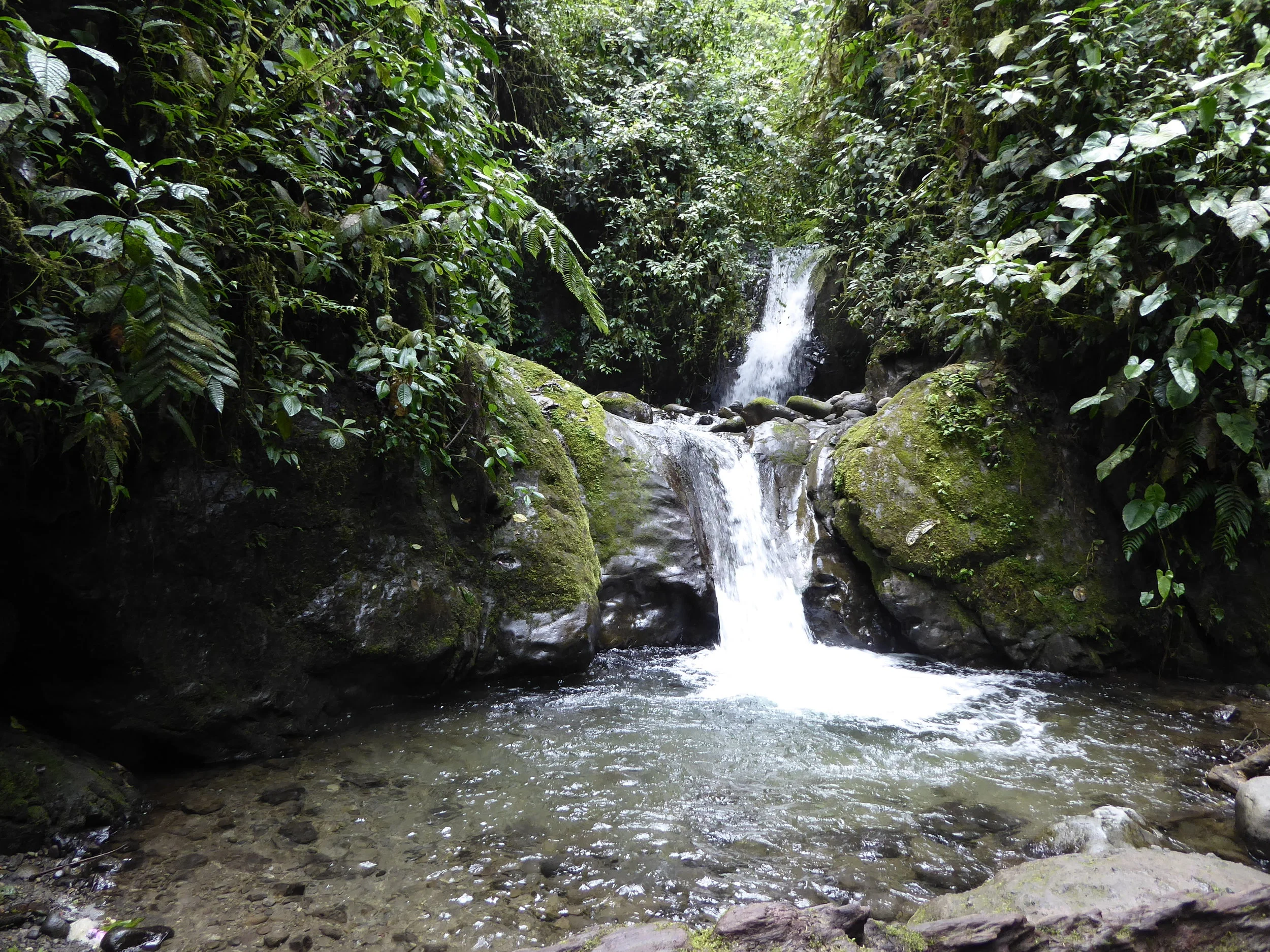
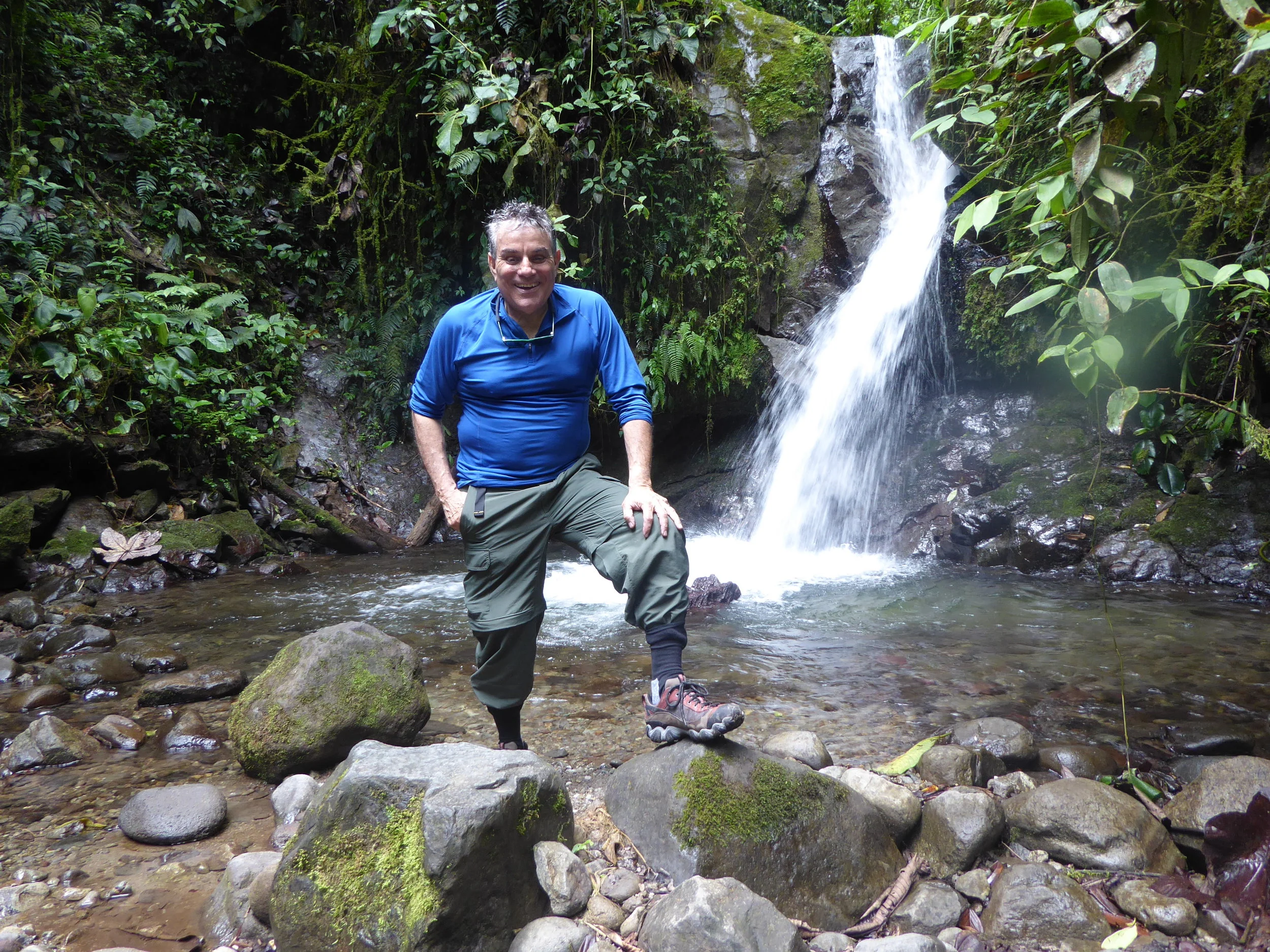
Mindo was a refreshing, no stress, small town. It is located in a cloud forest with hiking that allowed us our first views of 5 waterfalls.

After a good night sleep, we headed out to tackle the waterfalls and the mountains. You need to taxi transport to the launch point. The taxi charges $6, no matter how many people ride.  Our impromptu little group from Casa La Cecelia all crowded into a pickup truck bed and off we went. As I think of our group, I am reminded of what was best of Mindo. Here we renewed acquaintances with our UK friends from Quito. We joked as I told them my eyes started blinking and there they were. We also met an Arizona couple and solo travelers from California, Chile, Germany, Canada, and a kind of perennial traveler (or pot provider) also from Canada. Interestingly most of the solos were young woman seeking adventure. Our conversations with all of them were really friendly and cheerful.

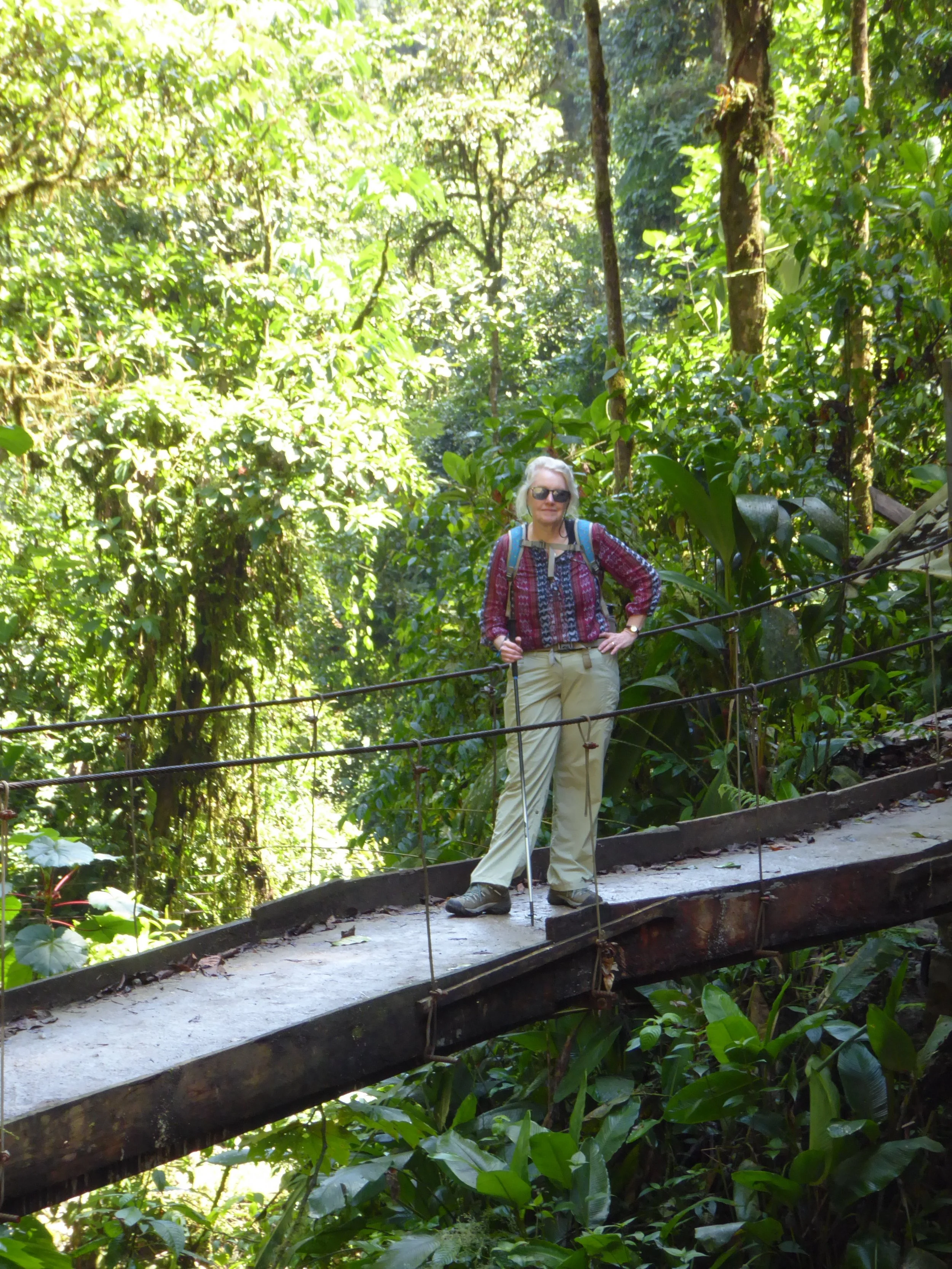
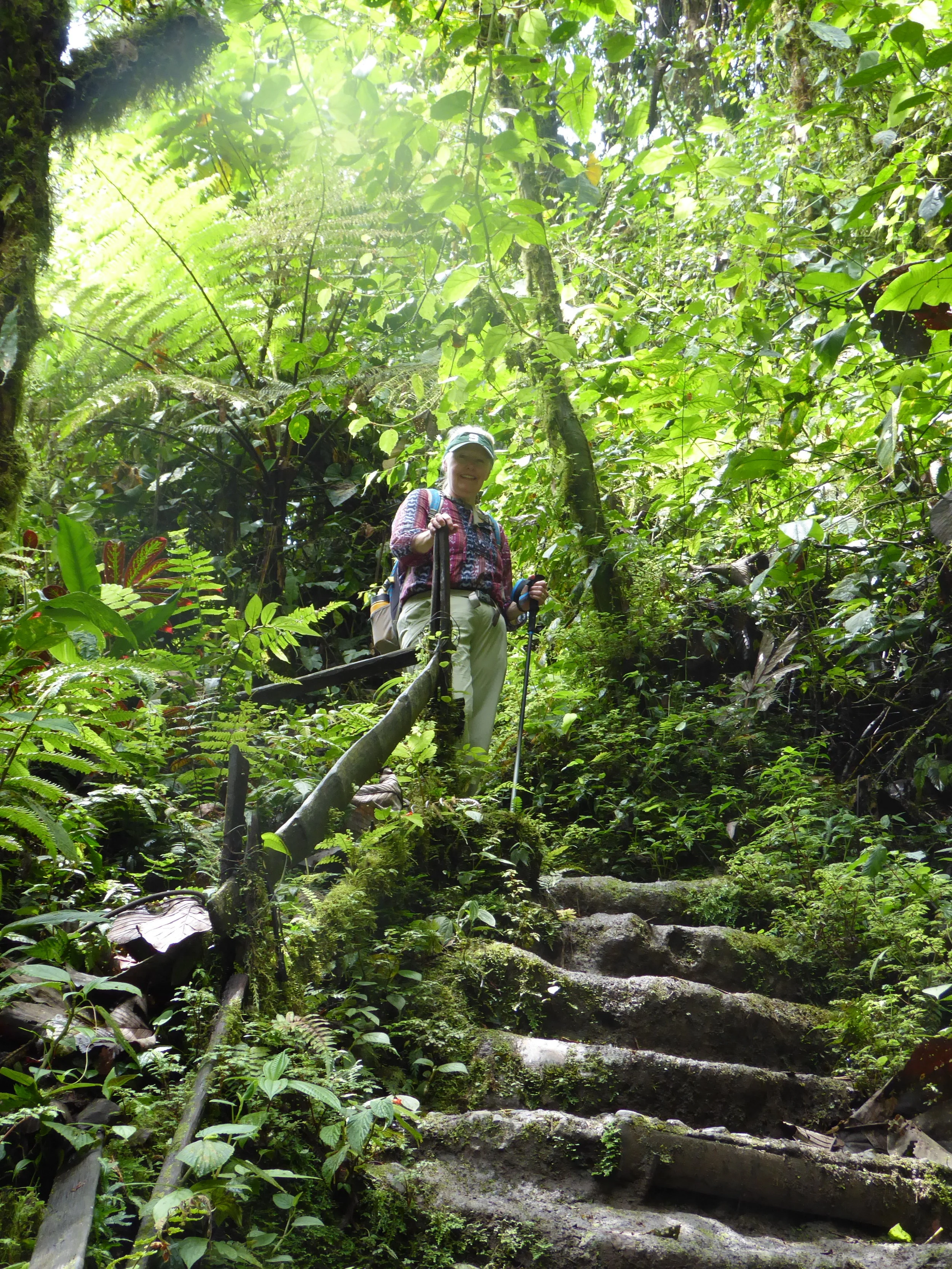
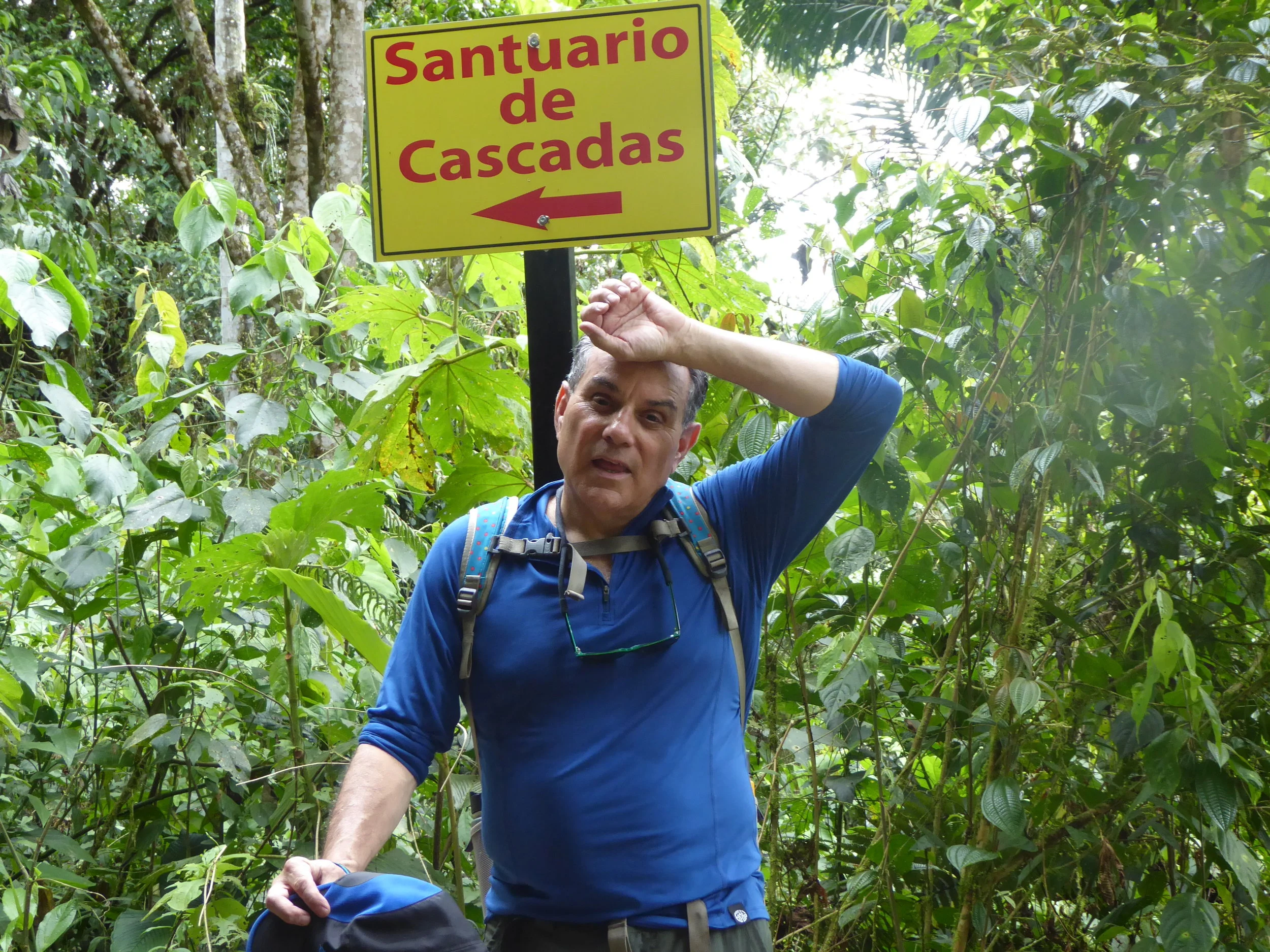
Off the truck to the to the zip-line open cart that fits 4.  ZZZZip---across a wide ravine to a platform---jump off, find the marked trail, and start the trek up and down. Janet and I are prepared with great hiking boots, hats, and walking poles.  I won’t lie, the youngsters sped ahead, -ok-, but we just marched one step at a time up the mountain. We crossed rope bridges and followed our path to the 1st, 2nd, 3rd, and 4th waterfall. We took many photos to memorialize our “coolness”.  At the 4th stop our group was congregating for a long while; all sitting on large boulders and a massive fallen tree that crossed the river. Most of the group decided to stop here to avoid the inevitable drenching you would get trying to maintain your balance and cross the river on the submerged rocks to reach the pathway to the 5th waterfall. Only the Arizona couple that had already gone swimming took off for the last waterfall; the others left to go back. We loitered for a while, enjoying #4, standing on the tree trunk and then the big rocks where I probed the shore line and submerged rocks with my hiking pole. Janet and I used our poles to keep balance and tippy toed on the tips of the rocks, contorting our bodies and tightening our cores to balance on the rocks. “Kerplunk”-- No, we got wet anyway, but not until the last few steps when we got too excited and too impatient.  The 5th fall was not as inspiring as the 4th, but the challenge was accomplished—great! The return made us feel more fantastic about our stamina and training (for me also having inhalers). We again jointly acknowledged our trainers at our home town recreation center who pushed us so hard and also were glad we hiked the “Smokies” with our friends from home before our trip for the warm up (break in those boots).

ZZZZipp—headed back to Casa La Cecelia. We shared a panel truck with 3 young men from Slovak. Janet sat in the cab, but I sat in the truck bed with these guys who were very friendly and spoke English well too. They were pleased that Janet and I may be traveling to their country (probably not) and offered some tips.


We returned to our lovely cabin bungalow, relaxing on the patio, listening to the running Mindo river. I jumped into the hammock and breathed in the fresh air. It is nice to be away from the roads and all the exhaust fumes.  We did kick on the computer and our portable UE speaker to listen to our large music library.  We have been doing that a lot now, listening to music or using this speaker for good sound when watching Netflix.

Now it was dinner time in little downtown Mindo.

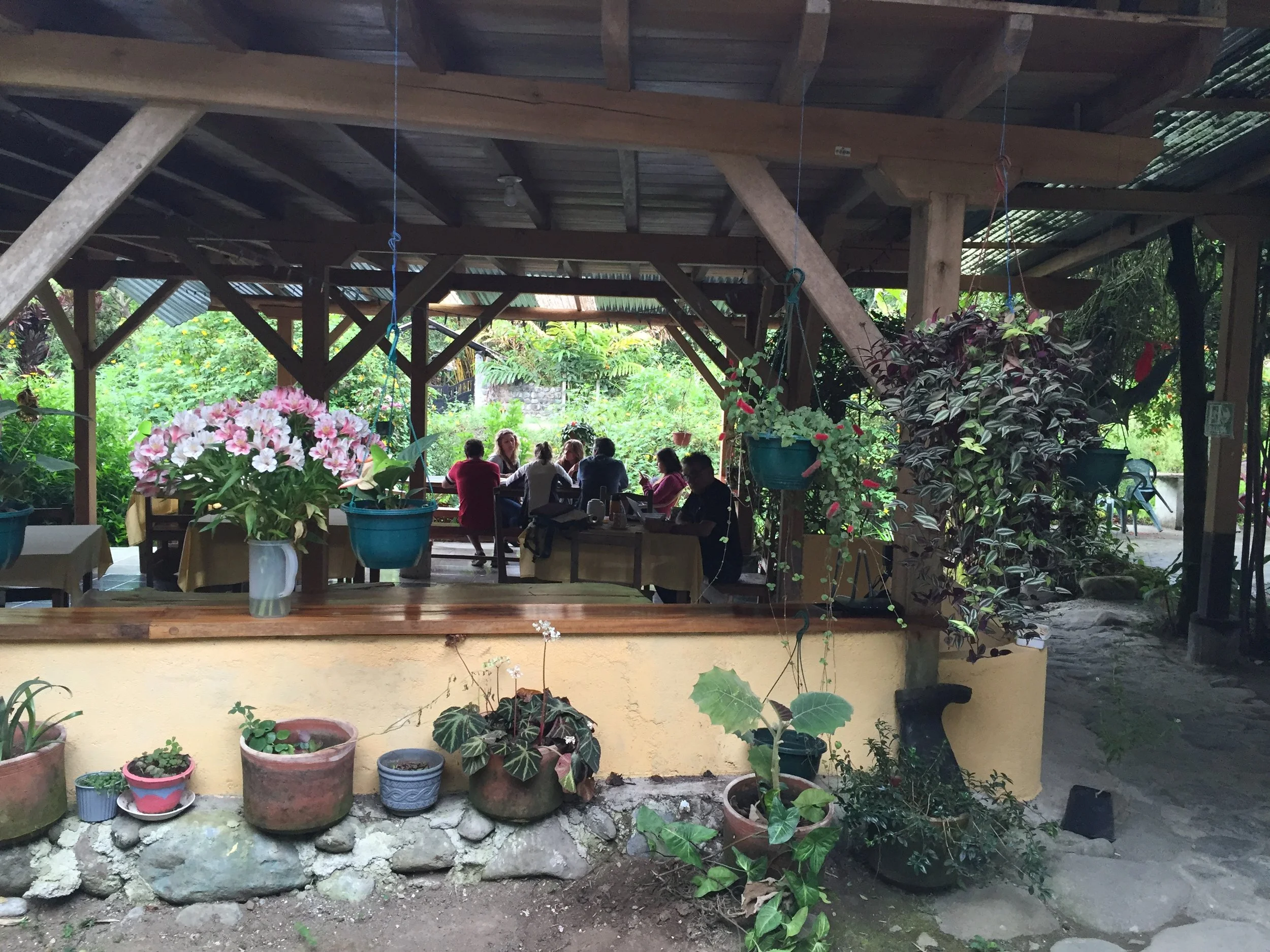
We have been splitting meals and are fine. This night we ordered “Churaccas”. Reading the description, we thought we were just getting soup with meat—once finished we were full--, but that was a 1st course. The waitress brings 2 giant plates of beans, rice, fish, and veggie relish.  Our eyes widened and we started to chuckle. Thankfully, the waitress had doggy boxes.

After a large bowl of soup complete with a Chicken leg in it, we were served each this plate, all for $3.50 each

On Wednesday we decompressed. The day started lazy. We then went for another hike to the “Mariposa”—a butterfly house. This was a sophisticated place with a motel. We like butterflies— but the most fun was conversing with the lovely proprietor, clearly educated, a woman who spoke impeccable English—which we found was hard to find in Quito and Mindo.

We talked a little world politics, about her tourist industry, and about the oil industry that permeates the culture and brings so much money into the country, except that now oil prices are done. 

Walking home, we were treated to seeing cabelleros riding these beautiful stallions passed us as we walked the road; one displayed special trotting steps, the other was at full gallop—very impressive.

We finished our final day with a bite to eat at a Mindo diner that bit the big one. I mean when the proprietor fails to bring you the beer that you craved, nor brings the fruit drink with the meal for Janet, nor the bottled water you ordered—you have an unsatisfying dining experience. This was so unusual that it stuck in our minds. We wanted to leave and Janet asked for a takeout cup. Instead she received a knotted plastic bag. Funny, but sad!  

Our shared meal for $7 without Frank's beer

After the meal we finally got the juice, when we ask for it to go, this is how it was provided


Back to the bungalow to pack for Banos. It gets really dark, very early, in Ecuador, so we wore our head lamps. Glad I actually used it so as not to complain about the added weight.       

What we did in Quito

In Old Town Quito every street is a hill


Our plan for our first day of our around the world trip was to take it easy, get use to the altitude and settle into our new life, so we opted for a 3-hour walking tour, up and down the hills and stairs and more stairs.  What a beginning.  Our guide was good, a local person who told us that Quito is centered around 4 cathedrals as a square.  Upon further investigation, it is really more linear.  Our guild planned on 2 visits inside of the cathedral of San Francisco and the Basilica.  The cathedral was closed and the Basilica had a special ceremony for the policy of Quito, we could not enter either church.   We did have an opportunity to experience the old town.  

Everywhere we went people were offering to sell us something, either on the street or in narrow store fronts about the size of our storage unit back home. Not harassingly, but calling out to the locals as well. This is how commerce works at the neighborhood level. It was a little shocking to our senses as to how different this city is from back home. 

After our tour we returned to our hotel for a 3-hour nap! 

A view from old town

An inside square in Old Town

The local inside market

The police at the Bascilia


Our first meal in Quito ended up Pizza, we were too tired to walk any any farther

After our long nap we had a great chat with other travelers in our hostel and then went out for dinner, can you believe it, pizza from an American owned pizza joint.  We were back in bed by 9 and out in solid sleep until 8 the next morning.

Day Two in Quito

Even with our Duo-lingo and Google translate apps we wanted to get a more basic grammatical understanding of the Spanish language.  So we ask our hostel proprietor if he could arrange a private language lesson for us.  So we started day two with Senora Rachell. We worked threw her lesson forbidden to speak English and reviewed:  articulos + substontiros + adjetivos, both in plural and gender specific formats. We enjoyed the class and felt that our ear for the language and translations would be better.   

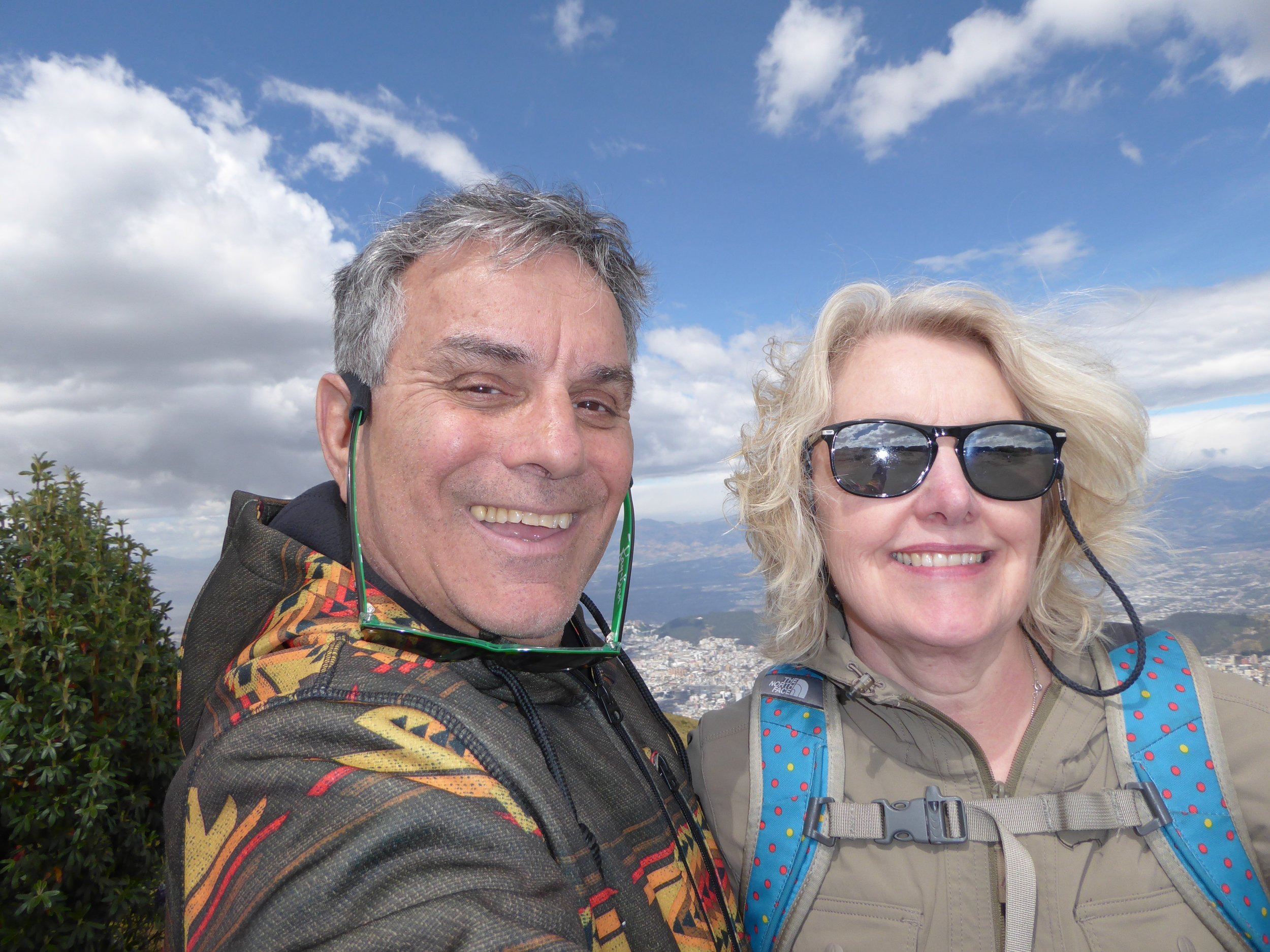
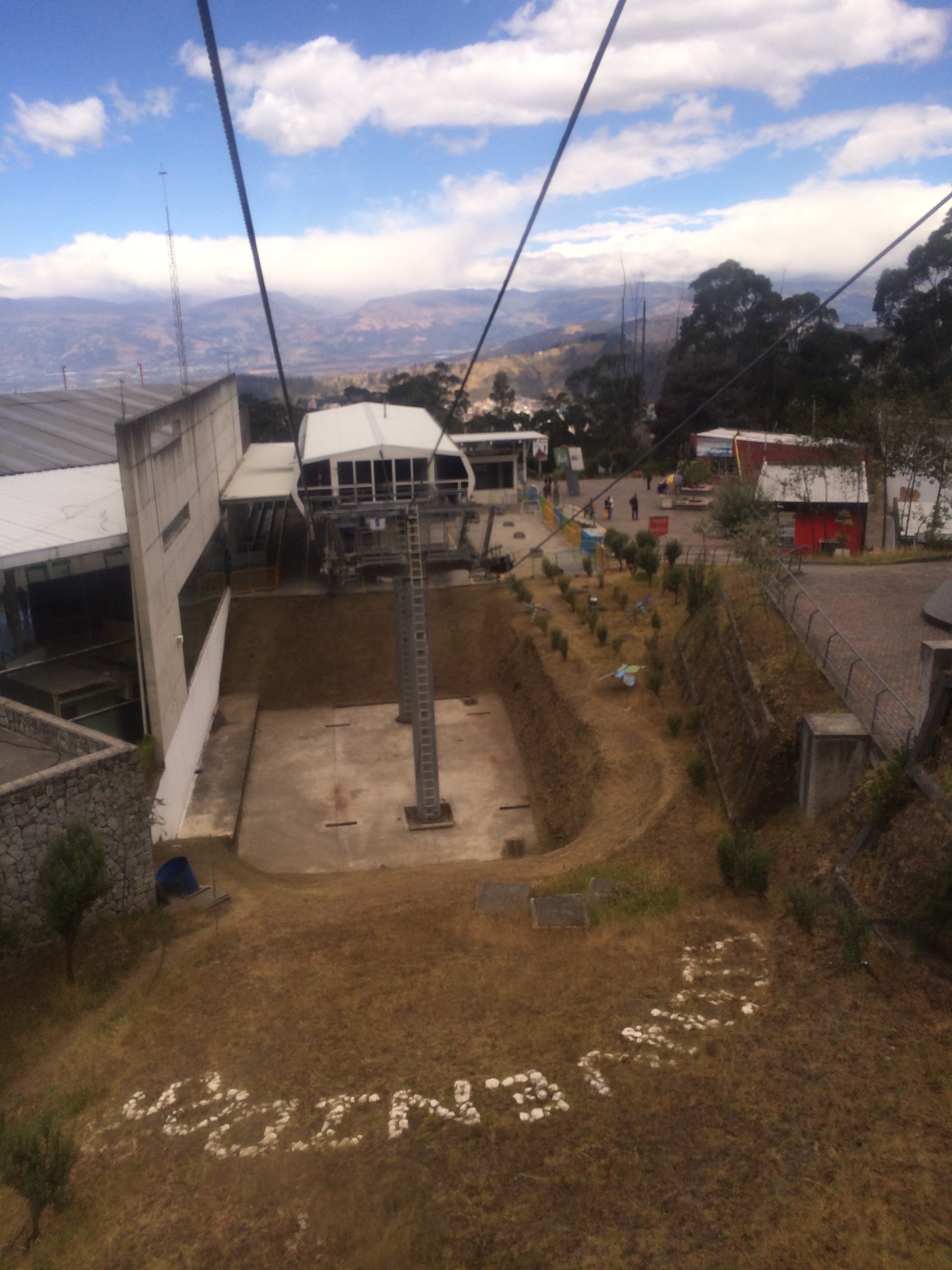
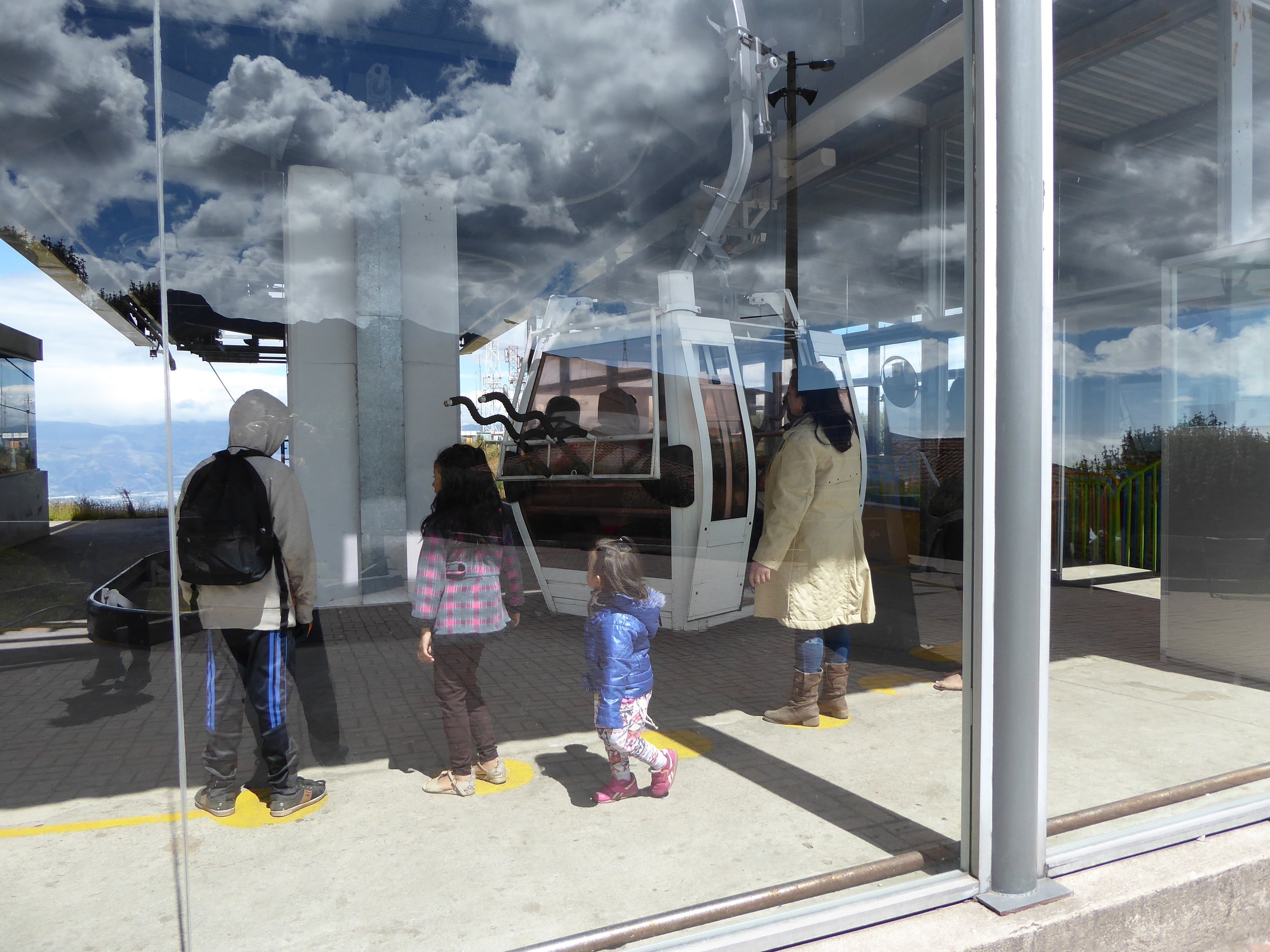
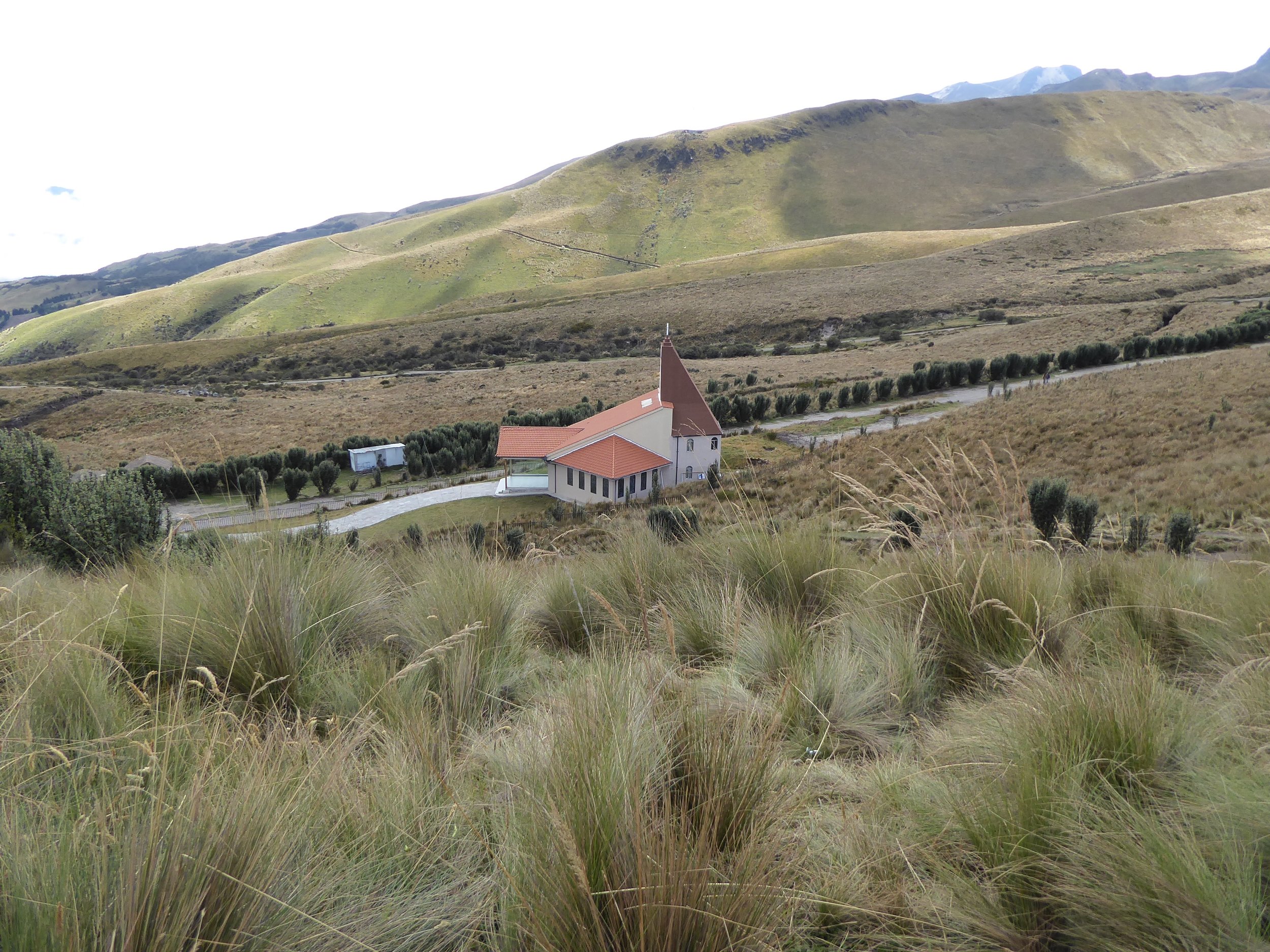
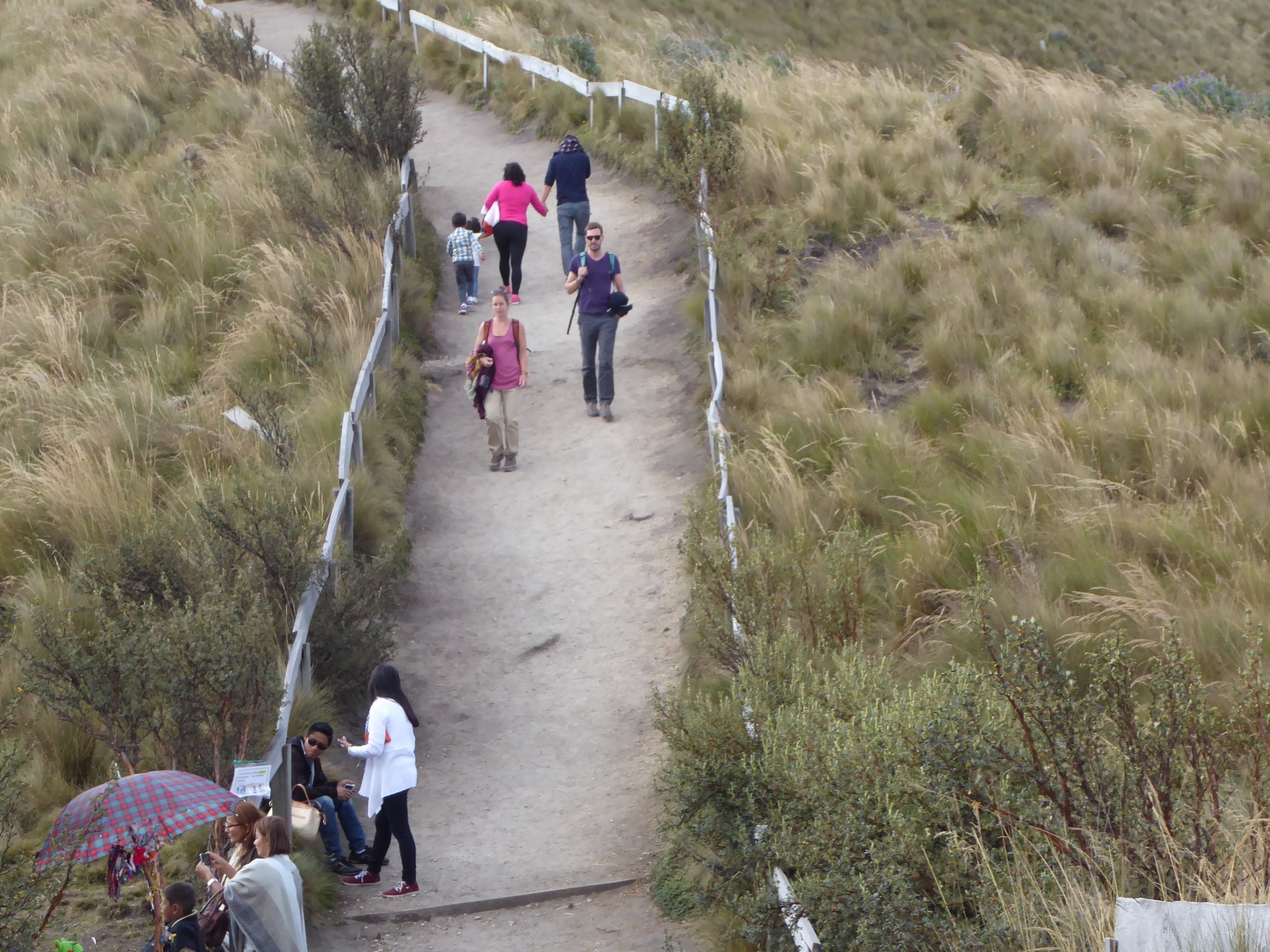
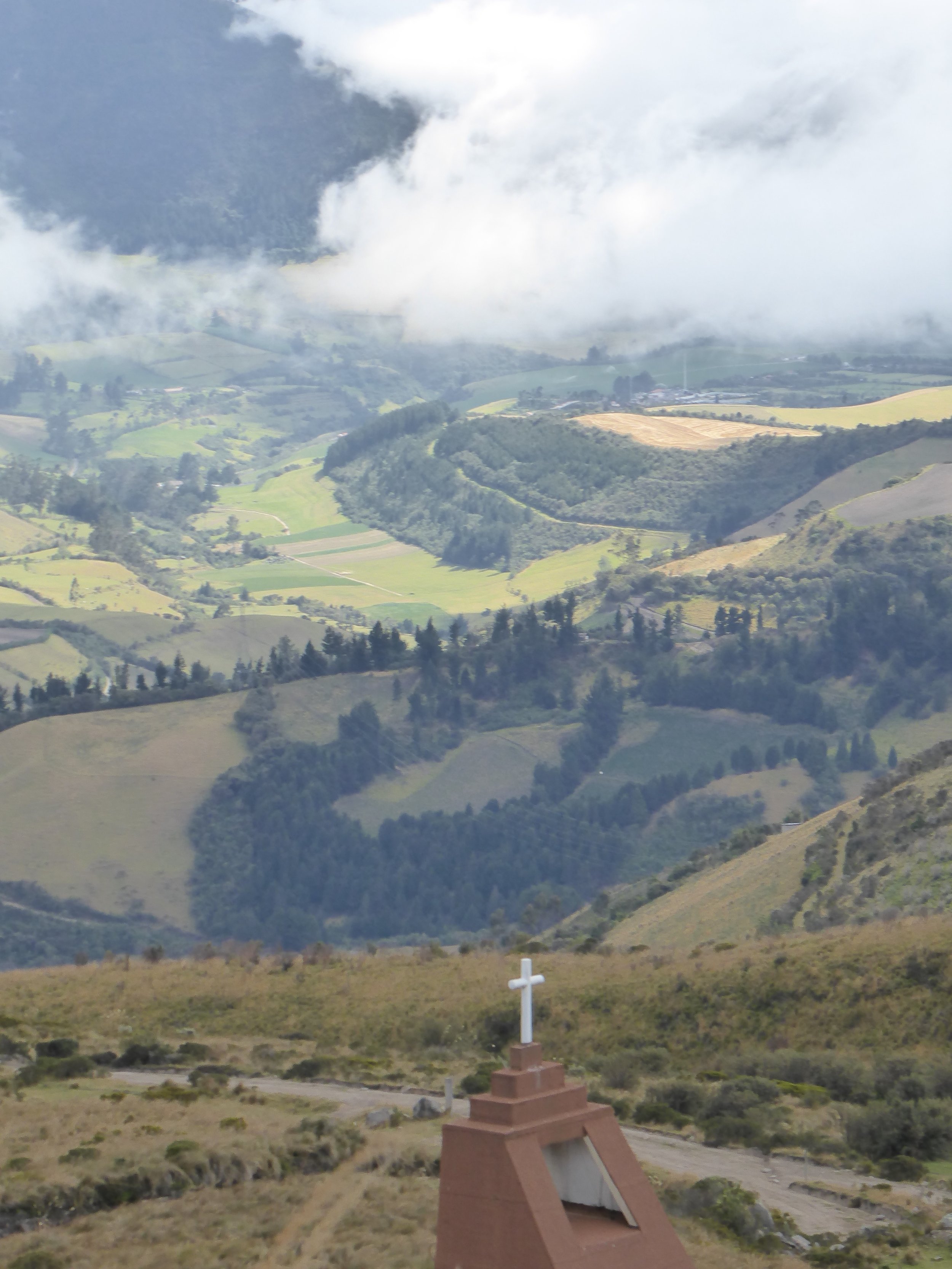
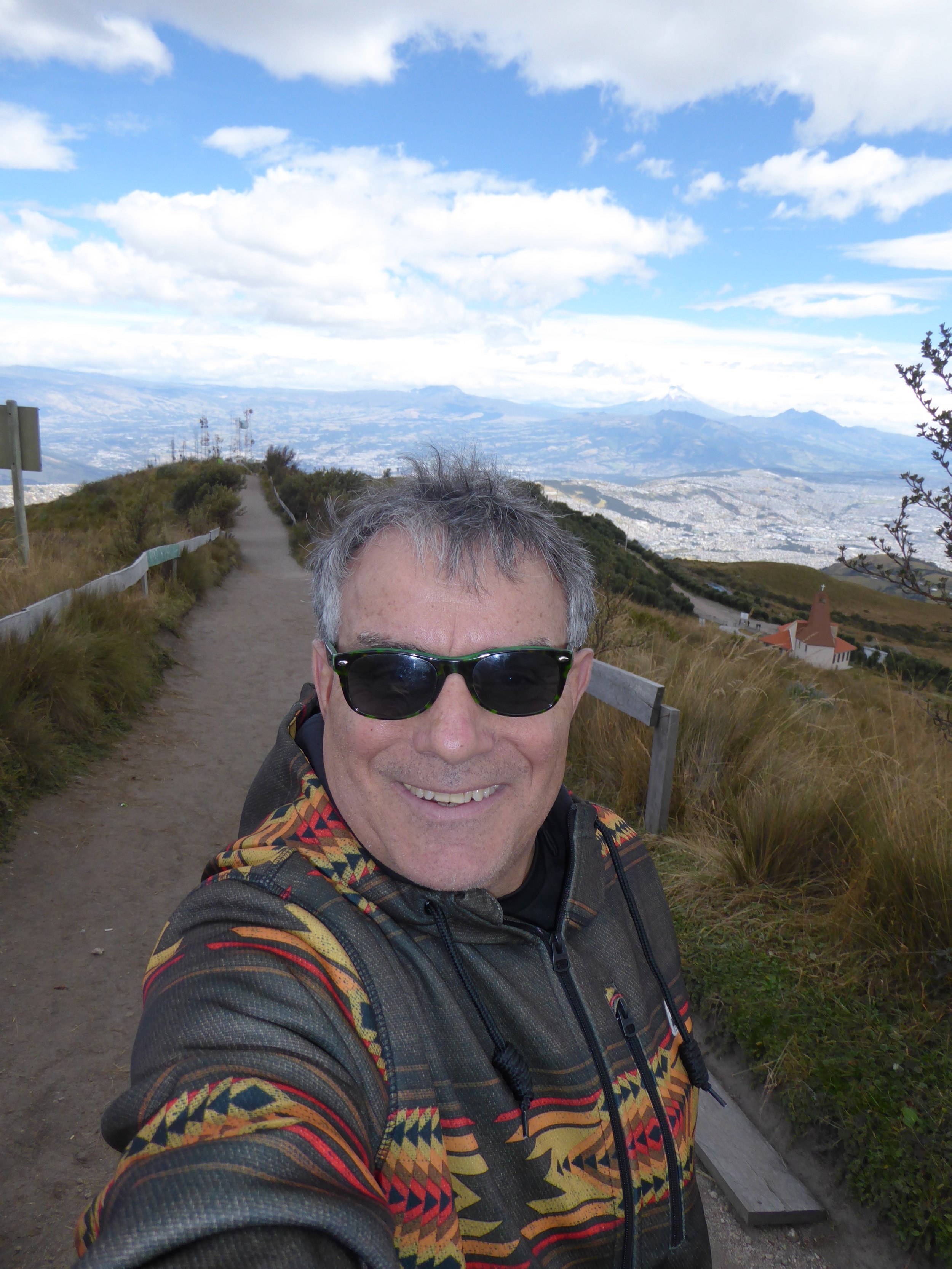
Out the door by noon and off to our busiest day. We wanted to oversee the entire area. So we traveled to the Telefriqo, a gondola lift that took us to the top of one of the mountains surrounding Quito. Here was our first trail hiking day, aiming toward the tip reaching 4,000 km. We photographed some beautiful sights, where sunlight and clouds, mountains and populated valleys meet. Janet had a particular spectacular panaramic shot we will share. We marched to the second plateau and felt complete.  Maybe to the top in a future life.

Down the mountain, found a taxi, and back to the center of Old Town. The city is all hustle and bustle. Children in school uniforms being hurried along by their mothers for morning classes. It seemed like there was a split shift for schooling; may have been pre and post siesta scheduling. Traffic is rather crazy, but actually respectful to pedestrians. Small stick shifts autos-which they love-zoom about these narrow, inclined, medieval streets. We would freak out riding the clutch all the time—we know, as we owned a 5 speed Fiat. The buses whip around corners almost like sports cars too. Only the motorcyclists can squeeze through tight spaces and straddle the lanes. Walking is sometimes a challenge due to the hills of the city, and more significantly, our lack of acclimation to the altitude here. Typically, we walk until we get winded, stop, let our heart rate adjust, then move on. I thought we did really well, although I admit to that long afternoon nap.

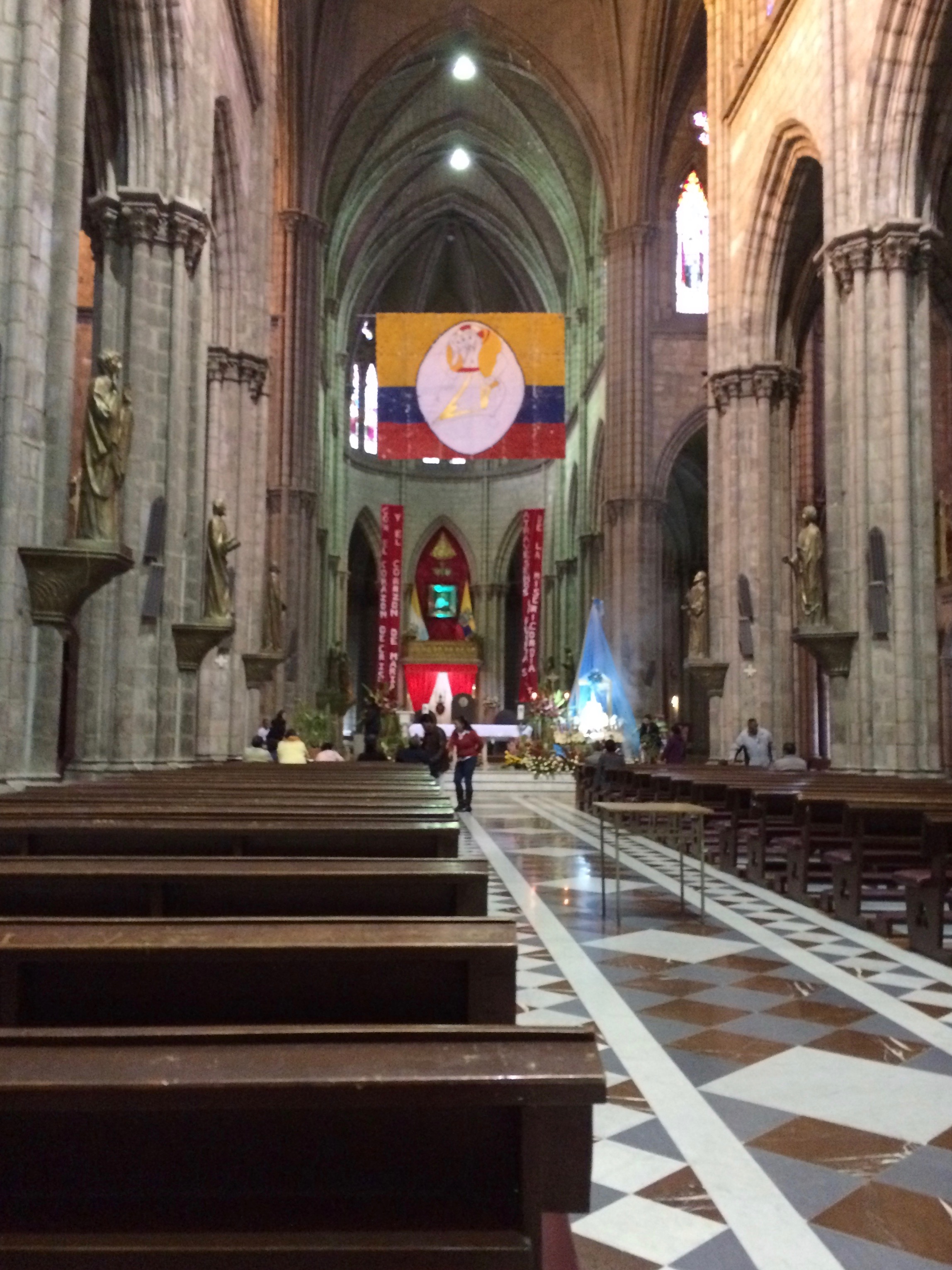
Our next goal was to travel back to several religious sites: De La Basilica and Iglesia La Compania De Jesus . The Basilica is immense, easily seen from almost anywhere in Quito with its massive towers. The exterior is much like Notre Dame in Paris or West Minster Abbey in London. That is where the comparison ends. The interior is cavernous, but there is no elegance and limited decoration. Most side alters are empty. This was surprising, if not disappointing.

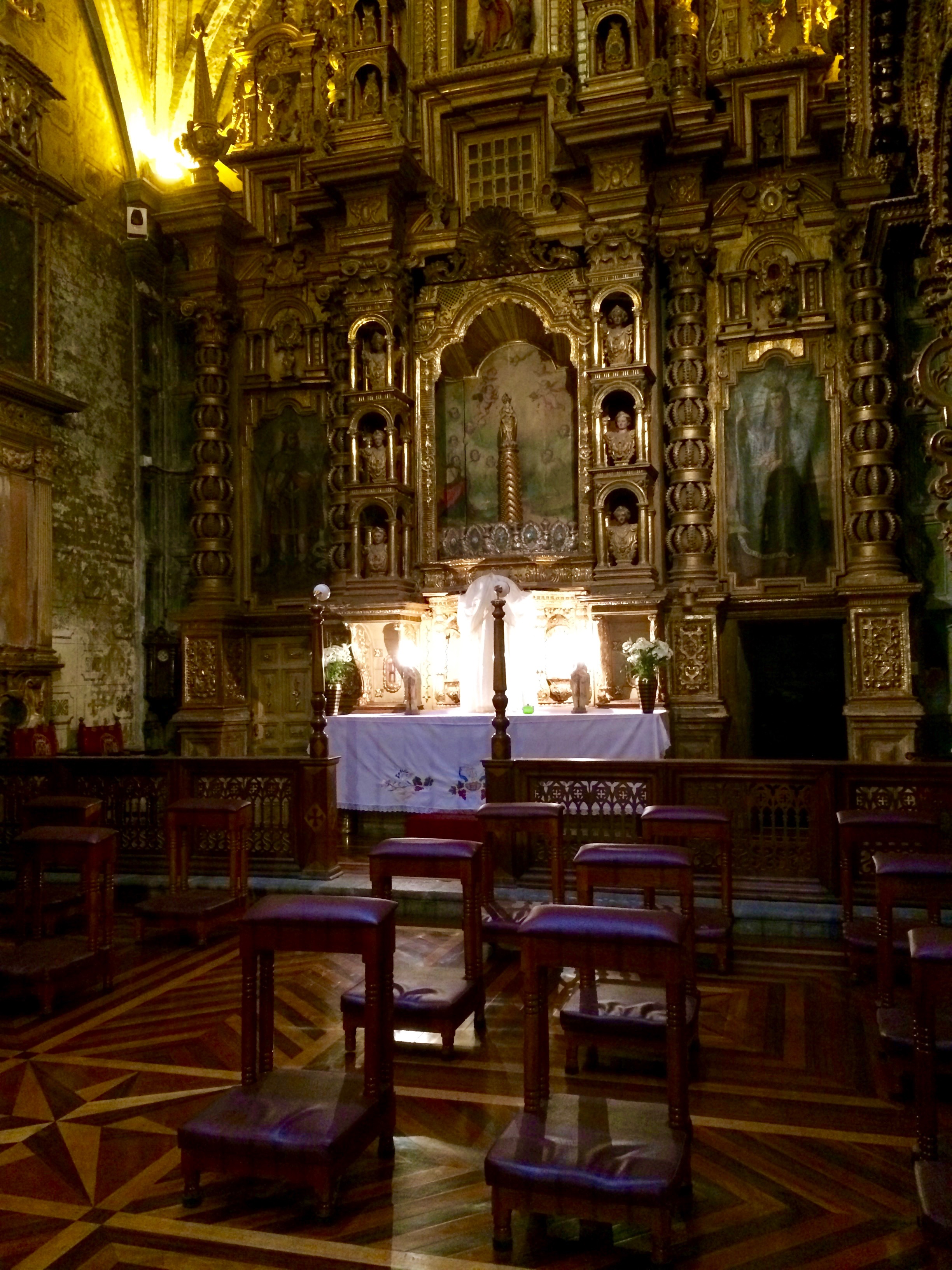
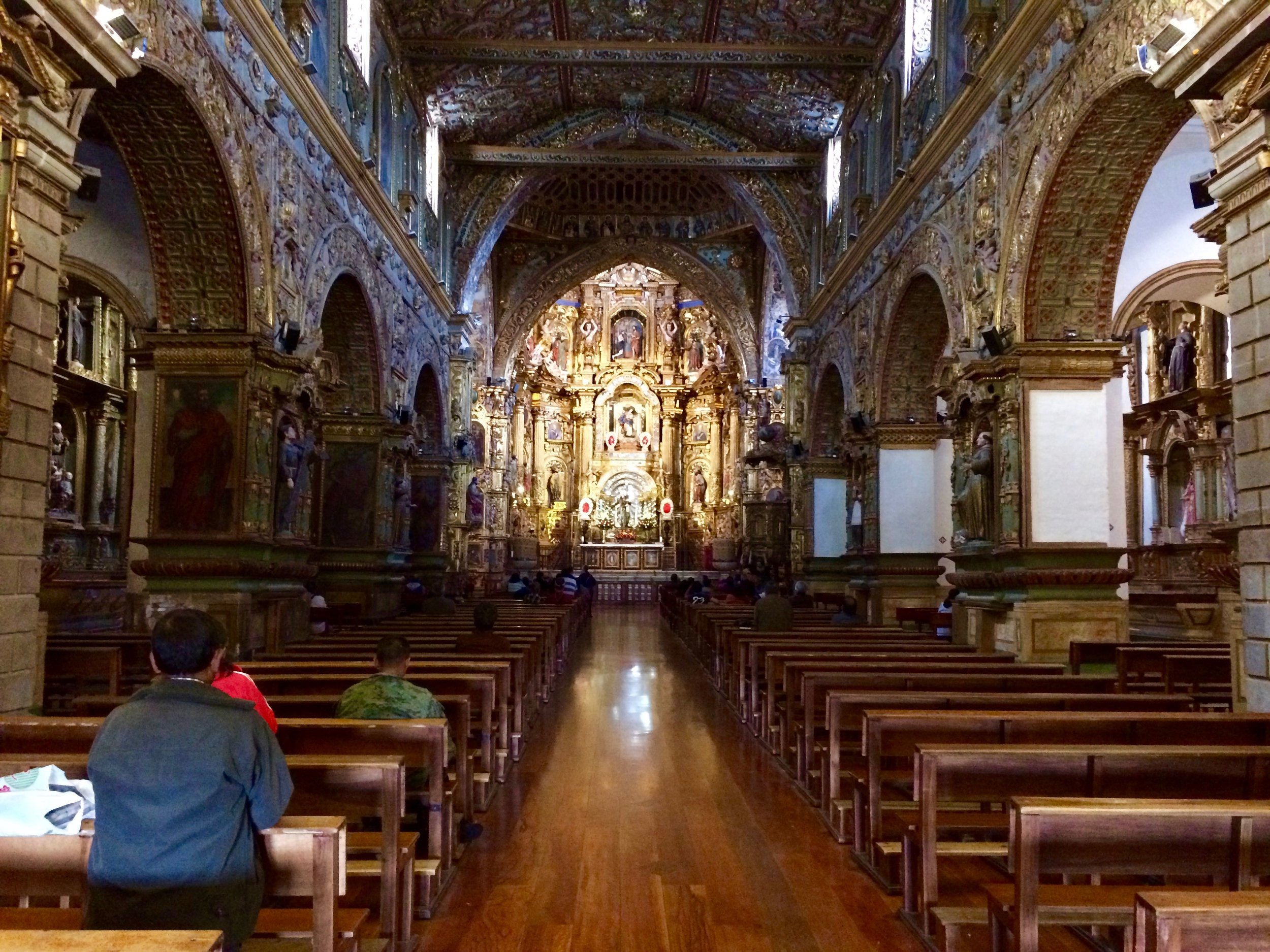
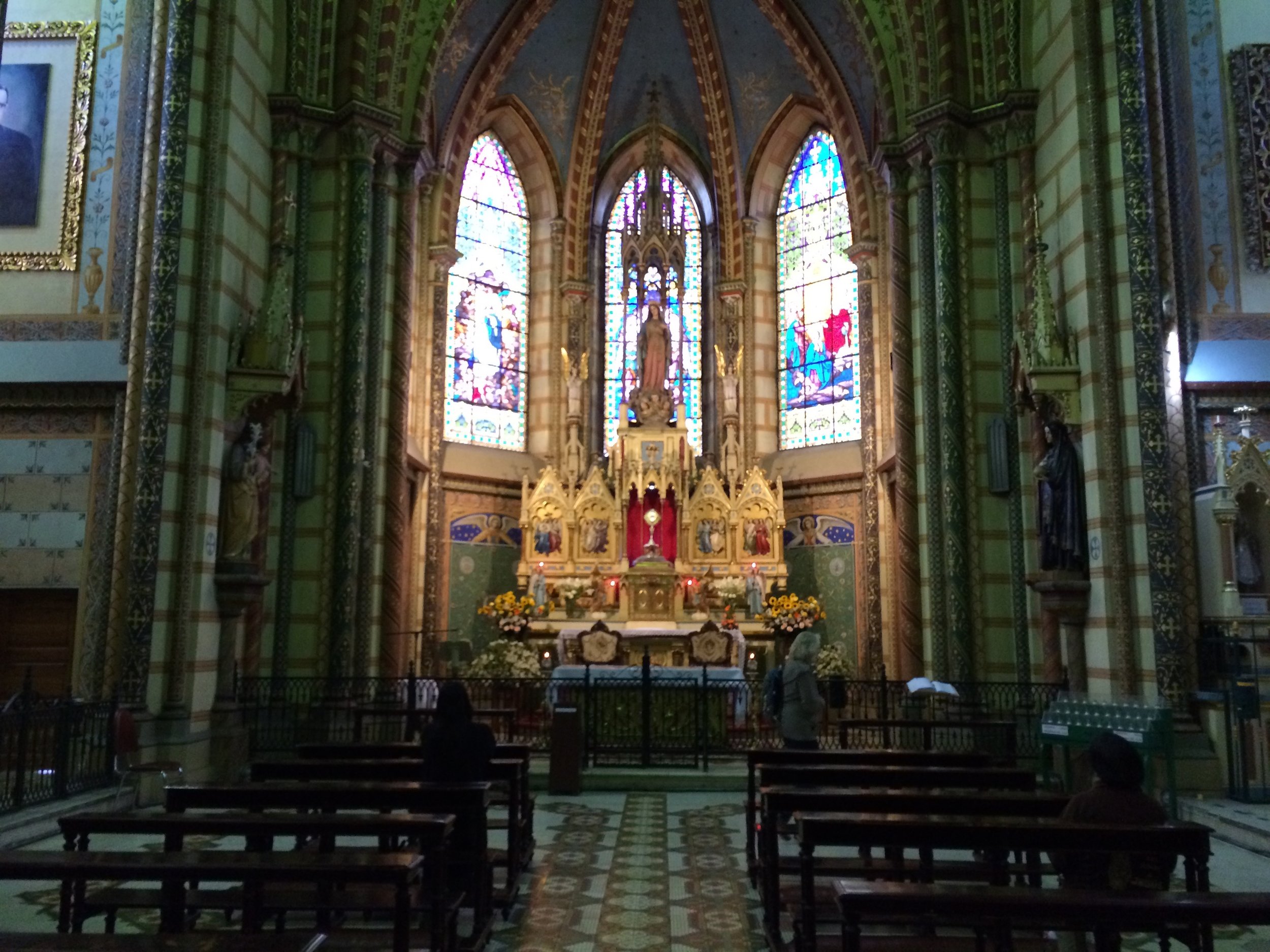
The Iglesia La Compania De Jesus, on the other hand, is the most amazing cathedral; many say the most important church in all of South America. The entire interior is covered with gold leaf and shimmers and shines from front to back. The sculptures and paintings at the main alter and side alters are exquisite. Personally, we thought Iglesia La Compania De Jesus rivaled any cathedral in Rome that we have seen, save St. Peters Cathedral at the Vatican. No photos were allowed, but we have reproduced the ticket to give you a taste. We concluded by walking to the Monasterio of San Francisco, which is the oldest church in Quito and gained additional importance as the site where current Pope Francis had visited. It was a lovely cathedral, but the memorable part was the little old man that was free lancing as a secret tour guide, taking us around and whispering during evening pray. I enjoyed him more than Janet, but he did declined my $1.00 offer and requested at least $2—“for the church”. I gave it to him because—you know he had lived in Michigan once he said? - see our post on the Folktale about the building of this cathedral.

At that point it was getting late, close to dusk, and we wanted to get to our hostel which was reasonably close. But Janet wanted to use the kitchen and cook dinner with or without my help. So we stopped at a local shop near our hostel to purchase pasta, tomato sauce, rolls, and vegetables. I already admitted the pricing gives me trouble, so I’m fumbling around in my pocket for the right bills and then pay the man.  As we turn to leave the man comes out from behind the counter, gets my attention, and points to the $20 bill I dropped on his floor. I say “grasias”,but then a women , his wife I think, says back “mucho grasias”.  I agree “mucho grasias”, chuckle, smile and wave goodbye. I felt really good about that exchange and the honesty, even though Janet poked me in the ribs.  

In the small kitchen, Janet put together our very first home cooked meal on this trip. It was a very nice meal. I helped too. After cleanup, it was straight to bed so we would be prepared for our next day of adventure

Day 3 in Quito

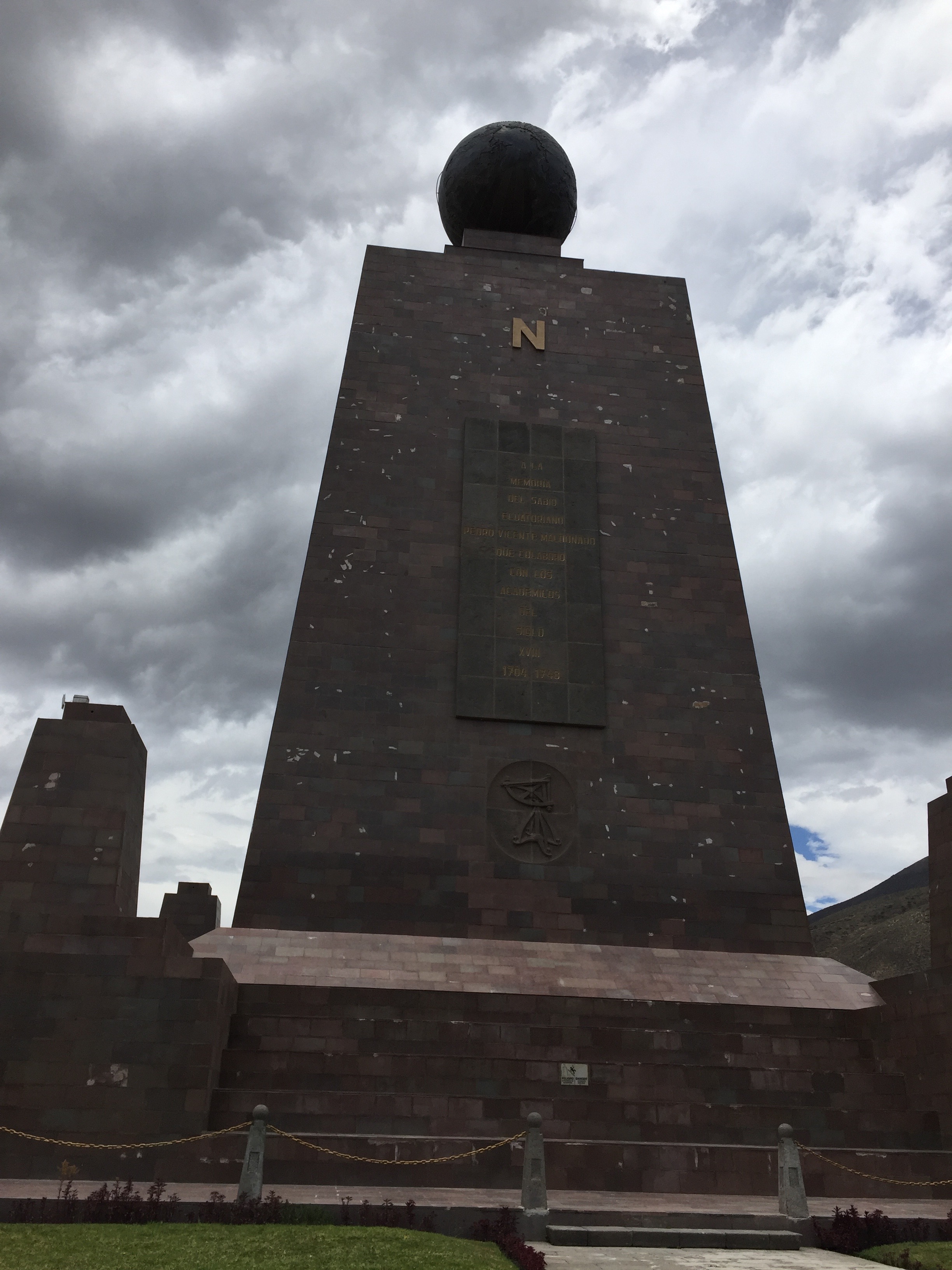
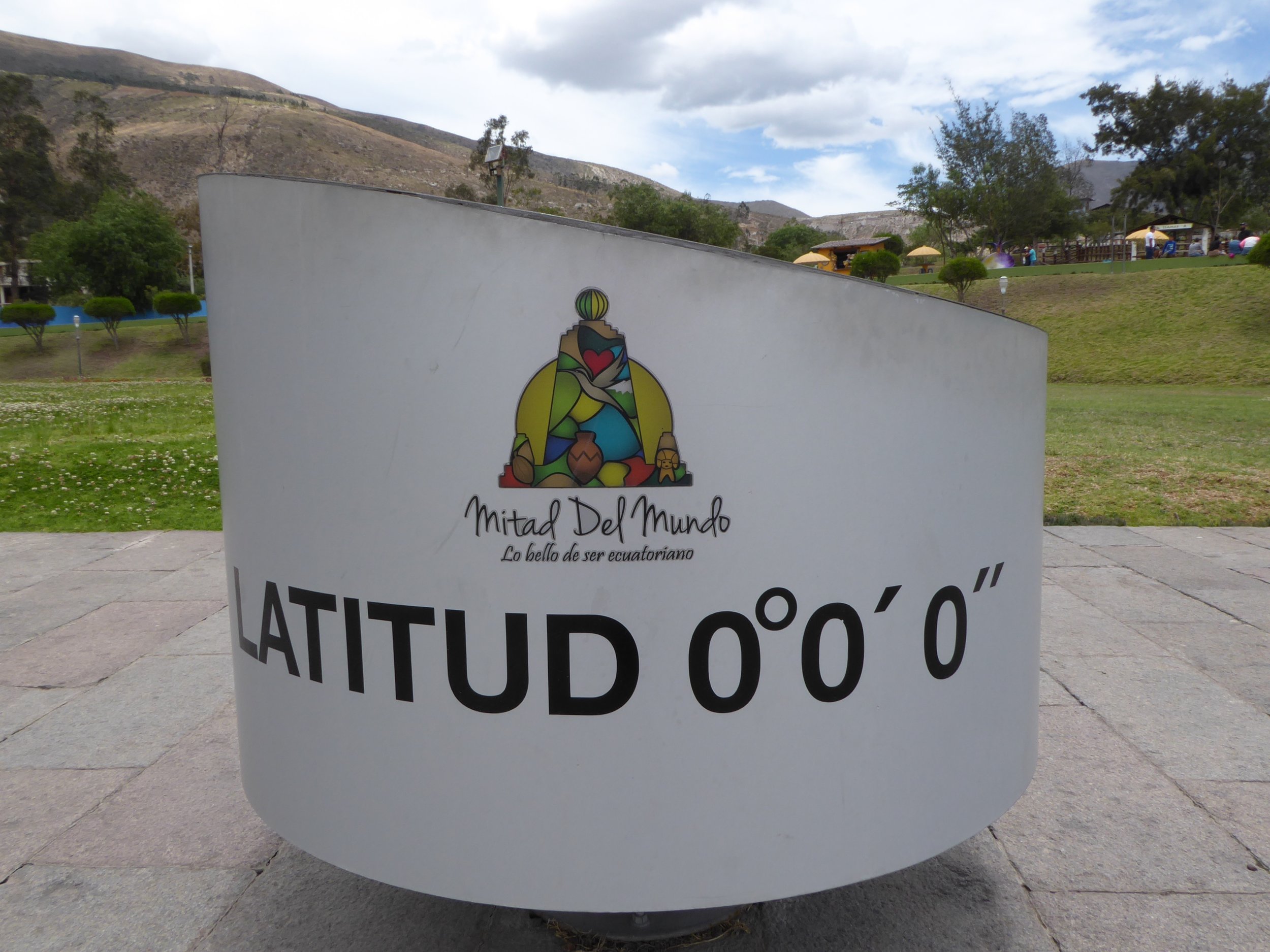
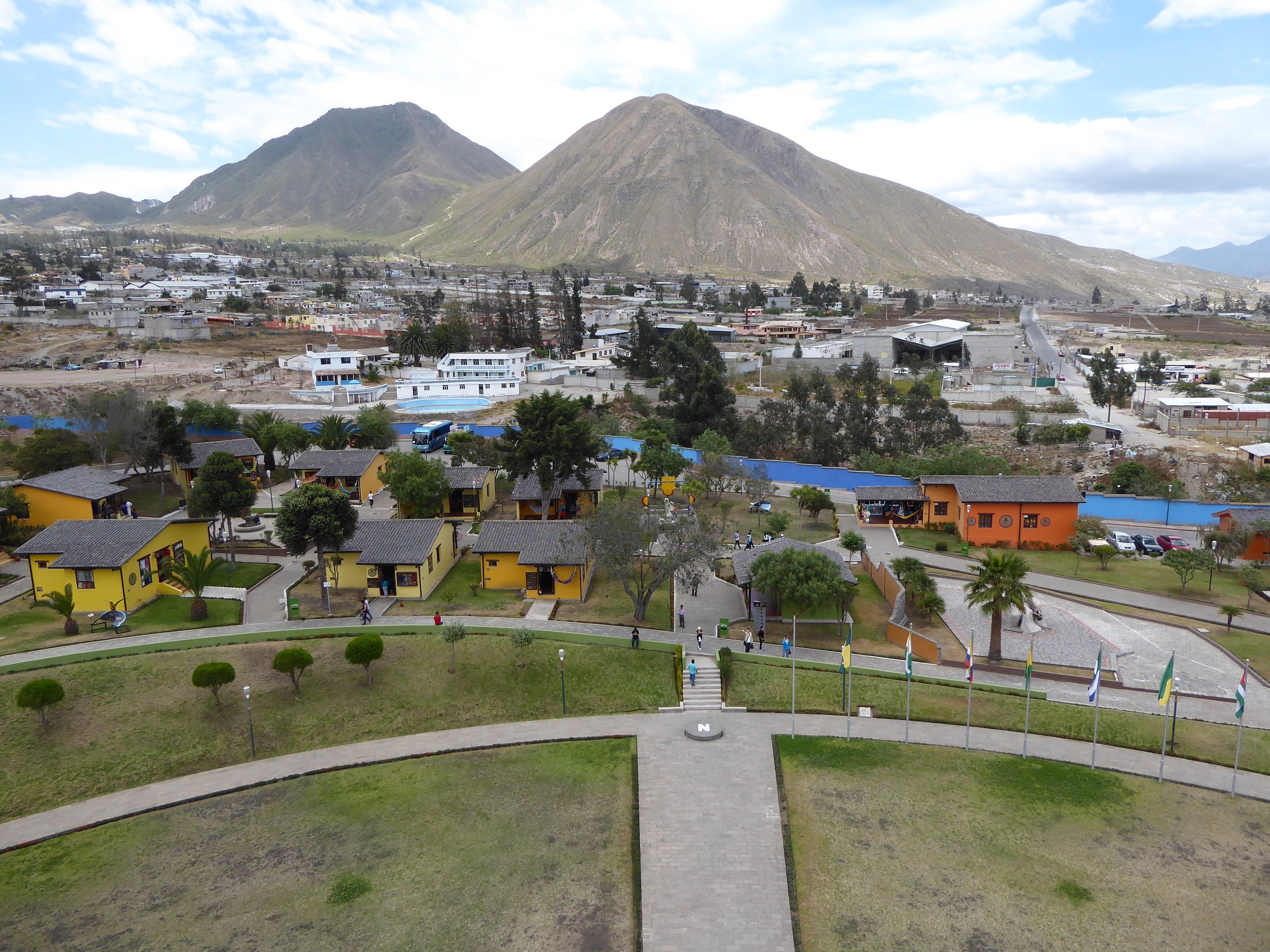
After a nice breakfast and some great conversations with the other travelers at our hostel we set out to see Ciudad Mitad del Mundo (Spanish: Middle of the World City).  This is a monument at the equator.  We used the local public transportation, this involved going to the local bus stop and paying 25 cents to get to a bus terminal and transferring to a bus to for a 30-minute ride to the site.  Thankfully, we met a nice Australian women traveling the world solo and we teamed up together to navigate this process.   

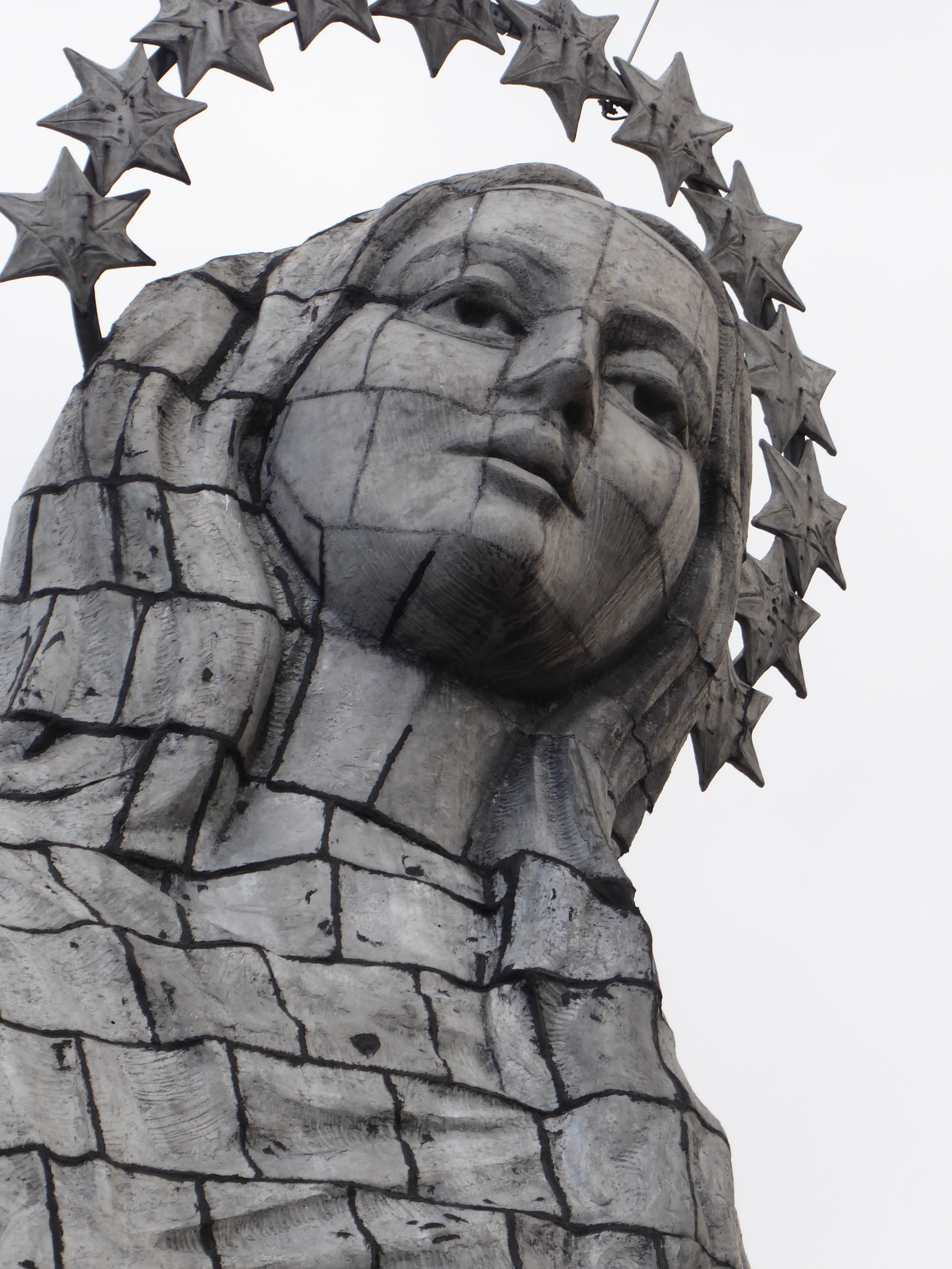
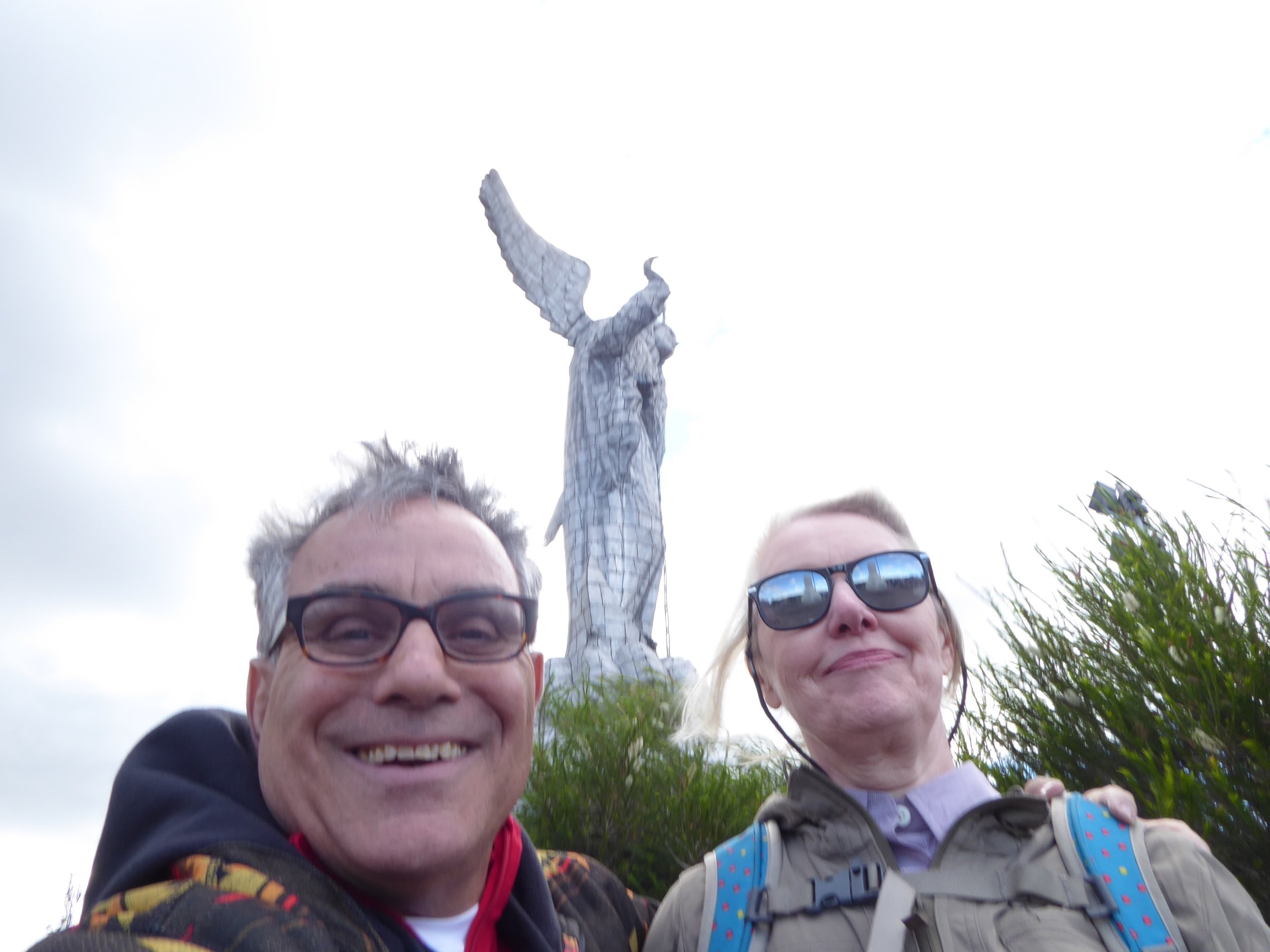
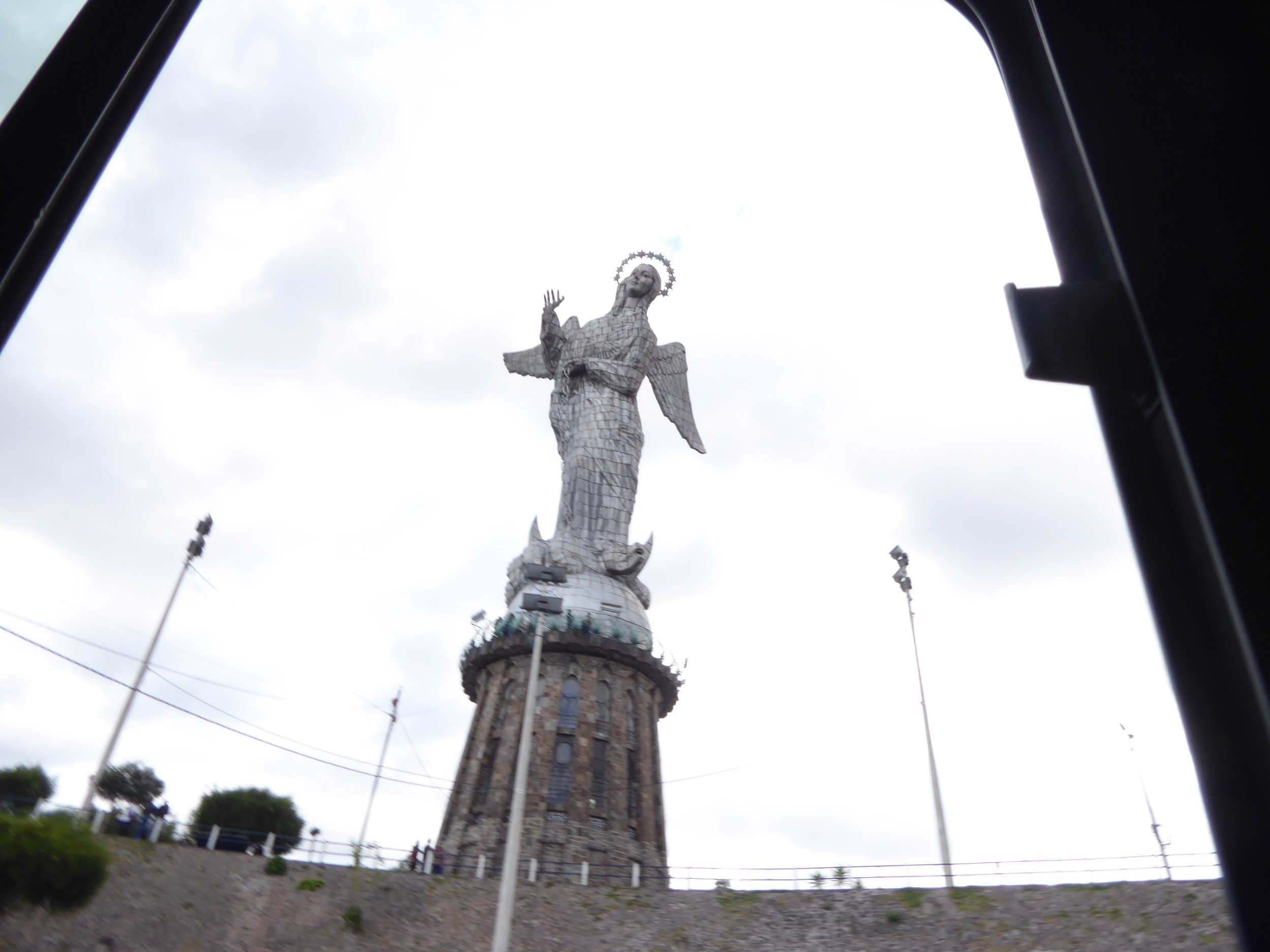
The site is very nice, the monument was large with a museum and hands on science lab inside.  We had a good time jumping back and forth from the northern and western hemisphere.  After lunch, made by Janet with food we had packed, we were back to a very crowded public bus back to the terminal.  At the terminal we made a decision to take a taxi to see the La Virgen de Quito – also known as the winged virgin of Quito.  This site is at the opposite end of Quito, a city of 45 KM, or 27.96 miles.  After finding a taxi we tried to explain what we wanted, he clearly thought we were crazy and after several attempts told us it would be $15.  By American standards this was a deal.  Our ride was close to an hour, up and down the hills, through rush hour traffic and we made it to the top of another mountain before the sunset.  She was really worth the it.  What a great site, see our photos below.  We are movie buffs and this was in the final scene of the movie Proof of Life. 

Getting back to our hostel proved to be our next challenge, no taxi stand at the virgin.  So we opted for another bus with assurance from the attendant that this bus would take us back to our old town -the Historical area.  Soon we realized we were not going done to the lower historic area, but whizzing by on an outer circle freeway.  In a panic the bus stopped for us and let us off on the side of the freeway IN THE MIDDLE OF NOWHERE.  So we did not panic (Janet now says she did sort of) and we started walking toward a busy street.  Very soon we found a taxi and with the help of google translate got back to the hostel safe and sound. 

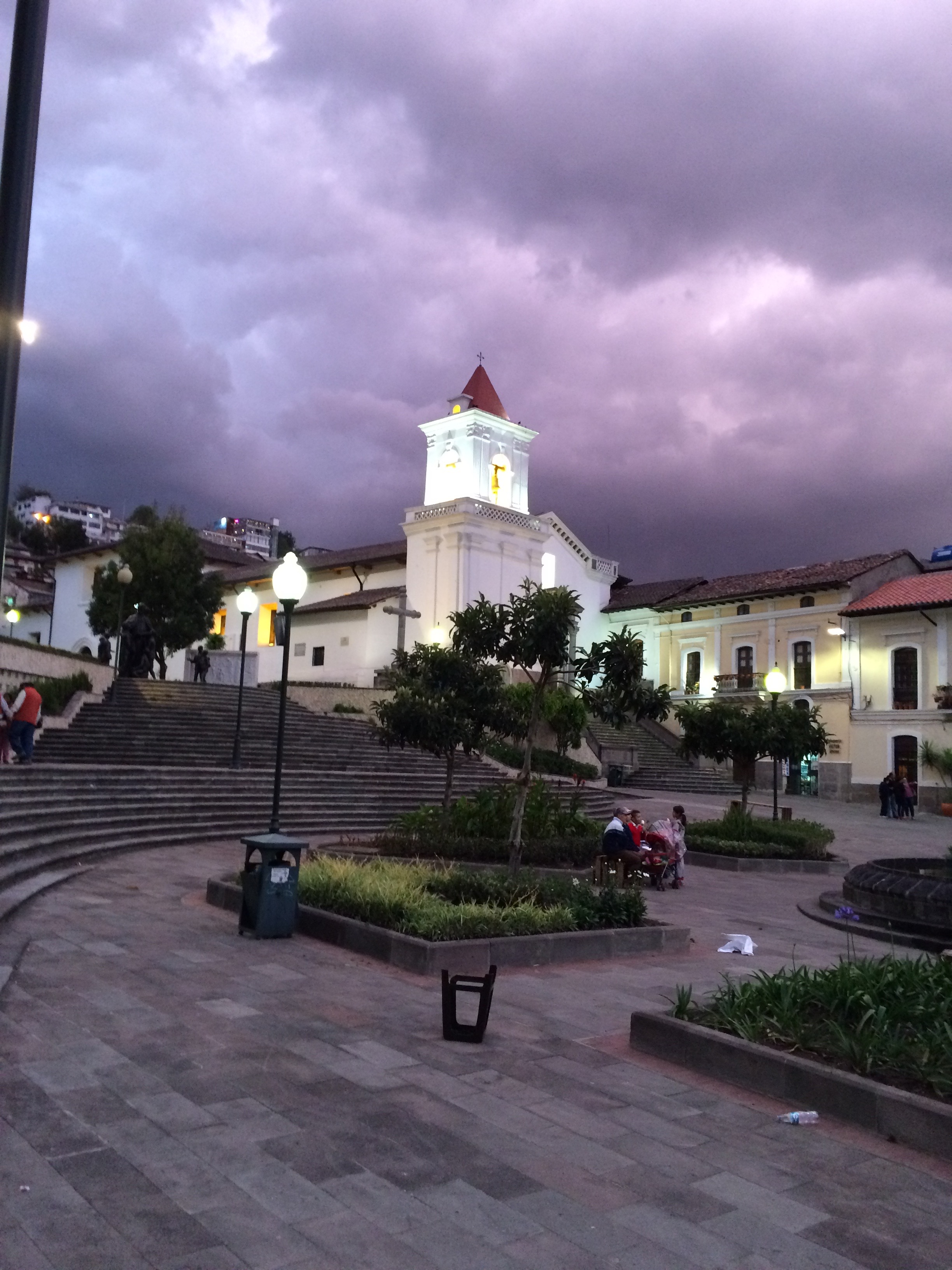
As we approached our hostel the bells rang for Saturday night mass at the local church we have talked about. We made a quick decision to go to mass, an experience in Spanish which we shared with a total of 10 other people, not so very different and still a comfort to us after a long day.  We ended with a quick easy dinner and bed, the next morning it was time to say goodbye to Quito, on to Mindo.


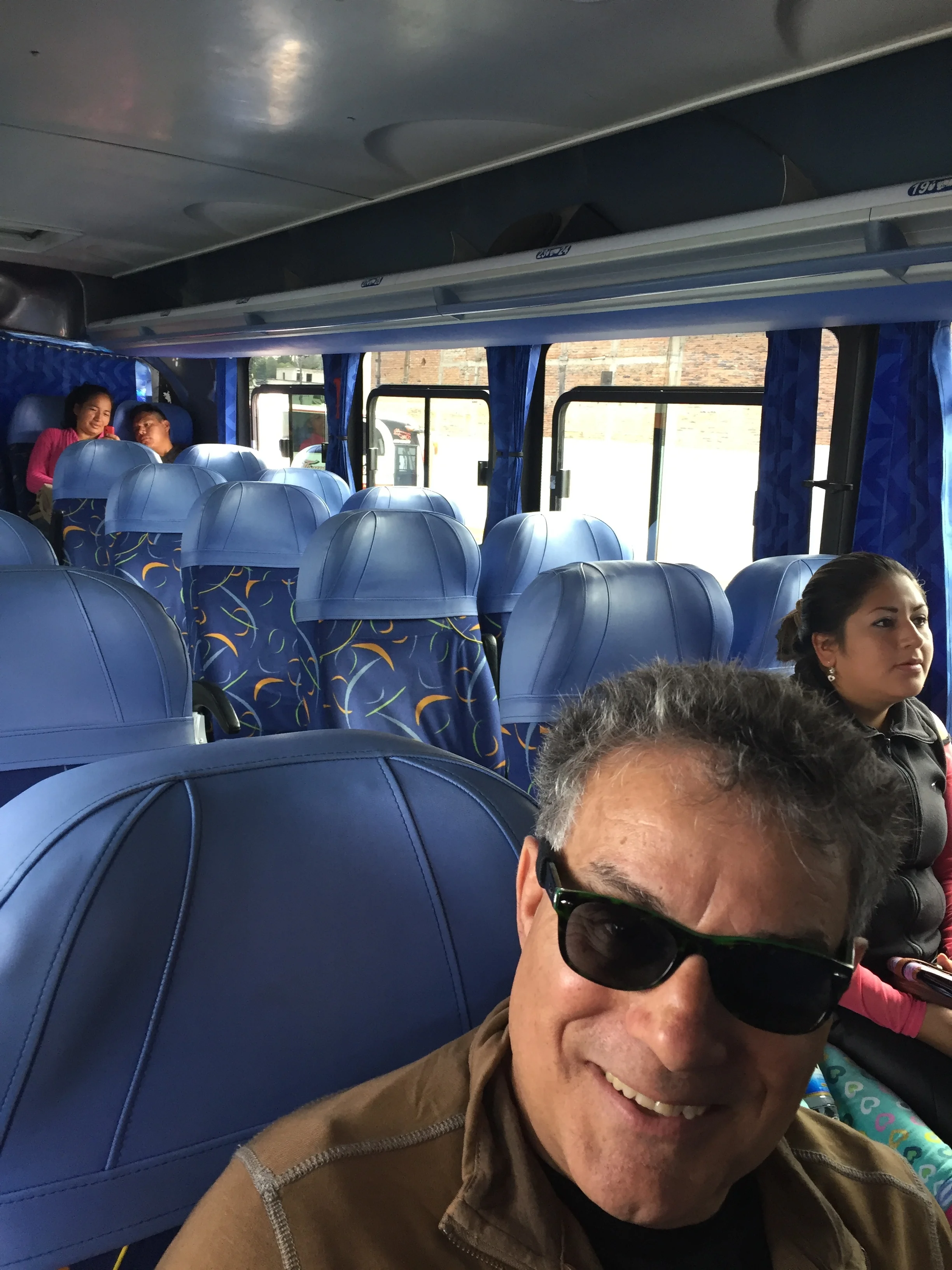
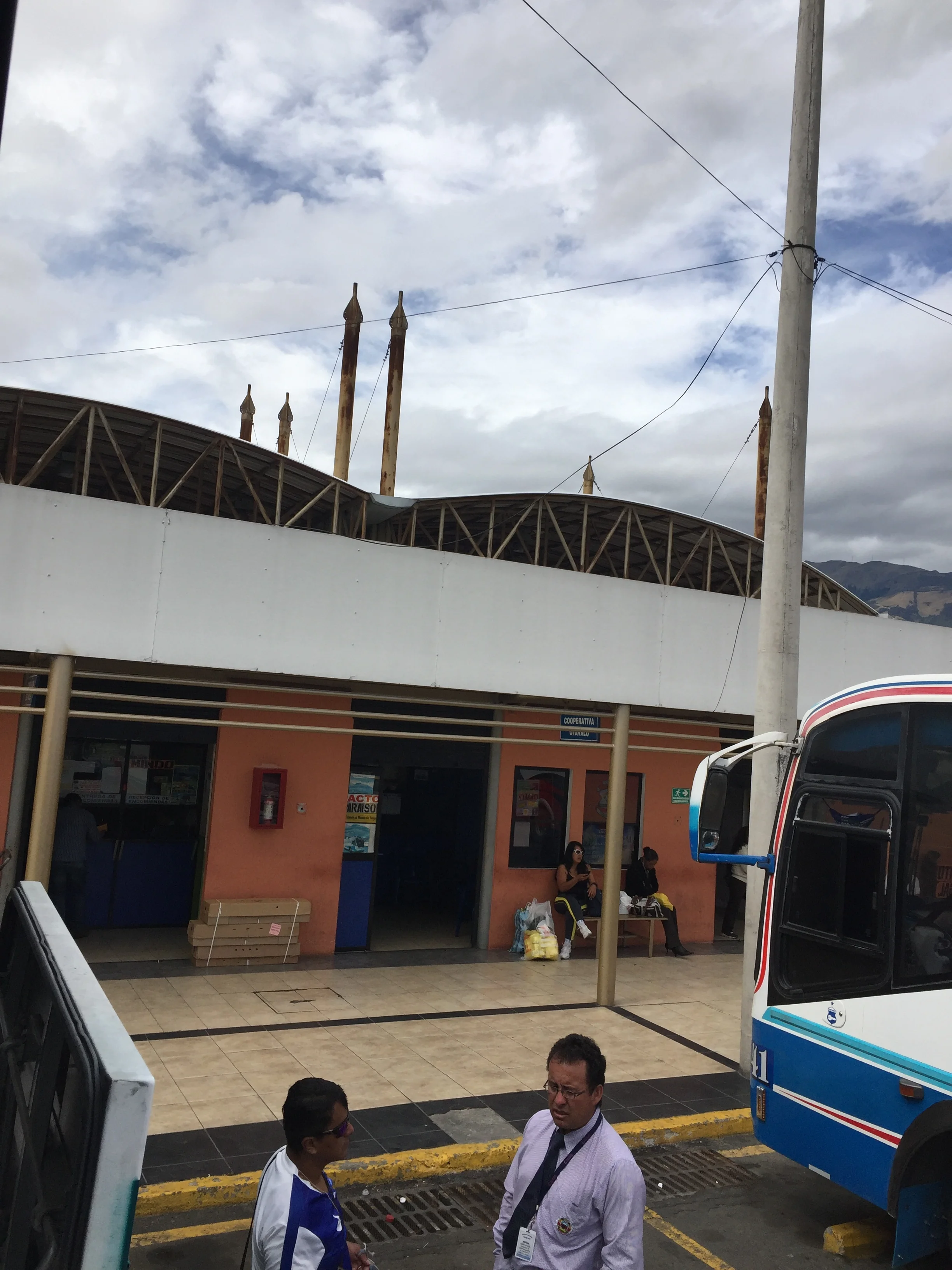
This is our bus station to Mindo and Frank on the Bus