Lisbon Portugal

We landed at the Lisbon airport after a 2 hour flight from France.  At the Charles DeGaulle airport in Paris we went through 2 separate check points and had to drink, not discard, the water we carried in front of the TSA agents. In Lisbon, we picked up our luggage and walked out of the terminal without any passport check, nor stamp, nor border crossing nonsense.  Is that good or bad?!

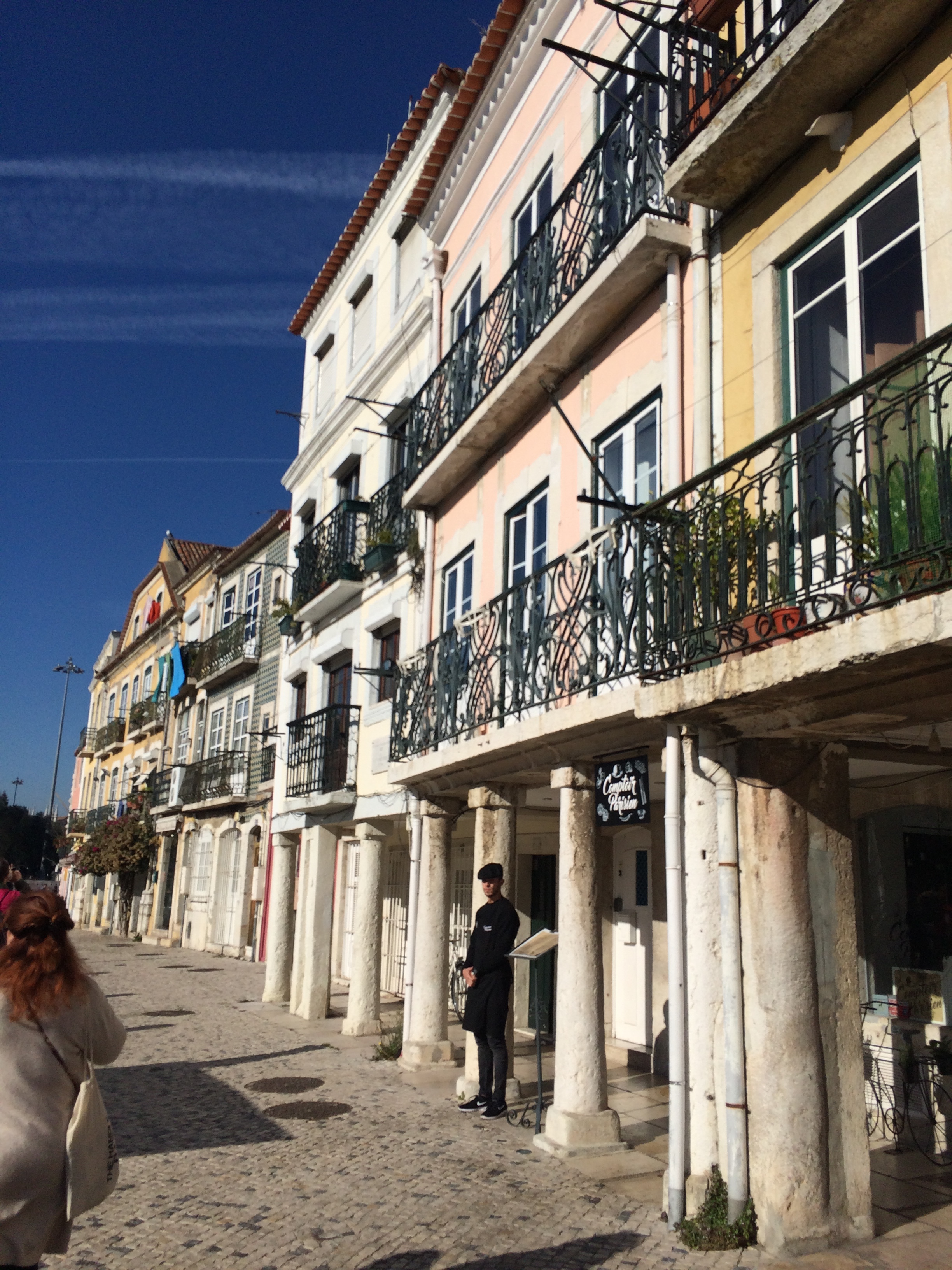
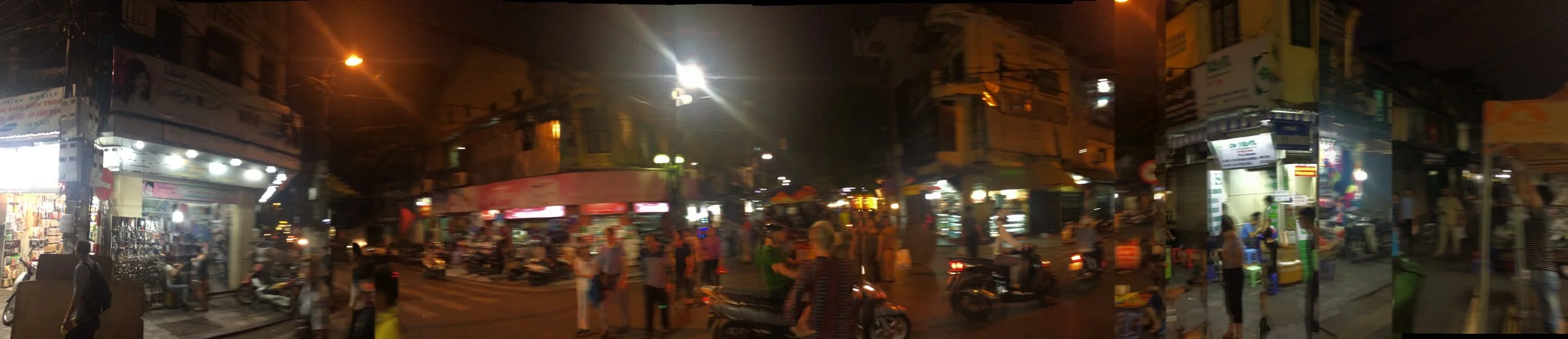
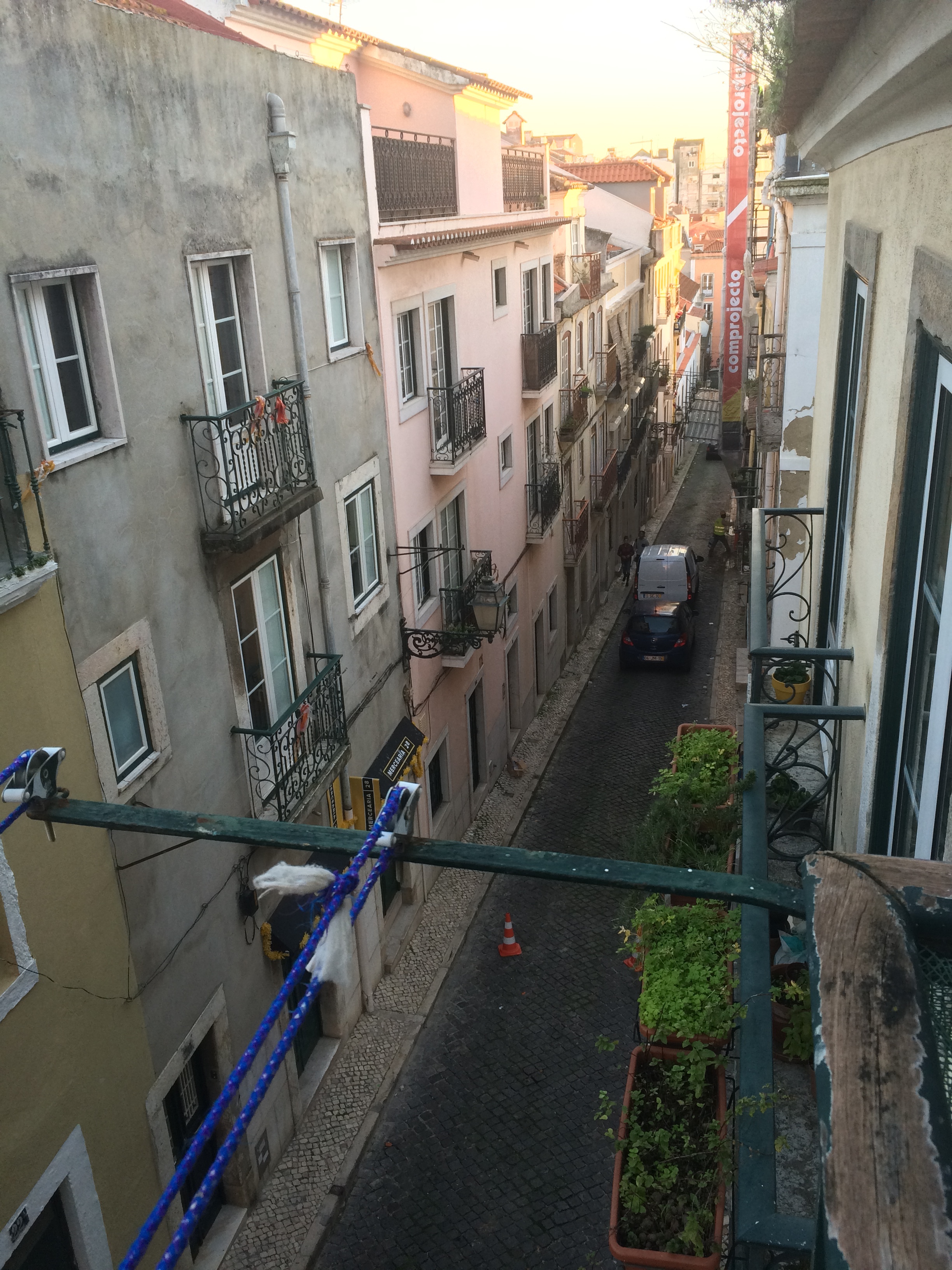
The taxi took us quickly to our Airbnb in the historic part of the city.  Lisbon has a population of 600,000 spread out around the valleys. We were impressed with the cleanliness and sparkle of the city. Traffic was manageable as we drove the narrow cobblestone streets to our historic flat. We are on the third floor with windows shuttered by split doors that opened onto our balcony overlooking the mosaic sidewalks and street.  The main street at the bottom of the hill is where the city trolley runs, taking us everywhere, and to the left of our street is  a large church.  Down the narrow streets and alleys there are small shops selling everything from used books to butchers and bakeries.   This is a grand city with a long waterfront surrounded by 7 rolling hills which require rolling sidewalks, and up and down those narrow mosaic sidewalks we walked many times.

Our first adventure was meeting up with a Walking Tour, which started in the historic suburb of Lisbon, called Belem, that is on the water. We navigated the metro train to Belem and landed in front of the President’s residence which is also known as the “Pink Palace”.

Our first of many famous coffee and "pasteis"

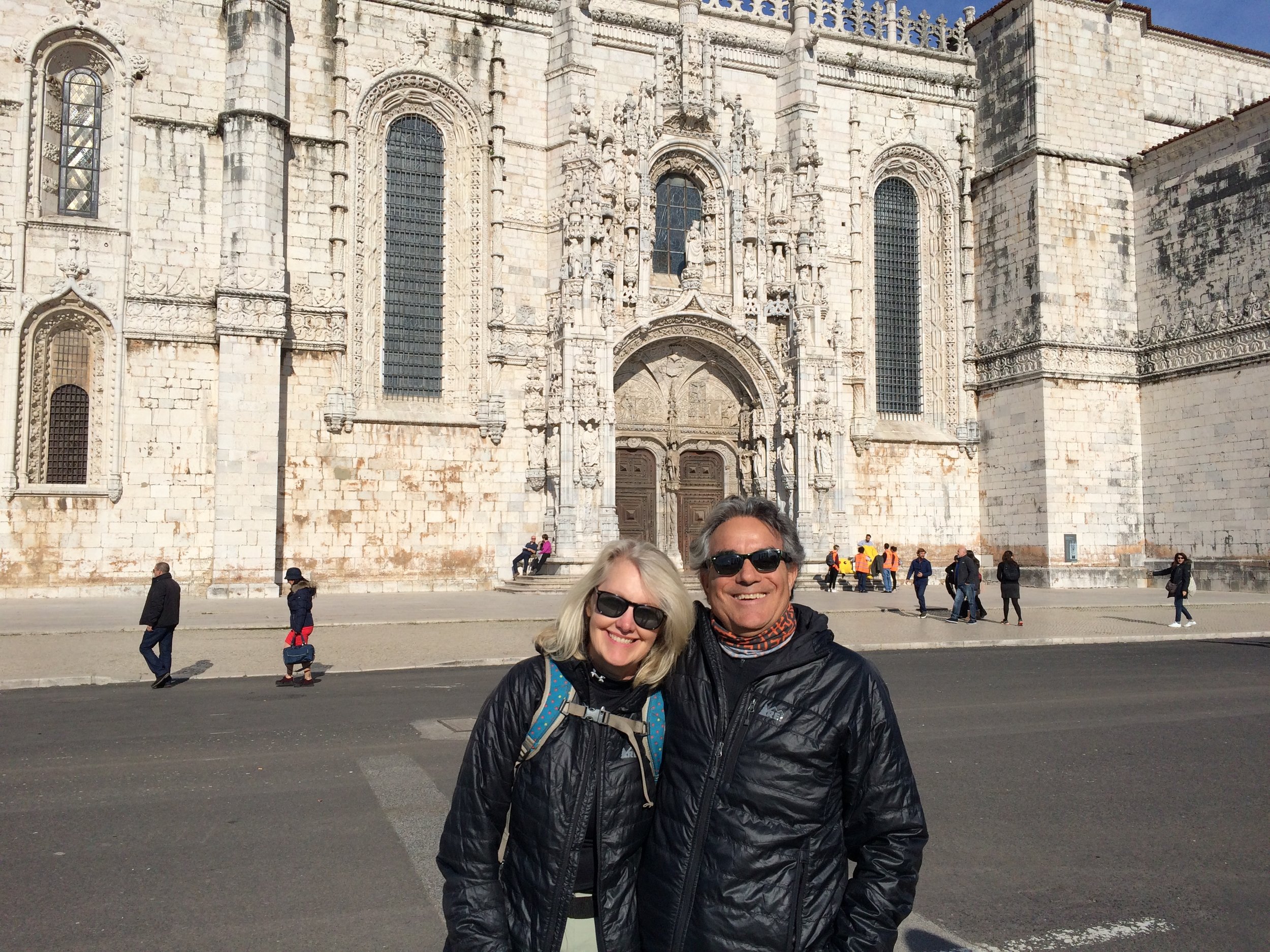
On the same street is the giant 1496 cathedral and monastery known as “Monastery of St. Jeronimos” that has a grand history. In the past the Portugal government nationalized and then confiscated all the Catholic property. The Jesuit monks were deprived of support and in order to maintain themselves started to sell their special “Custard Cupcakes” to the people from a bakery building near the monastery land in 1837. We visited the original bakery site to enjoy these scrumptious snacks called “ Pasteis de belem” that are a mainstay and copied throughout Portugal.

Across the street by the river edge is the “Torre de Belem” which is a mini castle with drawbridge and cannon to protect the river mouth of the Lisbon estuary from the Atlantic ocean into the Tejo River. We enjoyed walking up the winding staircase to cannon level, the king’s audience chamber and the observation tower and balcony.

We walked to the river front which displayed many large statutes, old and modern, that memorialized the Golden Age of Portugal.

The Golden Age brought the discovery of Brazil, the discovery of a water route to India that interrupted Venice’s grip on world commerce to the east, the trade routes to China and the habitation of Macau in China, and colonization in Africa.  At the end of the day we jumped into a WWII museum and Frank had a good time looking at the model airplanes and old war relics.

We spent the next day touring the “Castillo de Sao Jorge”, a castle that was built by the Moors who controlled Portugal and Spain for centuries. Eventually, Christian Crusaders joined forces with the army of Afonso I, the general who lead the northern forces to battle against the Moors in the south. His victory allowed three things to develope, it drove the moors out of Lisbon and then Portugal, actually caused the Pope and Spanish King to recognize Portugal as a sovereign country, not a mere province of Spain, and elevated the general to the first Sovereign of Portugal. Later in history the grounds of the Castle of St. George housed the Palace of the some of the Kings of Portugal. The Palace structure was ruined by extreme multiple earthquakes that hit Lisbon and all that is left on site is the Moor Castle fortification. It was a tremendous fortress, virtually impenetrable, except that the storage of food and supplies was not sufficient to overcome the long siege by Afonso I and his army.

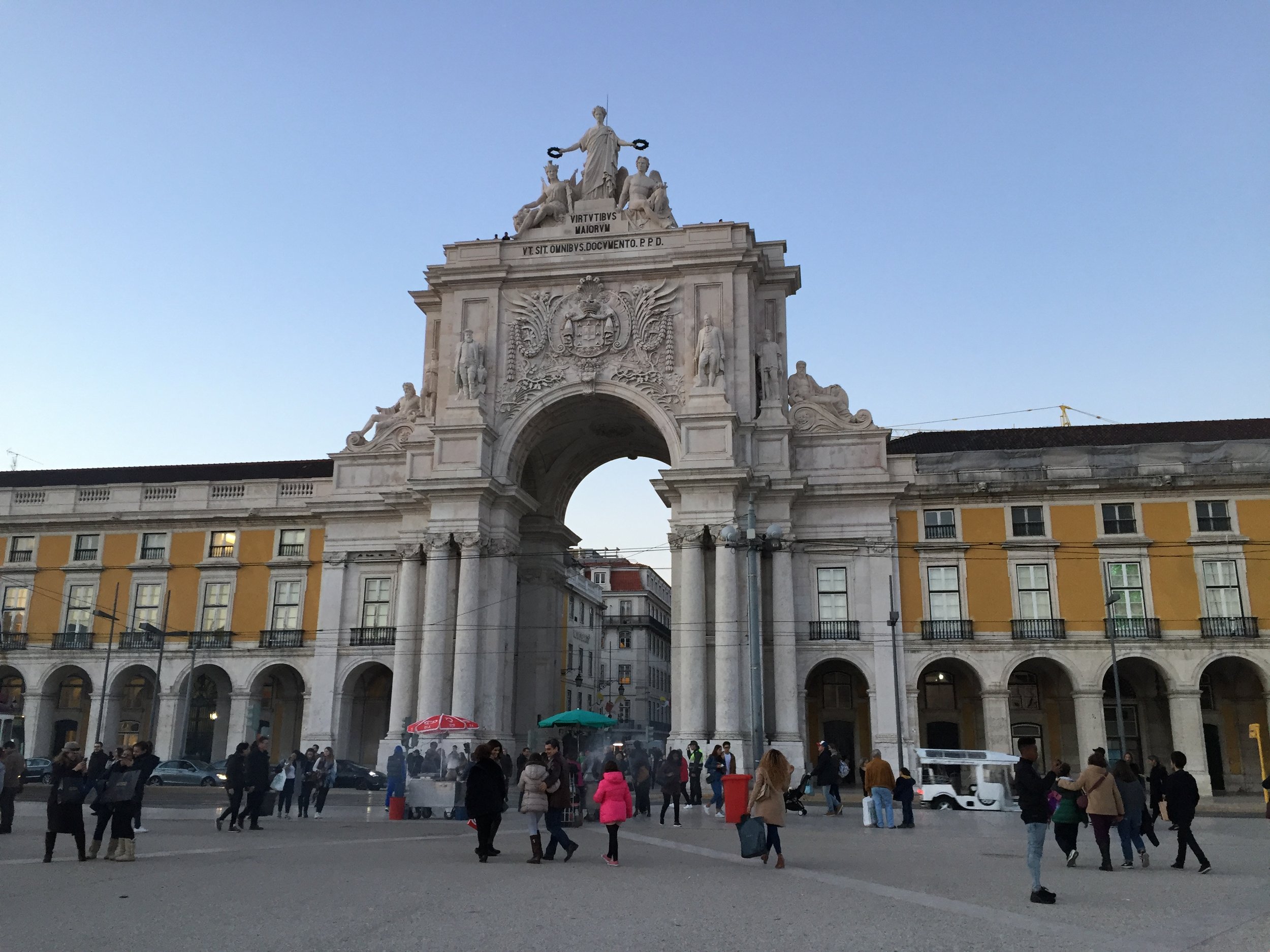
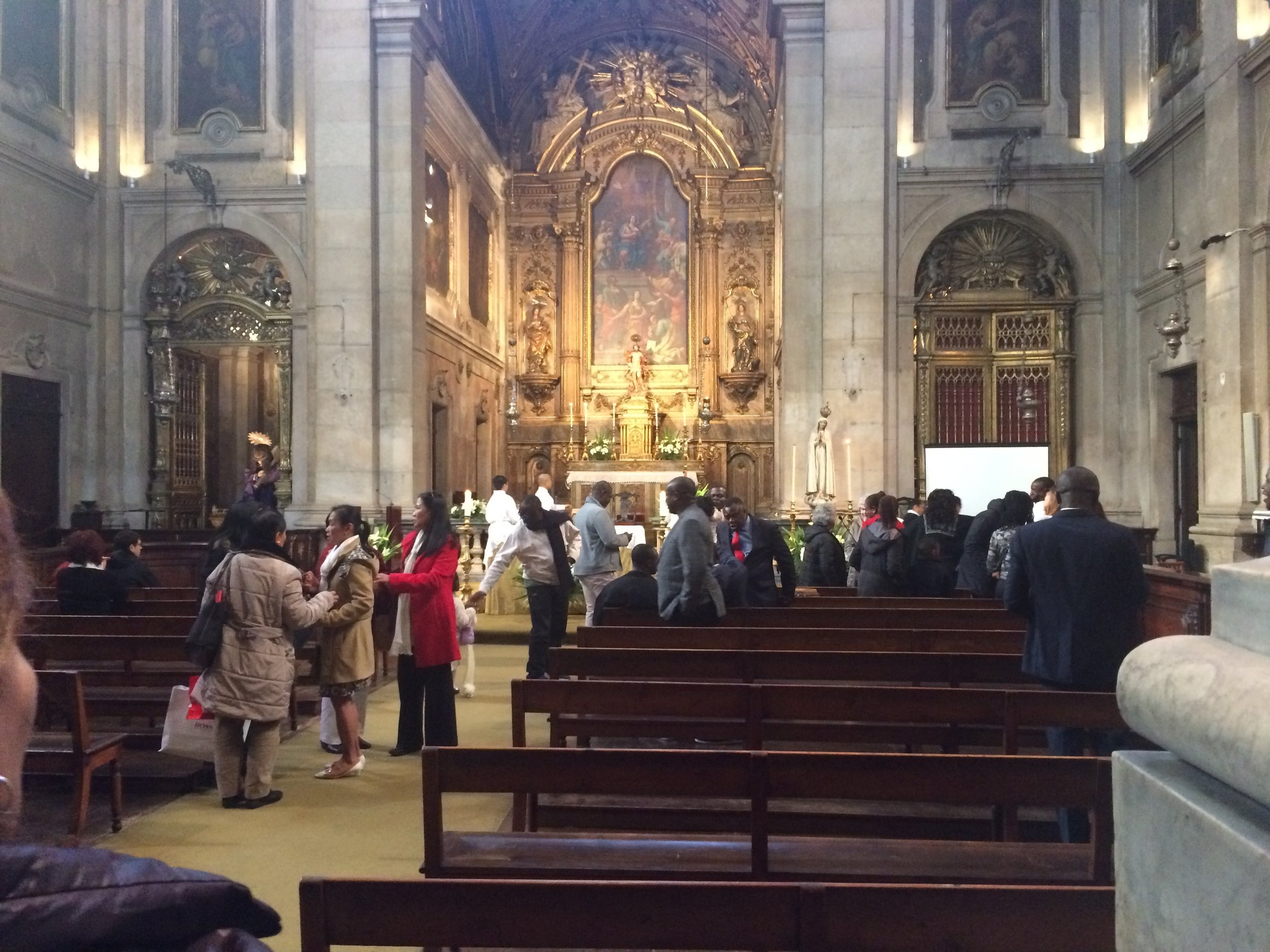
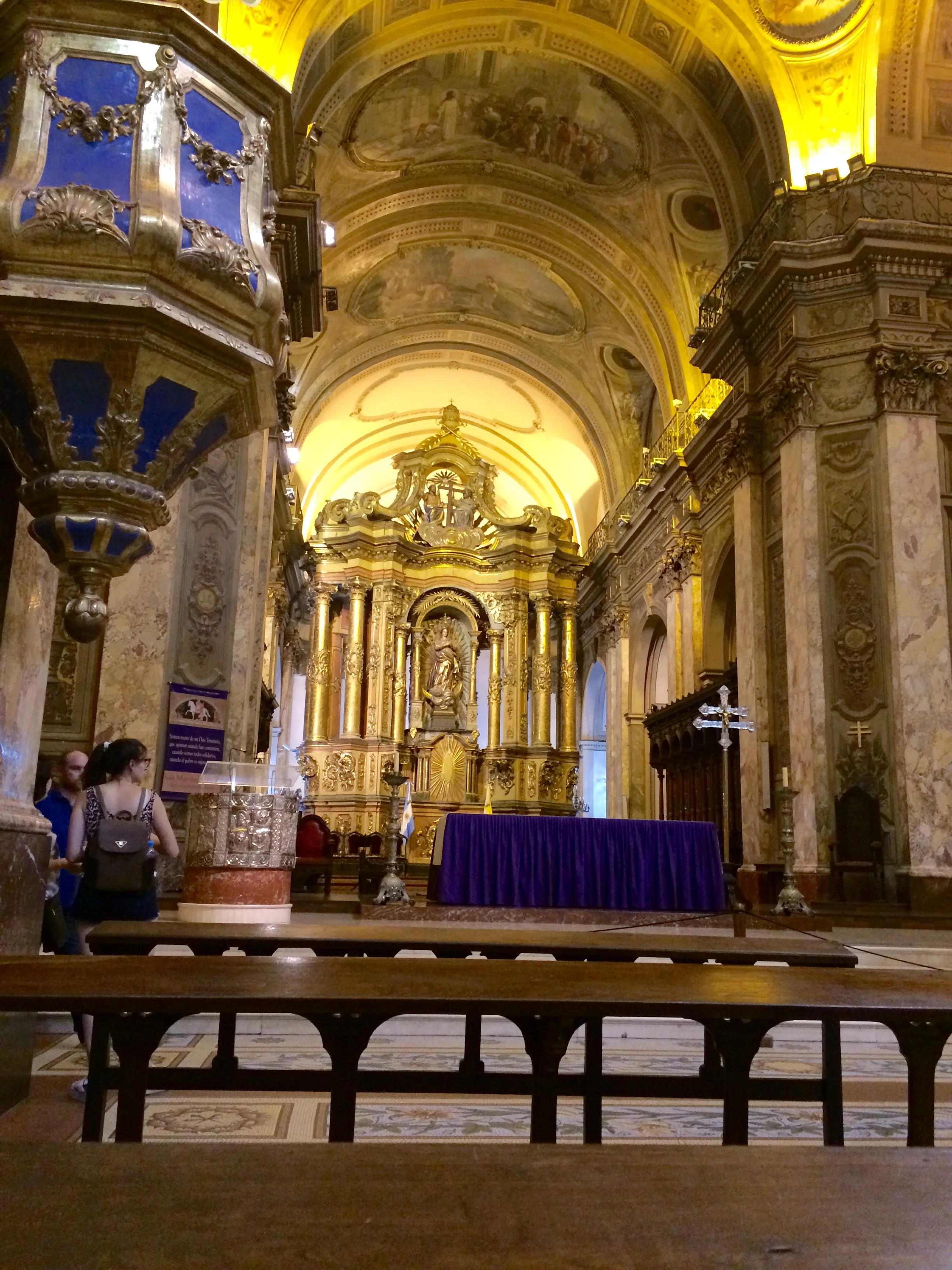
We continued to walk the historic section of Lisbon and viewed the Pantheon, which is the resting place of many Royals. The architecture was more interesting than the inhabitants. We then explored the commercial streets and waterfront in the historic area and happened to pass an open church near the Central Square, the beauty was completely unexpected. Be advised that if the door is open at an ancient church, we walk in.  Soon, darkness arrived and we where treated to Christmas lights and decorations all over the downtown streets as we walked home. Lisbon looked grand.


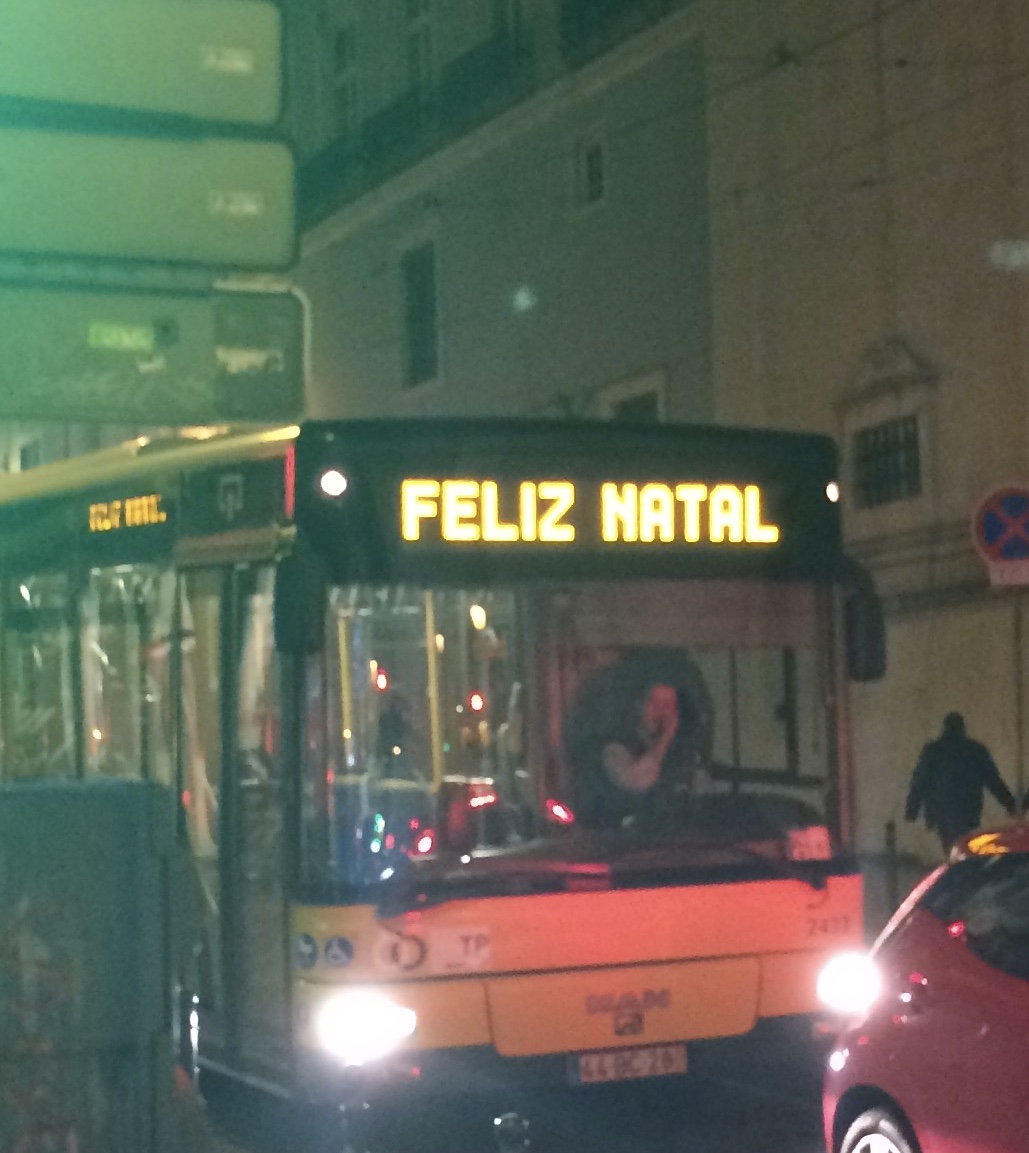
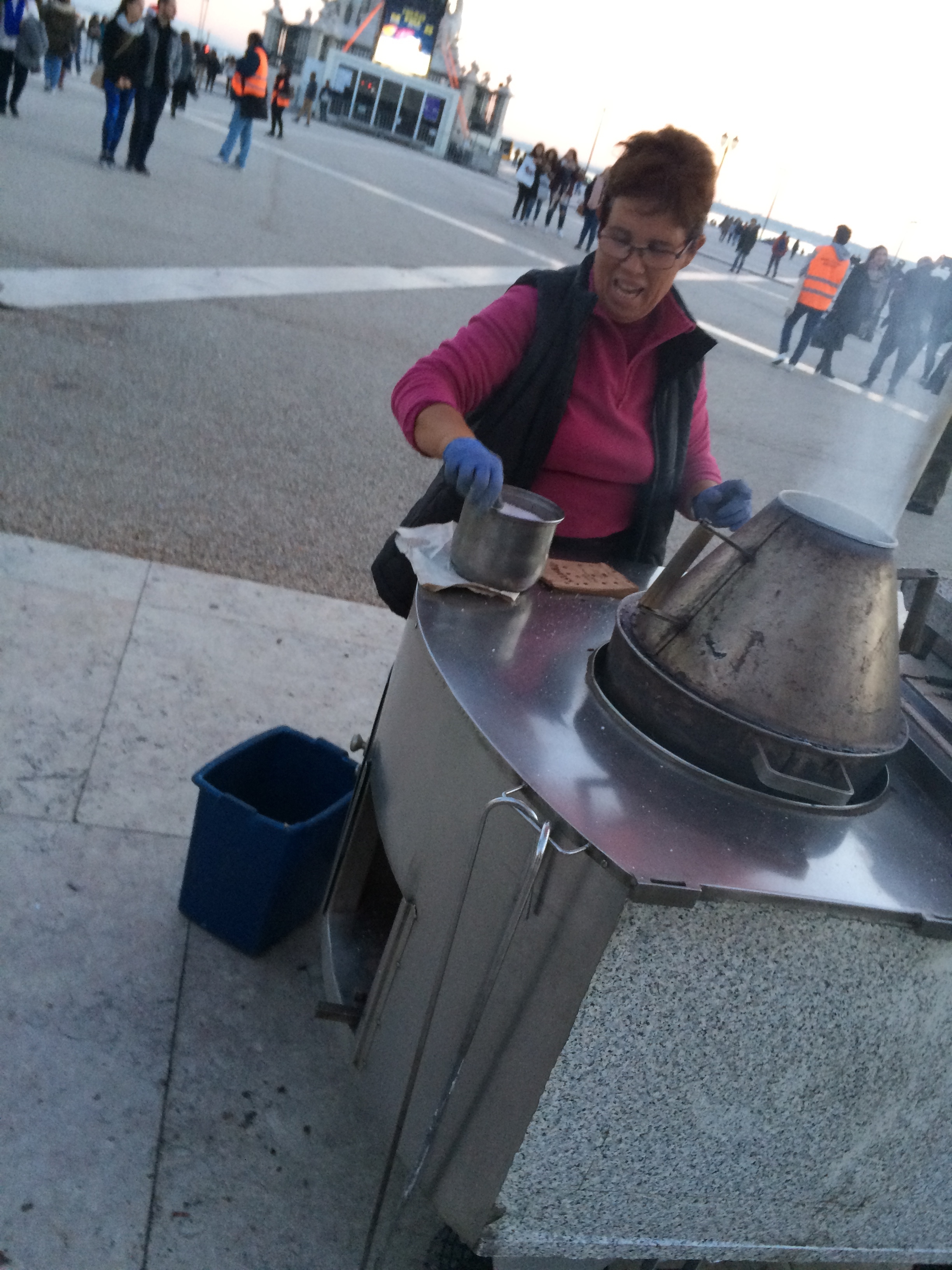
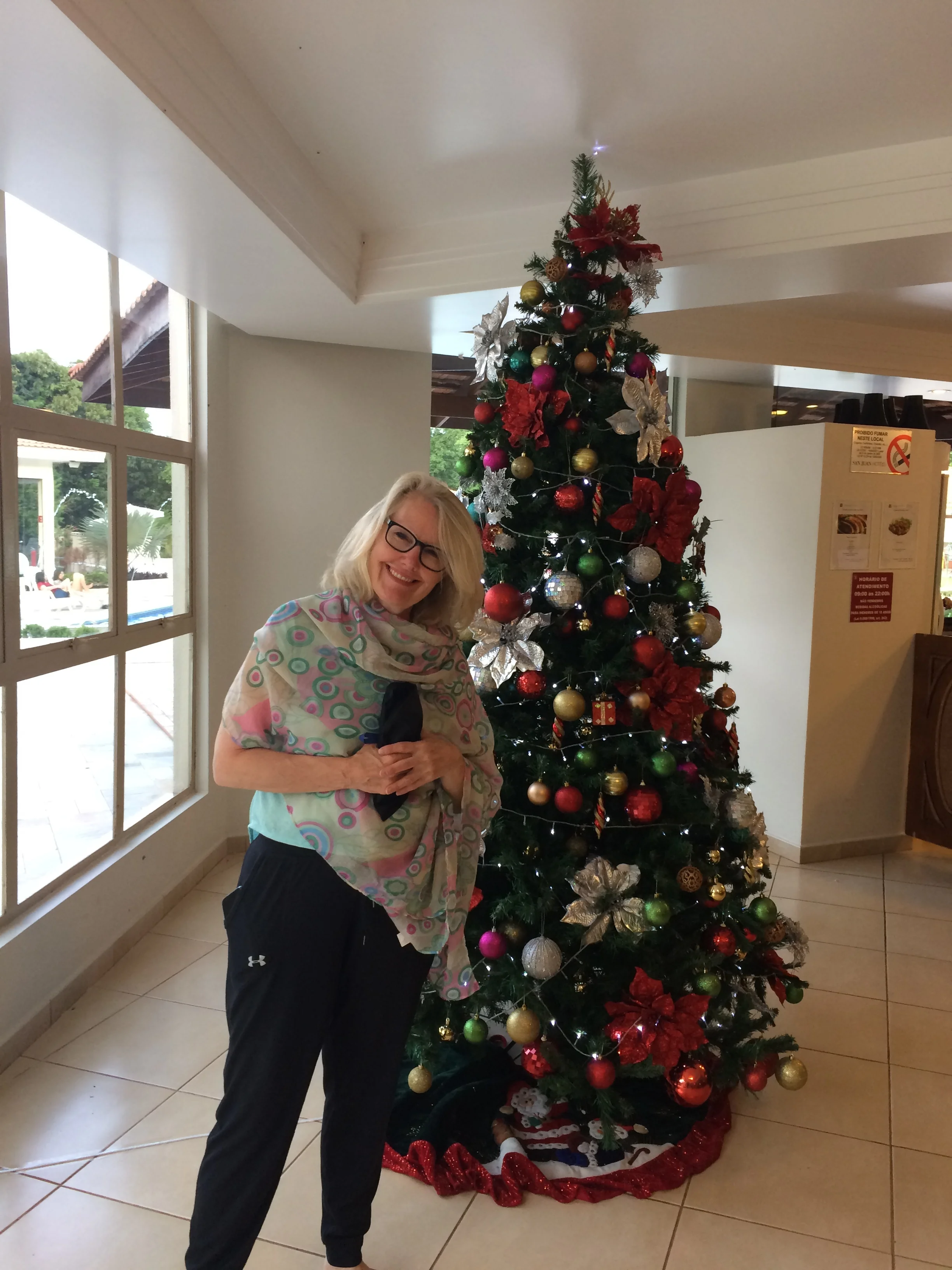
“FELIZ NATAL” as they say in Portugal for our friends that did not get direct email.  They even display this holy greeting on the public buses. We wish all friends, families, and loved ones the best holiday season and may the New Year bring prosperity and joy. Though apart, we believe we are lucky to be in Lisbon this week. The Portuguese go all out to demonstrate their love of the Christmas Holidays. There is special bread, called Bolo Rei, similar to fruit cake, but with less fruit. There are roasting chestnuts and moll wine offered on each corner. Street musicians play and music is broadcast. Surprisingly, most Xmas carols we have heard broadcast are the old US favorites sung by Bobby Vinton or Nat King Cole.  There are colorful lights on every street and giant Xmas trees in every square. Many buildings are lighted. When we walk to the city center of traditional Lisbon our spirits soar with glee as we join the revelers on the pedestrian packed streets.

Our special treats.

We stopped for another traditional snack of Portugal, which is crazy about cod fish. We noticed this in Brazil too. These are breaded deep fried balls made of a mixture of salted cod fish, cheeses, and spices served hot with sparkling white wine. It is really tangy and good on a cold December night. We also picked up some roasted chestnuts, much better with a lot of salt.

Frank with the cod fish balls and wine


On the day before Christmas, we take a short train trip to the city of Sintra. We arrive at the cute little station and determine that all the theme parks in the world, yes Orlando, must have checked this place out. It is a fantasyland of beautiful palaces, elegant estates, immaculate gardens, boutiques and cute shops, cobblestone streets, and even another Moorish fortress, all accessible by continuous on and off transports. We enjoyed this beautiful town, and when the train arrived back in Lisbon, we again walked the now familiar crowded streets of glitter, music, and market stalls back to our own neighborhood, “Barrio Alto”.  See the pictures of fantasyland below

Christmas

After a cozy Christmas eve with Janet and I in our one bedroom Airbnb, where Janet prepared the Lamb roast we purchased at the local butcher and we exchanged our most practical gifts; i.e. 2 warm sweaters each for European travels. We woke with the goal to walk to an advertised English speaking church service.  It took us awhile the previous day to track down this particular church as the names are not displayed and this church was identified in Portuguese language as the “church on the street Mandelina”.


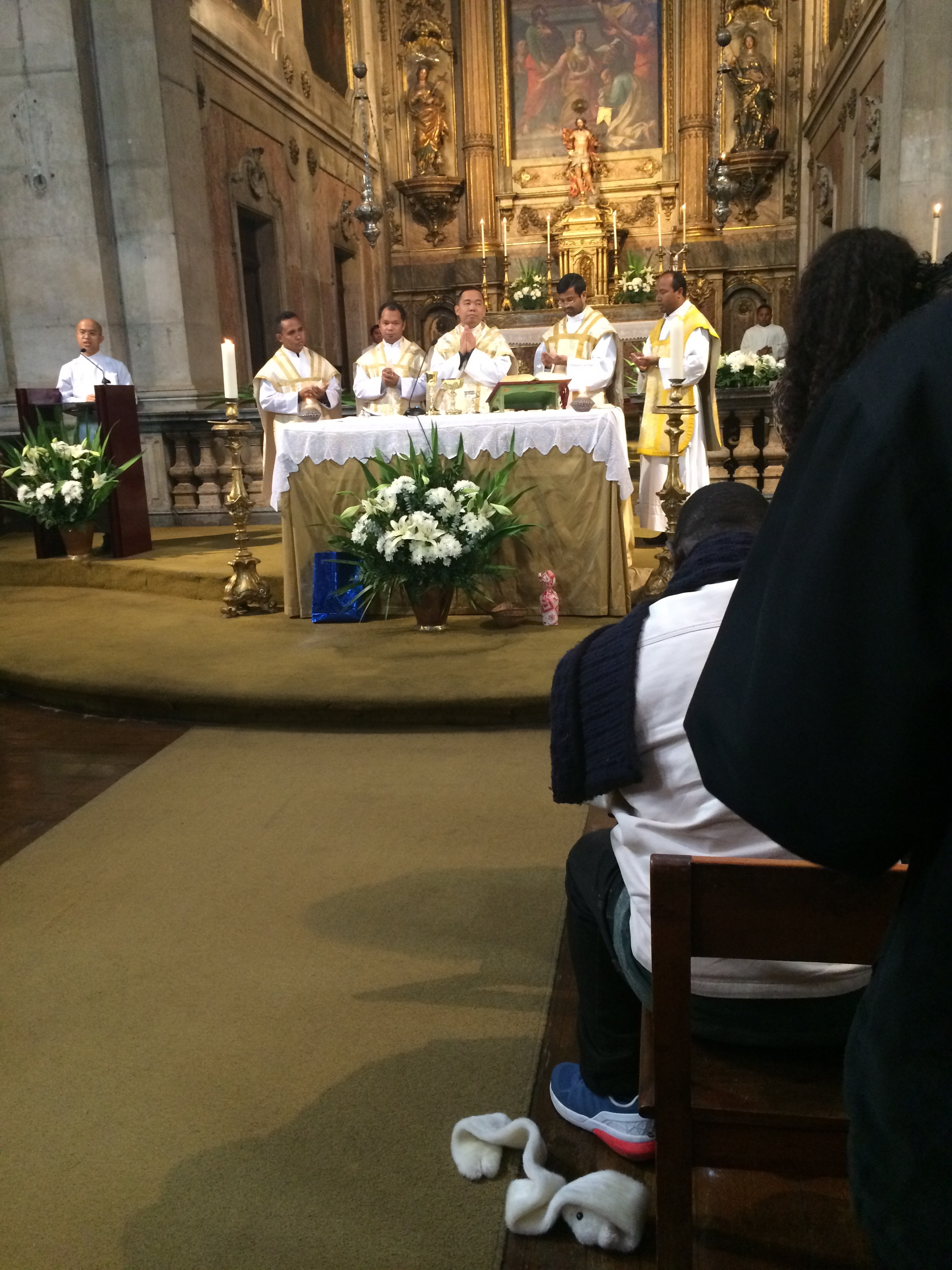
In any event we arrived early at the church for the noon service.. The church was ornate, but worn. The alter was covered with sufficient gold leaf paint and had sculptures of St. George slaying the dragon opposite the sculpture of the Virgin Mary. The walls all sported giant paintings of saints and other religious events. We sat on the right side of the main aisle near the keyboard player, who also operated the projector that displayed the musical lyrics. The choir was small and stood up front. As Mass began, the Deacon came forward to welcome the newly formed congregation of English speakers and then 5 Priests came to the alter. The key priest and assistant were from the Philippines, the others were introduced from Malaysia, and two from India. The volunteer choir was made up of 4 singers and 2 musicians. They were from Portugal’s former African colonies, like Angola, and they sang traditional English songs of mass and Christmas songs with a tribal beat. You could tell by their smiles as they came upon the alter that the Priests were pleased with the turn out. The church was packed with many standing in the back, including Europeans, Brits, Americans, Africans, and Philippines. The service was familiar and traditional with 3 gospel readings, but the final prayers were nicely divided and coordinated between all the Priests. The diversity and unity of this newly formed congregation was very inspiring, seeing peoples of different races and nationalities brought together by faith and common language on this holy day. It was a marvelous feeling when greeting and blessing your neighbors. The good vibes lasted the rest of the day.

 

We walked home, stopping at an open pastry shop for those scrumptious custard cupcakes and some coffee latte. As expected, the streets were not crowded but we did cross paths and walk for awhile with a couple from New Jersey sharing tourist tips. Janet prepared a wonderful downsized turkey dinner, and we had an opportunity to speak with family and some friends by “whatsapp”. It was a wonderful day.


Later in the week Frank got sick, so we delayed our departure from Lisbon one day. The local pharmacist selected several medicines to quicken recovery. Actually the delay worked out and has allowed Janet to rethink theitinerary through northern Portugal and northern Spain with a flight planned to Morocco, more land stops but no ferry boat rides.  Next stop Fatima.  

Rio de Janeiro Brazil

Subway in Sao Paulo

For our trip to Rio, we got up early. We planned to take Uber directly to the bus terminal on the other side of town for the trip. Our hosts called to ask if he could stop by to send us off. We knew they were in the building and agreed. After chatting and checking out the apartment, Mario insisted that he takes us to the station. His wife would start the refreshing. We graciously agreed. One thing was lost in the translation. He meant the Metro Subway Station, several blocks away. In the car, he stops and points, there you are. We stare at each other and smirk, get our luggage out of the trunk, thank our host and wish him good bye. This station does not have escalators, so we have to carry the luggage and backpacks down 2 flights of stairs, knowing we will have to maneuver all our stuff through turnstiles, crowds and squeeze into the cars. Of course, the suitcases are a little too cumbersome. Well, we do all those things, get in the metro, check our destination, and go the 11 stops to get there. As we exit the metro, we see the bus terminal directly below. The price tag for the trip was $6 US, rather than expected $30 US.

We entered the terminal looking for Bus Del Sol an affiliate of our faithful Cruz del Sur. The bus is leaving at 8.45 am, it is 8.43 am. The dealer insists we can make it and we do. Apparently only Ecuador buses leave exactly on time or slightly beforehand.     

The trip was about 6 hours. Taxis were available at the terminal and we went immediately to our Airbnb in the district of Ipanema, you know, like the old song, … “ where the girl goes walking”.  Rio is beautiful. Driving in we see green mountains rising out of the sea with white misty clouds hanging at the peaks. They surround the city. We can see the “Holy Redeemer” statute in the distance. As we drive, everywhere you look to the right there is water. Everywhere you look to the left are rows of white high rises standing in the surrounding mountains. We need to enter a long tunnel to get through the mountains to the popular beaches that rest on the isthmus of Ipanema and Copacabana shores. Our Airbnb is 2 blocks off the water. Our street is lined with fancy shops, apartments, other Airbnbs, restaurants, groceries, and nice parks. The subway station is also close.

Volleyball drills at the beach

After settling in, we walk to the beach passing another residential and shopping area and come to the waterfront boulevard with walking paths and bike lanes. The Ipanema beach is very wide, composed of light tan sand, and the waves are crashing into shore. Kids are jumping into wave after wave, and some are really big. We notice volleyball nets are set up all along the beach. At one net displaying a banner,  a coach is clearly running drills for his pupils, it seems like a techniques camp. As we walked on the sand we observed islands off the shore with palm trees sticking up like beard stubble. The air was damp, and cool, but with little wind.   


We decided to eat at a Lonely Planet favorite for prepared home cooked menus, called Delirious Tropical.  Then we went grocery shopping for the next days meals, especially breakfast stuff.

First Walking tour. The next morning, we traveled by the subway, from the yellow line to the orange line about 11 stops, to our first walking tour. We started at the Clock in the center of old Rio. The tour was more general than we usually like, and devoid of the political pontificating we enjoyed from other guides.

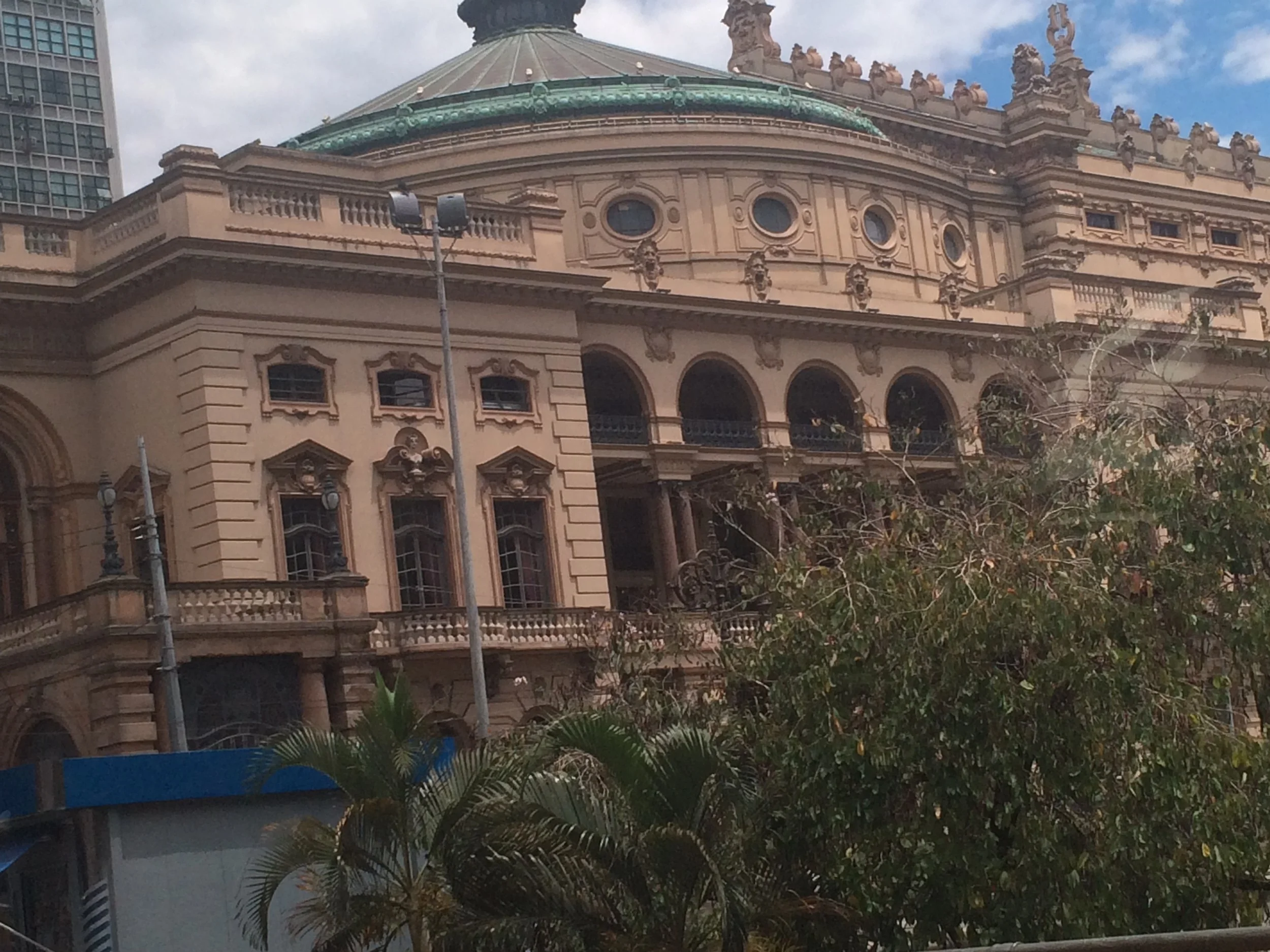
We saw the famous mirrored diner, Confeitaria Colombo, opened in 1897 in Rio’s colonial heyday. We had sweets. We saw the Rio’s Municipal Theater which jealously rivals the Buenos Aires’ opera house. We saw the city hall. We saw other government buildings. We saw protesters congregating and a police force starting to get organized. Apparently, the retirement pensions are being threatened and certain woman's rights are at issue. There is open criticism of the government.

And open critics of the olympics and the better use of that money.

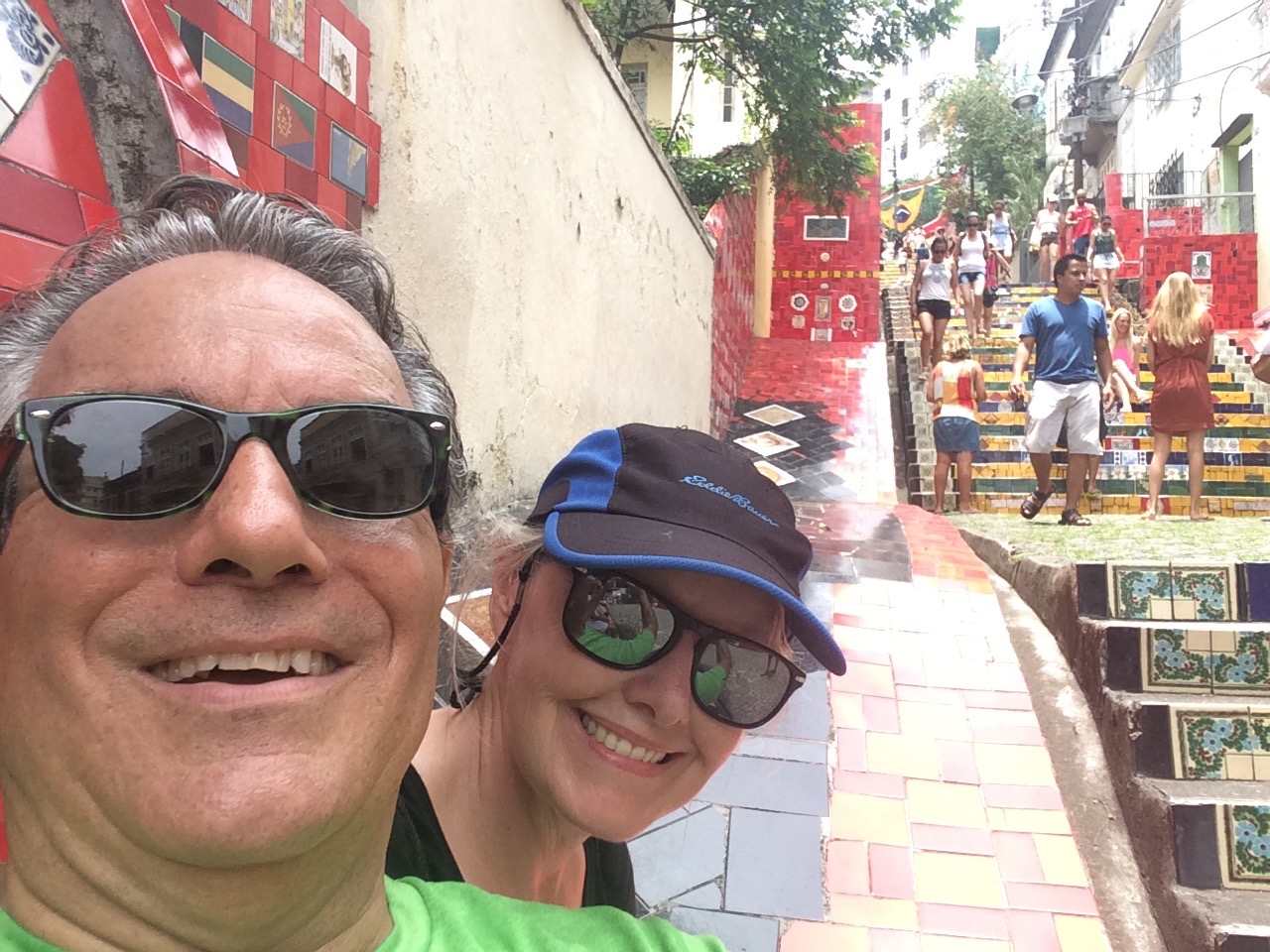
We saw the original palace of the cautious Portuguese prince who faced death threats from both Napoleon and Queen Elizabeth and moved his royal court to Brazil. It was this transfer of the royal family the gave Brazil high status equal to European Portugal. We concluded our day at the famous STEPS created by a Chilean artist, who died with the grief of the loss of his wife and child. Each step and the side walls where decorated with painted tiles of various themes and portraits.It is very dramatic.

By the Steps we saw a film crew photographing-videoing male and female models. The ladies were stunning. We first observed them as they walked by our group and went into a gift shop we were standing by. We did think, those girls are really dressed showy, not provocatively, but with attention to detail. Later, the cameramen were filming the models rhythmically moving with the music played by a street guitarist, not really dancing, but smooth and controlled movements. Might be an Abercrombie video in the near future. 

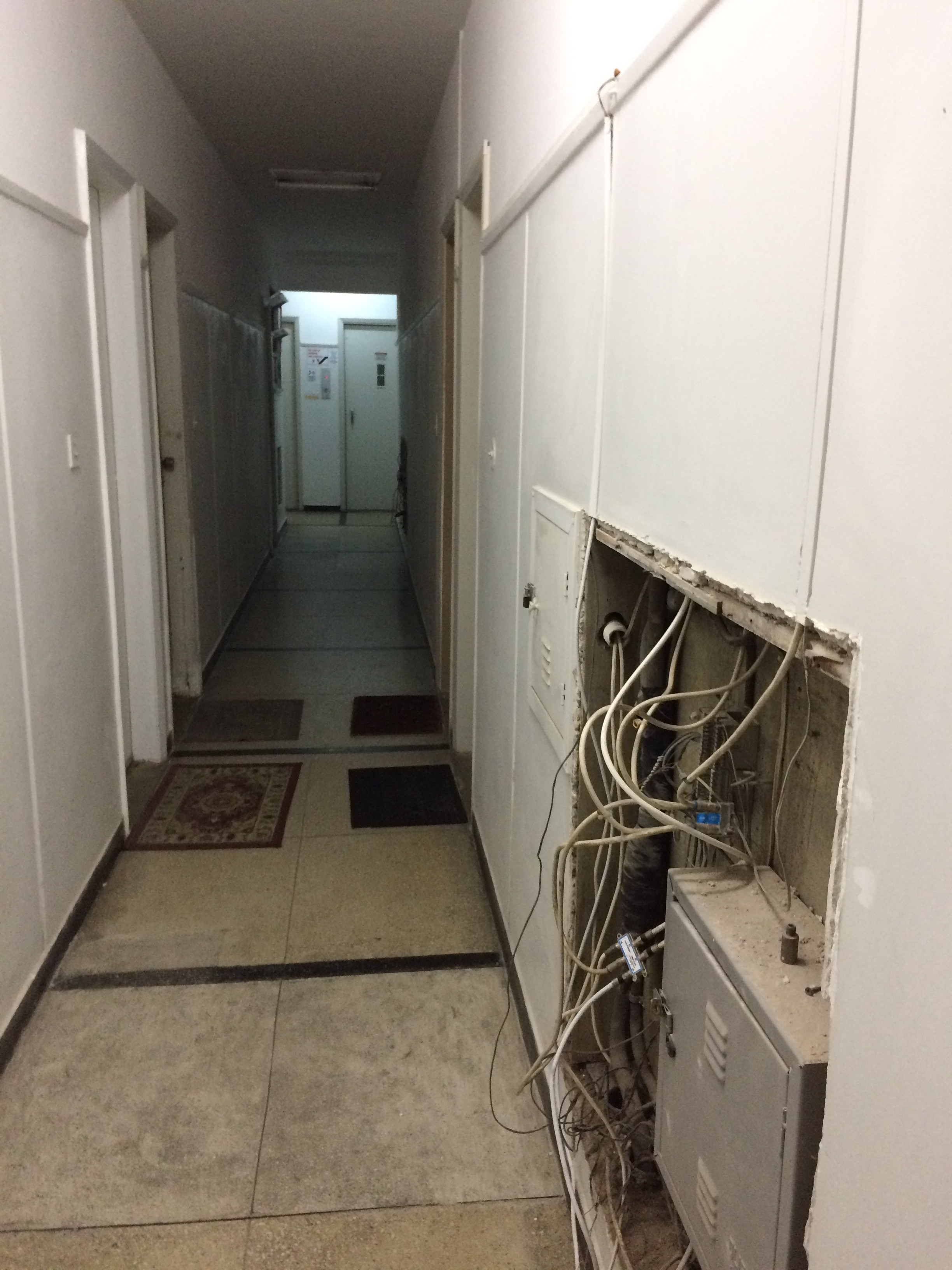
We took the subway home. We got out of the heat and enjoyed the AC in the train. We got home and stayed in to cook. Our Airbnb is in a great location, the best area of Rio and just 2 blocks from the beach, but to our disappointment, it was not the best we have stayed in, very similar to older beach properties in Florida.  Our host was kind and after a call came by and brought a new coffee maker and plugs for the outlets.  To complicate matters we accidentally shattered the glass flap over the burner of the stove. Hard to explain. The kitchens and stove here are small, so they all have flip down glass that allows the stove to act as counter space when not cooking. We cleaned up the glass. We checked a local store for a replacement piece, but they only sold new stoves.  After full disclosure to our host we agreed on a sum to repair the glass, live and learn again.  See the pics below of the hallway with the 1950's wiring and the "kitchen".

On our second day, we took a taxi to the trolley station at Coradova street to take a train to the Holy Redeemer. When we got there the clouds had rolled in and visibility was zero. We passed, but will try again. Took a cab back to the renowned italian restaurant called Pici,  near our neighborhood.  It was early dinner at 4:30, so I didn’t feel real bad about wearing a t-shirt from Rapa Nui (Easter Island), which was bright blue with a white chest insignia of the tribes. They did put us in the back, but the service and Italian food were great .

Today we went to the Museum of Tomorrow. This environmentally conscious and scientific themed museum, is just incredible. When you first turn the corner you are amazed by the building that looks like an enormous starship, like something the Federation would have. The entrance and interior is equally inspiring. The exhibits are all electronic and interactive. The sizes, the shapes and the electronic light bars are eye catching. The interactive panels allow quests to move through the menu of topics easily in the language chosen. You start your trip in an IMAX theater that sets the themes of the Big Bang, planet formation, the development of mammals, genetics, environmental issues and changes. The rest of the museum expands on these themes with creative imagination.


When exiting the museum you are on the waterfront which has all been updated, probably for the Olympics. There is a modern people mover, how we  envision the M 1 transport on Woodward Ave , Detroit will look and work. A dilapidatedelevated train track had been removed to make way for the track that runs along the dockside. The dock side warehouses have all been paintedand some have stores. The route shares space with classy food trucks. That is where we ate our late lunch before we walked across the tracks to go Rio’s museum of contemporary art.


The Museu De Arte Do Rio Gallery nicely conjoins 2 buildings by walkways, one traditional and one more modern structure. There are some really unusual pieces in the museum with cubist renderings and abstract forms. Check out some of our photos.


One floor did defer to traditional portrait paintings of historic Brazilian figures which actually was quite informative. In this portion of the gallery is where we where surrounded by visiting high school students who apparently thought we, the gringos, where more interesting than the paintings. None spoke much english, but with google translate we communicated a little about our Michigan snow. Their teacher came to get them, but soon after the kids came back and asked for a photo, so they surrounded Frank for a group hug. We where all smiling.

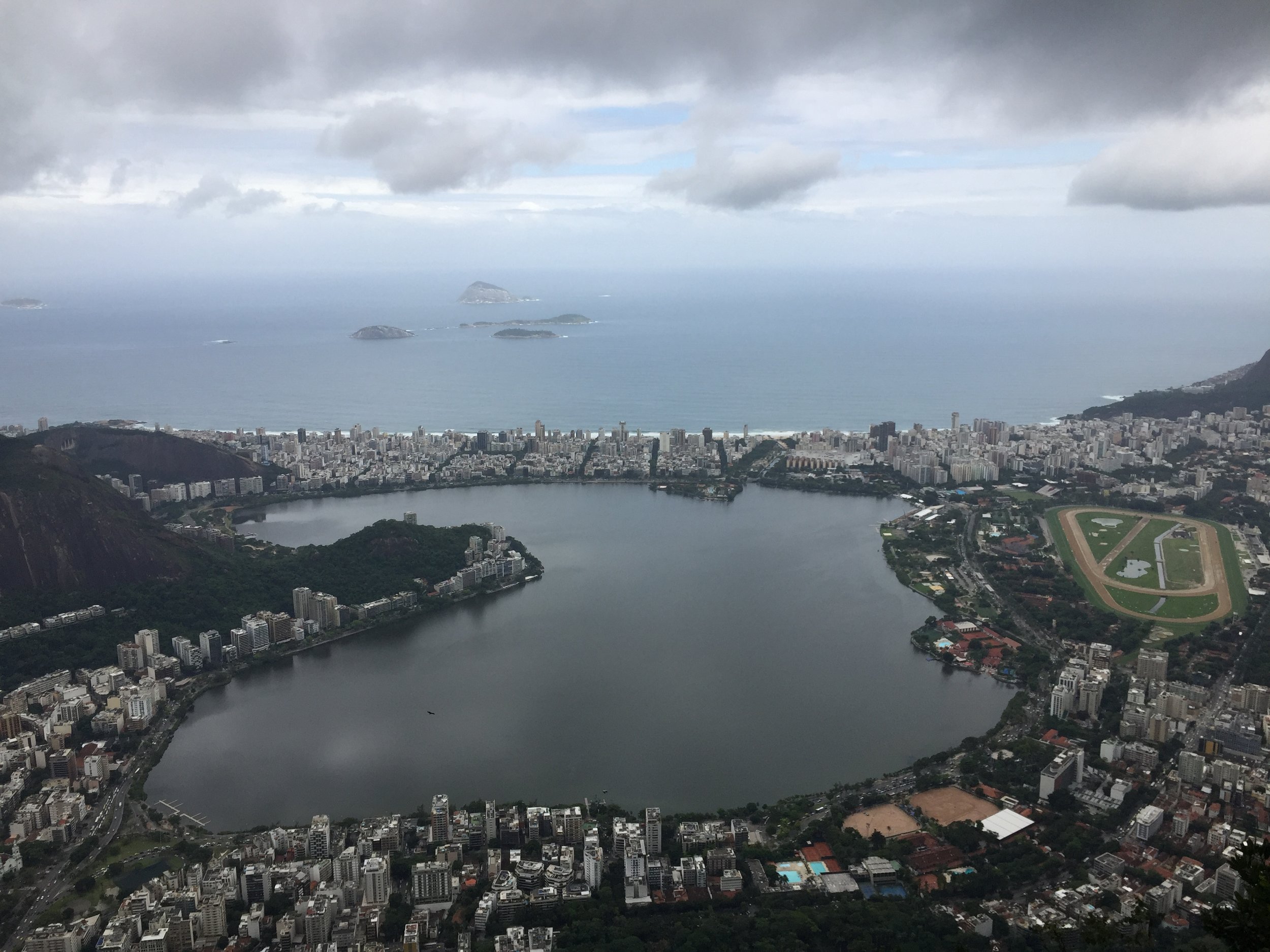
The next day the morning rain broke into unexpected sunshine. Lets go to Cristo, the Holy Redeemer. Of course this is the Christ sculpture at the top of the Mountain overseeing the bays of Rio. We grabbed the cab to the trolley station at the base of the mountain, bought our ticket with the visibility disclaimer, and waited 1.5 hours for our turn to make the 20 minute ride. Maybe we should have just taken a cab up all the way. In any event, once we disembarked from the trolley and climbed several sets of stairs, we were treated to glorious 360 degree views of Rio and the very large and dramatic sculpture of the Redeemer. The sculpture designed by Carlos Oswald was completed in 1931. It was sculpted of Sandstone and is 90 meters tall sitting on its base of 30 meters. The form is modern or we would say timeless. We reminisced about how different the Redeemer was from the Ecuadorian Virgin, but how elegant, beautiful and inspirational both were. 

As well, walking around the base gave us a visual treat to the beauty of Rio. Words are pointless, especially at this height where the rawness of big city streets are not observable. We could see across the lake and the isthmus that leads to our temporary home near Ipanema beach, as well as Copacabana beach, the City Centro area, various shorelines and marina, big ship docking, the massive overwater bridge that connects the peninsulas, and all the interspersed mountains that make up this spectacular urban setting. Check out some photos.


When we got back to Ipanema we walked the beach and then followed our hosts suggestion and went to the Astor Bar on the beach road. Love that Brazilian beef.

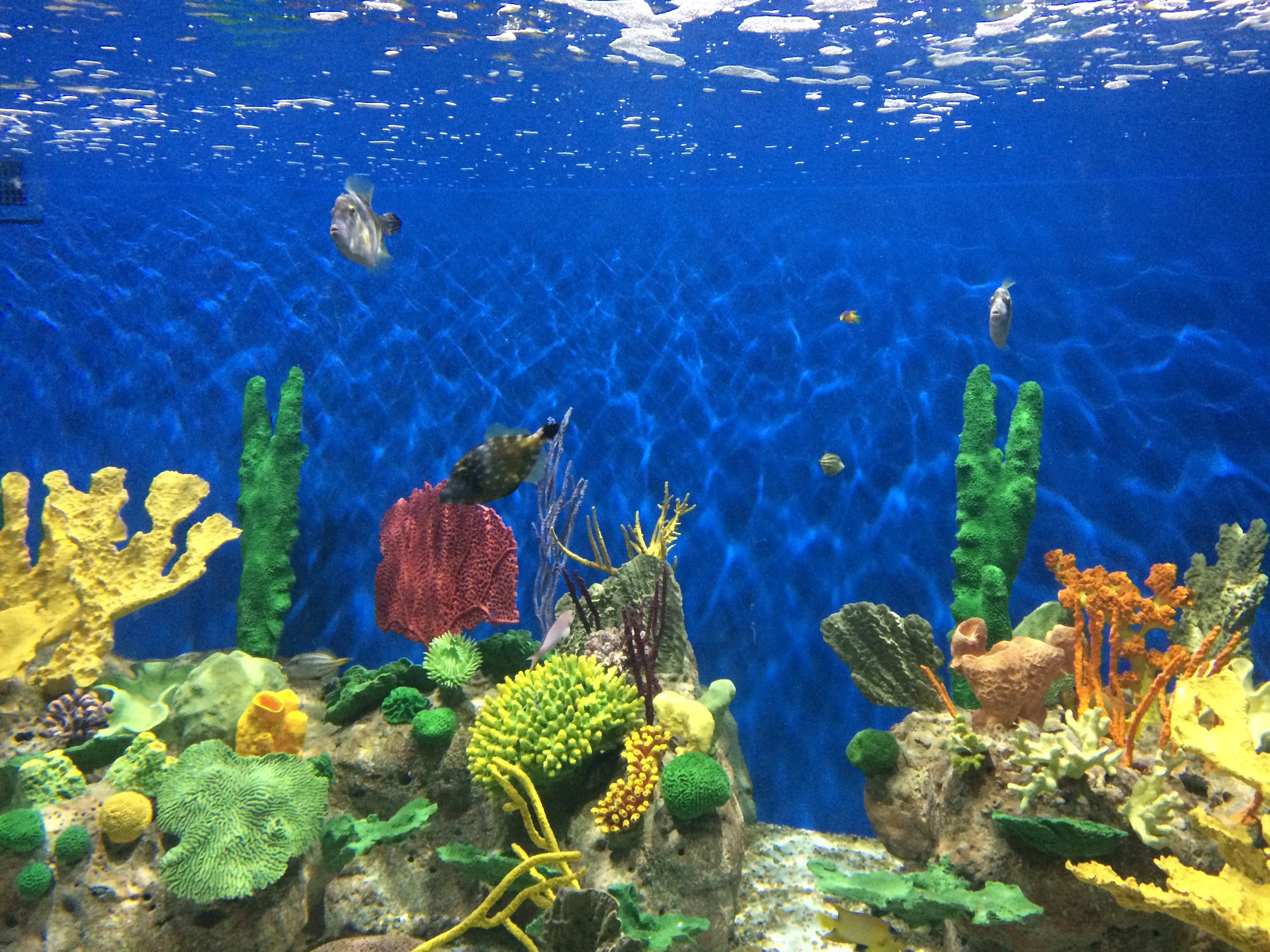
Our day wound down as we packed for our move to our next hotel and one last day in Rio. We woke up early with the bright sun streaming through the window. By the time we ate and dressed it was raining hard. Everyday it seems to rain in this tropical city. We walked in the drizzle to our new hotel and crossed over from Ipanema to the Copacabana beach district.  We decided to go back to the waterfront in Rio central by the Museum of Tomorrow and visit the new Rio Aquarium. We took the same route, walking past the museums and the cruise ship dockage we saw before, continuing on to the Aquarium. It was very modern with the exhibition starting on the third floor. The display theme was mostly common fish and wildlife that was found off the Brazilian shores, but that extended to the east coast of the US and Canada. The display tank groupings were well done and creative. The large tank with tunnel walk through allowed close access to sharks and manta rays. It was a very nice operation. Another jewel for Brazil.


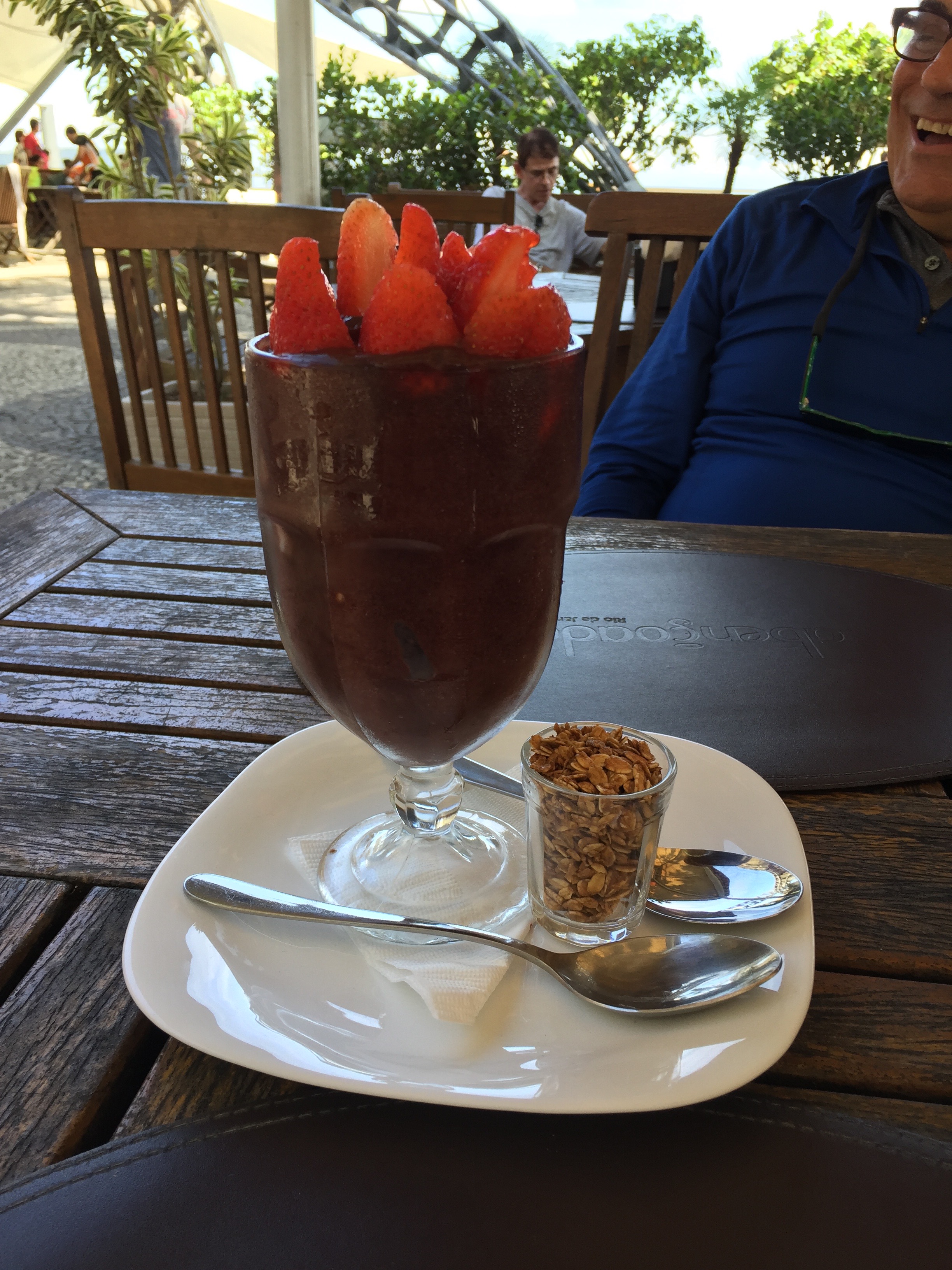
The next day breakfast is at 6 AM. We decide to go out for an early morning excursion to Sugarloaf Mountain for another elevated viewing point overlooking Rio and its waters. The views are beautiful as advertised, especially with the first bright sun in 3 days. Check out the photos. This is how we want to remember Rio. We had a final celebratory "Acai" drink that is made with Acai berries and strawberries and other fruits served slushy cold. It supposedly has anti-oxidant properties. Caipirinhas" drink that is made with sugar cane juice liquor and strawberries served slushy cold.  It really is a glorious place and a fitting end to cap off the South American section of our trip.

Time to say goodbye to South America and Brazil, tomorrow we leave for Europe and Portugal

Sao Paulo Brazil

We traveled from Patigonia to Sao Paulo by flight.  Our flight was delayed, and super rough, with choppy air that bucked us forever. You know its bad when the drink service is cancelled.

We landed at a suburban airport. It was new and It reminded us of the Detroit airport with all the stainless steel walls and large windows. The flight here was cheap. So we found these great flight tickets and later realized that the airport was 90 KM from town.  Silly us, it was like buying tickets for Lansing when we needed to be in Detroit.  It was South America weird again.  The airline (Azul, who ever heard of that) provided a FREE bus to a major shopping mall in to Sao Paulo.  They knew the airport was in the middle of nowhere.

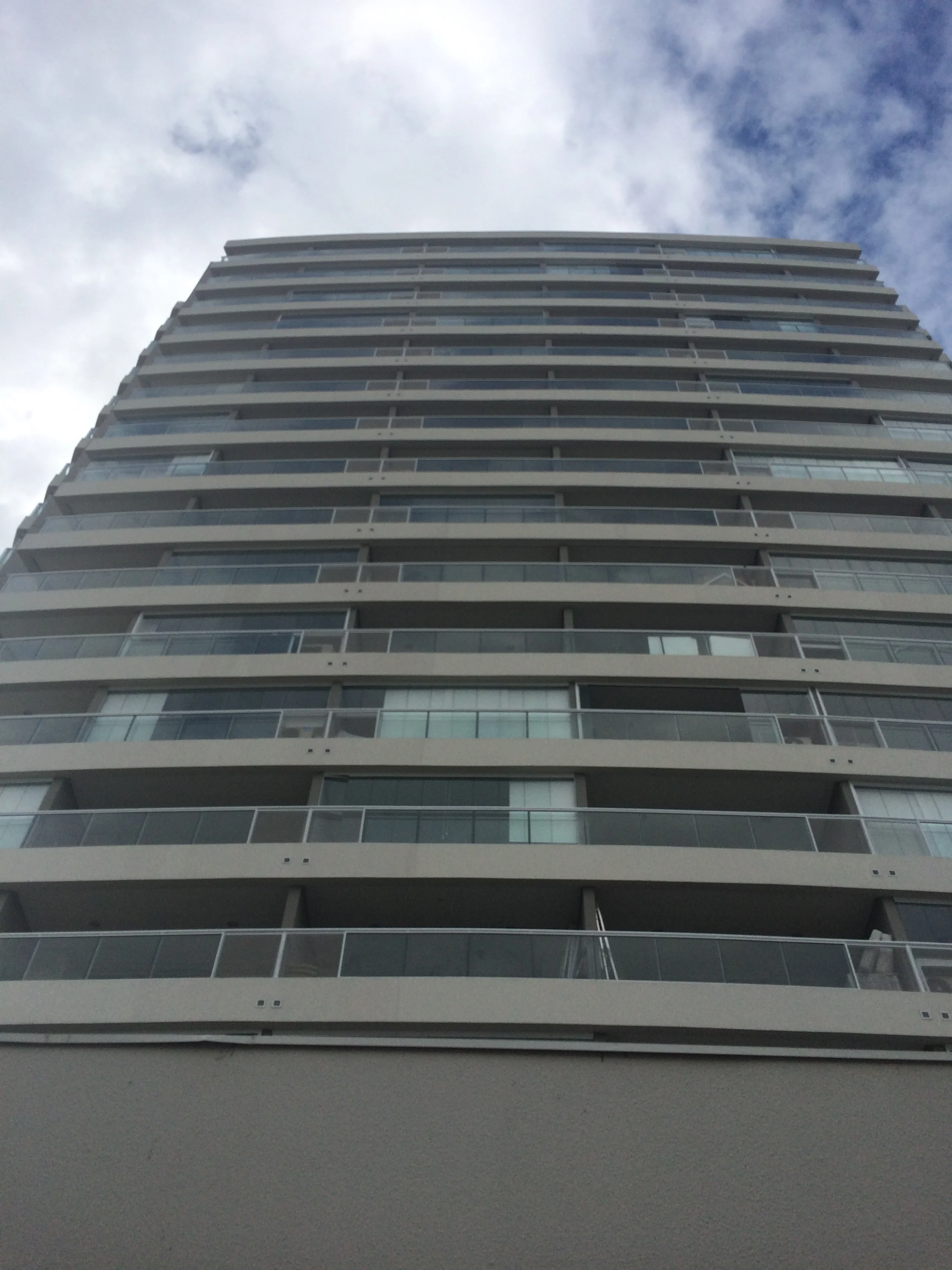
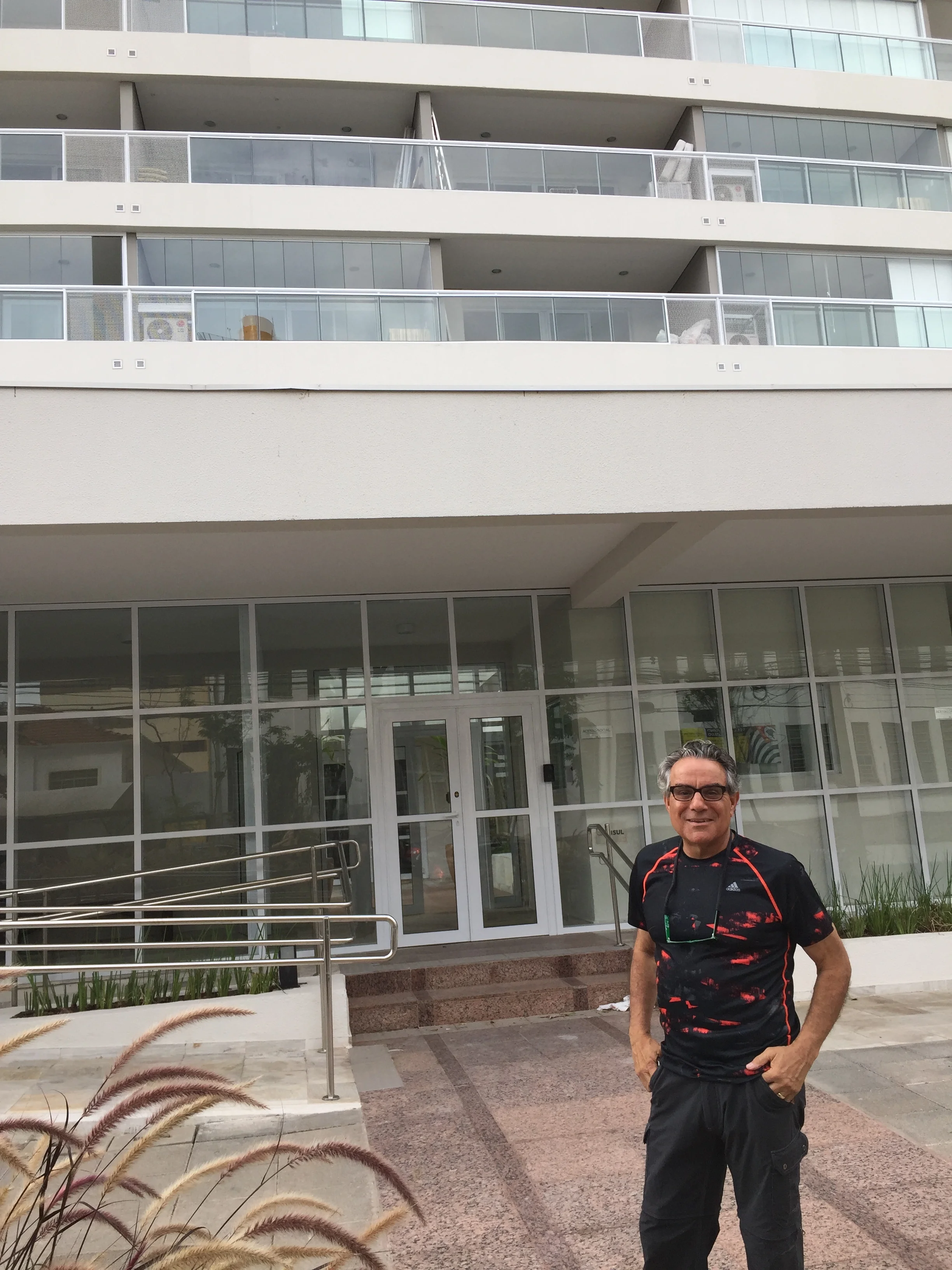
At the mall we found the help desk and the attendant was so helpful not only helping with directions and a cab, but she also called our airbnb host to explain our delay in arrival.  We grabbed an authorized taxi and headed to our Airbnb. This Airbnb is in a modern high rise of 15 stories, we are greeted by the owners, Mario and Fatama. The place is brand new, the furniture and supplies are brand new and we believe we are the first guests. They wanted to show us everything in the apartment in rapid Portuguese.  At one point the man took Janet into the bathroom and pointed out the hot and cold shower knobs and explained “hot and cold” like she had never been in a shower before.  They were very proud of their new apartment. Mario speaks some english and translates for his wife.  Please note that Portuguese is not similar to Spanish. Simple example, “Thank You” is Gracias for Spain, but Abrigado for Brazil.

They provide us wine, whiskey, beer, frozen food, and chocolates which is really beyond the call of duty. The apartment has 2 lanai, with sliding glass windows that allow us anexpansive view of our part of the city. There are many high rises. On our first night it rained and from the apartment we observed a lovely rainbow.  As we found out later,  Sao Paulo is mostly high rise residential.


The view from our Airbnb after a rain shower

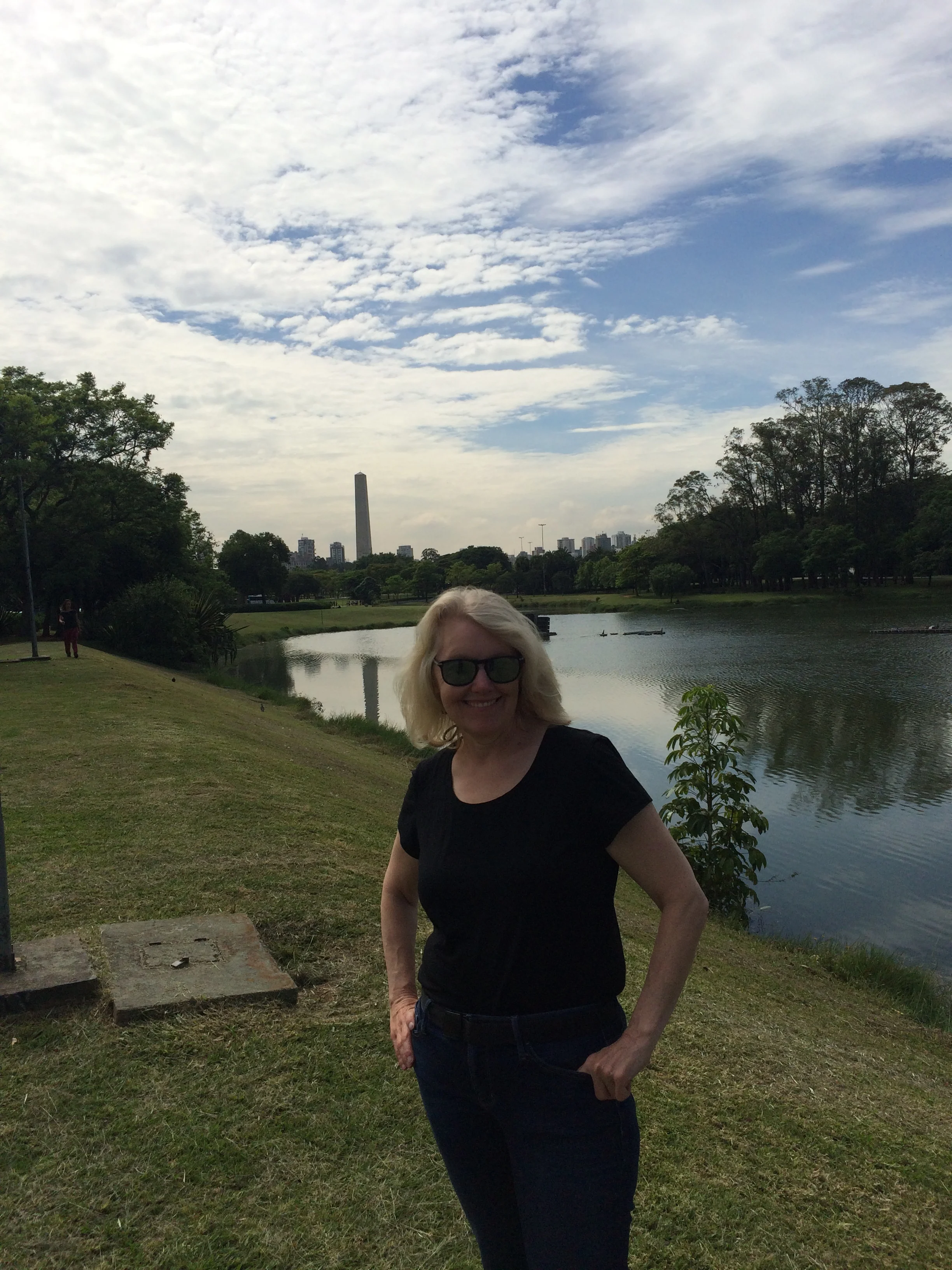
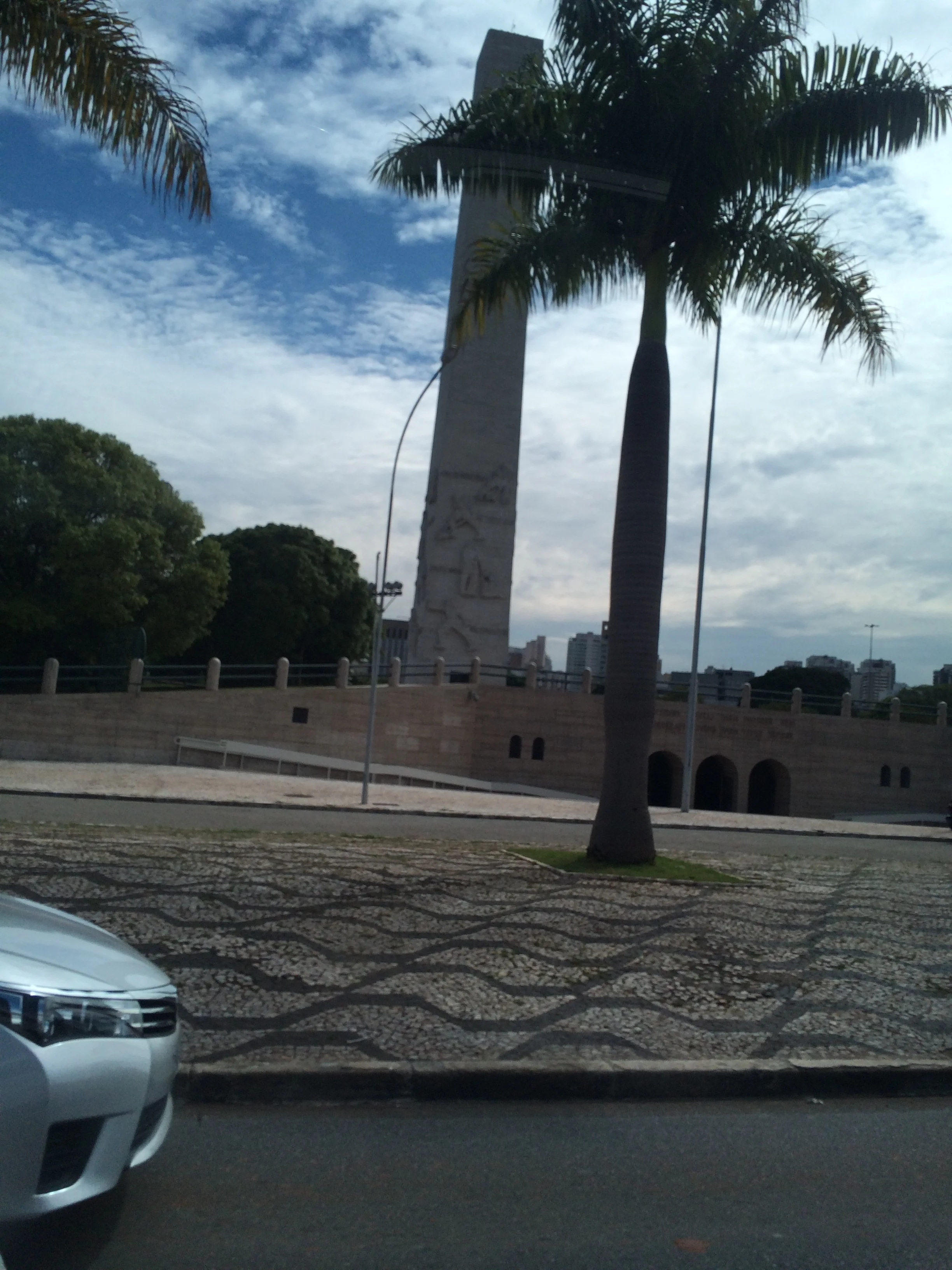
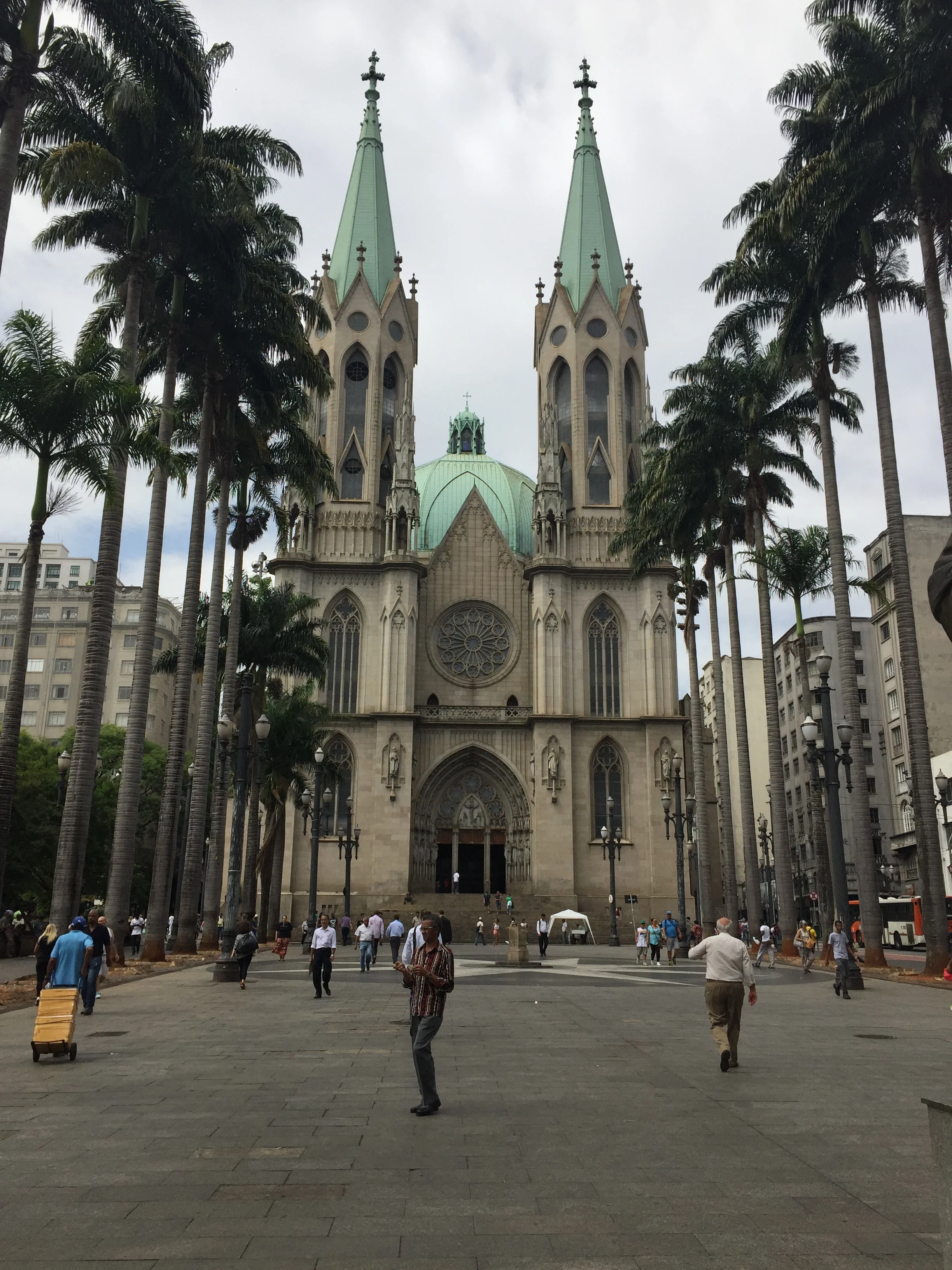
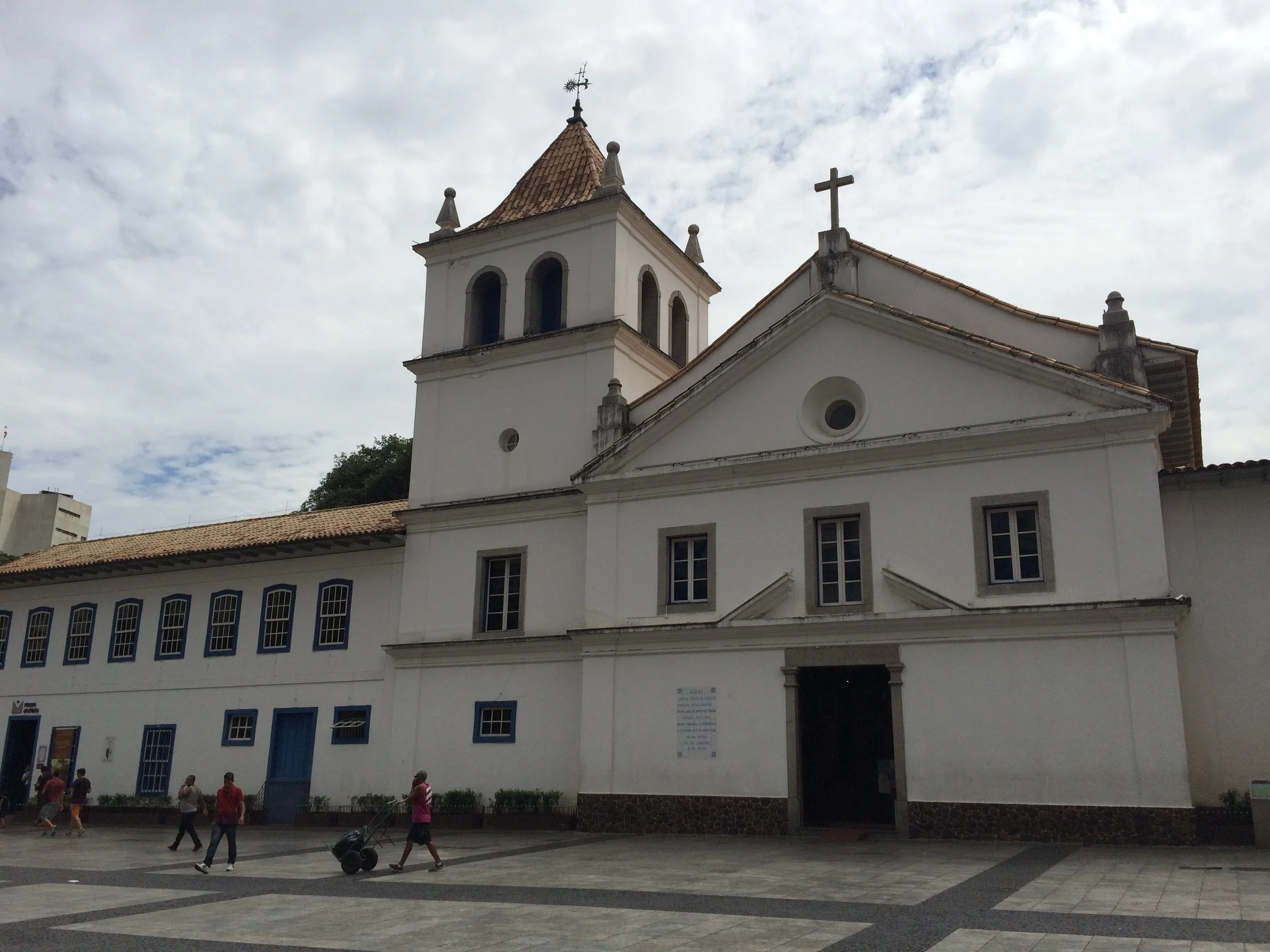
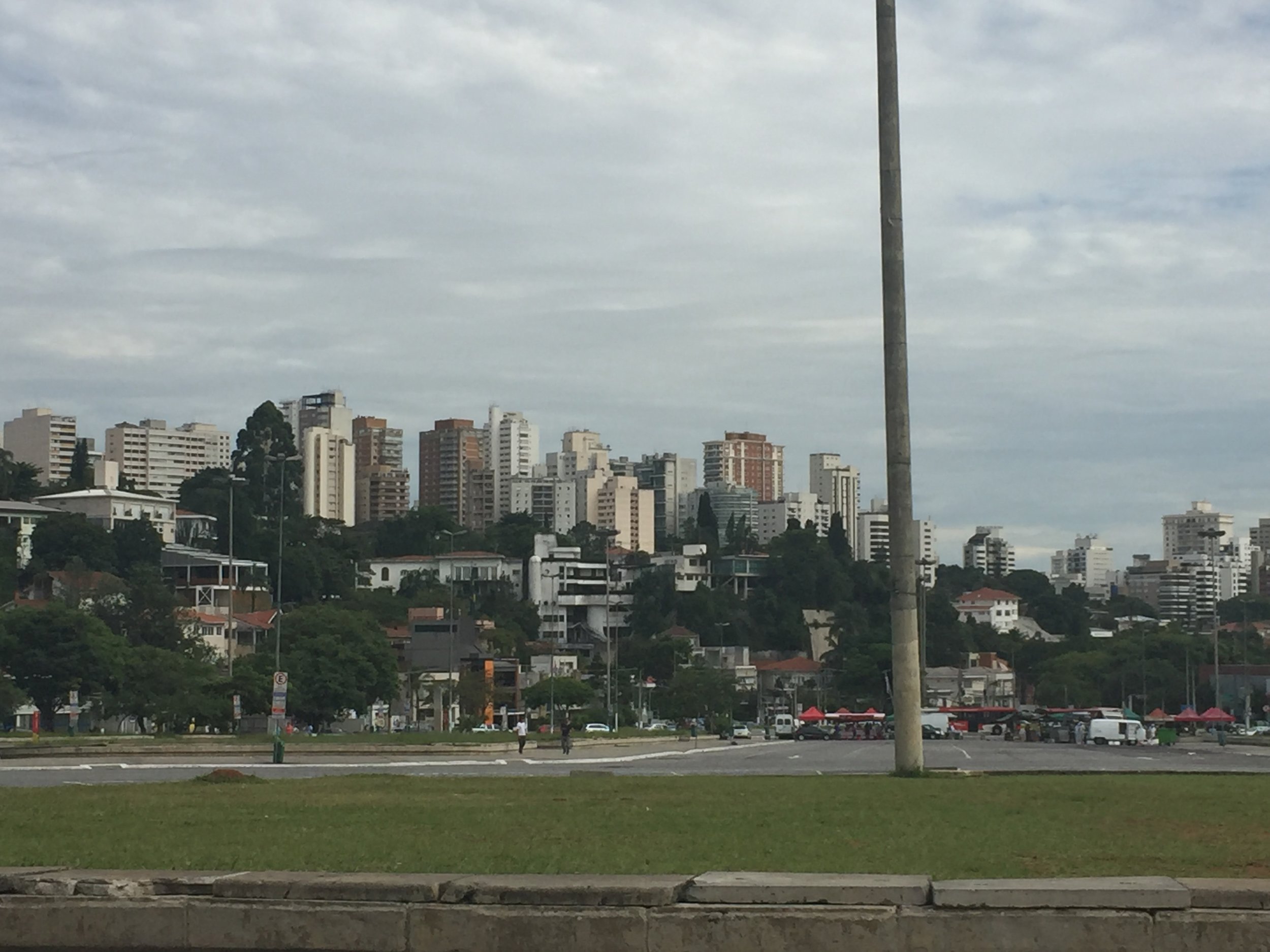
The traditional center core of Sao Paulo is different than Buenos Aires, Argentina.  More dirt, more trash, homeless people everywhere.  The traffic is constant and tedious. In Sao Pablo we skipped our normal free walking tour and arranged for a semi private driving tour, we just did not feel the city safe enough and that was the right call.  Their main square is rather in shambles, full of homeless people. The city has built out with huge suburbs of new high rises (where we stayed). The subway system is good, but better yet UBER has been in Brazil for awhile. Our tour guide proudly, or sheepishly, took us to 5 sites, the Municipal Futbol Stadium, the Municipal Park, like central Park NY, the main Catholic Cathedral, the first Church established by the Jesuits,  Paulista Blvd (the social strip, and finally the art district.

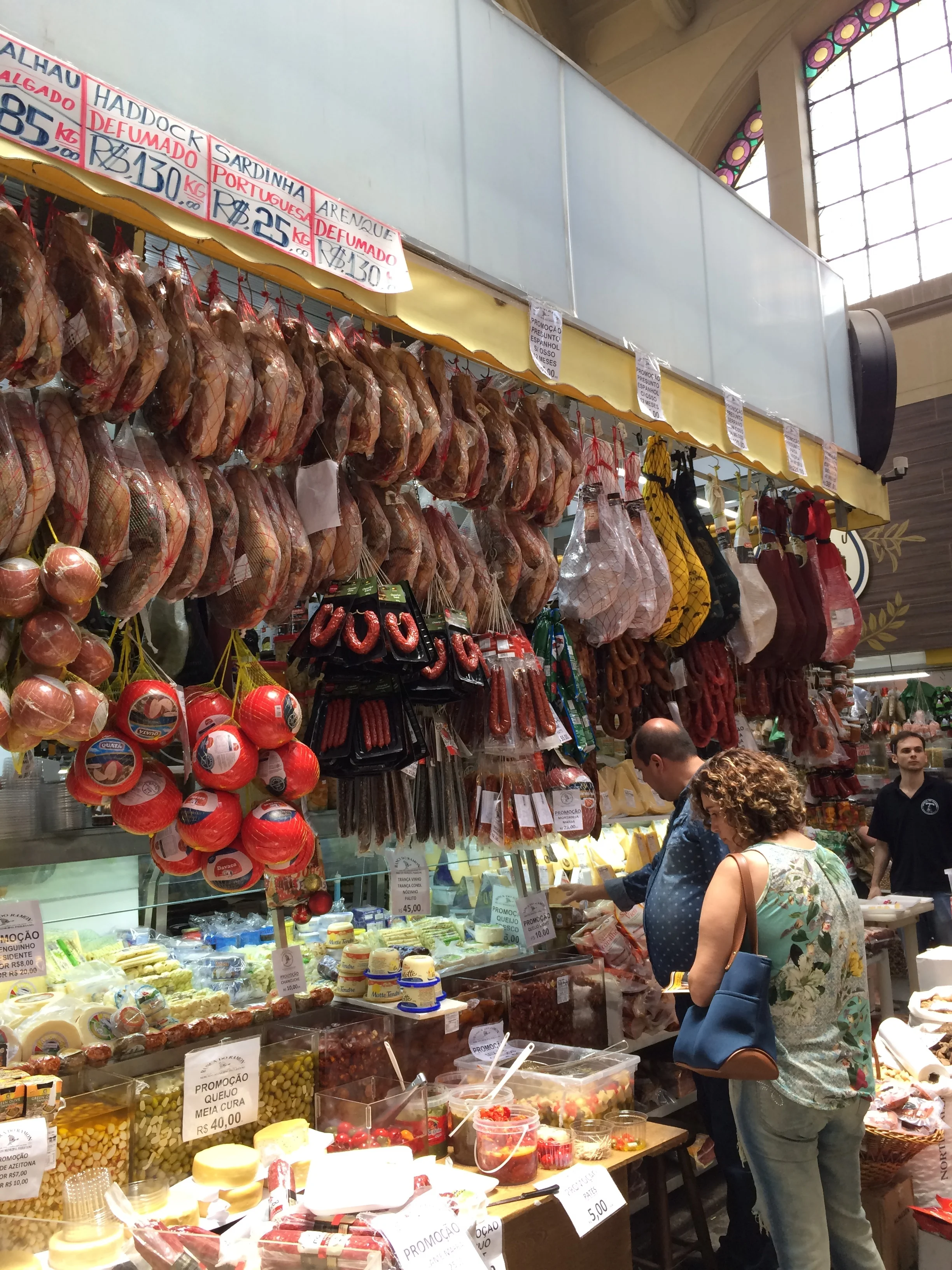
There was not much else offered except the large central market where we opted to be dropped off. This was fun. We had food tastings of exotic fruits, cheeses, fruit drinks, a new diet cola that tasted like Rock and Rye, and a market sandwich. The salesmen were showman and had real polished presentations. Yes, we bought fruit, some not available in the USA. Our sandwich vendor had us sit, was friendly, and wanted to practice his english. He was Portuguese of Lebanese descent. We talked a little about the Arabic population in Michigan, including our good friends from St. Georges Orthodox Church. My impression was he was of Christian faith.

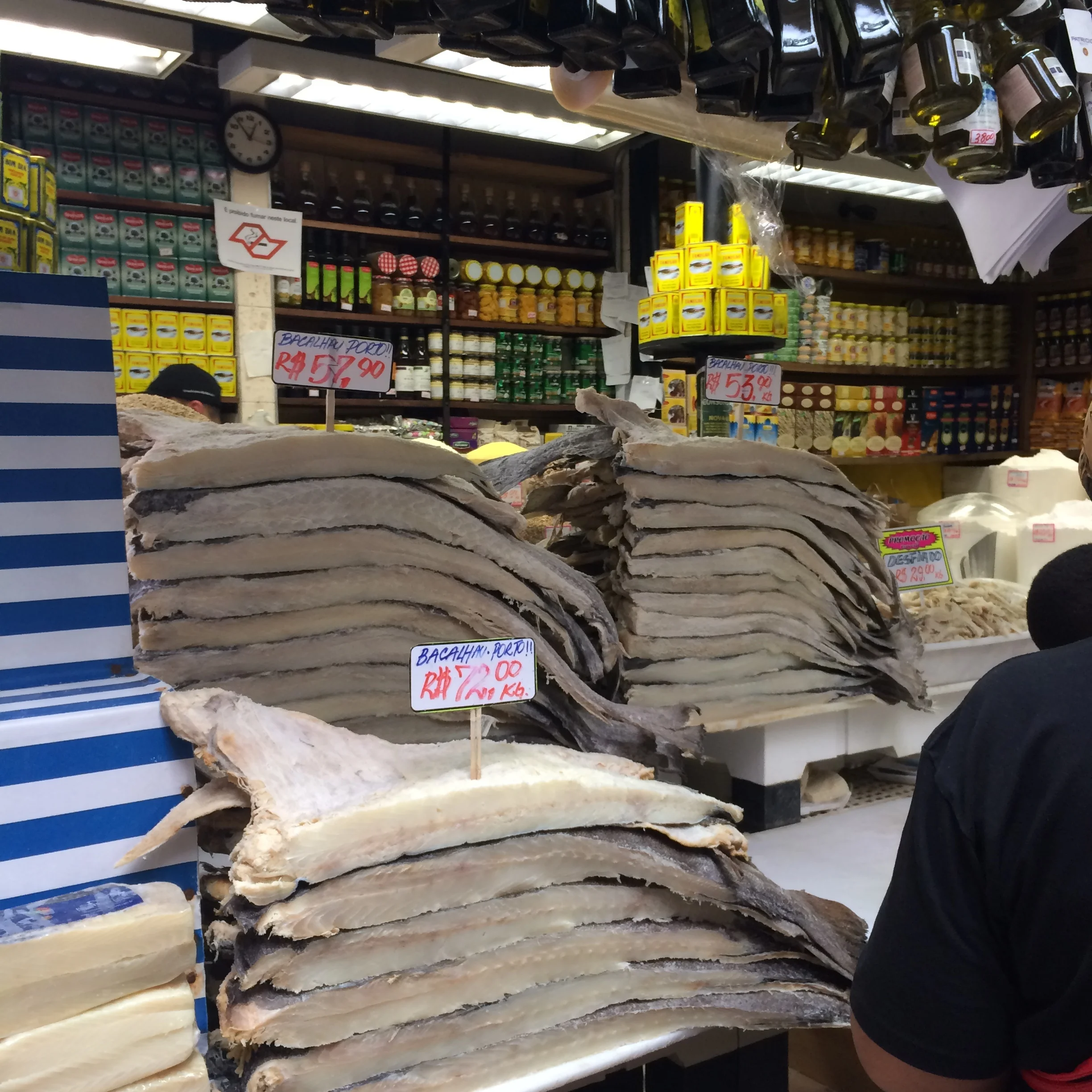
This grid is from the local market.  The stacks are dried fish that is a holiday tradition

Janet working on this blog at the airport

Our next goal was to find an official Apple Store and get the MacBook Air Computer fixed.

We traveled to this beautiful mall at 5 PM, were greeted warmly, and left it for repair.  At 10 PM they emailed us that Janet’s baby was fixed. Thank you Apple, after two months, two new motherboards and a new power system we are back in business.  We picked it up the next day and then celebrated by seeing our first motion picture on our trip. We had big buttered popcorn!


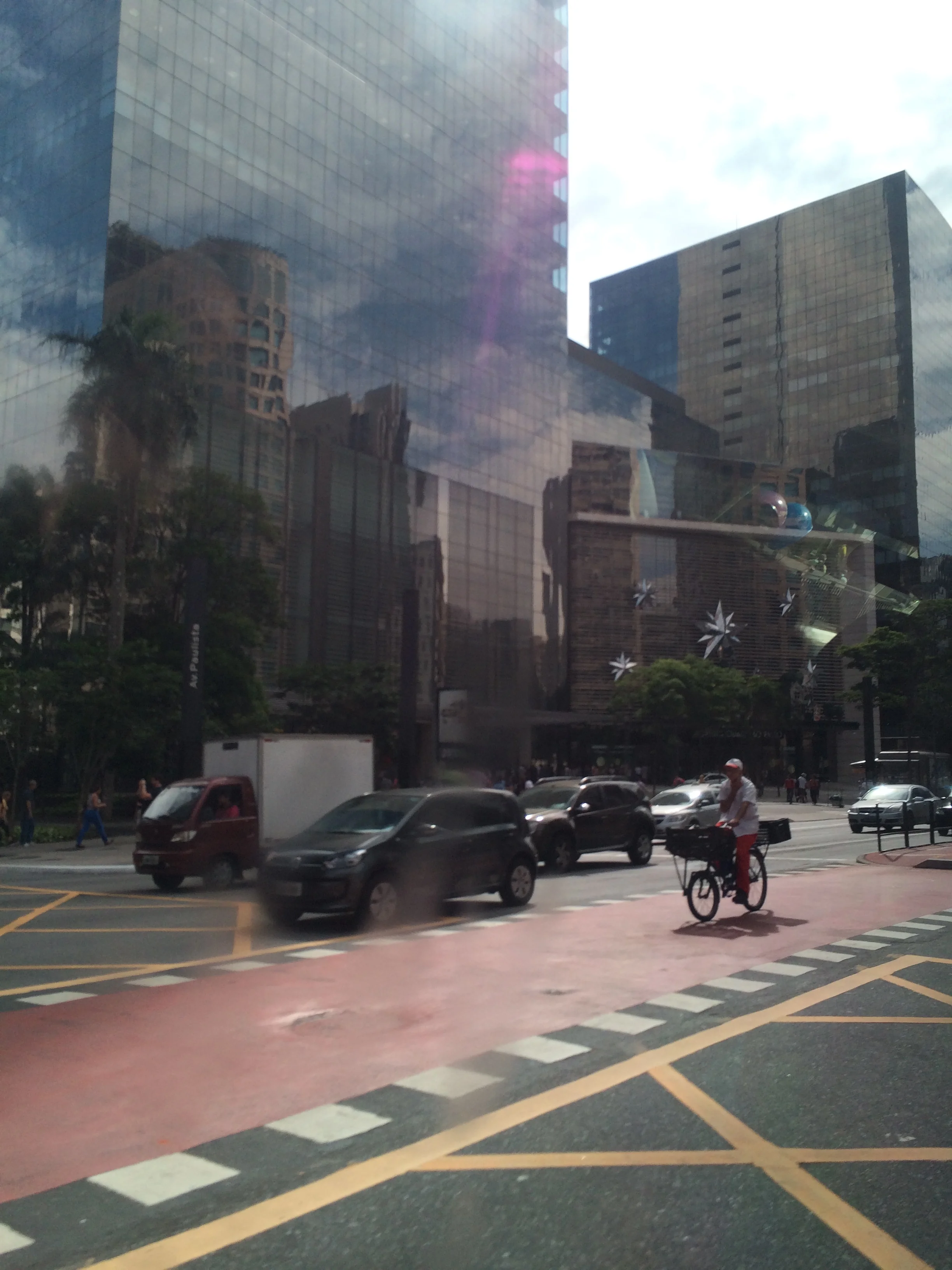
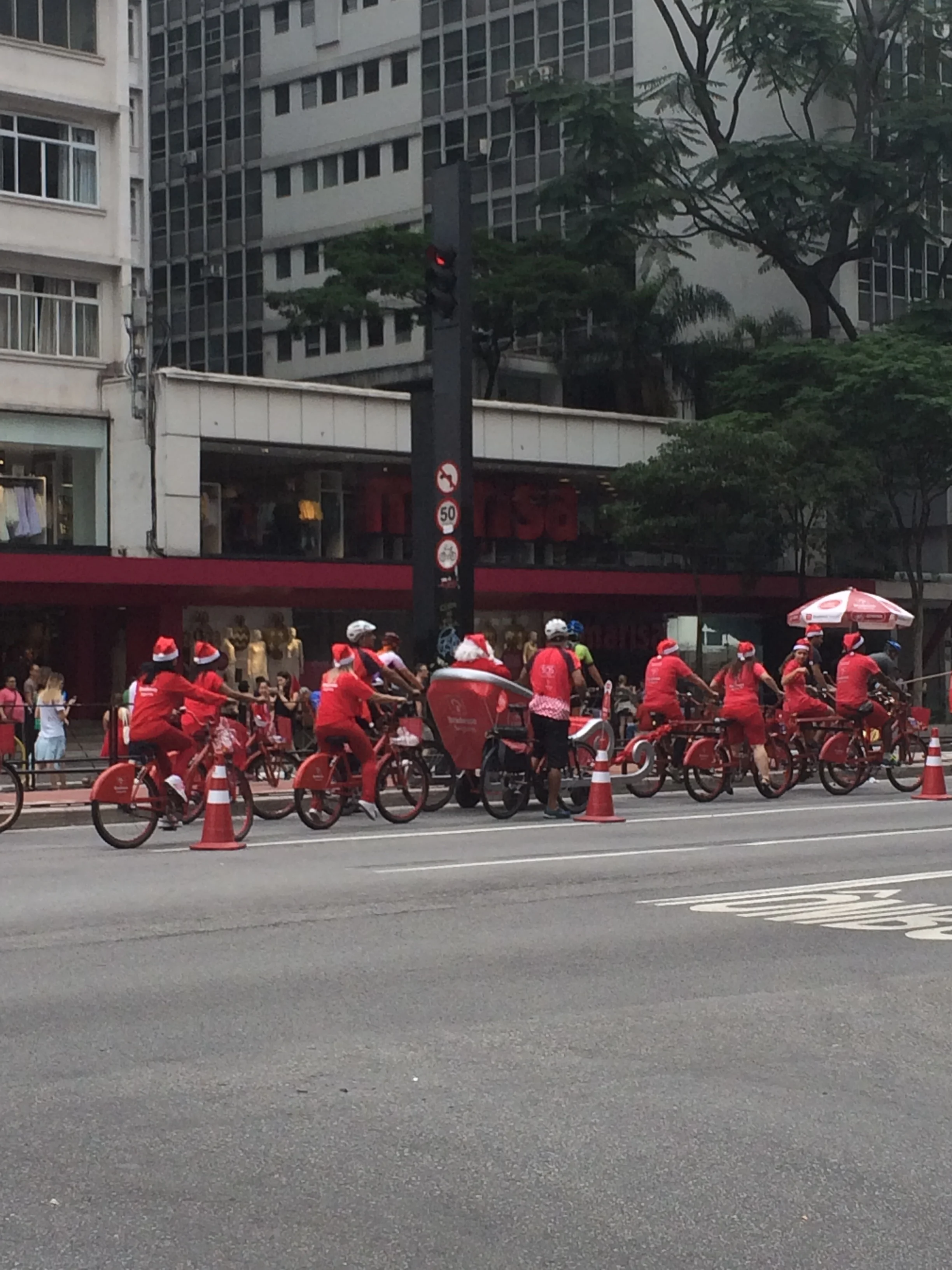
On the last day we went to Paulista Boulevard, the social party street. We took a UBER again. As we entered onto the street my first view was of musicians marching along with Santa Claus and his sleigh. This was the end of the parade, but the sidewalks were packed and the traffic blocked. There were food stands and stages of musicians with sound gear, and of course security. We walked on the street with everyone, until we arrived at the main Art Gallery, our initial target. The Gallery is a modern structure which is deceiving in it size. Many of the exhibition floors are subterranean. The starting point is actually the second story reached by stairway or elevator. The first exhibit is an art history of the common folk of Brazil, more crafts, print blocks and wood carvings. See photos.


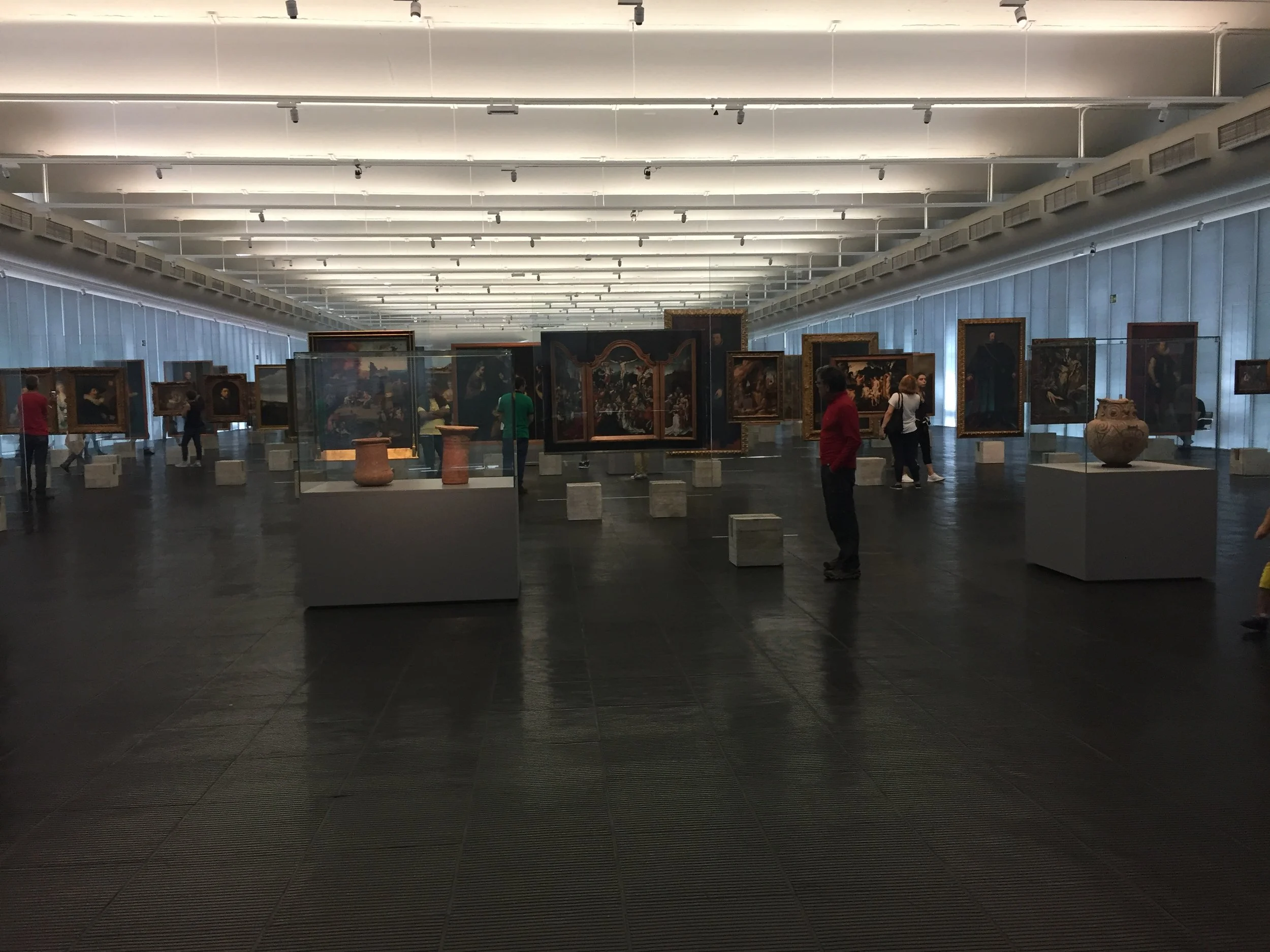
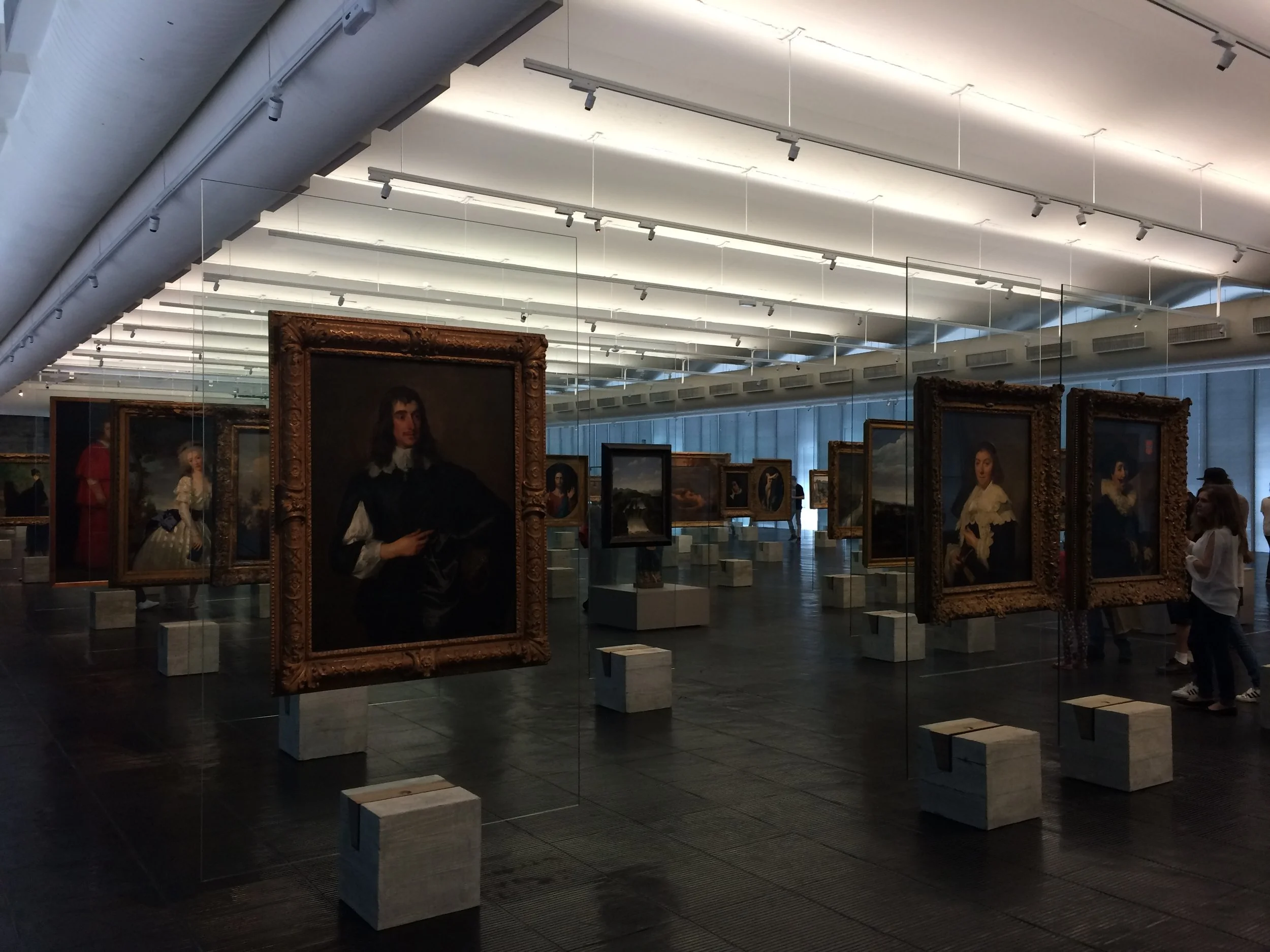
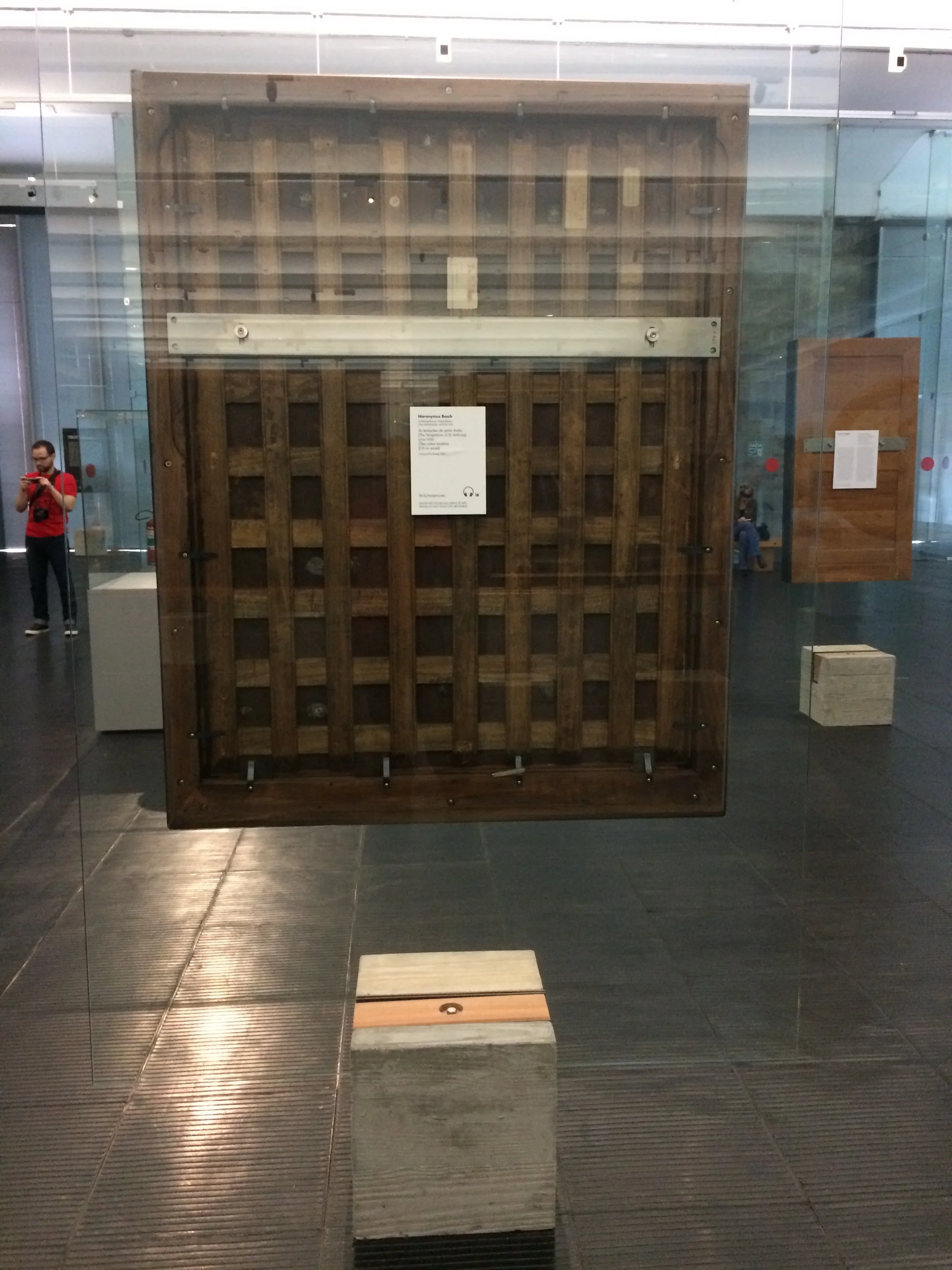
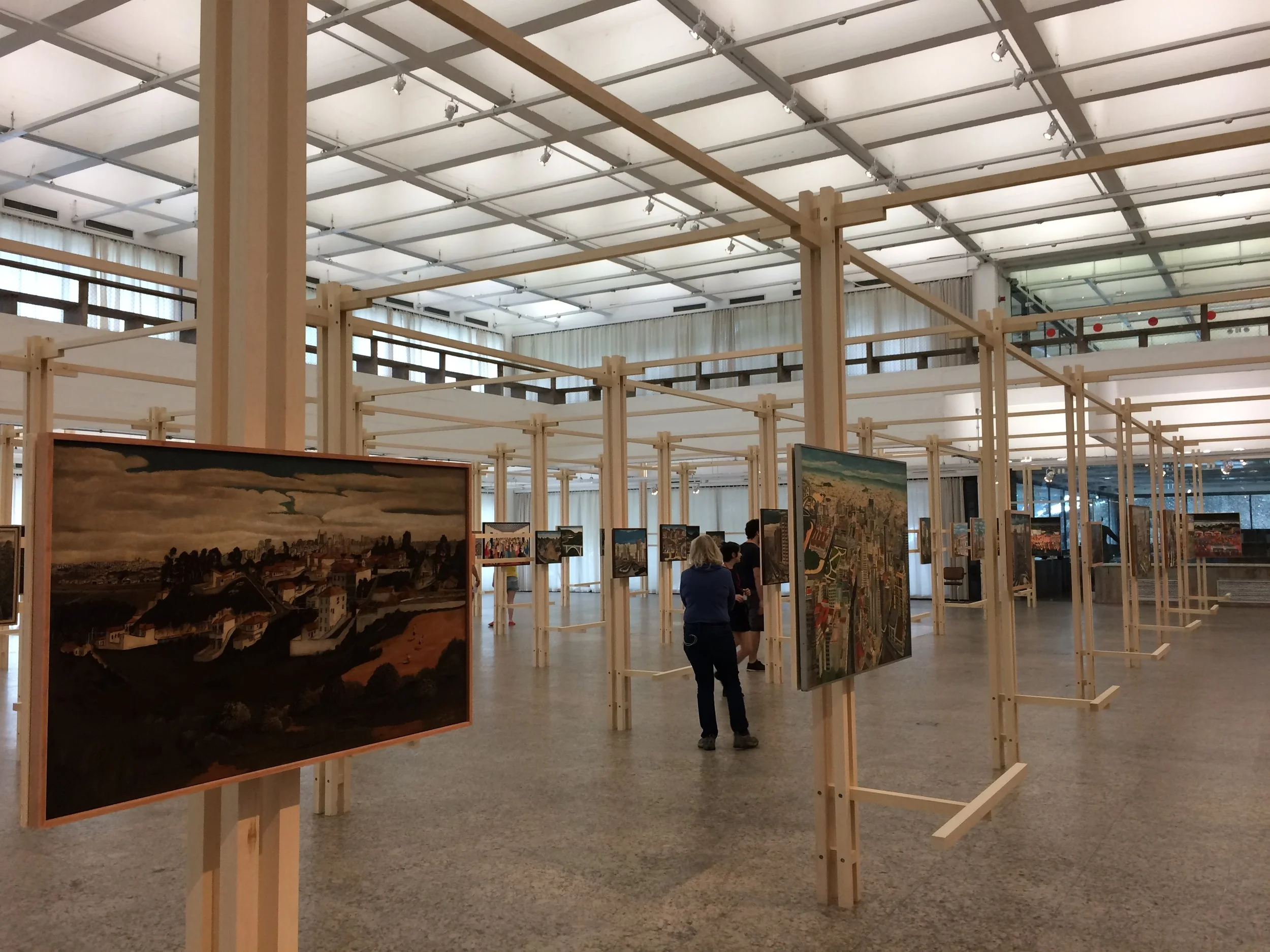
The second floor is really a wonder of creative display. There are no walls. The paintings of great worldly artists are displayed so as to look to be suspended in air. This display technique impressed me as a guide for others to turn large open spaces, perhaps abandoned buildings, into galleries, and become neighborhood anchors in urban areas. The art was wonderful. You see Picasso, Monet, Rembrandt, Diego Rivera, and many others.  

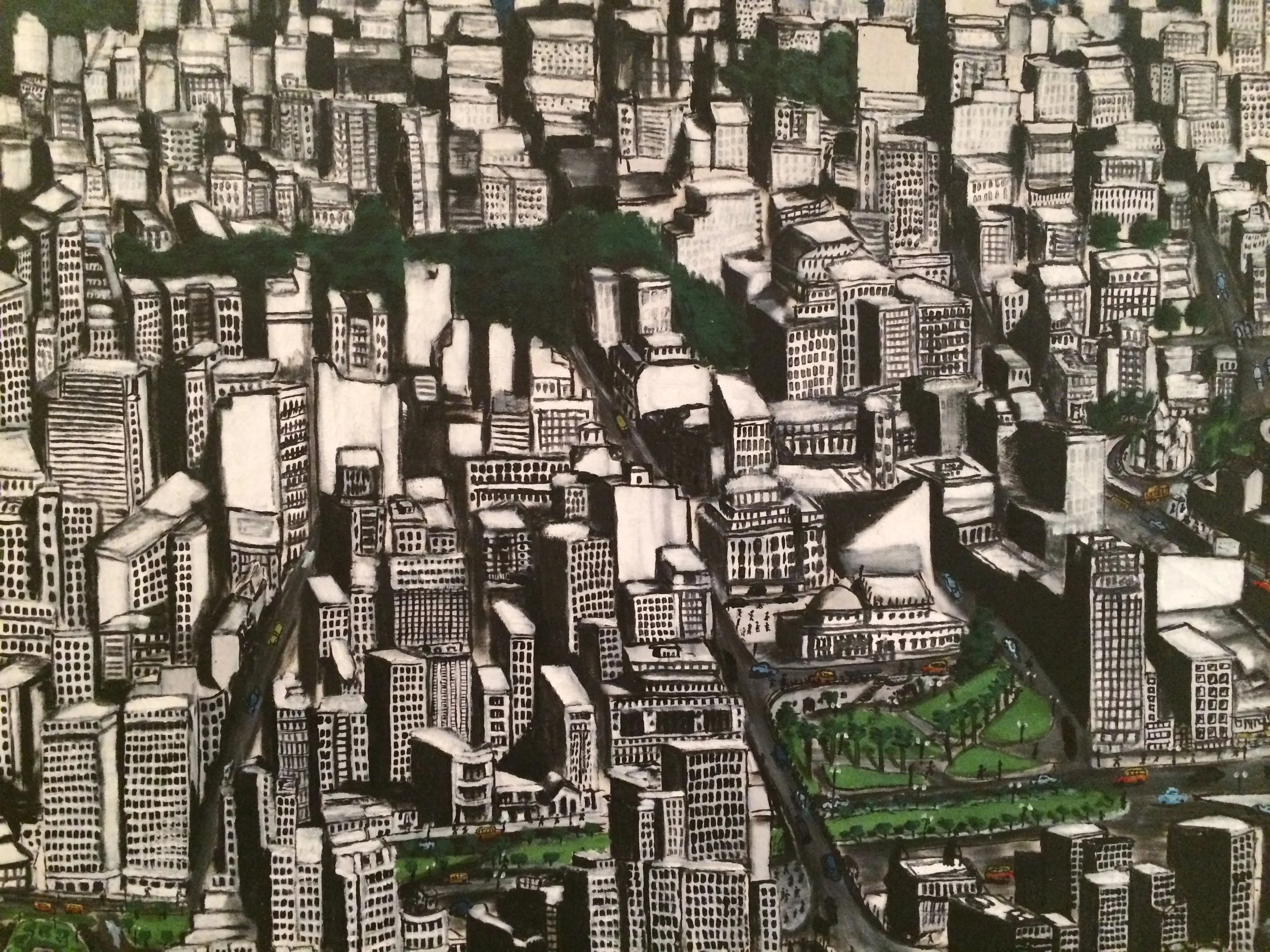
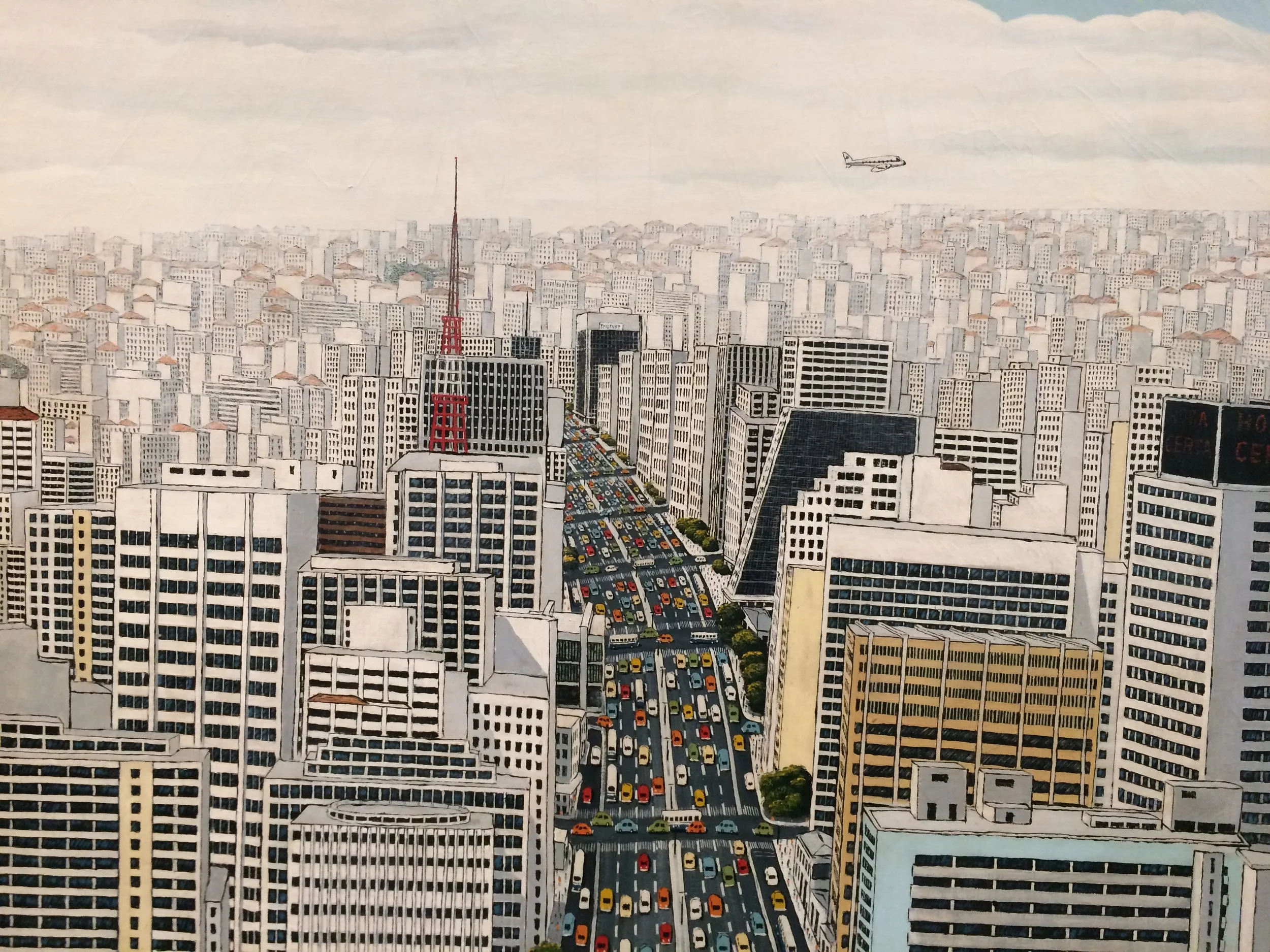
The final exhibit came from local art community where we saw urban paintings of the Sao Paulo area and scene. The crowded nature of the city is evident. See some photos.

All this art was the high point of the day, maybe the high point of our visit to the City. We topped off afternoon with street food of stuffed fried cheese balls and Sugar Cane drinks. Our day ended as it did for most of the revelers when a deluge of rain fell soaking everything. It was time to find a taxi and head home. Good bye Sao Paulo. We know your jealous, but we will just have to compare you to Rio de Janeiro Sao Paulo, Brazil


Good Bye From Sao Paulo

Iguazú Falls - Argentina and Brazil


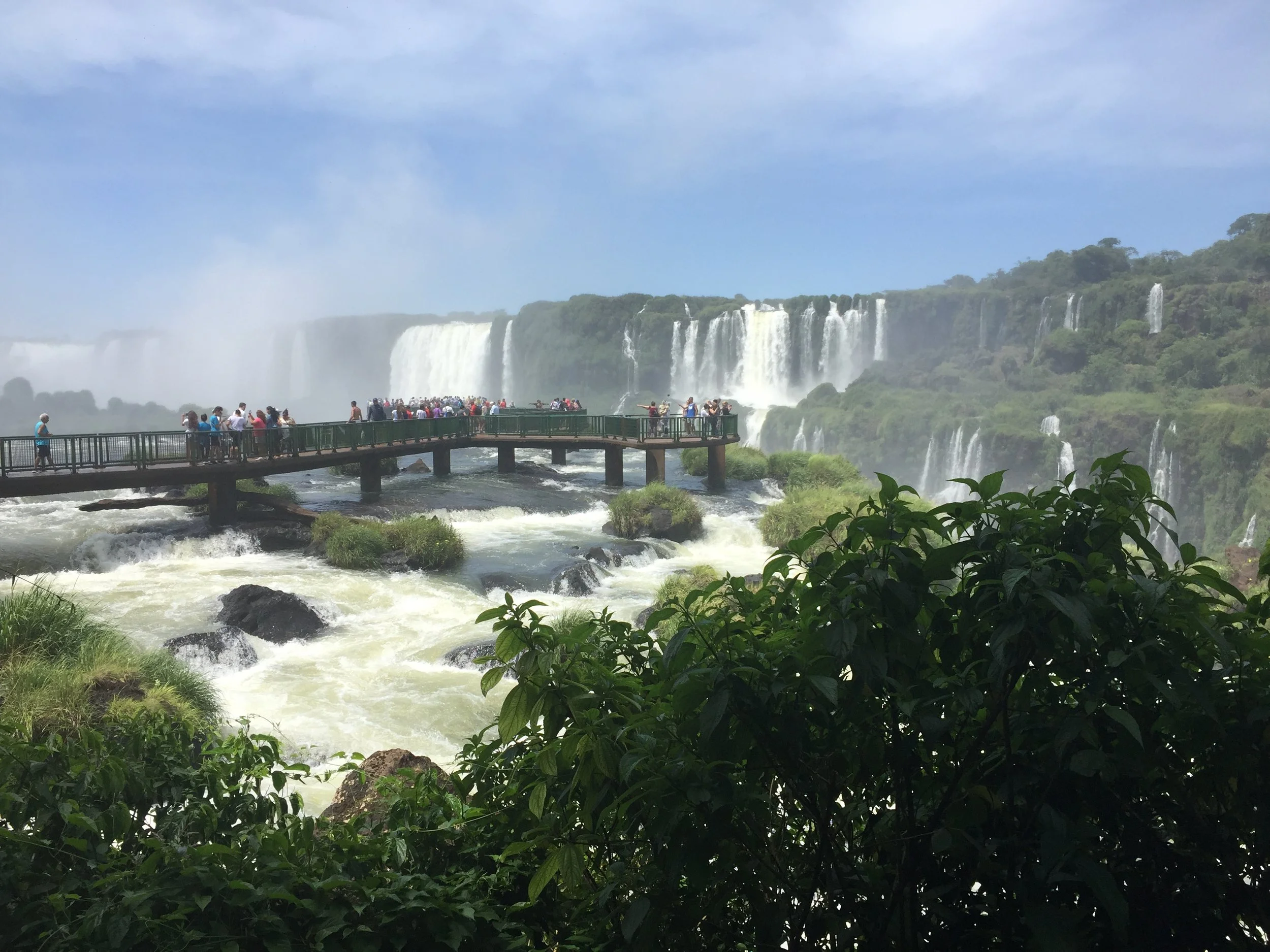
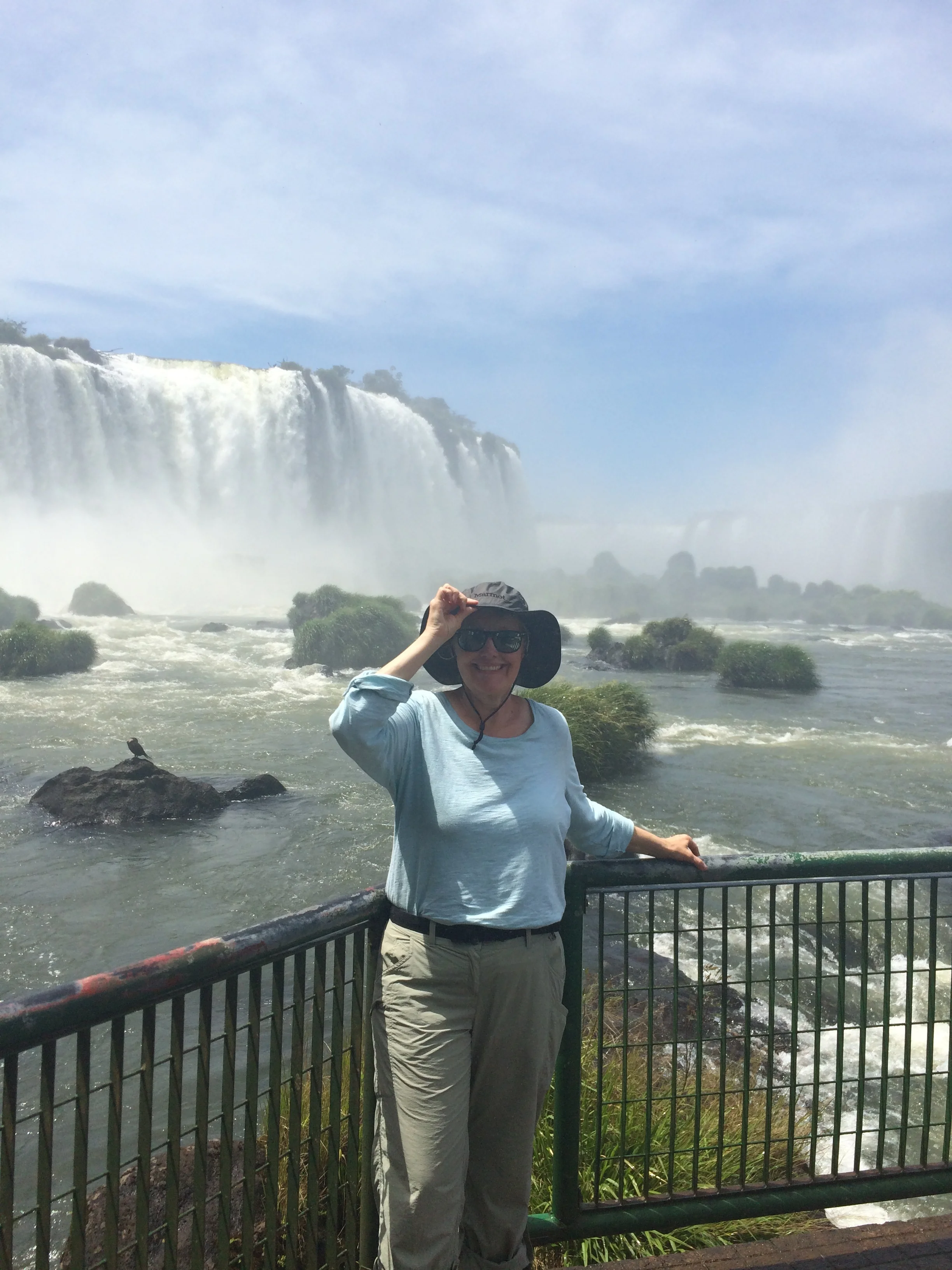
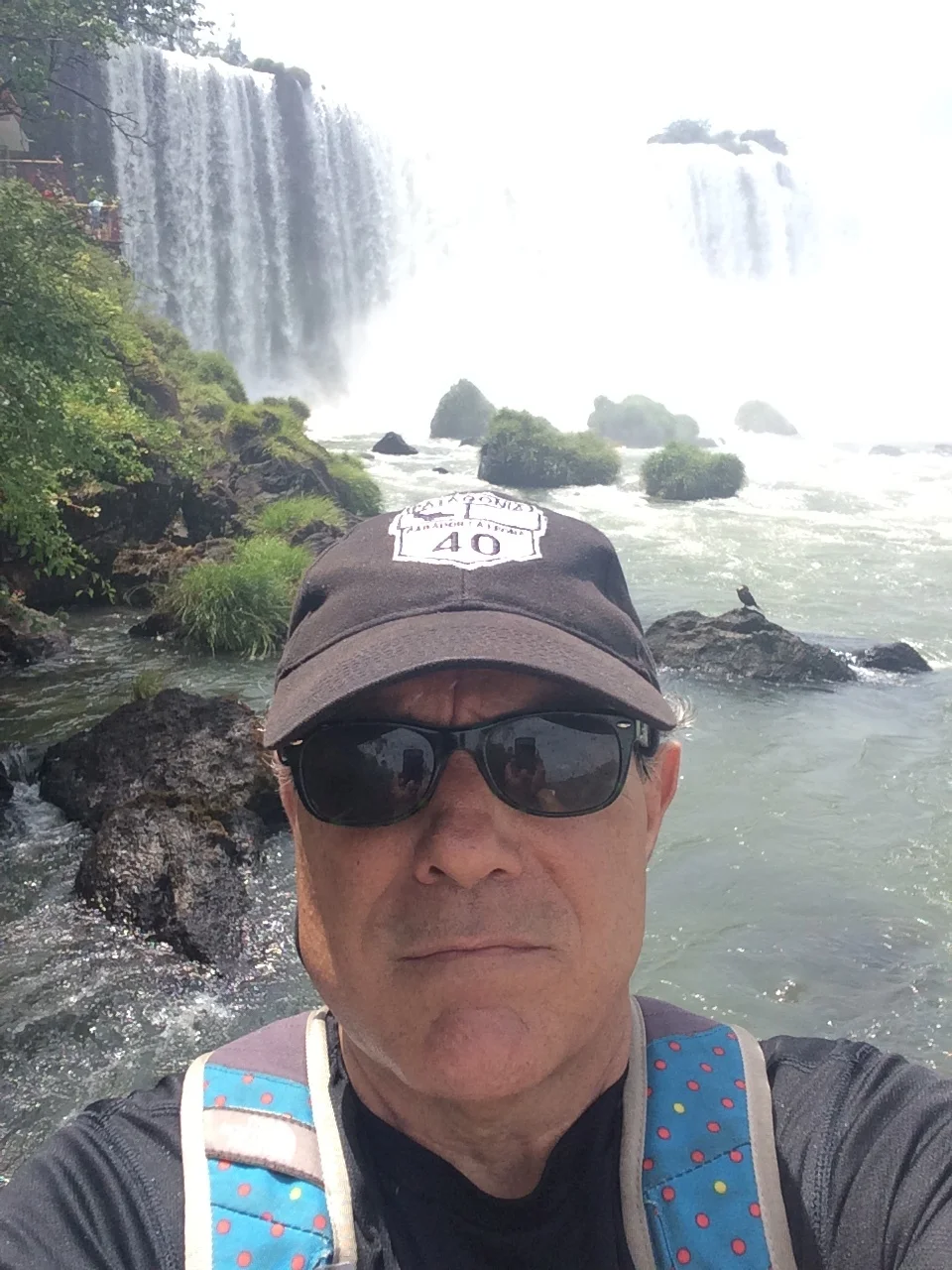
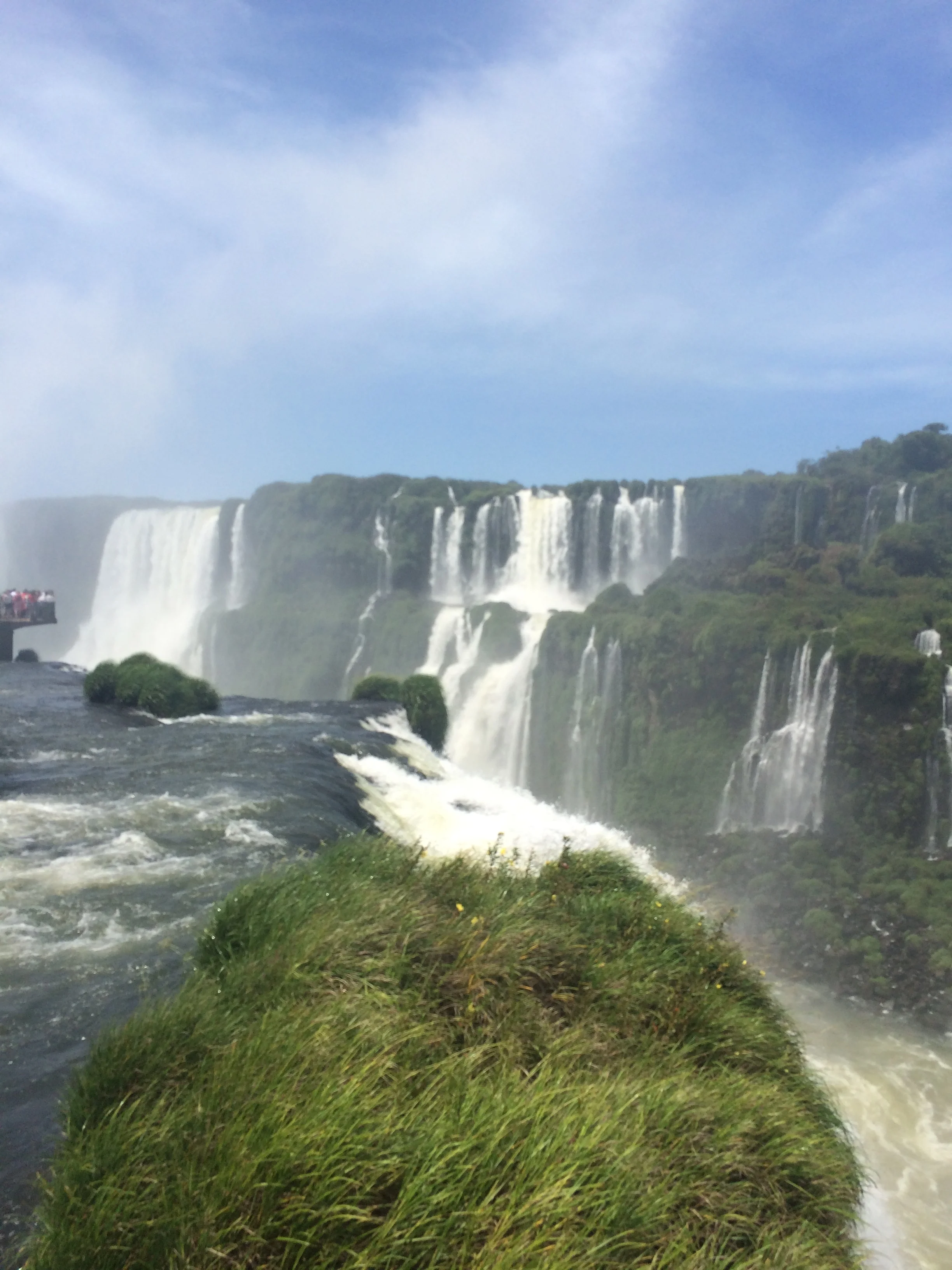
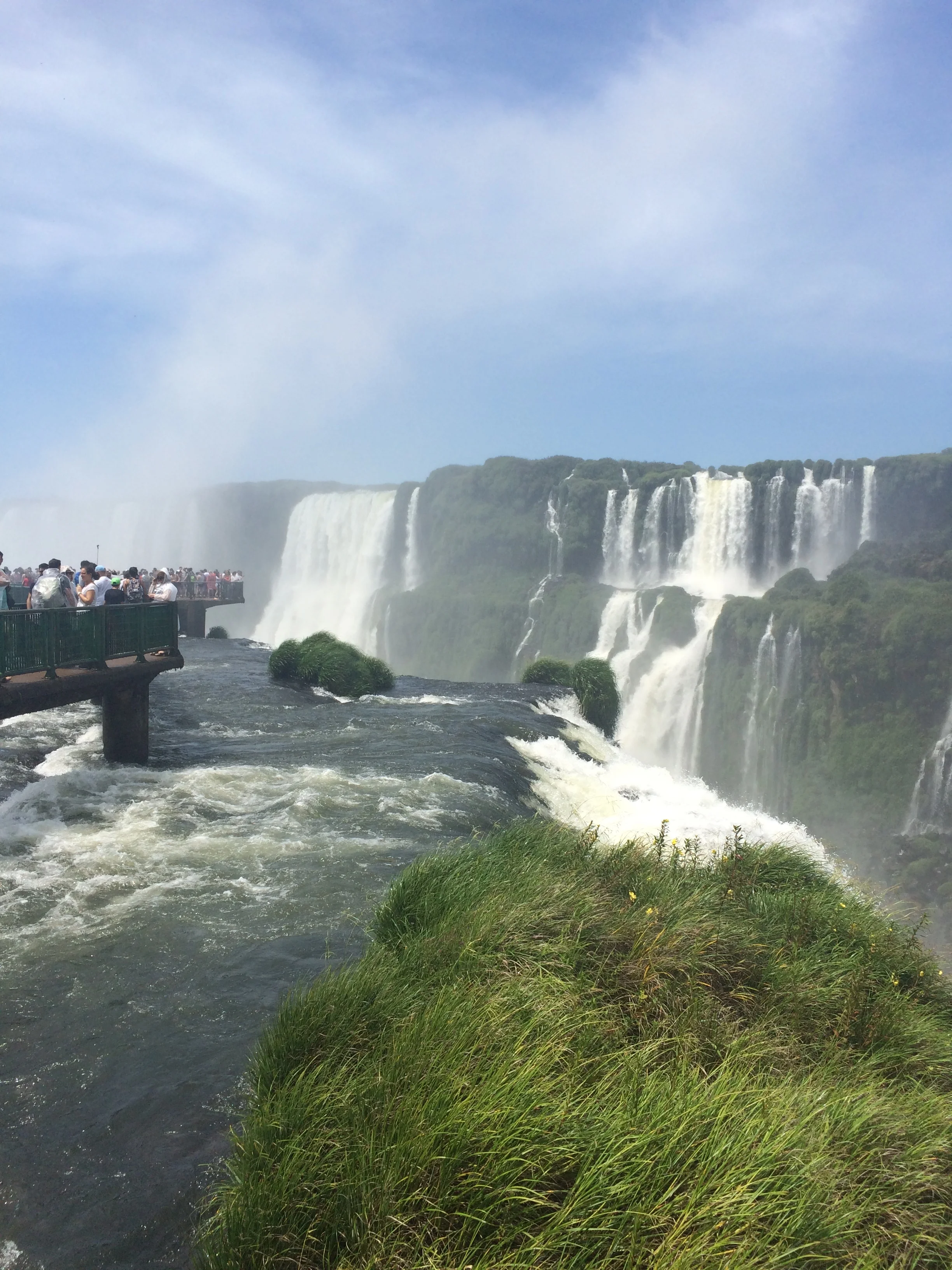
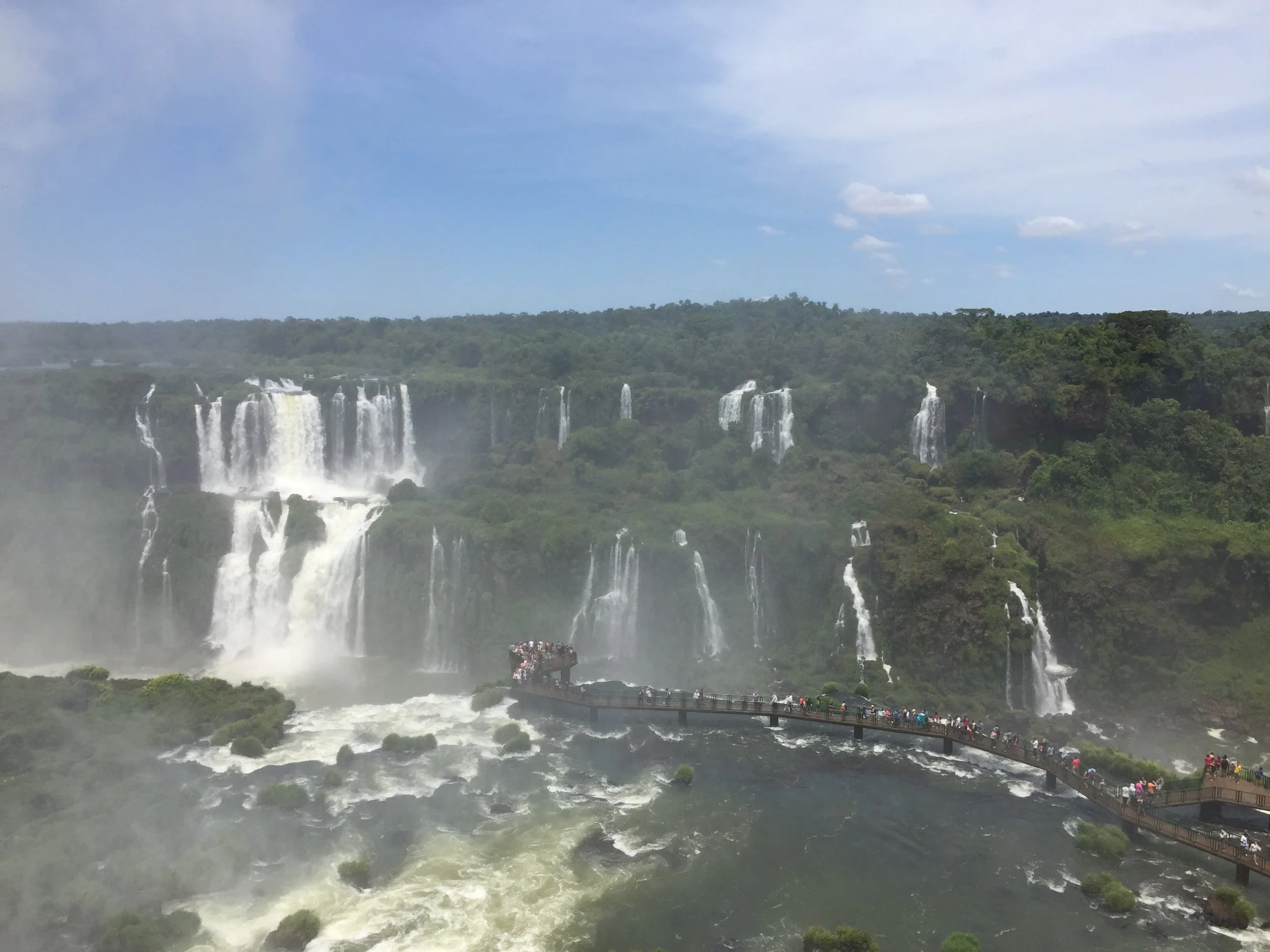
Iguazu Falls, pronounced ee-gwah-SOO is the border between Argentina and Brazil.  This is our last stop in Argentina and our border crossing into Brazil.  The falls are one of the new 7 wonders of the natural world.  They are the largest waterfalls system in the world.  It is said that when Eleanor Roosevelt visited the falls, she sighed and said “oh poor Niagara”. 

The town

To get to the falls it is a 20-hour bus from Buenos Aires and an additional 14-hour bus to São Paulo or a 90-minute flight.  After much research we found 2 one-way air tickets into the Argentina side of the falls and out of the Brazil side to São Paulo for $230 each.  We opted for the flights.  The Argentina town and airport is just 5 miles from the Brazilian town and airport, but like our other experiences in South America the border is strictly controlled and for US citizen to Brazil you cannot cross without a visa. In Argentina the town is Puerto Iguazú, a larger town of 34,000.  Like many of the towns with major attractions, it was expensive and we opted for a hotel since it was the same price as most hostels.  Our small hotel was nice and had a good pool.  The temps are now 80-90 every day and we had a good afternoon relaxing at the pool.
 

We woke early for our first day trip to the falls and after a quick breakfast we headed to the bus station for the 7:30 bus to the falls.  The bus was almost empty and after 10 minutes we got to the Brazilian border and was instructed to exit.  This was not the plan, we needed to be at the Argentina falls, we had no passports, our plans for Brazil were for the next day.  Darn, on the wrong bus again!!  So after 2 hours and a transfer at the local bus stop we finally made it to the falls. 

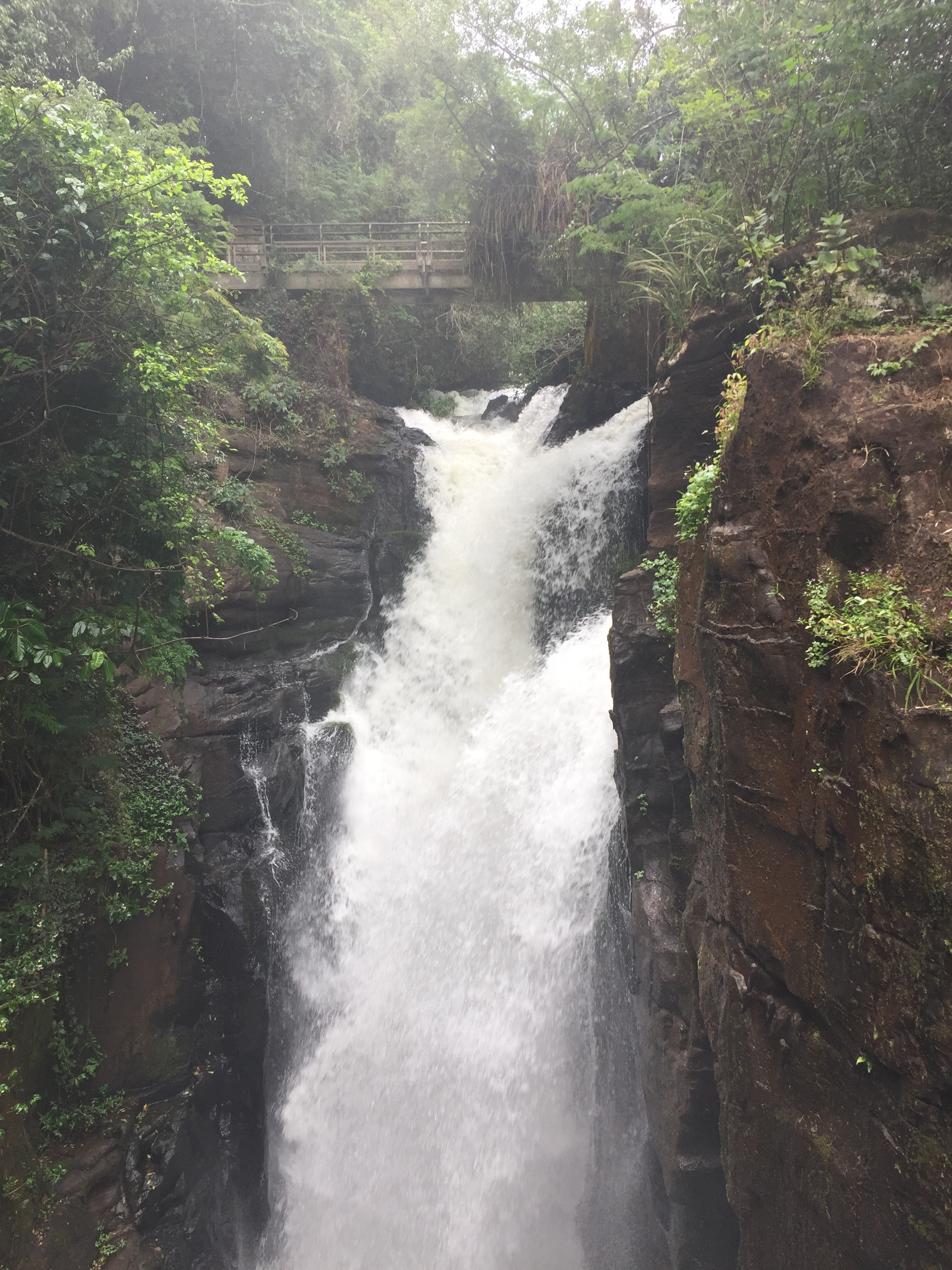
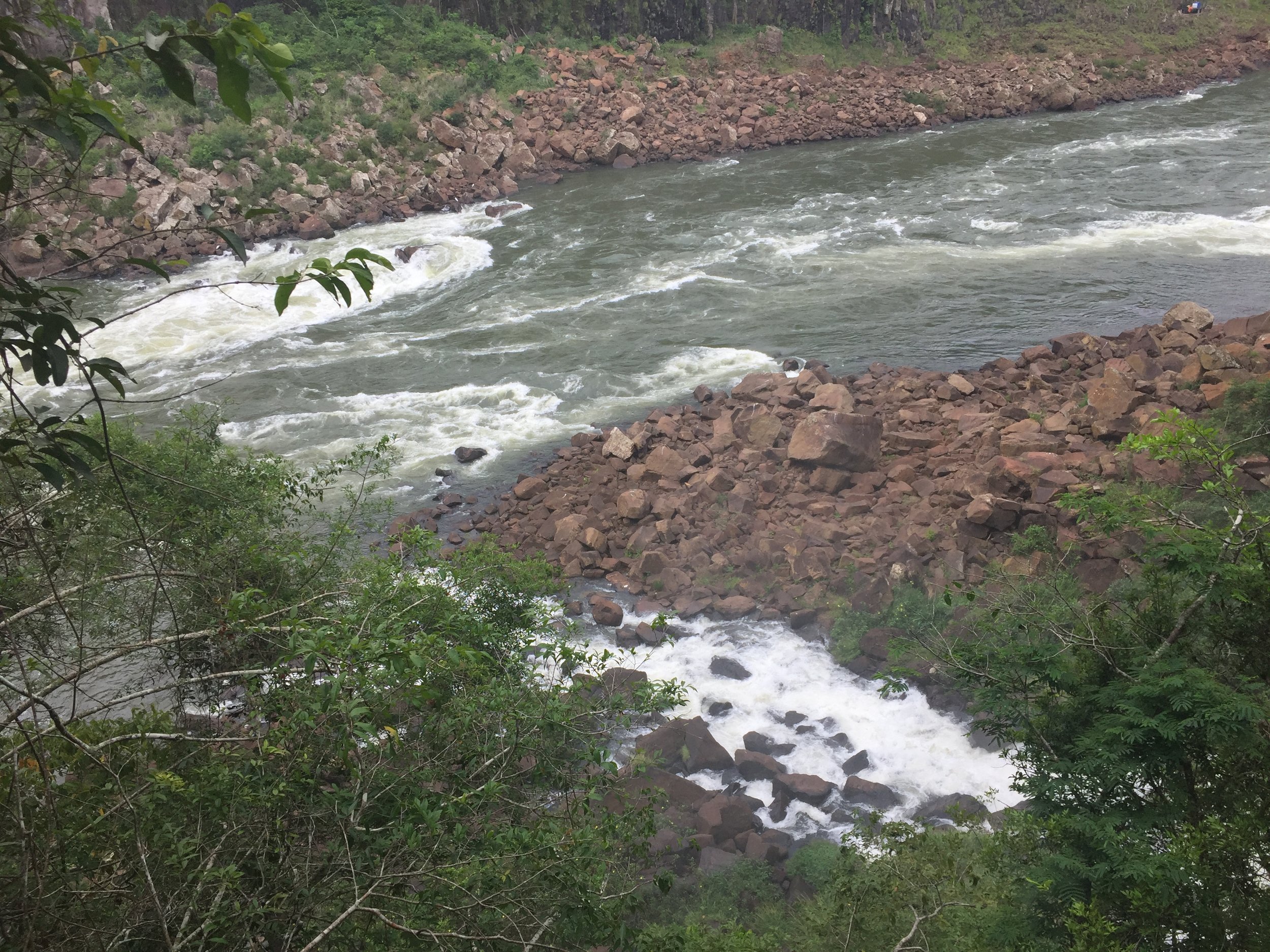
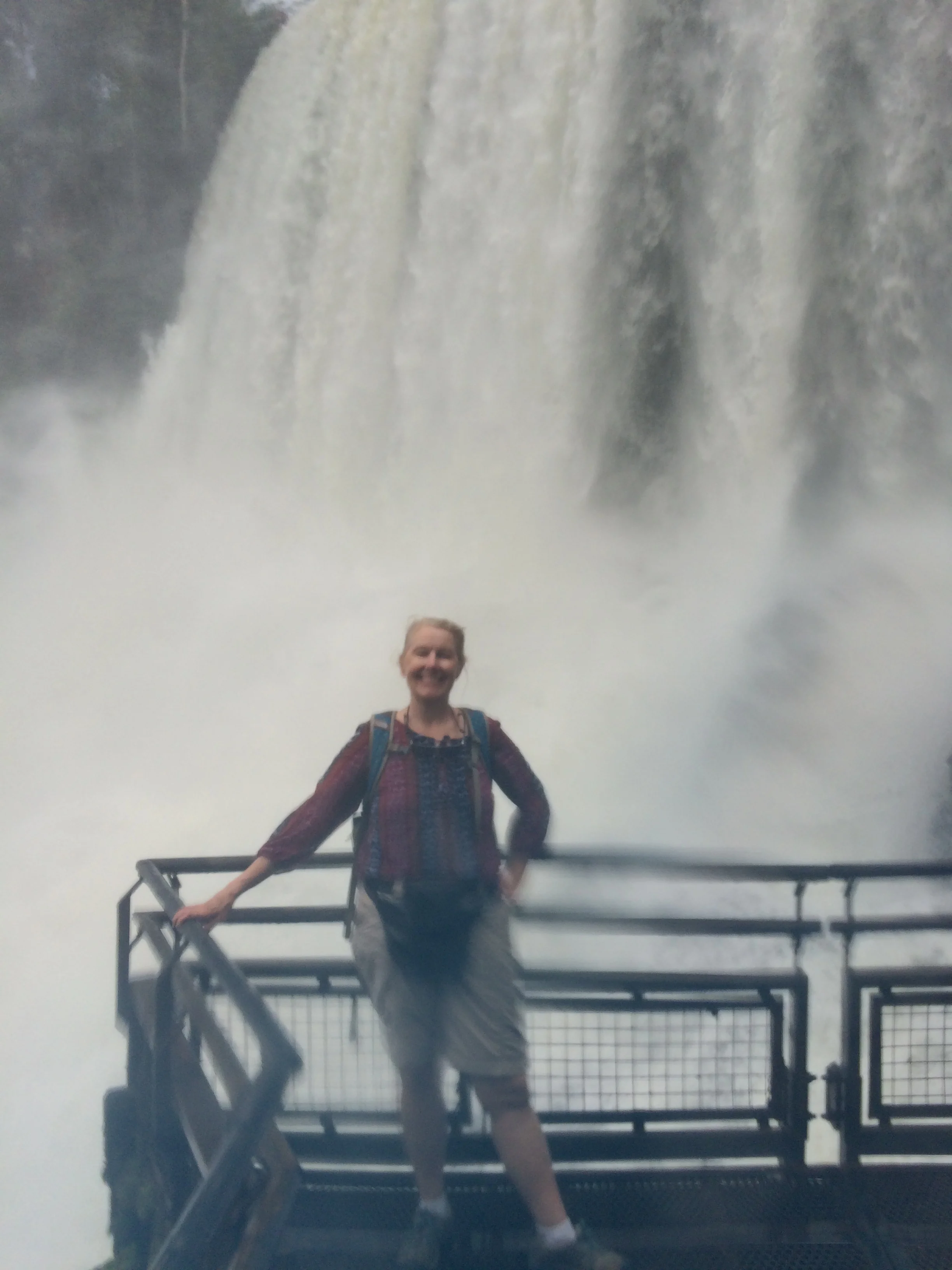
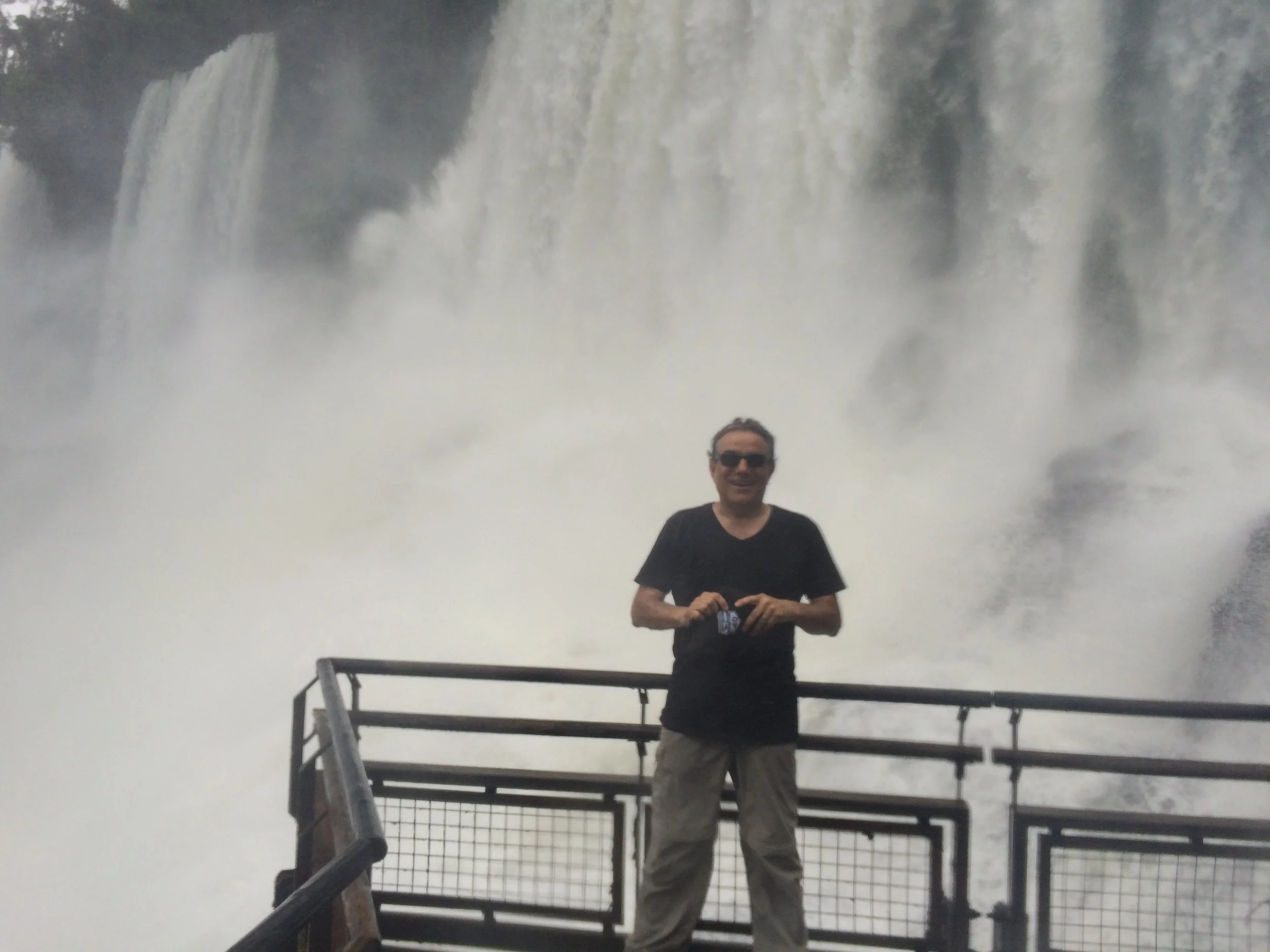
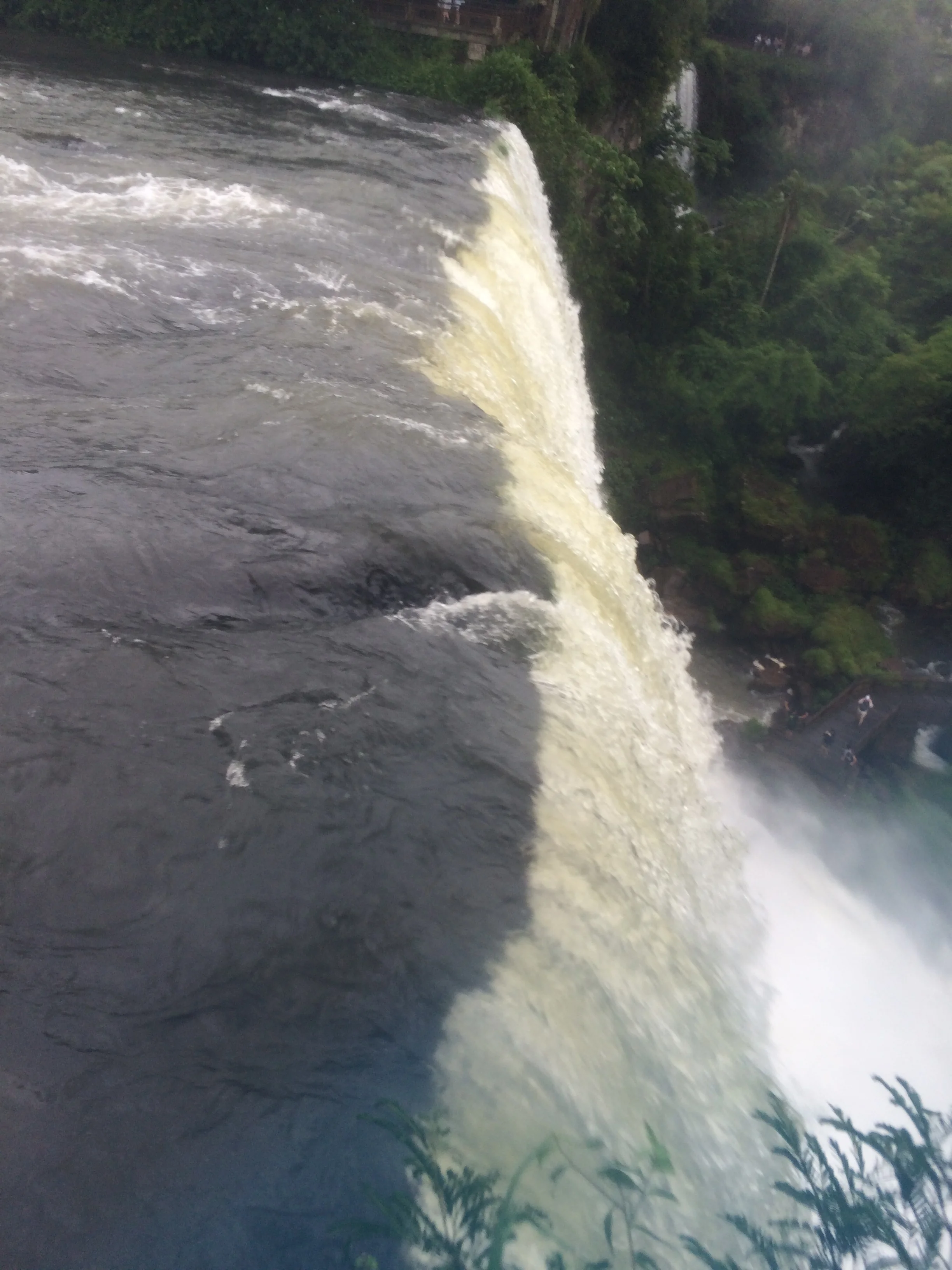
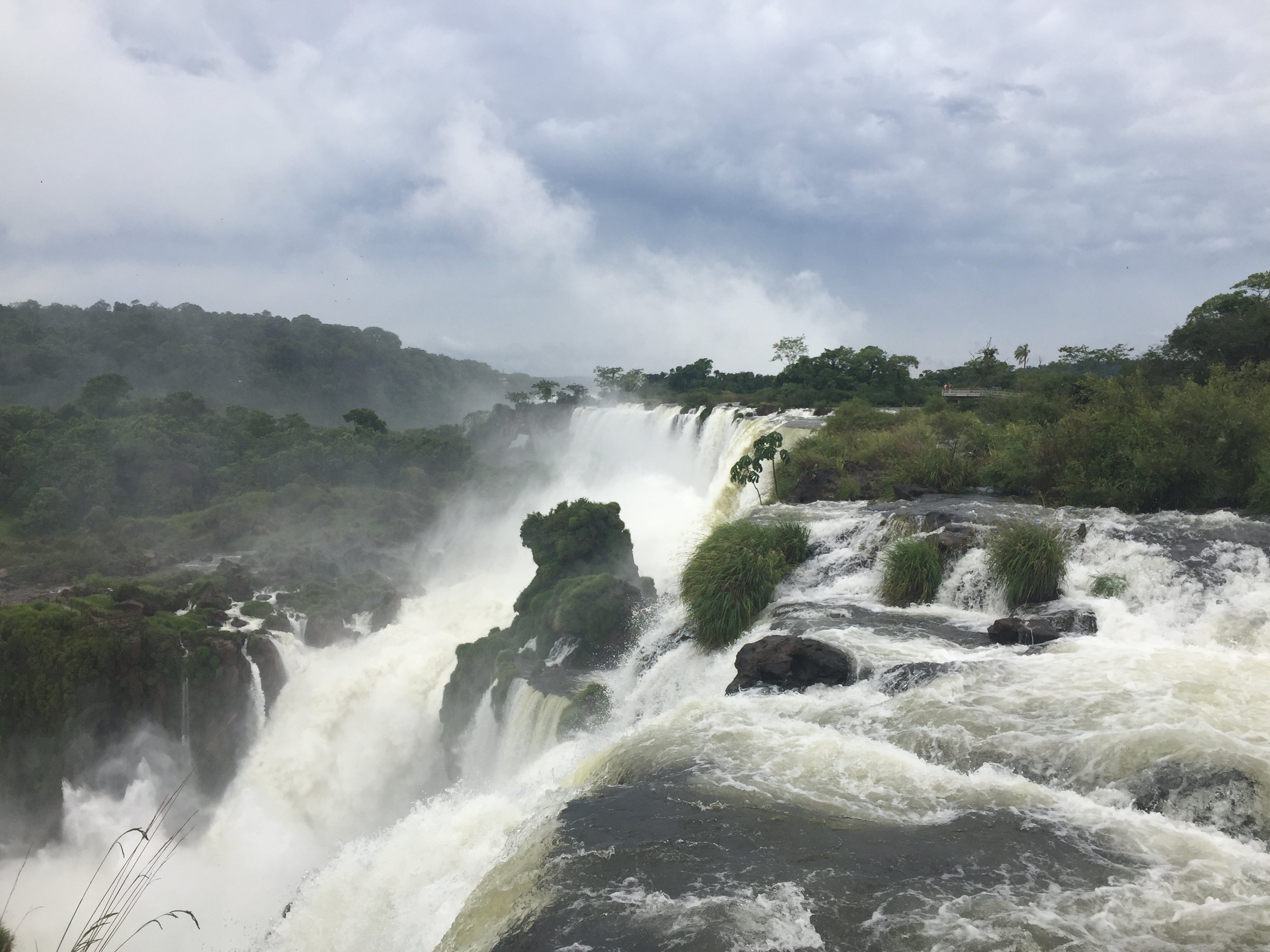
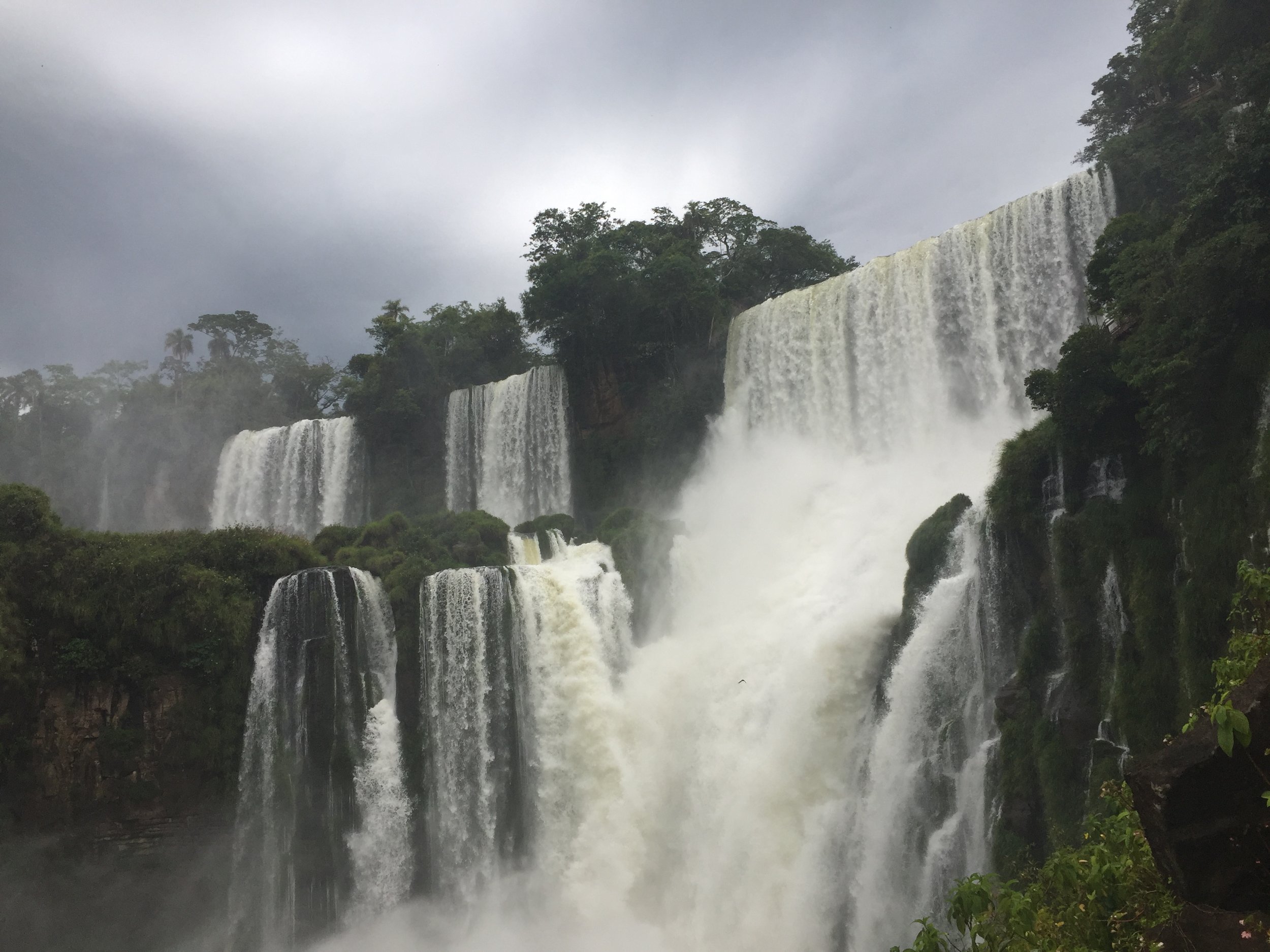
With our original plan of all day now being just 6 hours to explore this very large park we quickly made our way to the park train station to get to the far side of the park and what is known Garganta del Diablo (Devil’s Throat).  The train was nice and reminded us of the train at the Detroit Zoo complete with lots of small children.  After the train we have a long walk, and finally after 5 hours of travel we get our first site of the falls.  This spot is at the top of just one of the sites of falls, here the sound of the falls is so loud you cannot talk, the spray fills the air with mist.  See the pictures below

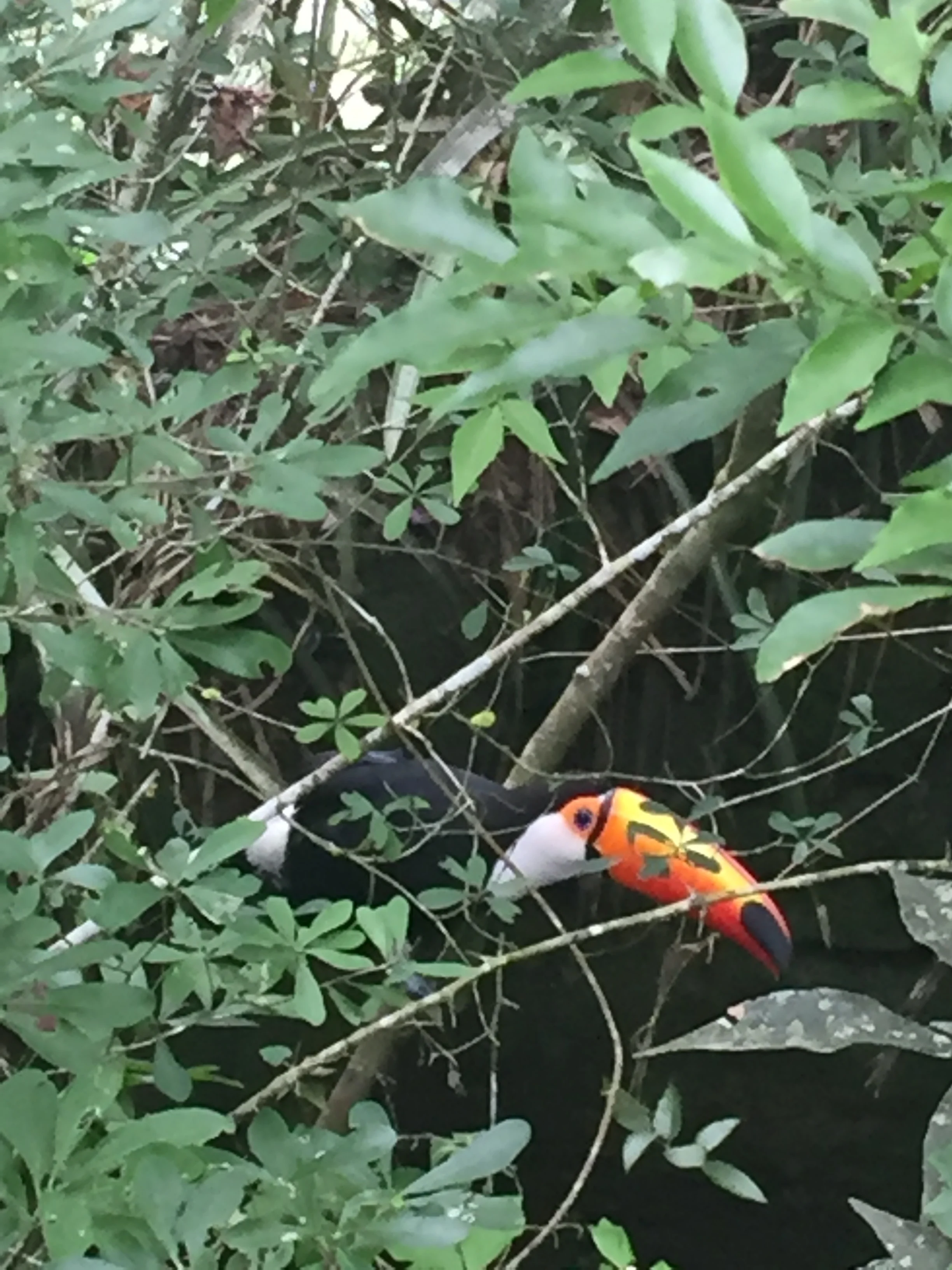
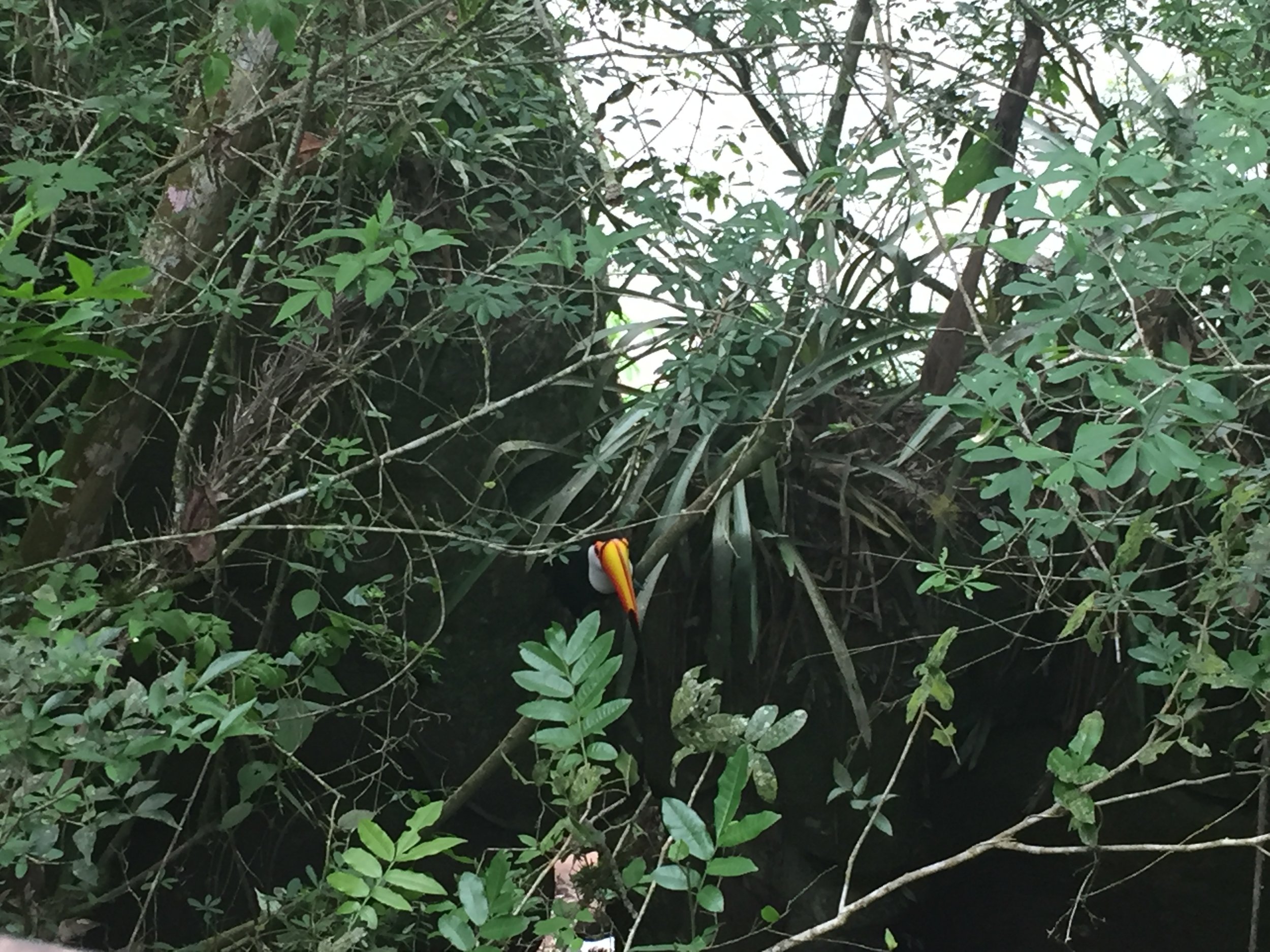
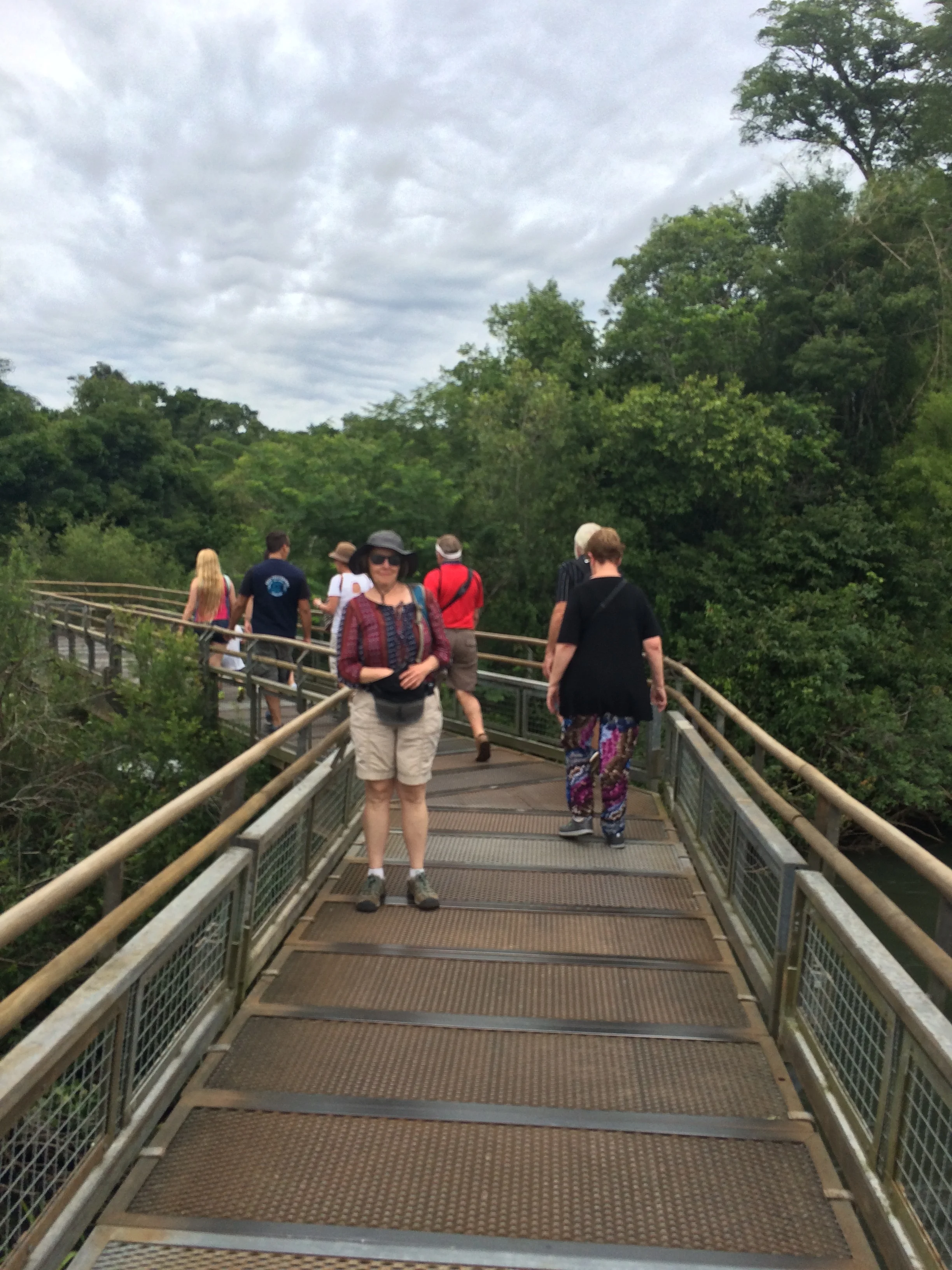
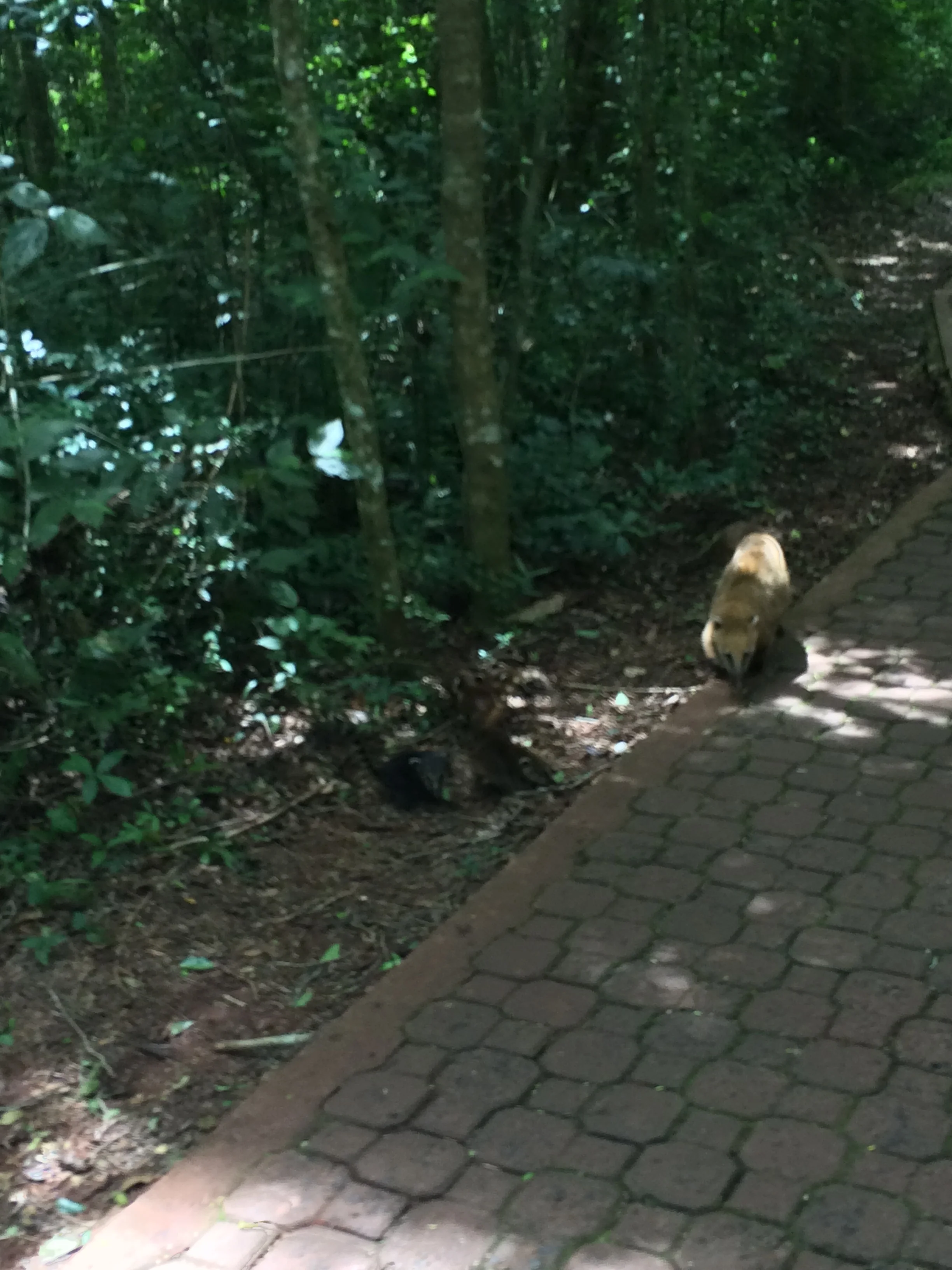
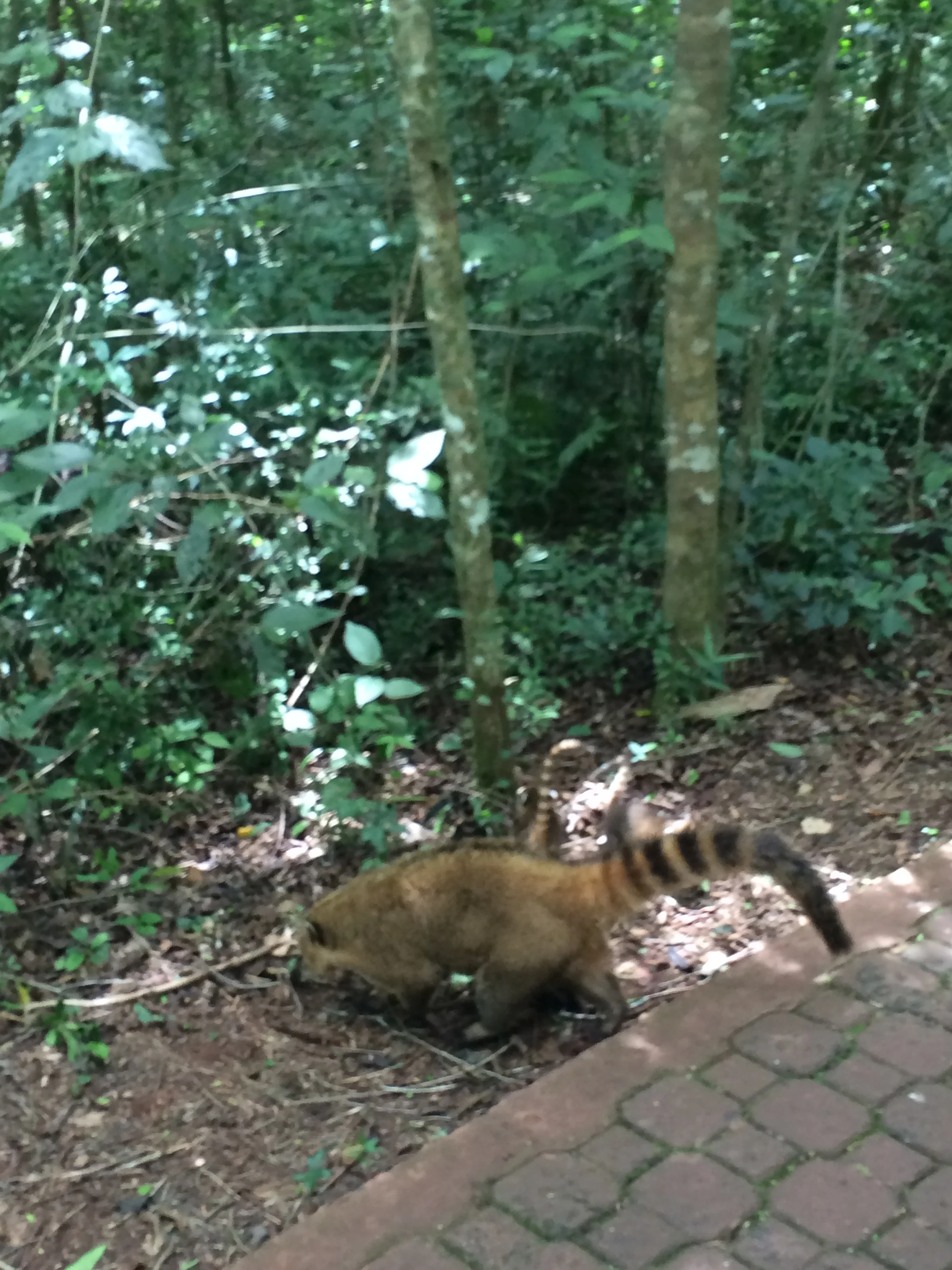
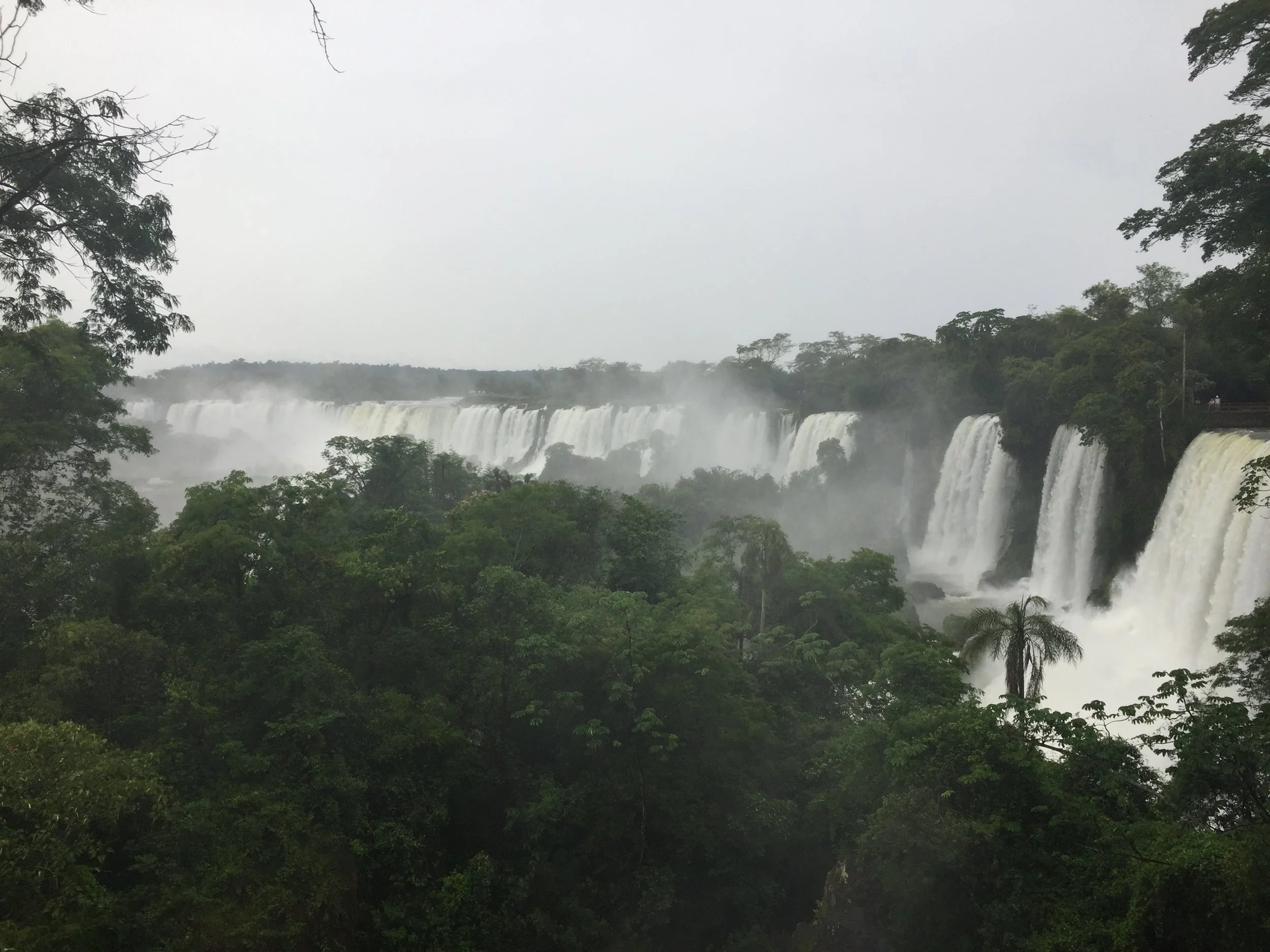
After the big shock of Devils Throat we slow down and plan our walking route.  The park is large and divided into sections, upper and lower falls. You follow metal walkways through a jungle type of forests with smaller falls and wildlife that includes Toucans, a strange raccoon type rodent named a Coati and howler monkeys, see some pictures of all below


The park offers boat rides under the falls for an additional cost.  We debated the ride and finally Frank stated he wanted to go, so off we went down 150 stairs to the boat launch

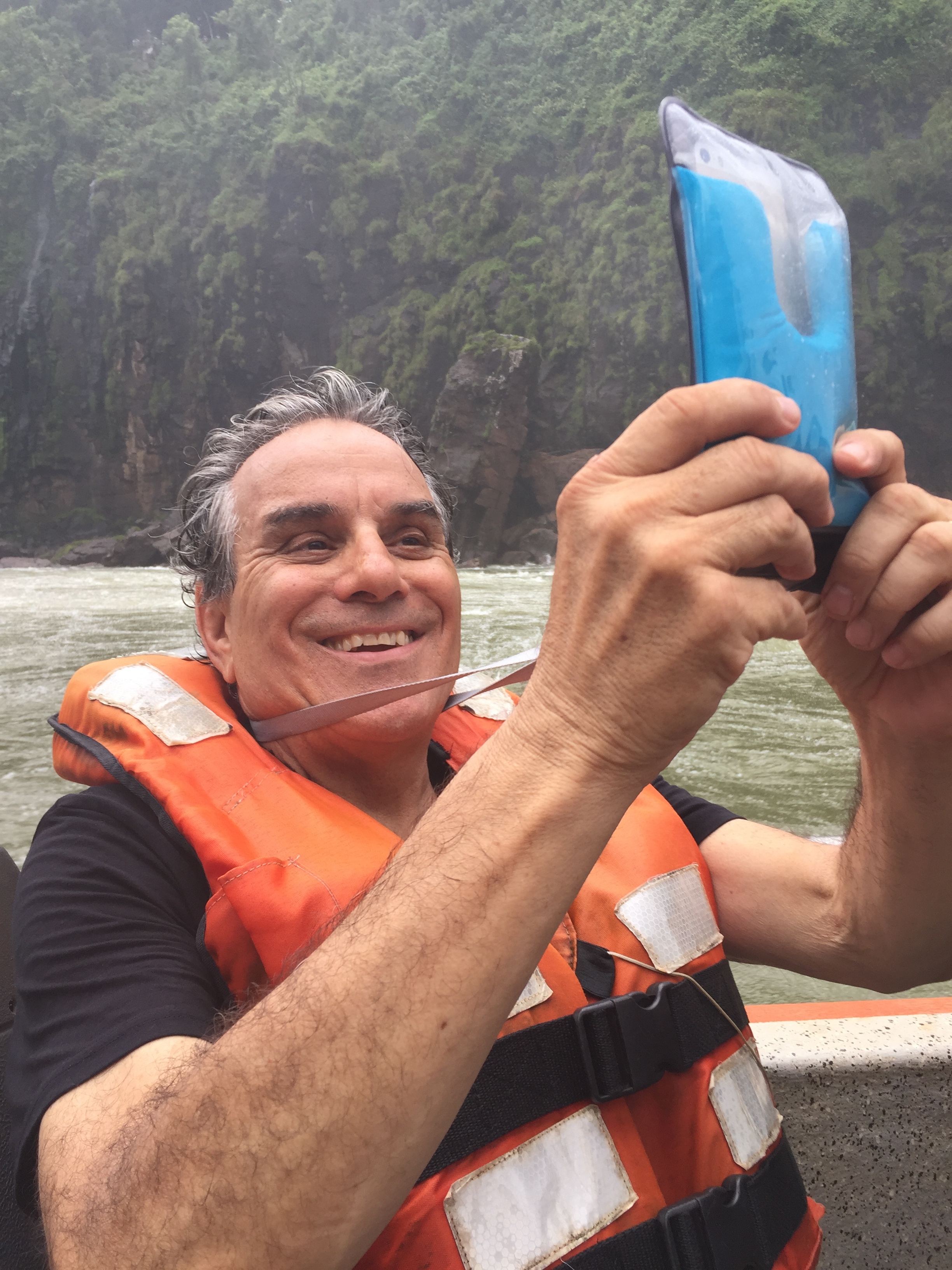
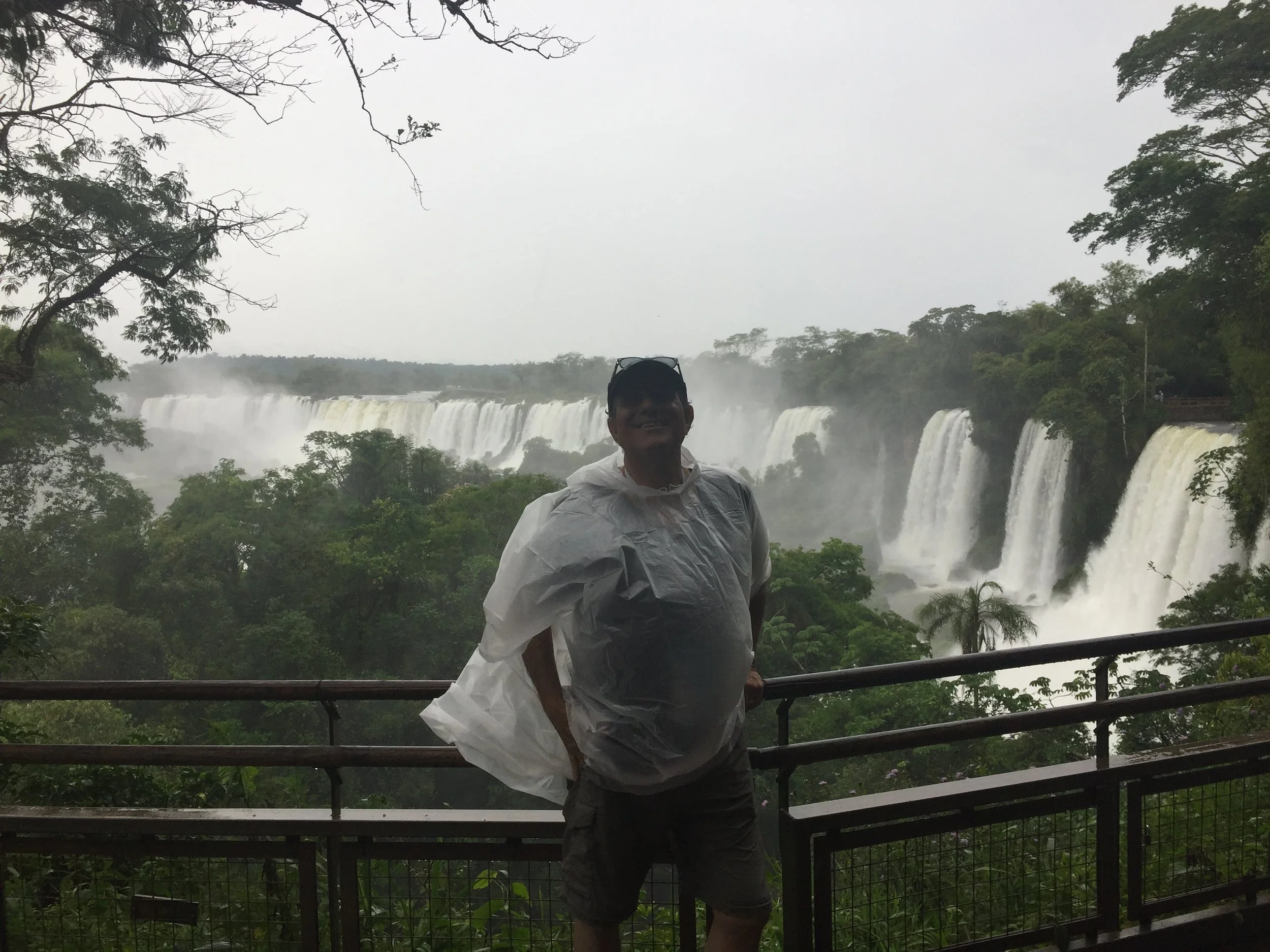
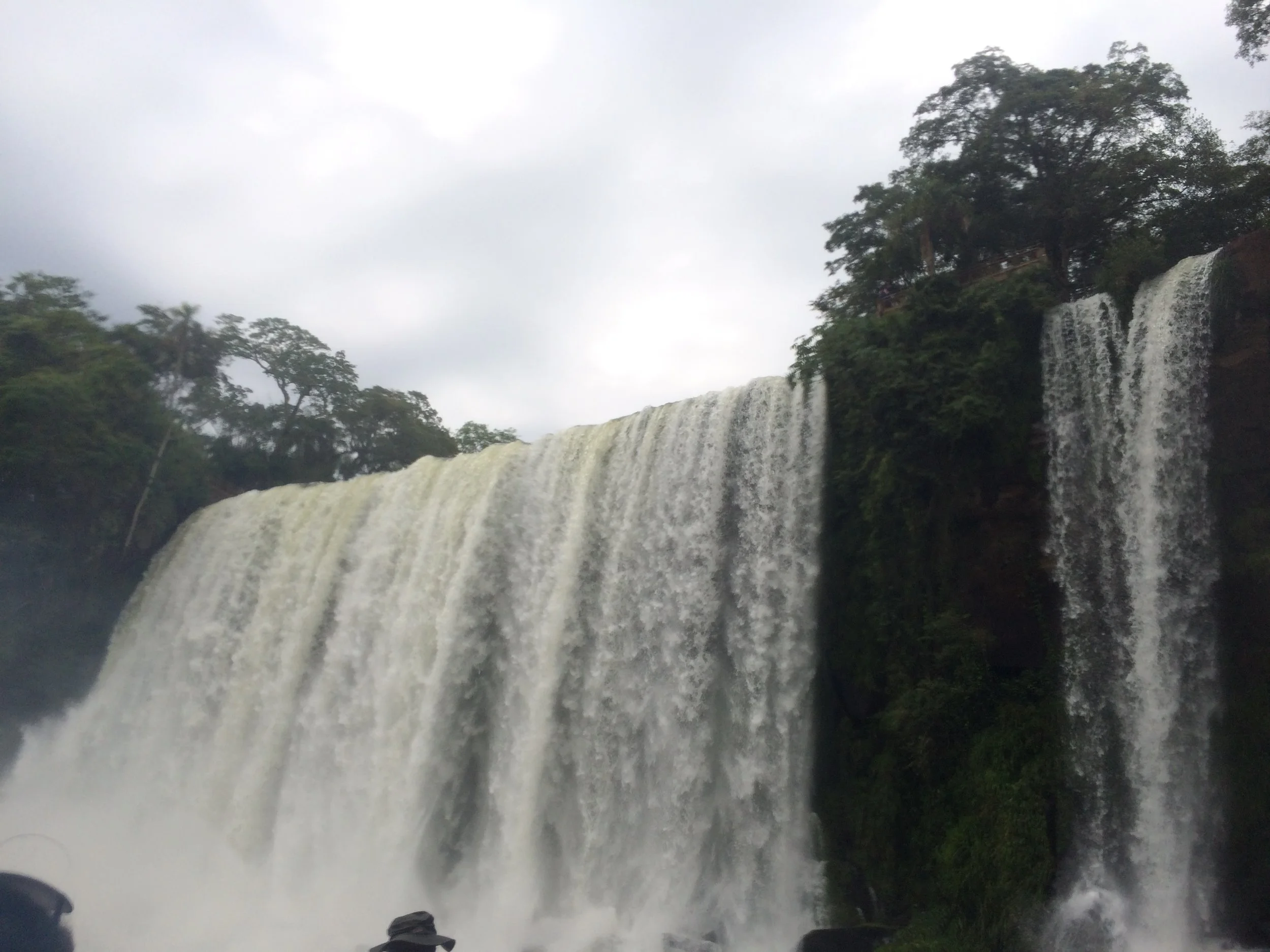
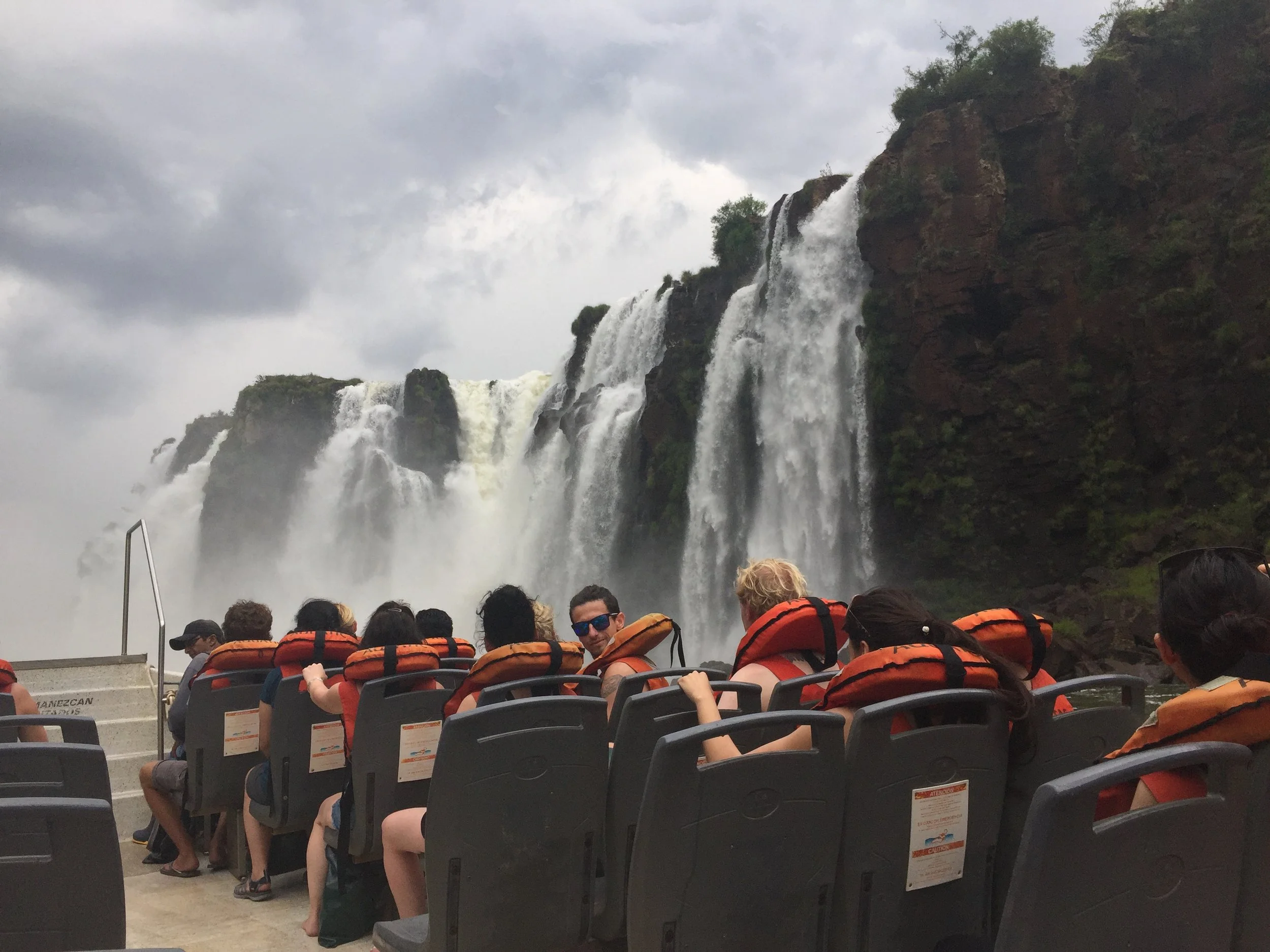
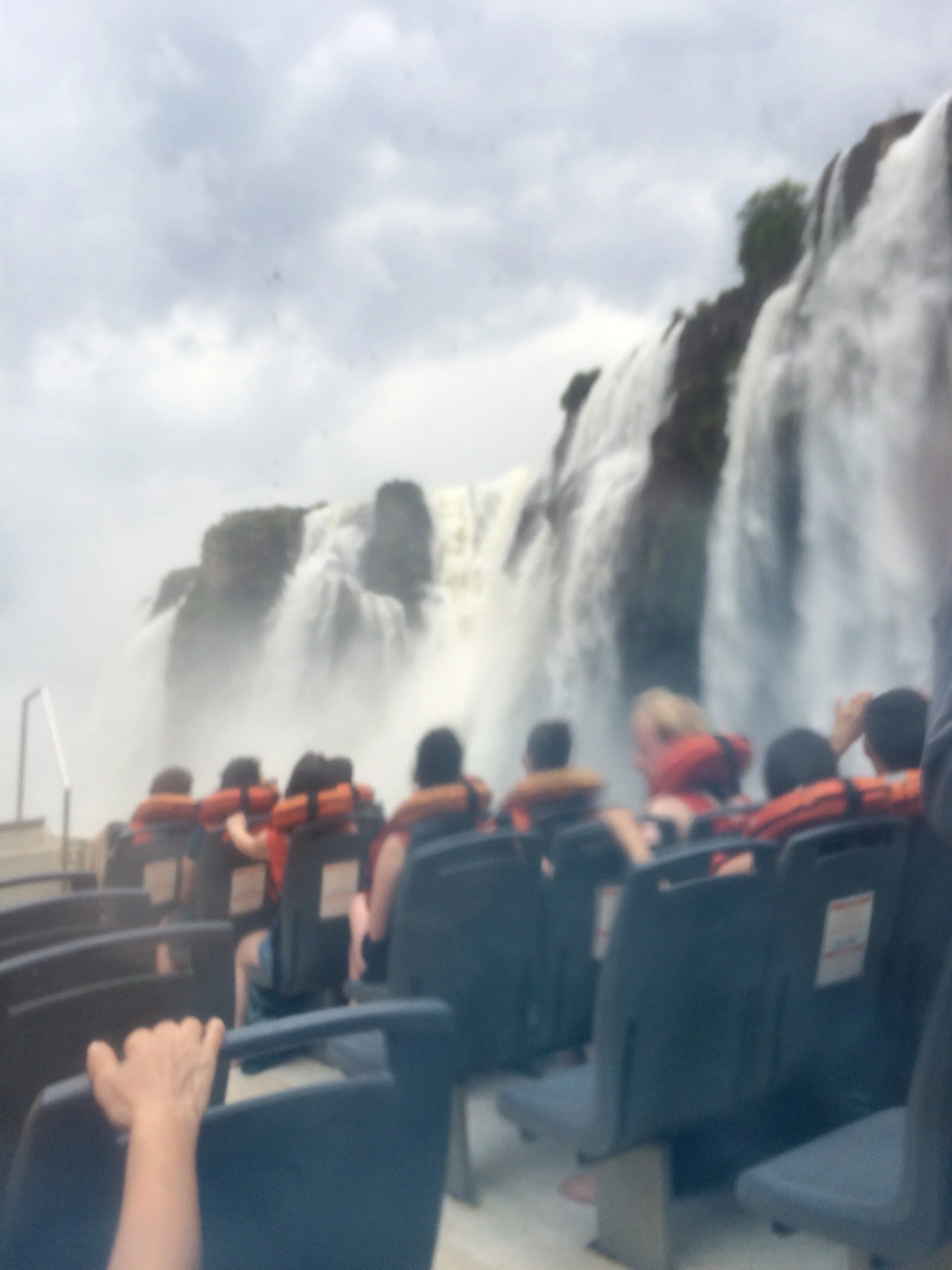
This boat ride is more of a thrill ride than a visual of the falls.  The boat takes you directly under two falls and spins around while thousands of gallons of water pour on top of you.  Frank loved it, I (Janet) hated it.  The photos below tell the story well. 

This is a picture of the boats from above before they get to the falls

When we emerged from the deluge it started pouring raining, almost like the ride never stopped.  After climbing out of the boat we finished our tour of the park with the aid of some rain ponchos, a hot subway sandwich and one specular site after another.

Great dinner after a hard day of buses, boats, rain and water falls

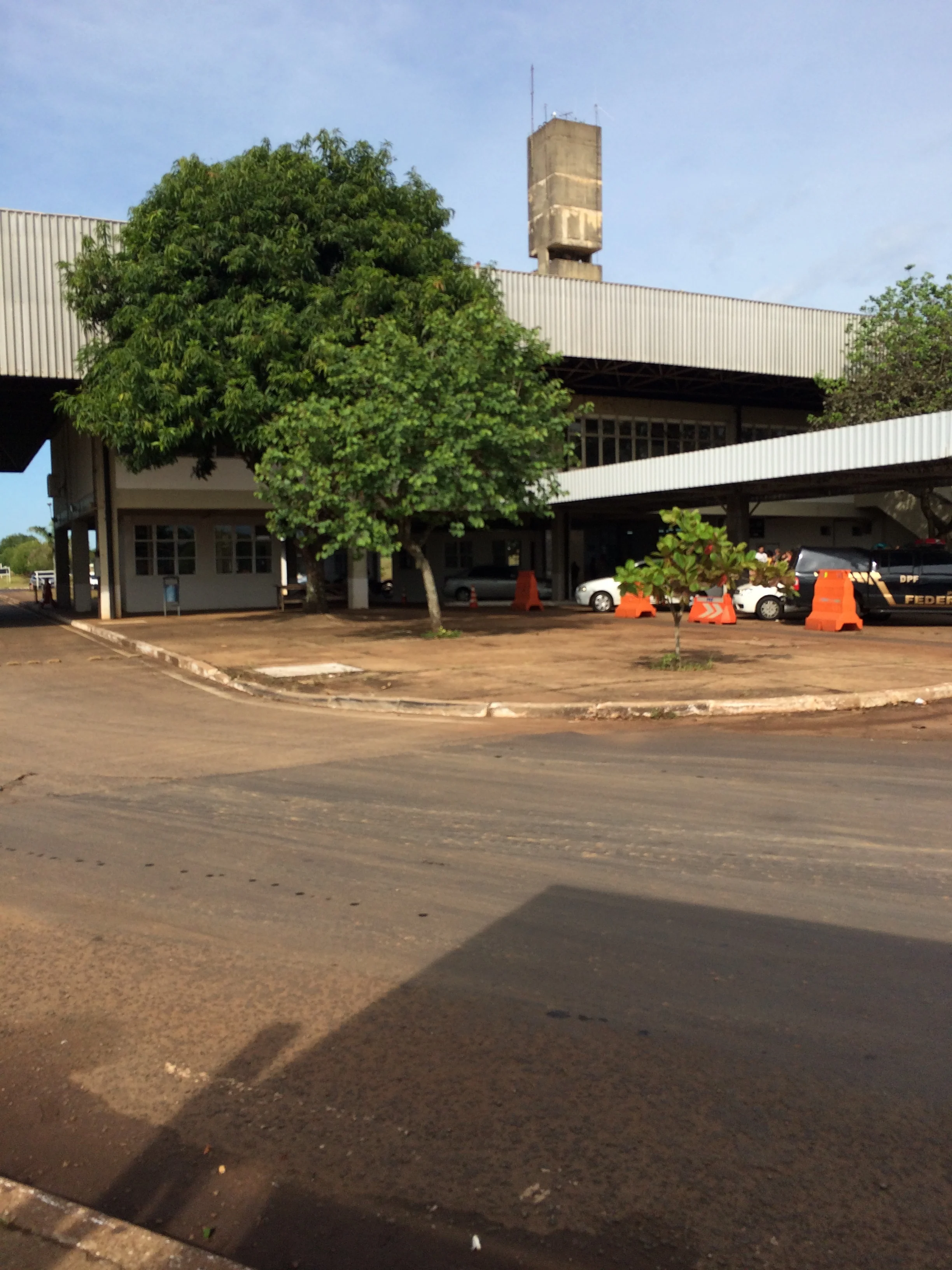
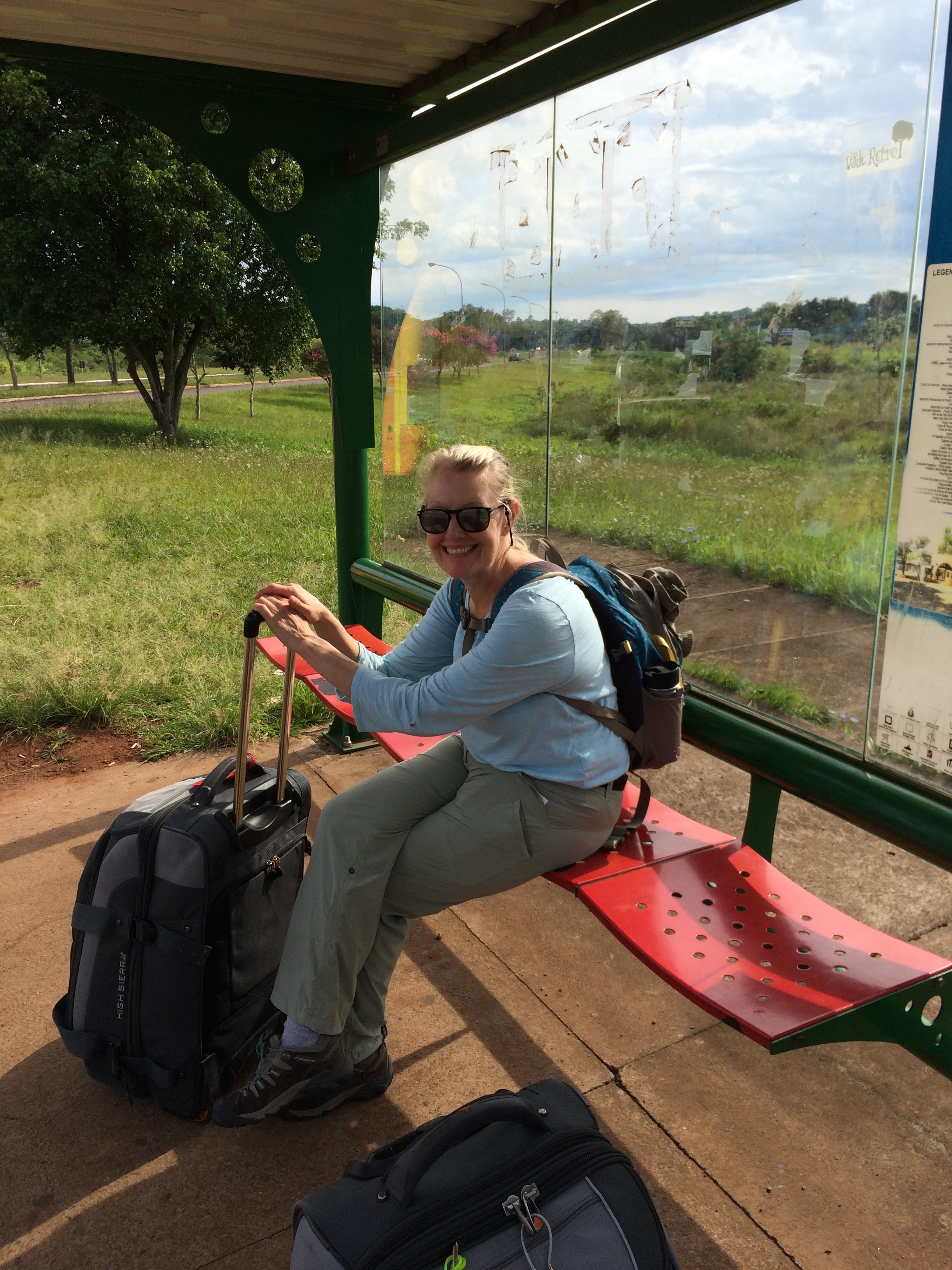
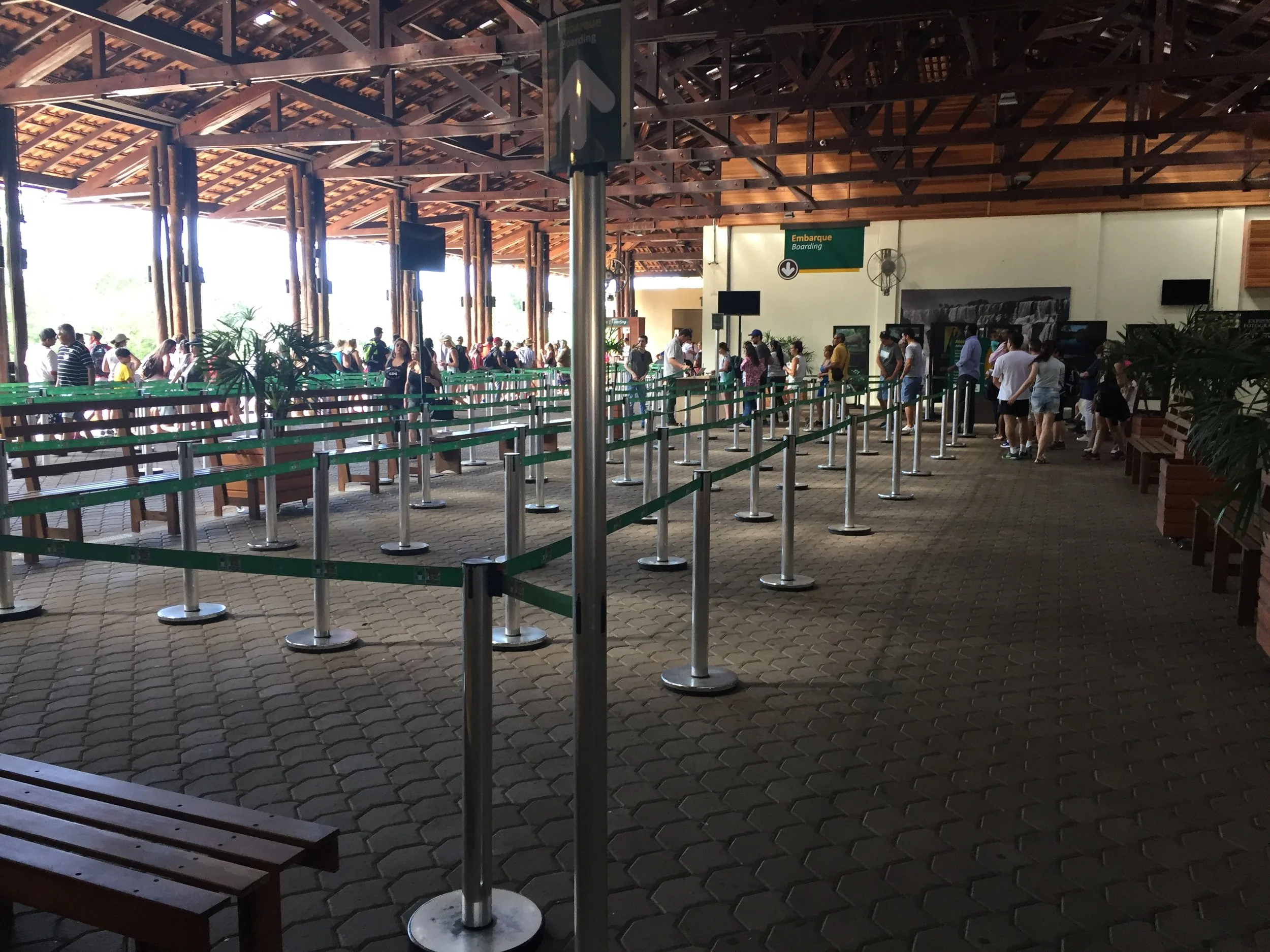
We woke early again on day two and packed our bags to travel to Brazil and the Brazilian side of the falls.  This time we got on the right bus, a local bus packed to standing with locals going to work in Brazil.  The Argentina exit border was easy and after loading back into the bus we got to the Brazil side and stopped, no one got out, but all looked at us and with hand jesters told us we needed to get out, we exited and the bus left us!  Not sure what to do, with no signs in English we spoke to agent told us to go to the customs office where we were processed quickly, we had obtained our Brazilian visa in July at a high cost and big hassle.  Next we were instructed to go to the bus stop and eventually a bus would come by to pick up.  Wow another weird border crossing.  It was hot, and strange.  Finally, we gave up on the bus and got a taxi to the local currency exchange depot and our hotel

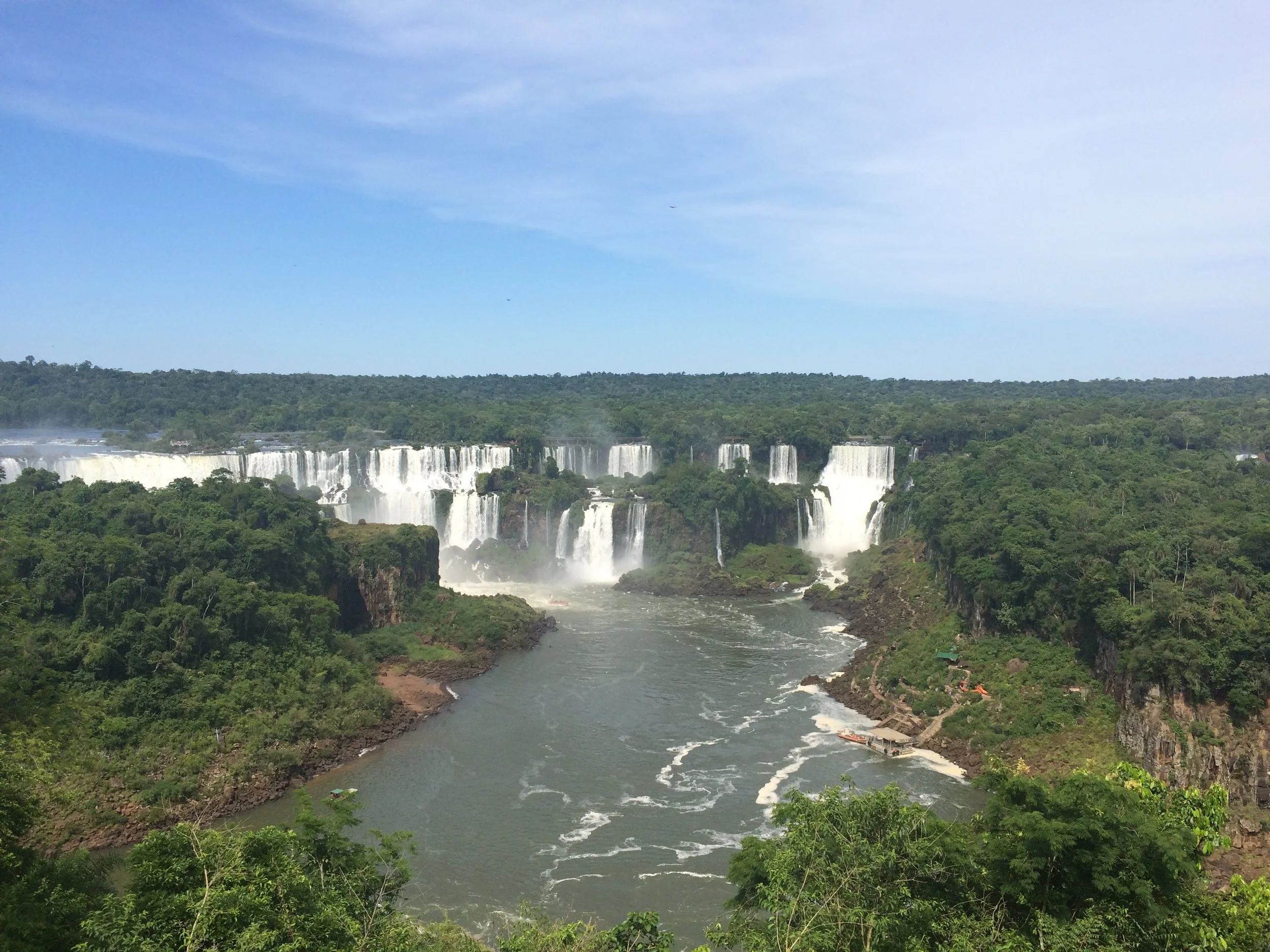
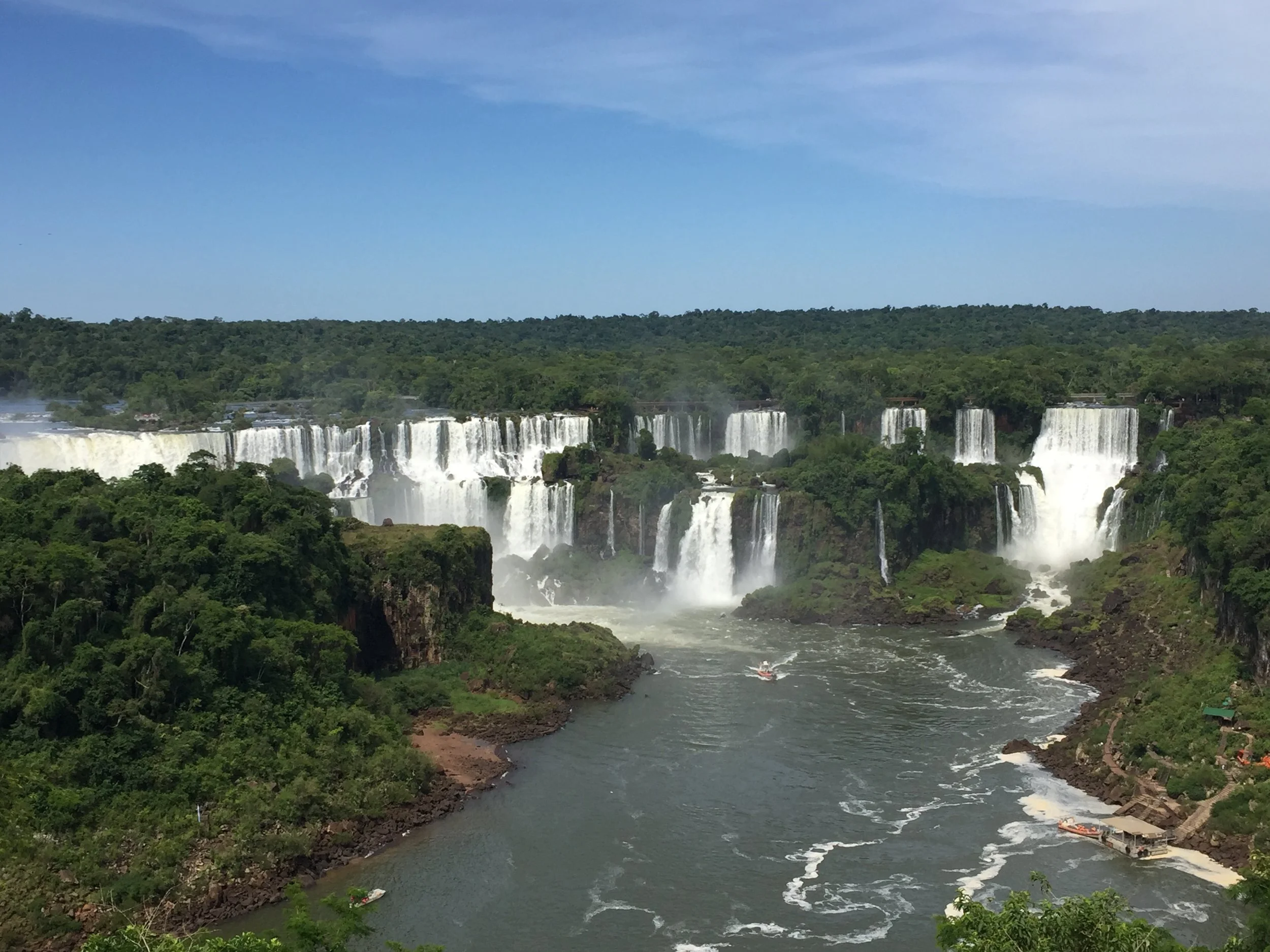
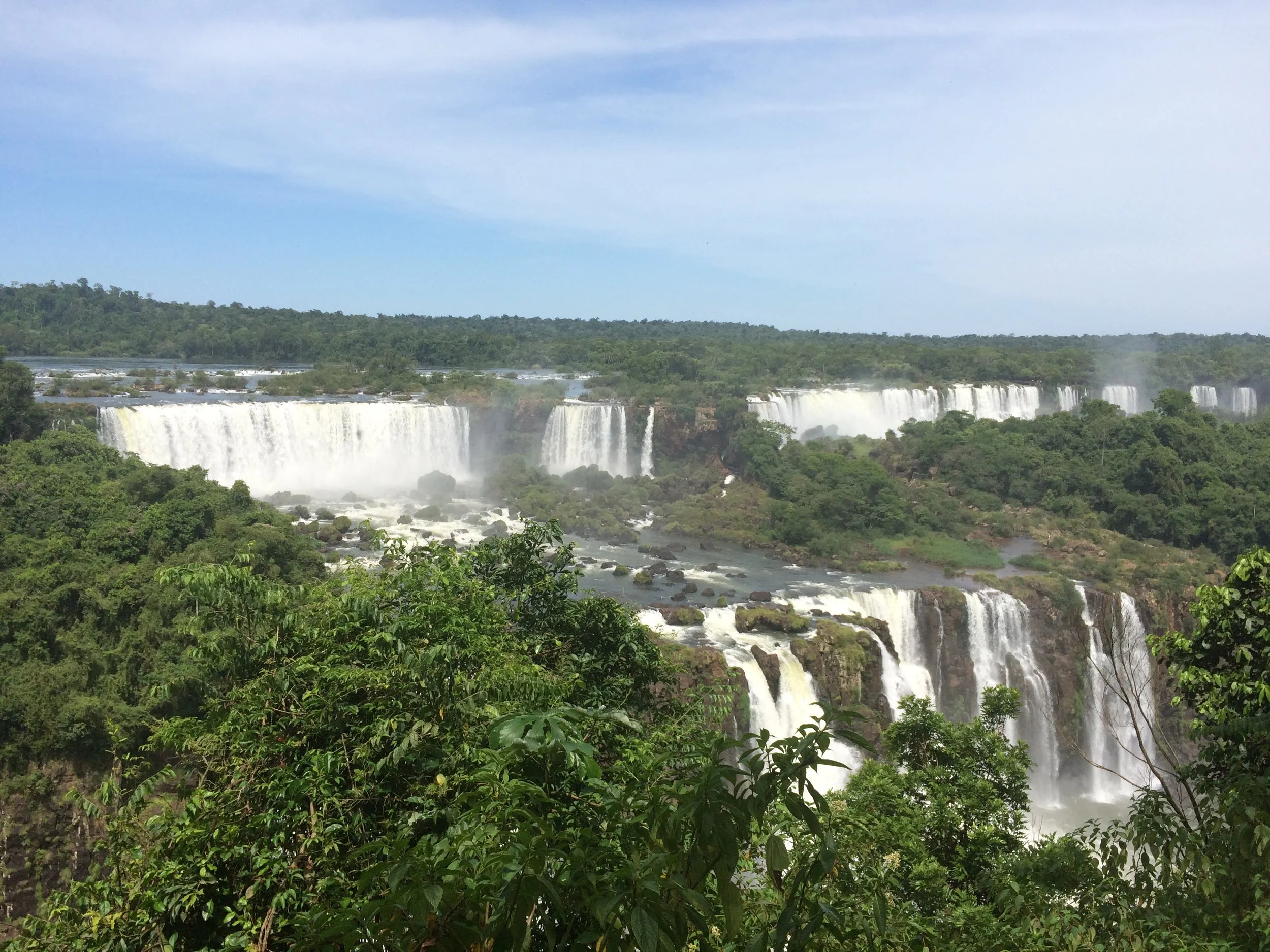
After dropping our bags, we are off again to the falls.  Our hotel is only 2 km from the entry to the park.  Unlike Argentina this entry was really nice with helpful people and clear instructions.  We got on a bus that took us to the trail entrance and right away more beauty.  This park is much smaller but you can see the full panorama view of the falls down a very well maintained path that eventually leads to an elevated platform.  Again see the photos.


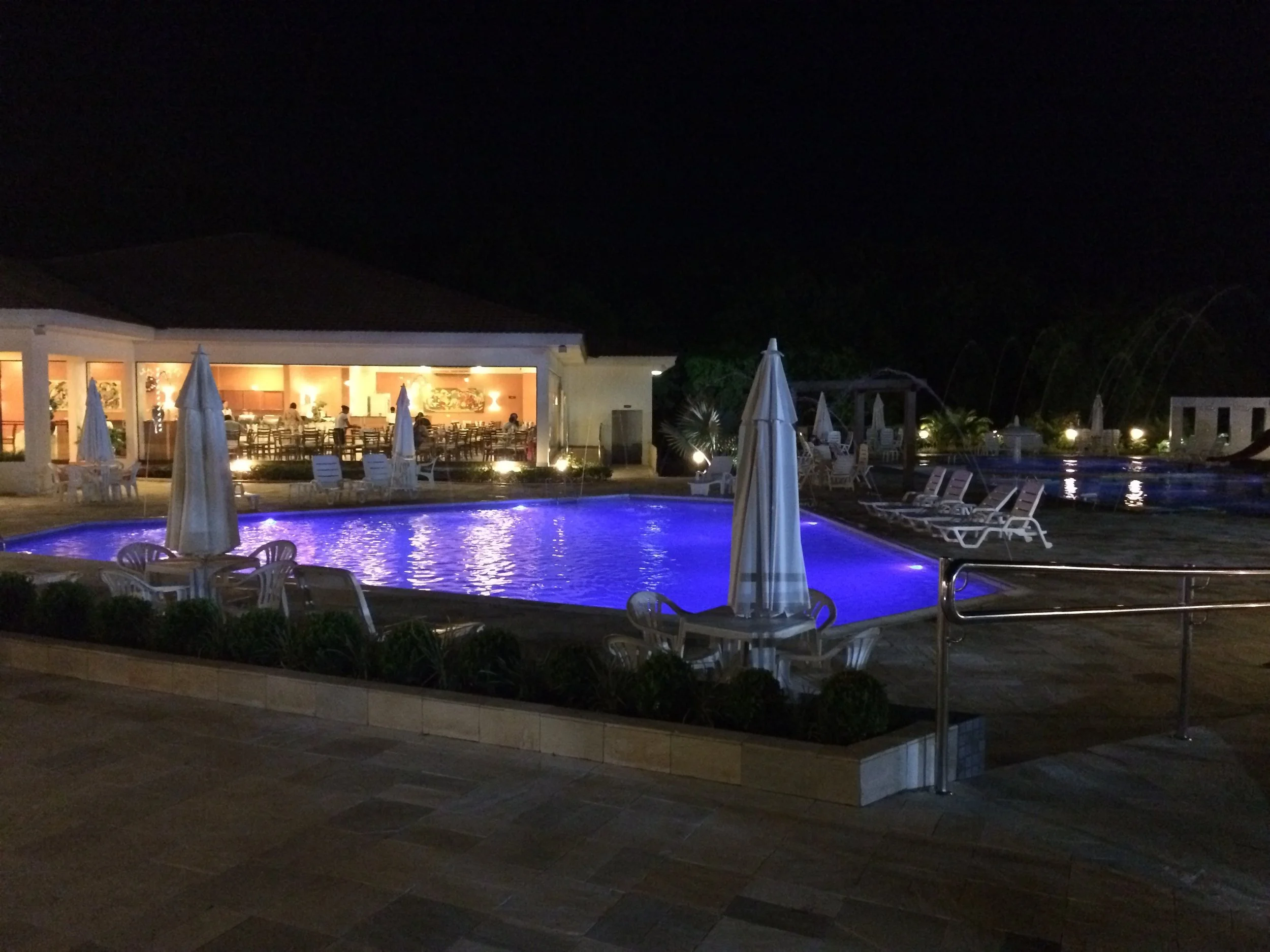
After lunch we returned to our hotel which as it turns out is a resort compete with pool and buffet dinner.  What a treat

Our final day started with rain again so after a relaxing buffet breakfast we head off to the airport and São Paulo.

Buenos Aires Argentina

Buenos Aires

This day was a big hassle. We got up early to take an early shuttle from the lodge at the Torres park entrance with the plan to take the early overland bus to Puerto Natales, Chile.  Then we had to catch another outgoing overland bus to our old stomping grounds in El Calafate, Argentina for a flight from there to Buenos Aires. Of course, when we get to the entrance at 9 am we find out that there are no buses running until 2 PM. Better planning would not have helped, since our air flight was the next day and we had to leave Chile and get back to the closest airport, that was in Argentina. We were not alone. Some fellow gringo backpackers from San Francisco and Chicago, in-laws, were also stuck. They had prearranged tickets, but their bus was also coming in the afternoon. At first we were ticked off by the wait, but we all killed time sharing stories and adventures and slight personal histories. The husband from Chicago who I dubbed “Ironman” had twisted his ankle and could not wear his normal boots as there was too much pressure on the sore spot. Instead, he wore flip flops up the trail to the Towers. That was unbelievably crazy to me, but his group confirmed it.  Also, I had actually observed a trekker walking barefoot at Fitz Roy, so it is not impossible. Our little group had a nice time hanging together and then we ended up taking the same bus back to Puerto Natales, Chile for one night. We stayed at the same Hostel Morocho, and left early for the bus that would take us to El Calafate, Argentina by mid-day. We arrived in El Calafate, and simply dragged our luggage around to our favorite restaurant for lunch. They called us a cab to take us to the Airport which left promptly at 7 pm.

Lunch in El Calafate

Breakfast on the balcony of our Airbnb

Breakfast on the balcony of our Airbnb

Finally, we arrive in Buenos Aires by 10 PM. We caught a cab to our Airbnb in the Polermo District of BA. We liked it. This 3rd floor modern Airbnb was a one-bedroom apt. with 1.5 baths, nice kitchen, laundry on premises, and good security. Pablo met us at 11 PM to let us in and called once again the next day to check up. He left us his SUBE card which gives access to all busses and subways which we then used often to get around.

Buenos Aires is a mega, world class city. It is said to be the top tourist city in South America. It is multicultural from 150 years of inviting immigration, raising the population to 13 million people who live in the metro area. The largest ethnic group is actually Italian, a lot of Spanish and Germans too, with the largest Jewish population in South America, and a good smattering of Asians.

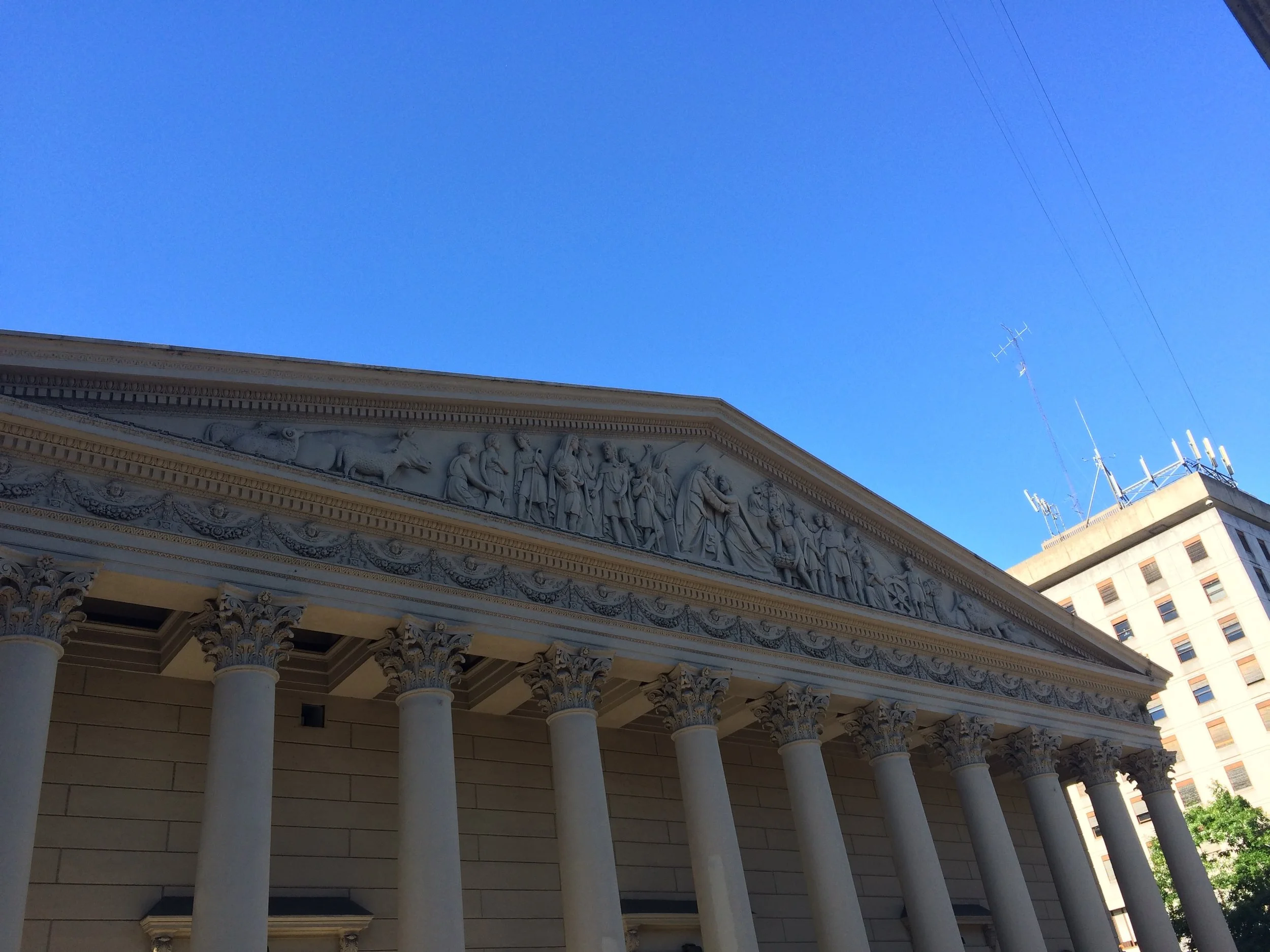
The Cathedral

The Cathedral

FullSizeRender.jpg

BA is the Home of Pope Francis and we had a chance to walk in to his Cathedral.  Also, we were lightheartedly shown a poster of the Pope proudly displayed at his barber shop, “We cut the Pope’s Hair”. 

Our usual mode of operation is to discover the city with walking tours. We checked the map.  

For walking tour No.1 we were met at the steps of the world renowned Opera House. We decided to take the bus across town. When we got to the bus stop, it just was not clear as to which bus numbered route to take. We asked different people who tried to help and we would cross the street to another stop for pickup. Wrong again. Before we made any fatal mistake we changed our tactics and decided to take the subway. We were at the entrance, we had the SUBE card and a map. We knew we had to get to the Opera House. We checked the board for the correct line and jumped on. The SUBE is modern, clean and fast. We arrived on time. 

FullSizeRender.jpg

Buenos Aires has a mixture of architecture, but in its post-colonial days wanted to emulate France.  Its government buildings were in the French provincial style, as were many of its first commercial buildings. BA was sometimes referred to as the Paris of South America. Later the architecture emulated New York with Empire State building clones.  Today there is a combination of the French style and then the modern touch. It is eclectic and there are not always smooth transitions.  

IMG_4937.JPG
FullSizeRender.jpg

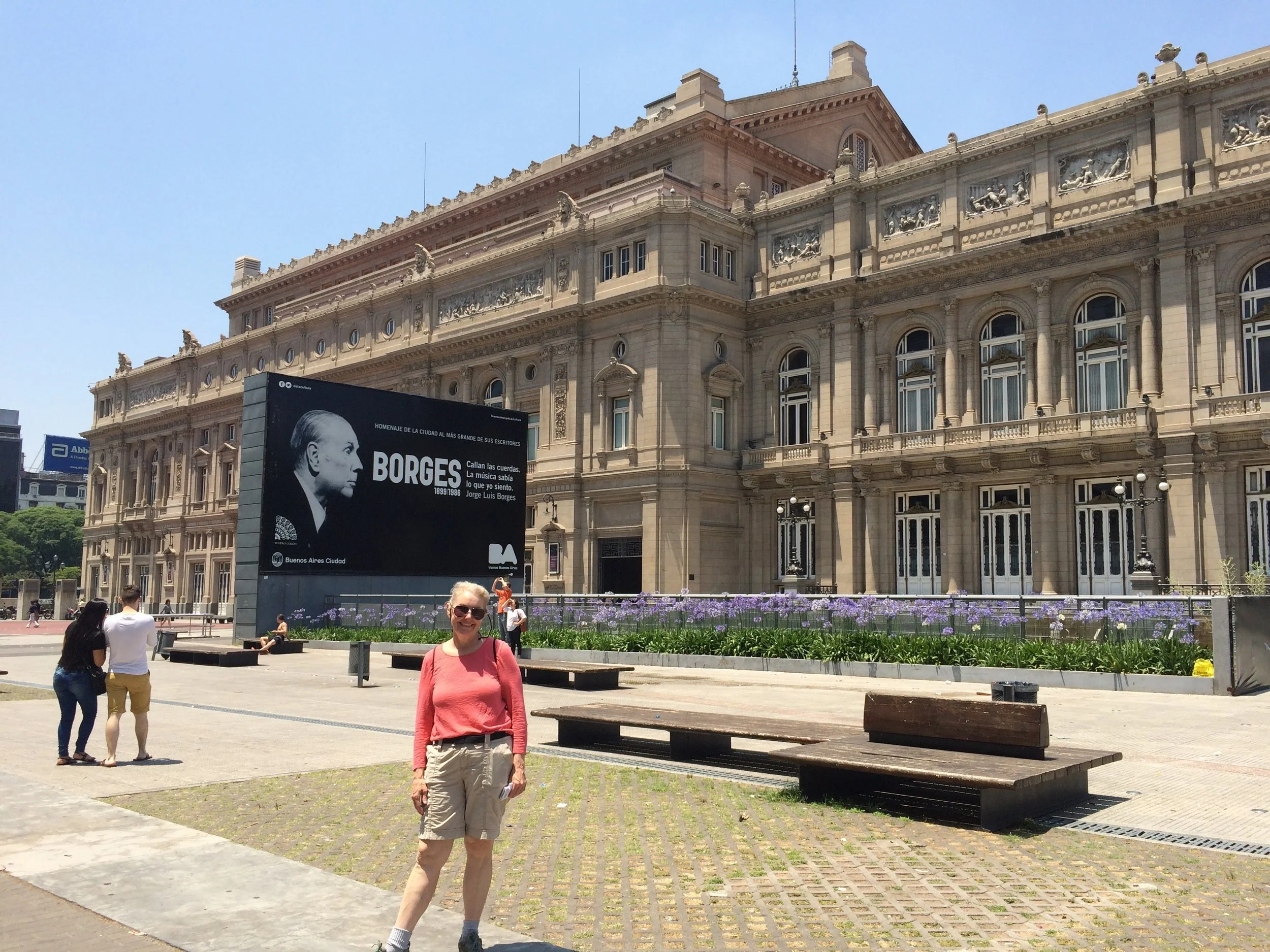
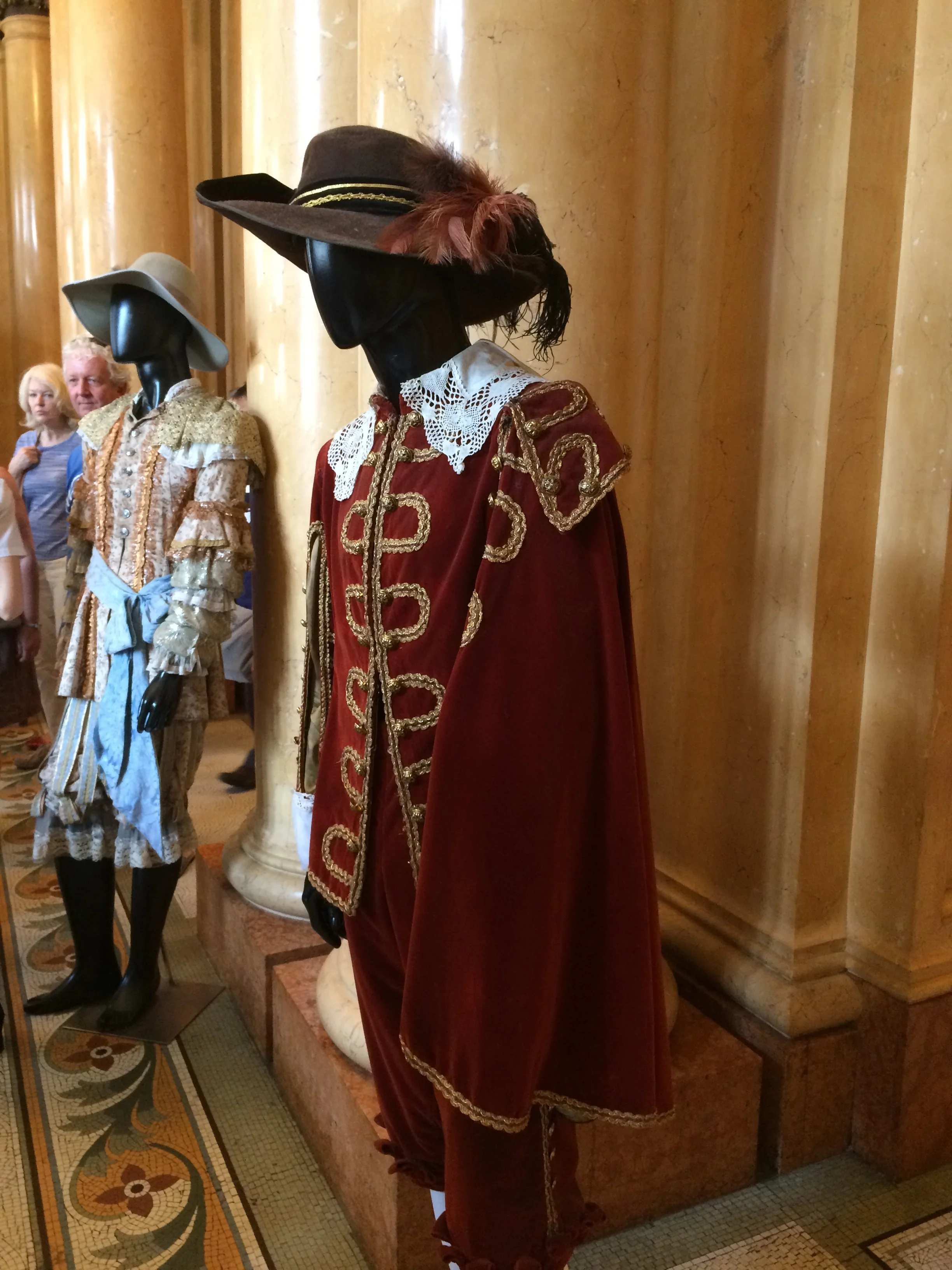
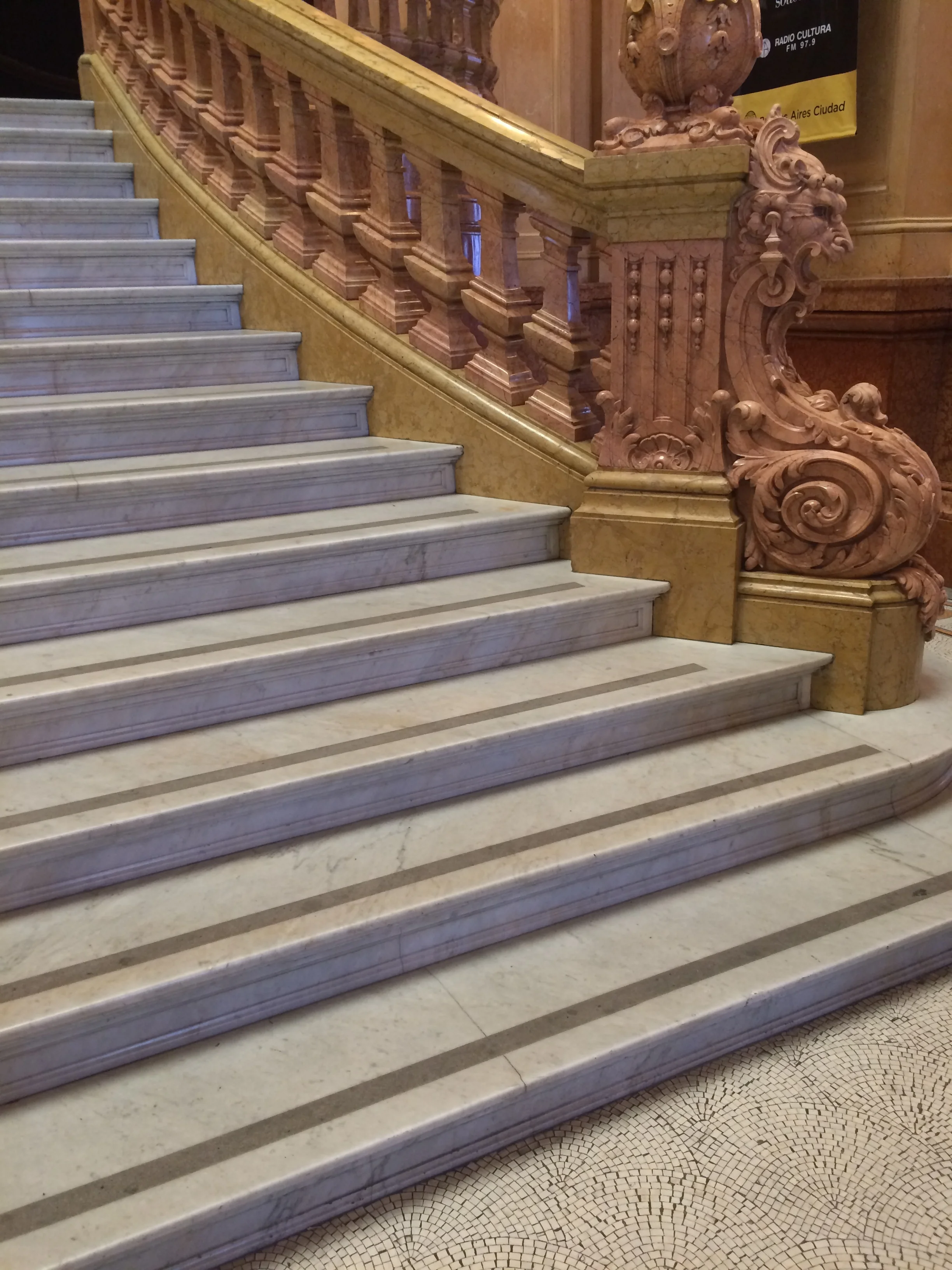
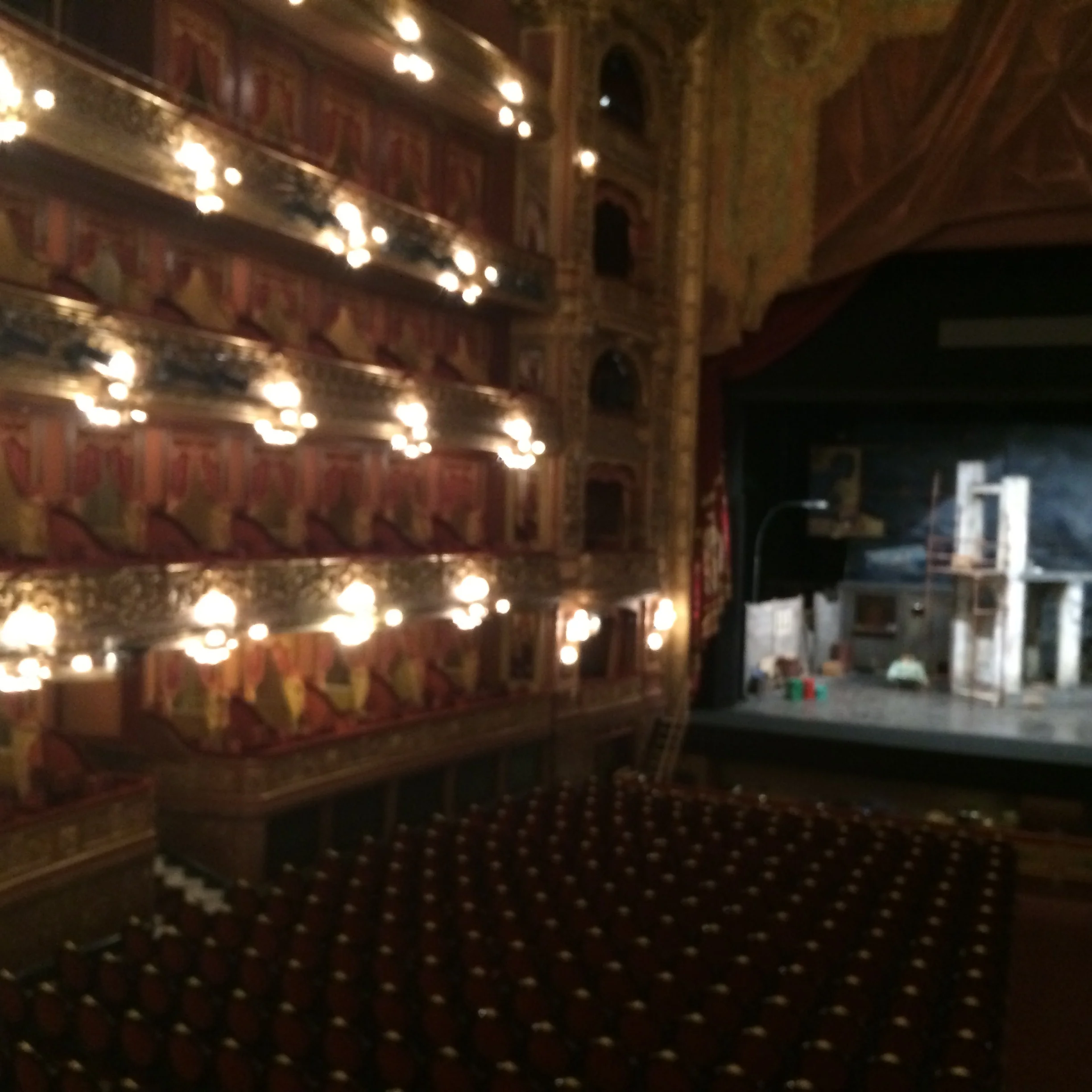
The Opera House is the pride of BA and Argentina and was designed by Italian Architects. The building materials were imported from Europe and no expense was spared with beautiful murals, gold leaf paint and stained glass.  At this time in history Argentina had become the 5th richest country in the world and wanted to show off it new prosperity. The Opera house had perfect acoustics within its 3 deck seating auditorium. The lower levels had full workshops to create ward robes and scenery. As well as Opera, there is Ballet and Orchestra presentations. Check out the photos in the gallery below

FullSizeRender.jpg


The Pink Palace is the residence of the President. It was designed in the French style. The Baine of S. America is the internet. Tours of the palace must be made on line and by the time we finished the Opera House tour, we had little time or opportunity to get connected. As well, English speaking tours are only available once a day at 2 pm, not like the multiple Spanish tours.   

This was an unfortunate miss.

FullSizeRender.jpg

The city has very large boulevards which move traffic efficiently and add a touch of elegance. The boulevards lead to the various plazas around the city commemorating the immigrants and countries that have affected BA. There are plazas for Italians, British, French, Germans, Irish, etc. There is also a tall slender obelisk that looks kind of like Washington Monument. It is called “Obelisk”.  It was these type of design foibles that had our guide making fun of the City Planners of old and new. He was critical that BA planners where looking backwards 200 years for French and European styles and not looking ahead as a new world Country. Our guide as a person who has lived through military coups and erratic inflation was somewhat militant about the history of Argentina and the many governments.

One building for which he was proud arose from the large, multi-story Eva Peron facial sculpture on the side of this building. The Peron’s, the President and his wife Eva Peron, where both beloved and hated by the people of Argentina. As usual, political winds are fickle. Nevertheless, the metal sculpture of Eva Peron is dramatic. 

The next day we took Walking Tour No.2

As is often the case in South America, there are public protests in the government office area of Buenos Aires.

We observed but avoided the protesters that had placards and banners.  Our second Guide, was also somewhat militant and political. He also told great stories.


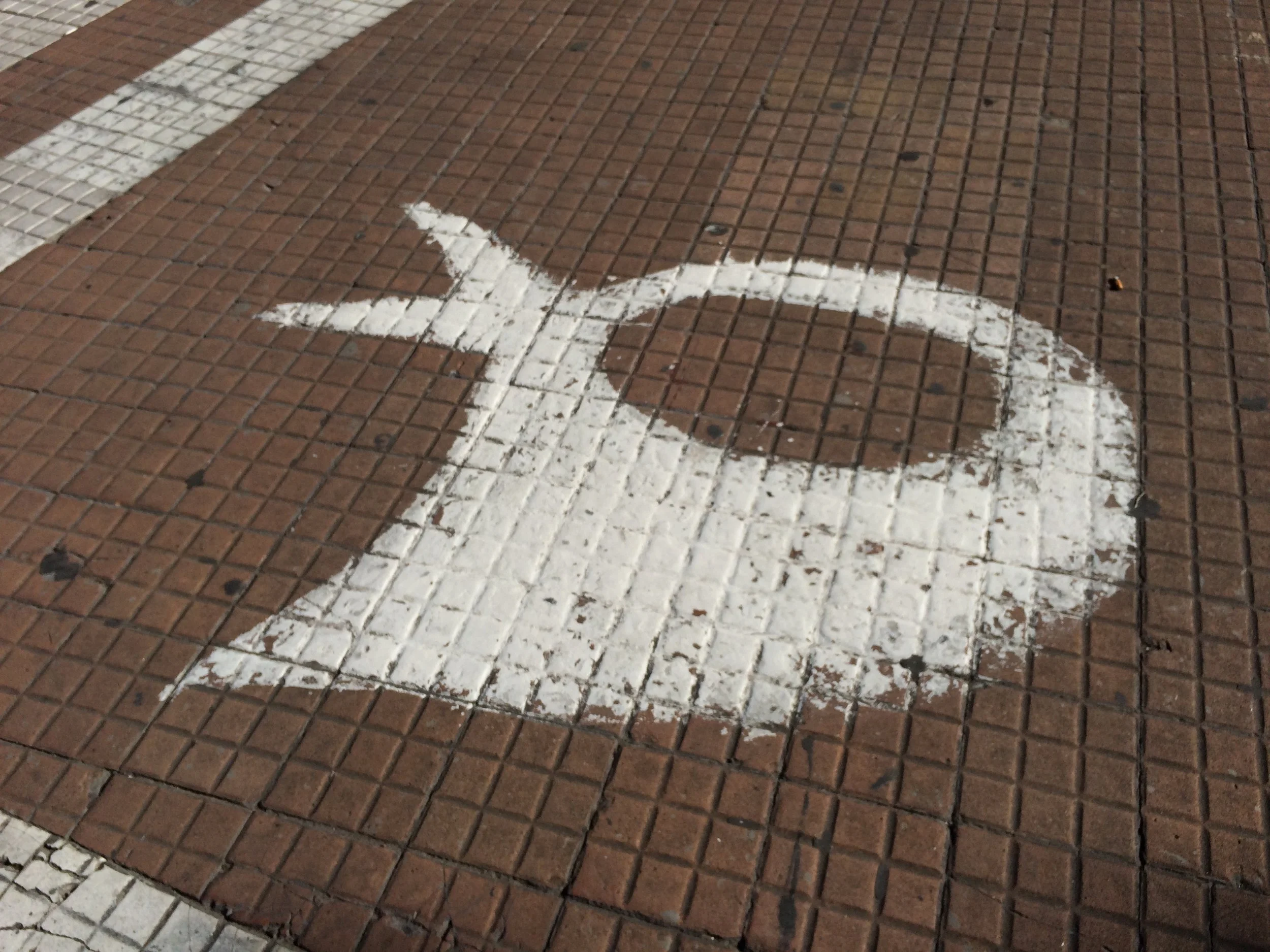
In the center square near the Palace, there is a Plaza which has odd white paintings on the ground. These figures represent white bandanas. During the last recent military government of AR, many persons where rounded up and arrested for sedition. They were never heard from again and the government simply denied that any one was missing or that such persons existed. The government also prohibited demonstrations. But what the government could not or would not do was arrest the mothers wearing white bandanas marching in a quiet circle around the Plaza in mourning for their lost children.    

The white bandanas 

The white bandanas 

Another most interesting story was about the challenge and competition between 3 wealthy Buenos Aires women. The first two women were widows from old money and very wealthy. They would compete for prestige in the community, and the best way to do that was support the Catholic Church with large offerings. The richest and most prestige woman had a son who fell in love with an immigrant’s daughter. She would not allow this relationship and threatened to disinherit the son. Here, money was thicker than love and the son left for Spain. Her son now protected, the women continued to donate and gave sufficient amounts to fund the building of a Cathedral for all to see and admire. The immigrant father was an industrious man and had been given the keen advise to buy as much “barb wire” fencing as he could. In those days the government’s immigration policy allowed man to keep as much land as they could fence. The man became very wealthy and his daughter benefited. The daughter also kept grudges. Near the time of completion of the widow’s Cathedral, the immigrant’s daughter purchased all the surrounding land and had large office buildings built all around the perimeter of the church. The view was blocked. Now you can only see the front to the Cathedral when walking on the narrow street named” Corina Kavanagh”!  A true story.     

The narrow view

Finally, the guide took us to the former site of the Embassy of Israel which had been bombed. To his regret, the authorities had never completed a satisfactory investigation into this terrorist act. The site is now a nondescript concrete park.


Eva Peron Burial site

Finally, the guide took us to the Cementerio de la Rocoleta of Buenos Aires. The relatively small site has rows and rows of above ground mausoleum that where designed and crafted by some of the world’s great renaissance sculptors. As well, this was the location of the Eva Peron burial site, which was discreetly part of her family’s burial structure.  Adverse politicians had caused her body to be interned at many different location and then finally come to rest here. The public, however, did not forget her and showed their respect.  

FullSizeRender.jpg
IMG_4913.JPG
FullSizeRender.jpg

Shopping street San Francisco Ave.

That afternoon, we had an opportunity to walk San Francisco Ave. in the famous Recoleta District and do some window shopping and a little actual shopping. We also walked to the Polo Grounds to buy our tickets for the weekend semifinal championships. We wanted to do something unusual in BA. Unfortunately, there was no Opera House productions scheduled during our timetable, so we thought “SPORTS”.

IMG_2828.JPG
IMG_5186.JPG
FullSizeRender.jpg

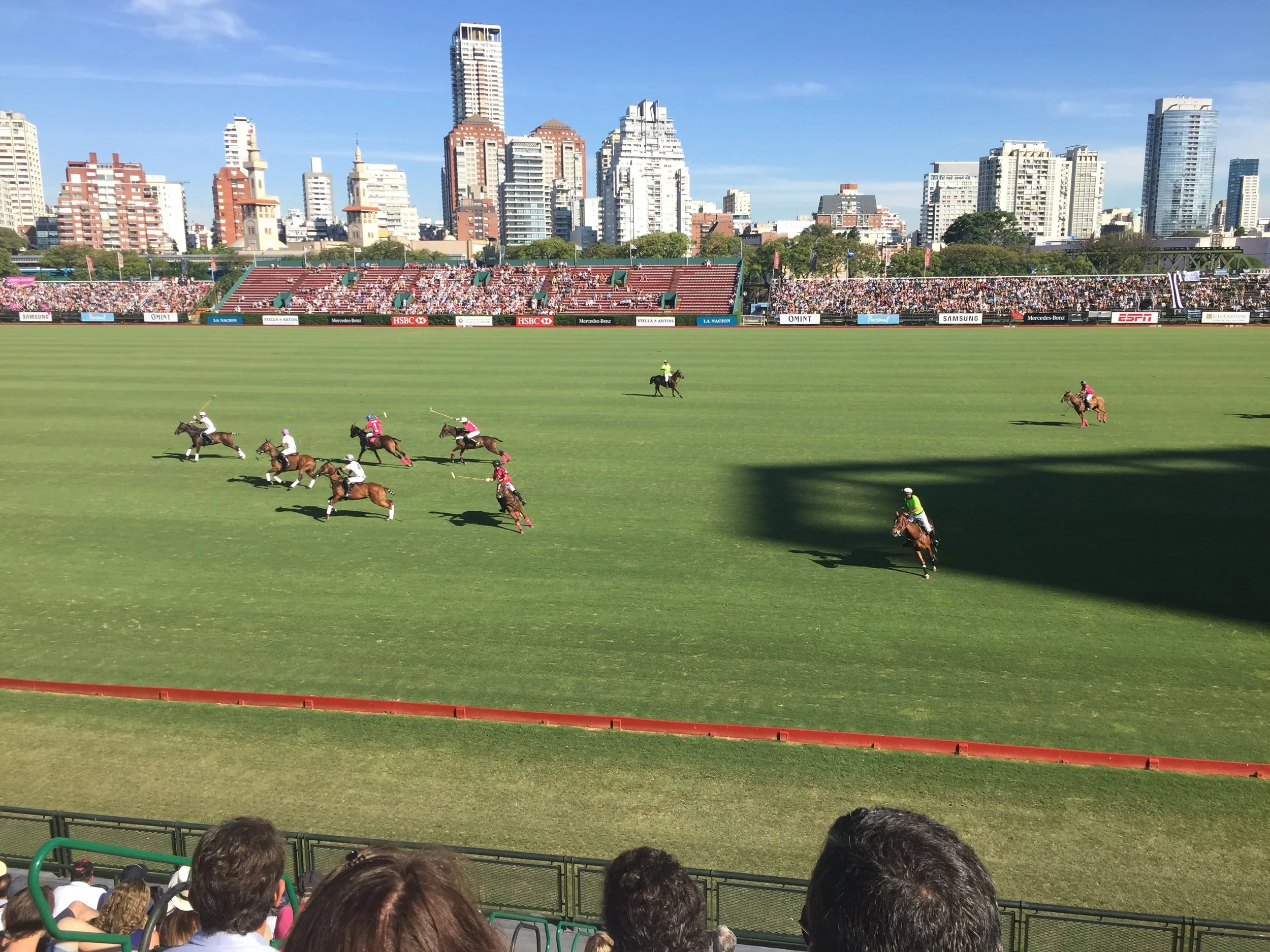
The Polo grounds were sparkling and reminded us of the set-up of ATP Professional Tennis matches. The pitch must be 2 football fields long and very wide with a short metal border, easily stepped over by the horses. The horses are the stars. As they rotate throughout the game the score board spits out their names. These are beautiful, lean and muscular horses. The rider’s names are listed on a fixed board. In our game, the riders and wore either bright pink or all white team uniforms and their horses matching leggings.

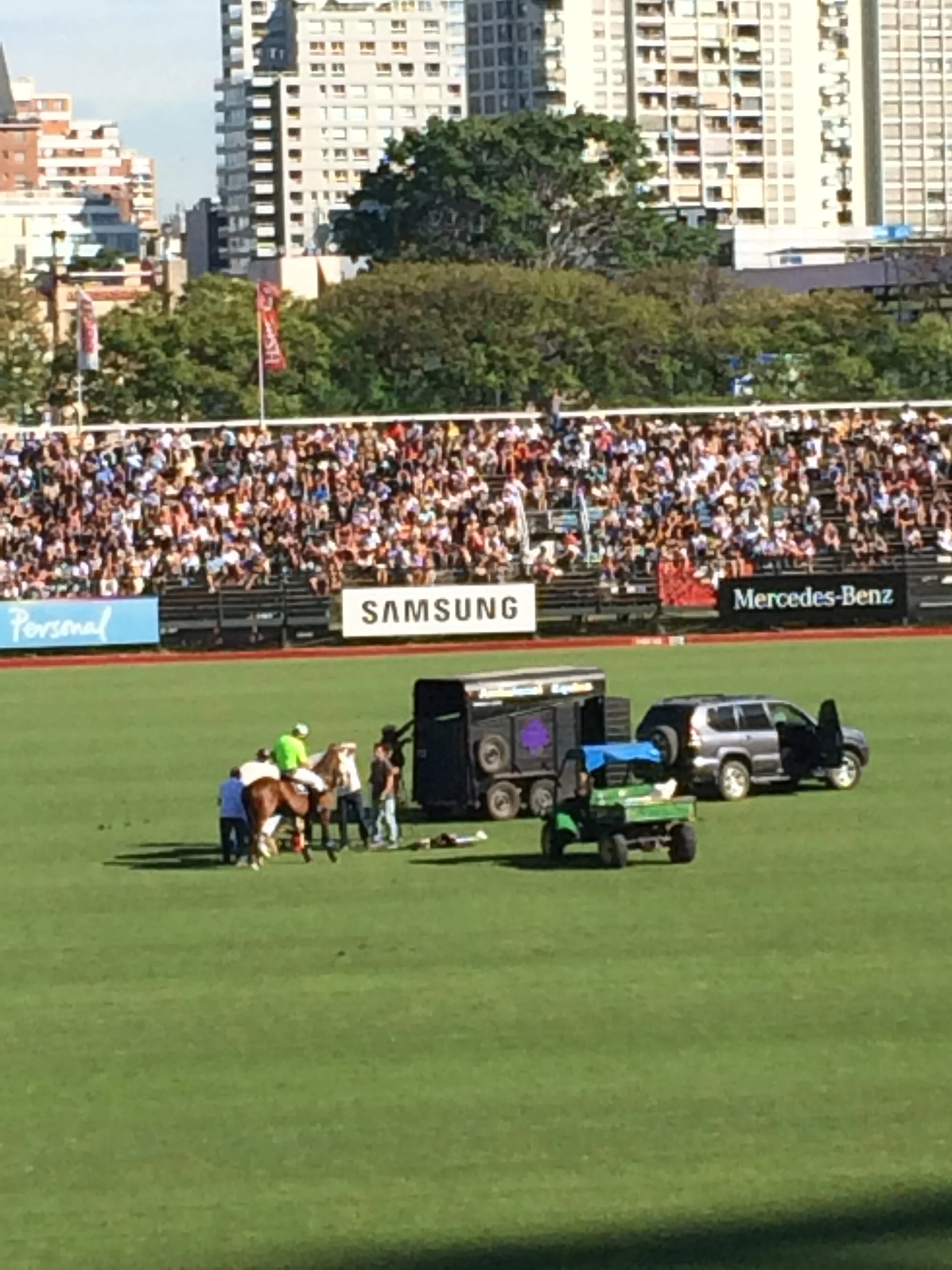
The skill and control exercised by the rider in controlling the horse and the horse responses are amazing. The players are going after a hard round ball swinging and hitting the ball with their lengthy mallet. The jockeying for position is not unlike what soccer players do to cut off their opponent and retreat in defense or attack in advantage. There are 8 periods. In our game the final score was 17 over 14. The white team, composed of all “Pierena” family members outlasted the mixed team which actually had one Canadian rider named Hendricks. We really enjoyed the outing. Our side of the stadium was more reserved but the opposite site was decked out in team coordinated colors and displayed signs and banners.

We walked home rather than take another UBER and noted the nearby Jardin Gardens. We thought we would return to them later and we did. Uber is new in BA and seems as efficient as in the USA. 

IMG_2826.JPG

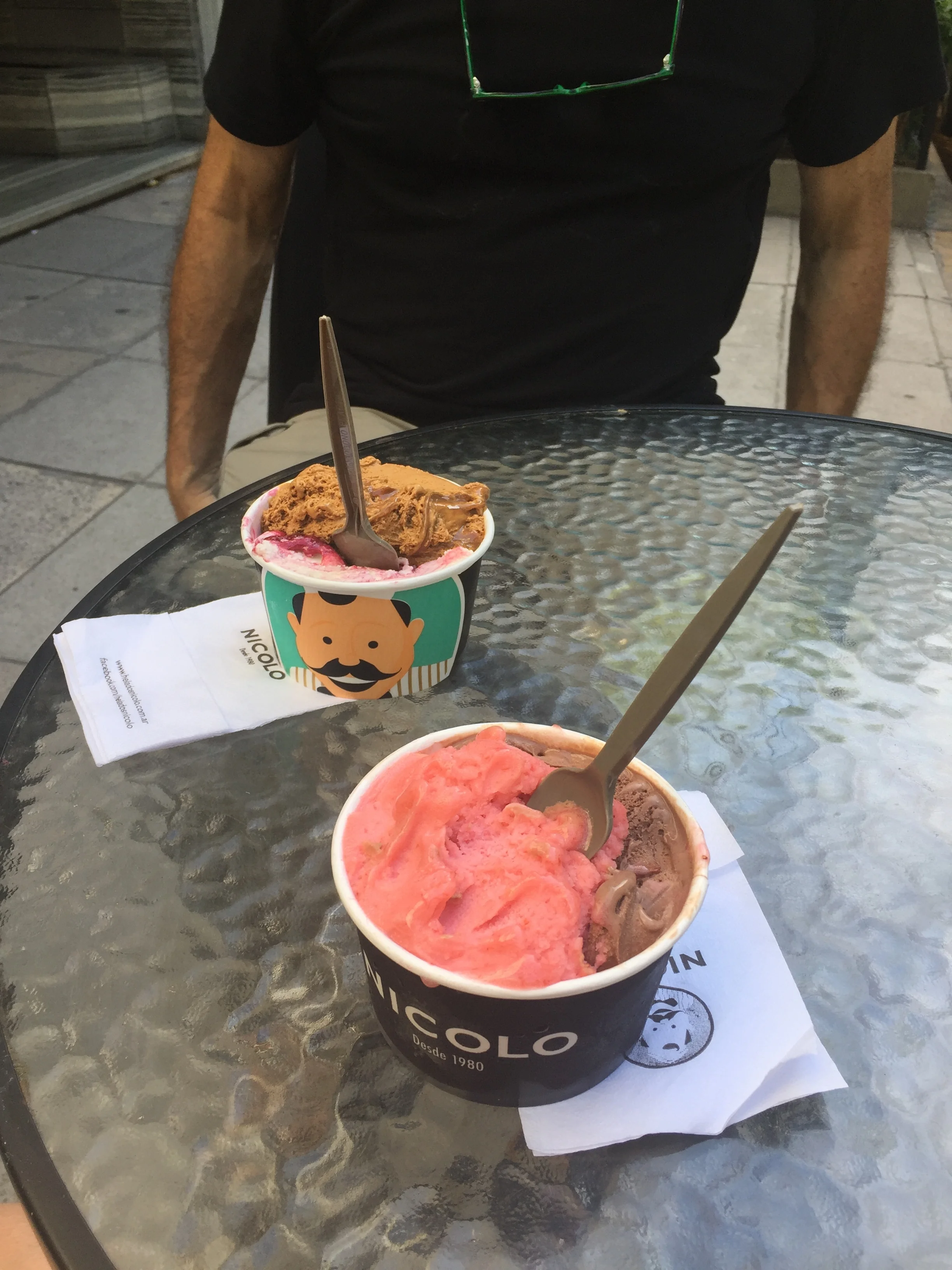
Great ice cream!!

FullSizeRender.jpg

The next day we returned to the Jardin Gardens with its beautiful sculpture and plantings. This time we started with the local bus near our apartment to get across town. We could use our SUBE card here as well. When we left the Gardens we stopped in the surrounding fashionable neighborhood for super good ice cream, hand packed and with multiple flavors. We continued to walk on the main streets which were loaded with people out on the weekend. Checked out some stores and then continued toward our apartment. We reached a close area called SoHo. This neighborhood was filled with shops, boutiques, restaurants, and decent street art. Graffiti can become tiresome and be a blight, but creative street art can enhance the character of the neighborhood and signal fun and activity. The art does needs to be organic and natural for the area. The street named Fitz Roy runs through SoHo all the way to our street. We are very relaxed with the walk, which we have now made several times. We feel safe.

The gardens

The next day we take Uber to the modern Jorge Freedman Airport and fly to the smallish airport of Punto Iguazu and taxi to our hostel in Centro Iguazu called 125 Hostel. Not a creative name, but really nice with a swimming pool and deck, nice rooms, starched sheets, and a first class restaurant, with rustic motif, that is highly rated in Lonely Planet. Our Host, who looked like Vin Diesel, had a never ending smile. We are in this city as our launching site to the world class Iguazu Waterfalls in the National Park.


Torres del Paine Chile

Puerto Natales Chile


The route to Torres del Paine was a 5 hours, including a border crossing and leavening  Argentina again and to go back to Chile and it's side of Patagonia. The countries fought a brief war to determine the boundary.   No problems on the Argentina side, but Chile had all passengers exit the bus and pull all the luggage to pass through metal detectors. We arrived late and stayed in a temporary hostel near the bus terminal, then moved to a different hostel near the waterfront, called Hostel Morocho. It was nice but also had a shared bath, a winding creaking stairs. . In these small towns the demands for rooms is very high, especially in launching cities. We discussed our Torres del Paine trip with the host, Alejandro, who told us our 2 day plan was not enough time. We needed another day at least. Thankfully, this hostel had good WiFi, with the pass word “Alejandro 1”, which our host sang to us as would Lady GaGa. Janet got on line to the National Park site, to see if there were openings at the park Refugio. We had purchased these very hard to get tickets before we left the USA. Miraculously, 2 spots had opened and we booked the extra day. In fact two young French girls were at the hostel waiting and hoping to get an opening. Understand that inside park accommodations are dormitories with gender grouped bathrooms. Our 2 spots meant 2 beds were available for an extra day--one more day at the park, one less day at the hostel. Importantly, the host waived his rental day lost since the cancellation policy was “Strict”.

Our Patagonia thanksgiving  

Our Patagonia thanksgiving  

it was also thanksgiving so with the arrangements made we hit the local supermarket and found roasted chicken and sides for our dinner and spend the rest of the day on the phone with friends and family with a little Lions football online.

We left the hostel at 7 am and walked to the bus station paced by a German Shepard all the way, along with some of his canine friends as we went to begin the next adventure.

National Park at Torres del Paine Chile

This national park is designated a UNESCO Biosphere site. The entire park is 181,000 hectares.

The big hit of the park are the 4 granite spires that soar almost vertically 2000 meters above the Patagonian Steppe. These are the Towers, that we do confess cause you pain when trekking the last 1 KM to the base, and most others agreed with us. This was the challenge we wanted. As well, the park displays azure lakes, emerald green forests and roaring rivers.  You can view soaring condors and feeding flamingos. You can also experience knock down wing gusts and sudden rain fall. We, Janet and I, both experienced all these things. 


For world class trekkers the park is also known for the “W”.  This describes the rough outline of the 4 legs of the trails that take you from the Towers to France’s Valley to Grey Glacier. This trek takes about 5 days one way, with 2 camping nights and 3 nights in a  refugio.  Some world class crazies actually complete the loop, called the “O” circuit which extends from Grey Glacier around the backside of the peaks which takes 7 to 9 days.


We did  a very modified “W” which we coined the 3 day  “highlight” tour, but it was hard. 

We arrive at the entrance of the National Park of Torres del Paine, which means Towers of Pain that I will explain later. We disembark from the bus and go through a four step process to enter the park, literally there are 4 numbered stations that we all must pass through, but there are really no written instructions--it's a game of follow the Q—fill out ID form, pay park fee, show receipt and get park ticket, and then step 4-- watch park safety video. When released you find another Q for a shuttle from the entrance to your lodging destination. They say “ take the red or white shuttle to Centro Refugio or Norte Refugio”.  No shuttle is there at the time and no place to buy tickets is designated. For us, finally the red shuttle arrives, the driver says $3,000 each, which we hand to him and he puts in his pocket. Don't care, we are on the bus, but it's weird. We drive for a distance further then I expected and arrive at the entrance building to the  Refugio, i.e. rustic shelter.  It entrance building is unusual, with earthy architecture and shape, made of grey wood beams that are curved  and sides composed of long widows to allow the view. It is modern, but fits into the environment. The lodge aka Refugio, checking-in is a little down the road in another nice modern building that fits well, not really that rustic. . This is Lodge Centro, which has reception, dinning hall, bar, and store. We are assigned to Lodge Norte, beds 53 and 54 in the room called Laguana Paine.

Our dorm room

Our dorm room

The room has a total of 3 bunks and 6 beds. It also has a modern but earthy style. We decide to take a warm up trek and leave before our bunk mates arrive. FYI, eventually, we meet 4 other women. Frank's the lone guy, who reads in the lounge until the gals are in bed, before he comes in. These gals are very nice. Surprisingly they are all english speakers, two from California, one from South Africa, and one from Vancouver, Canada, who happen to all have been assigned to the same planned tour together with guide.


Warm up trek


We arrived at camp and have only the afternoon to take a warm up trek. We decide to go out 3 hours and then return for a total 6 hour warm up trek. This trek is along the bottom of the “W” from Las Torres lodge toward Los Cuenos. The warm up is for the Torres del Paines trek the next day. At that time of day the paths are lonely, no fellow hikers,  and after climbing our first hills we locate a small lake which is surrounded by a marsh. This marsh is full of different birds that are squawking vigorously. We are at a natural rookery. As we walk closer, their agitation grows stronger. We enjoyed the scene but decide to alter course and divert up the hill. We keep trekking and reach a beautiful, extremely long lake that has the azure color we mentioned. It is Lake Nordernskjold and we stopped for snacks at the Mirador. That’s a tongue twister. Both shores of the lake are overlooked by dark stone plateaus which I thought created perfect natural fortresses. I envisioned indigenous peoples defending their camps along the waters edge From the high ground. We kept along the shore for about 3.5 hours and then turned back.

The beginning of the trail

Frank taking a rest

The view of the lake along the trail  

The entire trail has this view  

Janet on trail

The Big Trek

To my chagrin, I developed a blister on my little toe which was caused by continual downhill pressure as we returned. My fault, I should rearranged my socks sooner and then tightened my boots. I have to fix that issue before the big trek.


That evening we ate dinner across from a very charming young Bostonian couple that are of, you guessed it—Irish descent. Well, all my college roommates were Irish, as are some of my best Livonia friends, so we had some good natured blarney vibes and did we have great fun joking around. The conversation was so easy. More importantly, they had just climbed the Towers and were more than willing to give us some great tips which we used. Climbing to the Towers was  the challenge that we sought, but I can tell you we were apprehensive and tried to plan carefully.  We were not fearful. With clothing layers laid out, we got up early and dressed, had morning coffee and breakfast snacks at the cabin, packed our trail snacks and lunch, and started out.

The beginning of the trek

We wanted to start early to avoid trail congestion and give ourselves plenty of time to get back and forth. It took about one half hour to reach the trailhead, crossing 2 bridges along the way. From here we divided the trek into 3 parts. The first part was on the up hill climb to gain elevation that was about 5 KM long. This is where we reach the Chileno camping zone which overlooks the Torres River. We had walked alongside the river and crossed over on rickety bridges limited to 2 persons at a time. Many trekkers spend the night in platform tents and start the towers trek from here. One unusual thing was the appearance of a helicopter hovering over the camp and hooking a large net of rubbish to take away. We trekked this part in 1.5 hours, right on the timetable.

The view on the first third of the trek

A wolf in the woods

Next, we trekked another 3 KM through the forest running beside the river, but turning inward into Ascencio Valley. Here, there was  another unusual appearance of a red fox that walked along the trail with us for a bit before prancing off into the brush. This part of the trek took us another 2 hours, a little slower we were. At this point,we reached the Torres camping zone. Before starting the final 1 KM upward, we sat for lunch and water, as our young friends had suggested. Rest a little, eat for energy, and digest, and take a deep breath.

Entering the forest trek

Frank at our lunch break before the final push

Here comes the pain. This last 1 KM is almost vertical. The is a rock trail. A granite rock trail where some rocks are just a little smaller than the surrounding rocks. The trail is marked by metal steel spikes twisting through the rocks every 20 to 30 feet with a little red paint on the cap. We really needed our hiking poles for balance as we moved one step at a time along a narrow path at a 45 to 60 degree vertical. You almost want to quit you get so tired and sore.


The vertical rock trail on the final 1km

You certainly need to rest, catch a breath and rest the legs. It hard to find a place to stand on this narrow path as others are going up or coming down. We made it up to the Base De Las Torres Lookout in 1.5 hours. That is 1.5 hours to go 1KM, when we had earlier gone 3KM in 2 hours. The course plays a trick on you, by prohibiting you to go over the top of the first ridge surrounding the lake. No, you must trek further around to the side to a another narrow path that allows access to the lake shore and the open view of the 4 spires of granite and the Glacier Torres. The view is  spectacular. The crater lake of azure color is surrounded by these granite rocks that run to the shore and upon which you must sit, and want to sit, as you take in the scene and ponder your success. Enjoy the photos. I hope some photos give an idea of the harshness of the last 1 KM.


The view from the top

The next harshness we faced was reversing course and getting down the rock trail. It was really tough. Janet slipped and fell  3 times. She  lost her hiking pole once and sports a really nasty bluish black bruise on her hip From that fall. She was hurting the rest of the trek back, but kept on fighting through. We had a lone trip back. Janet’s pedometer indicated we had trekked about 19 miles total that day.

The Final Trek

Cold and wind

For our final day we opted for an easier half day trek that started with a boat ride.  We had no tickets, just cash. We needed to catch  the red shuttle to the Park Entrance. Then we caught another bus to the Salto Grande boat launch. We purchased Catamaran tickets to motor boat across Pehoe Lake to the Paine Grande Ranger Station with 100 other backpackers. We went into the Grande Paine Lodge to get the lay of the land. We had to limit our climb to 3 hours out in order to make the it back for the boat return. We decided to travel the other side of the “W” up to the Grey Glacier Lookout. The trek starts by turning in front of the ranger station and into an ascending valley. It also turns us directly into a steady wind tunnel with gusts, we find out later, of about 40 MPH.

The wind

Every step is a struggle, the air is getting colder, and the sky darker. We keep pressing, remarking that we were lucky we are not doing Torres today, and also lamenting that some others we have met are facing that extra obstacle. We reach the first overlook plateau of Grey Lake. It is a bright clear blue, not a milky blue, and the surrounding mountains are dark rock. We decide to push on the the glacier lookout, knowing we cannot make the Grey Glacier base site near the camp ground. We are moving along the shoreline, but the trek is tougher then we thought it would be as the vertical through the forest is demanding. We watch our time. At 3.5 hours out we are still 0.5 to 1.0 hours from the Lookout. We are also tired from yesterday's challenge and the wind here. We agree to find our own plateau and sit for lunch. We find a great spot on the top of a gigantic reddish pink slab of rock forming a cliff at waters edge in a slight dip to shelter us from the wind. We can look back down the lake and see multiple Icebergs floating near the shores on both sides.

Our lunch spot


We must have picked the ideal spot because other Trekkers came off the pathway and sat up by us. The view, as usual, was very nice. We returned to the lodge experiencing some rain. The wind had died down so we had no tailwind, but luckily no wind pushed rain at our backs either. We got back in about 3 hours, had some hot coffee con Leche and a Snickers Bar. Did I ever tell you that Snickers are usually sold out as it is the backpack kid’s favorite snack. We also saw our French girls from the Pt. Natales Hostel. Good for them, they made it into the park. 

View from top of third trek


We stood in the pouring rain to get on the catamaran. Luckily we had rain gear. In fact, all are warm clothes and storm gear was purchased for the Patagonia area. We didn't need it much, but it's good to have when needed. Heck of a boat ride back. We got the right buses and we were back to our lodge for dinner at 8 PM. What a great 3 days. We will always love the challenge and our accomplishments at Torres Del Paine.


Time to say goodbye to Patigonia and on to Buenos Aires

The sunset from our room

Our dinner back in town after 2 days of trekking. What a treat  

El Chalten Argentina

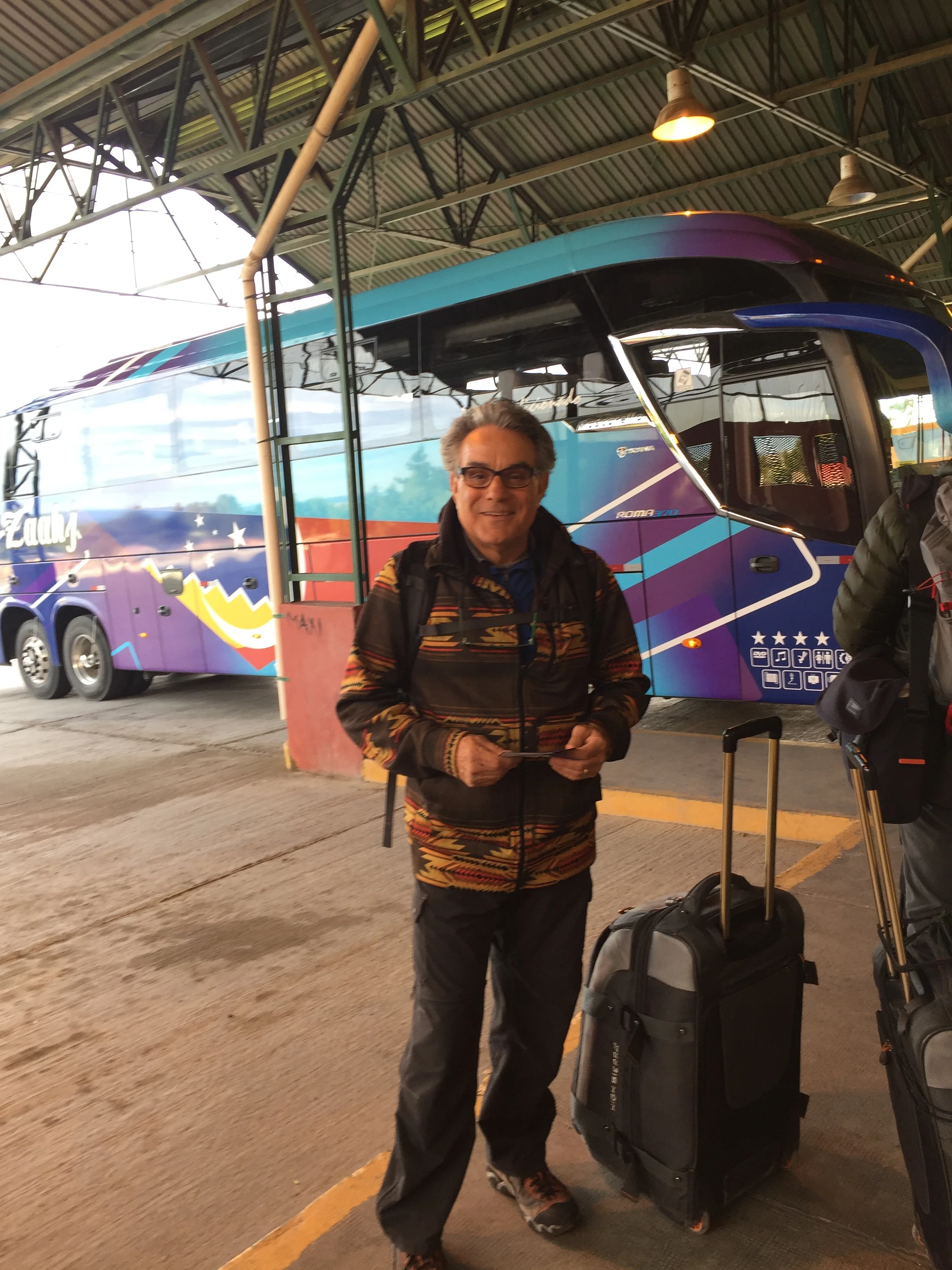
Frank at the bus stop

Frank at the bus stop

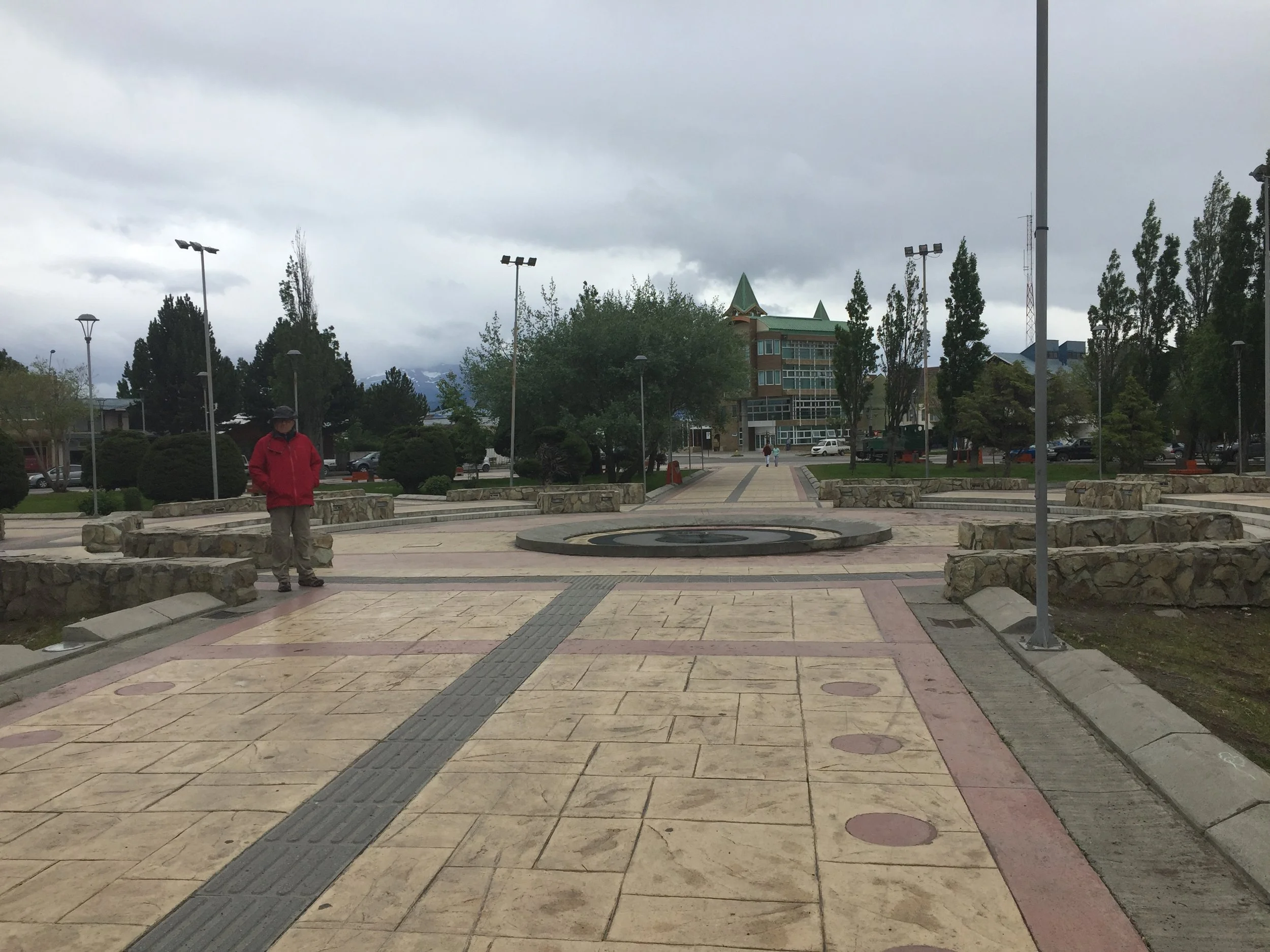
The town

The town

To get to El Chalten we took a 3 hour bus trip slightly north of El Calafate.  This is a small town surrounded by shear cliff plateaus with some valley pass throughs formed by the river valley! Population 1200. We figured no credit cards so we hit the ATMs several extra times in El Calafate to get a lot of pesos before we left. This is a trekkers paradise, surrounded by a National Park. We were introduced to the city when our bus actually stopped at the National Park office where Rangers discussed the trails, camping, park rules, and the need to check in if you are going to do something crazy like climb Mt. Fitz Roy or Mt. Cerritos Torres. The ranger advised that the glacier water in the lakes and streams was potable. He said “ I drink this water every day and I’m still alive”. The town is rustic but with cute stores and restaurants inserted among corrals and new construction projects. The favorite stop for the masses this weeks seems to be Beers and Burgers. Ourselves, we have been cooking at our 2 story cabana called Austral Cabana, with full kitchen and the bedroom up top.

Gelato shop

Gelato shop

Our favorite stop is Blanco Bruno Gelato shop. The coffee is strong, which means great , we get multiple flavored ice creams, and most importantly working internet. This is a nightly ritual. We miss you guys and the working internet allows us to keep in touch. Our hostess is very helpful with trekking tips and we have undertaken 4 treks. The first was an easy total 3 mile walk to a waterfall, the second was a rigorous forth and back 19 miles, the third was a one way 12 miles and the final trek was thought to have been more of a relaxation exercise at 3 miles to a mountain lake with another glacier, but actually was very elevated in the short distance.

Town Square

Town Square

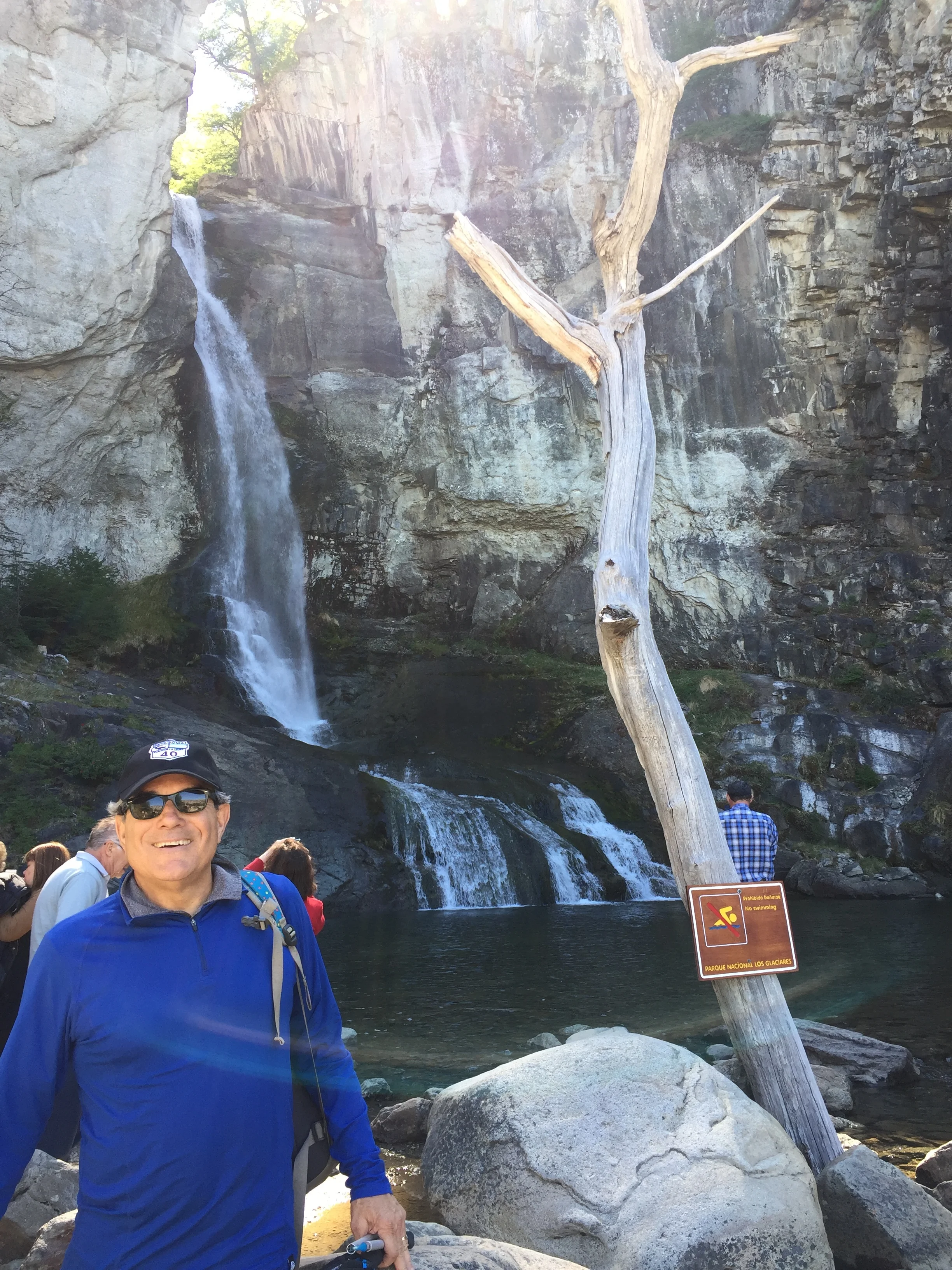
The first trek was an easy 7 miles round trip to a nice waterfall with a running creek. Janet had a pedometer to track our distances. Here we could see first hand the clarity and supposed purity of the running water. It was nice to walk a little to warm up the legs for tomorrow. We had a kitchen, so we went to the Supermacado to buy ingredients. Janet prepared veggie pasta, another wonderful dinner on the road. We then organized our day pack for the next days trek.

Warm up waterfall trek

Warm up waterfall trek

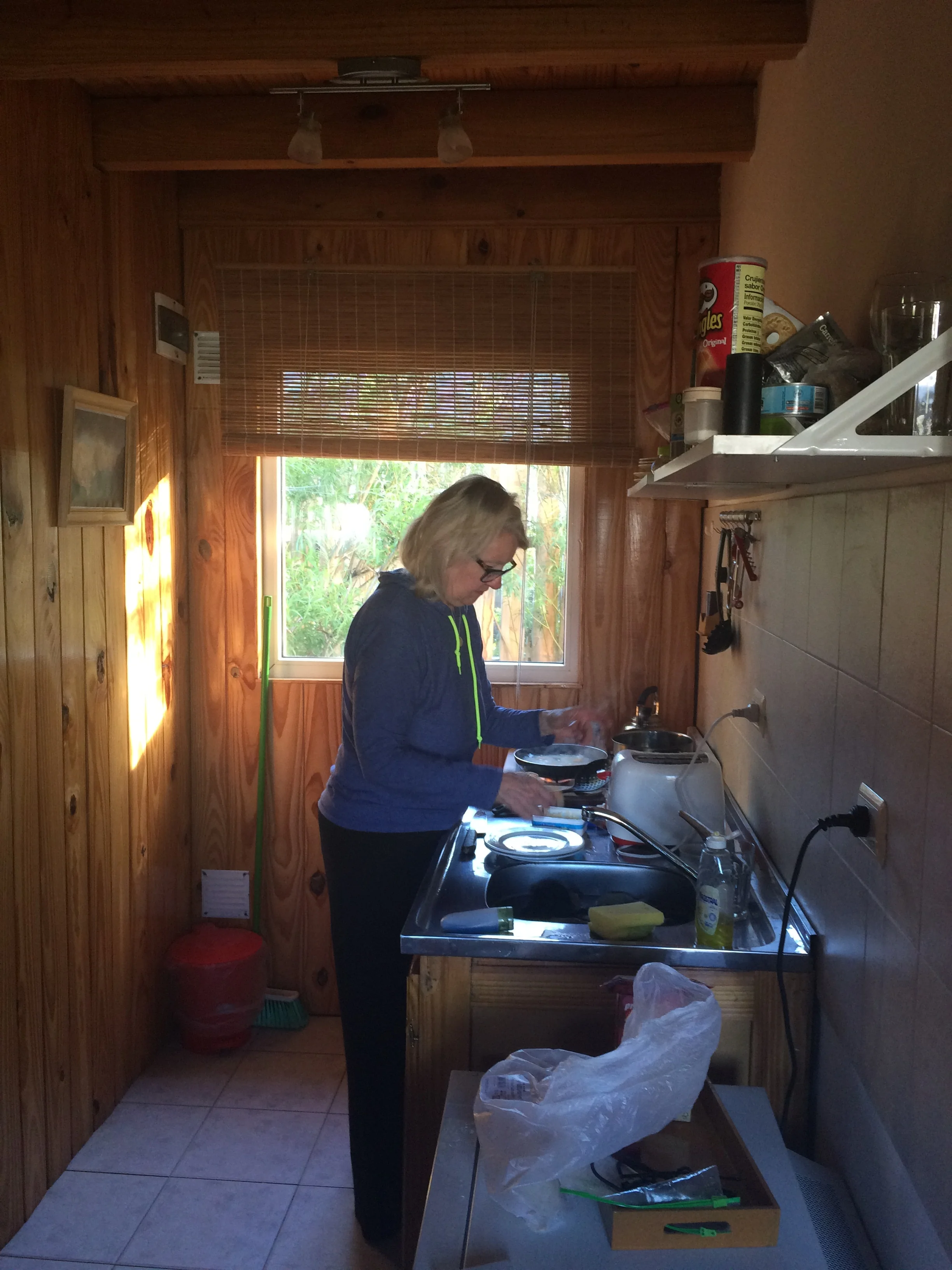
Cooking at our cabana 

Cooking at our cabana 


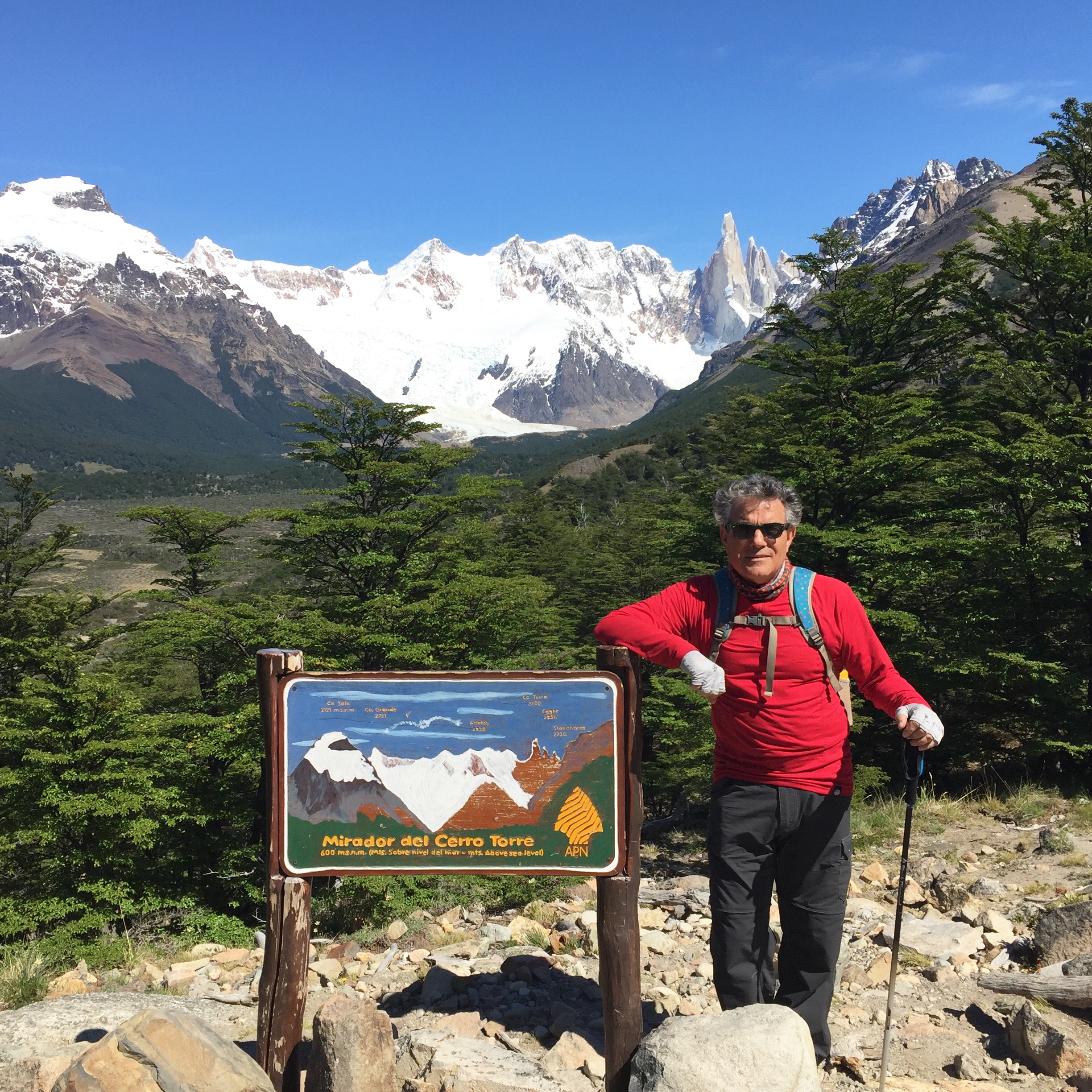
This was the journey to Cerro Torre, 3100 meters high, the second tallest mountain in the area. We started the trek by walking from the Cabana directly to the trailhead. The elevation raised up then flattened and turned and rose again until we crested the hills and came in view of the River Fitz Roy and the river valley. We trekked the crest of the hills that followed the lake bed, at times we were walking on rocks that had been deposited on shore.

The hike up

The hike up

There was all different terrine  and views as we worked our way toward the target which was Laguna Torre. The final leg took us past a dead forest of white trucked trees. This was almost 12 KM or 8 miles and we had to go back. The total trek was actually 16.5 miles total per the pedometer.

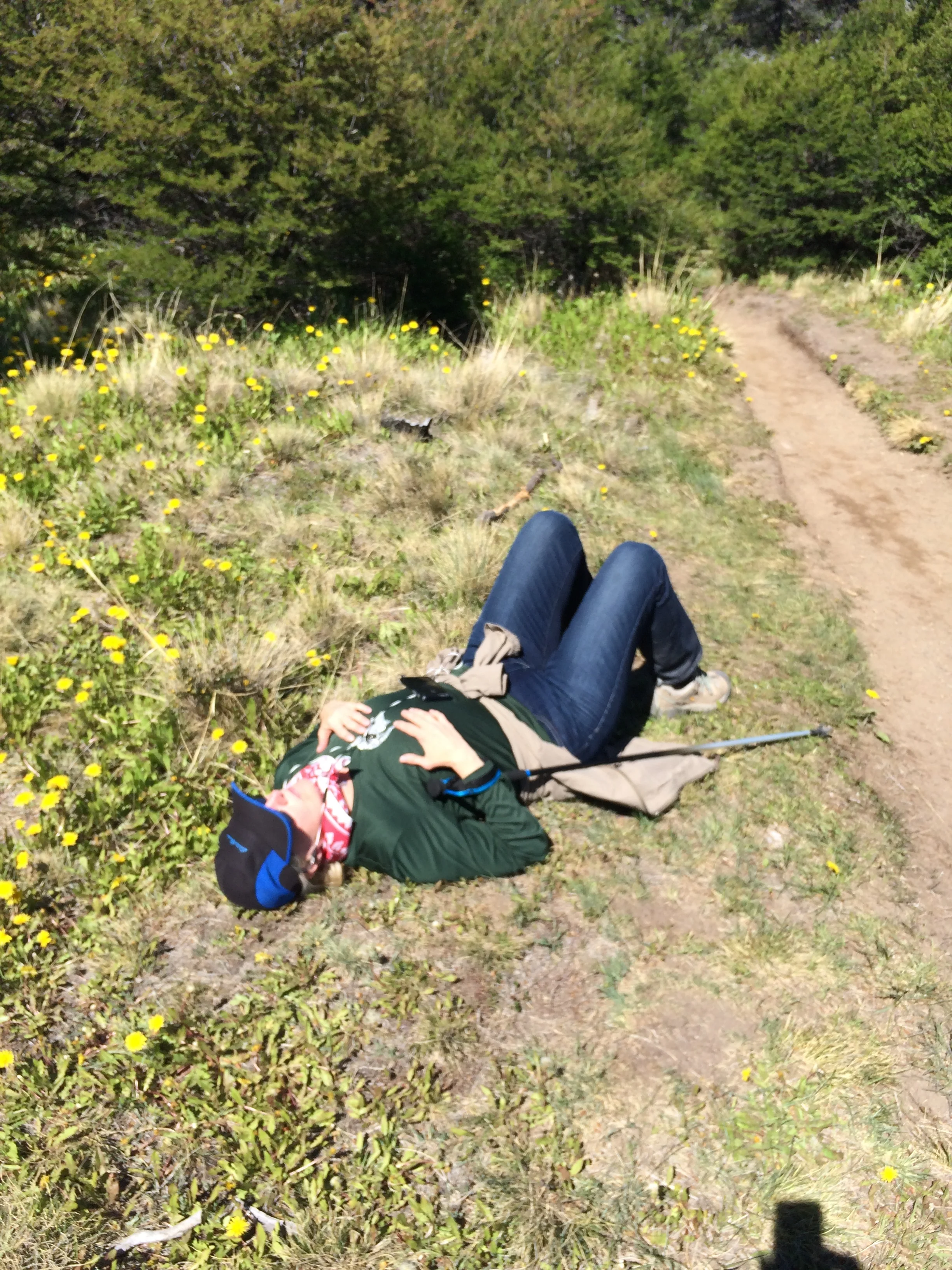
A much needed rest

A much needed rest

Here is were Janet's injured ankle started to really bother her. We stopped for a rest and thought about turning back, but we decided to continue. 

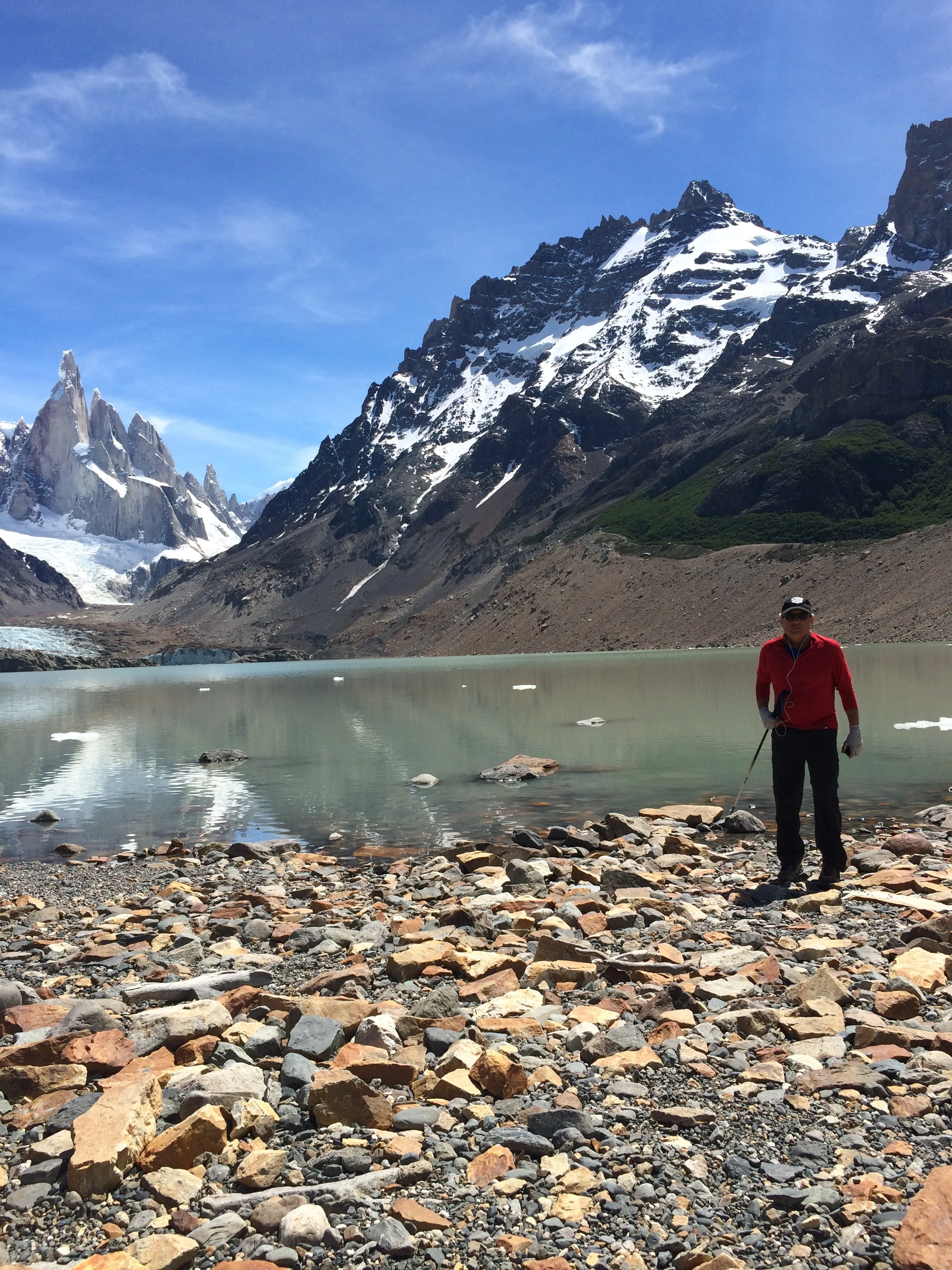
It turned out we had one more hill to climb which was the crest of the crater that surrounded the lake. Our first view was a blazing milky blue lake that included floating blocks of ice. We sat, with others, in the hot sun and had the lunch we carried. We were very thirsty and made the decision to fill up our canteen with lake water. It was very cold and refreshing, and I will admit it has a slight gesture of sediment or the milk of the ice.

The view at the top

The view at the top

An iceberg raft

An iceberg raft

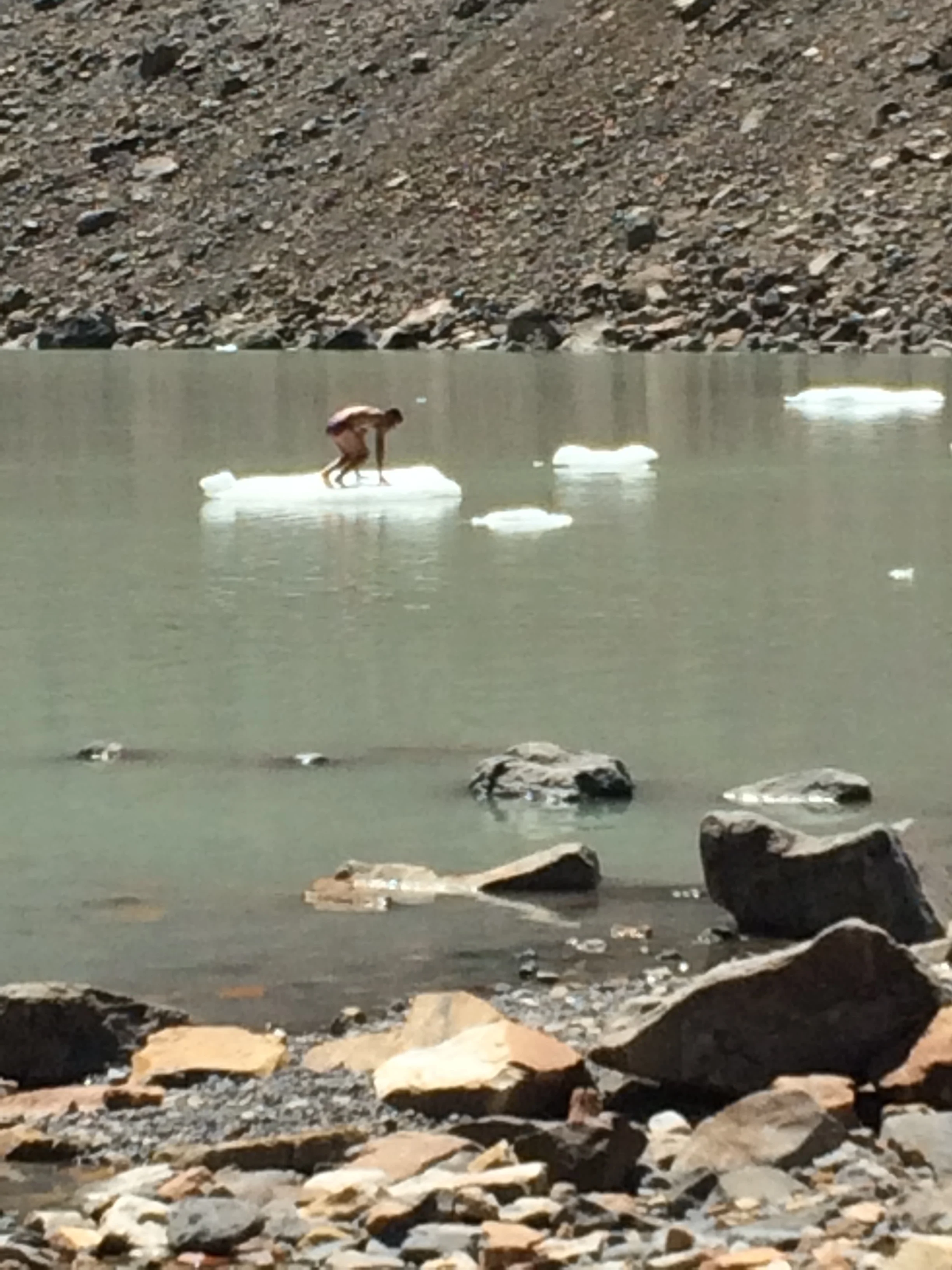
Luckily, we filled our canteen before a fun loving guy striped to his undies and jumped into this freezing cold lake. He swam to the small berg and pulled himself up top. The small crowd around started clapping and hooting, and some, I think, wishing they had done it first. He was lifting his feet sporadically due to the cold. The scene reminded me of an old Boy Scout rhythm “ ooh, ah, my feet hurt, ooh ah” . And you know, my feet kind of did hurt after walking 8 miles  to get there. Enjoy some pictures of the trek, which shows Mt. Cerro  Torres and Mt. Fitz Roy, the latter named after Capt. Fitz Roy who travelled with Charles Darwin to explore Patagonia.  When we retrace our route we did again go to the rivers edge and refill both canteens, man was it cold and good when we needed it. Finally, we arrived back in El Chalten, a total excursion of 19 miles. We were lucky enough to pass a small trailer stand before entering the town that sold us ice cold Spite pop, it never tasted better as we were again parched. I guess Janet had been dreaming of orange pop for awhile but it was not available.

For a couple of non-hikers we did we feel great at our accomplishment, sore and tired too, but really satisfied. We finished the night by getting some ice gelato at a favorite cafe and using their internet service. 

End of the trails and happy  

End of the trails and happy  

Frank at the base of the trail  

Frank at the base of the trail  

The next day we trekked to the base of Mt. Fritz Roy, 3400 meters high, the king of the area. Rather than the normal route, our hostess suggested another route that we might enjoy, still 26 KM, but more downhill and one way. The plan was to motor 15 KM up the road and start at that trailhead. Our legs were a bit sore, but as we worked and warmed up we were ok. We trekked in woods by the River Blanco for 5 KM and connected to the main trail to Fitz Roy.

The trail to Fitz Roy

The trail to Fitz Roy

This was another 6 KM to our goal of reaching Camp Poincenot near Fitz Roy. It was not sunny, but overcast, so the heat of the trek was less. We again saw some wonderful sights and combinations of mountain, river, forest and plains that created panoramic vistas.

The back view of Fitz Roy and the Glacier  

The back view of Fitz Roy and the Glacier  

The trek down

The trek down

The striking size, shape, and color of Fitz Roy was the constant that could be seen from almost all positions. On this trek we also crossed the smaller Glacier Piedras Blancas. We turned for home base passing Lake Capri and Camp Capri as we hiked in really weird flat lands to finally make it back to the city.  This was a trek of 13 miles per the pedometer. At the end we were dog tired and thirsty but boy was it worth it!

Frank and Fitz Roy

Frank and Fitz Roy

Fitz Roy  

Fitz Roy  

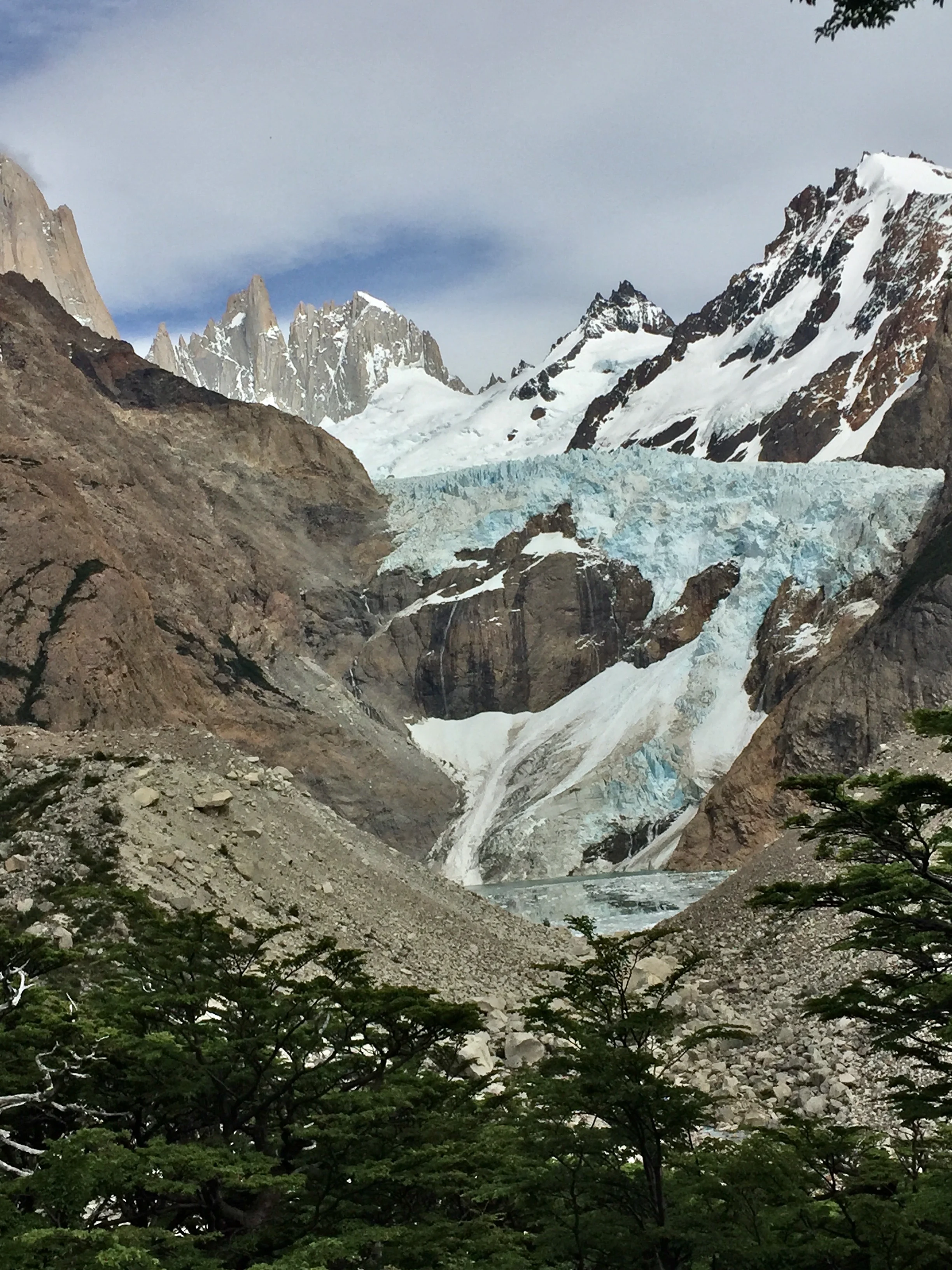
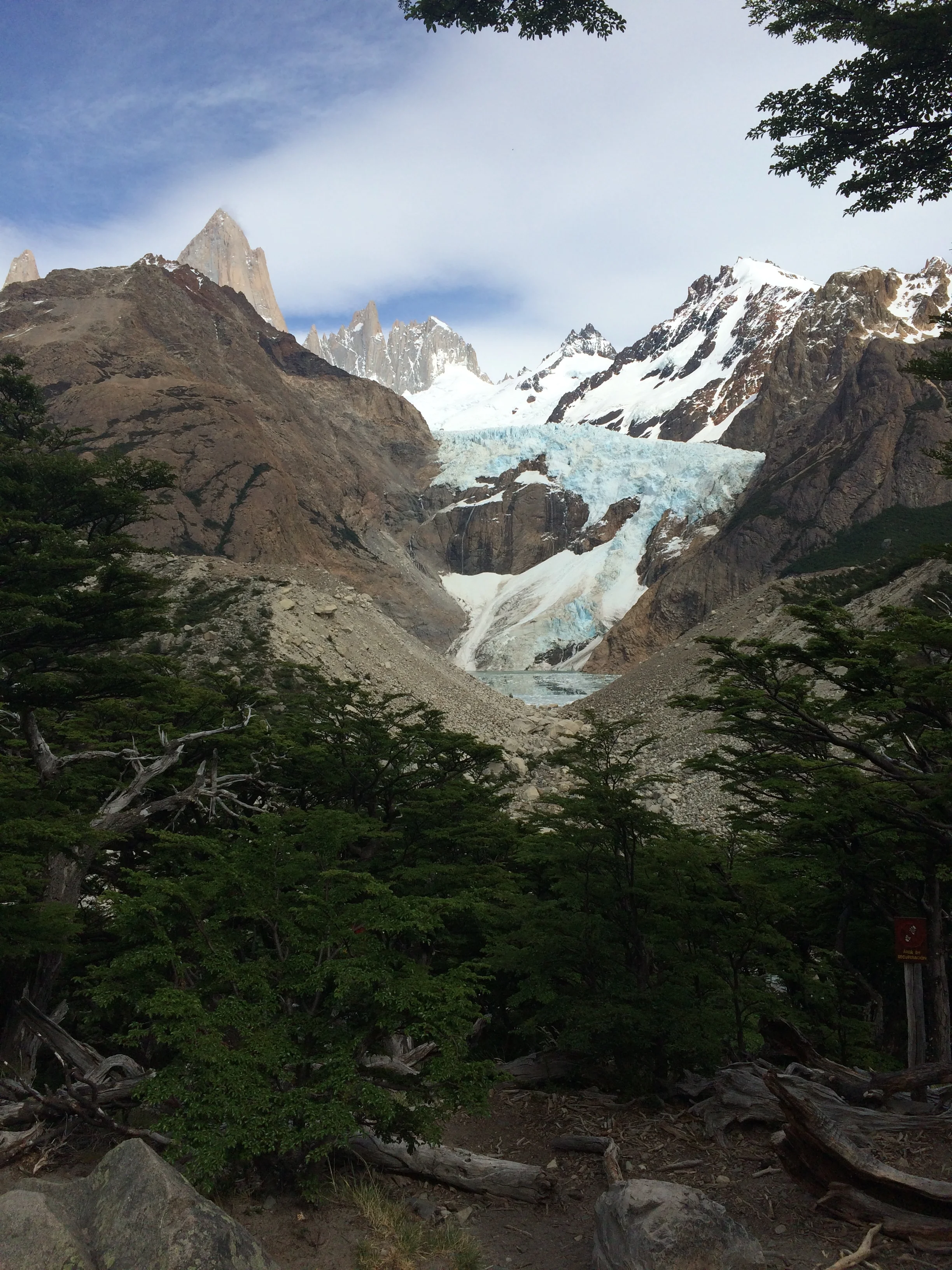
We realized that we where pushing the limit of enjoyable trekking, so we decided to make our fourth trek a little more restrictive for one half day. We again motored 37 KM to the base of Lake Desierto. This was private land and we paid a fee to enter their land and climb to the top of their little mountain to see another glacier, Glaciar Huemul, and also Mt. Fitz Roy from a different view point. This was a shorter trek, but we had time limits so we really huffed and puffed to get to the top. At the top Janet thought it was one of the most beautiful scenes she had ever seen, Fitz Roy to the left, Huemul Glacier in bluish tint to the right, raging river in deep blue at the bottom of this scene, and the sunny bright sky overhead.

The view from the top

The view from the top

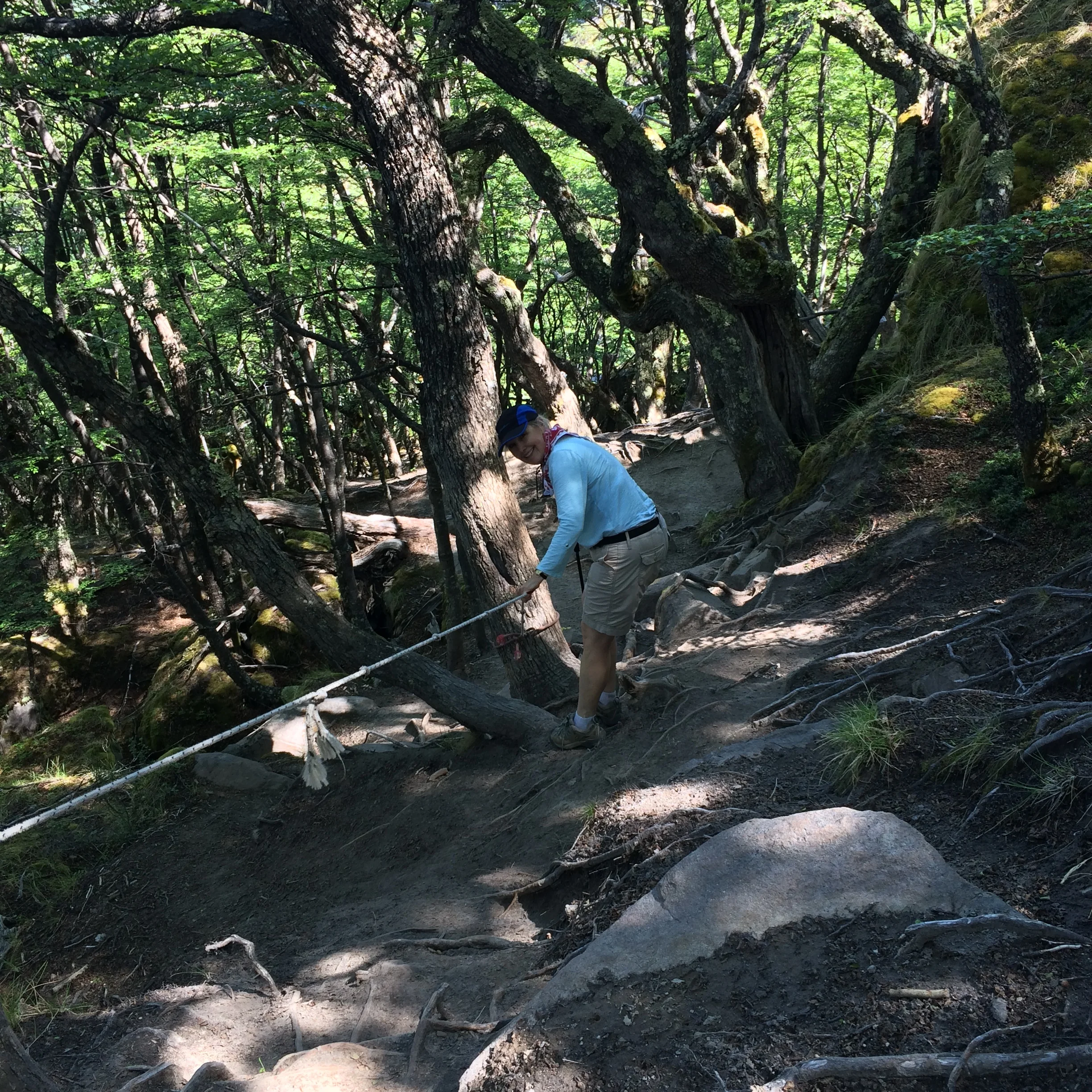
A challenging way up and down  

A challenging way up and down  

It was great and I could appreciate her thoughts, as this commingled scene reminded me of “Delphi” in Greece, where the holy mystical Oracles resided, and I'm not sure which was most beautiful. Enjoy the photos.

We returned to town, again going over the most bumpy gravel road. We packed with the plan to be at the bus station by 7 am for our trip southward to Puerto Natales, the launching point to the most southern destination of our trip—National Park of Torres del Paine.

FullSizeRender.jpg
IMG_4406.JPG
FullSizeRender.jpg