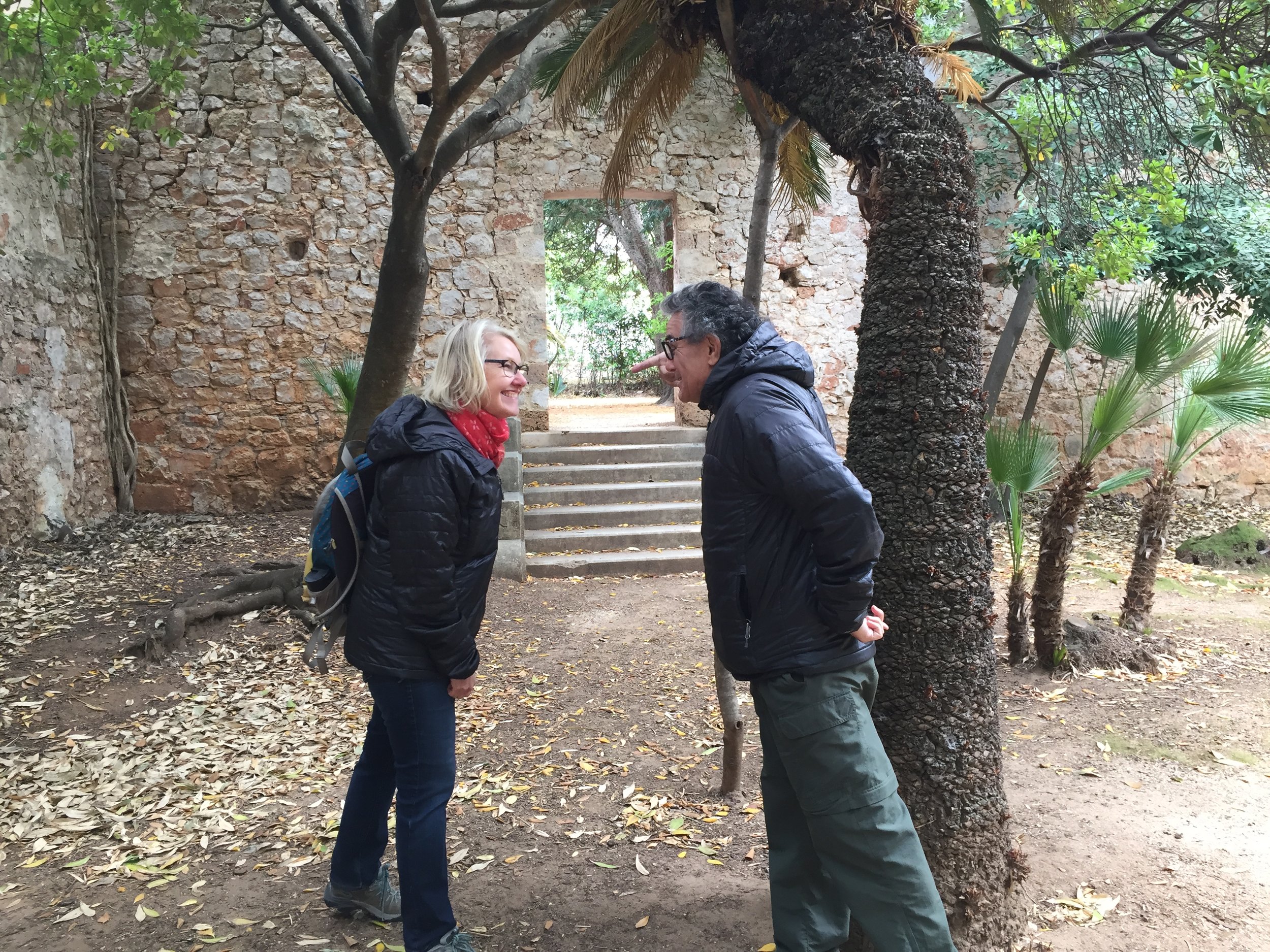
Prague Czech Republic

Prague was the first stop in an 11 day visit from our nephew and wife, Teddy and Staci.  We arrived one day early and had time to stock the frig, do some washing and make tour plans.  

This area of central/eastern Europe is a cauldron of past and relatively present turmoil, much of which took place in the Czech Republic. Brief historic background is important to appreciate the country’s current growth. Czechoslovakia was created after the fall of the Hapsburg Empire in 1918. Hitler’s 1938 annexation of the western borderlands of then Czechoslovakia triggered the final slide toward WWII. The country fell to a communist coup in 1948 and remained under Soviet influence. The “Prague Spring” of relaxed censorship and release of prisoners was quashed by the Soviet invasion of 1968. Finally, in 1989 the bloodless “Velvet Revolution” kicked out the communists. Today, the people of Prague seem to be very happy and have warmed to capitalism.

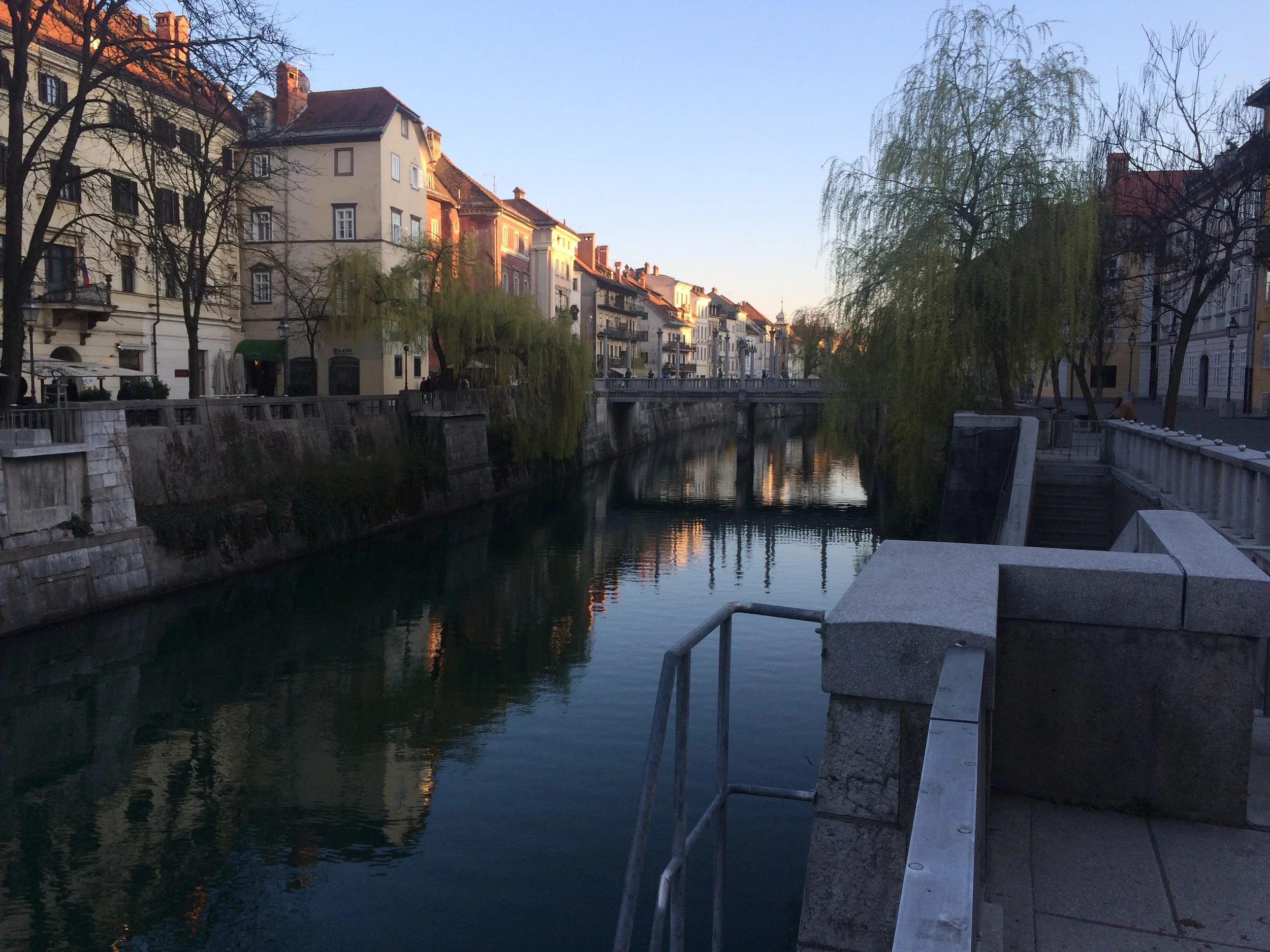
The river view from the end of our street

View from our Airbnb

We chose an Airbnb in the Old Town District close to the Charles Bridge that expands over the Vltava River to the Castle District. Since there are now 4 of us we chose a large 2 bedroom flat which had been nicely refreshed for rental. The first day we walked the riverside looking at all the Baroque styled 5 story buildings that line the river and fill most of the city.  We crossed the pedestrian Charles Bridge which is decorated with large copper statues, long turned greenish in color, of noblemen and gargoyles. The bridge looks medieval. We gaze up and down the river which is very wide with slow current, and just take in the ambience of the city.  

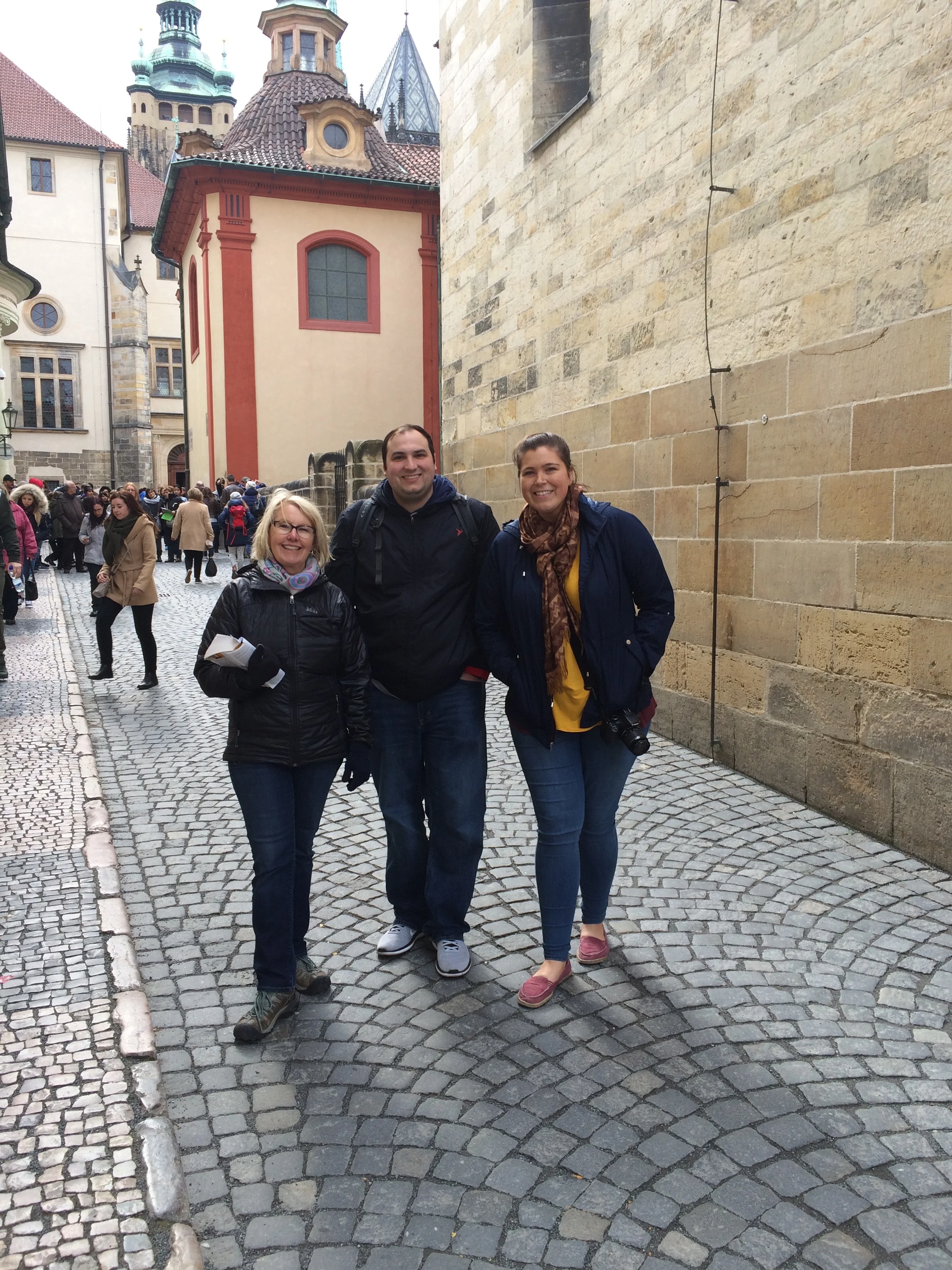
Teddy and Staci arrived mid-day and after hugs and chatting we were off to explore the city.  The weather is cool but dry and we take a slow walk down the river to the old town, many stops for photos and lots of chatting. Boy we have really missed our family, how blessed we are to have visits.  
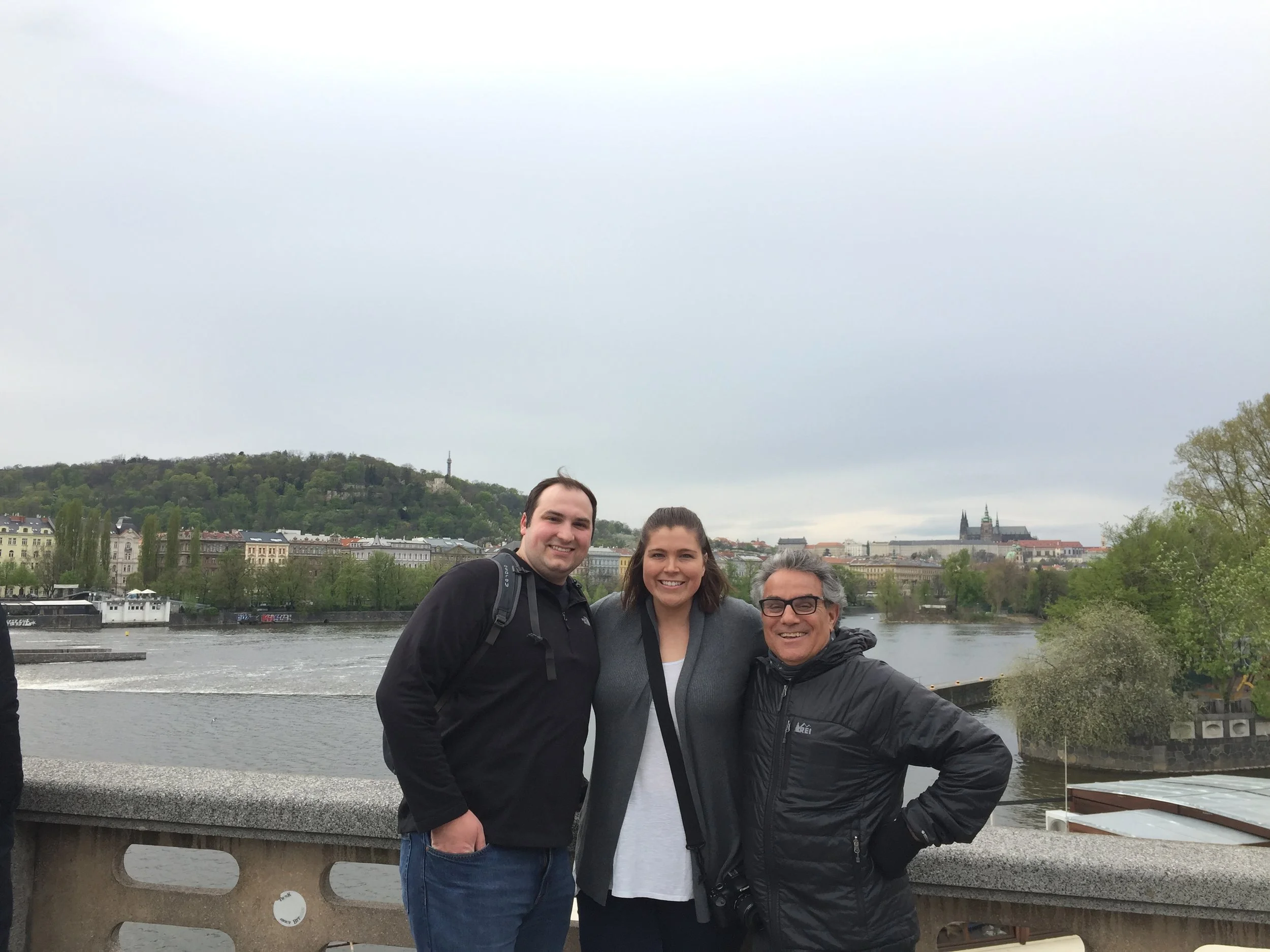
Start of our river walk

Start of our river walk

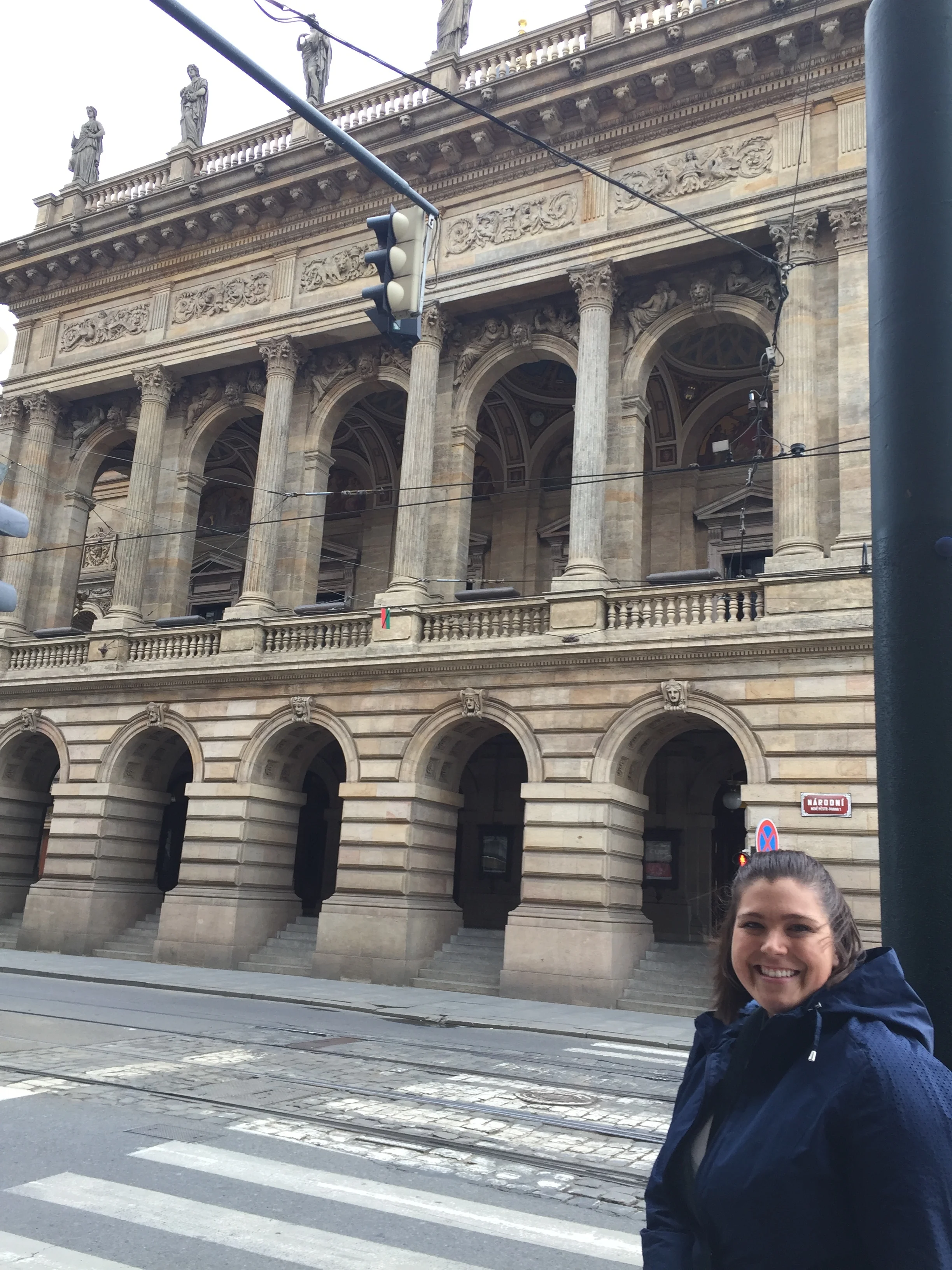
This town is really beautiful.  It seems like each building is more ornate than the next.  Every column is a statue, surprisingly most with bare breasted greek goddess'.  The old town is a labyrinth of narrow streets and shops selling tourist stuff, food and fine glassware.  Prague is also know for nightly chamber music.  Before going out we discussed a plan and agreed to walking, talking, dinner and taking in a Mozart concert in one of the fine churches.  What fun we had.  Prague is also known as the Pork capitol of Europe, it seems like every few feet there are vendors selling some odd pork product.  Teddy and Staci are the proud owners of 2 adorable pot-belly pigs, they eat no pork and very little meat.  So with help for our guidebooks and a few wrong turns, we find a vegetarian cafeteria for dinner. We think they are impressed with the amount of good food you can get for less than $10 per person.  Then off to the music. Its scheduled for only and hour, with violins, cello, bass, and coronet. it was great.  Later in the trip, both did admit to us how hard it was to stay awake on their first day listening to chamber music!  After the concert we tried a Prague favorite, a dough that is wrapped on a cylinder and roasted over an open fire.  Then it is rolled in sugar and filled with fruit or creme.  They are delicious.  See some great photos. 


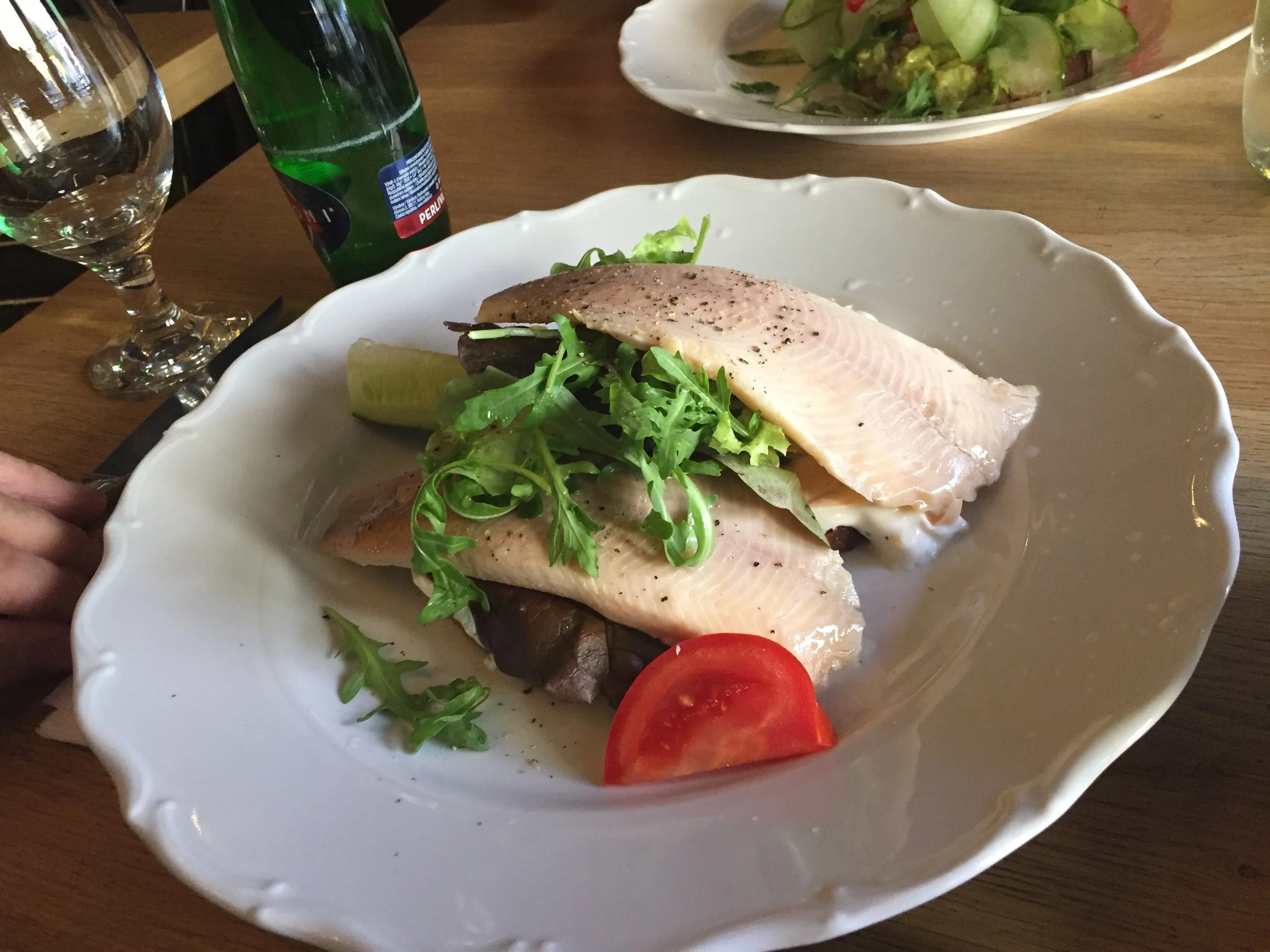
Frank's Fish for lunch

Frank's Fish for lunch

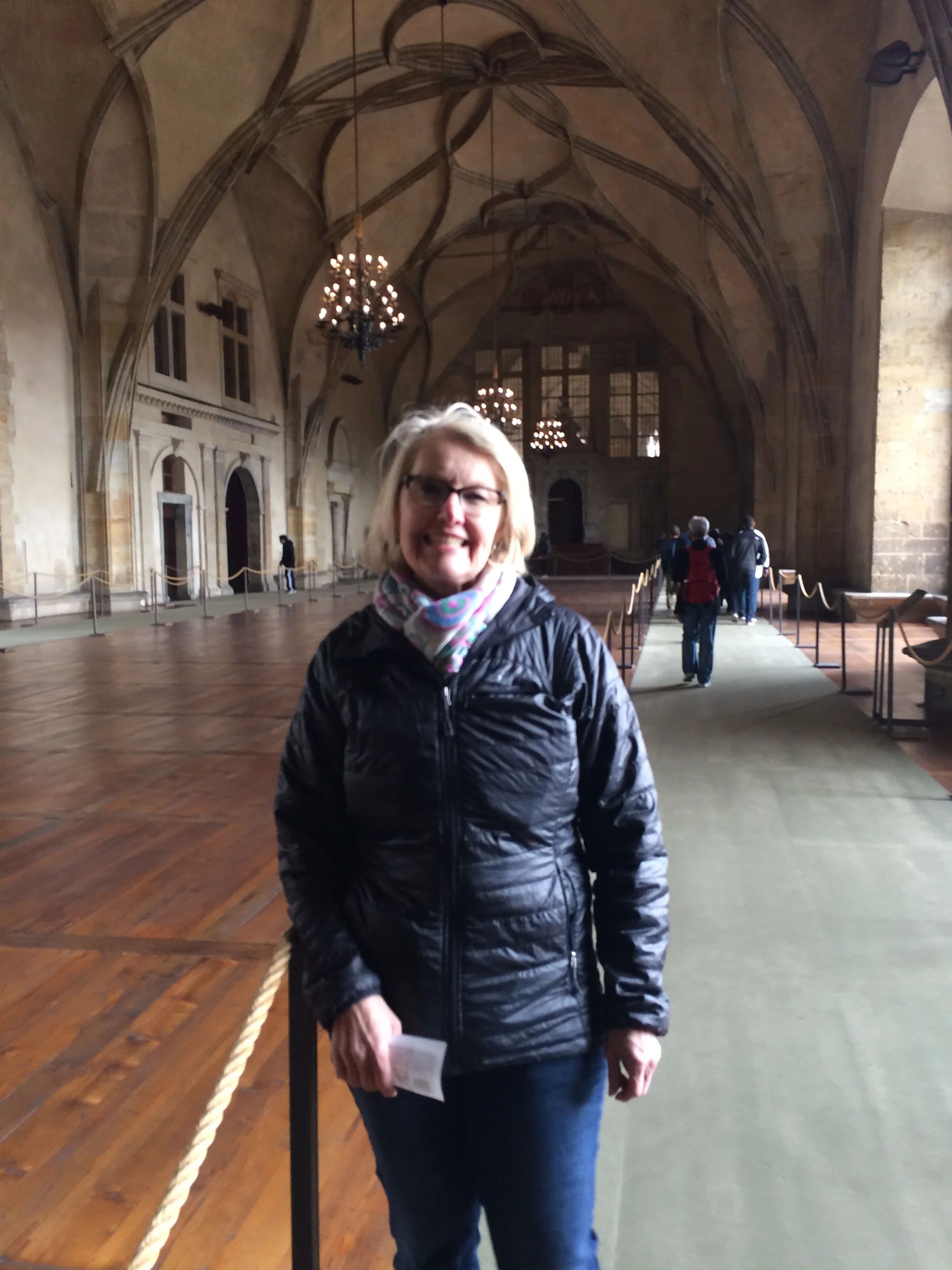
Our second day together was action packed.  We started out on a free walking tour of the old town, right after the tour started the skies opened to pouring rain. We quickly purchased rain ponchos and carried on.  We took a break for lunch in a small place below the castle complex, great food.  Then we caught the tram to the castle complex, but wait, we were way passed the castle and had to race down the hill and wait in a long line, in time for entry but they would not let us purchase the audio guide.  

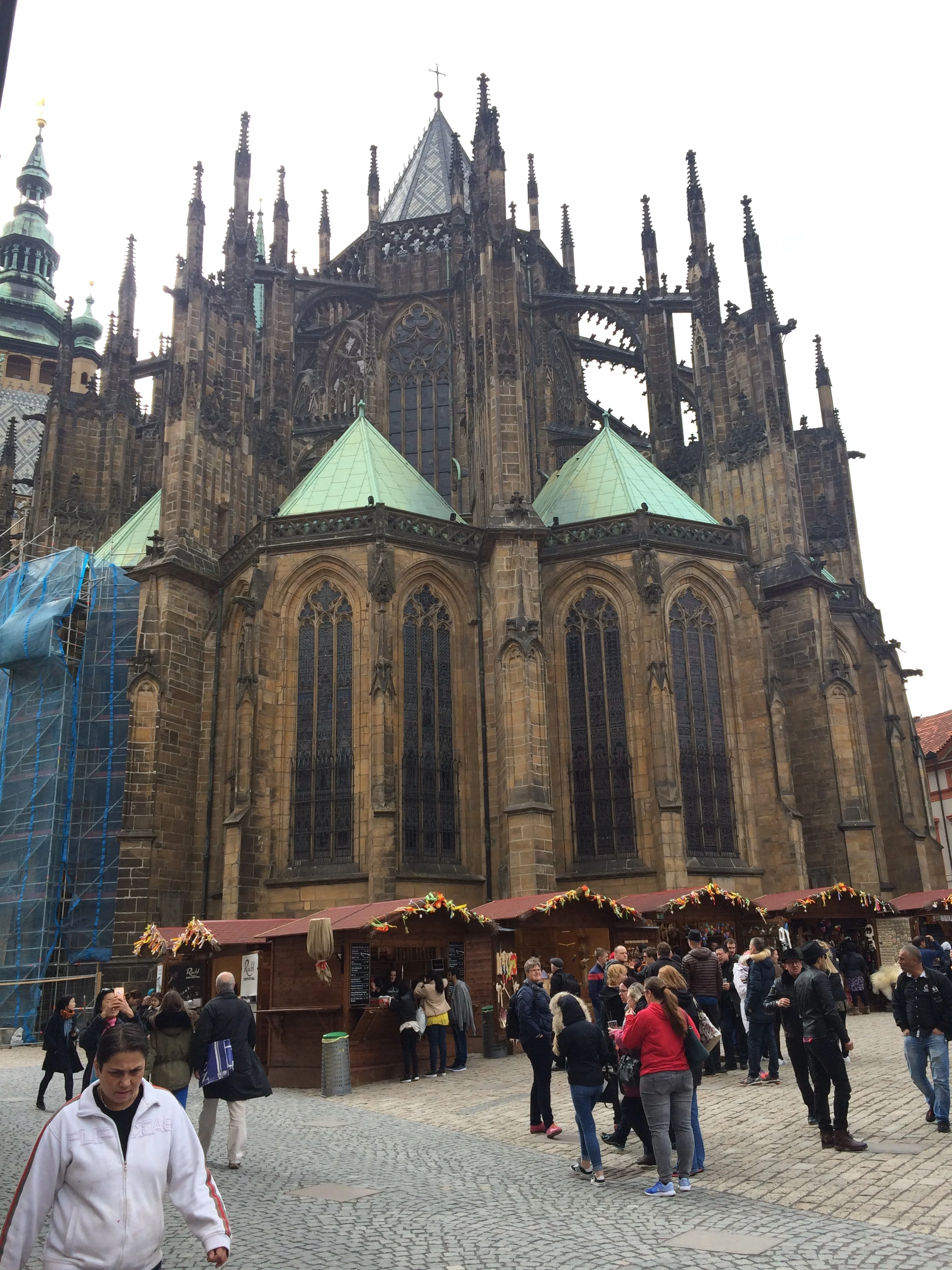
One of the top attractions is St. Vitus Cathedral.  It is Easter week and the churches have short hours.  Even without the audio guide the Cathedral is wonderful, with flying buttress and lots of spiny spires.  Next we went to the Royal Palace, nice but not furnished, the Basilica, the Golden Lane (a Greenfield Village type attraction) and the grounds.  This is a huge complex and we pushed to covered it all in a few short hours.  
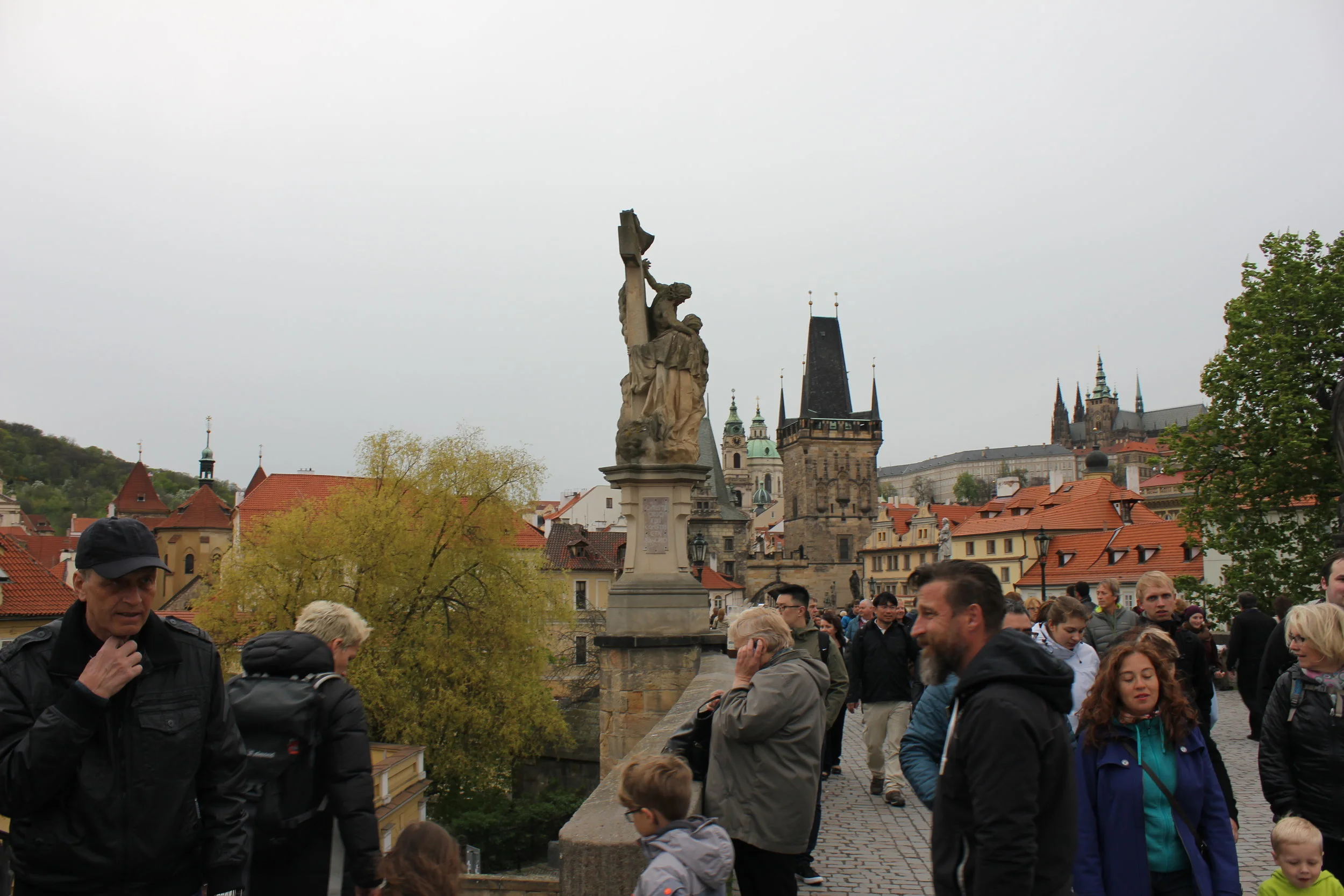
Frank and I spend a lot of time trying to figure out how to get from one place to the next and returning back from the castle complex was no exception.  After several attempts for a Uber we finally gave up and the 4 of us walked down to catch the local tram back to our place for an easy Mac and Cheese dinner and an early bedtime. Tomorrow, we leave for Vienna.

The view from the Castle 
Split and Dubrovnik Croatia

Split  

The bus stop to Split

We took a local bus to Split. We left the Pitvice hometel by rumbling our cases down the country road, crossing the road to a wooded shack on the west side of the main road and crossing our fingers the bus, “Croatiabus”, would come on time. This was also a favorite spot for the few taxis in the area who tried to sell us a lift. In any event, we were joined by other travelers, almost all Asian, in the wait. The bus finally came ½ hour late, which is actually pretty good. The bus was filled so Frank sat next to a young woman from Taiwan who was traveling with her older sister, the only english speaker. We conversed by using Google Translator—just the basics, all with smiles and some verbal attempts, but not long as the google interaction on a moving bus does/did bring on headaches. 

View from the bus

We arrived in the seaside town of Split after six hours. Apparently this bus was not the express route we expected at 3.5 hours. We made the most of the trip by enjoying the coastal road. The countryside and shoreline consists of jagged hillside rocks and cliffs that reach the blue aqua water. There are islets that pierce the water near the shore. The seaside towns ofSibenik and Trogir have causeways connecting the mainland to the islets, with chapel towers spearing the air on these islets. The drive in is just gorgeous. We wonder: What will Split be like?


Split Bay

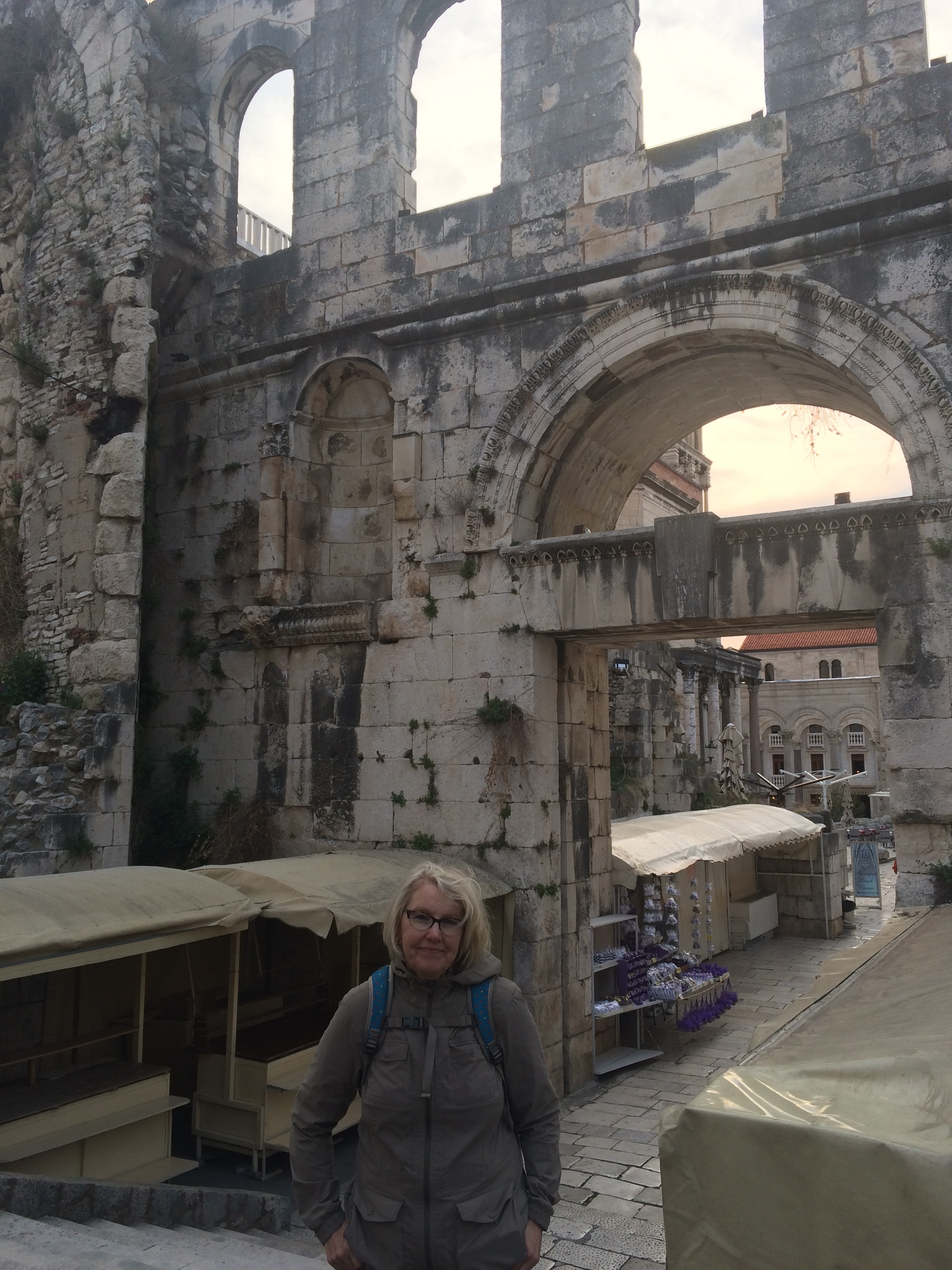
Split is located on a bay and has a developed waterfront of shopping and restaurants with dockage facilities for cruise ships. It is the second largest city with a population of 180,000 and is known for ship building. The bus station is at the waterfront so we could easily wheel to our Airbnb in old town. First impressions are that Split is on the verge of becoming something special, but that it is a bit too gritty and is in need of polishing. Split may need more time to recover from the economic strain of the Croatian/BosnianWar.


Croation Folk Singers

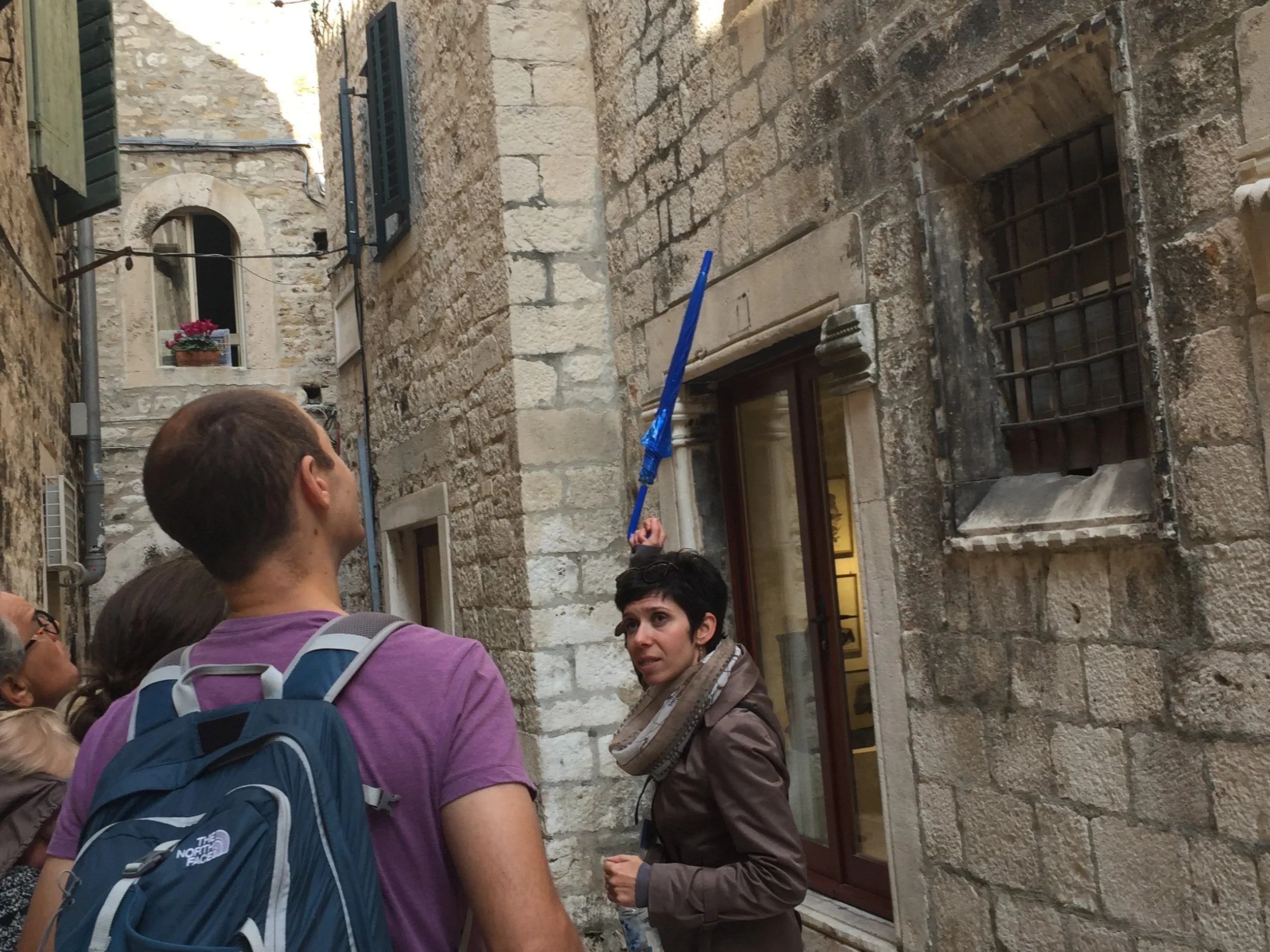
Some authors have said that “Split has a split personality, as it struggles to decide how it fits into Croatia’s tourist mecca image.” There are some new seaside structures being built that may have higher end stores and restaurants. There was also boat show in progress with many large sailing Catamarans and sailboats, and a few power cruisers docked. But, there is also a closed Casino. In any event, the top attraction is the Villa and fortified Roman town developed by Emperor Diocletian. Our Airbnb, and most of the city itself, is integrated within the walls of the fort. Our Airbnb was a newly renovated first floor efficiency apartment. It was very nice, cozy and cutely decorated; good hot water, washer too, and a close walk to the waterfront. The Villa, a summer home, displays ancient mausoleum, crypt, Jupiter’s Temple, and a partial palace entry. We took a paid walking tour of the palace and city which was informative.  A treat was hearing this acapella sextet sing Croatian folk songs in the domed area of the palace.


Our best meal yet

We then stopped for an outdoor lunch. Here we wanted to try the local cuisine and dove into a light stew of cuddle fish, broad beans, and homemade pasta in a thin sauce of squid ink. When the cuisine was spooned onto the white plate the sauce was black, but how so tasty with coarse bread, fresh grilled veggies, and a local home brewed beer. We told the waiter our memory of Split and Croatia will always include this meal. He was so pleased that he provided us shots of Schnapps. Lots of good Schnapps in Croatia. We completed our stay by going to see a film at the city’s original movie theater opened in 1907, argued to be the oldest “still operating as a theater” in Europe. The popcorn we were craving was really good. Tomorrow we are off to the gem of the Croatian coast. 

Dubrovnik  

IMG_5632.JPG
Our Airbnb up 146 steps

Our Airbnb up 146 steps

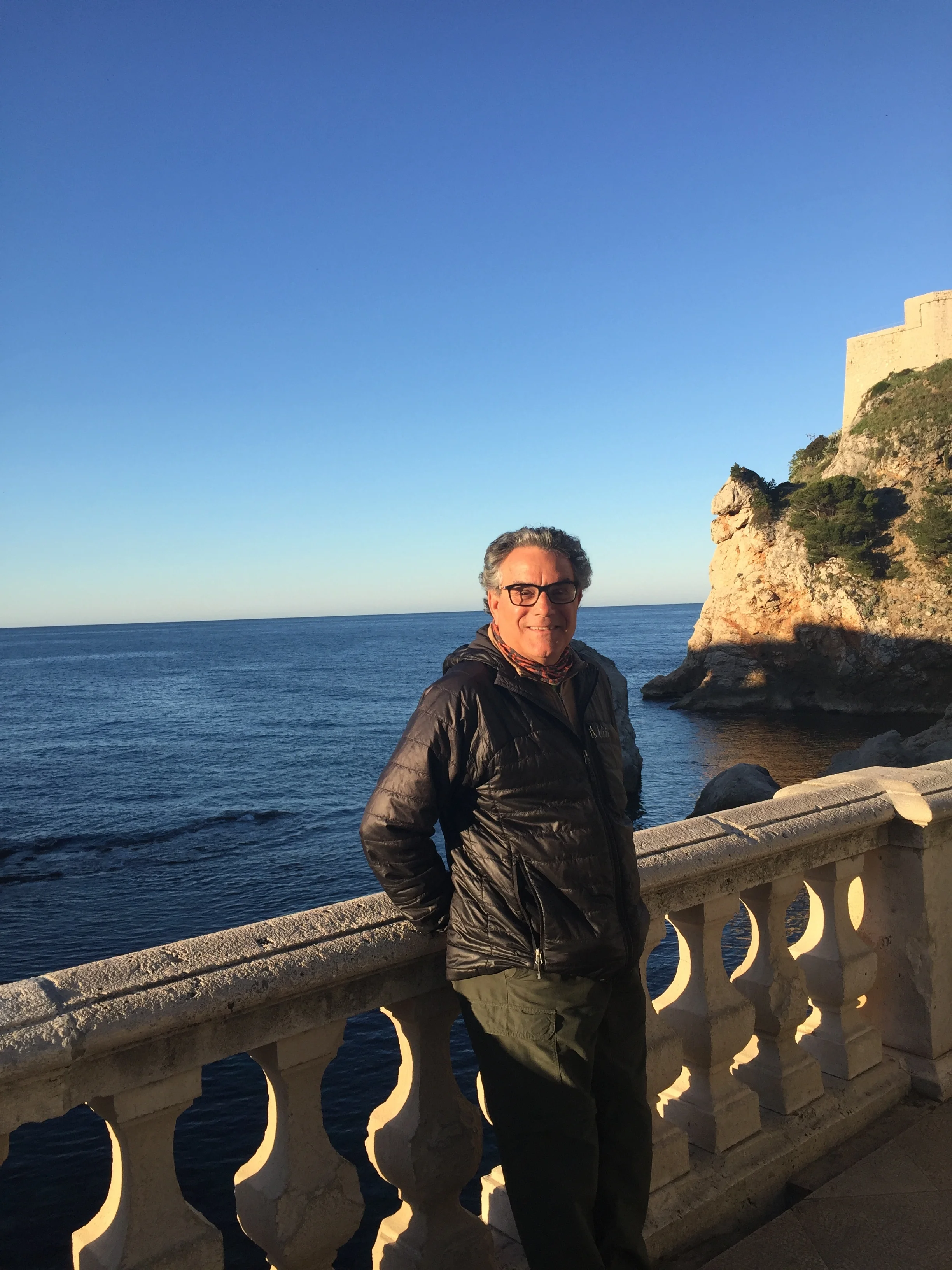
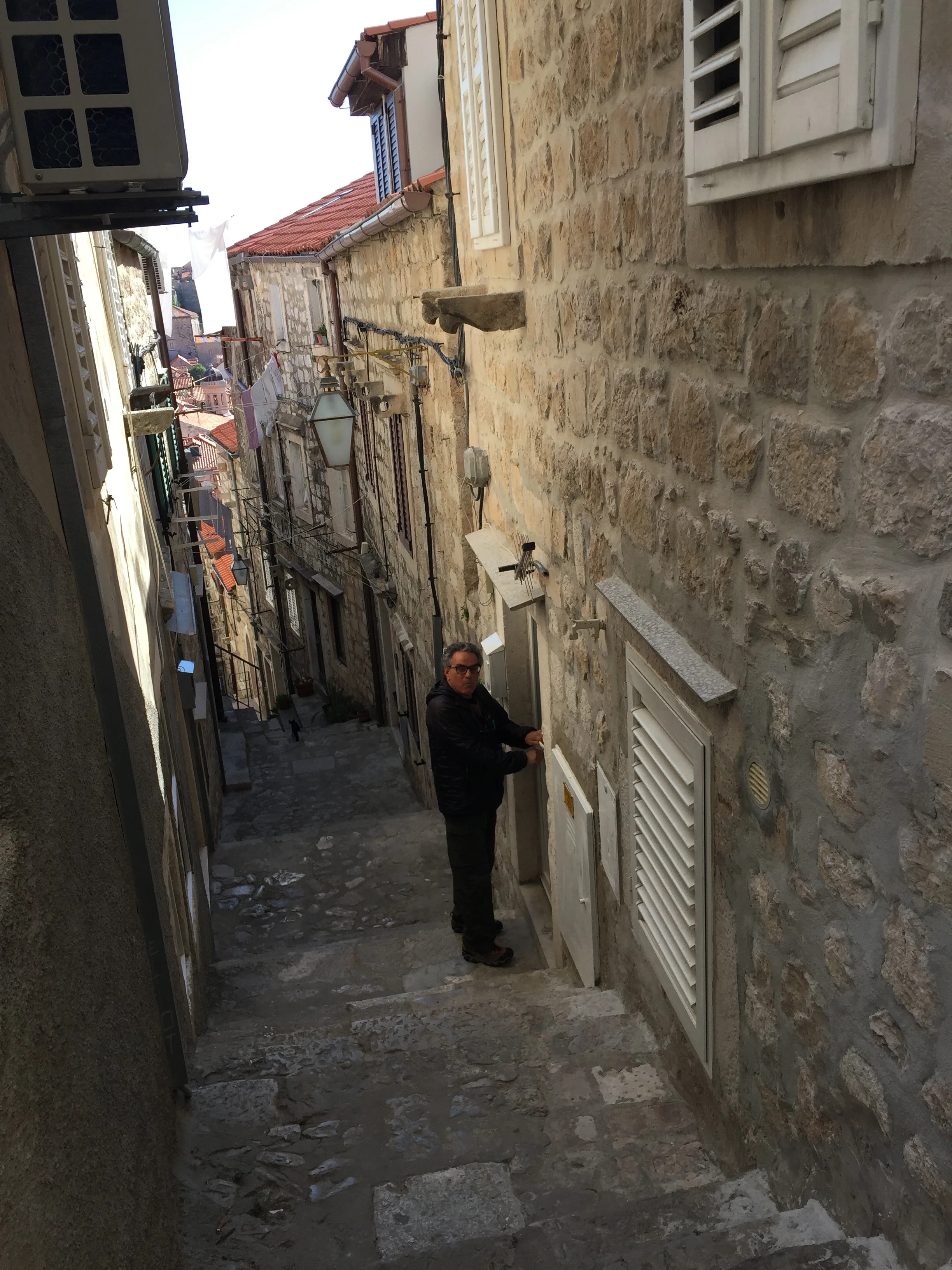
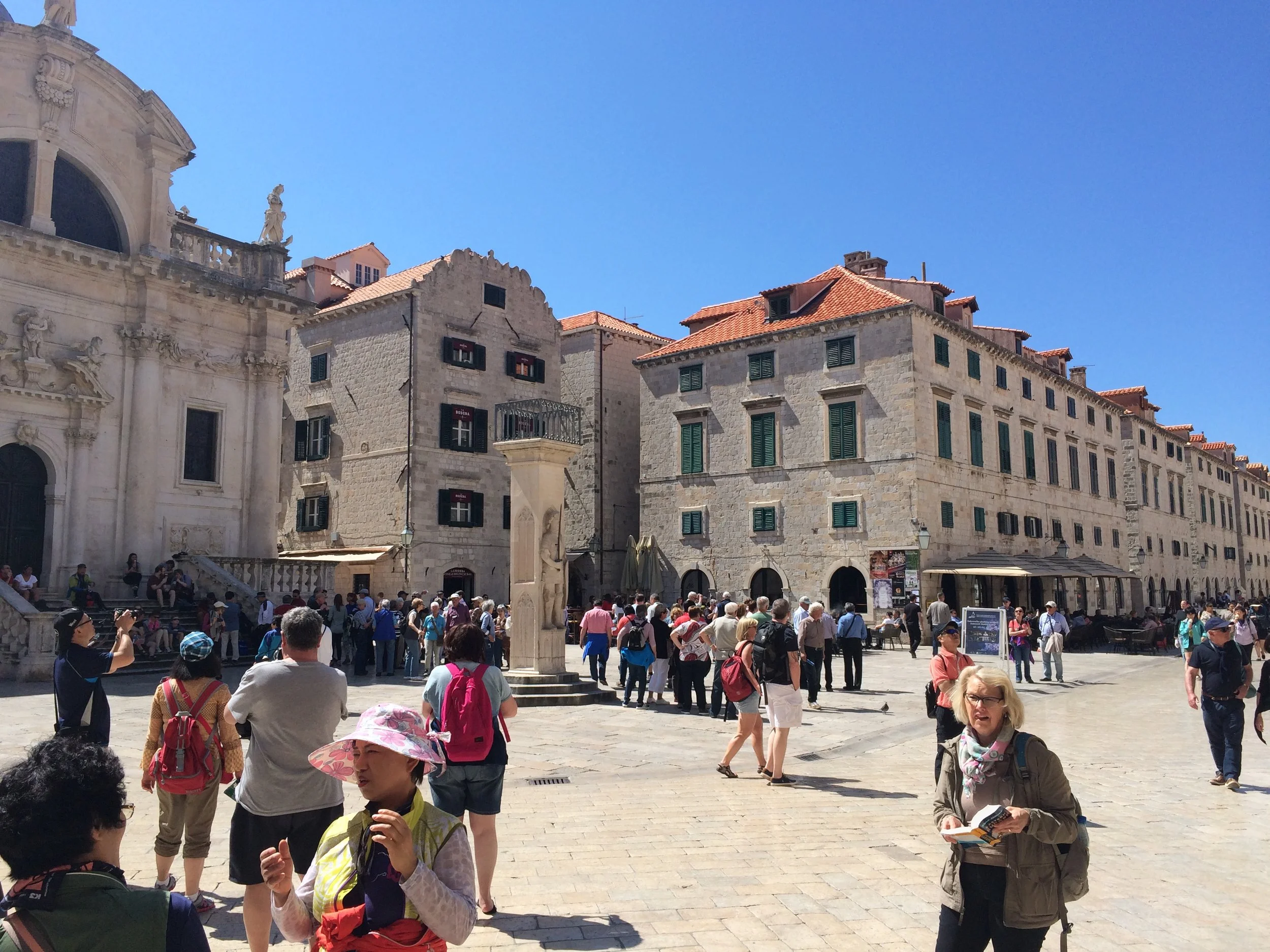
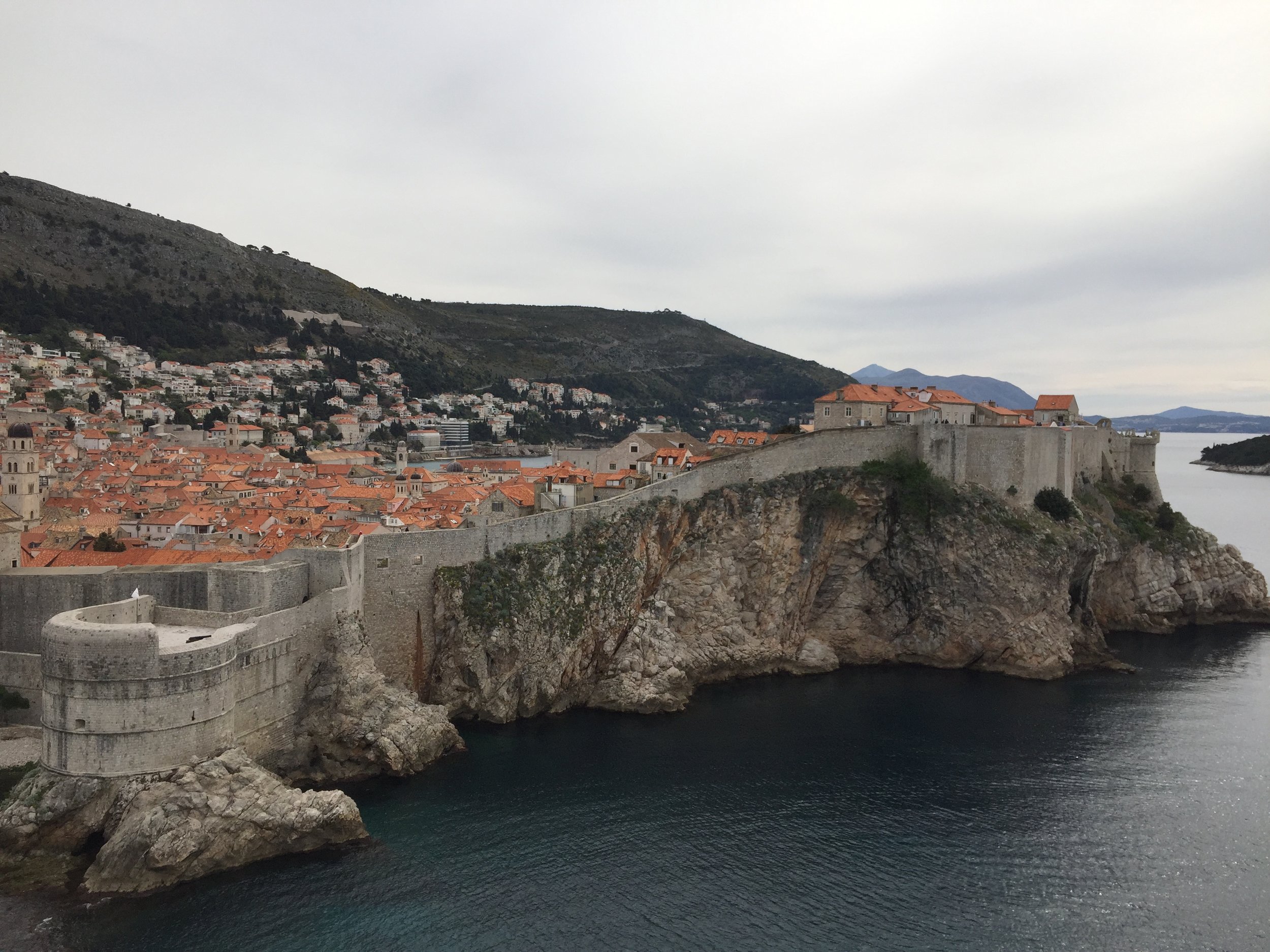
Our bus again travelled along the “Dalmatia” coast of Croatia with its beautiful views. We arrived and we we were met by our hosts that offered to pick us up. They parked at the secondary gate that is at the high point of the walled city and which made our walk with luggage easier. Our Airbnb was at the top end of “Petilvrenci” street,  only 146 stone steps down to the main street known as “Placa Stradun”. Our Airbnb was another efficiency apartment and again with brand new fixtures and decorating. It was very nice and conformed to the photos and representations made in the Airbnb website.  The sun shone bright so we immediately started to explore the Old Town.  The Placa Stradun is a wide marble street with Baroque buildings running on both sides for its considerable entire length. There are store and restaurants and a lot of people in this pedestrian only town. To the left and right are cross streets with additional restaurants, cafes and shops. A small portion of the buildings have carved stone hangovers which are very elaborate; apparently the entire street had these awnings until an earthquake destroyed them. No rebuild was done so as to not display taxable wealth to the Ottoman. Our walk around was inspiring; our walk back up to the apartment was tiring.

Game of Thrones Tour

IMG_5619.JPG

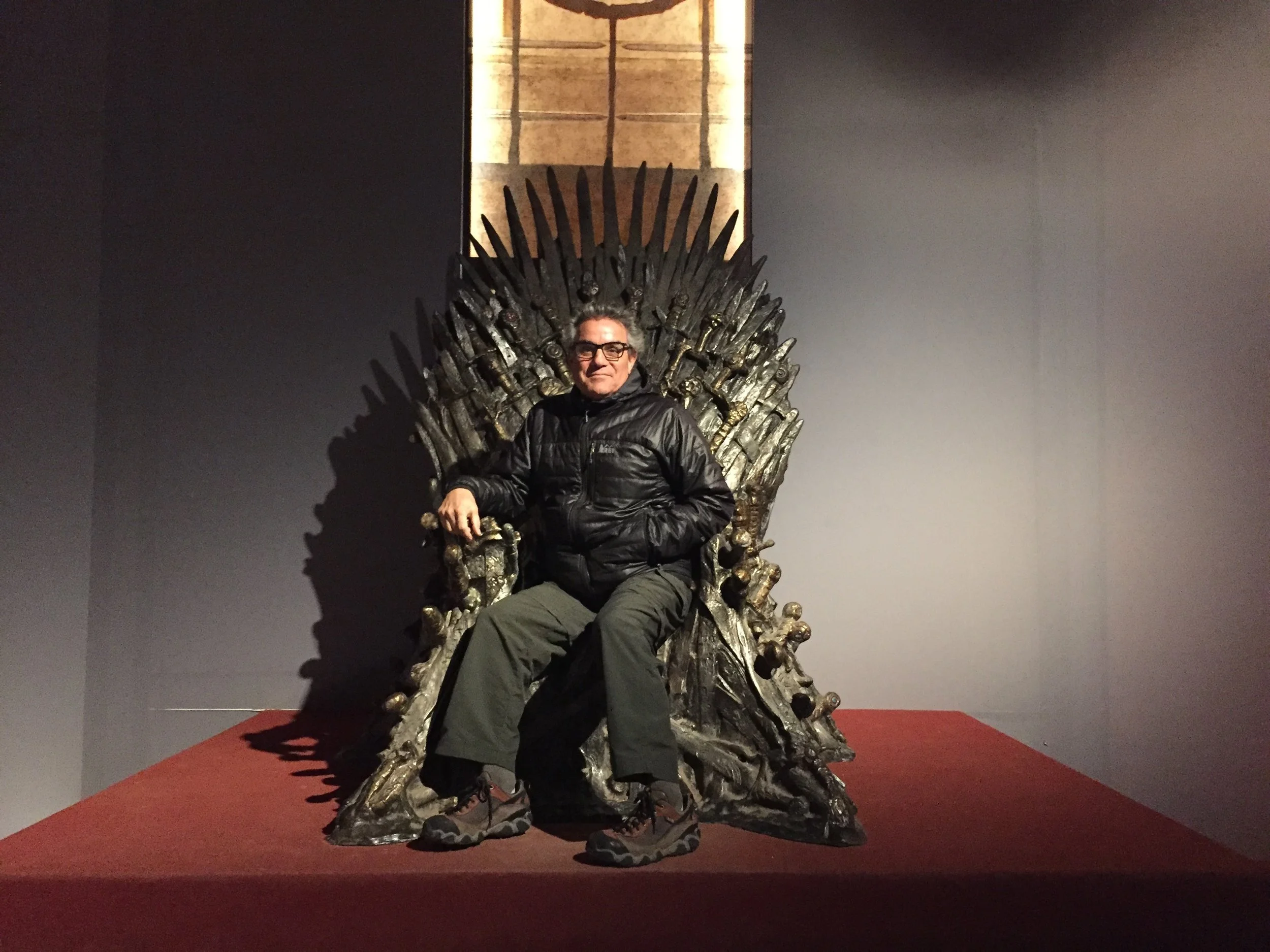
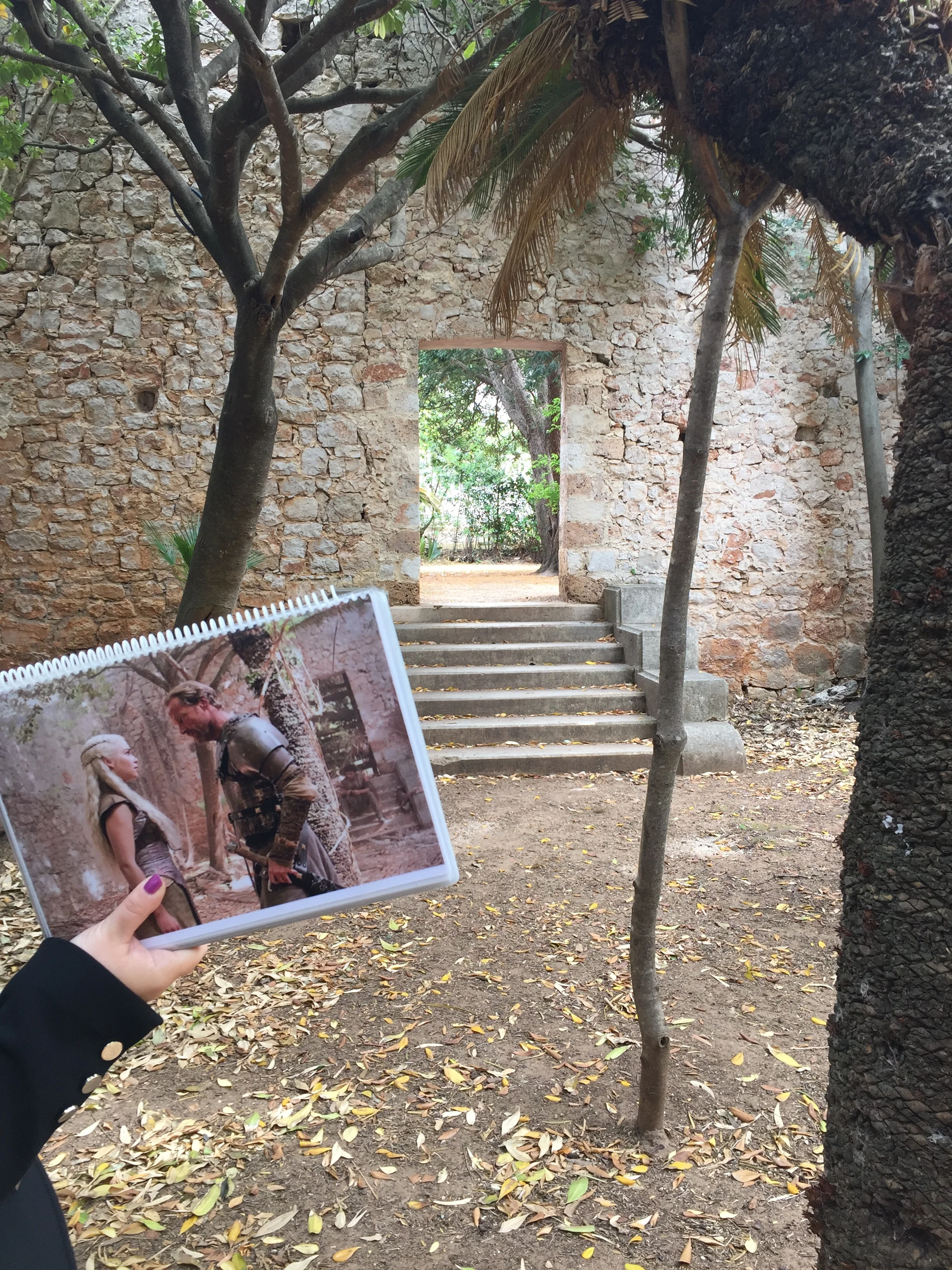
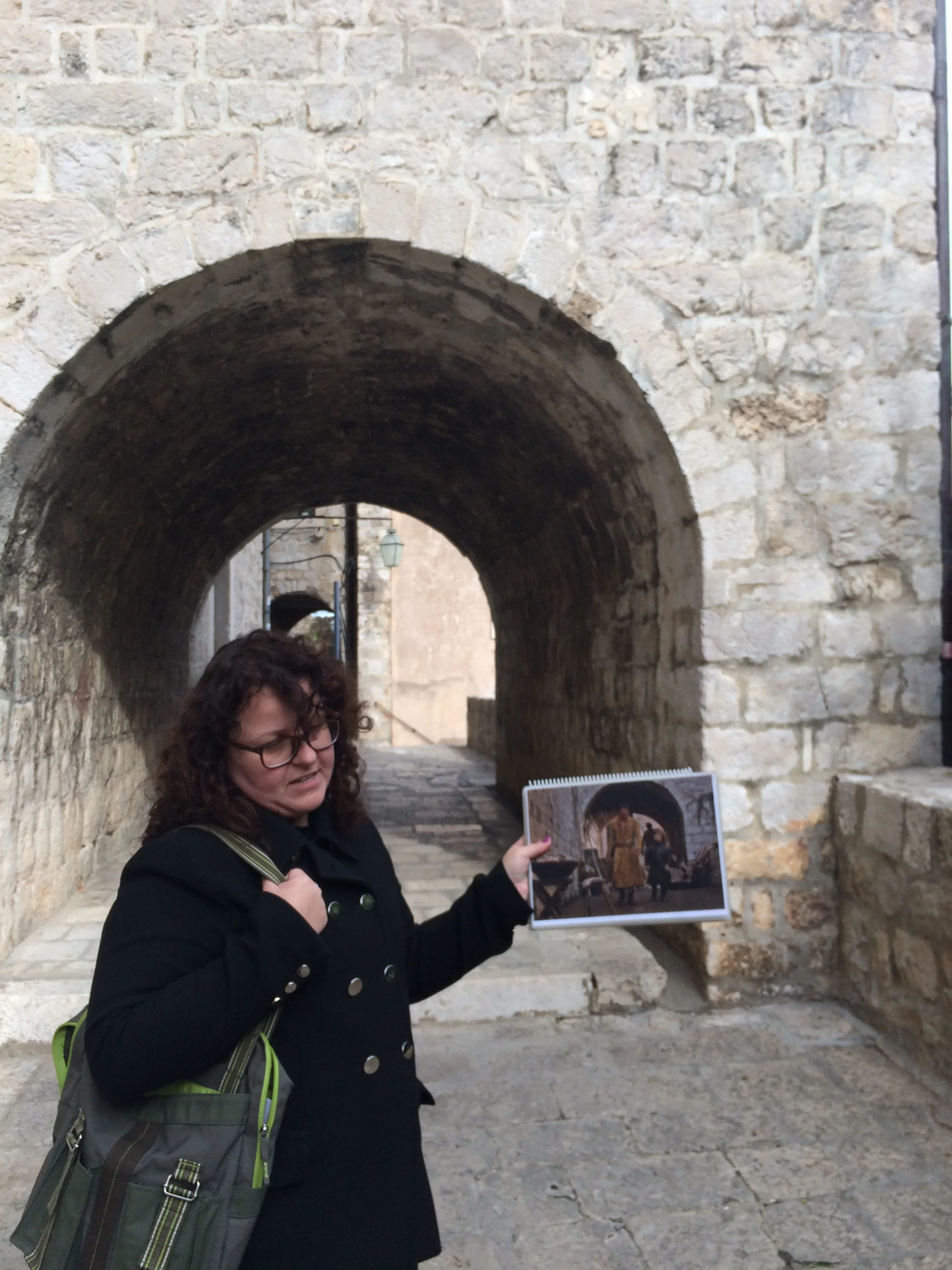
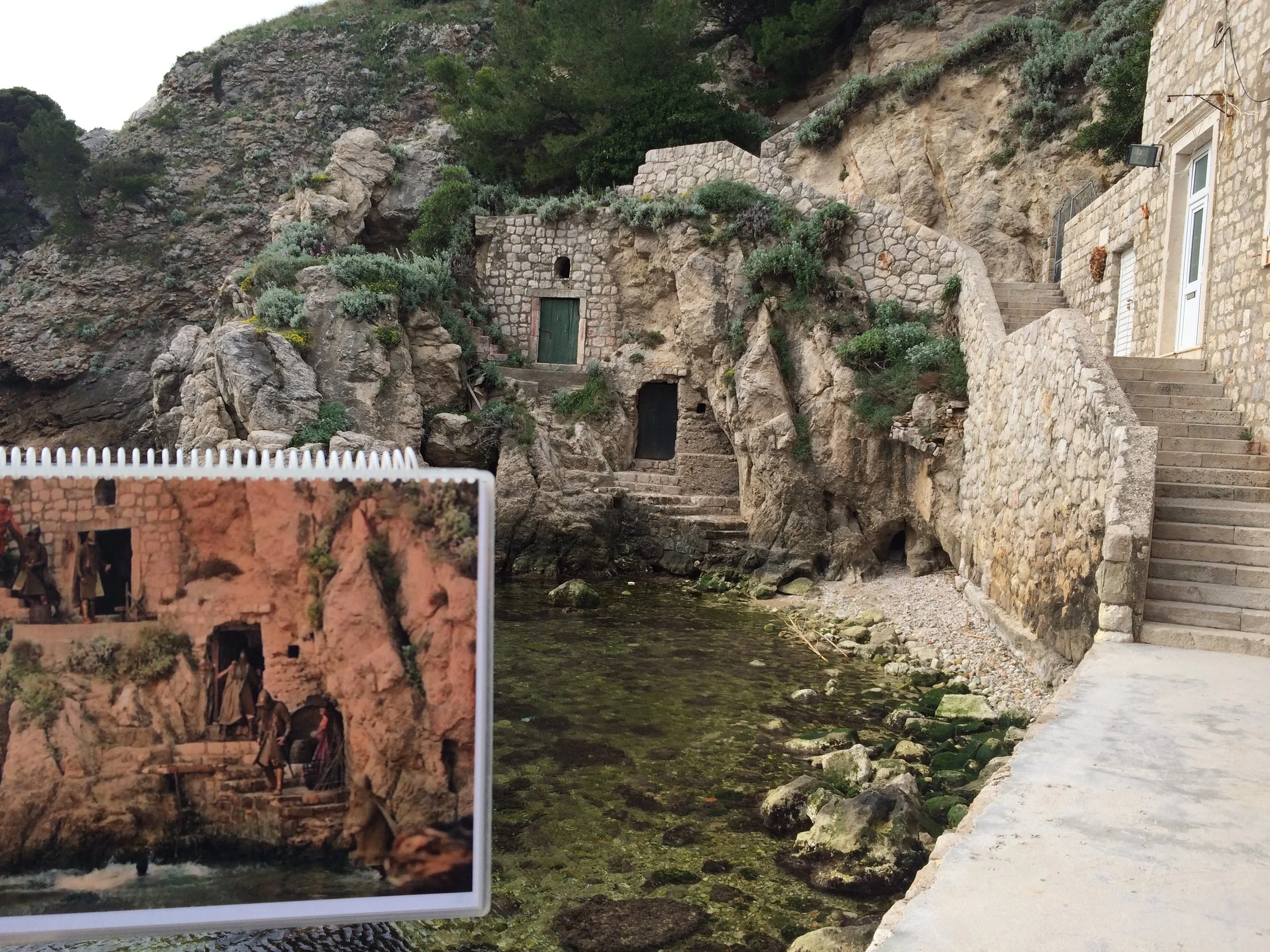
This morning we where to meet our “Game Of Throne” guide in order to explore the city’s filming sites from our favorite HBO series. This is geeky we know, but when you are vacationing in “Kings Landing”, why not relive some of the incredible scenes. Our Guide, Molly, was an extra on the set for several years and was fun and professional in her presentation. For example, she was in the crowd for “Cersi’s walk of shame” and took us to the site of that filming and then many other sequences.  Check out some of our photos. 

We took a short boat ride to Lokrum Island that is close to Dubrovnik. This is mostly a nature preserve and park. Here we were able to walk through the gardens of Bravos, the “greatest city that ever was” where Dany meets the shape shifters. There is a building with some GOT stuff as well. We ended our tour and had a wonderful lunch on the island watching many peacocks spread their feathers and then we walked on the wide sunbathing rocks of the shore line. 

Montenegro

On our second day, we took a day trip to the neighboring country of Montenegro and the cities of Kotor and Budva. Montenegro, named for its location by the Black Mountain range, adjoins the border of Croatia and is mostly a Serbian Christian Orthodox state that was historically aligned with Yugoslavia entities, until 2006 independence. The drive around the shoreline of the Kotor Bay displays majestic limestone cliffs and beaches merging with blue waters. 

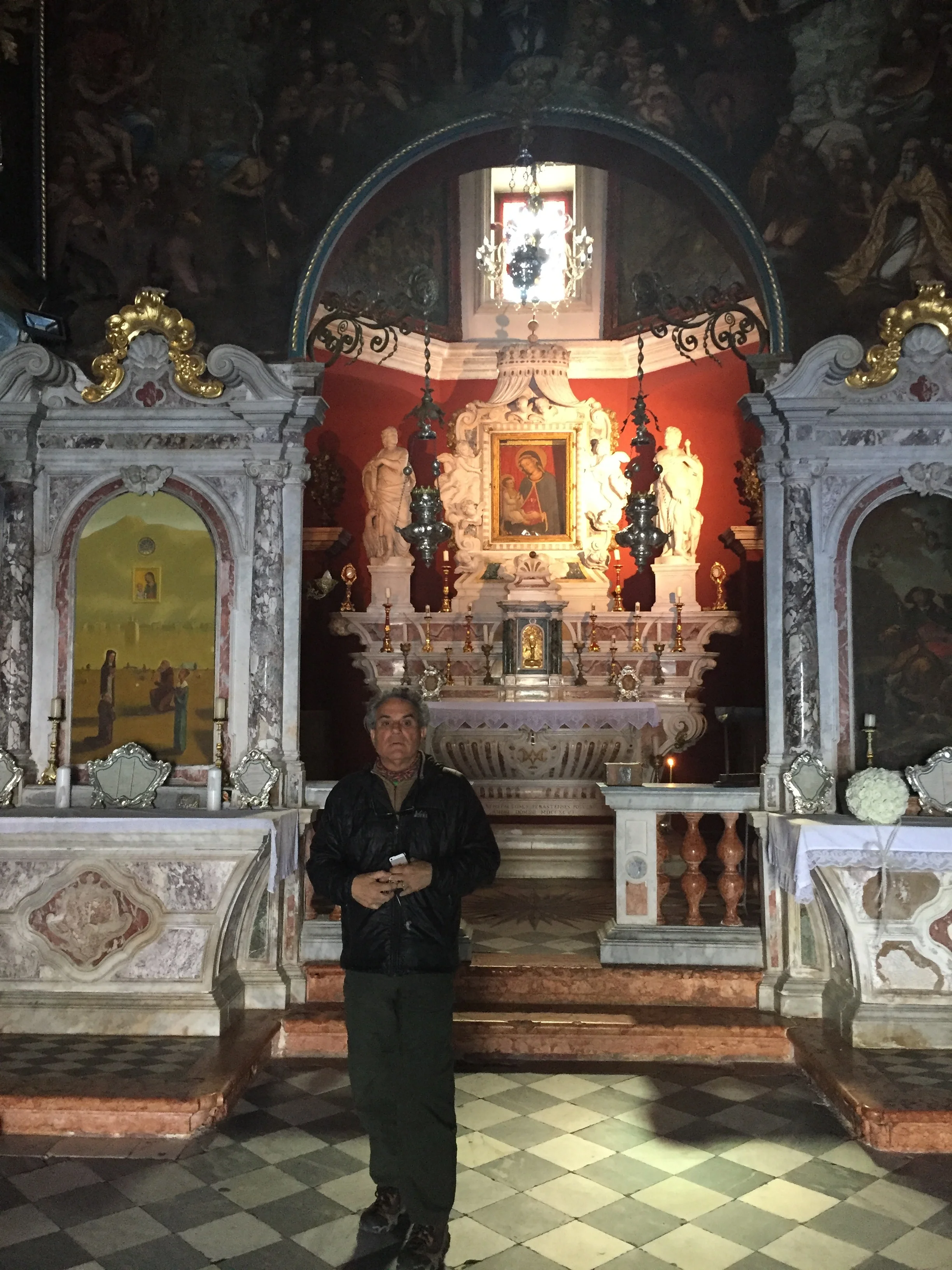
Our favorite stop, though unexpected, was the one street village of Perest, on the shore. We took a small local boat across the narrow bay to the the 15th century artificially created “Rock Island” and its small chapel called ‘Our Lady of the Rock Island”. The chapel was magical with a mysterious mythical story about sailors being saved in a storm. We were treated to the back story by an on-site guide who was really excited about sharing the history. It was just plain fun on a beautiful site. 

IMG_5640.JPG

The city of Kotor has ancient walls that are now almost indiscernible. We actually huffed and puffed our way to the high point of the city where the Fortress walls stood out and for our efforts got an amazing view of this city. Within the city are marbled streets with churches boutiques and cafes. We visited St Tryphon’s Cathedral which is an impressive 12th century structure, a little plain but certainly Byzantine in its décor. 

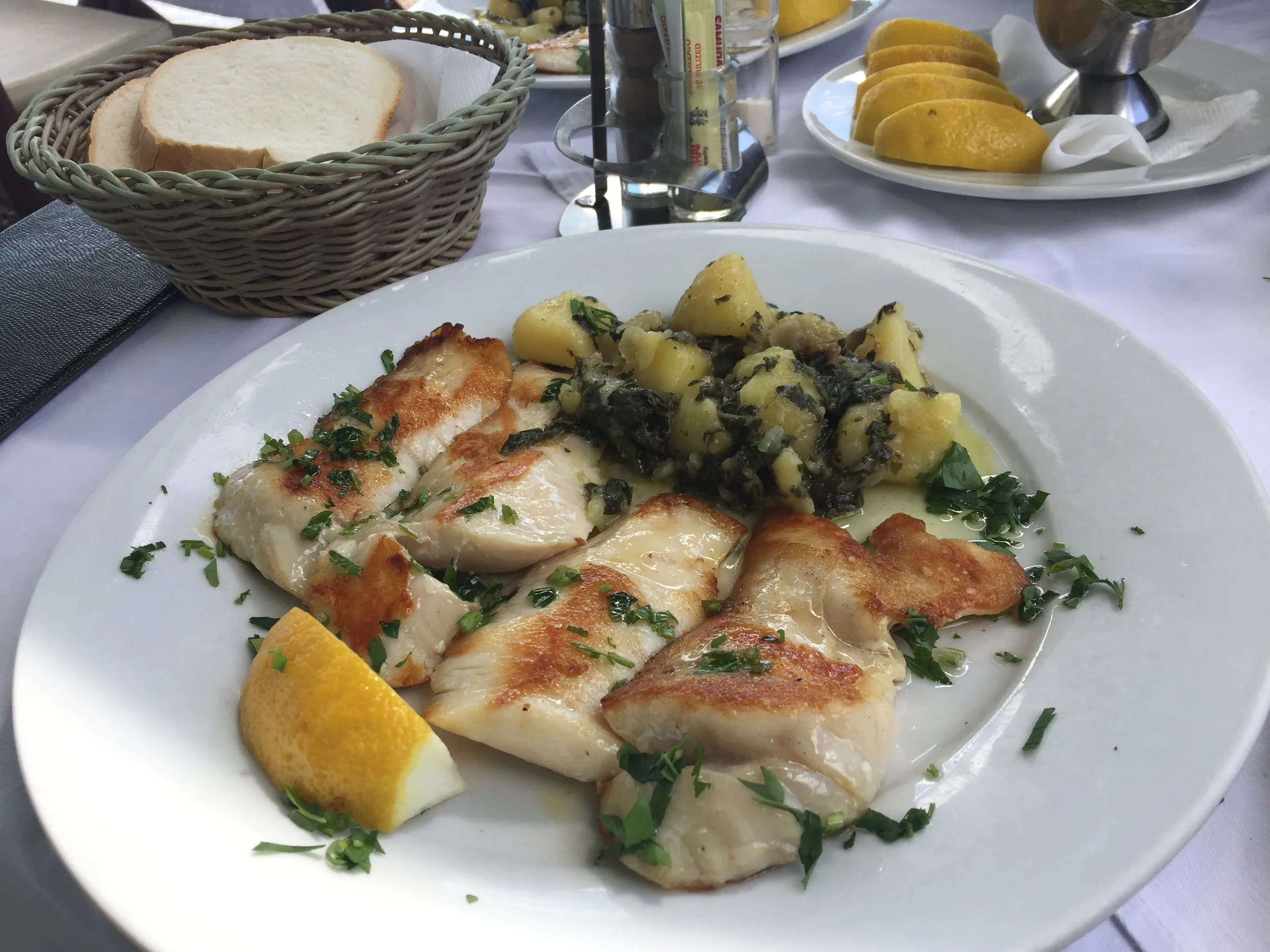
Seaside lunch in Budva

Seaside lunch in Budva

The City of Budva is the larger and more modern city with many high rises and fancy hotels. This is the playground of well to do Russians. The waterfront is nice, the seafood we had for lunch really great, and it appears to be the place to party. It is an example of modern urbanism on the waterfront; impressive but maybe not where you want to relax.  


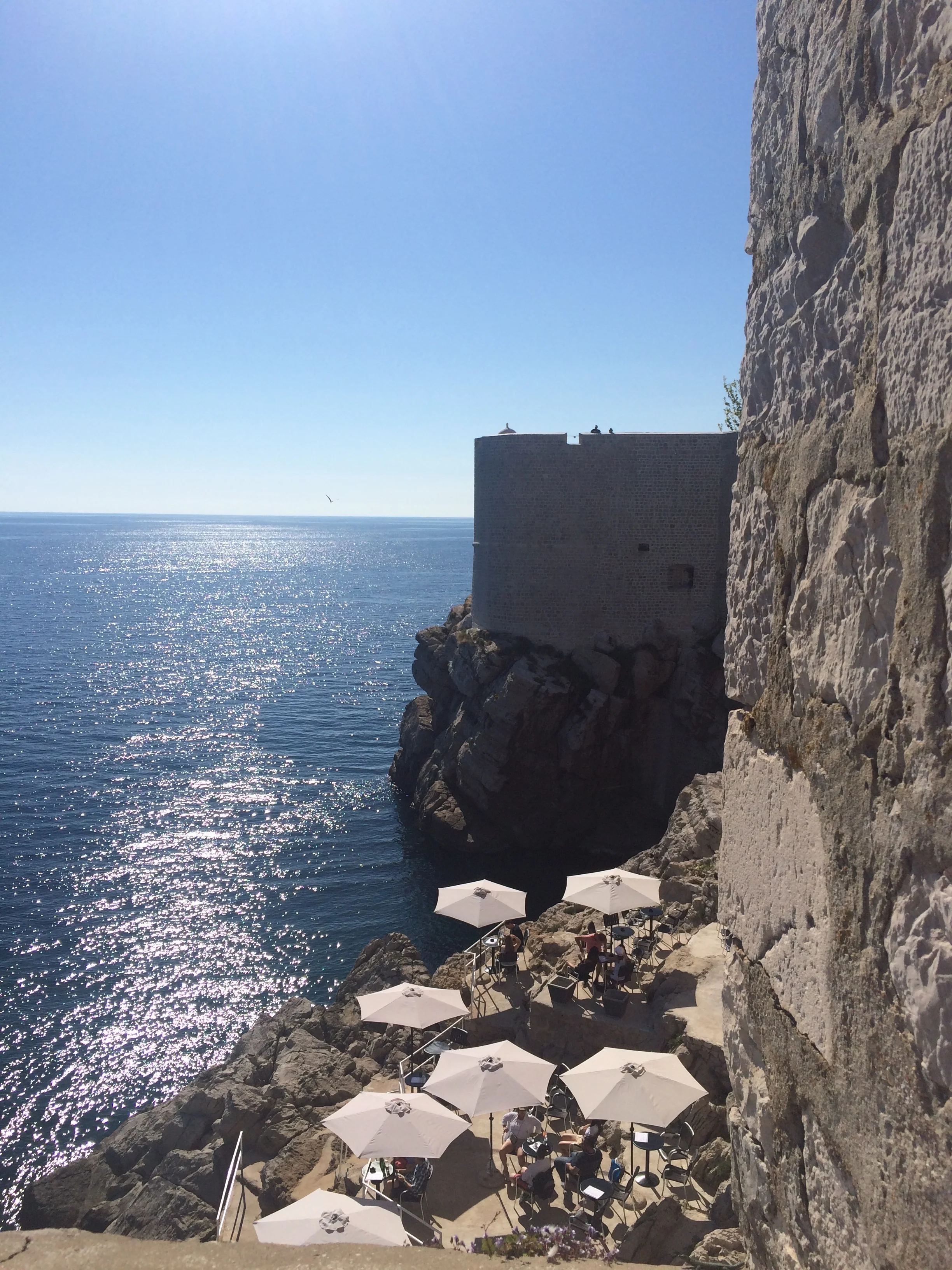
Back in Dubrovnik on day 3, we took the cable car ride from the gates of the city up to the top of Mt. Srd. There is an old fort built by Napoleon which looms over the city. Interestingly, the Croats never built a fort here for fear the leaders of the surrounding Ottoman Empire would consider it provocation for war. Part of Dubrovnik’s success was to avoid conflict and be a non-belligerent trading partner with the Ottomans and Italian Venetians. This same sense of preservation worked in negotiations with Napoleon who did not fire cannon on the city, but did build the fort. But times do change and in recent times the Croats manned the fort to impede Bosnian advances on the city. The fort, in its rustic condition, houses a small war museum and memorial regarding the battles fought in this area in what we know the Croats call the “Homeland War”. Though the Bosnians did not invade, they did surround the city on land and sea and shelled the city with 20th century weaponry. It was a moving presentation. There are also maps in the city itself that show the bombing strikes in the city and other war memorials. 

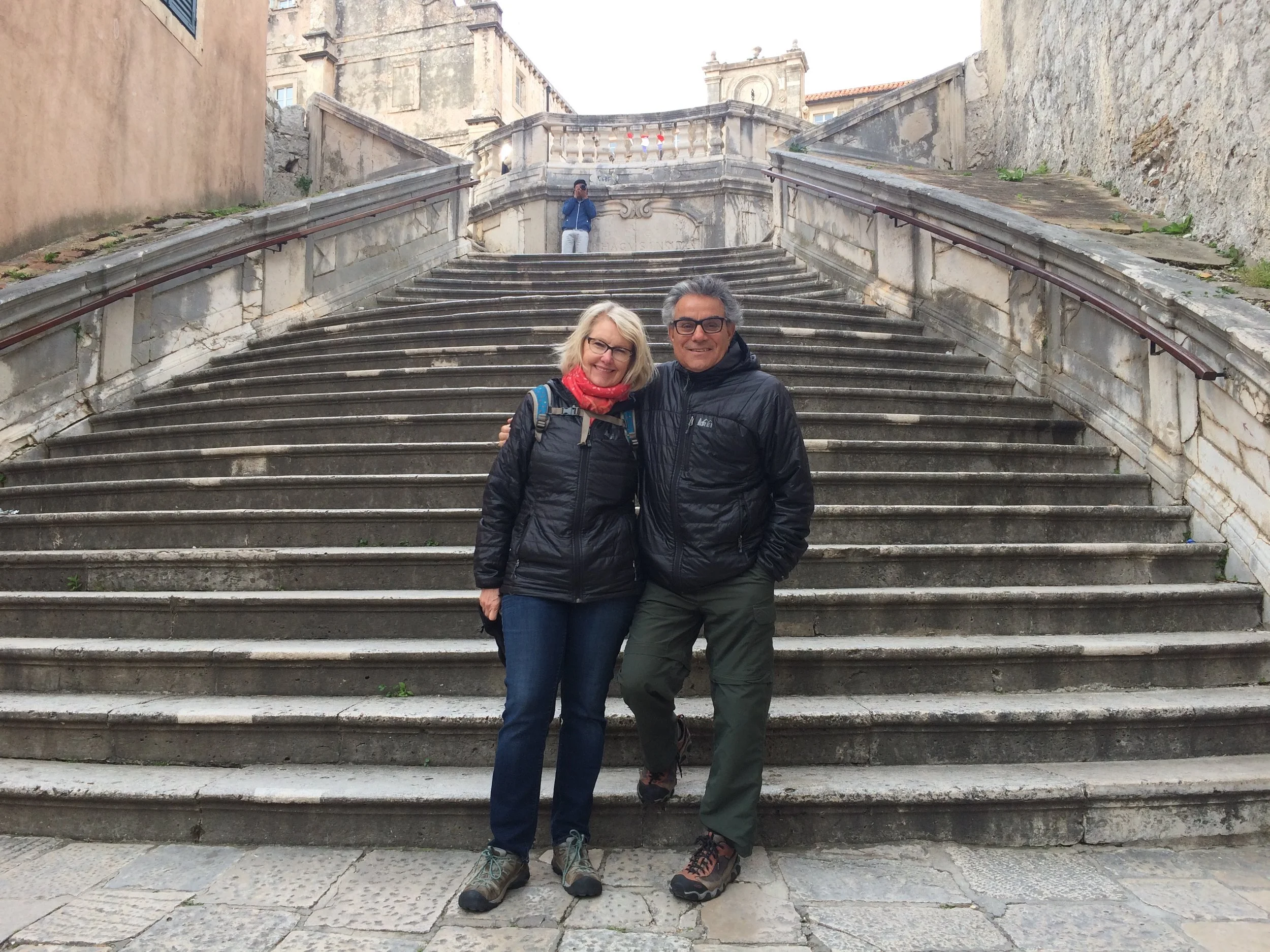
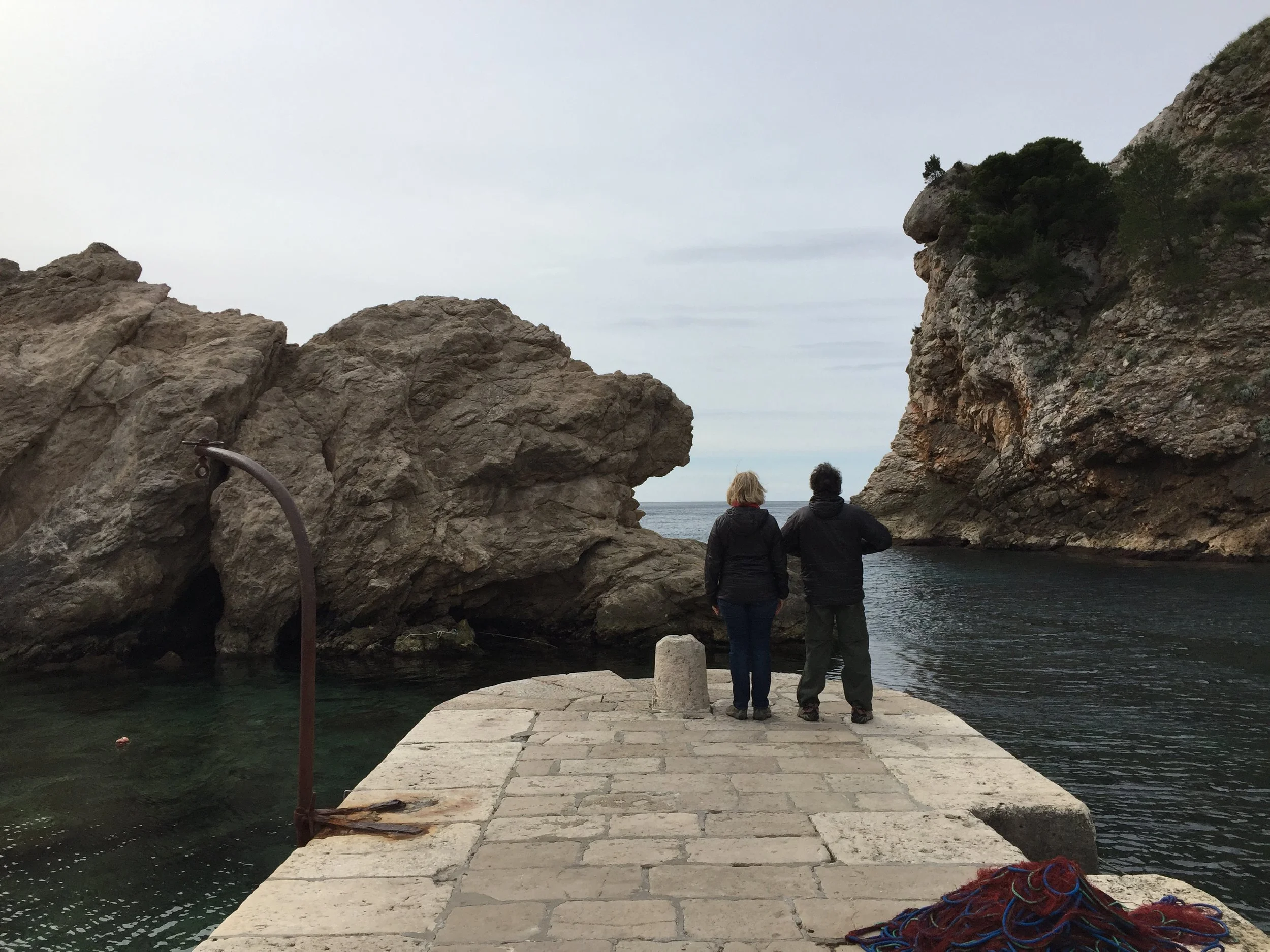
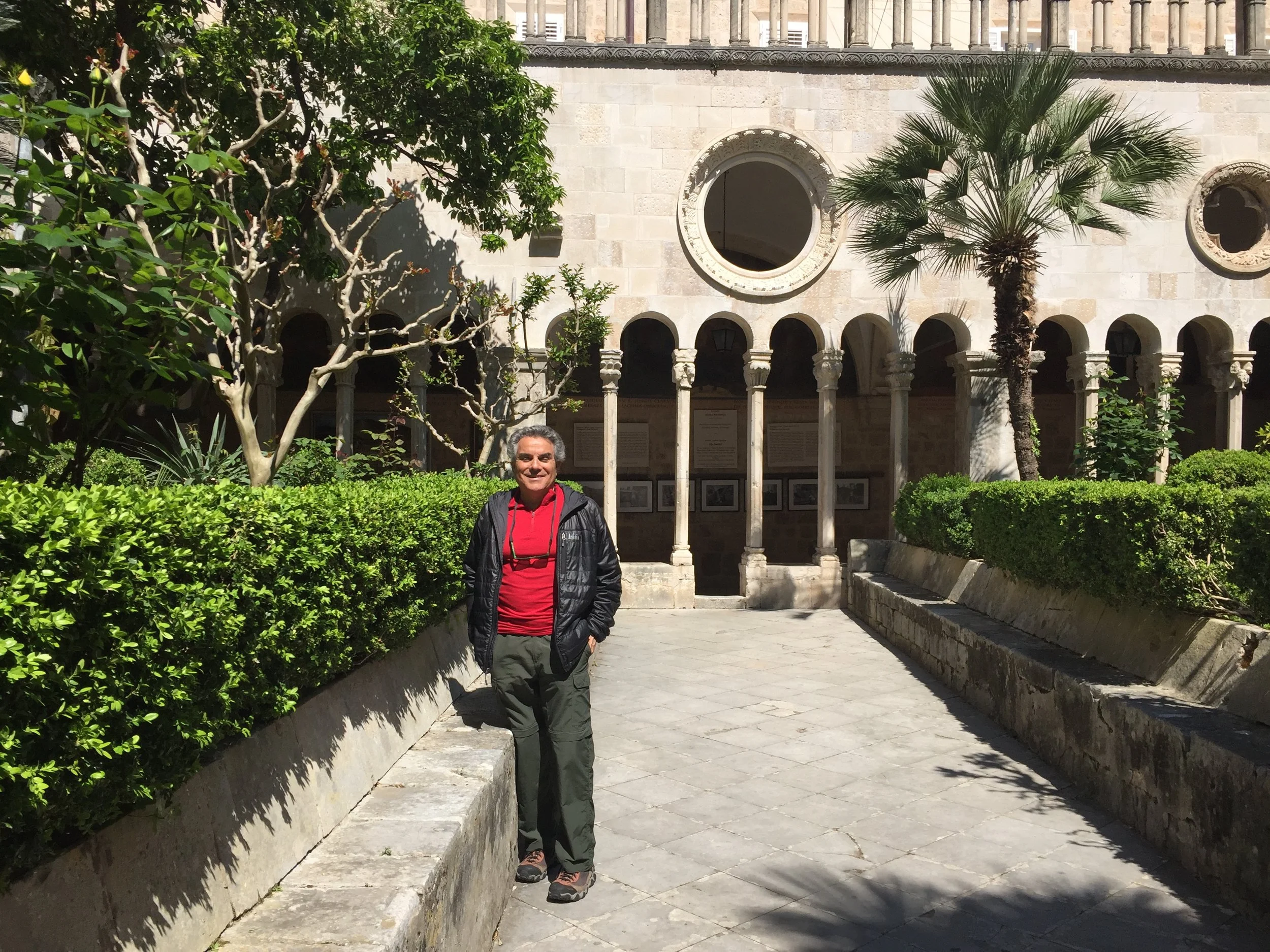
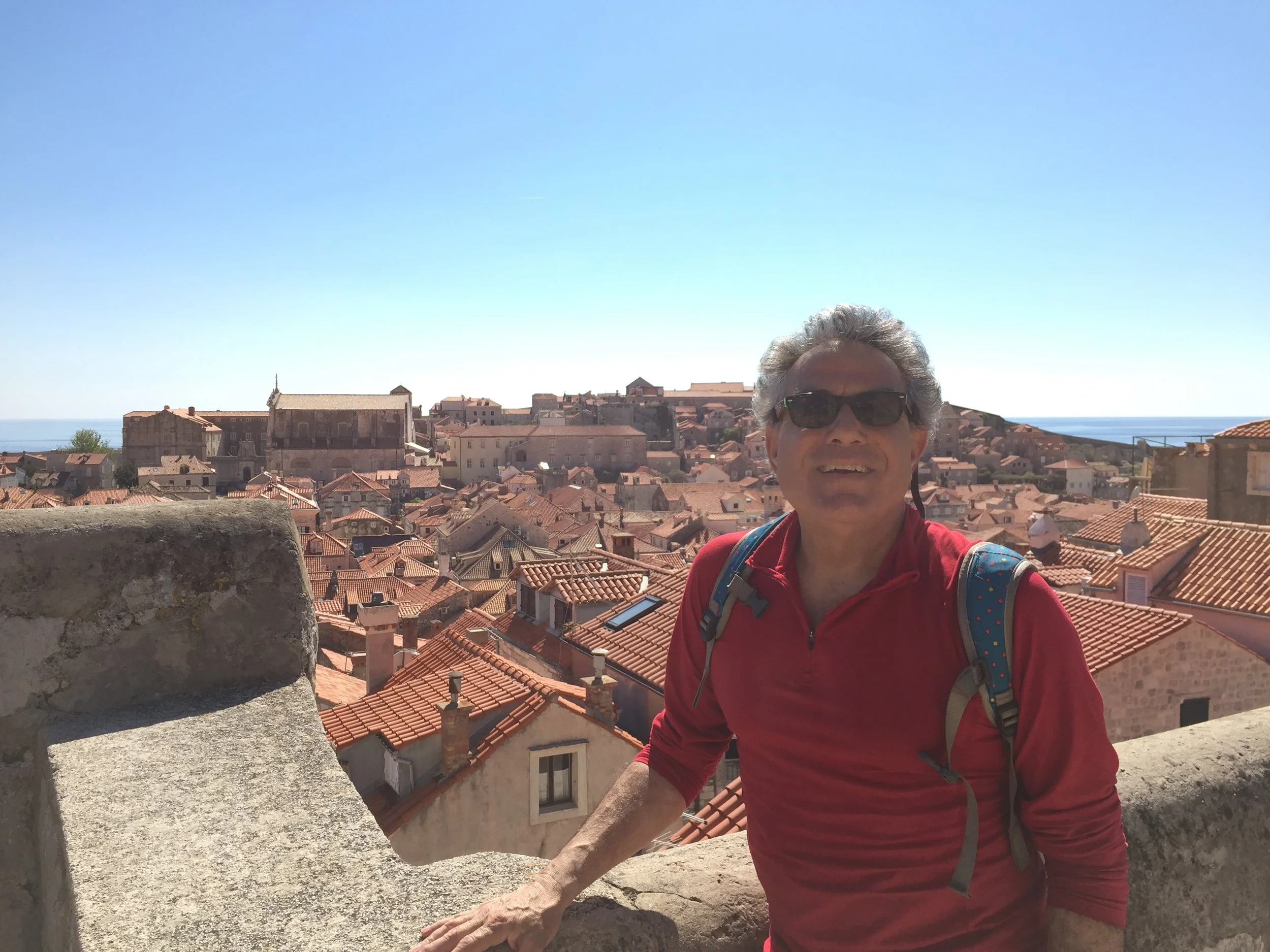
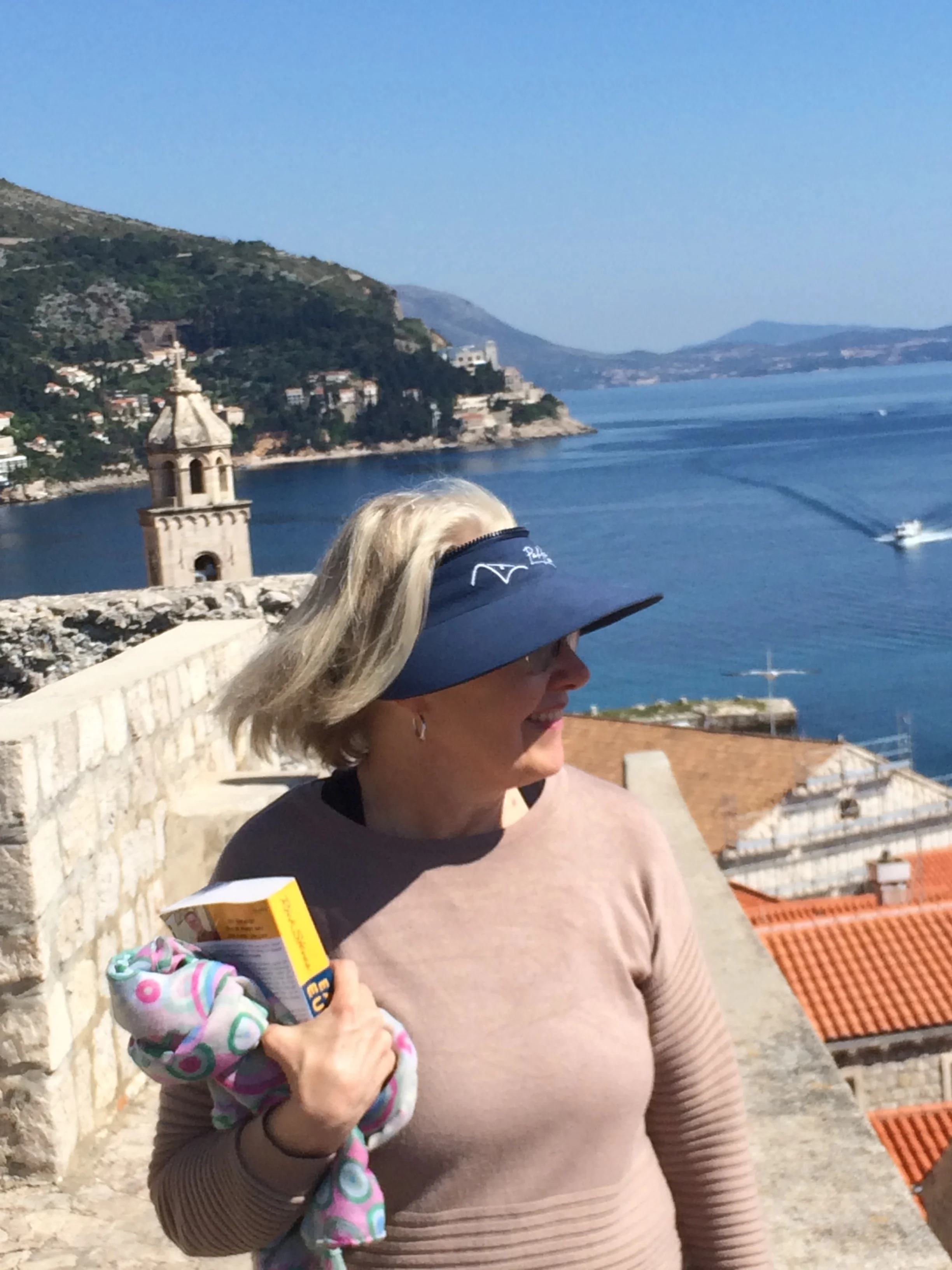
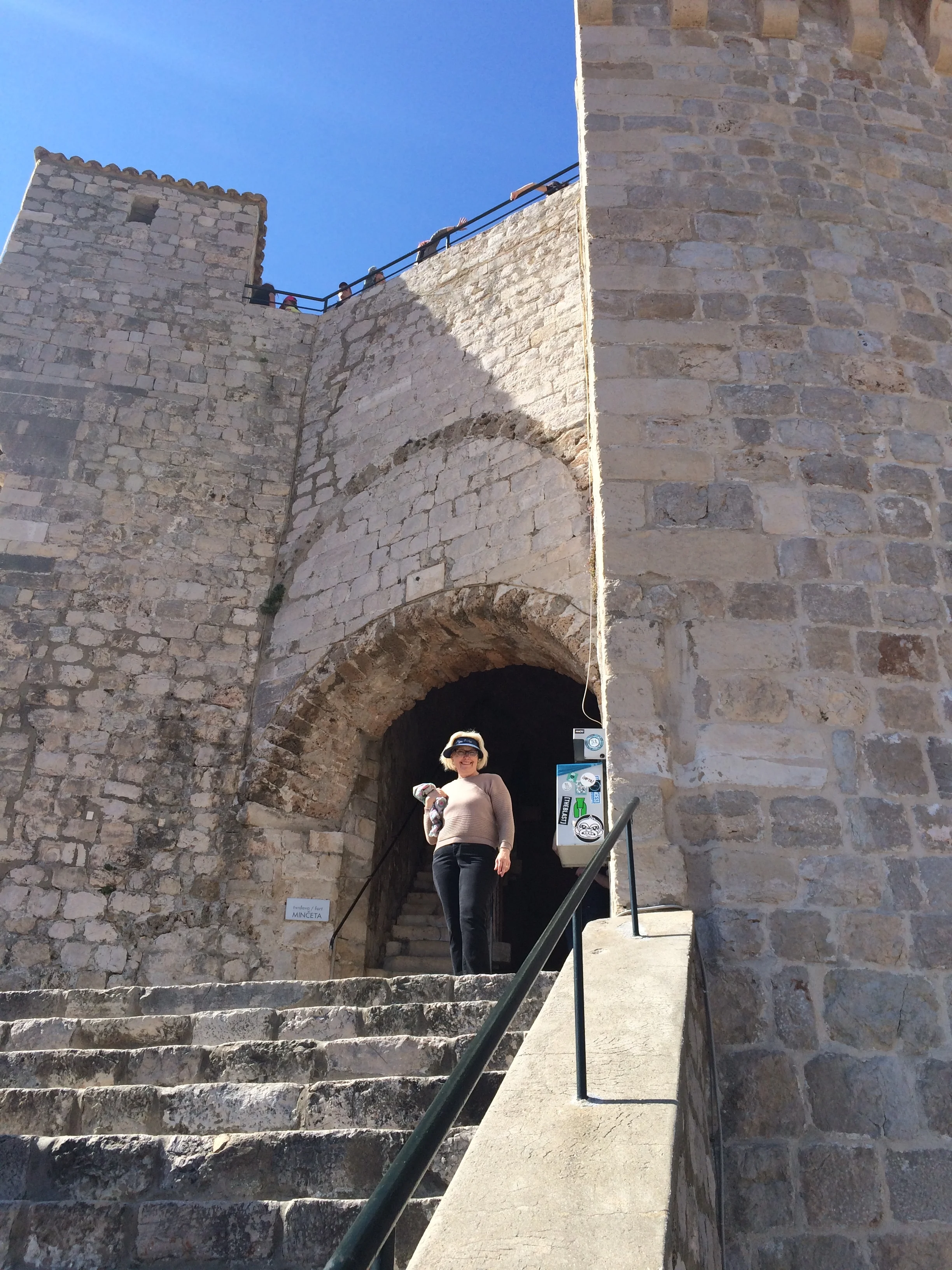
On our last day we took a leisurely walk around the top of the ancient city walls that protected the inhabitants for 5 centuries. This may have been the best for last. We started at the low city gate and the path led us up and around to the lookout over the shimmering Adriatic Sea. From the heights of the cliffs the multi colored water was postcard perfect. We even had a beautiful sailboat moving slowly near the cliffs. As we walked we could look over the maze of streets, church towers, and orange roof tops. In some places, more modern amenities like small athletic fields and B-ball courts were fit into the gig-saw pattern of this ancient city. Also, there were some sporadic areas of bombed out structures, which you could only see from this high vantage point. We did one last audio tour of the city using a “Rick Steves” application in order to touch base on remaining sites. Still probably missed some. 

Our trip to Croatia was over. The next morning our hosts agreed to drive us to the airport which is quite away out of town for our flight to Prague in the Czech Republic. We flew Turkish Air, always the cheapest, but with new planes. Our Airbnb hosts were a very nice couple and we would recommend there Airbnb. Dubrovnik is just glorious. 


Northern and Central Croatia


Zagreb

Our first stop in Croatia was the capital city of Zagreb.  We traveled by train from Ljubljana, Slovenia.  The train looked like an old Soviet Union throwback, with old tattered seats and filthy toilets. When we got to the border 4 armed officers boarded the train, checking, and stamped our passports. They were puzzled by our new passports with no stamps in them, so we pulled out the original passports changed in Paris and that seemed to do the trick.

City Central Park

City Central Park

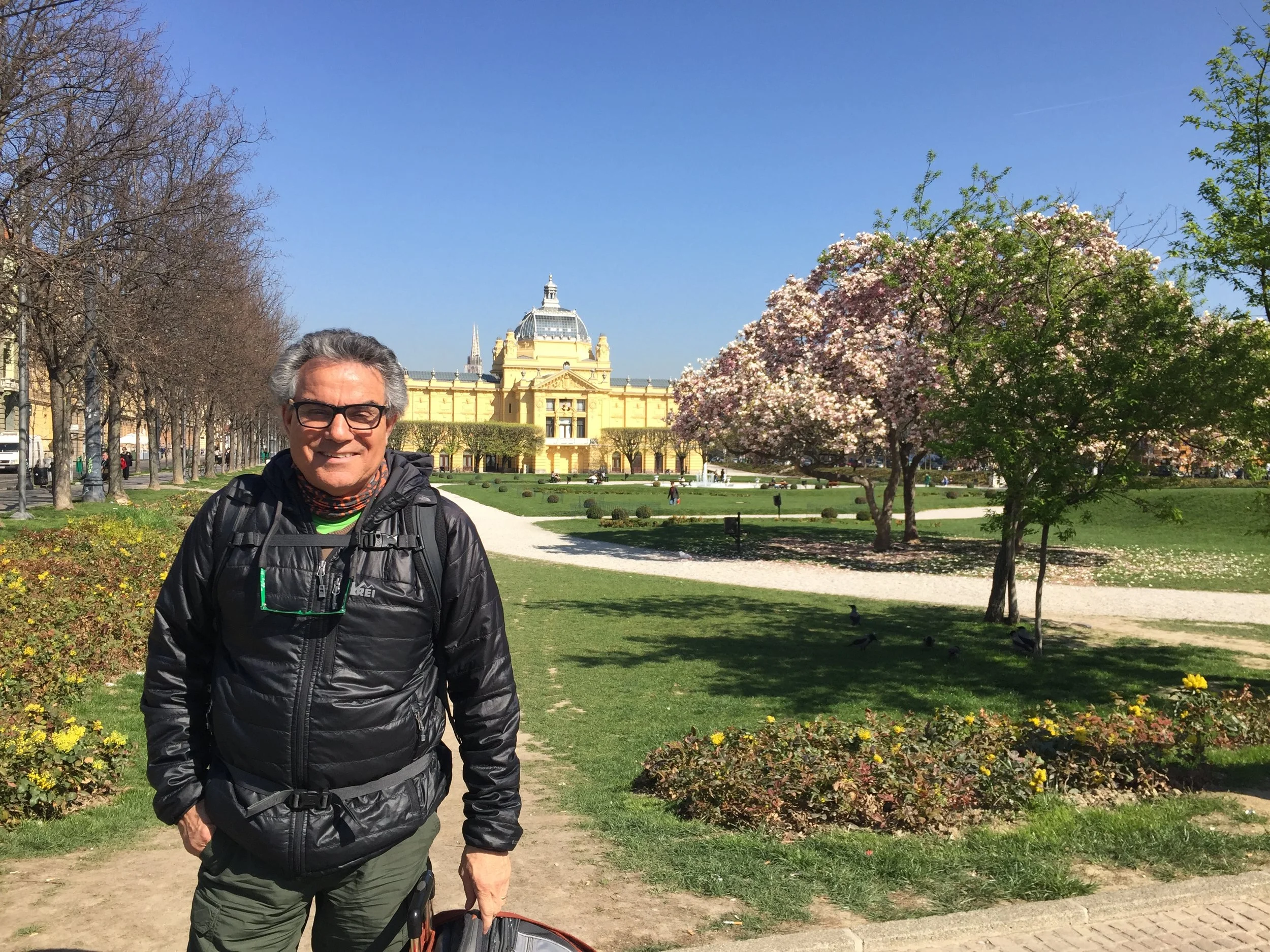
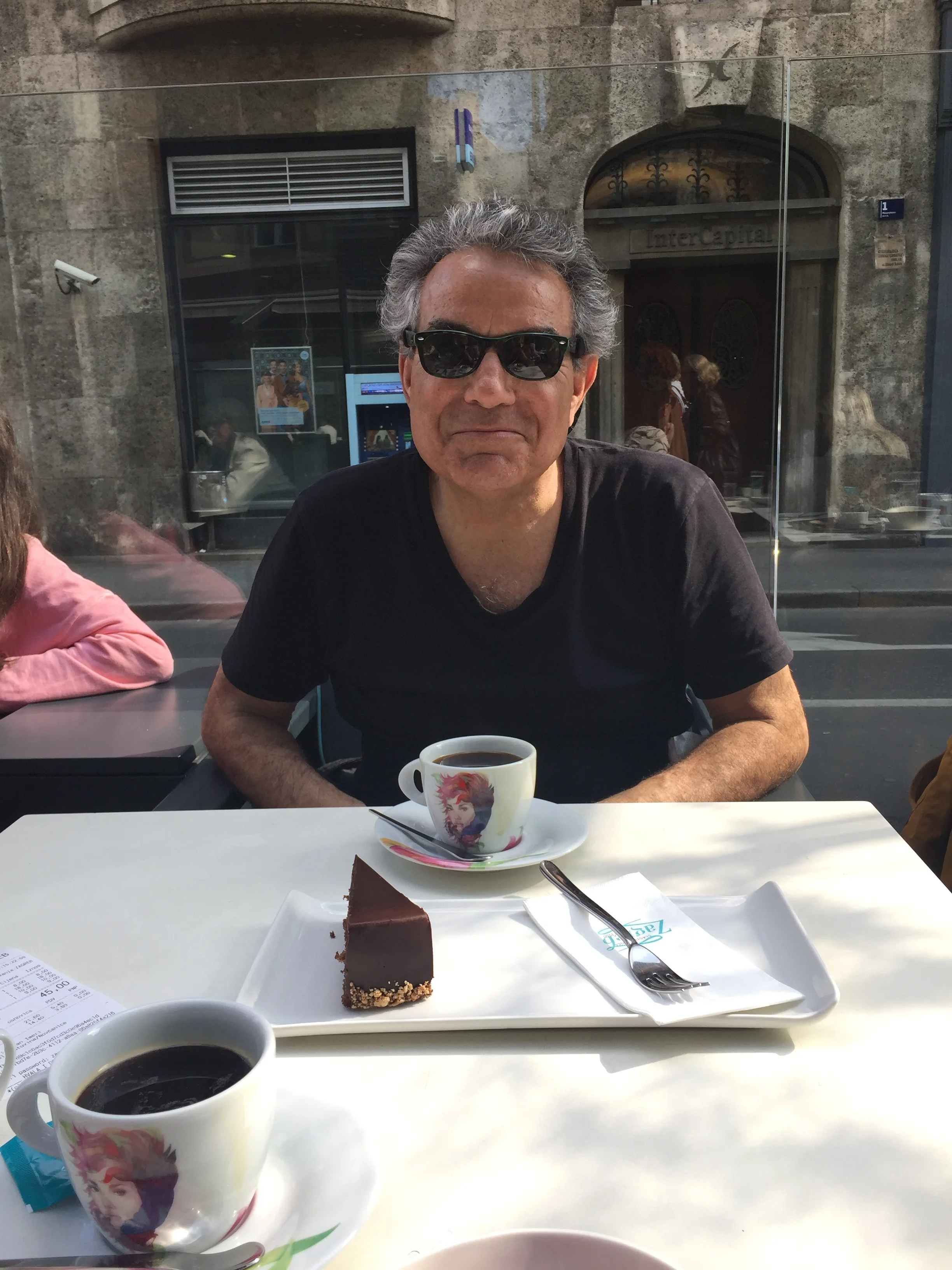
We arrived in Zagreb--the capital city of Croatia. Exiting the station we were able to walk through the Central Park which is very nice and displays some flamboyant Austrian architecture. Mostly, the new town has rough looking socialist structures. The city started out as two competing towns--Gornji Grad with the church and religious sector and Donji Grad with the merchants and most peasants, divided then by the river and blood bridge, the site of many battles. Today, the  "blood Bridge" street still exists.

We walked through the park to our "Cool City Hostel". It had been awhile since we did a hostel, but here we had a nice room and large kitchen in the downtown area. Our host Ivana was simply charming. She offered directions to some of her favorite city sites. First, was the Times Square of Zagreb called Jelacic Square bustling with crowds and city buzz and tram stops. The squares' namesake " Govenor Josip Jelacic" united the Croats within the Habsburg Empire.

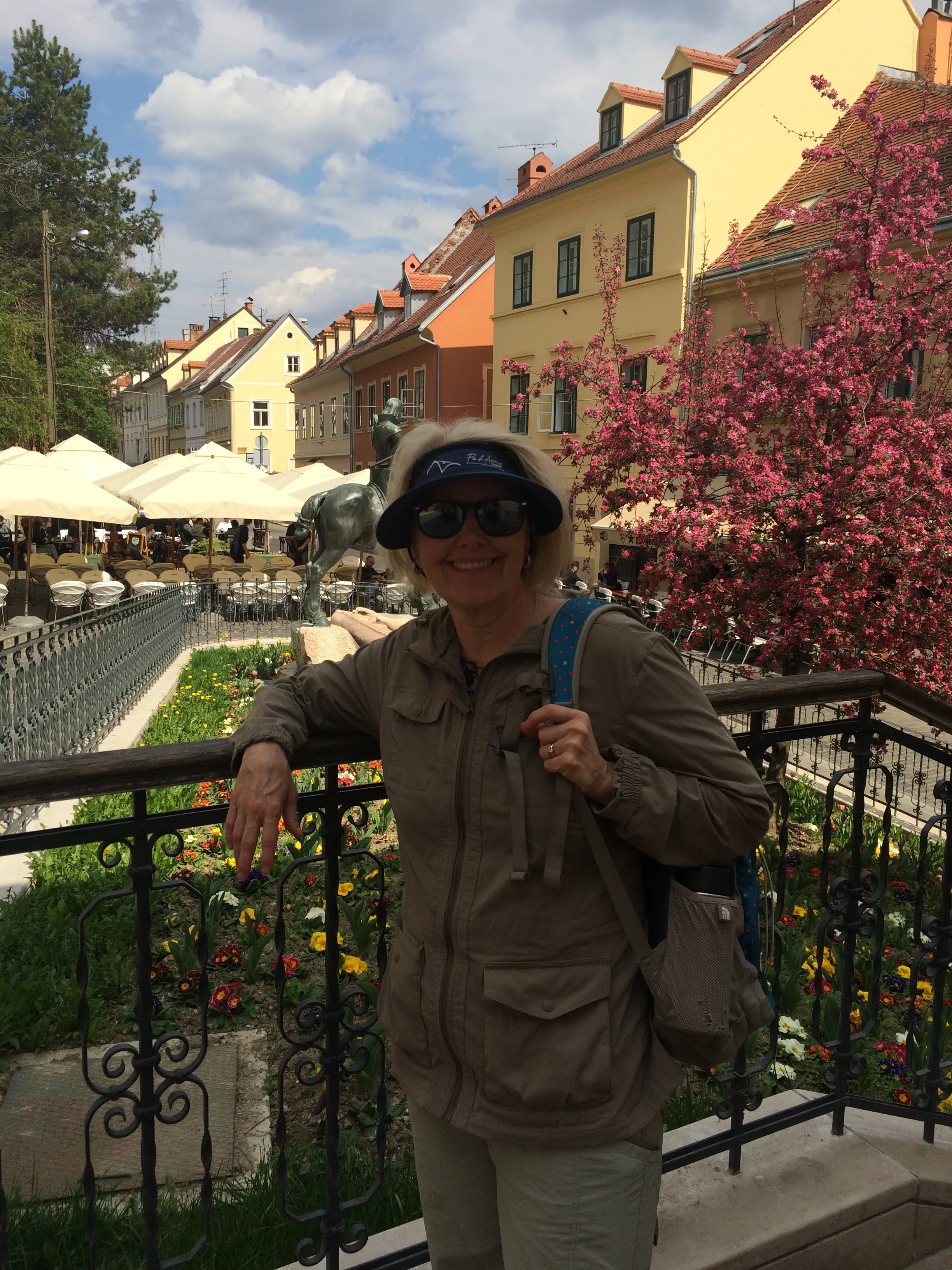
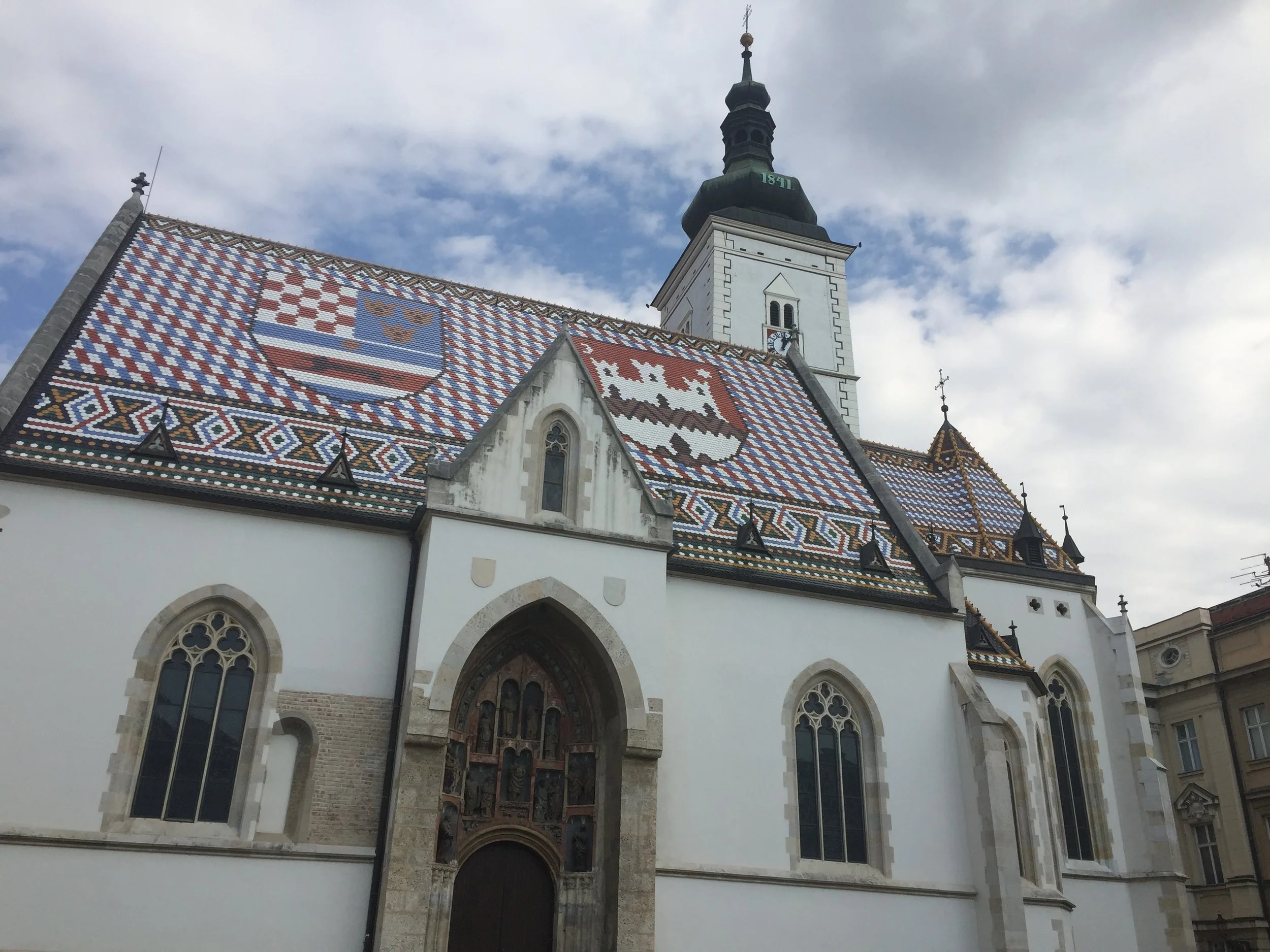
The city square was very busy. We took a historic walking tour of the old town and saw the open market and museum of Broken Relationships, ie. mostly letters between significant others. We also viewed the famous St. Mark's church with the tiled roof of Croatian insignias and red/white checker board panels, now the style of there soccer uniforms and flag. As well the city had a gigantic Cathedral of the Assumption, which was nice with three spires.

The city maintains the tradition of firing a cannon every day to remind the town folk of lunch time. This practice started for the farmers. We witnessed the firing along with a class of elemertary kids and our tour group. Although only fired one time daily it is apparently a full time job; as is the job of the two guys who light the gas lamps along the city walk each night. 

The technical museum was back by the train station, a pretty good walk. It reminded us of a stereotypic, old time museum. Kind of like the Henry Ford Museum but not nearly as nice or complete, or large. Very Soviet. If anything we most enjoyed the WWII vintage American fighter planes with Croatian insignias. For example, the P 47 fighter and yellow Trainer were surprisingly large up close. We did not look closely at the trains, turbines, or generators. There was an interesting 1950’s Chevrolet Fire truck on display, and some 1960’s space stuff, but we could have skipped it all.

We probably could have skipped the entire town from the sightseeing point of view, but the historic references we learned about this country where important. The citizens seemed proud and happy after surviving the war with their neighbor Bosnia.

Plitvice Lakes National Park

Our Hometel

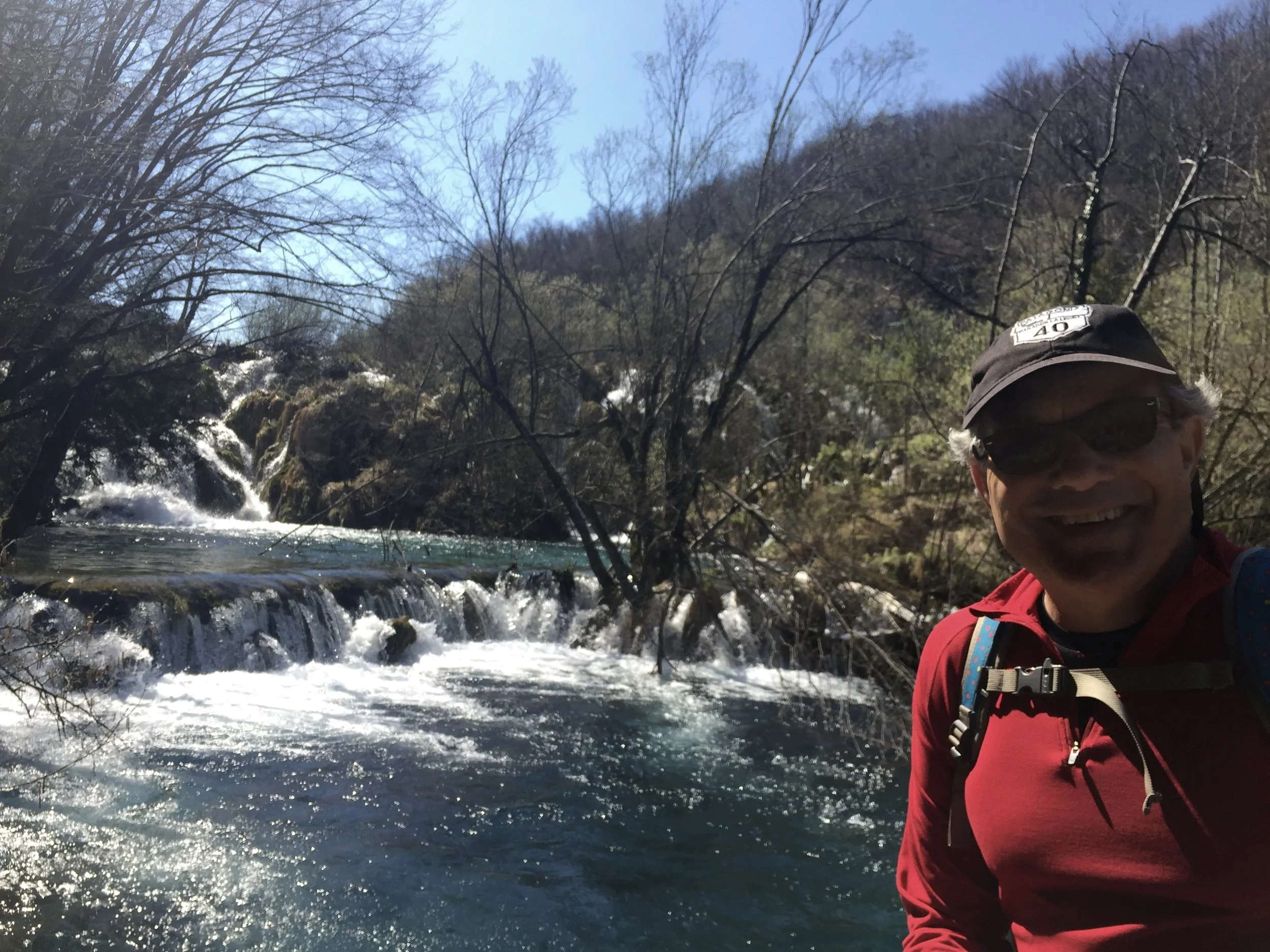
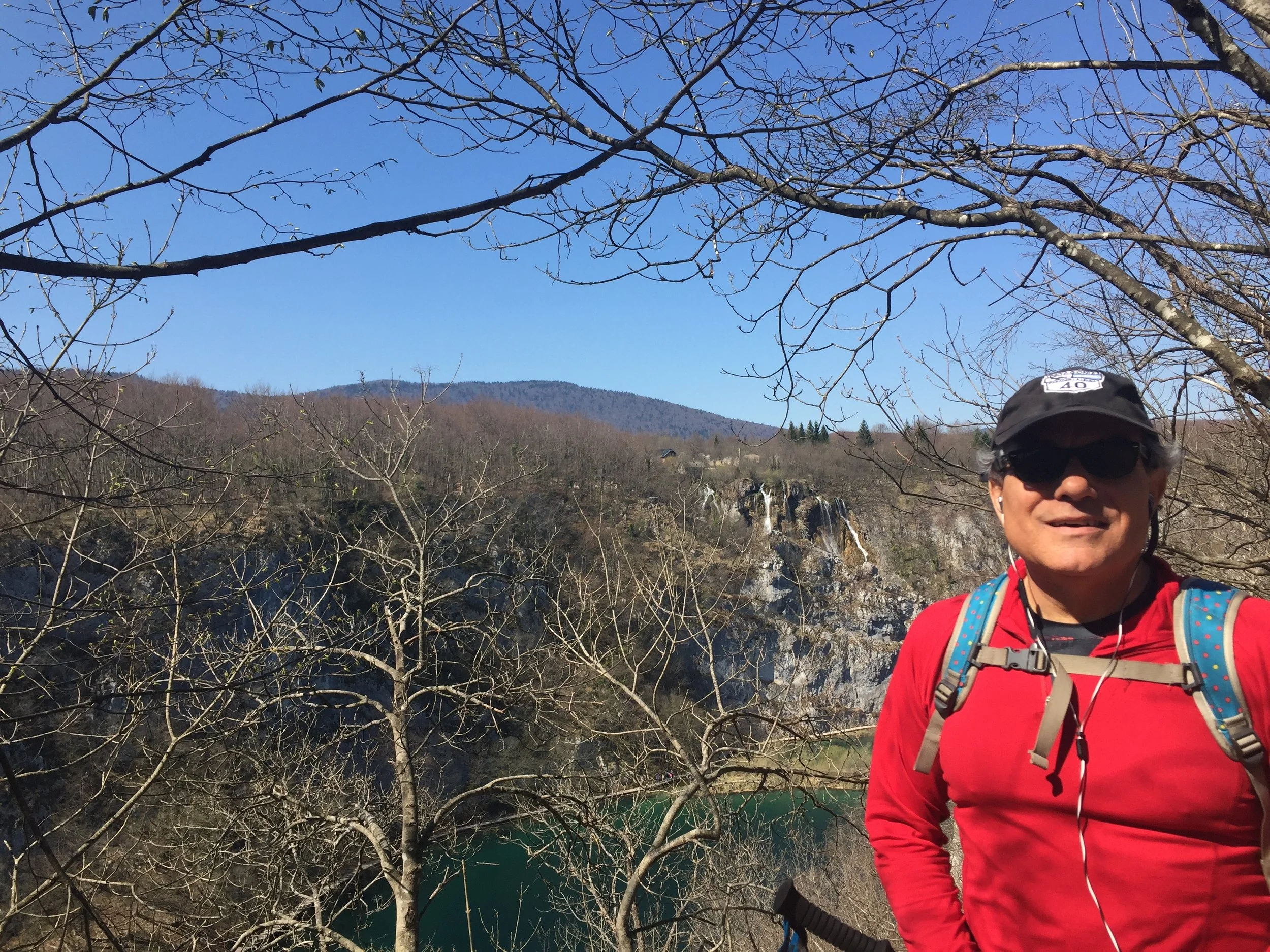
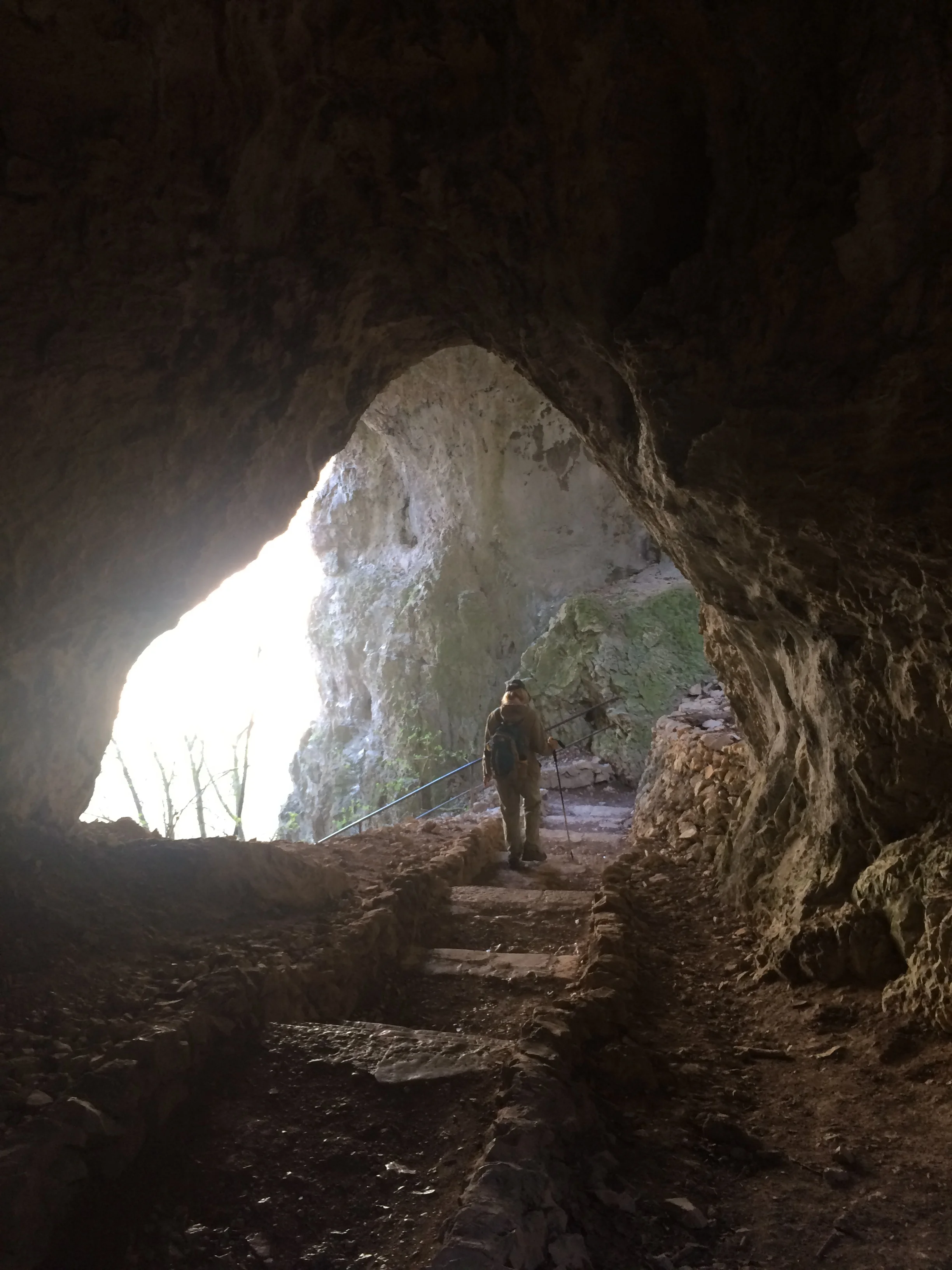
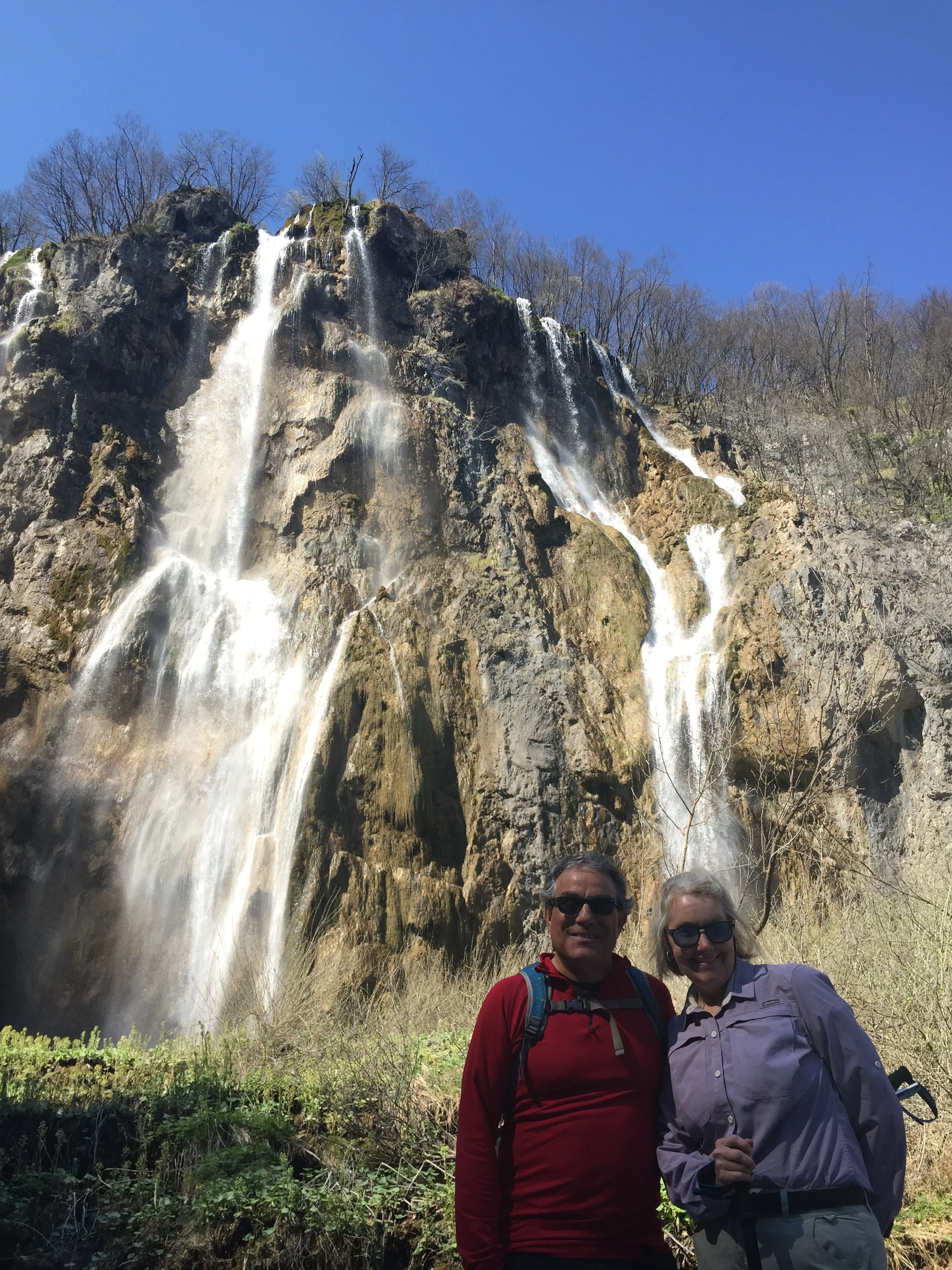
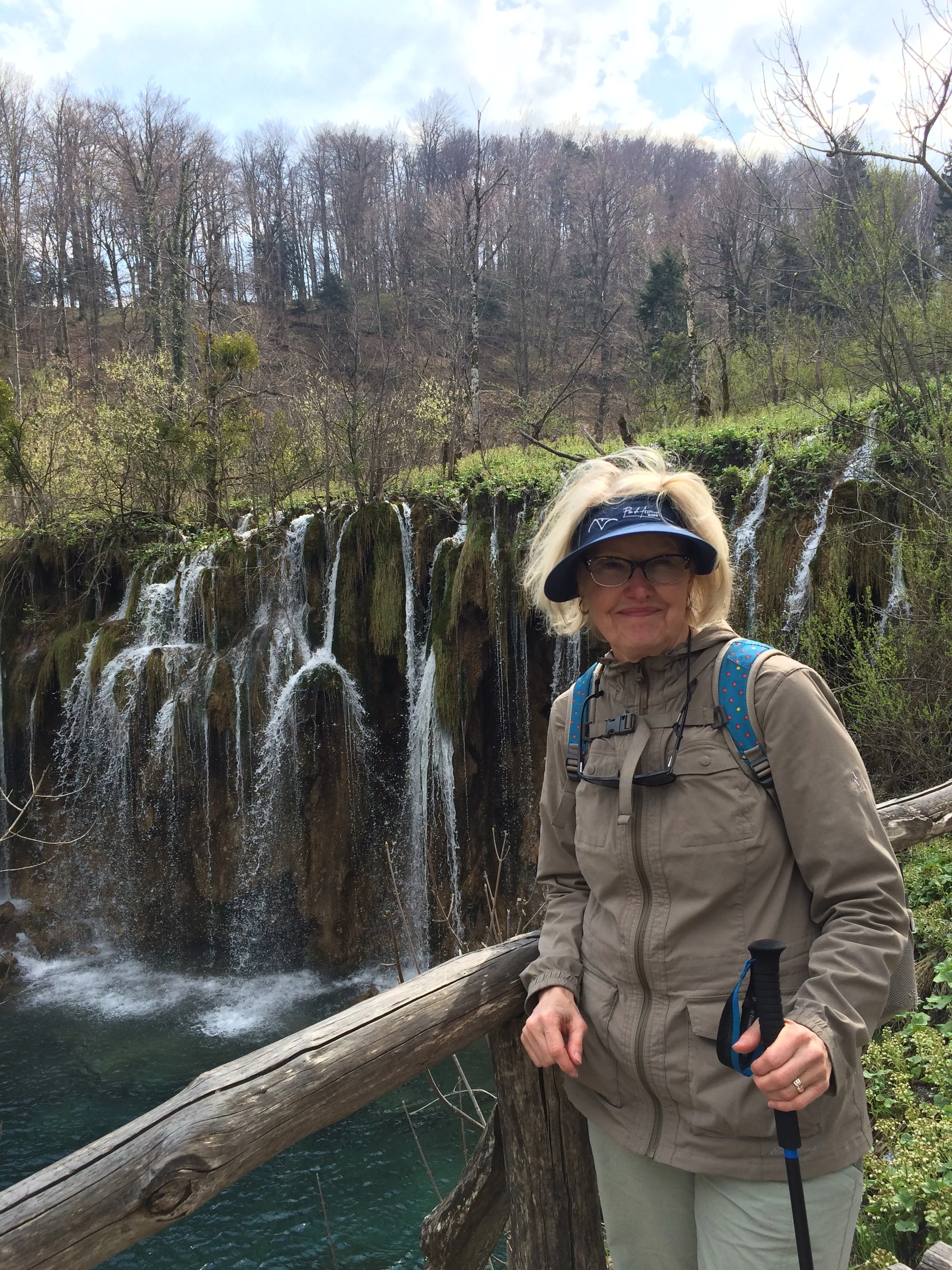
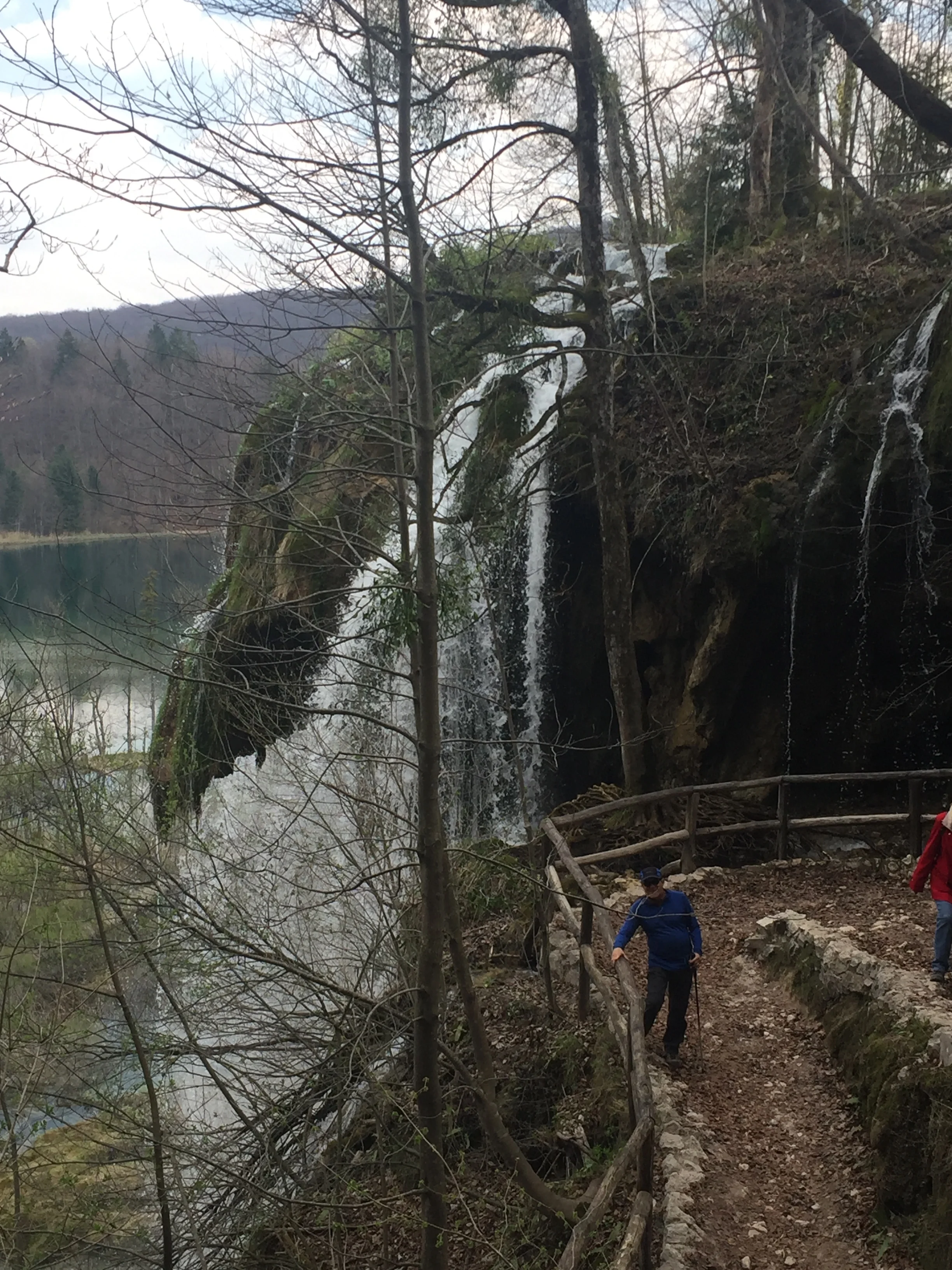
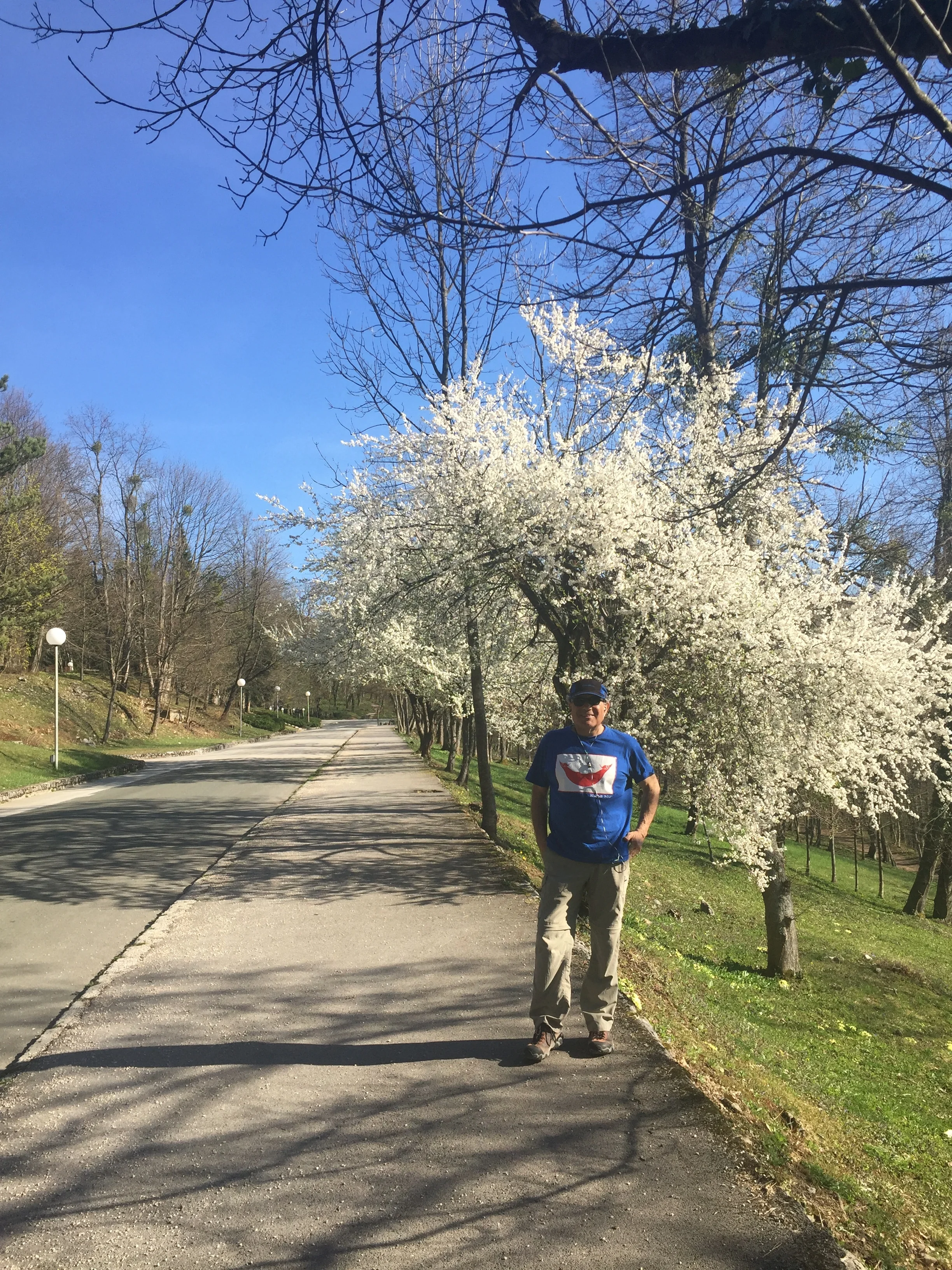
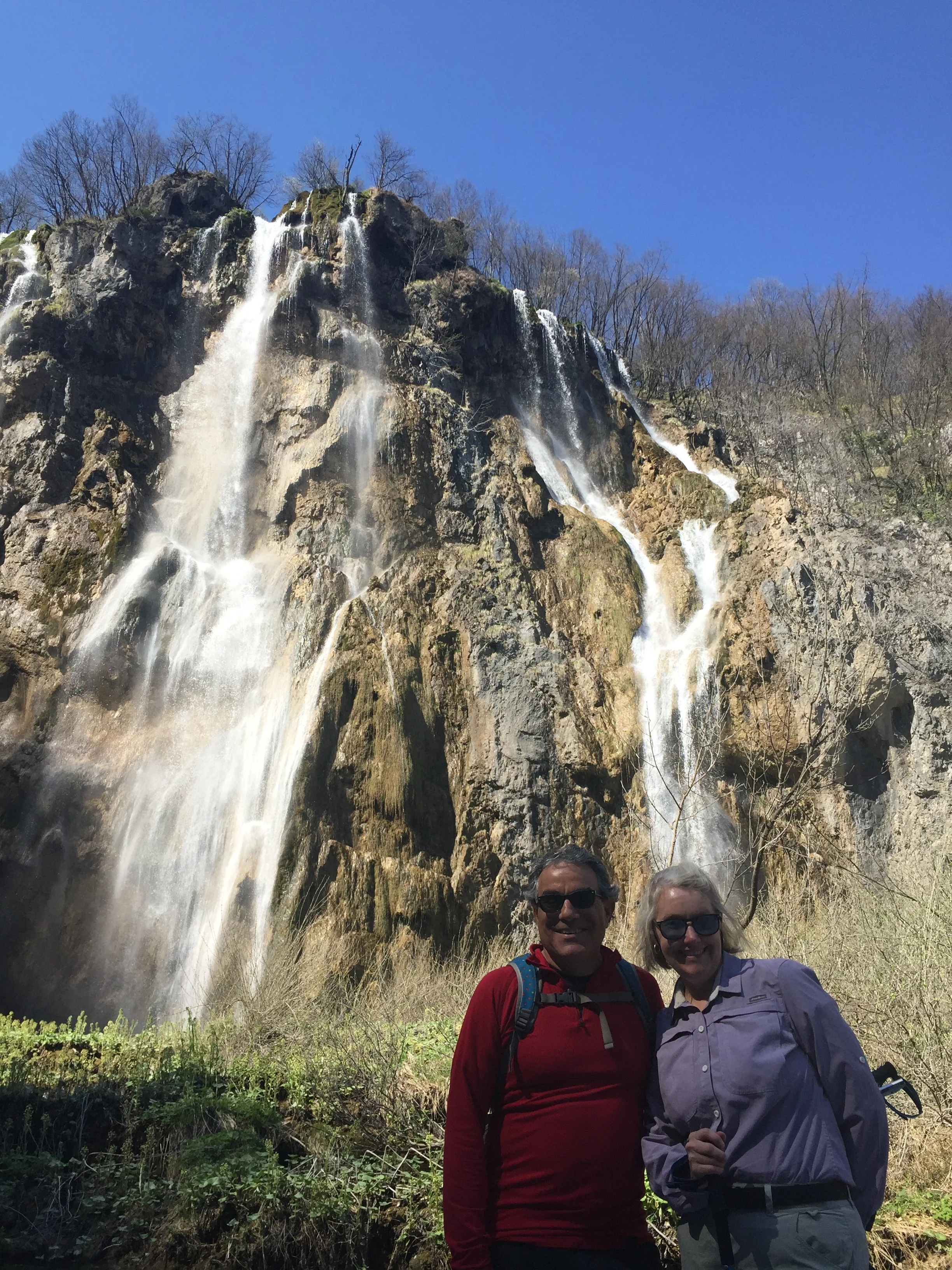
We left Zagreb and bused to the the center of the country where it has a wonderful national park. The park is called“Plitvice” aka Pleet- Veet-Seh. We were dropped at the 2nd entrance and crossed the road to our “Hometel”. The property owners live in a dwellingon the premises but the rooms and separate community kitchen are at the enjoining structure. We were greeted with shots of Schnapps liquor and sweet dessert. We had a nice room with balcony looking out at the rolling wooded mountains. We would stay here again. The area looked very much like “Boyne Country” in northern Michigan, US. But this area is also known for its attached lakes and waterfalls. We decided to stay several days in this area for recreation and relaxation. We would walk the country roads through the village to the entrance.  The park is magnificent. The two main courses are about 5 KM and each circle a variety of glistening lakes of aqua and blue, multiple waterfalls, and caves. The paths are well marked and include lengthy footbridges over the water. This area has large calcium deposits which filter into the lakes and retard the growth of plankton, thus the water is crystal clear. There are some trout, but not nearly as many as you would expect in this large body of running water. There are tougher trekking areas deep into the woods, but these were closed to us this early in the new season. Our photos may not do the place justice, but we hope you enjoy the views.

P.S. Significantly, when we walked through the winding roads of the village we observed several bombed out homes. This area was the site of some unfortunate military action in the Bosnian/Croatian war, which the Croats call the “Homeland War”. As you would imagine here, the presentation of the events and fighting are pro-Croatian, but these damaged homes are evidence of distasteful neighbor -vs- neighbor conflict arising from ethic cleansing. Even in the Park, though unused and unspoiled for the 5 year period of the war, we observed small camouflaged bunkers. These type of sights remind us of the recent conflict, but also the stridesthe Croatian people are now making.

Slovenia Eastern Europe

Frank in Ljubljana

Frank in Ljubljana

Our trip is taking us into “Eastern Europe”and the former Soviet controlled nations. Slovenia, not to be confused with Slovakia, abuts northern Italy, is wedged between the Alps and Adriatic Sea, is predominantly Catholic, has a population of 2 million, and asserts it should be recognized as “Central Europe”. This journey should be interesting. We had no real idea of what to expect. After being in Paris and Rome, the most popular world tourists sites, we are going off to the the back woods of Europe in the former area of Yugoslavia. It was not until 1991 that Slovenia broke away and achieved independence. We found that Slovenia has had very strong ties with Germanic culture as it was controlled by the Austrian “Habsburg” Family for centuries--so it is more akin to Austria than the other Slovak neighbors. Subject to Nazi, then Soviet control as part of Yugoslavia after WWII, finally after centuries of looking to the west, Slovenia joined the European Union in 2004. It uses the Euro currency, but things are much cheaper, and it has a parliamentary government. There will be more insights to come as we explore and sample.


Our trip started with waited with the kids until their train left for Rome to catch a flight home, after not seeing them for 6 months it was a hard goodbye.  

Then we took another water taxi to the bus station, rather bus stop, on the “countryside” of Venice. Our reliable FlixBus bus arrived on time for 8:00 PM and we arrived in Ljubljana, Slovenia at midnight. The guide book writes out the name as “Lyoob-lyee—AH-nah”. That is impossible to say. Forget it, quickly speak as the natives: “Lu-be-lay-na”. Our host offered free pick up and transport; good deal. He showed up in his old SKODA hatchback and joyfully crammed our luggage into the hatch. It was late and he let us in without securing payment and left us promising to be back in touch. 

The street of our apartment 

Ljubljana

The apartment was an upstairs flat in a common family neighborhood.. It was rather new and comfy. We had planned to stay only 2 nights, but liked the place and the town so booked 2 nights more. This gave us an opportunity to take in more sights and to rest after our whirlwind outing with Charlie and Gabrielle in Italy. 

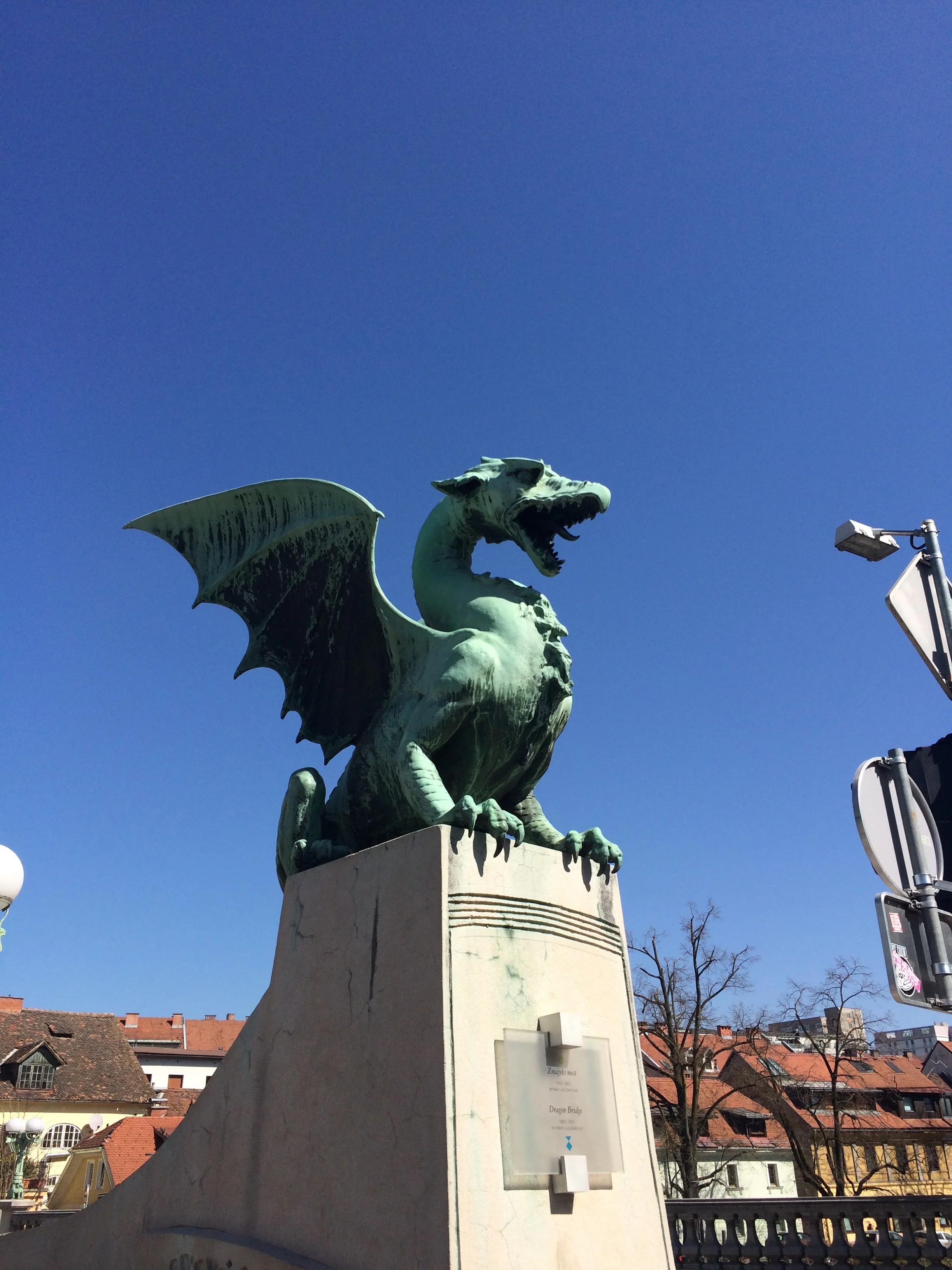
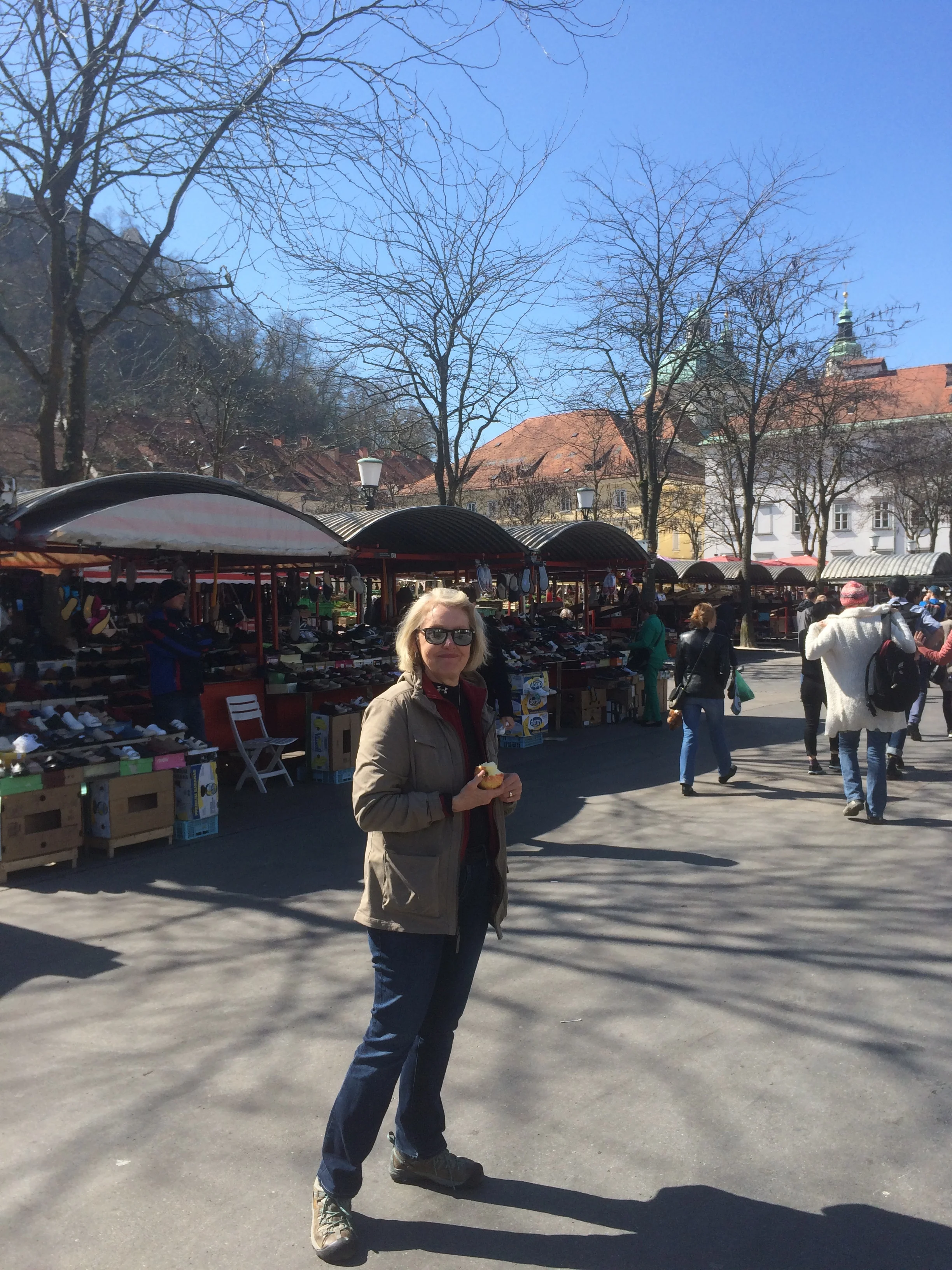
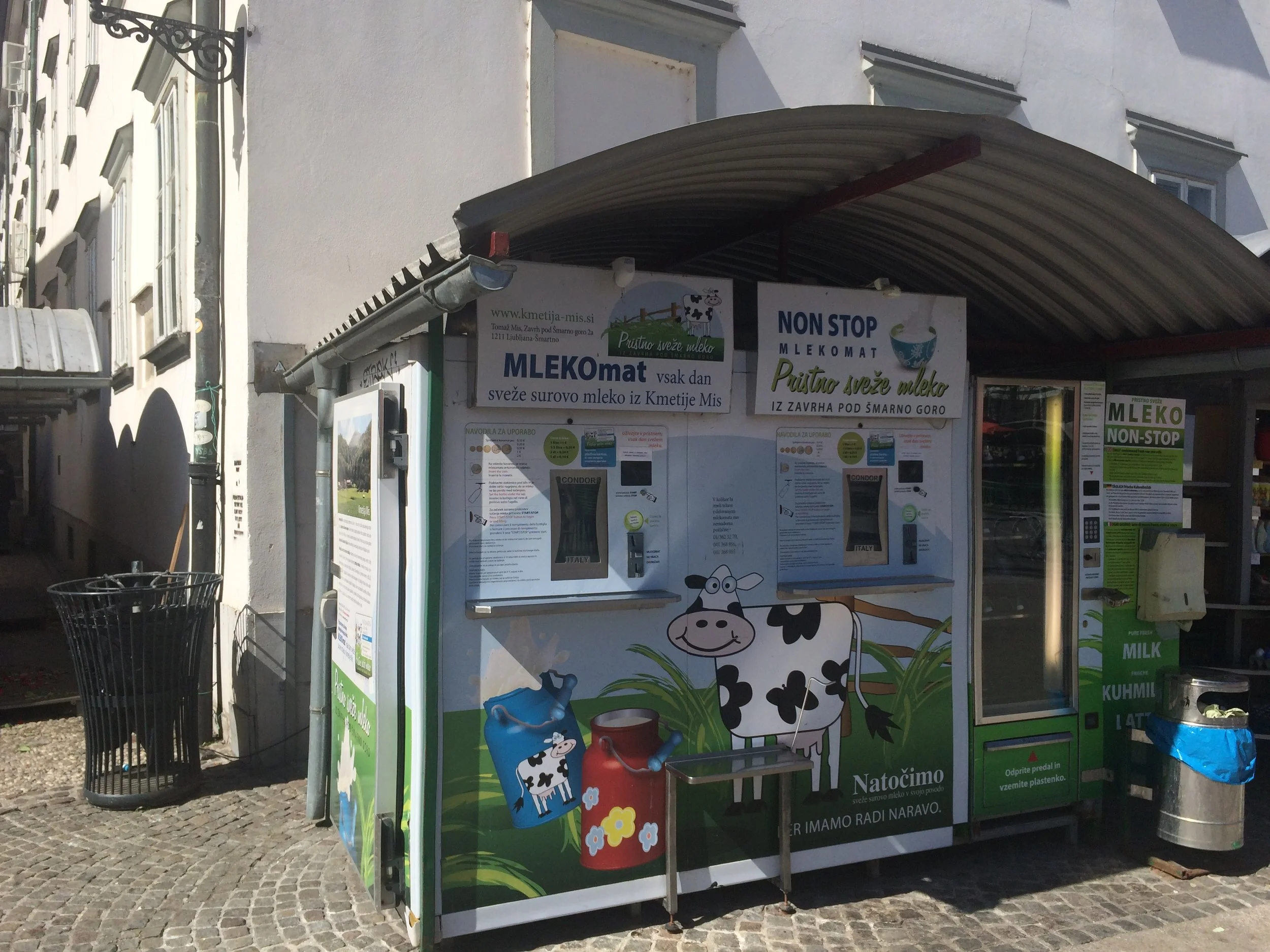
We found the city of Ljubljana tremendously inviting and super clean. The river runs through the town and the river banks are paved with wide sidewalks filled with restaurants, bars with outdoor seating, and nifty shops. Farther down the river a Grecian Agora type market place with columns is fully active with fruits, veggie and meat stands. Apparently, you can buy horse meat as a staple. We could walk, and did, from our flat to the center of town several times without delay. With a mayor pushing modern urban planning, the city center is a no car zone with pedestrian only walkways to the main public square named France Pedersen Plaza, after their favorite poet. We walked all around including taking the funicular to the hilltop Ljubljana Castle. We checked out the living areas, chapel, and dungeons with virtual video about life of prisoners, as well as strolling the parapets for the views of the old city and the far out suburbs. 


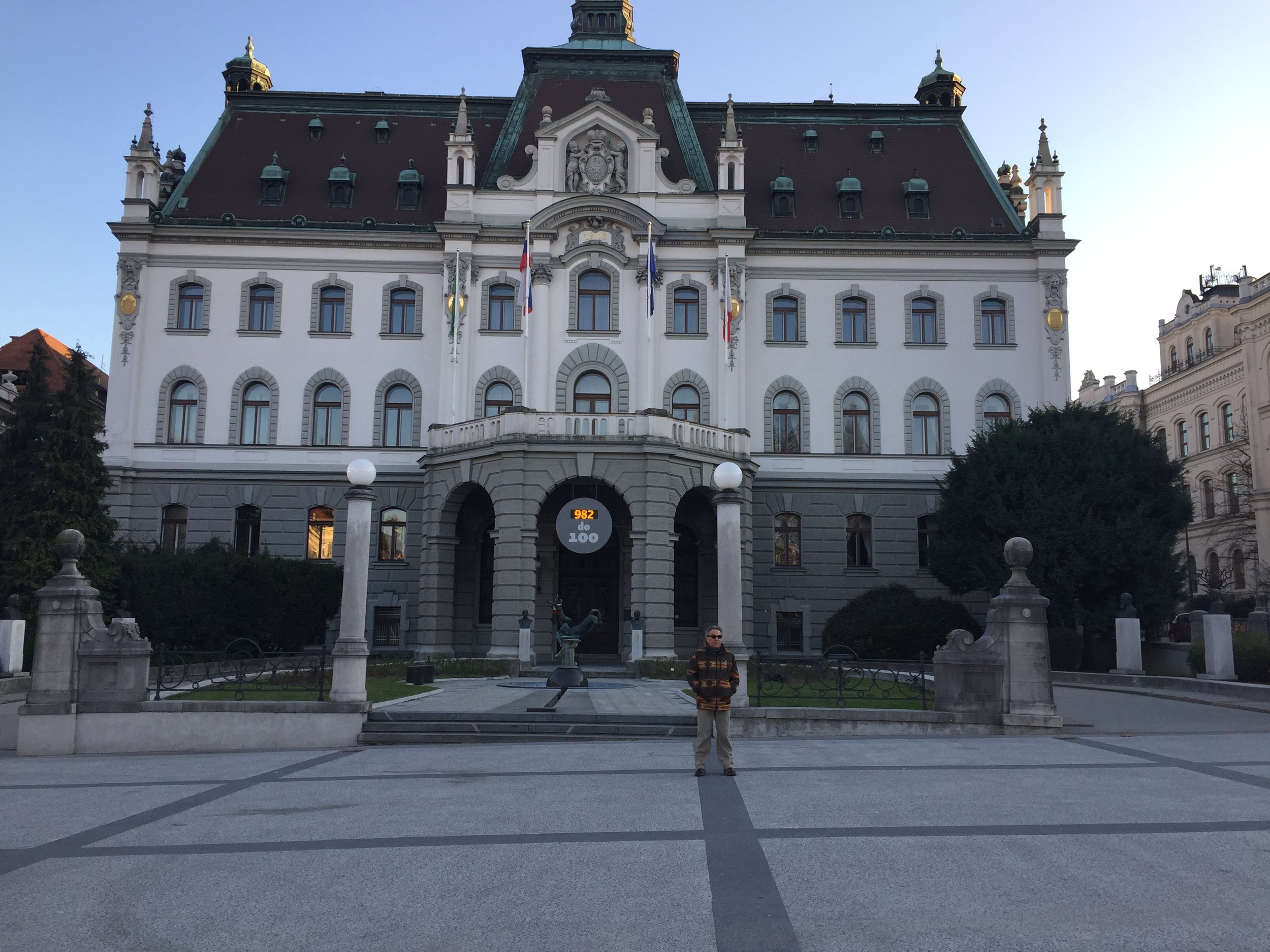
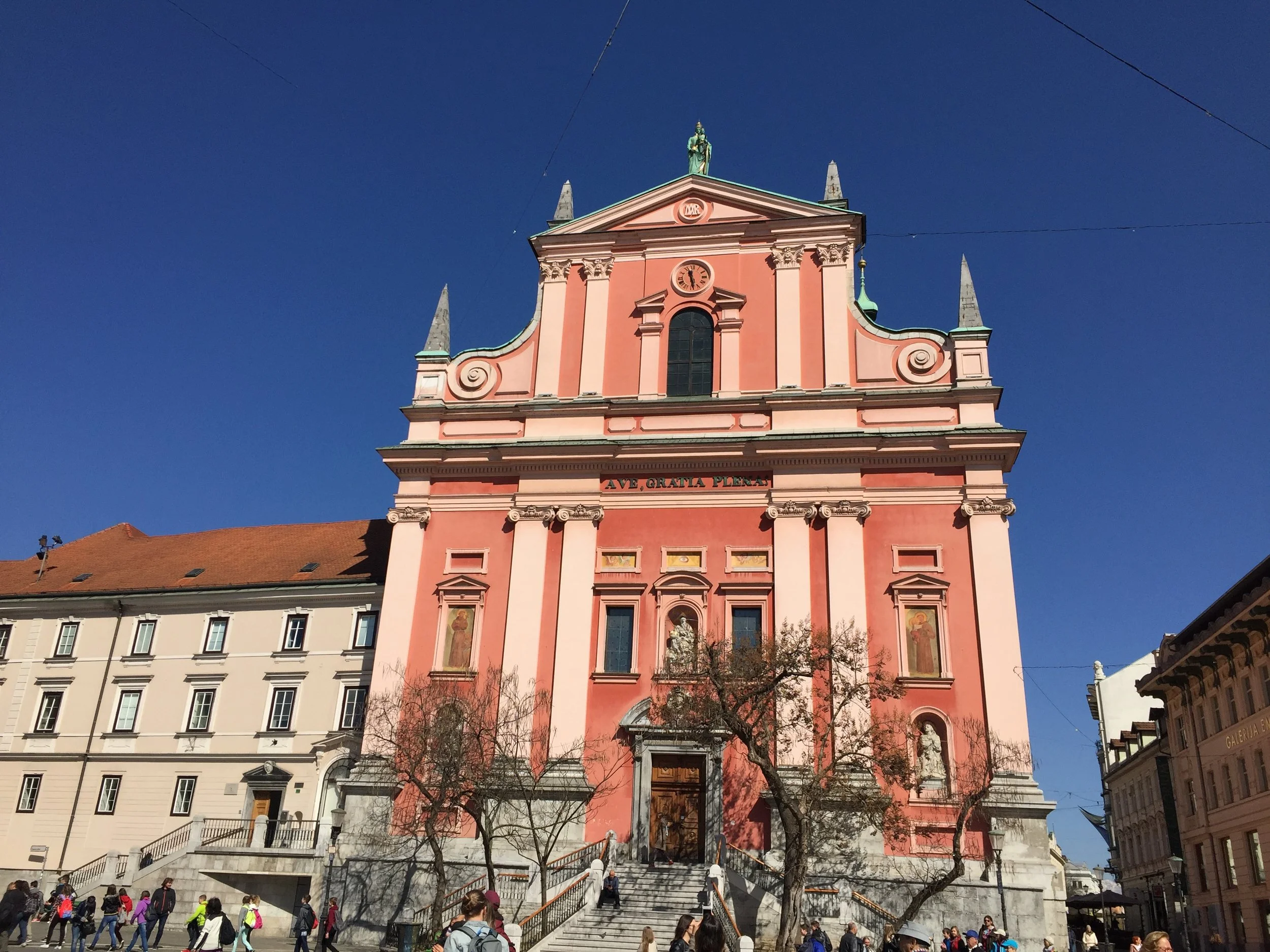
We also took a walking tour offered by an enthusiastic PhD candidate who obviously loved his city. The university is in the middle of town and the buildings are both historically Baroque or rather unusually modern.  The Catholic Cathedral of St. Mary is also lovely. As you know, we see a lot of churches. The fun and interest is to see the artistic imagination demonstrating piety by all the various peoples. 

This City is just so easy to get around that you are put at ease immediately. Watching moms and dads and kids walking along enhances the friendly feeling, but keep your head up for the bicyclists.  

You could easily extend the stay in Slovenia, but we were limited so we signed up for a full day tour which provided transportation and allowed us to see 3 great sites in one day.

The driver /guide was a very handsome young lady from Ljubljana who spoke impeccable english, but with an Australian accent. Apparently she studied “her guide books down under”. Our small tour group included 4 Australians, an Argentinian, an Iranian, and us. Phil and Helen, open and inviting Aussies actually from Tasmania, were on a 2 month trip, but had traveled globally before. They were very helpful with sightseeing ideas for our upcoming trip to Australia. Everyone was friendly and the group was animated.  The morning trip was to the giant caves of Postojna, aka a lot of different spellings. As we drove, the guide gave us demographics lessons which lead to many questions, which lead to a rather in depth history and humanities lesson. It was apparent that Ivana was a very intelligent lady, and a decent driver too.  The country side was beautiful, especially with the “Julian Alps” in the background. It is near to this area of these Alps, in the Soca River Valley, a site of gruesome WWI fighting, that “Earnest Hemingway” drove his ambulance for the Red Cross, was injured, sent to Milan to recuperate and fell in love with his nurse, as he wrote in “A Farewell to Arms”

The view from our tour bus

Postojna Cave Park

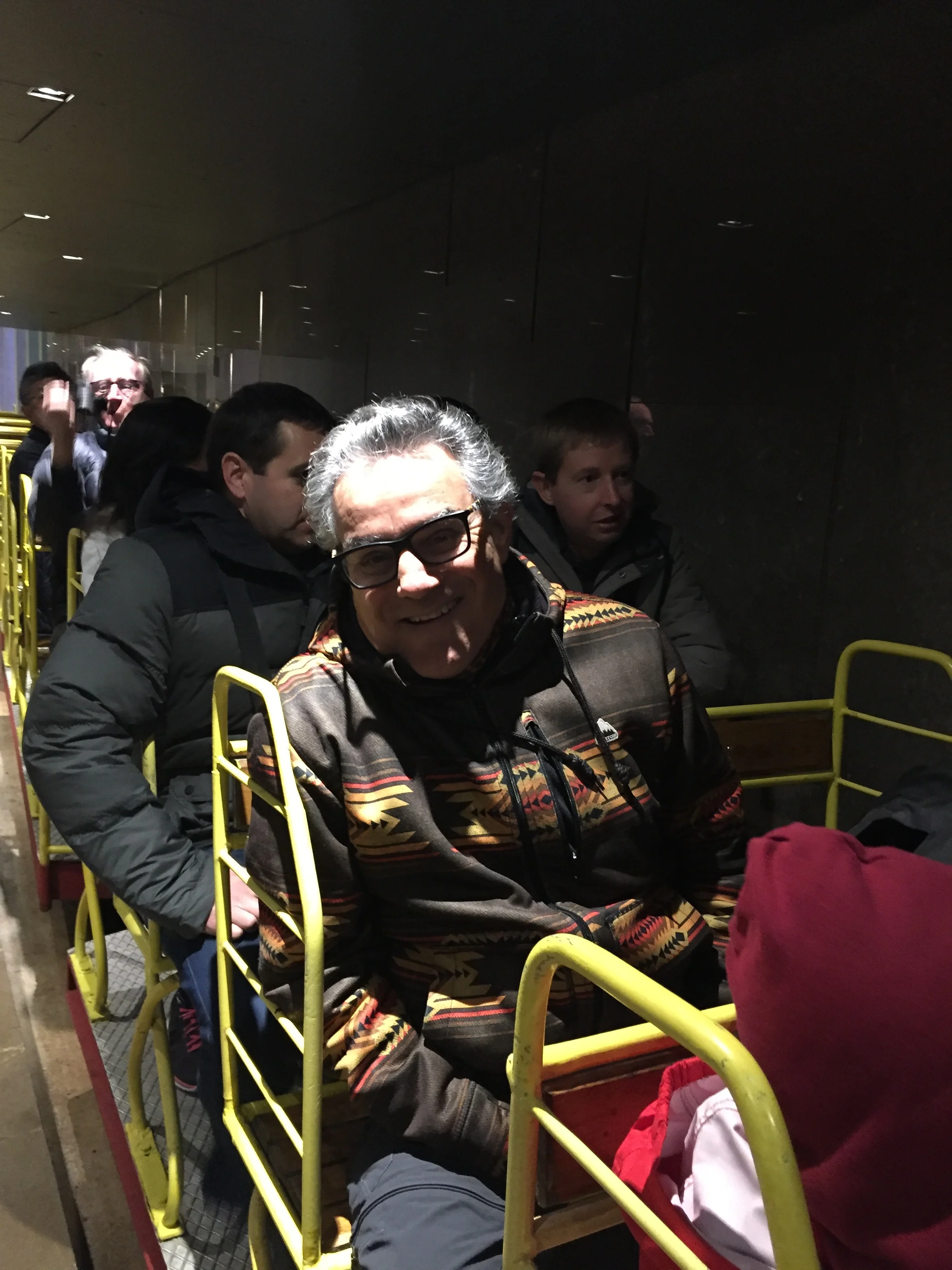
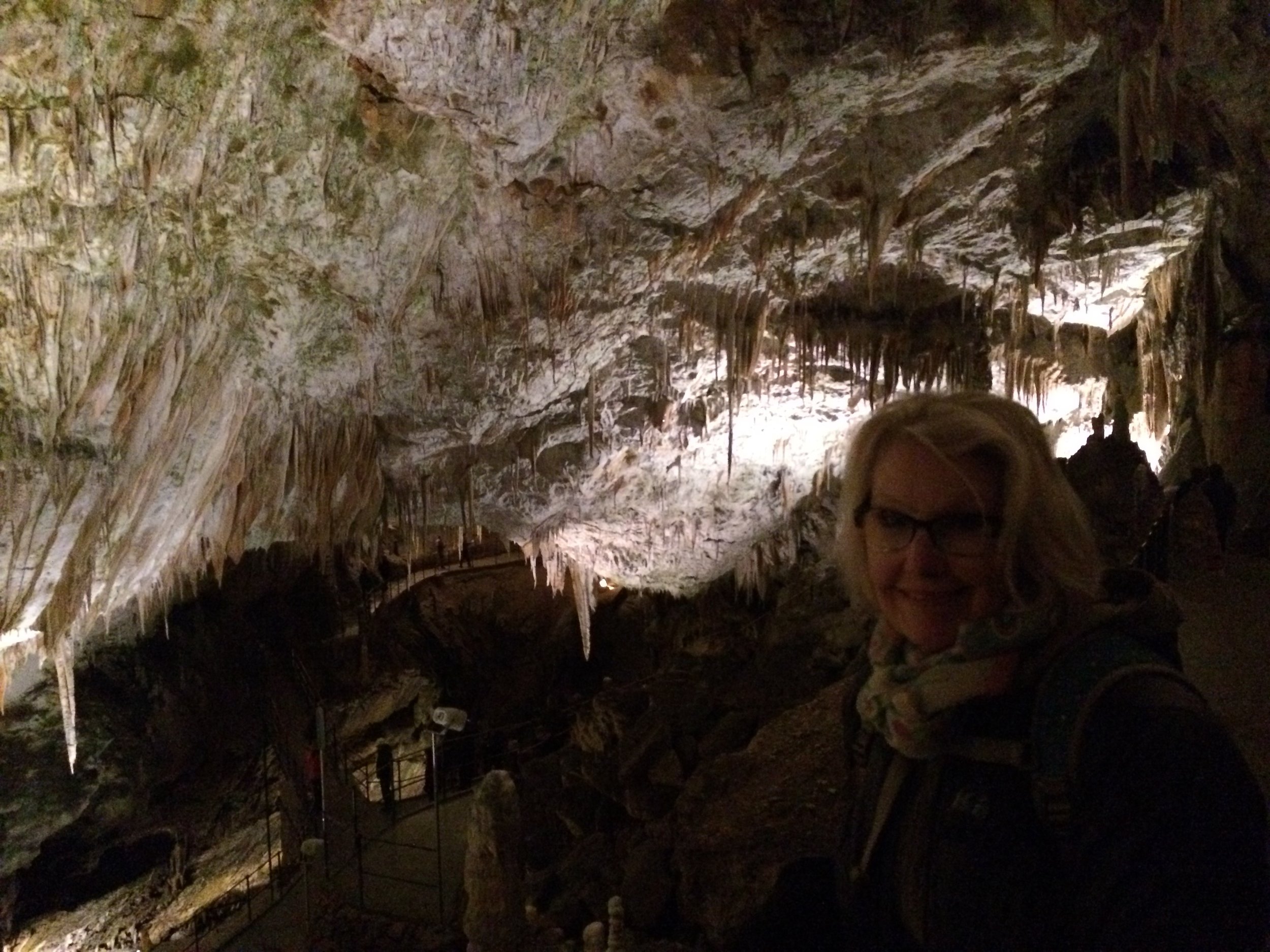
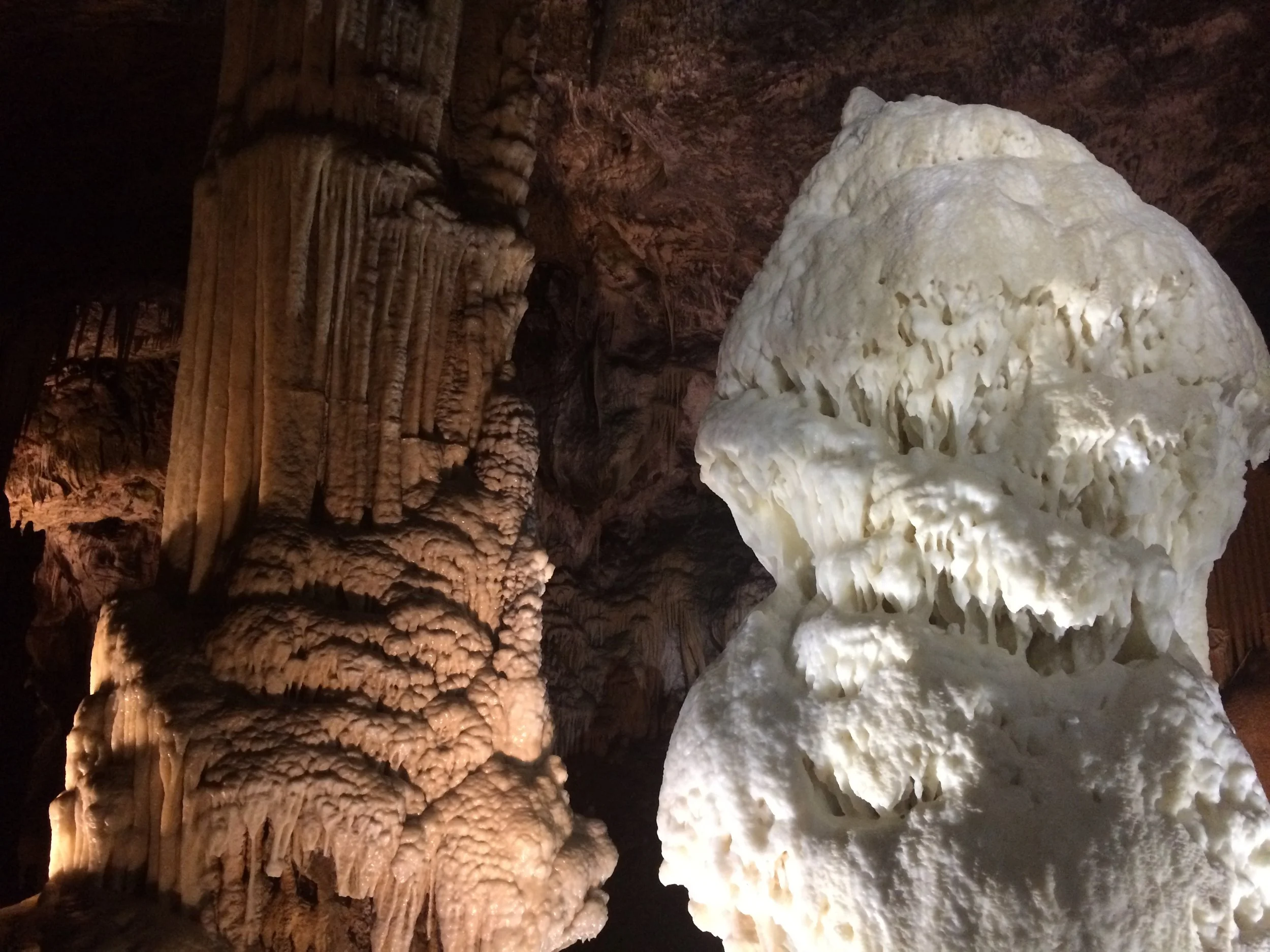
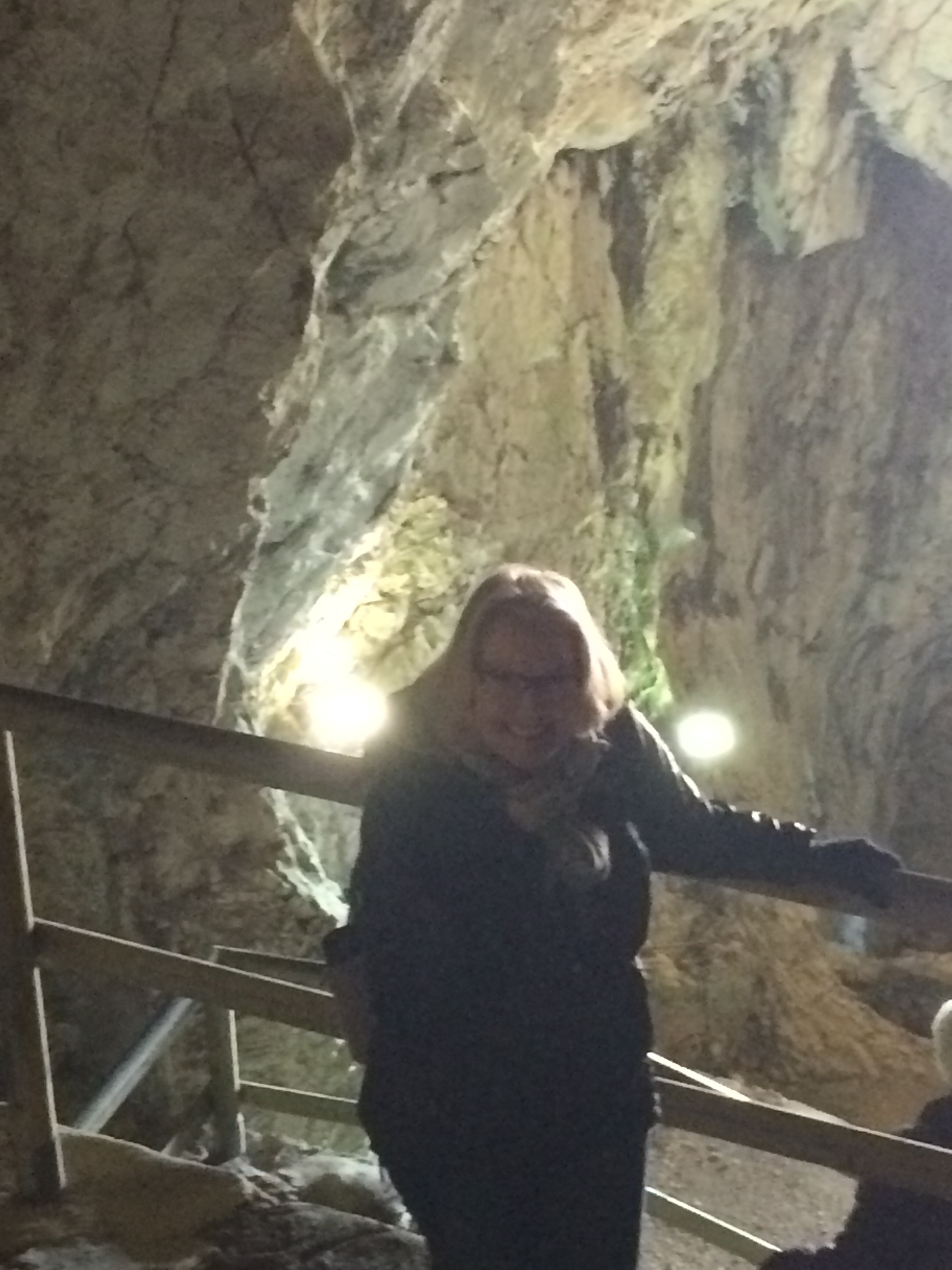
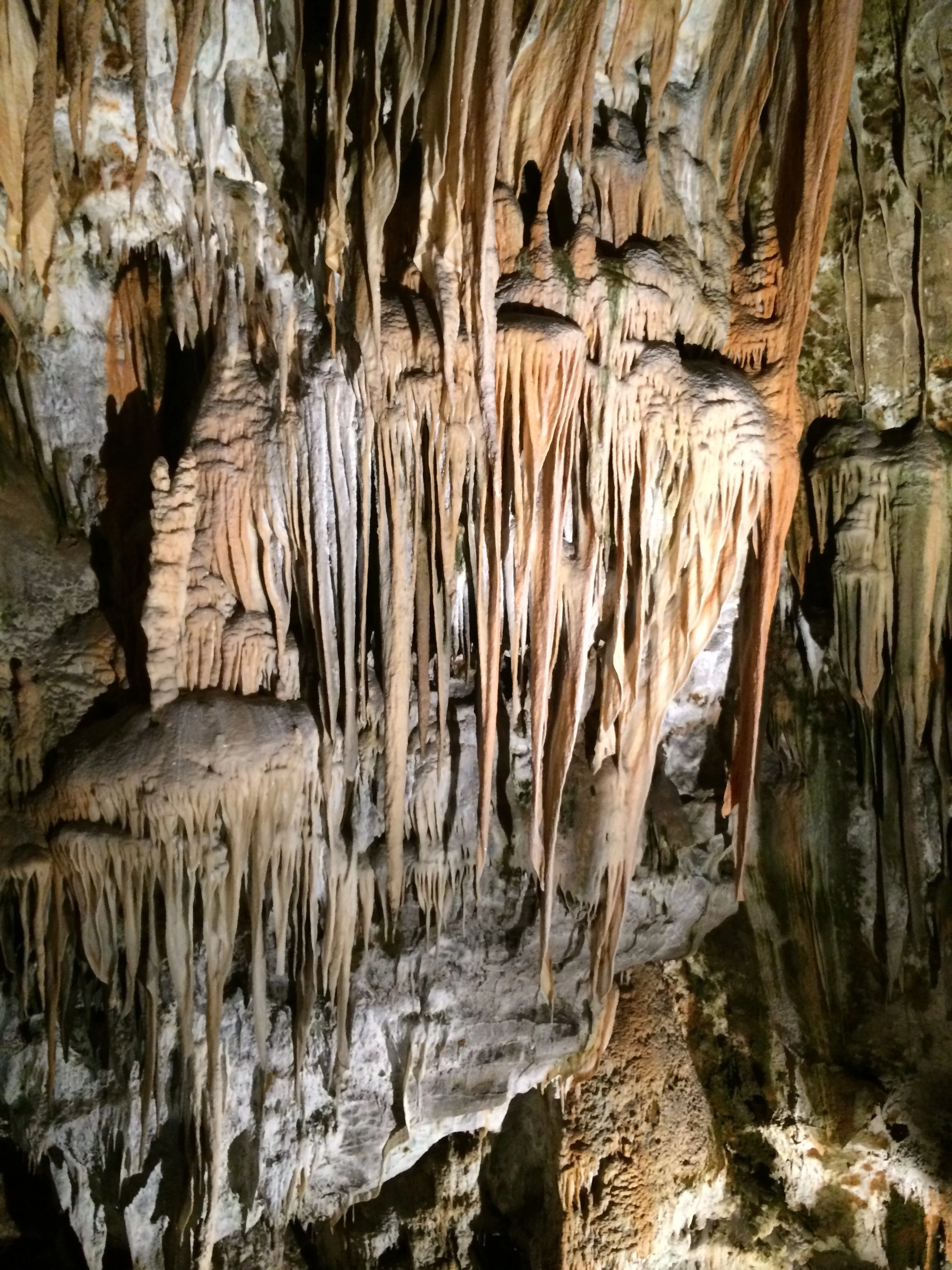
There are hundreds of caves throughout Slovenia, carved out by underground rivers. One of the biggest and best known, and close to the capital is Postojna. Our guide told us to use our imagination for this experience, BUT we still would not imagine the magnitude and beauty of this place. She was right. OMG, this excursion was worth the entire trip to Slovenia. This excursion is as close to a Disney World ride as you could expect in a former Soviet satellite. Once you enter the mouth of the cave, a tram system is set up to ride deep into into the cavern, about half a mile, where you exit and walk on prepared sidewalks for another 2 mile trek through gigantic caverns of back lighted stalagmites and all sorts of cave wonders and formations. There is one cavern so big it is called the “concert hall” and in fact live music is played there. Historic note: the Nazi stored ammunition in this cave and resistance fighters detonated some of the cache which left a tell tale area of rubble. Words can’t adequately describe the images. Check out the photos. 


Cliff Castle
We took a quick trip to another mountain valley and found a hunting lodge used by the royal family Hapsburg. This lodge was part cave and part castle, too rough and rugged to be a summer home, but certainly a fortress none the less, with caverns behind the parapets. Apparently, a Robin Hood type character took over the fortress and held off the siege by a displaced Hapsburg for many months. The castle’s fatal design flaw placed the privy as an outhouse which was shelled with cannon fire while “Robin” was refreshing—he died. This was a fascinating structure, the way it was constructed and the different living levels and dungeons.     

Lake Bled

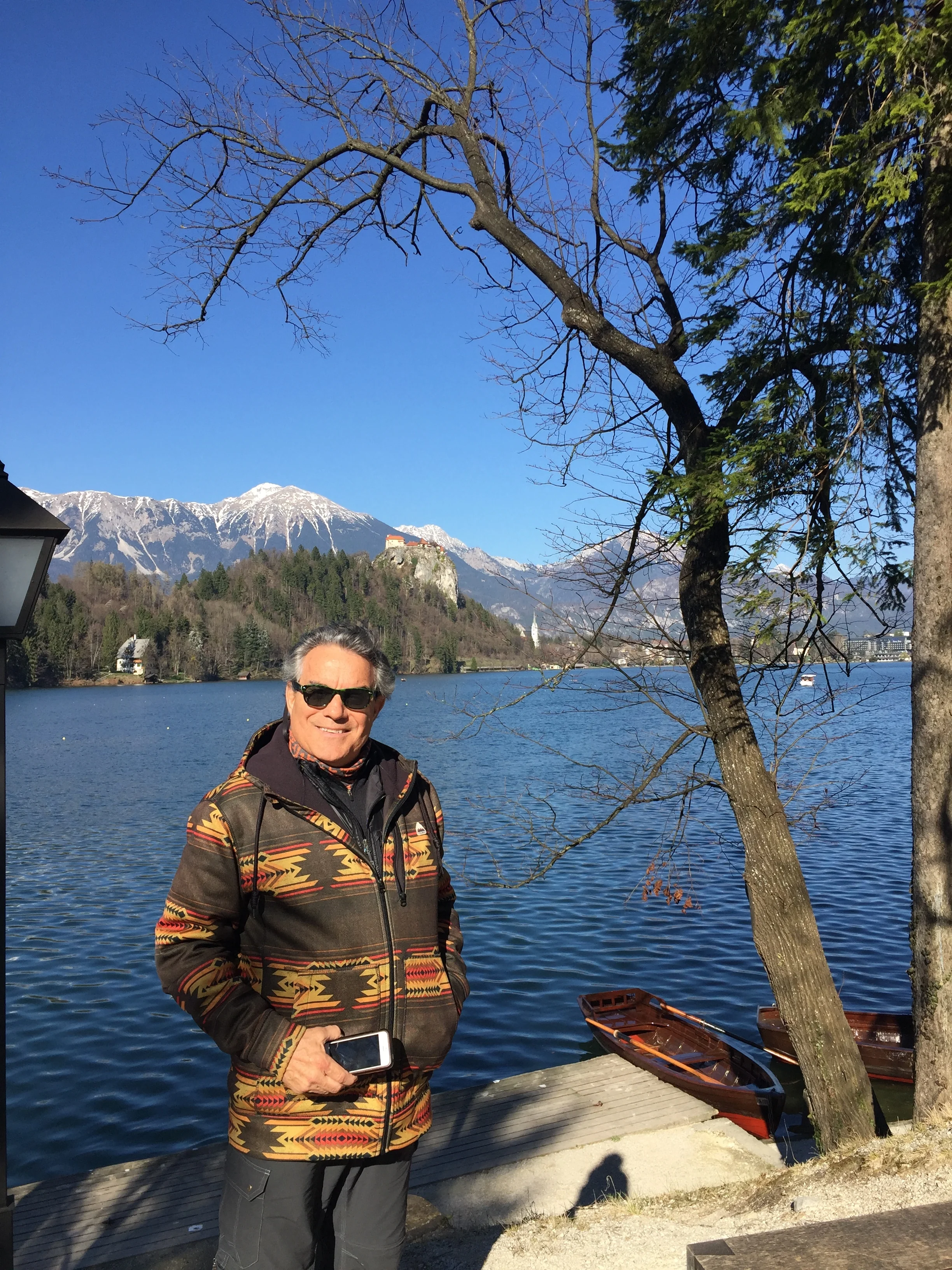
We then drove to Lake Bled---Slovenia’s leading mountain resort. Here we where treated with Alpine panoramas, a fairy tale island monastery, and large hilltop fortress.

We started with lunch on the shore. Our friendly group sat at a large table and just chatted away.  We finished lunch with a special dessert, vanilla cream pie, a local favorite. Yummy.

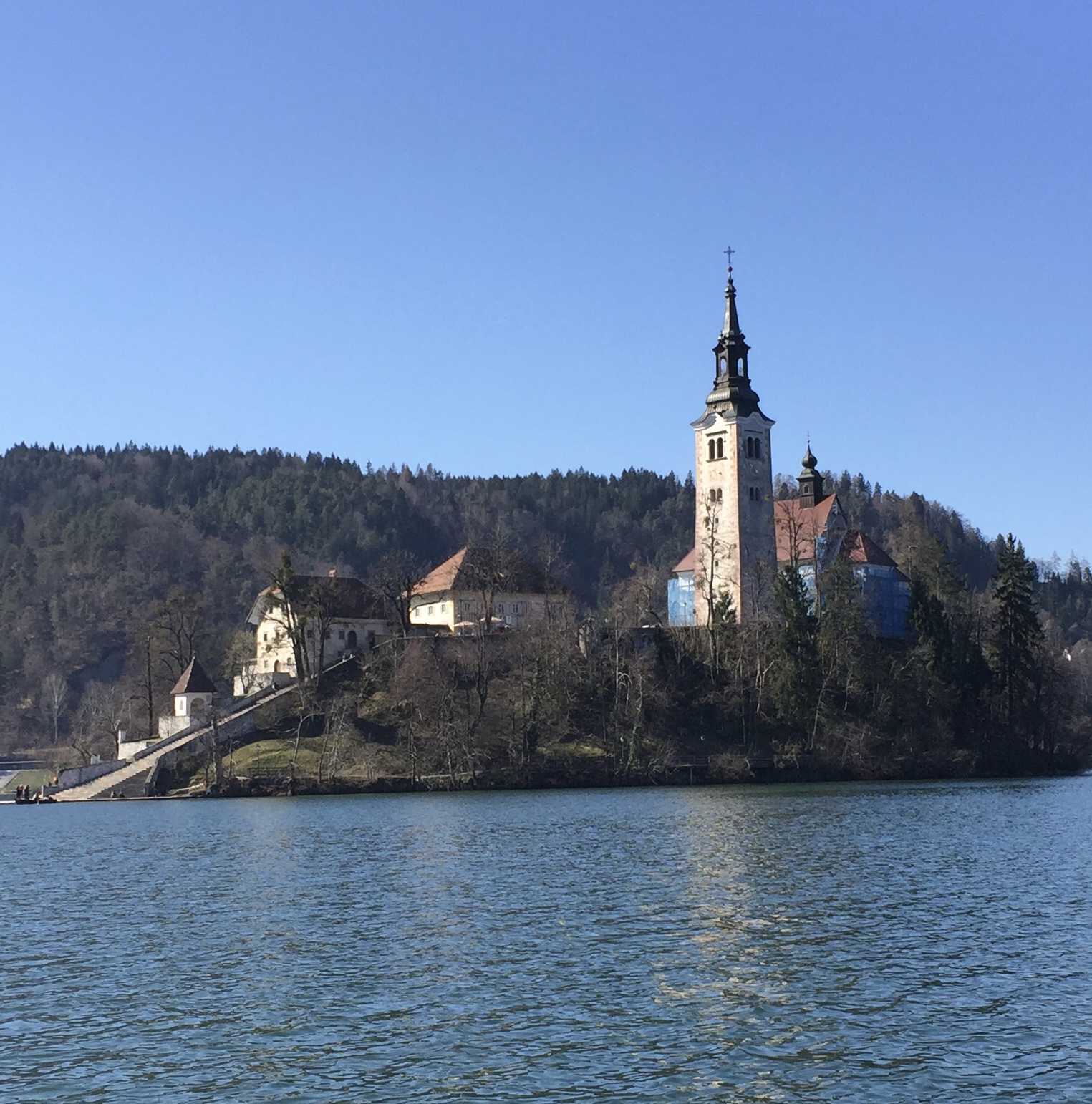
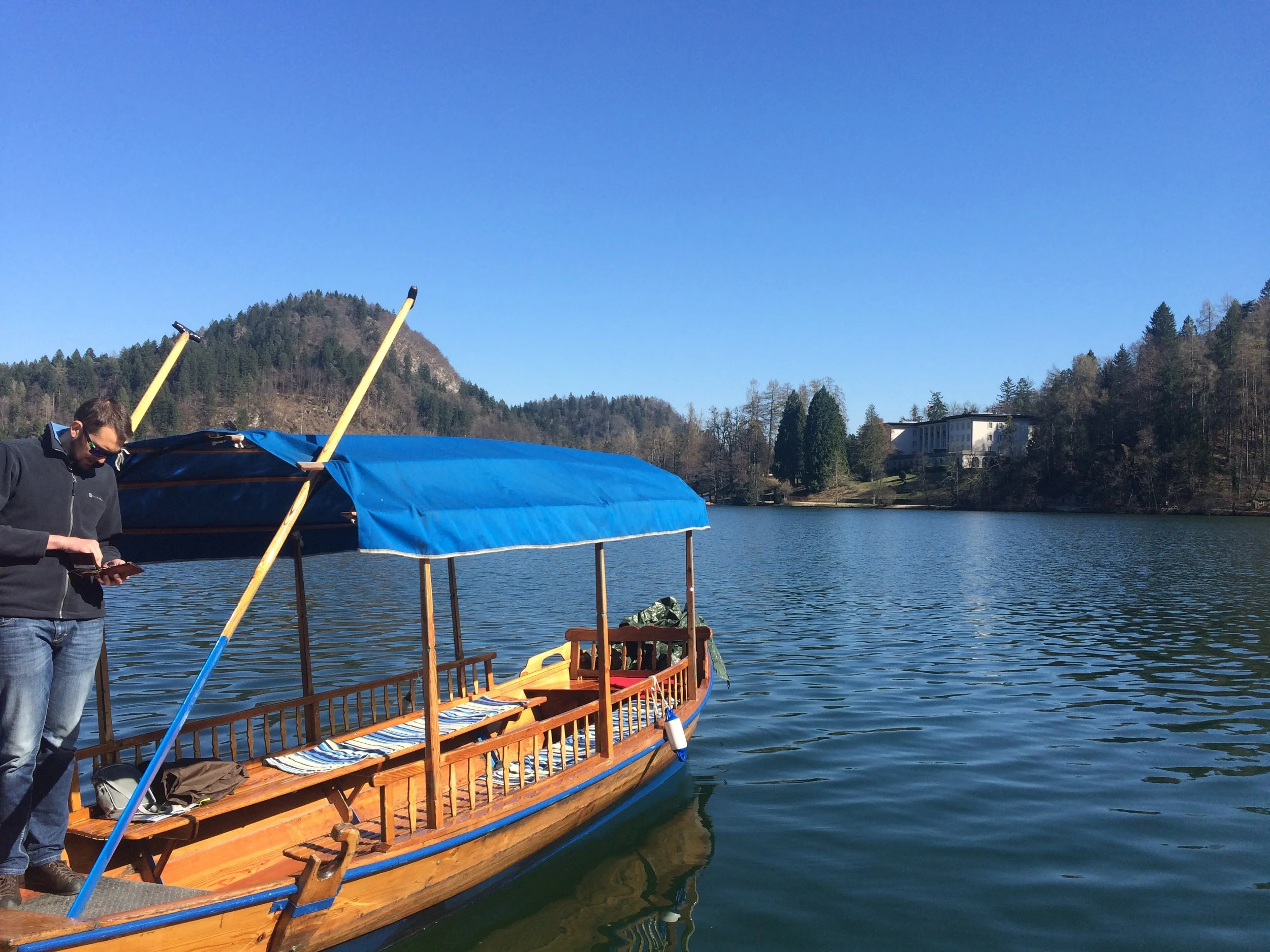
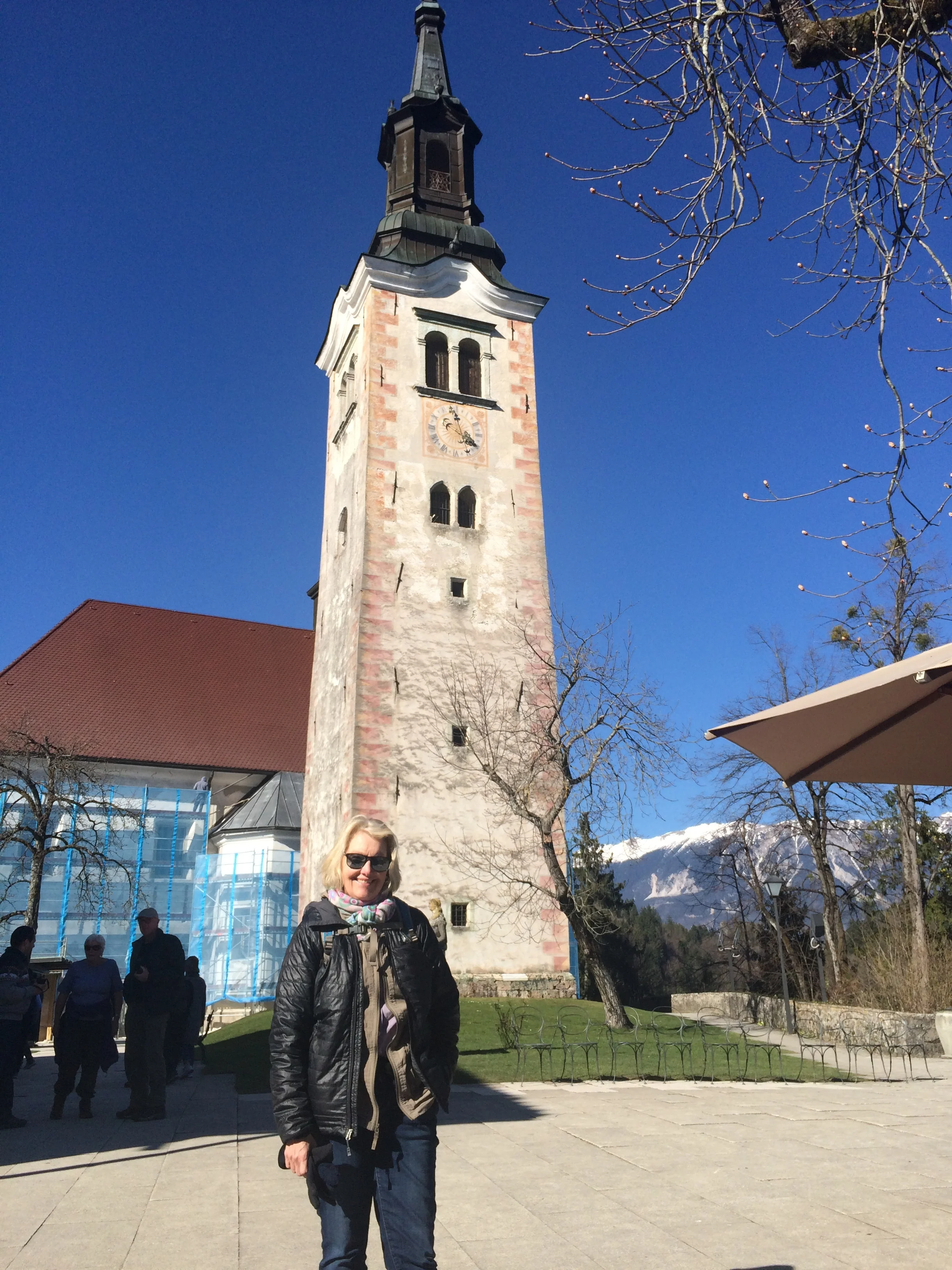
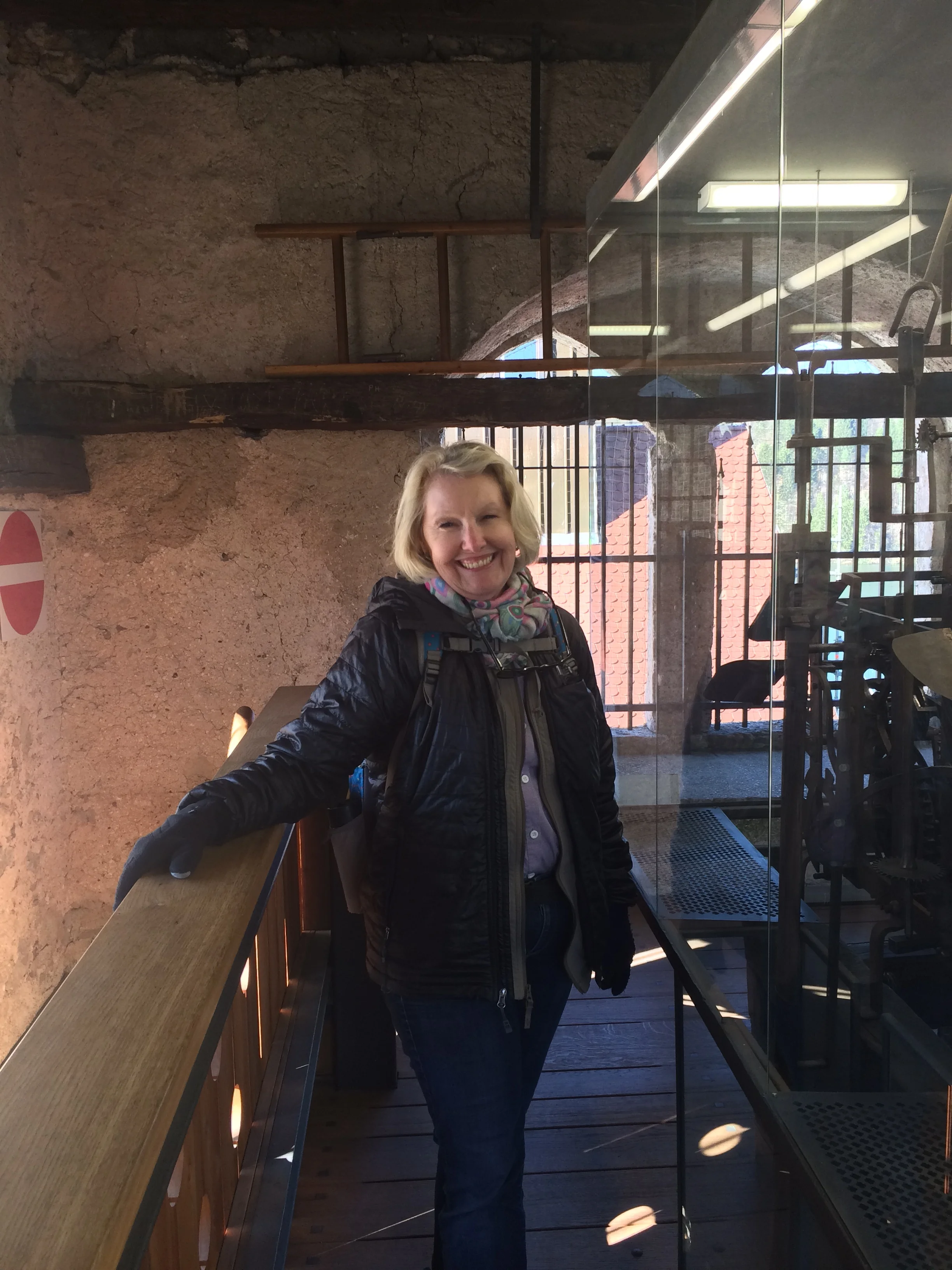
The group loaded on to a “Pletna” Boat where the special oarsman rows and strokes us across the water to the island. This is a century old business, much like the gondoliers in Venice. The island is capped with a super cute church with a tower and bell. The church has painted frescoes, lovely alter, and interesting ceiling construction. We pulled on the tower rope that hangs by the alter and had the bells ringing, then others stepped up and did the same. Legend has it that if the bell rings 3 times on one pull (not possible) your wish will come true. We also were able to climb the 91 steps of the church watch tower for great views of the island and surrounding countryside.  The pendulum clock has been restored. We then walked the paths around this little island enjoying more views, especially the cliffhanging fortress overlooking the area. Check out some photos. 

Bled Castle
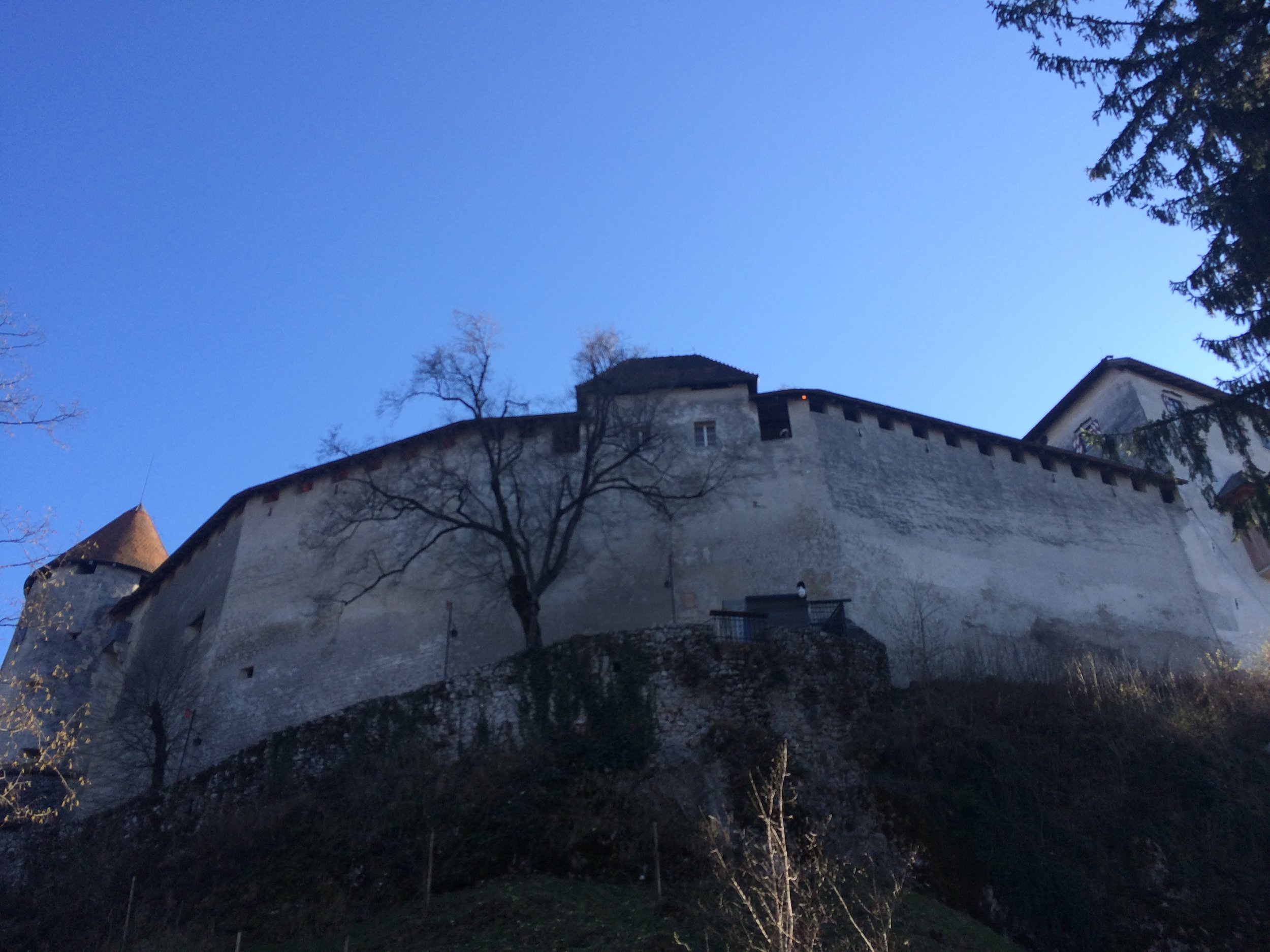
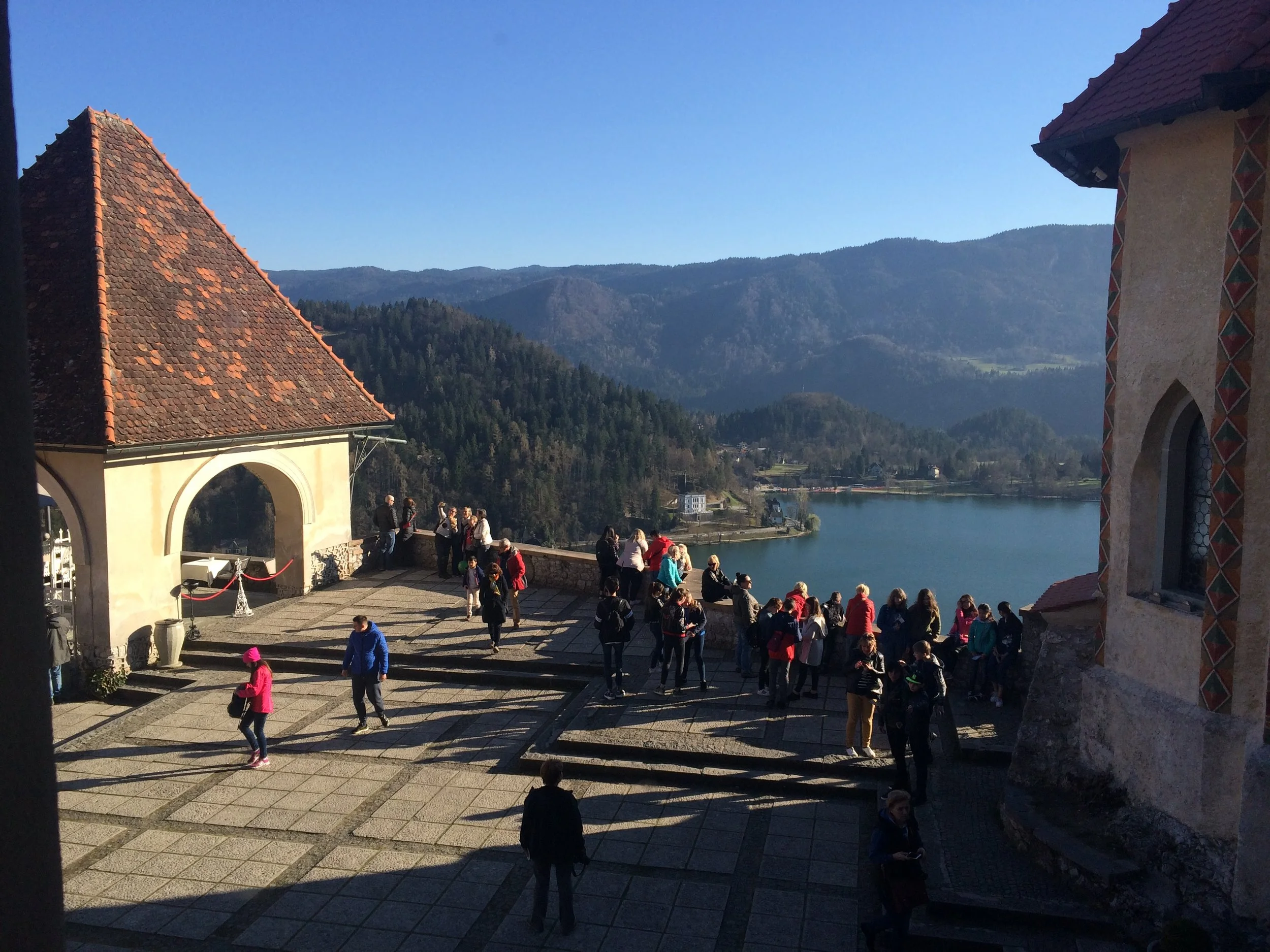
We boated back to land and drove the winding road up to the Bled Castle. Initially built 1000 years before in lesser form, it has expanded over the centuries and was the government seat of Austrian Bishops. The views along the parapets are fantastic and the frescoed chapel is original. Some areas are early shops, such as the wine and print shops. Still, the experience was worthwhile, and of note was the replica Gutenberg Printing Press that first brought the printed New Testament to the peasant population of Slovenia.  

As we drove back to Ljubljana, our guide talked more about the culture of her country. Historically, Slovenians were peasants, hard working and practical. Their language was considered crude, not worthy of printing, and in fact forbidden to be printed. It was Mr. Primoz Turbin who printed an alphabet primer and the Bible for his people. The education the population led to the popularity of the Poet “France Preseren”. His statue stands in Ljubljana. His poem “Toast”, really a drinking song, but inspiring brotherhood, became the National Anthem. He wrote the phrases to take the shape of a wine glass. He wrote other love poems and lived a life akin to “Romeo and Juliet”. Unfortunately, his Juliet did not return the affection. Apparently, other Slovenian authors were more pessimistic, and after centuries of being under the control of foreign powers, our guide thought some of that pessimism lingered. In our opinion, it likely would be a heavy lift moving from dictatorship to democracy. To us the current Slovenians seem easygoing, stylish and fun, the “type of people you would like to chat with over a cup of coffee”. By the way, First Lady Melanie Trump was born in Slovenia.


Tomorrow we are off to the neighboring Slavic state of Croatia. 

Venice Italy

Venice

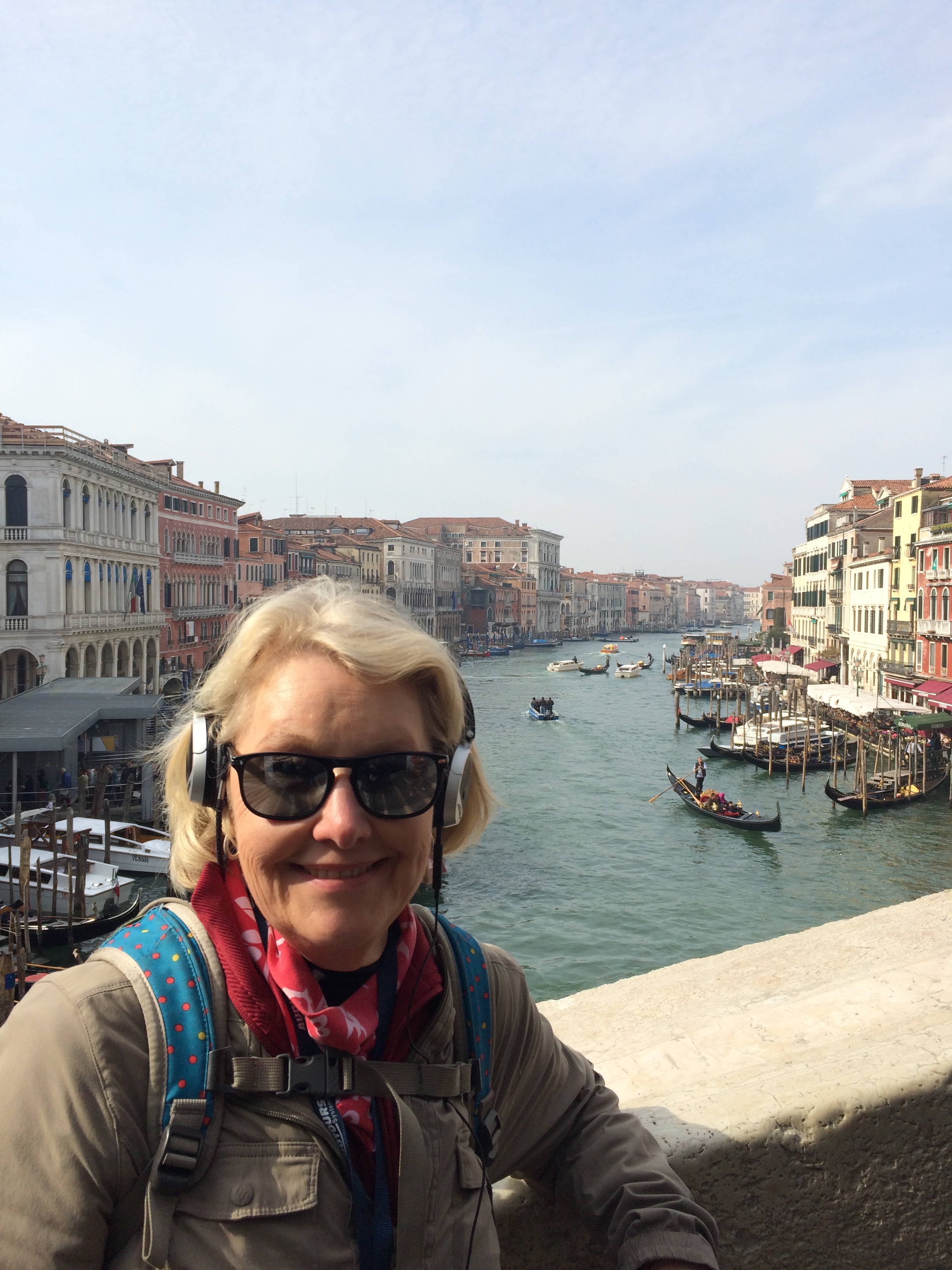
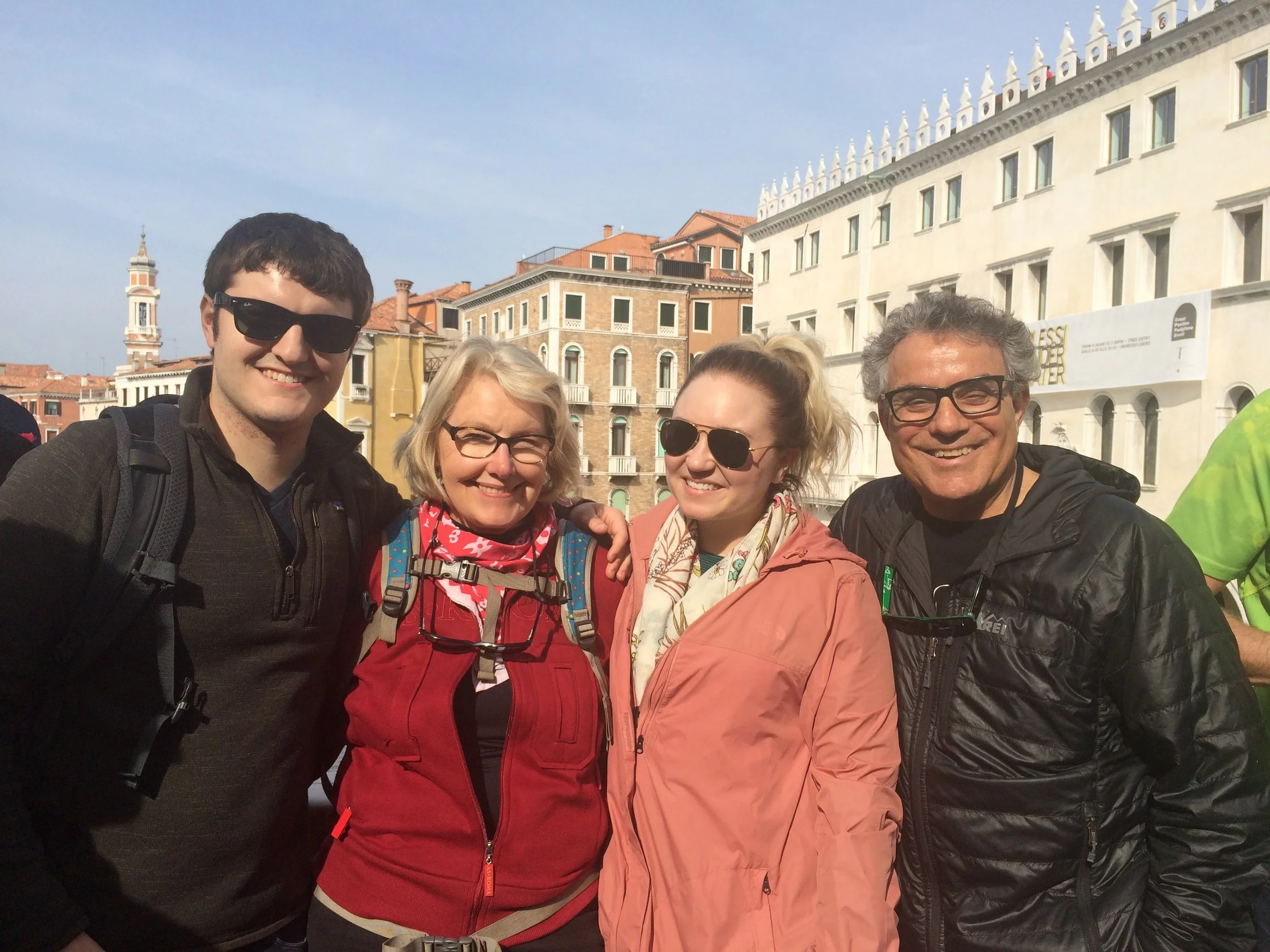
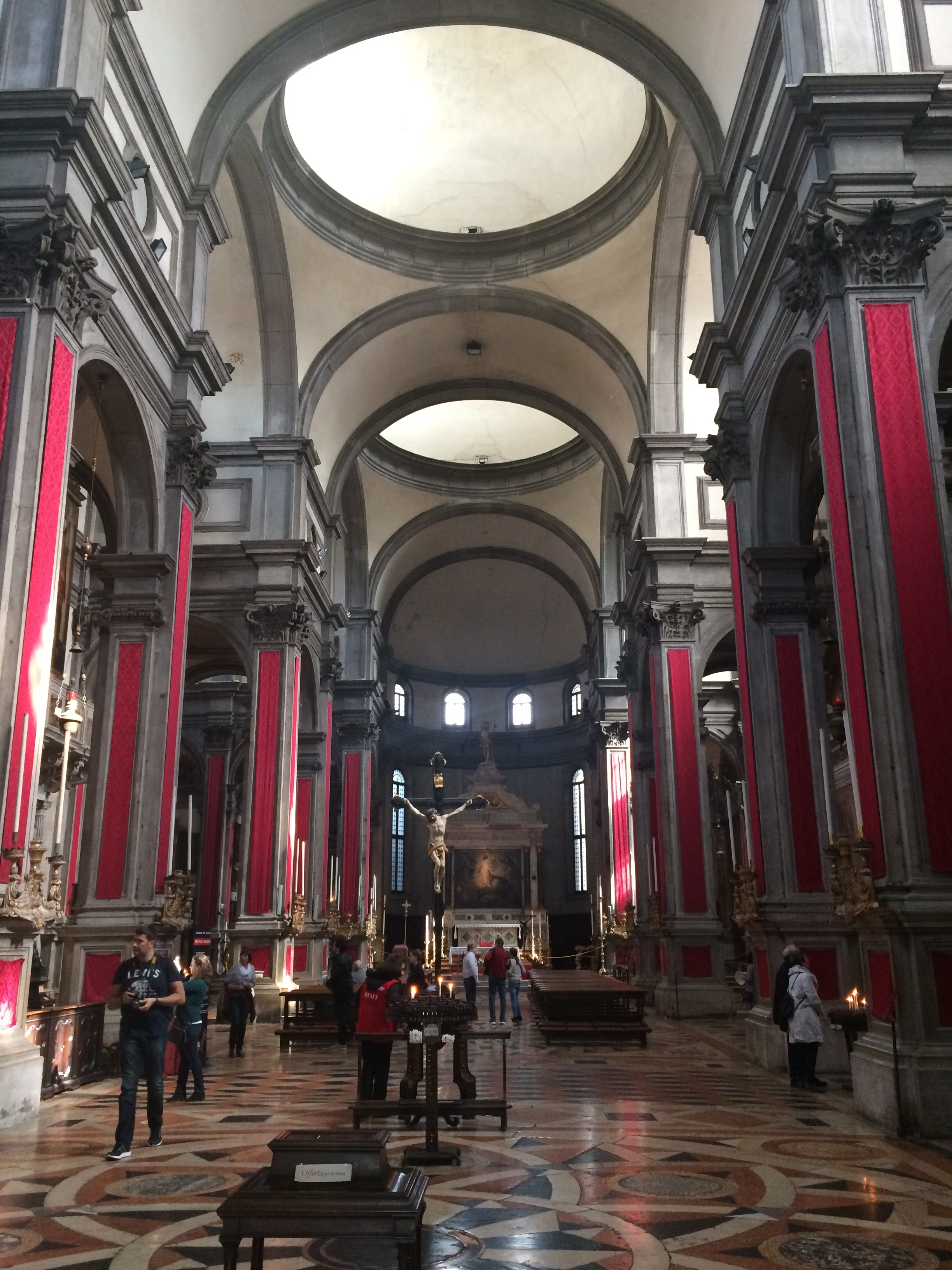
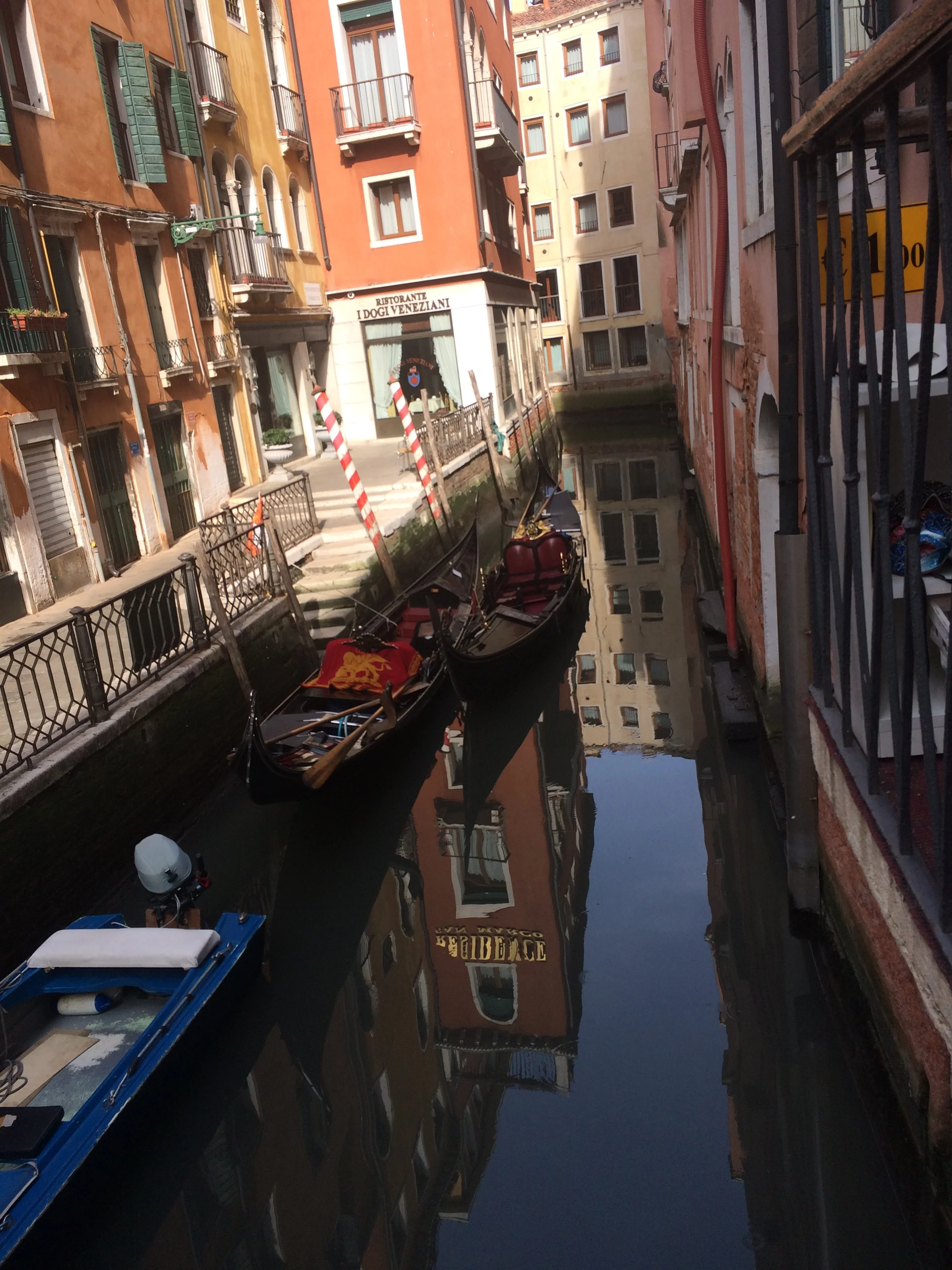
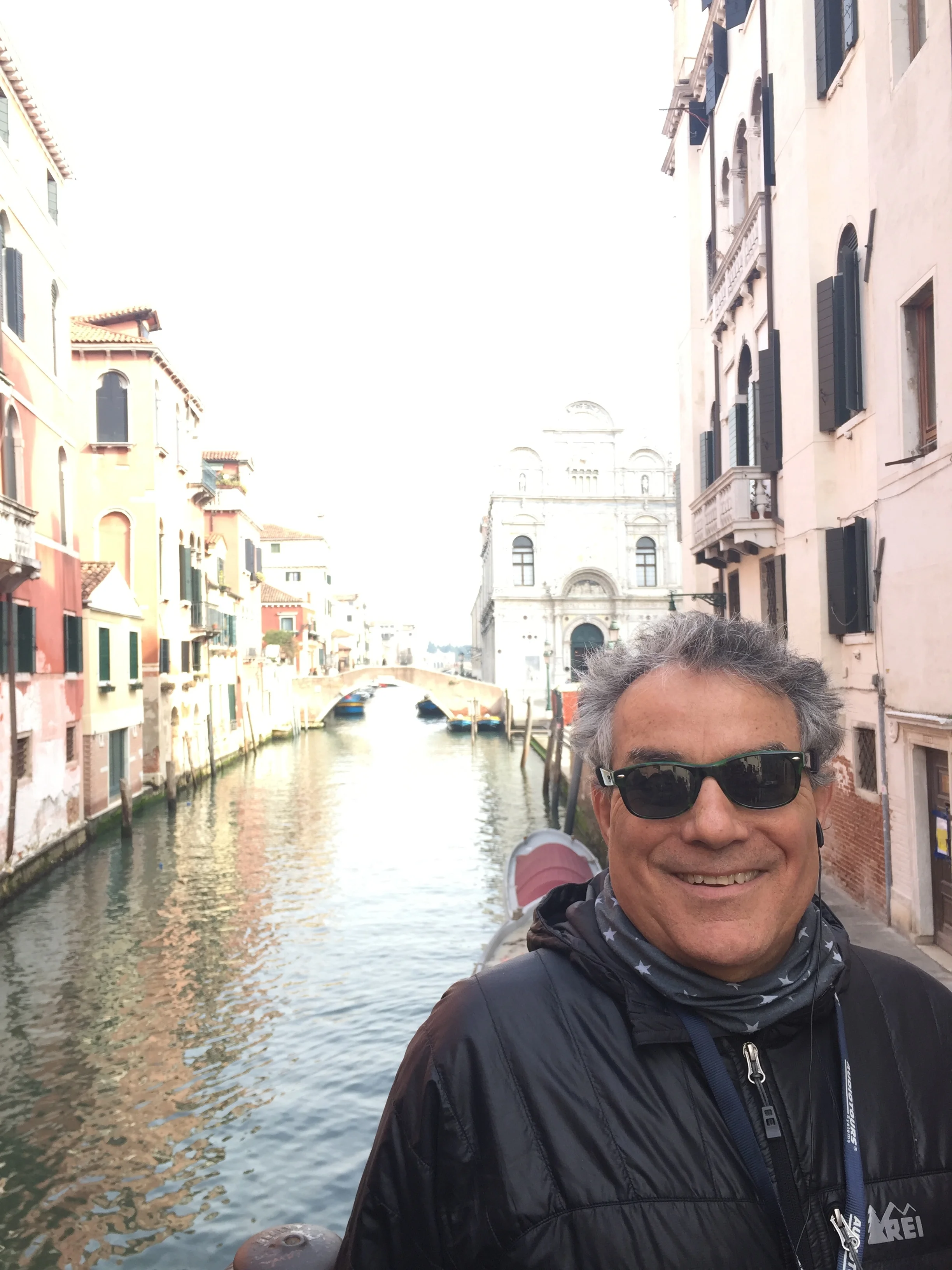
The main island of Venice is shaped like a fish. It is connected to the mainland or “countryside” by a parallel train and auto causeway. When the train stops, we dragged all luggage to the Water Taxi stand, paid to jump on, and then took the boat to the wrong landing and still have to drag the luggage across bridges and steps to get to the correct neighborhood. Actually, it is kind of fun winding through the narrow streets, viewing the reflections from the watery canals, seeing the cute little shops, and the multiple plaza. It is easy to get lost even with a map. Thanks to google maps and Charlie to get us settled.

Charlie and Gabbi going out to the gondola ride

We stayed in a small hotel, nothing fancy but certainly clean and convenient to the the main square of Piazza San Marco. That first afternoon, Charlie and Gabrielle left us to explore a little but mostly to take a private gondola ride. Several years ago Janet and I took the same gondola ride, but with our moms in the back seat. Oh yeah, I don't lie! We got back together and went to Piazza San Marco for early drinks and live music, soaking in the atmosphere and the surroundings. We then were off to dinner at a restaurant highly ratedby Trip advisor. The wait was too long. The host offered to take us to another restaurant that he said had the same owner and menu except no fish. OK, we want pasta anyway. He then walked us to the hidden restaurant of the same name. This place was in need of refresh, but the food was good and there was live music. The evening ended well.

We started the day with a paid guided walking tour; no free tours here. The guide was very knowledgeable and directed us around the Venice landscape, streets and exterior sites. We all got a nice overview of the tremendous history. Our walk took us by Marco Polo’s family home, on “Milion” street. There is a big sign affixed to a particular home which is readily seeable by gondola passengers; however our guide thinks the actual home is farther down the street, but still on Milion street. Apparently, as revered asMarco Polo was he was also ridiculed by fellow Venetians as being a grand “exaggerator”.  They chided his address and his stories of a million Chinese, a million towns, a million this and a million that, etc, etc. What a funny story.

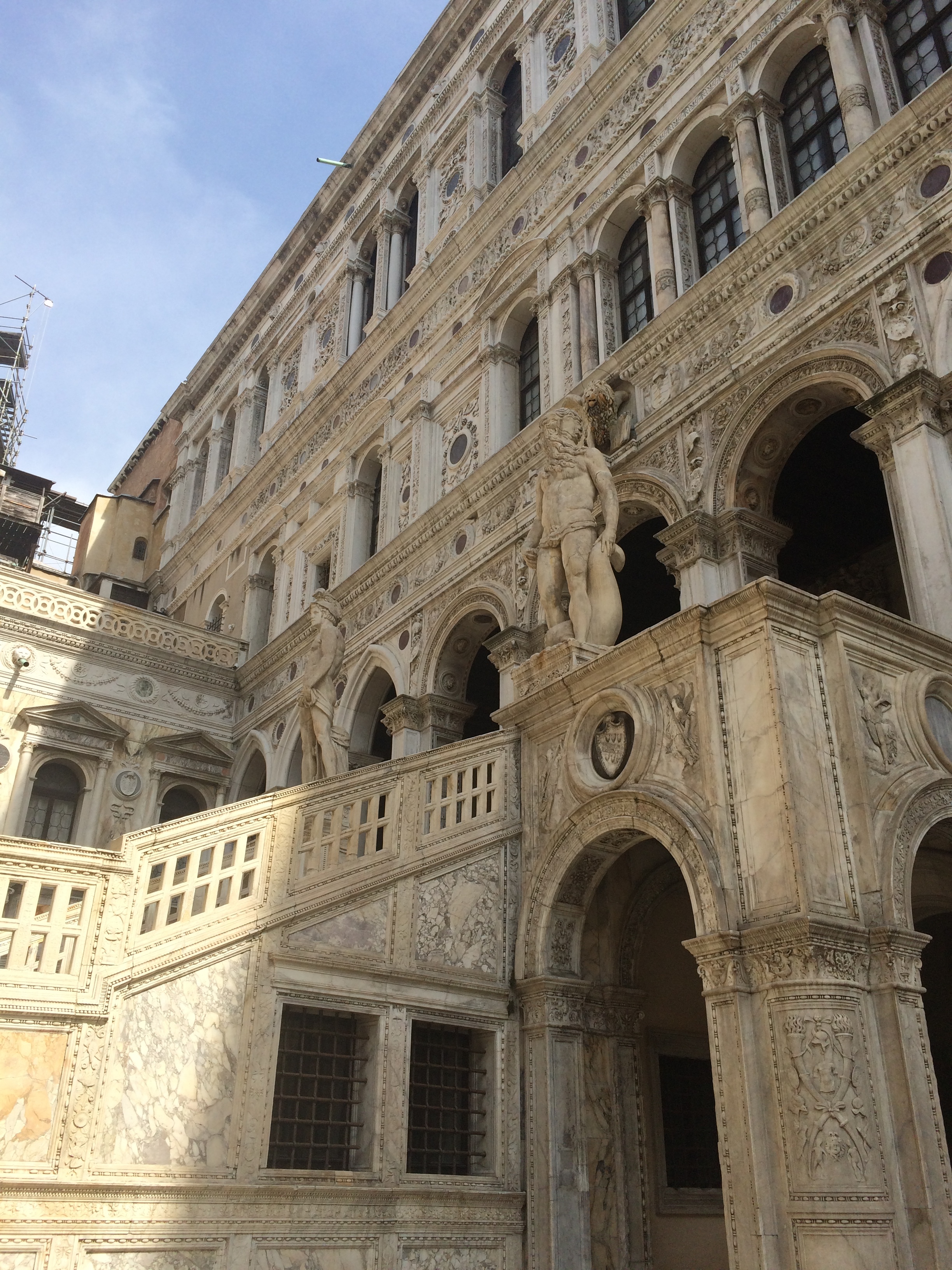
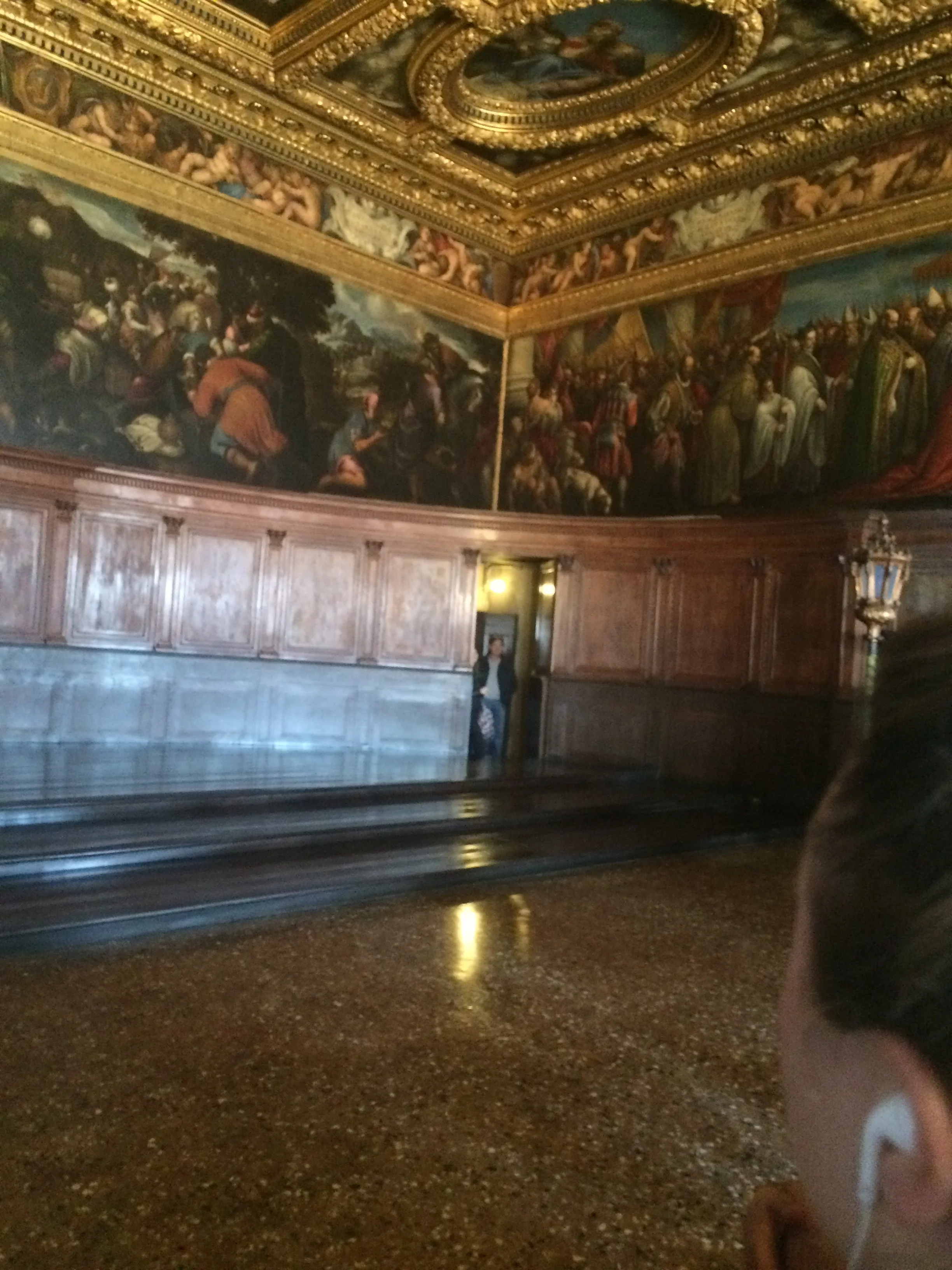
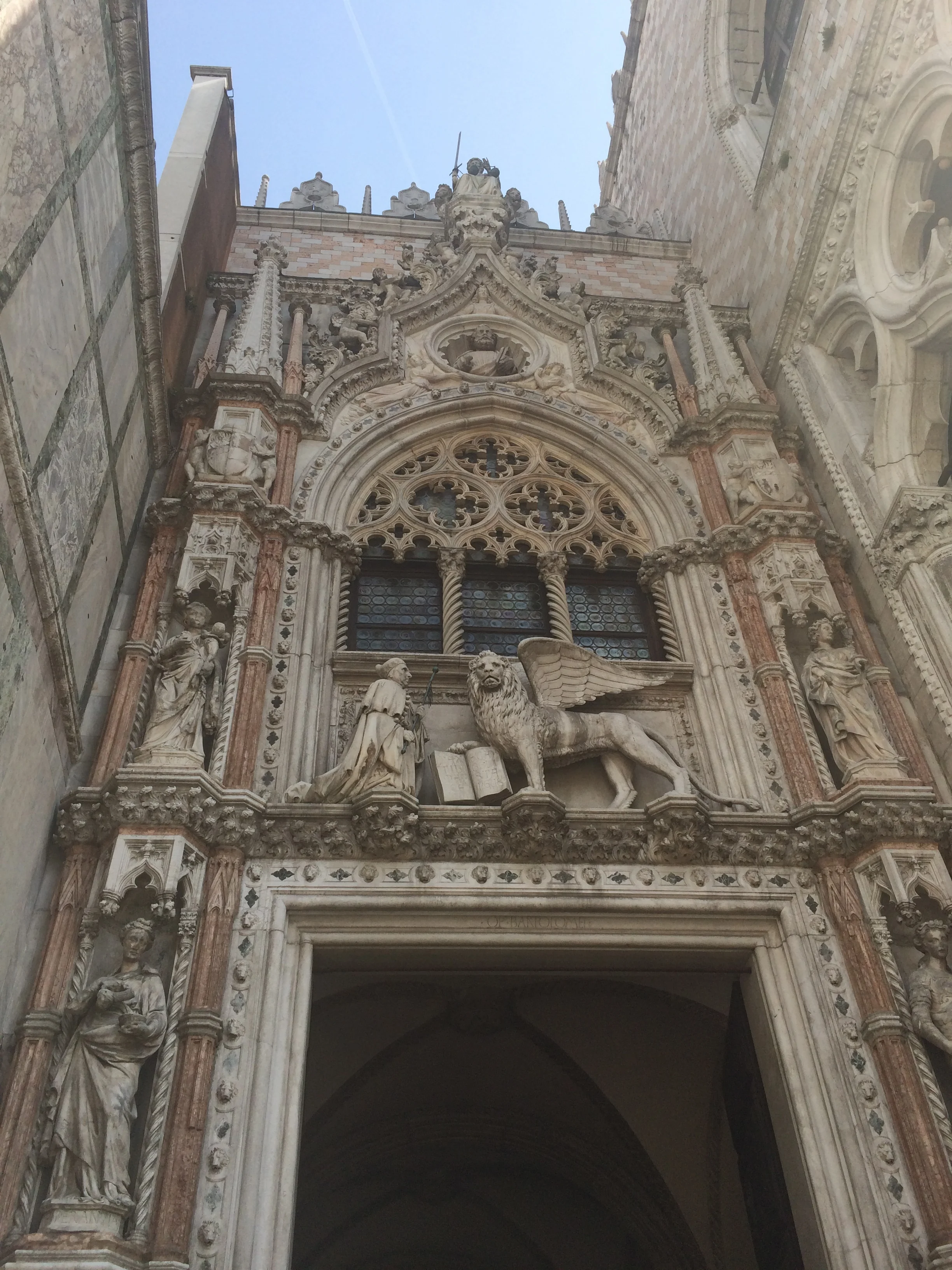
The next tour was with the same guide and we travelled through the Doge's palace, the dungeon, over the bridge of sighs and its cathedral. The actual halls of power are amazingly decorated. Venice, unlike Florence and the Medici clan,  wanted to retard the growth of power within one family. The Venetian council selected it leader every 2-3 years from the elder statesmen of the group.  Should the leader get too uppity, he would be exercised, and his portrait removed from the wall of the Doge palace, and replaced with a painted sign indicating his transgressions. 

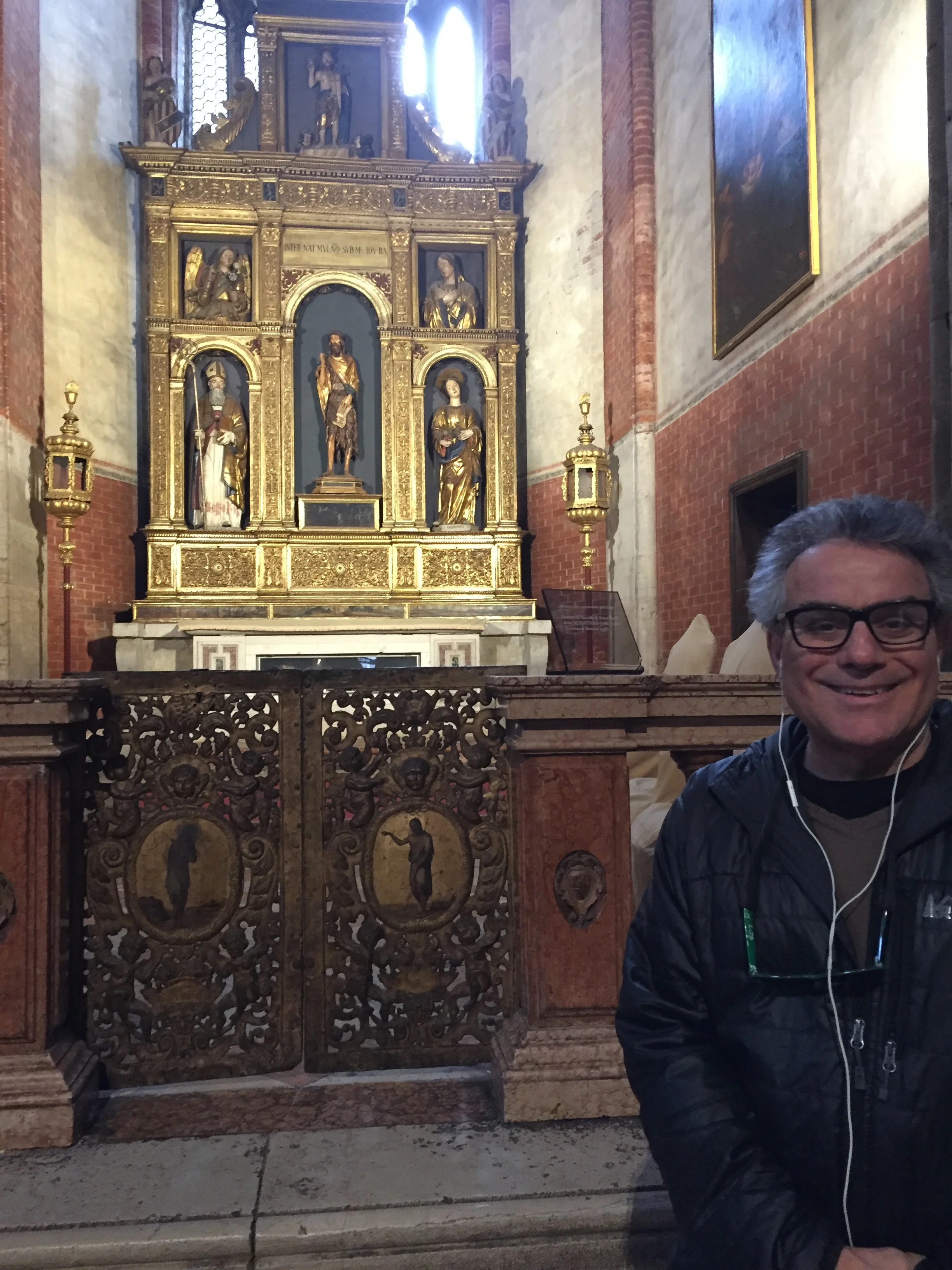
We finished the afternoon by visiting the out of the way “Basilica Dei Frari”. This church had some bizarre sculptures and then some fantastic main altar paintings. The most renowned painting is Titian’s “ Assunta” (Assumption of red cloaked Madonna). This is a Titian gallery of sorts. The side altars are something else as well, with one which had a giant sculpture of 4 Africans carved with black stone acting as pillars holding up the roof of a moseleum. 

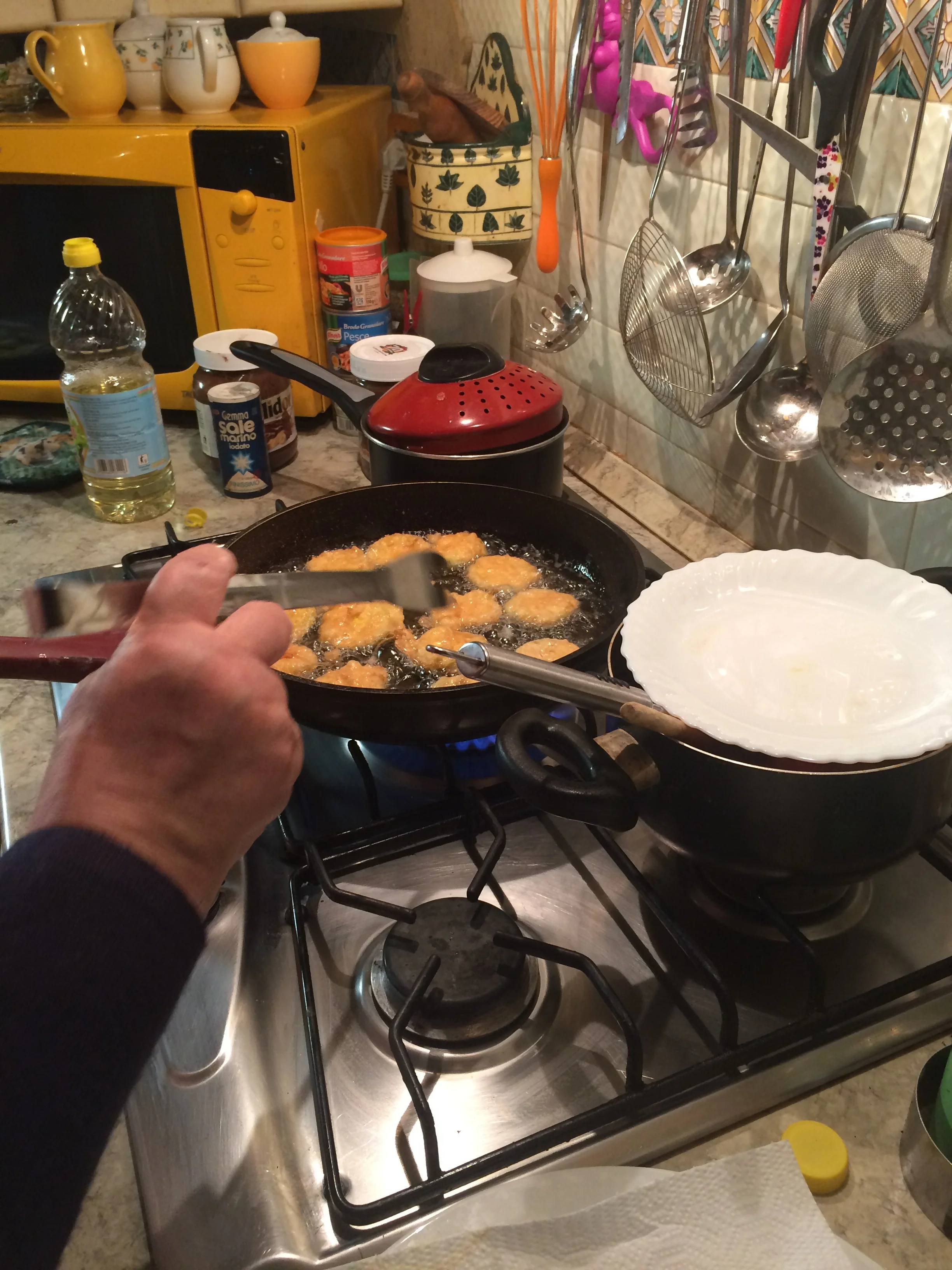
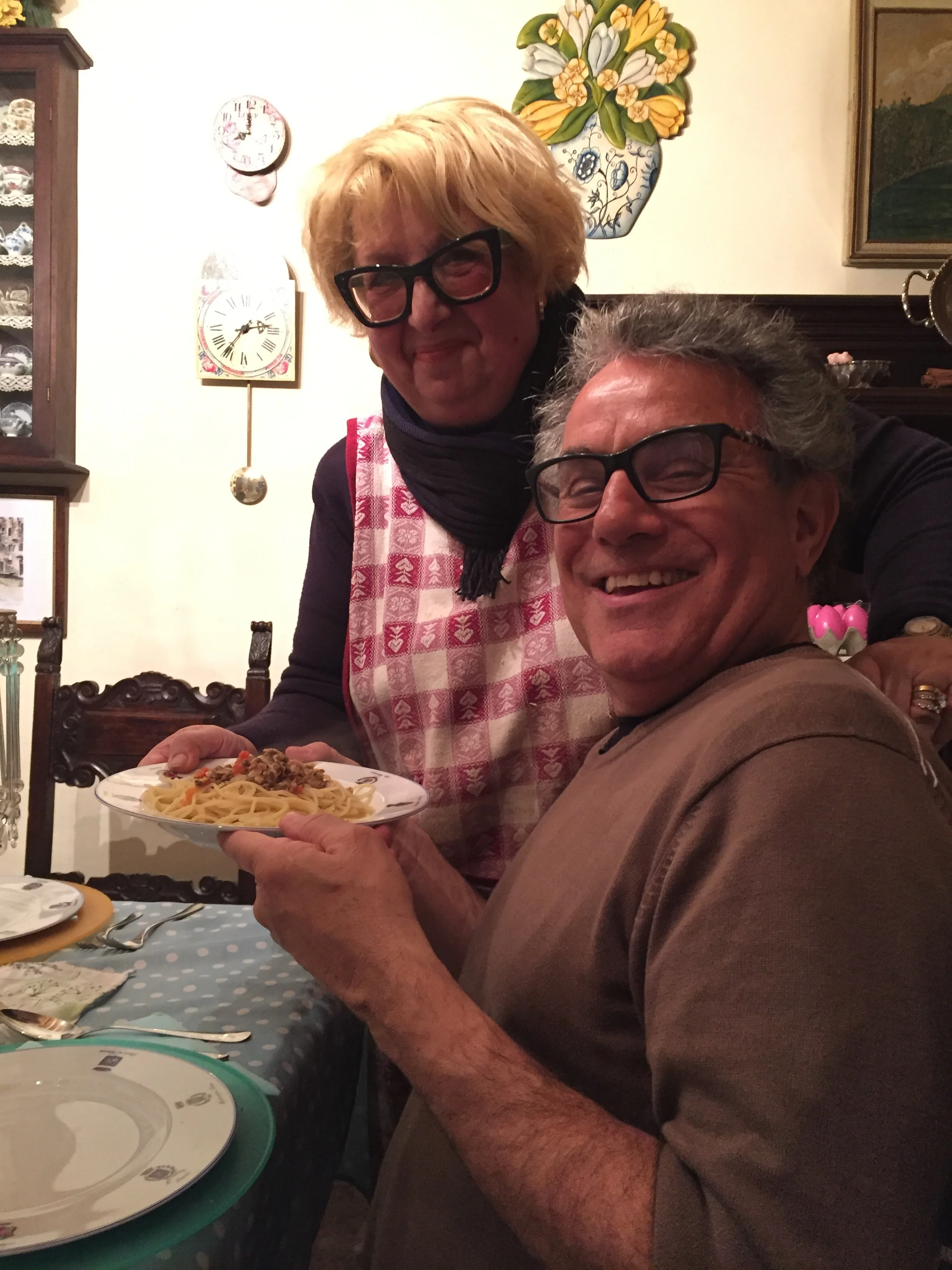
This day was concluded by an In-house dinner with cooking lessons at the home of a Venetian couple. They were lovely, friendly people who had a very large 3 story home. Their living quarters were on the 2nd floor. We agreed to a meeting point and Giorgio came to lead us through the winding streets to his home. He spoke no english but seemed friendly enough.

When we arrived we were greeted by Santina who spoke little english and a charming young Brit named Anna. She was going to be our facilitator. Everyone thought we had booked through the “Italian Language School”. Surprise, no speak Italian. Thankfully, Anna was there to keep the friendly chatter going. The menu was varied, the cooking methods simple and the ingredients healthy. There wine was good too.  Santina and Giorgio had been conducting a greet and meet cooking class for several years. Anna had stayed with them as her host family on her study abroad program. She loved Venice and had returned to live here and maintain her friendship. She really was a sweet person and made our evening thoroughly enjoyable. We would recommend stepping out of your comfort zone and experiencing the same thing.  See some photos below of our great time.

On our final day we water taxied over to slender Murano Island to view all the artful glass stores and factories. We had purchased a signed glass sculpture when we were here before, but our kids purchased some nice items. Murano is much calmer then Venice, so our waterfront meal was more relaxing. We did notice some signs protesting the invasion of Chinese made glass products warning against damage to the island’s reputation. From our eyes, there is some glass that looks rather mass produced, but clearly the really artistic glass work with flair stands out; just be careful where you shop. 

We water taxied back to Venice to pickup the stored luggage and then tagged alone with our kids as they waited for their train to Rome and the flight home. We greatly enjoyed spending time with family. We may be more home sick now, but there are still many adventures ahead. See some more pictures of our great time in Venice.

Florence Italy

Our Airbnb

The train ride took about 3 hours. We checked into the cutest Airbnb, with its vaulted brick ceiling and clear glassarchways. We wanted to love this place, and did , until the heat turned off , the power failed, and the neighbor went crazy; it sounded like his teen kid was tied to a chair at midnight and left to cry out and babble incoherently all night; it was the bouncing of the chair that first woke everyone and then the volume increased; May or may not have been drugs or mental illness, just saying. We demanded and got a refund. 


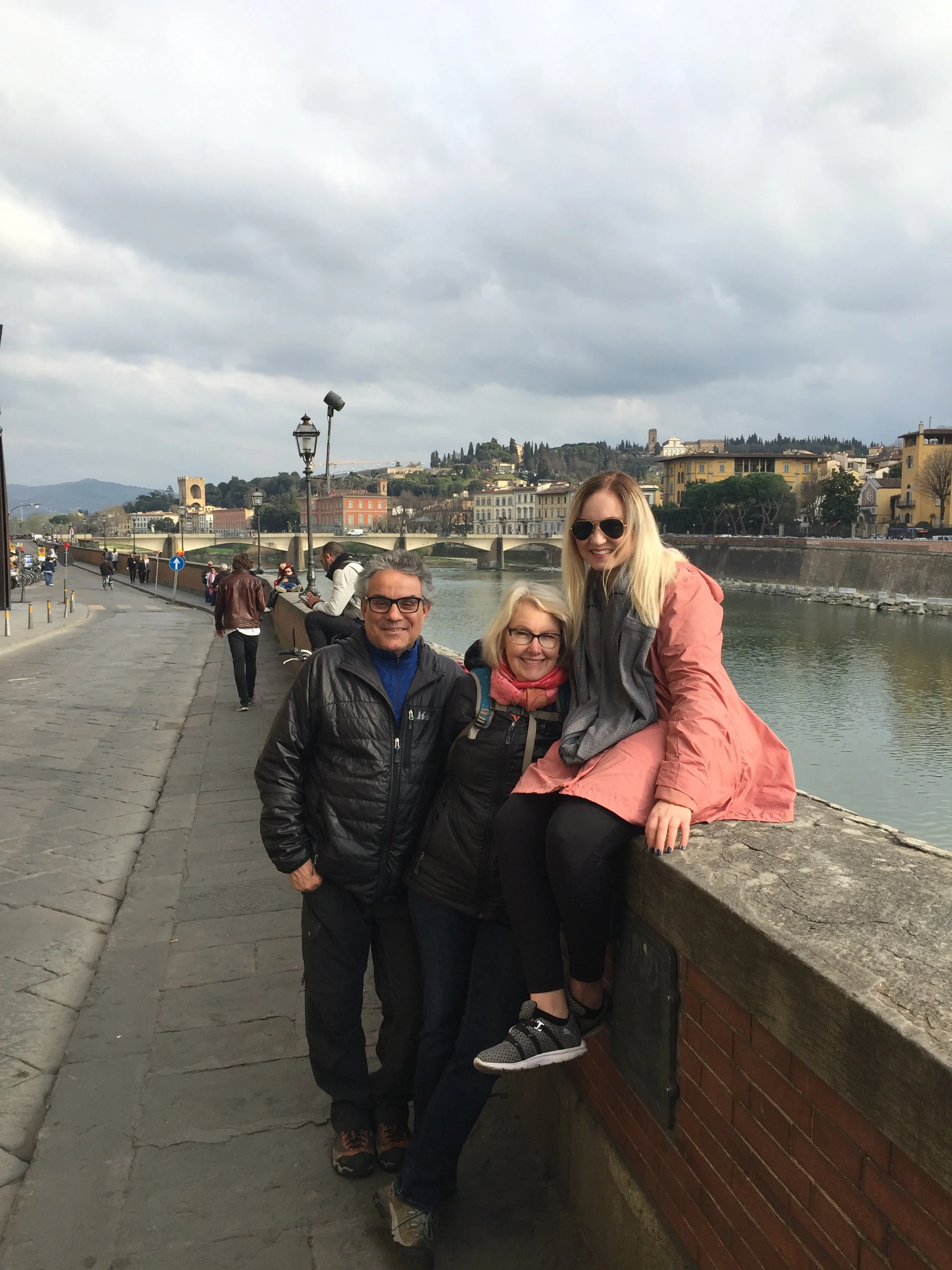
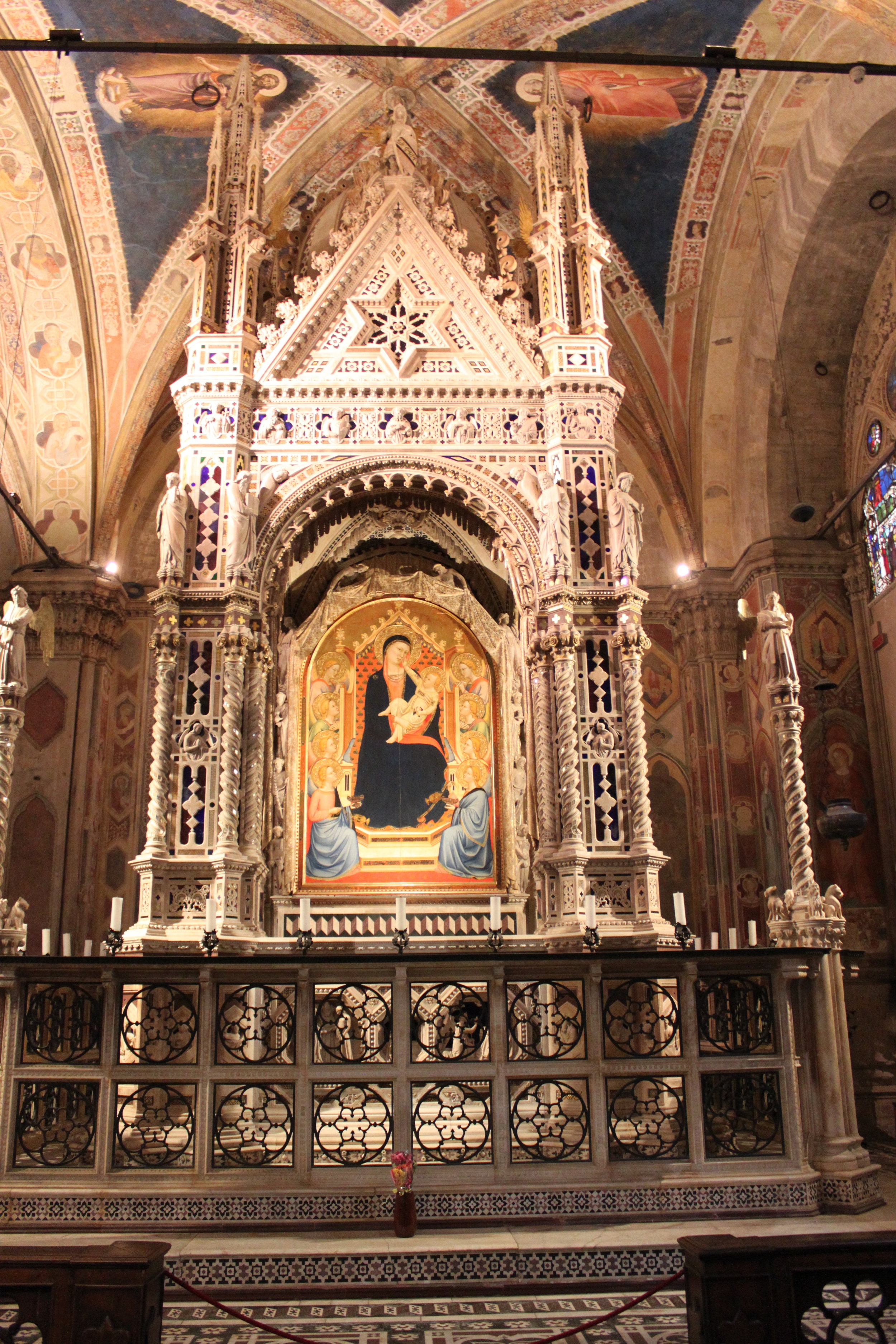
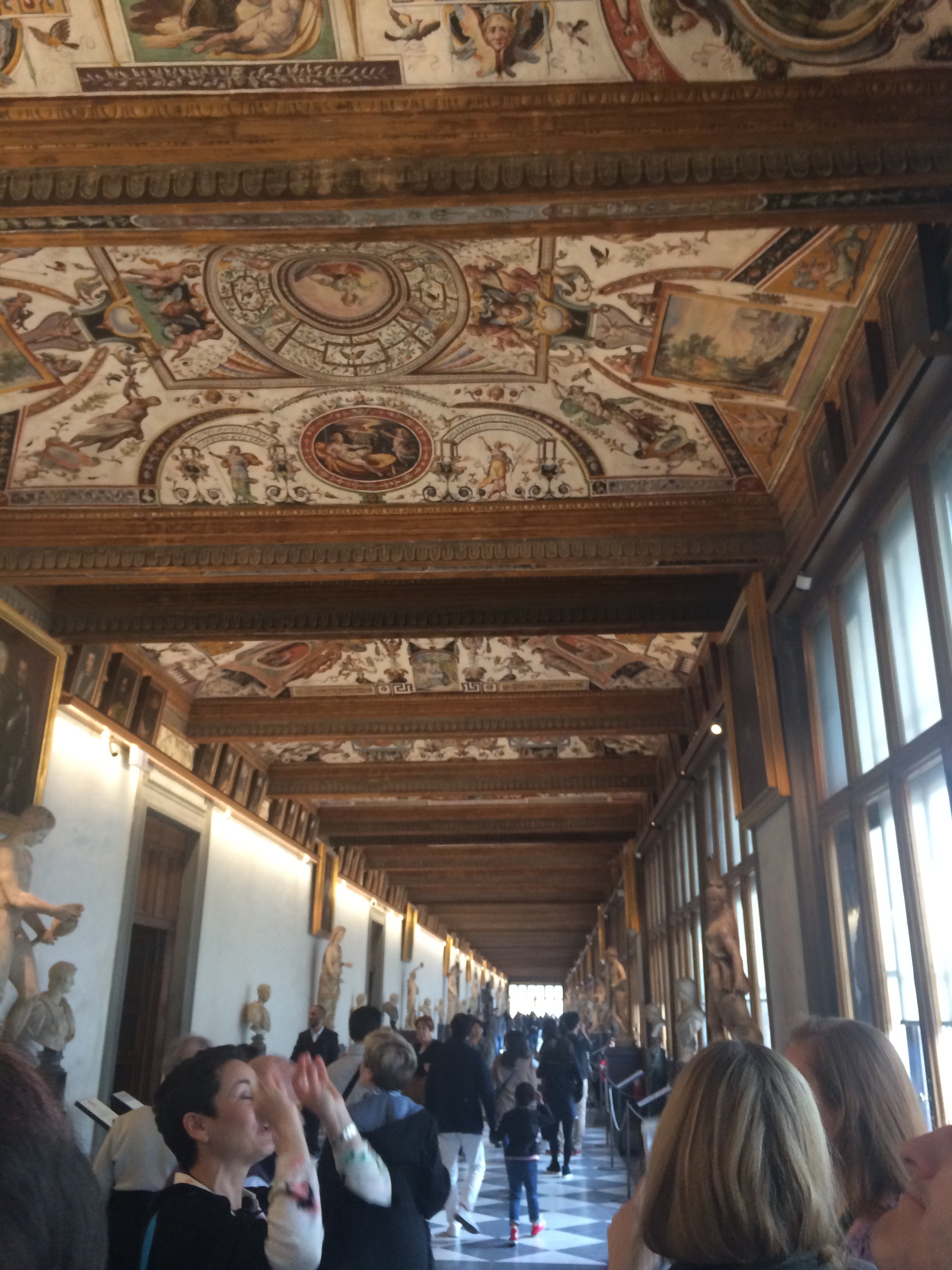
Enough of that nonsense. We enjoyed Florence, founded by Julius Caesar around 59 BC. Janet out did herself with planning this stop for the kids. We planned only 2 days in Florence. She pre-purchased 3 guided tours of the major sites within the city. We used “Viva Art Tours”; all three guides were outstanding. First stop was at the “Galleria Degli Uffizi”. This valuable art collection was bequeathed in 1743 to the city by the super rich“Medici Family” that governed the city for 3 centuries. This is apparently the greatest collection of “Italian Renaissance” art in the world. Our guide was an art expert and gave us interesting backstories about the art presented. Three paintings of note for laypersons like us are: Botticelli’s Birth of Venus (Venus on half shell), Annunciation by Leonardo da Vinci, and Holy Family by Michelangelo. Apparently, the patron of the Holy Family did not like the painting and only offered half price; Michelangelo blew him off and after negotiations the painting was sold for double the original price!  Here are some photos.

Gabbi and Charlie in front of "Venus on the Half Shell"

Annunciation by Leonardo da Vinci,

Michelangelo's Holy Family


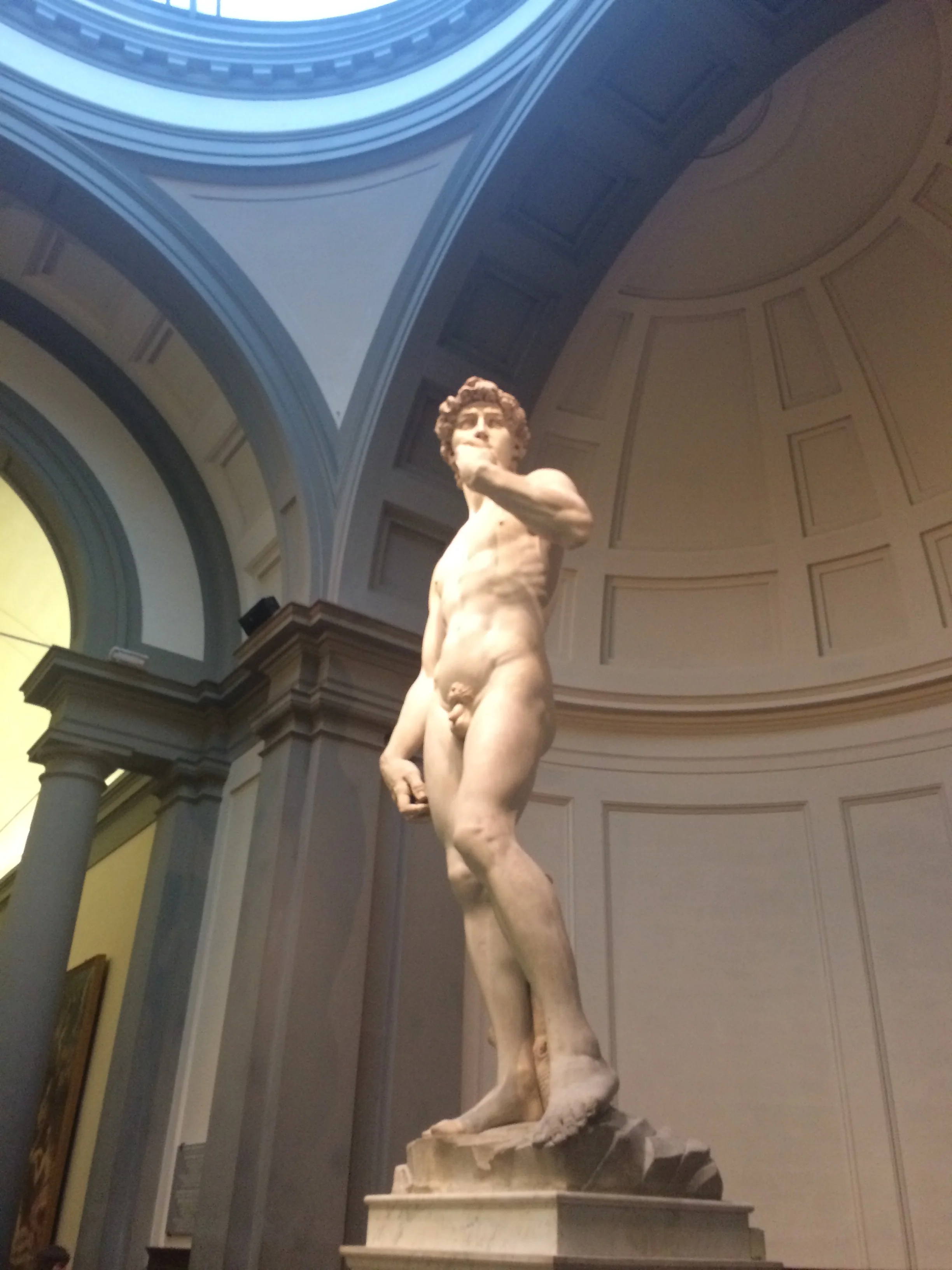
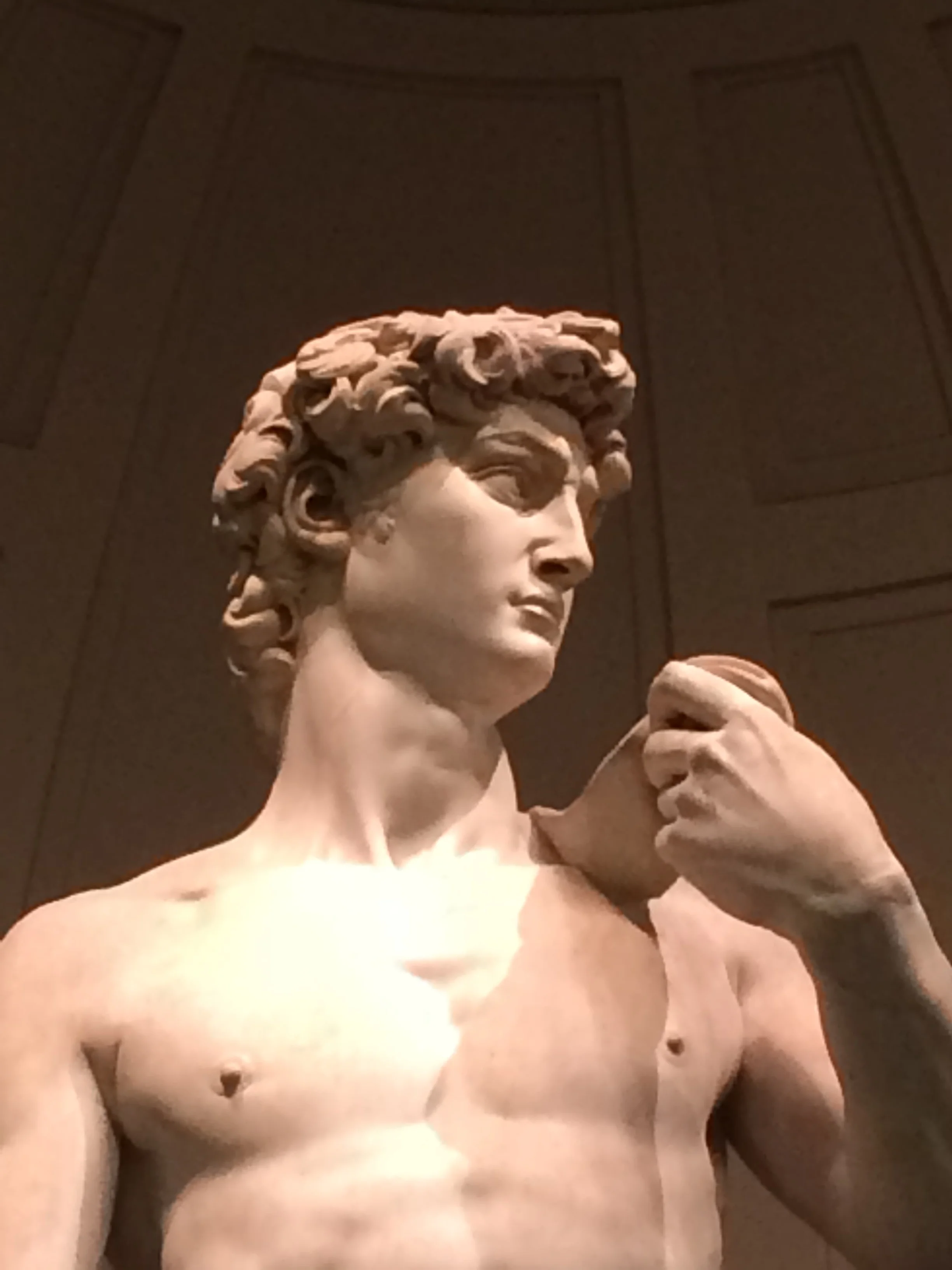
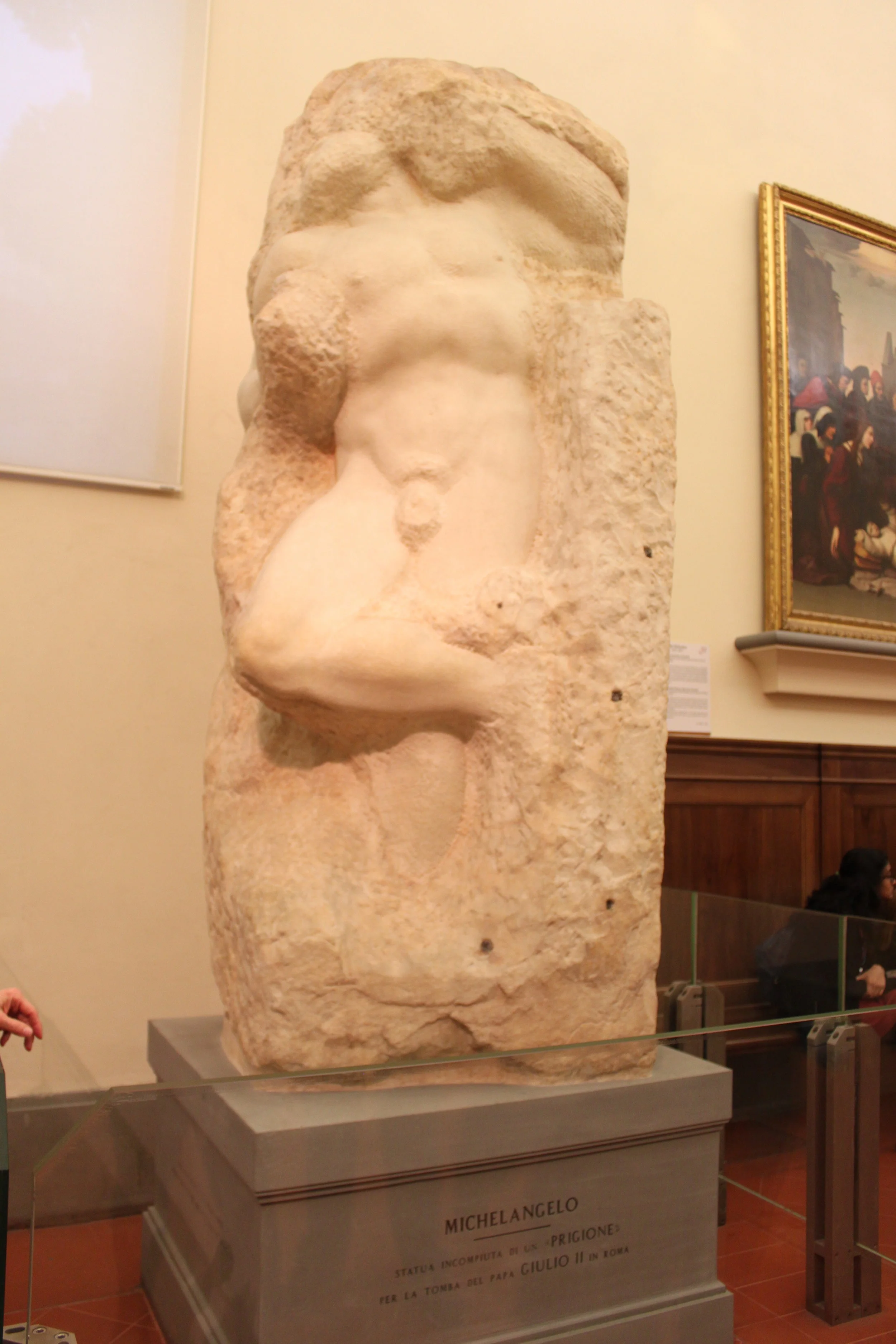
Our second tour that day was at the “Galleria deli Accademia”. The mission was to see the most famous sculpture in the world, Michelangelo’s DAVID; a nude warrior carved from a large single block of marble ( that before had been worked on by two lesser sculptors). This is the second time we saw this magnificent creation, but it still is so beautifully impressive and powerful. Our kids were really taken aback by its size and simple splendor; though art experts diagnose each and every shape and carving stroke, as told by our guide. She was very interesting and opinionated. We found out from her in a friendly way that many of the things we had done were too tourist like and wrong and that we should have made other choices. We ignored all of it except the suggested restaurant for dinner. That was a great tip. See our David pics below and one of his unfinished works


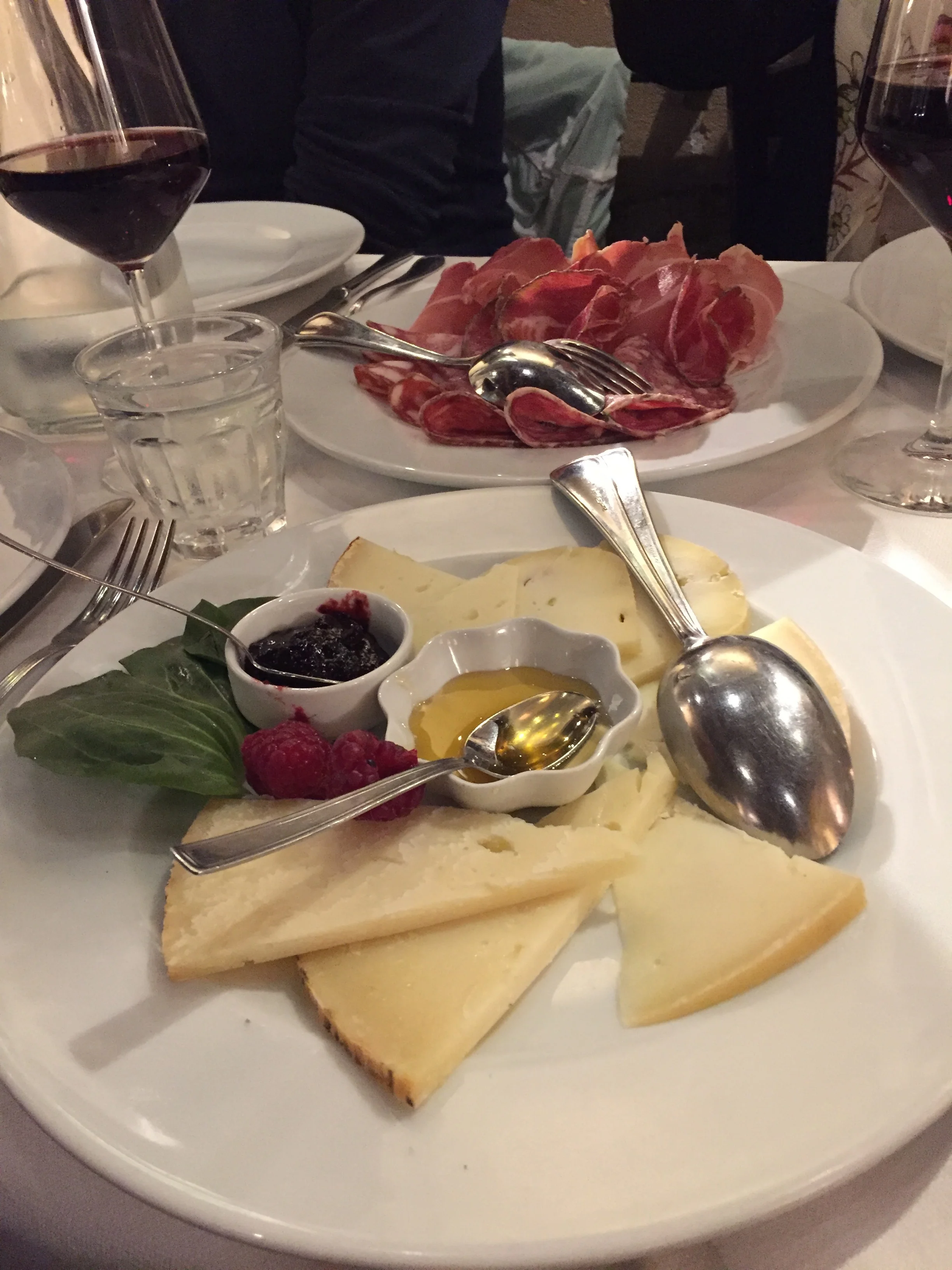
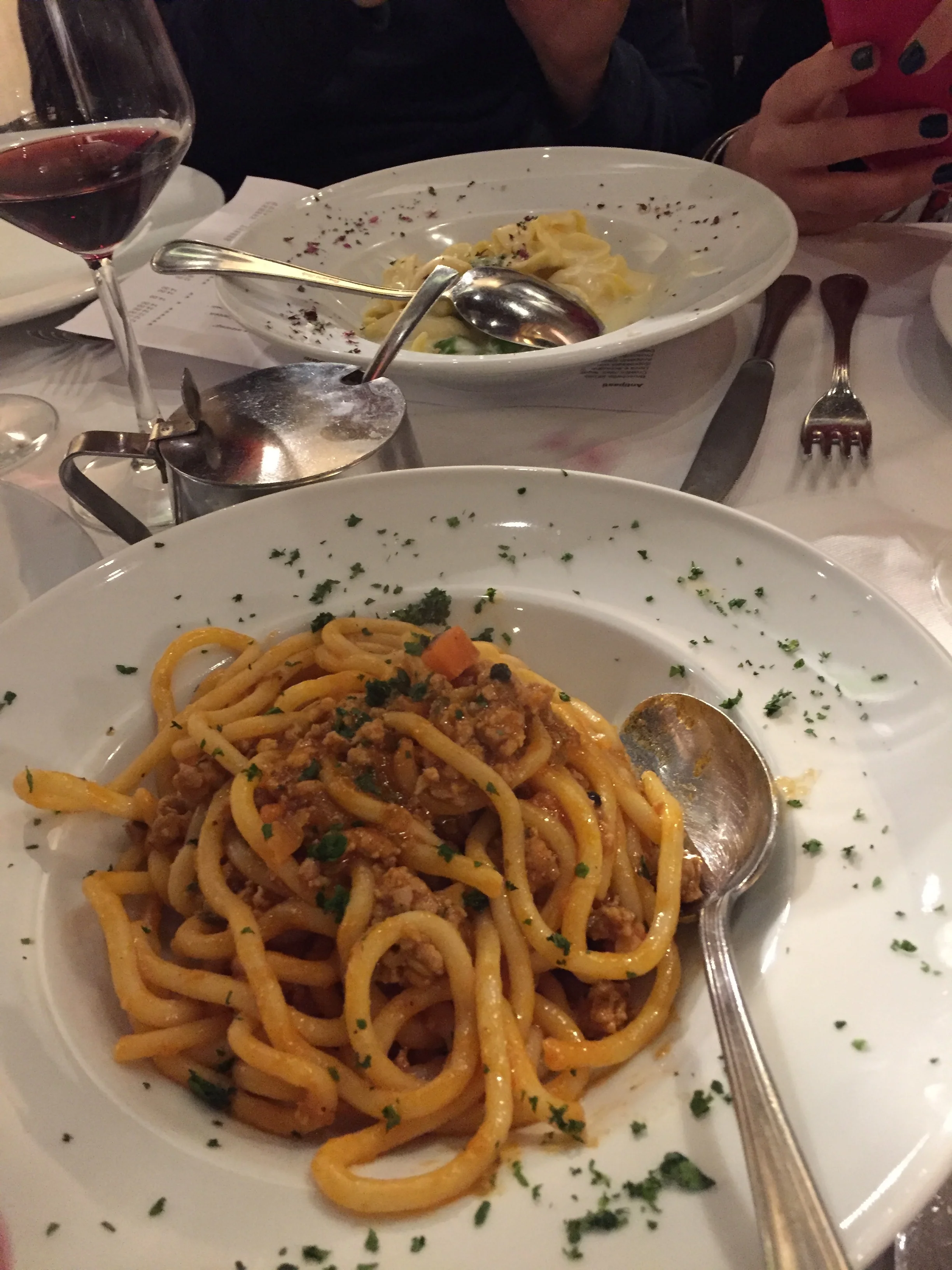
We hung out in the museum until after closing time gazing at David's furrowed brow. We then headed out to the suggested restaurant for an upscale traditional Italian dinner. We had a great combination of starters, pasta, salads, desserts, and wine. Funny thing, our waiter was from Albania, not Italy, and in a few weeks he was traveling to see his sister who lives in Troy, Michigan.


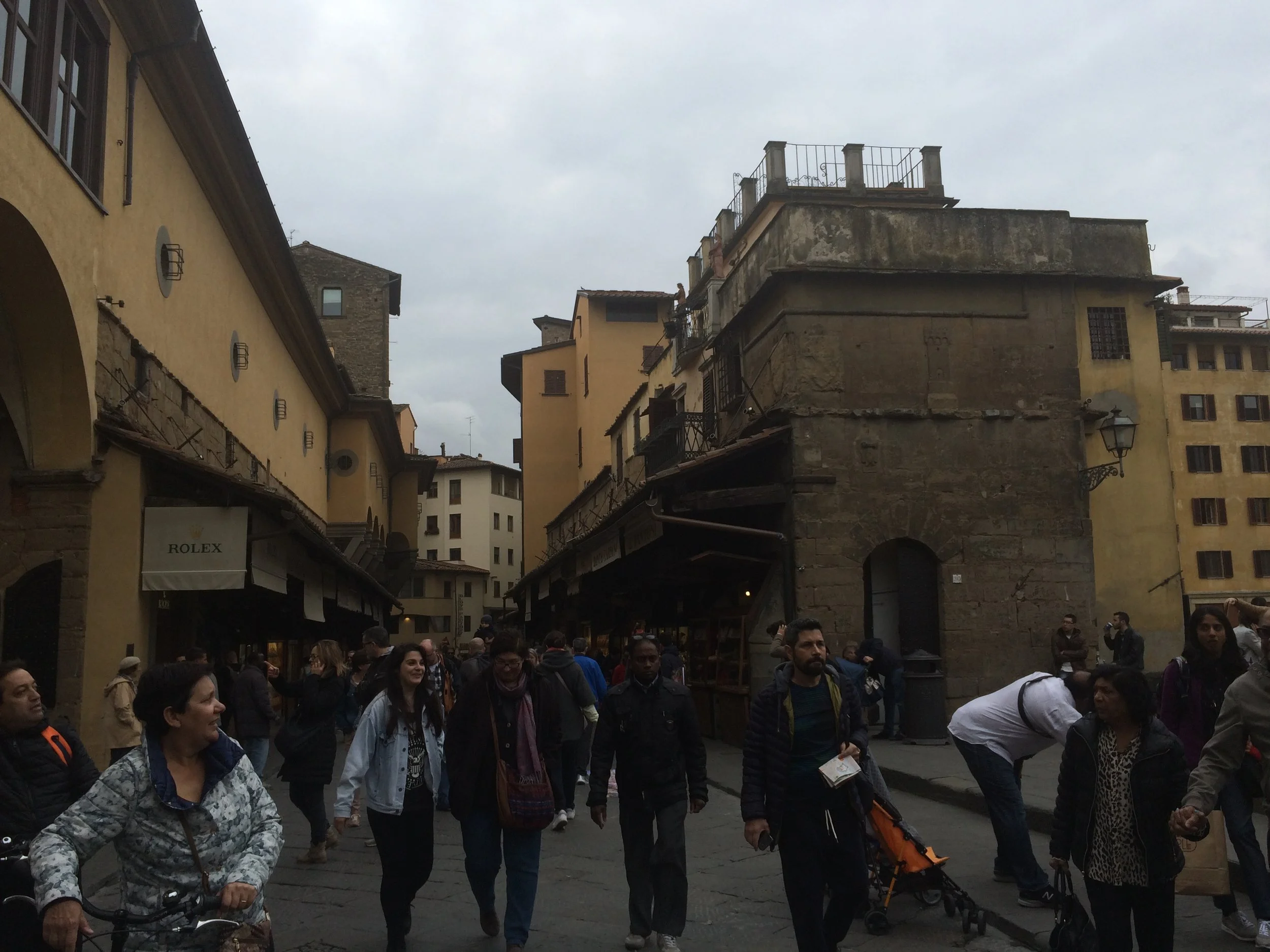
The next day we did a morning walking tour for the city sights. As well as the iconic landmark of the great Gothic Duomo and its Battistero (separate Baptism building) officially known as Cathedral of St. Mary of the Flower, we walked the many narrow streets, second level walkways of the wealthy, Plazas, and foot bridges lined with commercial shops; very clever urban planning. Most of the tour dealt with discussing the influence of the Medici Family and then the French Lorraine family which also ruled, and subsequent reconstruction necessitated by WW II destruction.  The large Cathedral, with green and white marble exterior, is outstanding, but the interior is unexpectedly plain. We later finished the day on our own by viewing the historic science and technology museum, which had been renamed with the fancier moniker of “ Galileo Museum. It was an interesting walk back in time of early technology and way off scientific theories. We really liked what Florence had to offer.


Early the next morning we hopped on a train to Venice. Romance ahead!

Rome Italy

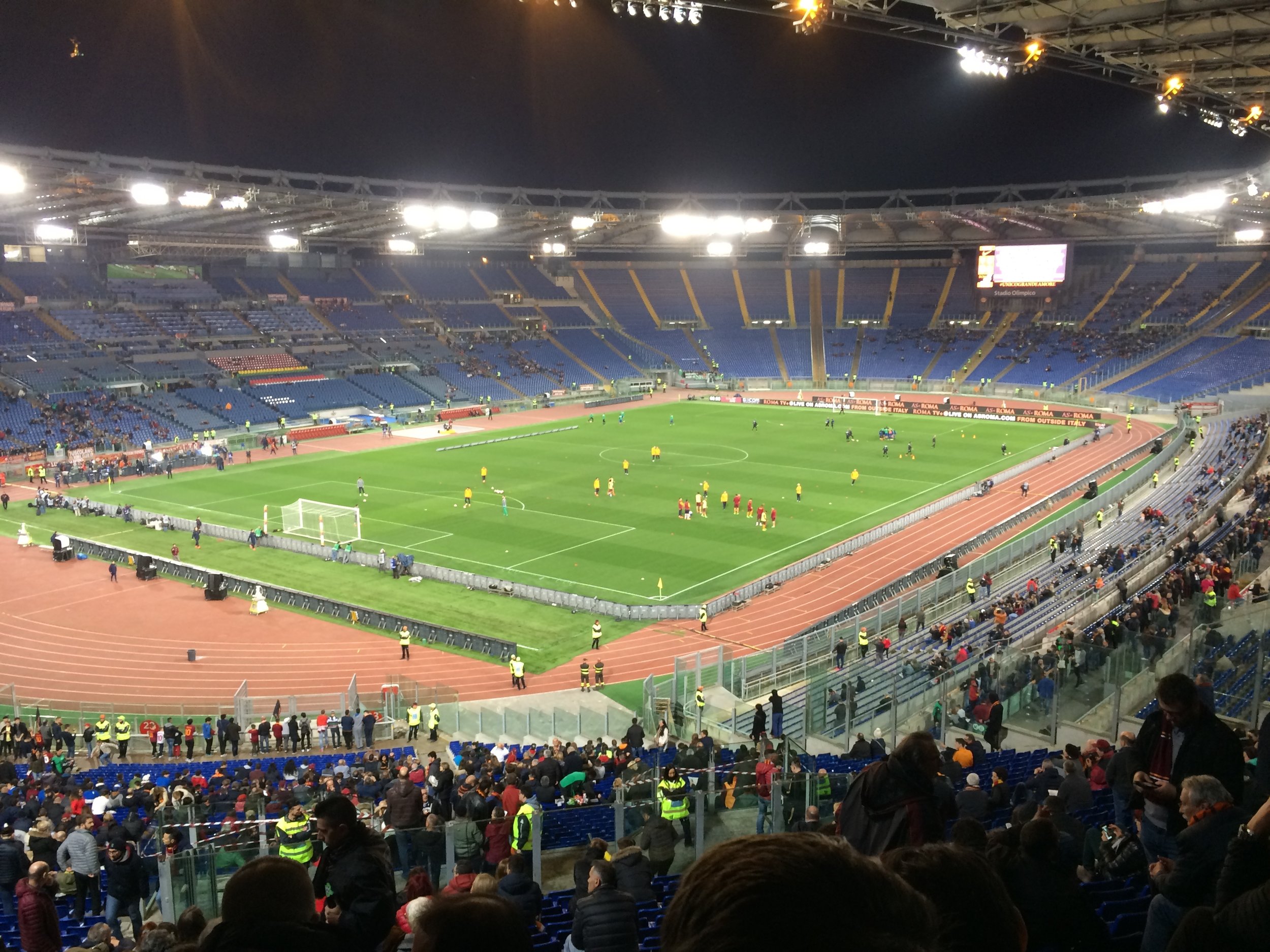
We arrived in Rome on a sunny day.  Excited that our son Charlie and his partner Gabrielle from Chicago would be meeting us the next day. It has been 6 months since we actually saw family. We took the local train from the airport to the Termini Station which is in the neighborhood of our 2 bedroom Airbnb. Nice accommodations, but a bit sterile, in a newly renovated space. We moved furniture around to make the place more comfy and family friendly. Our narrow street was quiet, but interesting with the large National Institute of Statistics across the street and a Jewish Synagogue nearby protected by 2 armed soldiers every night. Our host checked us in and also directed us to a grocery and the ROMA soccer ticket store within walking distance. Most of our family vacations include a sporting event, we gave Charlie this match for Xmas. This walk was where we got our first taste of the hustle and bustle, grit, and beauty of Rome, which seemed even more active than Paris. We walked passed ancient ruins and churches, and stores and bistros. Our heads were on a swivel when crossing streets looking out for unrelenting motorbikes. Cars were easy to see coming. We arrived at our destination. The Soccer ticket purchase is a very controlled process requiring Passports and printed tickets actually displaying your name. Ticket use also requires limited stadium access points and double verification of ticket ownership. The stadium has plexiglass walls between sections. No “hooligan” nonsense here. 
We had the next day open waiting for the kids to arrive. We chose to visit the “Museo e Galleria Borghese” at Villa Borghese. This is the 17th century park and villa created by the very rich Cardinal Borghese. Luckily, we had preordered tickets; access is limited by time slot and numbers. The hassle was worth effort. This lavish gallery boasts extraordinary paintings and sculptures by the likes of Raphael, Caravaggio, and Bernini. The ceilings and walls have been painted in the large meeting rooms as well. The audio guide helps in the appreciation. Especially when advised that several beautiful paintings of “Nudes” where typically displayed in the Cardinal’s bedroom. Check out some photos. 

Charlie and Gabbi in their first church

Charlie and Gabbi in their first church

At Midnight, Charlie and Gabbi arrived. Lovely reunion! After flying from Chicago to Istanbul to Rome they were beat. All were ready to sleep, until “surprise”,the shower drain backed up and flooded the bathroom. We mopped up. Luckily the apartment had a patio where we could hang out the a 3 towels and rugs. Not the incident free start we had hoped.


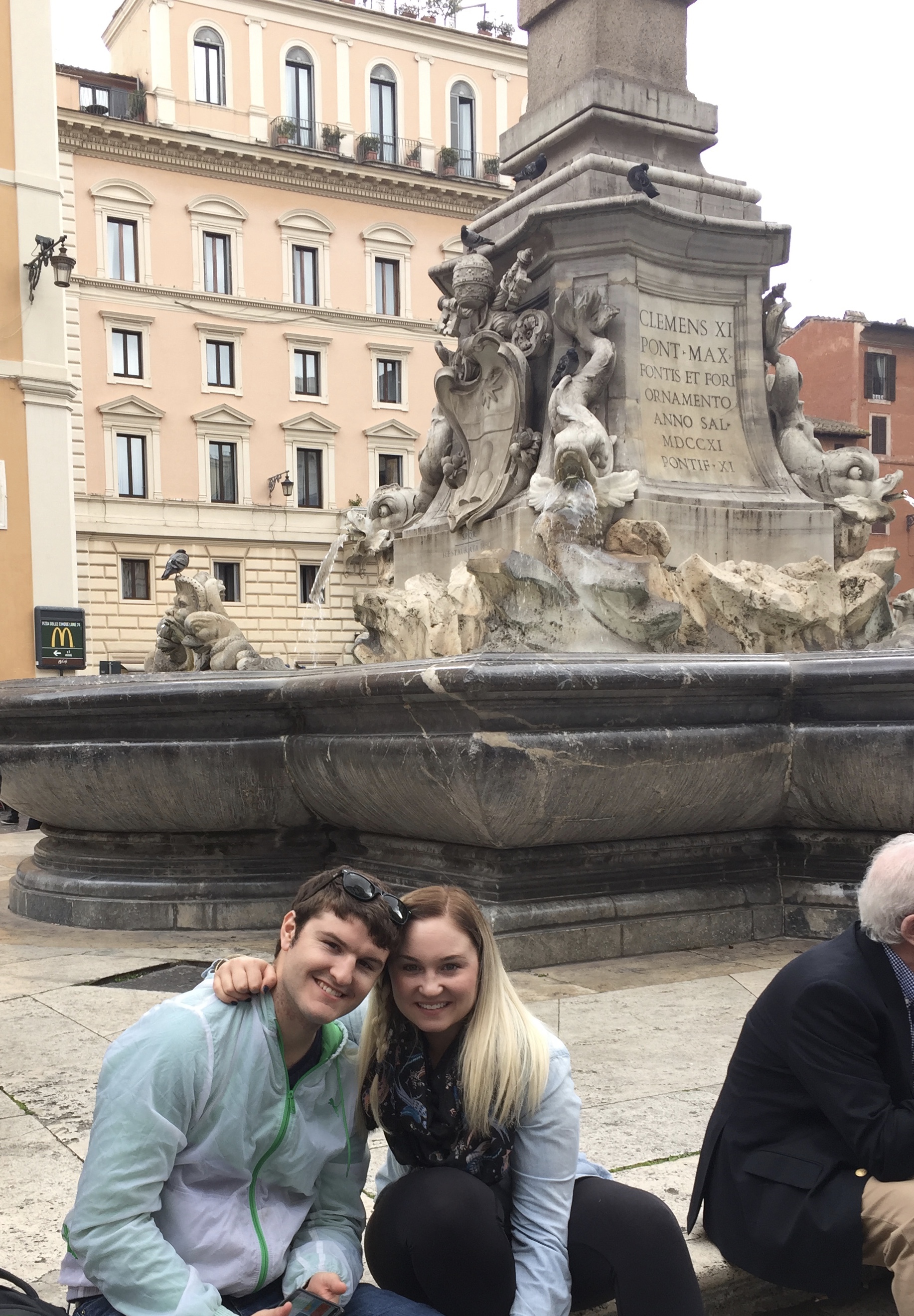
In any event, we had planned a nice day. We started out with a 3 hour self guided walking tour of the highlights of historic center of Rome. This was possible because we had downloaded and audio app into all our phones, prepared by the famous and thorough tour guide Rich Steves. We strolled through the busy streets of Rome, starting at Plaza Navona then moving on to the Spanish Steps and Trevi Fountain, and finally the Pantheon, among other sights; often stopping at open churches that crossed our paths to get lovely surprises of beauty.


We had late lunch sitting by the Pantheon and of course, enjoyed a variety of Gelato as we walked to home base.  We have provided a few inspirational photos.


In the crowd at the Spanish Steps

In the crowd at the Spanish Steps

The Roma soccer stadium was rather remote, so we used Uber and where dropped off a hour early. We needed that much time to get to the correct gate and clear the entrance. The game was high quality. The visitors scored first using some fancy footwork and quick passing, and had other chances to score playing aggressively. Roma, came back to win with superior size and strength. It was fun. It was also late when we got out the metro to our place stopped at 11:30 pm. We just missed it watching it roll away down the track. We where kind of stranded, but we walked along the Tiber River and finally grabbed a taxi safely home. 


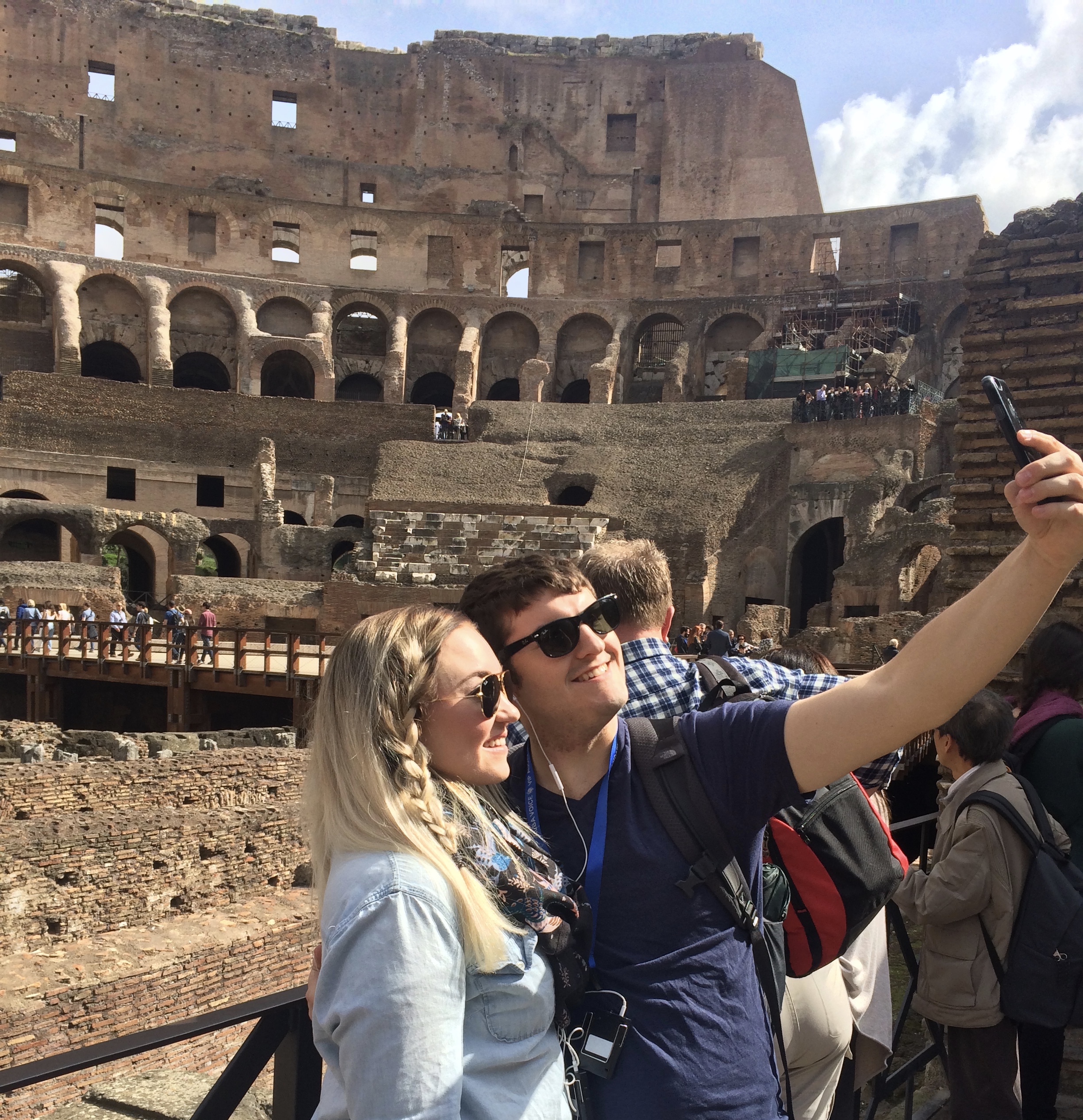
The next day was really action packed. We scheduled a guided tour of Ancient Rome. We started at the Colosseum, of gladiator fame, and then walked through the Roman Forum and ruins which formed the social, political and commercial heart of Rome. Our guide was fantastic and gave us a good insight and back story of all these sights. 

We had a break for lunch; another tasty Italian meal of sandwiches sitting on the fountain steps - just perfect.   We met up with our guide for the afternoon visit to the Vatican; switching from the power of Ancient Rome to the power of the Catholic Church. We started at the Vatican Museums and traveled through the galleries that displayed gorgeous sculptures and paintings, the Tapestries, and 40 huge topographical maps drawn of the city states and nations from the perspective and starting center point of Rome. 

Of coarse, the grand finale is Michelangelo’s 1508-1512 paintings of the Book of Genesis on the ceiling of the Sistine Chapel. He returned 22 years later to paint the “Last Judgement”on the west wall. Other famous artists, such as Botticelli and Signorelli painter side wall frescos. It is really magical. No speaking or photography is allowed within the Chapel. But we again used the Rick Steves audio guide to direct our viewing to important and interesting panels of the paintings. An off beat fact was that prior to the cleaning of the paintings art experts opined that Michelangelo painted with very dark colors because he was ill tempered with the Pope Julius II.

They were wrong. The candle smoke stained panels were clean to display vibrant colors. A small section in the west corner of the painting has been left unclean to show the vast difference. 


We left the Vatican and walked to St. Peter’s Basilica. This is Italy’s most spectacular church, standing over St. Peter’s Tomb. You know the Apostle St. Peter that Jesus appointed to be the “Rock” upon which the Christian Church would be built. The size, splendor, and décor of the Basilica is amazing. An added emotional “tear jerker” is the display of Michelangelo’s “Pieta”, a sculpture of Mother Mary holding the deceased Jesus. He completed the piece when 25 years of age. It is one of the most beautiful works of art we have ever seen. 
We left the Basilica and looked out over the grand St. Peter’s Square. We also observed the changing of the Vatican’s Swiss Guards, in their colorful uniforms with pikes in hand. This was a full and meaningful day. We headed home to freshen up for a great pizza dinner at a local joint


We had a great couple of days in Rome. Tomorrow we take the early morning train to Florence.