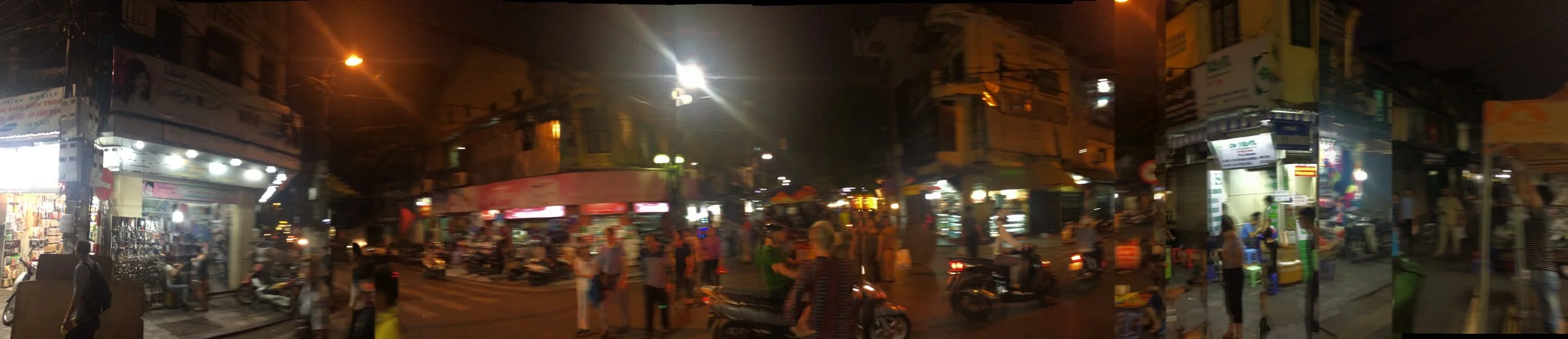
Hue and Hoi An Vietnam

Hue 

Hue with population of 348,000 is located in north-central Vietnam about 150 KM from the former De-militarized Zone (DMZ) that separated north and south at the time of the “ Unification War” aka “American War”. Hue was the former Imperial Capital of the Nguyen emperors, where both ancient and most recent Kings lived. Palaces and pagodas, tombs and temples of the “Nguyen” emperors are the real draw to this area.

The Hue sunset from our hotel window

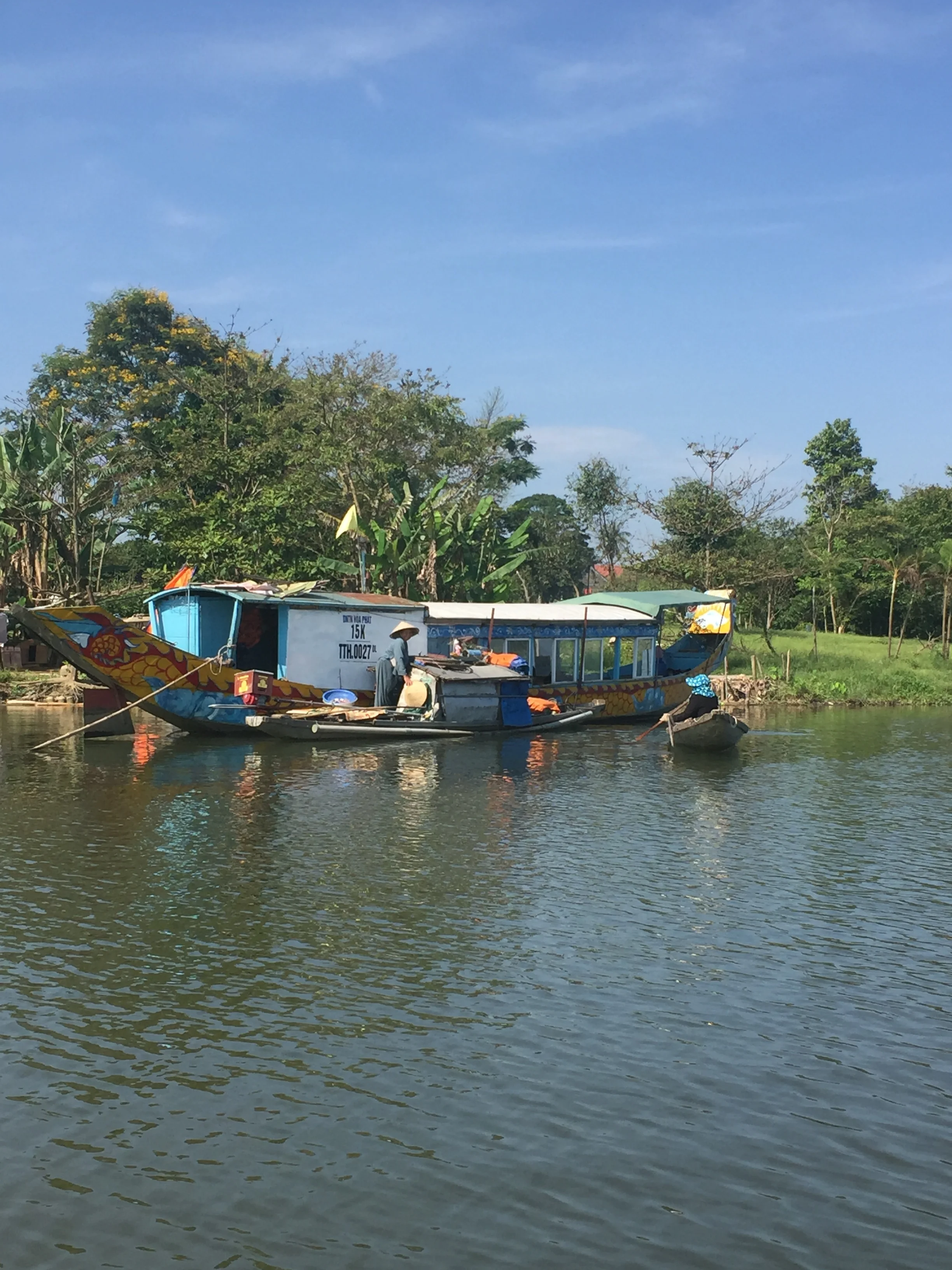
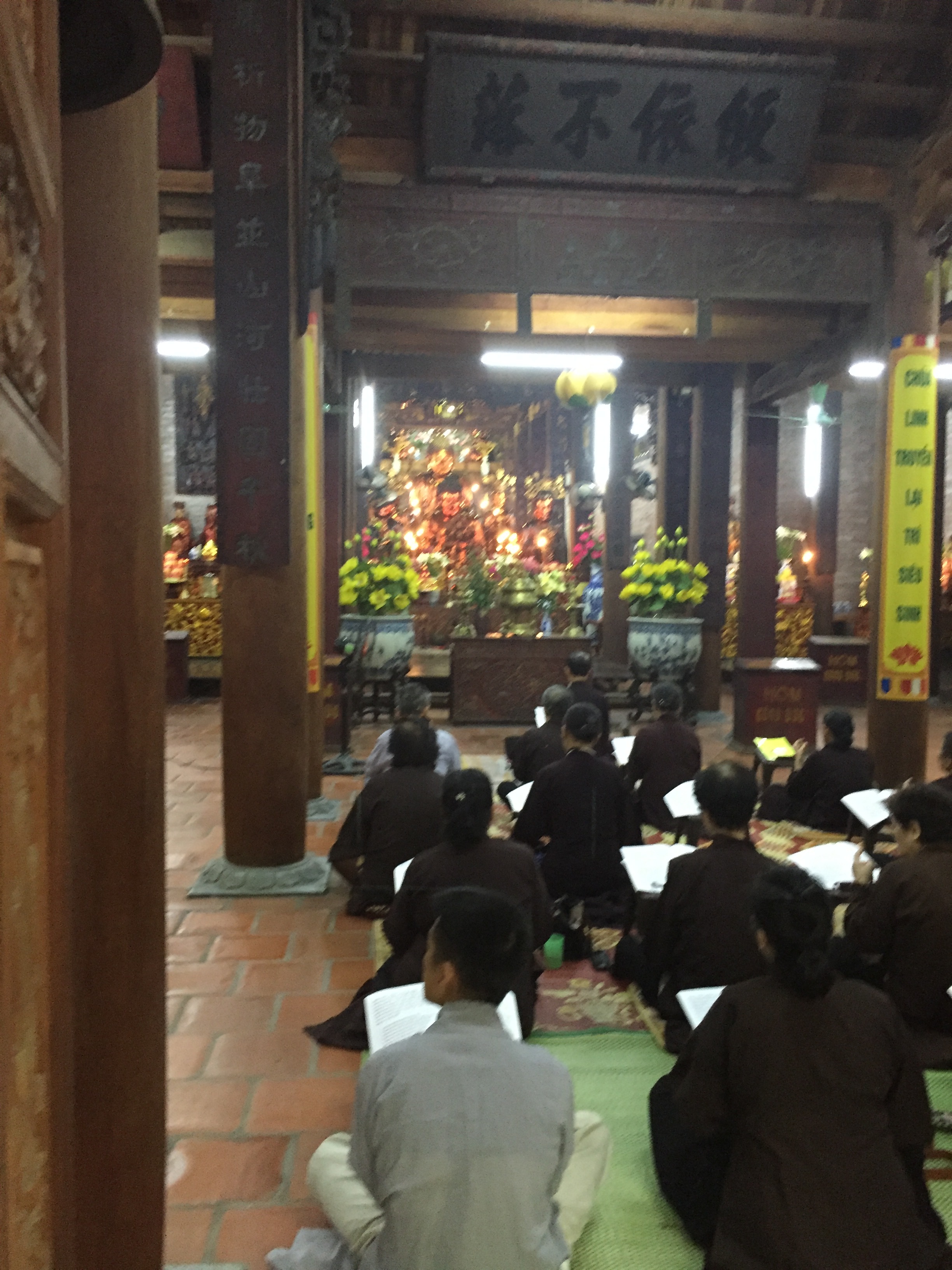
We flew VietJet Airlines from Hanoi; it was interesting to see a group of Monks traveling with us in their brown gowns. The flight was a quick 1 hour. Upon arrival, Mr. Bien from the hotel picked us up making the transfer easy. The Orchid Hotel was another cute boutique locale with great staff that offered a variety of tours.  We chose the all day “Citadel Tour”. Most of the architectural and imperial attractions are across from us on the north side of the “Perfume River”. Starting at 8:00 AM, we are picked up and taken to the docks for our “Dragon Boat” ride down the river to a religious Pagoda. Immediately, we can tell our small group of six  is going to be a winner; our team includes Aussies David and Allison and two young lady doctors from the UK. Our guide, Ha’ng , with her ball cap and scarf is a bubbly gal and very knowledgeable.   We are told the decorated dragon boat is owned by the captain and doubles as his family home. We see first hand evidence of this as a one month old baby and new mom sit in the slightly separated living quarters. The Perfume river is calm and the boat ride fun. 


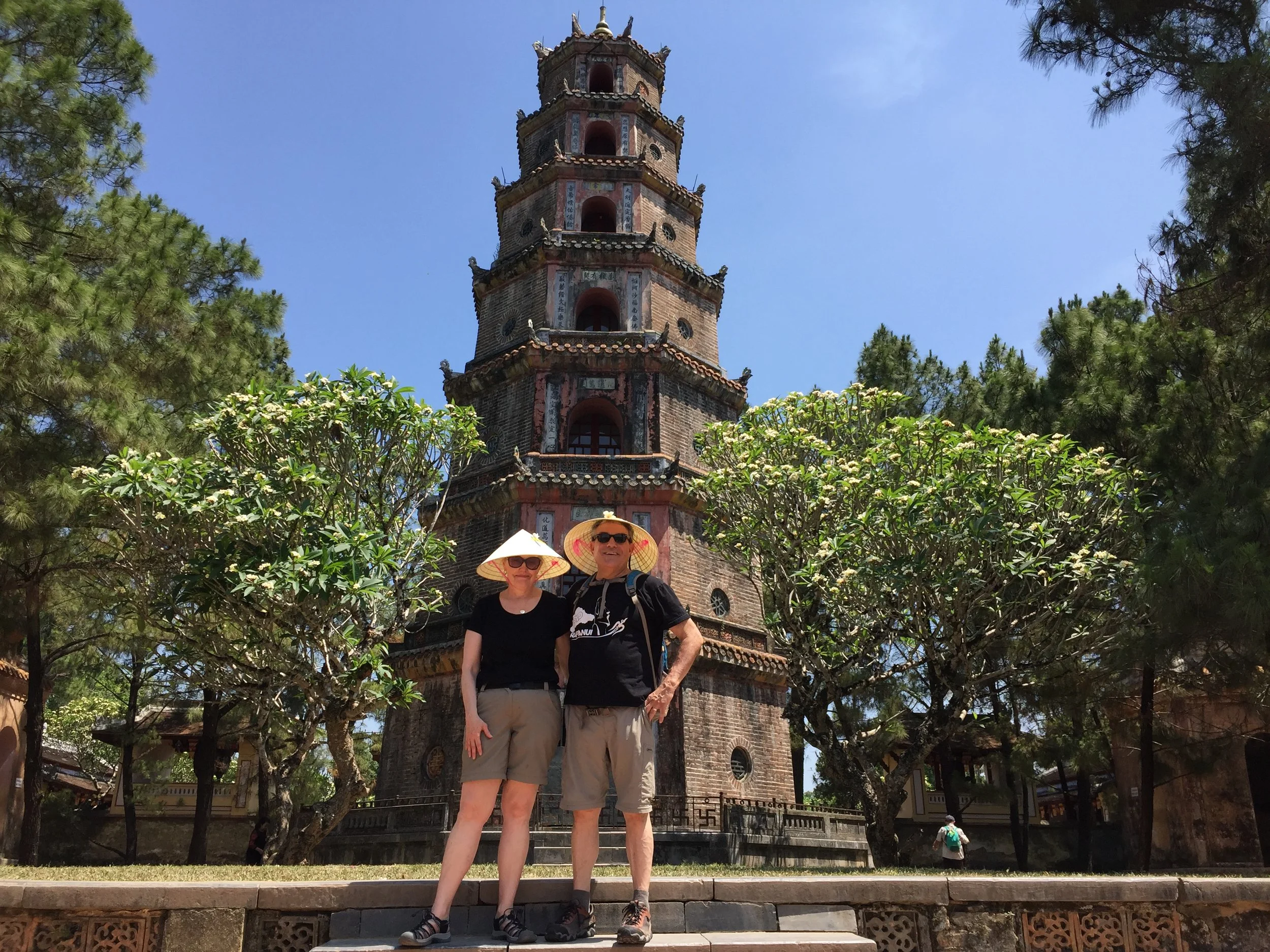
Thien Mu Pagoda  

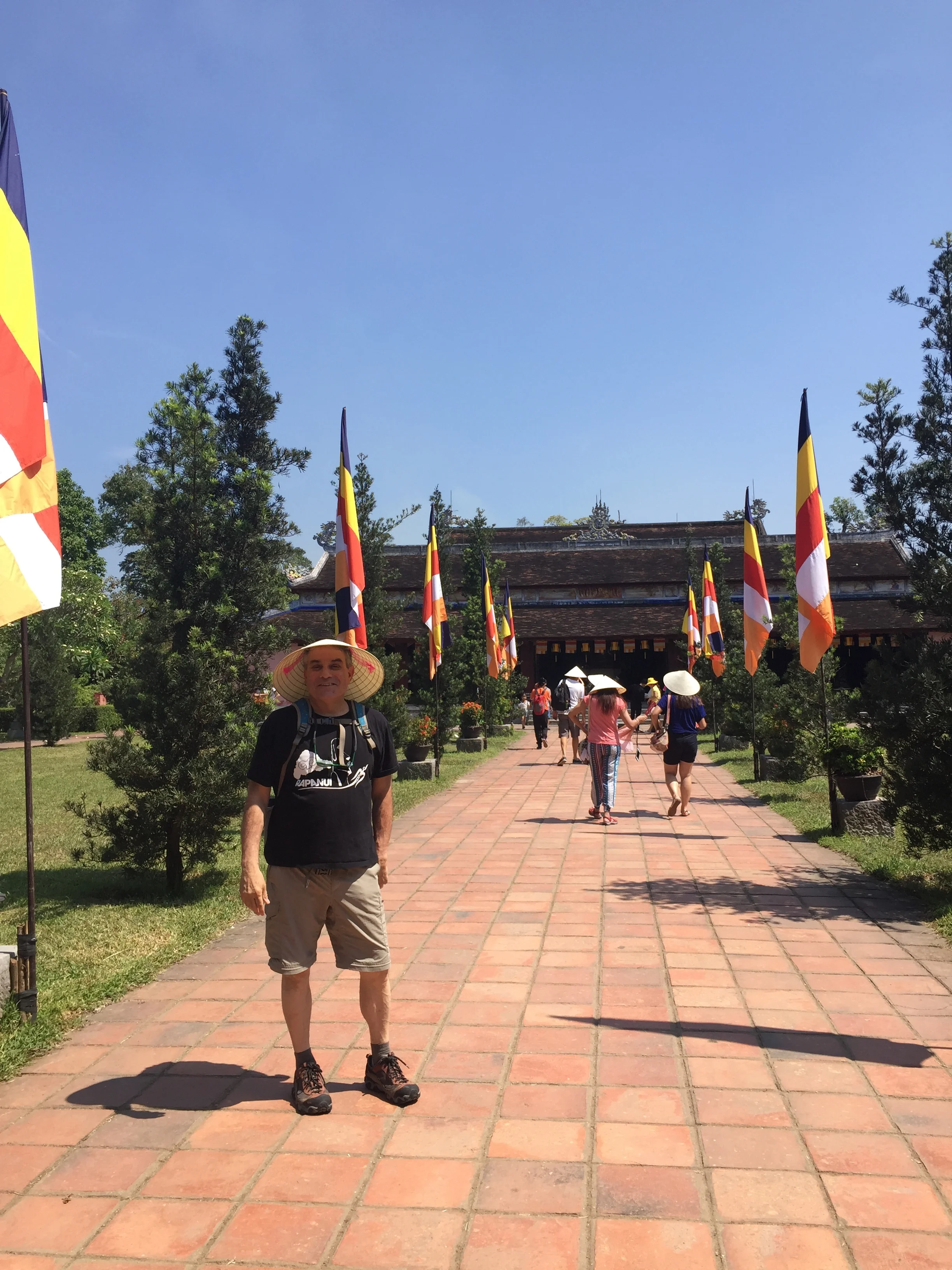
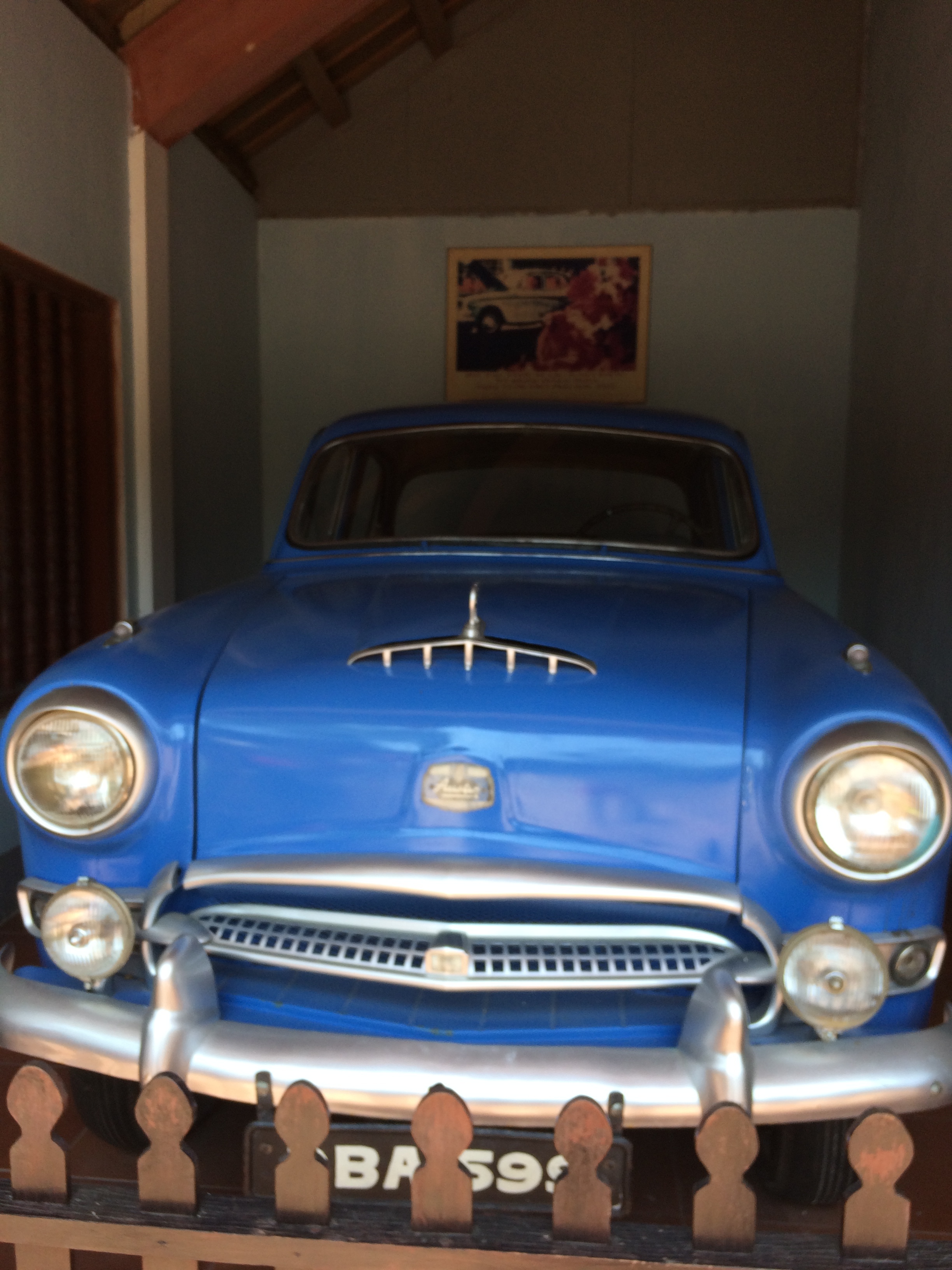
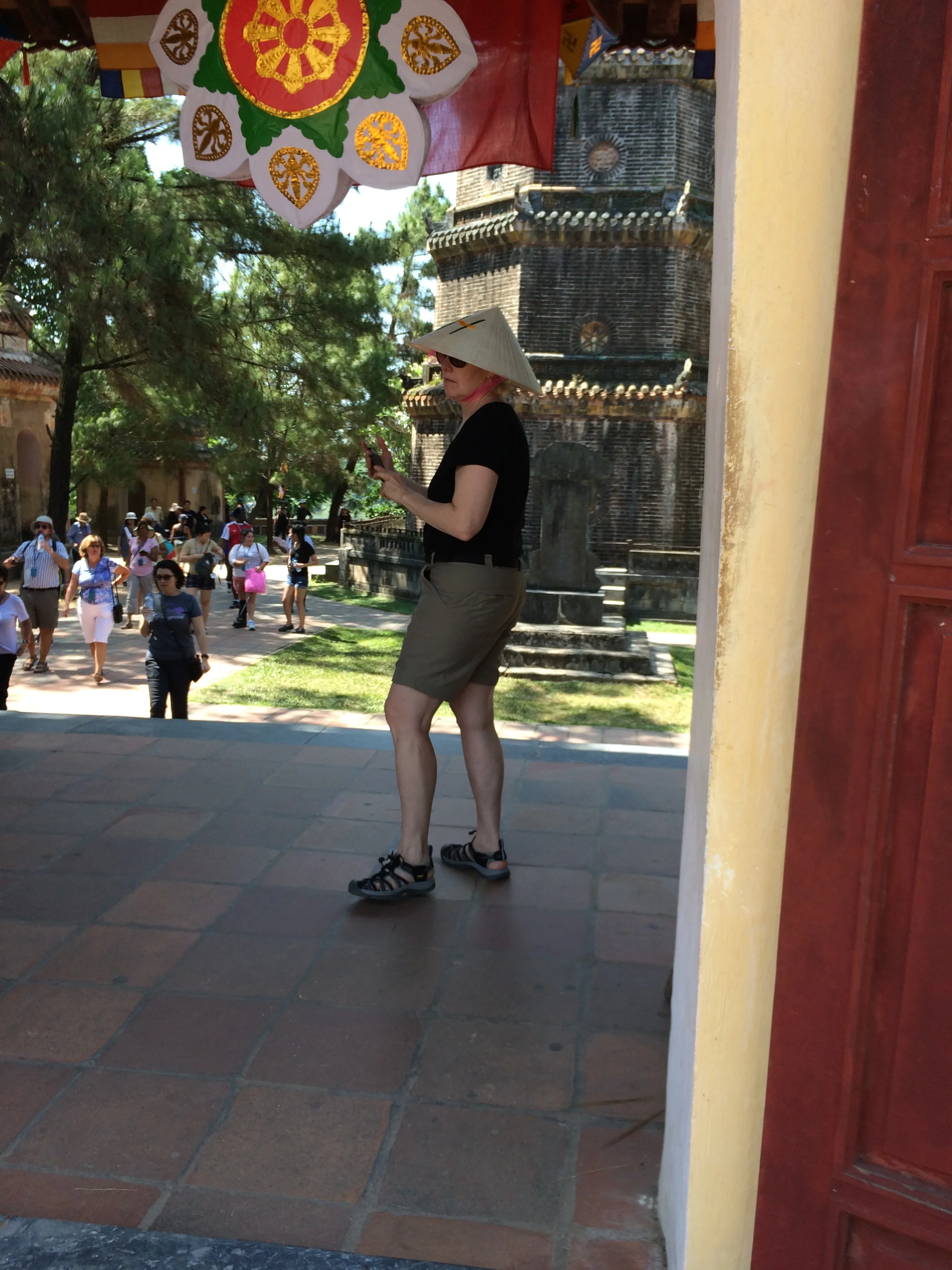
We dock at the Thien Mu Pagoda. This is a religious site built overlooking the Perfume River.  The centerpiece is the 21 meter tall octagonal tower with seven stories dedicated to “ Manushi-Buddha” (a Buddha that appeared in human form). It was constructed in 1844 by Emperor Thieu Tri,  and still functions as a monastery for Buddhist Monks. The monks take in orphans and troublesome kids. Apparently there was an issue with the communist regime curbing the Buddhist faith.  So the Most High Monk exited his blue car, a displayed relic, and set himself afire in protest. We guess it worked.  
Citadel   

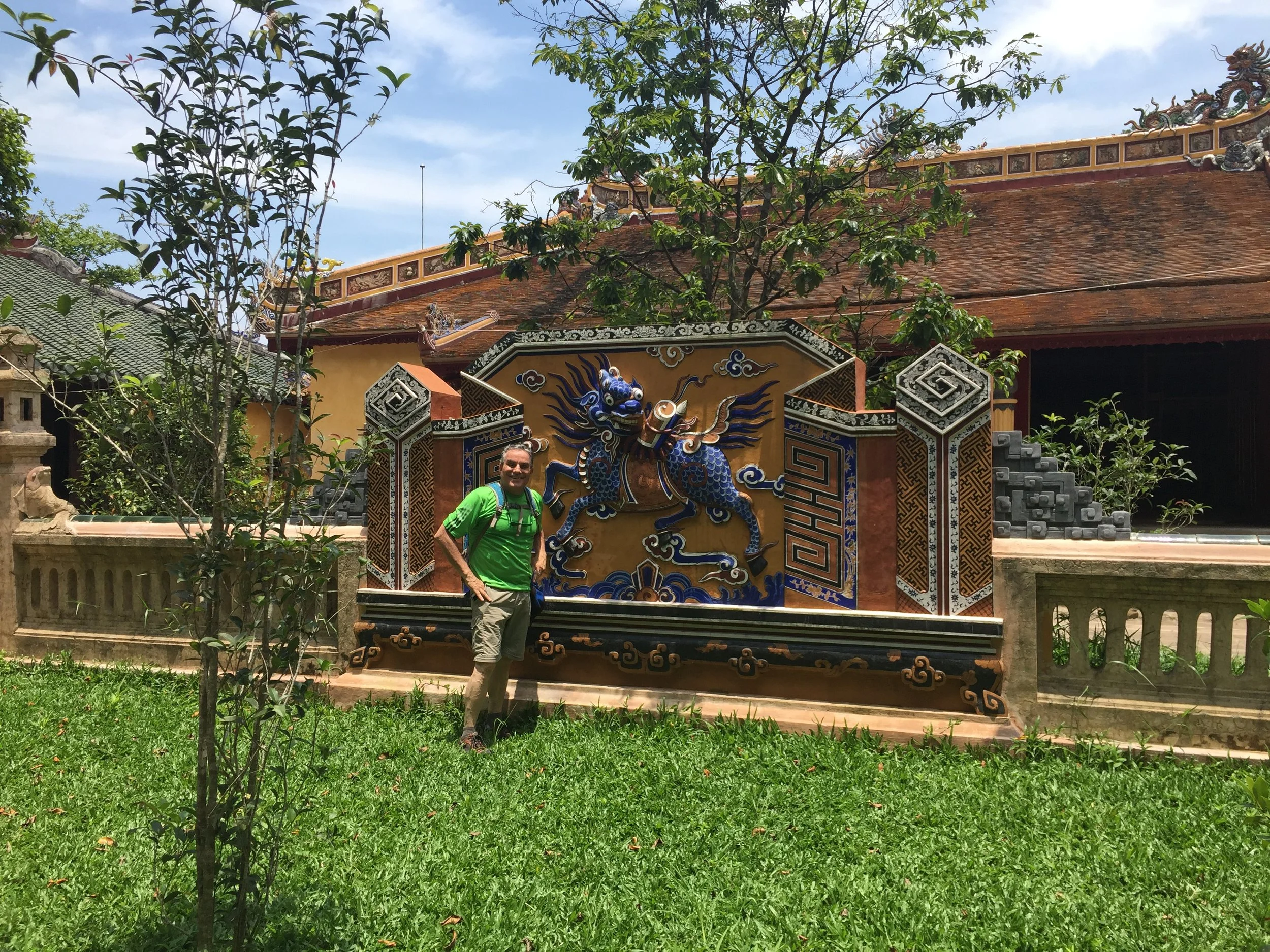
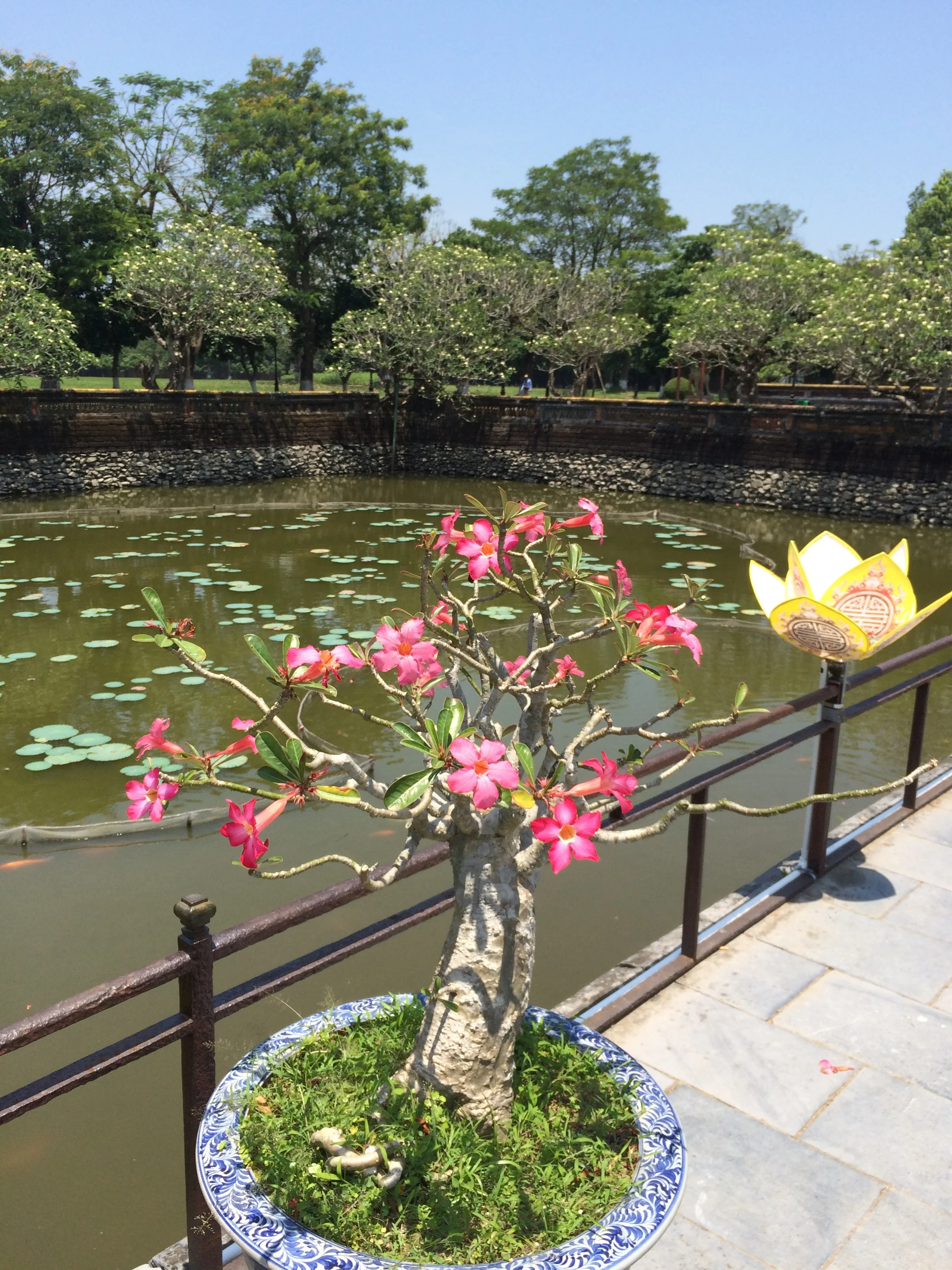
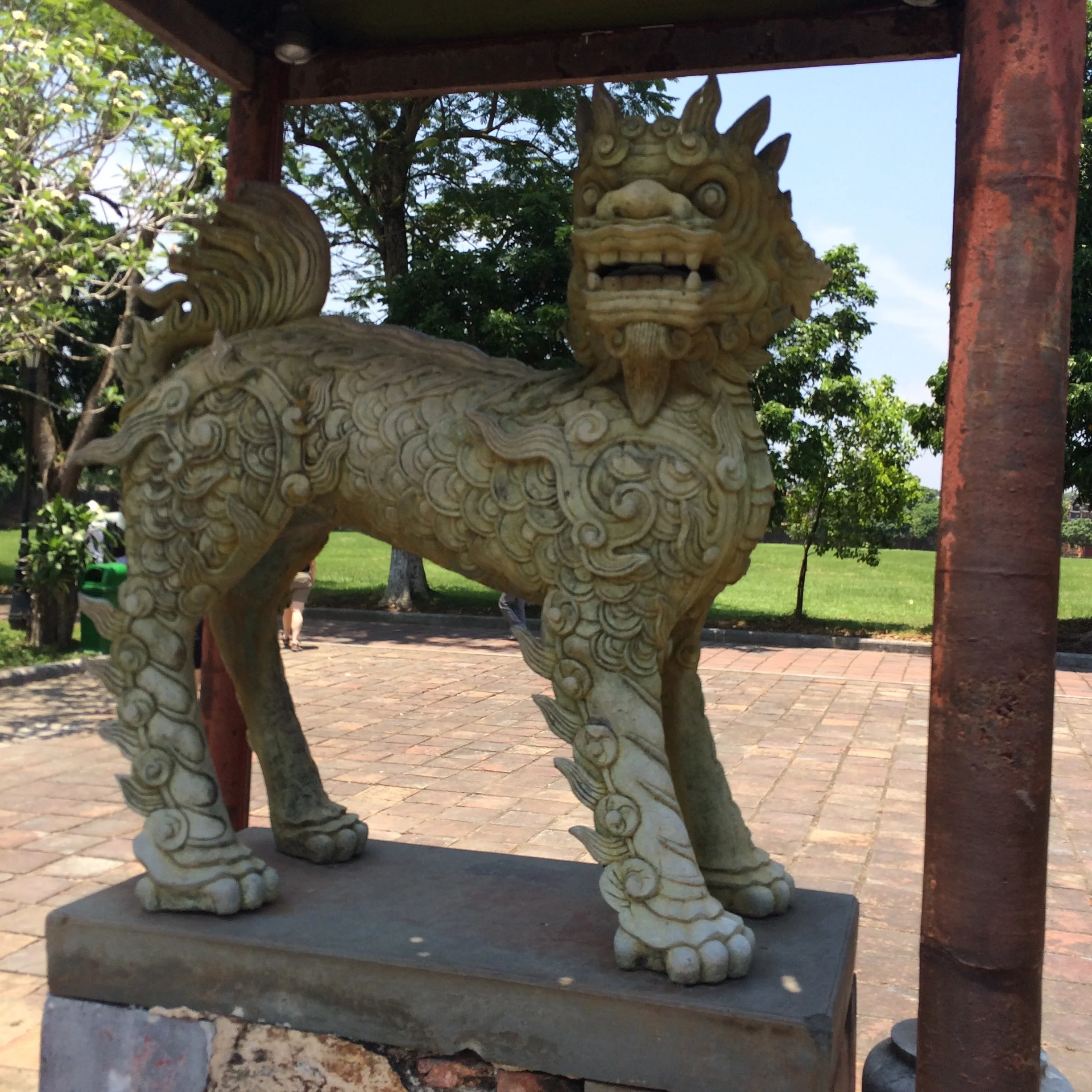
Our van caught up with us and we drove to the “Citidel”. Built in 1804 and then again in 1833 this is a giant royal estate heavily fortified with high walls 10 KM- long and with 10 gateways. The Citadel has different sections. We first saw the Mang Ca fortress and military base with those 2-meter thick walls and moat. We moved through the endless grounds to the Imperial Enclosure and then the Forbidden Purple City. On the vast grounds are Temple  compounds, residences,  and gardens. 

The inside entrance


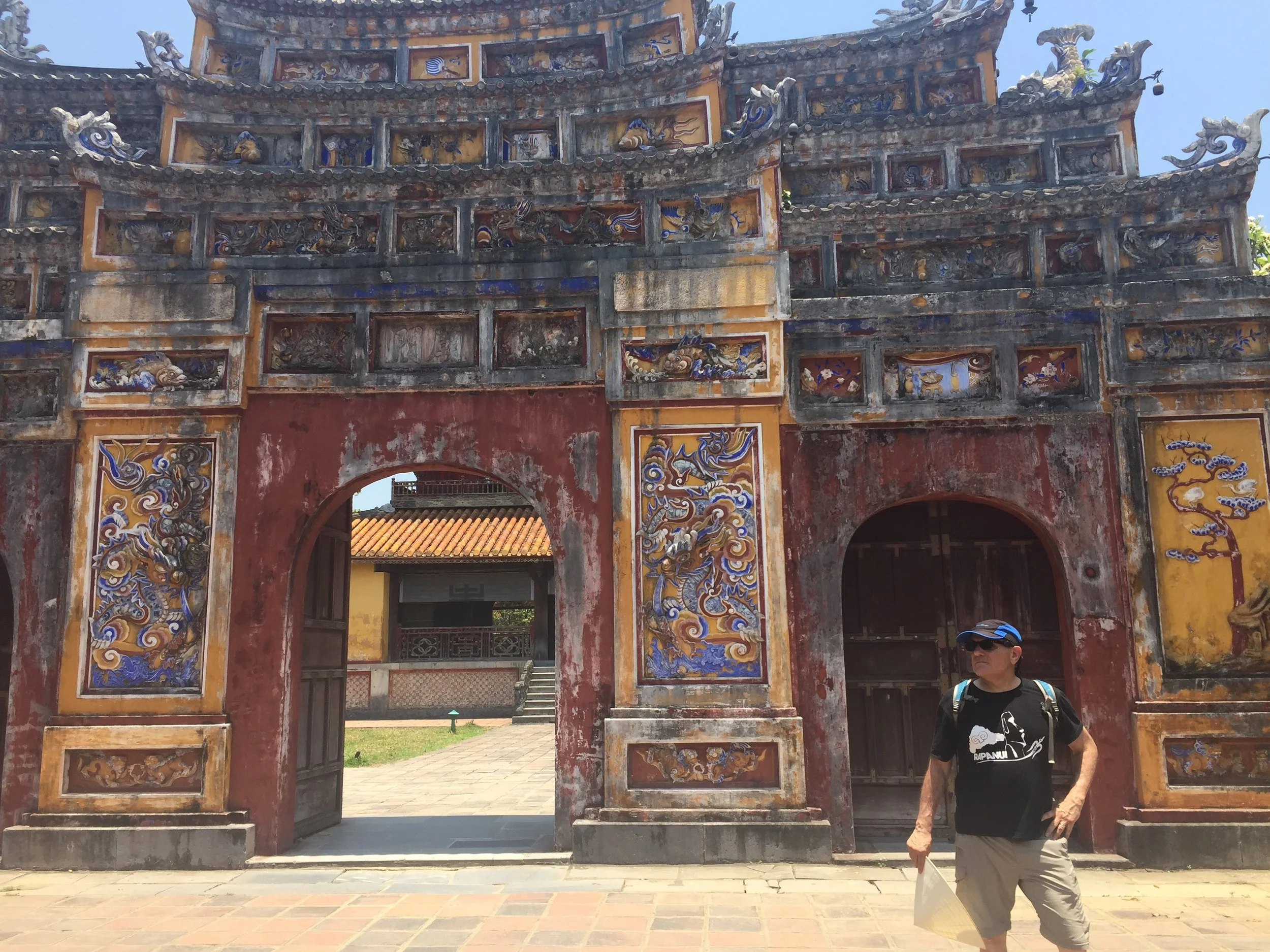
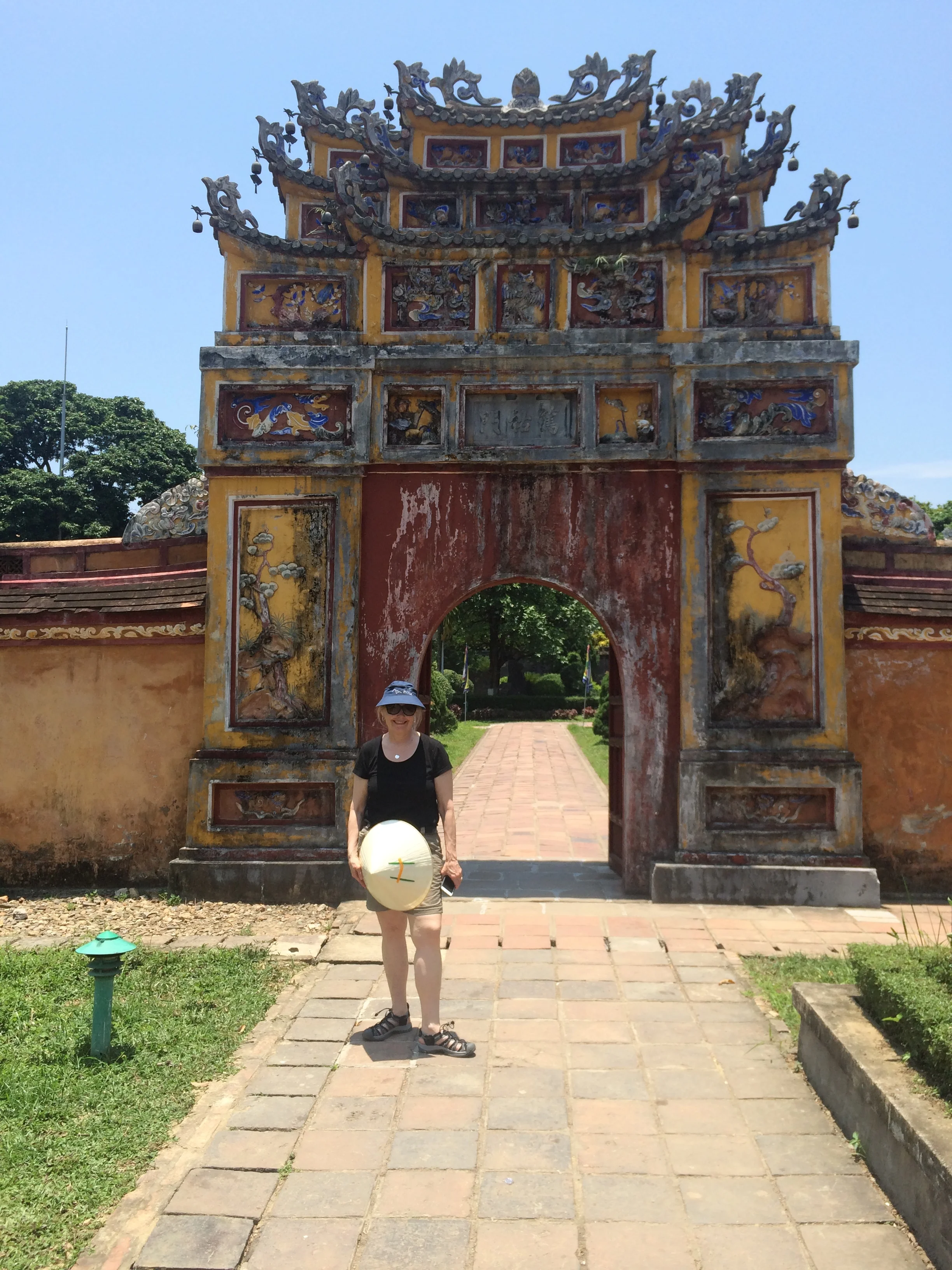
We enter the Imperial Enclosure, a citadel-within-a- citadel, through the side doors of  Ngo Mon Gate reserving for the Emperor the use of the yellow doors, now long closed.  This area  houses the Emperor’s residence, temples, places, and main buildings of State government. Only 20 of 148 buildings remain intact after a series of wars; French and American. The “Palace of Supreme Harmony” survives since 1803 and this large  structure with ornate roof supported by 80 carved columns was the place of official receptions and ceremonies.
 

Royal Theater

The Emperor’s Reading Room was the only part of the “Forbidden Purple City”  that was not damaged and is under restoration; a two story structure it has interesting roof mosaics.

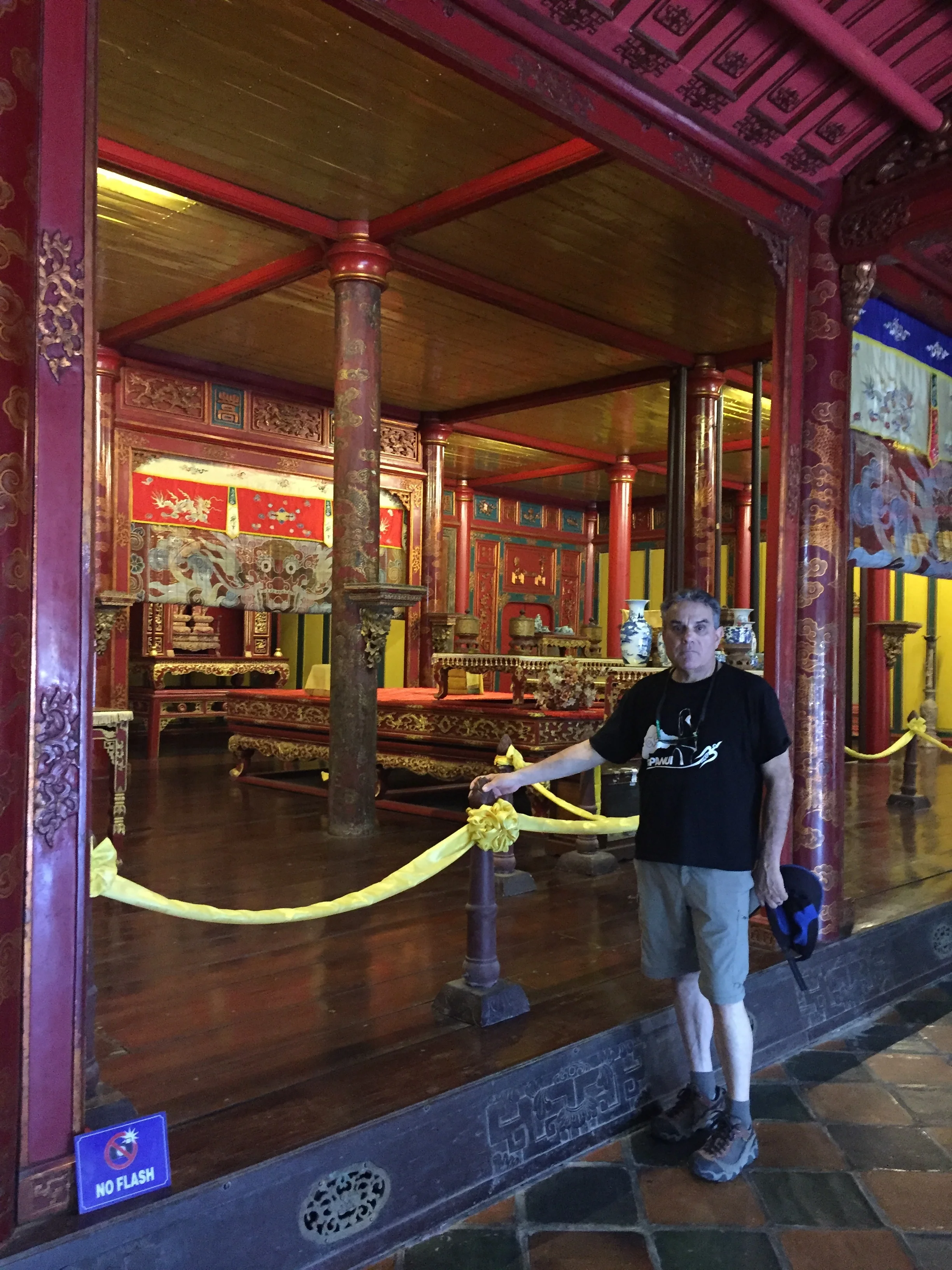
We especially enjoyed the “Royal Theater” which at the time was closed for rehearsal. Security let our guide in and we just followed to view the large multi story hall that was the home of the National Conservatory of Music.  


New Market


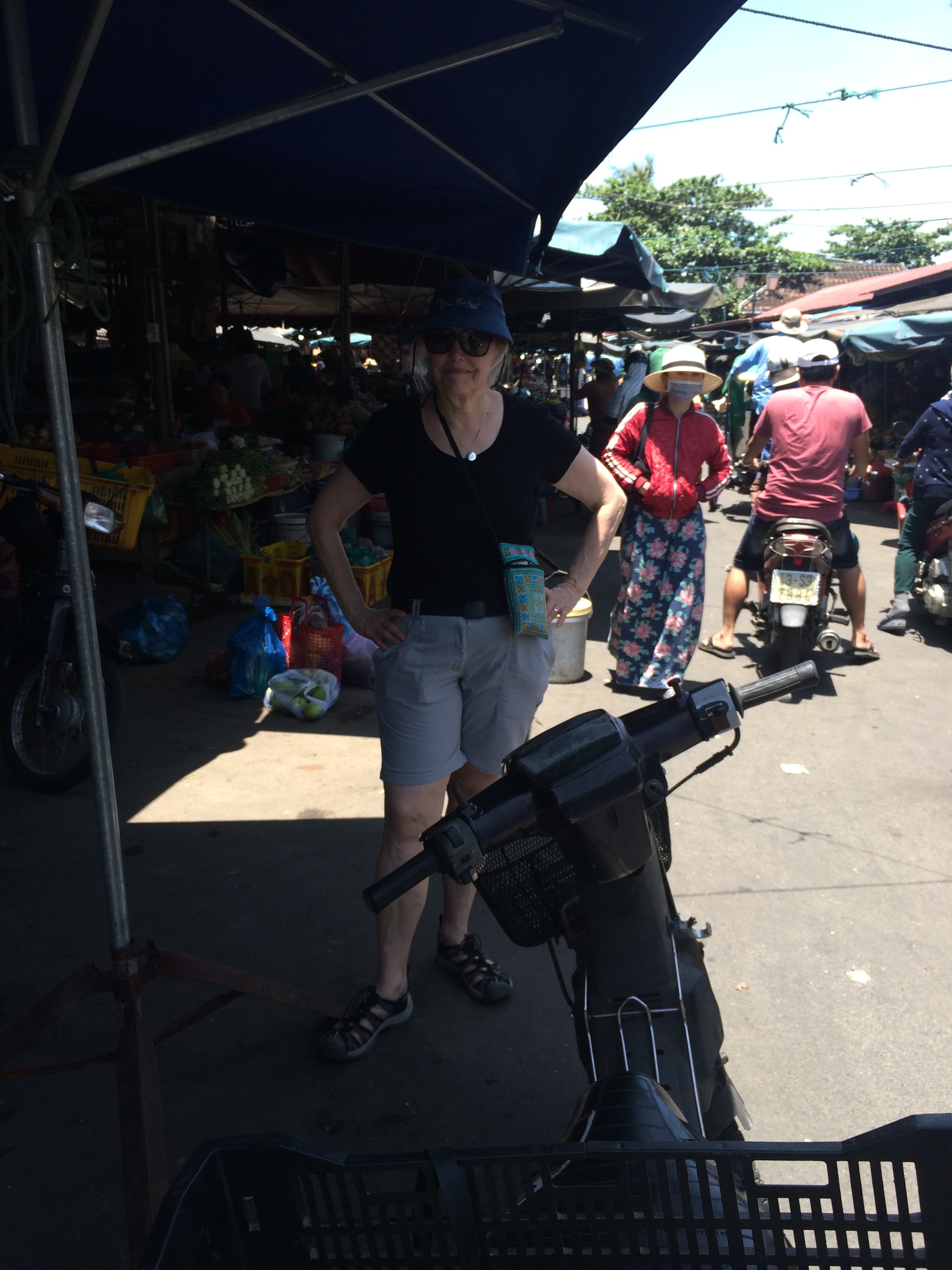
We returned to the van after several hours. After being outside all morning the sun and heat starts to amp up. We need some cool relief and to our glee the guide passes out icy cold wash clothes and chilled water. Instantly refreshing. Off we go to theMarket. Our guide walks us through the covered market pointing out the weird fish stuff, fruits and veggies.  We always like the energy and sights of markets. This was probably our 24th market give or take.

The Market

We now stop for lunch and have first class food and fellowship.  Our new Aussie friends had traveled for many years on their sailing yacht fixing stuff that broke on the way. They then  turned all that experience into an outfitters company for boats. It sounded like a grand transition. They also gave us many suggestions for fun things to do in Australia. We think we will probably take the train for the Blue Mountain excursion.

Lunch was really good. We continued our van trip to the the Tombs of two Kings of the longstanding Nguyen Dynasty near the Perfume River:

Royal Tombs

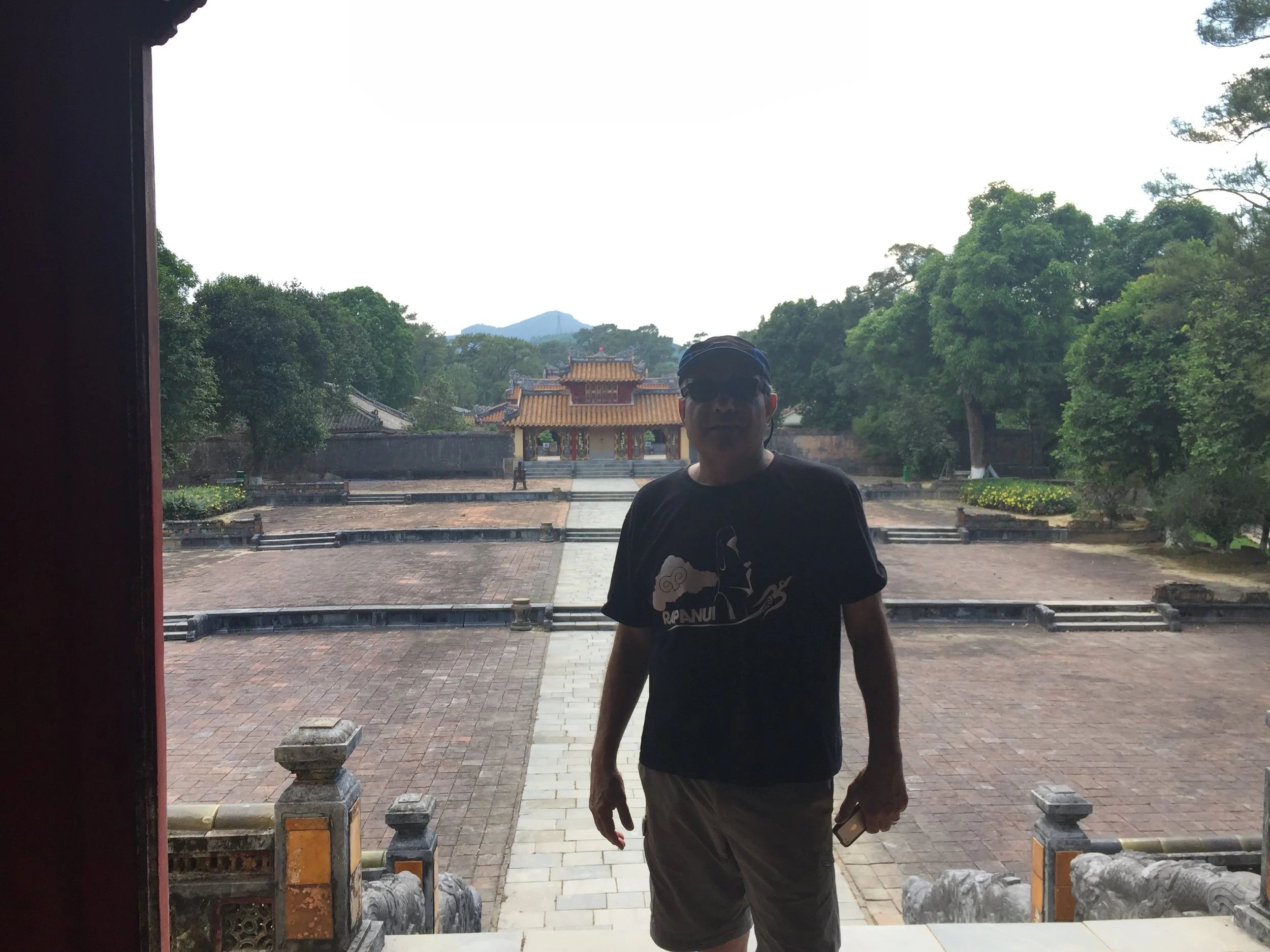
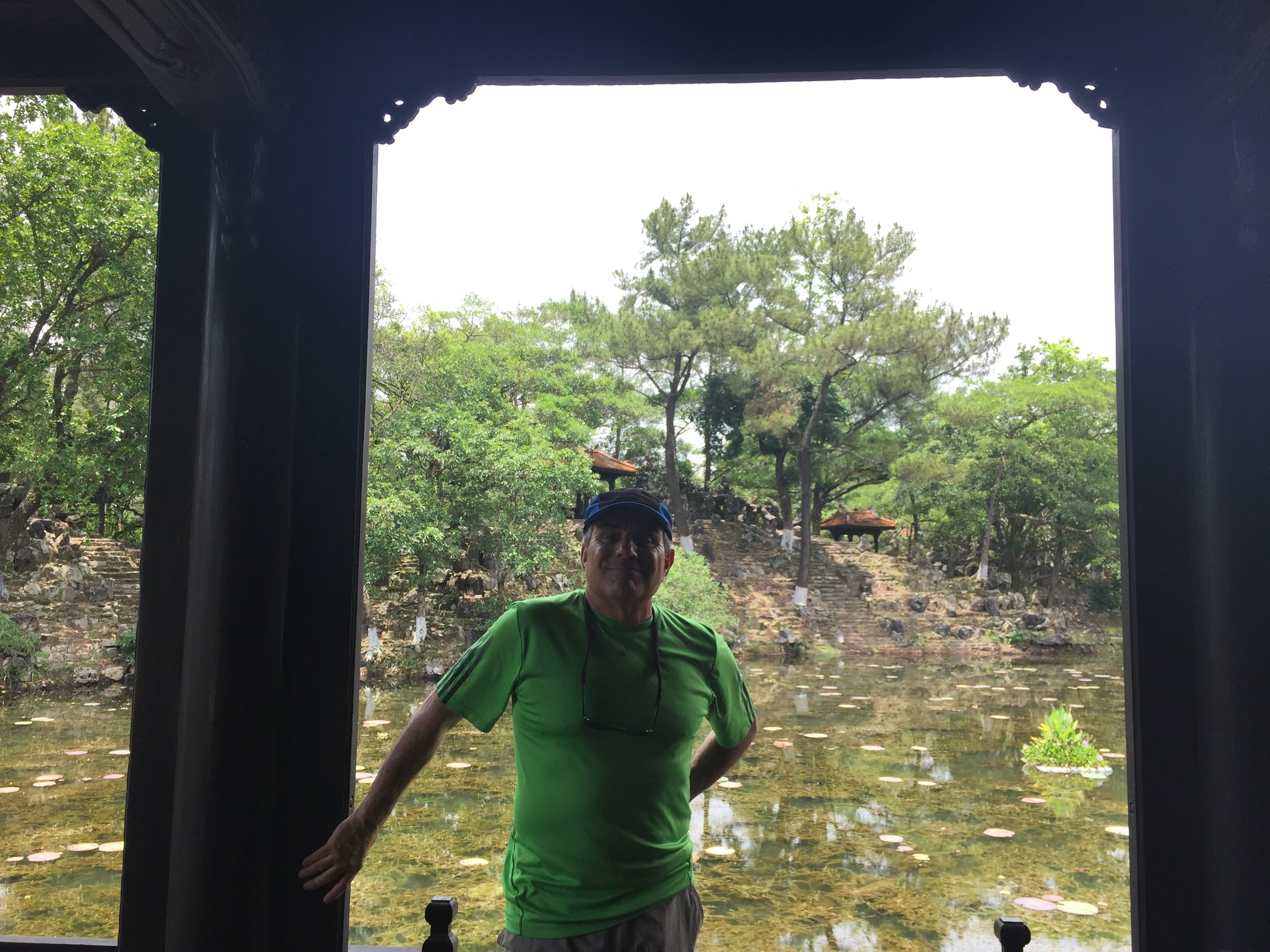
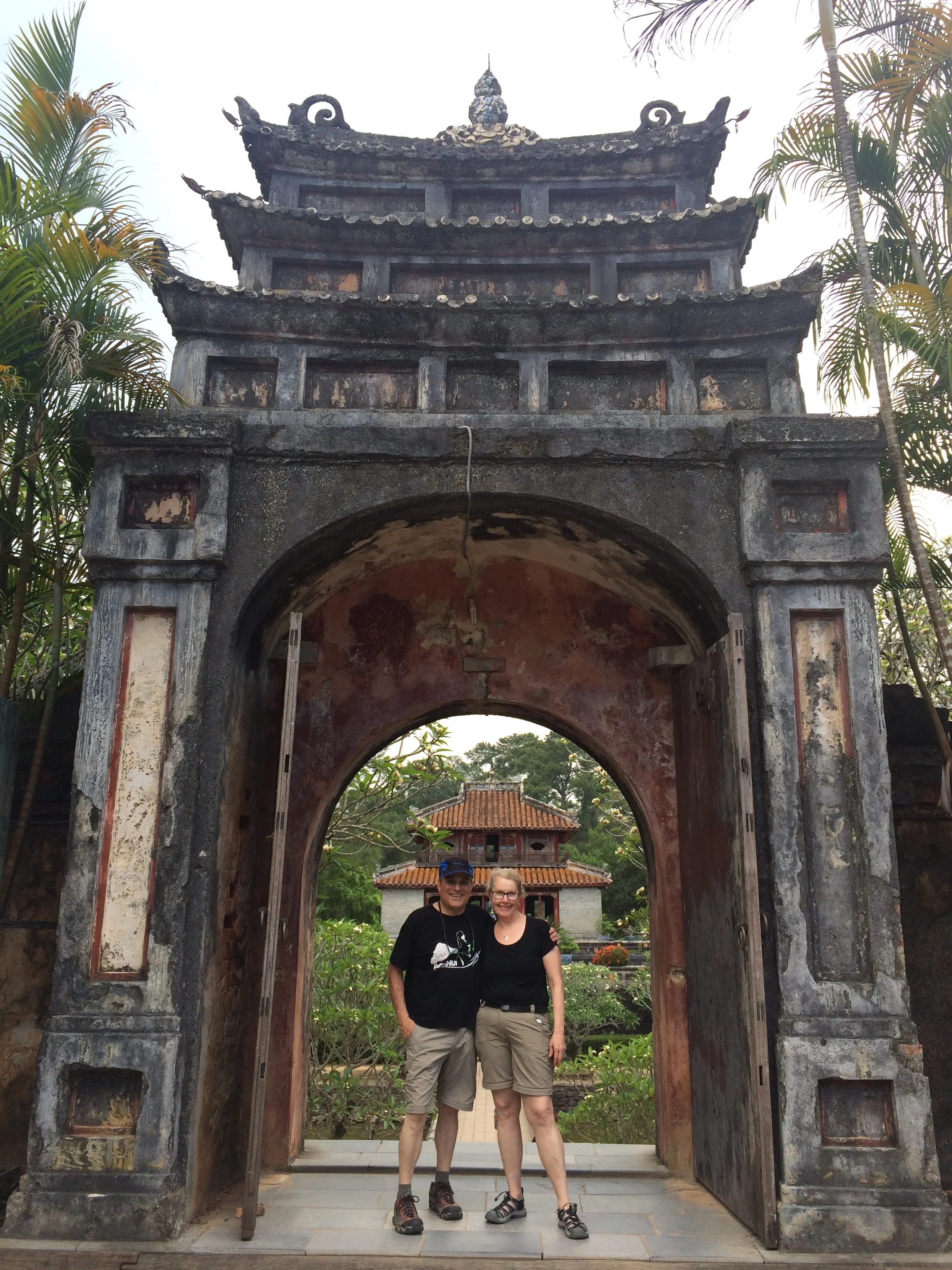
Hue has 9 tombs of the rulers of the Nguyen dynasty. We visited 2 with our tour.  First the tomb of Minh Mang.  Emperor Minh Mang designed the tomb for himself; constructed 1864--1867, but completed by his son.  It is a huge complex with several man made lakes.  The actual burial site of his tomb is still unknown today and they say his treasure remains with him.
 

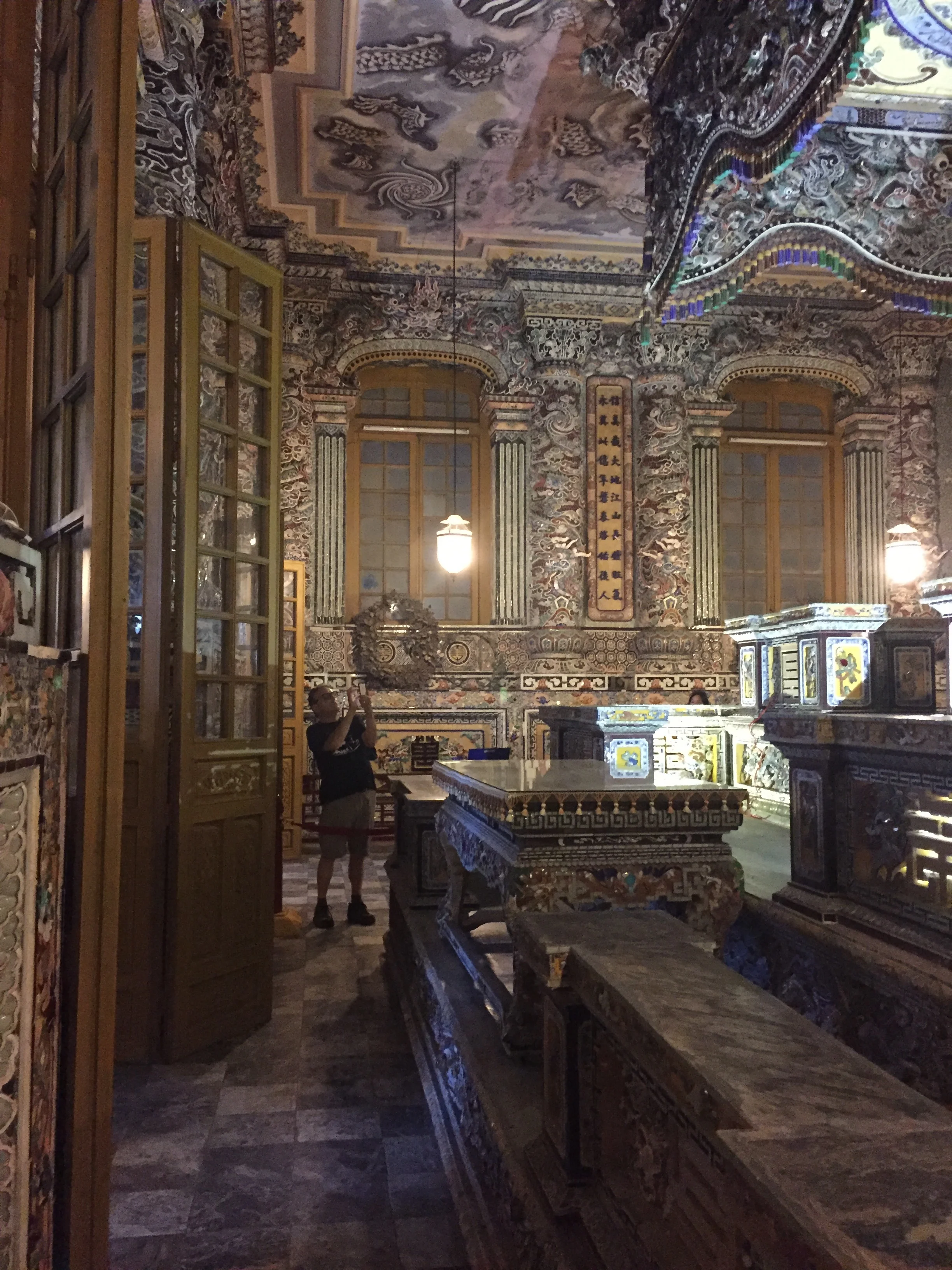
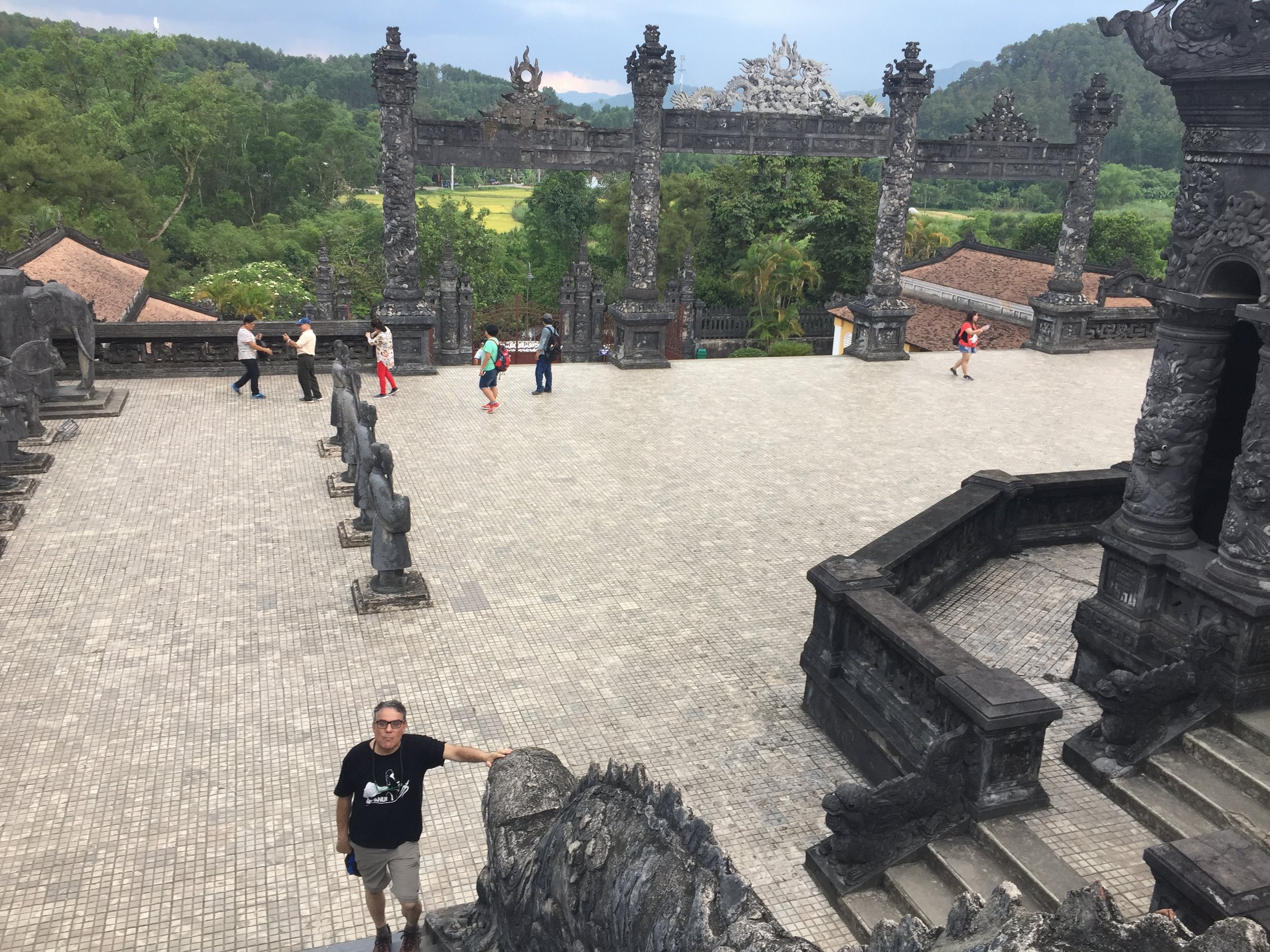
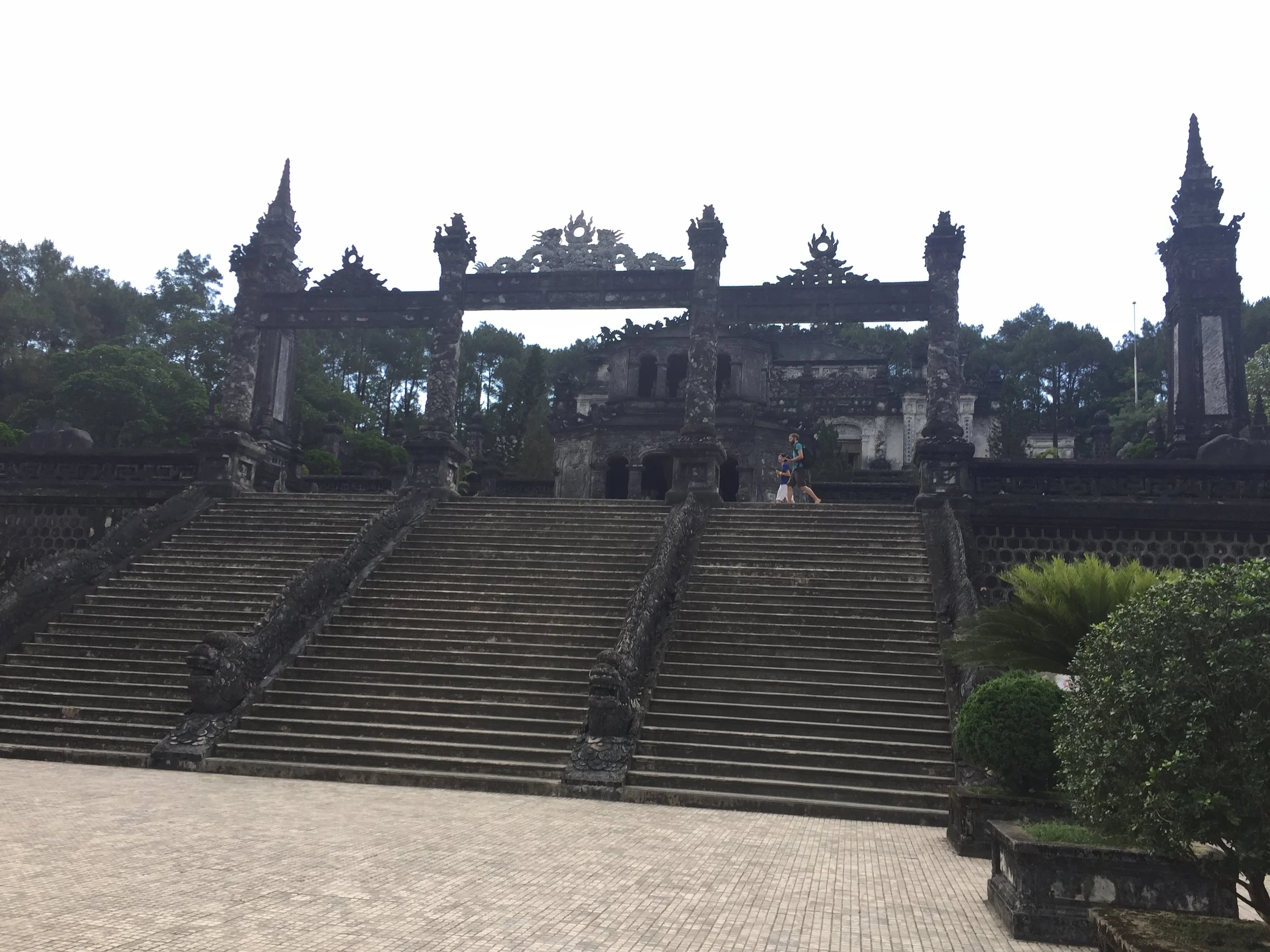
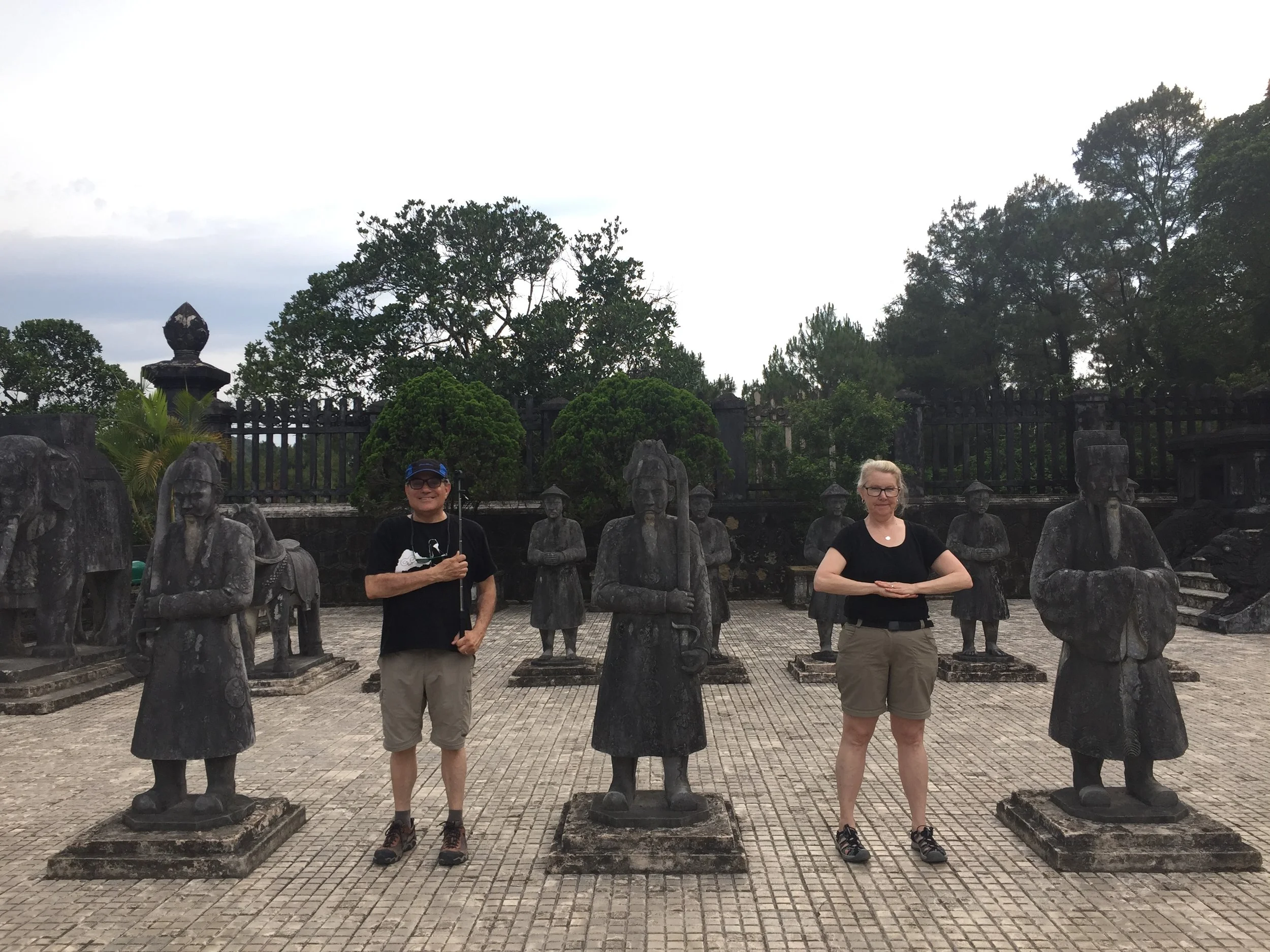
Our second was Khai Dinh’s Tomb.  This is the last emperor and the tomb was completed in 1931.  Smaller but equally impressive is this hillside Tomb with grandiose exterior of formed concrete that creates a gothic style of European influence, as the Emperor had interacted with the French much of his life. The interior uses colorful mosaic patterns. This tomb was our favorite.
 

To end the day we stopped at a small roadside  craft store with various items being hand made and sold. Frank agreed to roll some brand new “incense “sticks. After quick instruction the first two sticks rolled off the assembly line.


This was really a fun day.

Our happy tour group

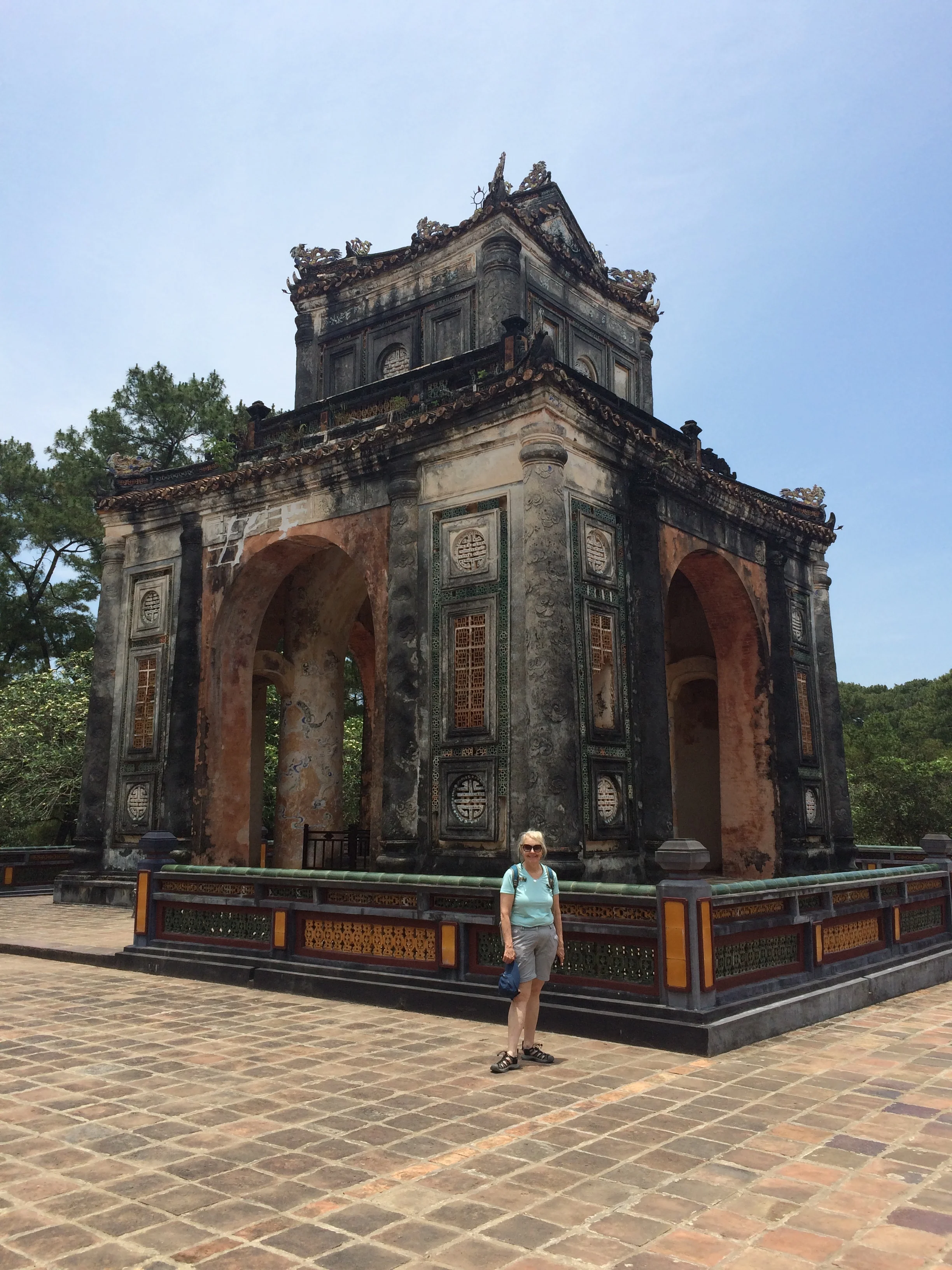
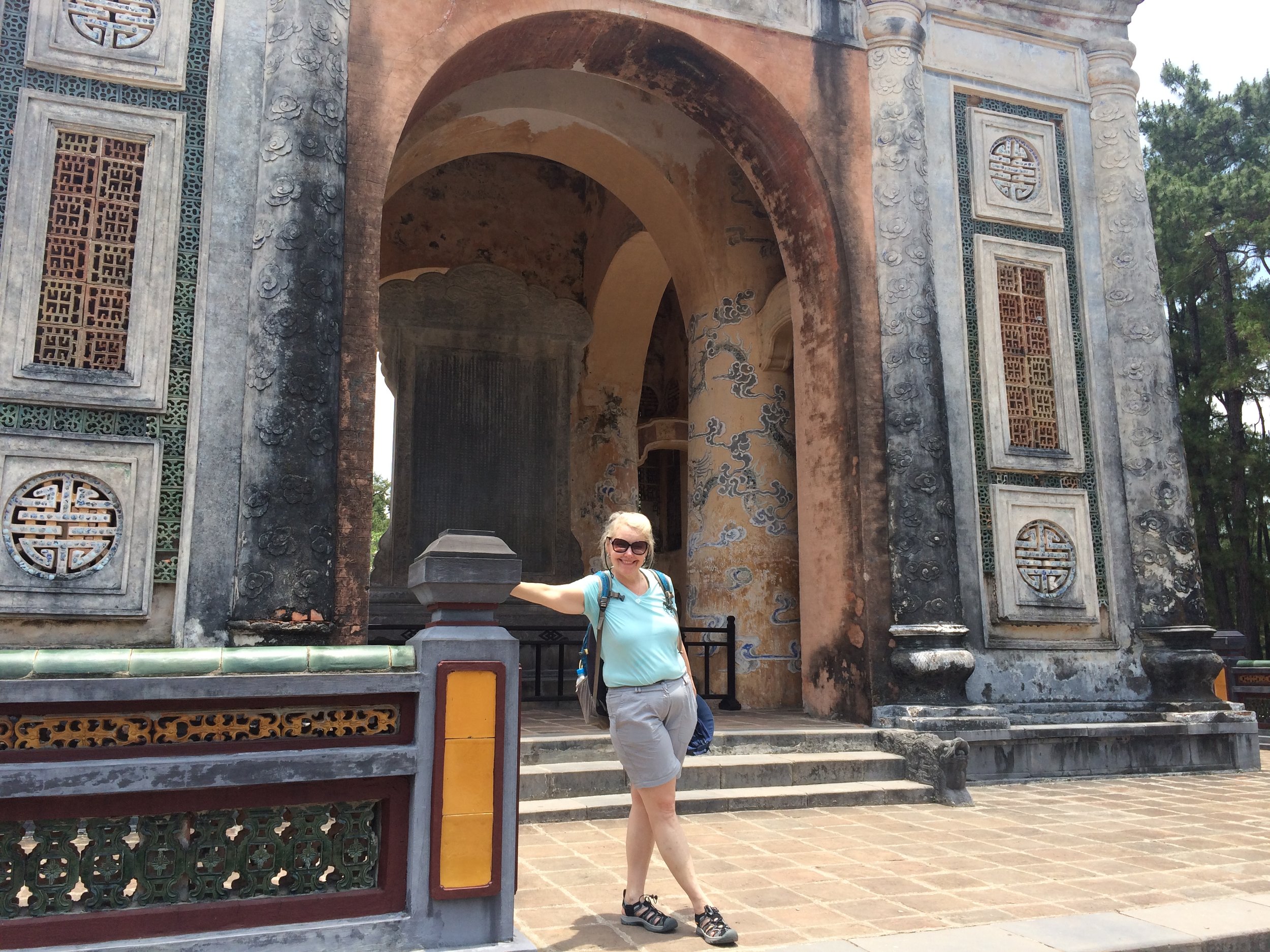
On our last day in Hue we set off to explore 2 more tombs without a guide.  Taking a taxi we went to the tomb of Tu Duc.  Most guide books list this as the most impressive of the tombs and we were not disappointed.  Tu Duc designed the tomb for himself; constructed 1864--1867, but at such enormous expense and forced labor that a coup arose against him that he did crush.  The grounds and buildings rendered this future resting place one of the most impressive. Tu Duc  himself lived a life of imperial luxury including carnal excess with 104 wives and many more concubines, but no kids, so no heirs. Our guide says that historically, the mother of the favorite son who was to be named as the future King, took the title of Empress only after her son took the throne over from the departed father. Succession to the throne was not automatic to the first born.   See a few pics from the site.
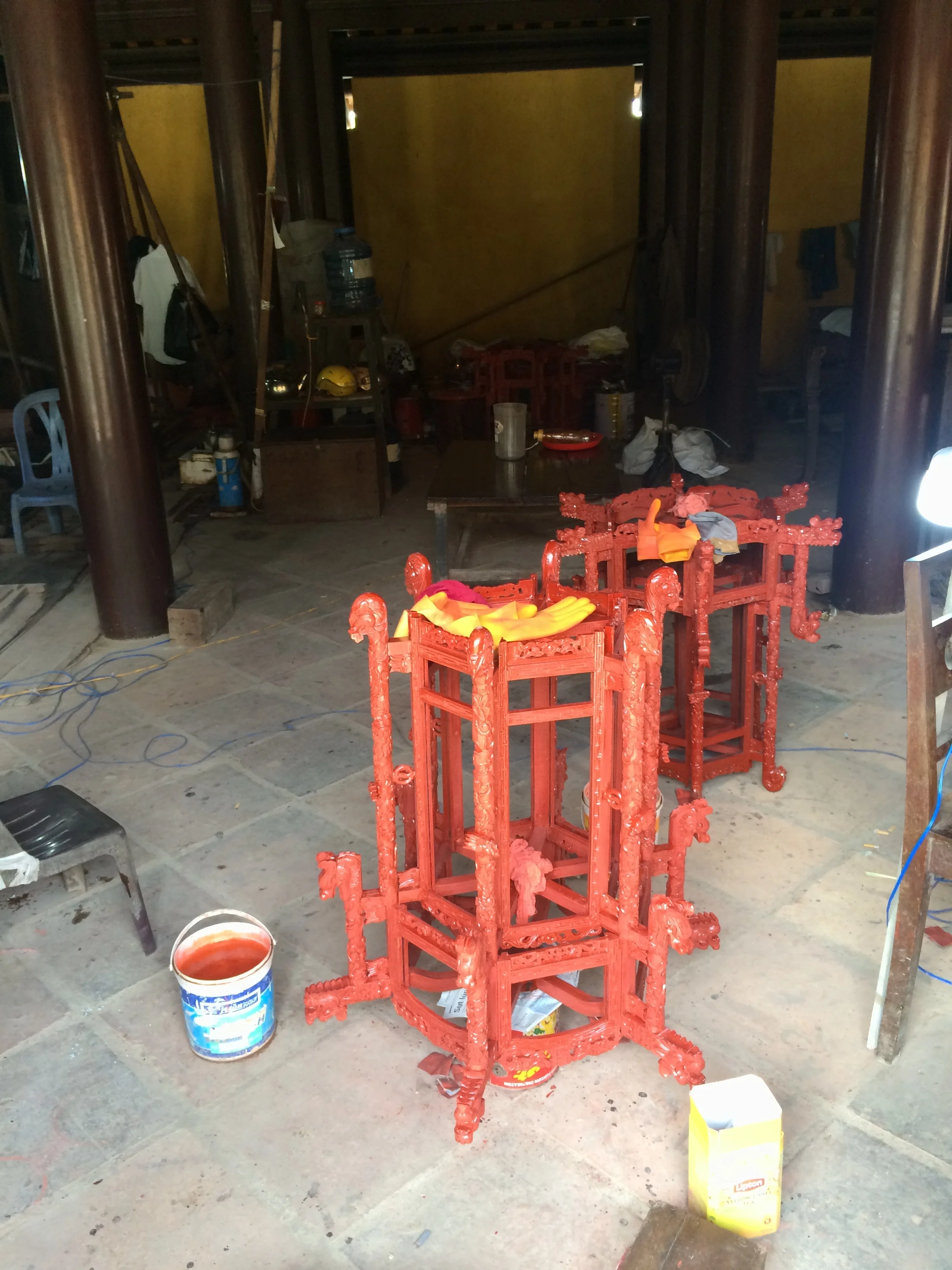
The second tomb for the day was in disrepair, but was being renovated slowly. The most interesting thing for us, we were the only ones there, was to walk through the reconstruction and hardware in the building and around the grounds. Quick and fun—then back to the cab and Hotel Orchid.   It was a fun hot day.  After 4 months of cold Europe we are still adjusting to 100 degree heat and humidity.  Thankfully every corner has a great spot to eat and get really cold beer.
IMG_6100.JPG

Hoi An 

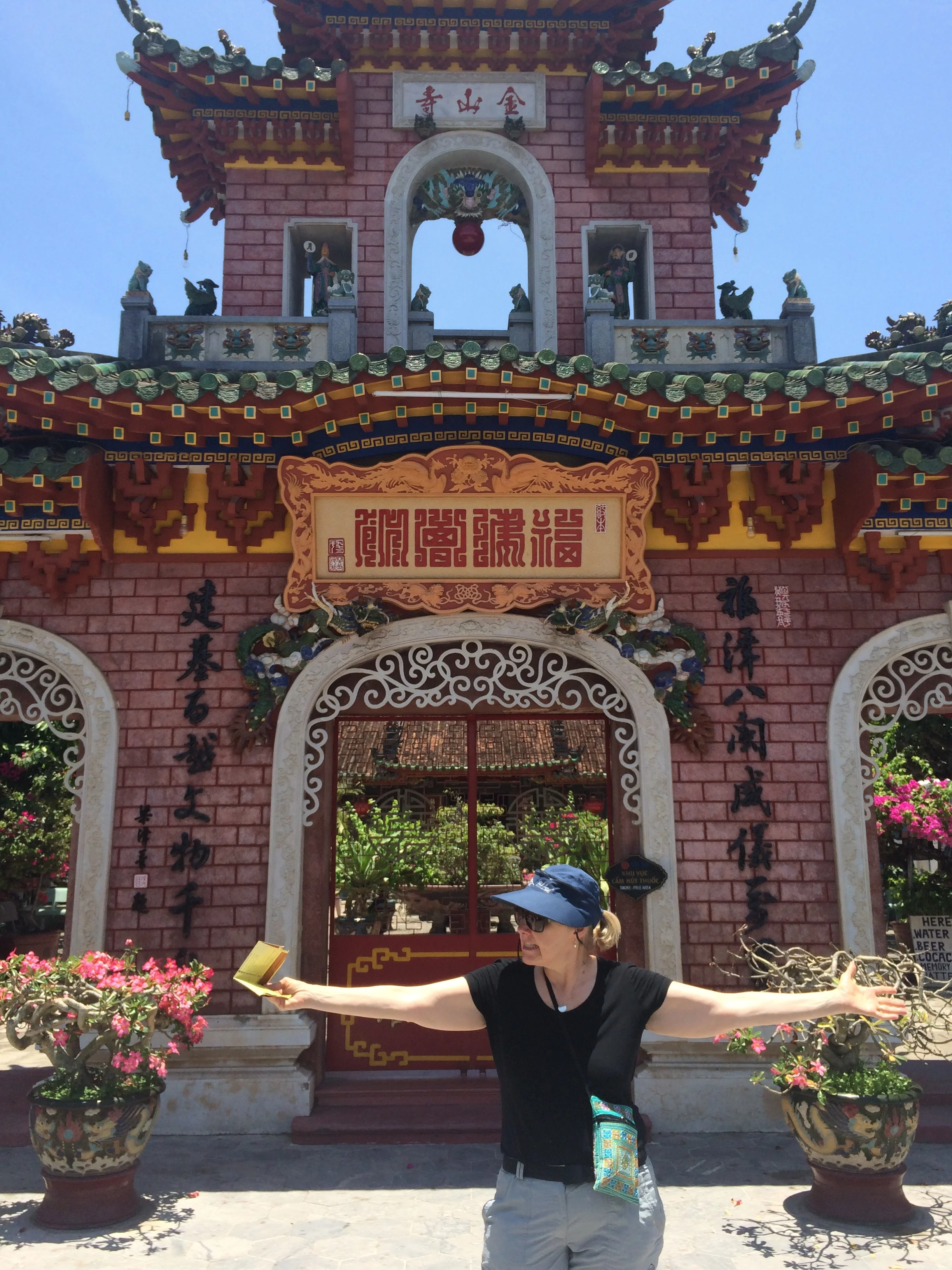
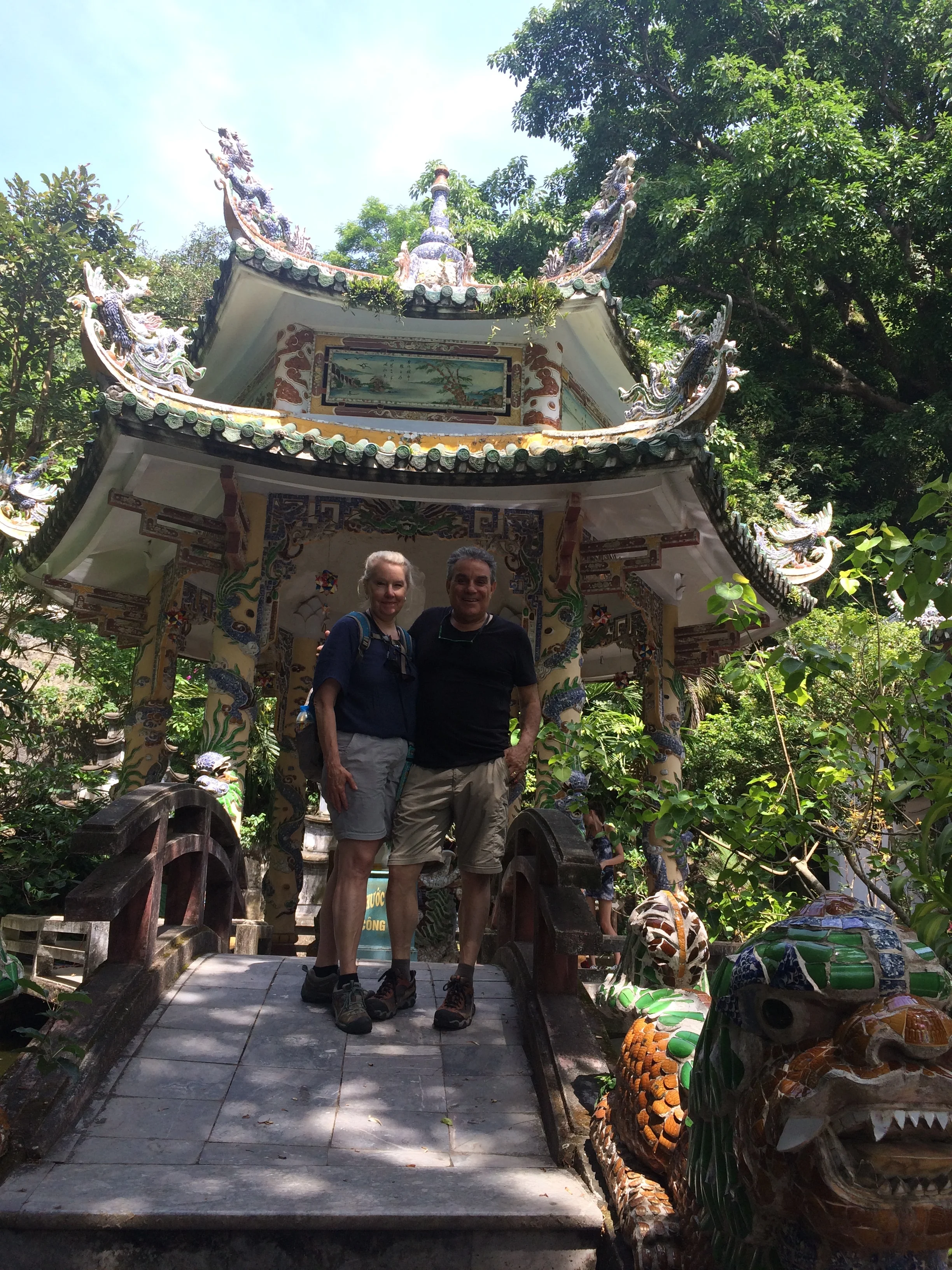
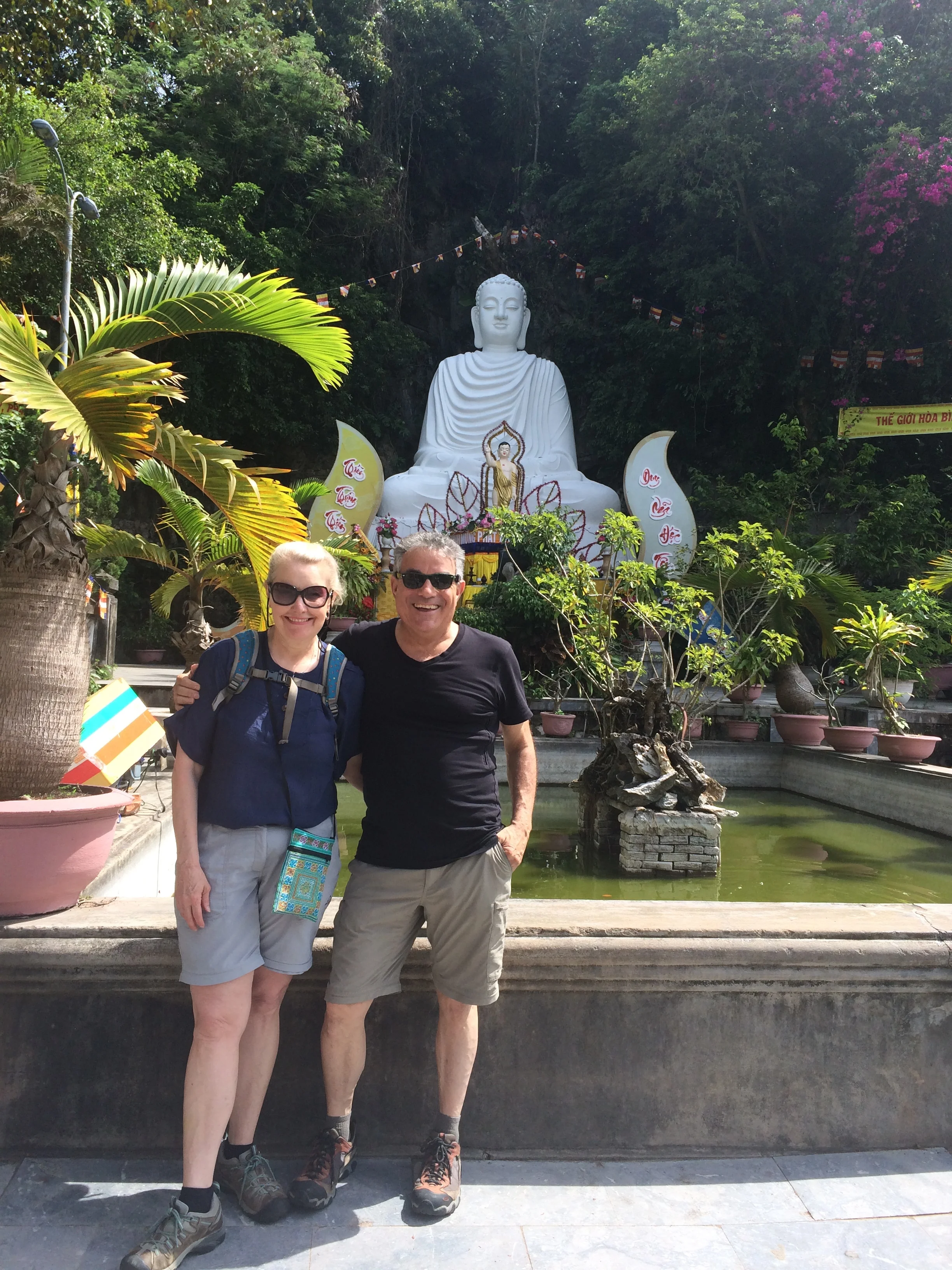
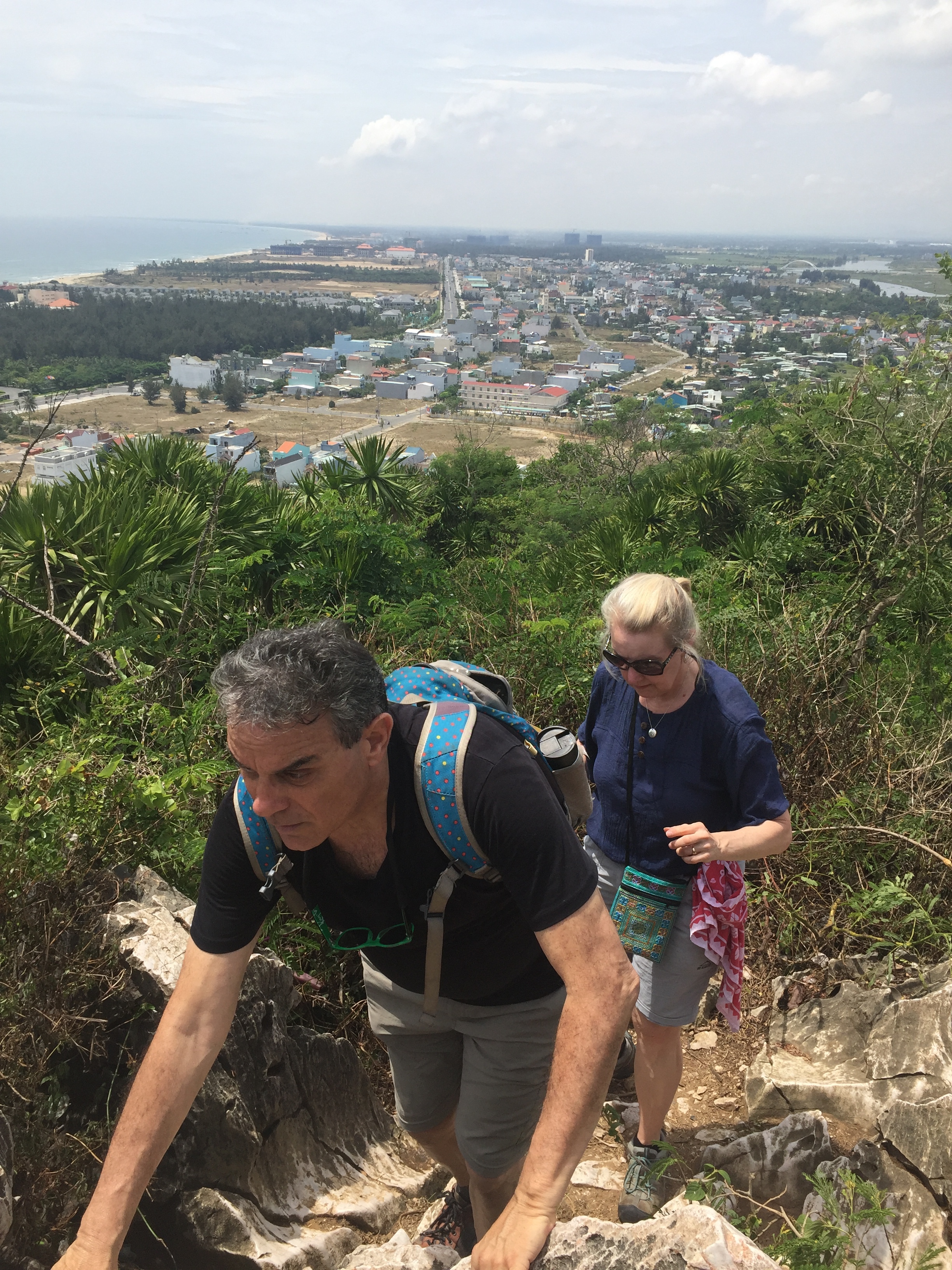
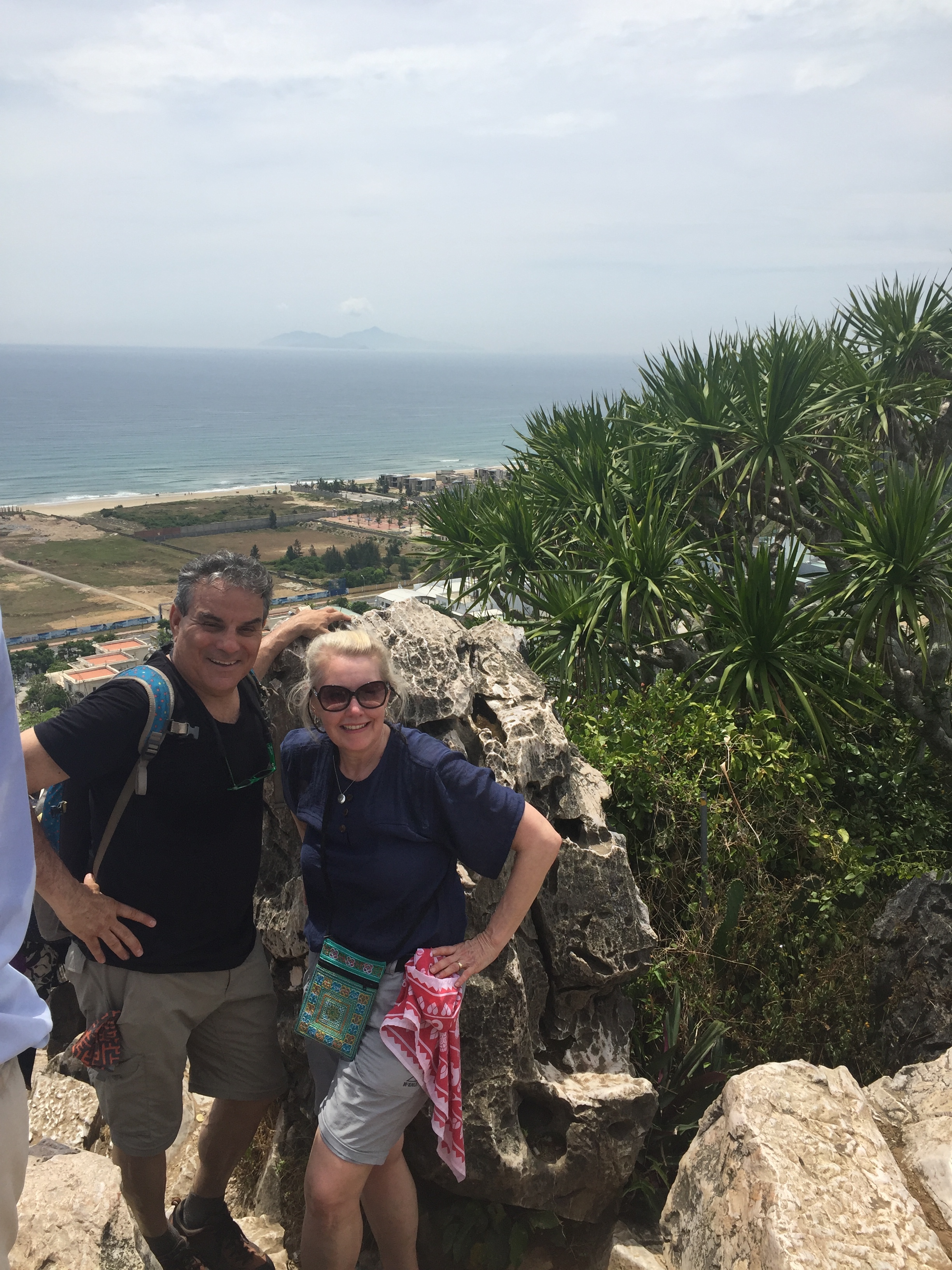
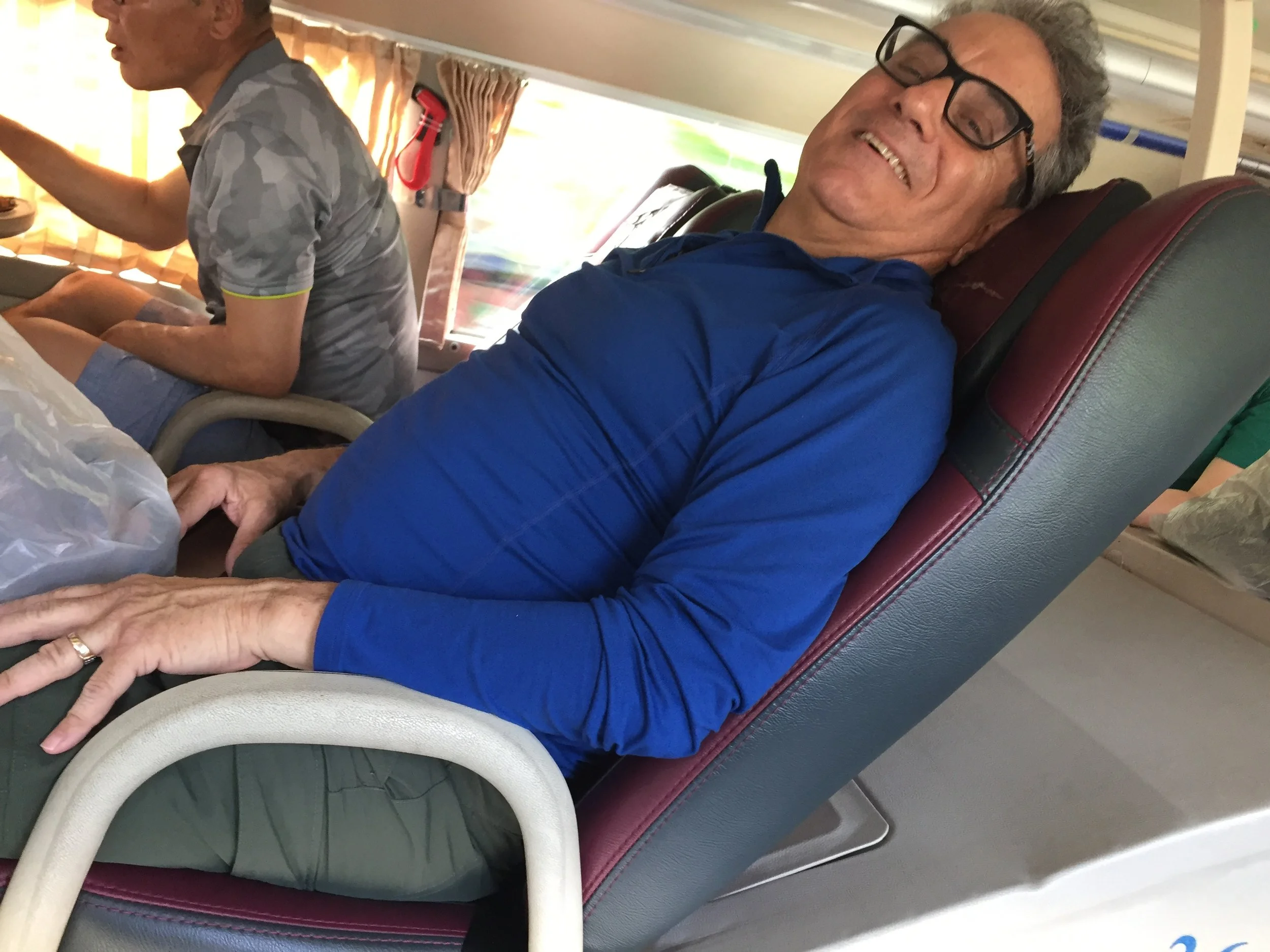
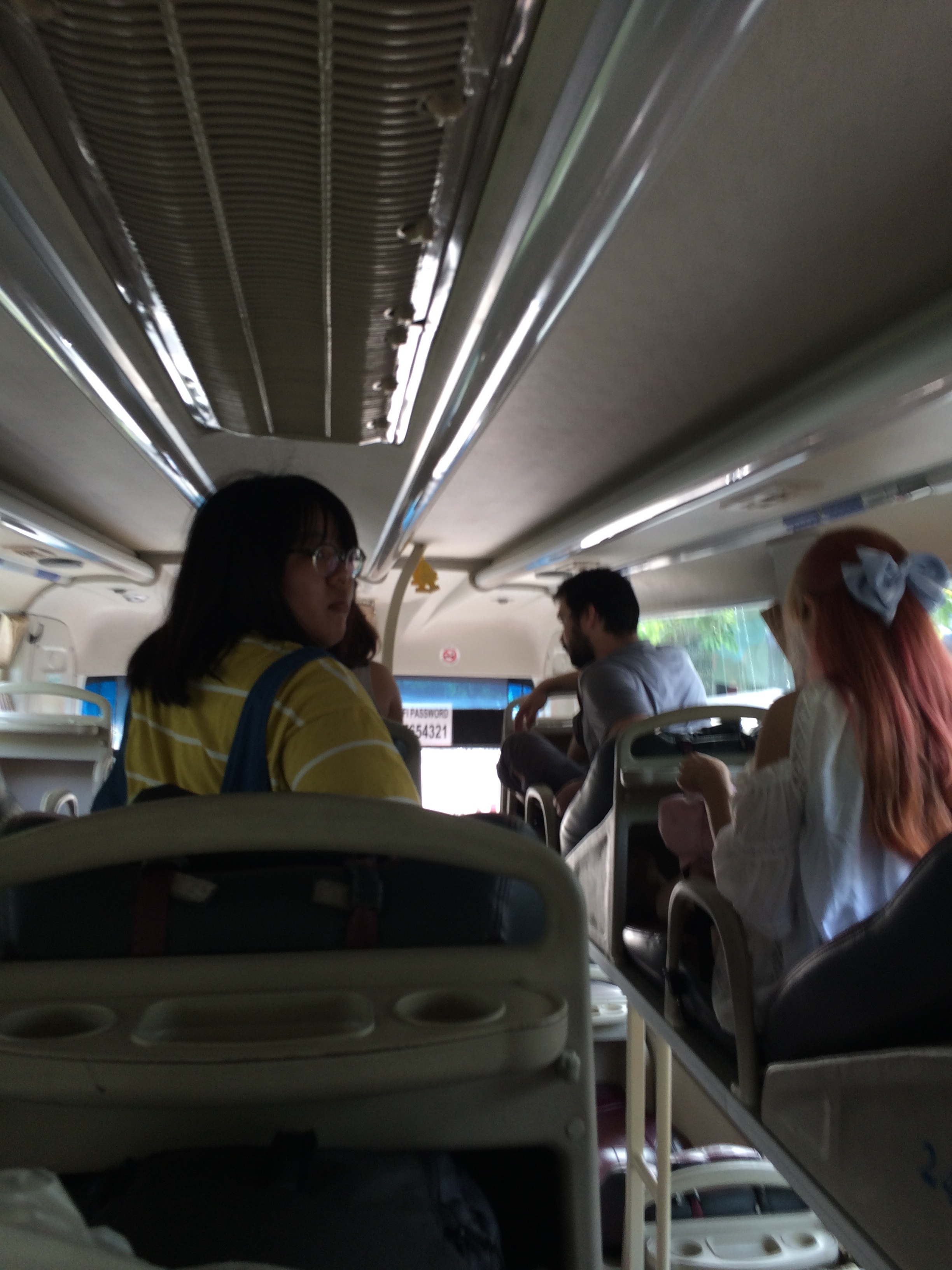
Next day we took the “Open Bus” for tourists to go to Hoi An. The strangest configuration. “Major Tom to Ground Control”. The seats were set up like bunk beds, passengers lay back in a semi-prone position. Hard to use a lap top when laying on your back. We could not do work, so we plugged in the splitter and listen to a dramatic audio novel. Time flew and we arrived in Ho ai at a street side stop. We walked to our hotel using Google Map.   The Silk Boutique Hotel and Spa is really nice, and it has a pool, zero edge,  which we have now come to need desperately after several hours in the heat on excursions.  The staff is super friendly. This is the definite pattern in Vietnam. We set up tomorrows ½ day tour to the Marble Mountains, Monkey mountain, and the Lady Buddha Pagoda and Temple.
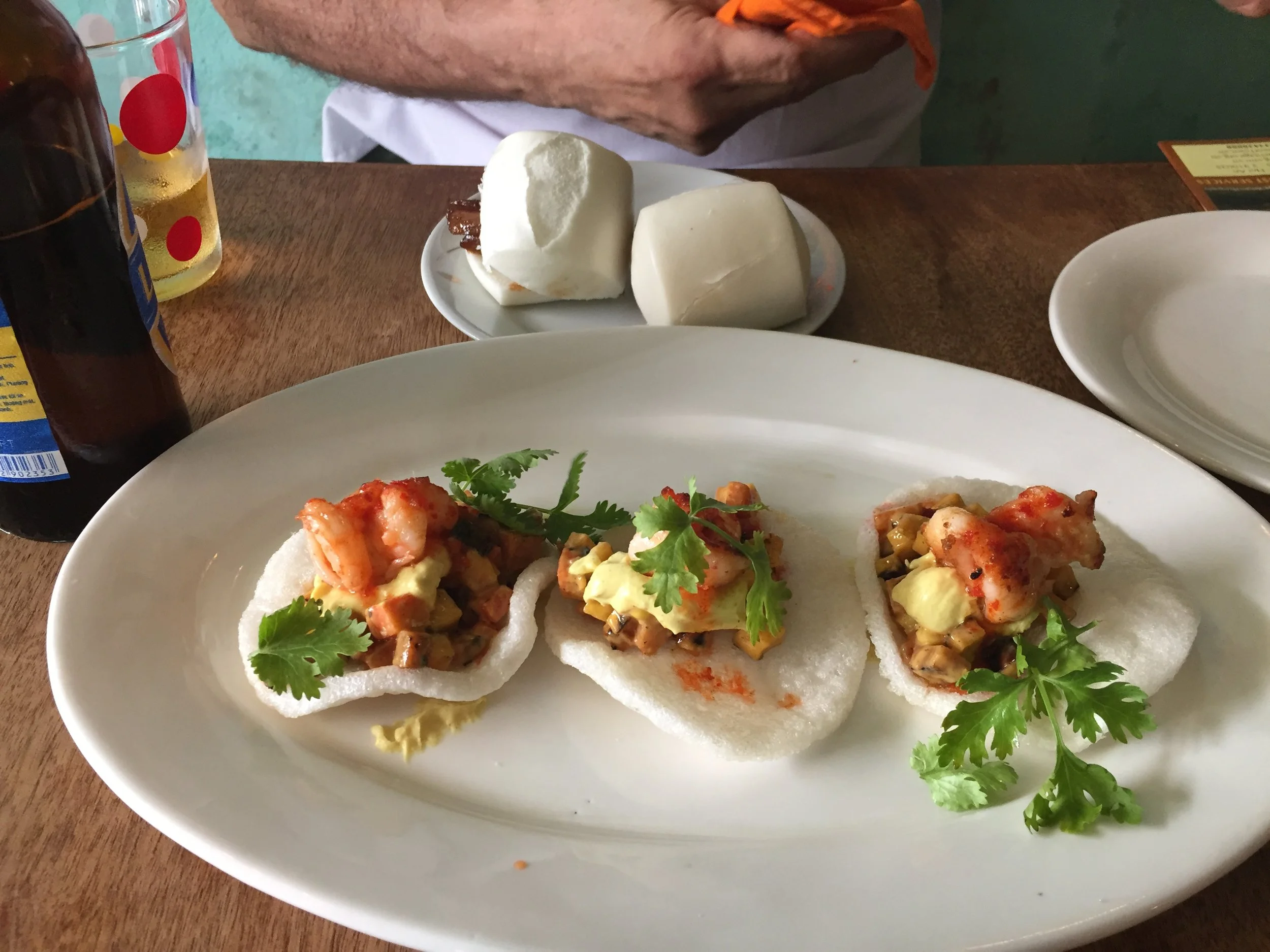
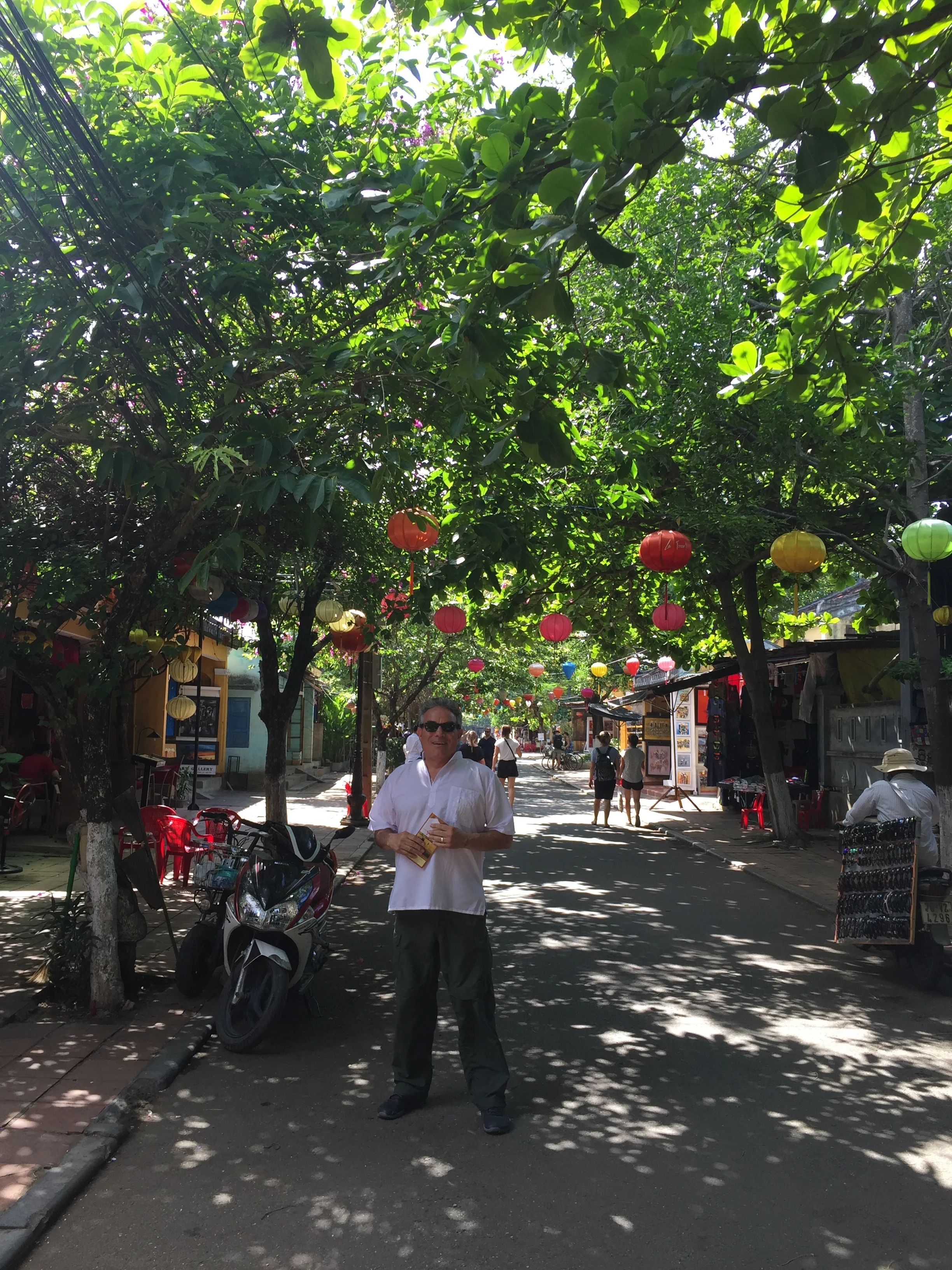
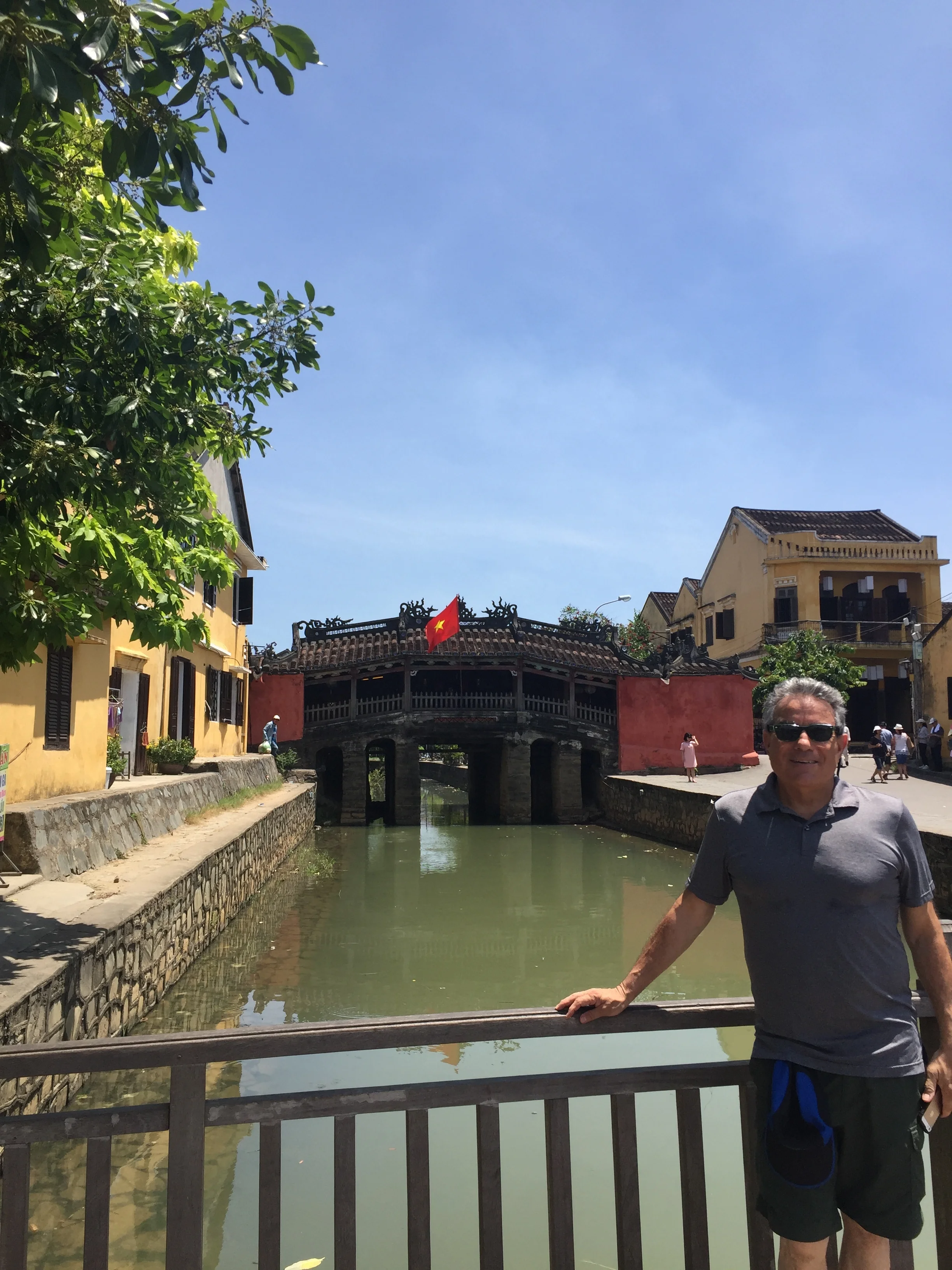
Today, we will finish the afternoon by walking over to the Old Town, crossing the covered bridge, and taking in the local flavors. The Old Town is very cool. Two bridges cross the river to Old Town that sits between forks of the Hoai  River, like a peninsula. The old town has three major streets with shops, restaurants, art galleries, clothiers & tailors, and historic Assembly Halls constructed by the Chinese; in the past Chinese have governed Vietnam off and on for thousands of years.  We specifically looked for and ate at the “Nu Restaurant”, a hole in the wall place but cute. We had a series of appetizers to share and the food was exceptional. Frank tried a new beer brand. He has drank Tiger, 333, Larue, and Saigon named beers. We will return in the evening to see “ Buddha Birthday” celebration that is continuing throughout the country. What is the Hoi an version? 
Buddha Birthday Party

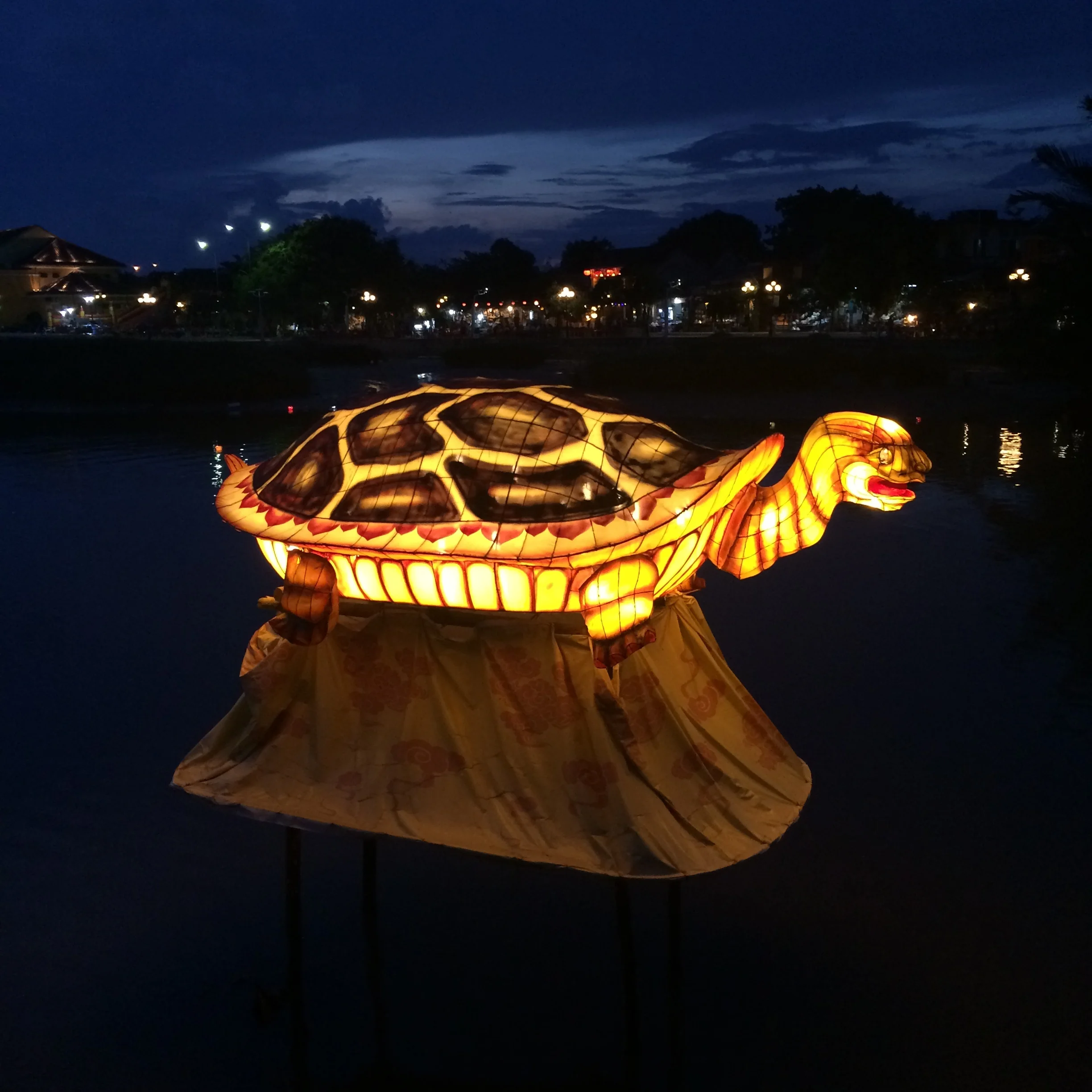
Sunset has come. We got by the main entrance check point because we had already purchased the Combo Old Town Ticket & Museum Pass. The river front was brightly lite up with historic religious figures like the Dragon, Unicorn and Tortoise. The lighted Lotus Blossoms were floating in the river as a symbol of Buddha’s birth and his 7 steps on the floating lotus. Crowds were gathering.


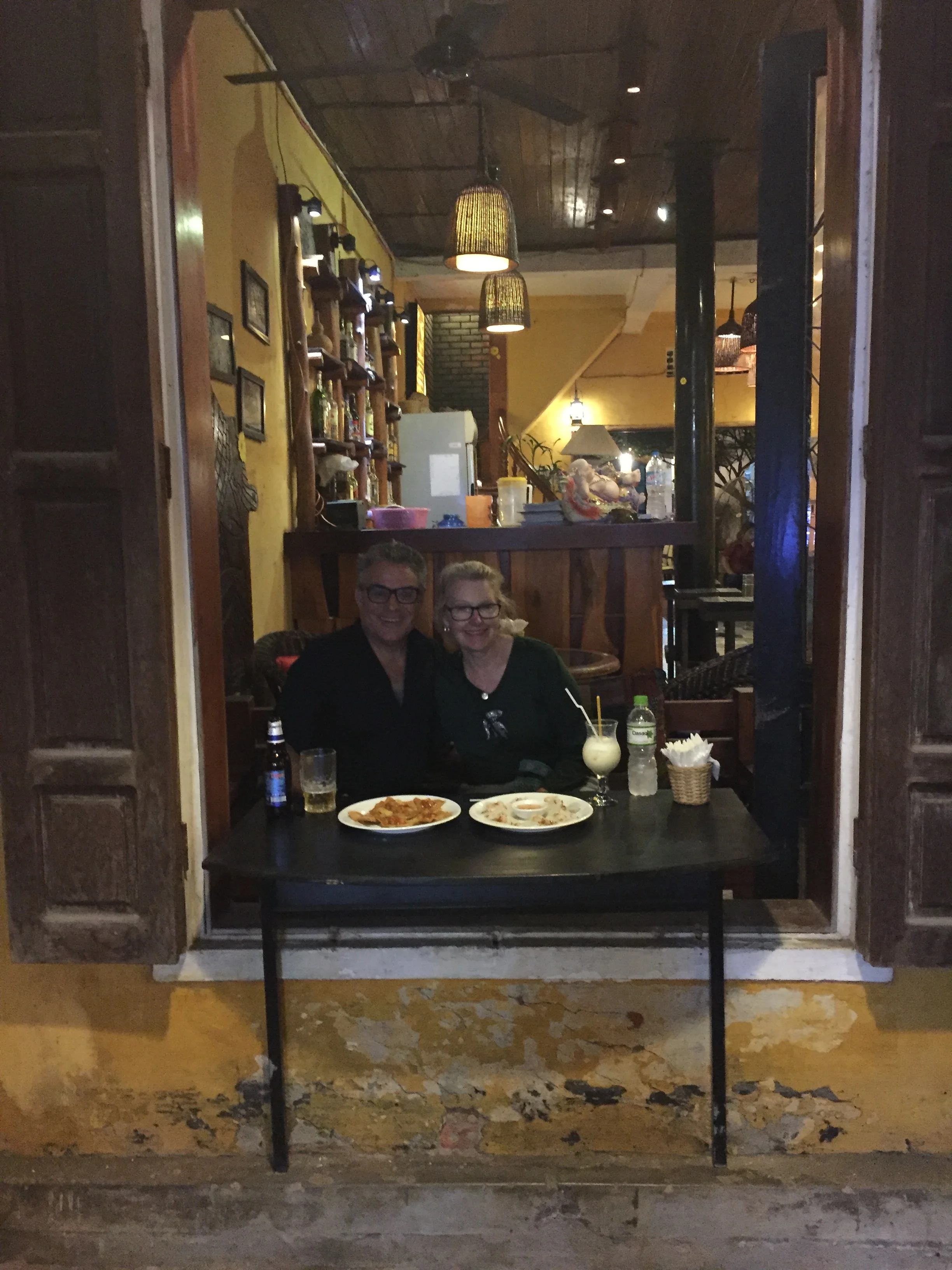
We walked river side and then crossed back and forth over the bridges with the crowds to check out all the stores. We found a nice restaurant and sat in the open window with a fan on our backs. This was again some of the best specialty foods we had eaten. Enjoy some photos.
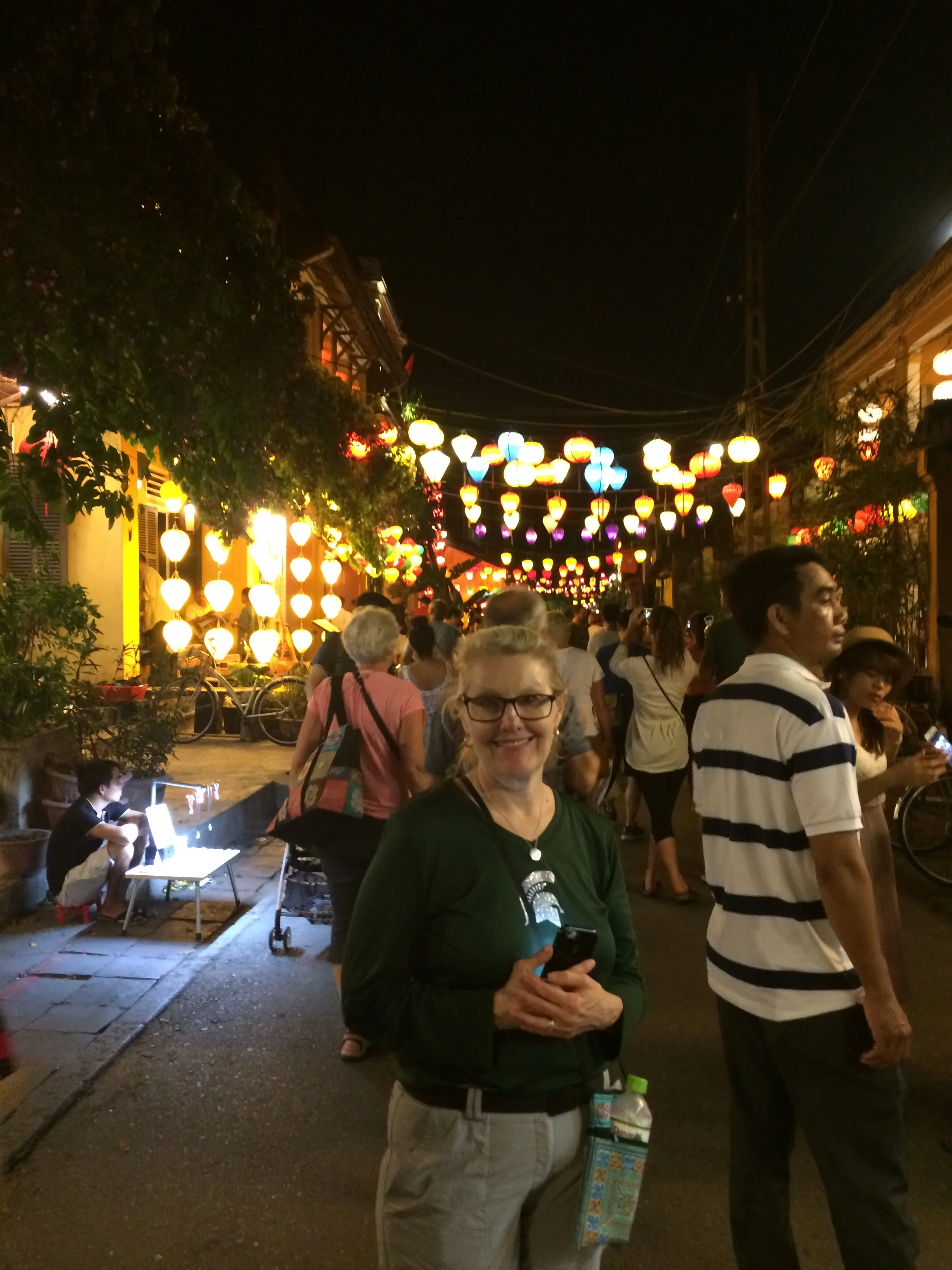
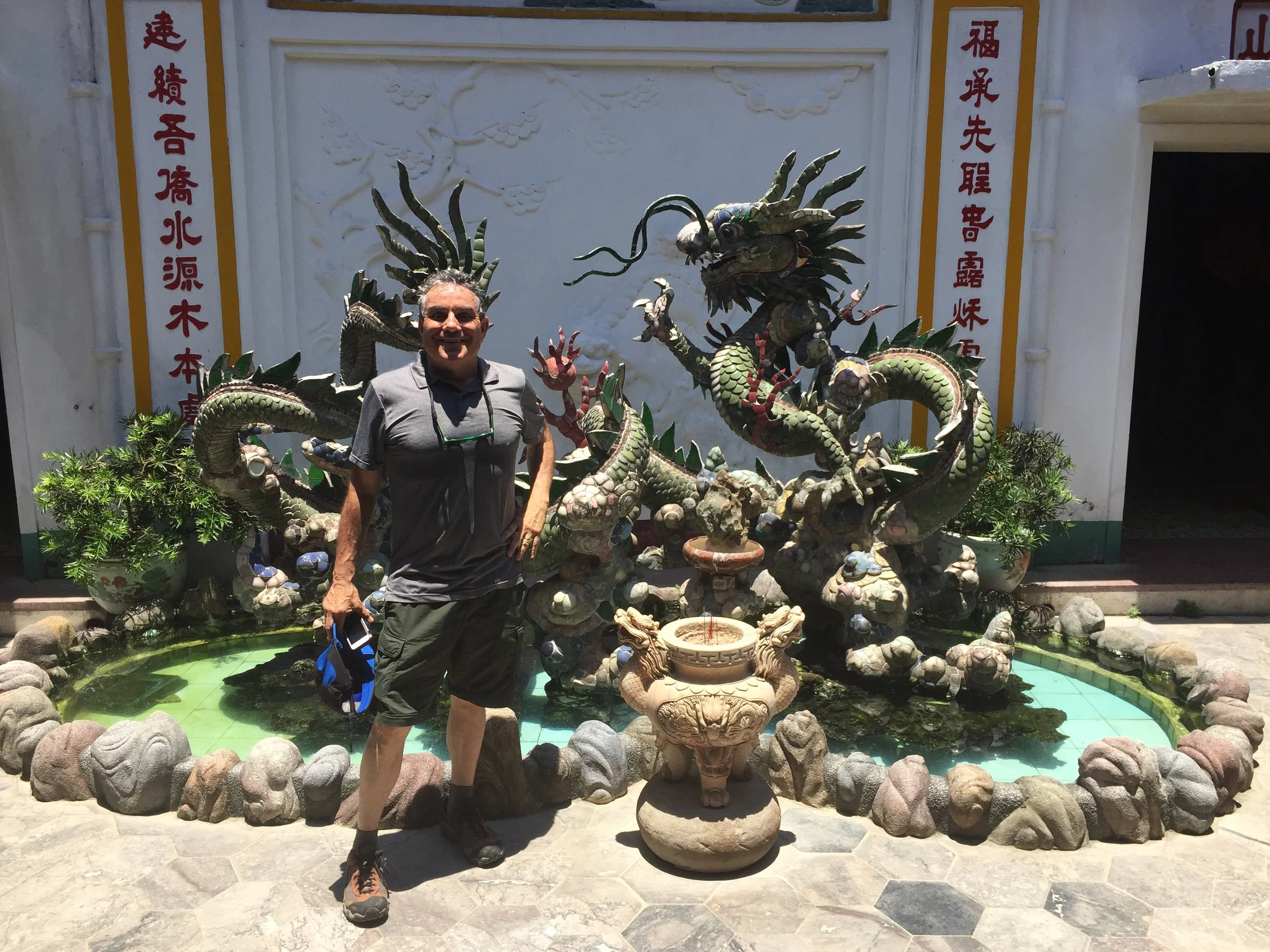
On our final day we walked back to old town to check some of the ancient dwellings we had not seen before. Again in cutesy of the suggestions of the prior guide. First, we went to Quang Trieu Assembly House and the Phuc Kien Assembly Hall; both of these were built by the once occupying Chinese as a place for their merchants to meet. The buildings where brightly decorated with reverence to Buddha and many places to sit. We then went to ancient Vietnamese homes called “Old House of Tan Ky” and “Tran Family Chapel”.

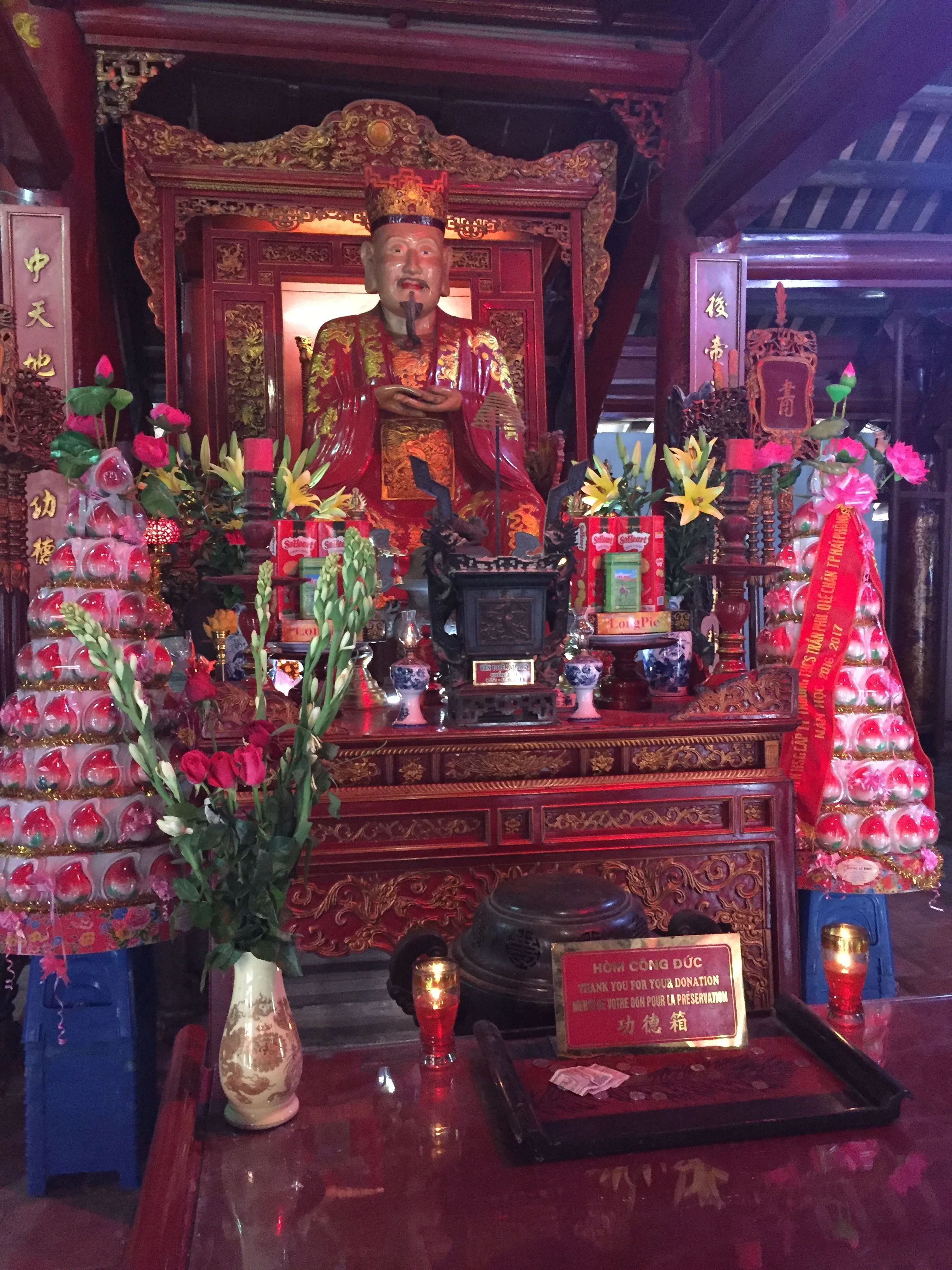
Both were interesting with photos and urns at the family alter, as explained by an on-site guide.

We walked to the fishery part of the river front. Wow, that smell! We moved along quickly to a street food vendor of note in the Lonely Planet, called the “ Hi” Restaurant, known for cooking courses. We ate, staying in the shade until 2:00 pm, before we strolled to the Orchid Hotel for pool time. We stayed in to pack and do some planning for the next stop in Ho Chi Minh City ( Saigon).      
Danang

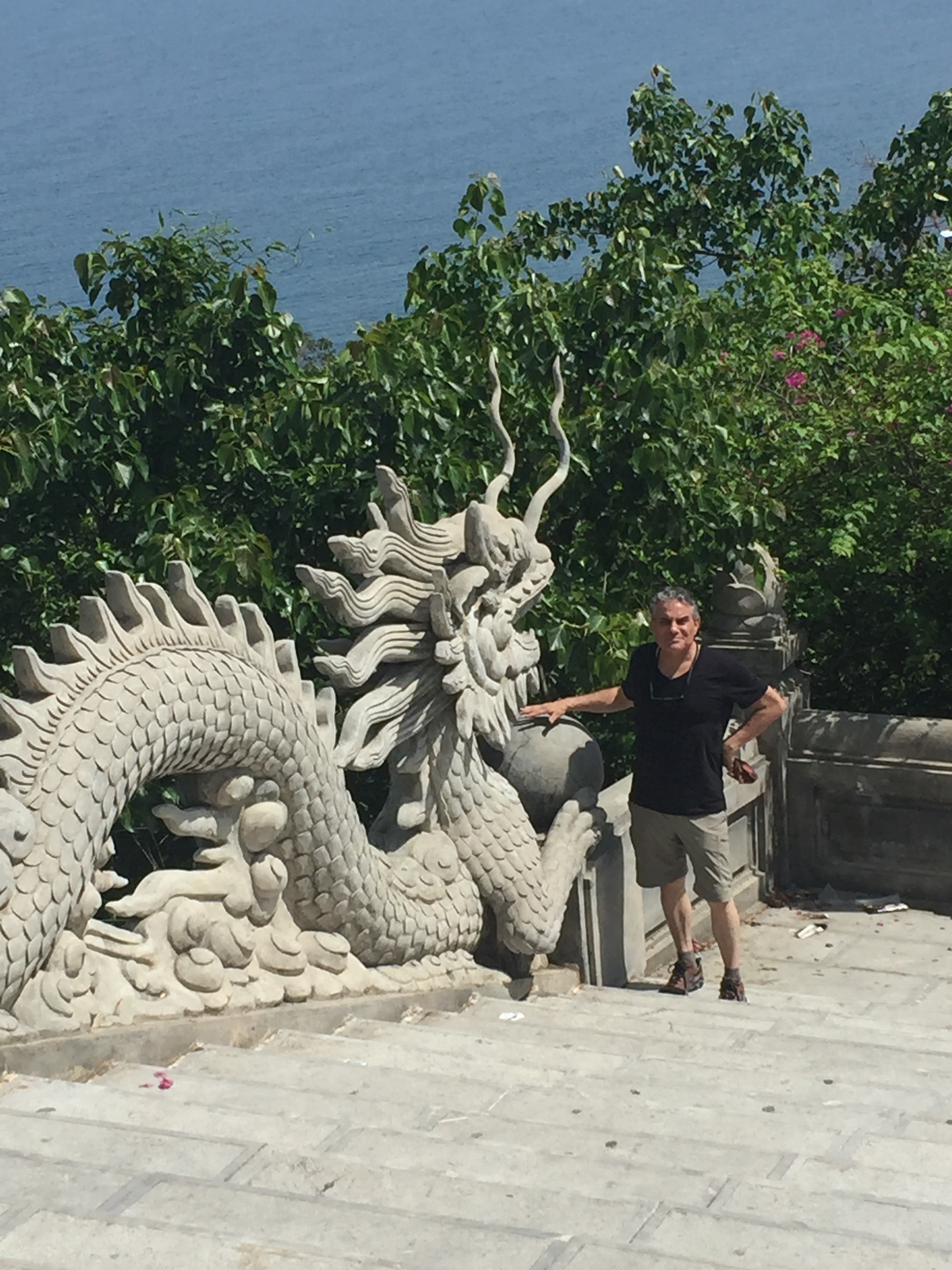
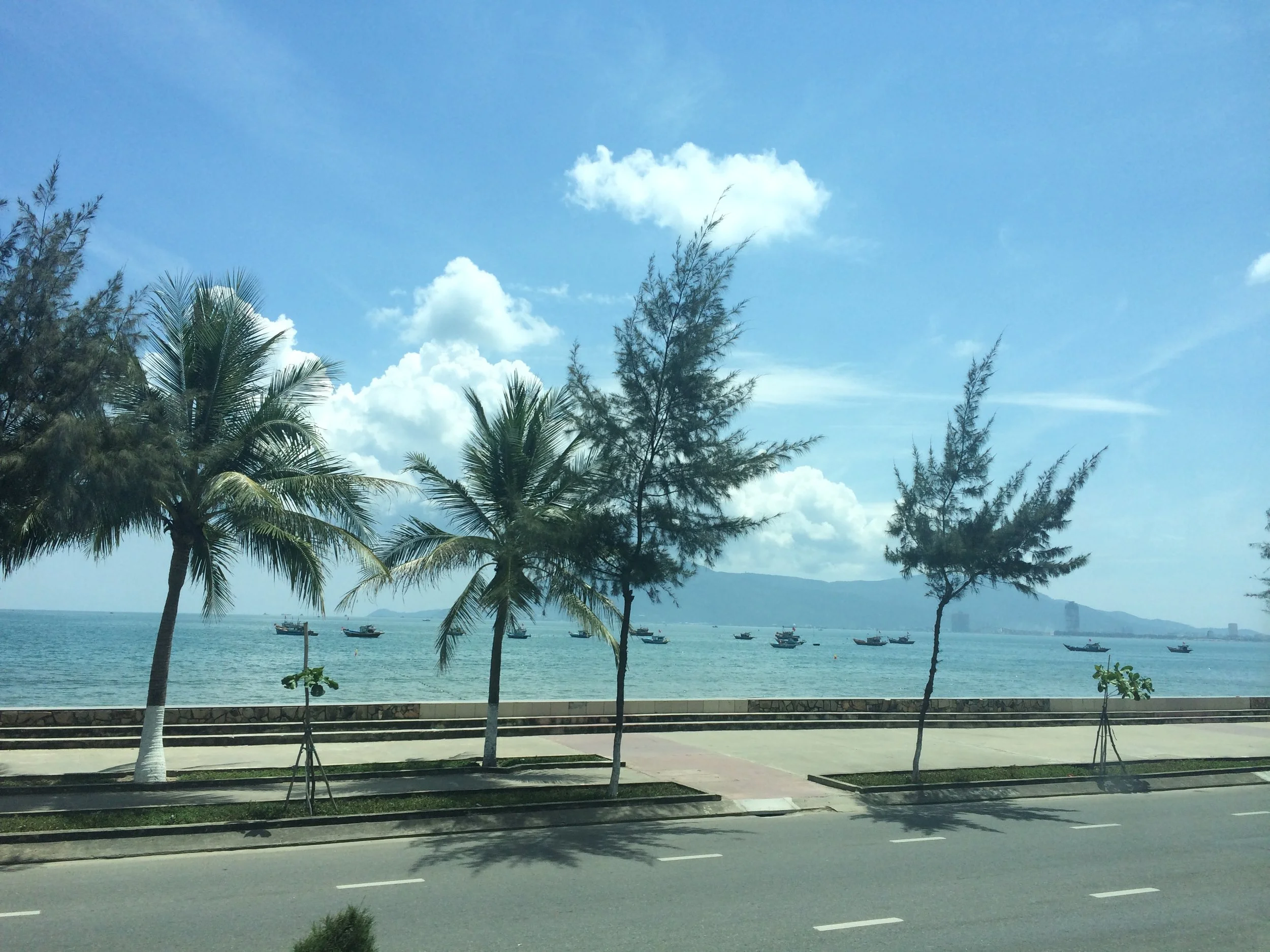
Pop 944,000. It was particularly interesting driving around the area and seeing the fantastic beaches and docked fishing boats.  Danang sits on the Han waterfront. It was called “China Beach” during the American War and the strip is the fastest changing place in Vietnam with high-rise hotels and beach resorts.What really turned our head was the continued rustic existence of the US Danang Airbase. The cement fence runs for ever and there are many dirty yellow cement Quonset Huts observable from the street. Surprised again when we later flew to Ho Chi Minh City (Saigon) from the new Danang Airport , the civilian take off runway ran by the old Fighter Jet Parking Zone.
Hanoi and Halong Bay Vietnam

“Good Morning Vietnam”- the Preamble

Frank's lunch in Moscow

Hey friends. We have flown out of the Warsaw Airport to our destination of Vietnam.  Many of our friends have been to Europe; but going to Asia brings a renewed tingle of excitement.

For several days beforehand and even now I’ve had weird, mixed feelings on several levels. First, we are flying Aeroflot, the Russian Airlines, to mother Russia. We landed in Moscow. Our tickets got stamped at passport control. So we have official proof that we have been on Russian soil even if Trump and Putin argue. The fact that the “Ruskies” did not let us leave the airport without a visa is besides the point; isn't it?


Second, we then transfer from Moscow to Hanoi, Vietnam, the northern part of that country. This is a 9 hour trek. The weirdness arises from when I was a teen.  I did not want to go to war in Vietnam. My Selective Service LOTTERY number came up #79 out of 365 birthdates, My college roommate at the time had #80.  I prayed Uncle Sam would not revoke the 2-S Draft Deferment we enjoyed as MSU sophomores. If your number was under 100, you were going to be drafted into the US Army for deployment.  We were not drafted, but since we participated in protests and since I had many future classmates who deployed and survived, I am certainly interested in seeing the aftermath in person 40 years later. 

Hanoi- the Capital

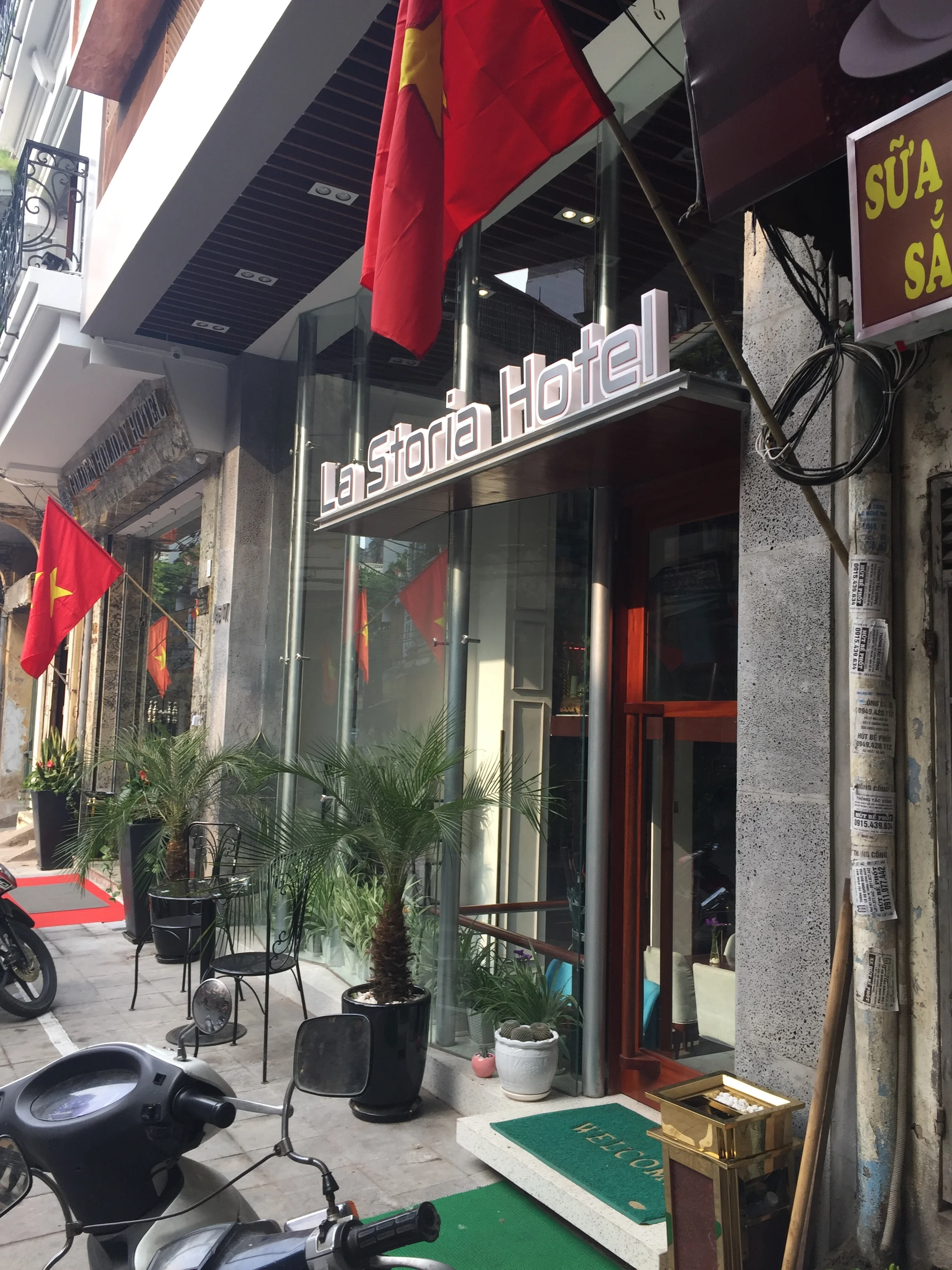
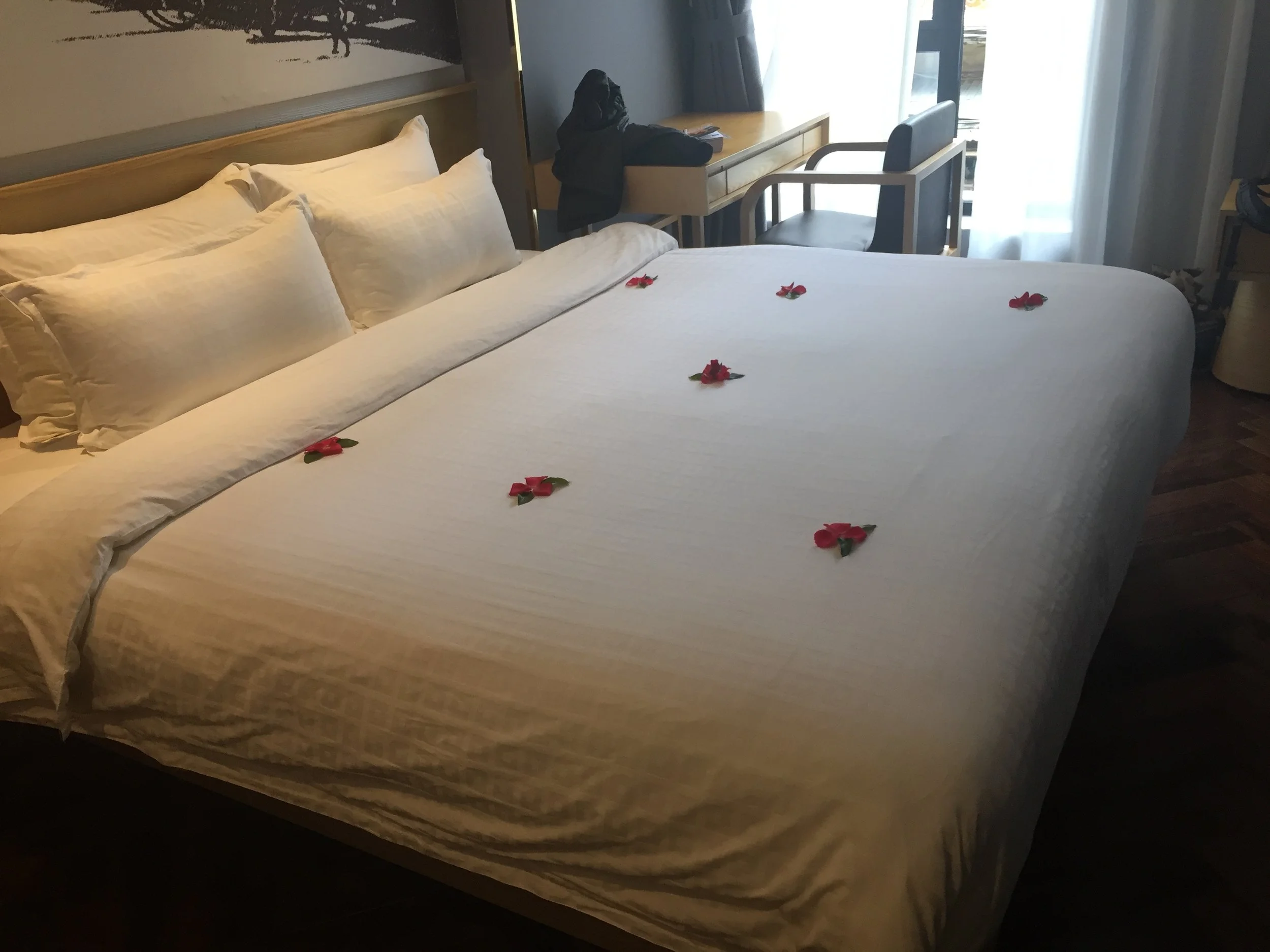
We landed in Hanoi. Our boutique hotel, La Storia, located in the Old Quarter arranged for transit. No trying to figure out the buses on such a long haul this time. When we arrived the staff put us immediately at ease; many warm welcomes, fruit drink, cold towel. We arrived before check-in so we sat in the lounge where the manager joined us and helped us plan out some excursions, got us plane tickets and transports. She spoke marvelous english and was kind and professional. Thanks Amber. We were escorted to our room which was modern, had flower petals on the bed, and was nicely appointed. The window over looked the Main Street. We felt comfortable. After freshening up we decided to explore the neighborhood. It is very, very warm and humid.  See the photos below, this is what $30 per night gets including flip flops, bathrobes and fruit.

Old Quarter Hanoi is kinetic; a flurry of activity, sounds, businesses, and people. The sidewalks in front of the shops act as parking spaces for zillions of scooters and motor cycles. Pedestrians need to walk on the street curb. Crossing the narrow streets is a crazy experience; There are not that many cars so you can see those coming, but the zillion scooters drive on both sides of the street and run through intersections with continuous honking. “HONKING” is the sole safety practice. We looked for openings and then hopped, skipped, and sprinted across. We actually saw an auto collide into the back of a scooter with Mom and kid. A crowd gathered for a moment, but the Mom got her bike up, restarted, and took off kid in tow. The lady driver in the expensive “Mercedes” would have to explain the crumpled front end bumper. Janet wishes we were immediately outside the Quarter; Frank digs the action. 

Most buildings and residences in the Old Quarter are narrow. Typically, each business is in a single narrow opening. Some have glass, most are opened air and display hanging or stacked merchandise. The streets are named for the goods usually found there, but they all appear about the same to us. There is a street named for clothing, for hardware, for medicine, for suitcases, and for sheet metal.  The metal workers braze and sodder the goods right on the side walk. Interspersed between the shops are restaurants, small hotels, trinket shops, and travel agents. The most well known shopping streets have repetitive art neon signage for place making. Our impression is that everyone is working hard to make a buck. At night, the street market is also set up with tent after tent of merchandise for blocks and blocks. Socialist country, but it looks like pure Capitalism!

The currency exchange is just crazy: $1 US buck is equal to d_22,760.00 Vietnam Dong. We are carrying around so many d_500,000 bills, its unreal.

A perfect first meal in Hanoi

Our first meal was at “Highway 4” near the hotel. Pure Vietnamese food. We ordered the favorites; non-fried Spring Rolls made of finely sliced veggies and rolled in paper thin rice paper, green beans with chili's and soup with grilled pork balls, veggies, and noodles, and cold “Saigon” beer. We used chop sticks pretty well. This was an expensive restaurant, it cost us d_341,404.00, or $15 bucks.

Hair cut - start to finish in 10 minutes


Oh yeah, Frank got a haircut in Hanoi; d_150,000, no more lion’s mane; too hot.


Other interesting costs: hemming 2 pair of pants $7 one bottle of large water $1.


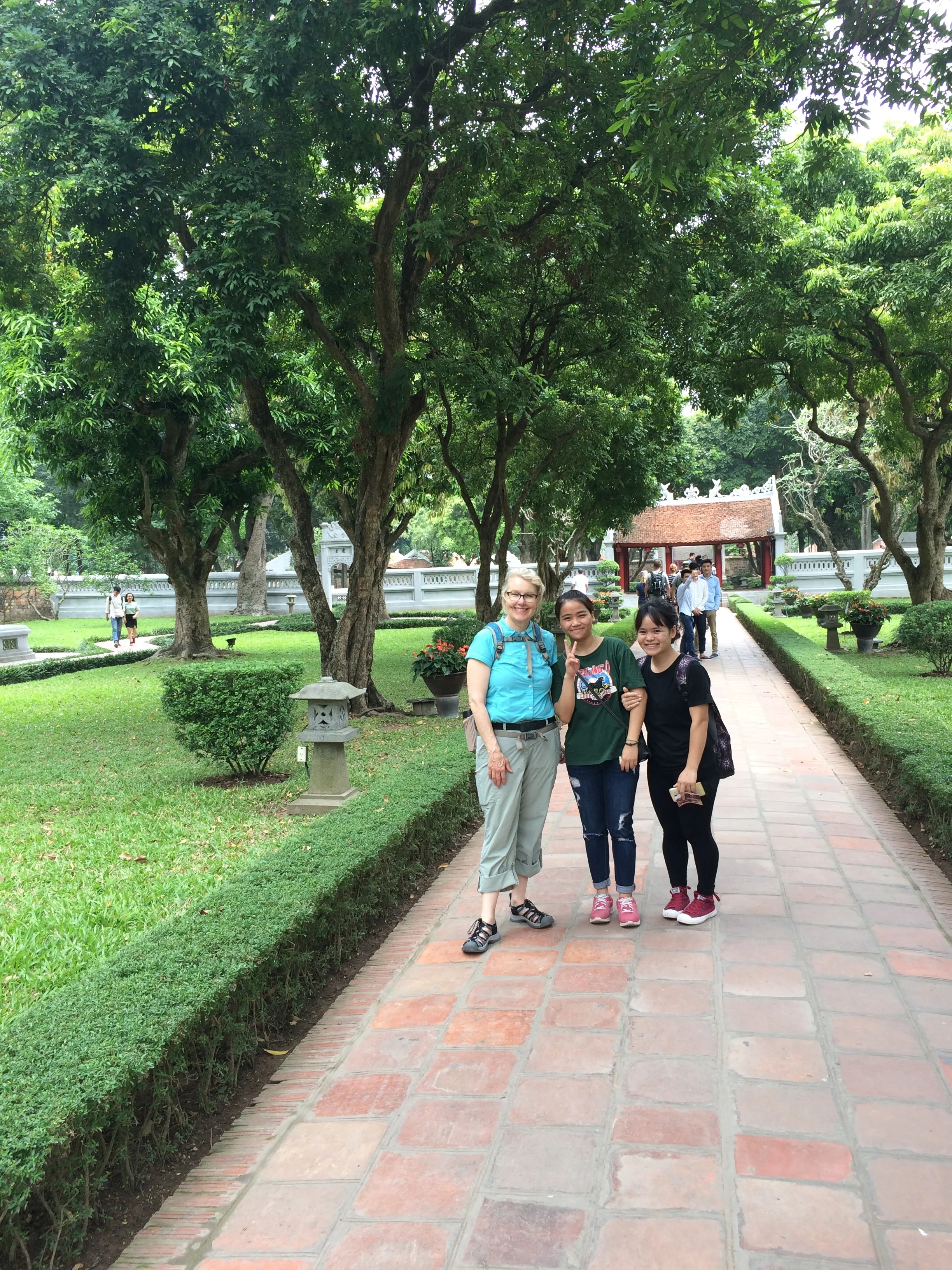
On the second day, our manager scheduled a “free” walking tour with 2 graduated college students who were studying tourism, wanted english language practice, but also had formal jobs in “pharmaceutical HERBS and banking.  These two young ladies were just sweethearts. They were so anxious to please and had a nice, thorough itinerary. 


Hanoi Hilton

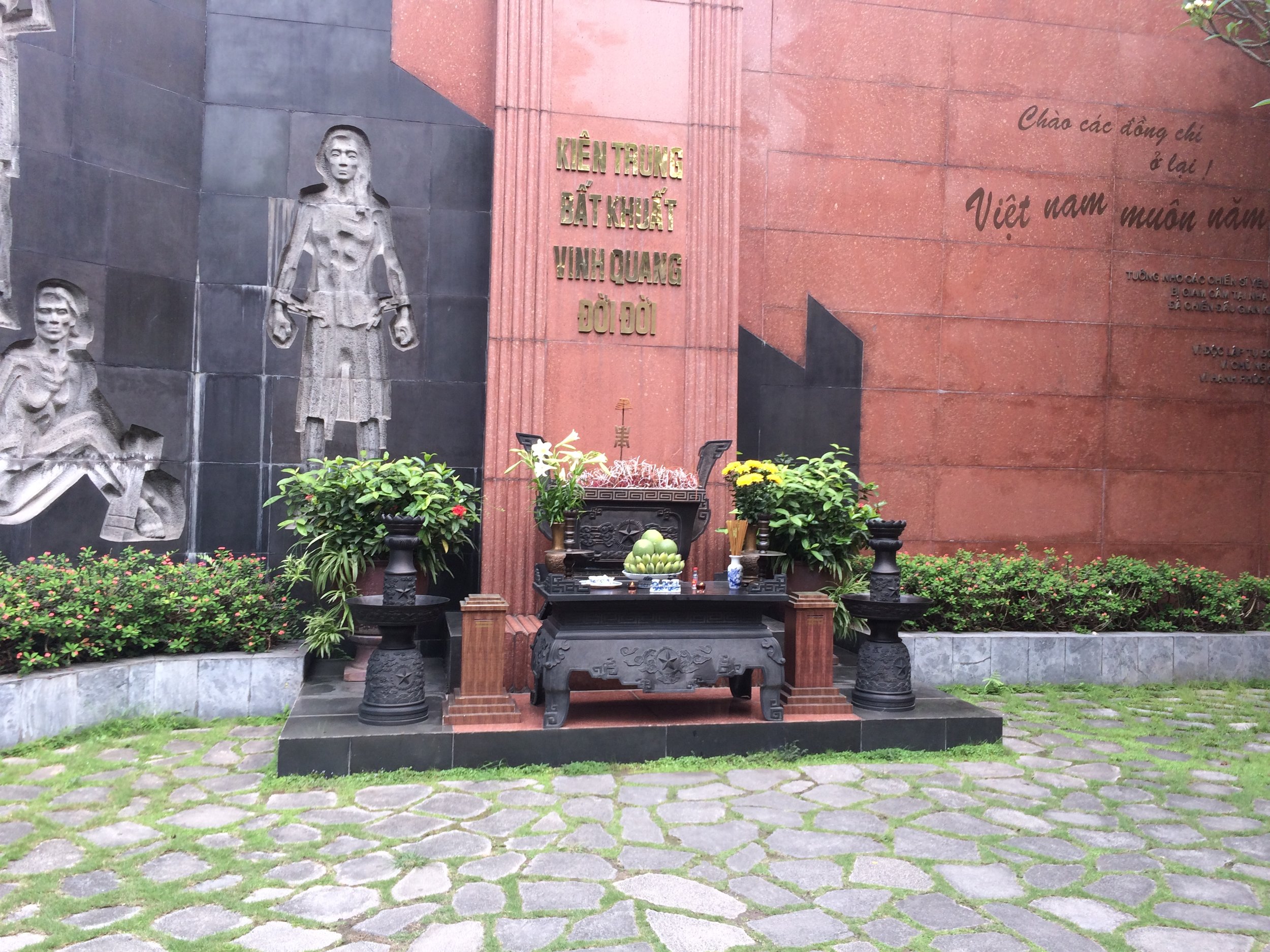
The most impressive site was the Hoa Lo Prison aka “Hanoi Hilton”. It is now a museum and has been reduced to about 10% of its original size built by the French Colonialists. Most of the displays and derisions are about the cruelty of the French government verses the bravery of the political prisoners who survived torture and those that escaped to become freedom fighters and leaders. It was the hatred of the Colonial French that created the backlash for freedom against the so called “imperial” influences and what the museum calls the “War of Unification”. Of course, this is where the USA stepped in. Surprisingly, the museum presentation was very respectful to the Americans. Most references were to the “good care” the captured pilots received, showing photos of sporting contests. There was a section dealing with Senator McCain’s rescue by the VC; not the other treatment we know he suffered. They asked visitors to fill out surveys. We thought the museum was respectful, even if not 100% accurate. Wehave heard that the southern Ho Chi Mingh City (Saigon) museums are far more critical of the USA. We’ll have to see. 

Our 2 guides marched us all around the Quarter, teaching us how to cross the streets amid waves of motor bikes. We bought lunch while visiting these sites:

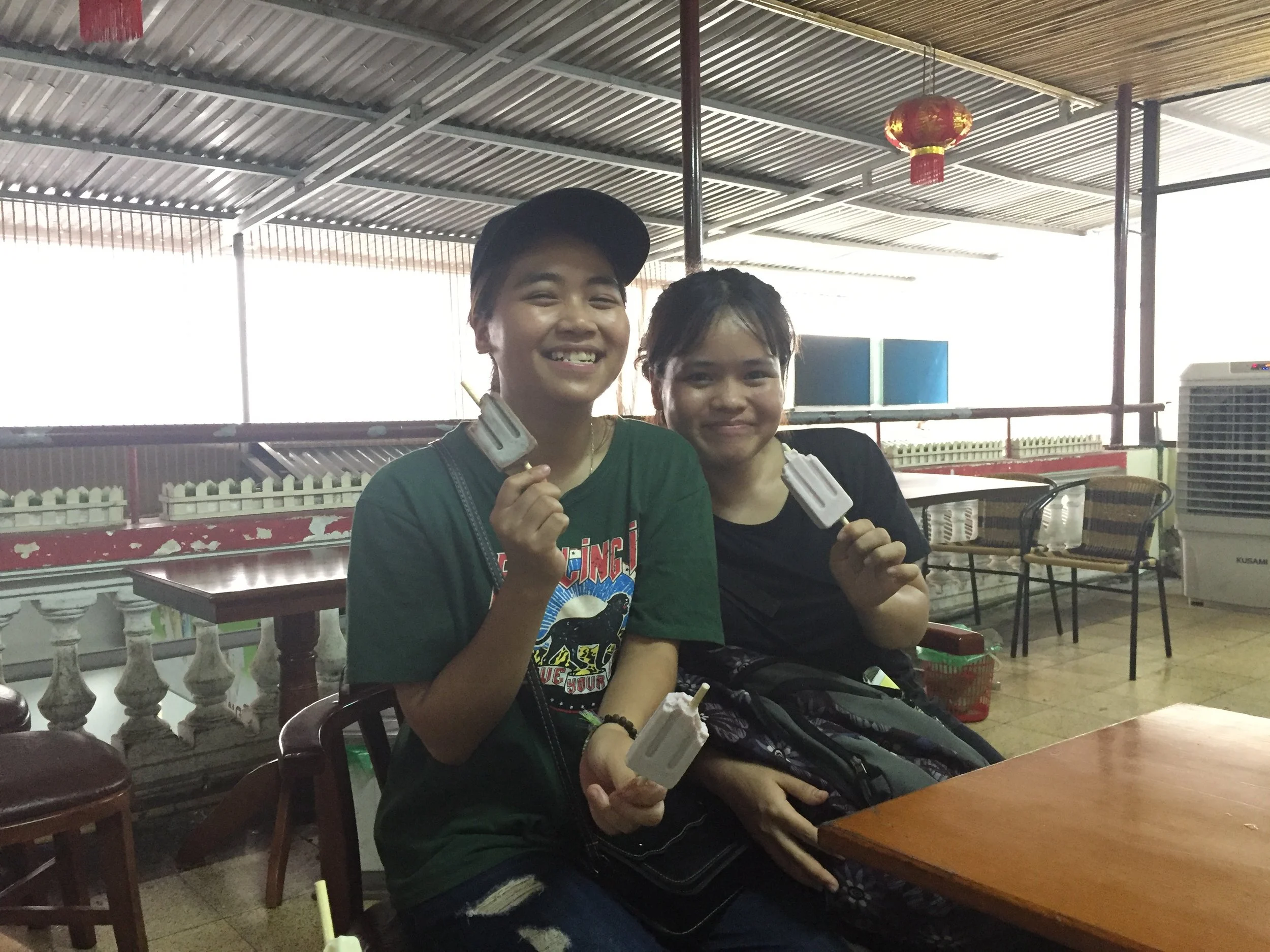
Our visit to Thang Tien Plaza with all the designer stores; Gucci, D&G, Rolex, Ray Ban, etc., was fancy and western, but in error as we were searching for a local optometrist for Janet’s new glasses on a quick turnabout. Surprise, the optometrist was right across the street and the girls helped Janet negotiate low prices in “Vietnamese”.  Then we were treated to ice cream by girls. A walking tour that was to run 3 hours turned into a full day junket. We said good bye to our new friends at 5:00 PM. 

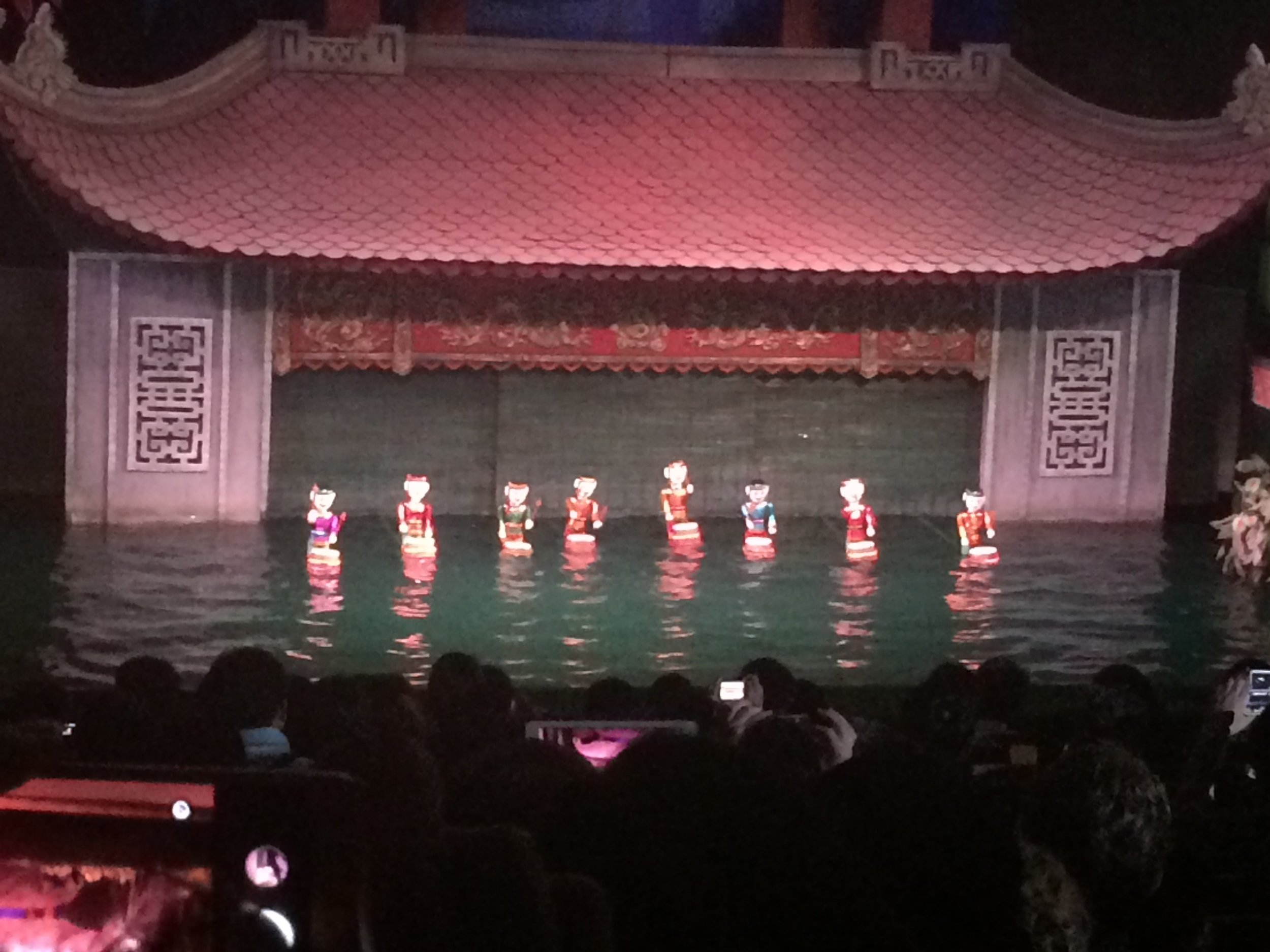
Later, we walked all over the Hanoi Old Quarter our last night. The circle boulevard around the Holy Lake was closed to traffic for the celebration of May Day, with music stages, ( Mr. Slim is popular), games for kids, food stands, and also seller's street market under tents. We finished our Hanoi city adventure at Thang Long Water Puppets Theatre. Here the puppeteers have control from below and under water; no strings. The classical Vietnamese orchestration and music is the most interesting. The 10 or so puppet skits are cute and colorful most enjoyed by kids at heart; an inexpensive diversion.     Let us now tell you about Halong Bay.  

Halong Bay


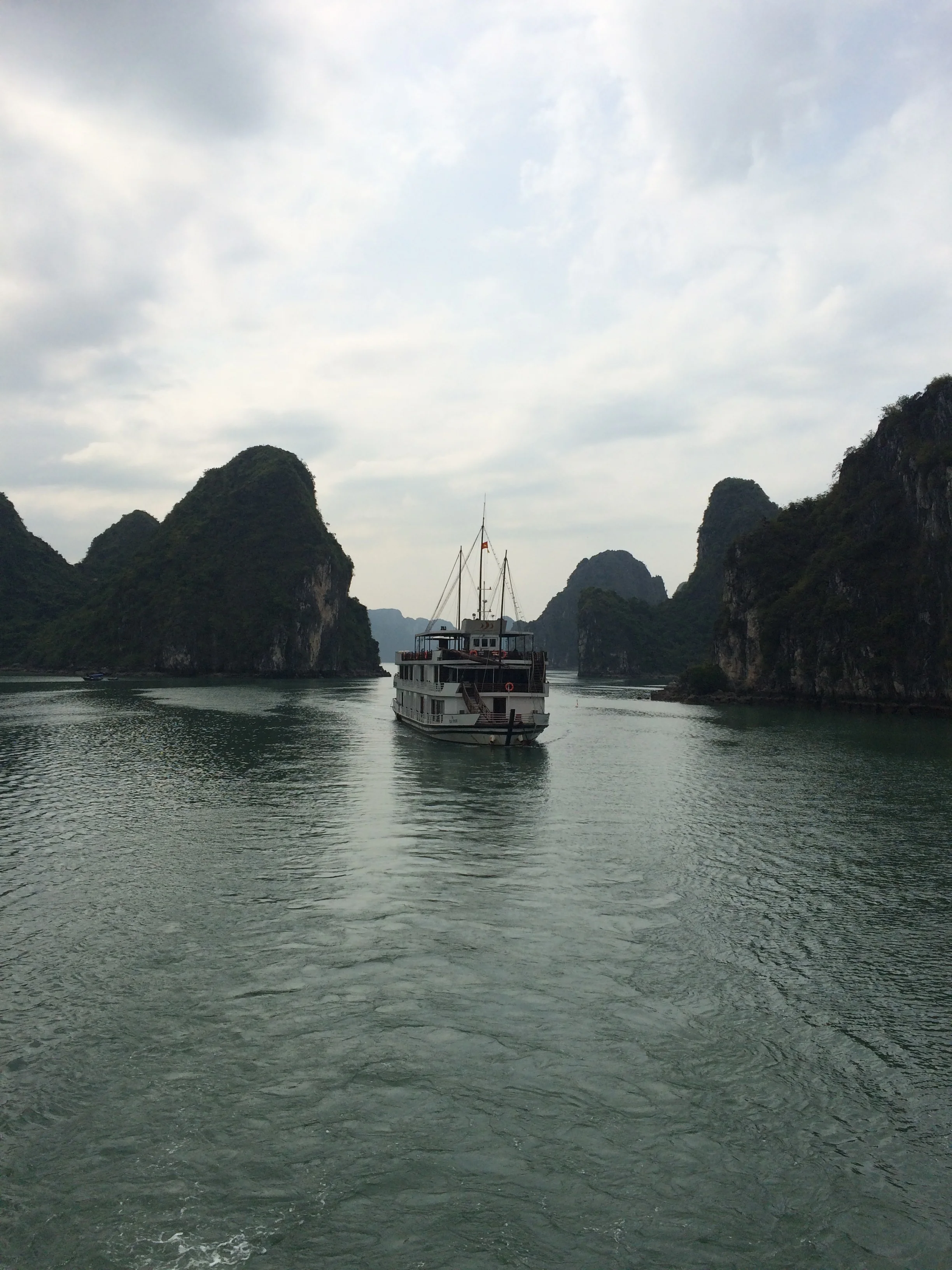
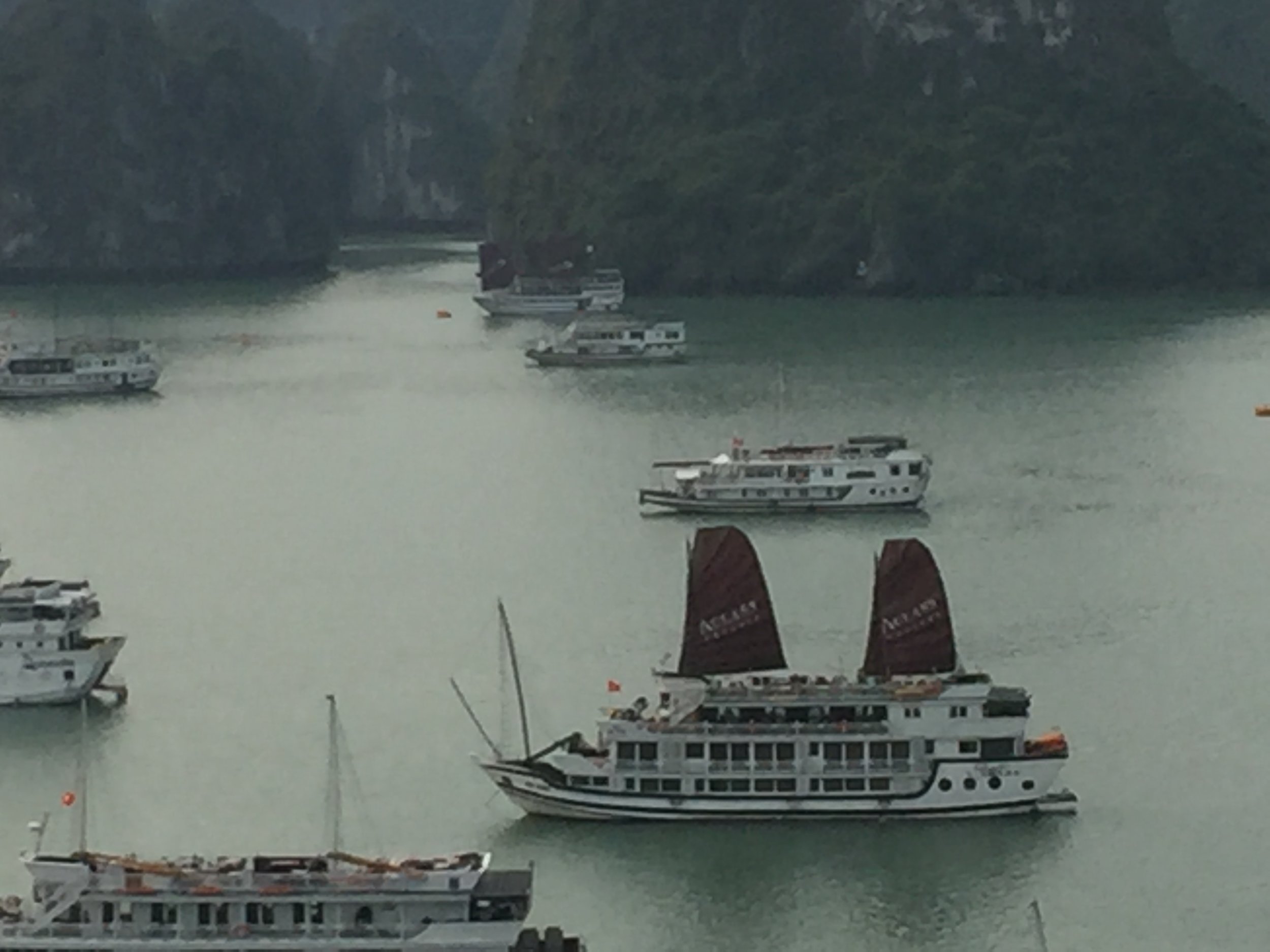
We took a 2 day 1 night cruise in the Halong Bay, one of the most popular tourist destinations. This place is gorgeous with natural beauty. The van ride with our guide Brian and our fellow cruisers takes about 4 hours. Brian warns that his Vietnamese name can be perceived as an insult by using the wrong “tone”. We have found out that the same word can have different meaning if the accent is wrong. In writing, the placement of the apostrophe (‘) changes the meaning of the same combination of letters.   

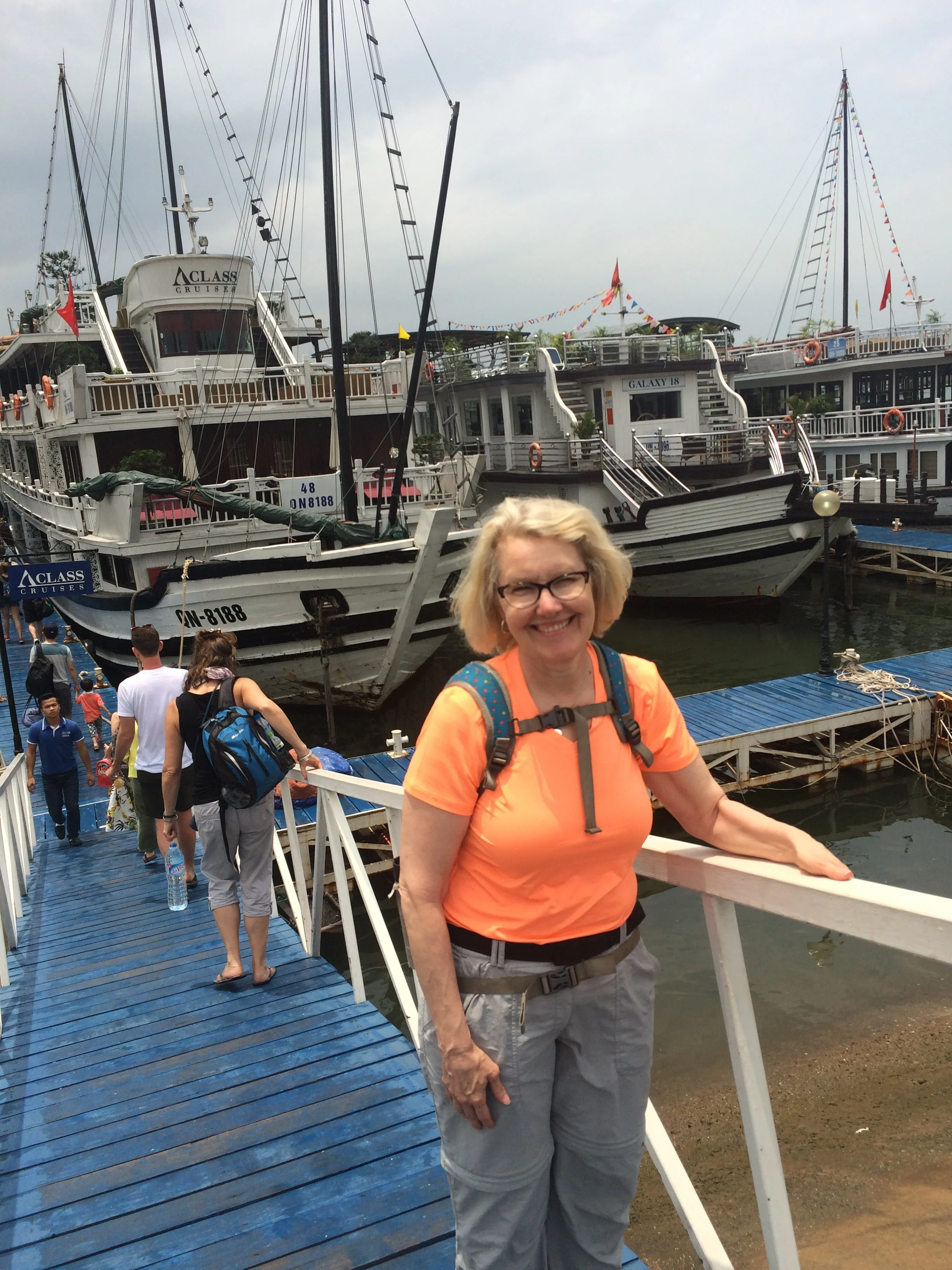
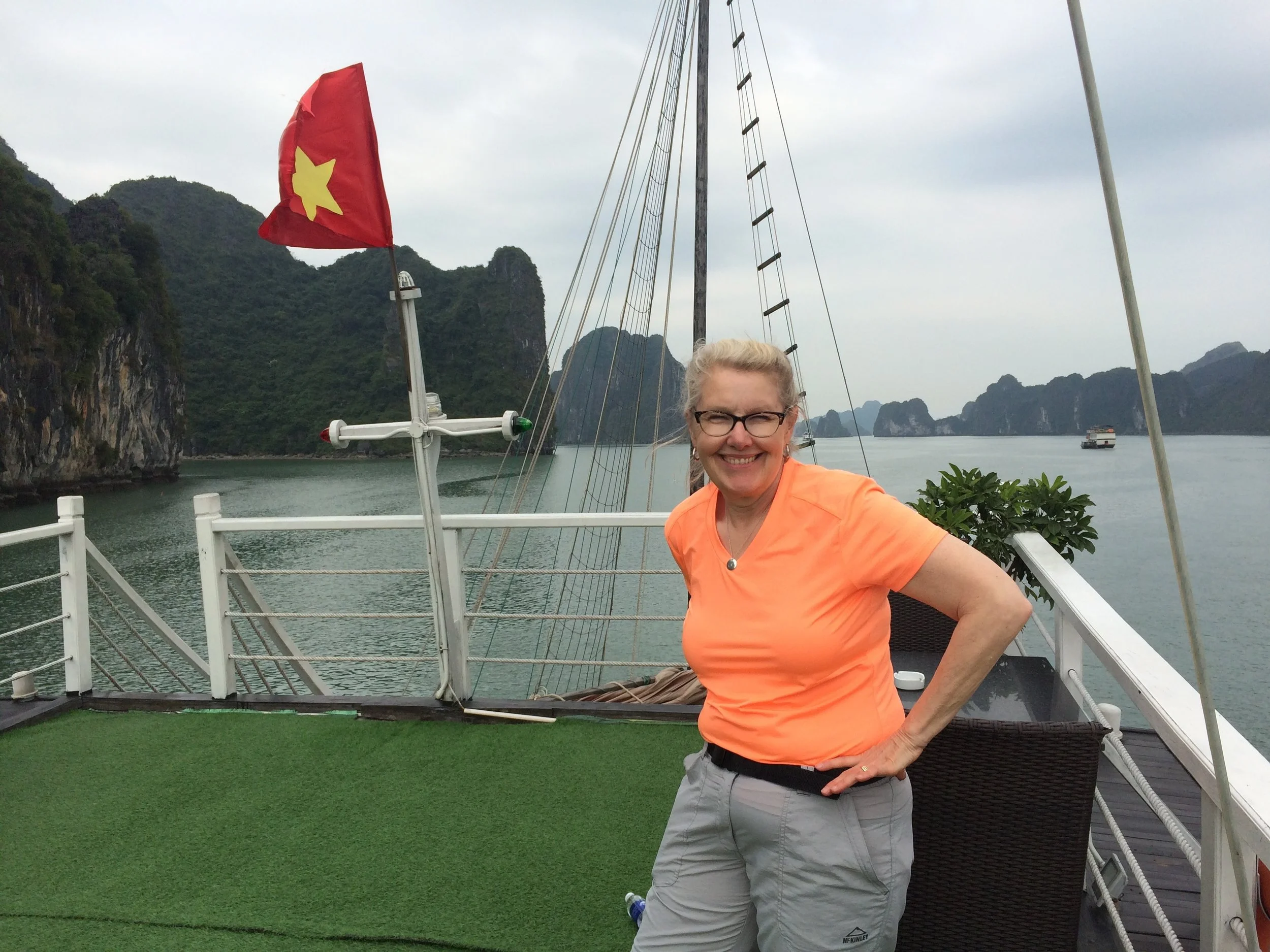
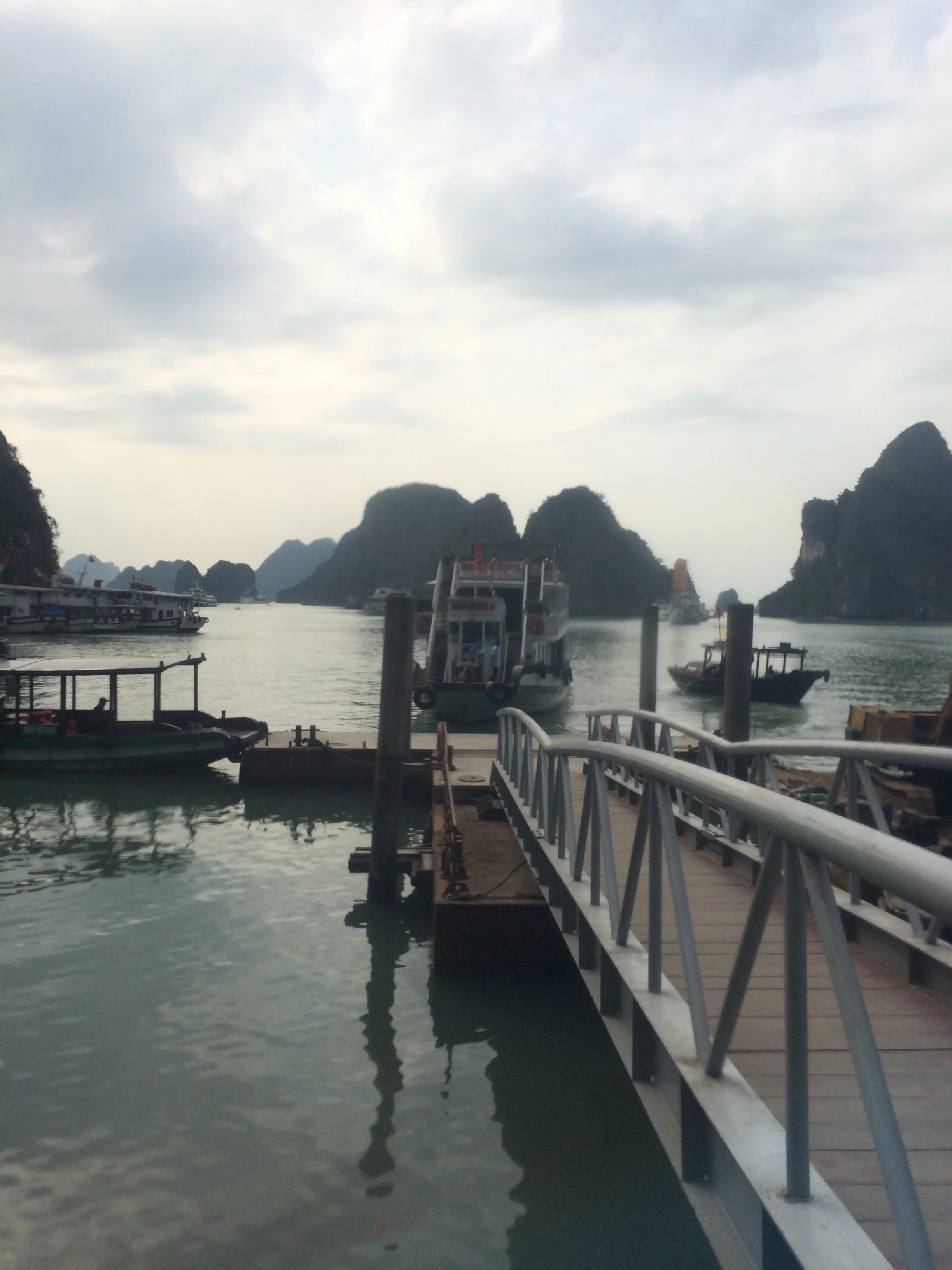
Upon arrival at the docks you observe scores of anchored River Ships, some very large and others smaller. We dingy out to our double decker wood ship with classic oriental top sails; not the biggest boat but we all agree the “ Carina”was the most handsome. The ship was not sold out. Our shipmates occupied 6 of 9 cabins, which made ship board life very comfortable in the dining room and top deck. Once luggage was stored we ate together and then enjoyed the great views of the course taken between the towering rock formations bursting from the sea. The top deck was the length of the ship with sitting areas and bar, the space limited only by the collapsed sailing masts and the 2 little kids under 5 years that ran around the deck with playful exuberance. It was cute; a little Chinese boy running after a little blond haired Czech girl and visa-versa. They played together most of the trip. 


We enjoyed the company of a couple from the UK, Birmingham not London, who had caught up with their world traveling daughter Sam; another couple was from California, and of course they were Information Tech professionals, maybe on the way to Millions of bucks. Excursions and dinners were really fun with this group. The Chinese and Czech couples were also pleasant. See some photos. 


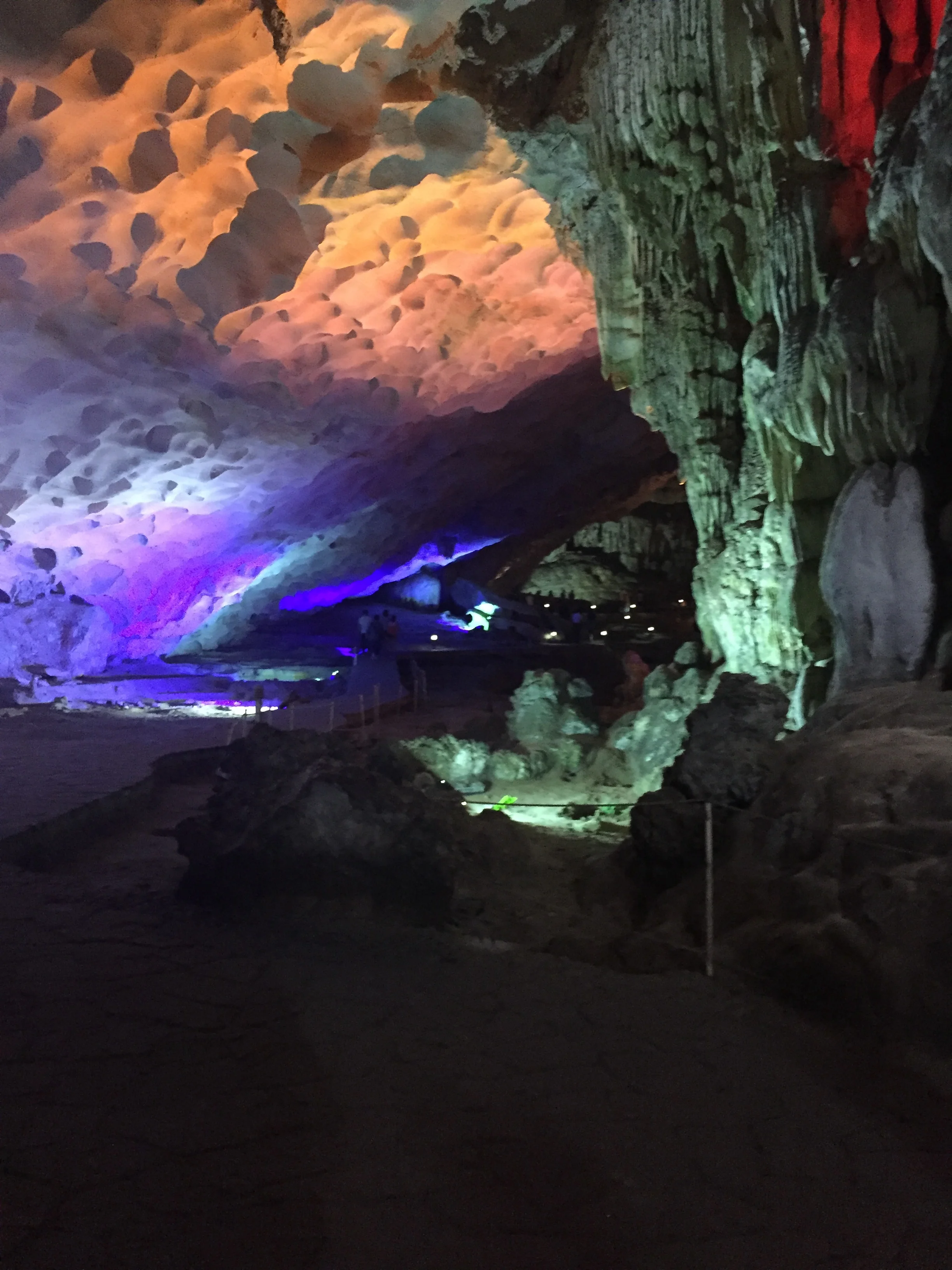
We reached our destination and anchored. The dingy took us to on-shore docking where we exited and trekked through these enormous natural caves formed by the action of long gone water erosion. 

We then took the dingy to an off shore docking system where we were outfitted into Kayaks and sent on a water course through another cave which opened into an isolated lagoon surrounded by high cliffs with small caves. The waters were calm and quickly we took off following the perimeter. Then the most amazing thing happened. The cliffs bearing long tentacles of vines and plants came alive with jumping, hanging , and swinging monkeys that looked almost out of control with their daring acrobatics. Some monkeys came all the way down to the waters edge by grasping onto rock and standing almost perpendicular. We watched the show for a long while also enjoying the reactions of our shipmates once they caught up to us watching the circus. 

We returned to the ship for happy hour and to watch the sunset. Nice wine, and more wine, and fun conversation to get to know each other. Some people think American football is rubbish, but I think the sport is like our country: “youthful, scrappy, energetic, with controlled violence”. 

We awoke before 6:30 AM to stretch out with “Tai Chi” on the top deck and enjoy the sunrise. Our instructor was also an officer on the boat. For this exercise he dressed in special loose fitted clothing that allowed him to stretch and bend into elegant poses. We thought those of the group who made it up at 6:30 did a pretty good job with this new craft. It was refreshing. 

Breakfast of noodles and fresh juice

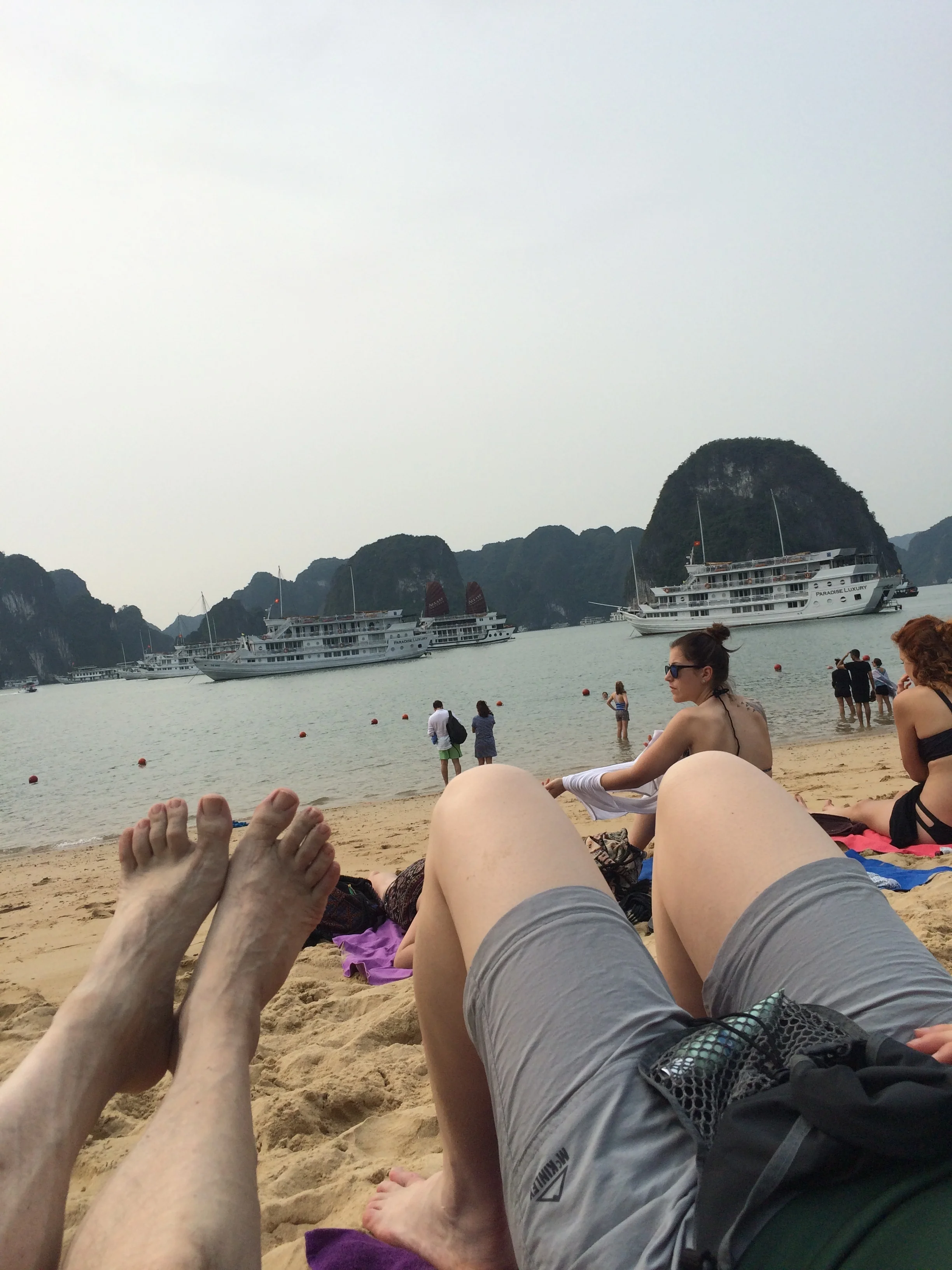
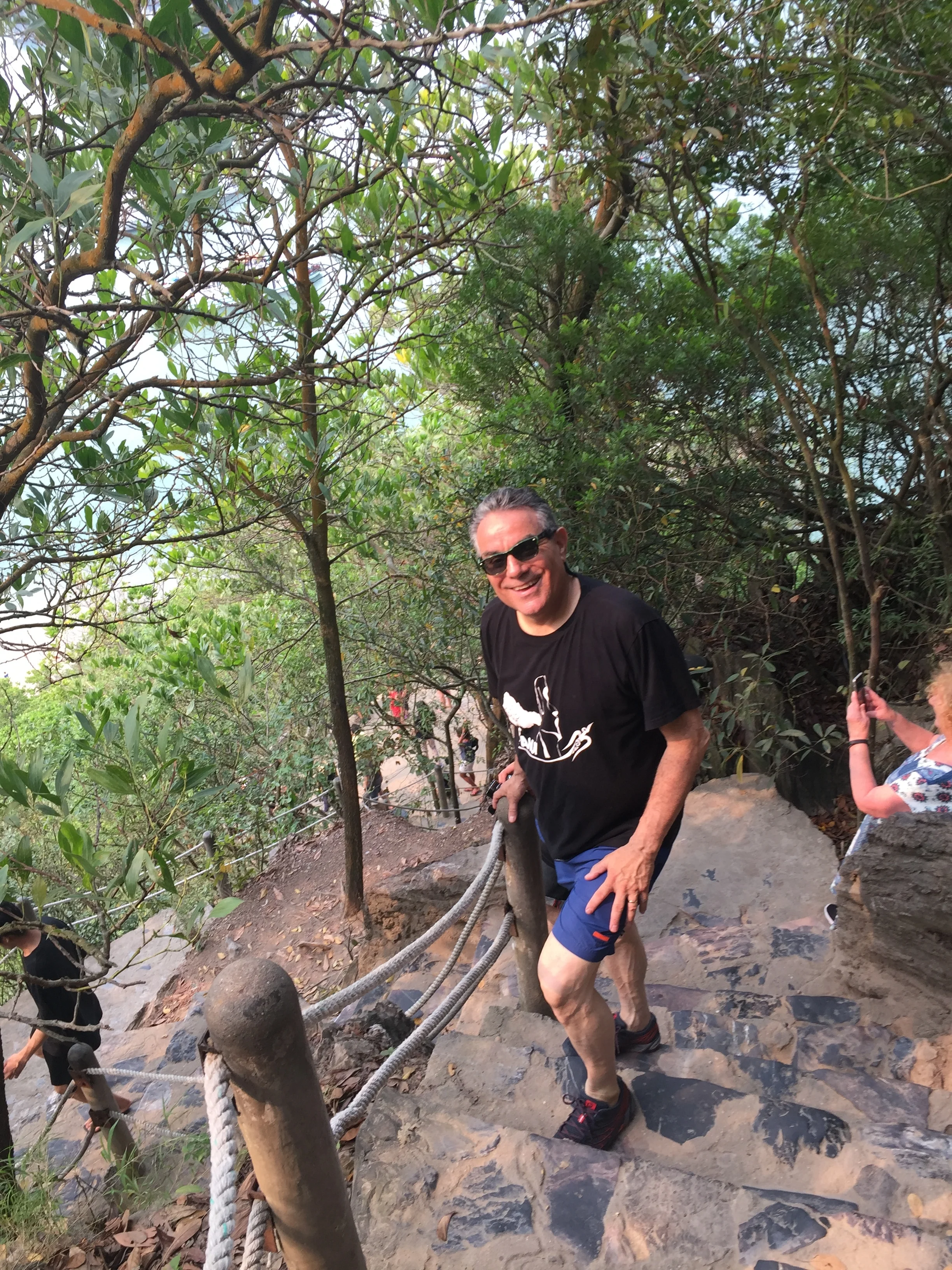
After breakfast we took the dingy to a “special” island mountain with a sandy beach and that was topped by a Pagoda. There were many dingy docked. The steps cutting through the rocks of the mountain trail to the Pagoda where rather busy. We, of course, trekked and sweated to the top. The views up high were really enjoyable as you could see ships surrounding the island and moored near the main docks in the bluish water. We descended and had time to stretch out on the beach for some rays, our feet playing in the sand. 

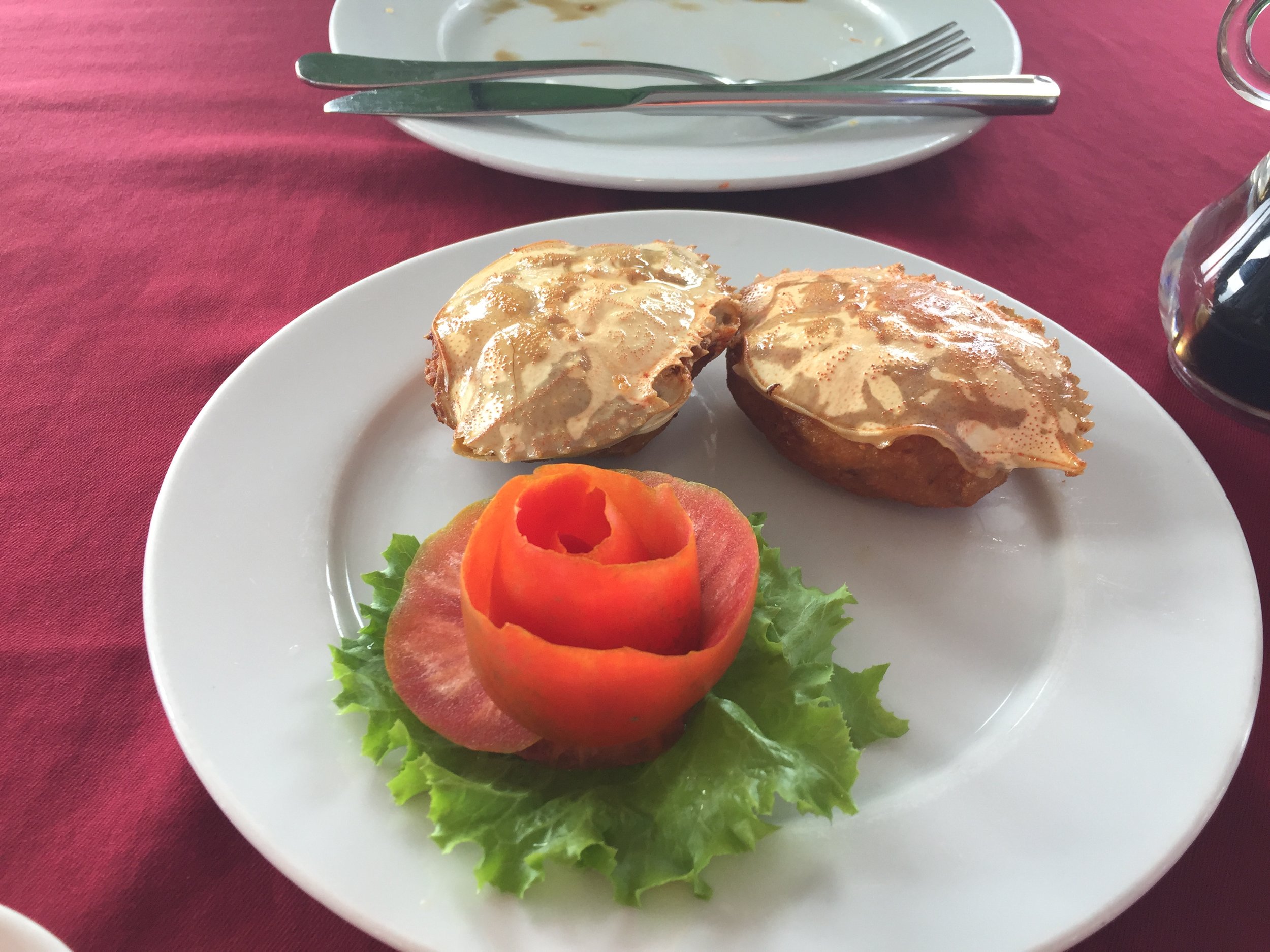
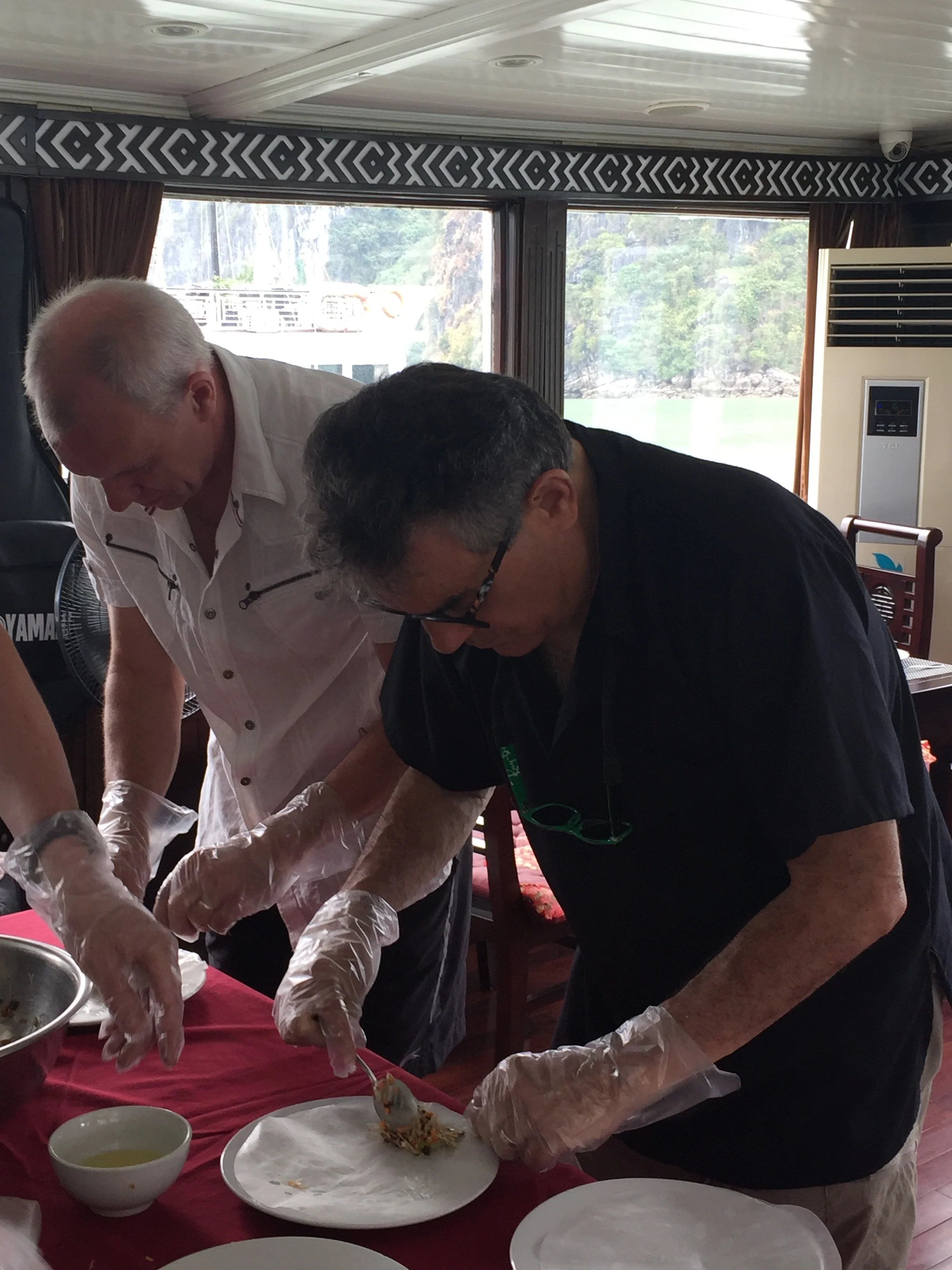
Brian called us to return.  Back to the ship for cooking class, lunch and mid-day departure to Hanoi. We had first thought about a 3 day trip, but with the rainy forecast we chose just 2 days. The shorter excursion was just fine. We felt like we got the full fun experience with nice air conditioned accommodations and really good food. The longer trip takes a wider course and you can go on fancier ships, but we felt satisfied. 
Time to say good bye to Hanoi, we are moving south to the DMZ

Warsaw Poland

IMG_5908.JPG

Janet's small case next to Frank's

Warsaw would be the last city we visited in Europe on this adventure. Originally we were going to skip Warsaw, but the best ticket to Hanoi was from here.  So we were excited to move on and make the most of this city We shopped in Krakow and found good backpacker clothes for warm weather and Janet had to get a new downsized suitcase with working wheels.  So out of Krakow we again jumped on tram #14 and went right to the station lickety split. We where ticketed for a closed suite with 6 seats; only one polish lady joined us, we shared smiles but without english.
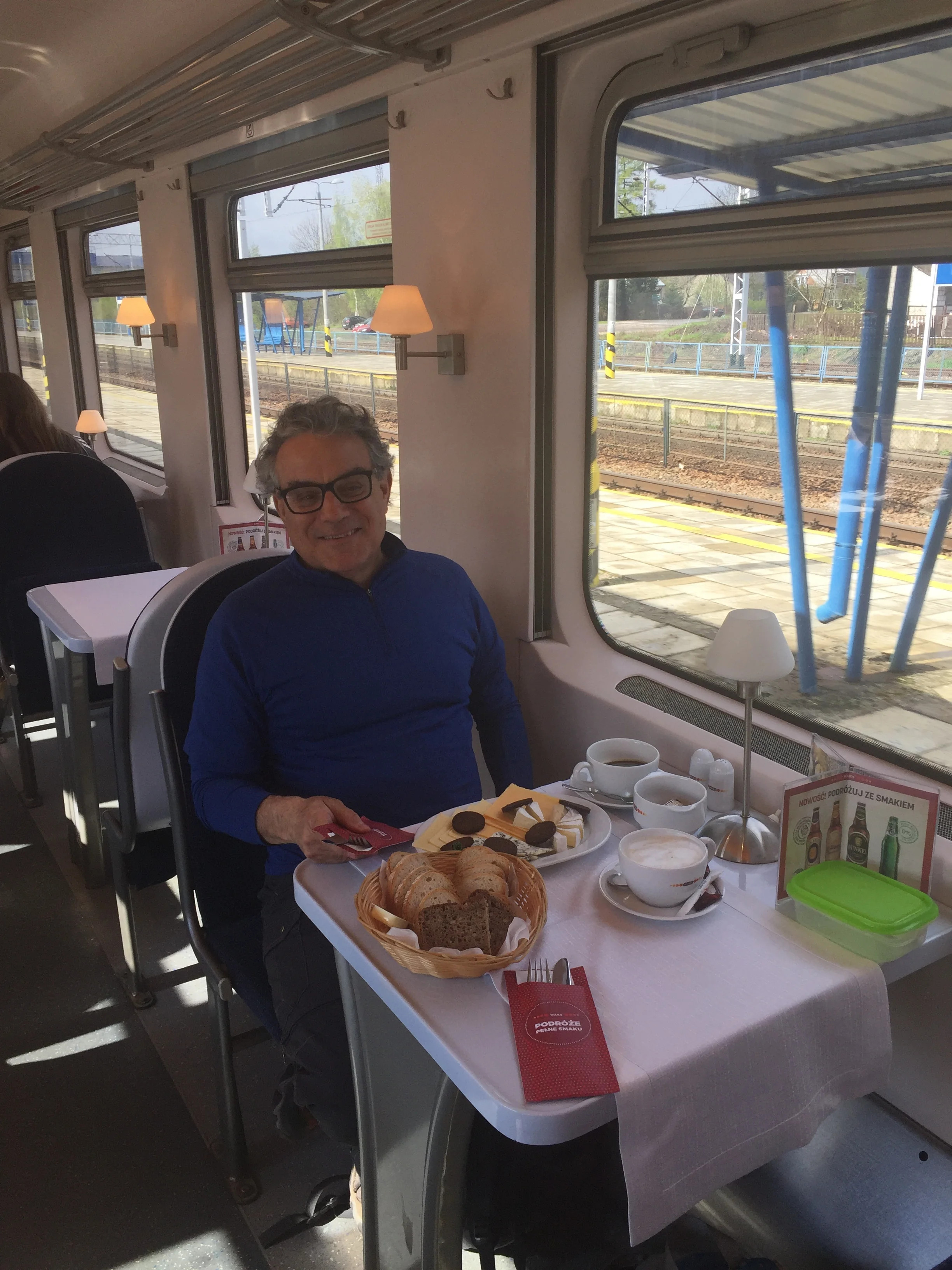
Great breakfast on the train

Great breakfast on the train


We decided to have breakfast in the dining car. This was a great idea as the hot food was freshly prepared and we could enjoy the green countryside view as we ate.  We commented this was perhaps our best train ride and a great way to finish the end of Europe. Once we arrived at the 2nd Warsaw station, it was easy to find the bus stand and Bus #160 we needed that went directly to Misteo, ie., Old Town. We walked across the large Plaza and checked in at the Airbnb office. The room was not available for 2 hours; we got a little cranky but decided to take the 2:00 PM walking tour.  


Our walking tour guide identified himself as PSE as his polish name was not pronounceable.

He was so funny and thorough, Maybe the best guide we have had.  As we have come to expect in Poland, the people/guides in Krakow and Warsaw disrespect the other city. There are many competing factors. It probably started when good King Kazimierz Weilki, an amateur Alchemist, blew up half of the Waswel Castle in Krakow when the experiment went bad. The King moved the Capital to Warsaw and built his new Palace there. The center of government and Finance also moved to Warsaw.


The guide admits outright the move pissed off Krakow and that Krakow is the more beautiful city. However, it is the political history that inspires Warsaw’s residents. They fought the Nazis Blitz Grieg where 20% of Warsaw was destroyed. They suffered through the Gestapo and the brick wall surrounding Jewish Ghetto, where 15% of the buildings were removed. The suffered through SS removal of most of the Jewish population to death camps.  8,000 remaining Jewish residents facing extermination from the Ghetto fought back until there death, causing another 15% of the buildings removed. Finally, thousands of non- Jewish partisans from Warsaw Launched the so-called “Polish Rising” against the Nazis with the hope that they would entice the US allies to attack faster. Instead of 3 days , they held out 63 days against the Nazis until they were neutralized. Hitler’s revenge was harsh. The remaining old town was ordered to be destroyed. At the end 95% of old town was wiped out. It was this fighting attitude that they say makes Warsaw different from Krakow. Krakow decided not to resist at all in WW II ( thereby remaining intact).

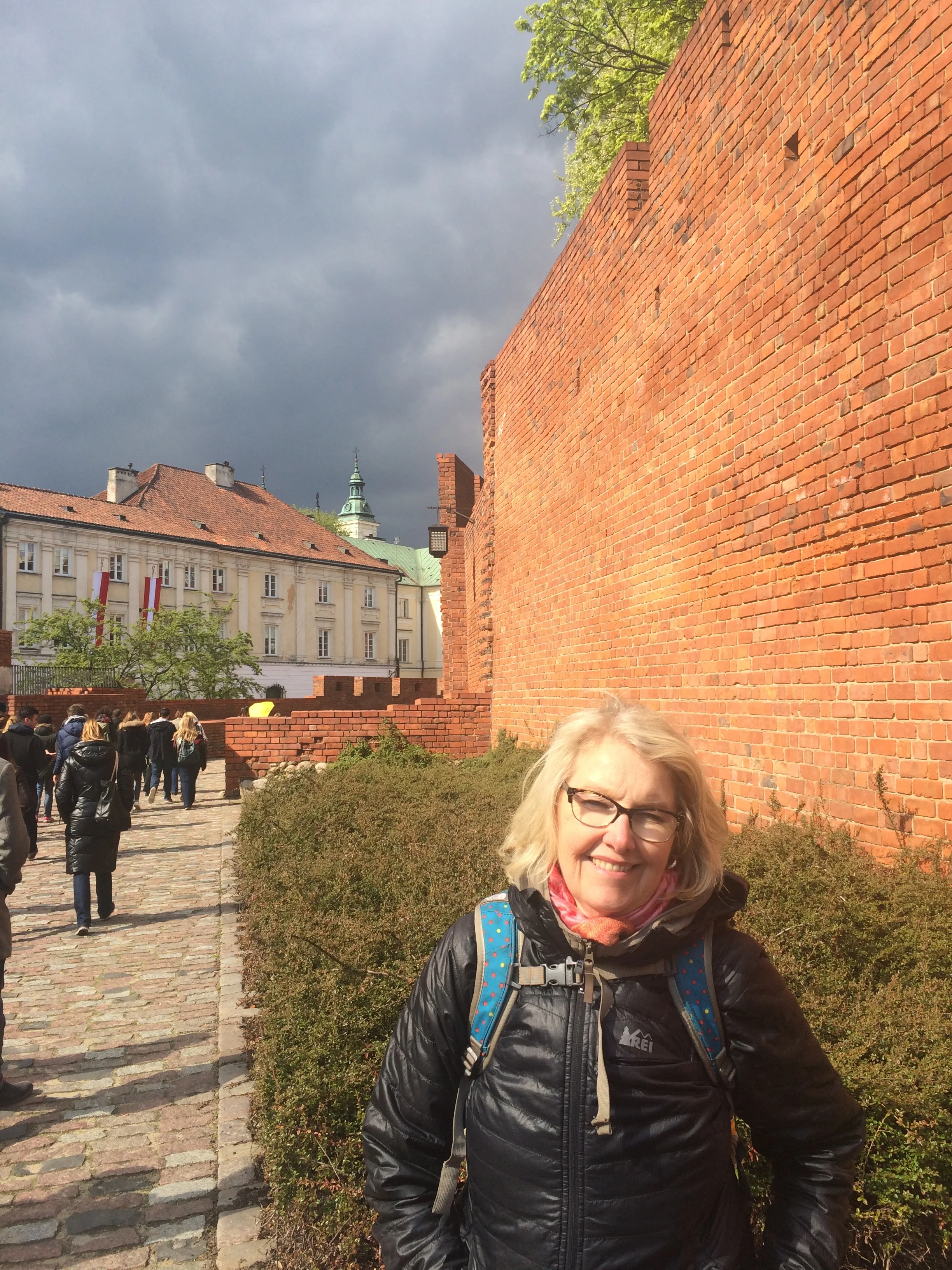
Jewish Ghetto wall monument

The wall of the Jewish Ghetto is gone, but the running brick line foundation and a sculptured plaque designate the area. There is the stone and metal “Uprising Museum and Monument”. It was controversial with mixed reviews when erected; both in design and more importantly in disagreement whether the Partisan’s actions brought unnecessary retribution to the city. 

Uprising Monument

The rebuild of the Old Town of Warsaw using both recovered urban plans and ancient building techniques that gained Warsaw theUNESCO award. The Plaza and surrounding buildings have been almost 100% rebuilt. The adjacent “Newe Town” has been rebuilt at a much lesser percentage, and as well, has marvelous modern high rise sky scrapers. 

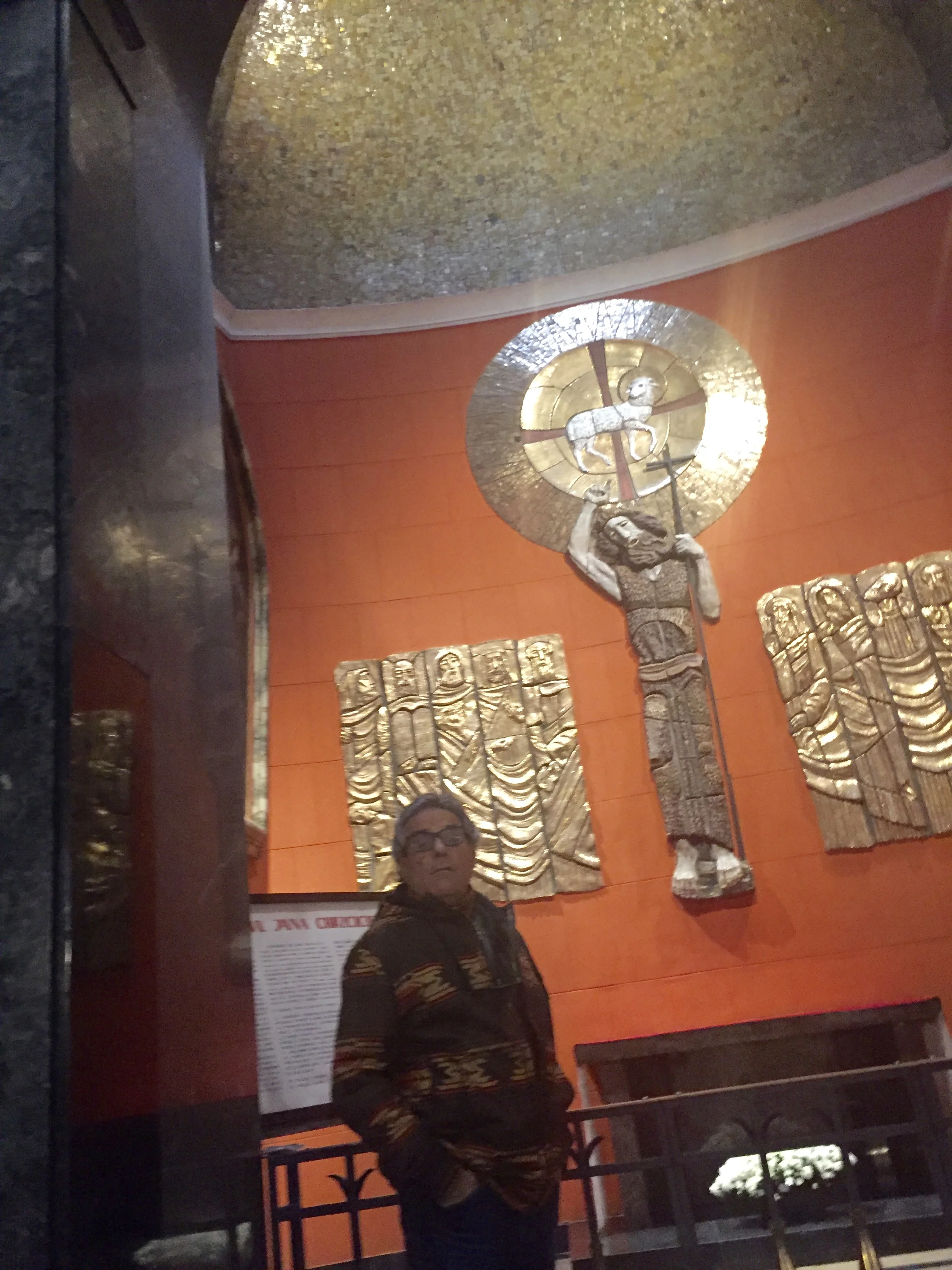
Frank in the main church

Frank in the main church

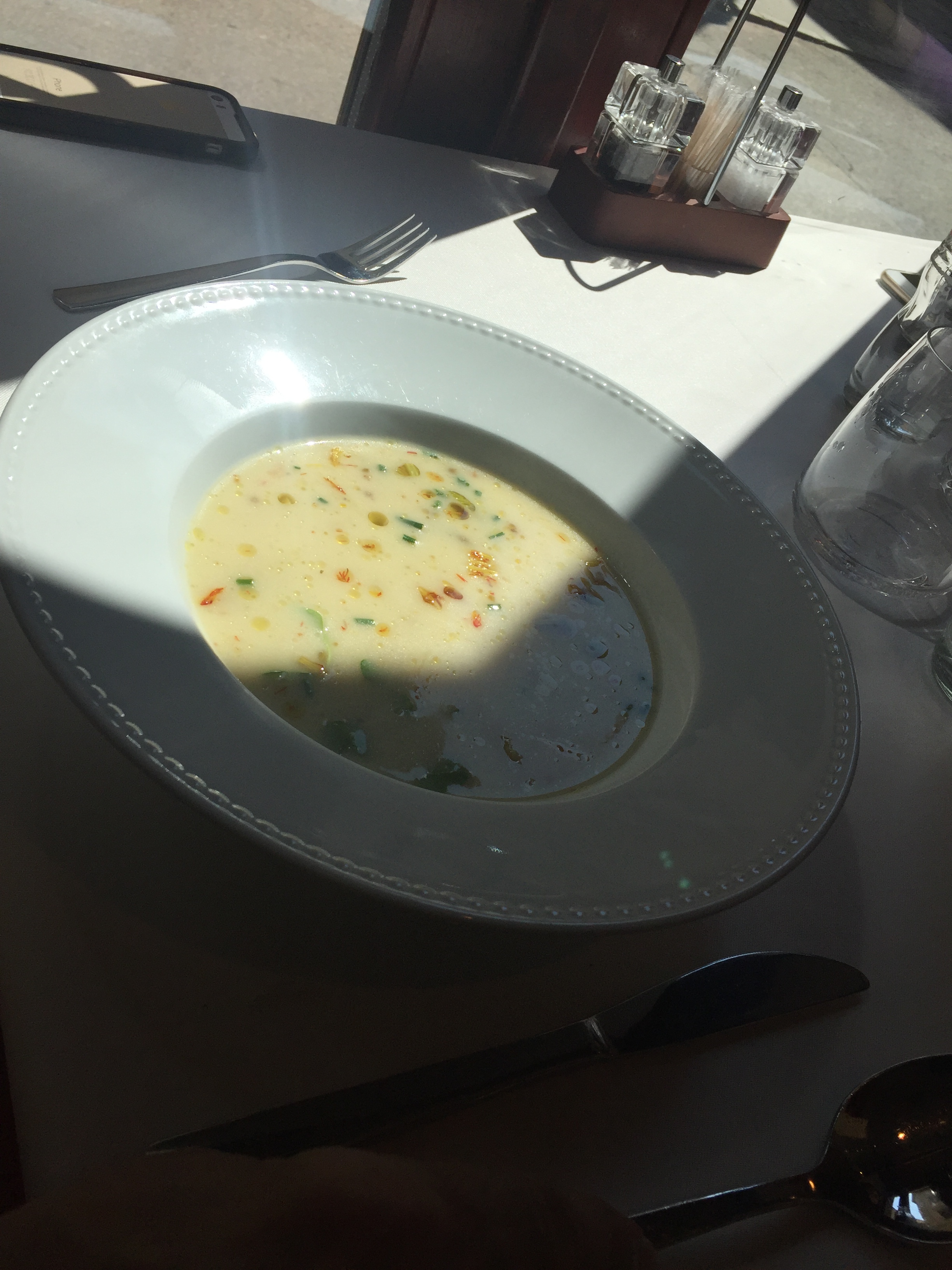
Great Soup in Warsaw

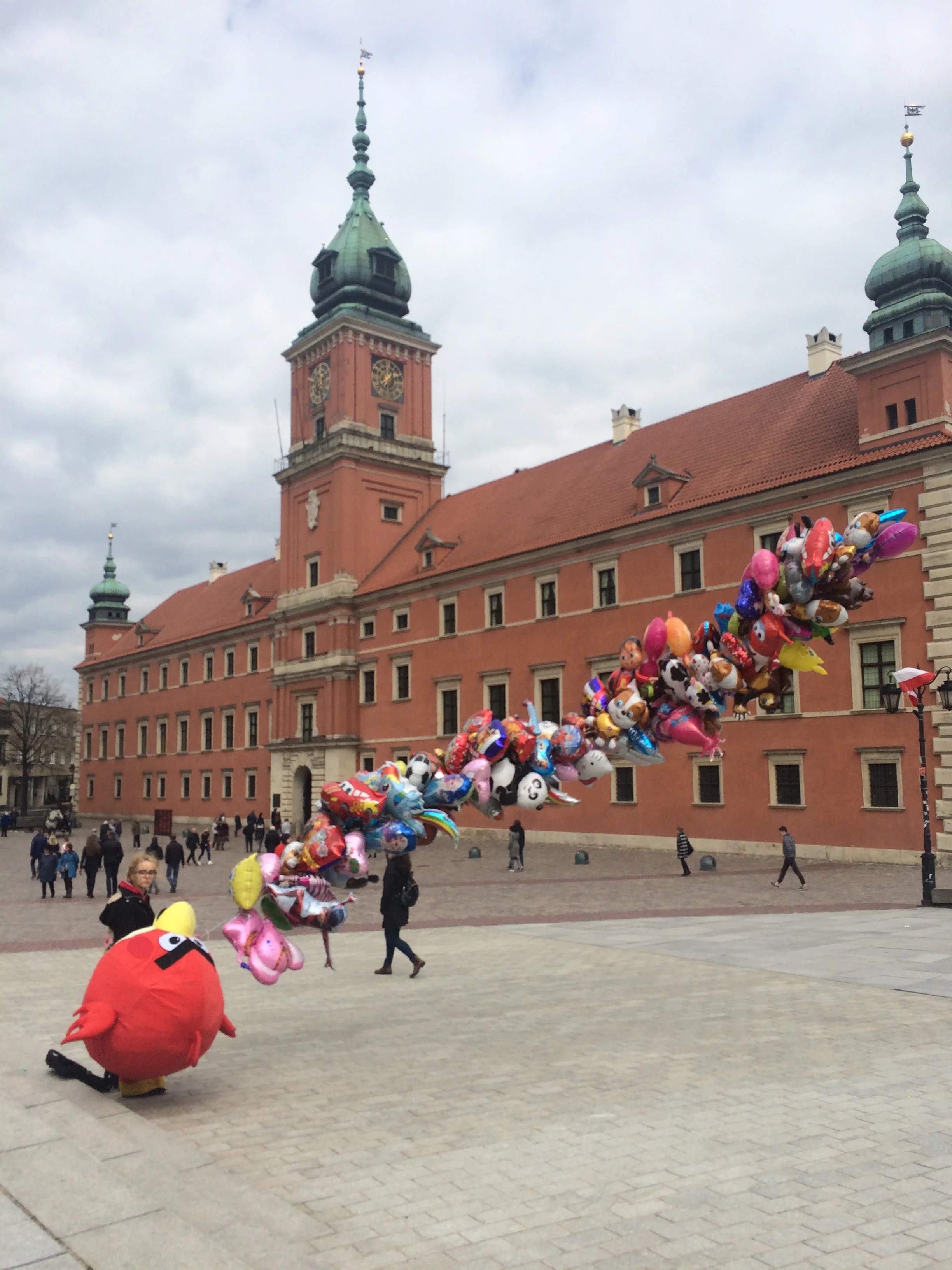
It is the May Day Celebration week in Poland and here the plazas and squares of Old Town and New Town are filled with jubilant families, theater, carnival acts and musicians. Even in the rain and cold we enjoyed our last walk around a European square, seeing all the typical sites, castles, churches and cobblestone roads

They were all interesting and rather nicely decorated. We also enjoyed several Polish meals.

We spent a lot of time at the Old Town Tourist Information Center where steady internet and printers were available. We needed to complete the Vietnam Visa Applications on line and sponsorship forms, and other stuff. We also got the info about the Bus #175 that would get us to the Airport. We actually walked the route without luggage; wrong way at first, and then we plotted the coarse again, found our way, so the next morning early there was no foul ups. Our time in Europe is over. We are headed for Southeast Asia. 

Krakow Poland

Krakow main square

Krakow

Krakow first became the royal capital of Poland in 1083 --1569. In 1569 Poland and Lithuania were united as the “largest state in Europe”. However, in the 1700’s Russia, Prussia, and Austria repeatedly divided the polish territory between themselves and by 1795 Poland vanished. Only after WWI was the Polish state restored. But of course the Nazis attacked from the west and the Soviets invaded from the east in 1939. When WWII ended 6 million Poles died, including 3 million Jews. Then Poland was under the thumb of the Soviets for 40 years.  In 1990 the Poles democratically elected their first President, Lech Walesa, and started to build a successful market economy. 

Krakow miraculously escaped destruction in WWII, and is packed with historic buildings,  markets, churches and an amazing Castle adjoined to a fantastic Cathedral. We saw all these great sites. 

First day was free walking tour day starting at the Florian Gate and city wall defenses. The guide put on a pretty good show about the boiling oil, rocks, arrows and kill zones. We walked through the Main Market Square which is gigantic, much bigger than plazas we have seen in other famous cities. You do not realize how big the square is until you walk into then out of the Cloth Hall, which is a long gothic structure housing market stalls used by cloth sellers in the Middle Ages. You walk out to the other half of the square. We also saw the Archbishops Palace which is very important to the Polish people because it was once the residence of St. Pope Paul II. 

We moved on to St. Mary’s Church. One of the most fun things was watching the bugler blare out his alarm tune from the tallest tower of the St. Mary’s. This is an hourly reenactment of the historic warning to the city in 1241 facing invasion by the Central Asian Tartars. Interestingly, the tribute stop on an odd half note. Some legends say the original bugler’s alarm was unexpectedly abbreviated by an arrow to his neck. If the currentbugler waves from the open window, it is good luck to those watching. We visited the beautiful interior of St. Mary’s the next day. 

On our second day we returned to Wawel Castle and Wawel Cathedral, the symbol of Polish royalty. Unfortunately, no interior photos were allowed

The Wawel Castle is three stories tall with renaissance arches and large enclosed interior courtyard. There are available tours of both the Government State Rooms and the Royal Private Apartments which we took. The Government Rooms were the most decorated with elegant art, wall hangings and furniture of the time.

Maybe the most amazing treat was seeing a lesser known Leonardo Da Vinci’s painting titled “Lady with an Earmine”. This woman was much younger and more beautiful than Mona Lisa; This young woman was holding a mink and trying to hide a pregnancy with her arm resting under the mink and on here torso. The painting was bigger. The painter was really good too. Maybe Krakow actually has one over Paris and the Louvre. 

Next we saw the Wawel Cathedral, which was the coronation and burial place of the Polish Royalty for 400 years. It is really spectacular and its center core is modeled after the Vatican’s St. Peter Basilica. Throughout the centuries various Royalty built on Chapels with tombs and and crypts to the basic church, so the exterior architecture has a variety of Baroque and Renaissance building styles; rather a mix- mash, that actually seems to work our grandly. The interior of the Cathedral and its side chapels is head turning. As well as the center core free standing alter, no one seems to us to have done a better job than the Poles with integrating massive dark wood carvings and furniture with marble sculptures and wall coverings of many colors. We were really surprised how inspiring it all was. 

Auschwitz and Birkenau

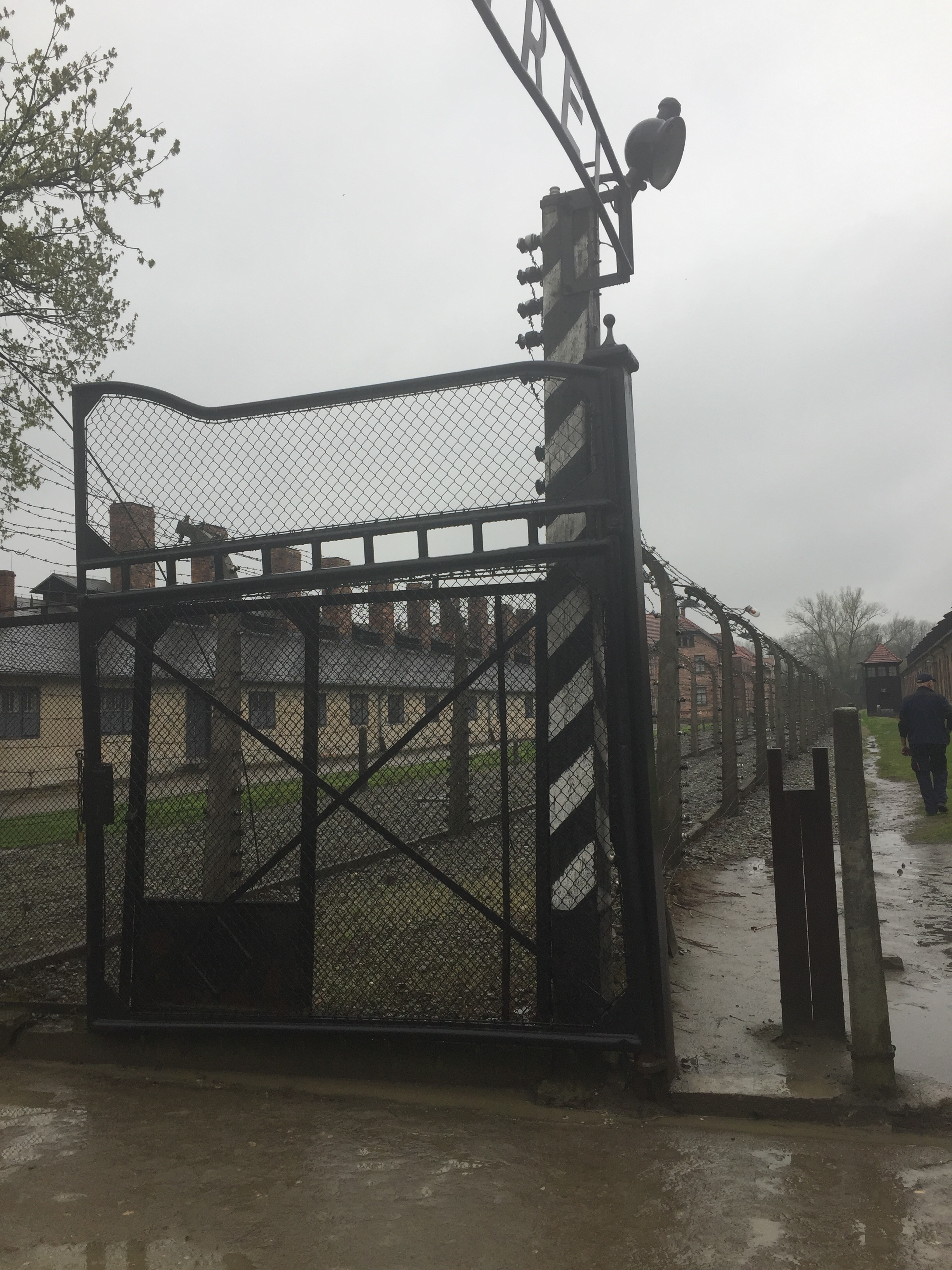
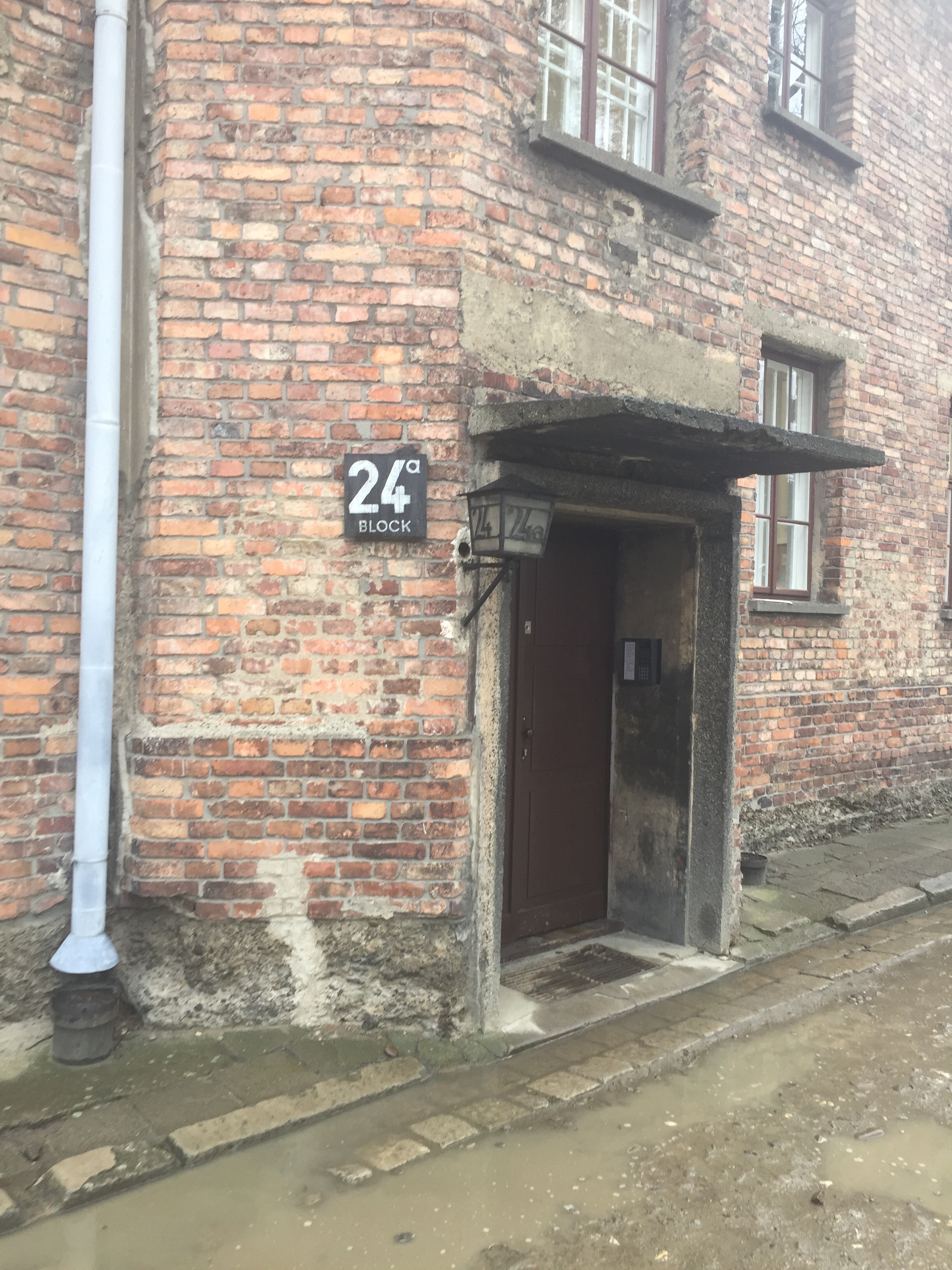
This morning of our third day it was grey and dreary, with continuous drizzle of rain. This was the day we were going to visit Auschwitz and Birkenau, the notorious death camps run by the Nazis SS. When you first walk on these sites it just boggles the mind how large are these camps, surrounded by electrified barbed wire and guard towers. But after you walk through a barracks, then the “Extermination House”, then the “Property Reclamation House”, then “Block 11 Solitary Confinement Prison”, then finally “Crematorium #1”, you are just aghast. The display warehouses of shoes, spectacles, and finally stores of Human Hair make it impossible to ignore the cruelty. All visitors are silent and somber, and even older guys get teary eyed. 

Today, we go on a more light hearted adventure. Today, we go subterranean 135 meters into the “Wieliczka Salt Mines”.  Salt was known as “white gold” and considered valuable since ancient times. Roman soldiers were paid partly in “salt”, from which was derived the word “salary”. This excursion begins with about 150 steps down a rough lumber stairwell to the first level of the mines. Half our group was so slow and late, we thought they left the tour for above ground safety. The passageways are boxy, entirely carved through the salt, 4 shoulder’s wide, but then open into vast carved caves which were once gigantic salt deposits. Our guide is informed and mischievously funny about our future fate. We alternately walk on smooth salt floors, like concrete, or wood bridges and stairways. We descend to the visitor allowed second, then third level; the mine actually has nine levels, but is no longer operational (except for the secret government stuff that my imaginary friend told me about). There is gigantic structural bracing made of lumber and logs throughout the passages and in many of the tallest caverns. Special ventilation systems are operating so air is fresh and in certain areas saline lakes have been created to awe the crowd. It is all pretty cool. There are some areas that display salt sculptures, either historical or religious, and some panorama of working miners, all get mixed reviews.  We enjoyed the experience. 

After arriving back into Krakow’s main center square we took some quick side trips as we walked toward our Tram station. We entered St. Mary’s Church, where the day before we had heard the High Tower Bugler performing the historic “Hegnal” hourly warning call.  We paid to get a close look at the huge Gothic “Altarpiece” carved of wood by the artist Veit Stoss and painted with gold. The Altarpiece opens like a book with 12 panels on the cover and then 6 panels inside that contain sculpted figures, all dealing with the life and suffering of St. Mary. The panel book is ceremonially opened and closed each day. The rest of the church is also spellbinding in its detail, color, and splendid stained glass windows. Another great religious building; as was the Wawel Cathedral.

Near the square we also ran in the open doors of the beautiful gothic St. Francis Church,  the home of Pope John Paul II. The church features nouveau art in appropriate places.  Also we saw the historic Romanesque Church of St.Andrew and the Jesuit Baroque Church of SS Paul and Peter. Each had certain individualized religious art that was exceptional. It is a habit now, if there is an open door to a church we stick our heads in to see if we will be surprised with beauty; we usually are. 


We were a little apprehensive this morning. We decide to go to Schindler’s Factory Museum. It is highly rated.  Again it deals with the Nazis occupation of Krakow in WWII and is staged in Schindler’s former enamel factory. You question how much of this civilian war tragedy you want to take in. In any event, we took our usual Tram # 13 across the Vistula river toward the Jewish Ghetto, jumped off , and then backtracked 5 minutes to Oskar Schindler’s Enamel Factory. The museum is rustic in its presentations. You feel the grit Krakow and its occupation during the 1939-1945 period the museum covers. The documentary films and interviews with the workers of Schindler were the highlights for us, but still depressing. We think it was worth our time. 

FYI: We ate a late lunch at a “Milk Bar”, aka diner without booze historically subsidized by the socialist government. The food was hardy Polish fare with great taste at a low price. We had fish and Chips and Roasted pork with sourkraut. This diner was actually cutely decorated, not the organizational footprint of socialism we have seen in different cities.  One other tourist patron said she had eaten here three times. For tourists that is unusual. Finished for the day, we walked in the rain through the town square to the Tram #13 station headed for home. Tomorrow, we leave for Warsaw, Poland. 

Budapest Hungary


D6AF96C0-BF9F-4AB9-BCDF-A15B6C60A8F6.JPG

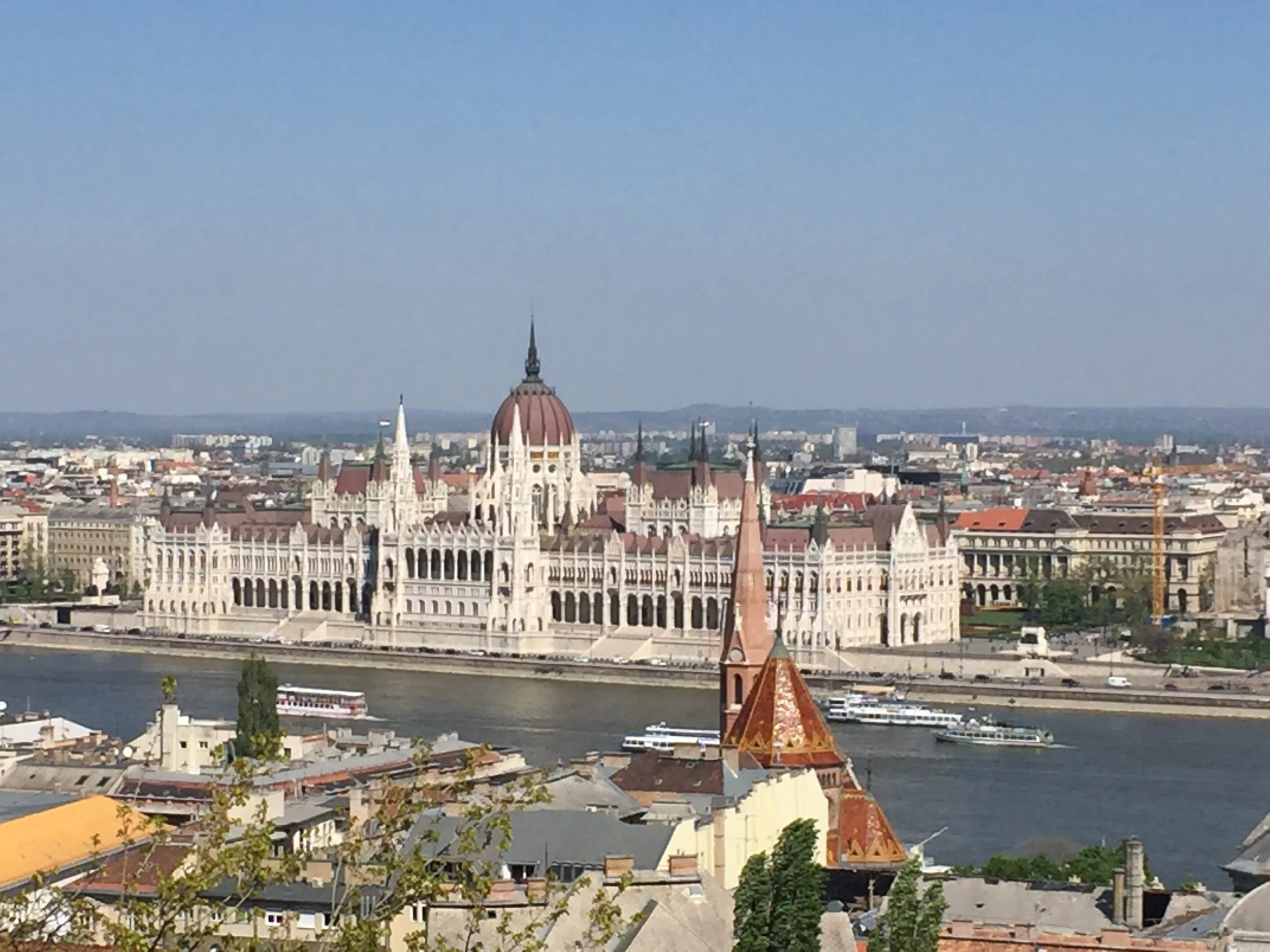
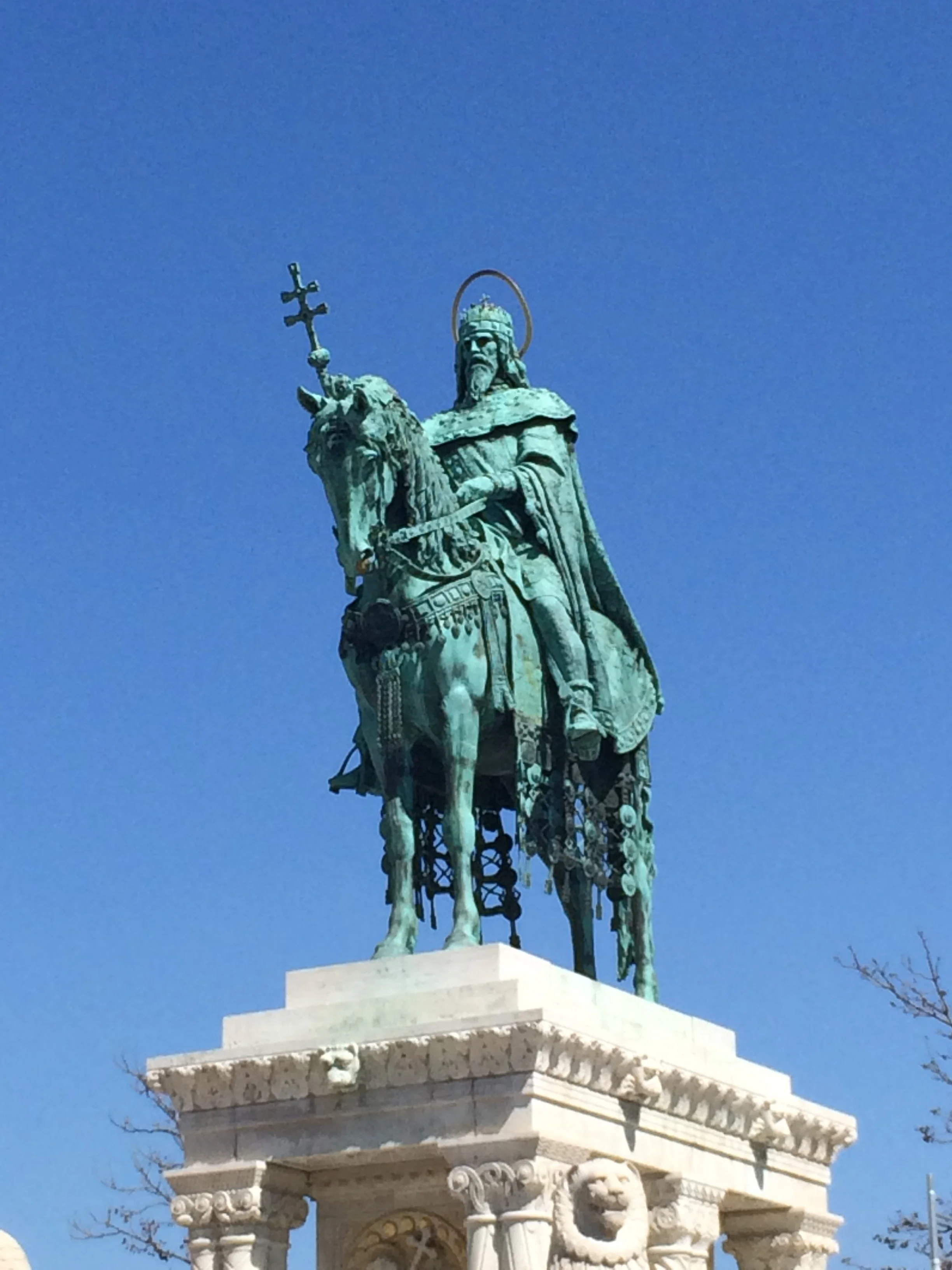
We got up early and all Flixbused to Hungary. A little more history if you please. In the year 1000 AD Hungary’s first king and patron St. Stephen was crowned King marking the foundation of the country after an alliance of 7 tribes in the region. Subject to Turkish invasion and occupation for a century, once expelled the good ole’ Habsburg Empire annexed the lands that had been under Turkish rule. Later, having lost 2/3 of it land after WWI, Hungary allied with Germany in WWII to reclaim its land. However in 1944 when the war seemed lost, Nazis occupied Hungary and brought the brutal and fascist “Arrow Cross Party” to power. Hundreds of thousands of Jews were deported to Auschwitz. The Soviets “liberated” the country from the Germans and fascists, but then decided to stay. In 1947 the communists took control of the government and many Hungarians were transported to soviet work camps. As well, this was a time of extreme special police cruelty to the citizens. In 1956 Soviet tanks quashed freedom demonstrations. The last Soviet troops left in 1991. Hungary is now moving to a market economy but did suffer in the recession of 2008. Today, Hungarians are friendly to visitors and do not shy away from acknowledging and discussing the brutality of their leaders.

The capital city, Budapest, is the home of 20% of the national population and its cultural center.

The city straddles the Danube River where the Buda is in the western hills and Pest is on the eastern Great Plain, connected by a variety of bridges. We stayed on the Pest side which sprawls larger and more urban. Buda is known for the upper crust Castle Hill and Royal Palace overlooking the Danube, but also has extensive residential development on the back side of the hills. 

Our 2 bedroom Airbnb is very well appointed and shows recent updating. The 4 story elevator is not and only some of us will use it (Frank). We are close to the city square which is filled with market tents and sheds selling fresh Hungarian foods and drinks and sweets, and a trinket or two. The aromas instantly make you hungry as we roam around this festive environment. After some consideration, we choose a Mexican place for lunch, Janet told Staci that the only food she missed was chips and salsa.  They were good but not as good as good ole Michigan. 


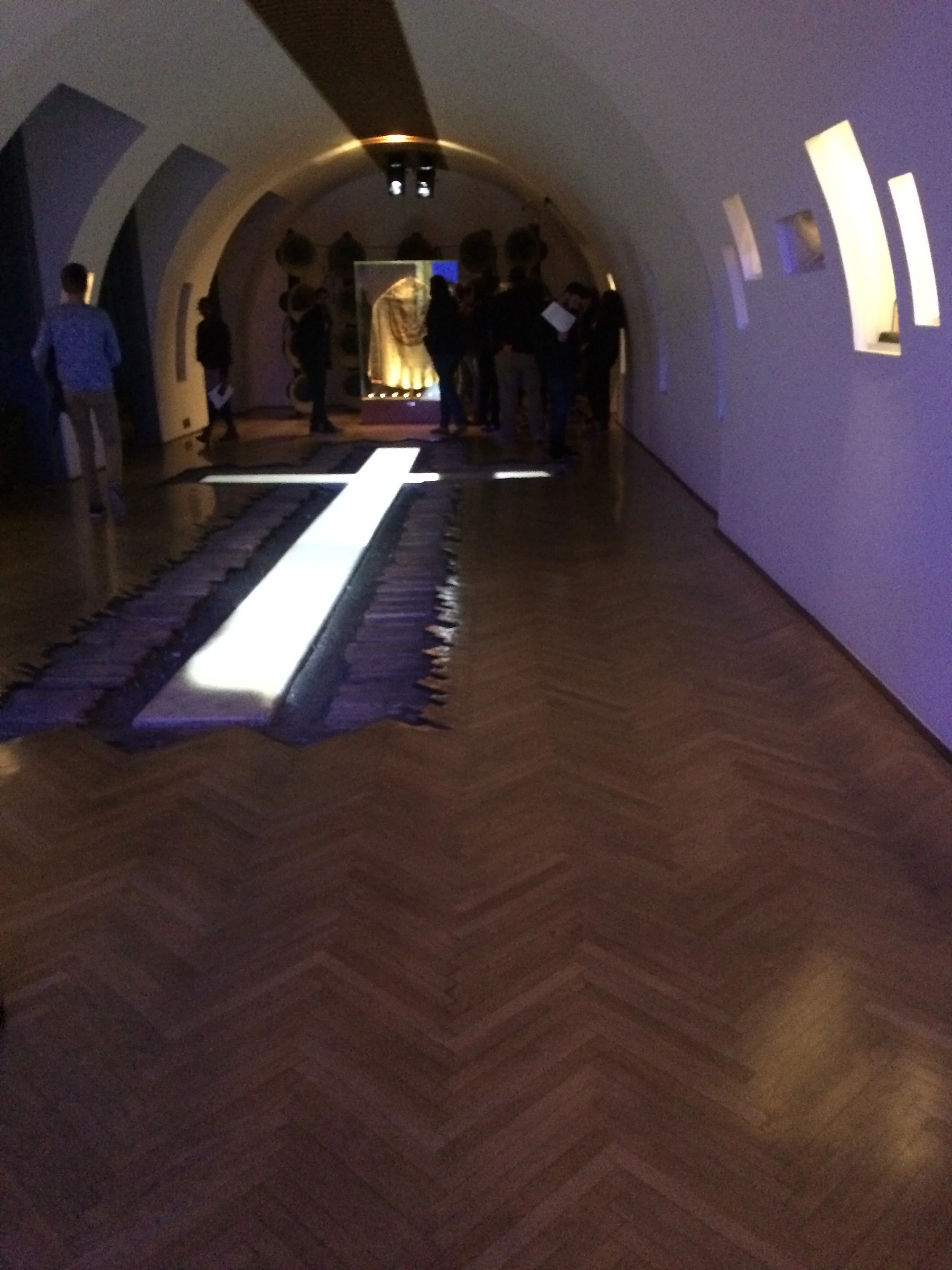
It started to rain. So we decided to start our exploration of the Pest side by visiting the ‘Terror House”.  This was once the actual headquarters of a variety of Secret Police and interrogators. The first floor eerily displays a large Soviet tank partially submerged in a vat of muck. The dim lighting really sets a creepy mood. The“Terror House” Museum discusses the atrocities of the Nazis, Arrow Cross Party and then the Communists against the Hungarian people. The displays keenly instill the feeling of insecurity and fear caused by the havoc and mental anguish imposed. The most horrific display is in the basement which still stands as it did for decades as a torture chamber, with electrodes, gallows, batons, and hot boxes. No photos allowed in the museum but we got 2 fuzzy ones, that show a memorial and Teddy and Staci in a display.

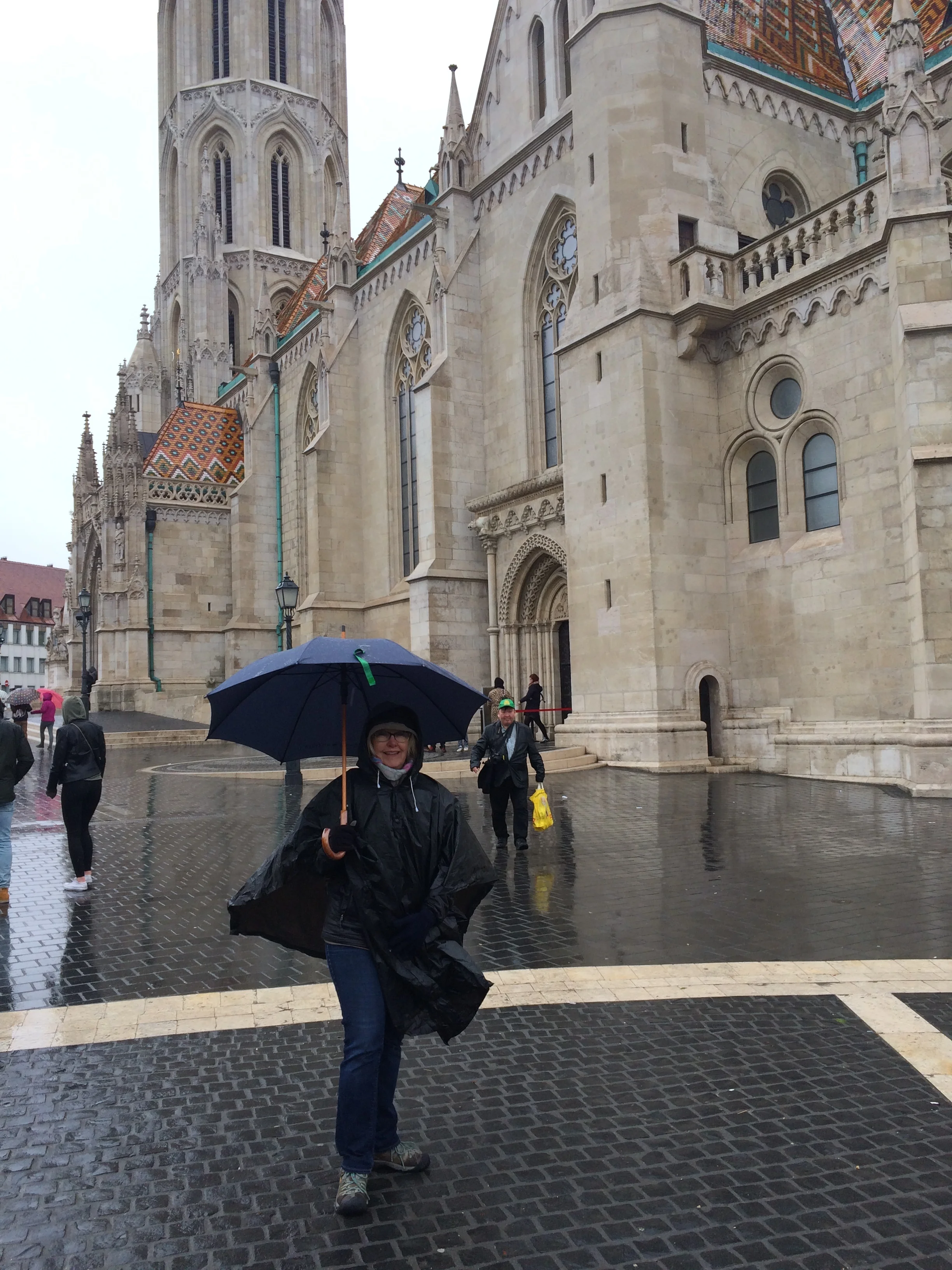
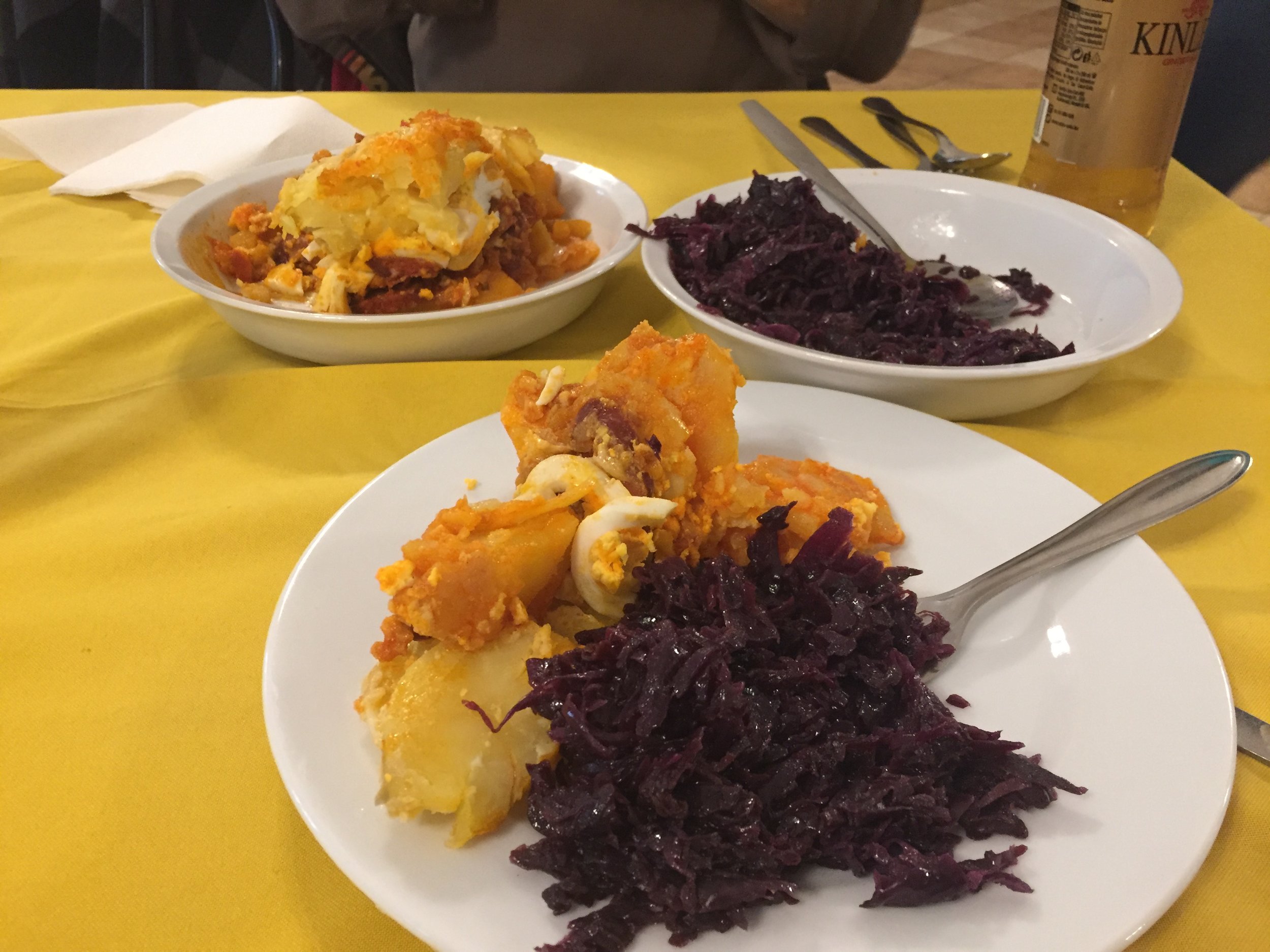
On our first full day, the rain continued and it was cold.  The plan was a walking tour covering the Buda and Pest side.  We bundled up and braved on.  After an hour or so of  heavy rain Teddy and Staci opted for warmth and headed back.  We continued with our rain gear and we were glad when the tour ended with a great view of the Pest side and an offer to take us to a traditional lunch spot.  For $8 we had a potato dish that looked like the cook added everything in the kitchen to it and some red cabbage, very filling and it was delicious.  To stay out of the rain we found our way back by taking a bus and two trains.  Wow, it was nice to come back to a warm home and Teddi and Staci.  Later we opted for movies and dinner in, a perfect end to a wet and cold day.  

The next day the sun was shining and we decided to take the “Tour of the Jewish Quarter”.  After seeing the Terror House we wanted to gain more insight, complete the story if you will, into the results and outcomes of living under the boot of a brutal government.  Historically, Hungary had a large welcomed Jewish population. They unfortunately became targets of the Nazis and it is estimated 500,000 Hungarian Jews were sent to work camps and many to their death. We felt it was important to learn about their plight and the aftermath.

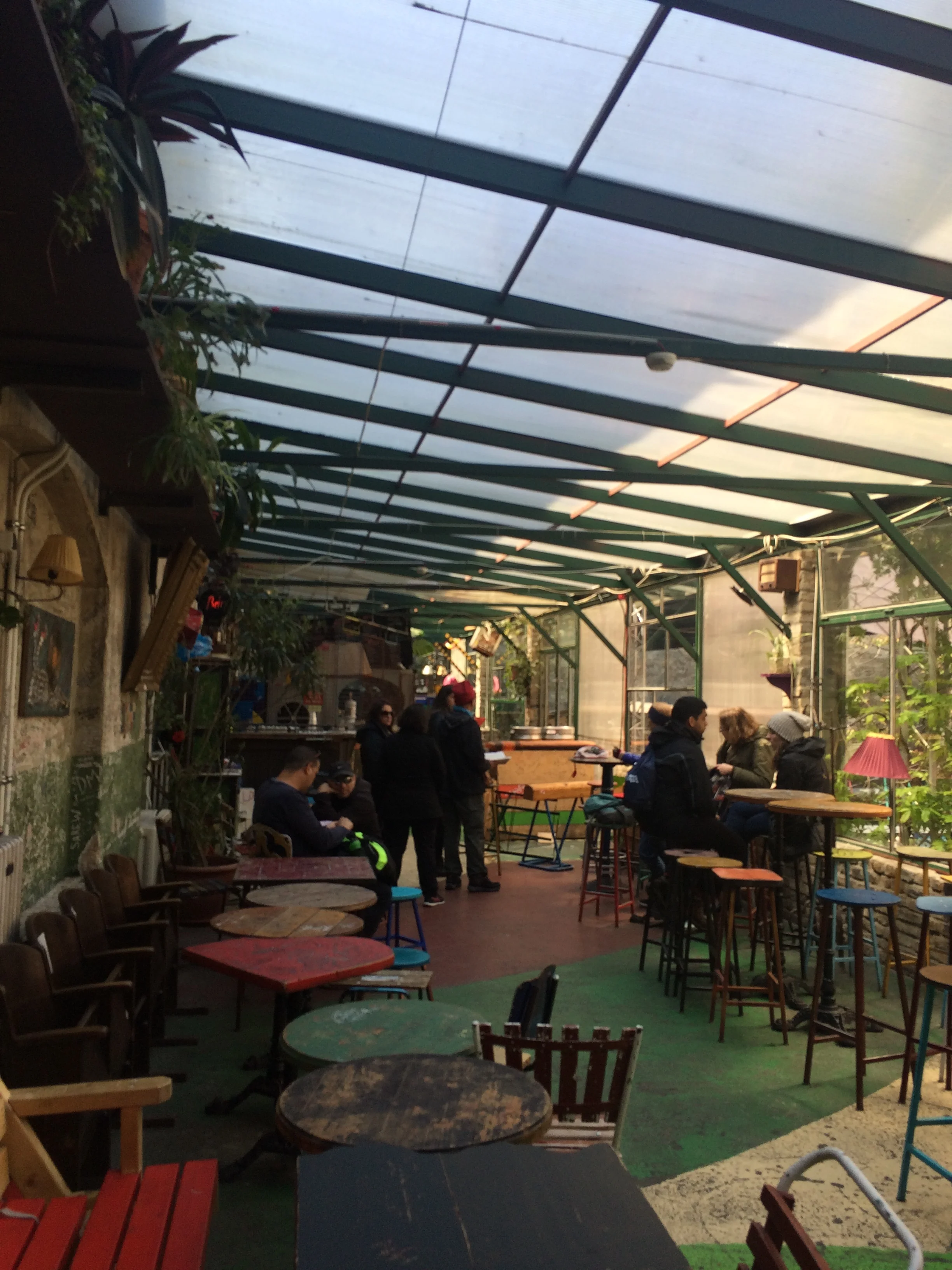
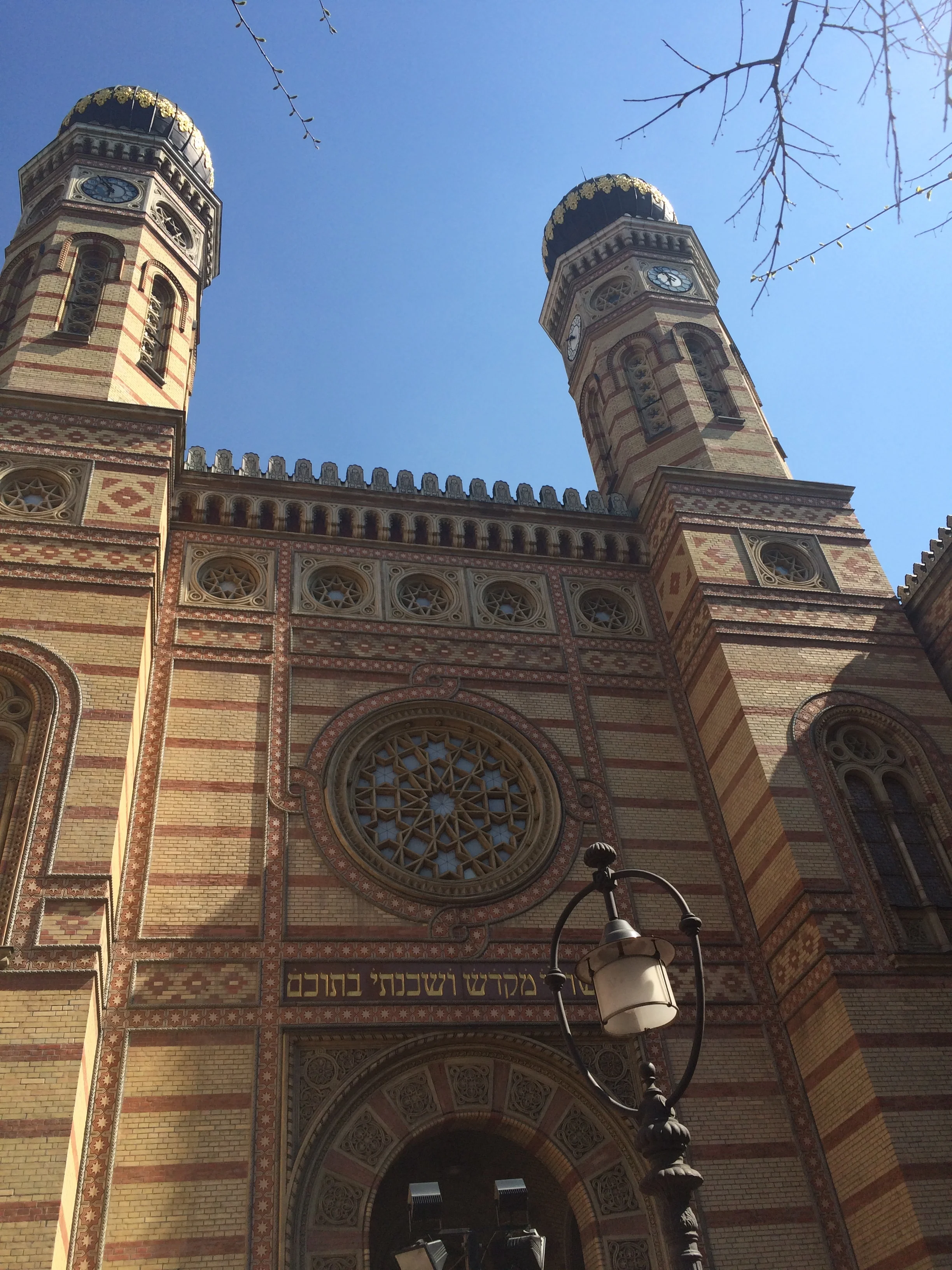
We took the Jewish Quarter walking tour which showed the resurgence of the Pest area, including refurbished synagogues and shopping areas. The entertainment district is still rustic, but so-called “Ruins Pubs” have sprung up in some of the more dilapidated structures and draw hip nightlife. The walk was inspirational.  Again another great, vibrant and informative guide.

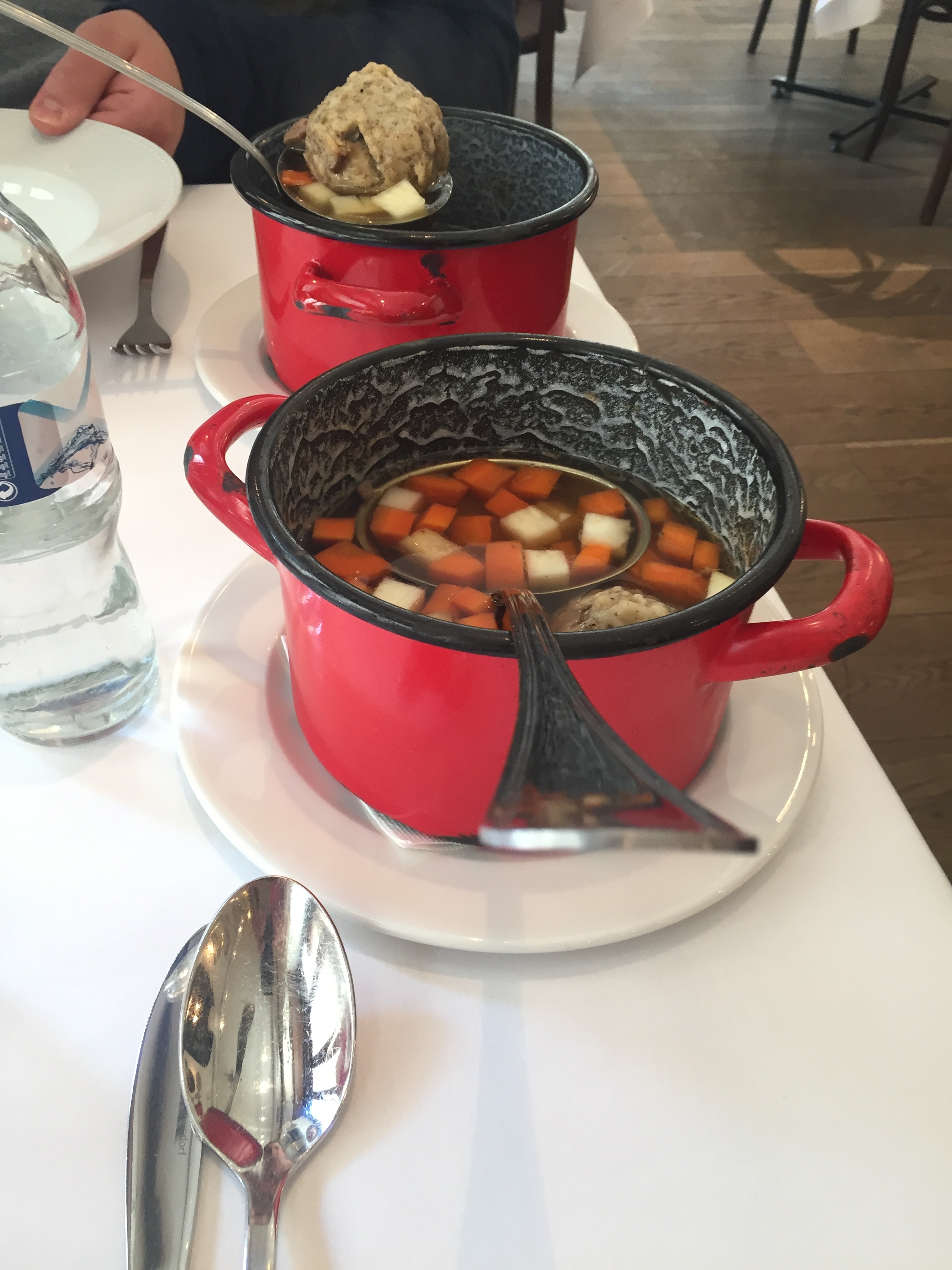
There has been a great revival of the Jewish Quarter as a religious and social center. At the end of the tour we opted for a traditional Jewish lunch, again delicious

880BAA3A-7B69-4C69-898C-47C3B19F8235.JPG

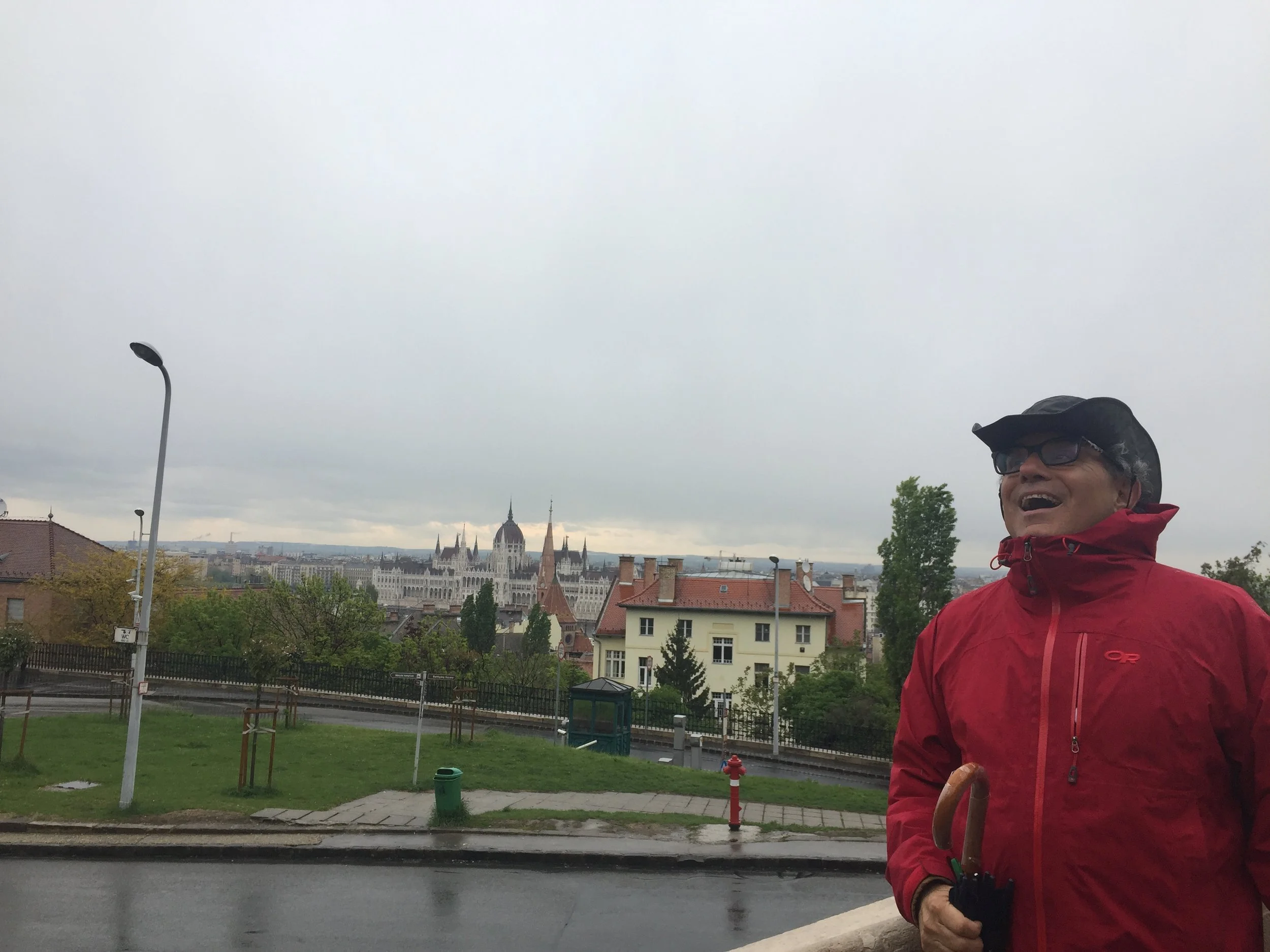
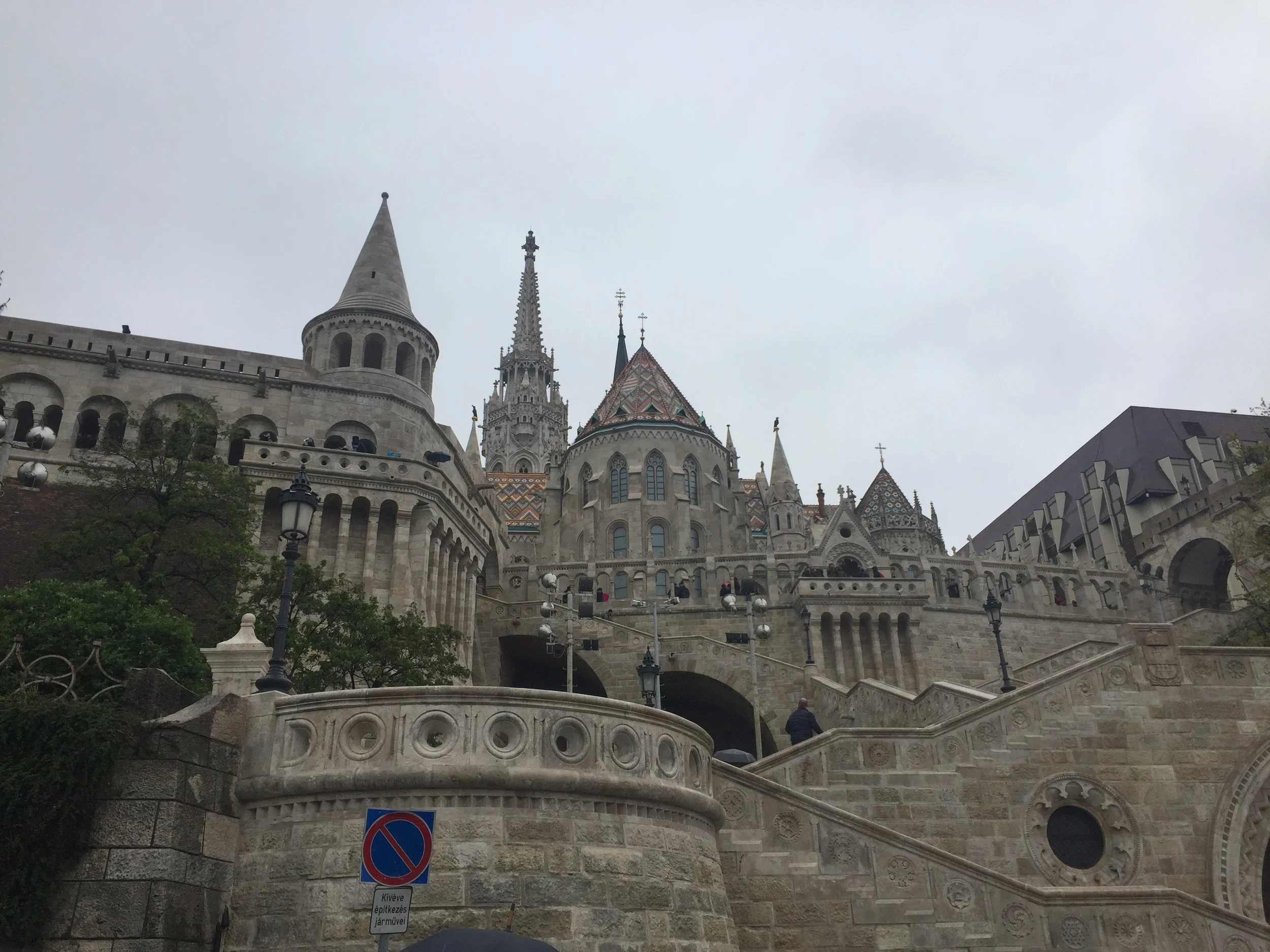
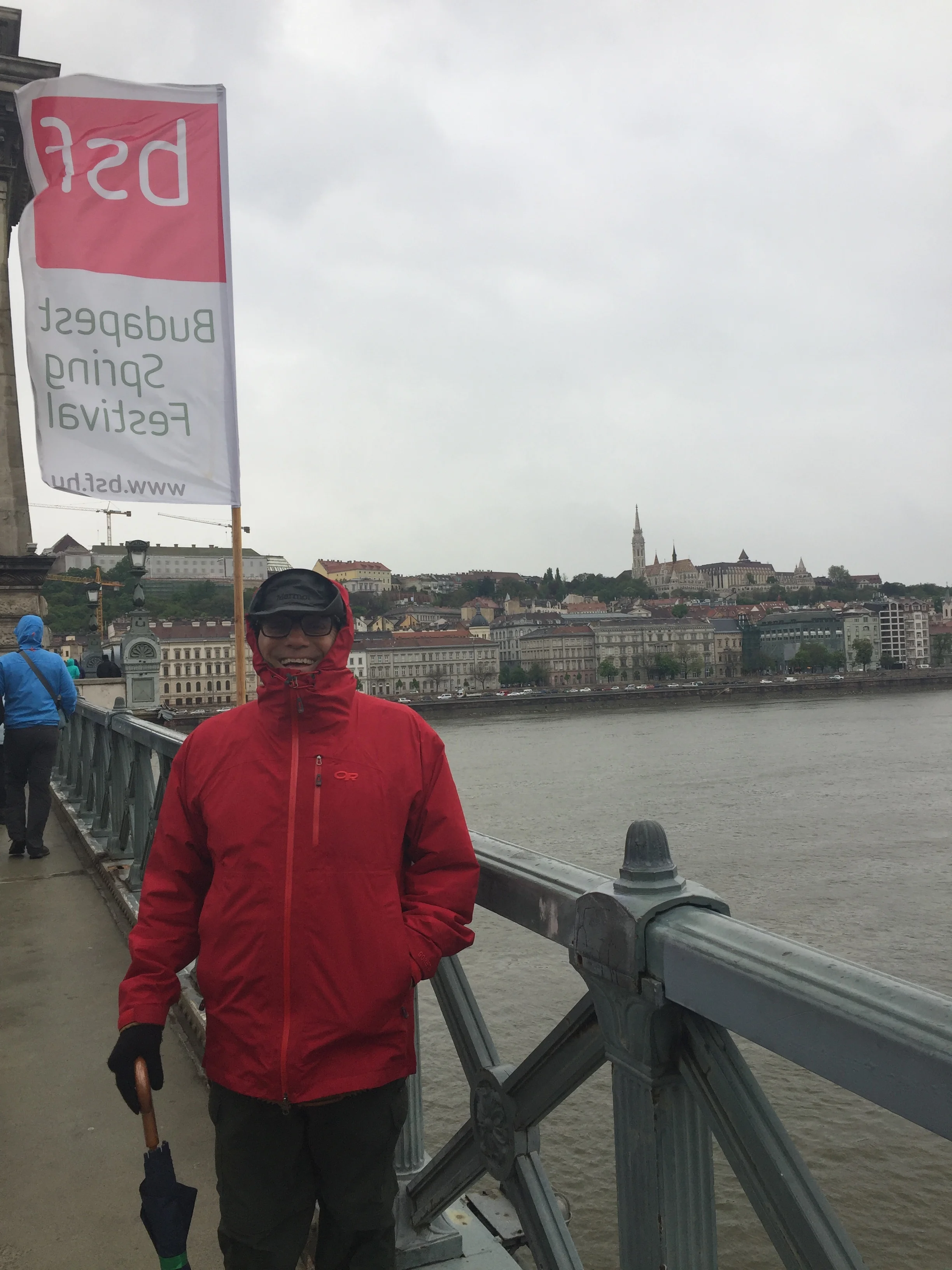
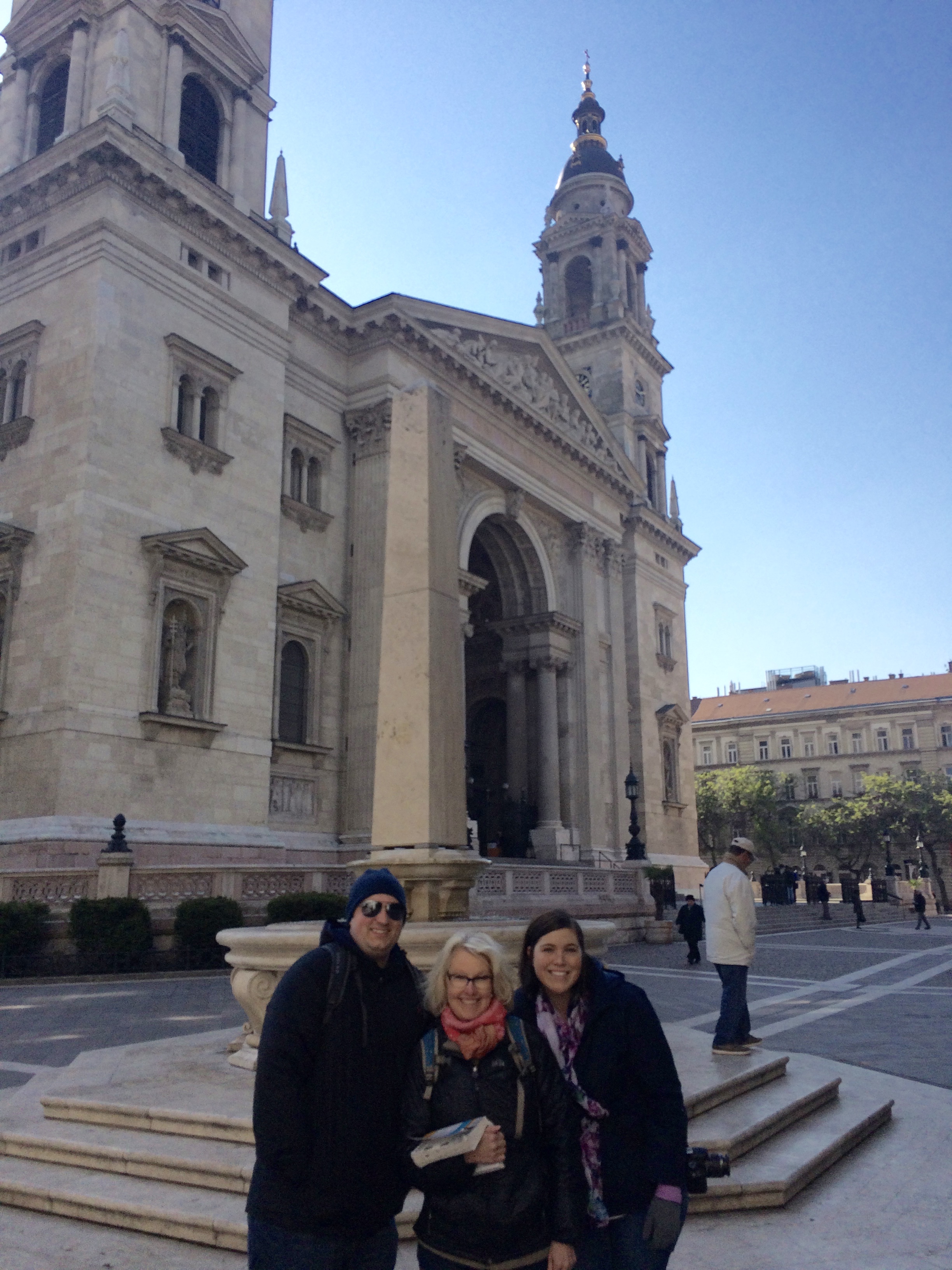
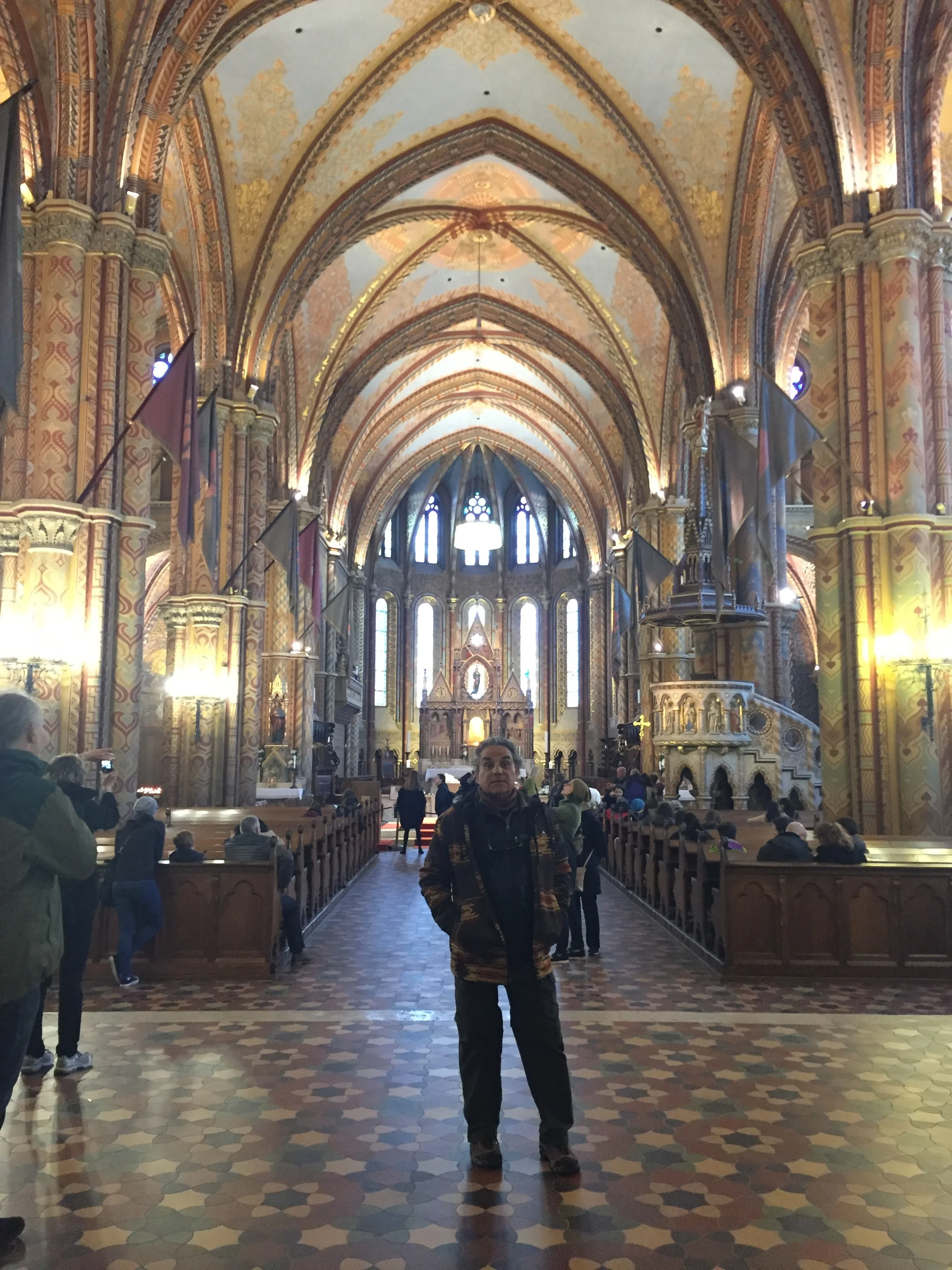
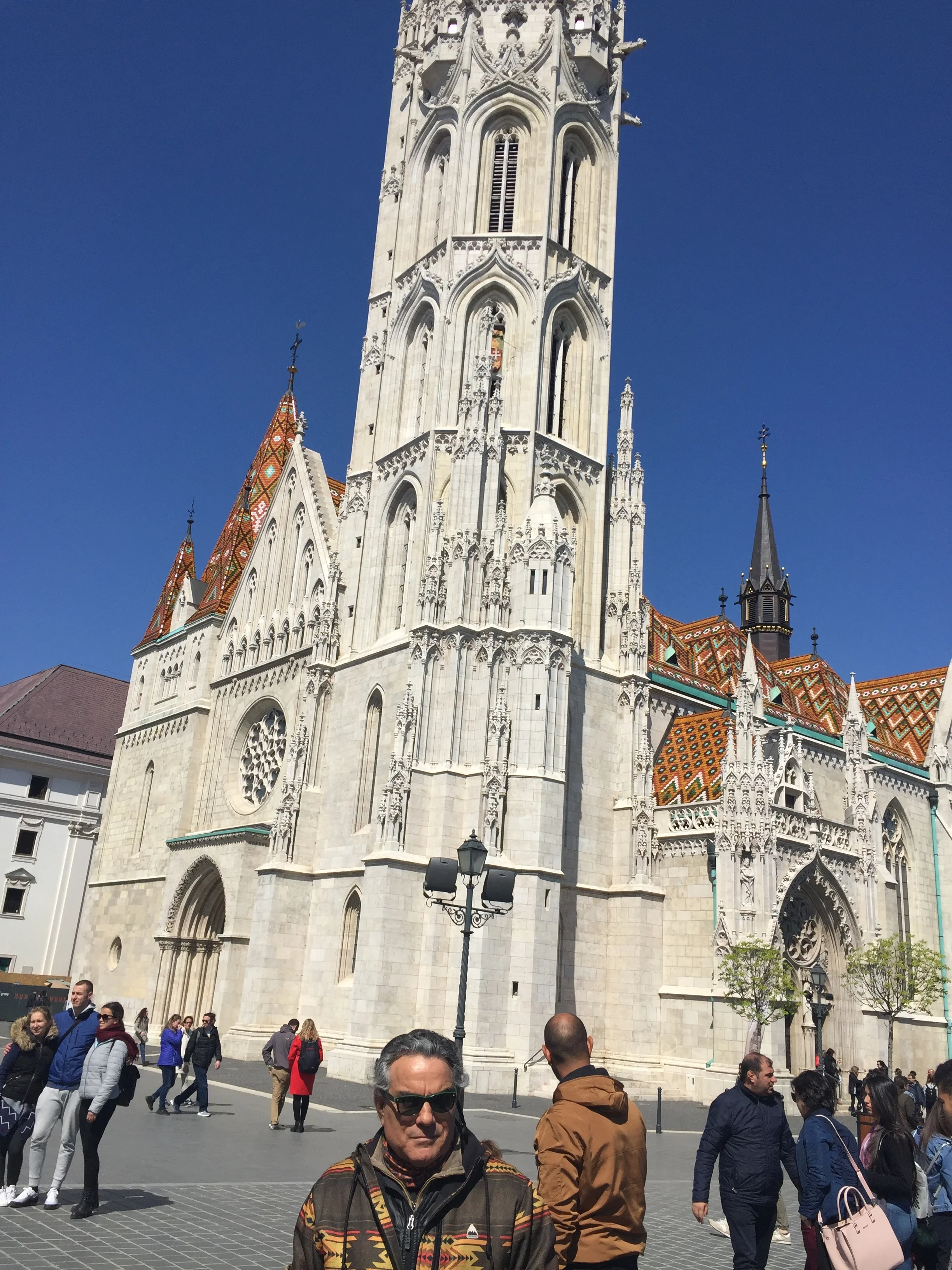
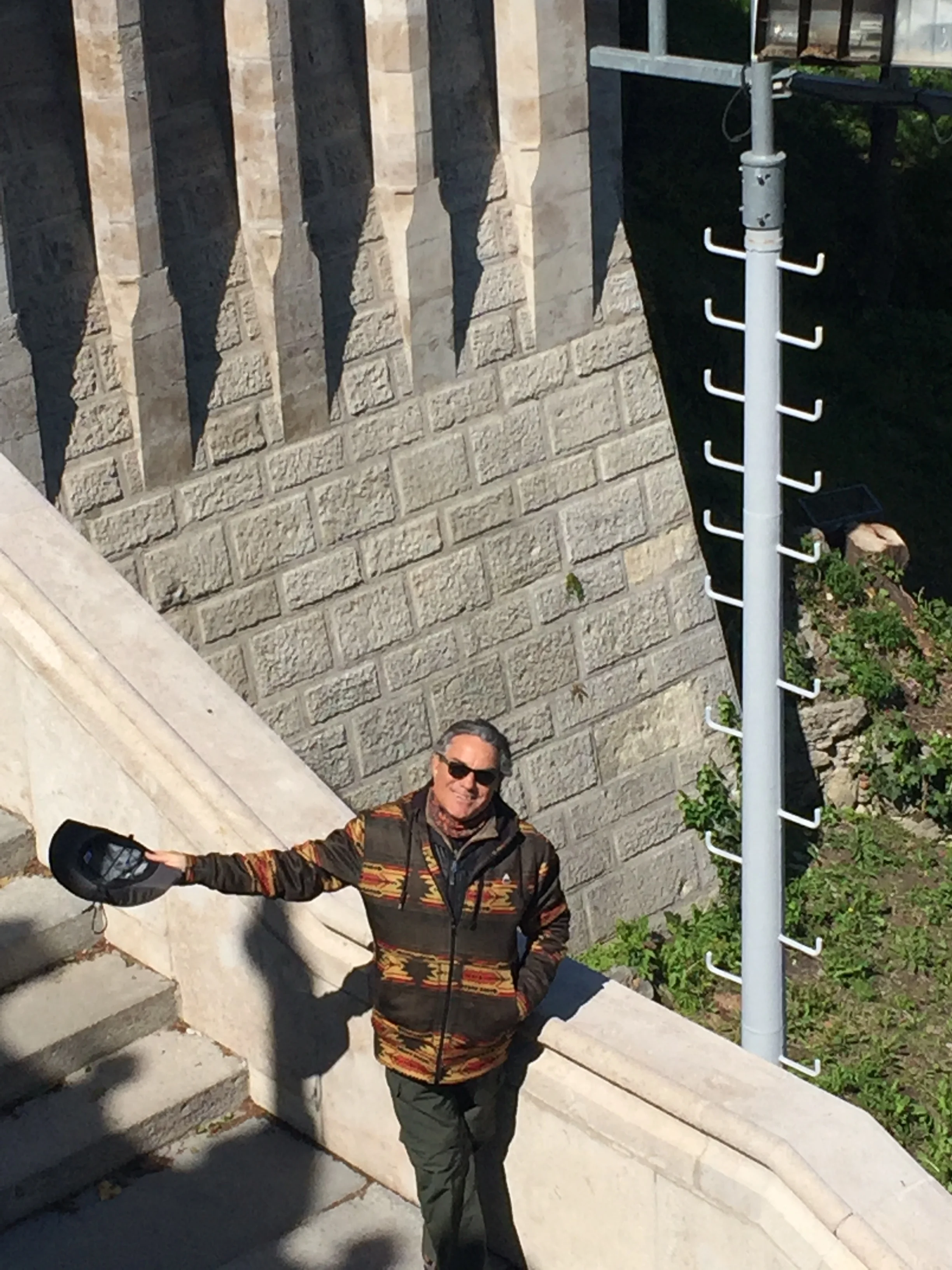
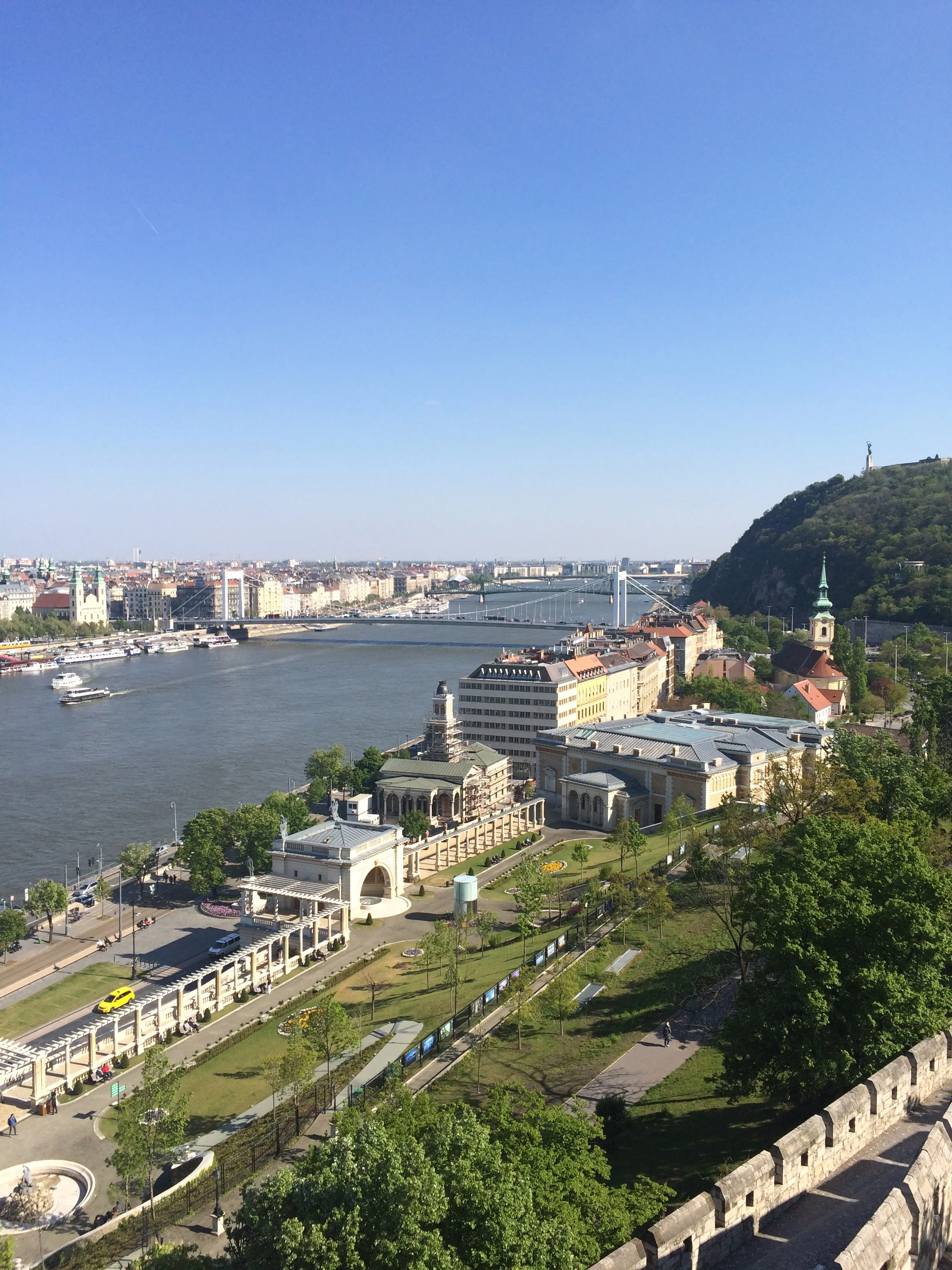
After lunch we crossed the Chain Bridge to Buda, we wanted to see the site in the sunshine with the kids and go inside the cathedral.  We are really good at using the local tram. First stop, the high balcony on the top of Buda Hill to gain the most incredible views of the countryside around the backside of Buda and surrounding Pest. The sun is shining for once this week. Next, we visited The Matthias Church, an incredible Neo-Gothic structure with colorful tiles that are so unusual and special interior designs with floor to ceiling orange, brown and golden frescos and stained glass. We then walked the high wall that runs the entire length of the monstrous "Jozsef Varos" Palace. Again great views. The interior is not refurbished so we skipped it. 

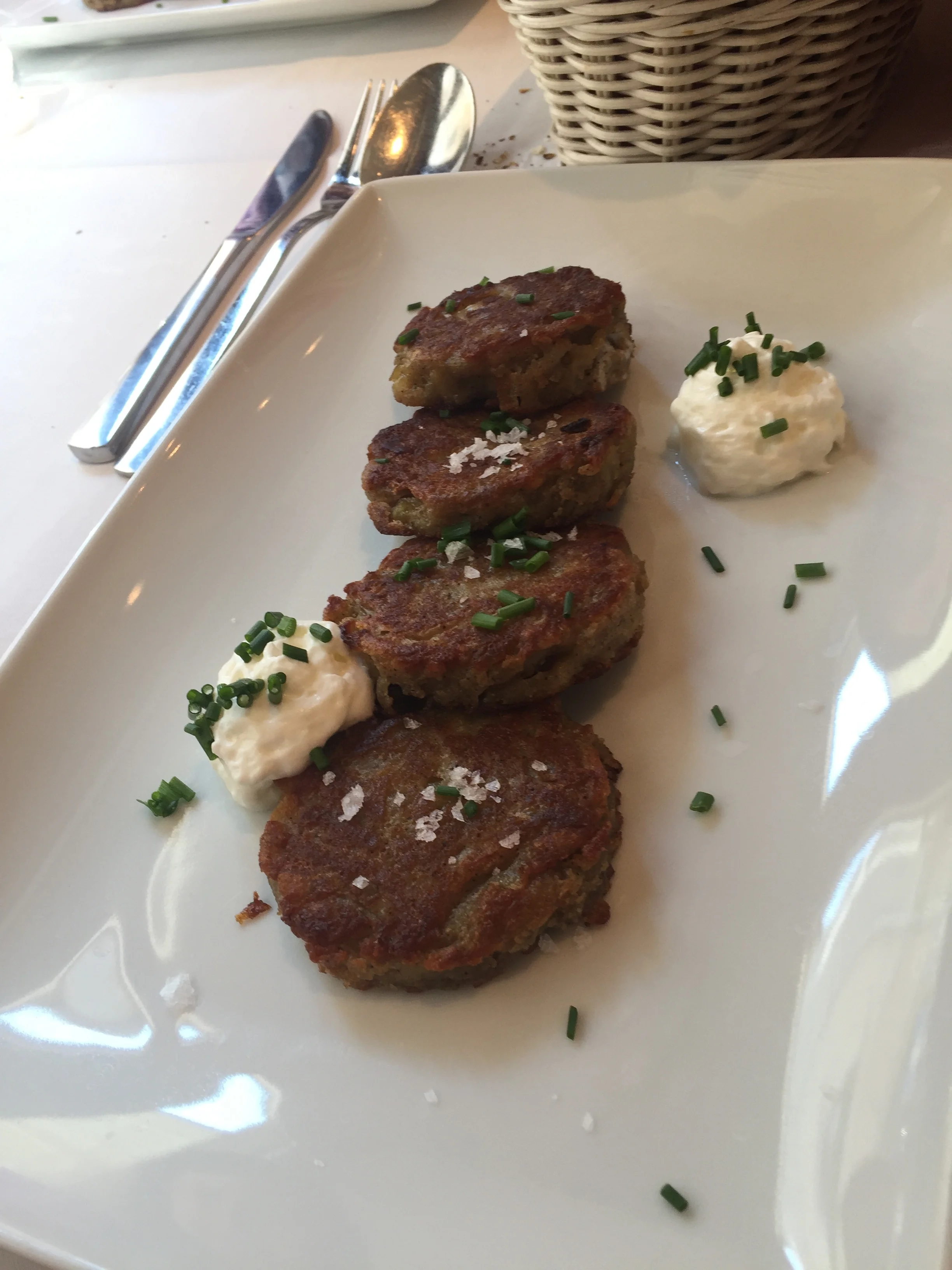
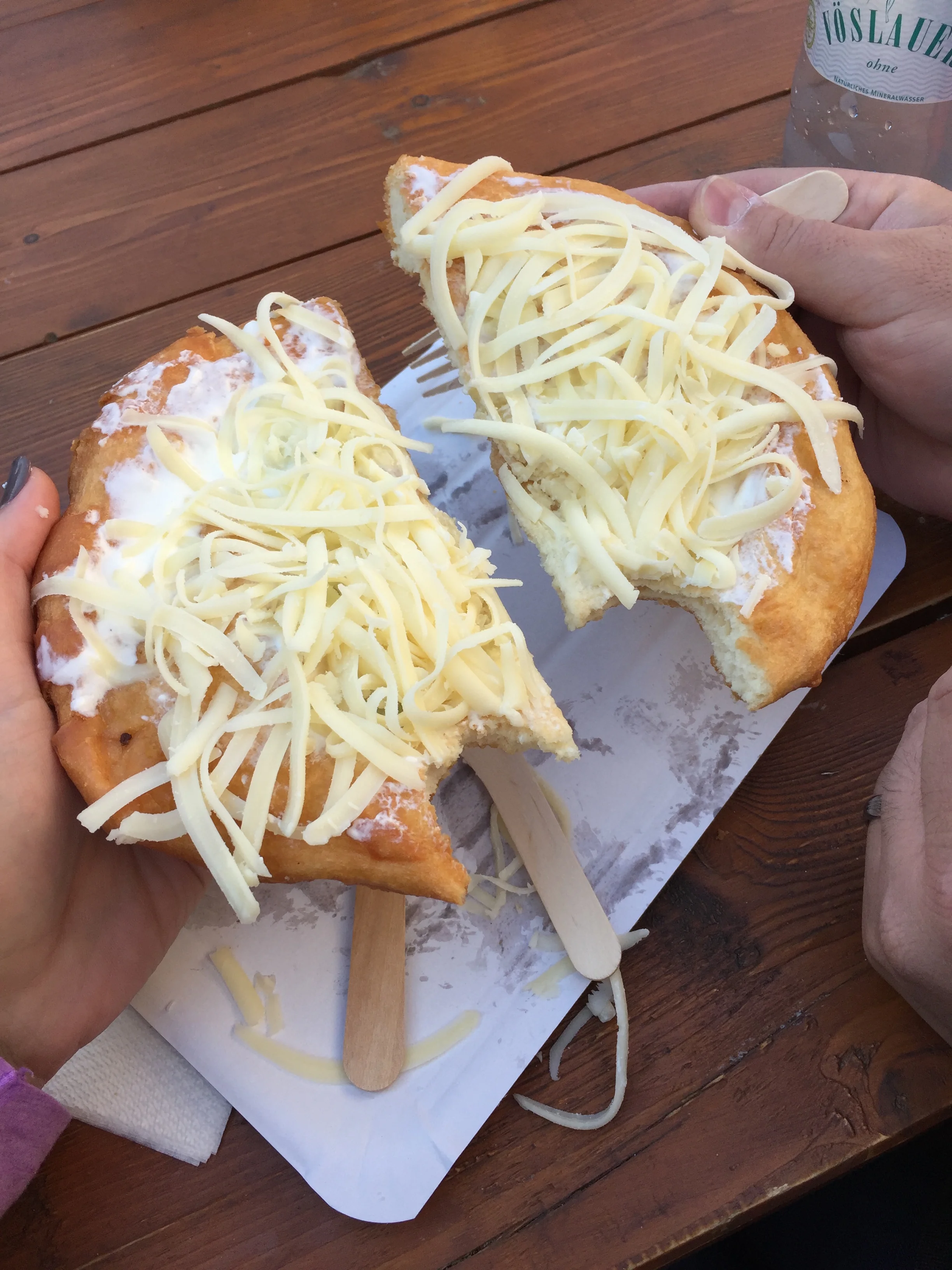
We make our way back to Buda with a quick stop at the square for an afternoon treat, a type of fried dough with garlic, cheese and sour cream, Staci announced, this was the best dish!!!

Our exploration of Budapest is over. We need to pack and say goodbye to Teddy and Staci who head back to the USA. 

PS. Bratislava re-deux


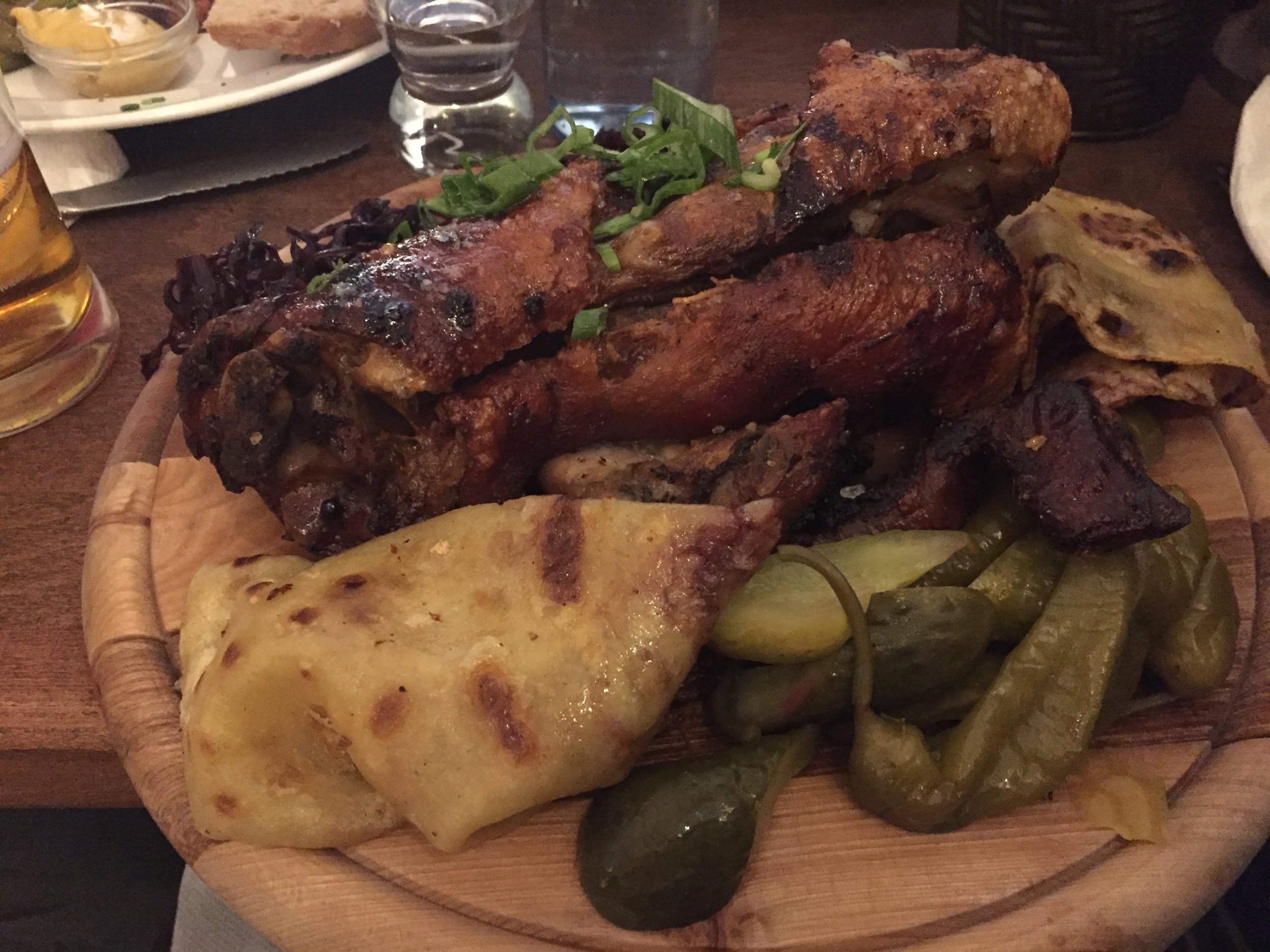
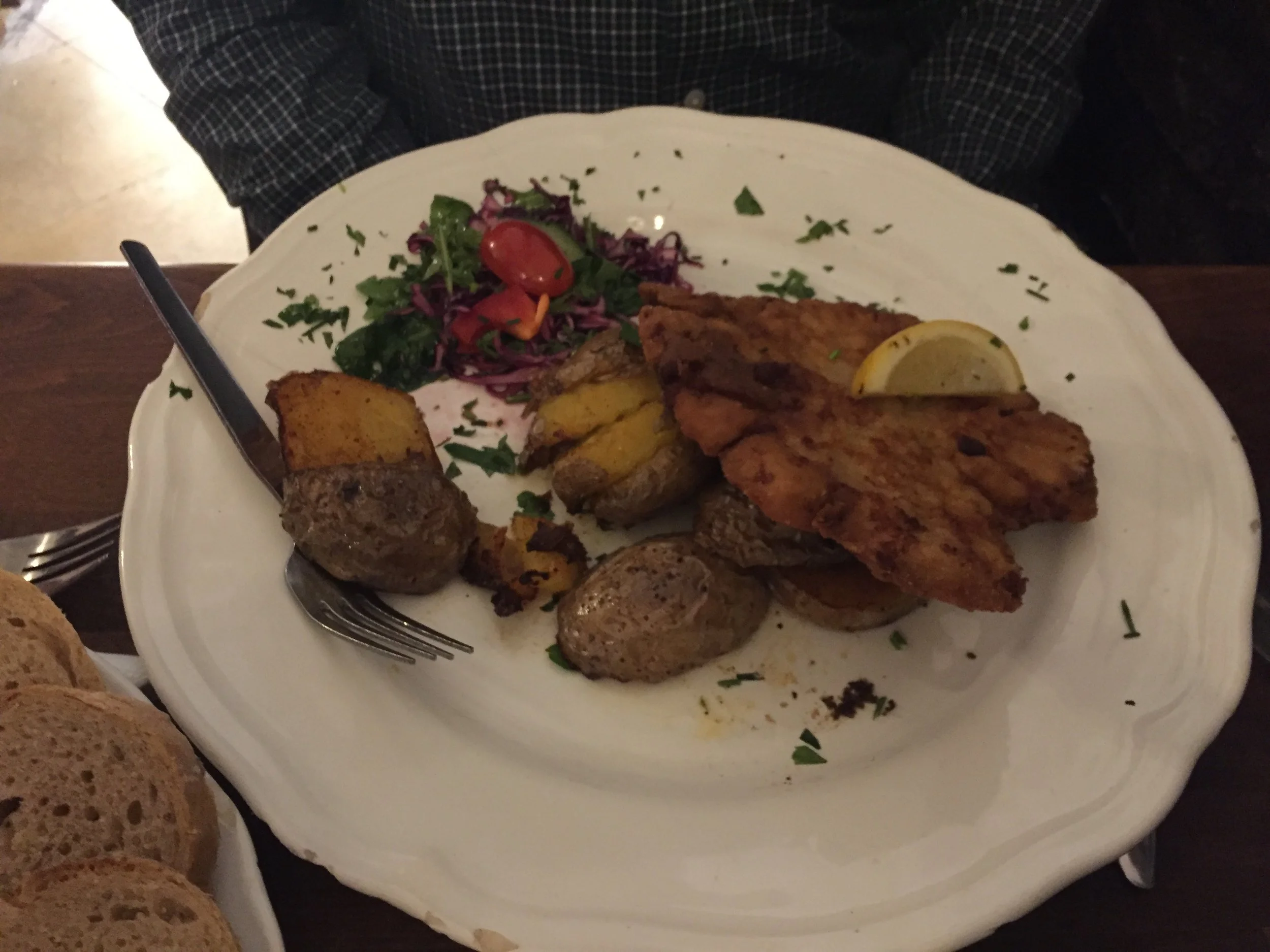
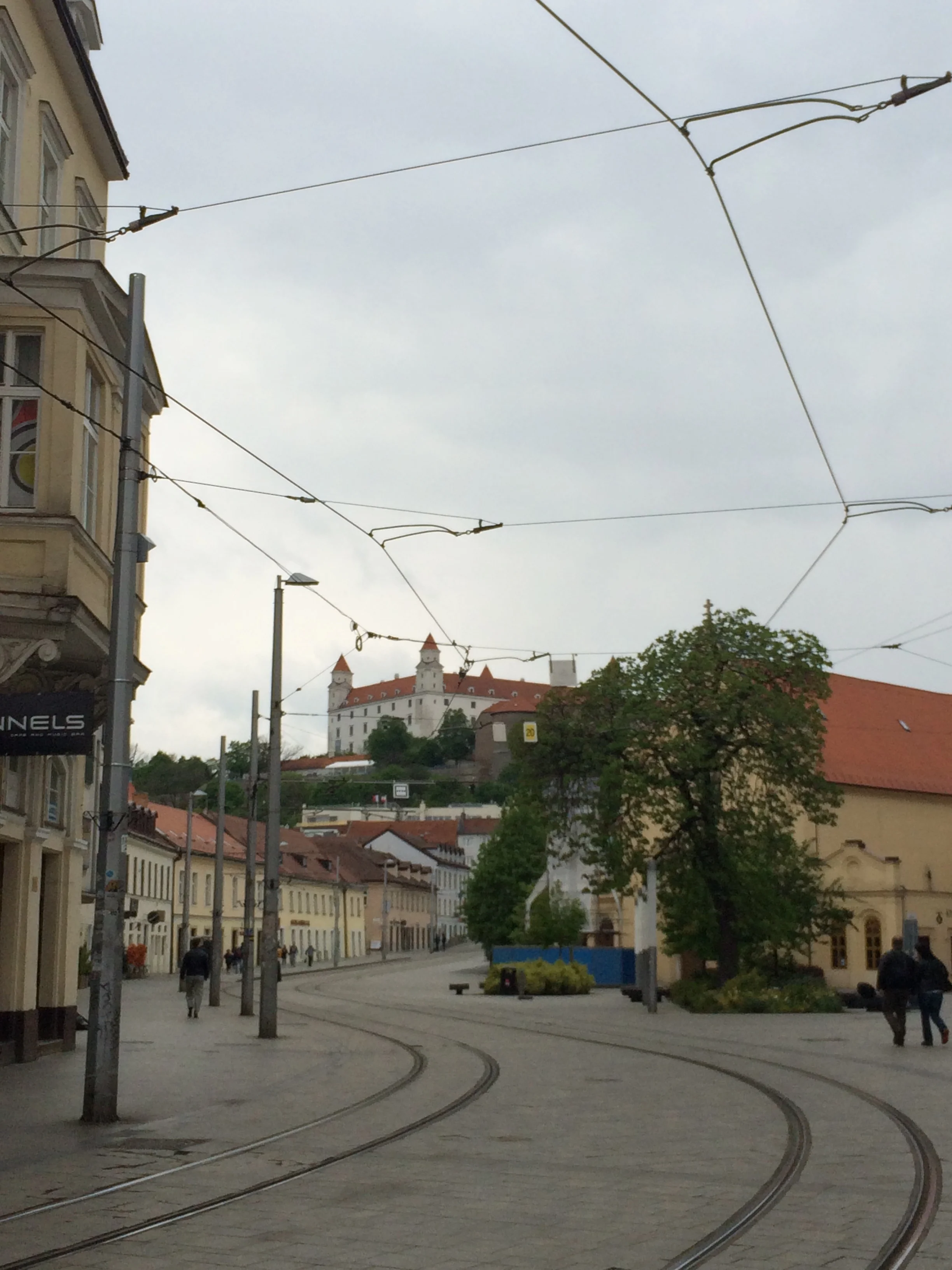
The kids, our sweet nephew and wife, got up at 5:00 AM and left early for the Airport for the flight back to the USA. We got up to say good bye and then enjoyed a leisurely morning until our 11:00 PM Flixbus ride to Bratislava. Yes, we had been there with the kids, but we were returning to spend 24 hours with our good pal Brian from our hometown. He had a work assignment in Bratislava and since we were so close, about 60 KM, we diverted our trip south to see him and catch up on family stuff. He brought over an Observer Newspaper for photos and Kathleen also sent him over with boxes of great snacks for us. Thanks guys! The first afternoon we checked out the large Castle which is described as the “table” by locals due to its 4 corner towers. We walked 4 stories of steps to the top of the tallest tower. We then searched for authentic Slovakian food, ie.,  sausages, sour kraut, potato pancakes, pork knuckle and local beer ( surprise—the beer bottle label displayed the Cathedral painting). The next day, we got free Sunday passes to the City Museum and the Street. Martin Cathedral. Fun. At 2:00 PM Brian sent us off north to Poland on another Flixbus.   

Salzburg and Bratislava

Hi to all of the Frank and Janet Around the Planet readers! I am Staci, and my husband Teddy is Frank and Janet’s nephew. We recently joined Uncle Frank and Aunt Janet on their big adventure. We were asked to be a guest on the site and fill you all in on a couple of our travel destinations on our recent journey! We had so much fun with Frank and Janet and can’t wait to see where the rest of their adventure takes them! 

Bratislava

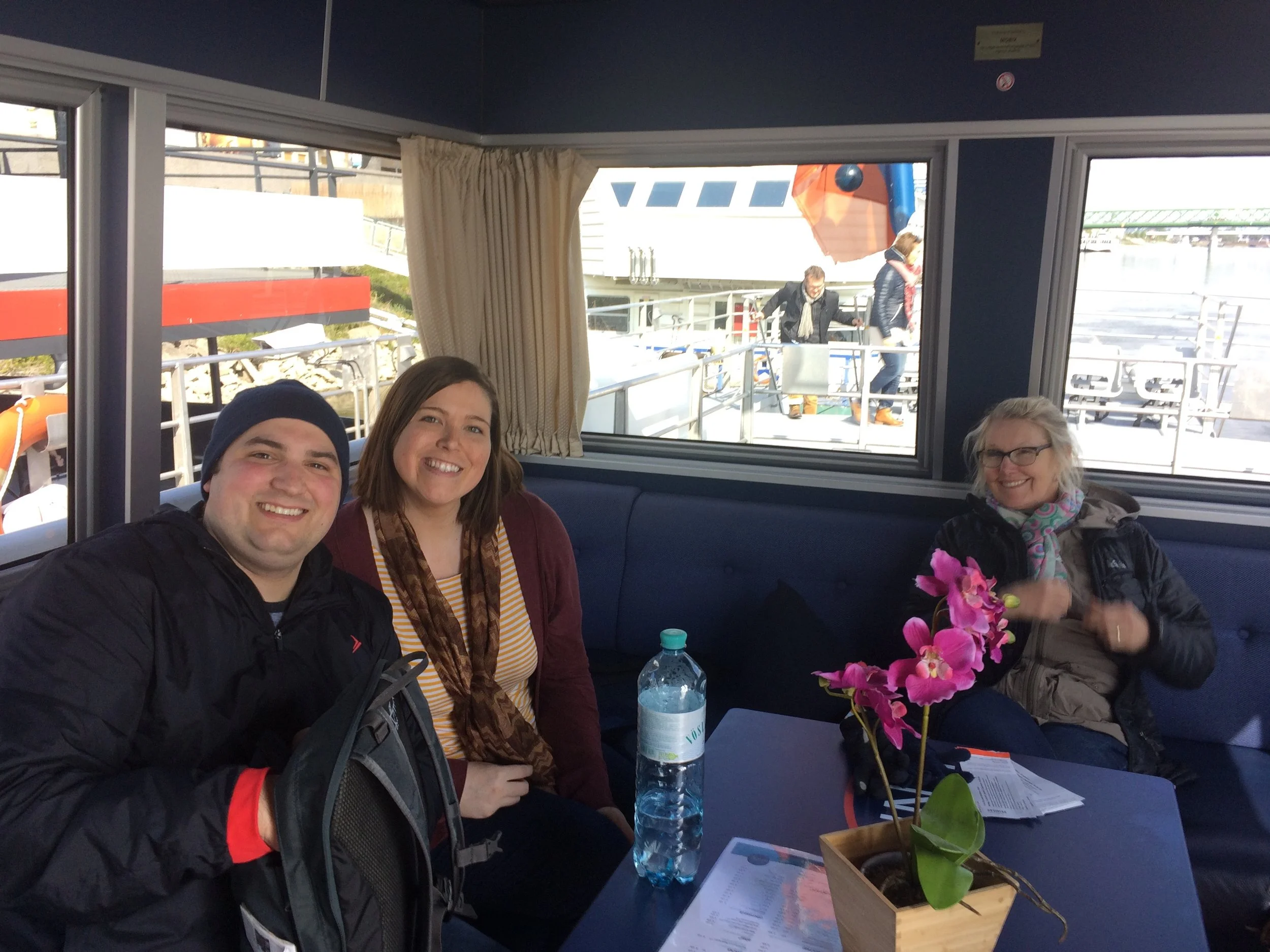
On the boat

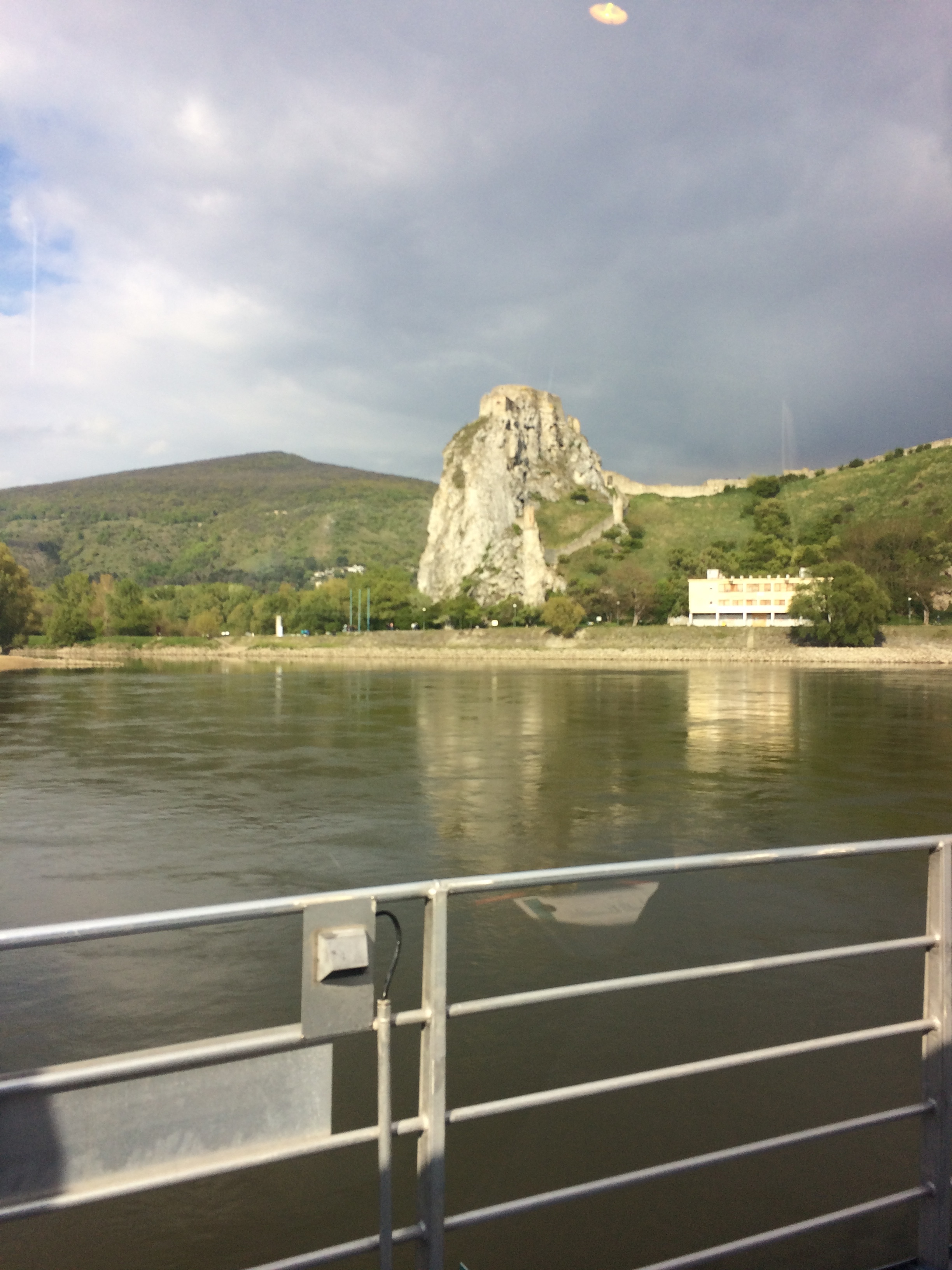
We decided to take the one-hour transfer by boat from Vienna, Austria to Bratislava, Slovakia. After a little research we came to the conclusion that the train station in Bratislava was a little too far out of the way for our short day trip to Bratislava. The Danube boat transfer was very comfortable and would drop us off in old town, where we wanted to be. It was our first time on the Danube, and even though it was a short trip, it was really enjoyable and relaxing.

Arriving in Bratislava felt different than our other Central European destinations. Bratislava felt more like Eastern Europe to all of us, perhaps a little less traveled. Bratislava is a smaller town, especially for a nations capital. The city was clean, however the buildings were not at tall or as grandiose as the prestigious Vienna we had just come from.

The old town was charming with cobblestone streets and well maintained architecture. We found a wonderful small cafe to have breakfast at while we waited for our free walking tour to start. This modern and artistic cafe had the best freshly made pastries and fresh squeezed juices.

Jana, a very energetic and outgoing young woman, led our walking tour. She was a Slovakian native and studied at a local university. If you’re like us you probably don't recognize the city of Bratislava for anything, maybe you have never even heard of it. Here are a few facts we learned on the tour about Slovakia and it's capital city, Bratislava. Slovakia was combined with Czech Republic until 1993, named Czechoslovakia. Jana was particularly proud to point out how peaceful the separation was in forming the now two countries, and the good relationship between the two countries, commenting that they get along great and only have a sports rivalry in which the Czech Republic usually has better teams. Czechoslovakia was under Nazi party influence in the 1940's and later the communist party until the late 1980's. We were able to see some of the communist influence in a few of the buildings and a large bridge over the Danube. Bratislava is the only national capital that borders two other countries (Austria and Hungary).

There might be one thing you recognize about Bratislava; the movie Hostel was set in Bratislava, although actually filmed in the Czech Republic. If you aren't familiar with the horror movie, the basic concept is American tourists travel to Bratislava, stay in a hostel and get chopped up into little pieces by the locals. Obviously just a movie but there was some serious damage that the movie caused. The year after the movie was released, tourism in Bratislava dropped by 70%. Locals were rightfully upset with how the movie depicted their country to be underdeveloped and have high crime. We found the city to be very charming and nothing like how it was depicted in the film. The positive note is now tourism in Bratislava continues to rise.

We had a wonderful traditional Slovakian lunch, the highlight was a dish called Bryndzove Halusky, which is a type of potato pasta with cheese. The dish was very rich and filling similar to macaroni and cheese. A must try if you ever go to Slovakia! After a day of walking around we had a relaxing boat ride back on the Danube to Vienna.

We had a wonderful traditional Slovakian lunch, the highlight was a dish called Bryndzove Halusky, which is a type of potato pasta with cheese. The dish was very rich and filling similar to macaroni and cheese. A must try if you ever go to Slovakia! After a day of walking around we had a relaxing boat ride back on the Danube to Vienna.


Salzburg

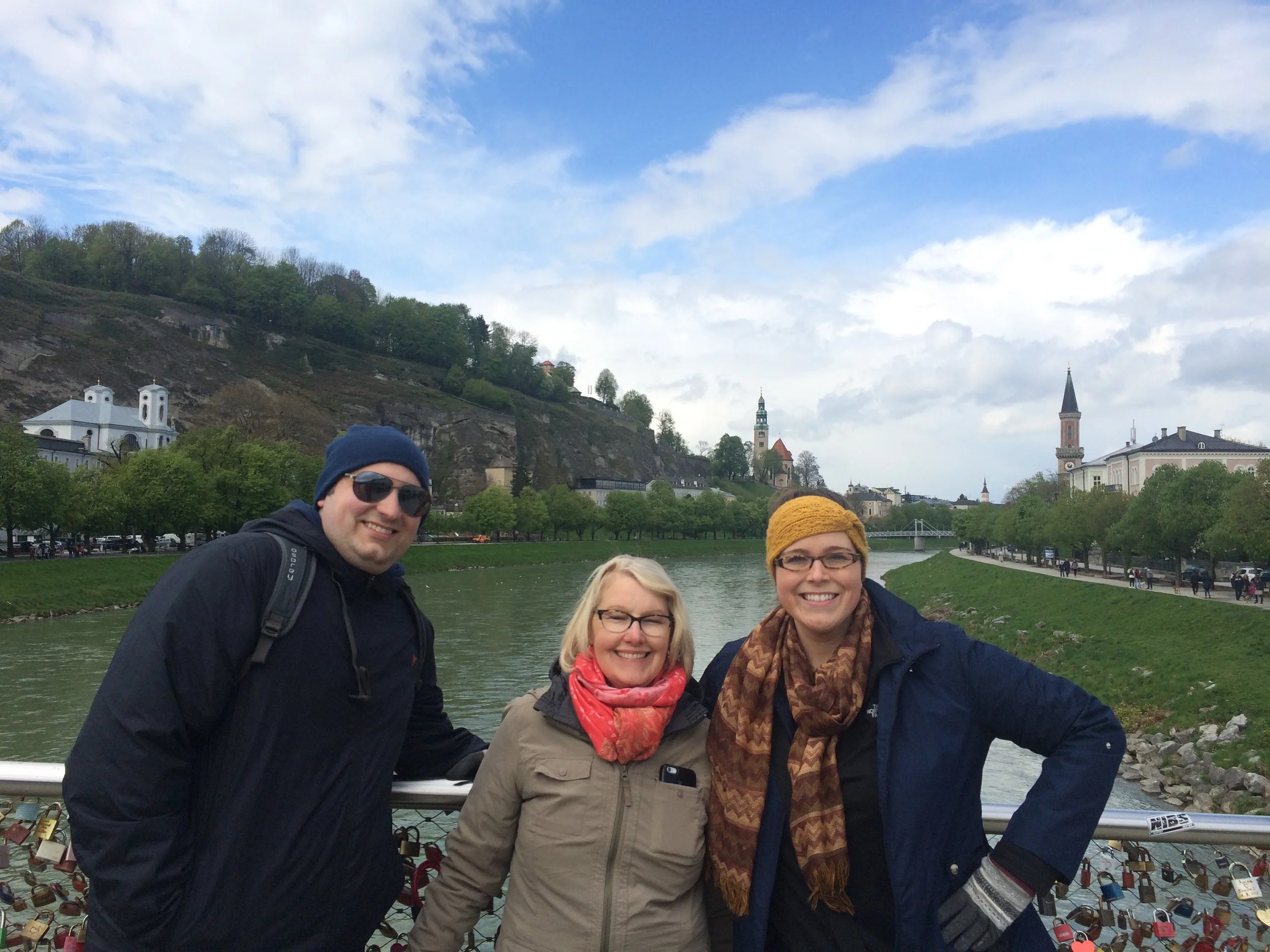
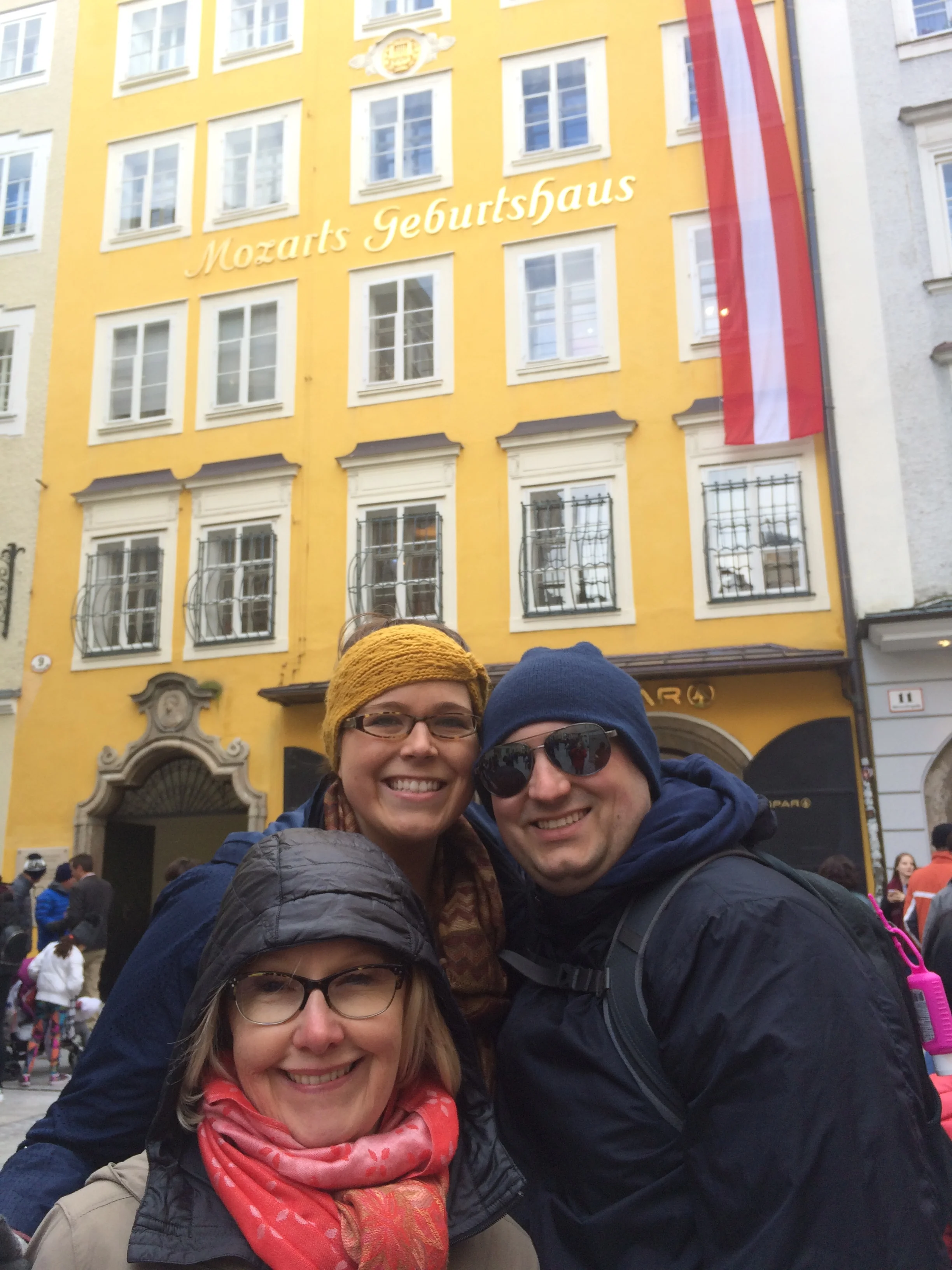
Salzburg, Austria is usually known for two things; the birthplace of Mozart and the setting for the movie The Sound of Music. Aunt Janet suggested we watch The Sound of Music before heading to Salzburg, so the prior two nights we watched the movie. We split the film viewing over two nights, as it is a nearly 3 hour-long movie. It was Teddy and my first time seeing the movie.  We were glad to have watched it because for the next several days we sang and hummed the songs obnoxiously. Getting the songs stuck in Aunt Janet's head became sort of a fun game.

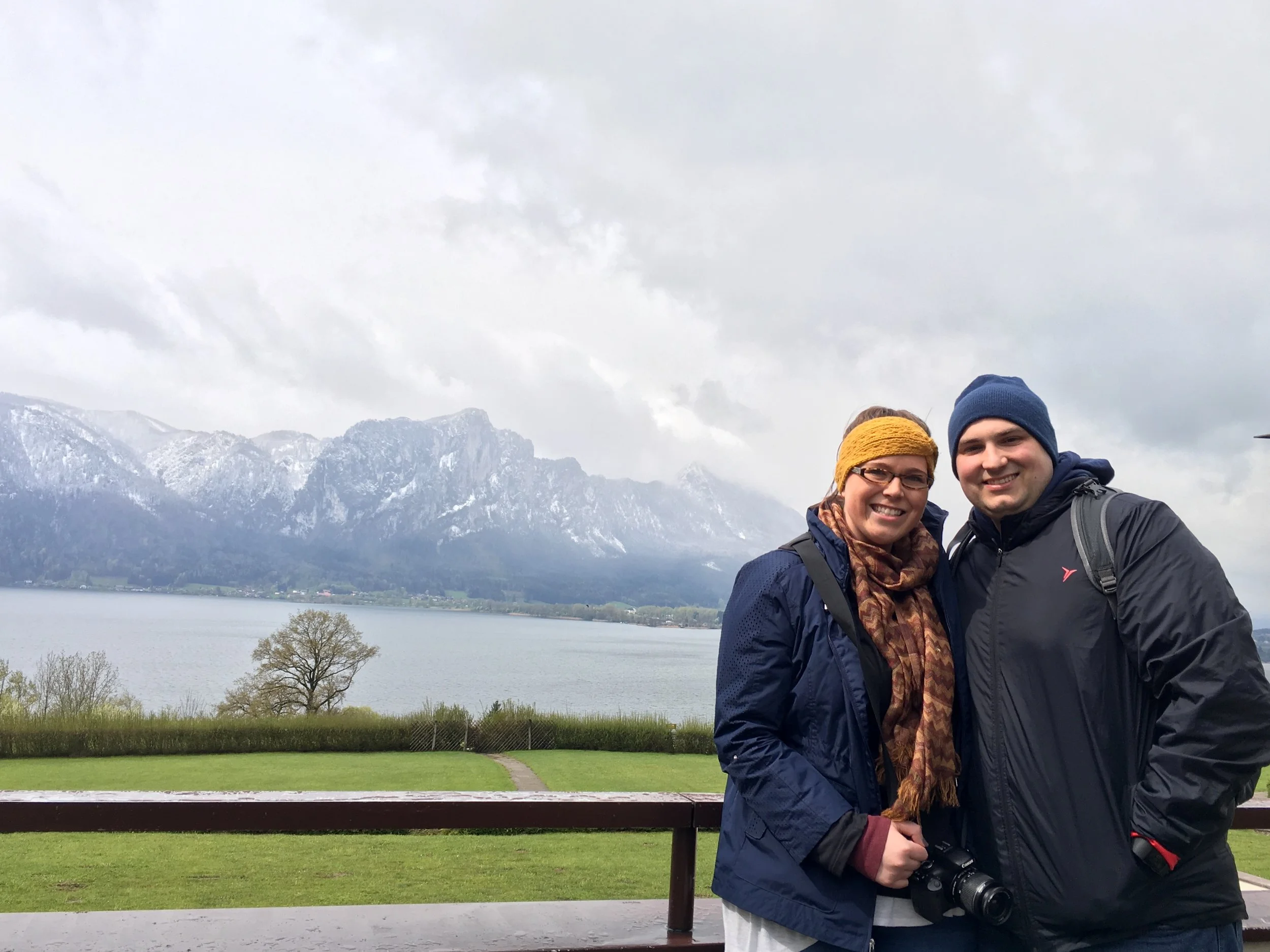
The day trip to Salzburg was a full day. We took a round-trip bus from Vienna. Including rest stops it was about 4 hours each way. Salzburg is across the country from Vienna and only 5 miles from the boarder of Germany. The Mountains and snow flurries created a beautiful backdrop for this enchanting city.

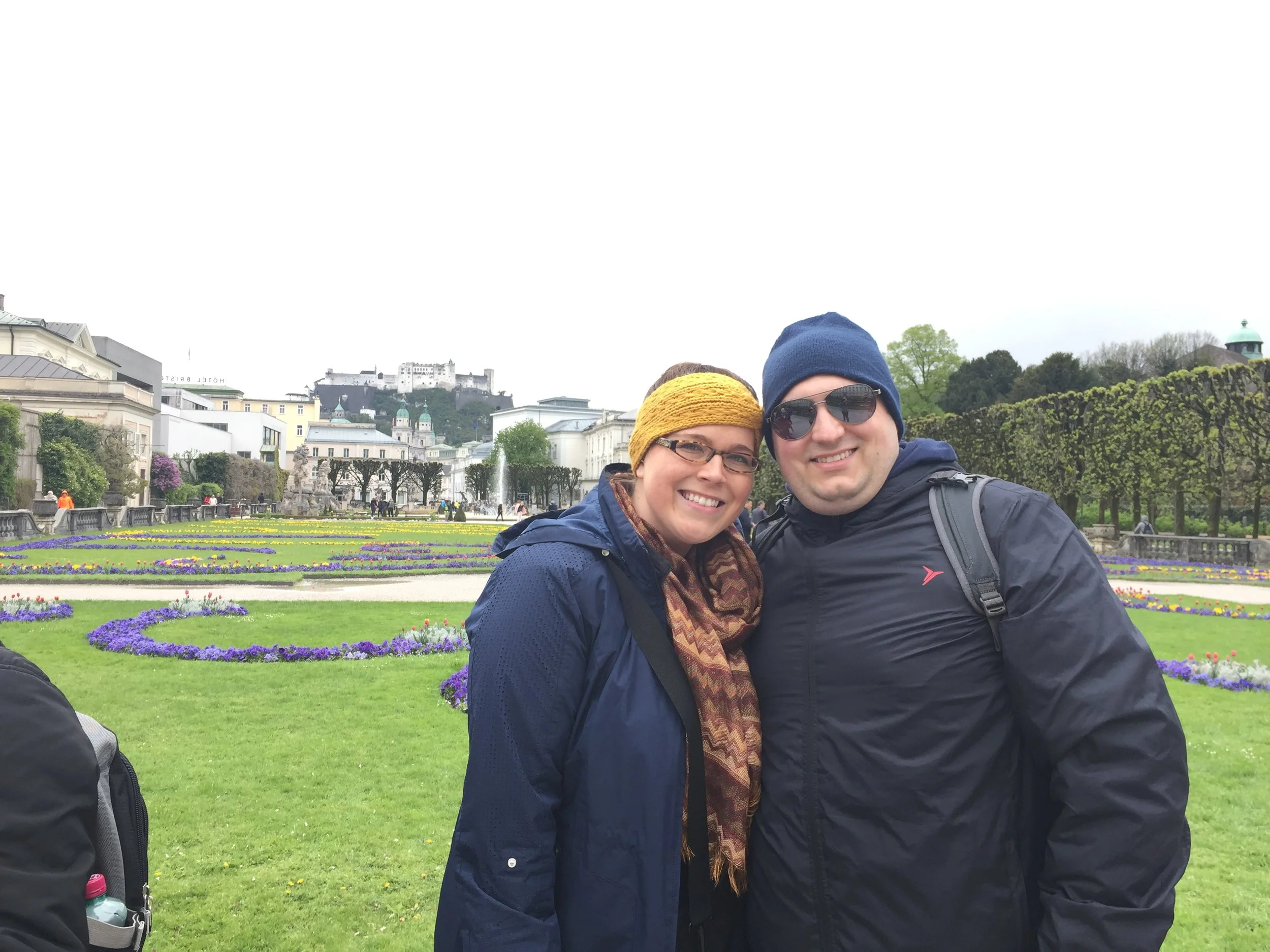
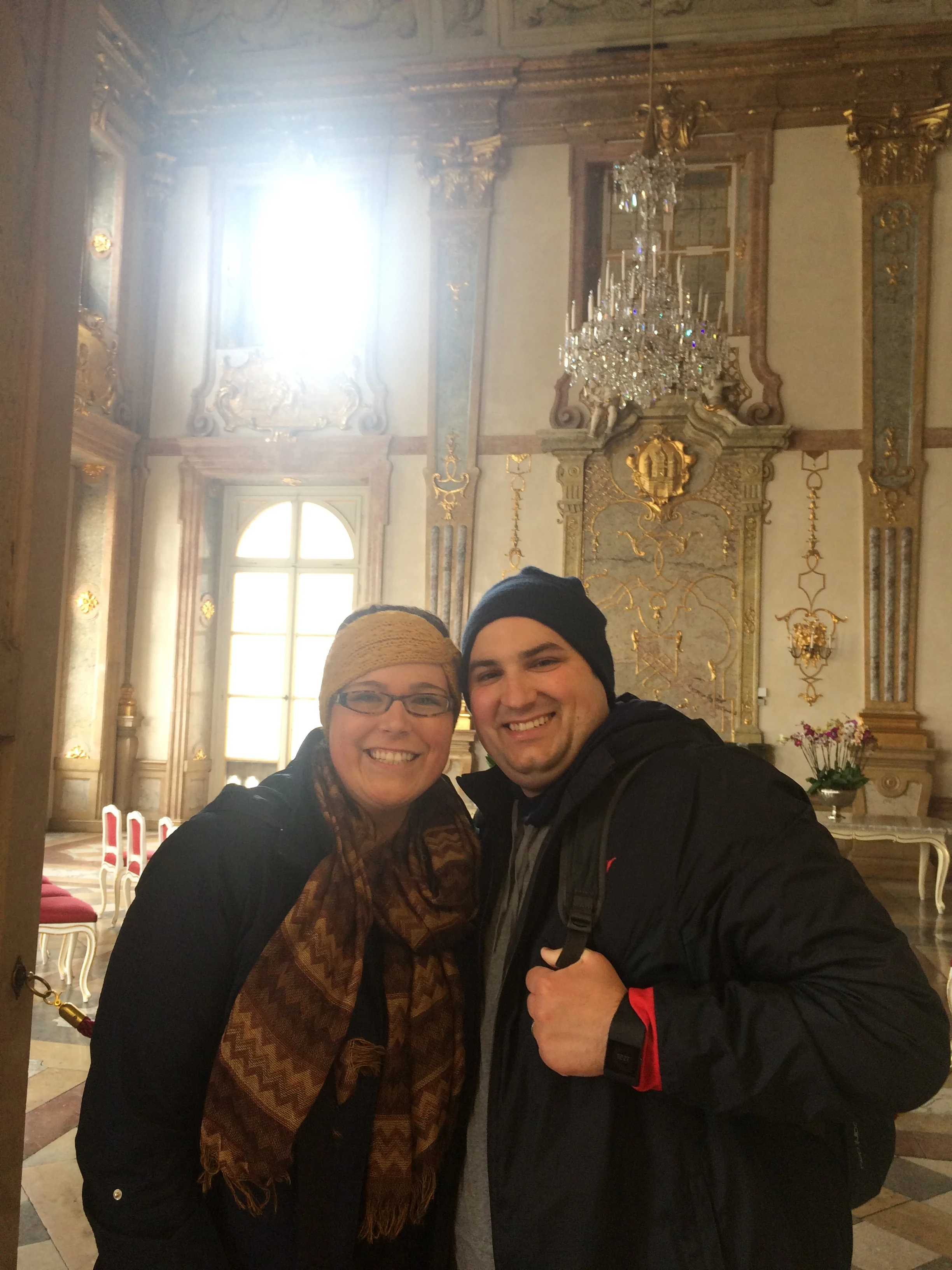
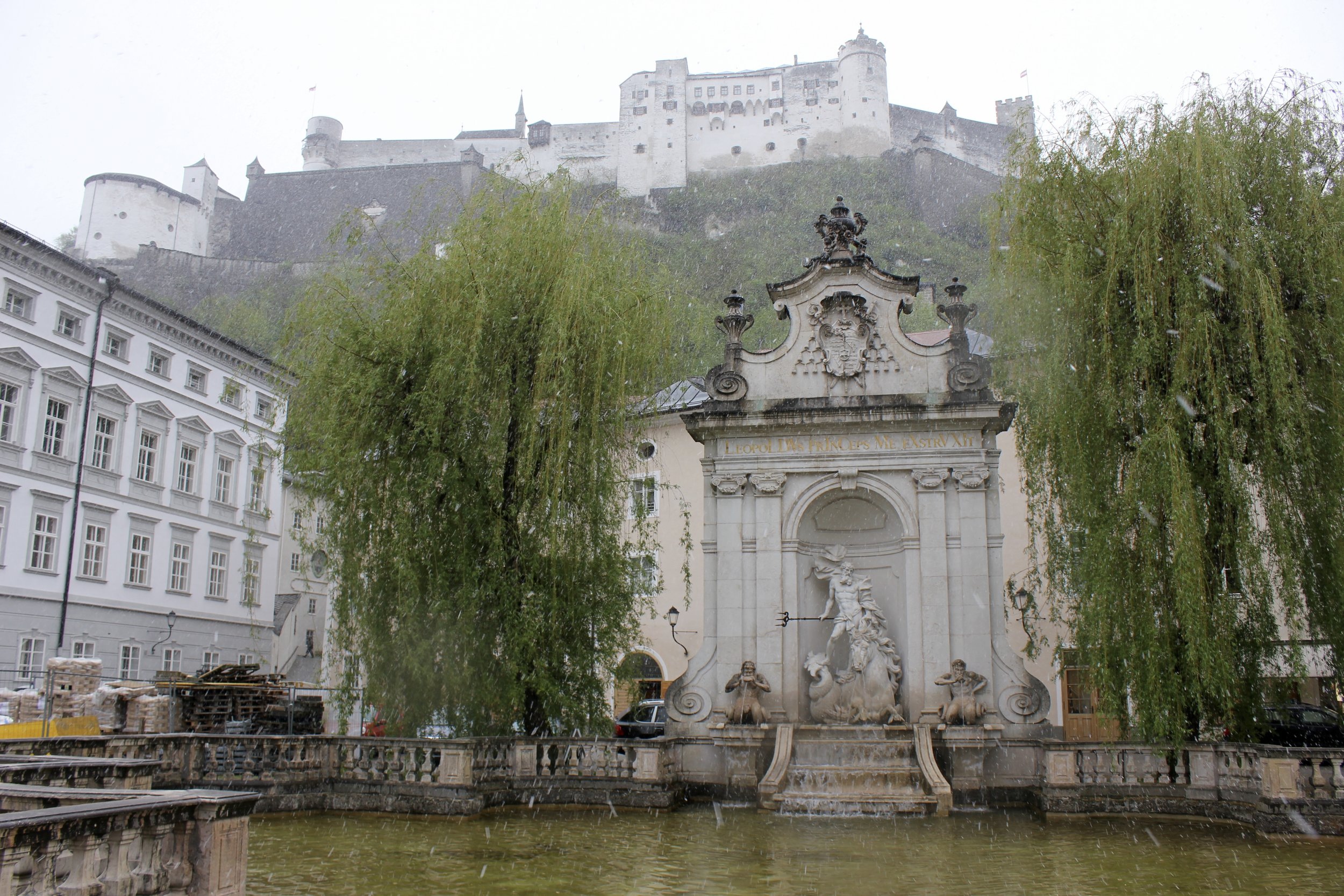
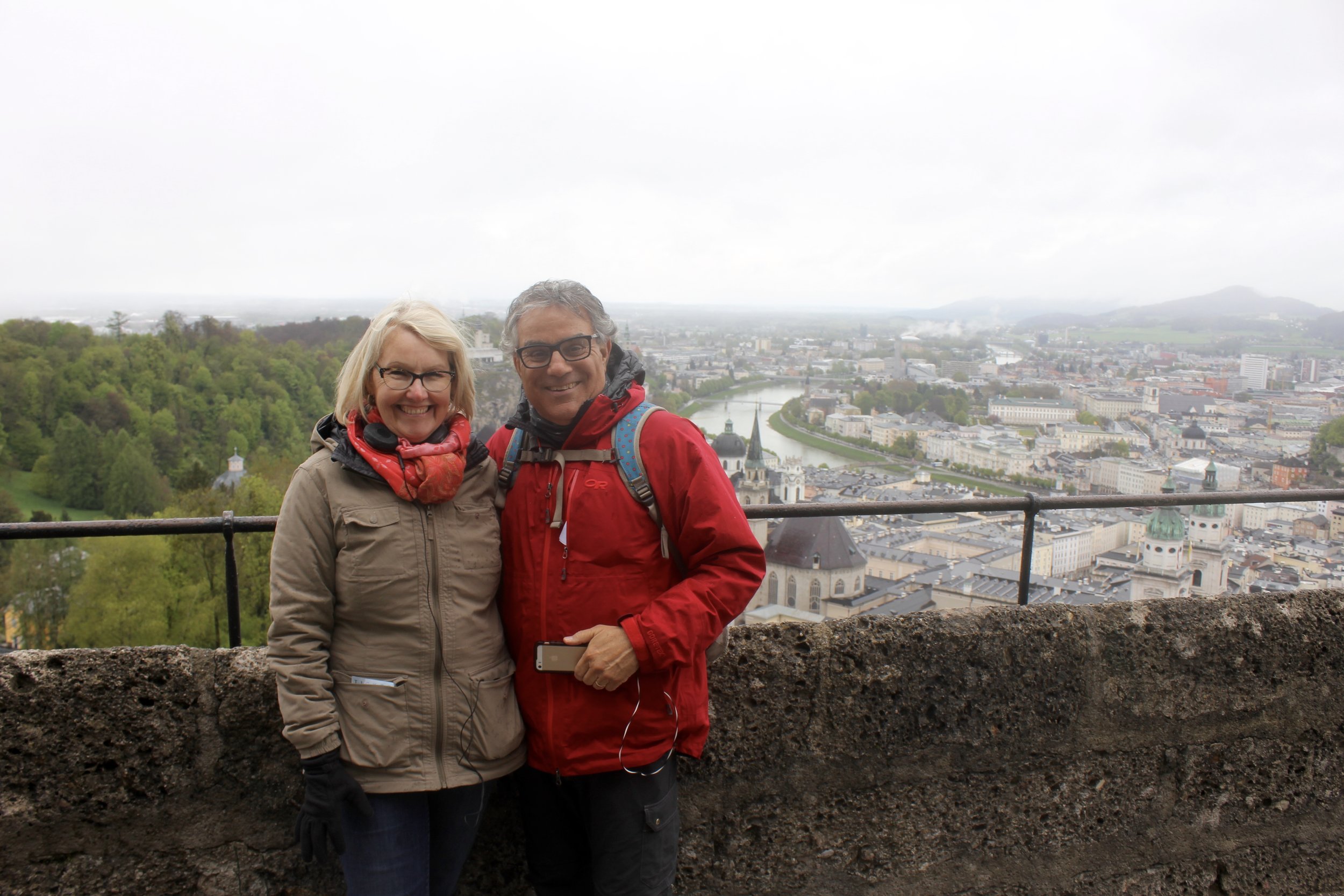
During our walking tour of the city, we really enjoyed spotting the filming locations of The Sound of Music. We went into the Salzburg Cathedral, the church where Mozart was baptized. It was very beautiful. We even managed to grab the largest soft pretzel we had ever seen about half way through the walk, it did not disappoint. The highlight of the day was the view on top of Hohensalzburg Fortress. We rode the funicular up the mountain to the fortress and then climbed several flights of stairs, but it was worth it to see the city below.

We must say that throughout the trip we were impressed with Uncle Frank and Aunt Janet's minimalist ways, their commitment to grocery shopping (which can be the last thing you want to do after a long day of relocating), delicious cooking in the Airbnb's we stayed in, research of the places they visit, and that they hardly ever seem to tire. Day after day of traveling and moving from one place to the next and they are still ready for more. They are really inspiring and we are so glad to have spent the time with them! Four countries in ten days with them and we were totally exhausted but our memories of the fun we had will be something we will always remember.

Vienna Austria

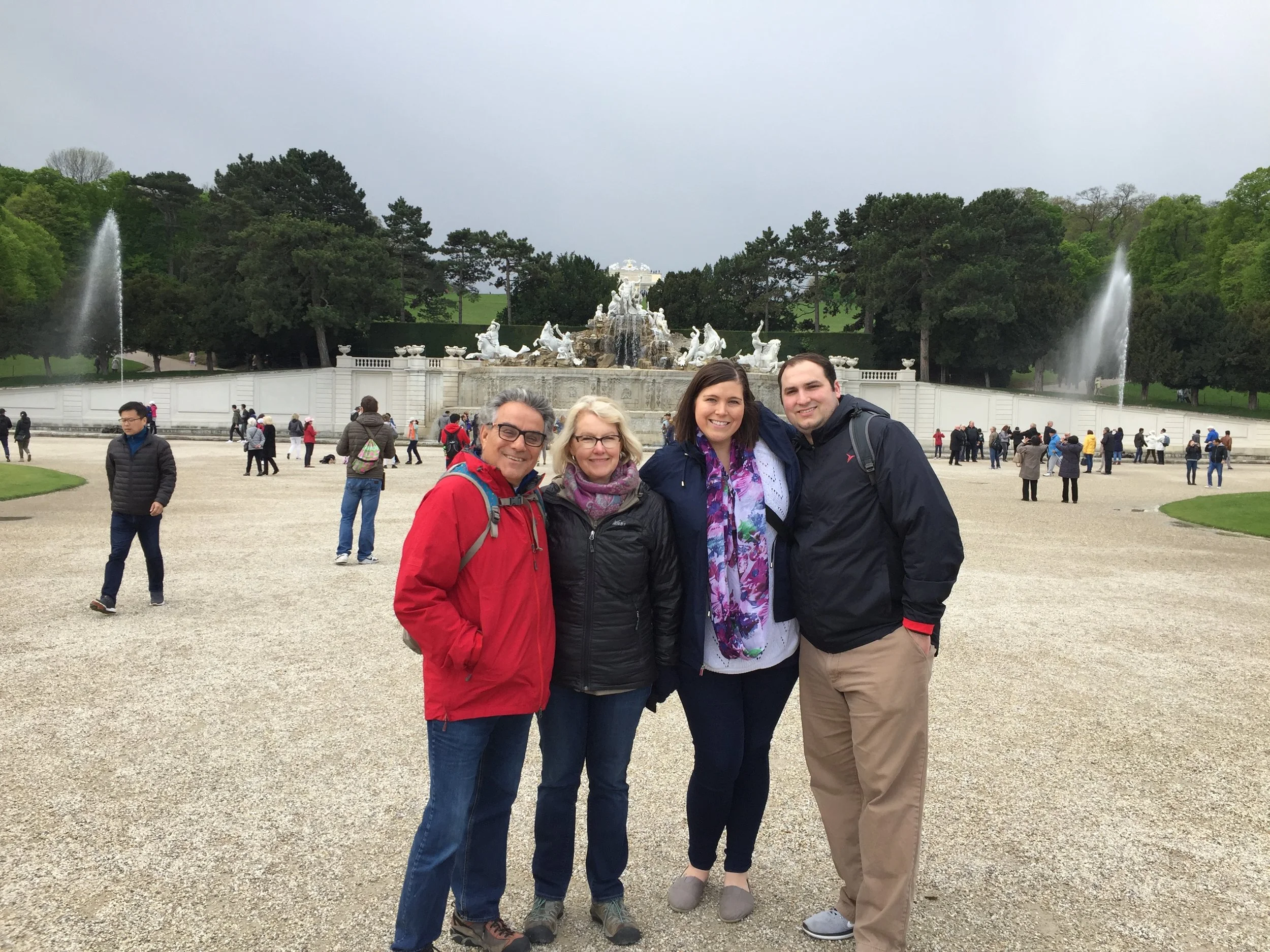
Schloss Beleverde Fountain

Example of Baroque Fountian

A little history if you please. Austria was the epicenter of the mighty Hapsburg empire that for 6 centuries used strategic marriages, not conquests, to maintain their hold over much of central and eastern Europe. However, the country was subject to military threat by the Ottoman in the 1600’s, then defeated by Napoleon in 1805, and suffered the Prussian war in 1866

WWI started after the assassination of Austria’s Archduke Ferdinand (a Hapsburg), and being on the losing side of the war, it was the ultimate end of the dynasty.   Austria was occupied by the Nazis.  Austria and Vienna were heavily bombed during WWII, but recovered well and display the beauty of the Baroque style of architecture favored by the Hapsburg monarchy. Among the most amazing Baroque highlights that we saw were in Vienna and Salzburg. 

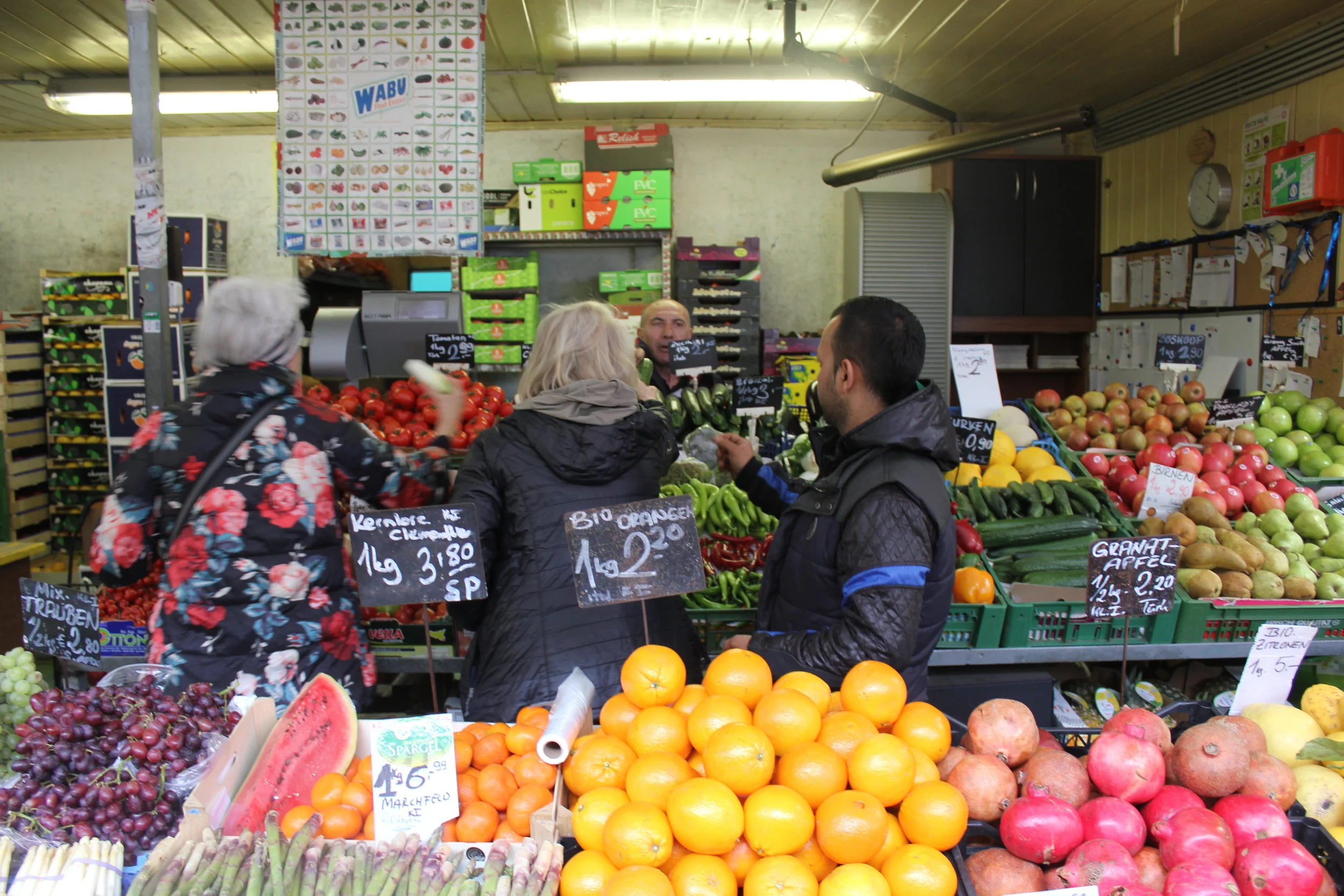
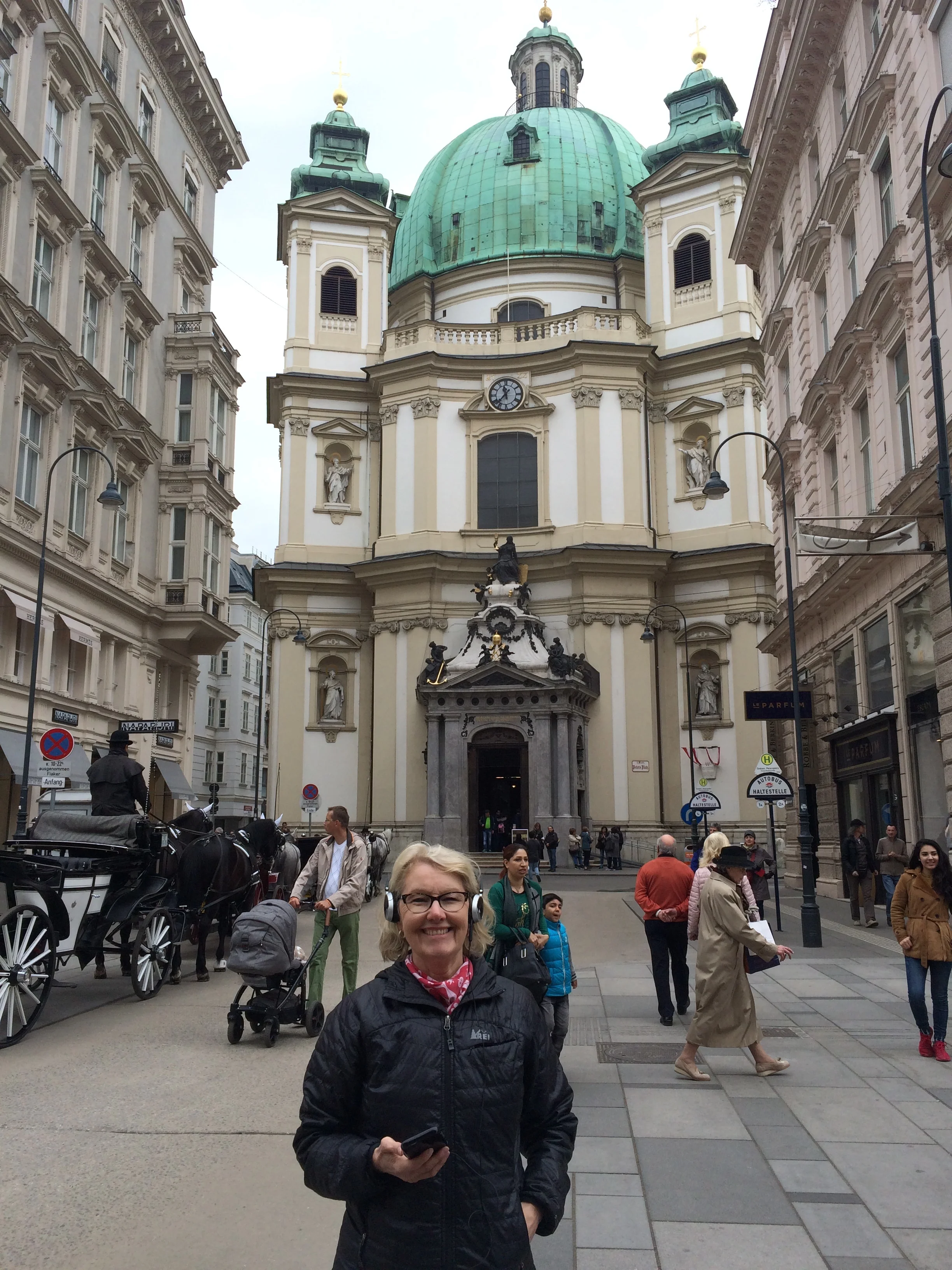
Vienna is beautiful. The palaces and museums that the Hapsburg's built are just amazing. Concentrated in the “ Innere Stadt 1” aka Old Town, are some, but not all, of the most impressive buildings. We and the kids started our exploration by first walking several blocks from the 2 bedroom Airbnb to shop at a local outdoor market haggling and purchasing pastas, cheeses, olives, and bread.


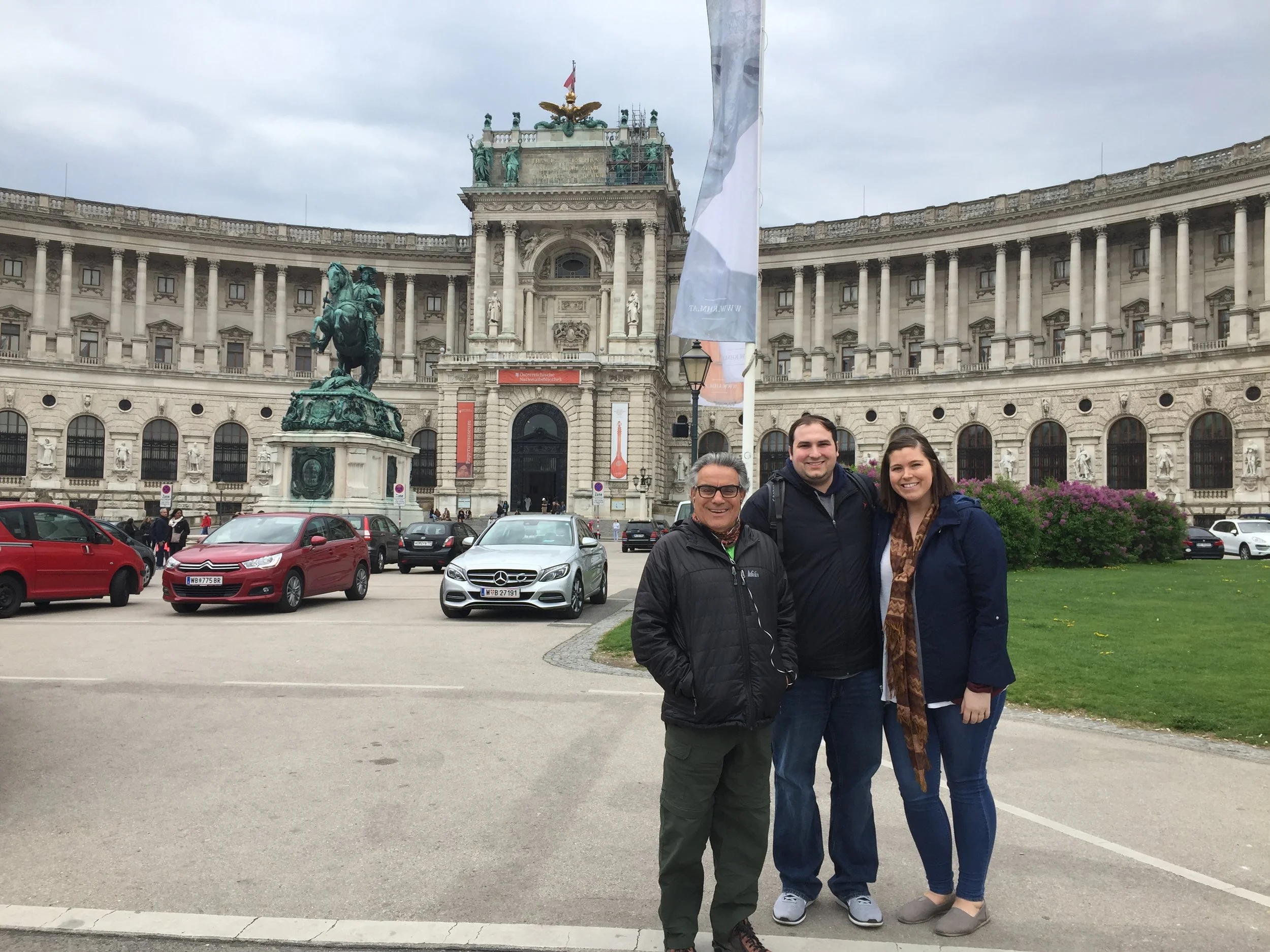
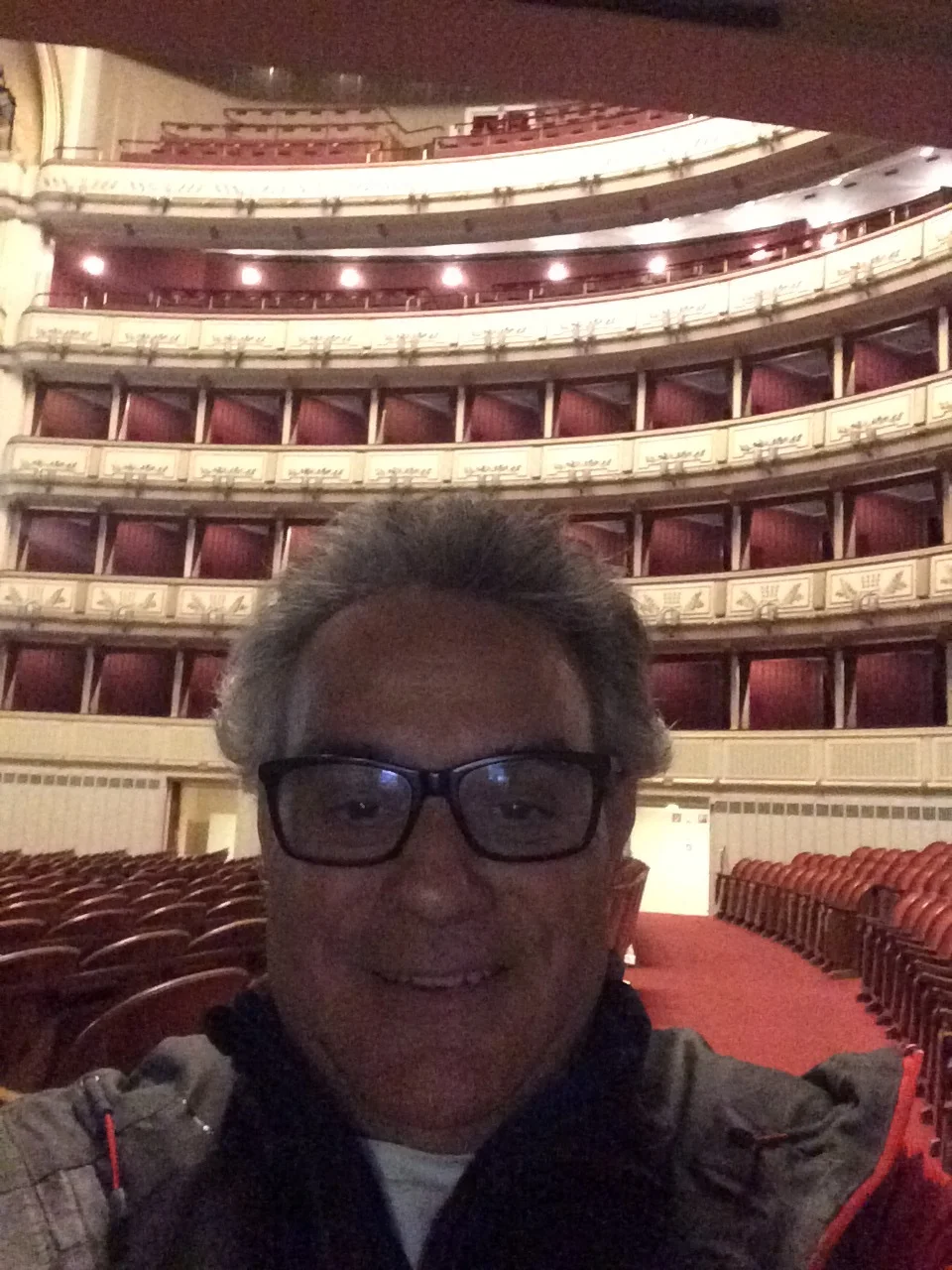
Later, we jump on the Tram that circles old town on the “Ringstrasse” route. Starting and ending at the 19th century Opera House, from the tram and with a little help from the audio tour Janet downloaded we get a great sense of where all the most important exhibits can be found for future return. For example, we observe the neo-Gothic City Hall, the Greek-revival Parliament, the Museum of Fine Art, and the Hapsburg Palace.  We would also like to extend a thanks to the young lady who voluntarily spoke up and told us we needed Tram # 2A, not Tram #2B. The palatial home of the Hapsburgs is called the “Hofburg”. We exited the tram there and walked through the surrounding park planning our return route and stopped at a large “state of the art” pizza joint, where the menu and ordering is computerized. Slick!

The Opera house we toured

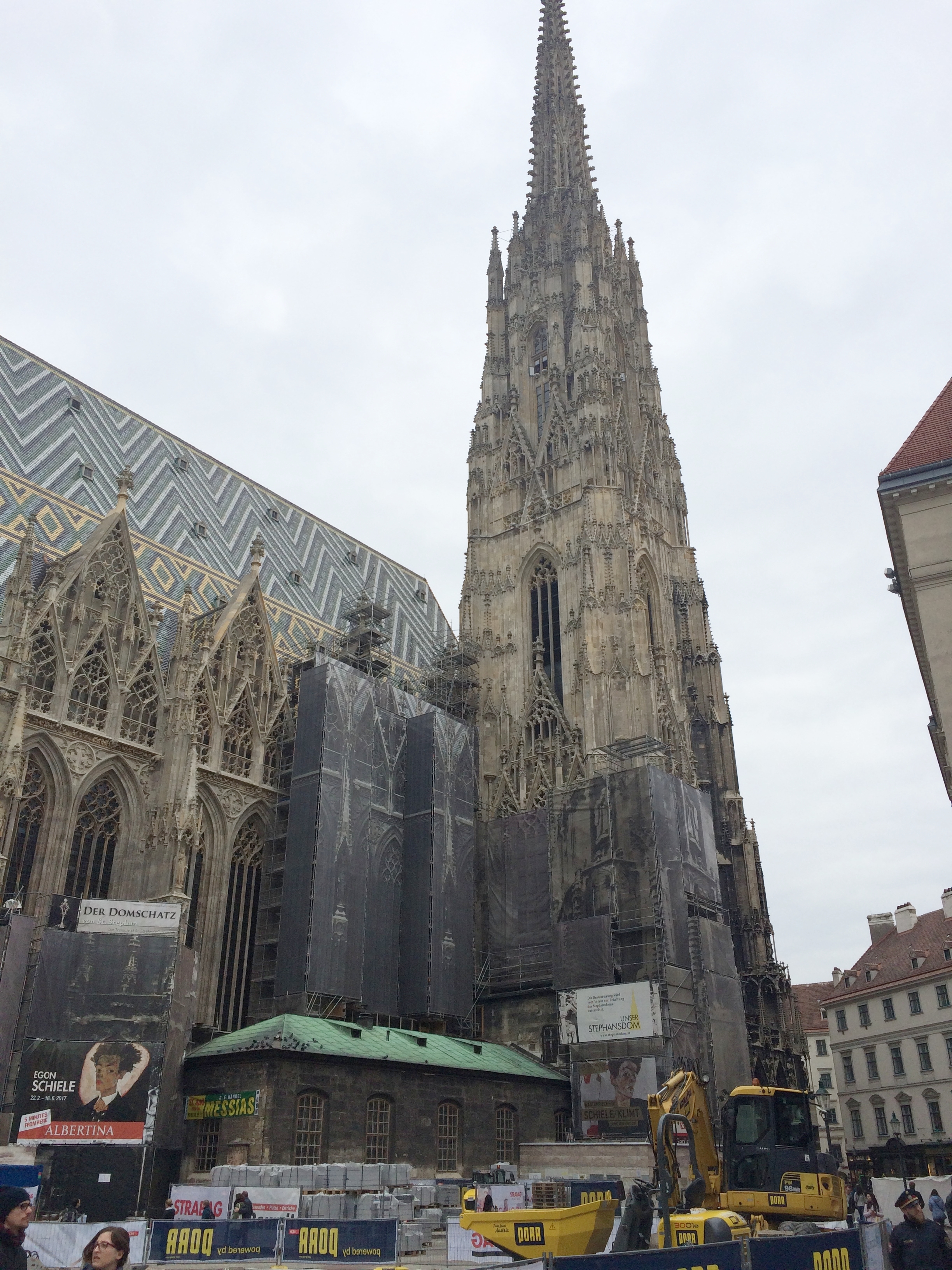
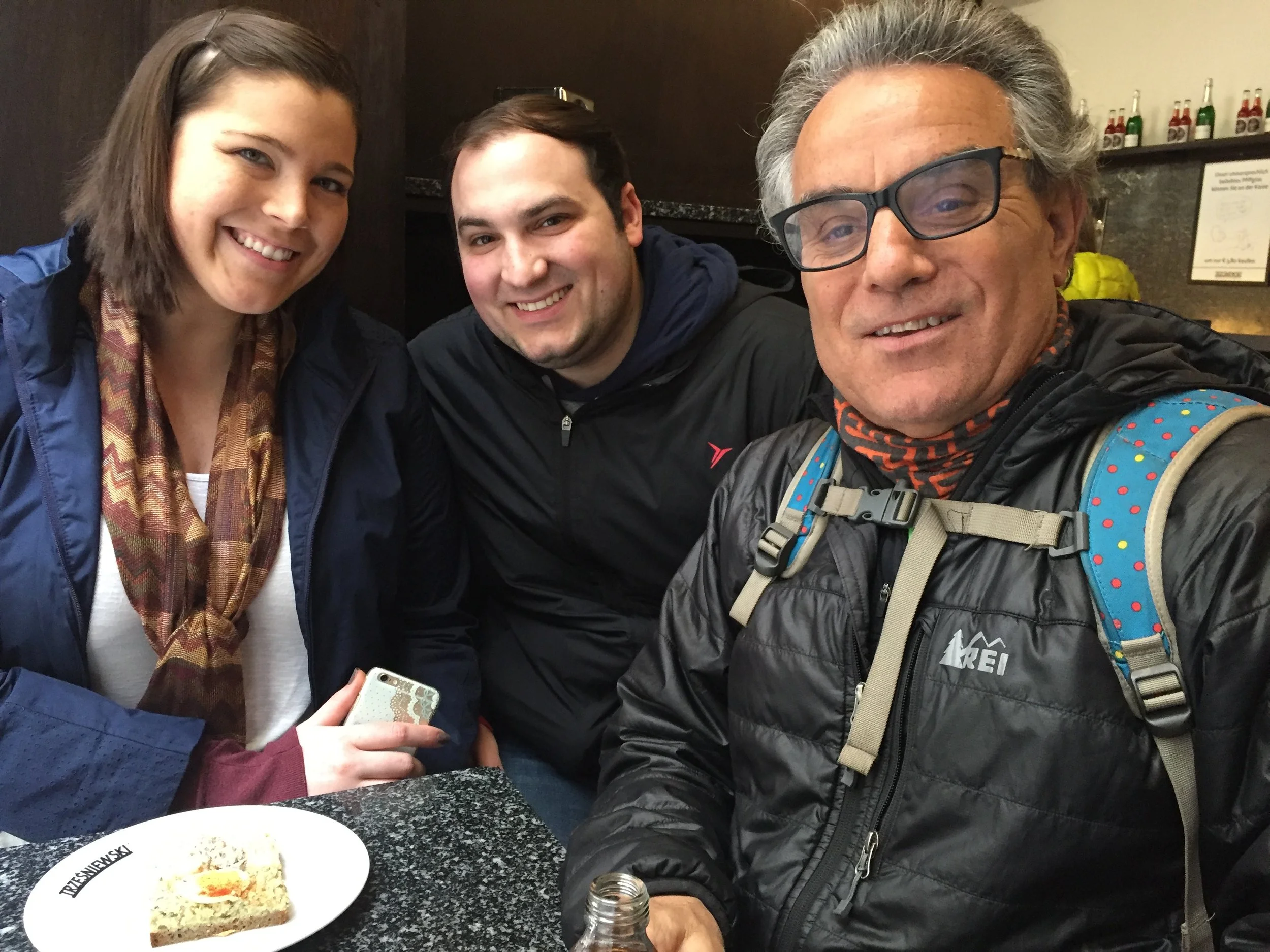
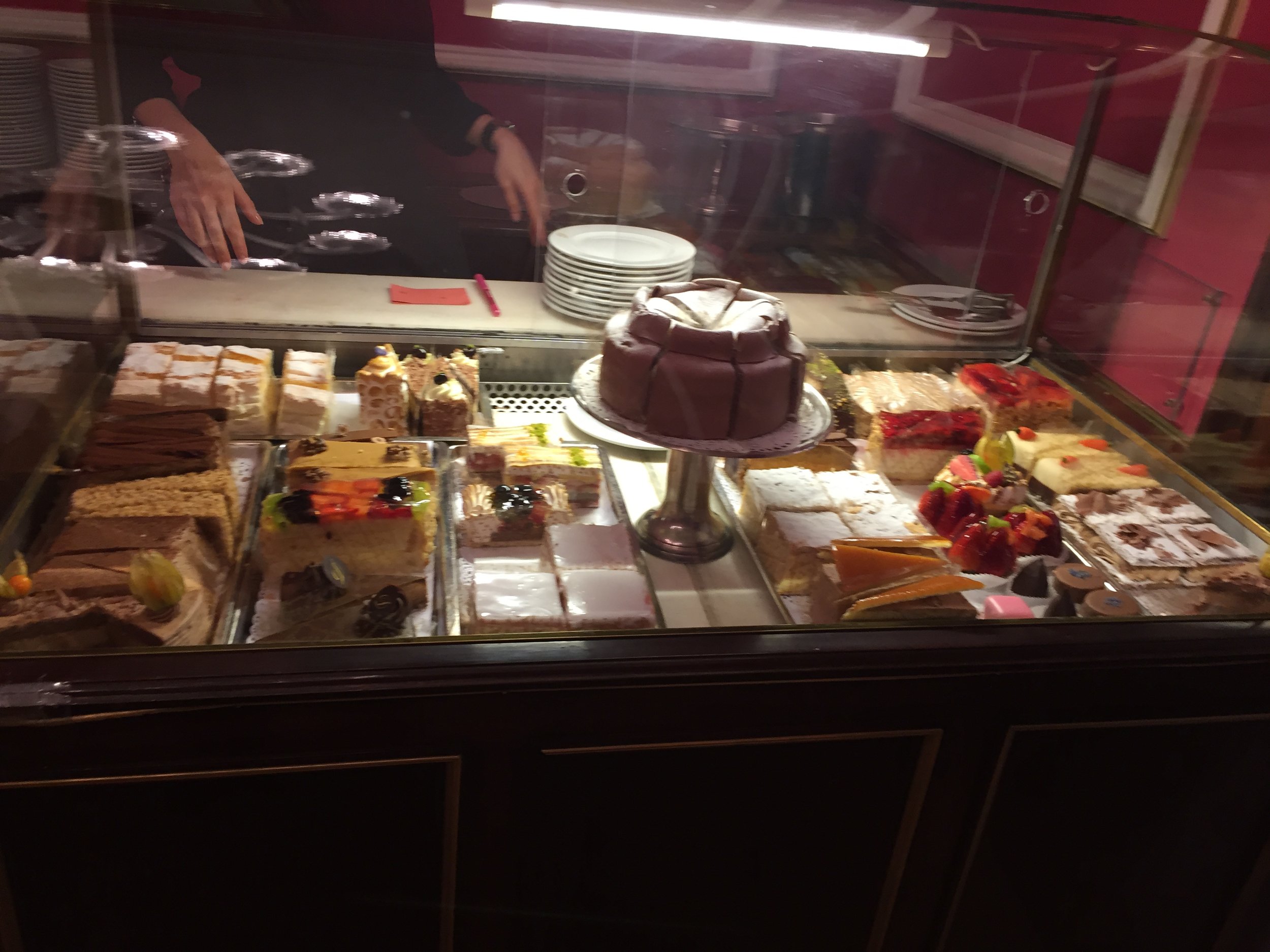
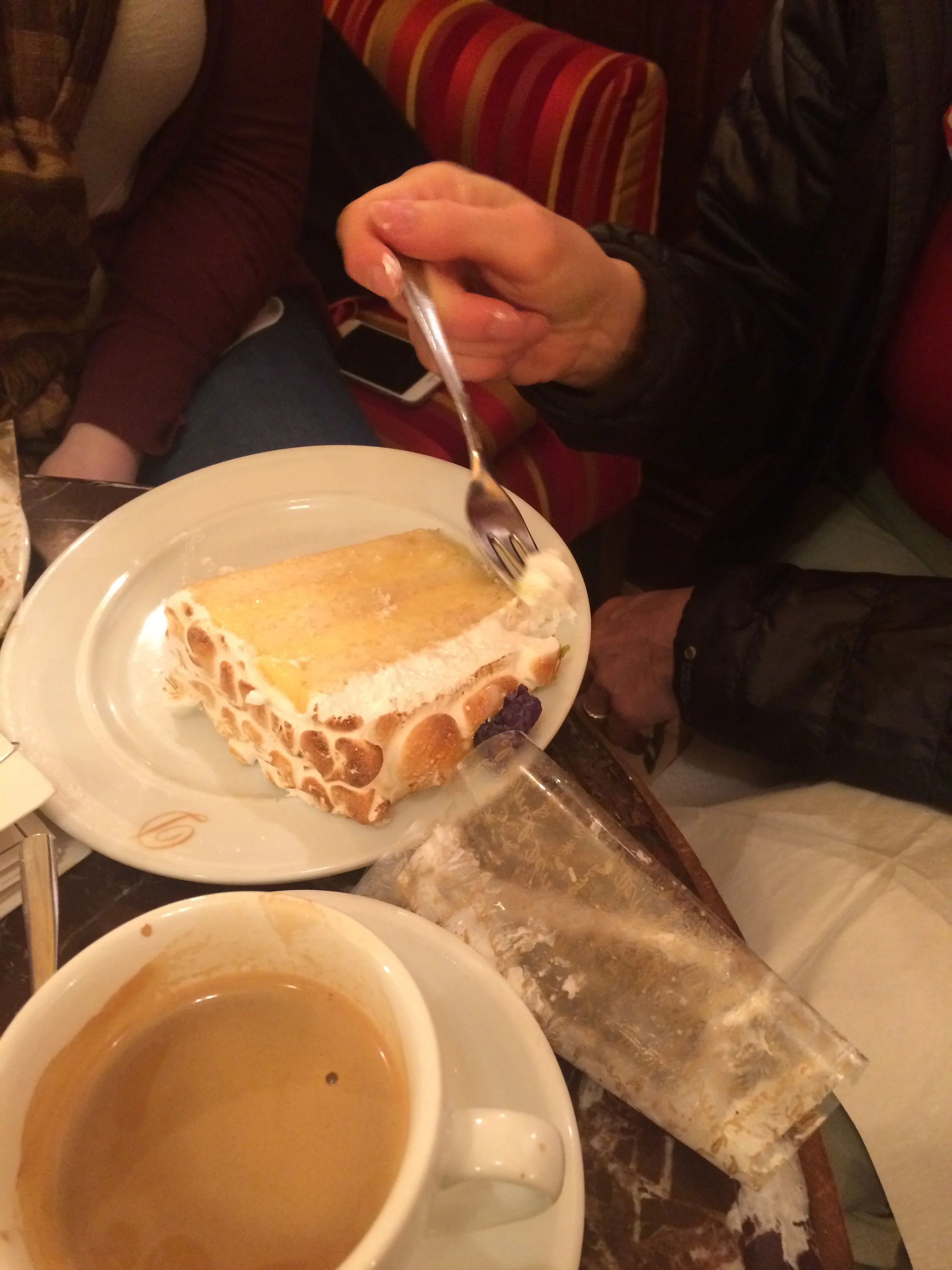
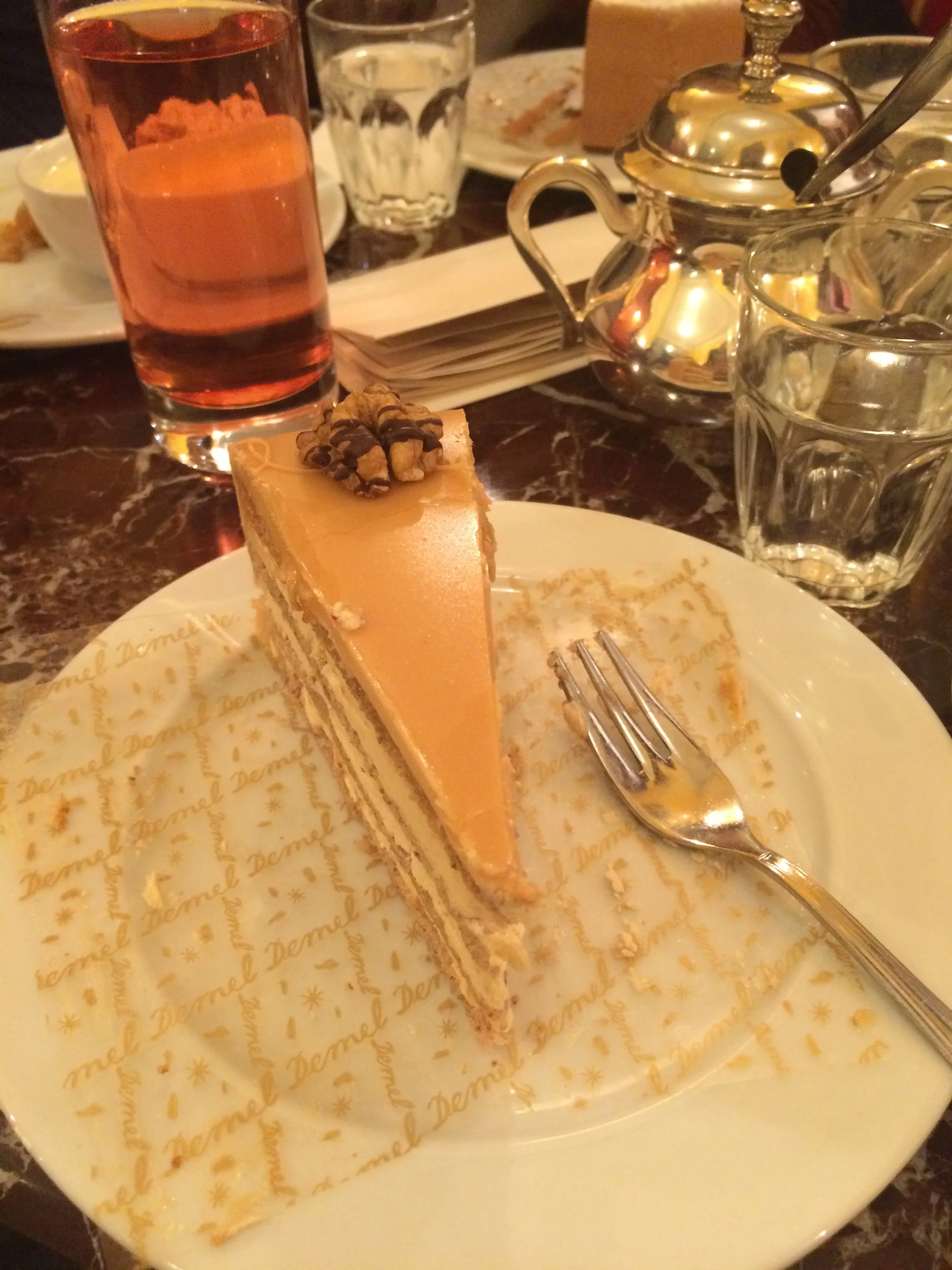
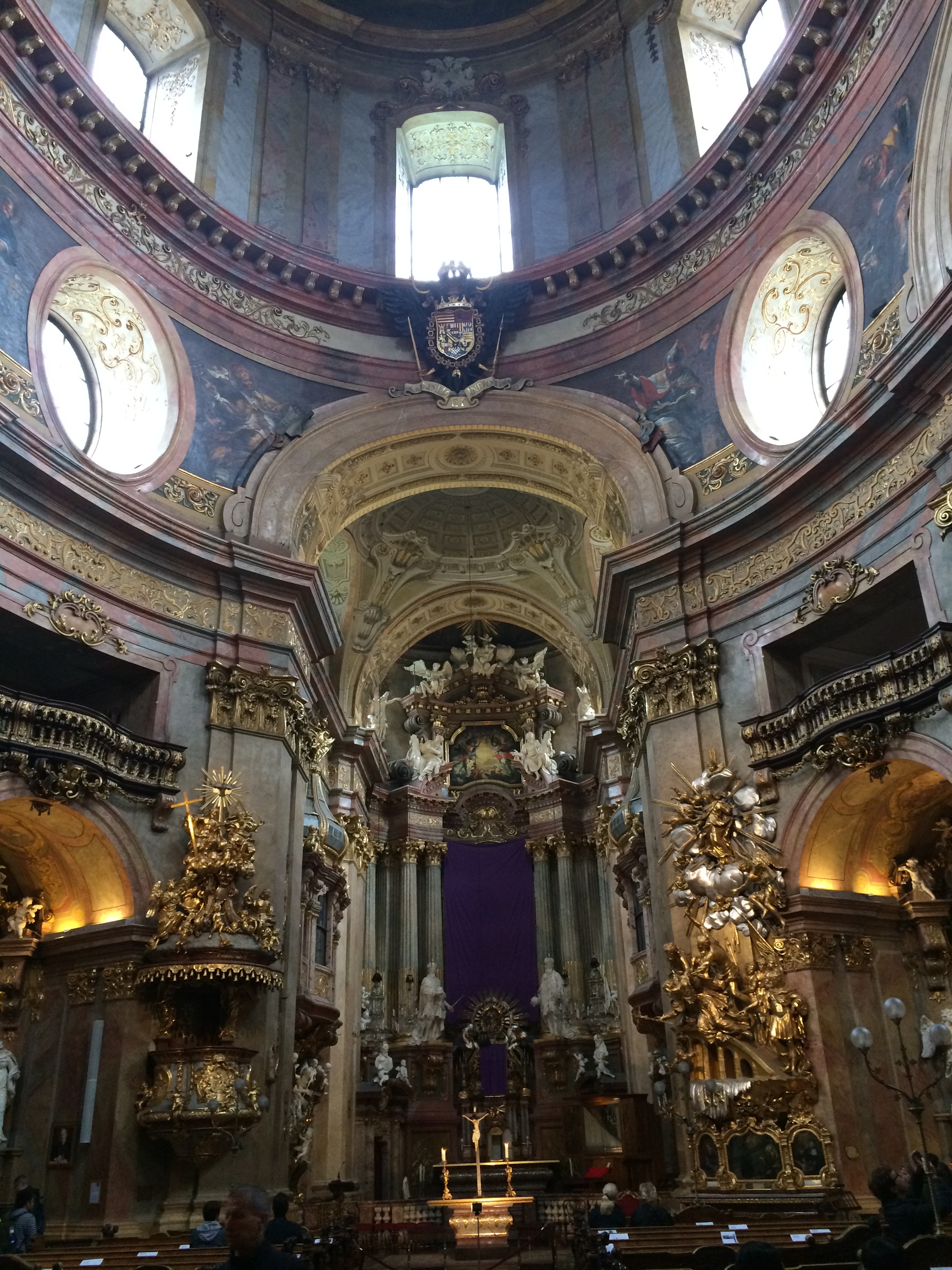
The next morning we started our action packed day with another self-walking tour using a downloaded audio tour. We visited St. Stephens Cathedral, with its dazzling tile roof and high spires. The stone pulpit and baroque high alter are striking.  We walked the streets, popping into a church here and there and stopped for some odd little open face sandwiches recommended by our audio guide.  At the end of the route we stopped for Vienna's famous cakes.  You order from a display and they bring them to your lovely little table.  See some great photos

Our cake shop was in front of the Hofburg Palace complex.  What a beautiful site


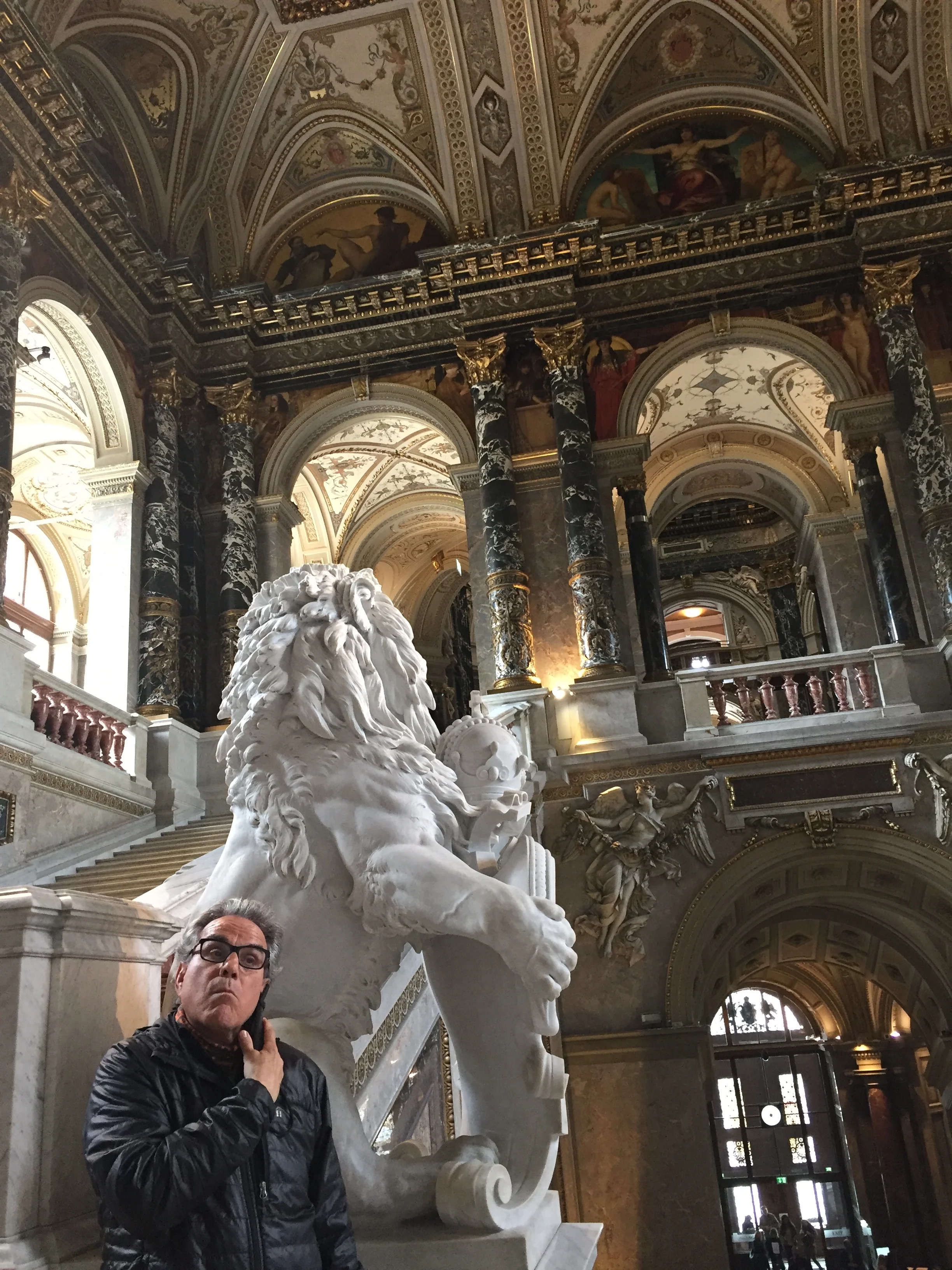
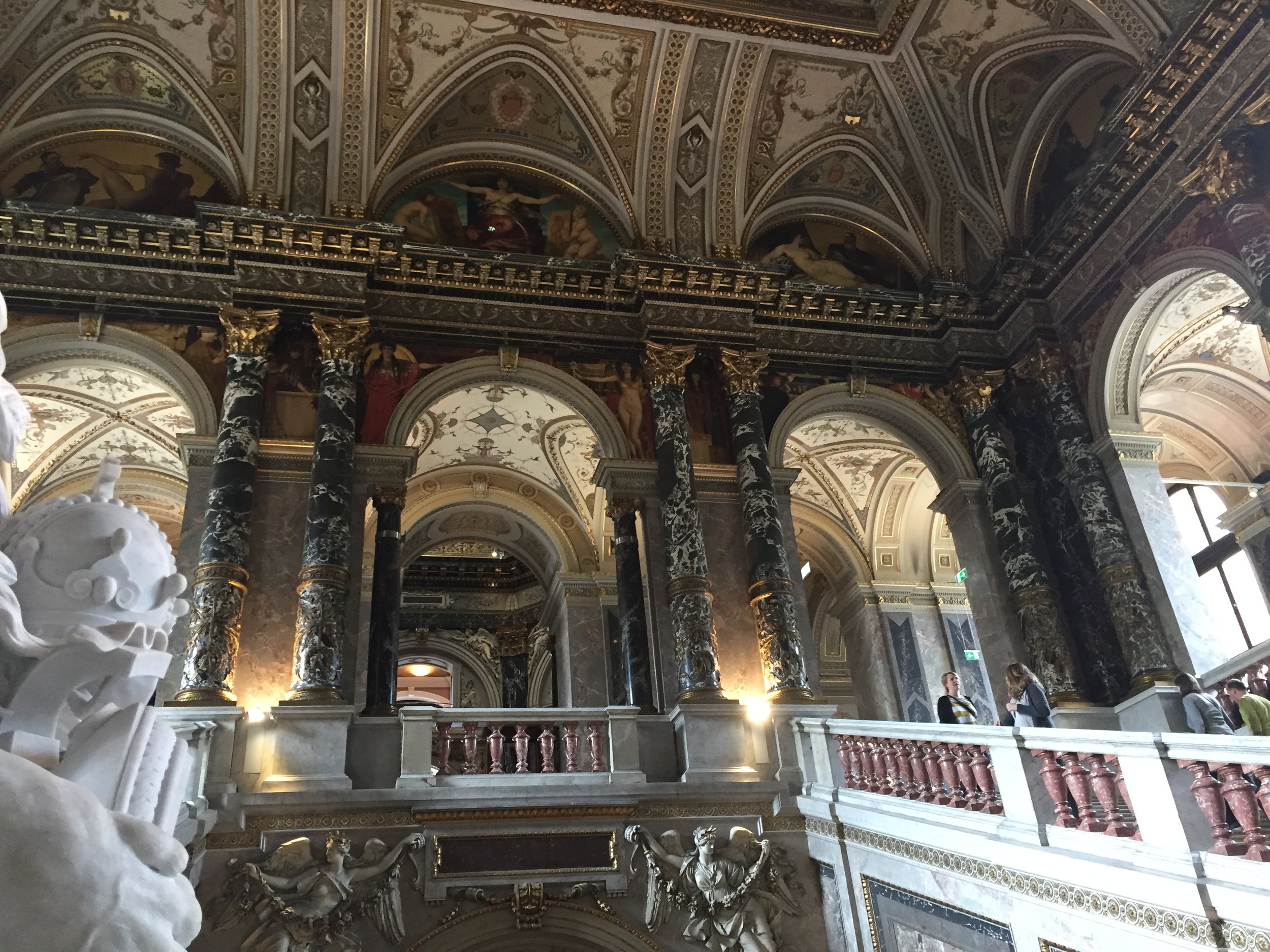
Then we visit the enormous Museum of Fine Arts, aka “Kunsthistorisches” Museums. There are 2 beautiful identical building directly across a plaza which houses Anthropological and historic relics. We chose to see classic works of art, including works by Rubens, Van Dyck, and Caravaggio. The entry way and foyer of this multi floor building is just spectacular. We thought the Sculpture Museum building in Berlin was grand, but this was its match or more. We ended our day at the Imperial Treasury. We had a very informative guide, but the subject matter was just too dry, and we felt exhausted. We returned home for a self prepared meal from the goodies we bought in the market. We also started to watch ½ of“Sound of Music” to get ready for our future day Trip to Salzburg.  Teddy and Staci are good sports to watch a 1965 movie musical. 

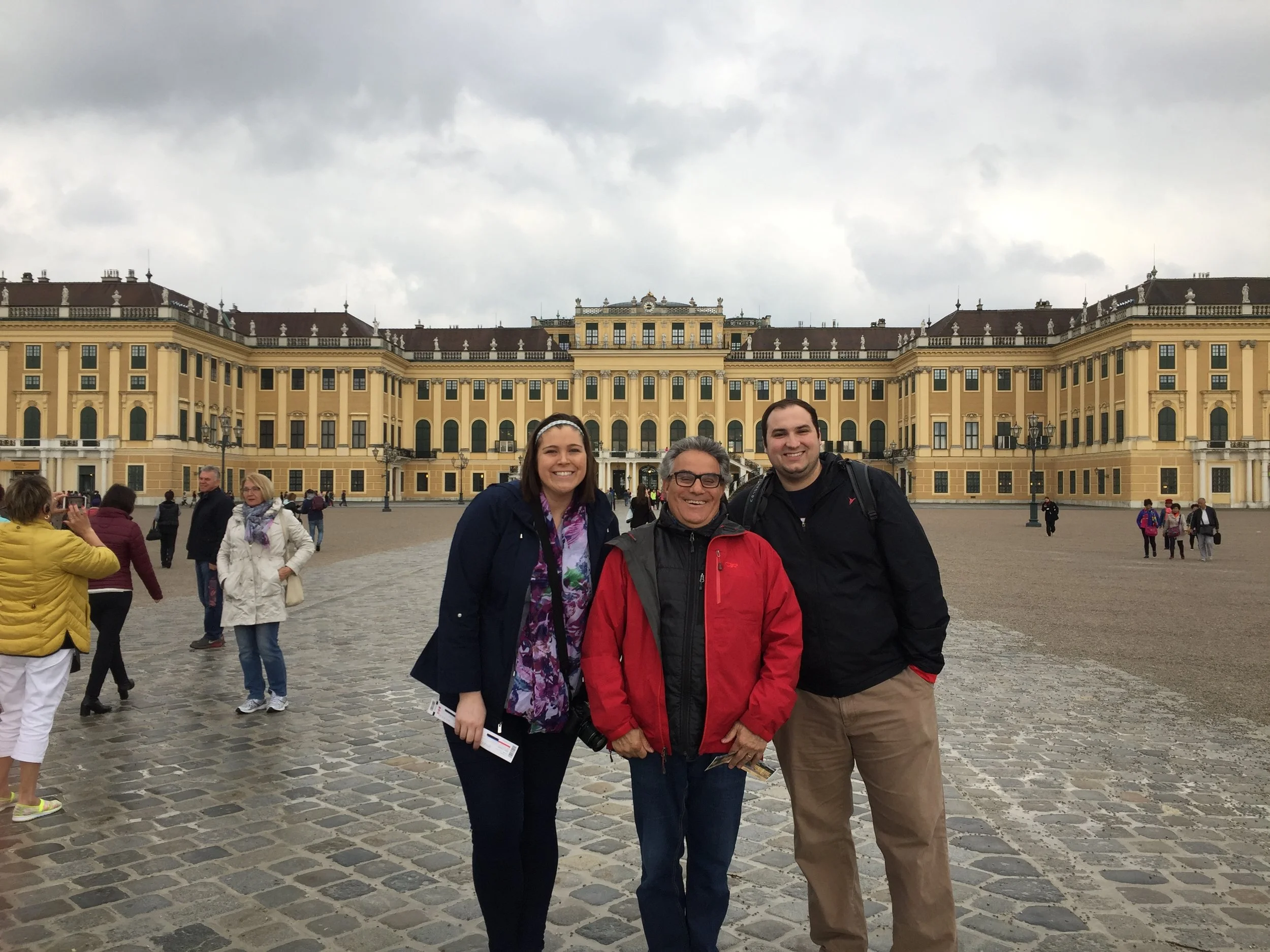
It is Easter Sunday. Another day another palace. We take the train to the Hapsburg’s summer Schloss Beleverde Palace for the day. It is considered one of the world’s finest Baroque styled Palace designed by Johann Hildebrandt. It is a masterpiece of art and decoration, with richly frescoed state apartments. The manicured gardens, sculptured fountains and semi-curved Colonnade are equally regal. We were smart to arrive in the early morning; as we returned to the train station to leave we avoided the crowds and still had time for afternoon sightseeing. 


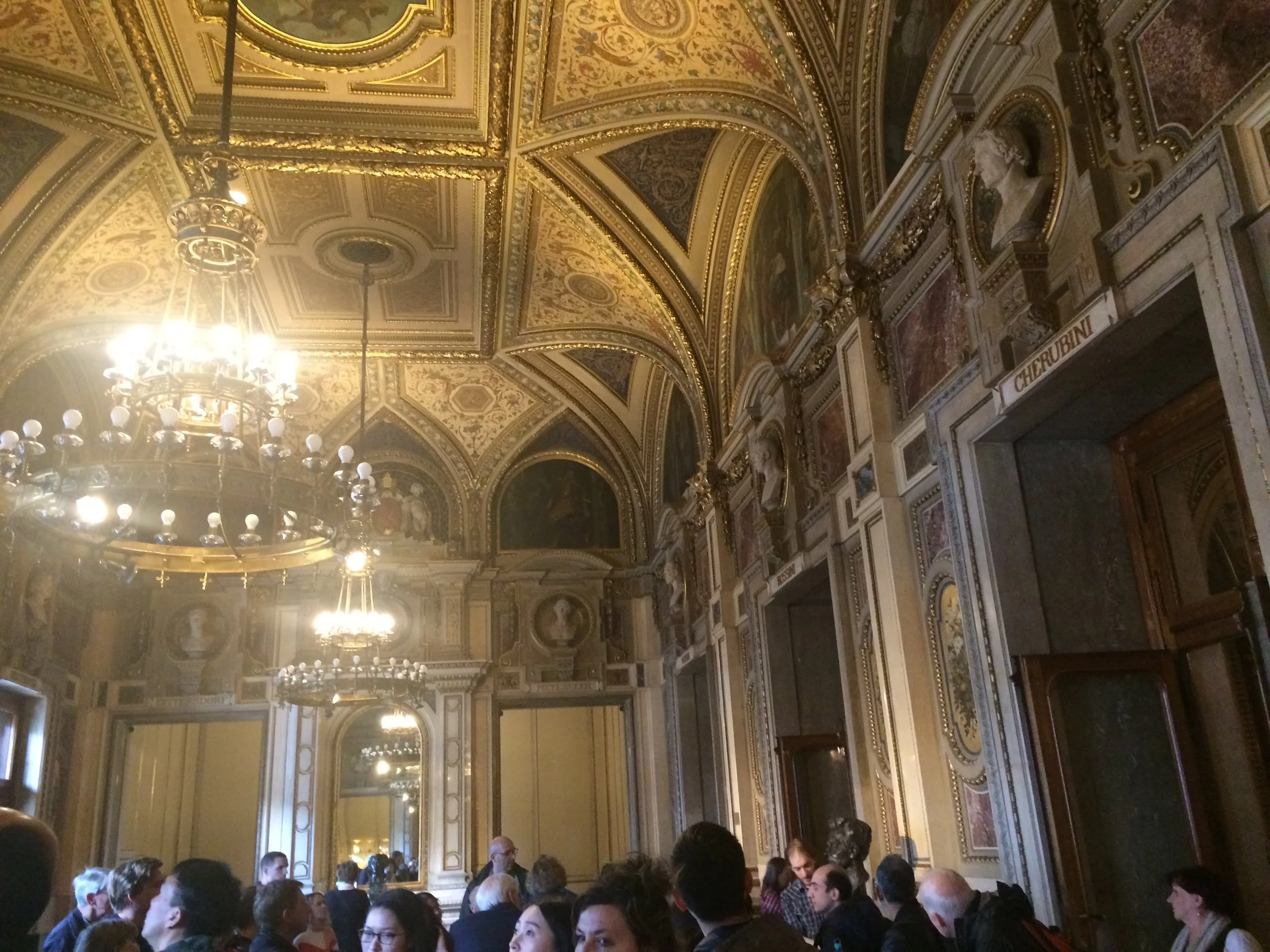
Always on the move and ready for action, we returned to Vienna proper and pushed on to see the Opera house and the “Hofburg” Imperial Palace, the home base of the Hapsburgs from 1273 to 1918.

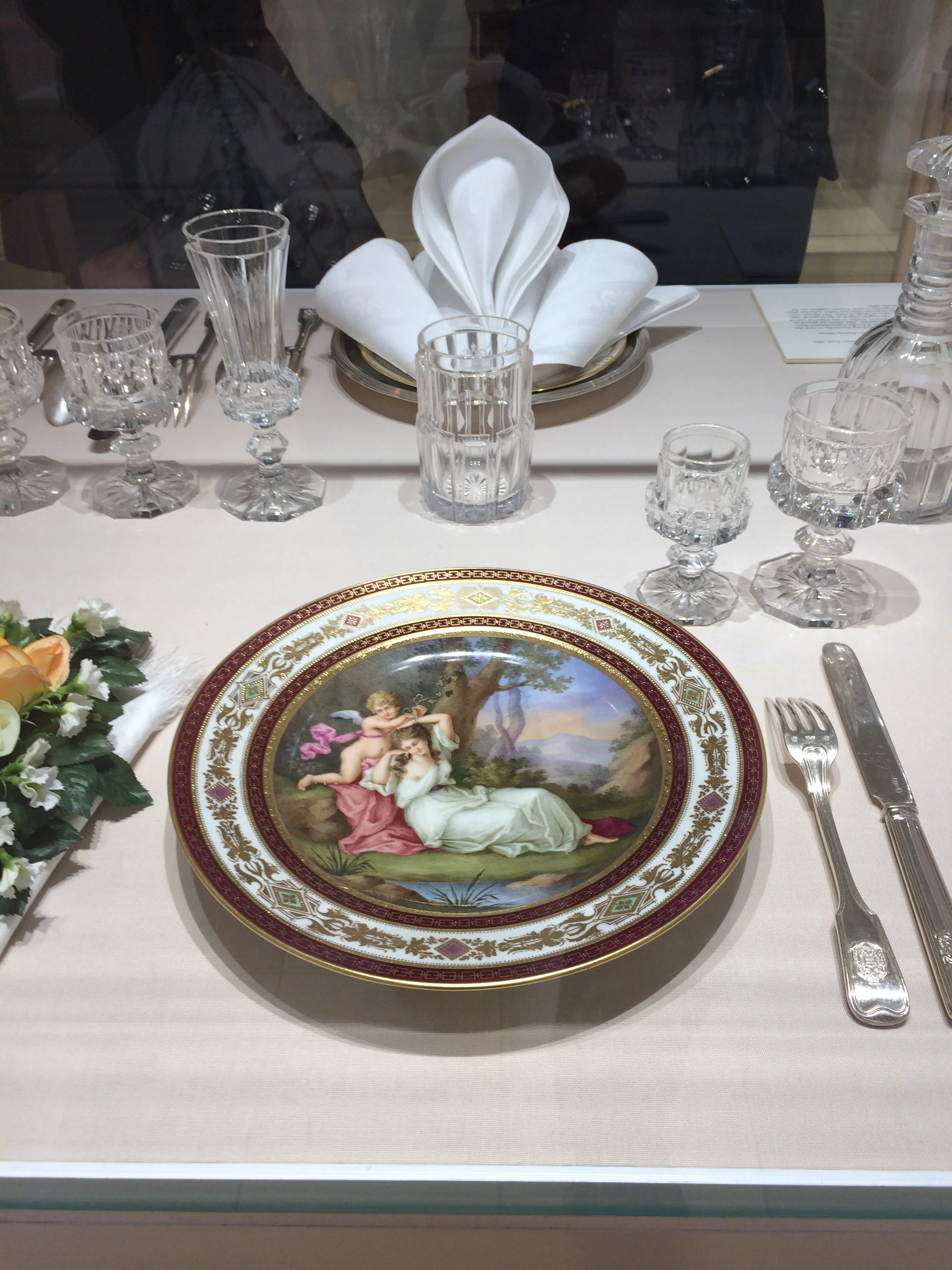
This palace exhibition includes the royal dishes, boring after the 20th set, the furnished Kaiser Apartments, once occupied by Franz Josef I, a popular ruler, and his beauty obsessed Empress Elizabeth, nicknamed “Sisi”. The dwelling is splendid, maybe not Louis XIV level, but grand. There is a separate “Sisi Museum” which presents an audio tour biography of Sisi, referencing her letters, as well as displays of gowns and personal items. Surprisingly, the exhibit portrays a rather negative image; she is a celebrity but not pumped up like a rock star.  Fascinating, but a missed meteoric marketing campaign or just unvarnished truth?  Finally we visit the Imperial Treasury which displays Crown Jewels and the 2860-carat Columbia emerald and alleged thorn from Christ’s crown. 

We returned home for a wonderful Easter dinner prepared by Janet and Staci.  That night we finished watching “Sound of Music”. Enjoyable, and Staci was humming the tunes all the next day. 

The next day it snowed in Salzburg. Teddy and Staci will tell you about the trip. On our last  day we cruised down the Danube River to Bratislava, Slovakia. Teddy and Staci planned the trip and will tell you about that too.