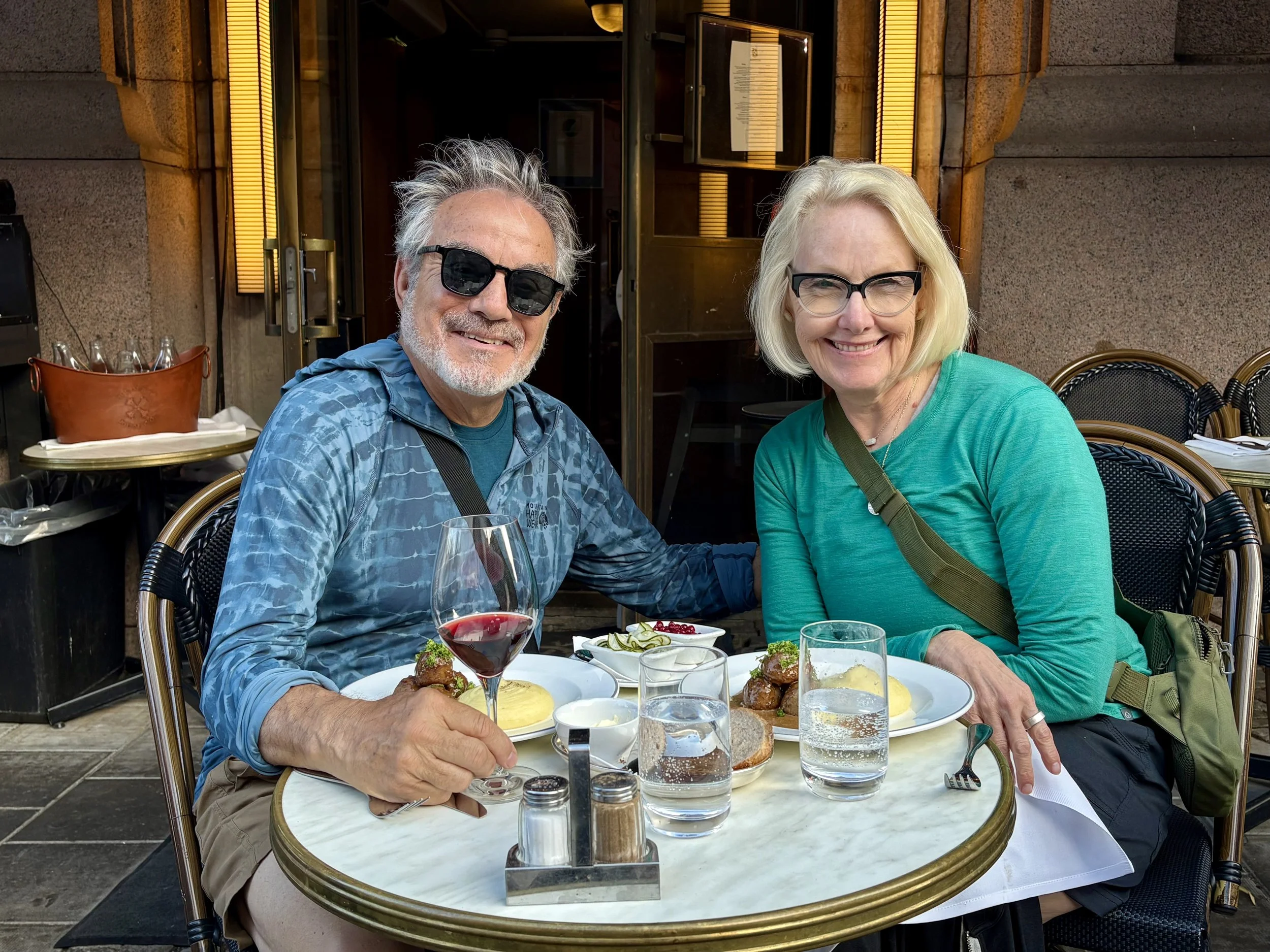
Day 1 - Arrival
We depart Norway by our first flight in Scandinavia. The plane is nice, Airbus 320, funny no tv monitors. Smooth ride high above the clouds. The view seemed like flying to the edge of the Arctic. Might be imagination.
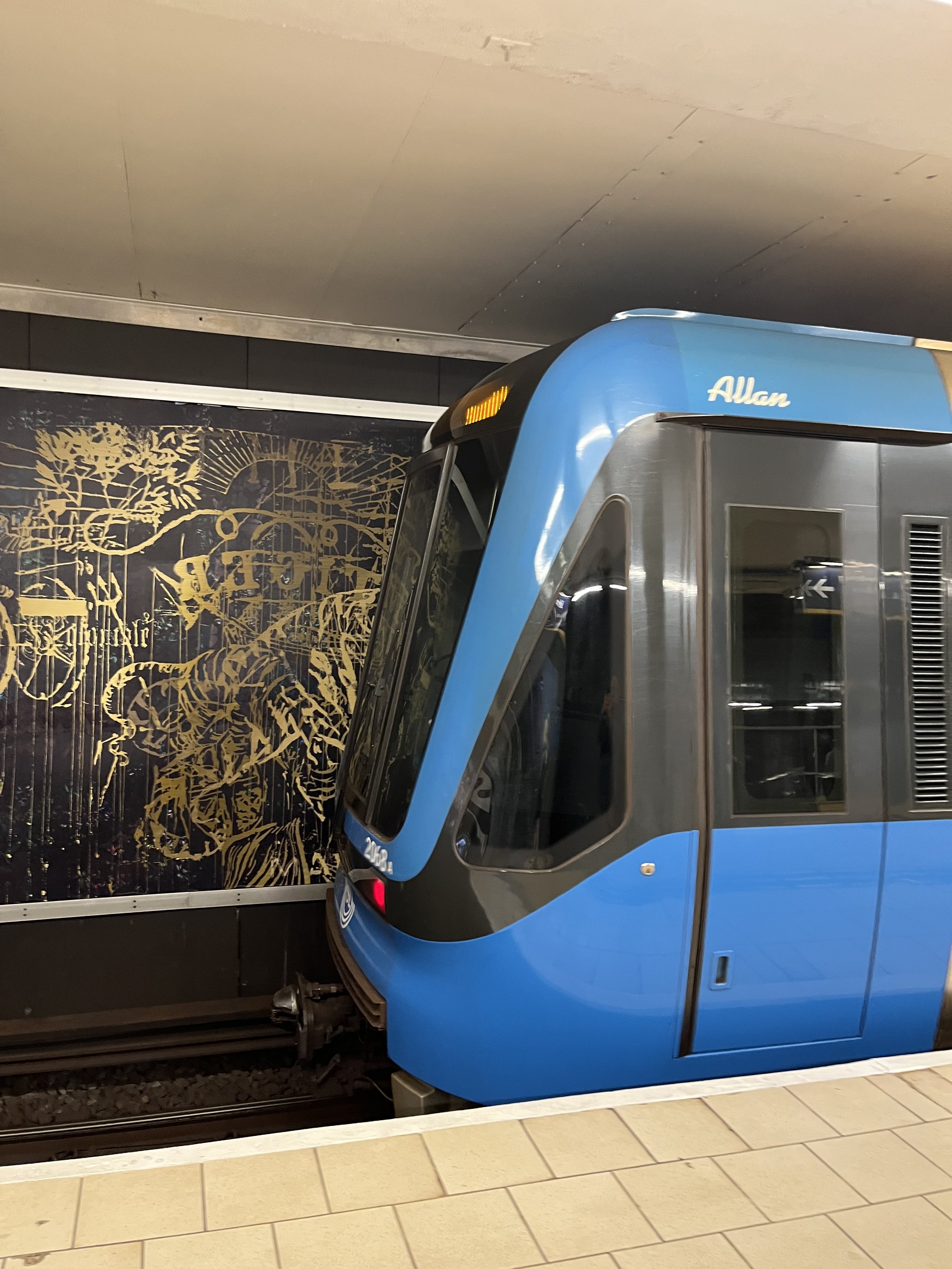
Upon landing at Stockholm, we follow directions to the Central Station Express train that is a high priced 17-minute trip to downtown, a monopoly locking up the market like the Heathrow express to London. Luggage present, no passport control because we are traveling between EU countries.
Immediately you notice from the train that Stockholm, Sweden is flat, not a hill, certainly not a mountain in sight. Must have been great for farming, past and present. Stockholm is the largest city by area and population. It was founded on La Gita island but has stretch over 5 surrounding islands connected by bridges and later by tunnels. Water is everywhere in wide channels, salty on the seaside and brackish on the lake side. These are not canals.
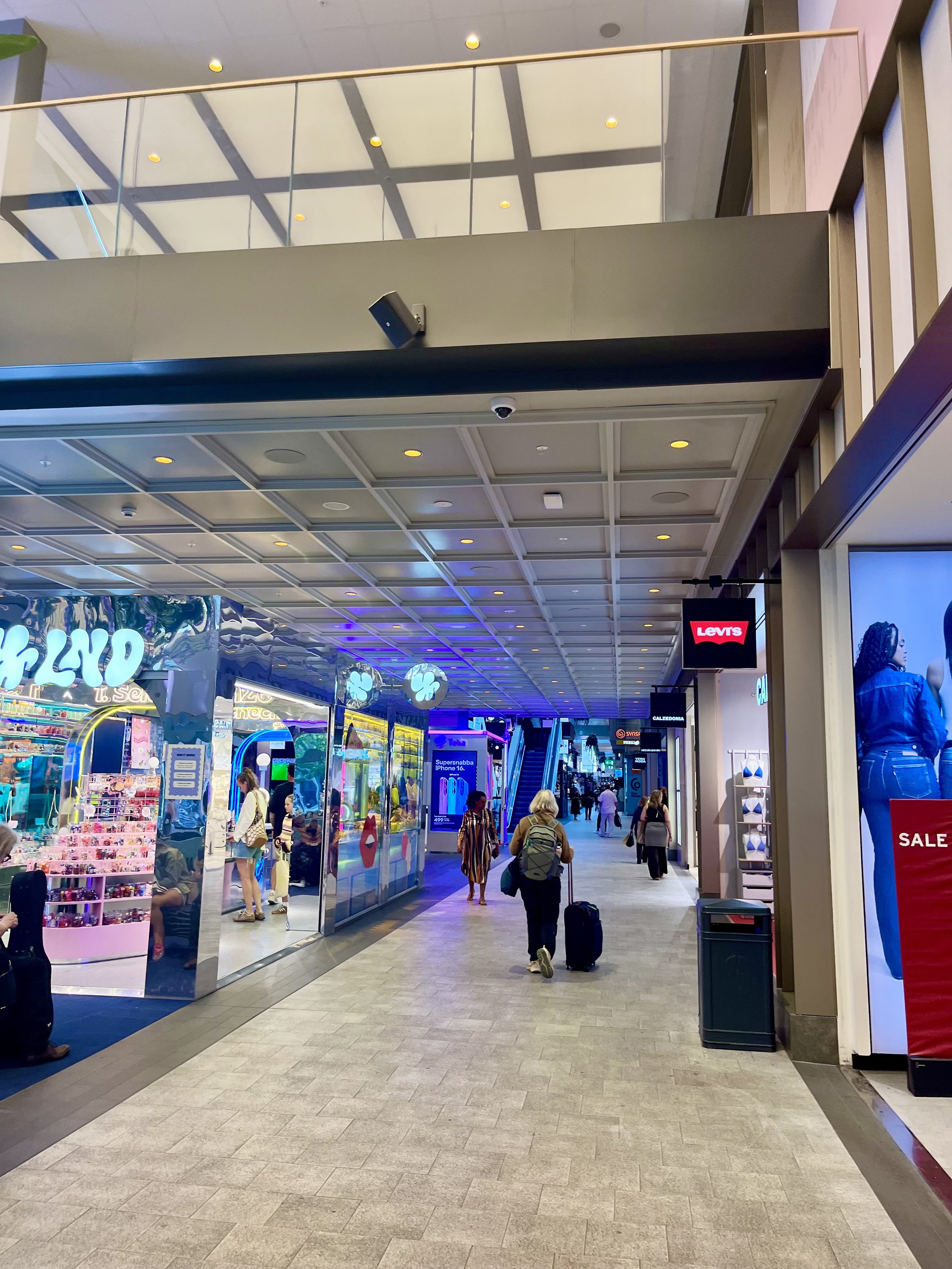
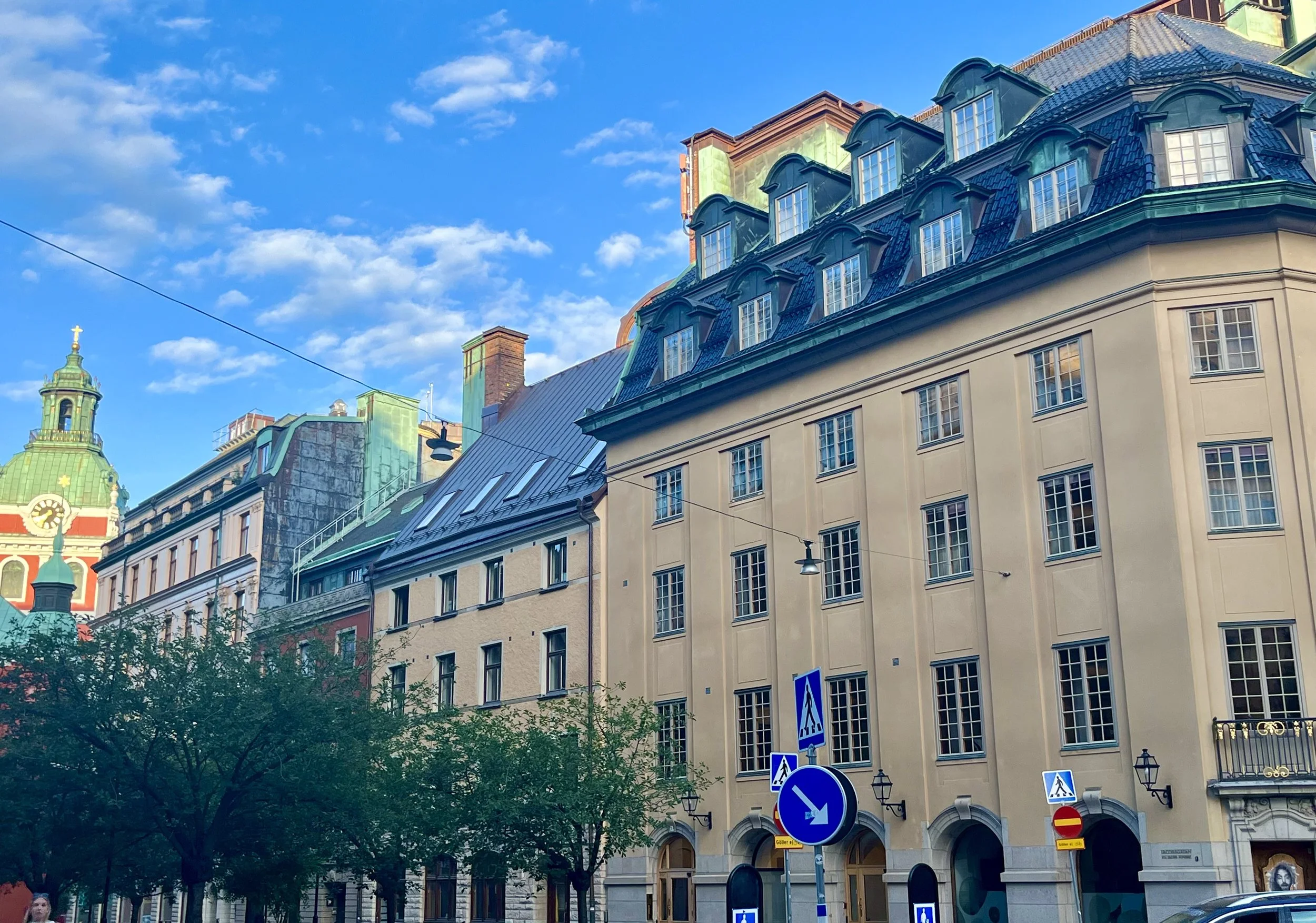
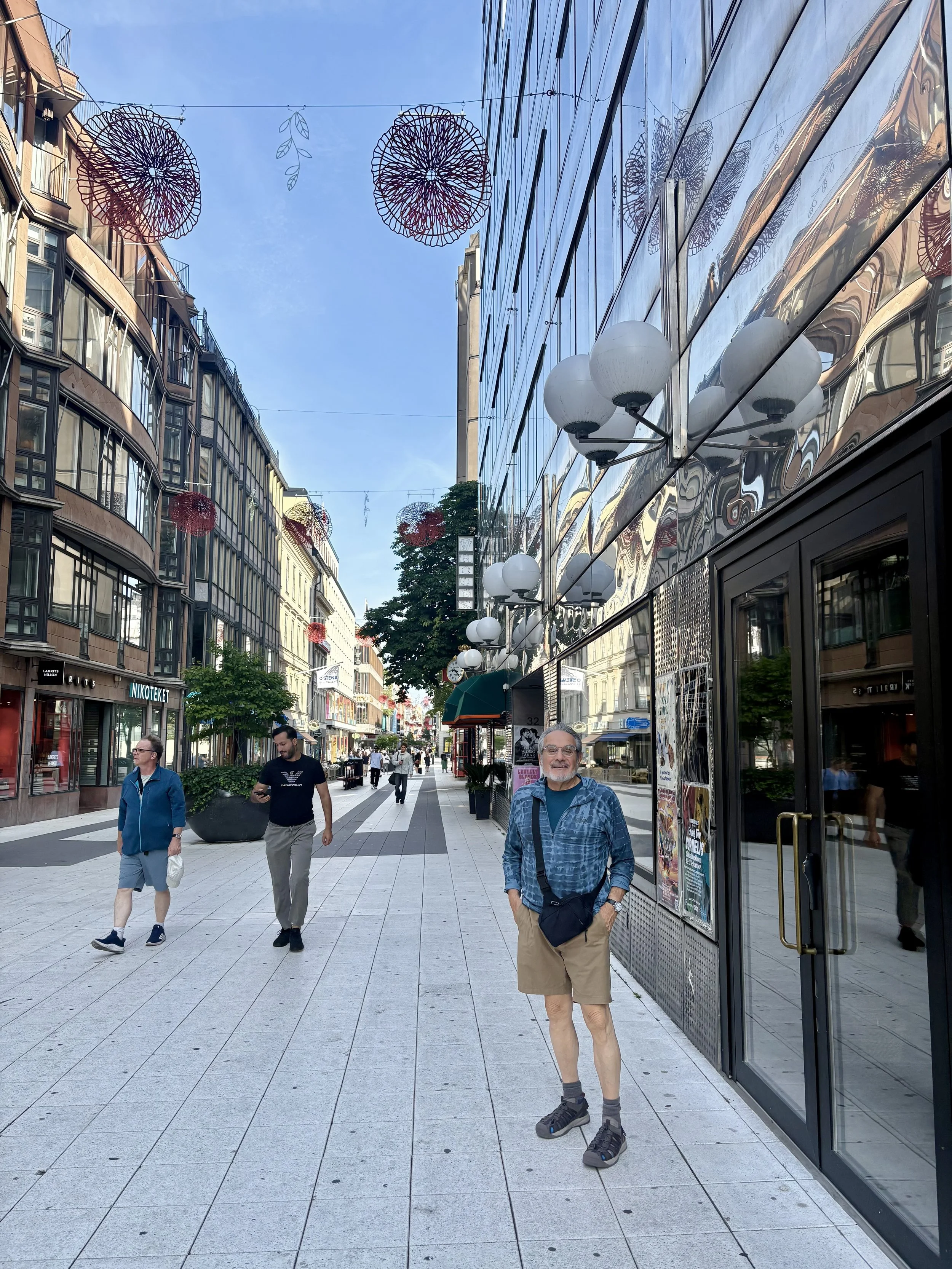
From Central Station we walk and wheel our small suitcases on some cobblestones but mostly cement, so Janet’s 3-wheeler + a peg is working rather well. We see the streets are bustling with people, but not many cars. There are several sub-level plazas where musicians are busking and people flowing. This is a clean city and seems well maintained. Downtown, most residential buildings are 6 stories with the baroque style architecture and other styles of old. But modern buildings and renovations of glass spring up in every corner. There are high rise cranes at many construction sites. Our google map takes us through a 3-story city block sized shopping mall called the Galleria, instead of street to street. The hotel looks to be on the other side of the mall, but this first time we have trouble picking the exit. Back on the street we do find our hotel, “At Six”. Flashy, all glass and marble, with a striking modern statue inside the street entrance by reception (but on the 4th level of the mall). We mention these details because this is a really great hotel, with larger rooms, great dining, helpful staff, and active area. Janet picked a good one. Our day is done.
Day 2
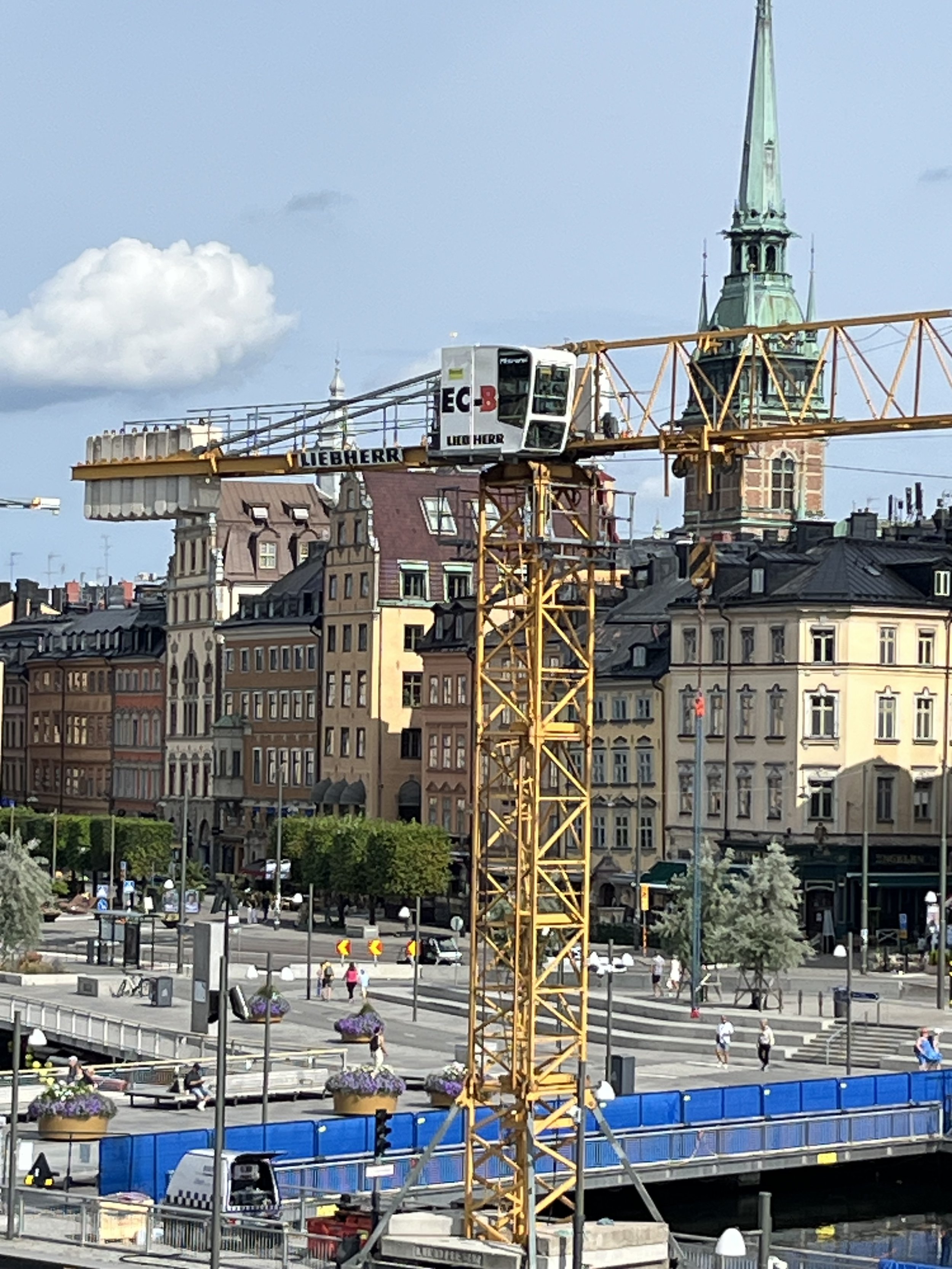
This morning we are signed up to a semi-private walking tour. We share the local guide, Kenneth, with two serious lady travelers, both nice, from New Zealand. We start outside a construction site on waters edge where 2 high cranes sit. The project is to erect a new Alfred Nobel Center and Museum on the waterfront near the Parliament Building and Royal Palace, completion likely in 2030-35. Currently, the Nobel Prize organization and award ceremony is in a large 5 story historic pavilion made of wood and plaster painted blue and trimmed in black. The celebratory dinner is conducted at the beautiful Stockholm City Hall in its great hall.
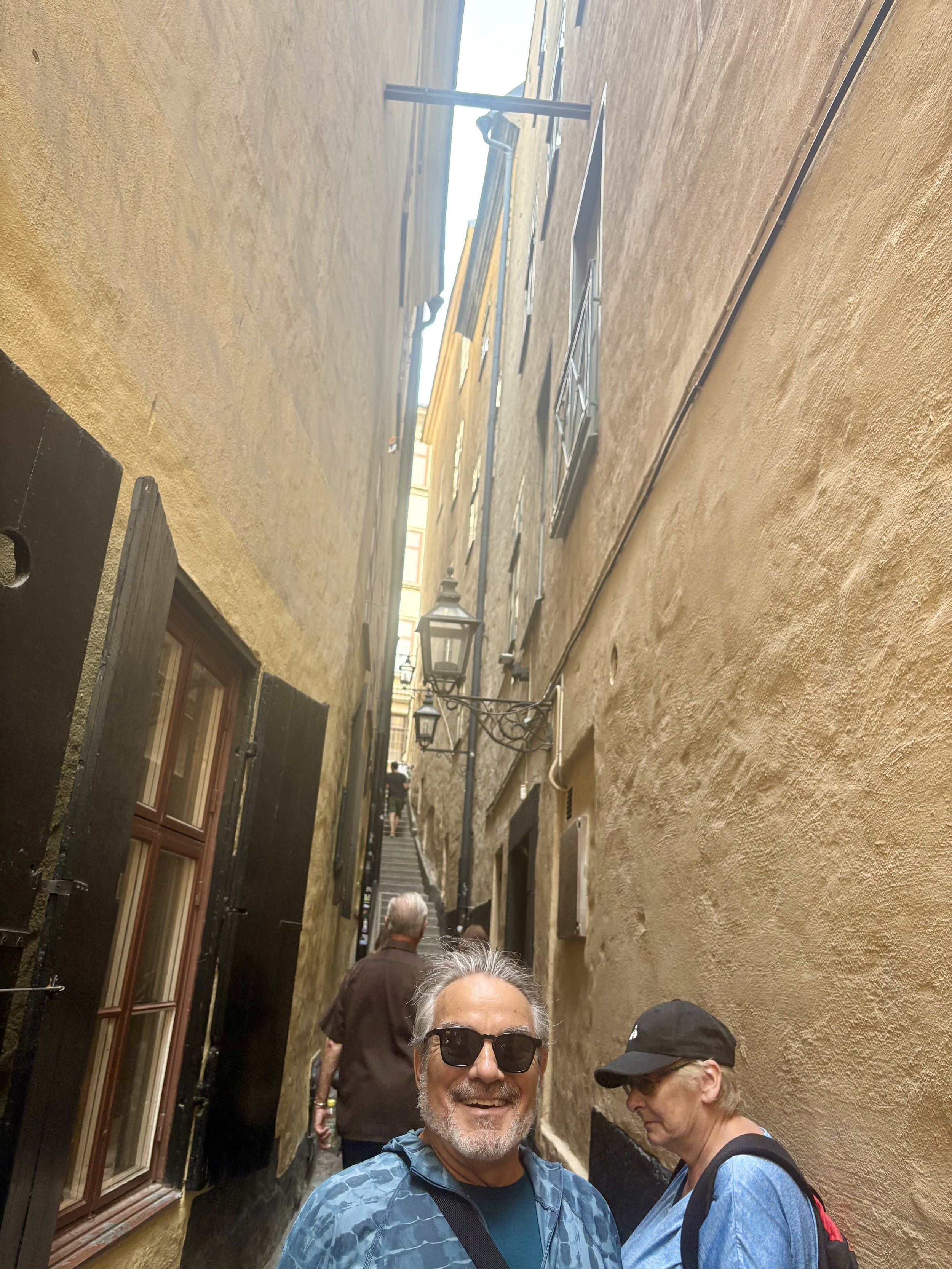
The most narrow of streets
We then move to the oldest part of the original Stockholm. At one time the government, its tax houses, and Royalty were seated near here and the population grew at this location. As seems too common in all of Scandinavia, fire destroyed a major portion of this old city. The 5-6 story buildings were made of wood and the new buildings are also made of wood, but the exteriors had to be covered with plaster to retard fire spread. The streets are narrow and fire suppression relied on hand-to-hand bucket brigades— extra measures retarding fire for more time to get help was needed. These structures still remain, for sale at times, but many are leaning forward or sideways due to the fact the foundations were built on top of years of settled trash dumps. We also note, installed iron support bars between floors to brace the wood framing and that fake windows were painted to avoid the “window tax.” Homes often had historic Badges of Insurance affixed above the door.
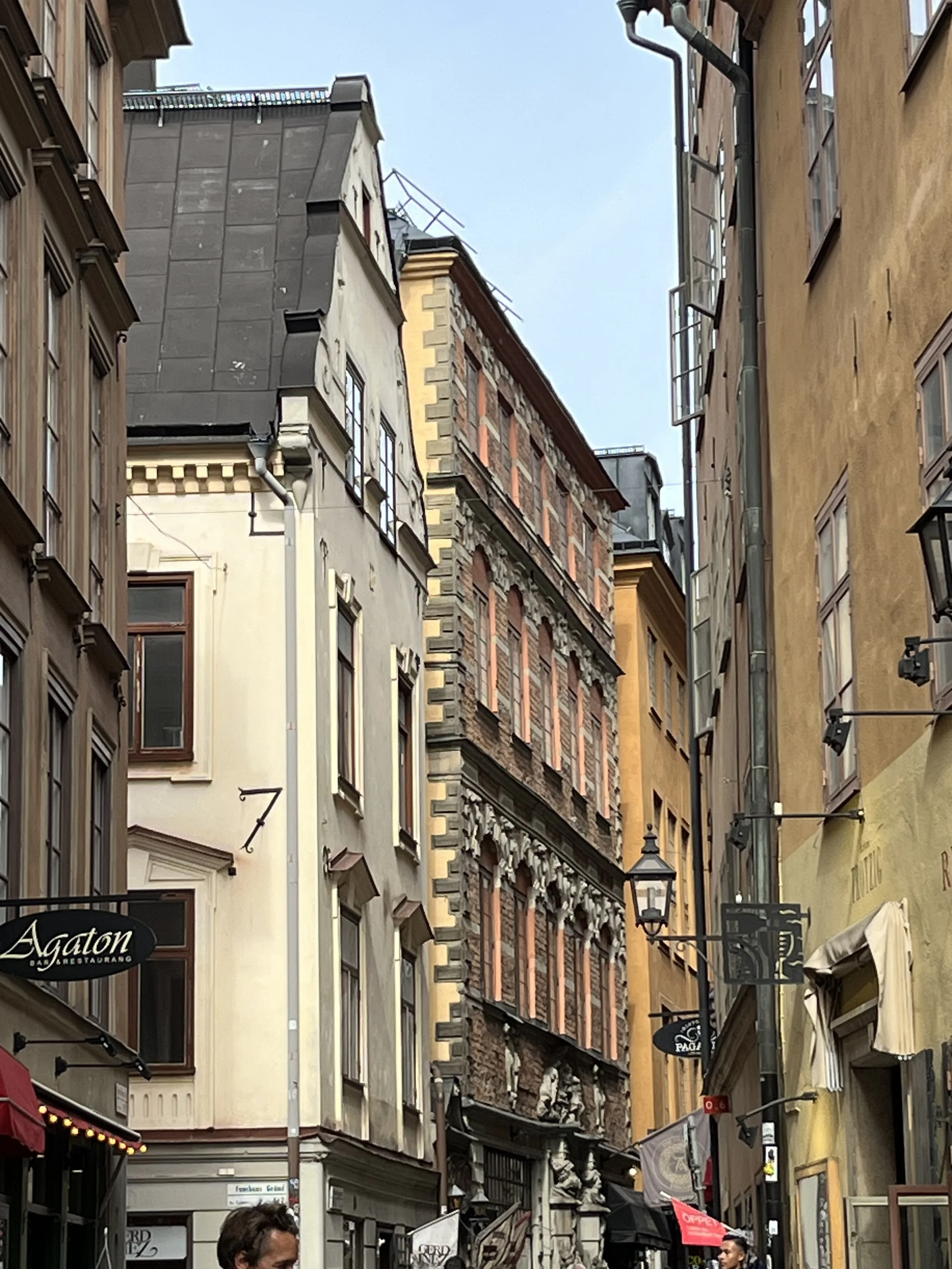
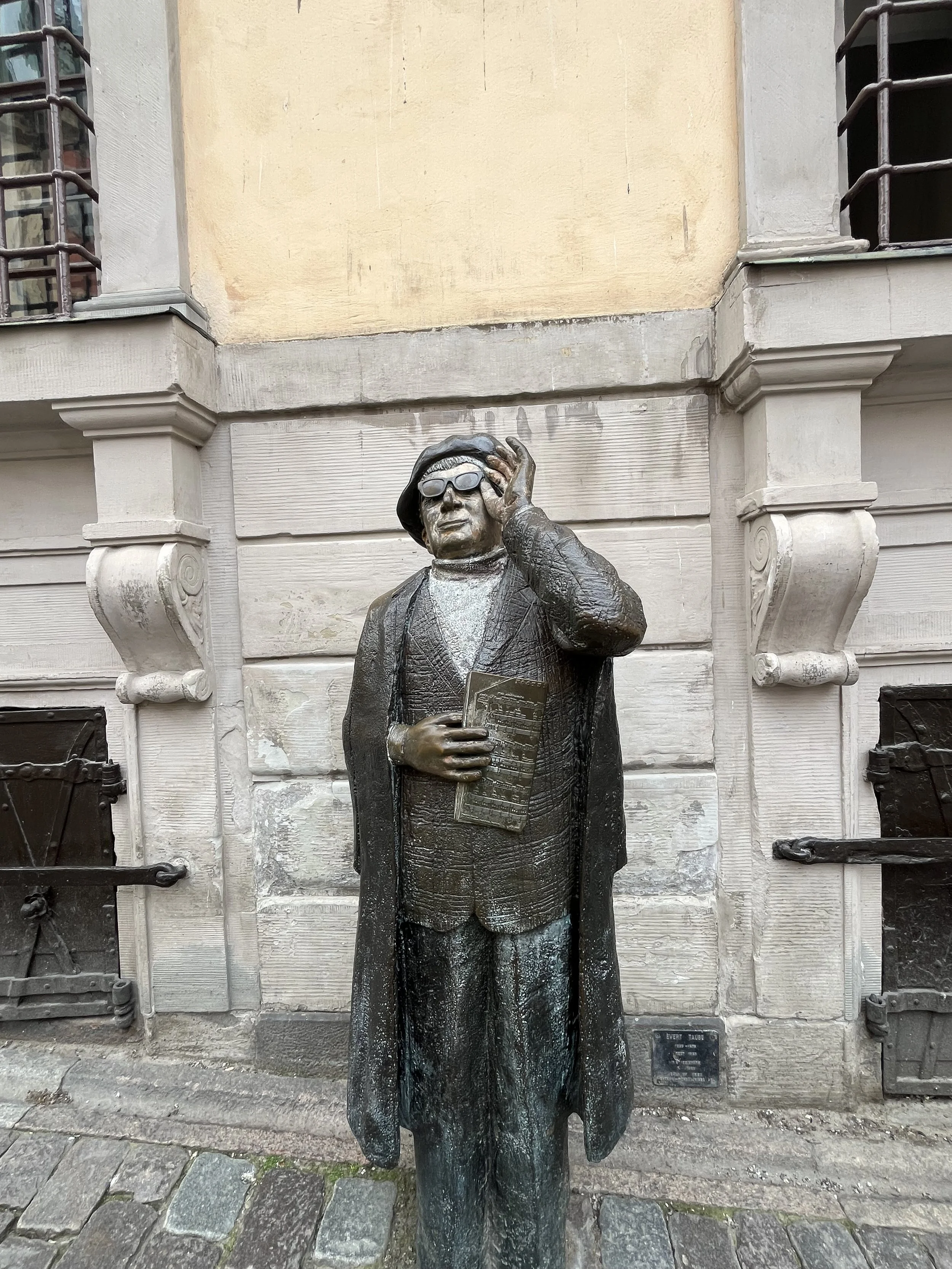
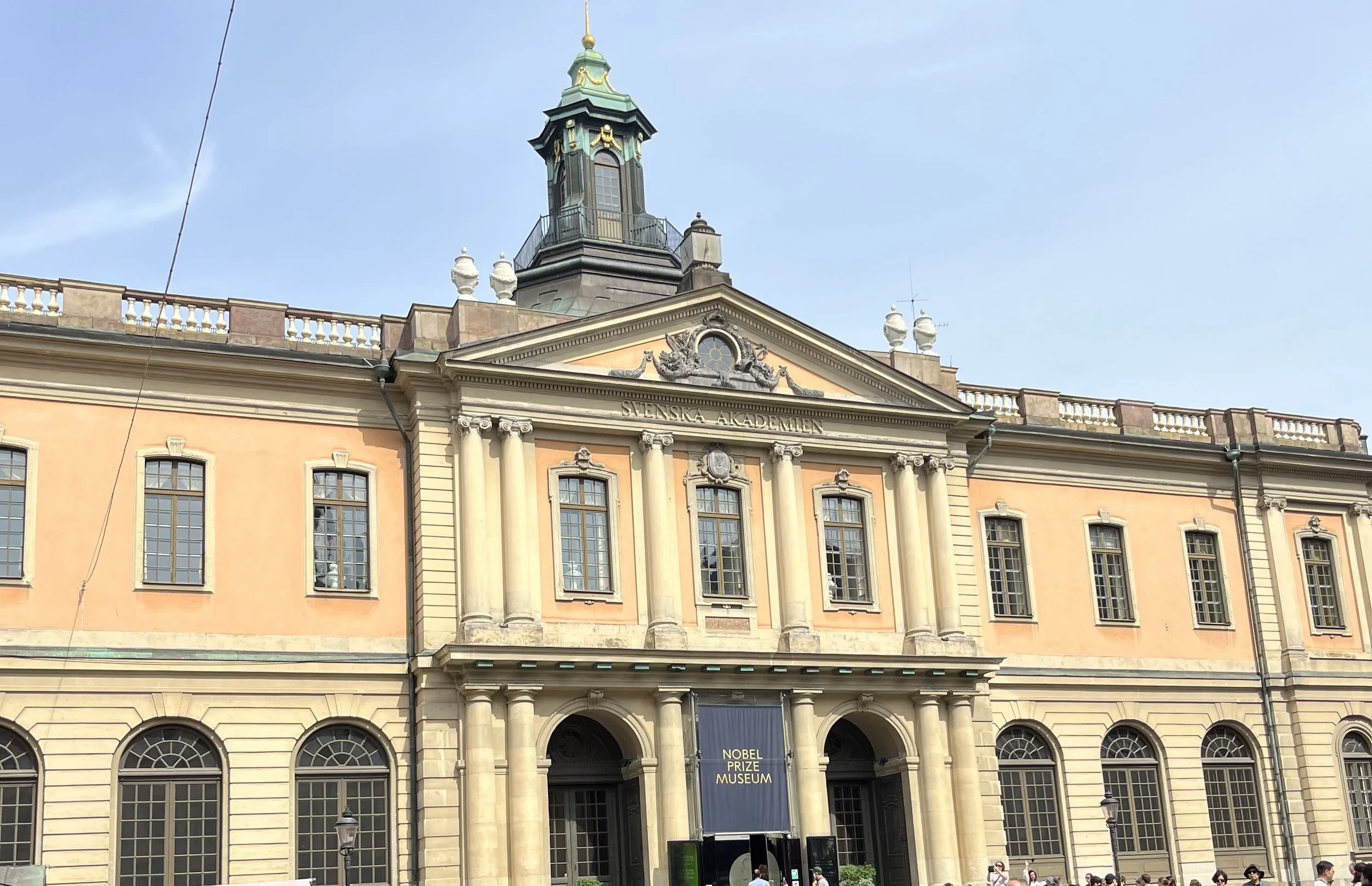
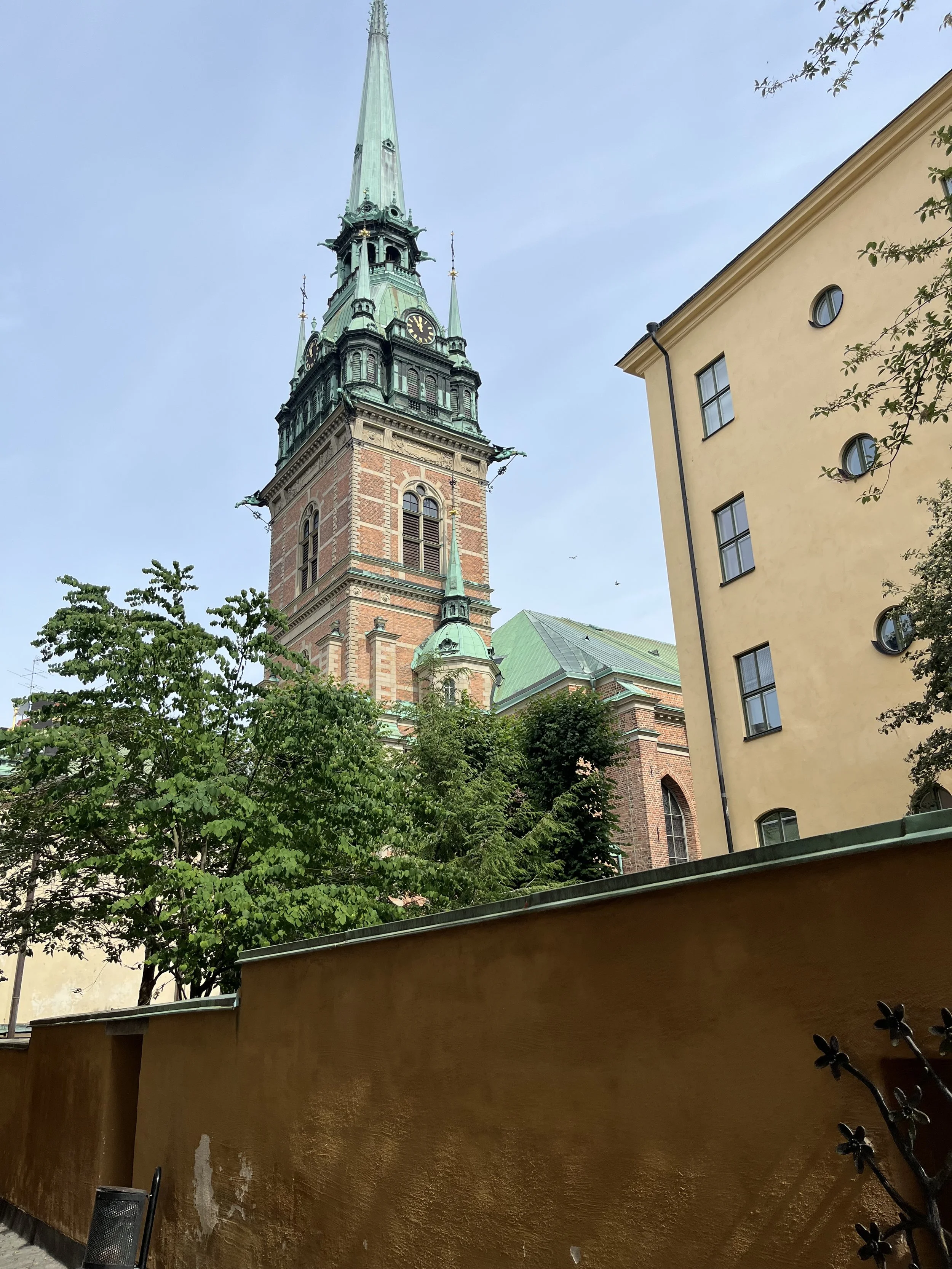
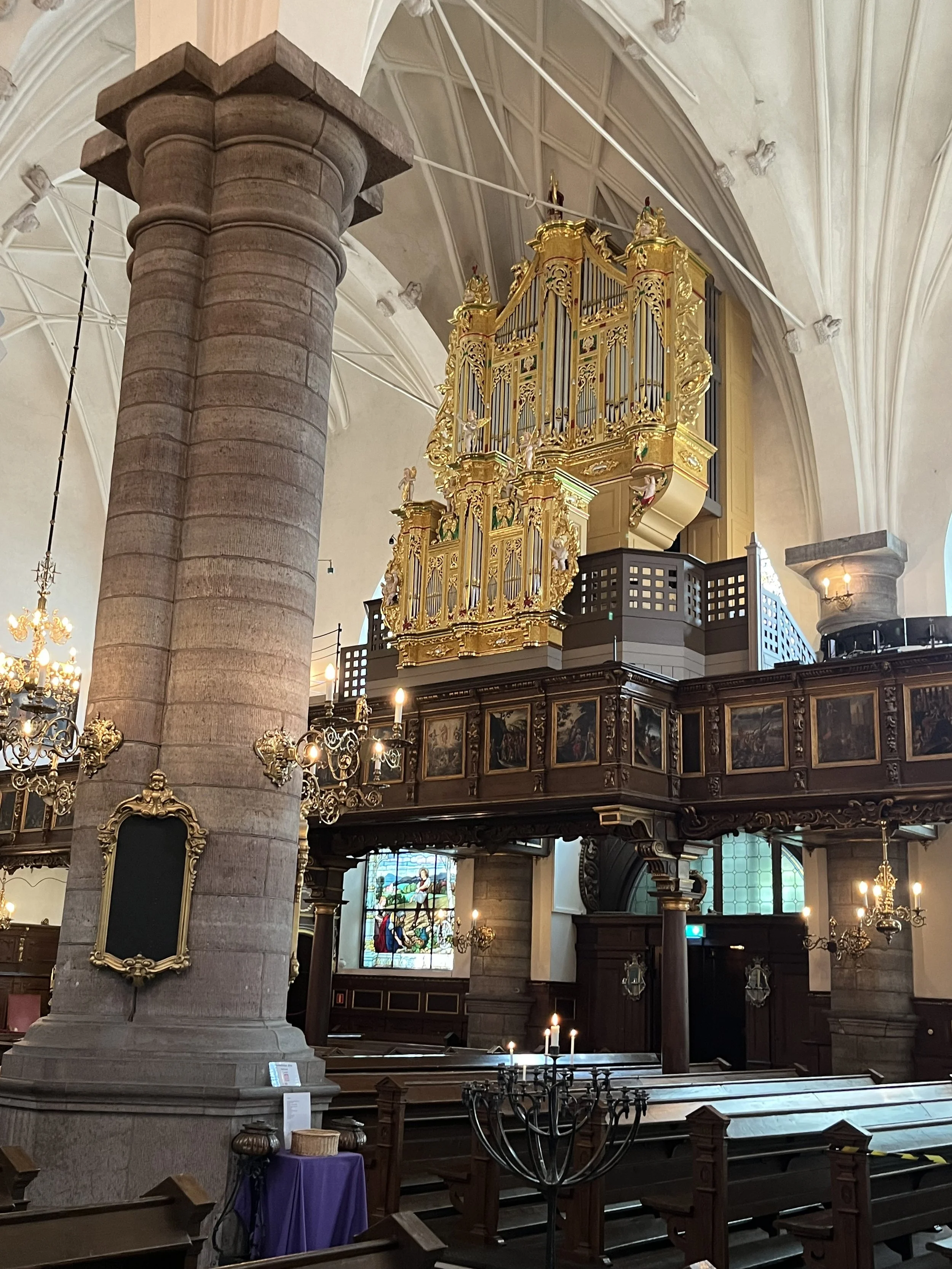
This area has a famous, if small, central plaza at the end of “Jurntoget” street that at one time housed the Treasury Building, the Customs House, and the home of favorite poet who conned the local pubs and bistros to entertain him for free. His bronze statute is affixed in the square. A few streets away sites a large Lutheran church, that was built by the Catholic King before the reformation and surprisingly keeps many of the trappings A little further is the first Nobel Prize Museum, wood with plaster structure, on a small plaza where the nominees are first named to the press. No other ceremony.
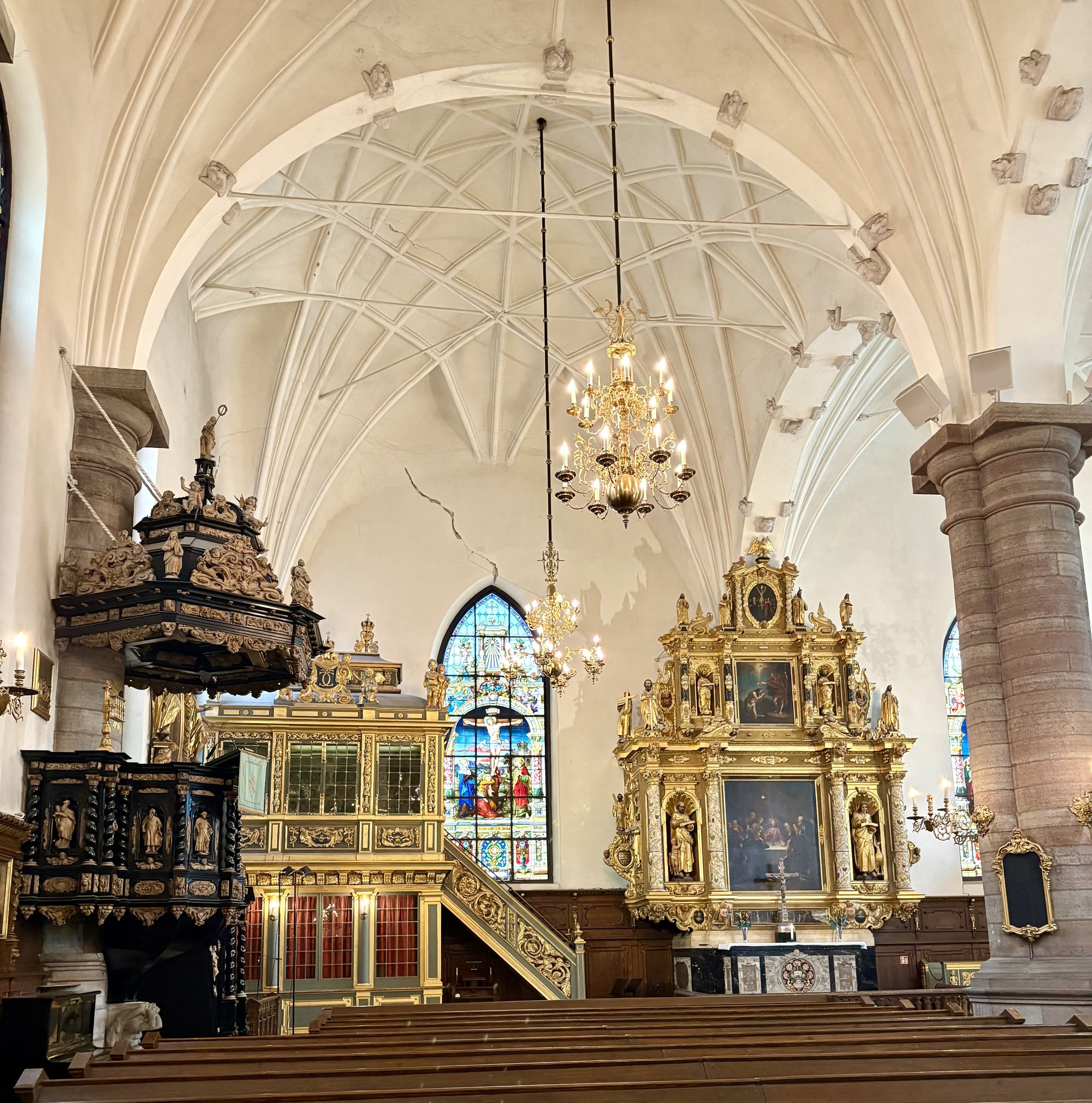
This area was great to visit. Kenneth’s tour is not over.
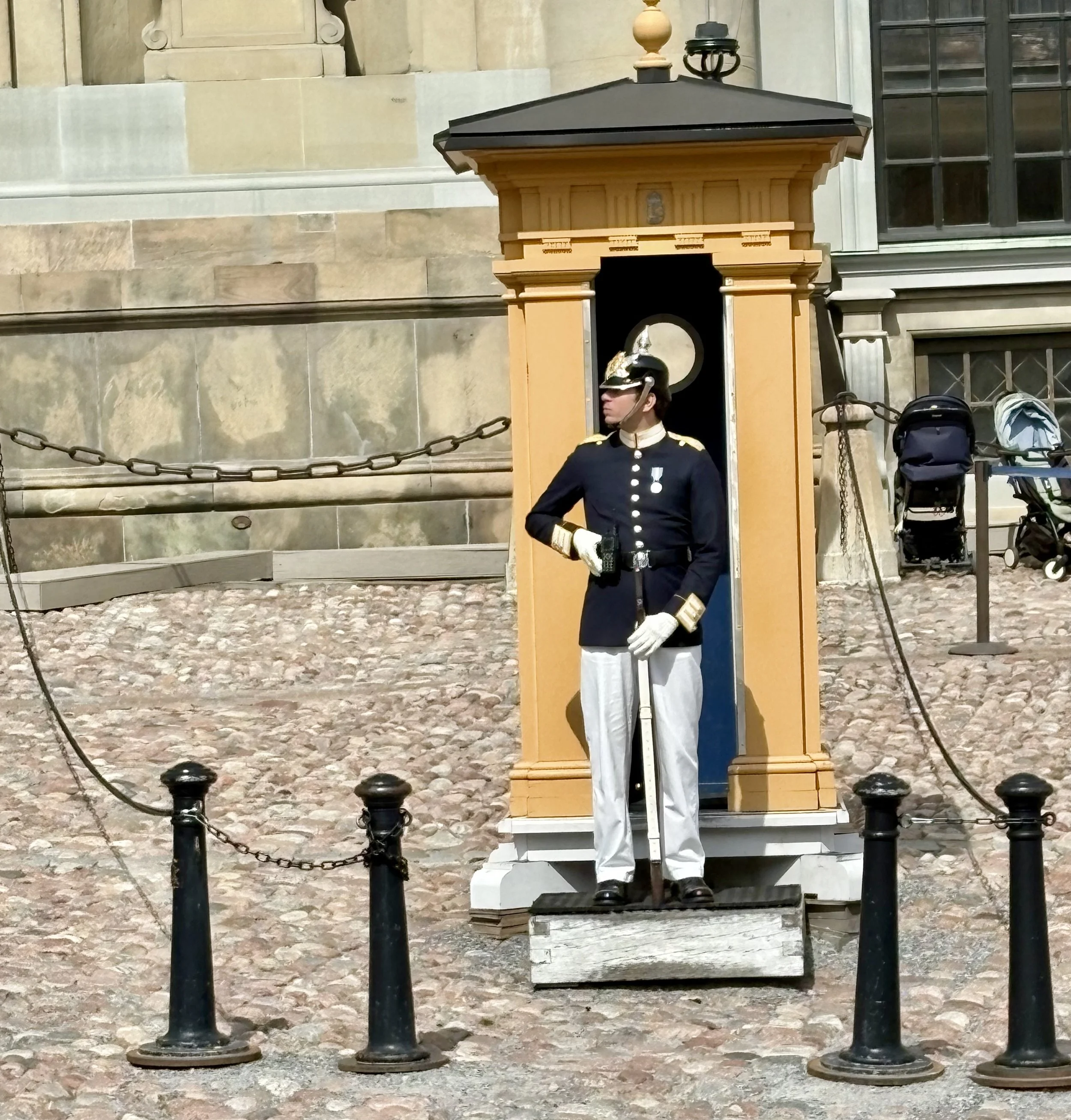
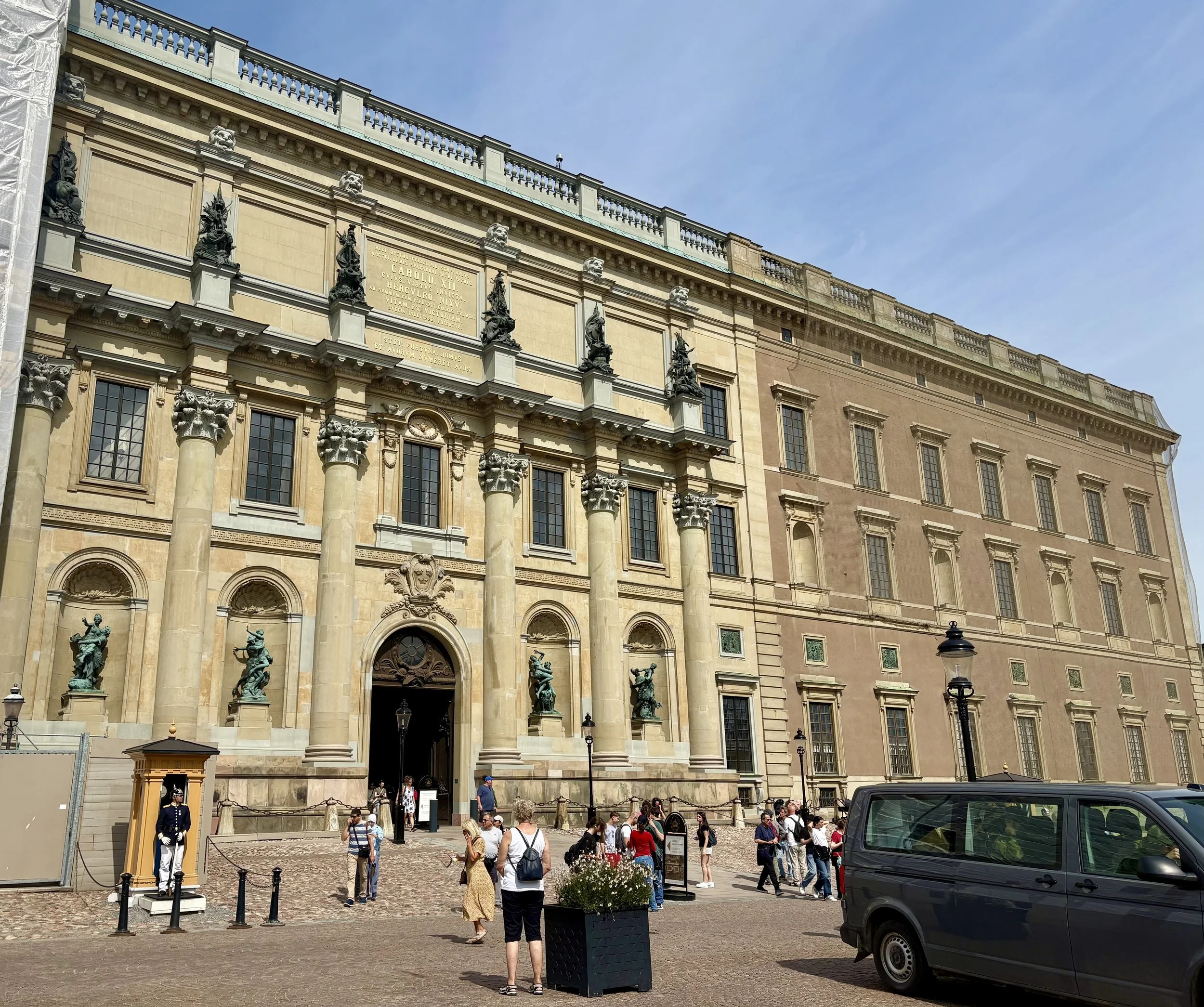
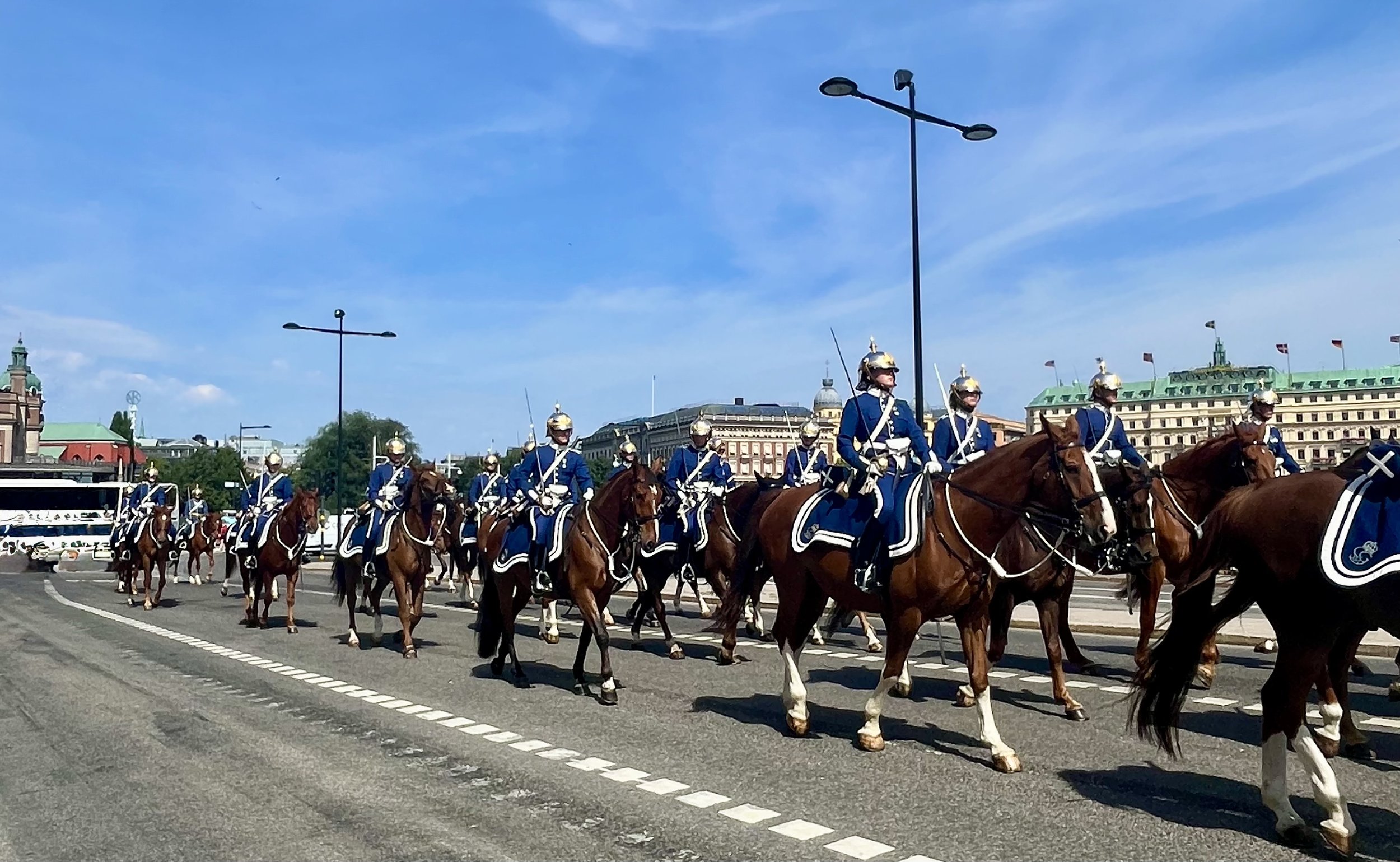
Our group passes over another bridge to walk toward the current Royal Palace. It is a massive structure seated at the main boulevard facing another water channel. We were lucky enough to observe the changing of the Mounted Guards of the Palace, about 30 soldiers adorned in historic uniforms riding their horses in formation. Across the water channel is the House of Parliament another massive and amazing structure. That is the stopping point of the tour. We say farewell. But Kenneth stays long enough to direct us toward our next stop.
Parliament
Wonderful lunch
Next we jump on a tram to Djurgarden, breaking for lunch at a wonderful outdoor café for a taste of traditional food, then we are off to one of our most anticipated places, “The Vasa Museum.”
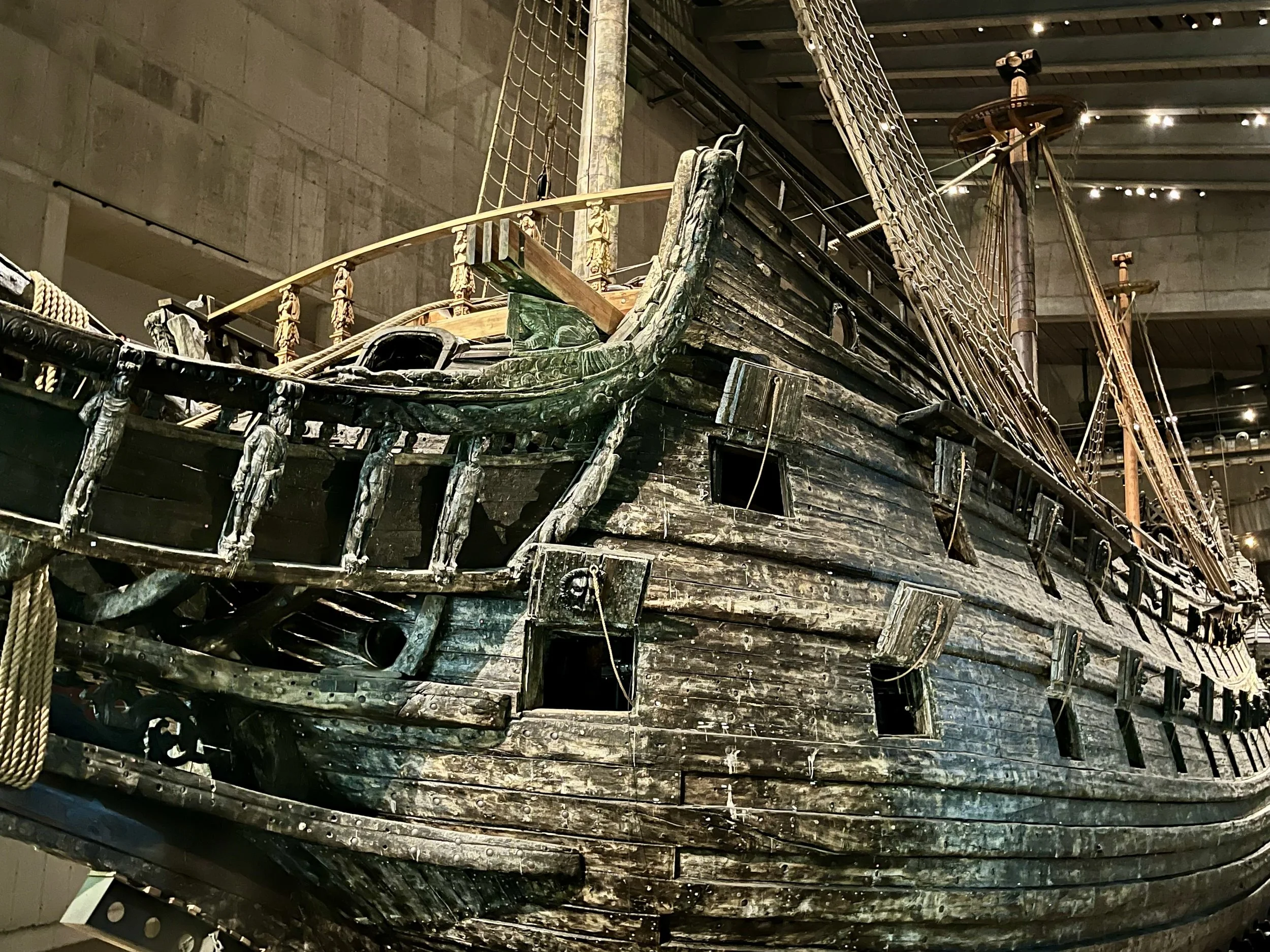
This is a spectacular historic exhibit. Background is helpful. In the early 17th century Sweden was constantly at war with its neighbors—Denmark, Poland, and Russia. The struggle was for the dominance of the Baltic Sea, its estuaries and trading ports.
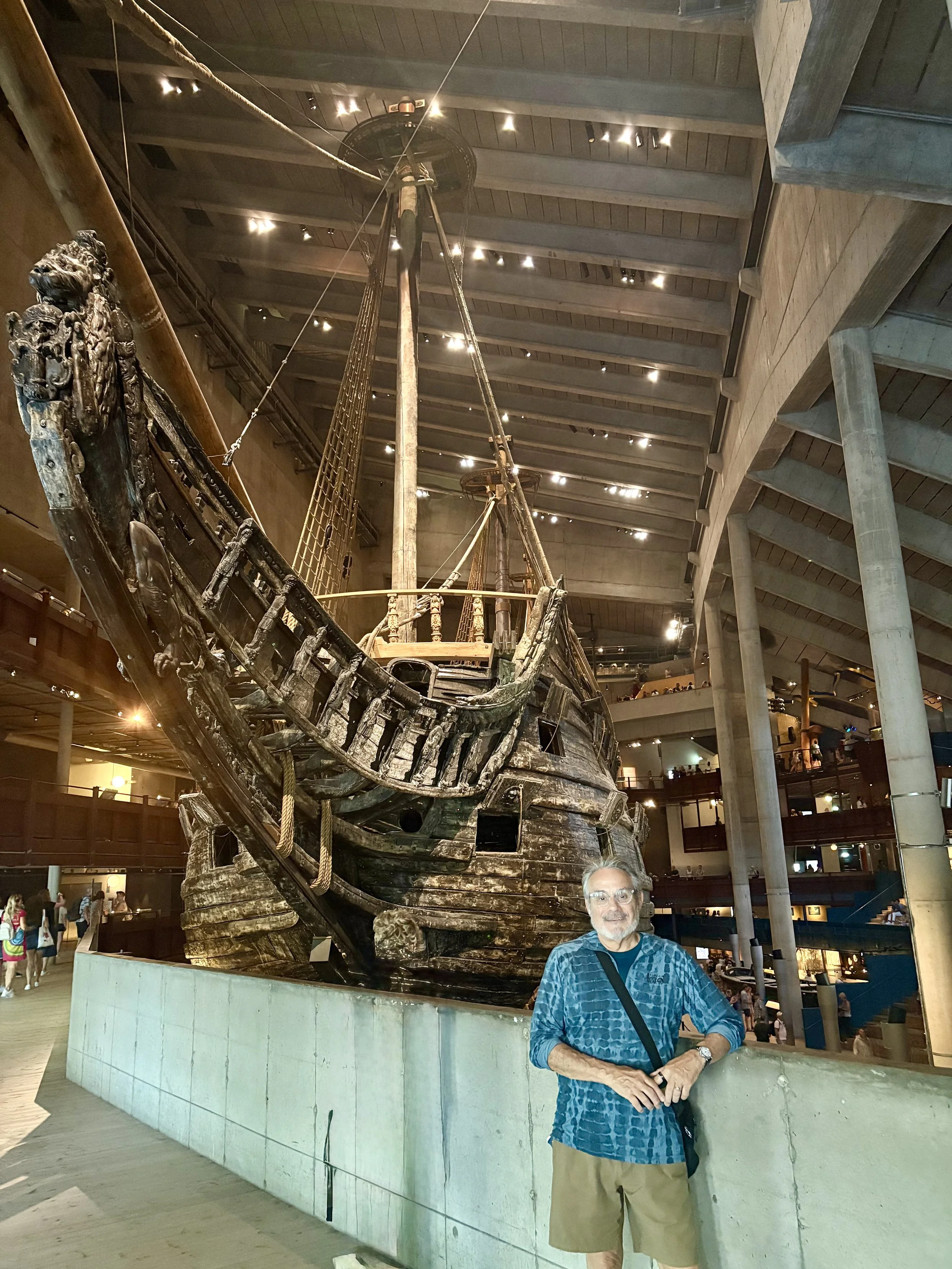
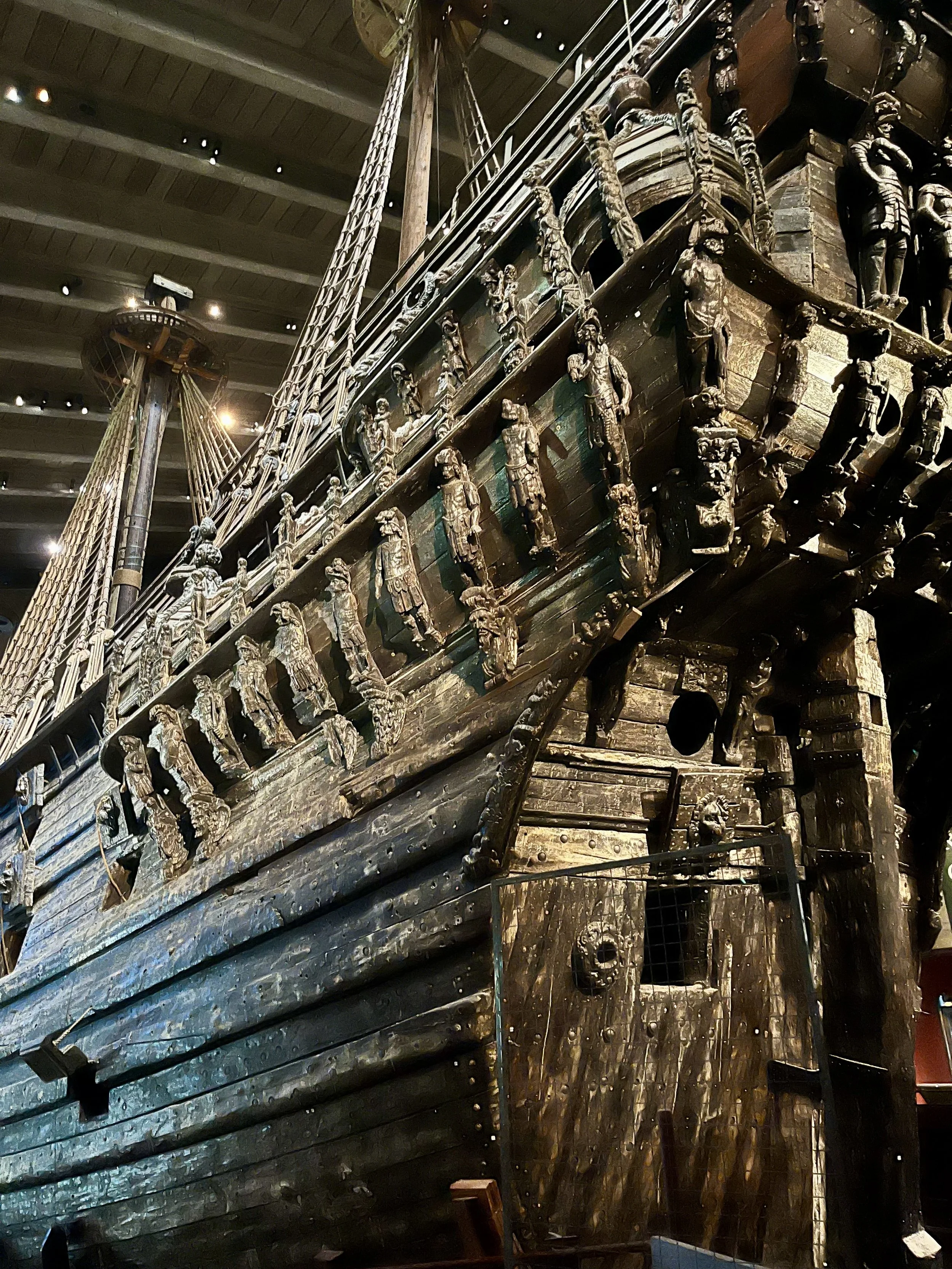
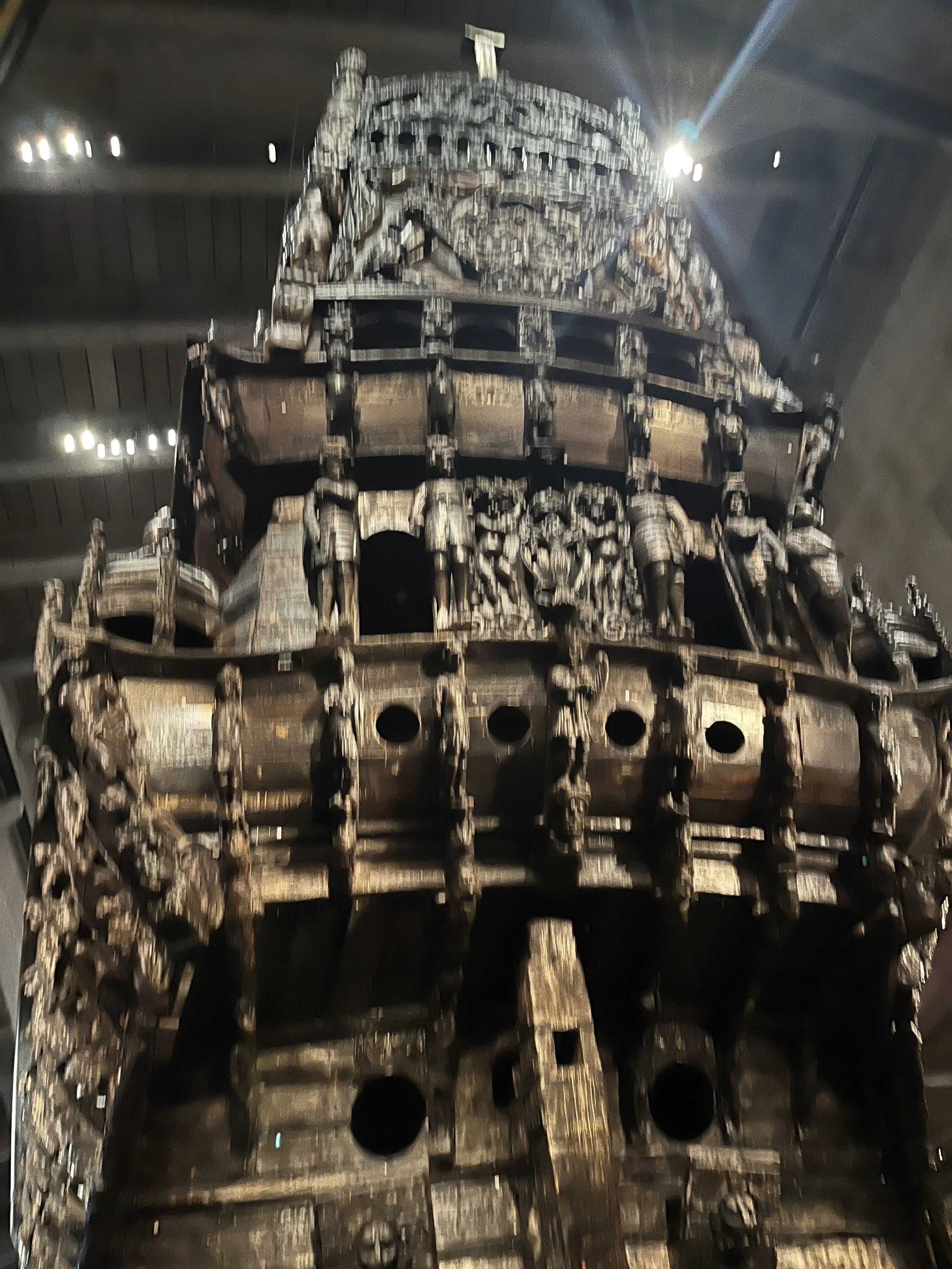
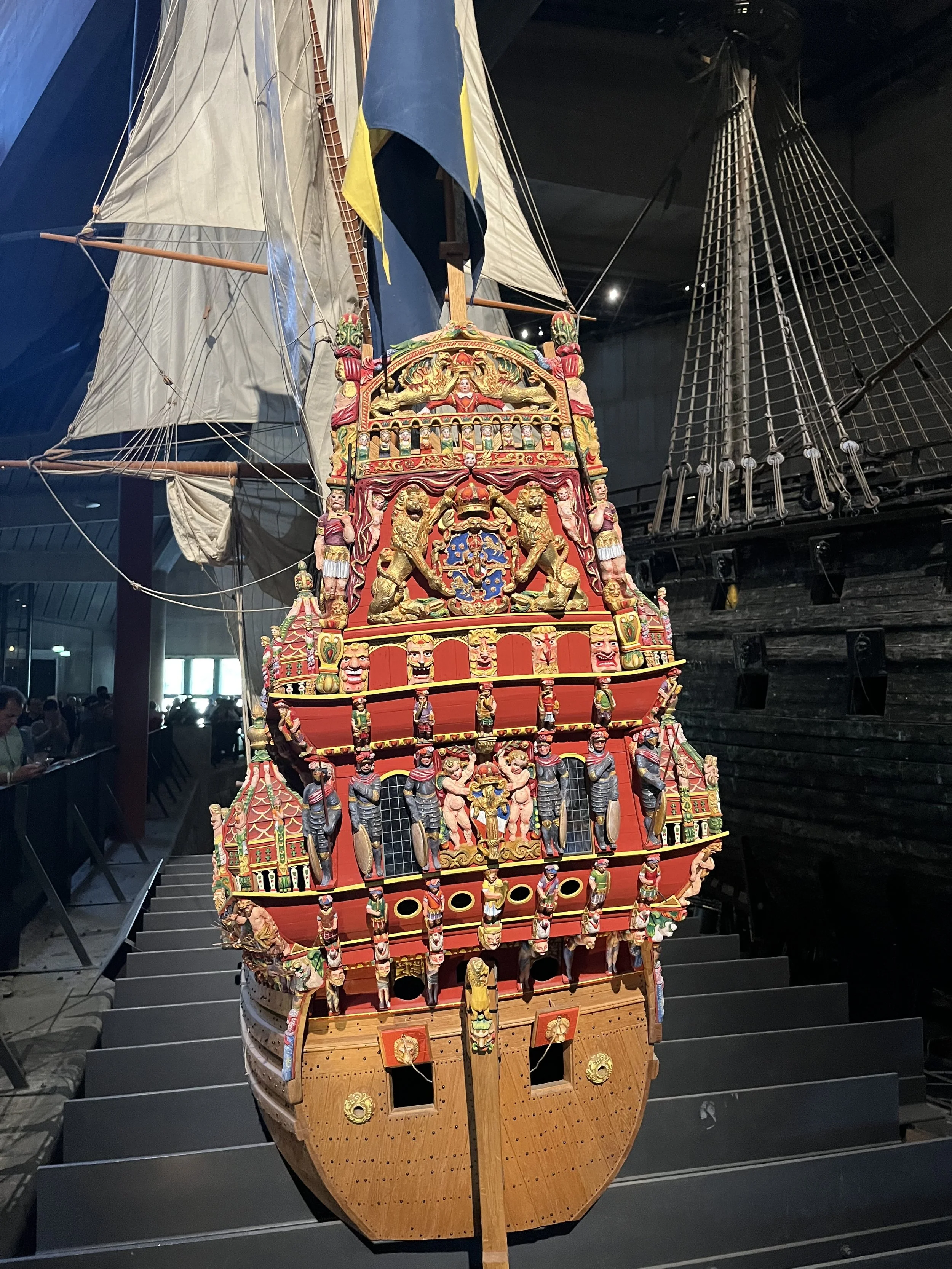
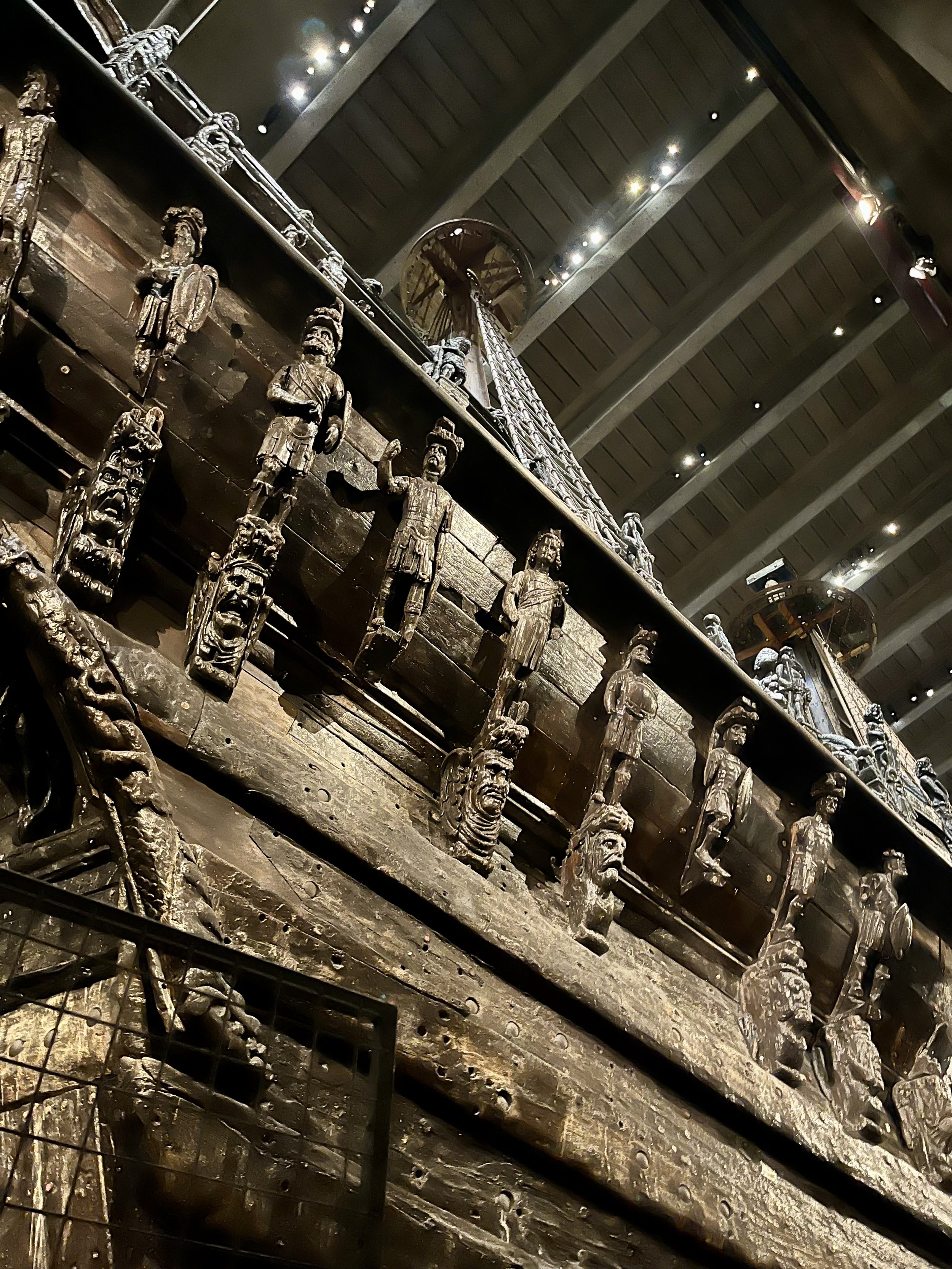
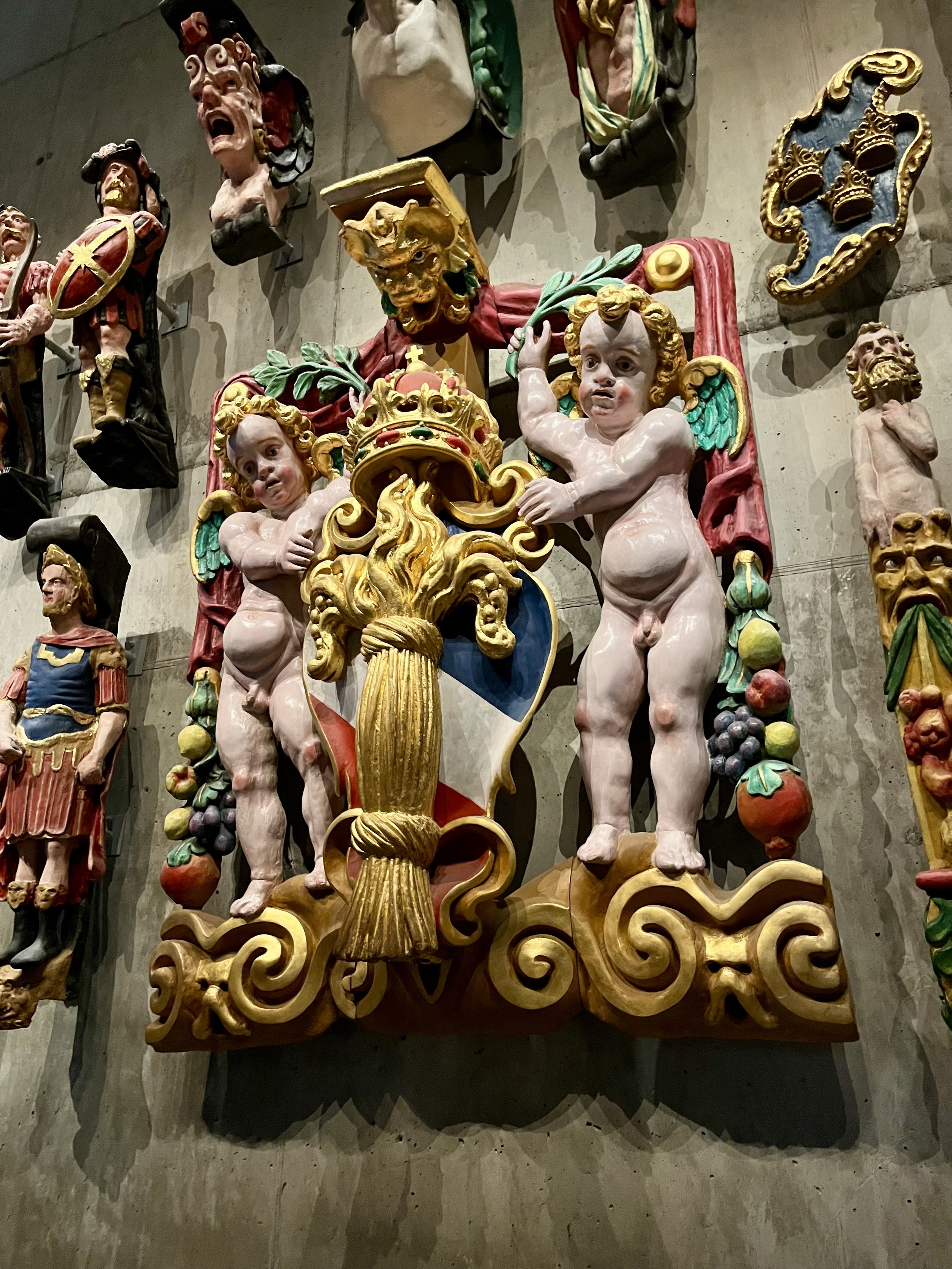
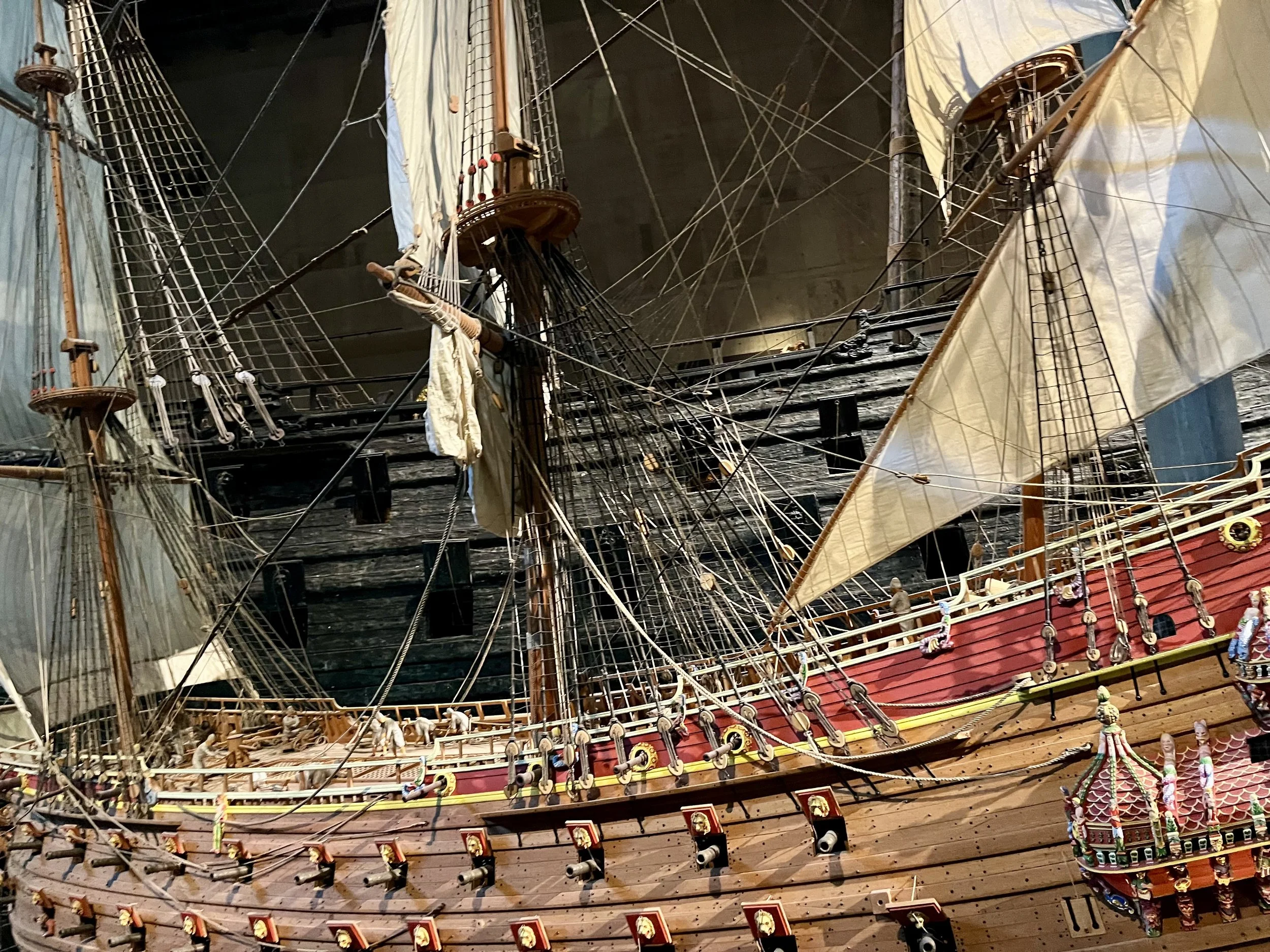
The King of Sweden commissioned the construction of several new war ships. The warship Vasa was the largest of the fleet with monstrous proportions and two full cannon decks. Moreover, the vessel was colorfully decorated with expansive carvings and sculptures, all to reflect the power and wealth of the Kingdom of Sweden. On August 10, 1628, the King and royal court were in attendance along with the curious masses to celebrate the launch of this war machine. On that date the Vasa would sink on its maiden voyage in Stockholm.
An inquiry was conducted by the Admiralty. The ship was ill designed. It found that the ship did not have enough ballast, so the ship was not able to withstand the light squall that raised up on launch. For stronger winds even more ballast was needed, but that weight would lower the ship waterline exposing the gunport to leakage. The ship should have been designed wider and taller to make room for more ballast. Troubling is the fact; the lower deck gun ports were open wide to display the cannon on the maiden voyage—water spilled in. As we understand it, the marine engineer, the ship builder, the construction company, the naval authorities on site, the appointed commander, and the government war department were all questioned and escaped serious penalty because their defense worked: “THE KING APPROVED THE PLANS!” Crazy. See photos.
After 333 years on the seabed bathed in brackish waters the mighty ship is salvaged. It is claimed, 98% of the ship is preserved. This museum building is constructed by Sweden specifically for this sailing ship display. The ship is captivating.
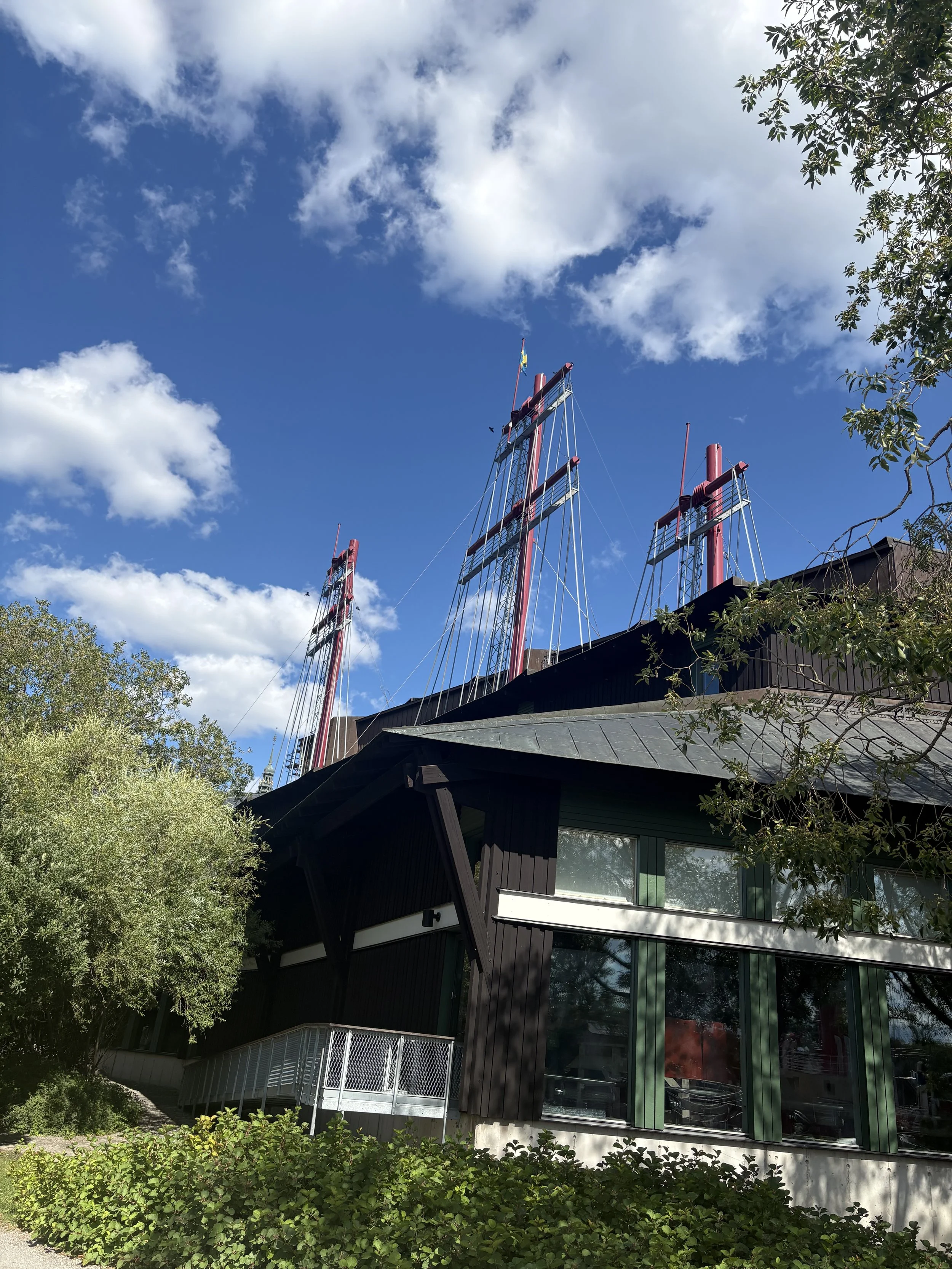
See photo’s below, summary; the original ship was painted bright vivid colors, see the model of how it looked. The building has replica masts that are the same height of the original ship
That evening we went to an outdoor bistro connected to the Stockholm Opera House. We sat surrounded by beautiful flowering plants viewing the Opera House and a large Lutheran church across the street. The entire street was quiet and calming. The food was traditional Swedish fare; a starter of pickled herring, Swedish meatballs with pickled cucumber and lingonberry, dark bread, sparkling water, rose wine, then latte and chocolate fondant for dessert. It was a fine meal.
We had such enjoyment this day.