Entry to Old Town Vilnius
Day 1
This is the last Baltic country on our trip. We take a 5-hour bus ride from Riga, Latvia to Vilnius, Lithuania. What a joy ride. We are looking out the side windows and notice down the road vehicles and buses in the approaching lane are swerving to the shoulder. There was construction on this road earlier so first impression was that the lanes were re-routed. We moved are vision from side window to front windshield and back. Our bus was crossing the centerline and then back and accelerating. We glanced at the guys sitting by us, they were sleeping.
Frank jumped into the isle to see the status of the driver and impolitely said: “WTF”— Hey watch your driving” in a loud voice. Then the neighbors woke up and saw the erratic driving, and they too were yelling. The driver must have been dozing. The bus straightened out and the driving corrected, but we did soon stop and switched drivers.
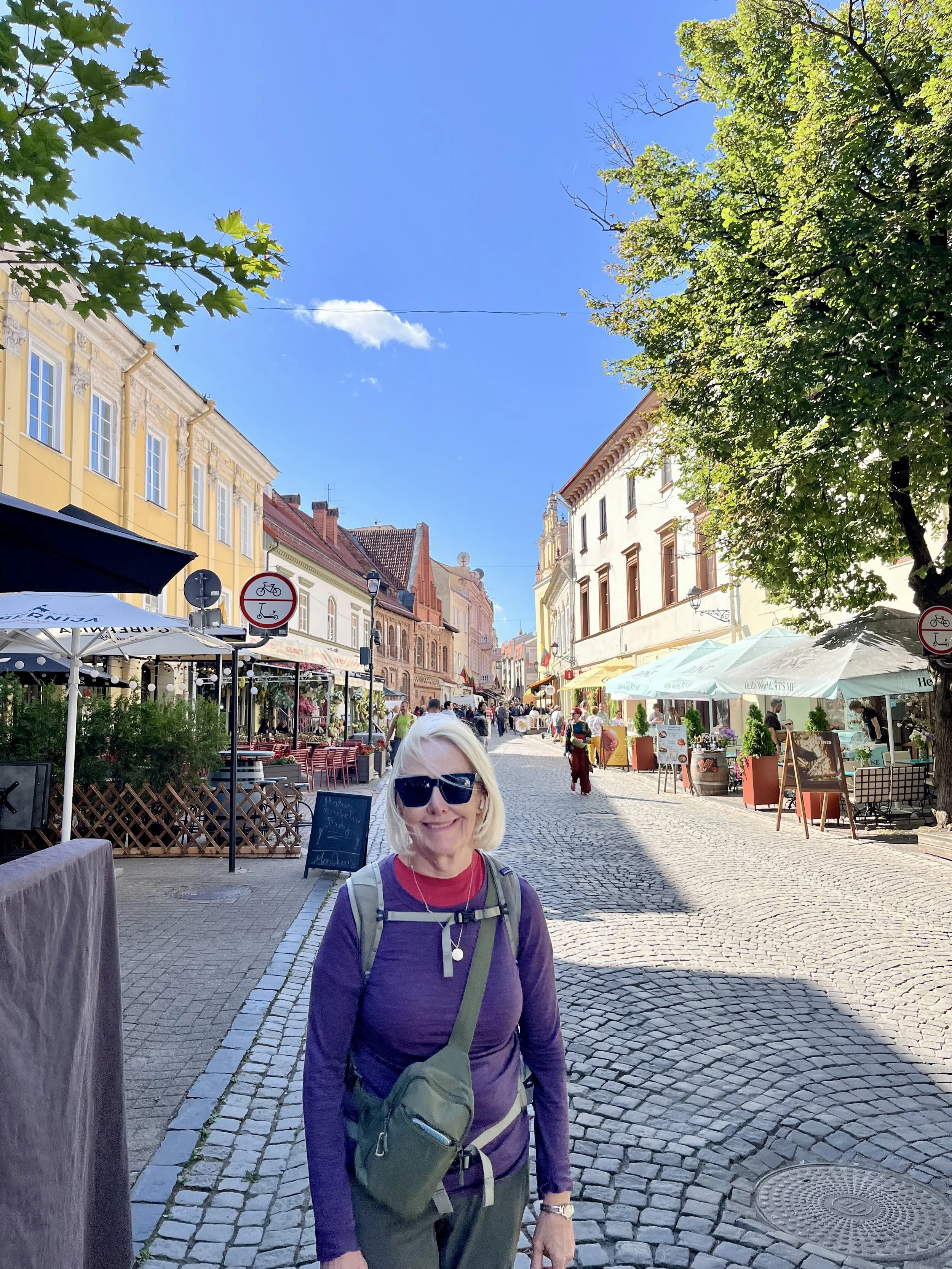
We arrived at the bus terminal, walked across the street to the main train station to the local bus stop we needed, jumped on…jumped off, then walked 7 minutes to our nice, modern hotel. We keep using Hilton Honor points that Janet accumulated for many of the accommodations. She is in the system-we get free water too! LOL. See photos below of the wonderful walk from our hotel
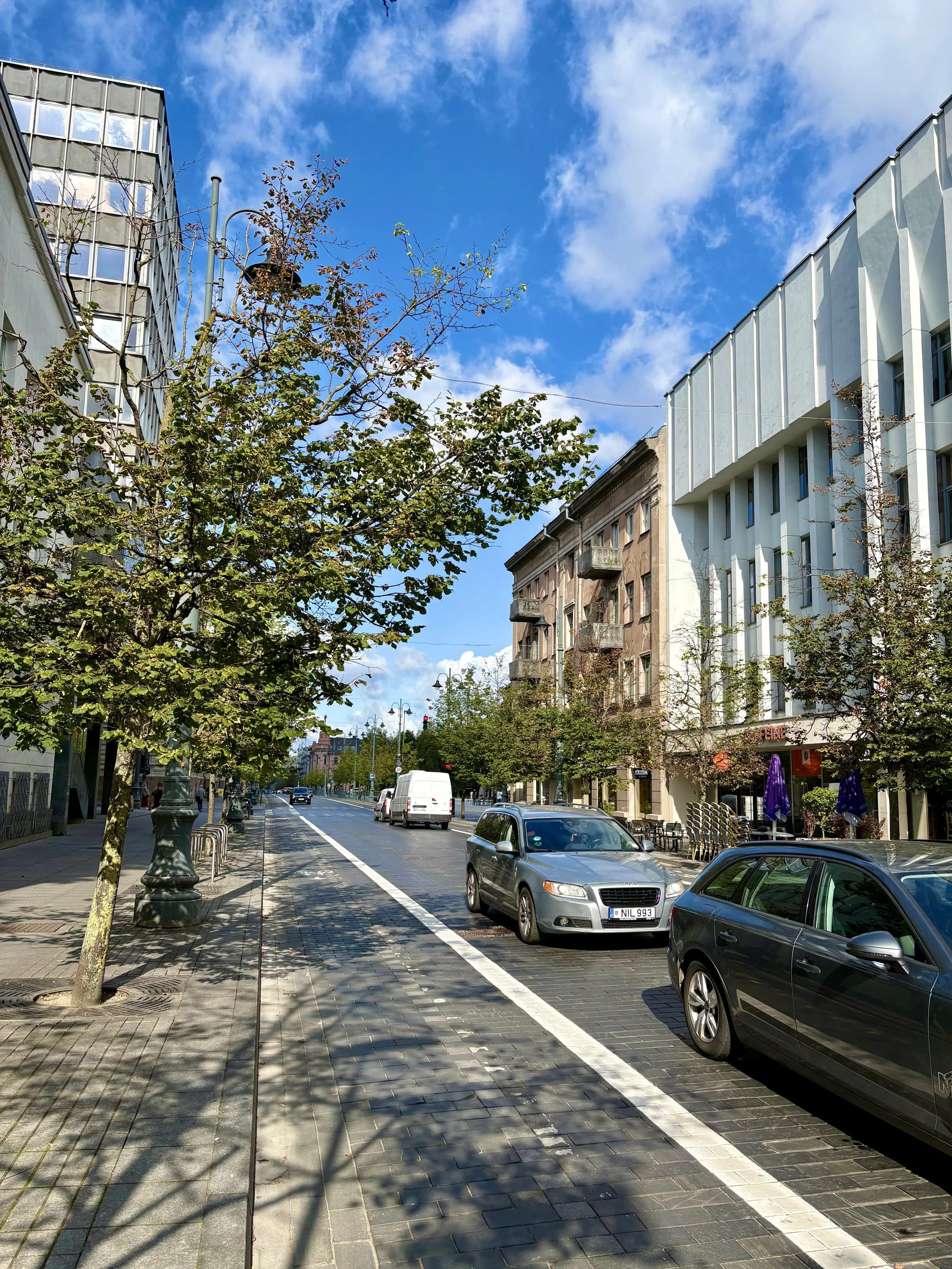
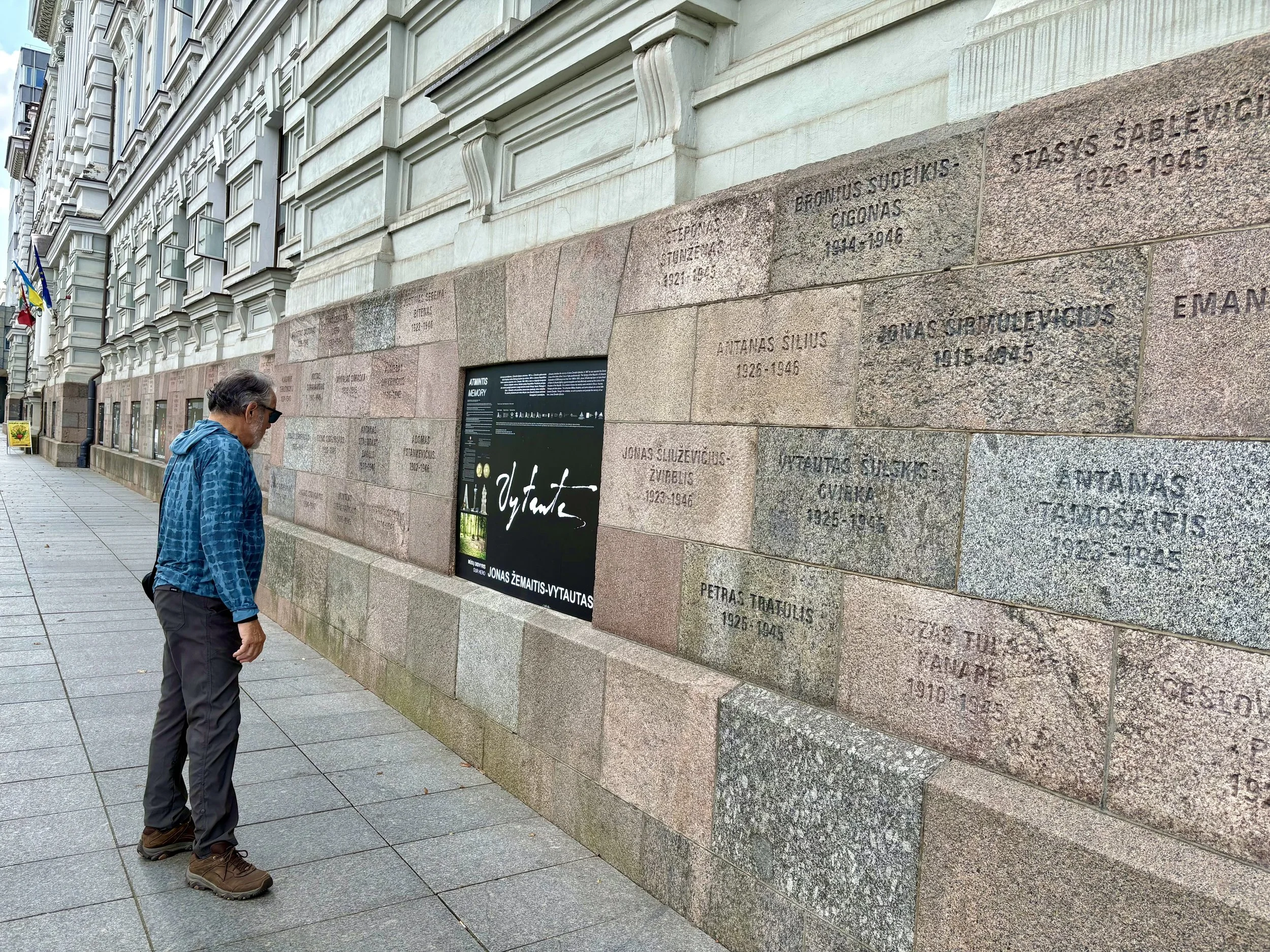
Day 2
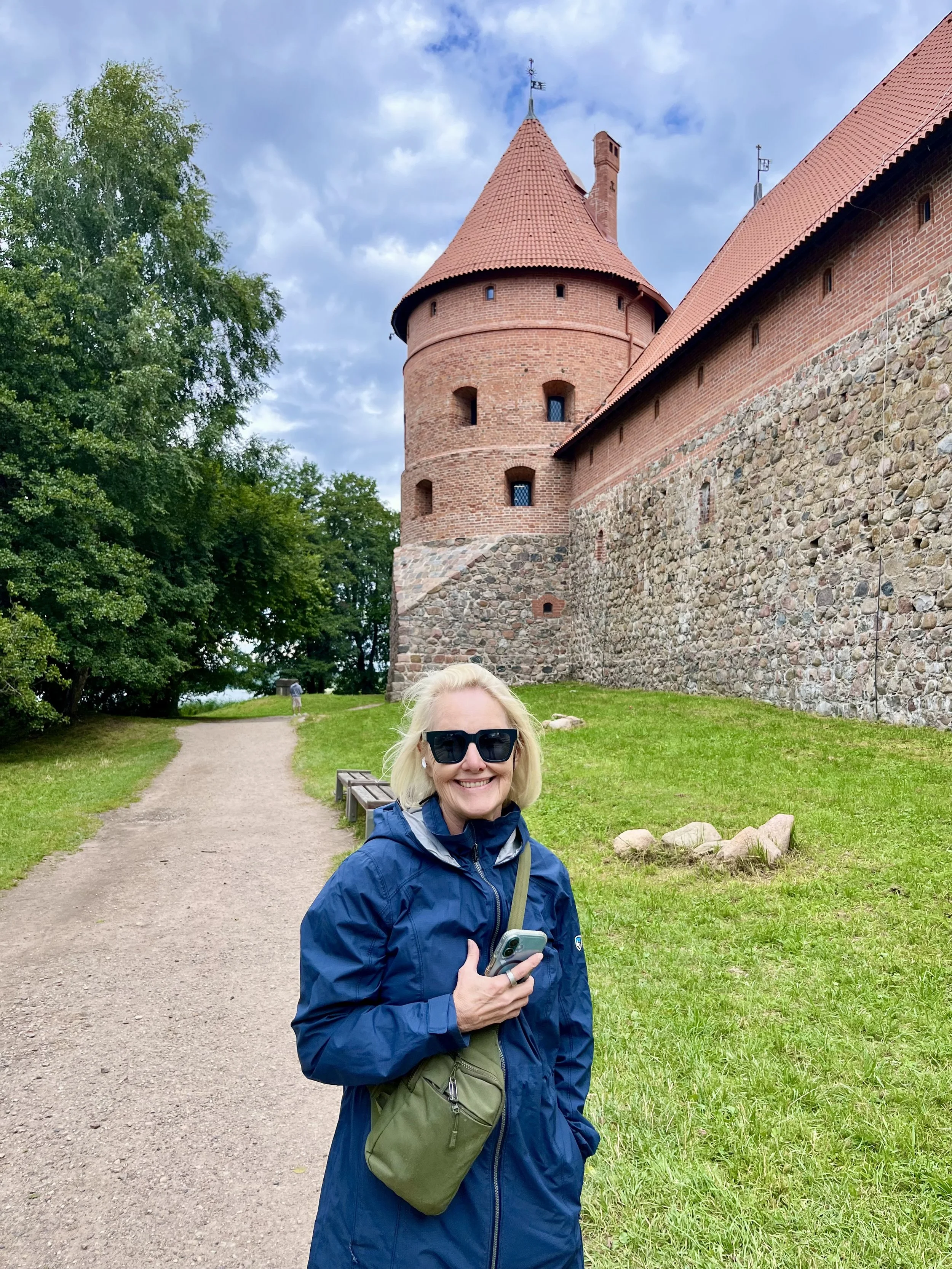
Next morning, nice breakfast, and we are off to meet the next tour guide for our driving excursion 28 km out of town to a fairy-tale Trakai Castle on the peninsula surrounded by Lake Galve. This castle was repeatedly sacked and plundered and damaged by the Teutonic Knights (former Crusaders) and other enemies. Approaching, you notice the difference between the restored red brick towers and the original brown stone walls of the 15th century. Historically, Grand Duke Gediminas made Trakai his capital in the 14th century.
Our first view of the castle
The street leading to the castle
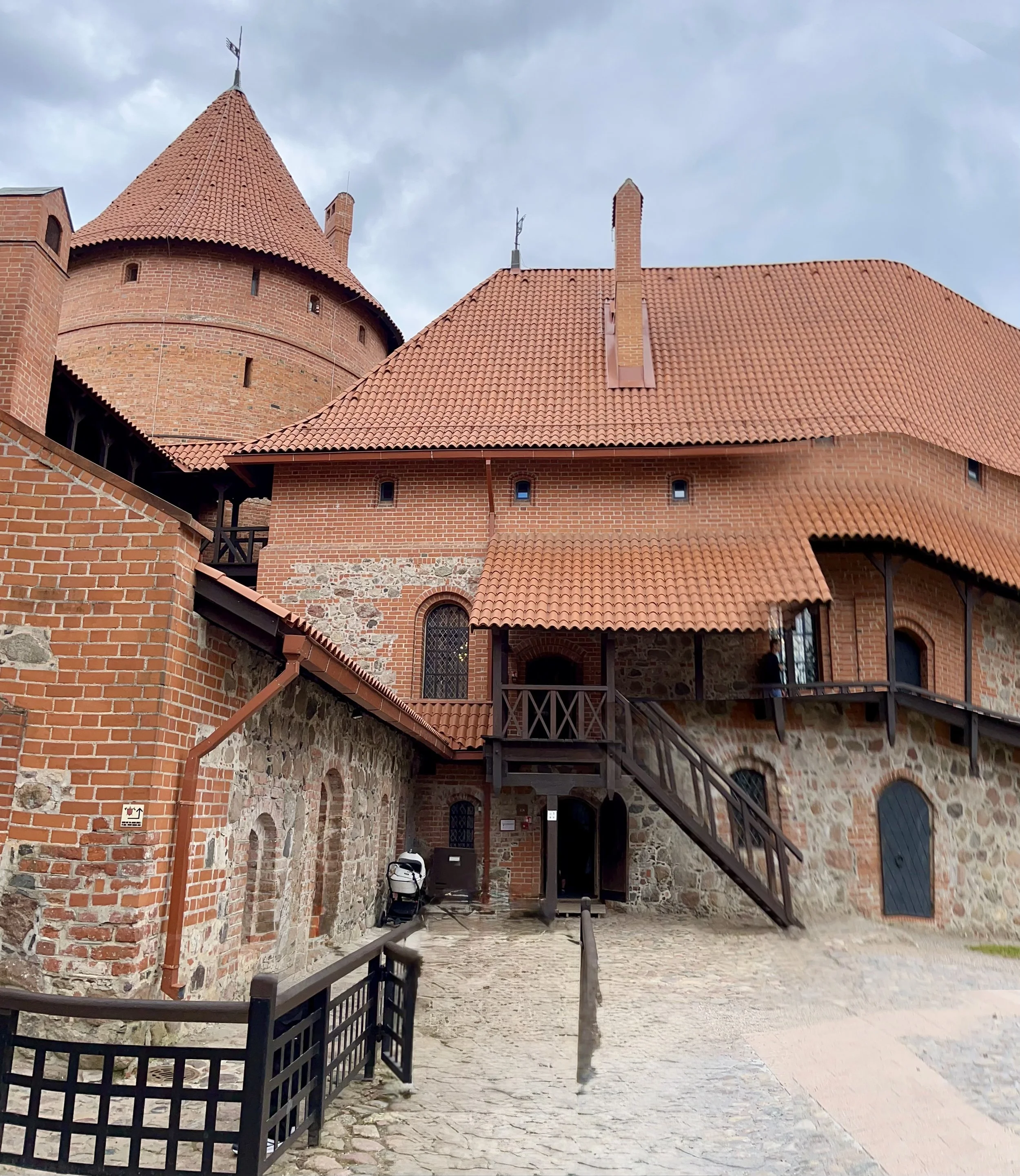
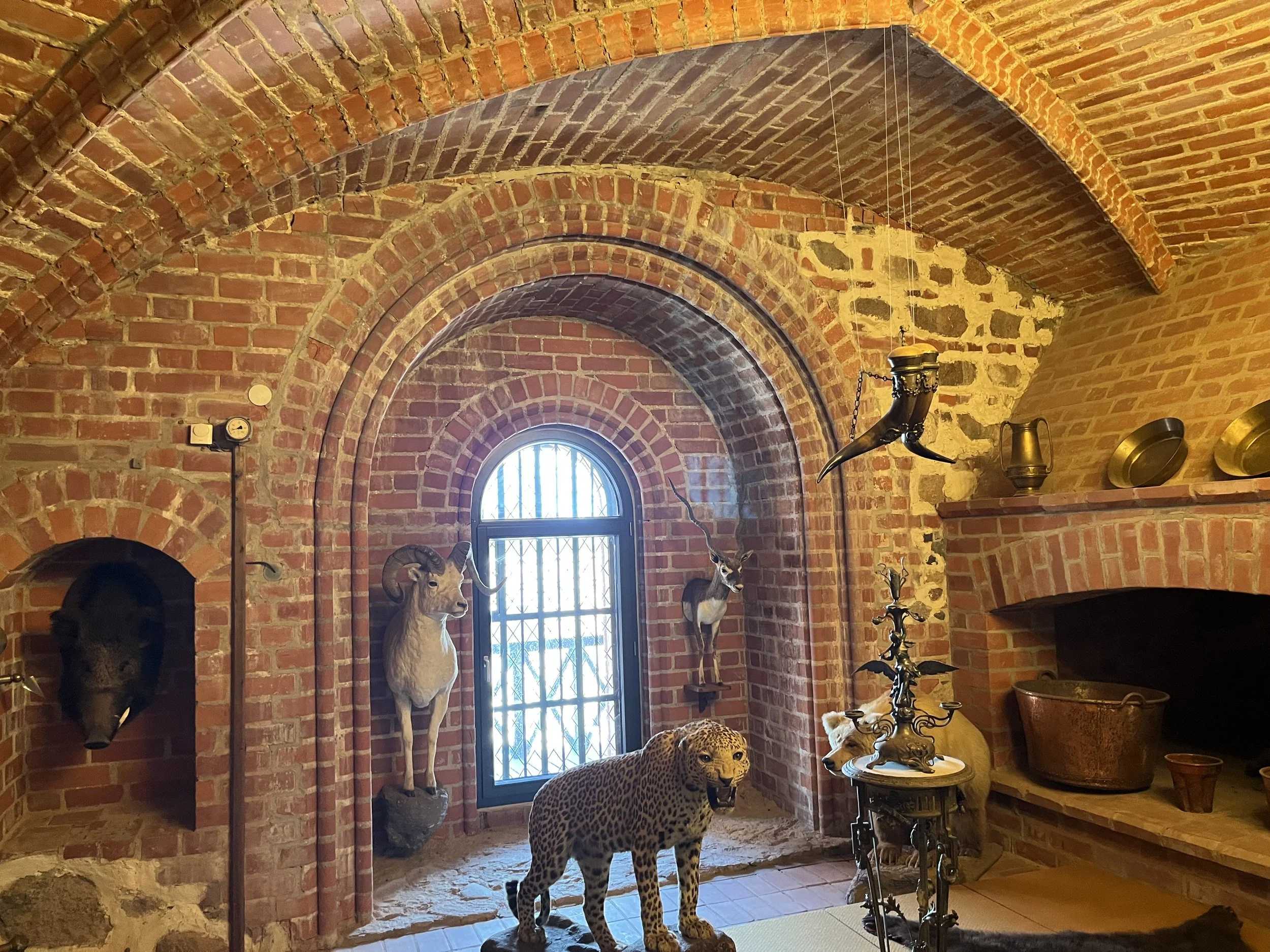
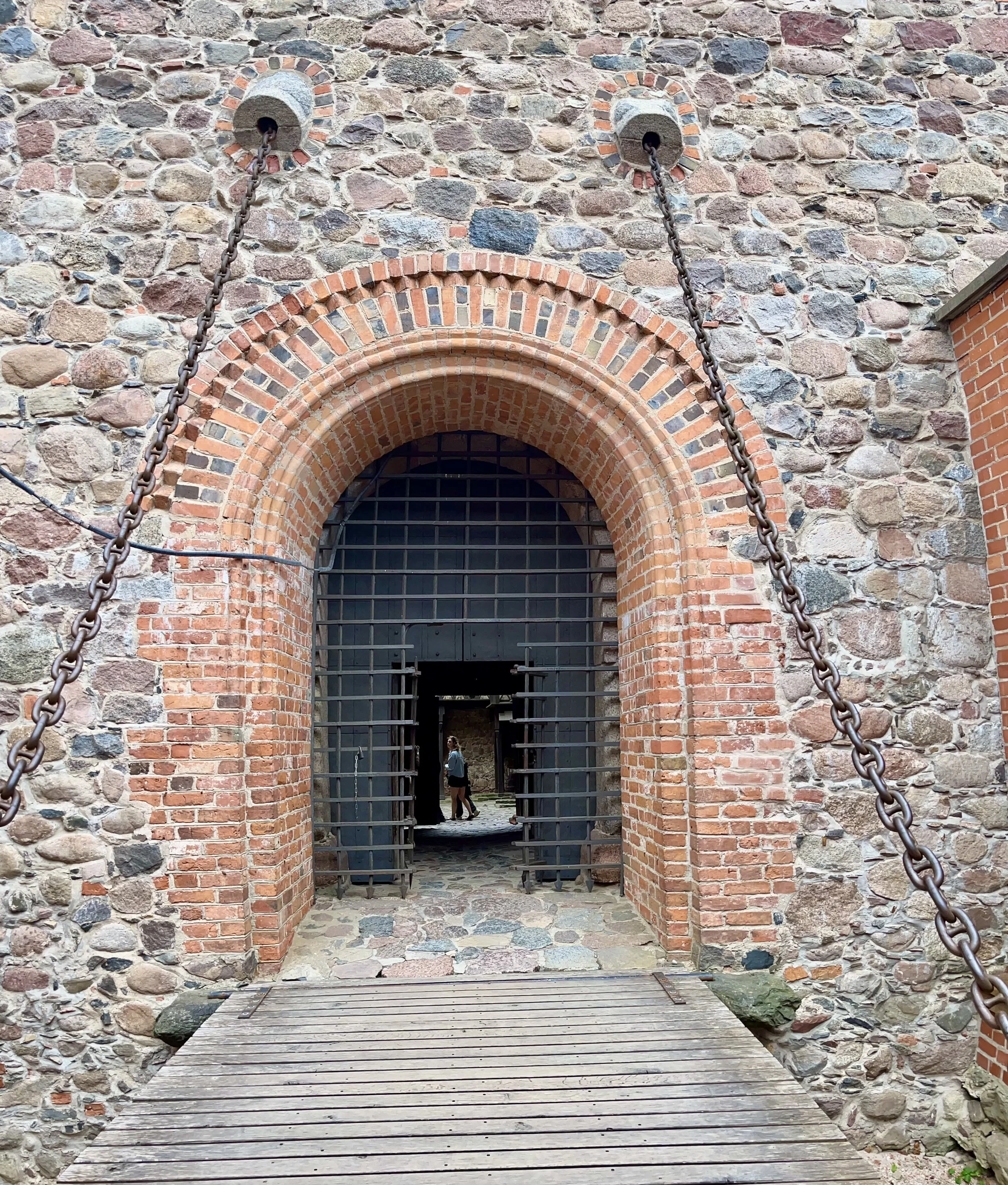
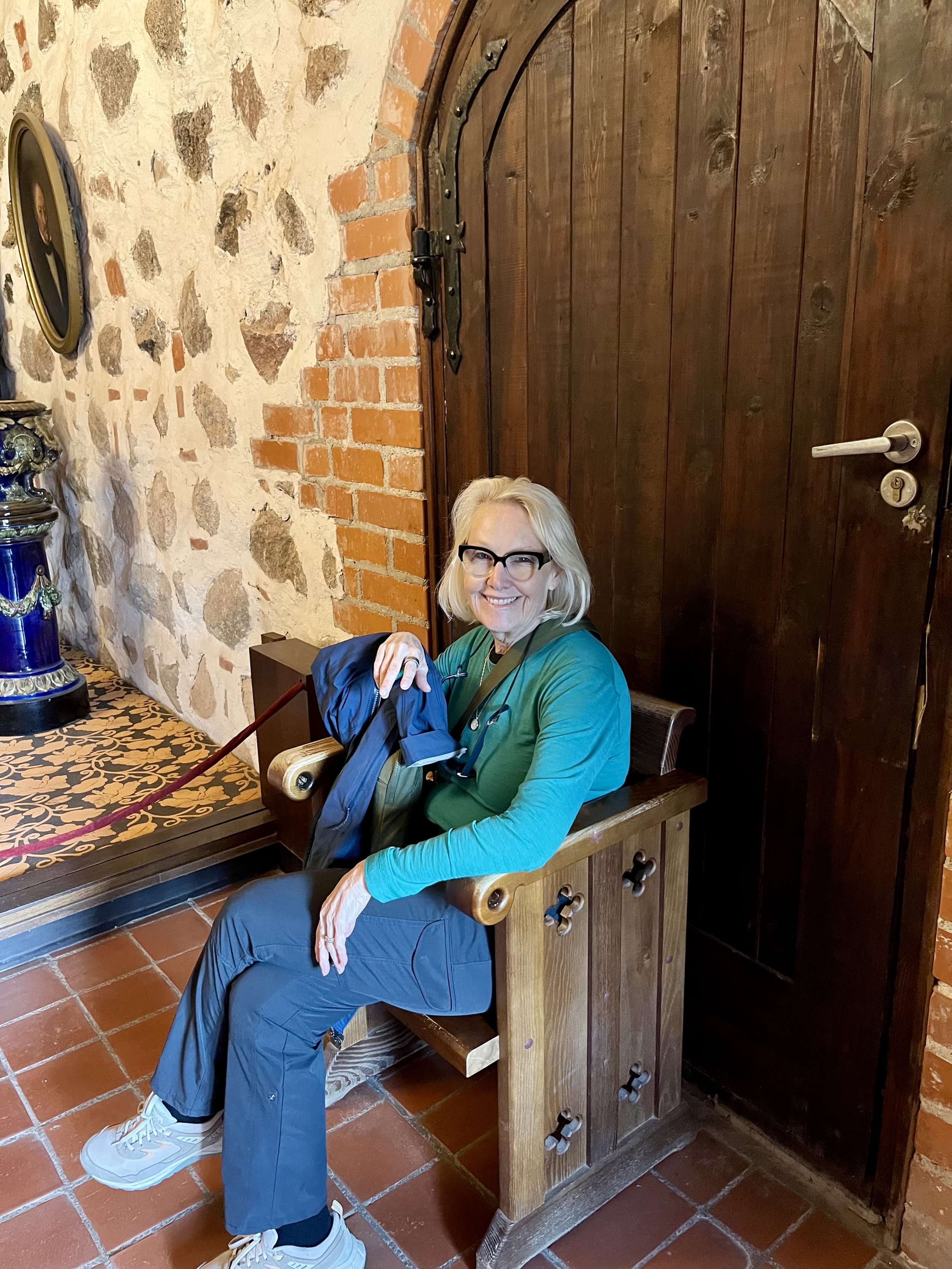
We circled the exterior of the castle observing the defensive moat, empty now, but built to allow water to flow in from Lake Galve. The shoreline has changed. The moat actually split the interior of the castle requiring an interior draw bridge to be lowered before gaining access to the Duke’s lodgings from the courtyard. We entered the large courtyard to view the connecting walls and several towers and we did cross the drawbridge and walked through the corridors and floors of the Duke’s principle home. Furniture, tapestries, and other artifacts were displayed representing the era, anything personal to the royals would have been moved, stolen or destroyed.
We left the castle and met the group at the designated Pub & Grub. We ordered cold “Pink Soup” of beets and stuff, a/k/a Borscht, and “Kibinai”, flaky cresant shaped pasties stuffed with minced meats either chickens or pork, and for Frank, a sweet tasting Dark Bread Brew. Our Van group of eight were fun; six Americans, an Italian, a Taiwanese, and a chatty Scottish guide that was married to a Lithuanian.
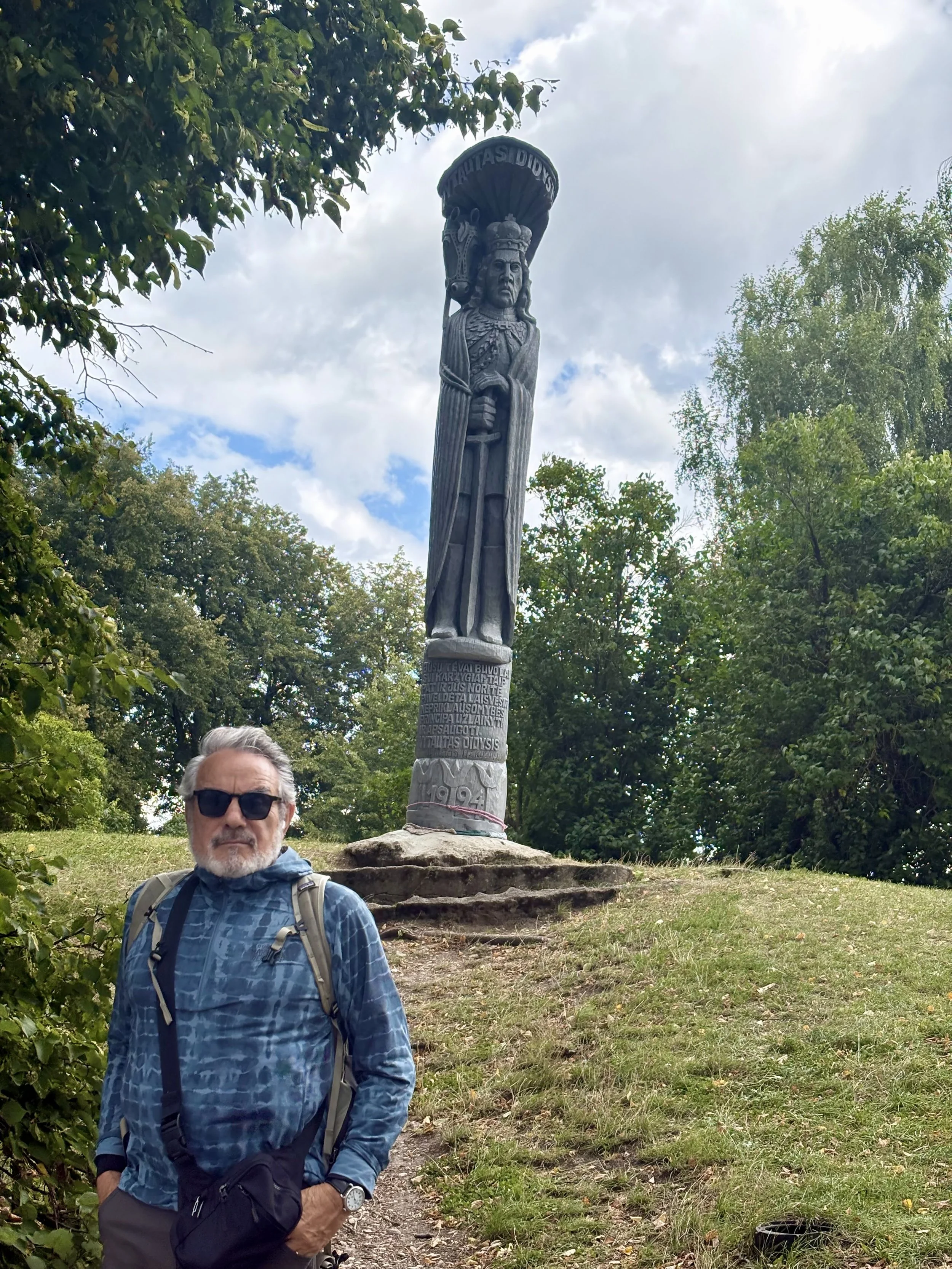
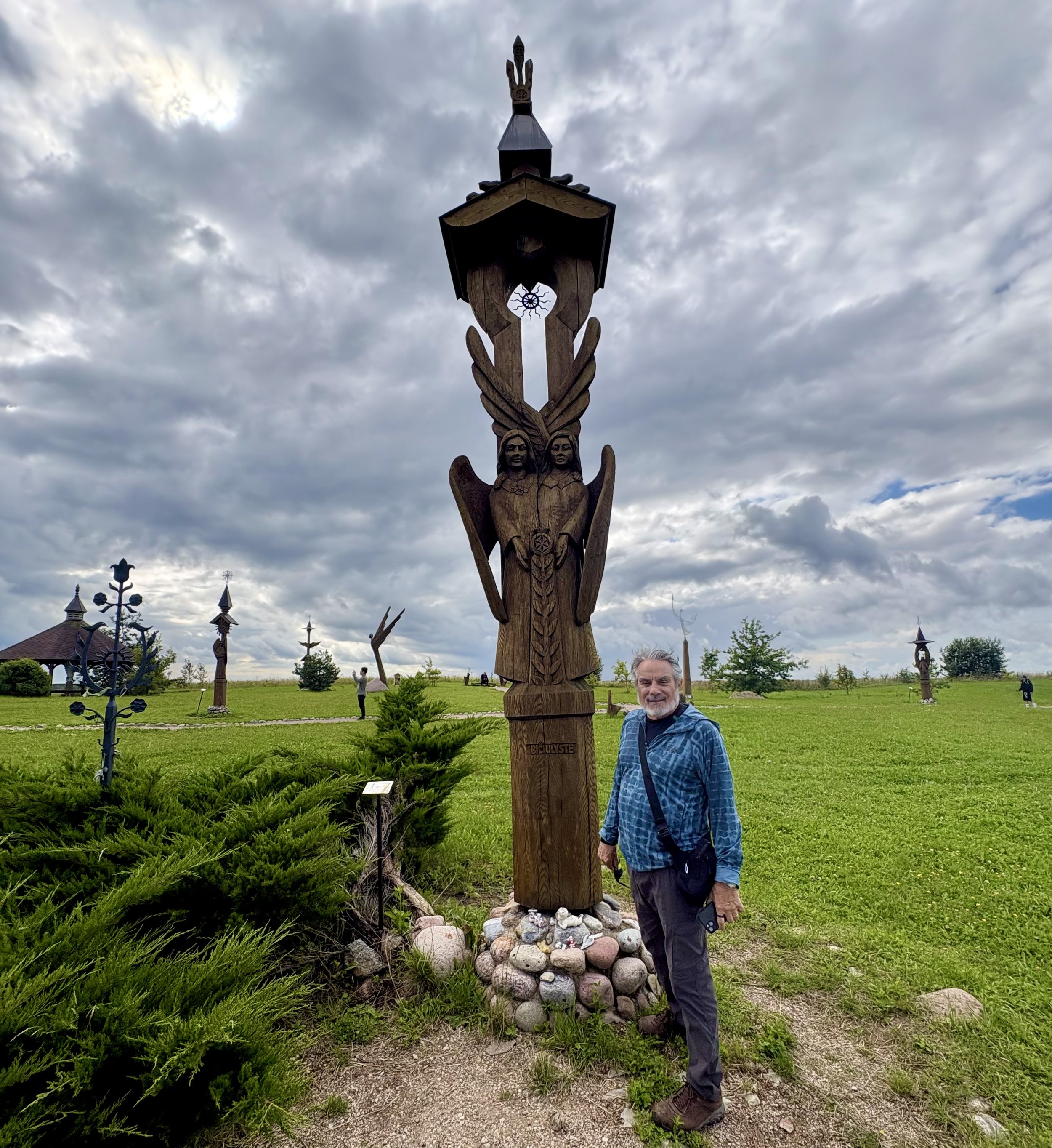
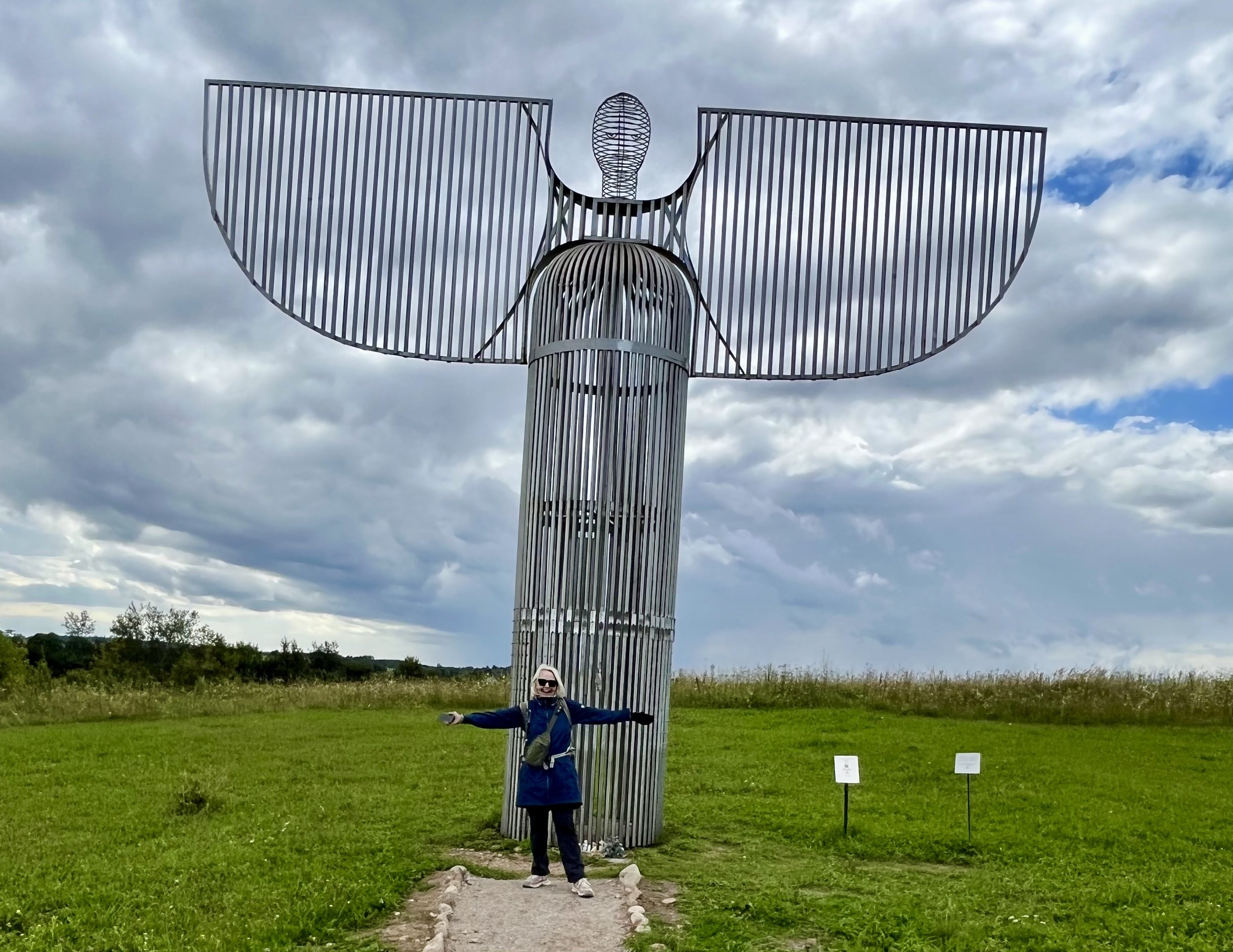
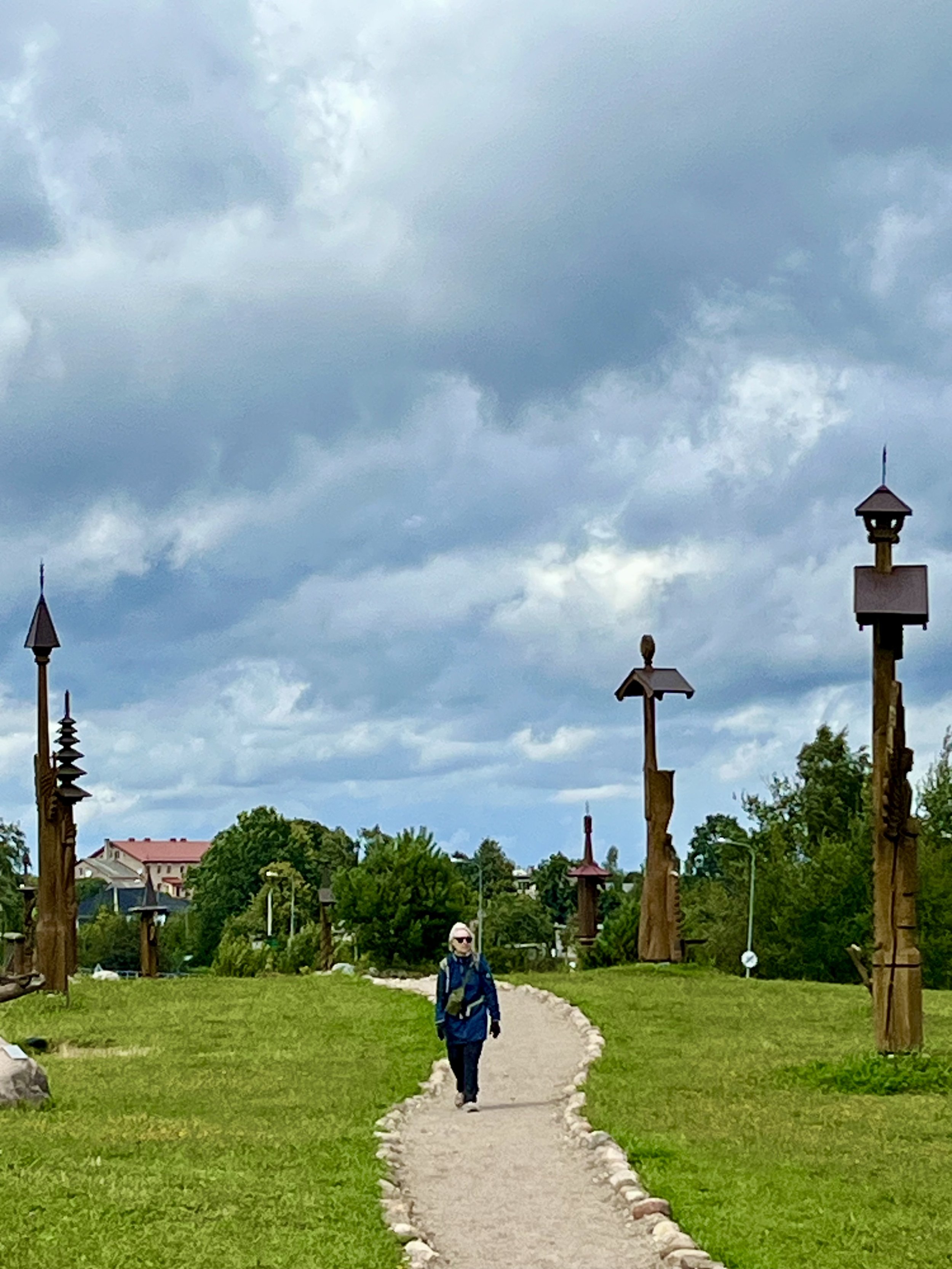
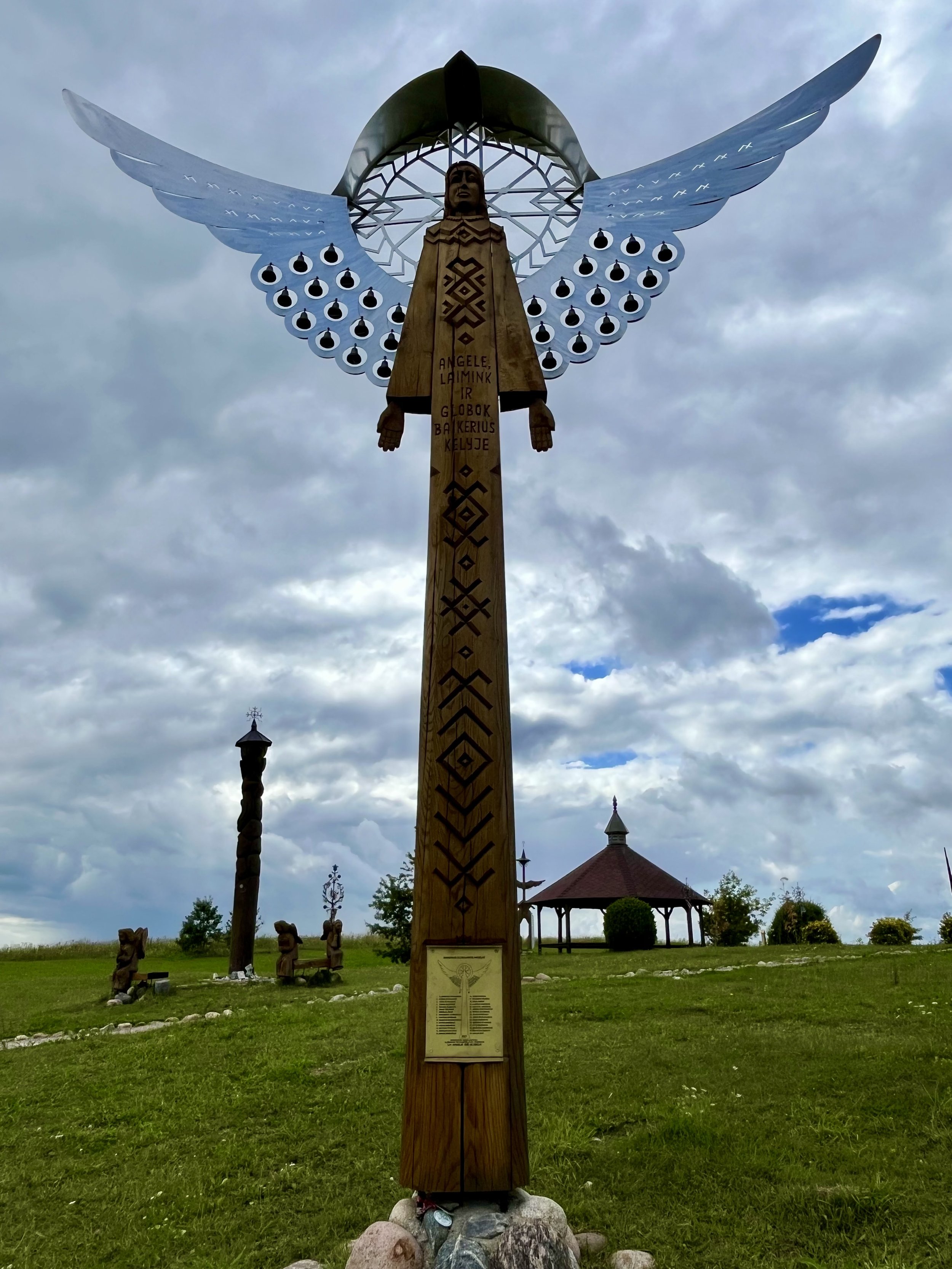
We drove to another nearby site called “The Hill of Angels”. This is a more recent project that celebrates and looks to protect many groups of people by erecting artistic Angel Totem Poles to their benefit. There are about 54 Angels situated up to the crest of the hill and surrounding area; erected by different artists for different people. Some interesting ones, Angel of the Successful Glory (religious), Angel of Kindness, and Angel of Pensioners. We like these. See photos.
The drive back to town seemed quick. Good. We were tired. Driving we saw an unusual art piece, a large glass wall with cut outs of people holding hands. Sorry no pix. We had heard about the event that inspired this sculpture and many more in the Baltic States. They all were very proud. In 1991, 2 million citizens from Estonia, Latvia, and Lithuania clasped hands in solidarity for their quest for freedom from the Soviets. They were not in a pack, but rather a line along the roads starting in Tallinn to Riga to Vilnius. After departing from our travel companions with hugs all around we picked up sandwiches on way to hotel and called it a night.
The Cathedral Basilica of St. Stanislaus and St. Ladislaus
Day 3
Inside the Cathedral
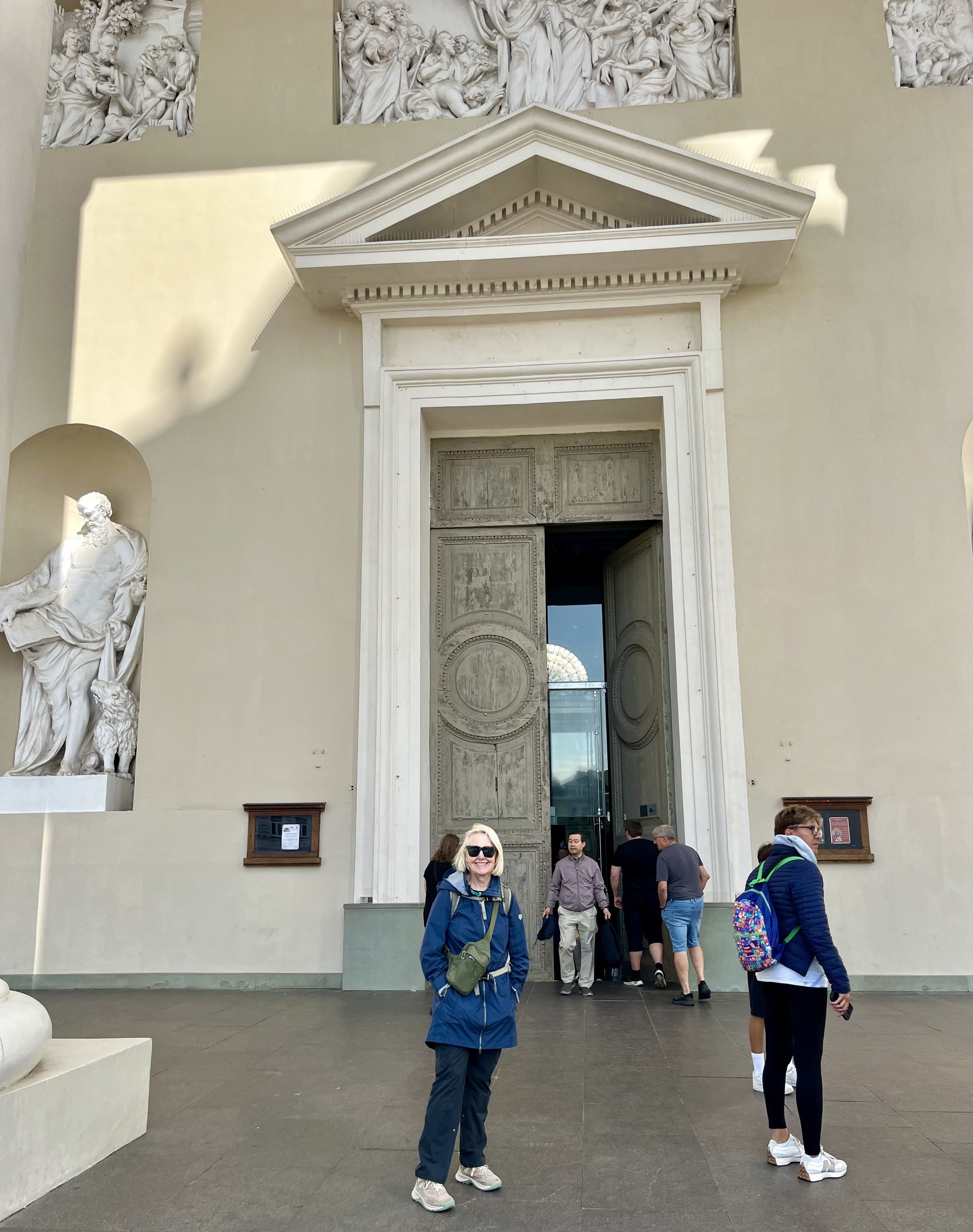
Next morning we decided to thoroughly walk the Old Town. We walked our normal route down the main drag of Gedimino Street named after their ruler from 1316-1341, and started at the Vilnius Cathedral, The Catholic Basilica of St. Stanislaus (Santa Claus), and also the veneration of Saint Casimir.
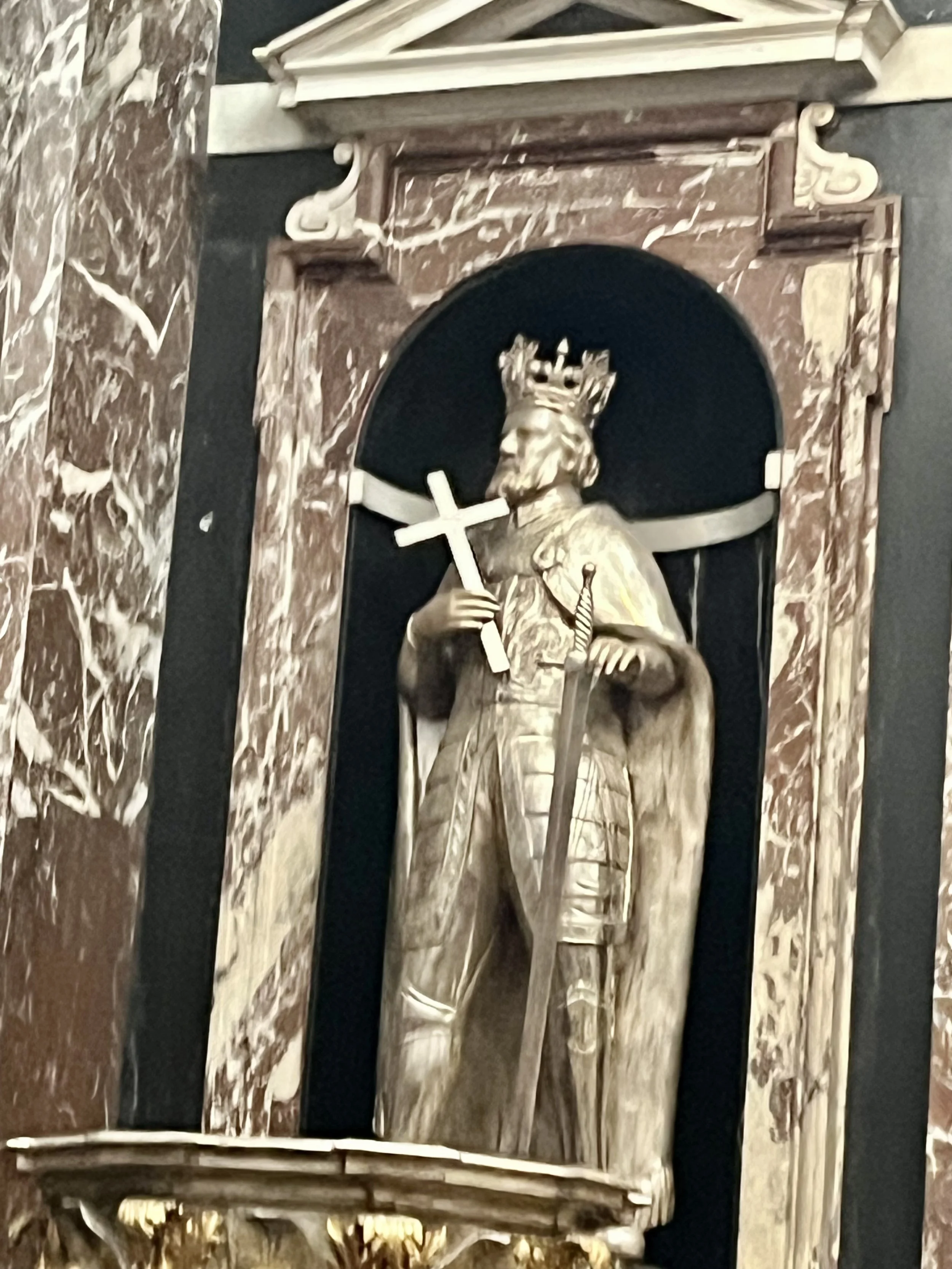
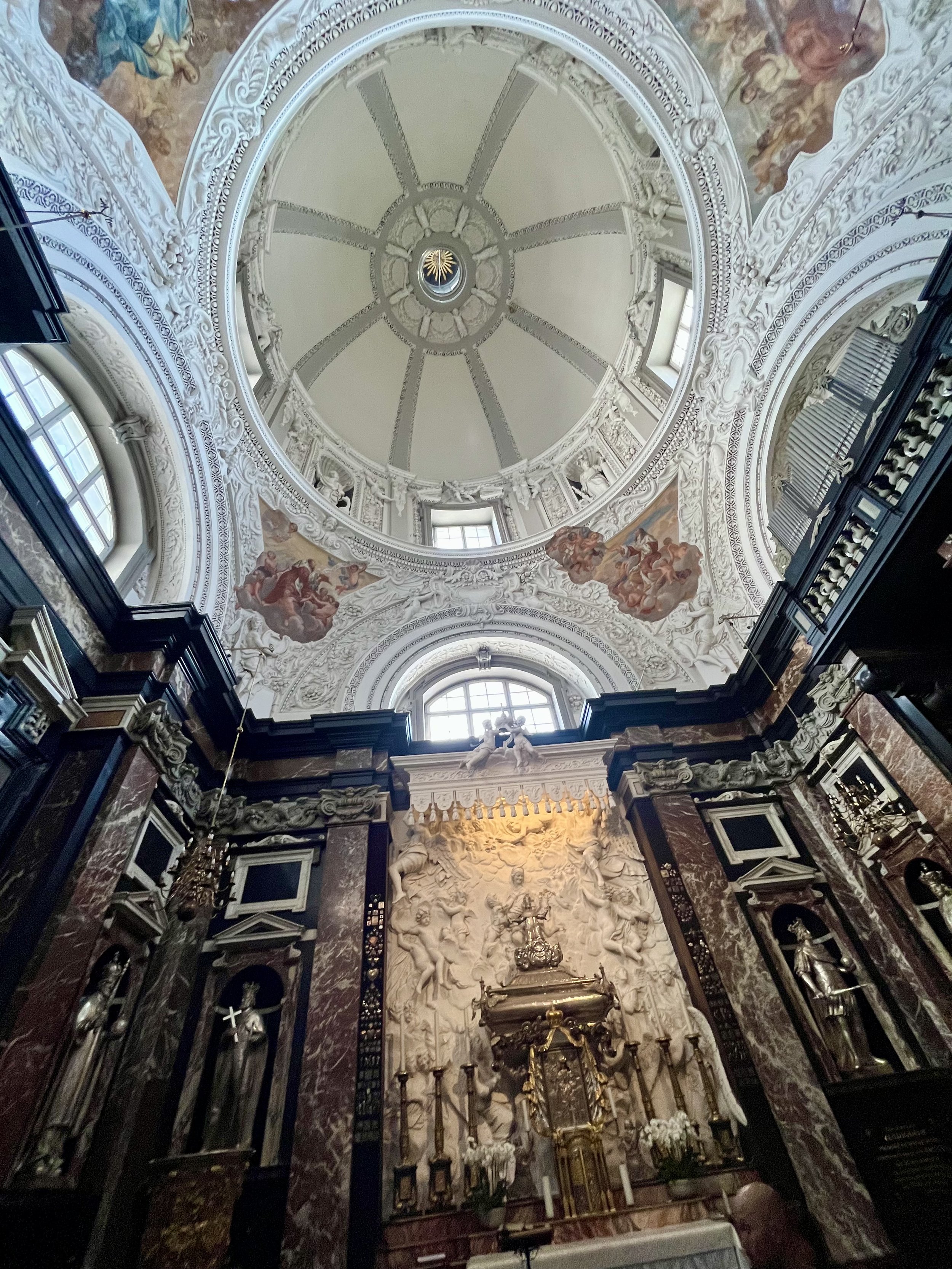
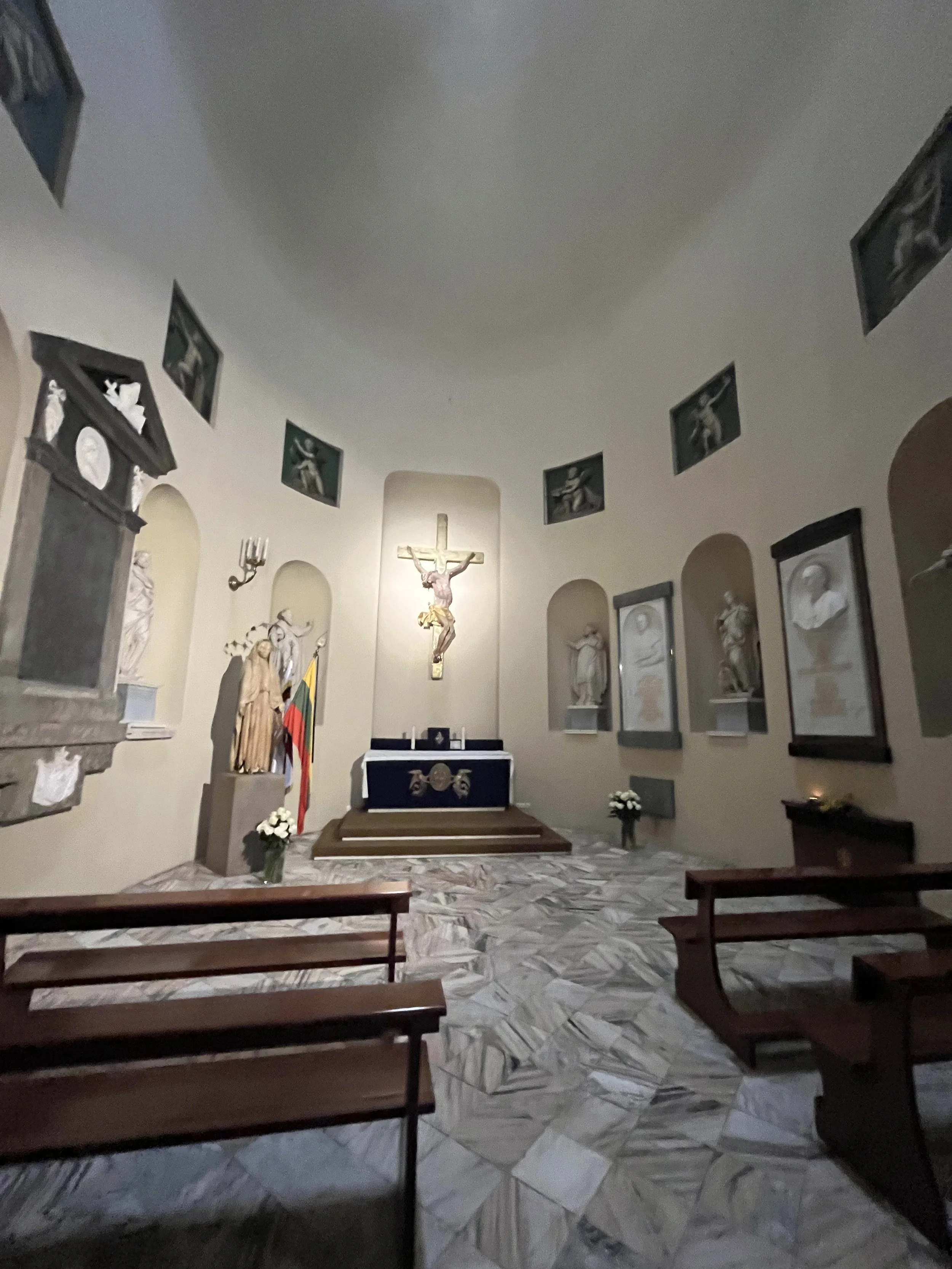
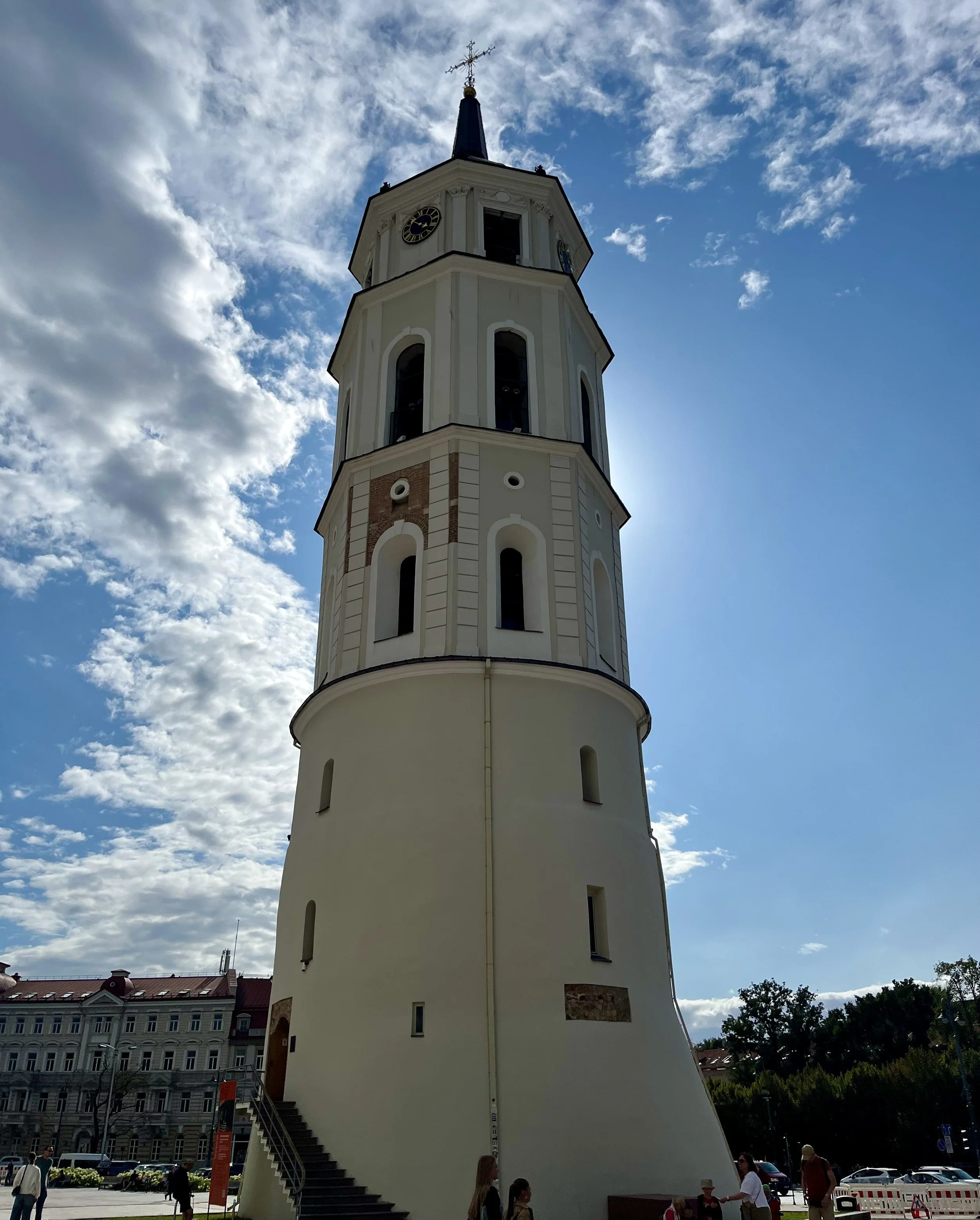
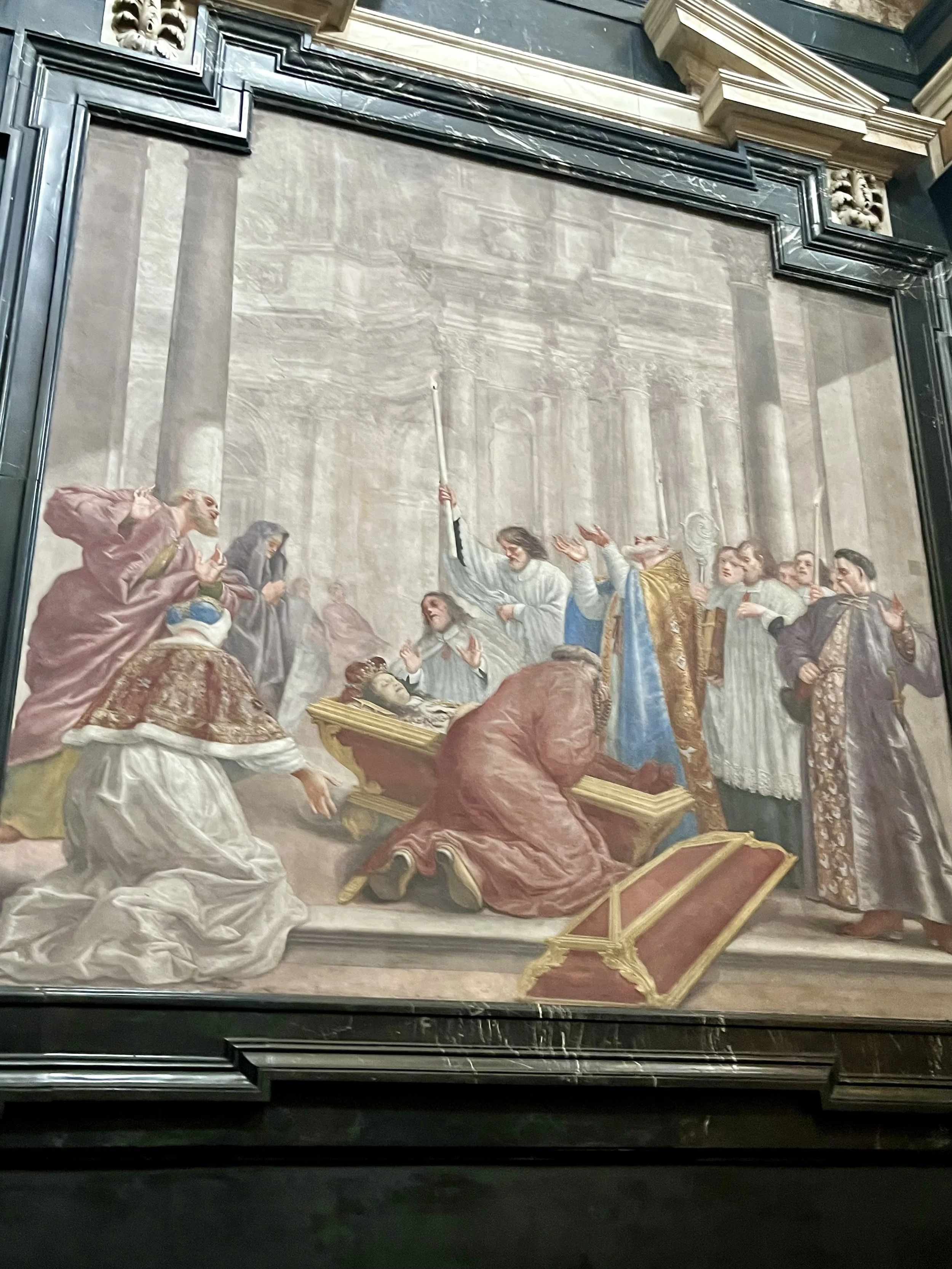
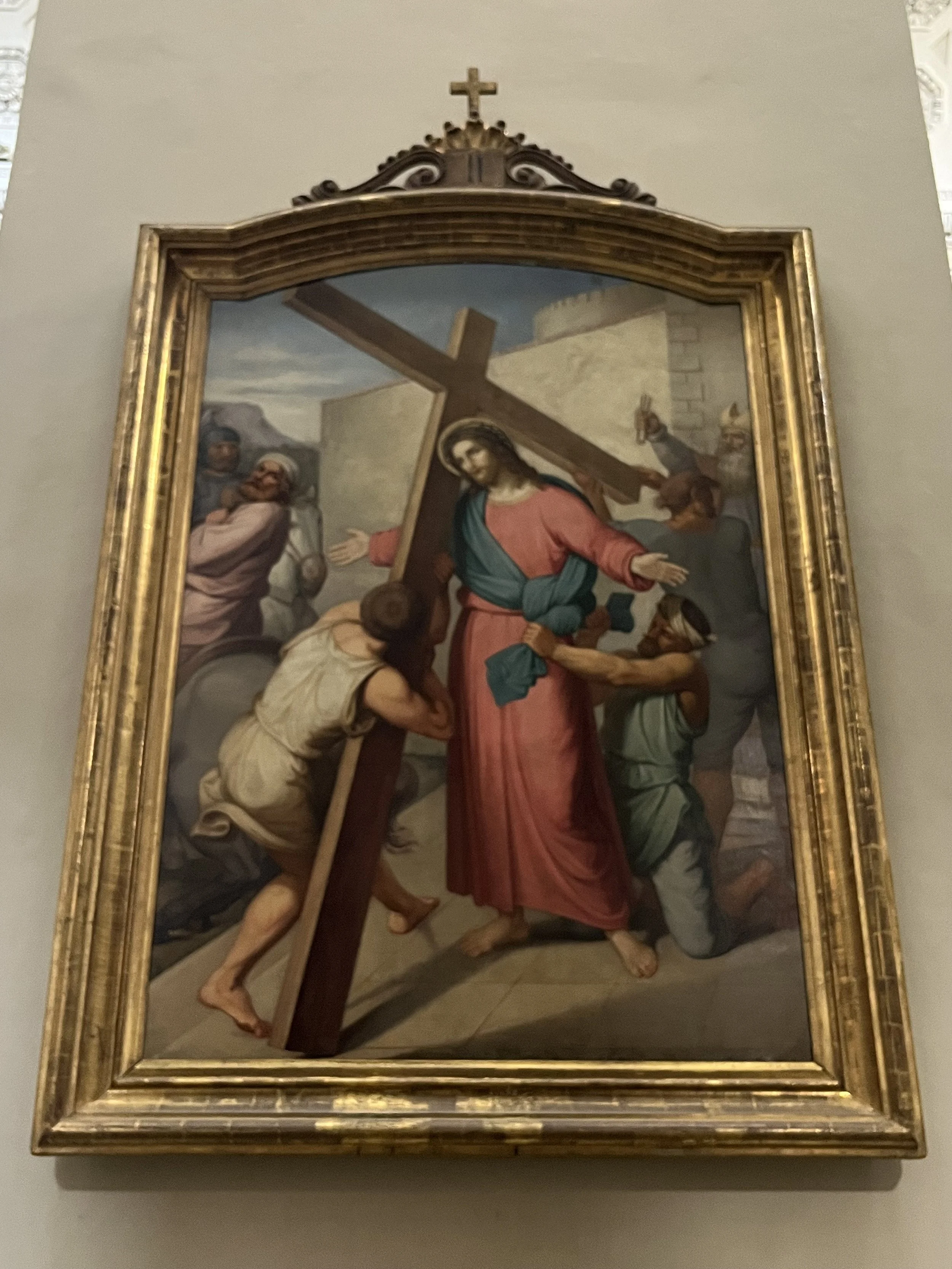
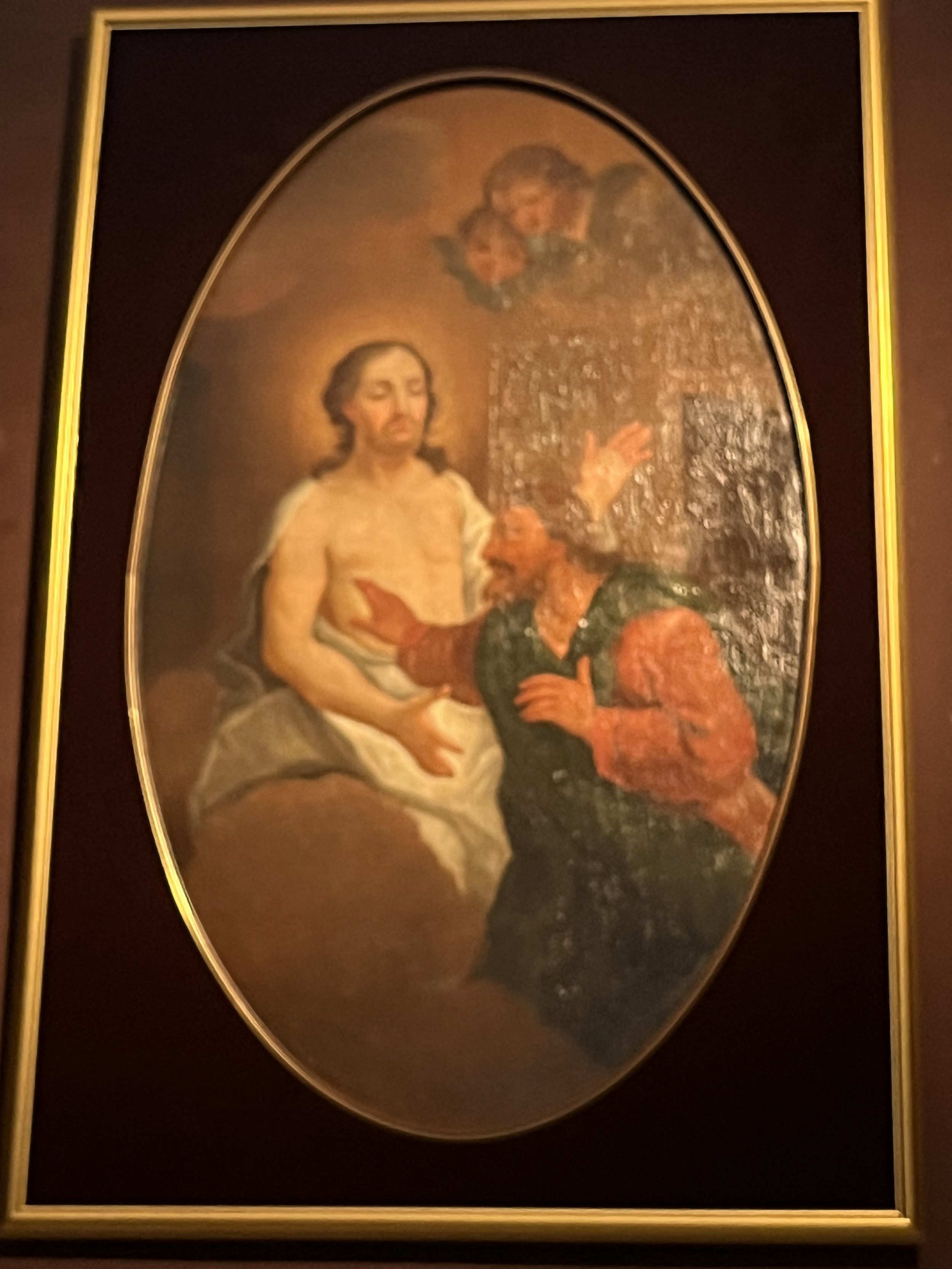
Saint Casimir is the patron saint of the state beloved by Lithuania and his image was normally manifest in military dress as a soldier who protects his state from enemies. His veneration was as early as the seventeenth century. There were many relics that bolstered his veneration held in the St, Casimir’s Chapel in the Valinius Cathedral, but removed and hidden often from impending danger. On our date of visit we observed part of the Saint’s actual arm bone displayed within precious metals in the chapel. We also had an opportunity to view the exterior and inside of this lovely Cathedral, including the separate bell tower and the statue of the Grand Duke, the fantastic Altar and Dome, the side chapels, and the religious art -particularly the painting of The Last Supper, the painting of Thomas touching the risen Jesus, and several paintings of the stations of the cross. See photos.
The relic, arm bone of St. Casimir
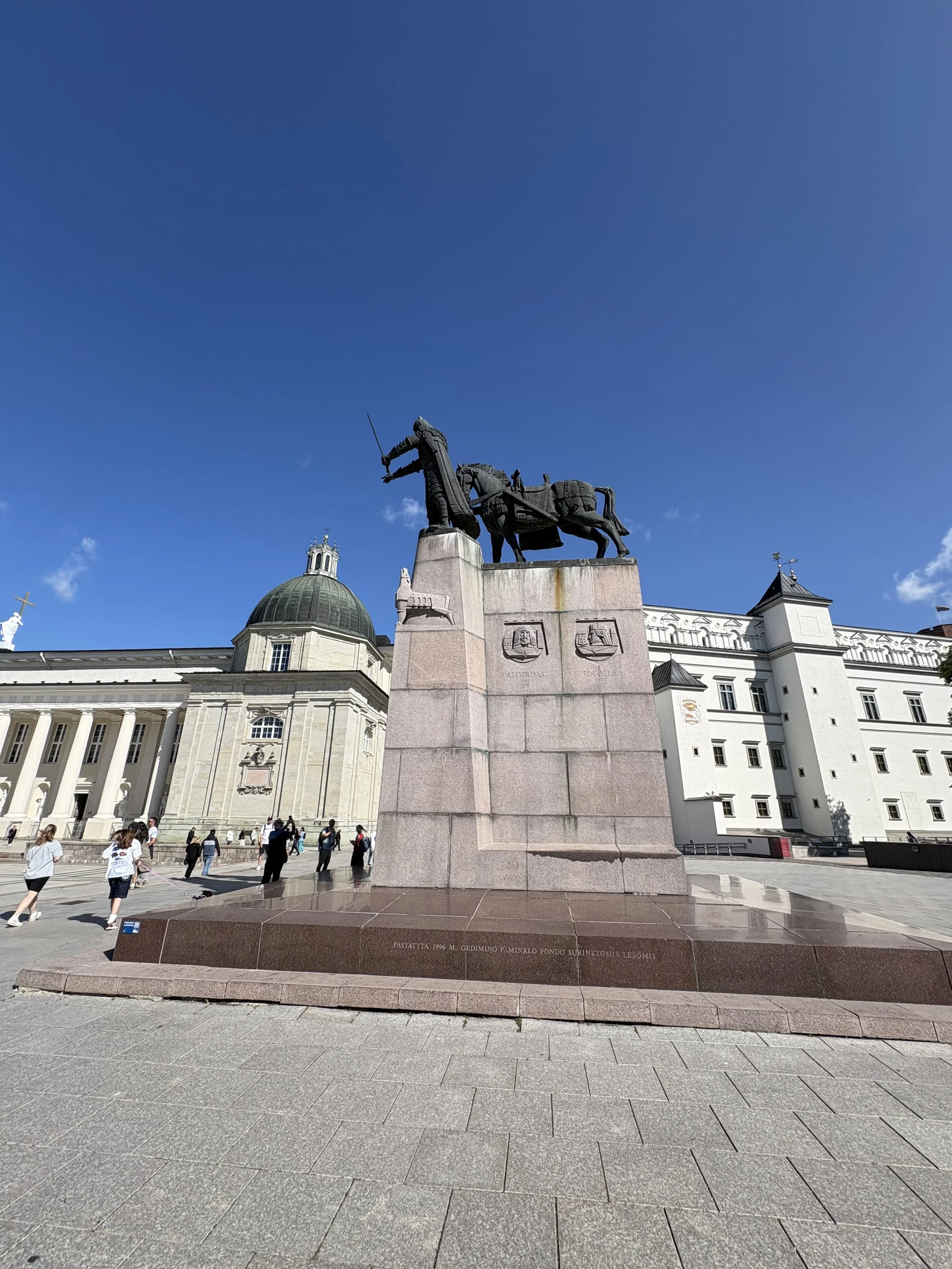
Next, we visit Kunigaikstis Gediminas Statue with war horse and baying wolf sits on a plaza next to the Vilinus Cathedral, on the spot of the original church. The story goes that Gediminas had a dream about a wolf in the nearby forest and the clergy pronounced this was a message from God to build a church on that site. Using our walking tour app, we begin a long walk towards old town, see photo’s
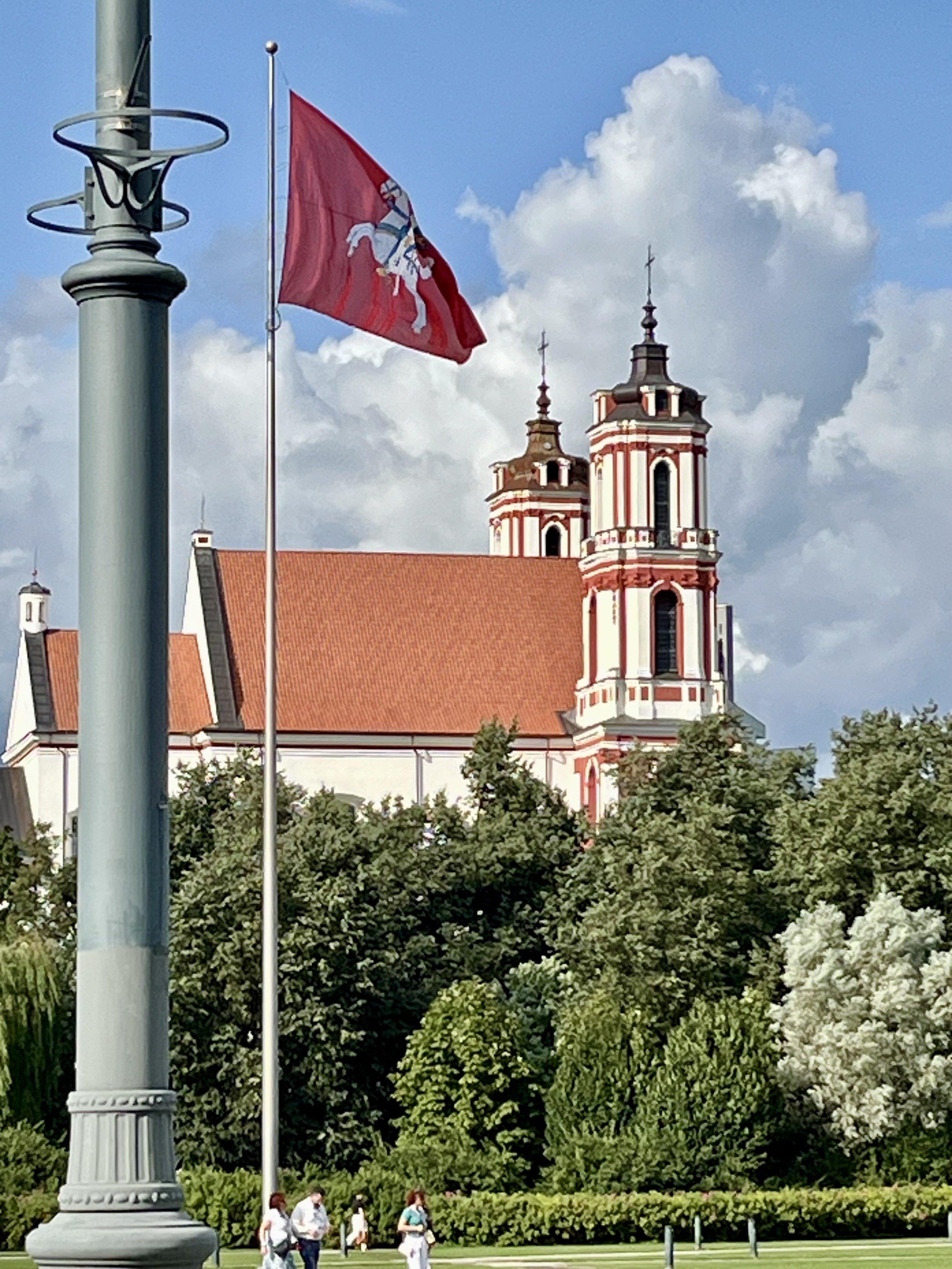
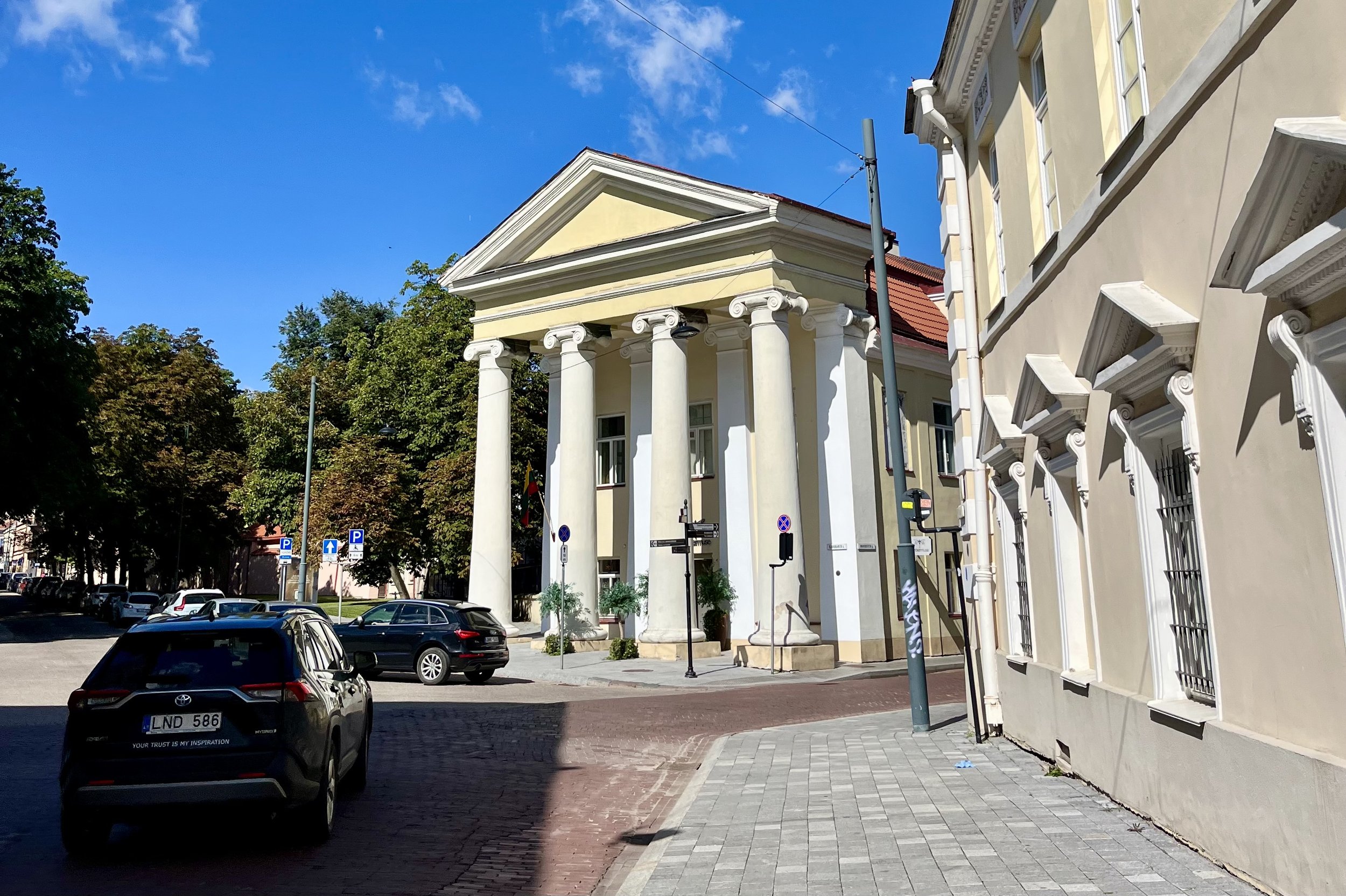
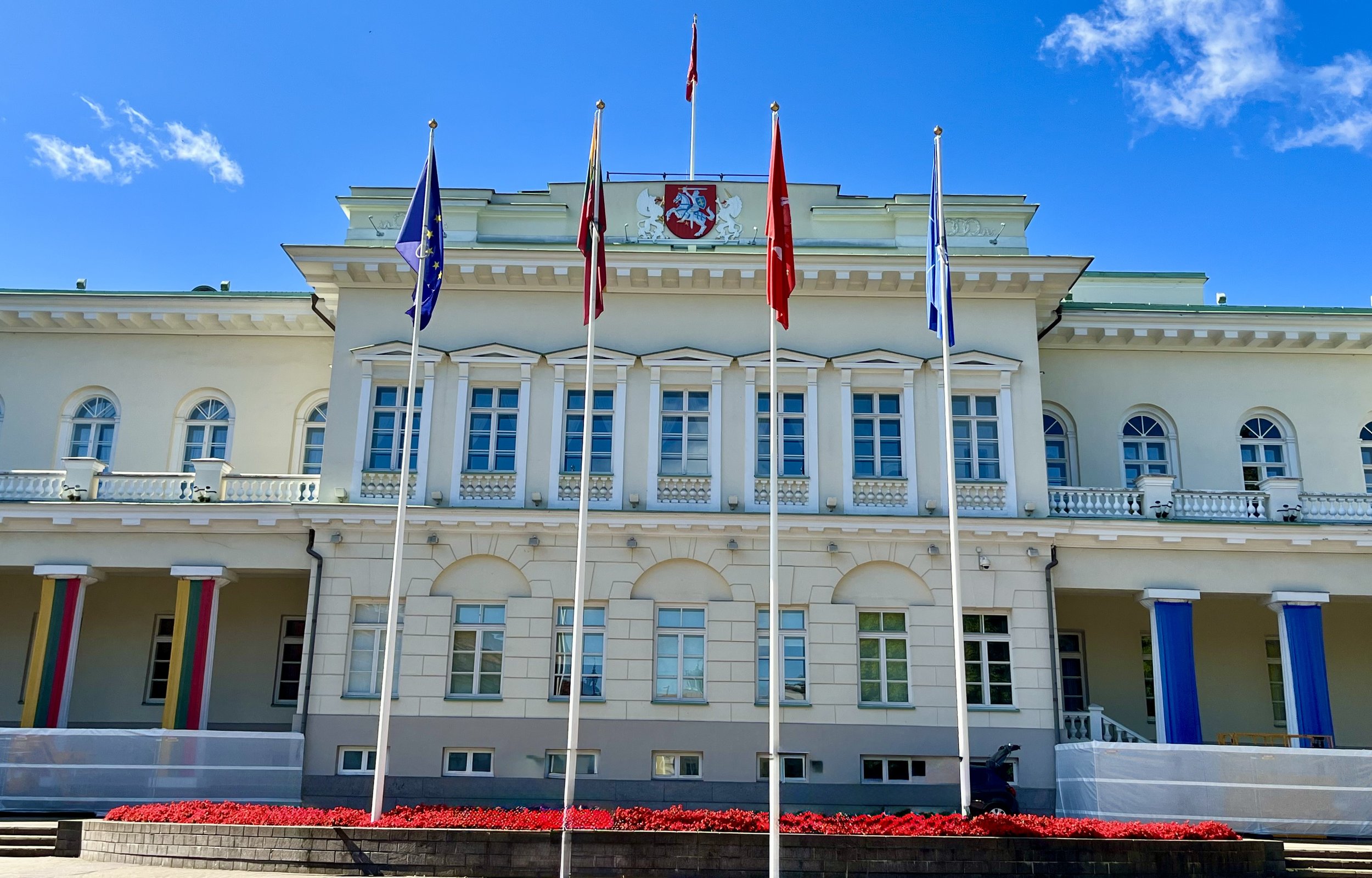
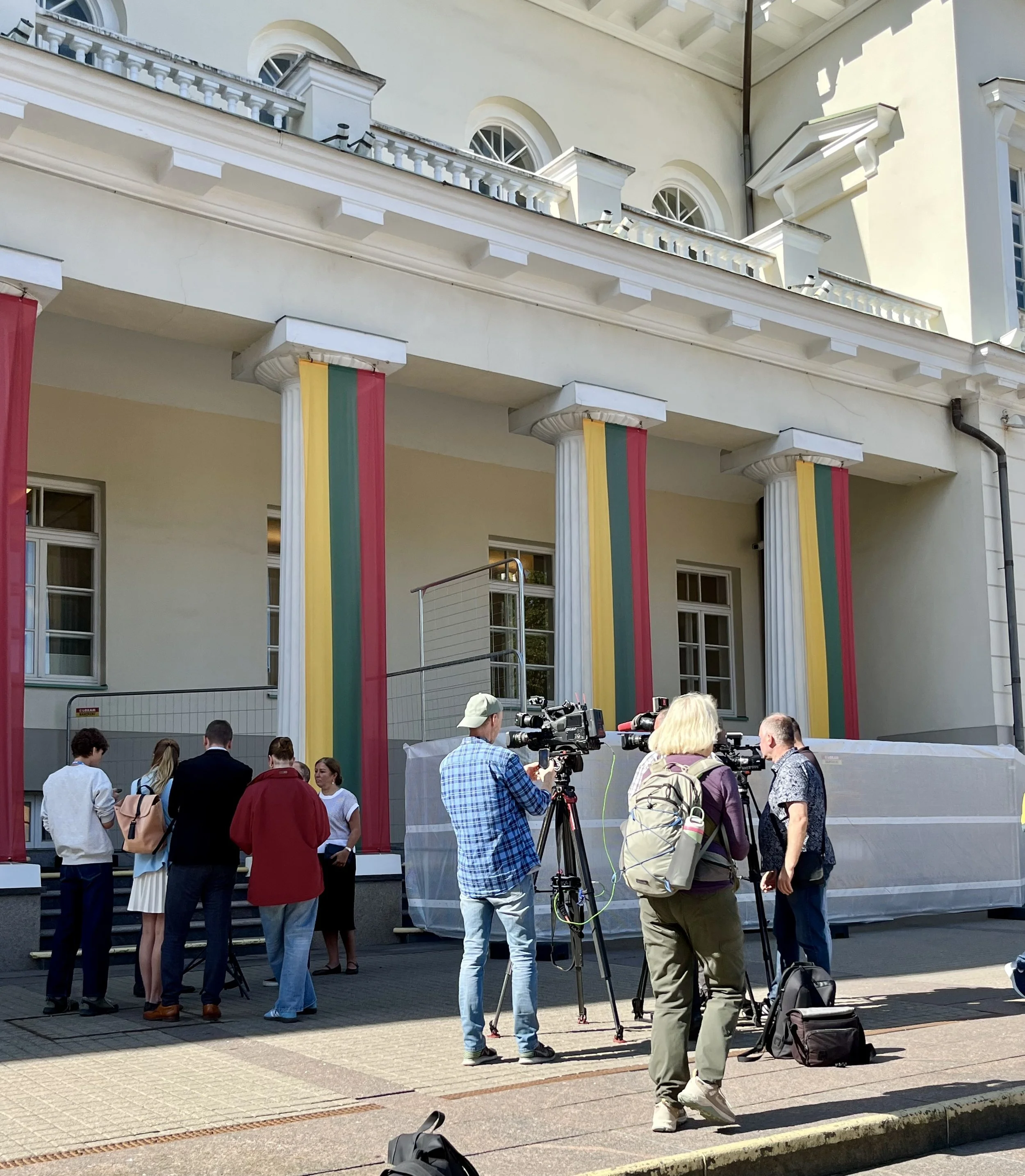
Our next major stop is the President’s residence. It is a long two story mansion which flies the Lithuanian flag on the roof when he is in residence. Today the flag is up, along with the Lithuanian Code of Arms flag, plus the NATO, and European Union Flags. There is an interview taking place on the front steps with the press in place and look close, Janet is crashing the moment. The rear of the building has a large courtyard with columned auxiliary building and a stand-alone chess set. We continue to walk on “ Universiteto” Street and we pass by the main college building for the 4-story University of Vilnius, not fancy but functional.
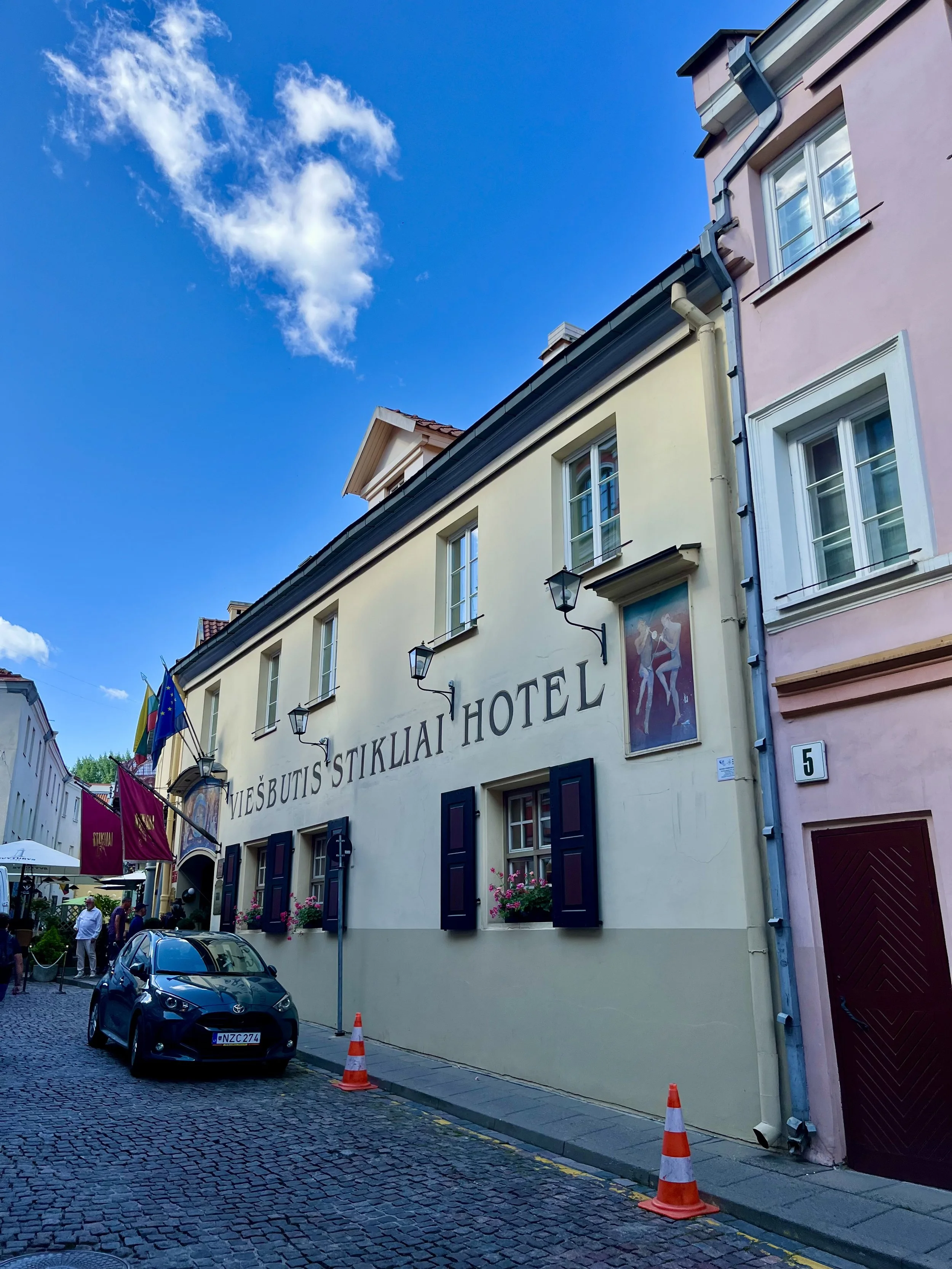
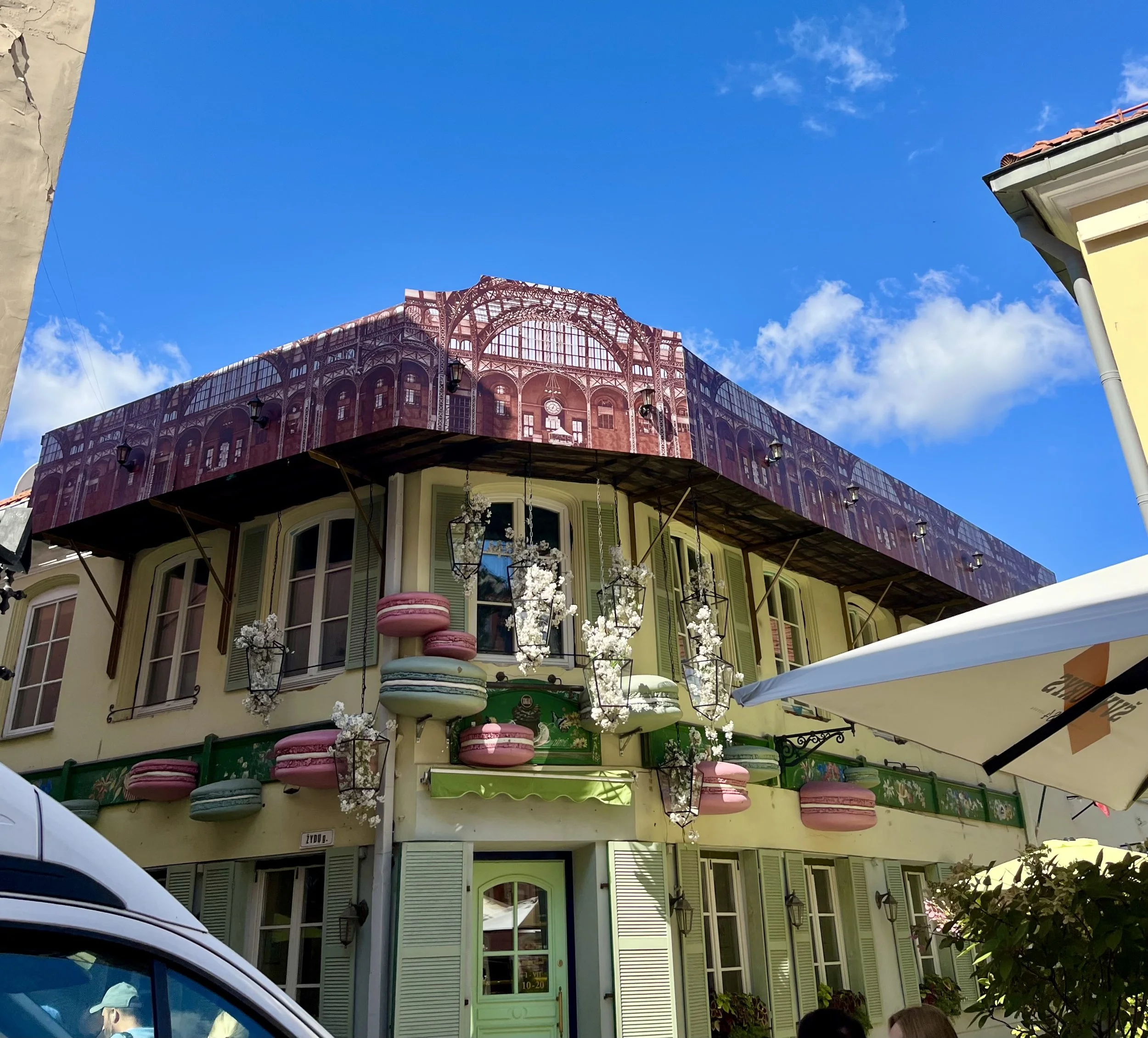
Next we enter the historic Jewish quarter. Historically, the Dukes of Vilnius had solicited the Jewish community of Europe to move to Lithuania to help grow the merchant business and build business acumen. Walking passed the University building, a plaque is found on a rather non-descript building stating, “ This building constructed in the 16th century served the Jewish community for 80 years prior to 1941as a house of prayer.” A grey painting of a man marks this entrance of the Jewish quarter on “Stikliai” street. As well as residences and schools, the Stikliai Hotel of Vilnius stands and is lovingly still in use. The hotel displays interesting street art including two blind-folded musicians dancing and then another painting over the entrance of the same musicians blowing with their instruments a huge bubble that hold pertinent images. Very unique. As we continue to walk, this old street displays flowered balconies and flags, certainly a neighborhood well loved. See Photos.
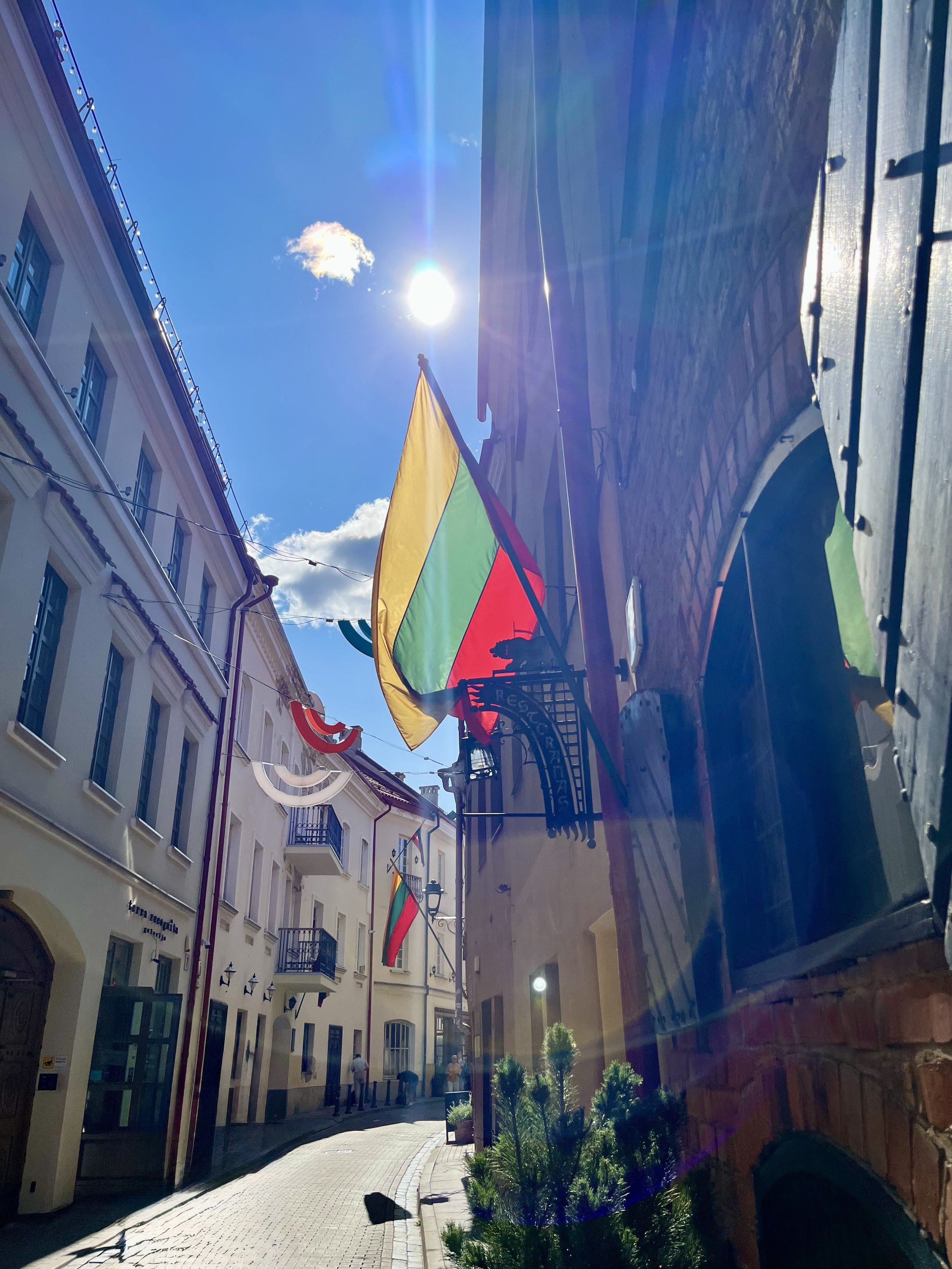
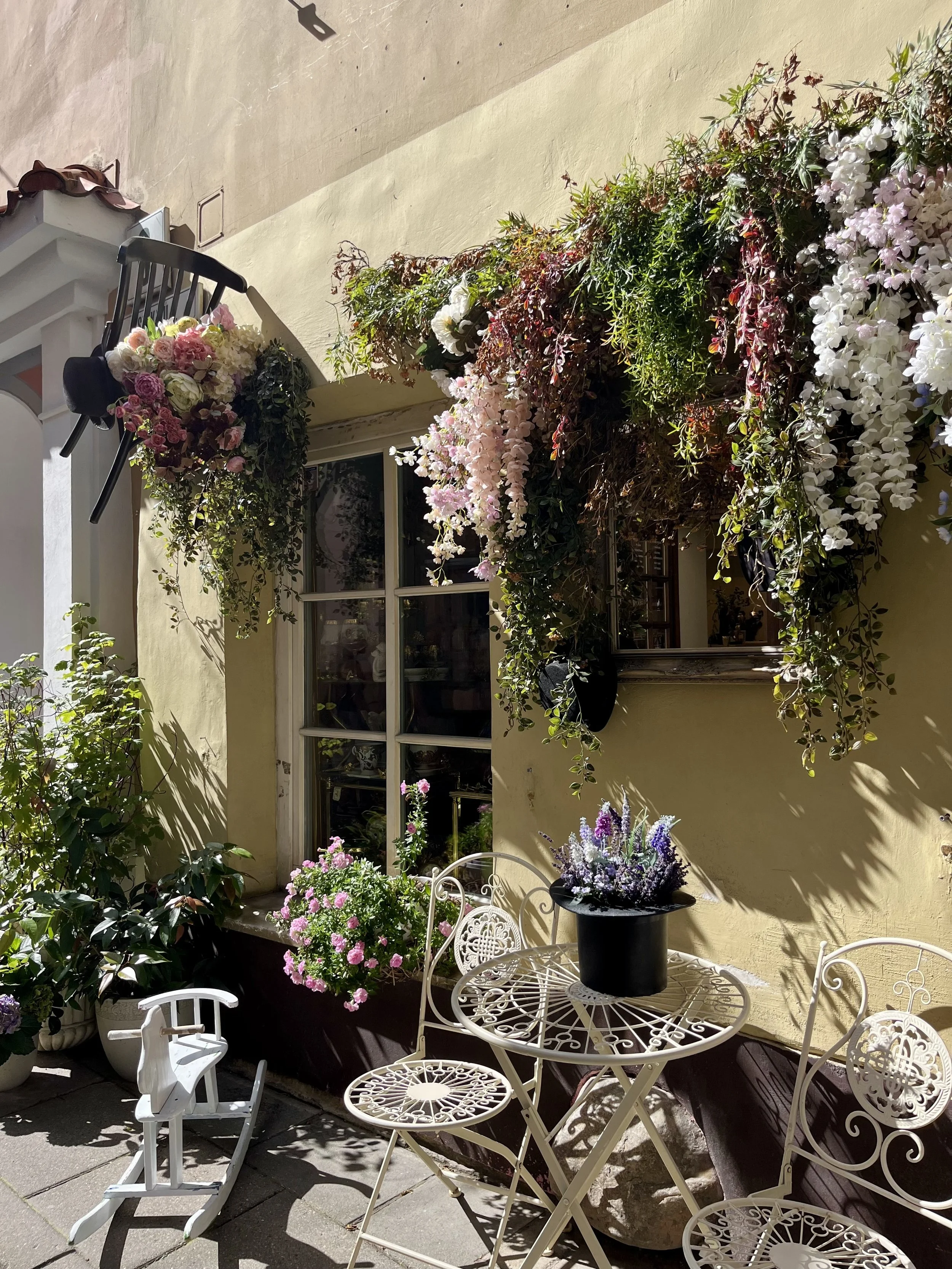
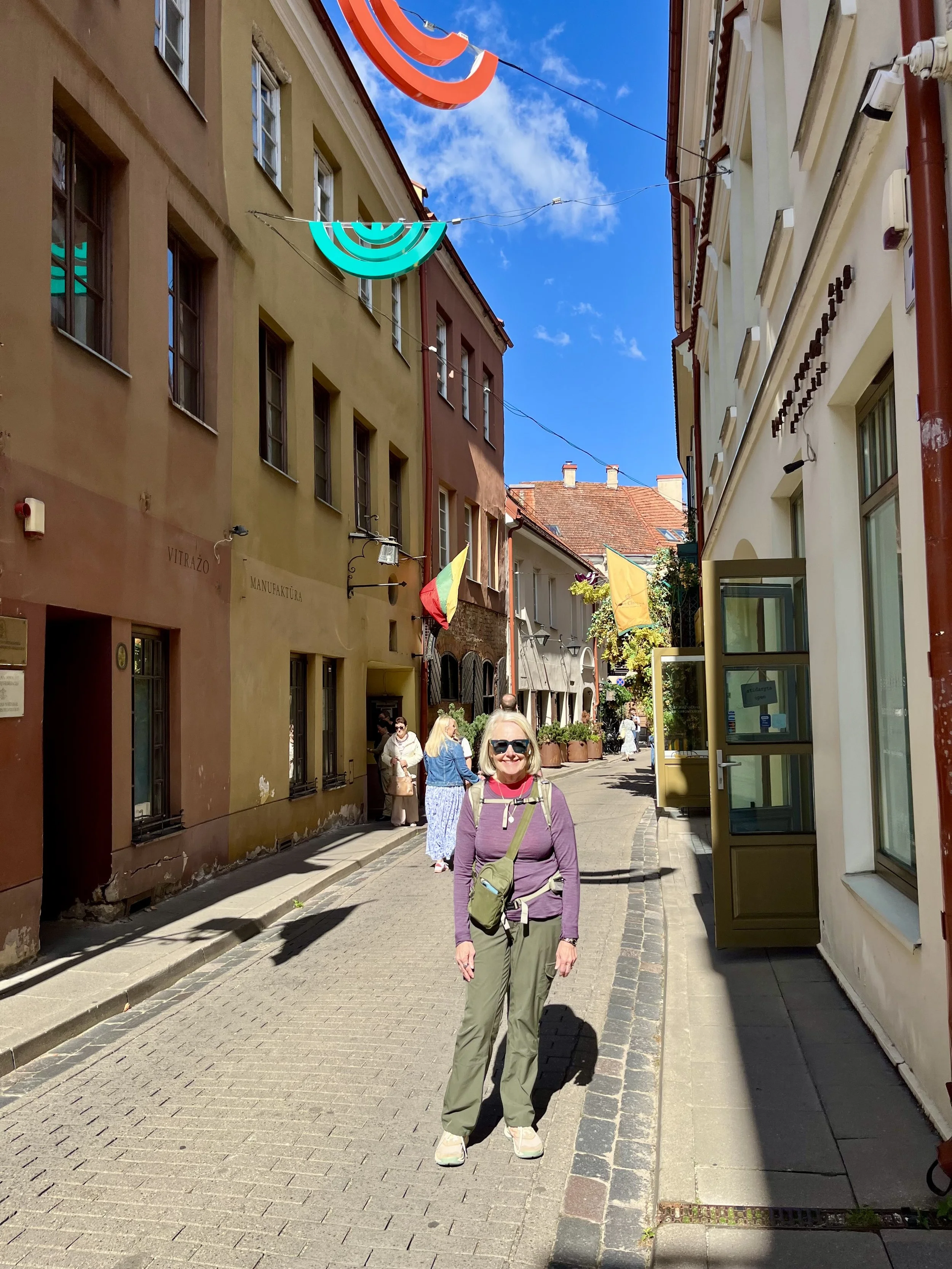
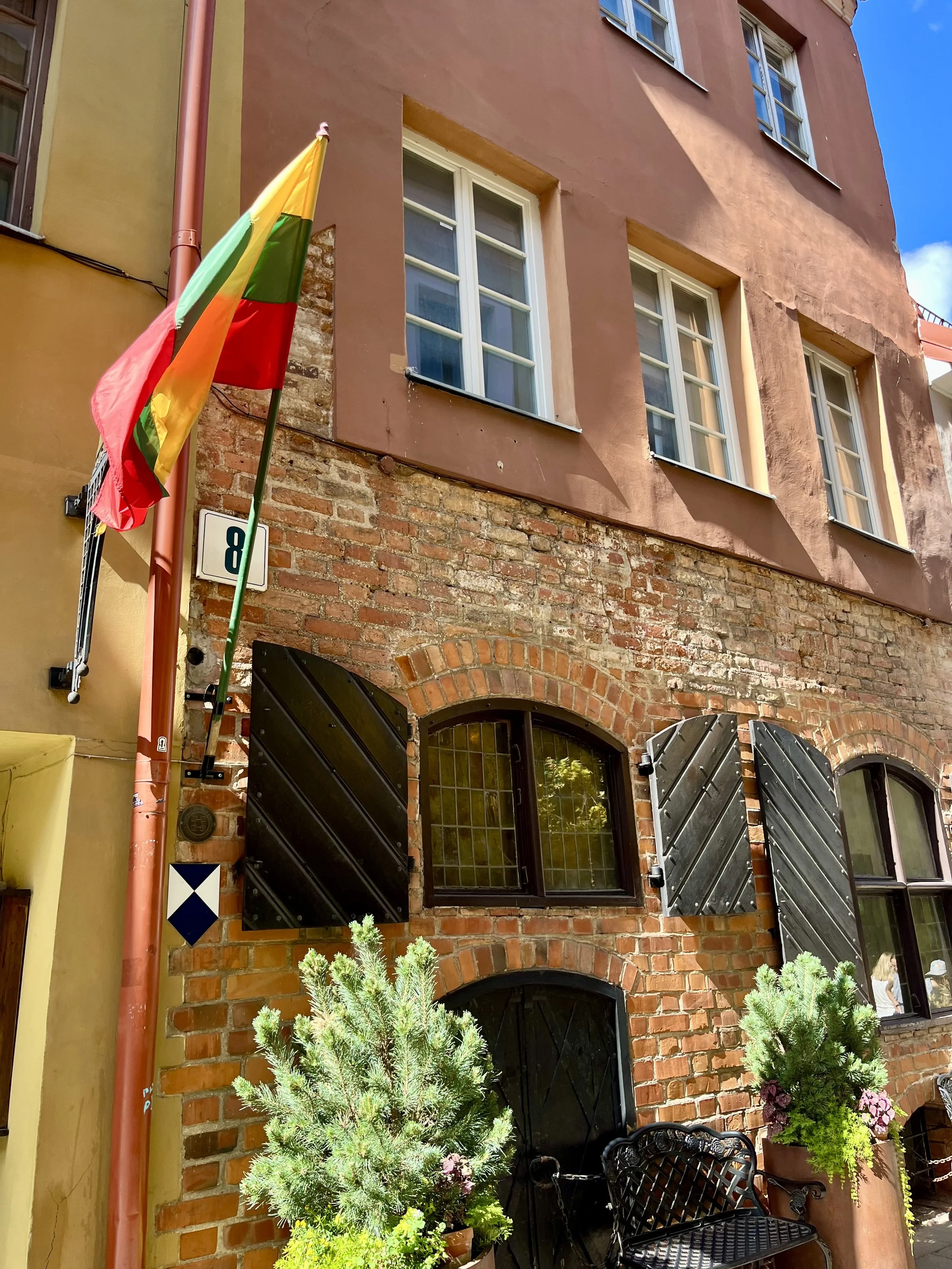
Then, another plaque comes into view, “VILNIUS GHETTO” with a map of the “Small Ghetto” 9/6/1941–10/2/1941(9,000) and “Large Ghetto” 9/6/1941-9/24/43 (30,000). The plaque reads:
“On 24 of June 1941, Vilnius was occupied by German troops and from the early days of Nazi occupation, the remaining Jews in the city were persecuted and murdered: by September 1941 several thousand Jews had already been murdered”.
“By the end of 1941…about 30,000 Vilnius Jews were killed in Panerial Forest, located outside the city. During the mass killing actions, all residence of the small Ghetto were killed and this ghetto ceased to exist. … In early July 1944, with the Red Army approaching Vilnius, however, the last remaining Jews in Vilnius were killed. Only about 2000-3000 Vilnius Jews of 58,000 survived the Nazi Occupation.”
All these Baltic states have faced one tyrannical regime after another spanning centuries. But they have endured, and most recently in 1991with the relinquishment of Soviet domination they all seem to be thriving as they smartly turn to the western democracies for economic opportunity, governmental stability, and national defense. Some of the Baltics, Estonia for sure, are from our brief experience more militant in their thinking and rhetoric against the Soviets before and the Russians now. Lithuania, however, seems more reserved as it has over 20% Russian speaking citizens that resulted from the Soviets encouraging the movement of Russians and that culture during their occupation. Does this not portend the same playbook of Russian aggression as in Ukraine with a high population of Russians in the Donbas Region? You don’t think its possible until it happens. The Baltics believe it and that’s why they have invested 5% of GDP in defense as NATO members and have mandatory military training. One more note, we have been told by other travelers that the KGB Museum in Lithuania is far more repugnant than the other exhibits we have visited—so we decided not to go there.
As we continued our walk we came across the “Greek Catholic Church of the Holy Trinity”, built in 1514 by the Grand Duchy of Lithuania in appreciation of the victory of the Polish-Lithuanian forces over the Muscovites (Russians). Interesting to us because Catholic not Greek Orthodox, and it was clear the interior was just getting restored, so we entered. See Photos.
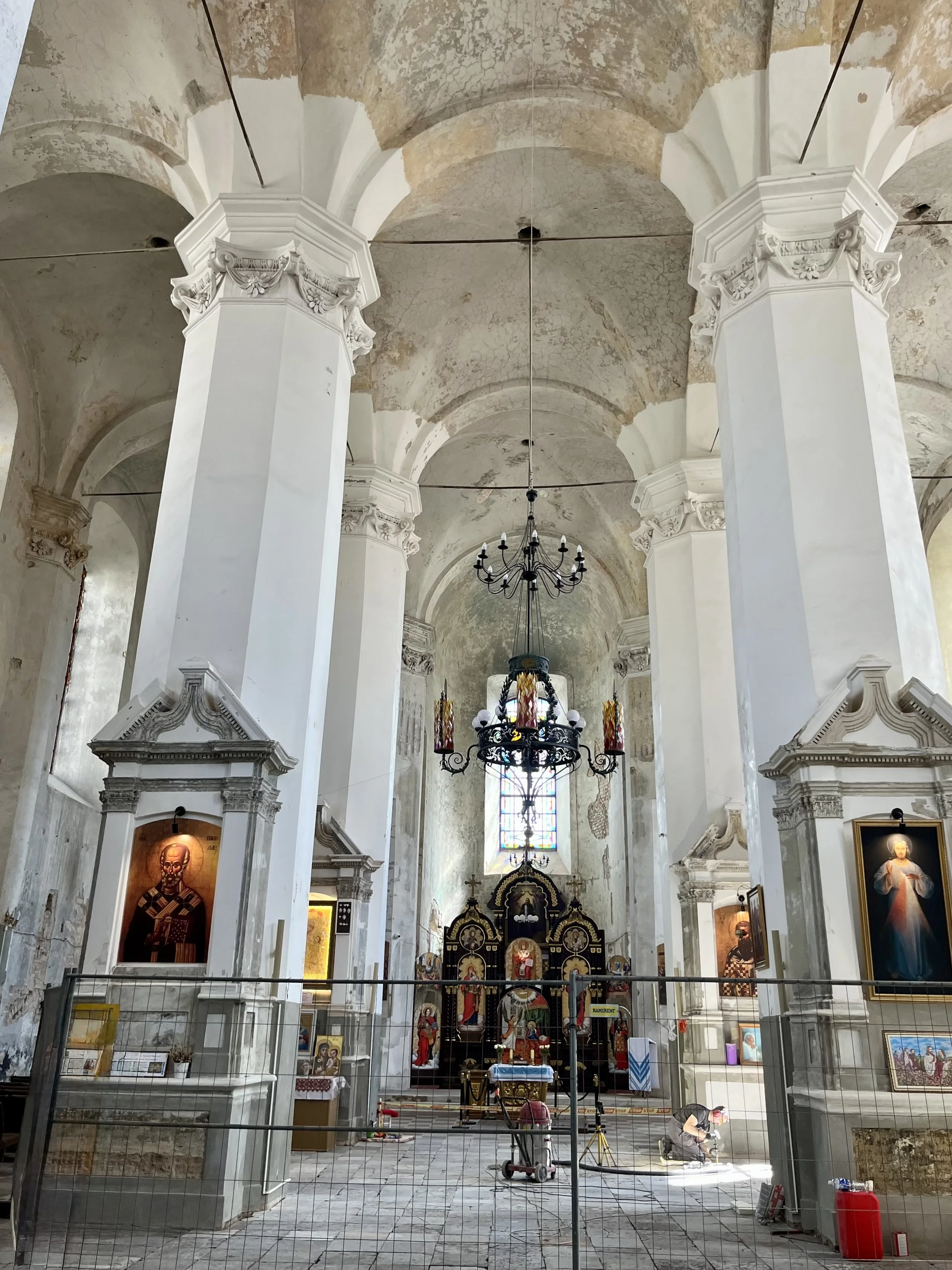
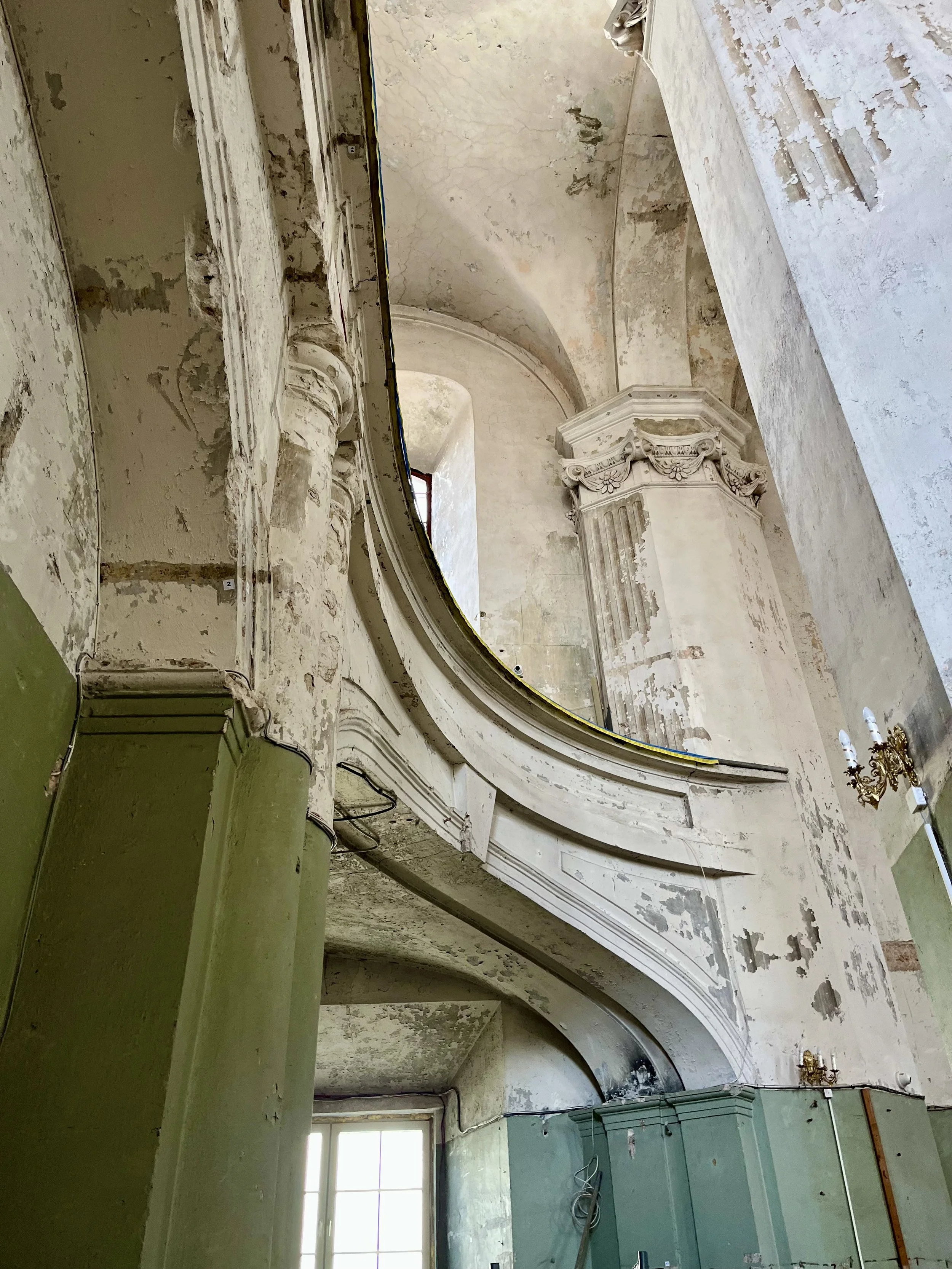
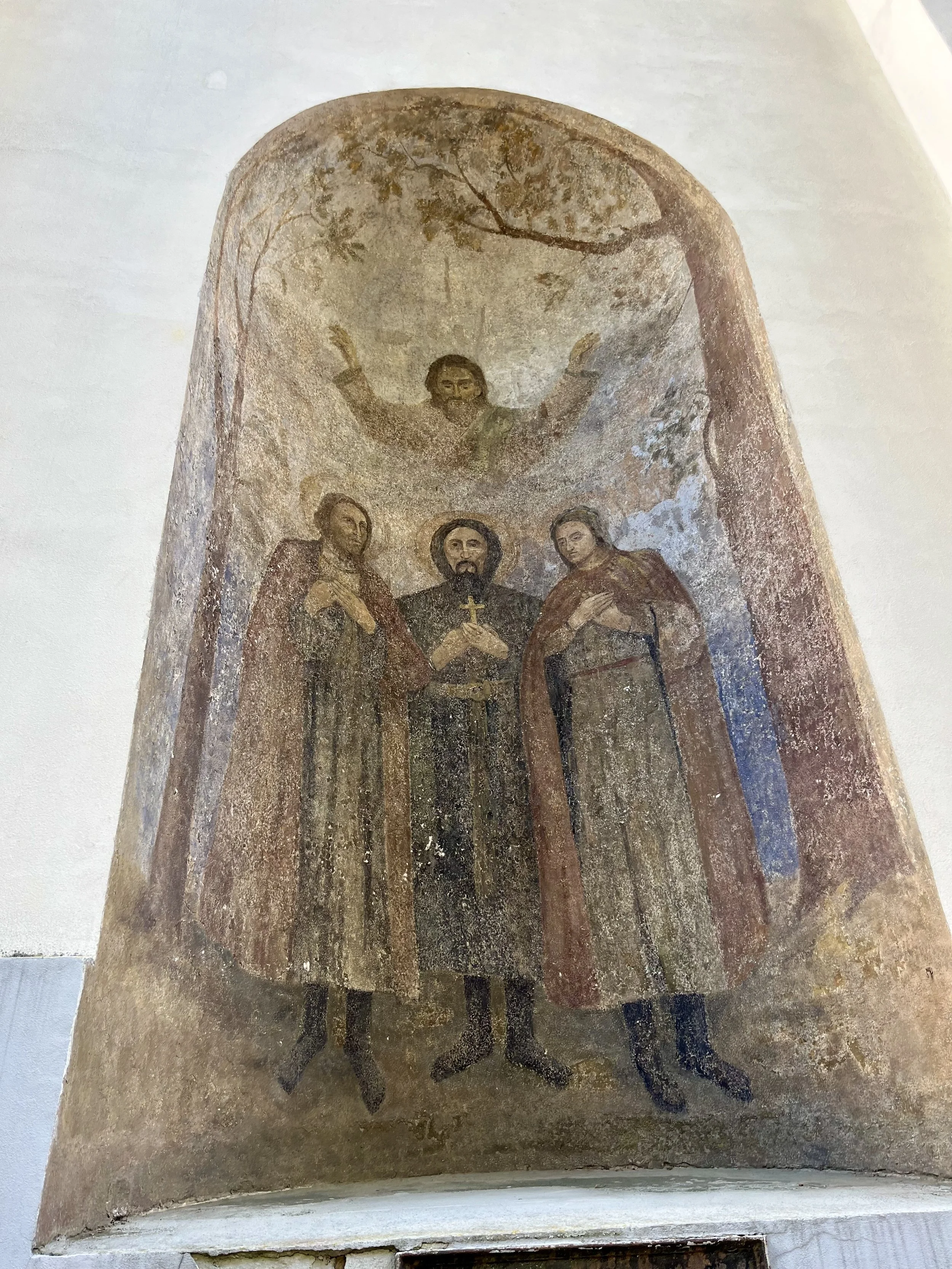
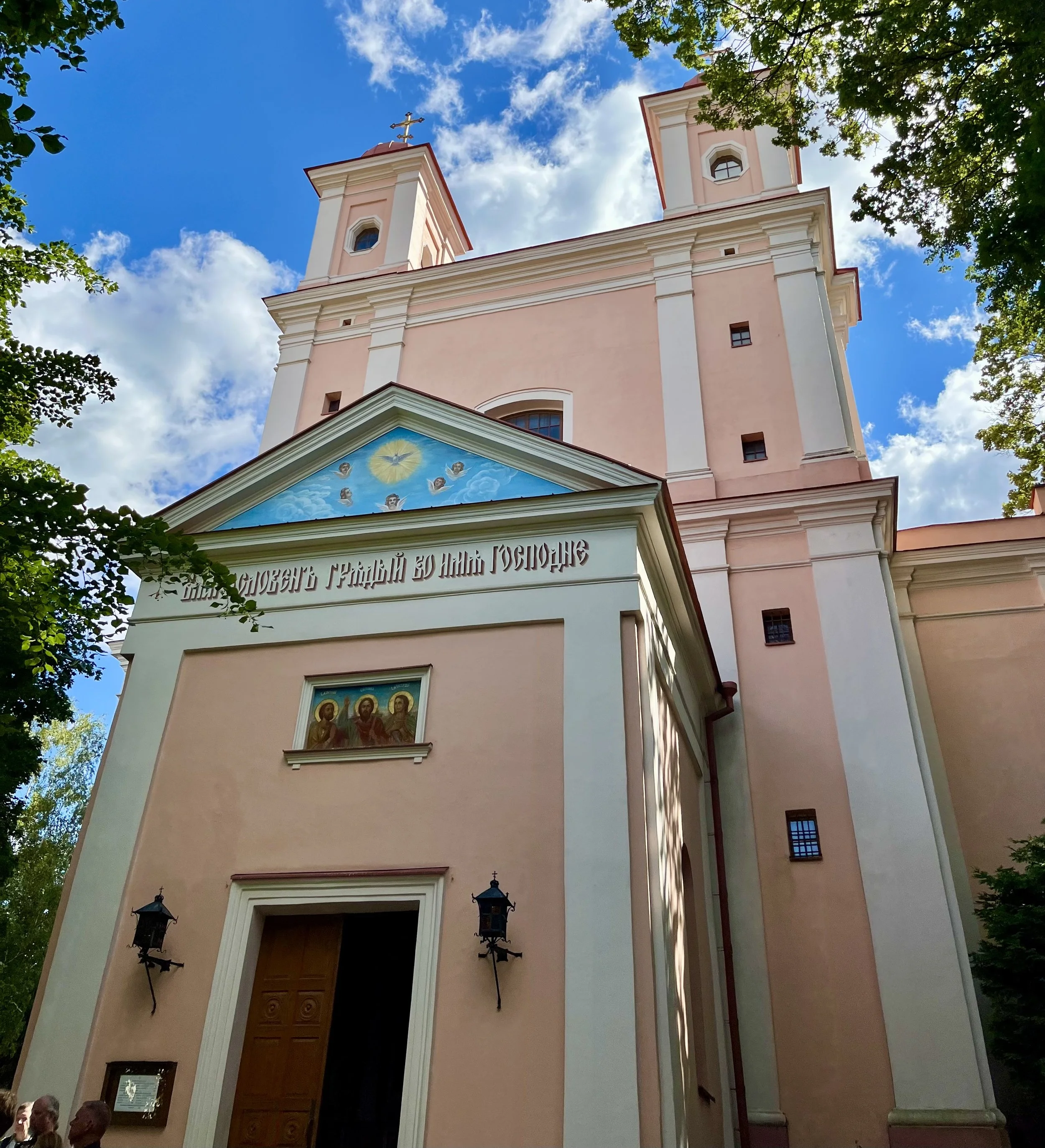
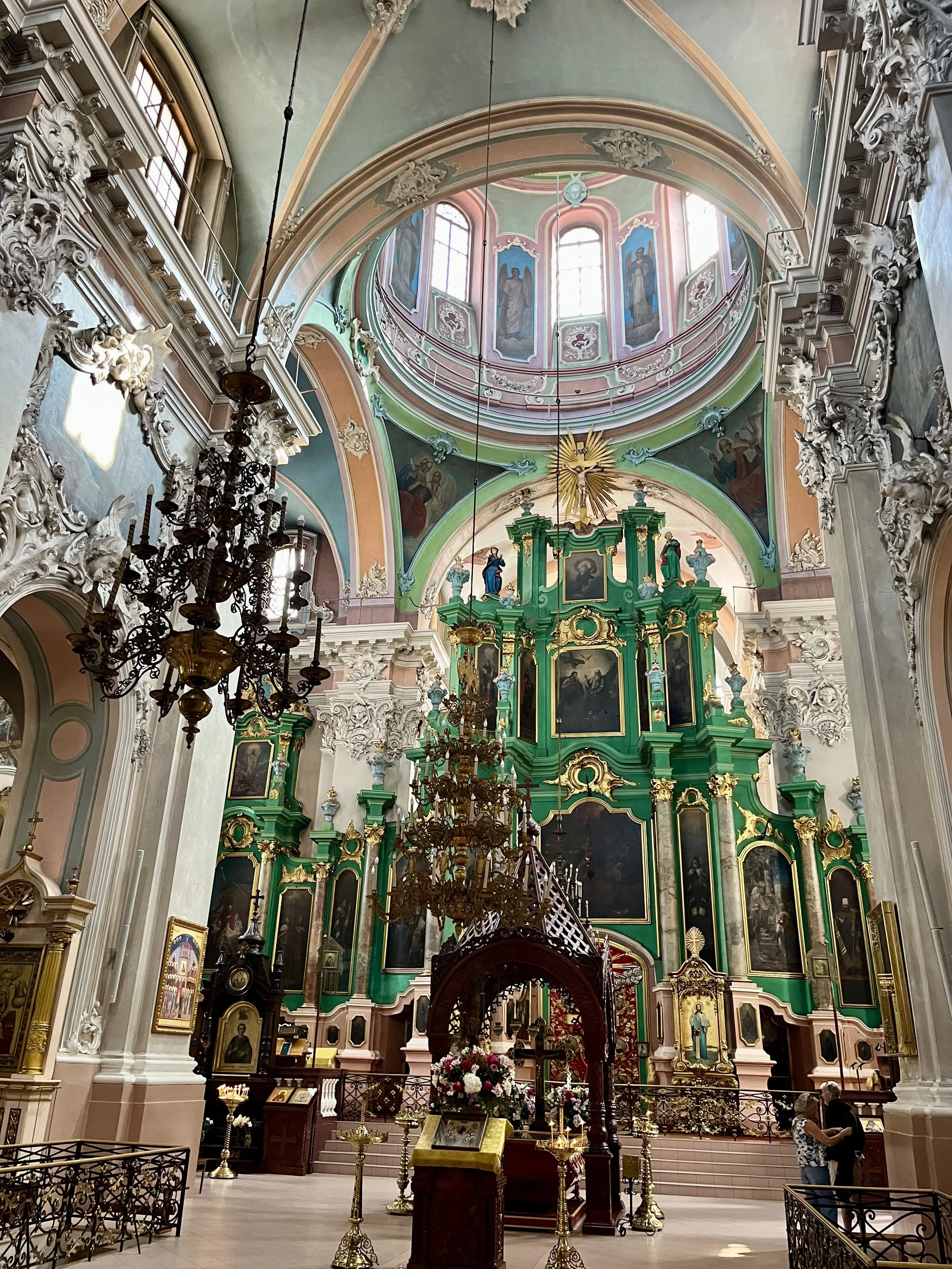
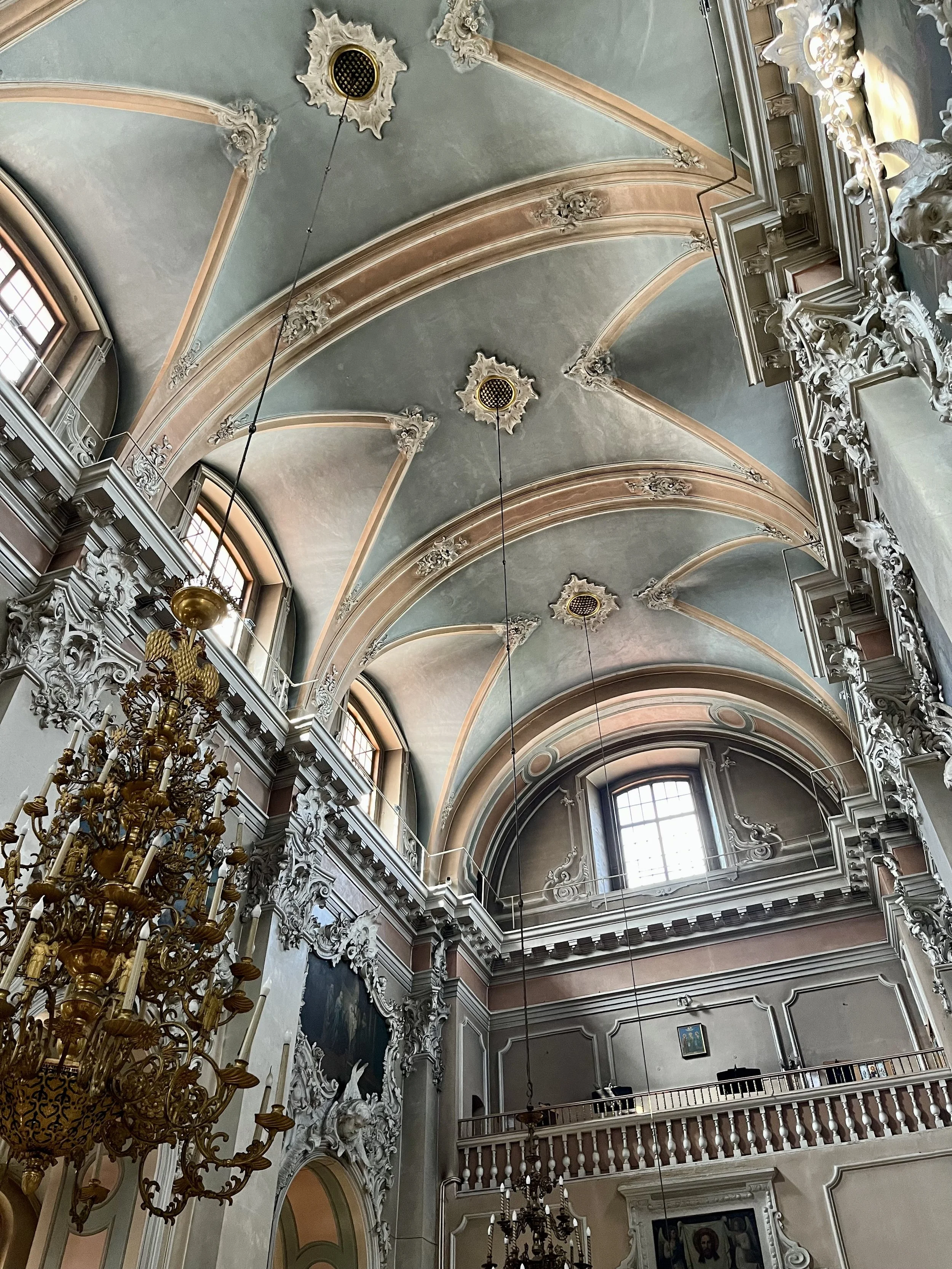
Around the corner another church had been built in 1638 named “The Orthodox Church of the Holy Spirit”. This church was Orthodox not Catholic and fell under the authority of the Patriarchate in Russia. The structure on site, subject to fires, was rebuilt in late 1700’s. It is very ornate with Baroque style columns, moldings, and sculptures. See Photos.
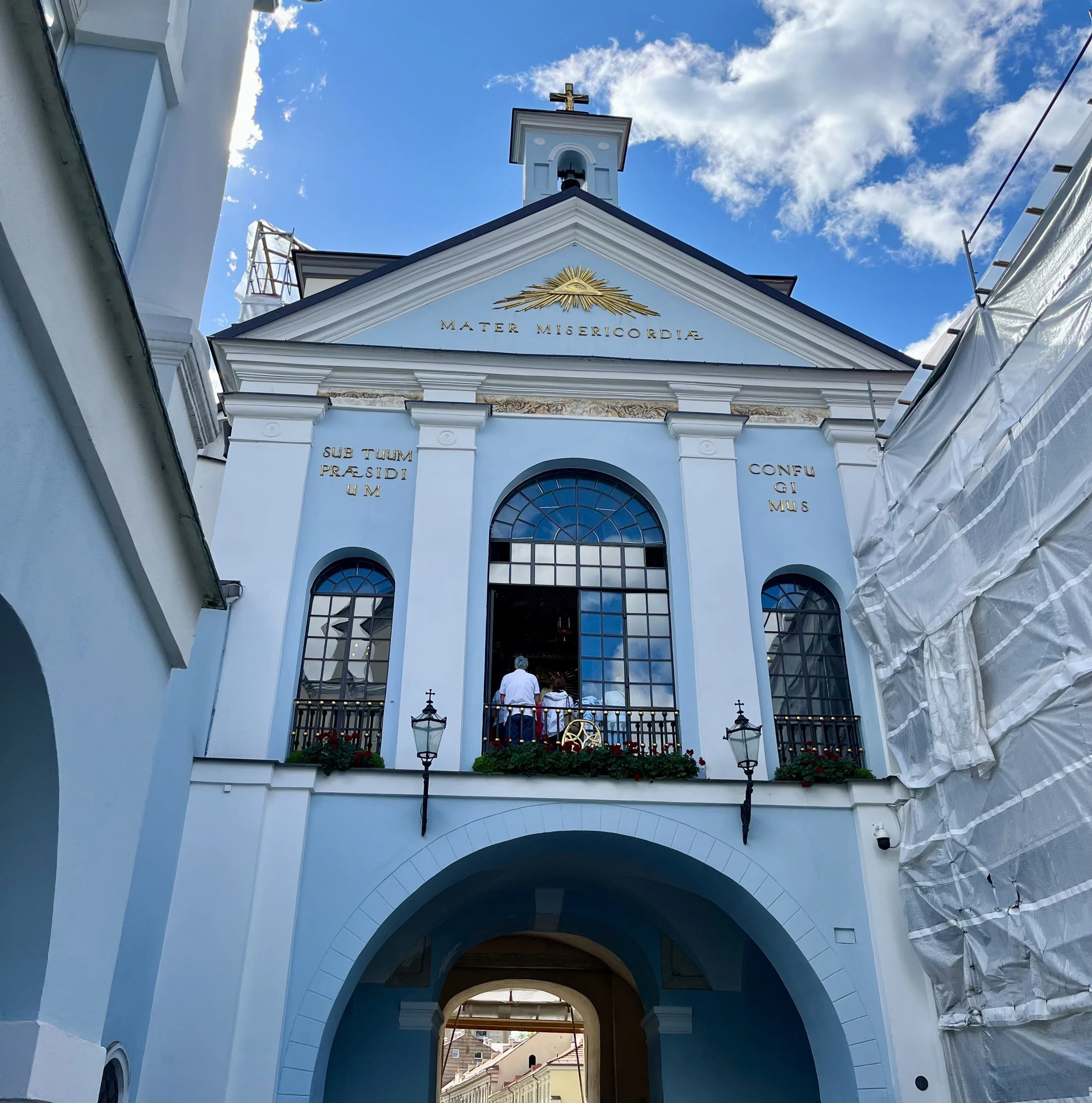
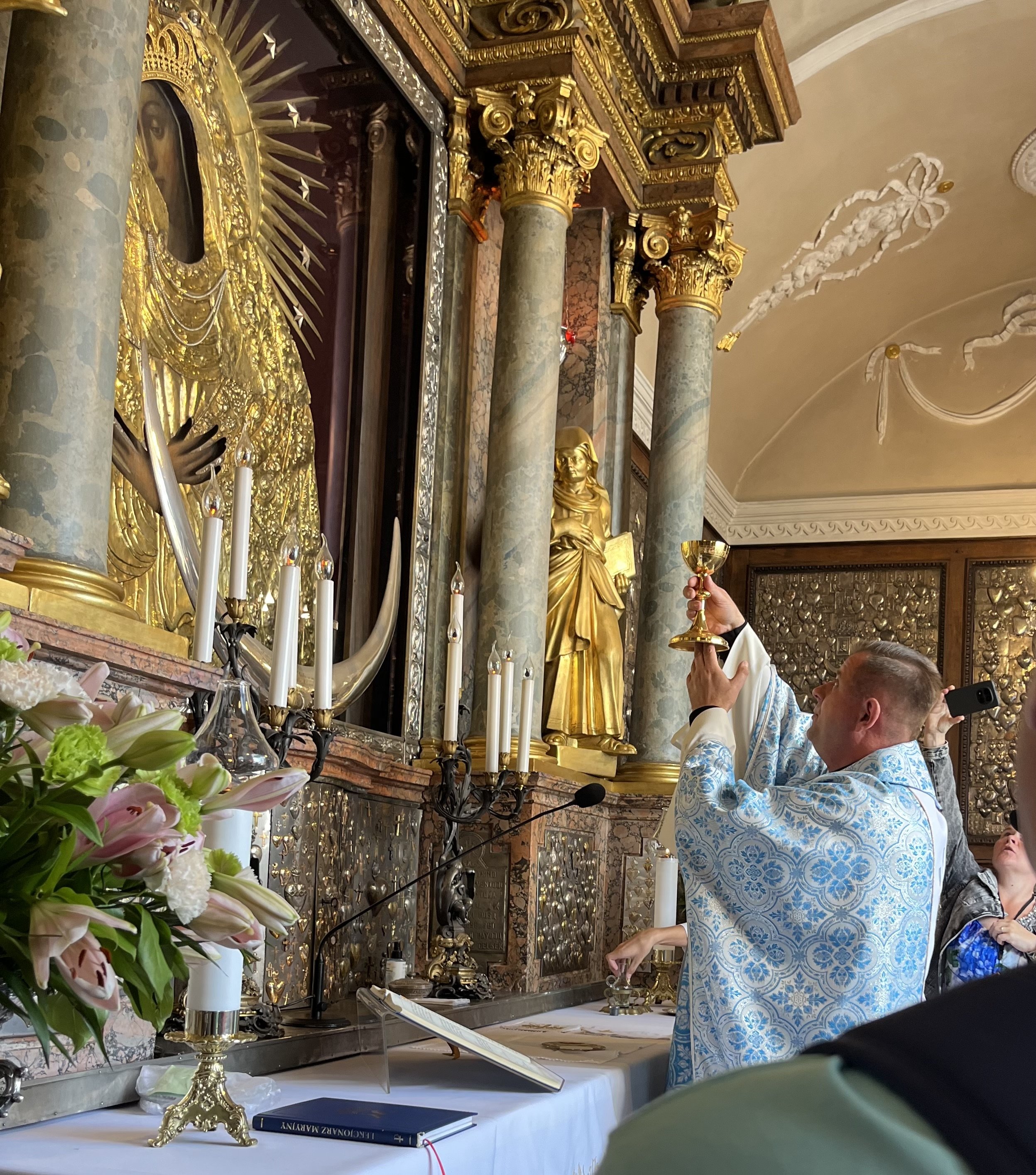
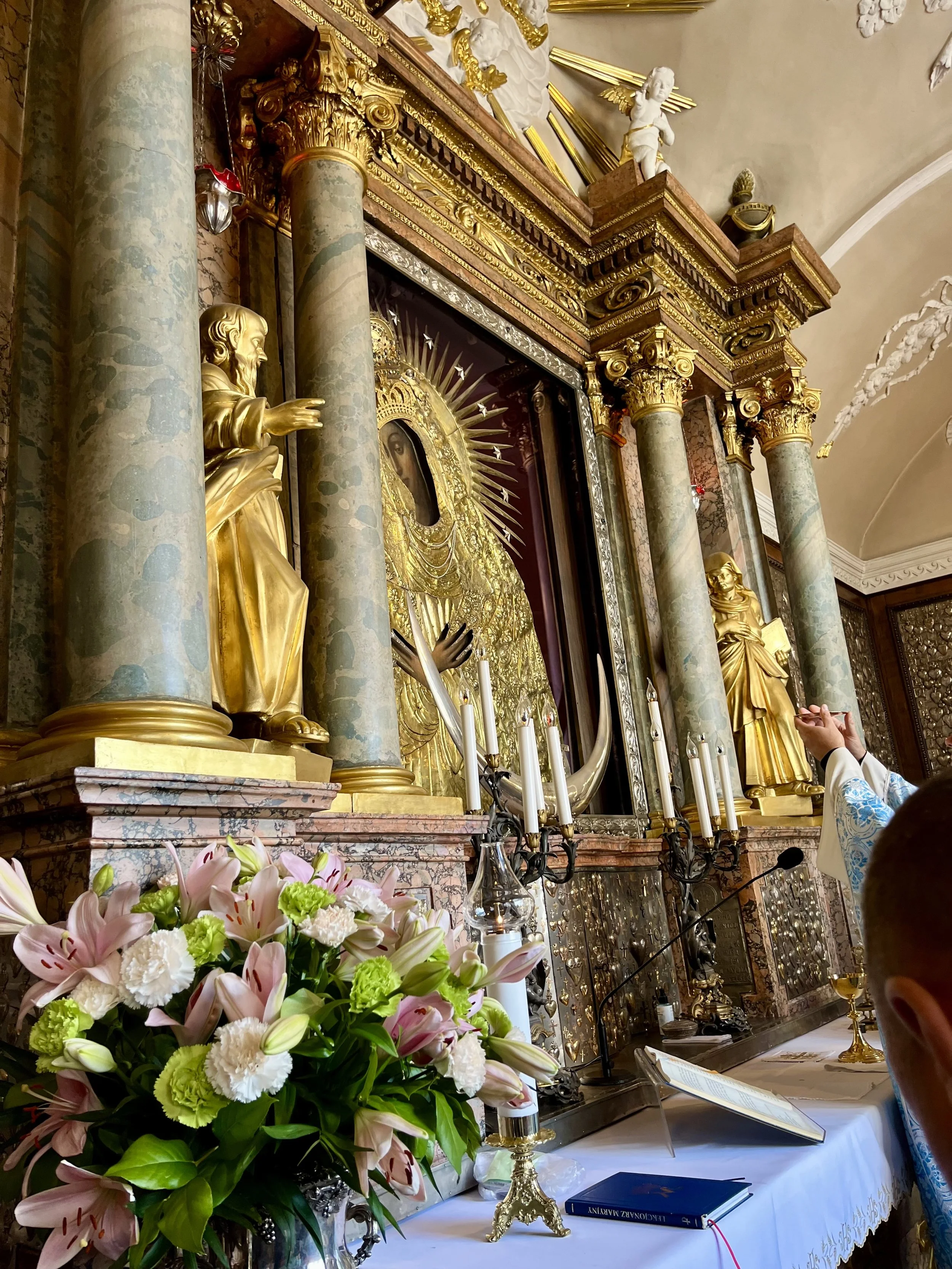
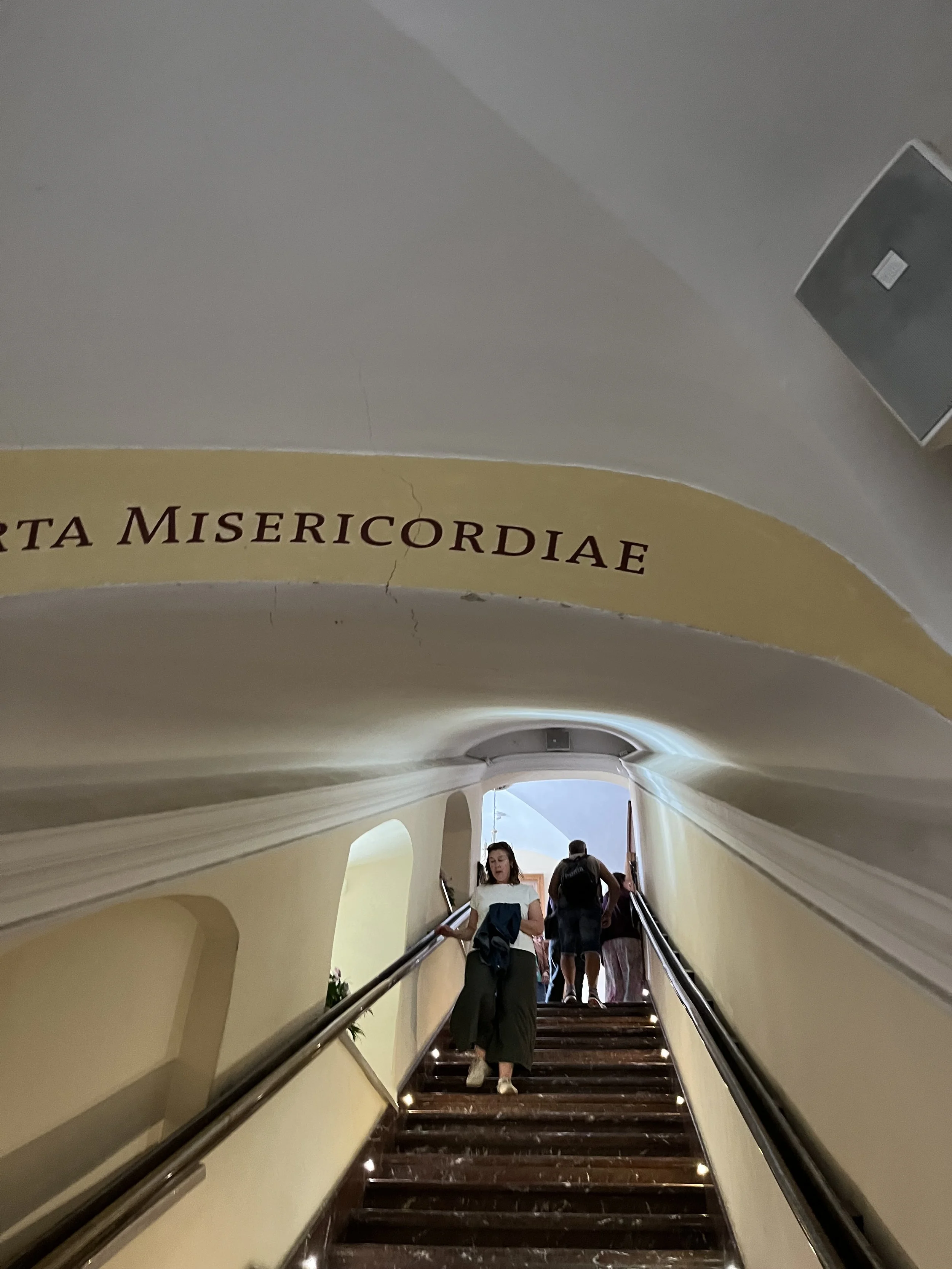
We visited one more chapel that was very special. “The Our Lady of the Gates of Dawn Chapel (The Mother of Mercy)” is located on the second floor atop a walkway between two buildings. From the street we heard singing coming from a large open window. We could not see in, but we knew this was the location of the Chapel that displays a large Portrait of the Virgin Mary, without infant Jesus, partially covered in gold and silver vestments. The portrait was painted about 1630. This Chapel became venerated after bombs dropped exploded and destroyed all the proximate buildings but not the Chapel. We entered a street level side door and walked the stairs up to the entry of the small Chapel. It was packed in with standing people, but we slide inside for awhile, and to our surprise the Priest was surrounded by parishioners all singing in their native language while he conducted mass. It was a beautiful, reverent experience to be in that place and time with all those pilgrims seeking grace. Really an unexpected highlight of the trip. See Photos
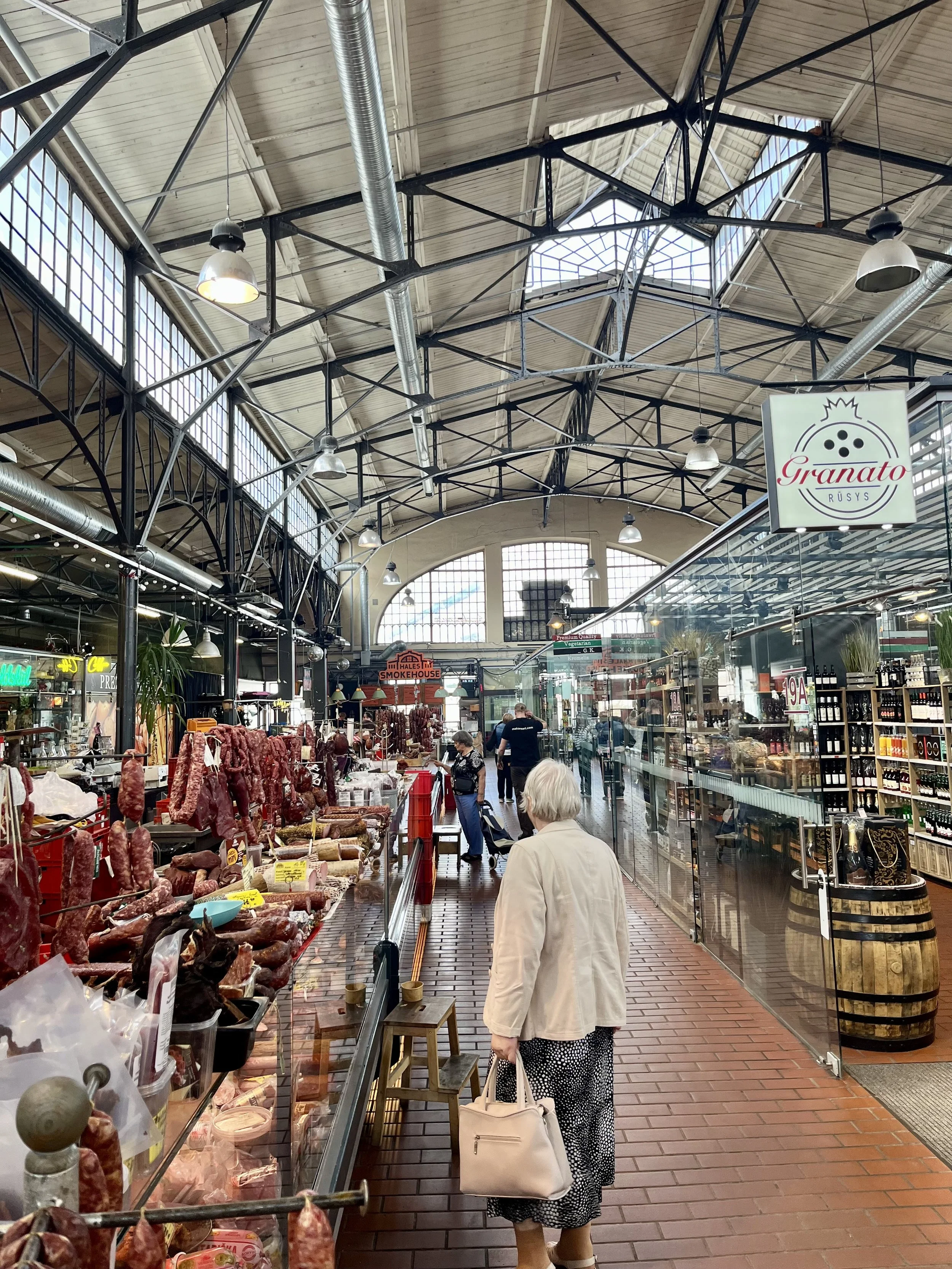
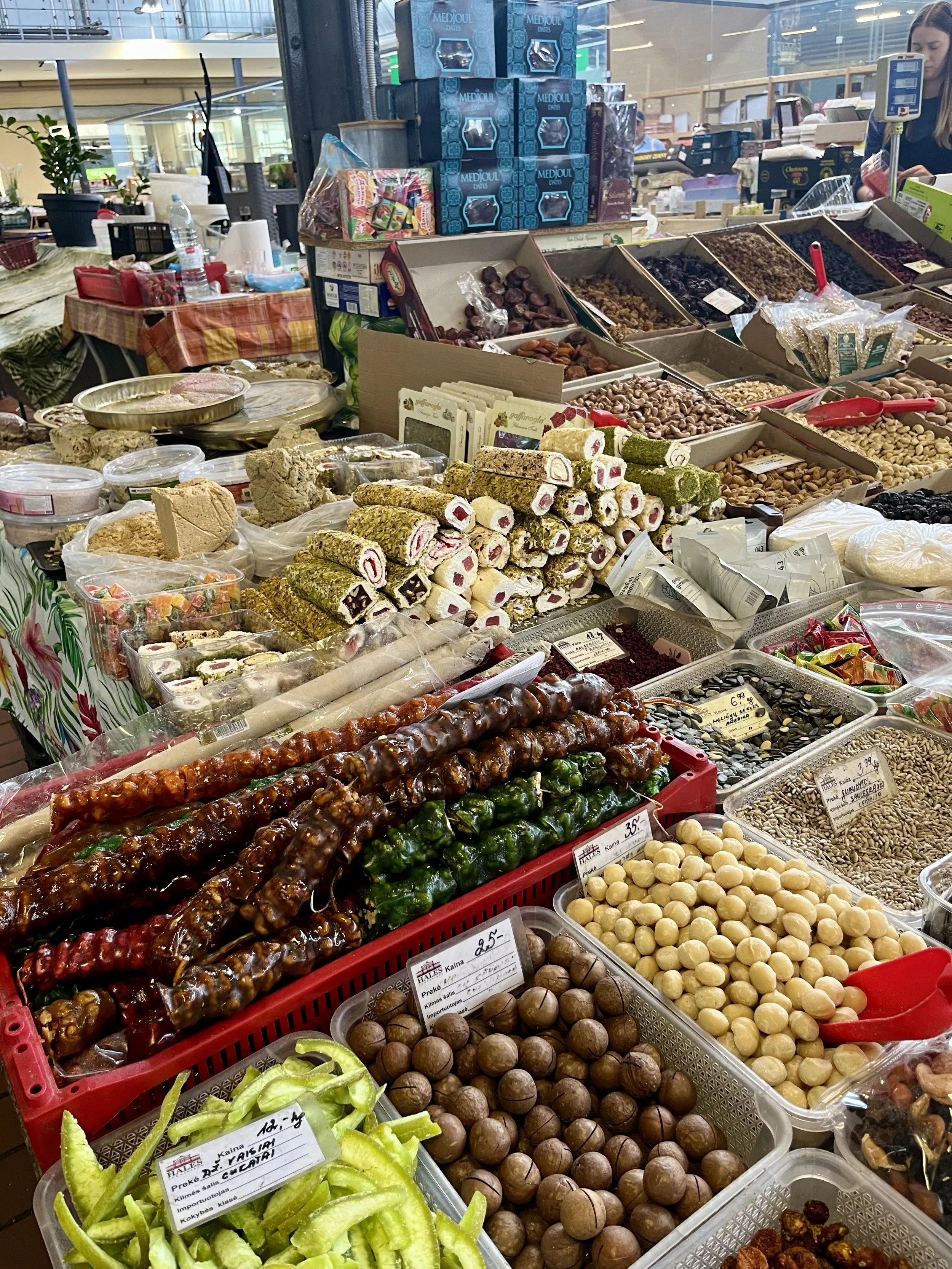
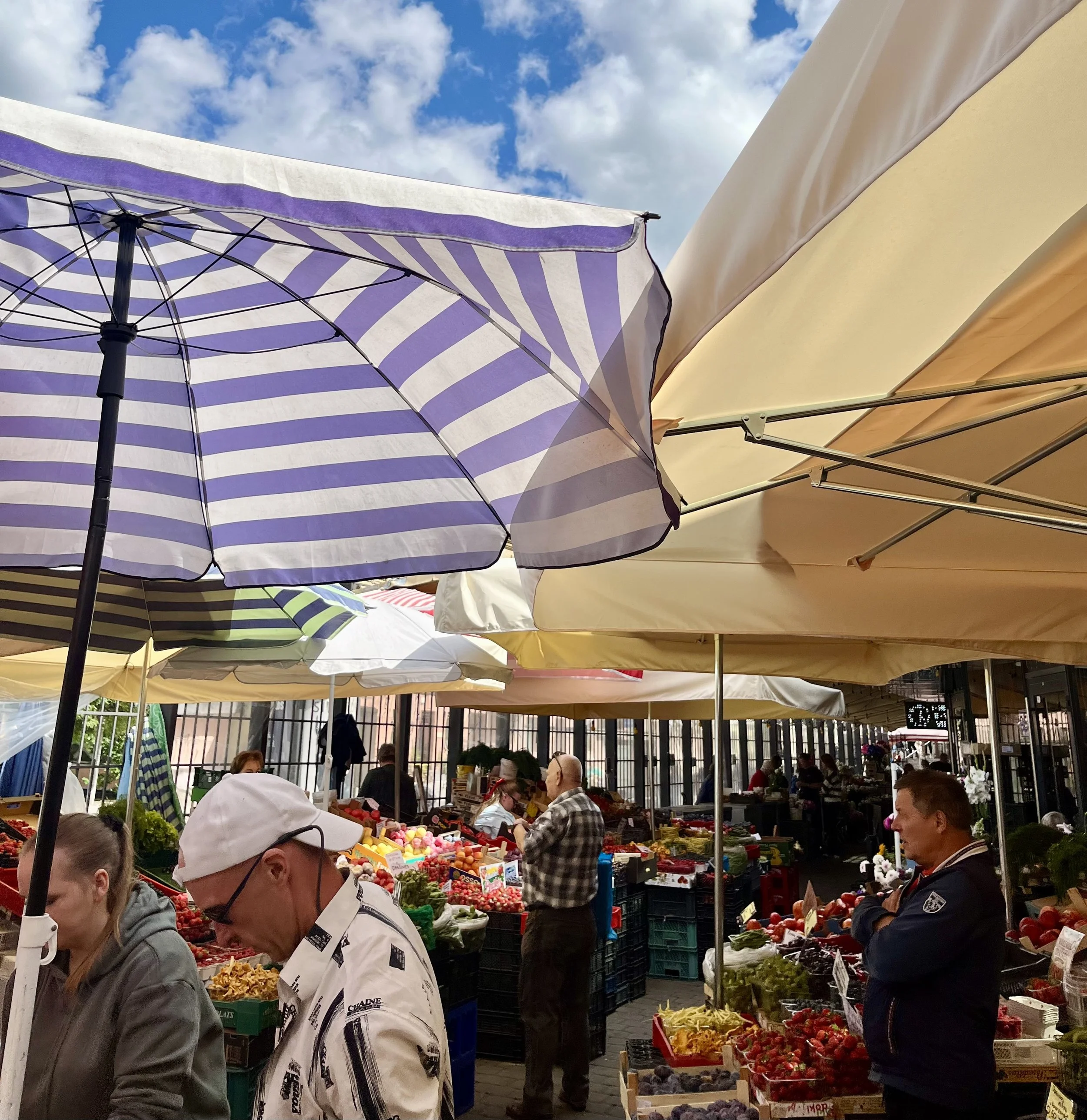
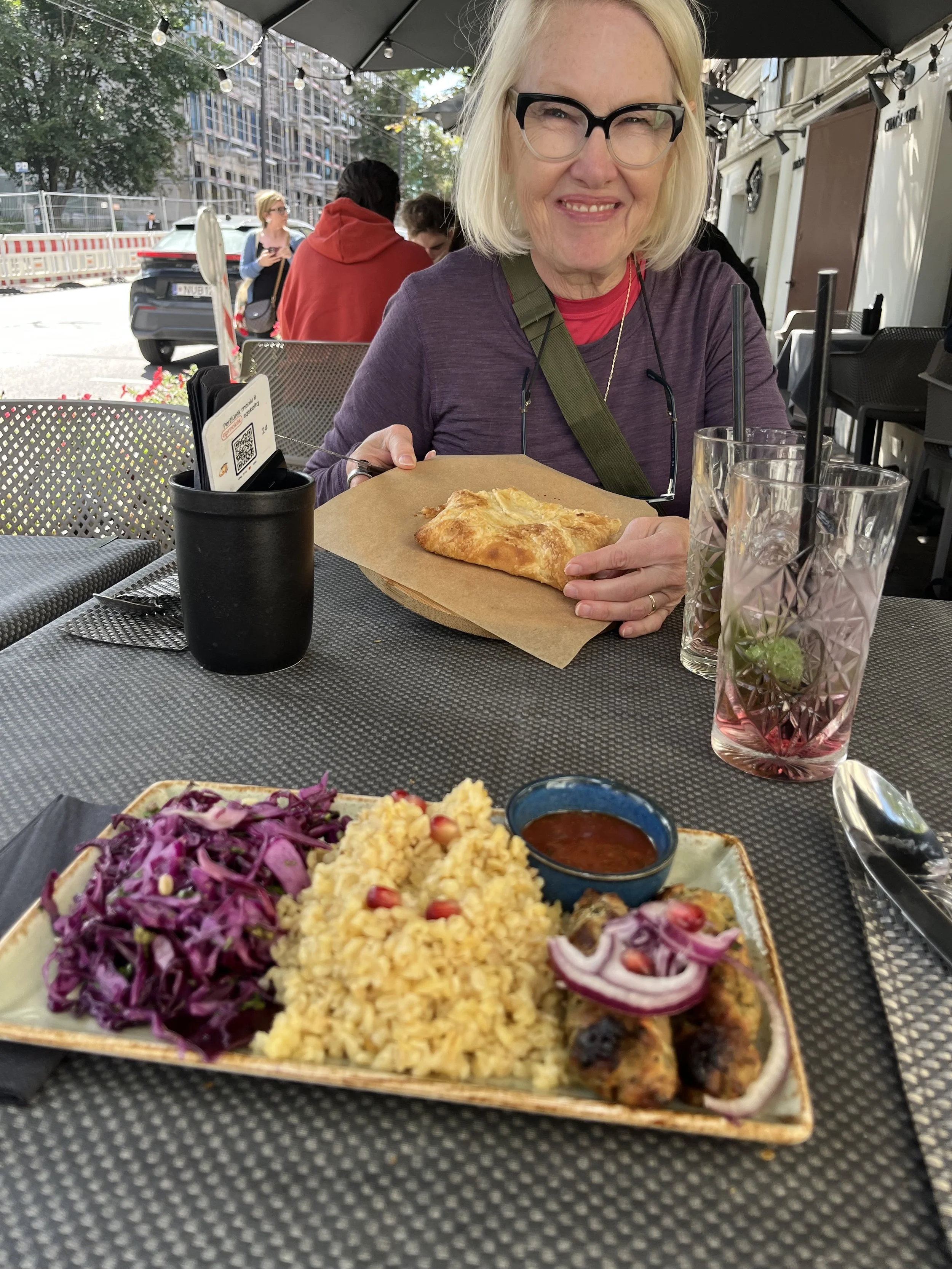
Our audio walking tour concludes and we are hungry. We walk a short way and enter an outdoor market. Set out is clothing and such, but the colorful stuff is in the fruits, veggies and other foods displayed. Now we are hungry for lunch and go to the nearby street side Chapapuri Restaurant that serves authentic Georgian food— a former and current satellite of Russia. Very enjoyable meal with the special dessert of Georgian Baklava, different and maybe better than Greek or Arabic versions.
The afternoon is winding down. We want to visit the National Museum that takes us back to the starting point of self-guided tour. As we approach, in the distance on a large hill is the Gediminas Castle Tower, one of the first forts in Vilnius. We do not visit, but it stands behind the National Museum building. See Photo.
We enter the museum and use handsets to hear numbered exhibits. The ancestors of the Lithuanians, (the Balts), were mentioned by Ancient Roman Scholars in 6-7 AD. In the eleventh century the Knights of the Crusading Teutonic Order often attacked the Balts tribes from the west. They needed to consolidate into a state.
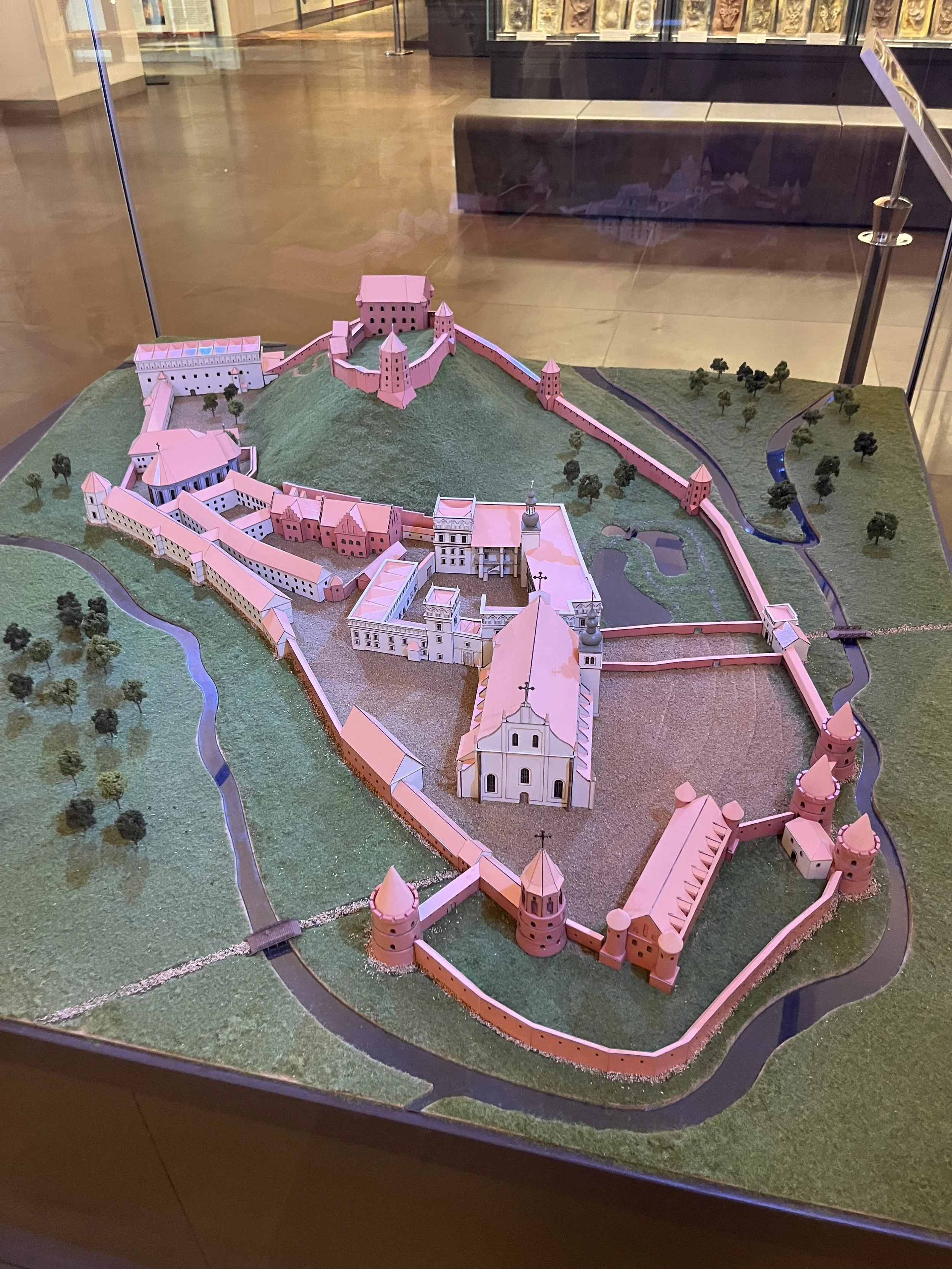
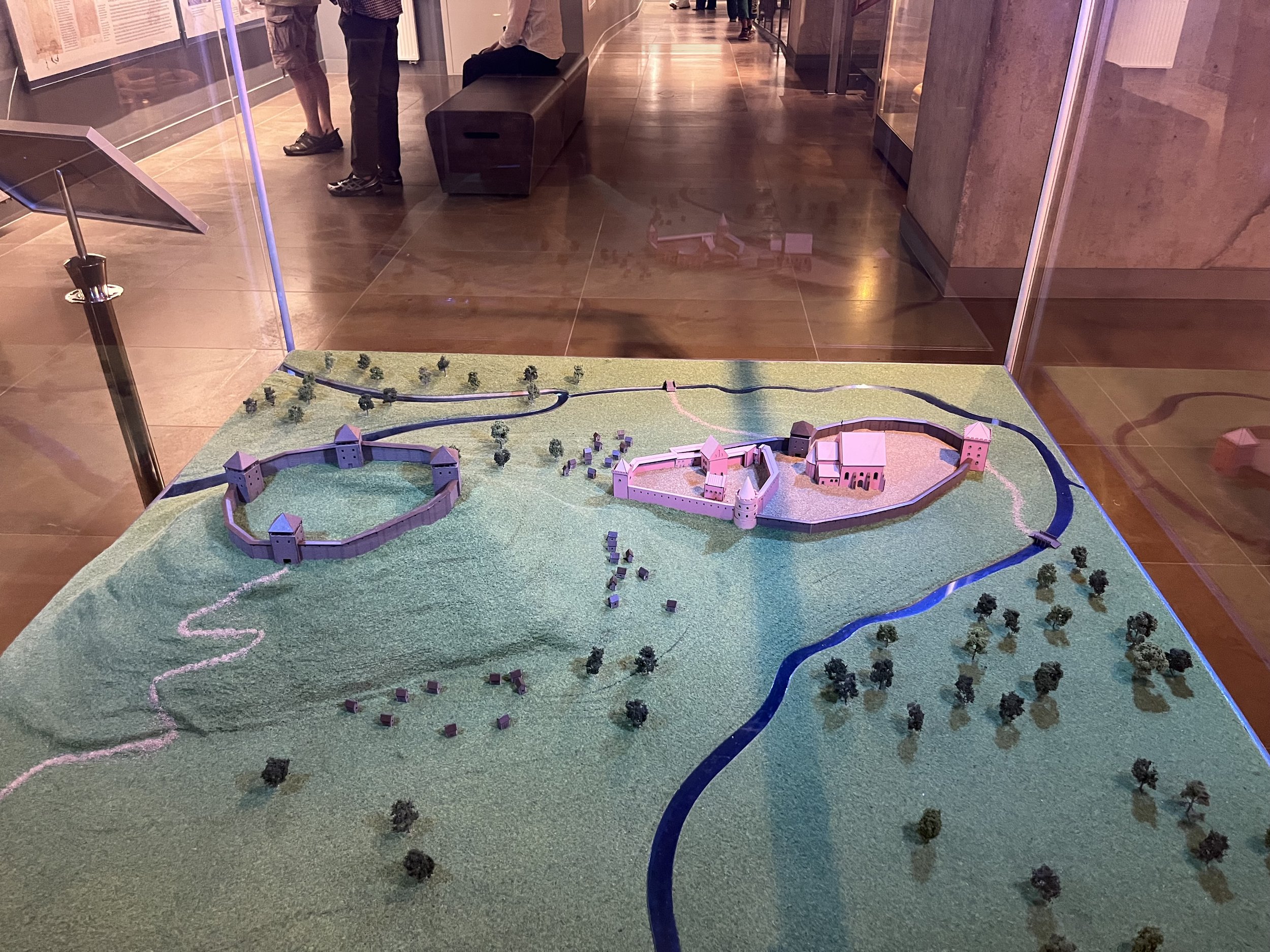
In the 13th century, Mindaugas completed the consolidation of the Baltic tribes into a consolidated state and accepted Christianity in year 1251. Then two years later at the behest of the Pope Innocent IV, he was crowned King. He expanded Lithuania into surrounding eastern Slavic lands. He was murdered in 1263 and bedlam erupted in the country. There were interim rulers, but in 1316 Gediminas became Grand Duke of Lithuanian. In 1323 he transferred his residence from his Upper Castle Tower we mentioned to a medieval brick castle, the first of its kind in Lithuania. That original brick structure is in ruins and displayed in the archeological exhibit within the museum with glass floors overtop. See photos of the displays that are high lighted in pink showing the progression of expansion of the Castle. In all, Gediminas’ Dynasty, including his successors in bloodline lasted until 1572, ruling over Lithuania and Poland.
As well we observed tapestries, art, and interior structures symbolic of this ruling Dynasty.
This is our last day. Tomorrow, we fly to Amsterdam then on to Detroit. We are at the bus stop for public transit to the airport at 6:30 am. See the photo of happy Janet. I’m happy too! What a great trip!