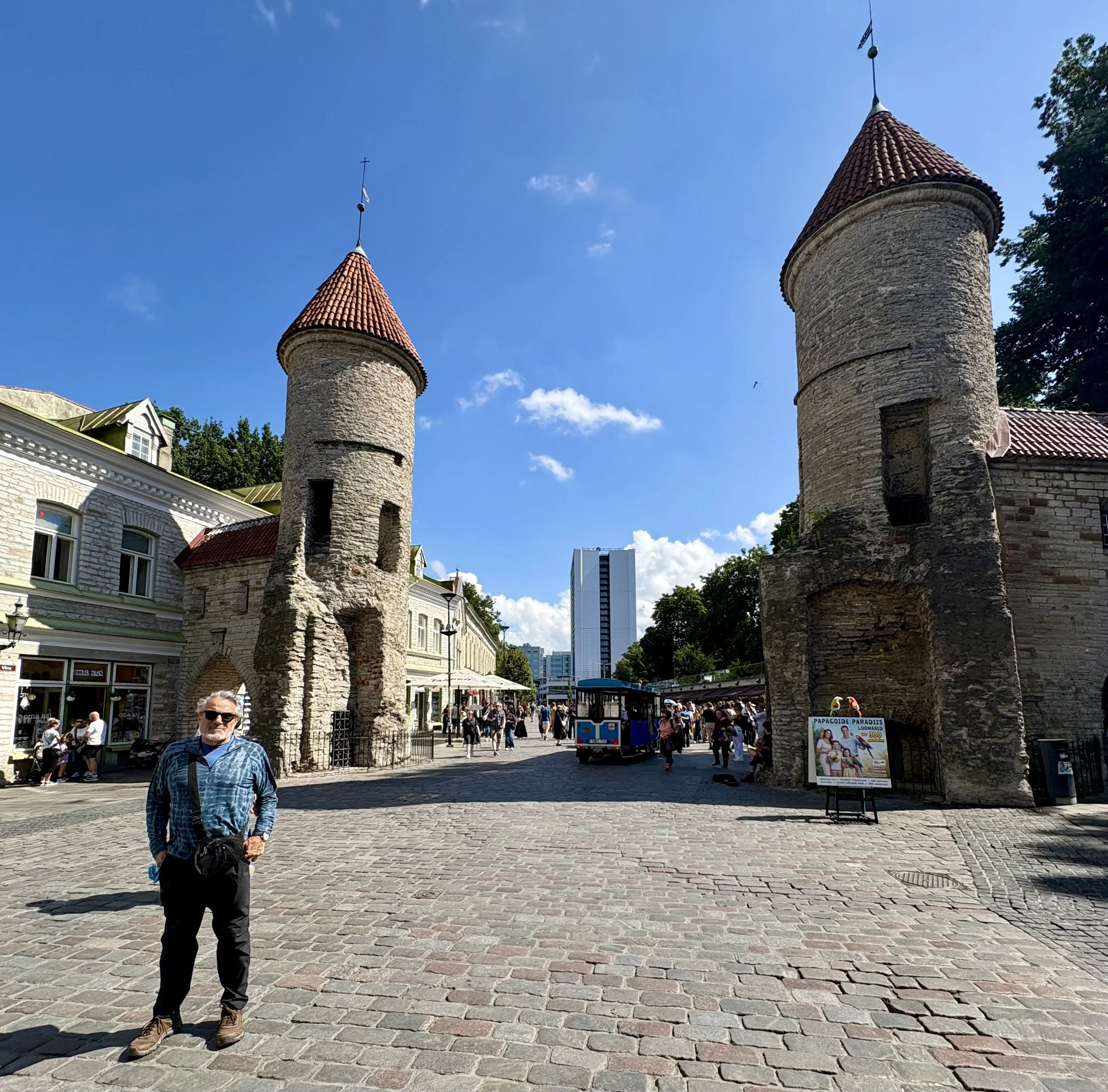
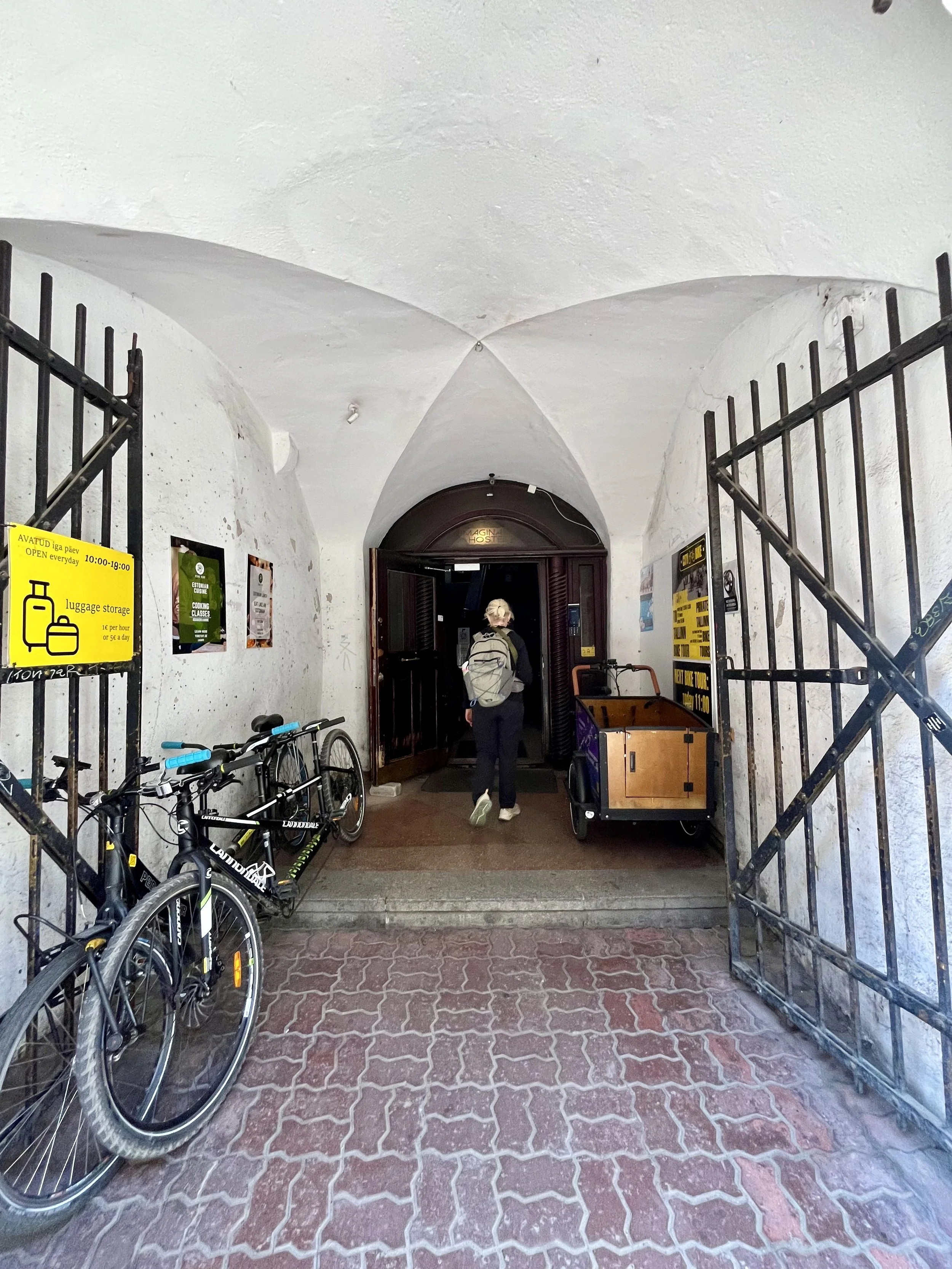
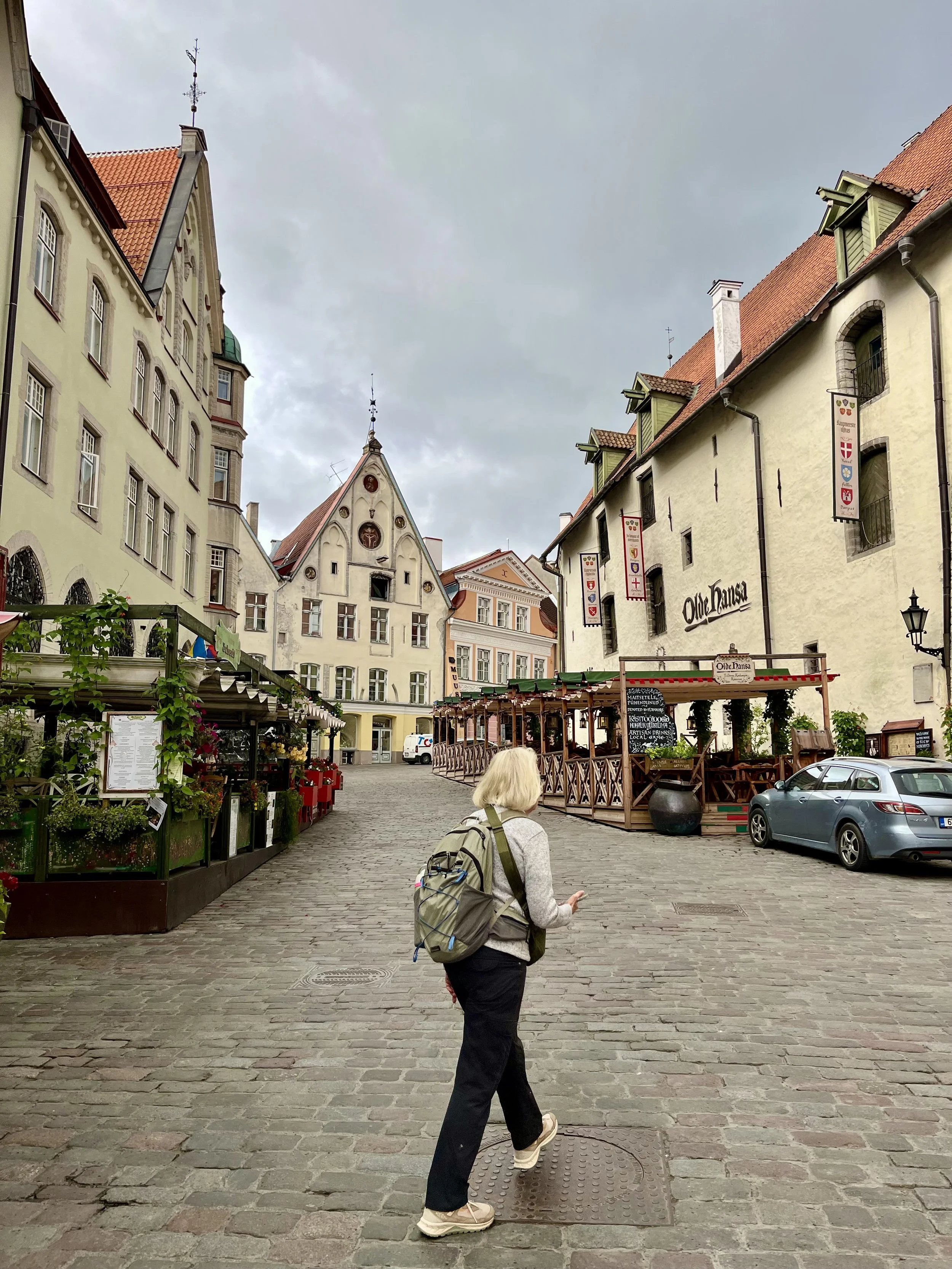
Entry to old town
Day 1
We arrive to Estonia in late morning on a quick ferry from Helsinki. It is the home to about 1.3 million people. The average Estonian is 42 years old. Most Estonians speak English. Tallinn, the capital has about 450,000 people. Historically, in 1918 after WWI Estonia was independent but could not keep their independence from the USSR after WWII, resulting in a 50-year period of Soviet dominion and communist stagnation. They regained independence in 1991 after the Soviet Union collapsed. Now, the country is especially strong in electronics and telecommunications. It is a parliamentary democracy, and one of its main policies include the designation of internet access as a human right.
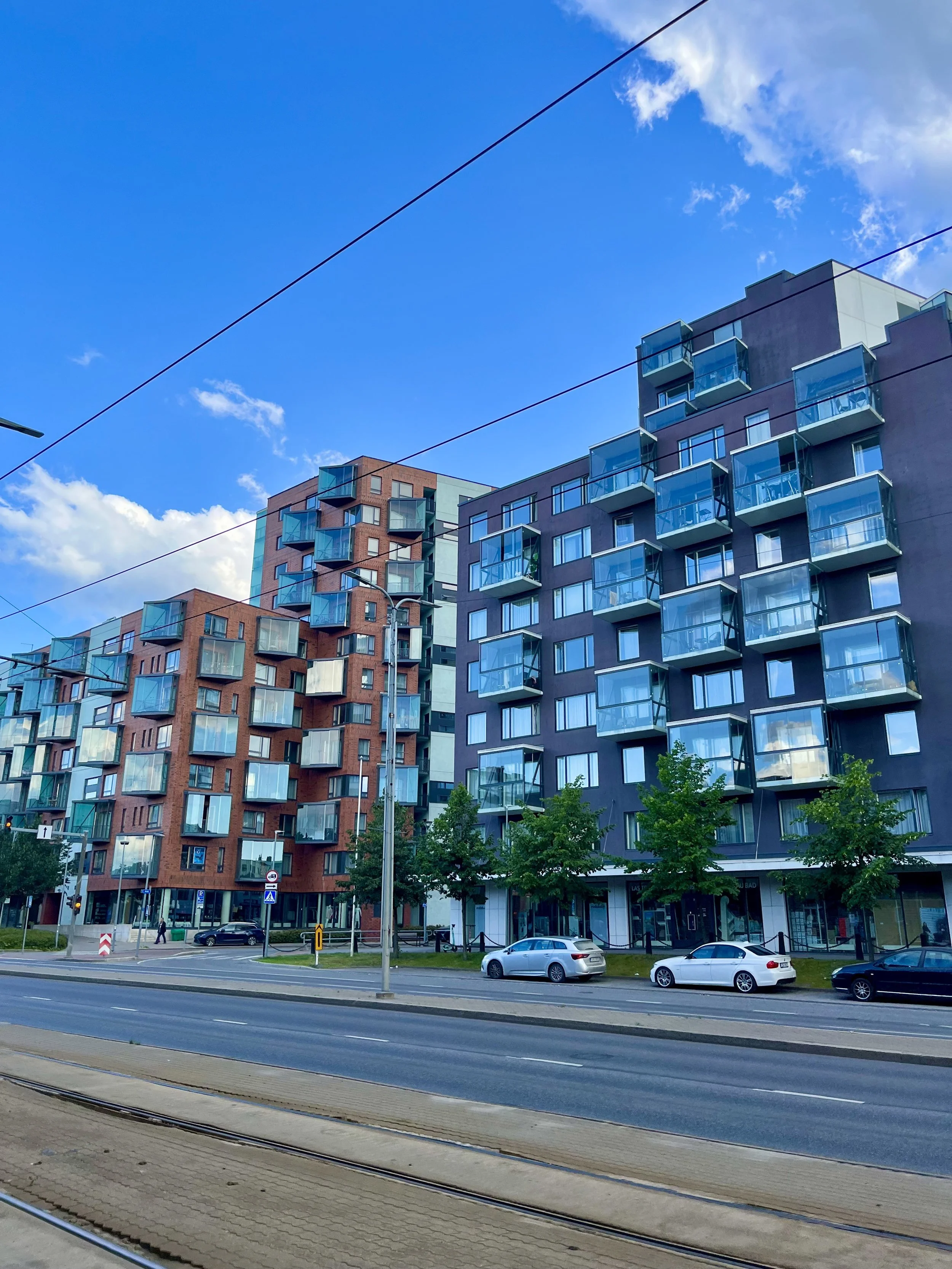
We leave the dock and navigate the local tram system to our hotel, outside the old town but with a convenient tram stop at its entrance. After a quick rest we are out again, on the tram to old town.
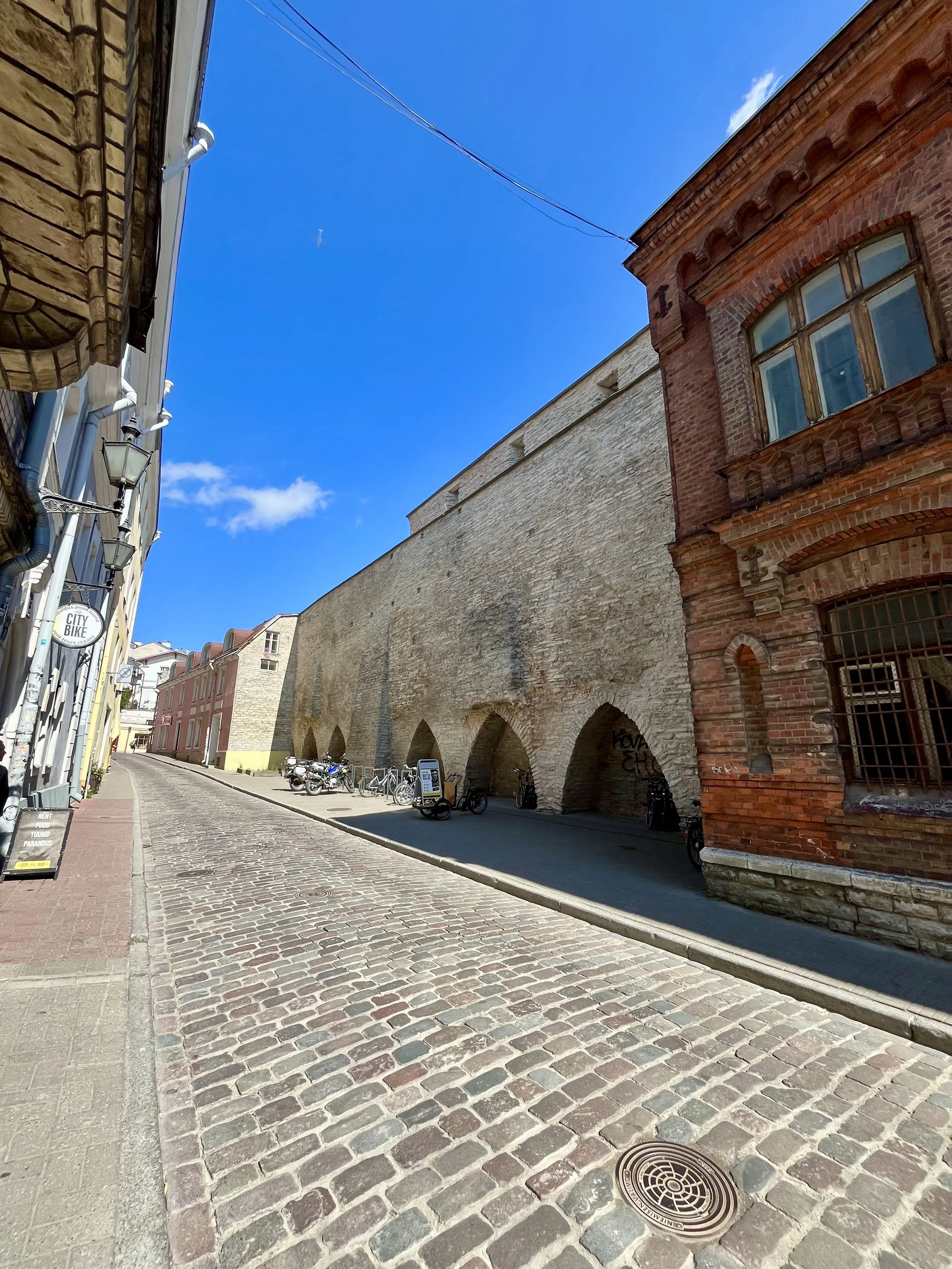
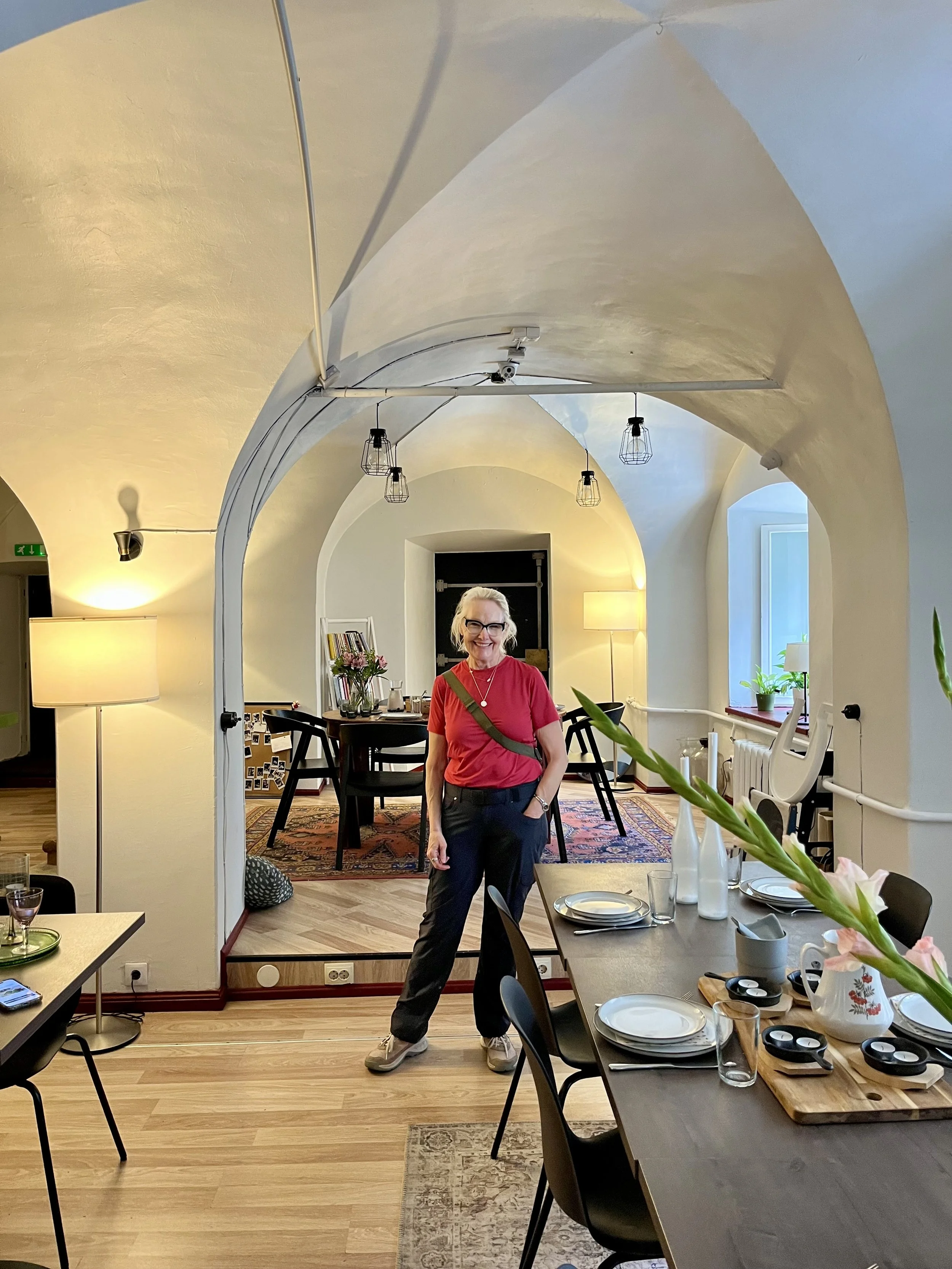
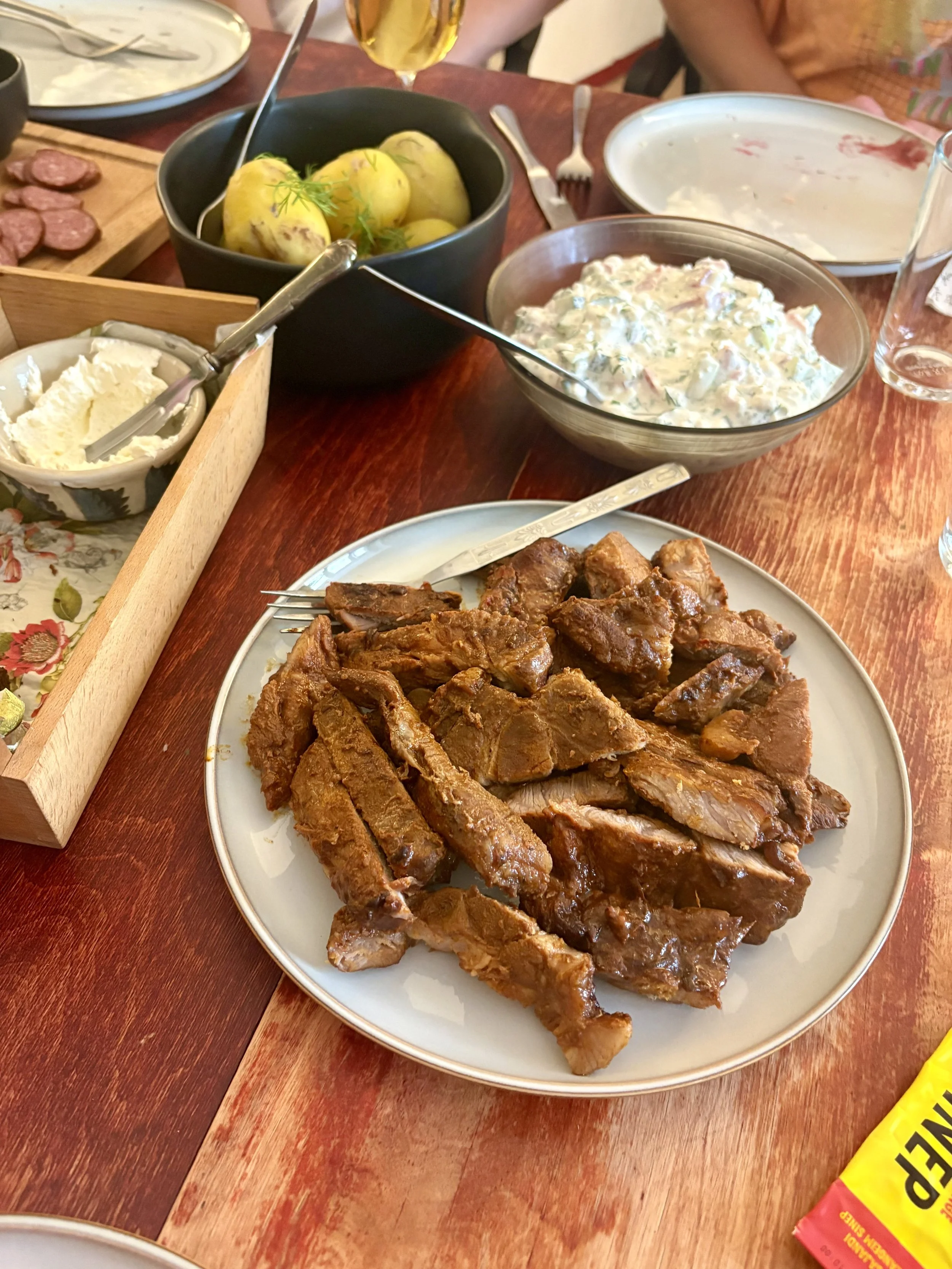
Janet has booked a late lunch entitled “Eating with an Estonian.” After navigating the narrow cobblestone streets we find our guides traditional home, up to the third floor of a private restaurant/cooking school that is lovely inside, set table with white table clothes under the supporting arches to the ceiling. For the next 2 hours we have a wonderful lunch with a German mom and her teenage son and our host.
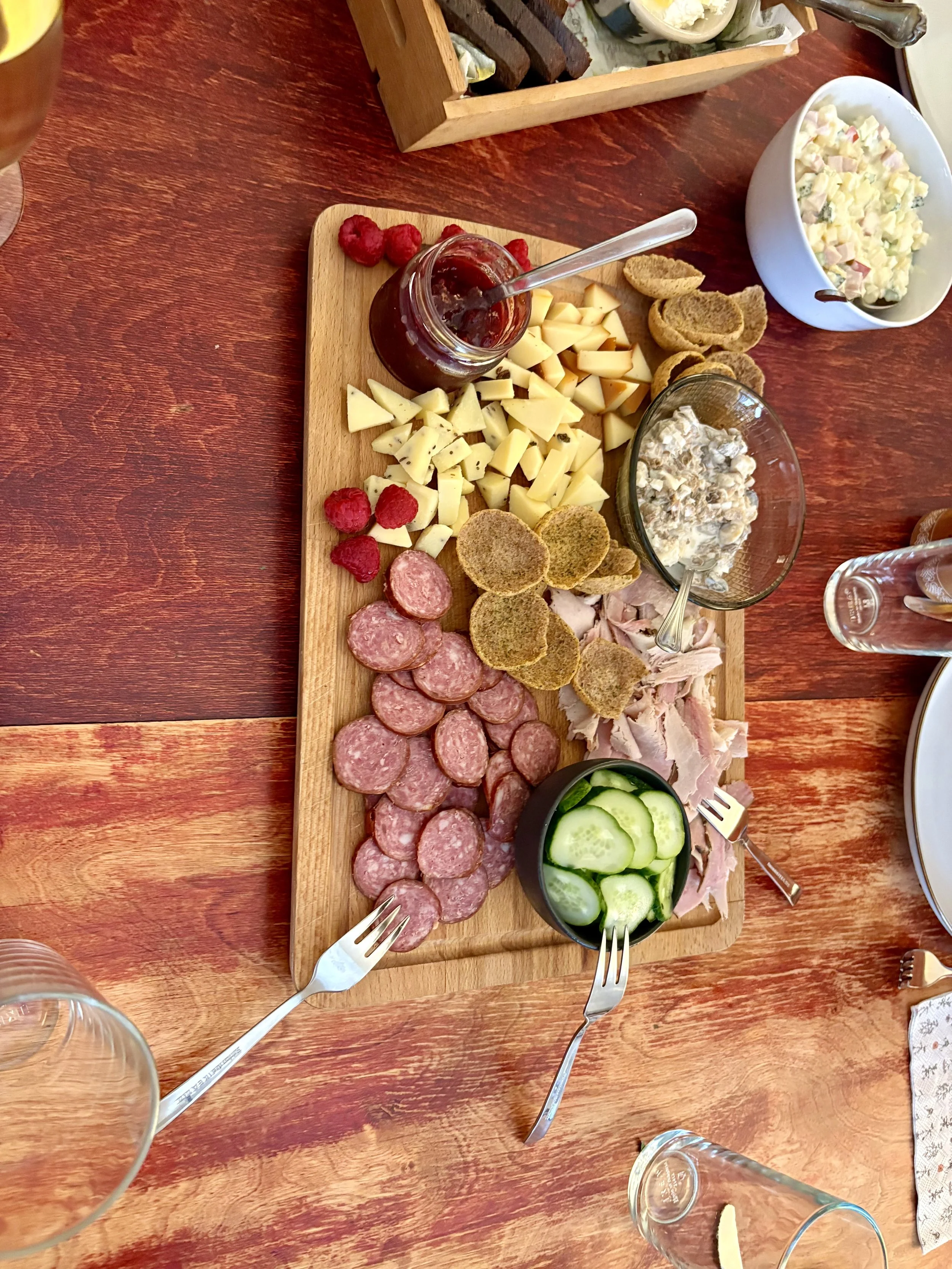
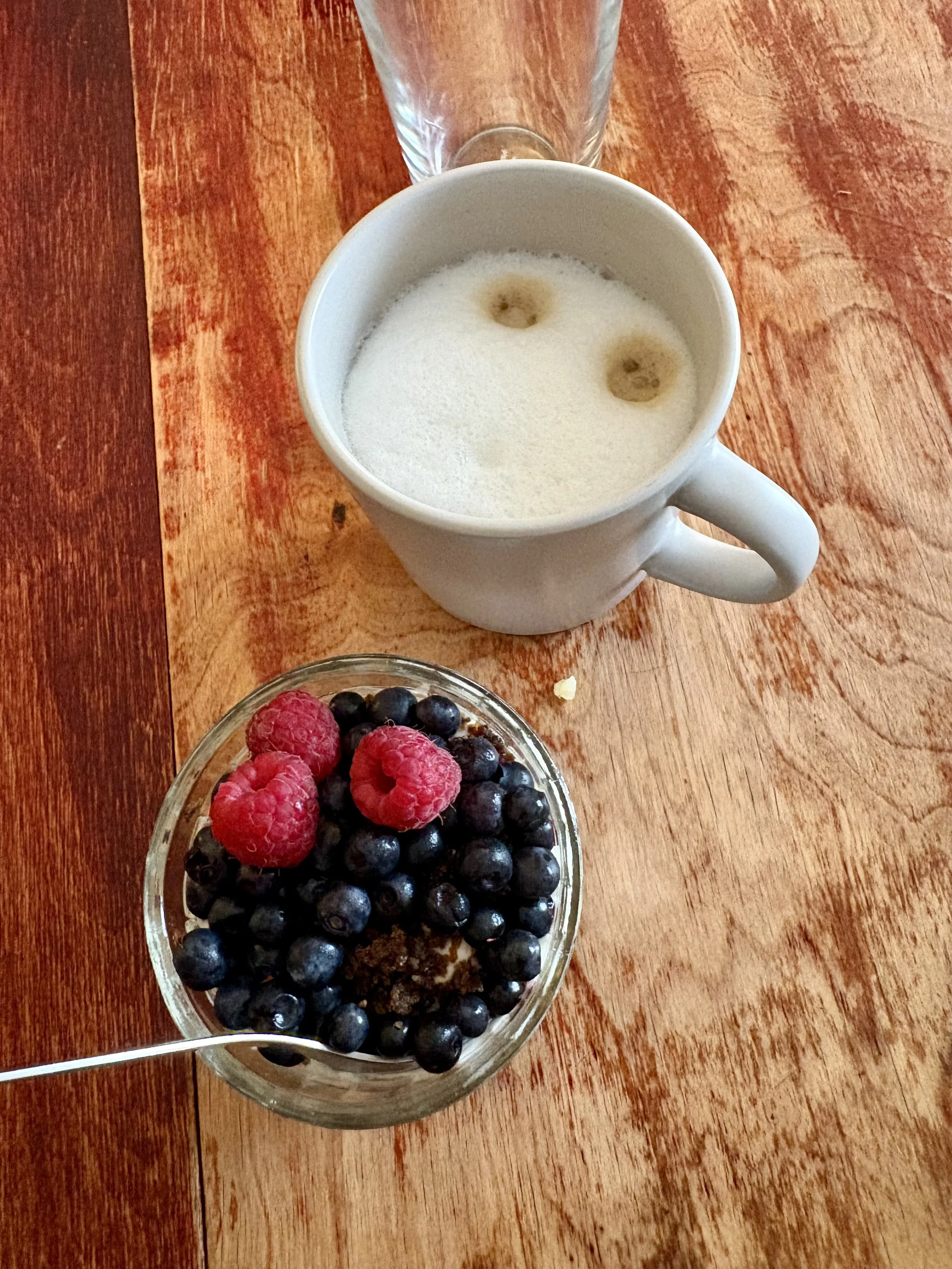
As we eat, she shares stories of Estonia, discusses the local foods, agriculture, her cooking methods and how and what she prepared for us. It is a wonderful experience; we really enjoyed it. See descriptions of our meal in the photos below.
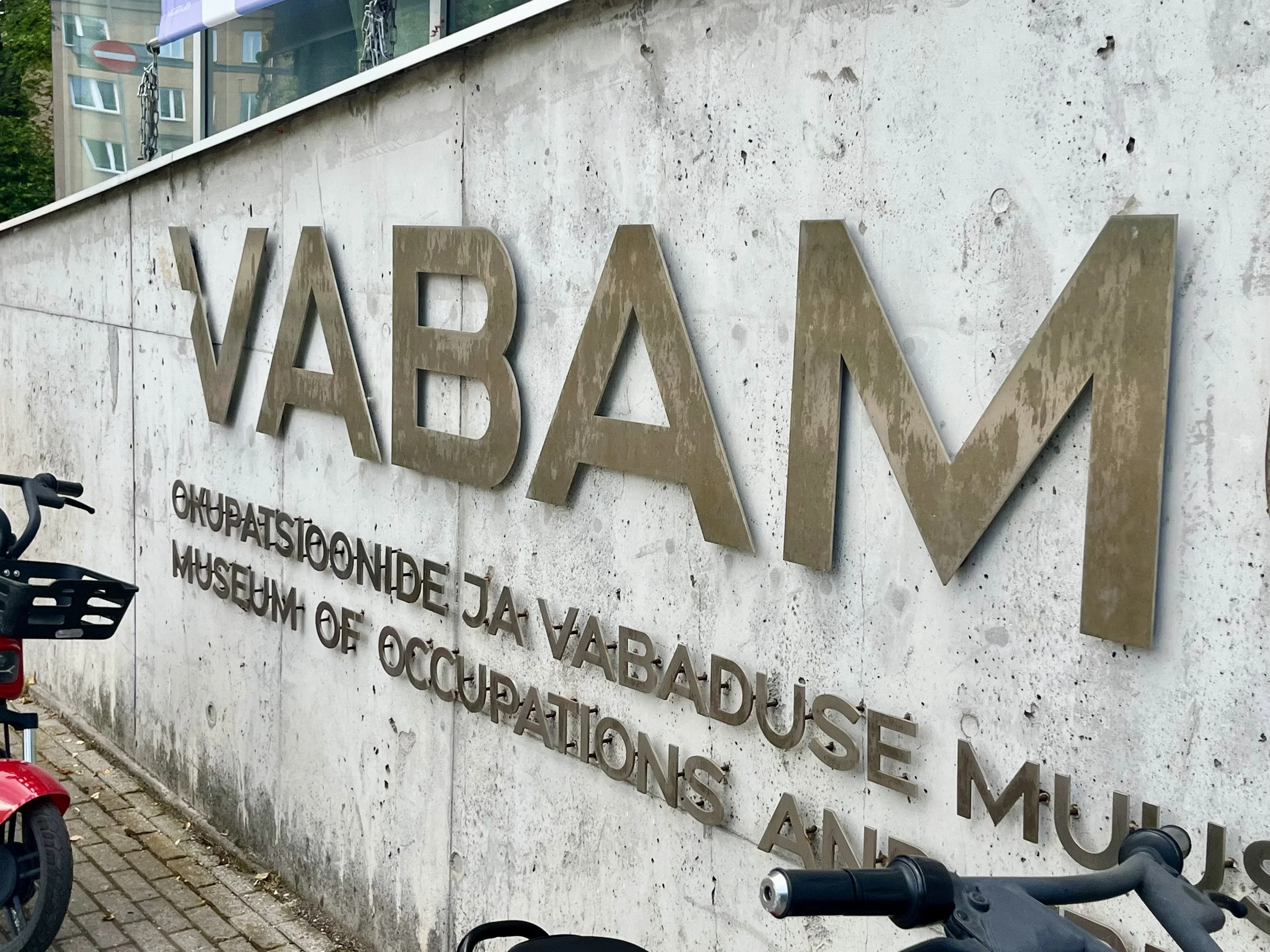
After our lunch we wander through old town and head to the Vabamu Museum of Occupation and the separate KGB Prison Cells. This was a humbling museum experience. Using provided headphones we go room to room with narration about the occupation of Estonia by Russia from 1940 to 1991. We saw artifacts, recreations of apartments, actual jail cells and heard interviews of people exposed to treachery (ie. Man rolled up inside a Persian rug with legs hanging out beaten by leather covered baton, after confined in a chair and beaten on the face and shoulders) and those involved in the eventual freedom from tyranny and the process of building a democracy.
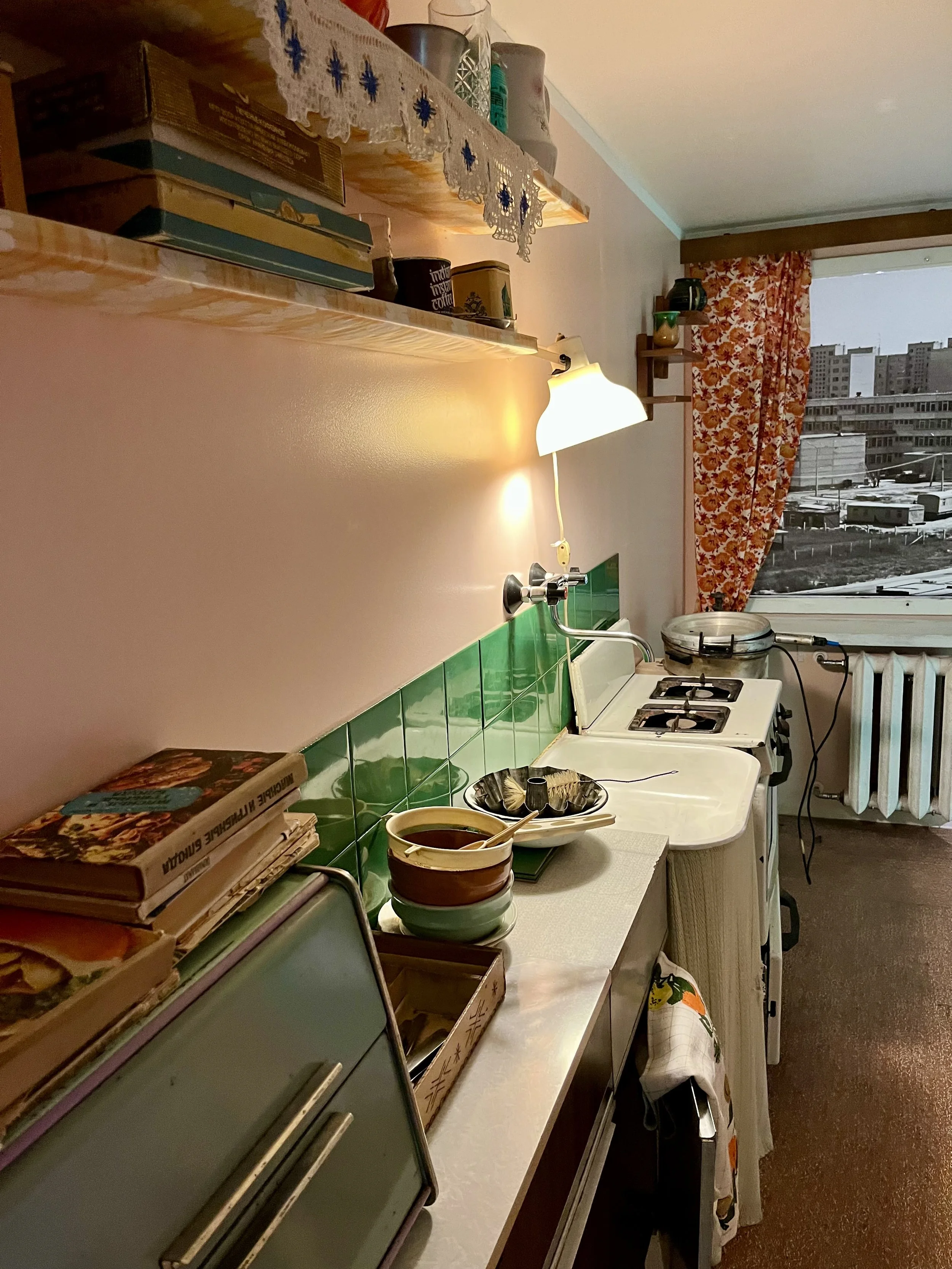
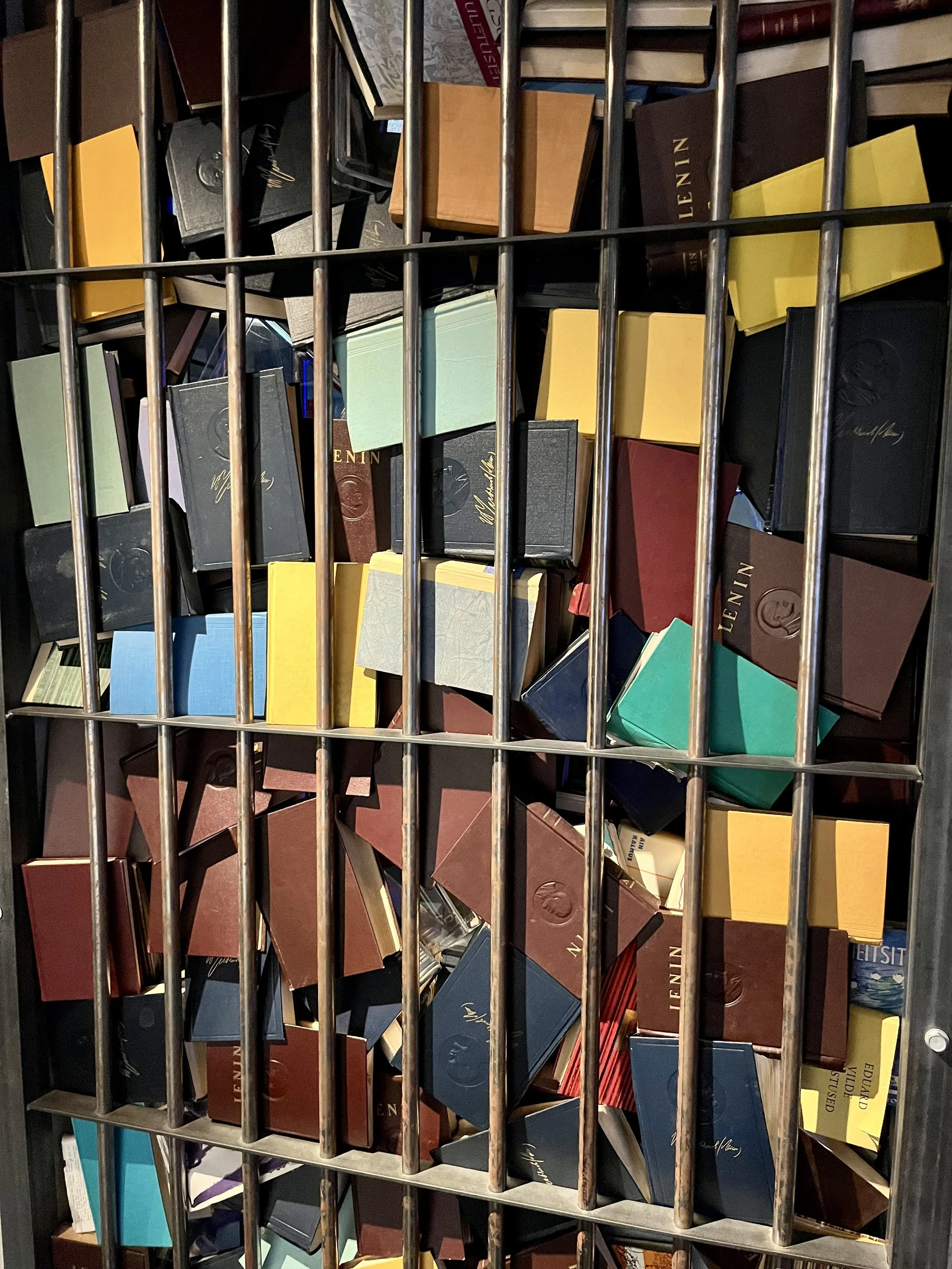
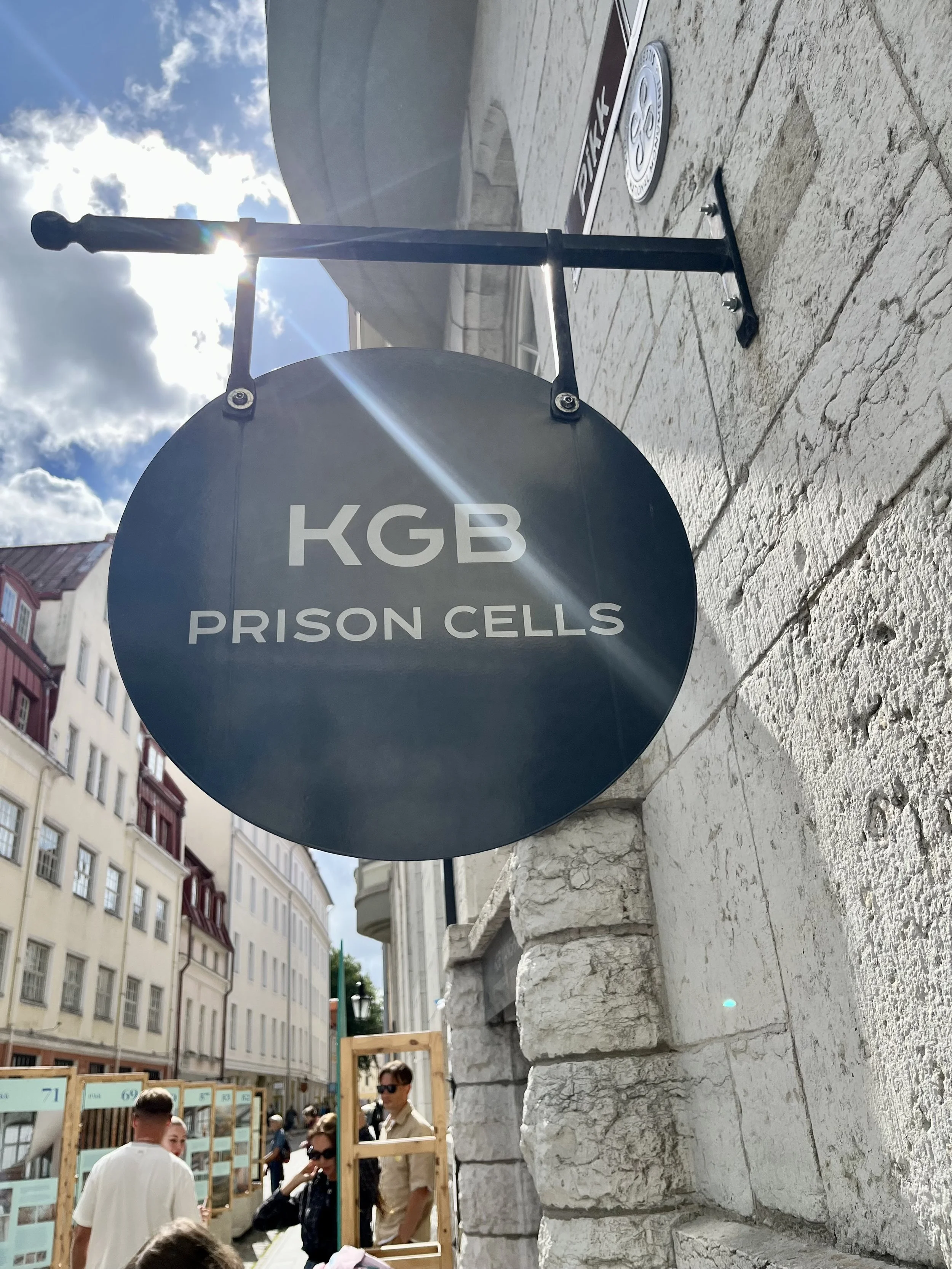
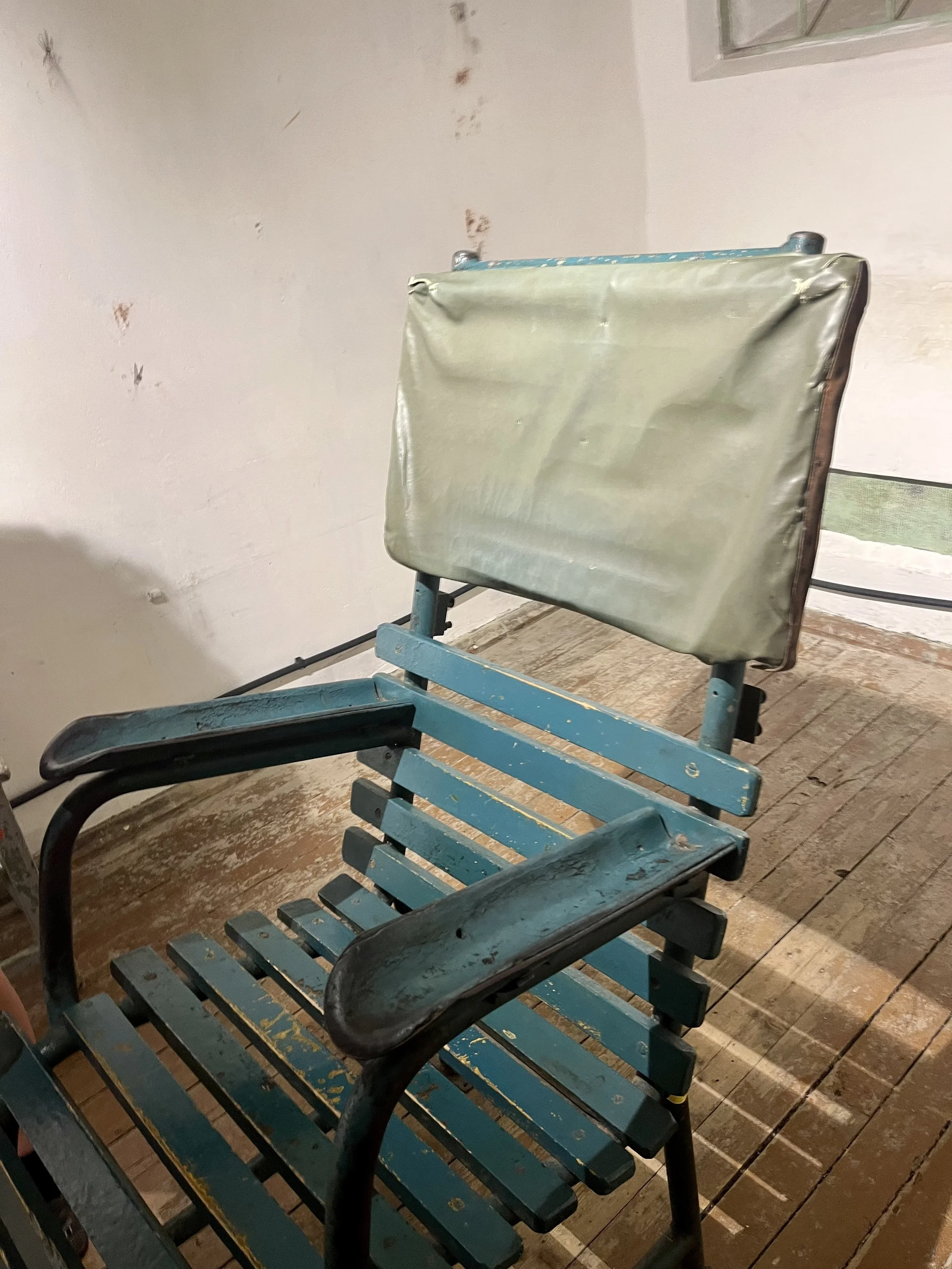
We navigate the local bus system back to our hotel for a break. We venture out again for a late dinner at a local pub restaurant and have a truly Estonia experience. Bosch soup with a charcuterie board. Contents of board? Cold sliced beef tongue, pork, lard curls, pickles, black bread, a dip that was like butter, pickled garlic, and cabbage. We really liked some and left others alone (lard!)
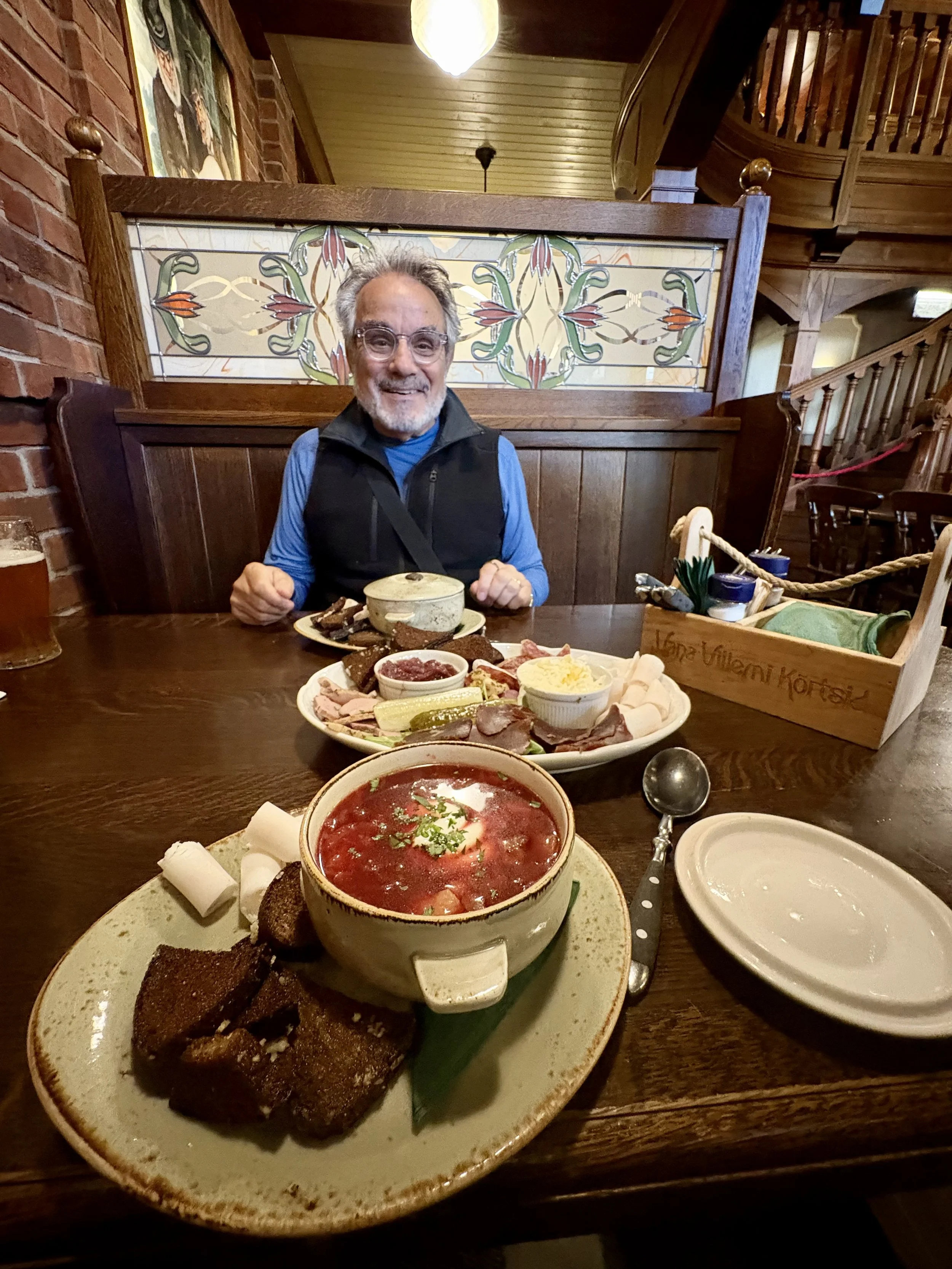
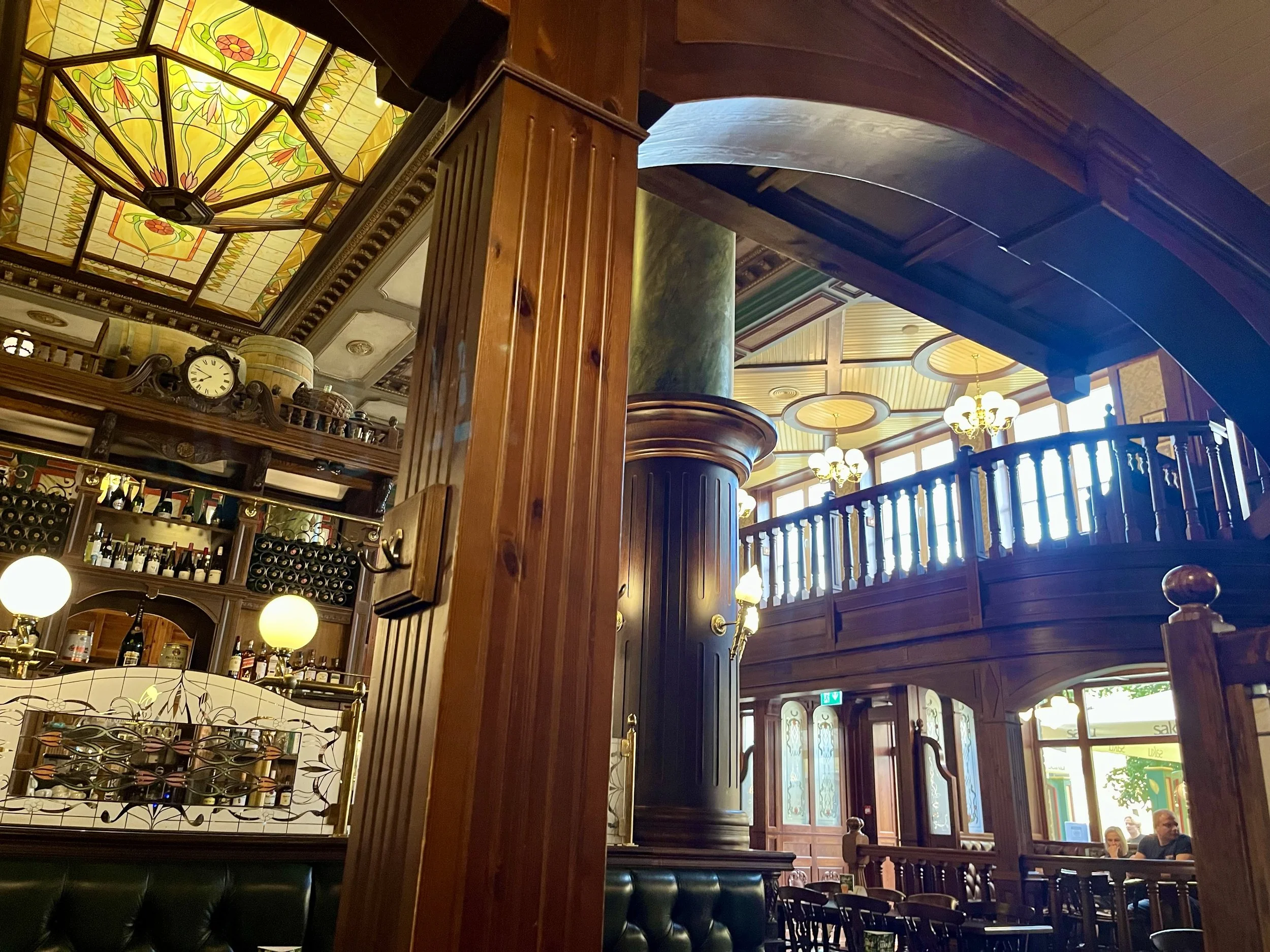
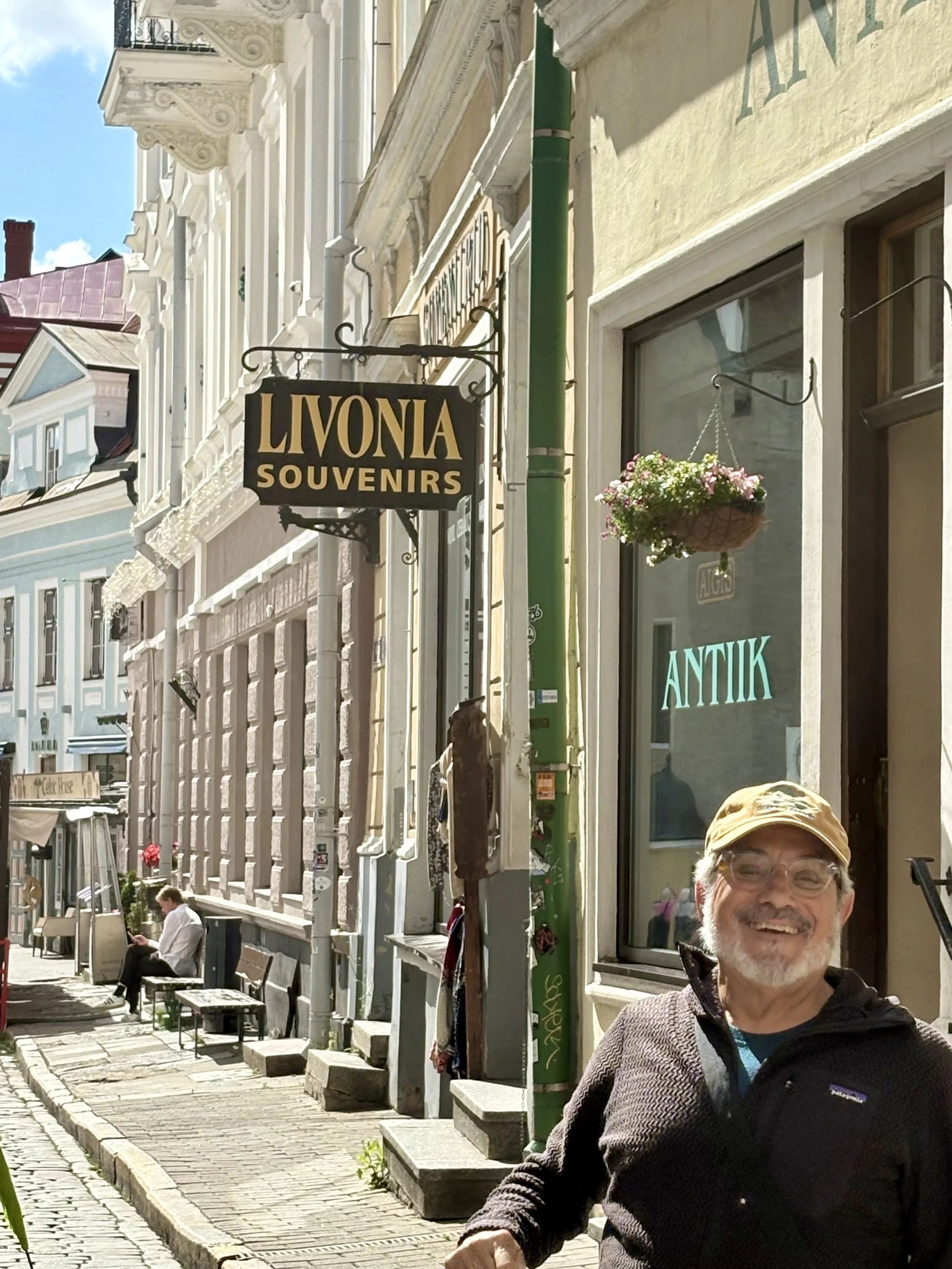
Frank’s home town in Michigan is Livonia
Day 2
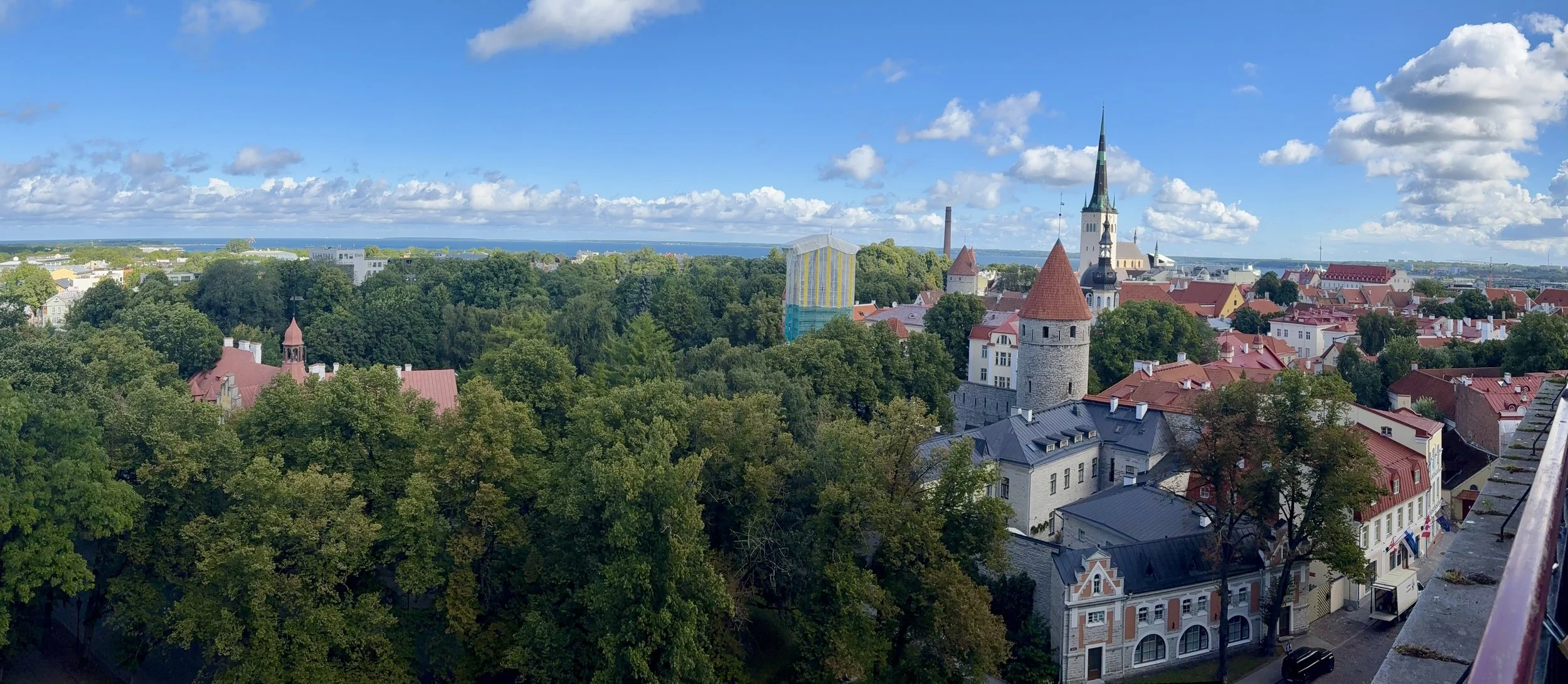
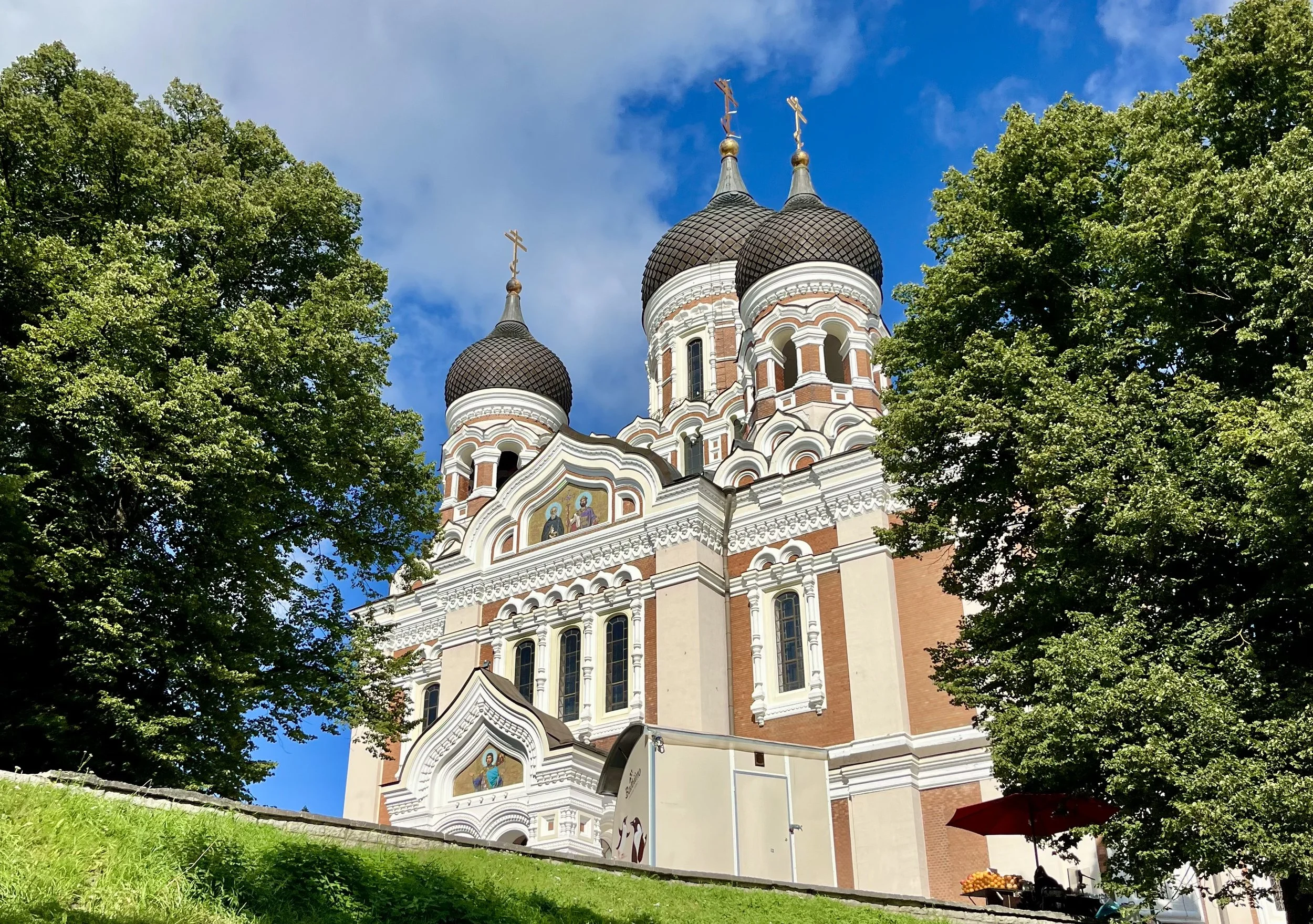
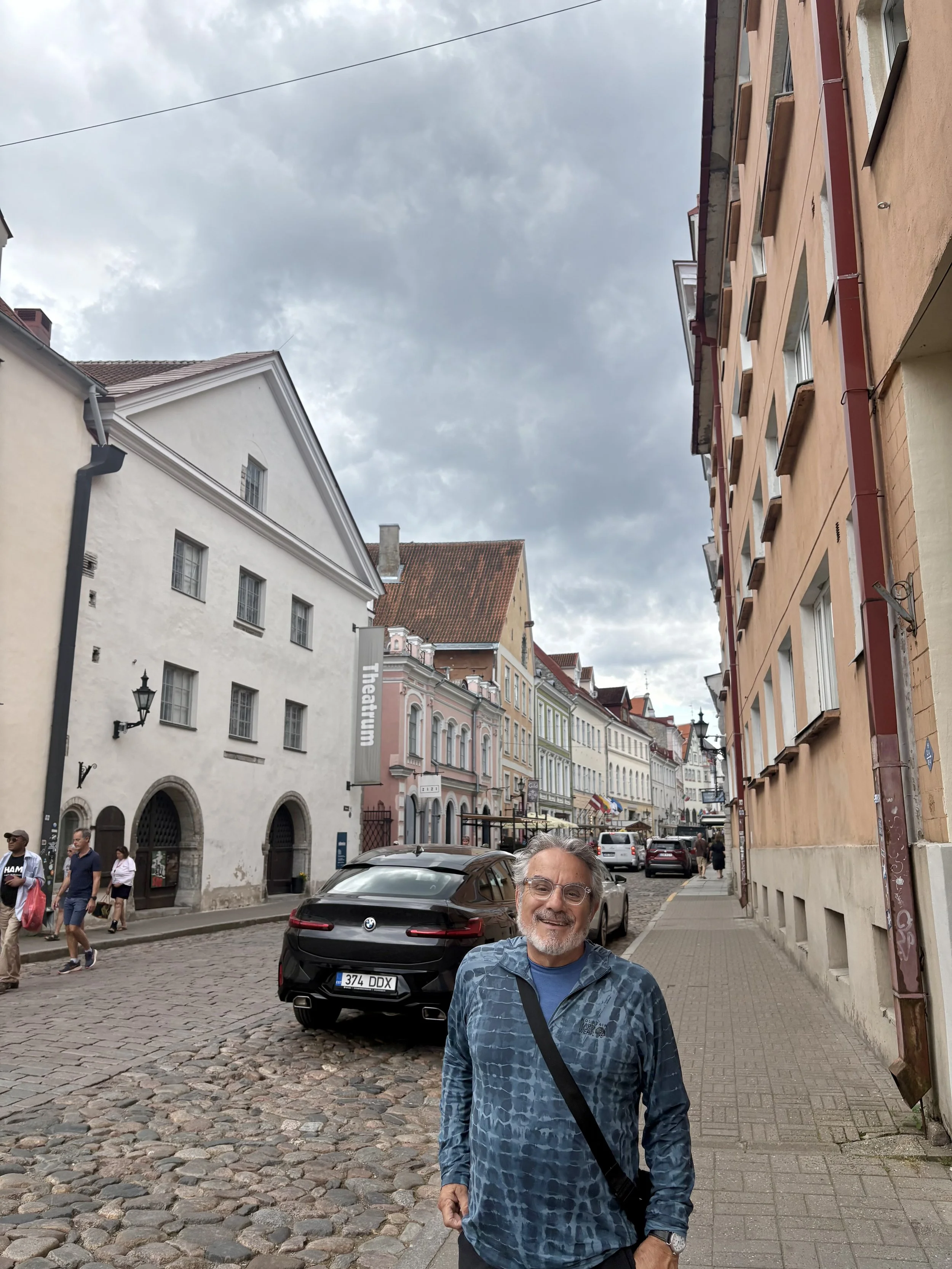
Out travel through the Baltics is just 7 days, so we have a packed day full day. We are out early, back to old town for a 2-hour walking tour. We have a nice small group and good guide, the weather is sunny, mild and we enjoy a good walk through all the sites of old town; a very lovely area, including stores selling souvenirs of Livonia, another Baltic region. The highlights are the history of two cities, the lower city that controlled the trade through the Hanseatic League, and the upper city where the landowners lived. Both have original walls. We then saw both Lutheran and Russian Orthodox cathedrals, and a historic mid-century walk in pharmacy with the potions, herbs, and the equipment.
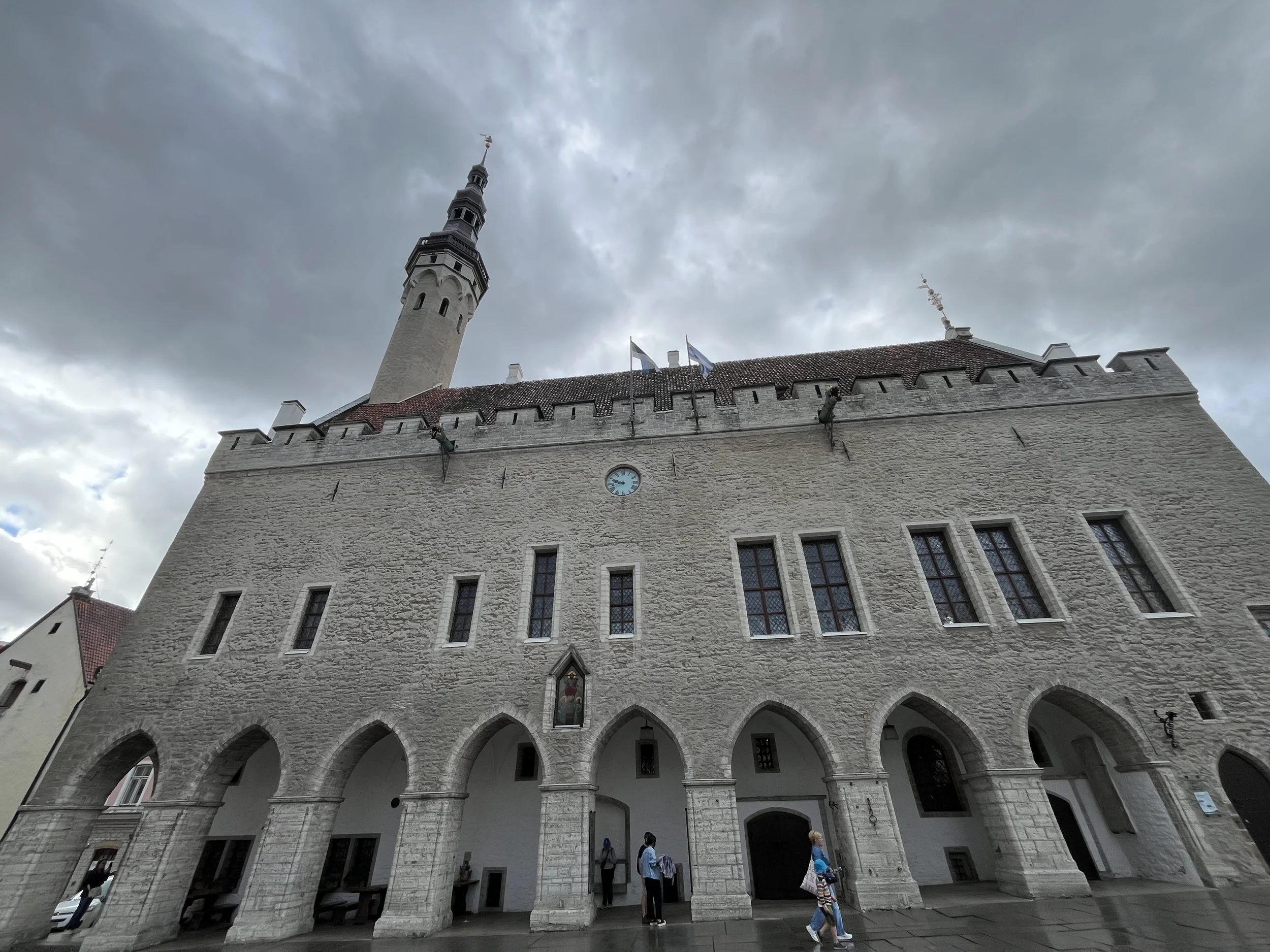
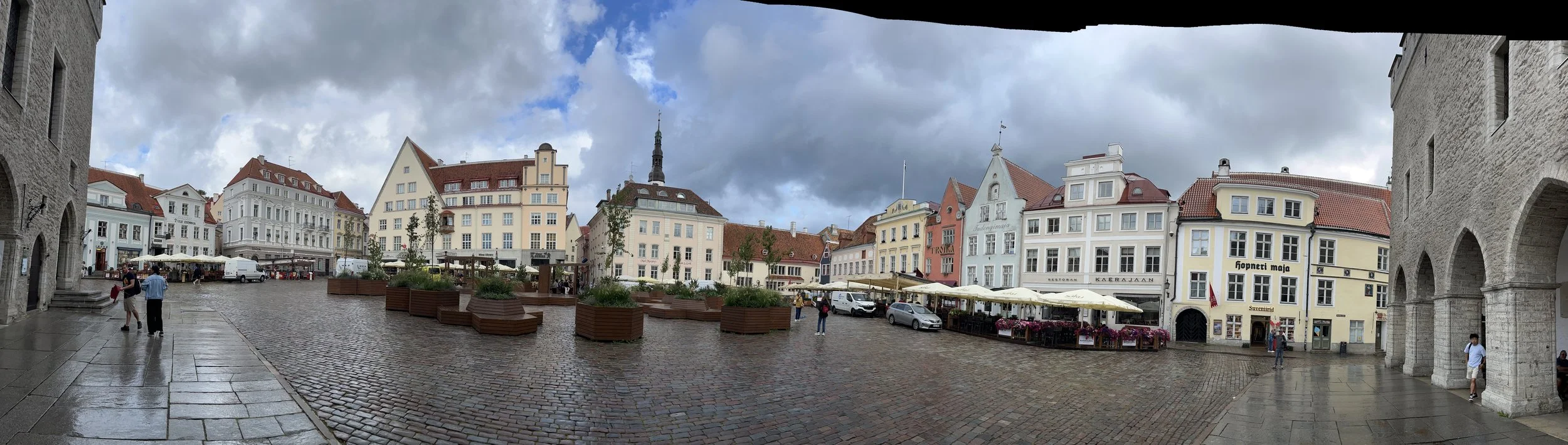
The entire square
After the tour we find a wonder place for lunch and a break. We continue to have excellent meals on this trip; this one was genuinely great. Janet is committed to making the Salmon soup served, this time does not have cream base, full of flavor with dill, potatoes, and tender fish. See photos.
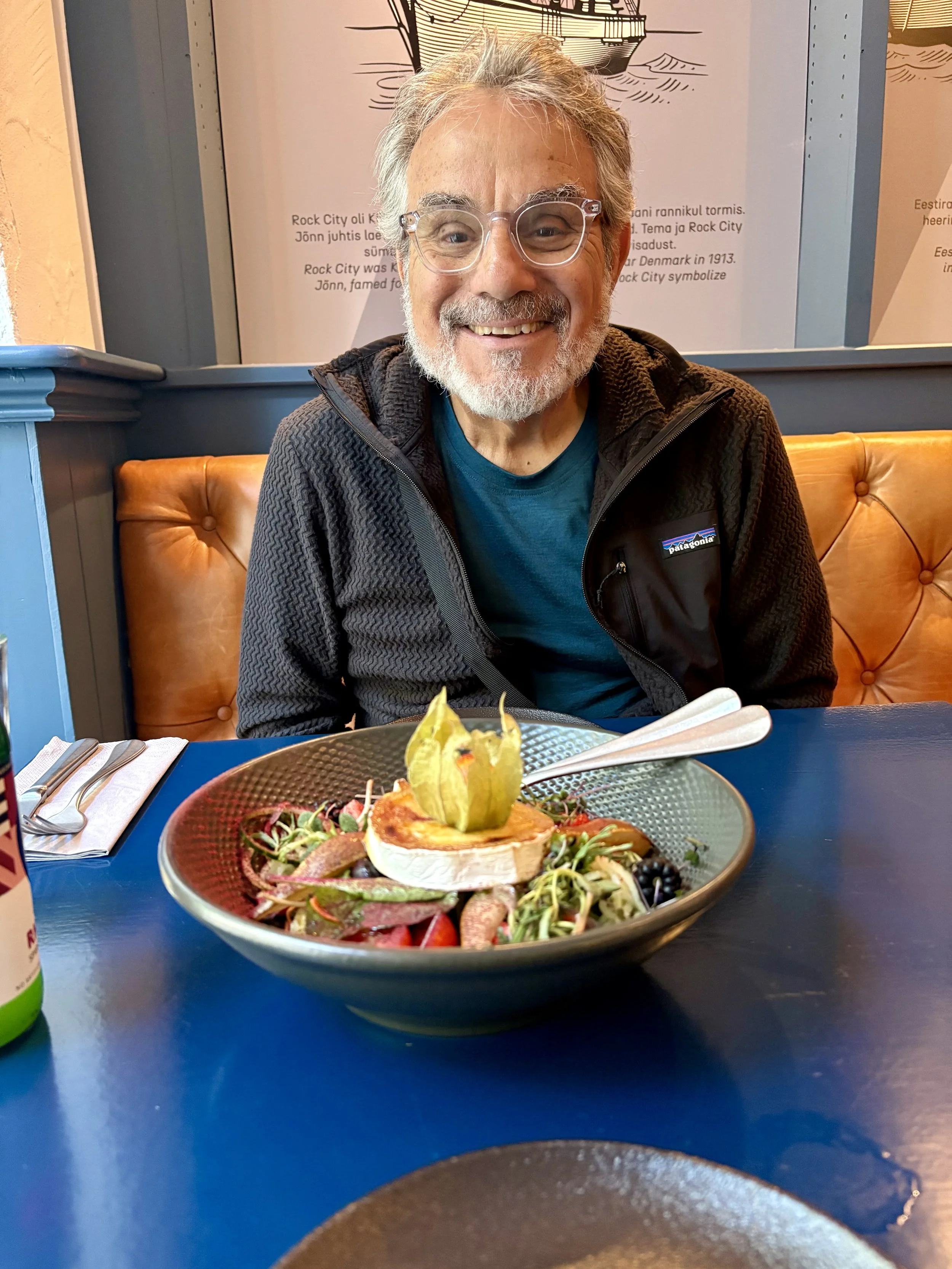
Goat cheese salad for lunch
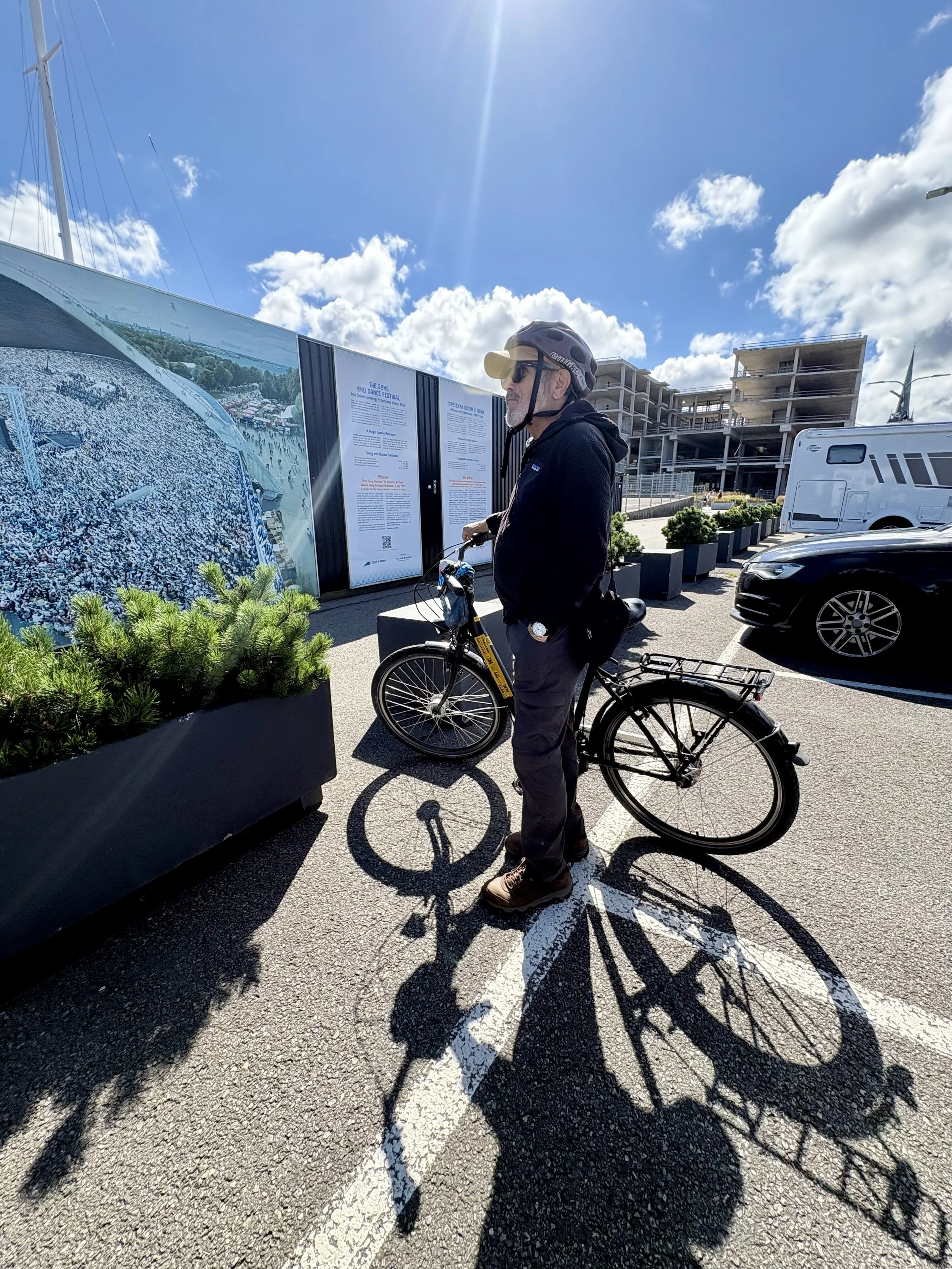
After lunch we are off for our next tour, a 3-hour 10 km biking tour outside the town. We are excited about getting a wider perspective about the culture of Estonia. Three other people join us and we are off with the guide. Very quickly we are out of the city and stop at our ferry port to view a large photo board of the mass of people that came together at their outdoor amphitheater and park for a patriotic outpouring of love of country. Our guide tells us the story of Estonia’s search for independence through song and peaceful demonstration, successfully convincing the Soviets to relinquish control.
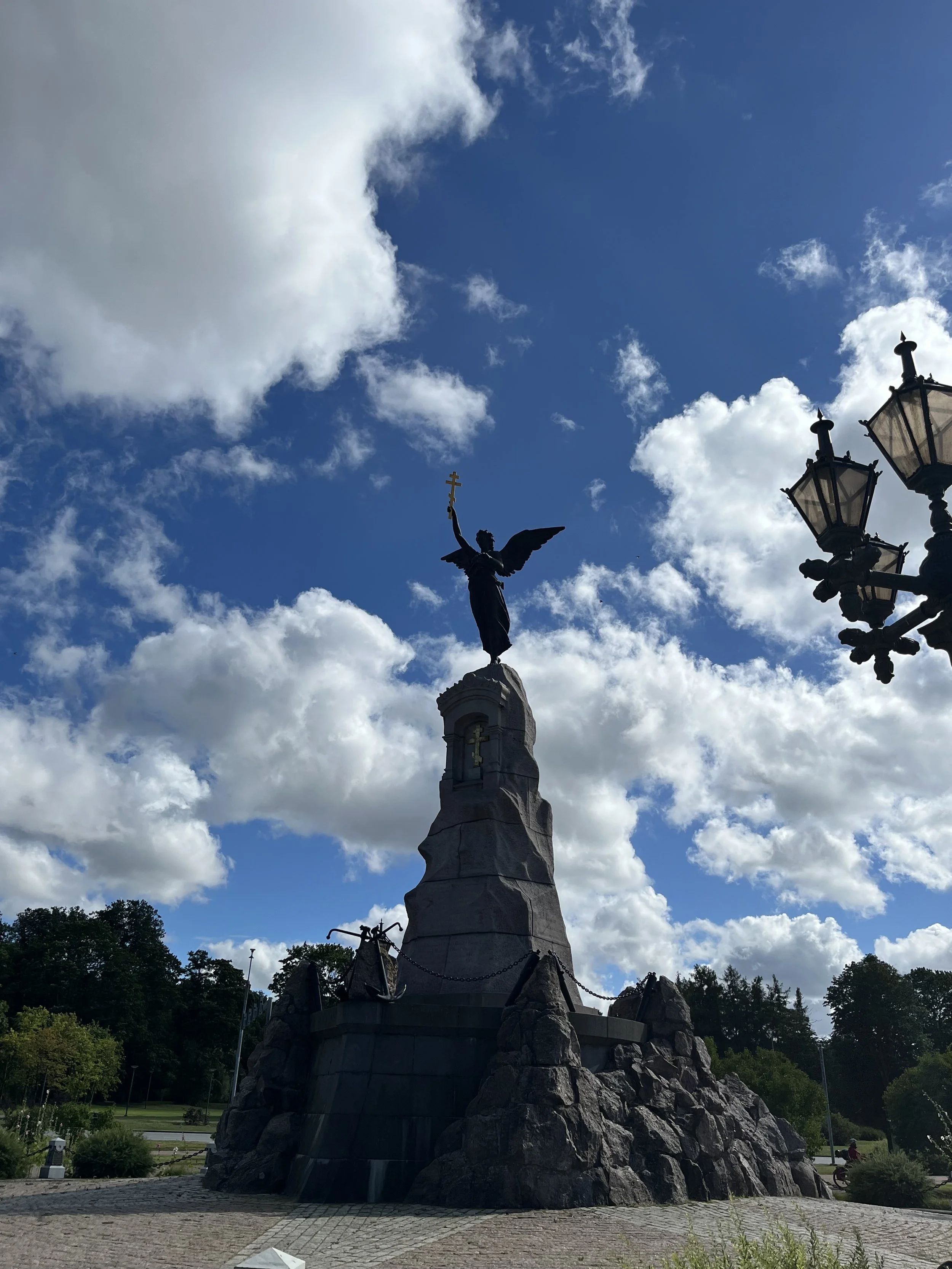
Next, we bike pass the open sea, the bike trails are large, new, and clean of debris. We are really enjoying being back on bikes. Next stop a memorial dedicated to 2 ships that sunk on the way to Helsinki due to the Russians insistence that they sail in dangerous weather; many lives lost.
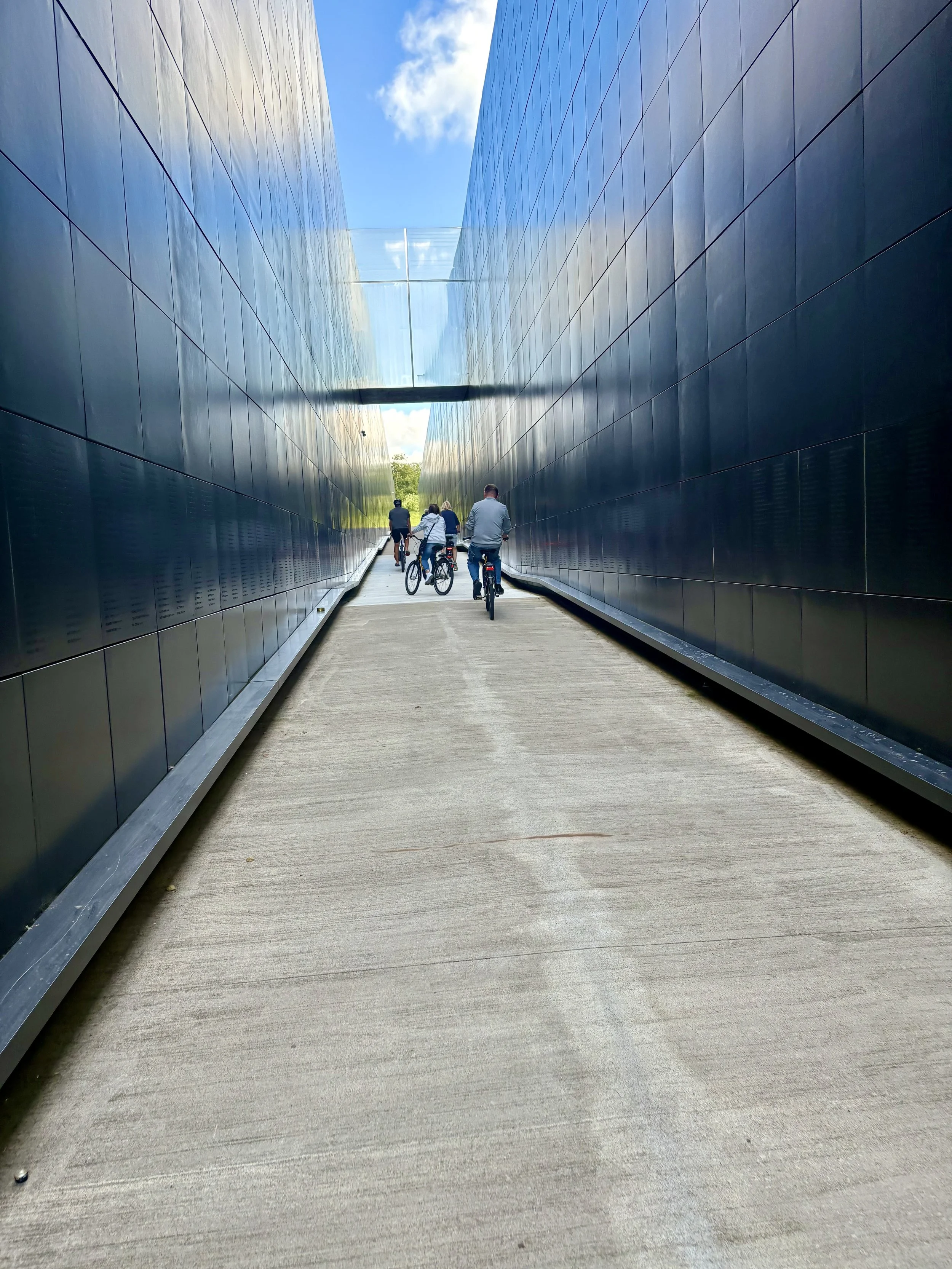
Next stop is the Estonia Memorial of the Dead honoring those people who lost their lives to the Russians through torture, forced labor and prisons throughout Russia. This is an impactful memorial; Looks similar in concept to the US Vietnam Memorial. It is much larger having two (2) parallel 20-foot black metal walls etched with the names of the fallen, a single pathway between them, and a special Estonian twist—Sculptured metal bees and wasps of actual size affixed in swarms to the other sides of the panels. Significance—“Bees never stop trying to achieve their designated purpose”—just like Estonians fighting for independence according to our guide. Our guide shared a more personal story about his father, an academic, imprisoned for three years by the Soviets.
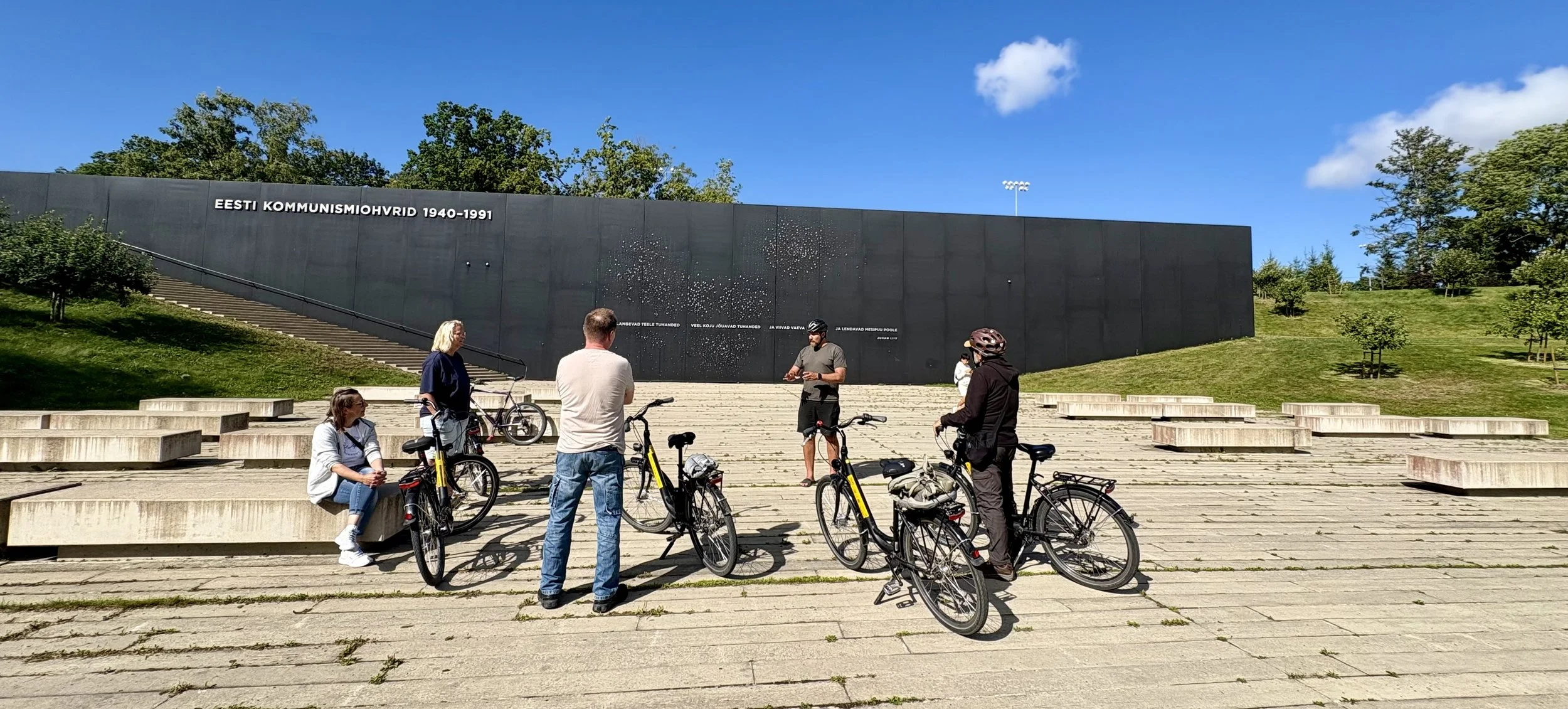
Pano of the memorial
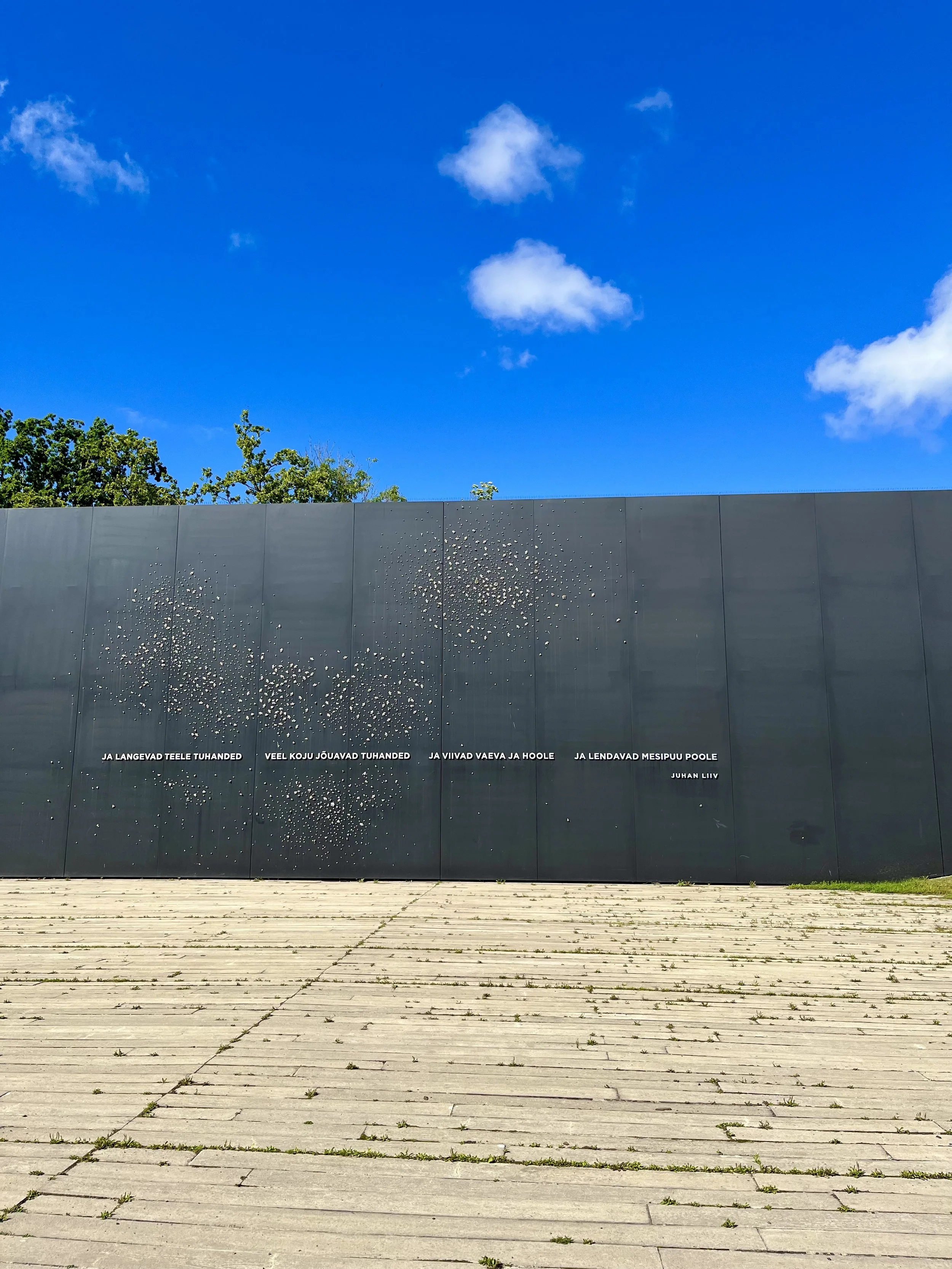
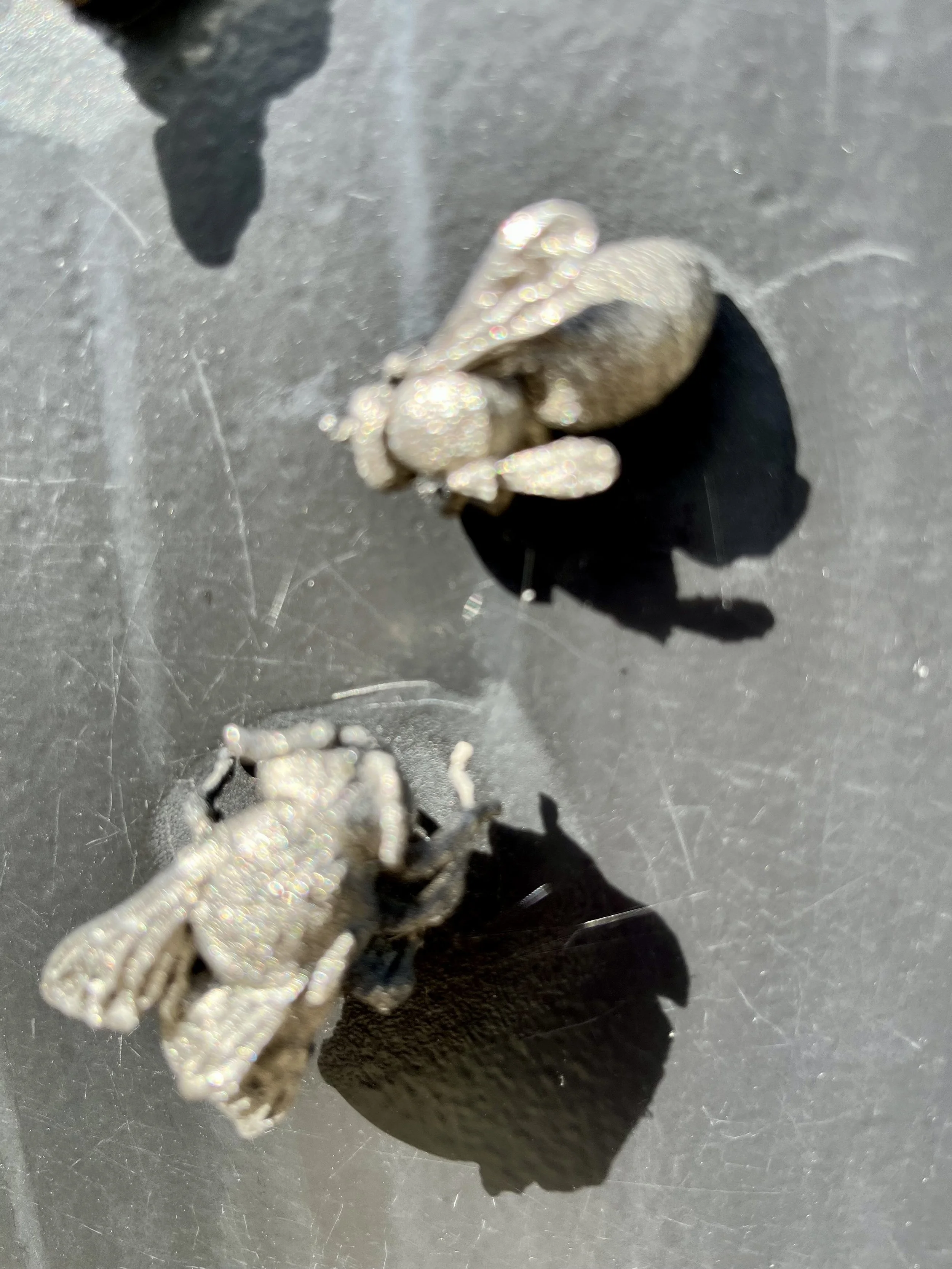
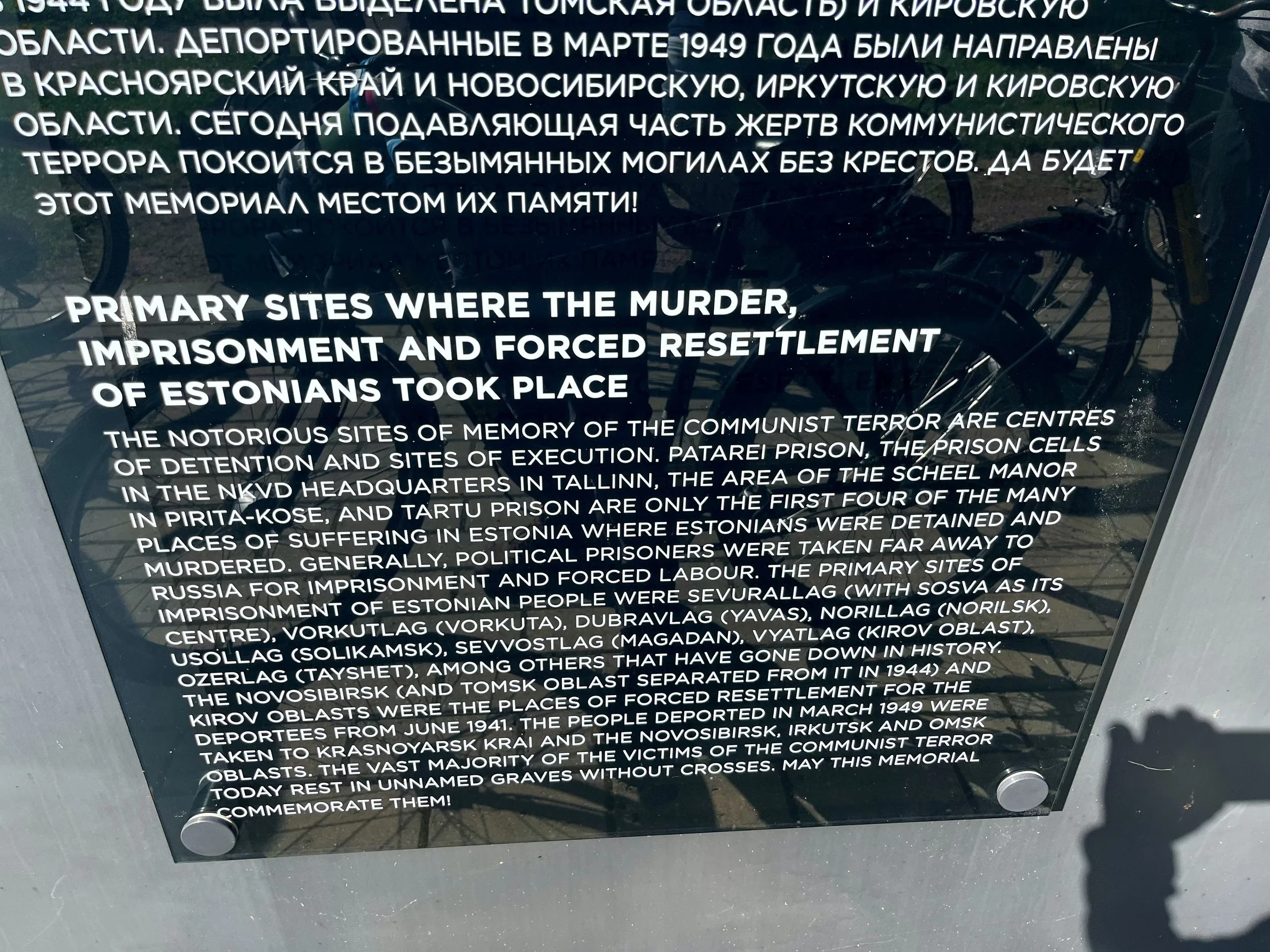
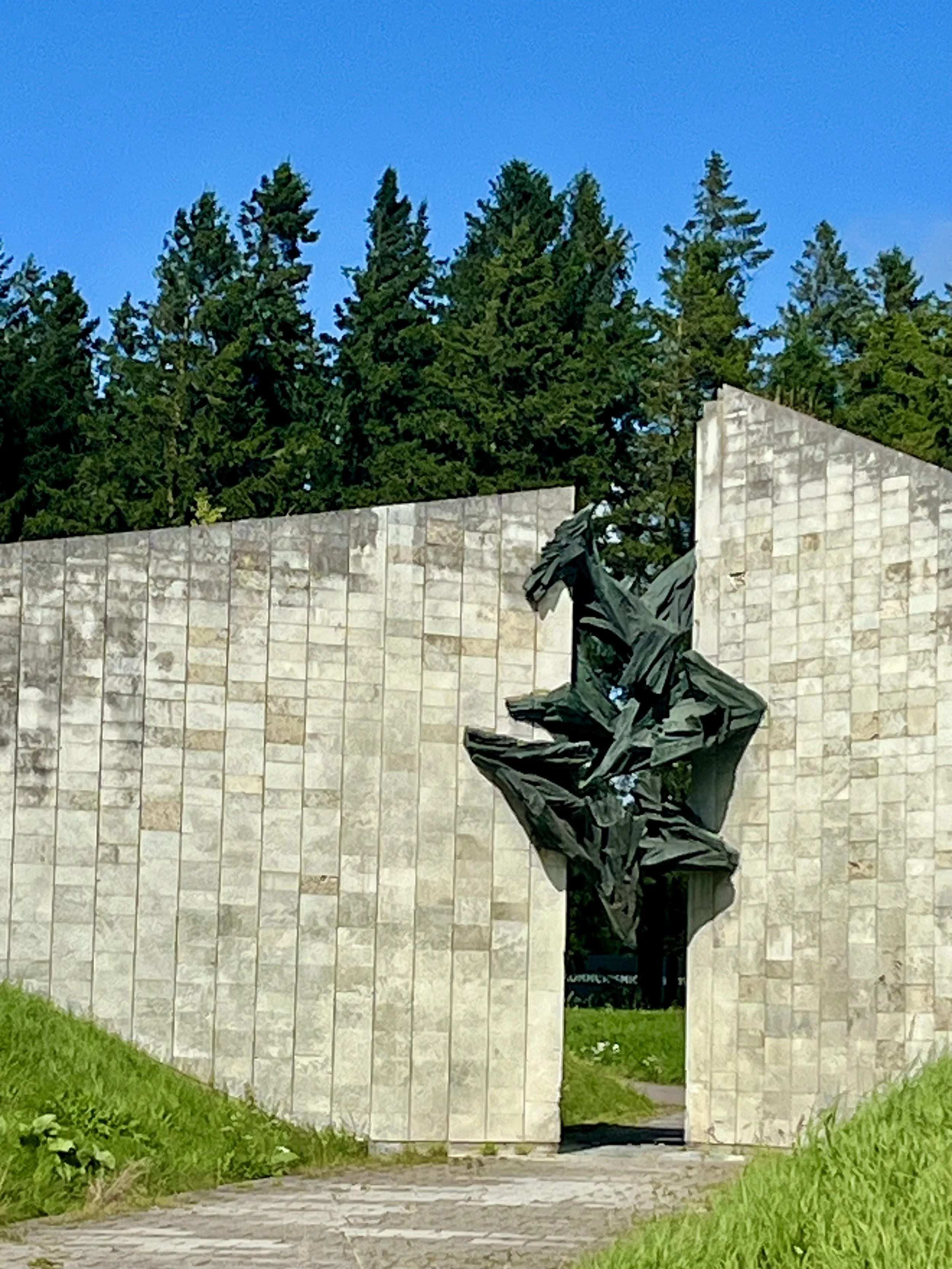
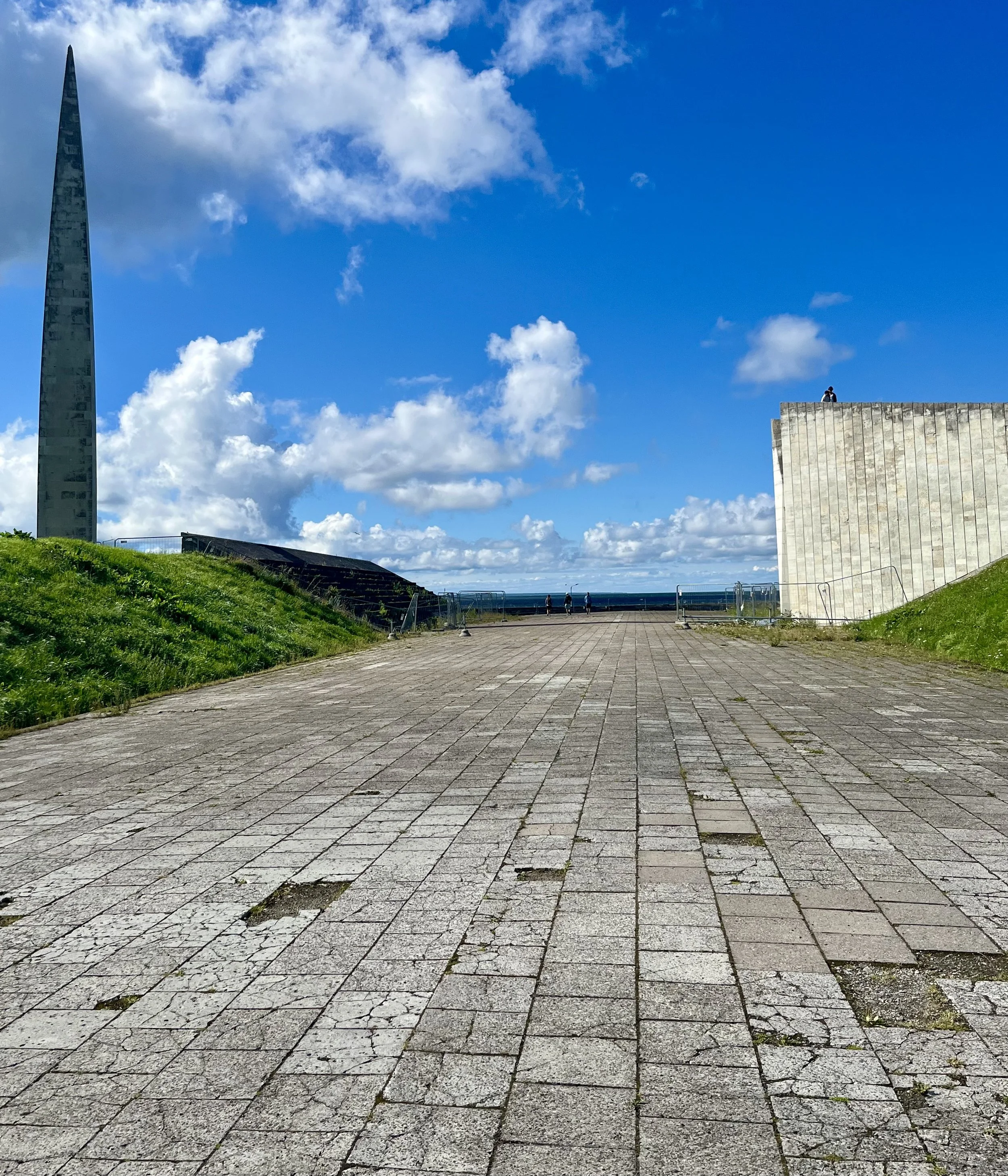
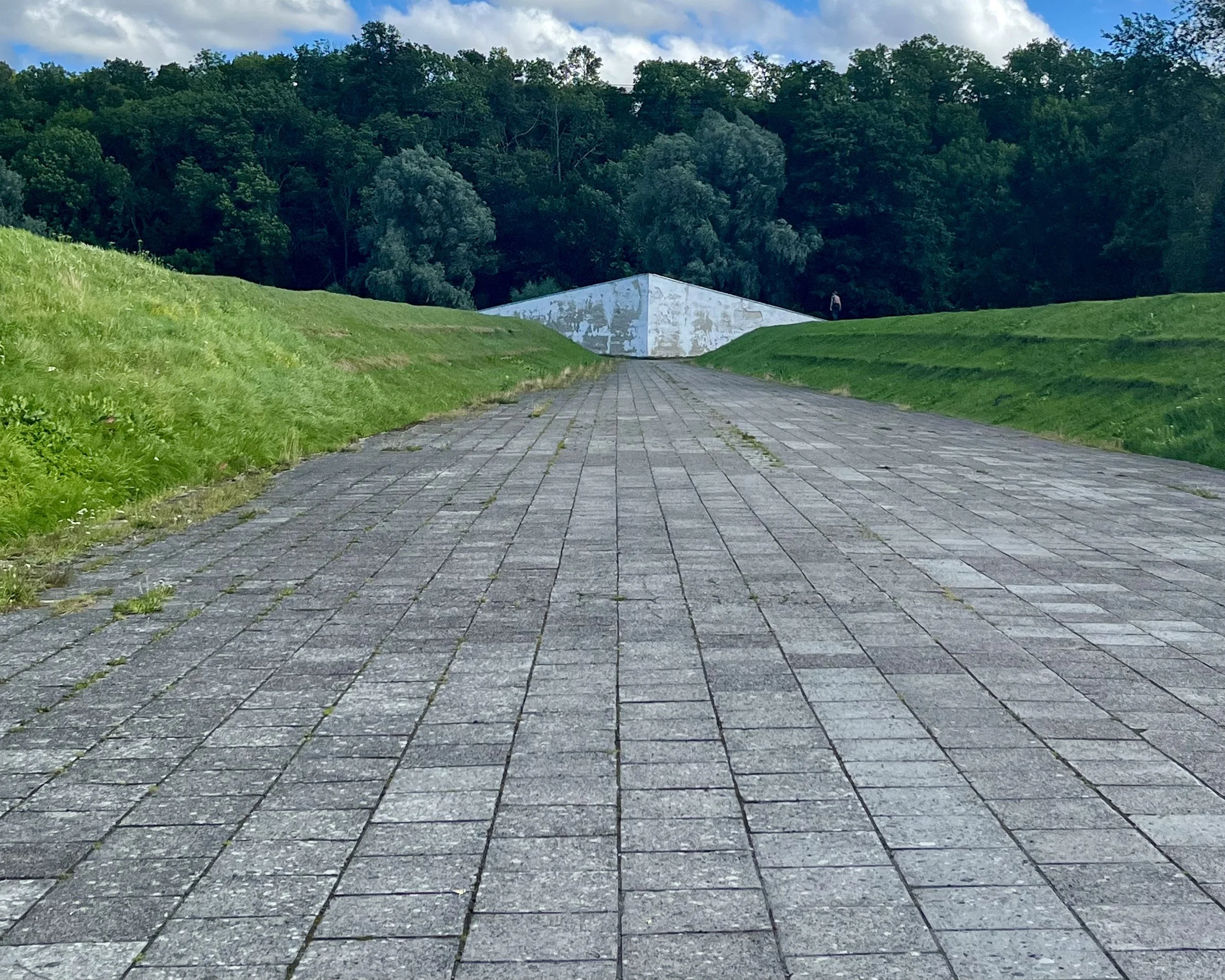
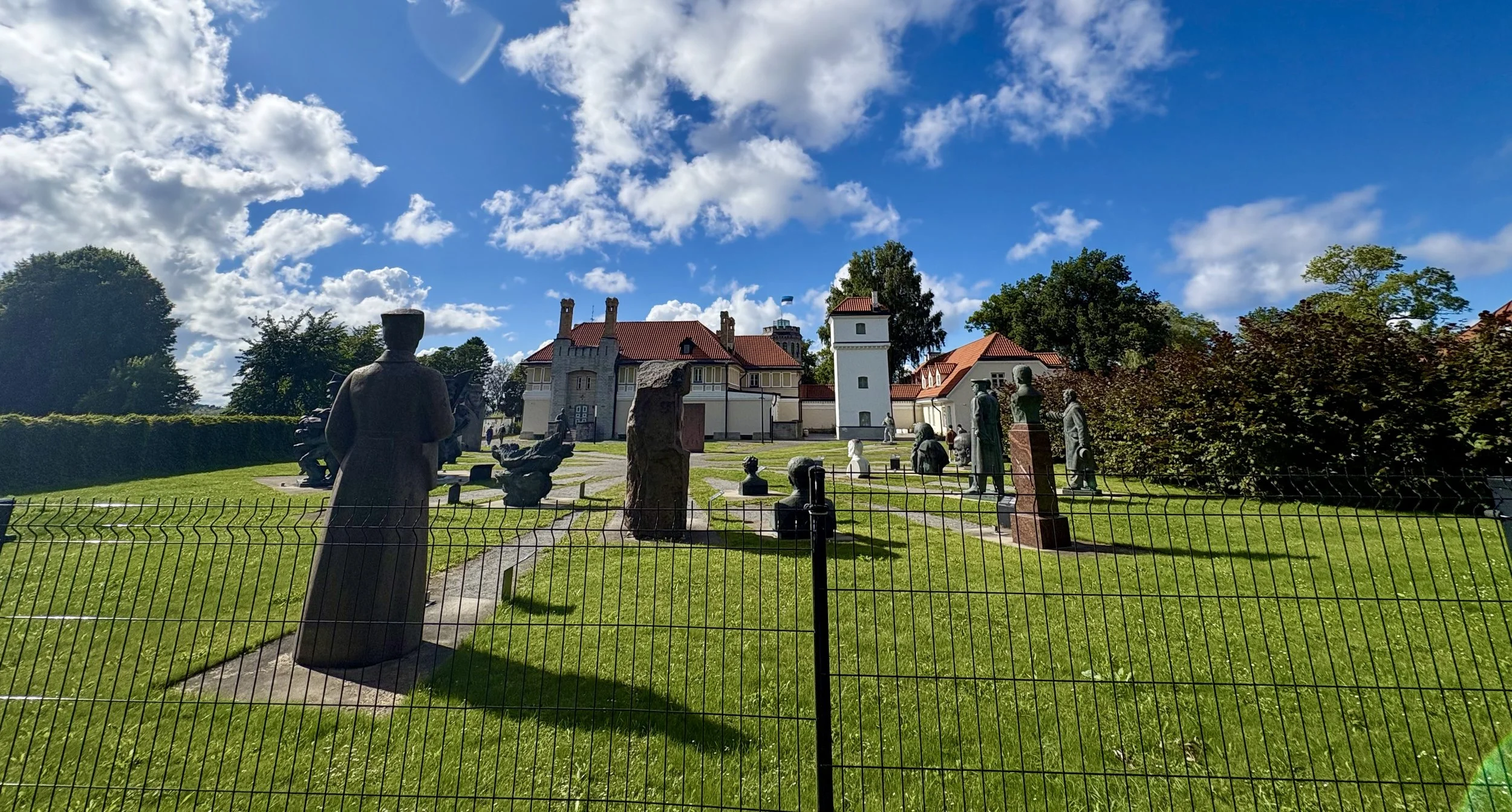
In the same area, we stopped to see a failed Russian Memorial for soldiers killed in WWII. They had placed a tall spire and then bulldozed all the tombstones of an existing German cemetery leaving the bodies covered then poured a long/wide cement tarmac over the space for a memorial, also creating side walls to place plaques. Russians stopped, did not finish the memorial. They had created an entrance of figures like seagulls (but it looked like “Death Eaters” of Harry Potter fame). We also saw a small statue garden of soviet leaders discarded from the city parks—Stalin, Lenin, and others standing in disorder. Our next stop was the outdoor amphitheater, where the singing protest was held and every four years, they hold a choir singing competition.
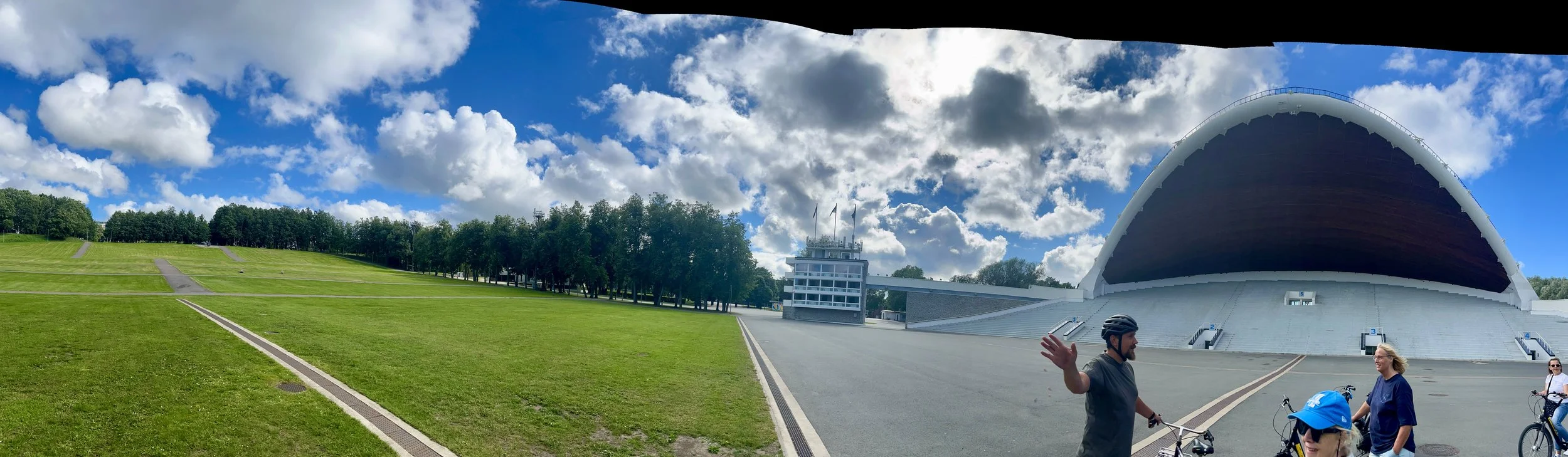
Pano of amptitheater
We then cycle through a wealthy area and see the largest estate of the US ambassador to Estonia, eventually arriving at the Estonian Presidential Palace and the much older Palace of Alexander the Great of Russia, built but never used by him.
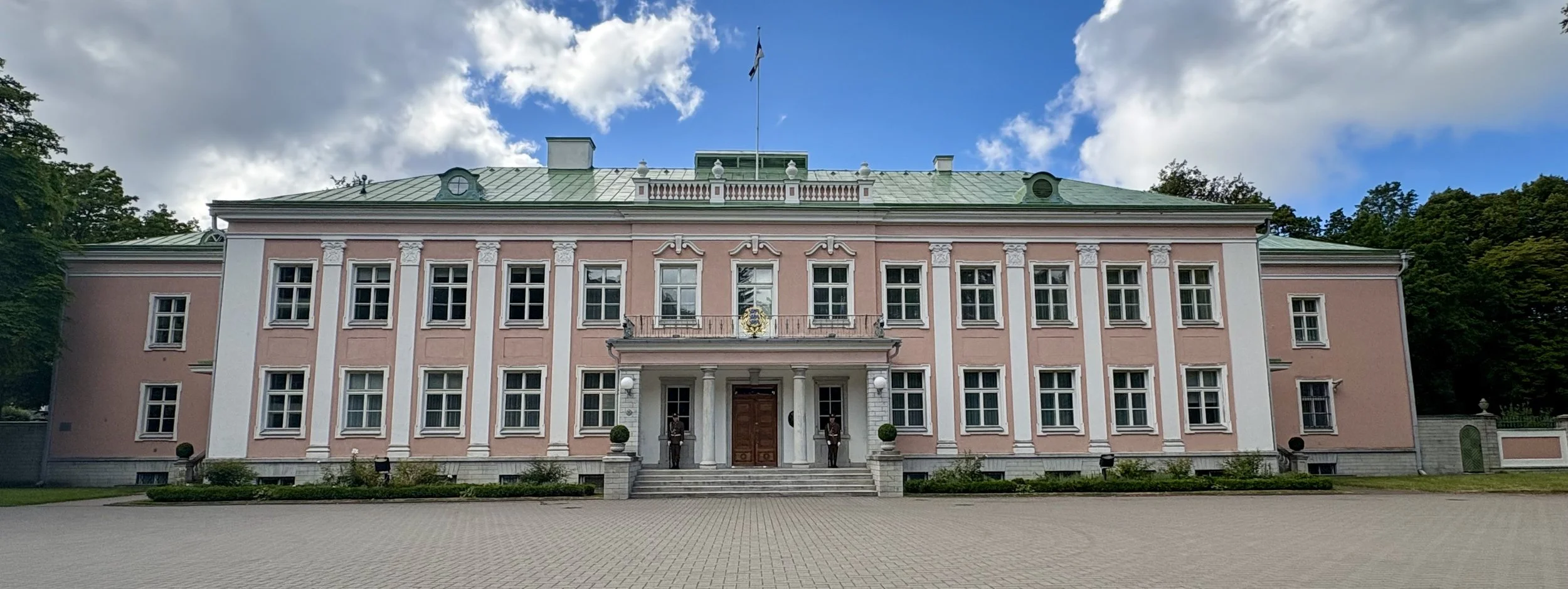
Presidential Palace
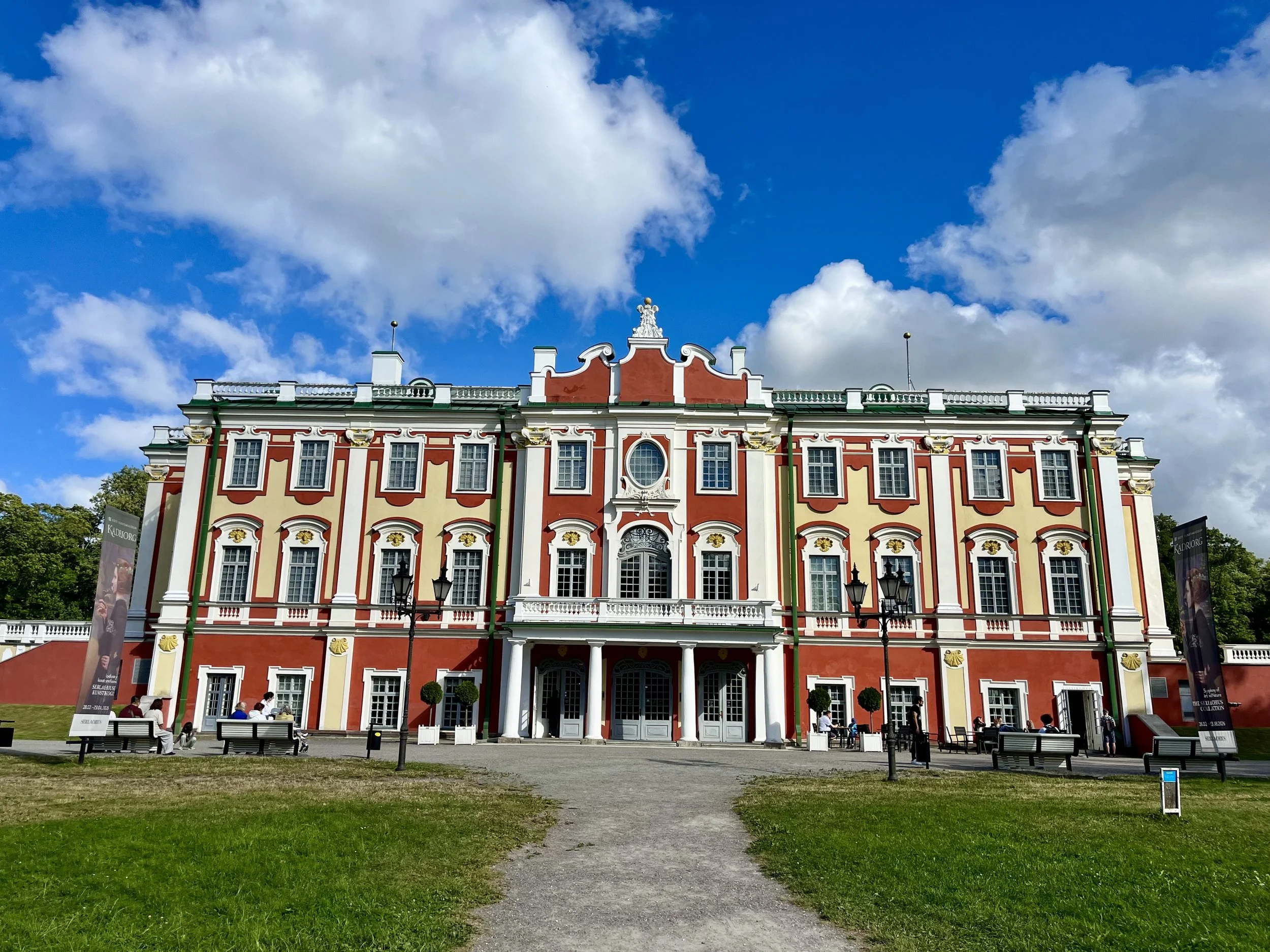
Alexander the Great Palace
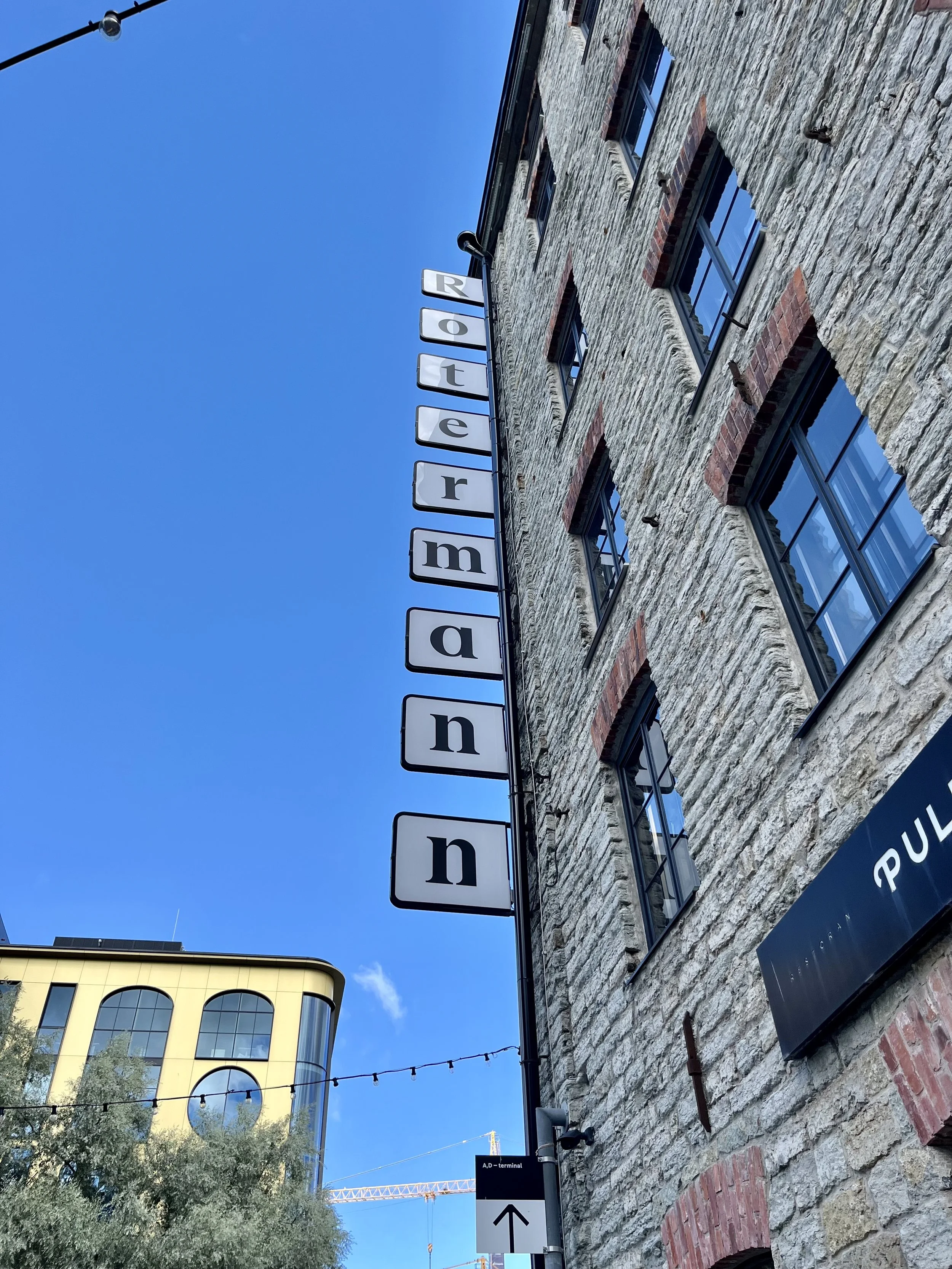
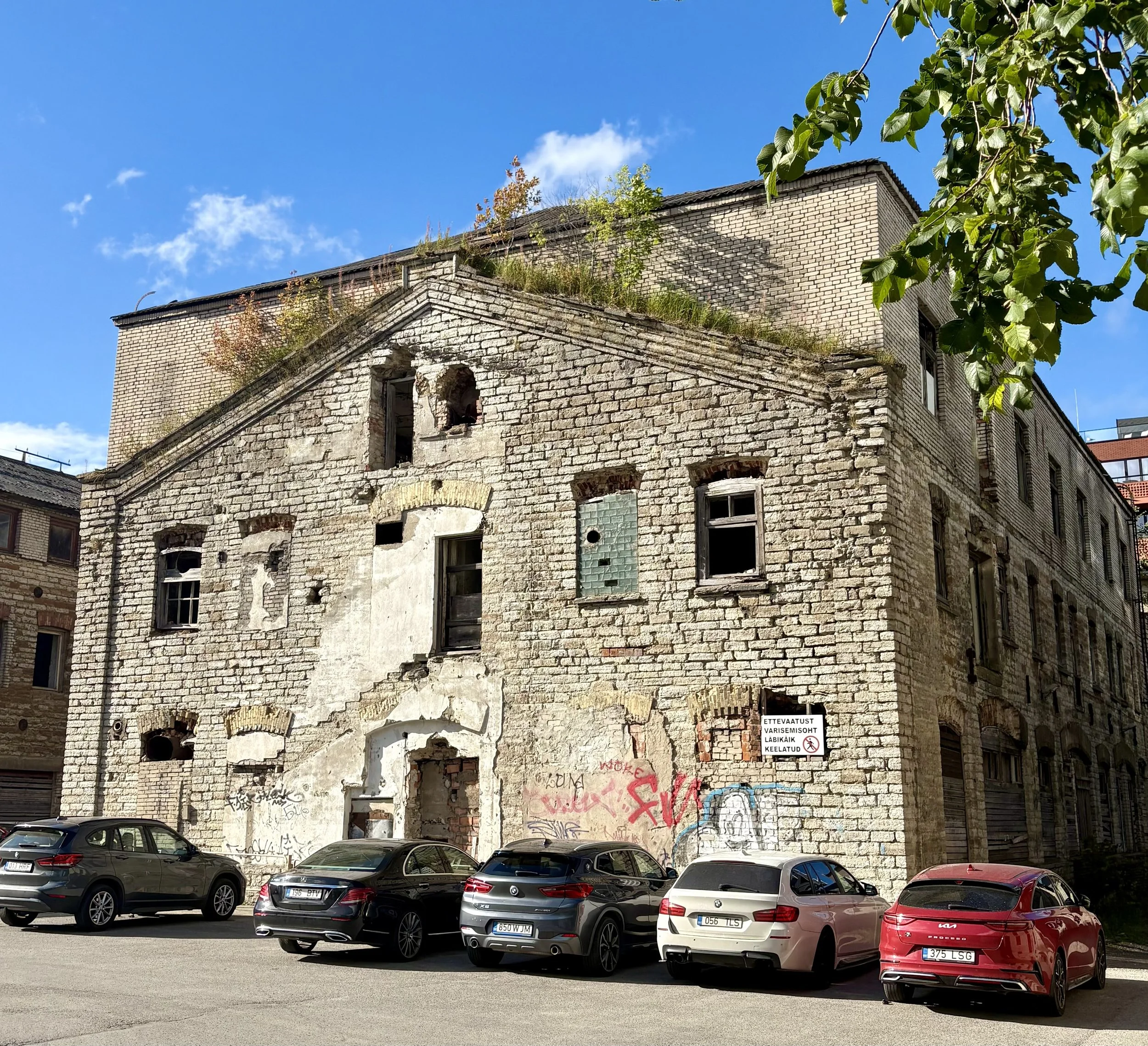
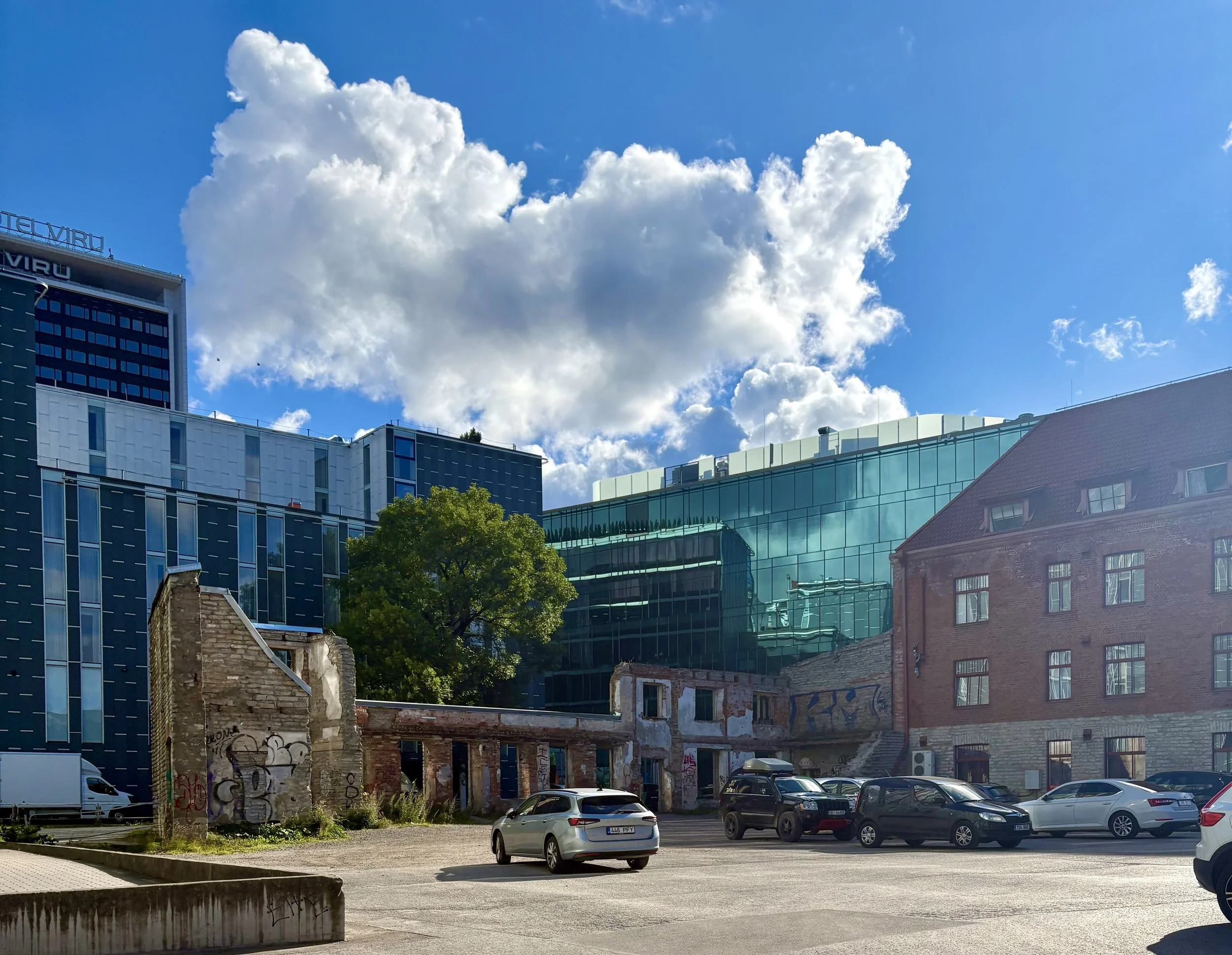
Our last stop is a thriving area of shops and restaurants called “Rotermann” that was once an old German factory. When the Russians seized control, they did not know how to run the complex German machinery and the buildings used as warehouses then abandoned. Now the area has been undated with a polished look, swanky, exceedingly popular with the citizens. Great urban gentrification.
We love Tallinn, the city and the people's spirit. We end our day back in old town, returning our bikes. The tram is quick and easy back to our hotel. We have some blog work and split a sandwich at the hotel, long day. Tomorrow we are heading to Riga Latvia.