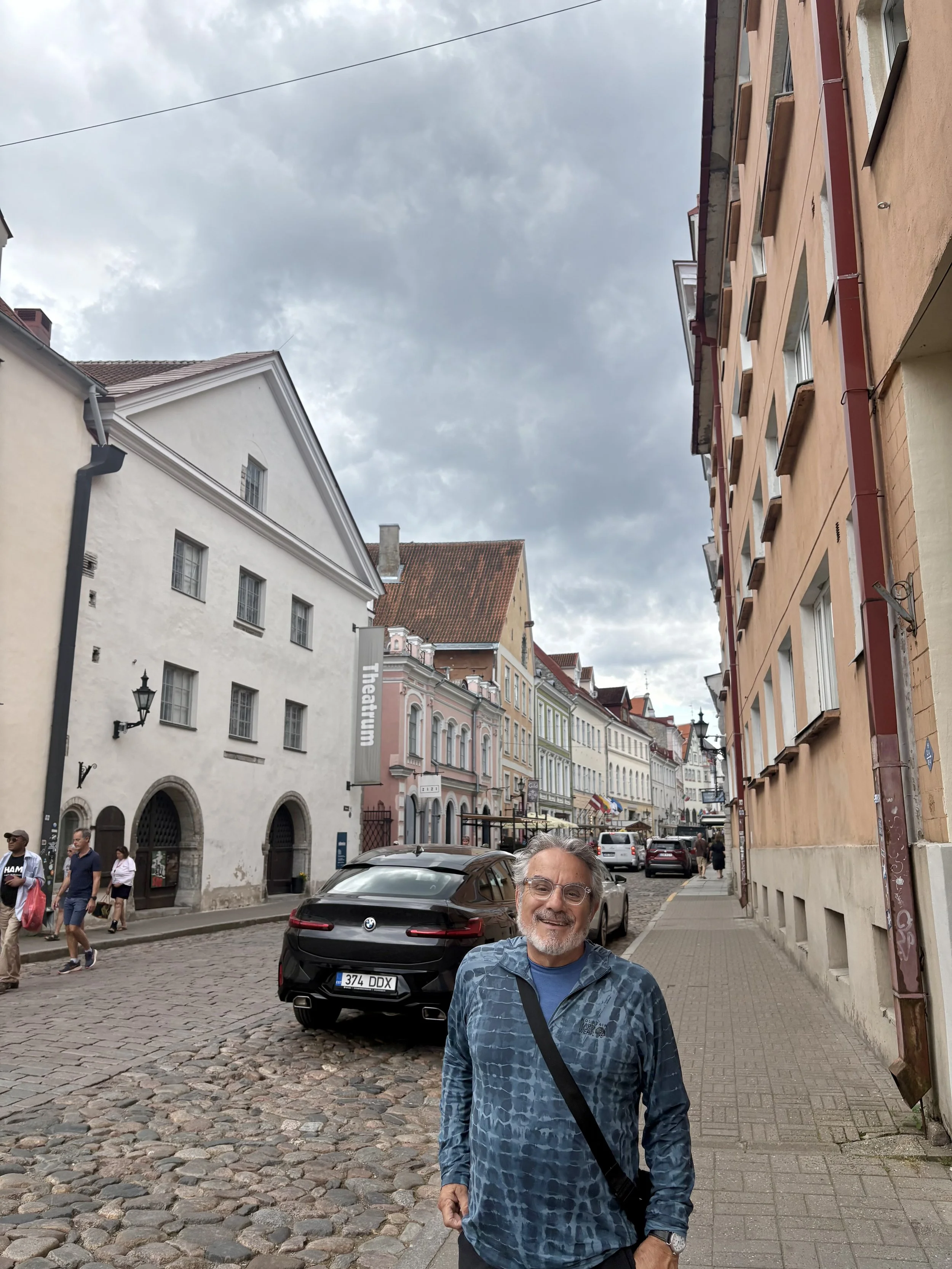
Vilnius Lithuania

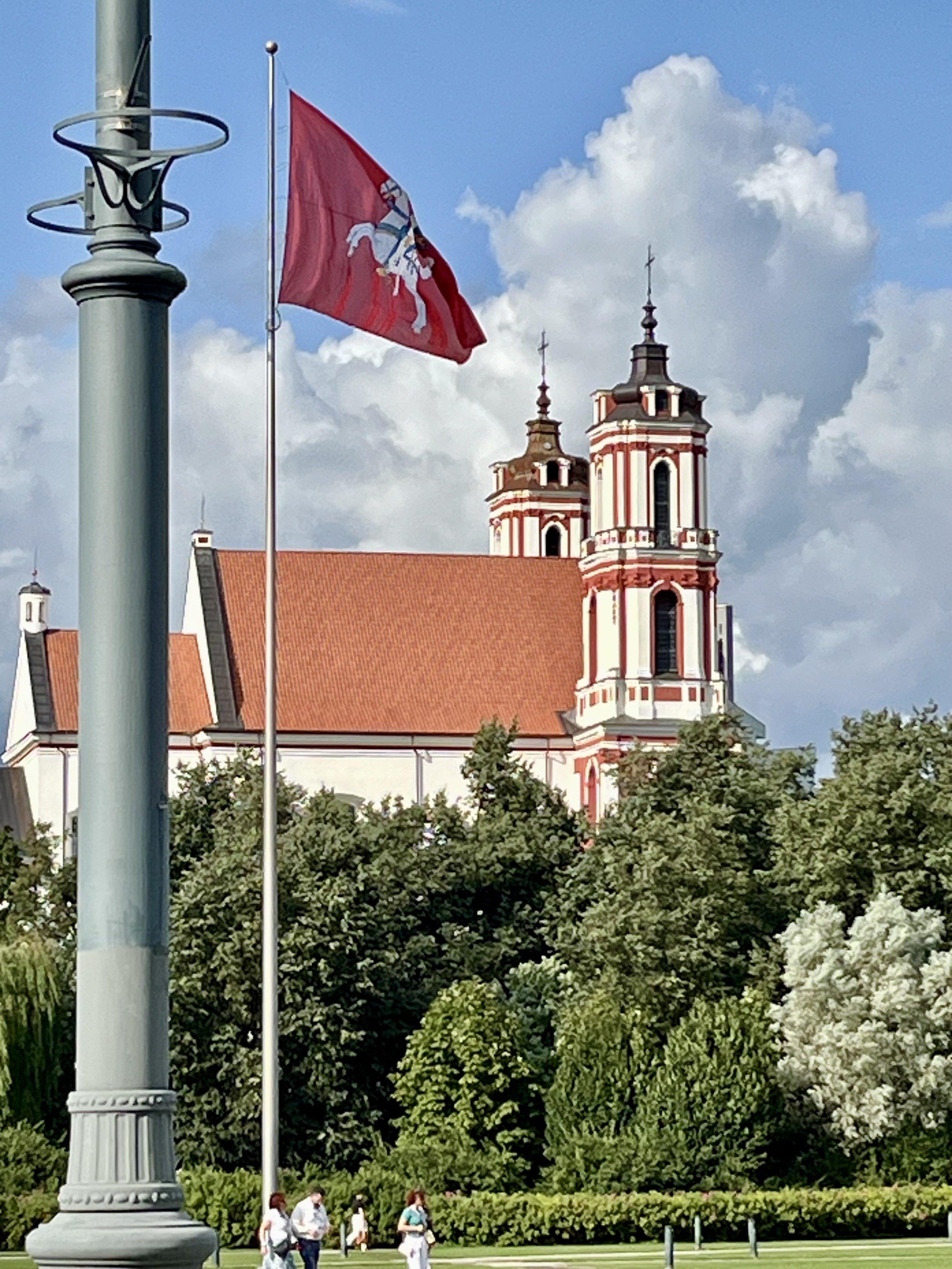
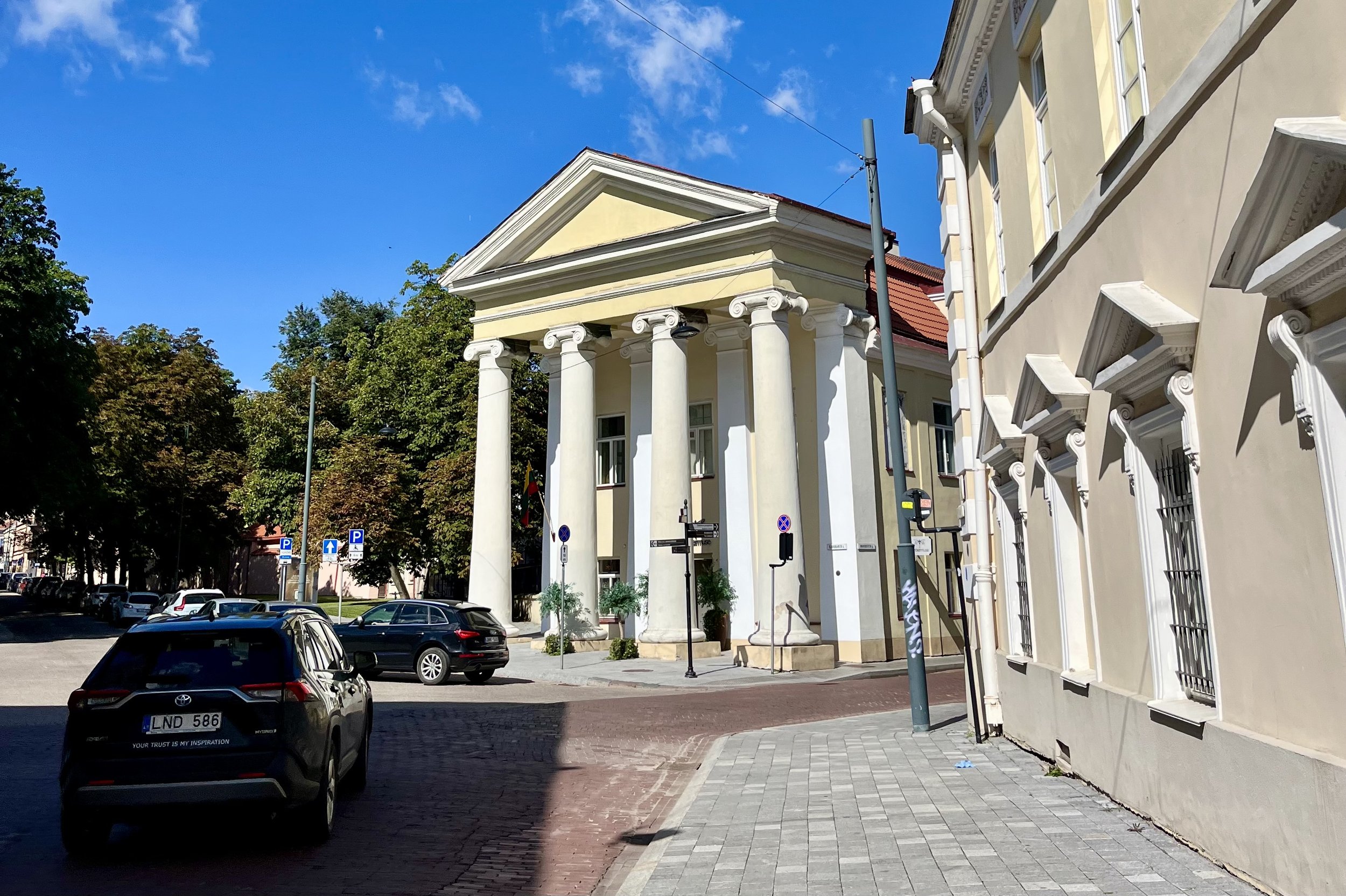
Entry to Old Town Vilnius

Day 1

This is the last Baltic country on our trip. We take a 5-hour bus ride from Riga, Latvia to Vilnius, Lithuania. What a joy ride. We are looking out the side windows and notice down the road vehicles and buses in the approaching lane are swerving to the shoulder. There was construction on this road earlier so first impression was that the lanes were re-routed. We moved are vision from side window to front windshield and back. Our bus was crossing the centerline and then back and accelerating. We glanced at the guys sitting by us, they were sleeping.

Frank jumped into the isle to see the status of the driver and impolitely said: “WTF”— Hey watch your driving” in a loud voice. Then the neighbors woke up and saw the erratic driving, and they too were yelling. The driver must have been dozing. The bus straightened out and the driving corrected, but we did soon stop and switched drivers.

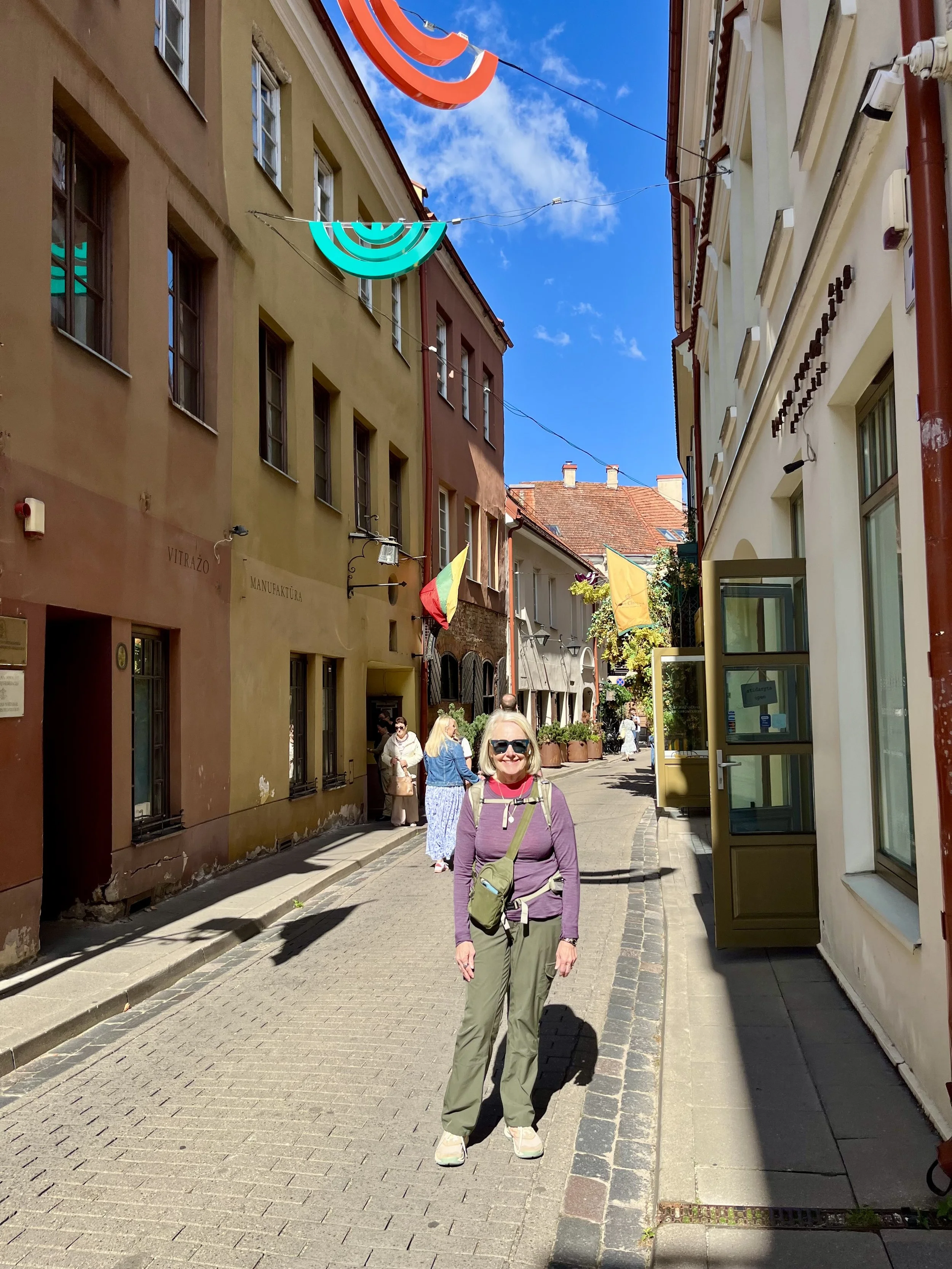
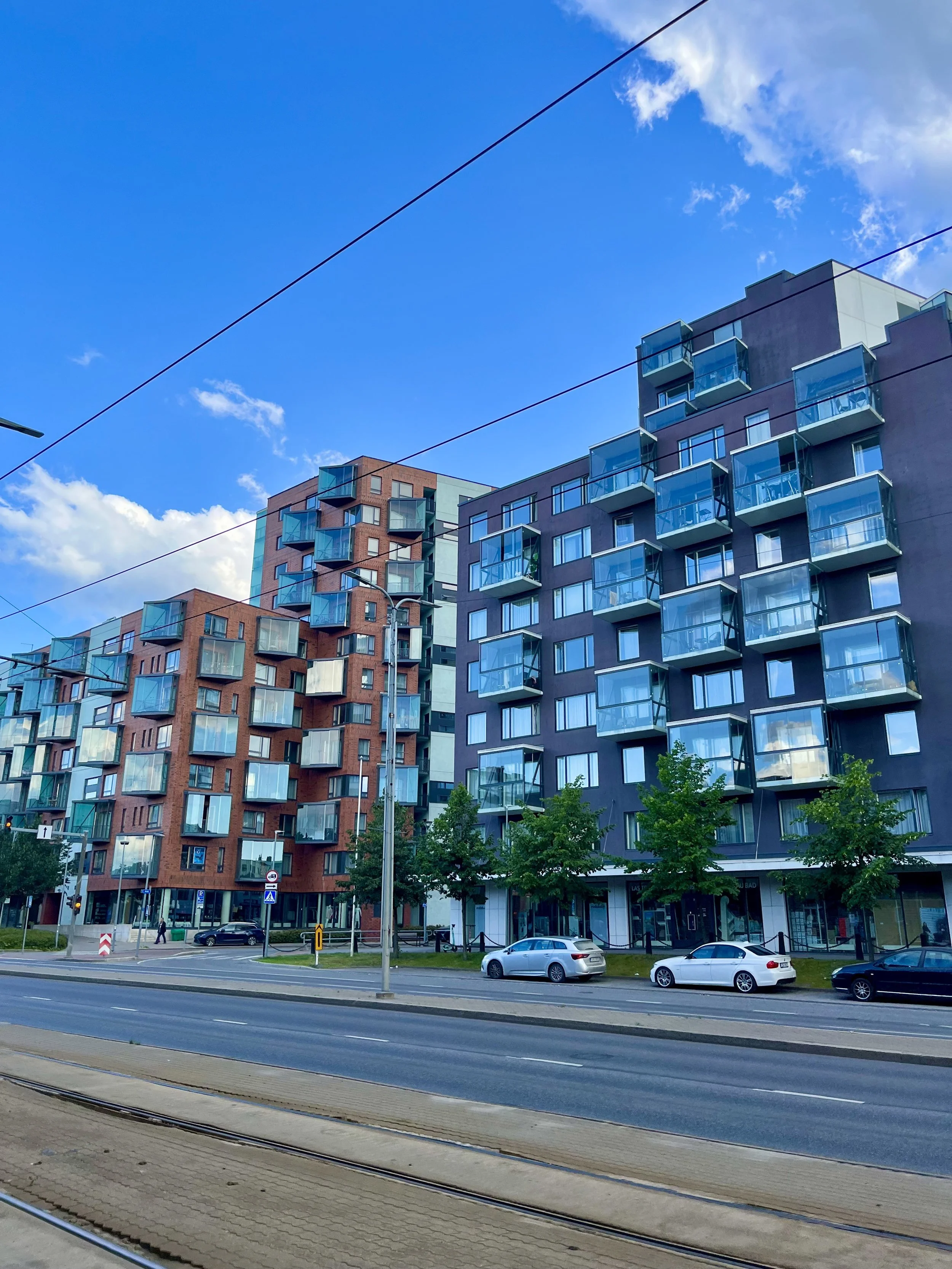
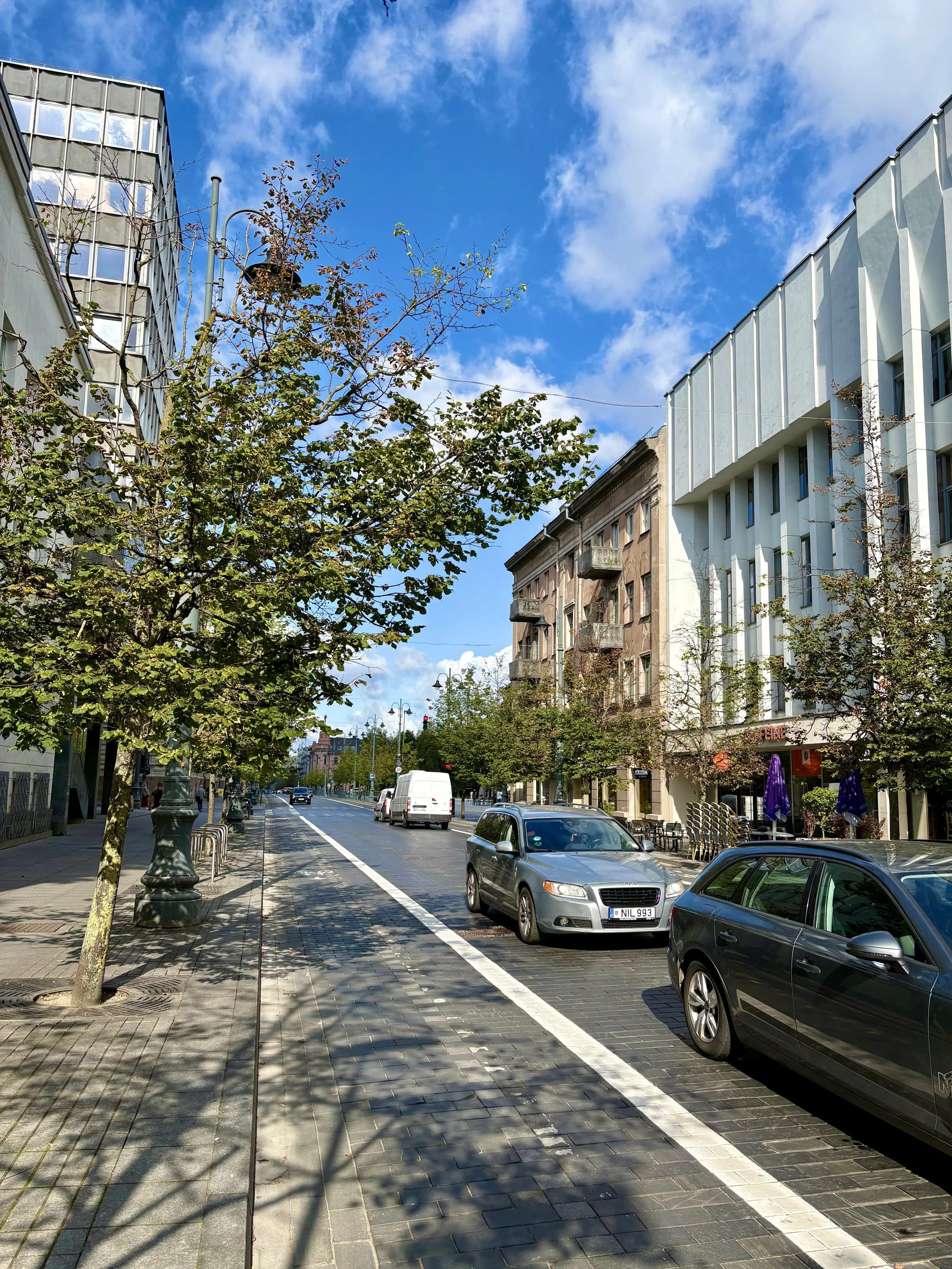
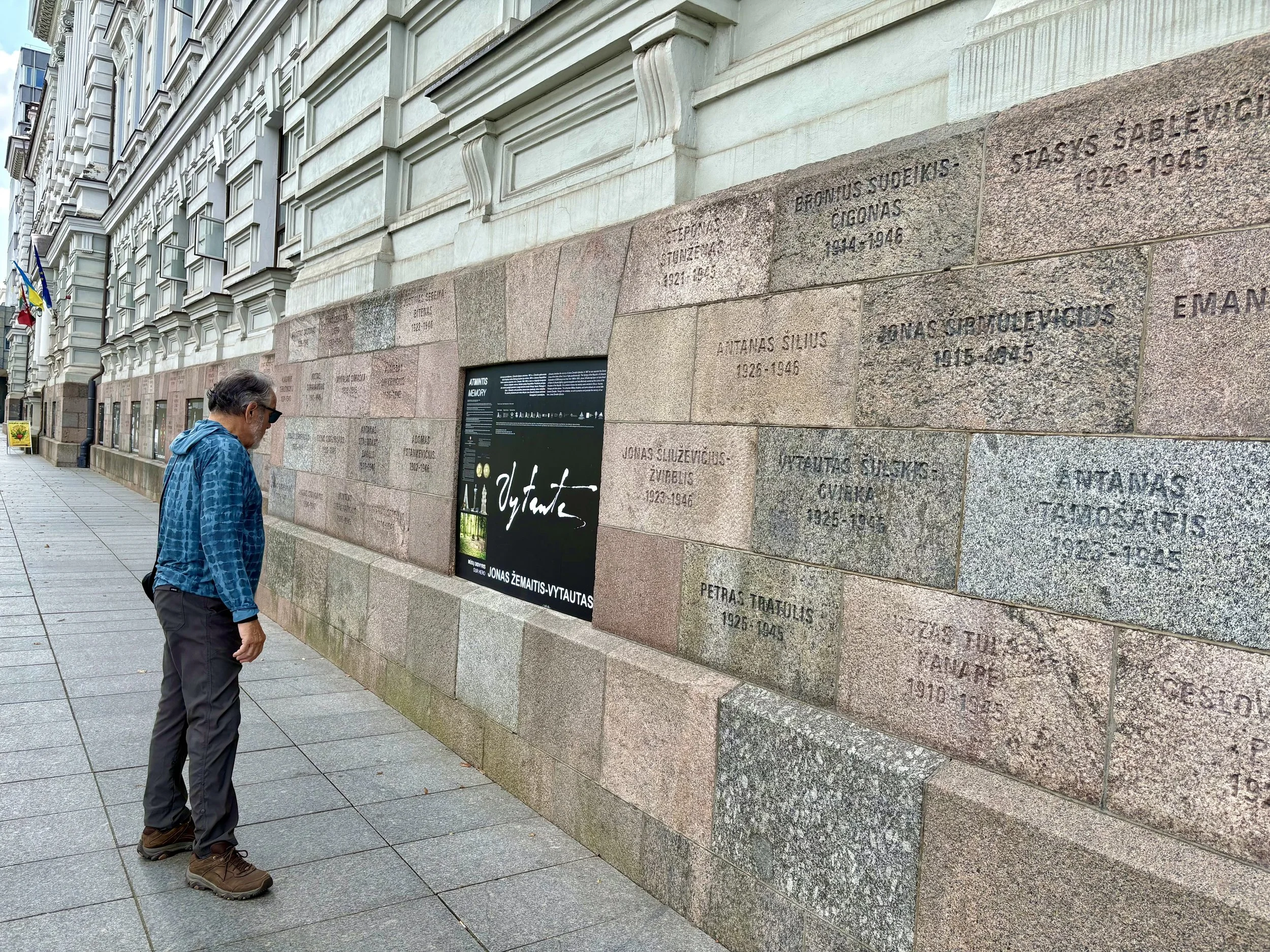
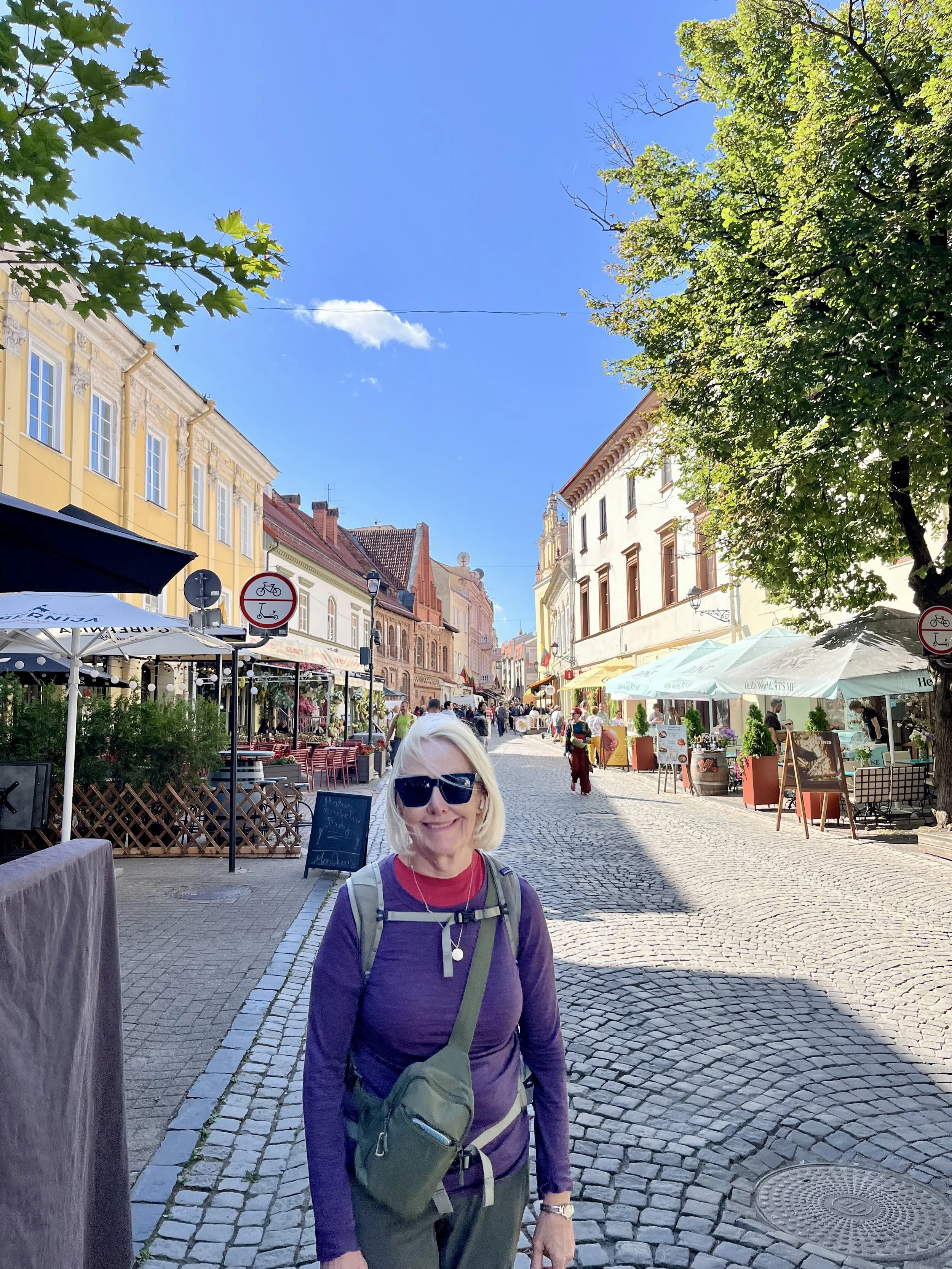
We arrived at the bus terminal, walked across the street to the main train station to the local bus stop we needed, jumped on…jumped off, then walked 7 minutes to our nice, modern hotel. We keep using Hilton Honor points that Janet accumulated for many of the accommodations. She is in the system-we get free water too! LOL. See photos below of the wonderful walk from our hotel
Day 2

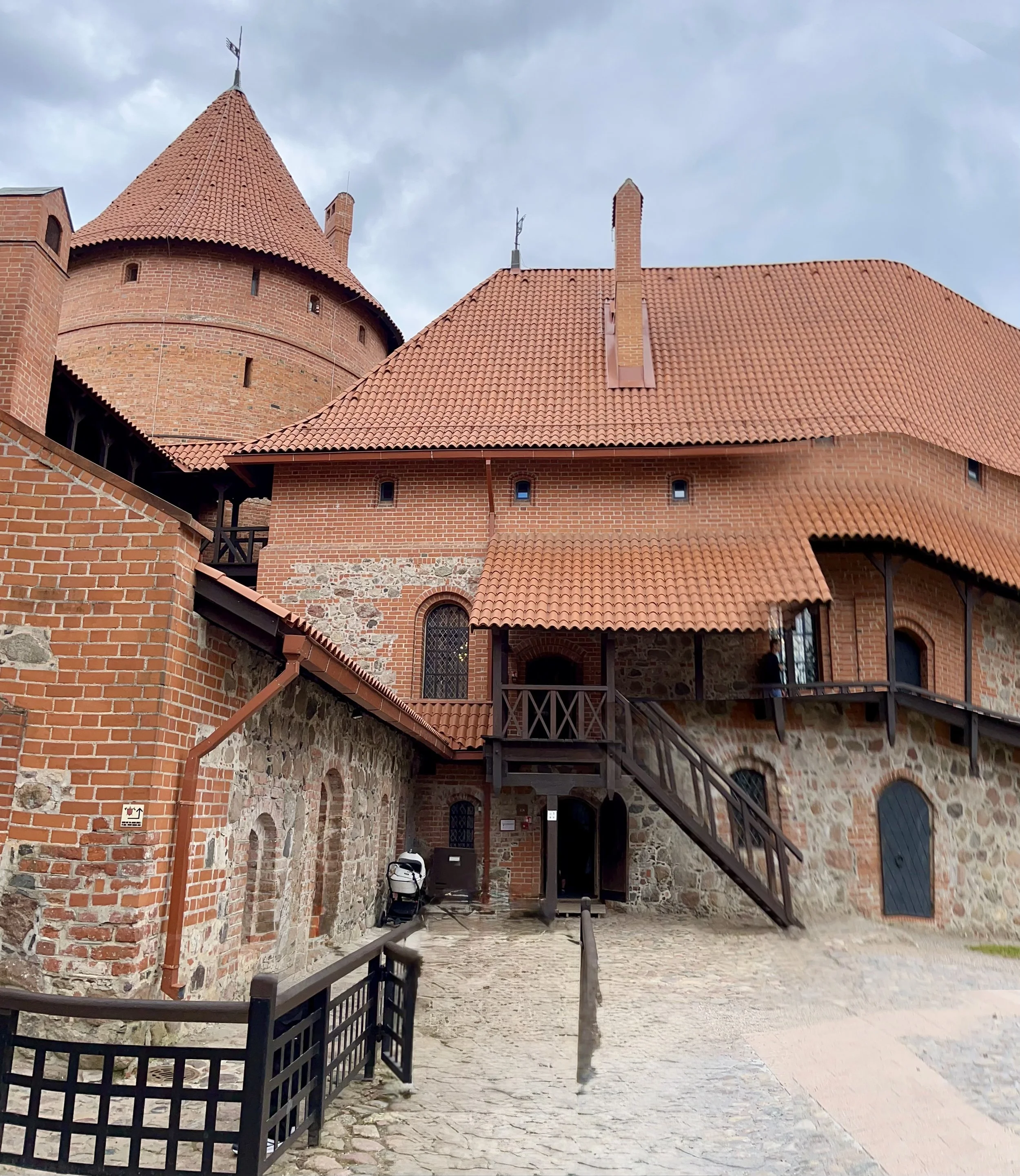
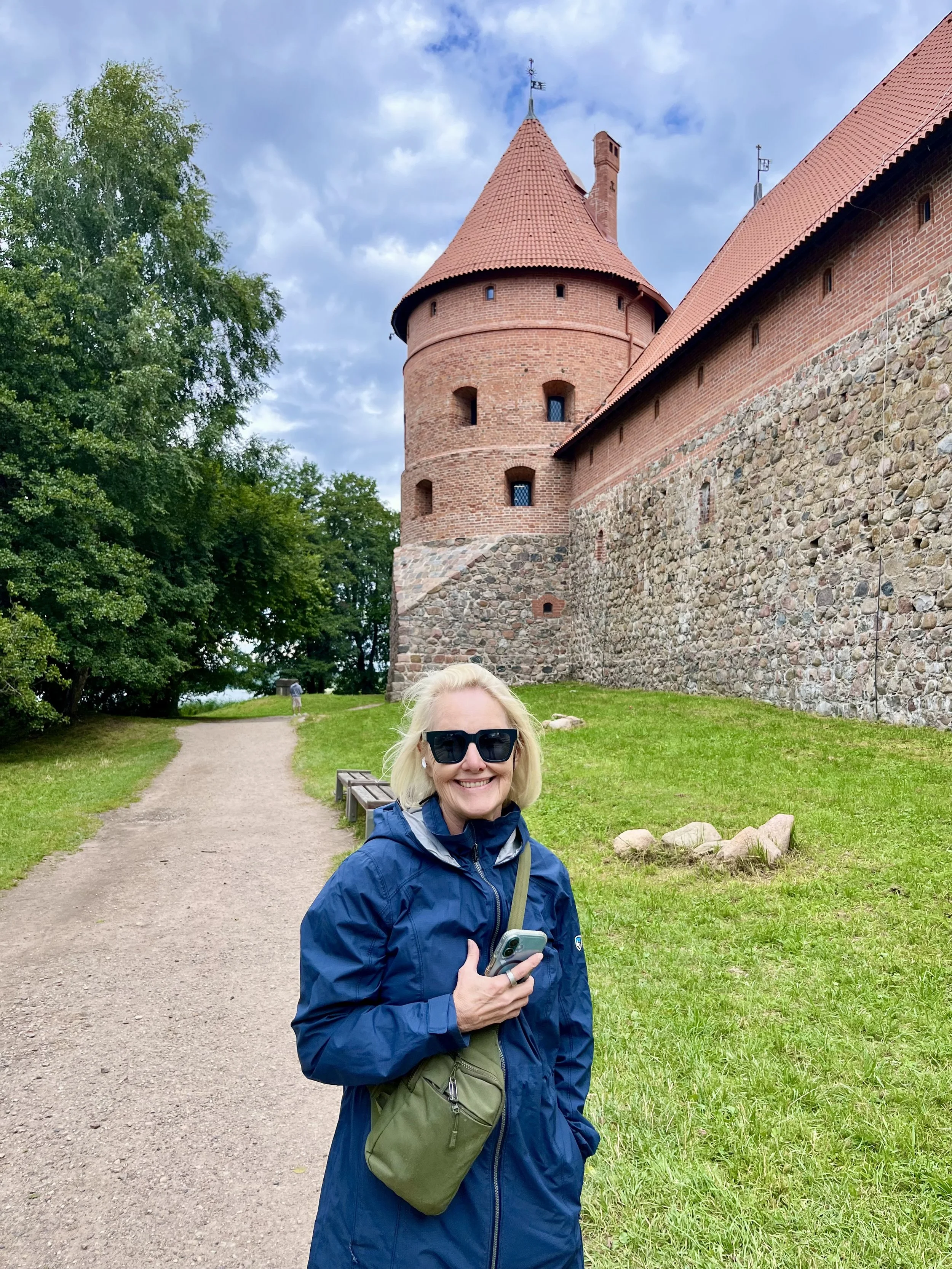
Next morning, nice breakfast, and we are off to meet the next tour guide for our driving excursion 28 km out of town to a fairy-tale Trakai Castle on the peninsula surrounded by Lake Galve. This castle was repeatedly sacked and plundered and damaged by the Teutonic Knights (former Crusaders) and other enemies. Approaching, you notice the difference between the restored red brick towers and the original brown stone walls of the 15th century. Historically, Grand Duke Gediminas made Trakai his capital in the 14th century.

Our first view of the castle

The street leading to the castle

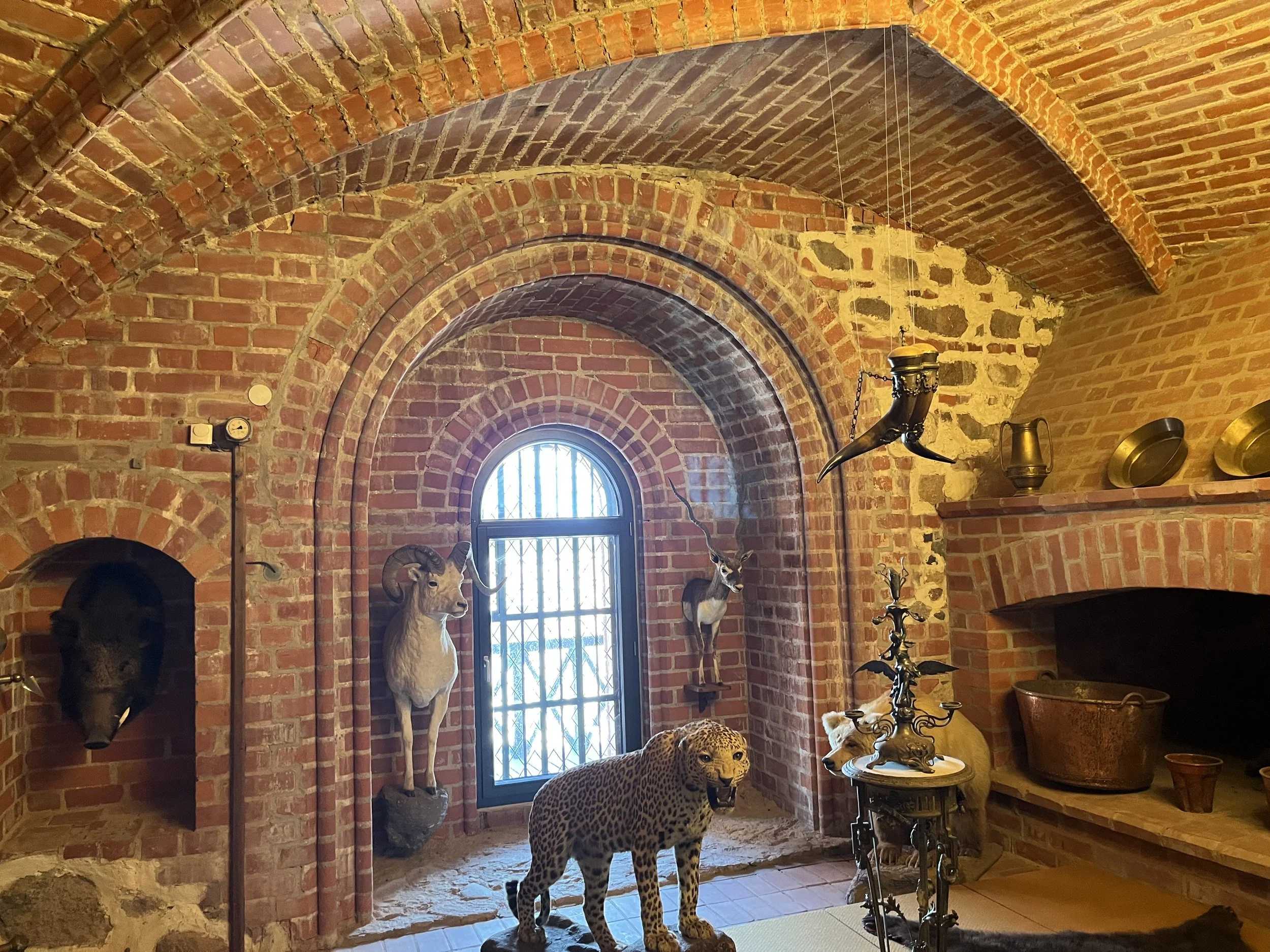
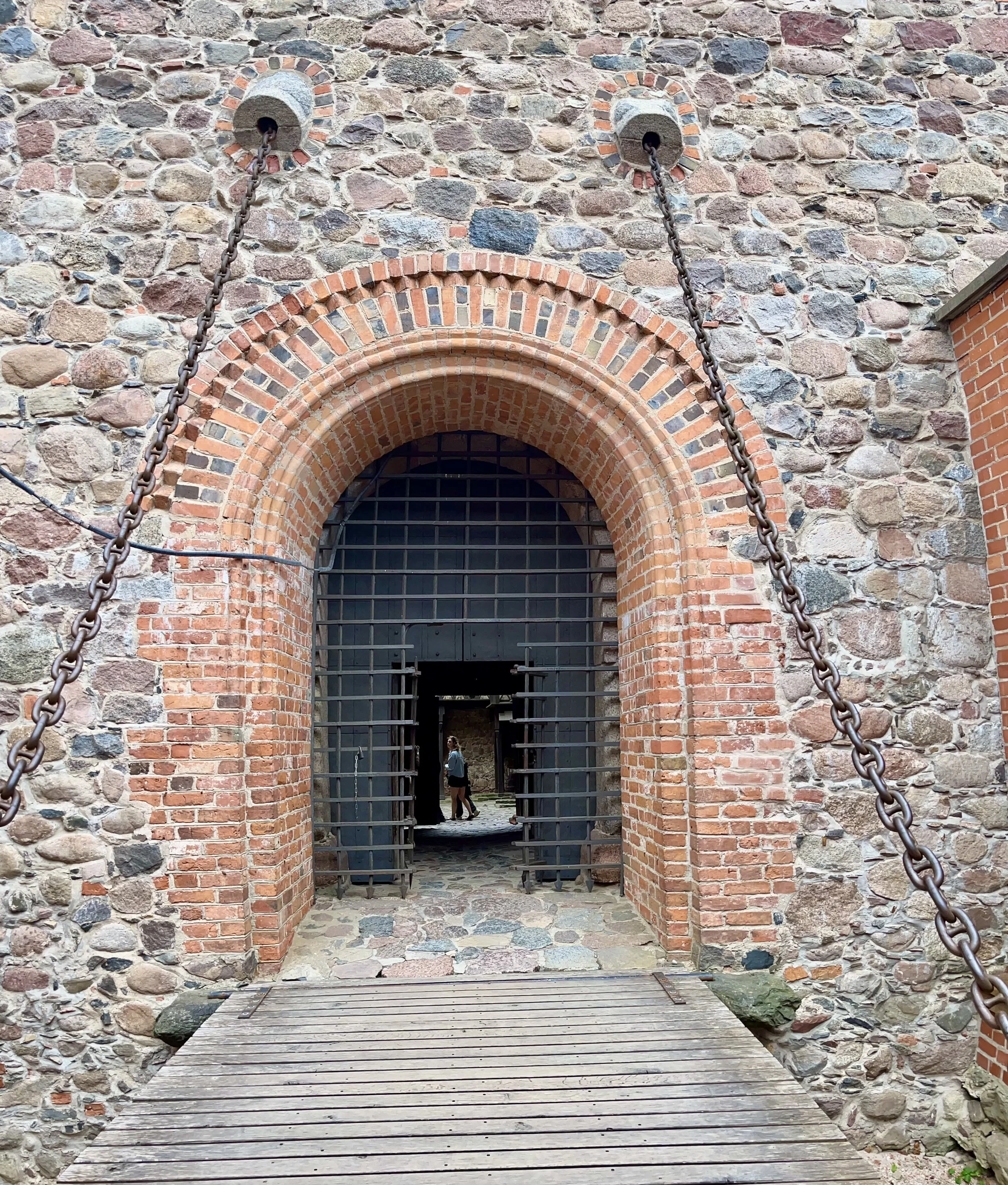
We circled the exterior of the castle observing the defensive moat, empty now, but built to allow water to flow in from Lake Galve. The shoreline has changed. The moat actually split the interior of the castle requiring an interior draw bridge to be lowered before gaining access to the Duke’s lodgings from the courtyard. We entered the large courtyard to view the connecting walls and several towers and we did cross the drawbridge and walked through the corridors and floors of the Duke’s principle home. Furniture, tapestries, and other artifacts were displayed representing the era, anything personal to the royals would have been moved, stolen or destroyed.

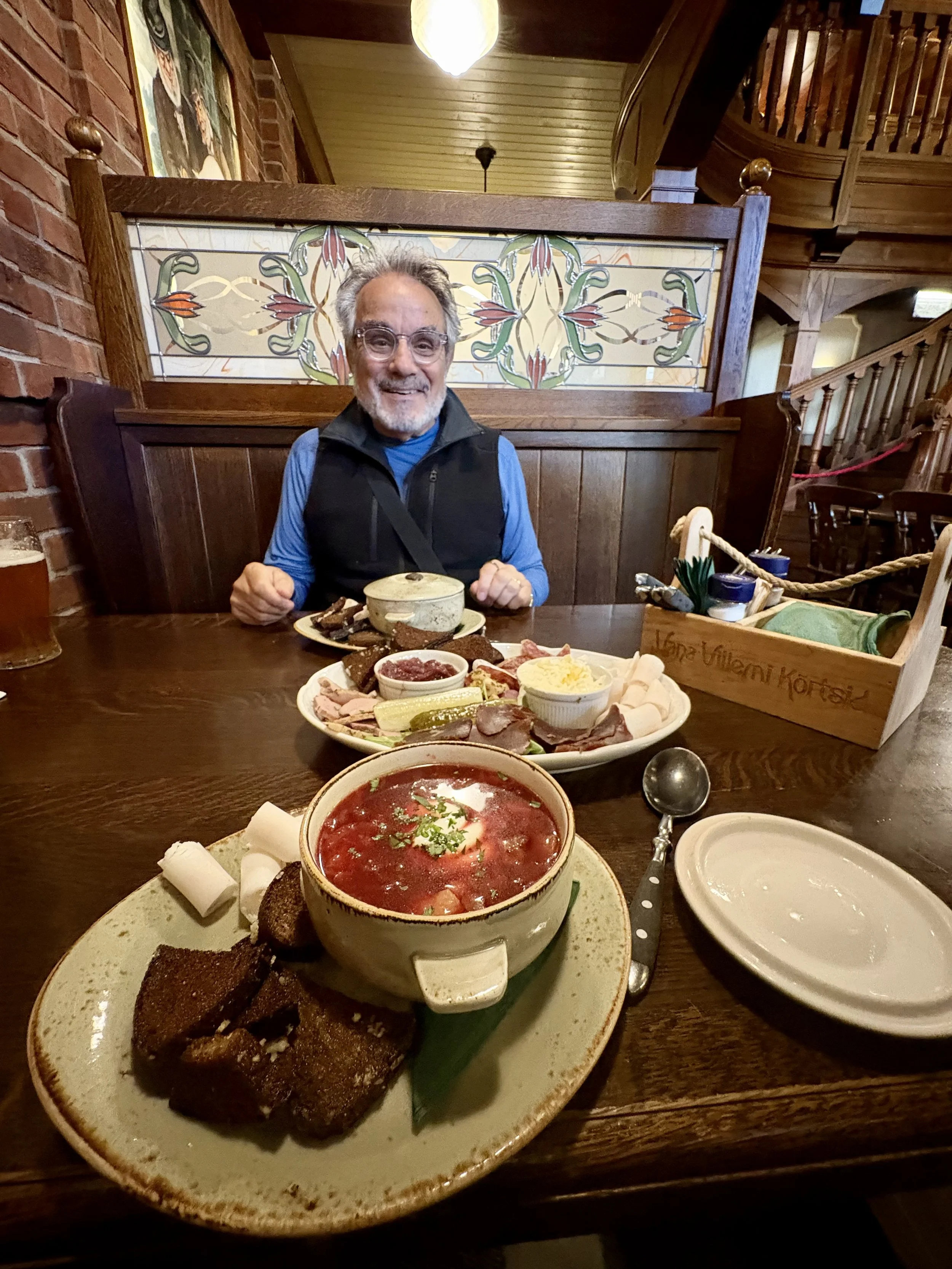
We left the castle and met the group at the designated Pub & Grub. We ordered cold “Pink Soup” of beets and stuff, a/k/a Borscht, and “Kibinai”, flaky cresant shaped pasties stuffed with minced meats either chickens or pork, and for Frank, a sweet tasting Dark Bread Brew. Our Van group of eight were fun; six Americans, an Italian, a Taiwanese, and a chatty Scottish guide that was married to a Lithuanian.
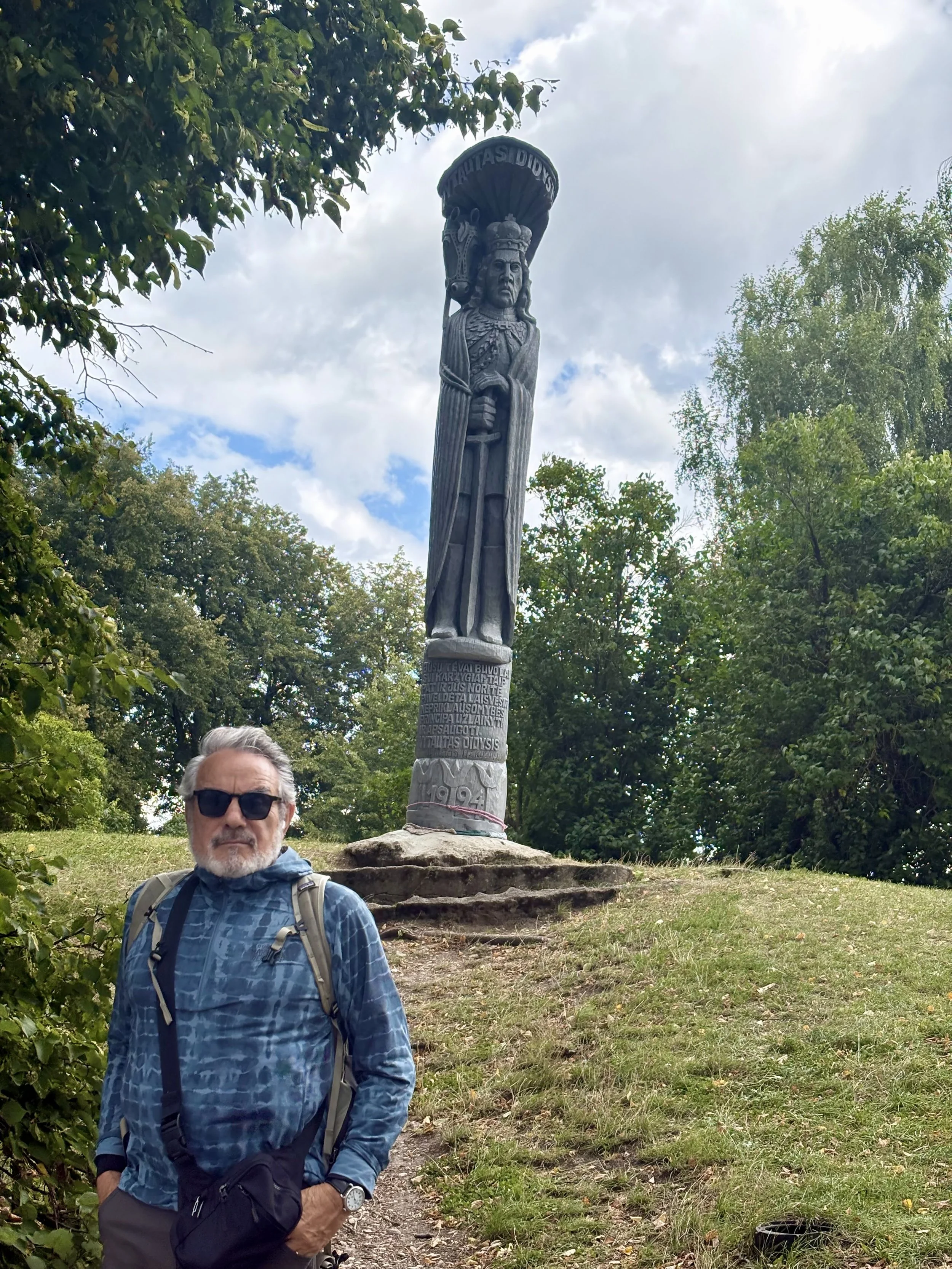
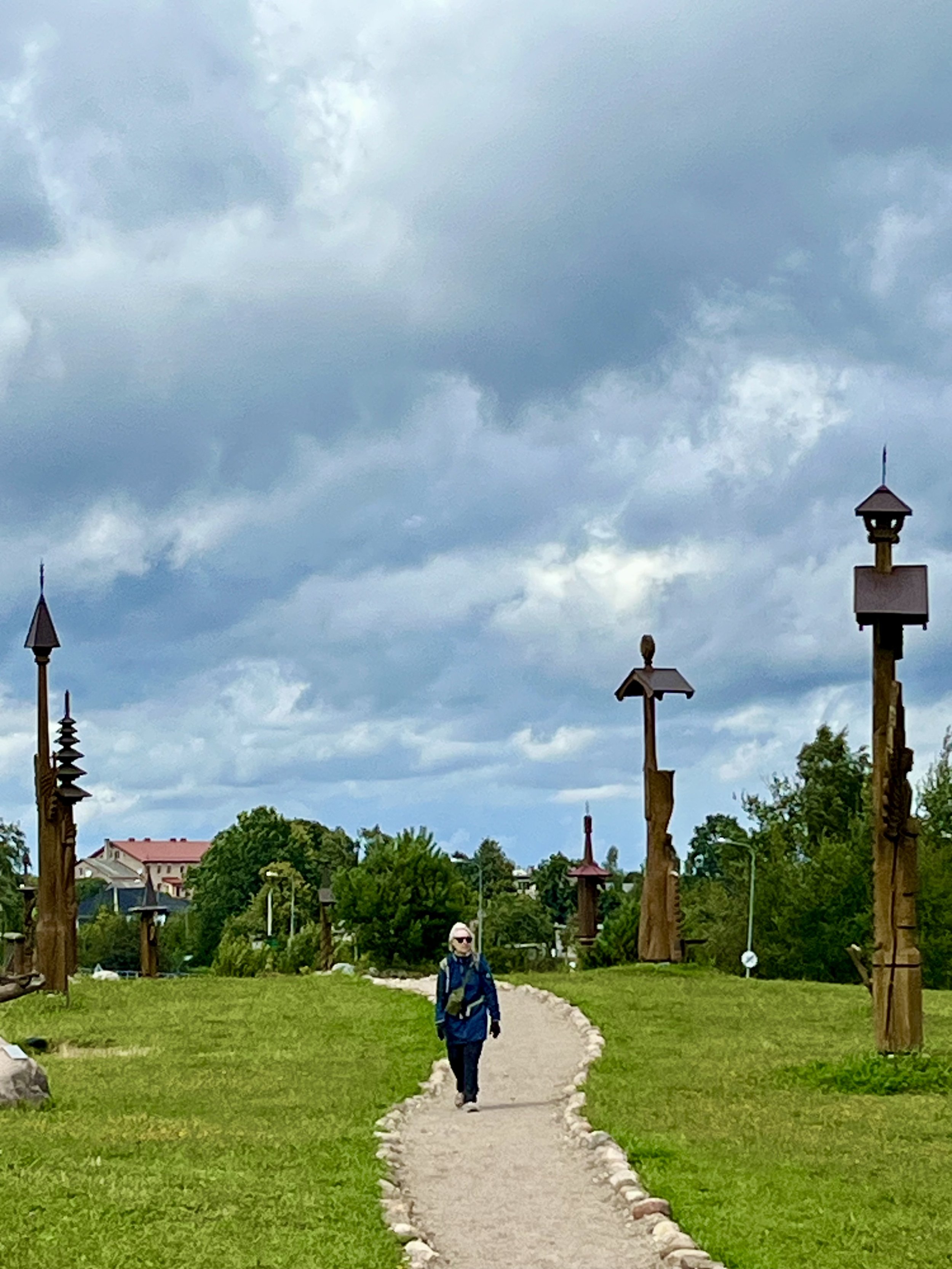
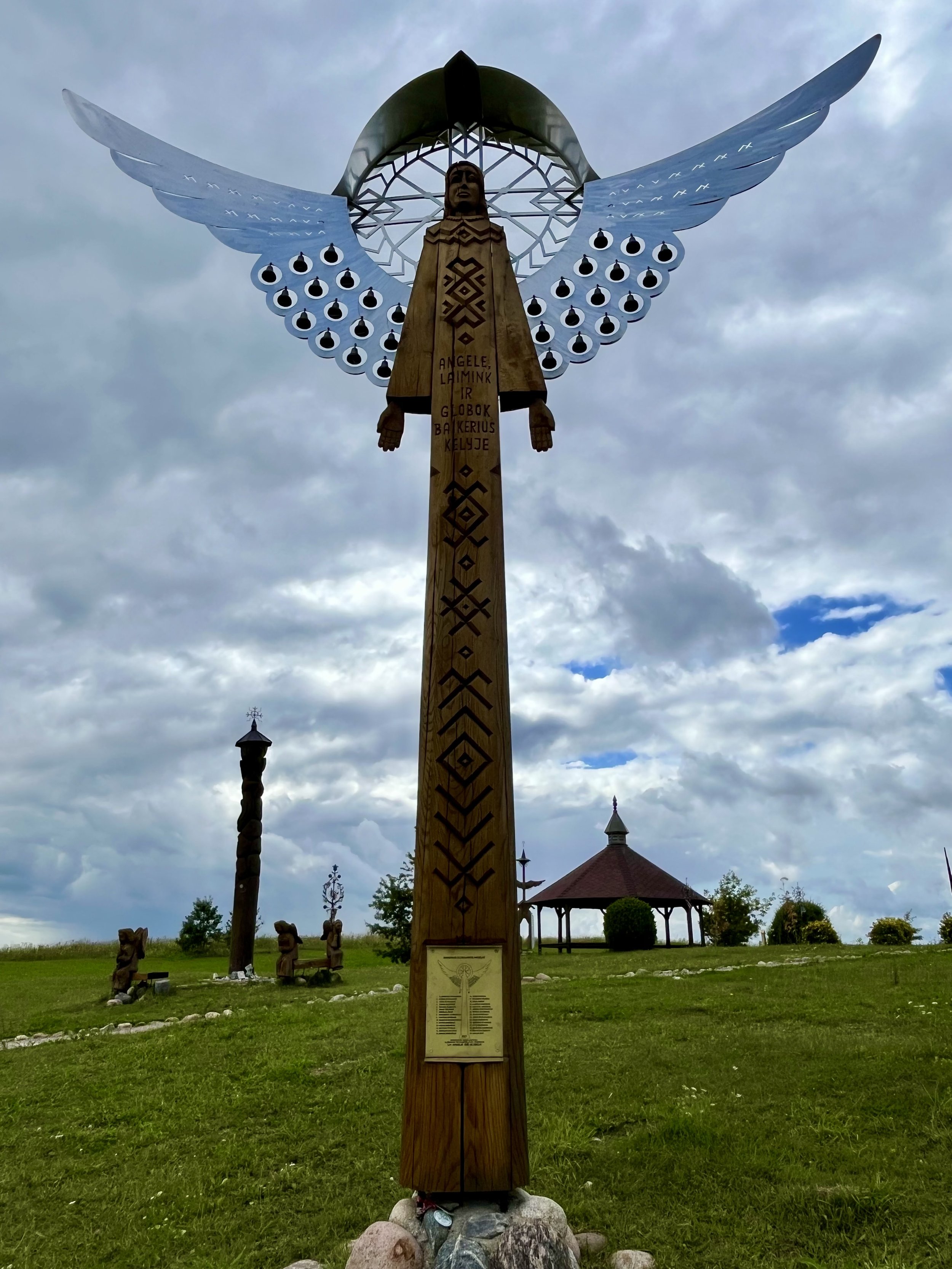
We drove to another nearby site called “The Hill of Angels”. This is a more recent project that celebrates and looks to protect many groups of people by erecting artistic Angel Totem Poles to their benefit. There are about 54 Angels situated up to the crest of the hill and surrounding area; erected by different artists for different people. Some interesting ones, Angel of the Successful Glory (religious), Angel of Kindness, and Angel of Pensioners. We like these. See photos.
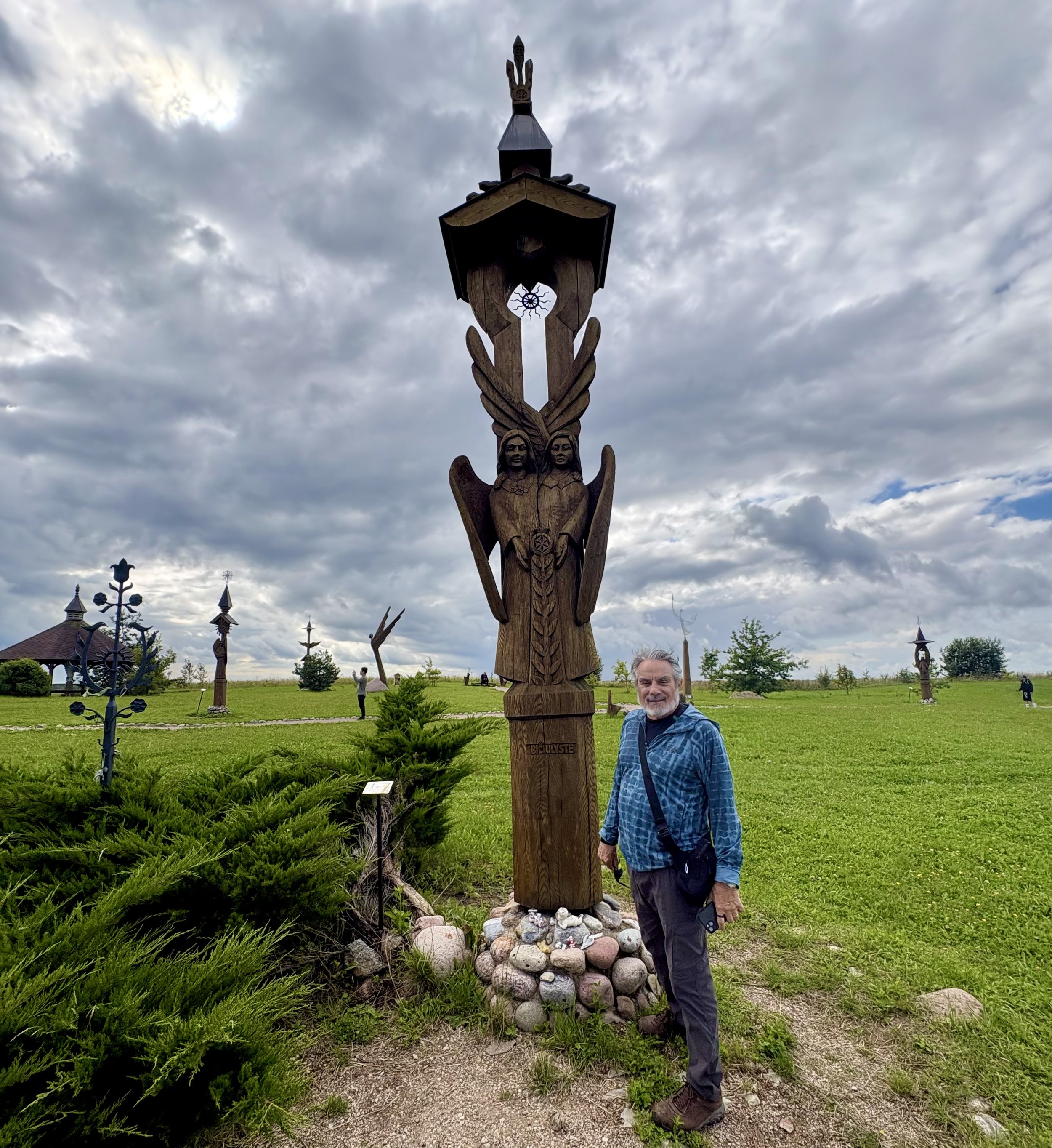
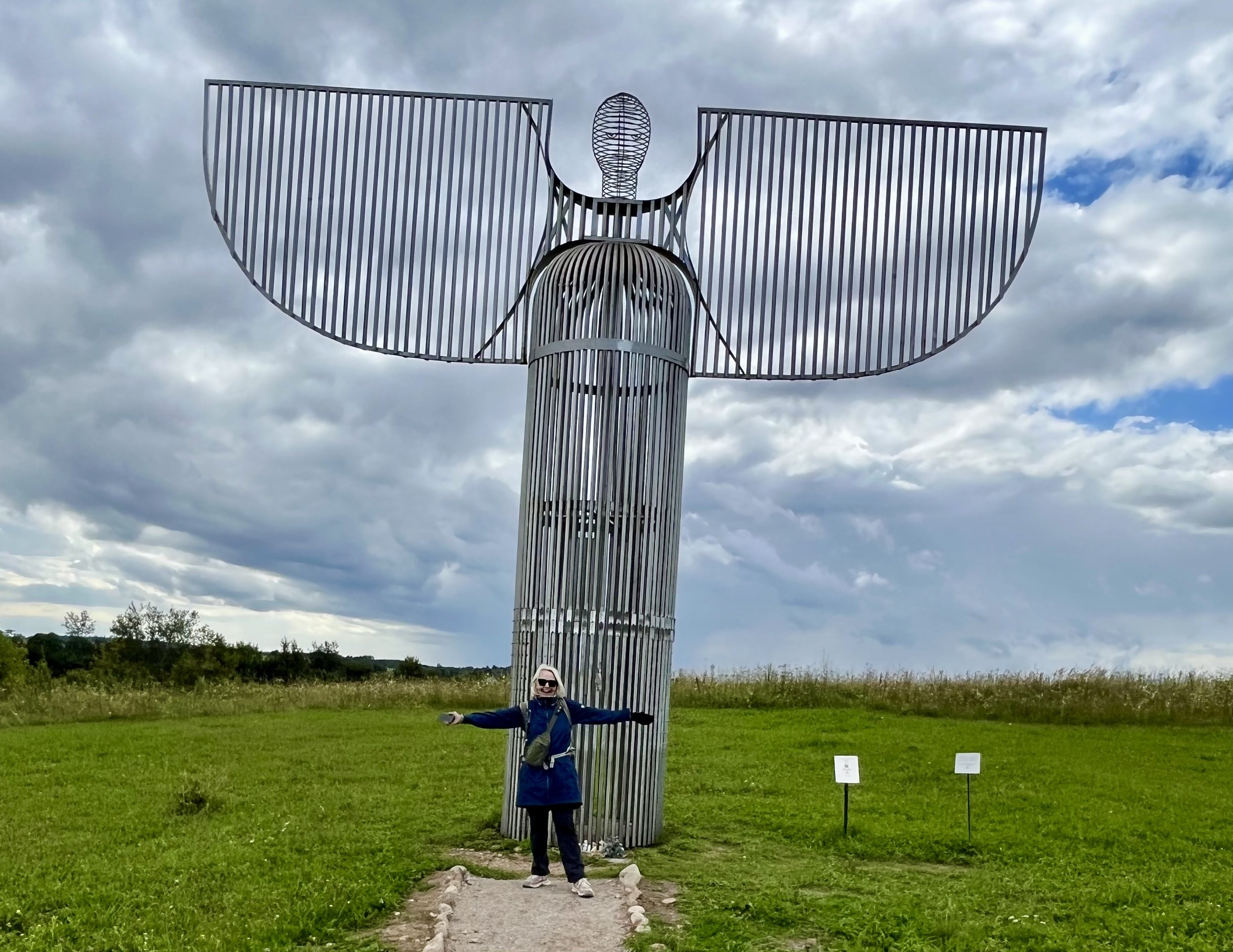
The drive back to town seemed quick. Good. We were tired. Driving we saw an unusual art piece, a large glass wall with cut outs of people holding hands. Sorry no pix. We had heard about the event that inspired this sculpture and many more in the Baltic States. They all were very proud. In 1991, 2 million citizens from Estonia, Latvia, and Lithuania clasped hands in solidarity for their quest for freedom from the Soviets. They were not in a pack, but rather a line along the roads starting in Tallinn to Riga to Vilnius.  After departing from our travel companions with hugs all around we picked up sandwiches on way to hotel and called it a night.

The Cathedral Basilica of St. Stanislaus and St. Ladislaus

Day 3

Inside the Cathedral

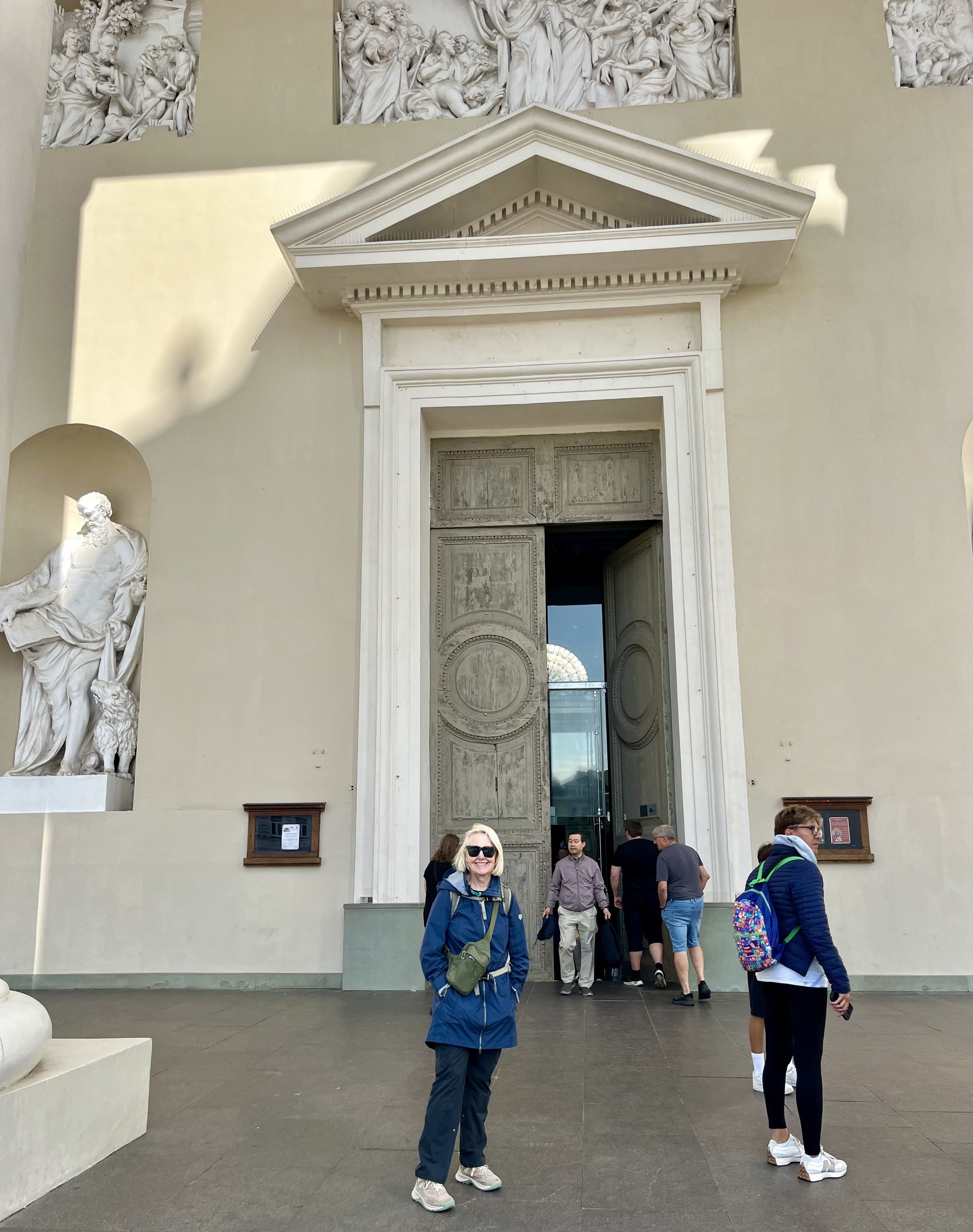
Next morning we decided to thoroughly walk the Old Town. We walked our normal route down the main drag of Gedimino Street named after their ruler from 1316-1341, and  started at the Vilnius Cathedral, The Catholic Basilica of St. Stanislaus (Santa Claus), and also the veneration of Saint Casimir.

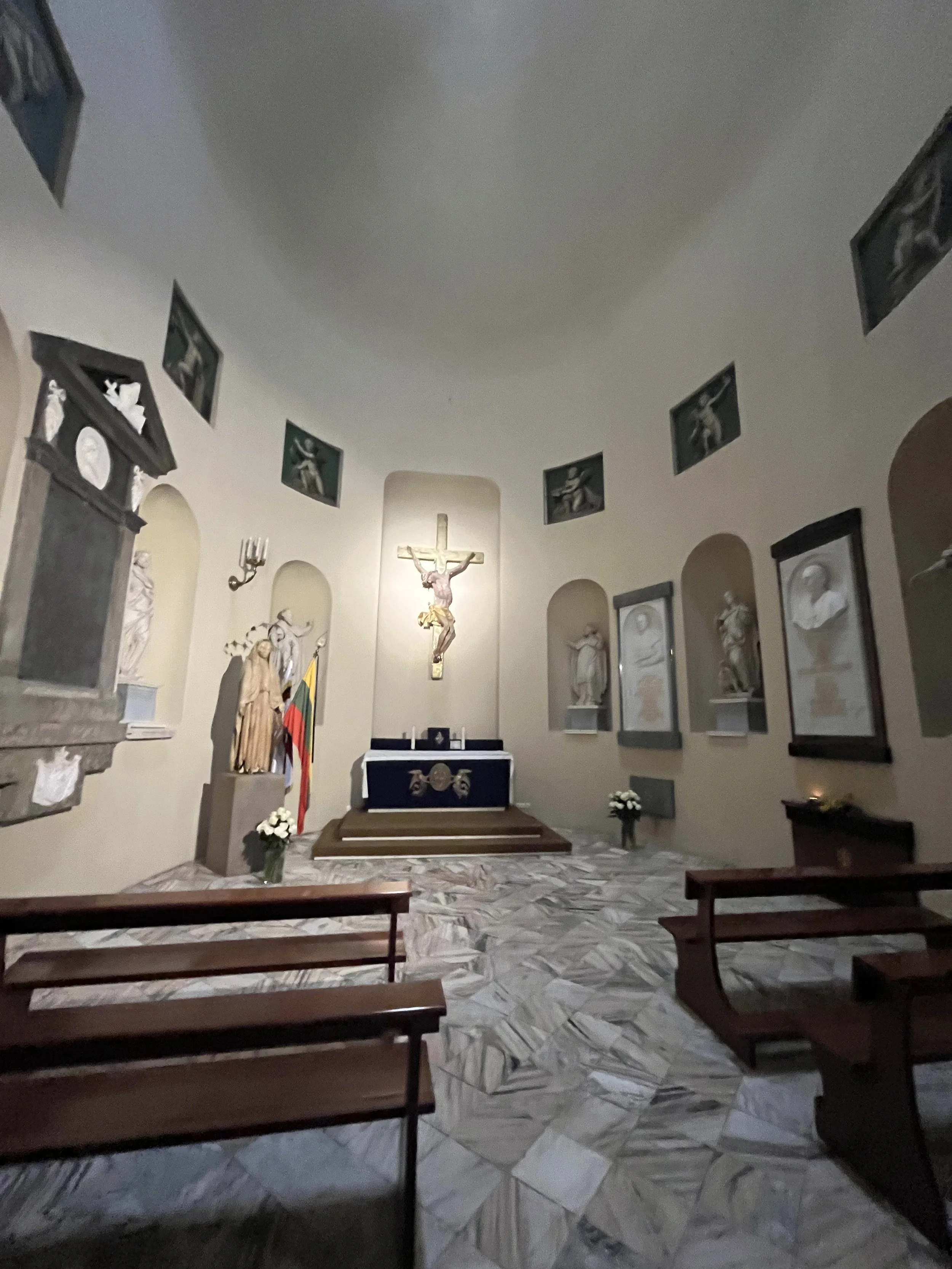
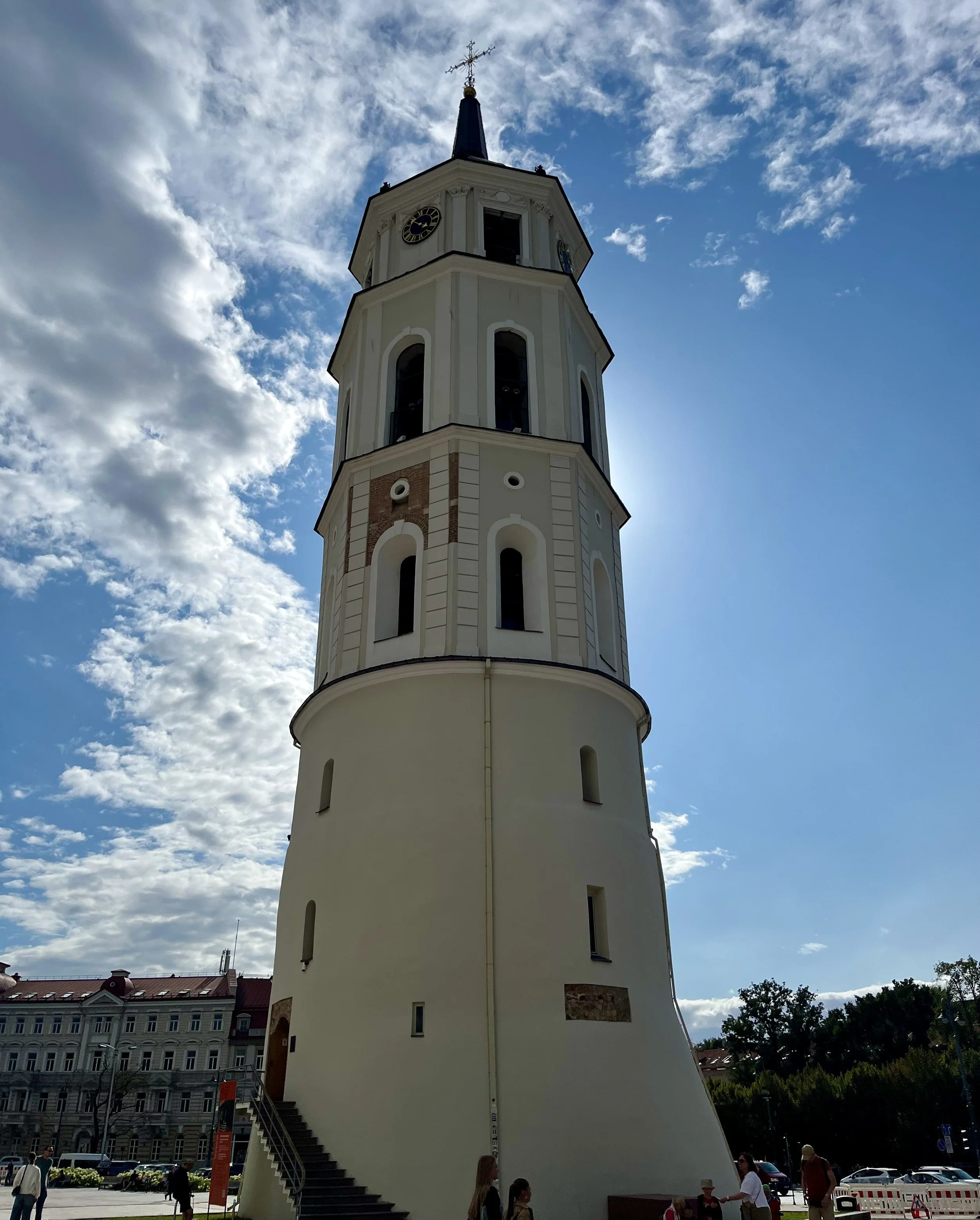
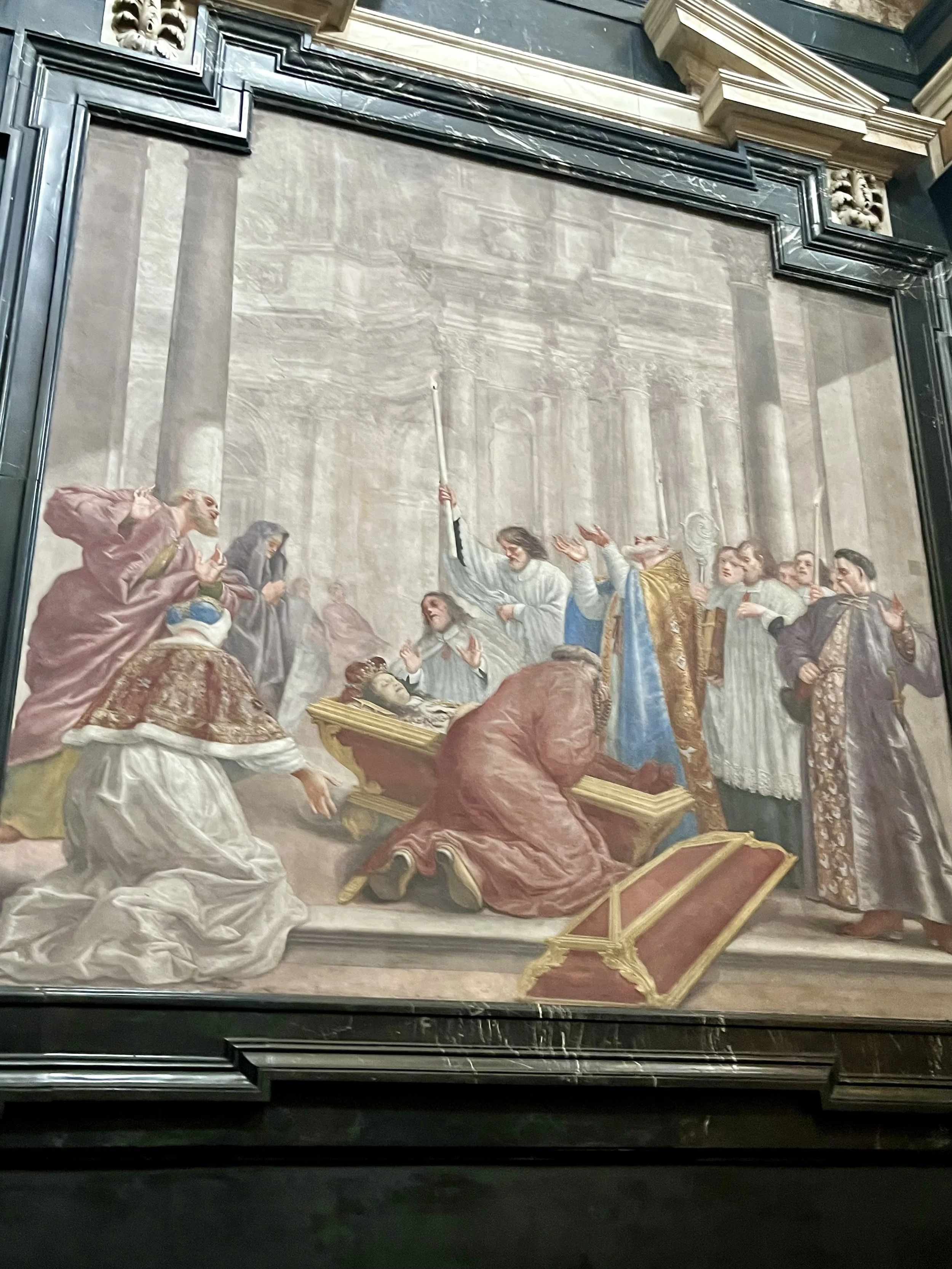
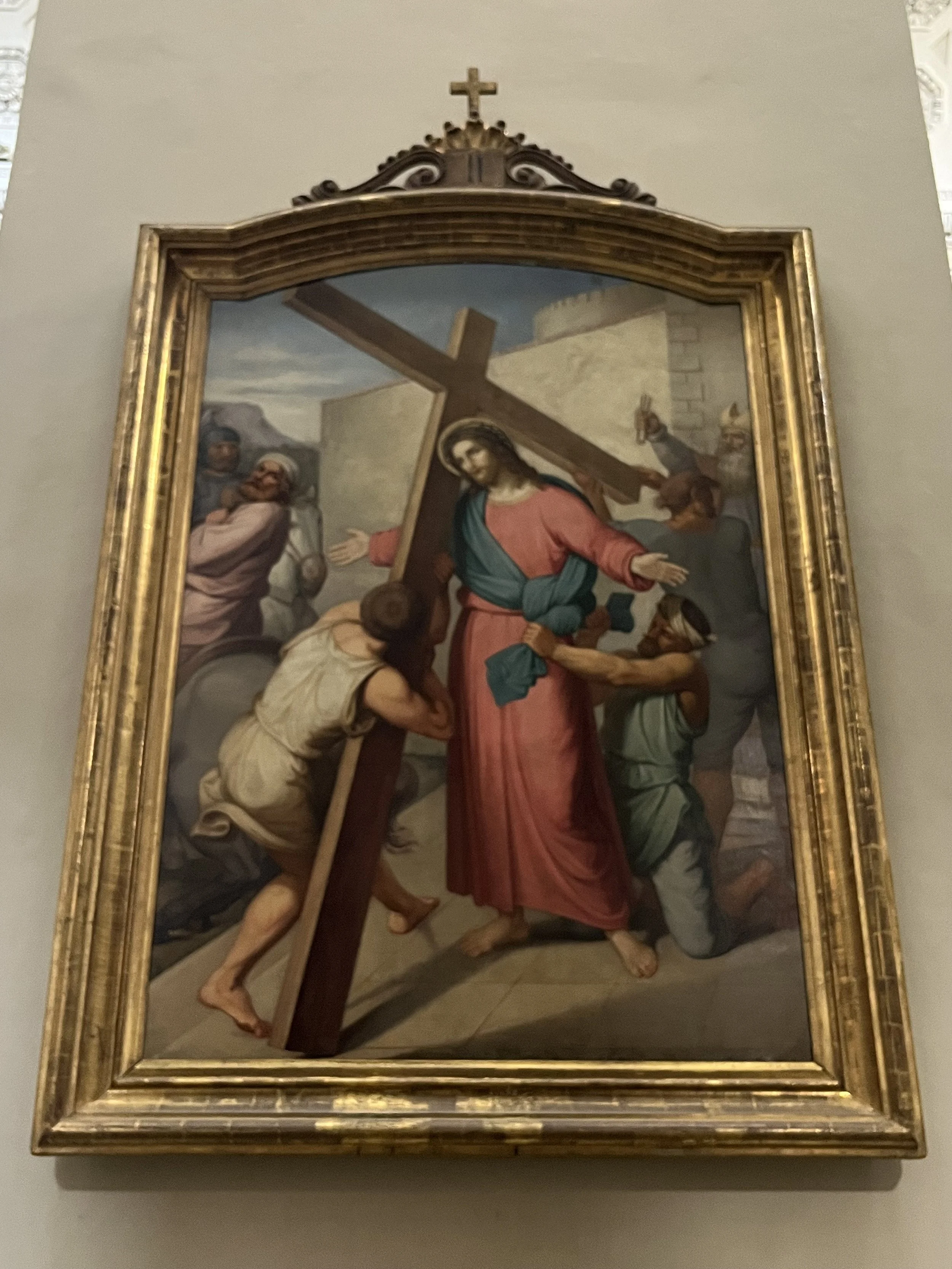
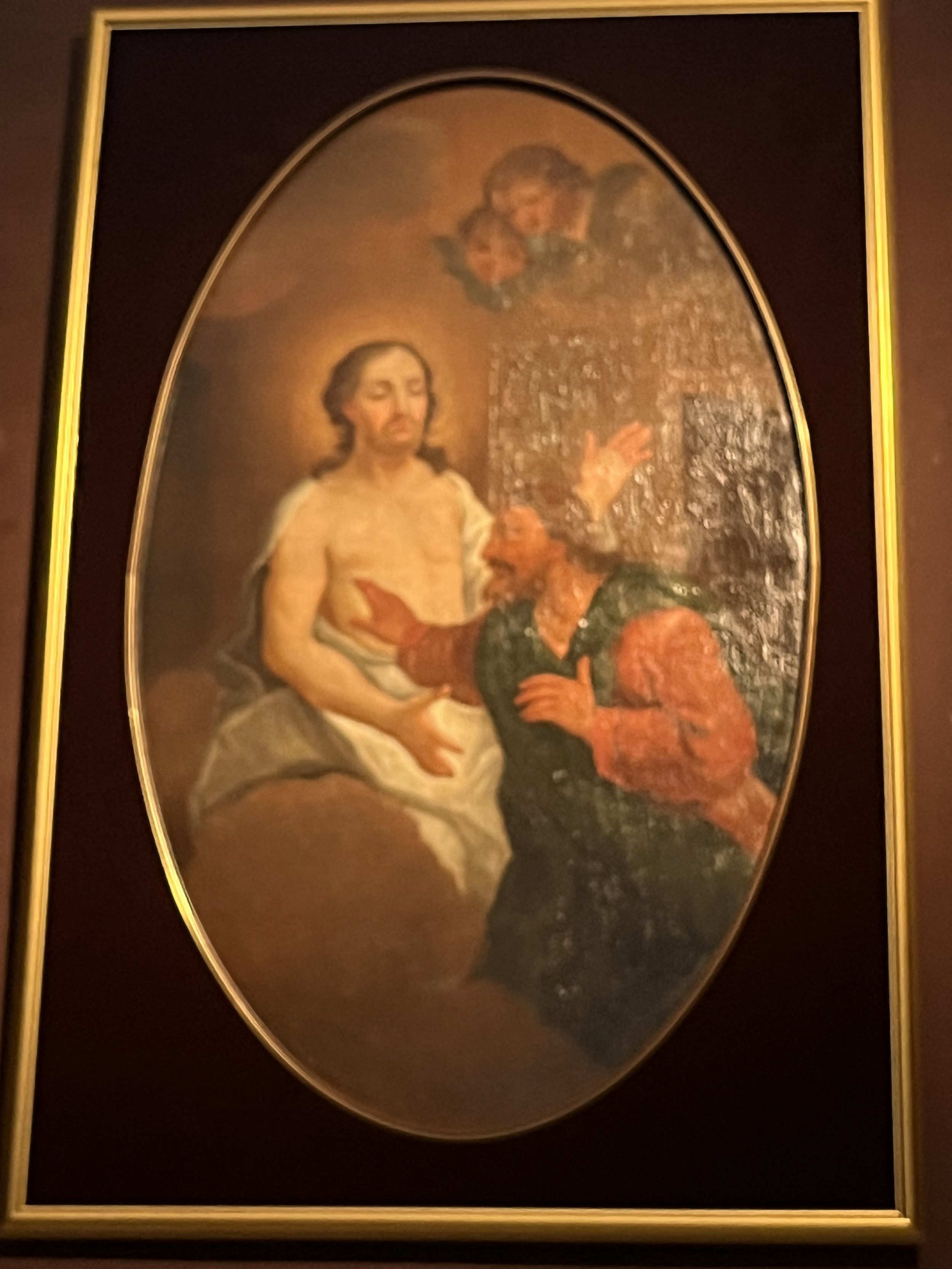
Saint Casimir is the patron saint of the state beloved by Lithuania and his image was normally manifest in military dress as a soldier who protects his state from enemies. His veneration was as early as the seventeenth century. There were many relics that bolstered his veneration held in the St, Casimir’s Chapel in the Valinius Cathedral, but removed and hidden often from impending danger. On our date of visit we observed part of the Saint’s actual arm bone displayed within precious metals in the chapel. We also had an opportunity to view the exterior and inside of this lovely Cathedral, including the separate bell tower and the statue of the Grand Duke, the fantastic Altar and Dome, the side chapels, and the religious art -particularly the painting of The Last Supper, the painting of Thomas touching the risen Jesus, and several paintings of the stations of the cross. See photos.
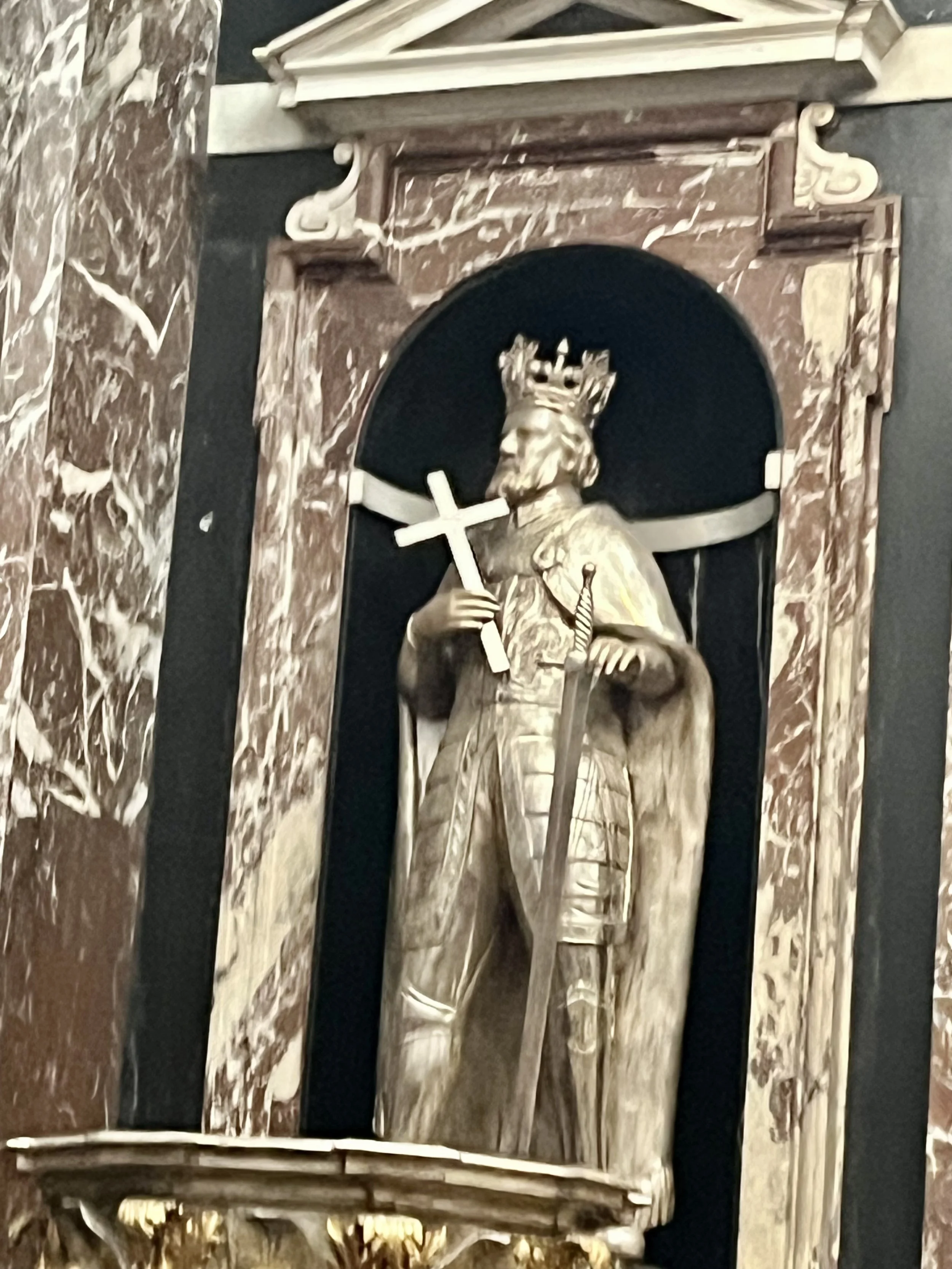
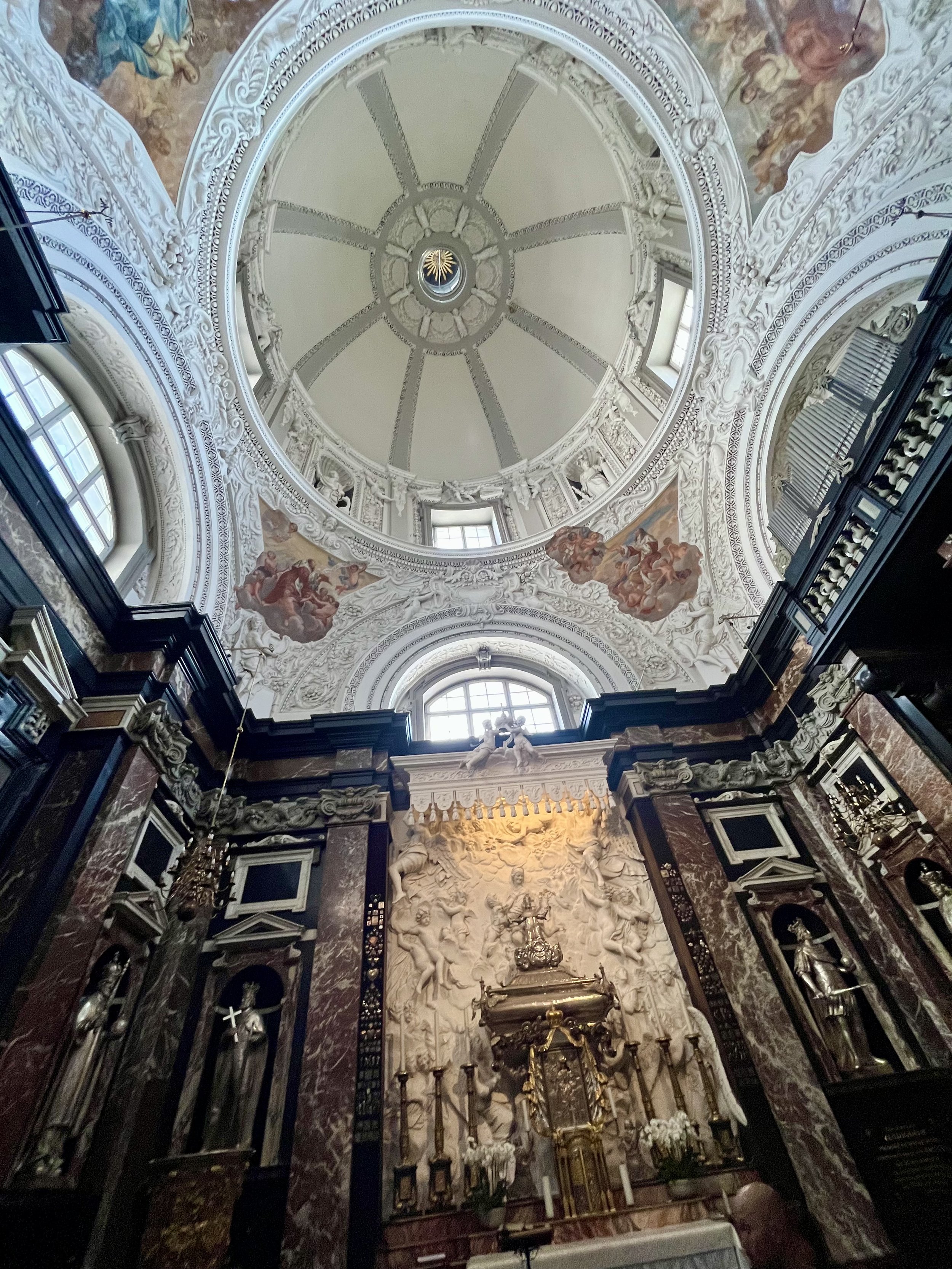
The relic, arm bone of St. Casimir

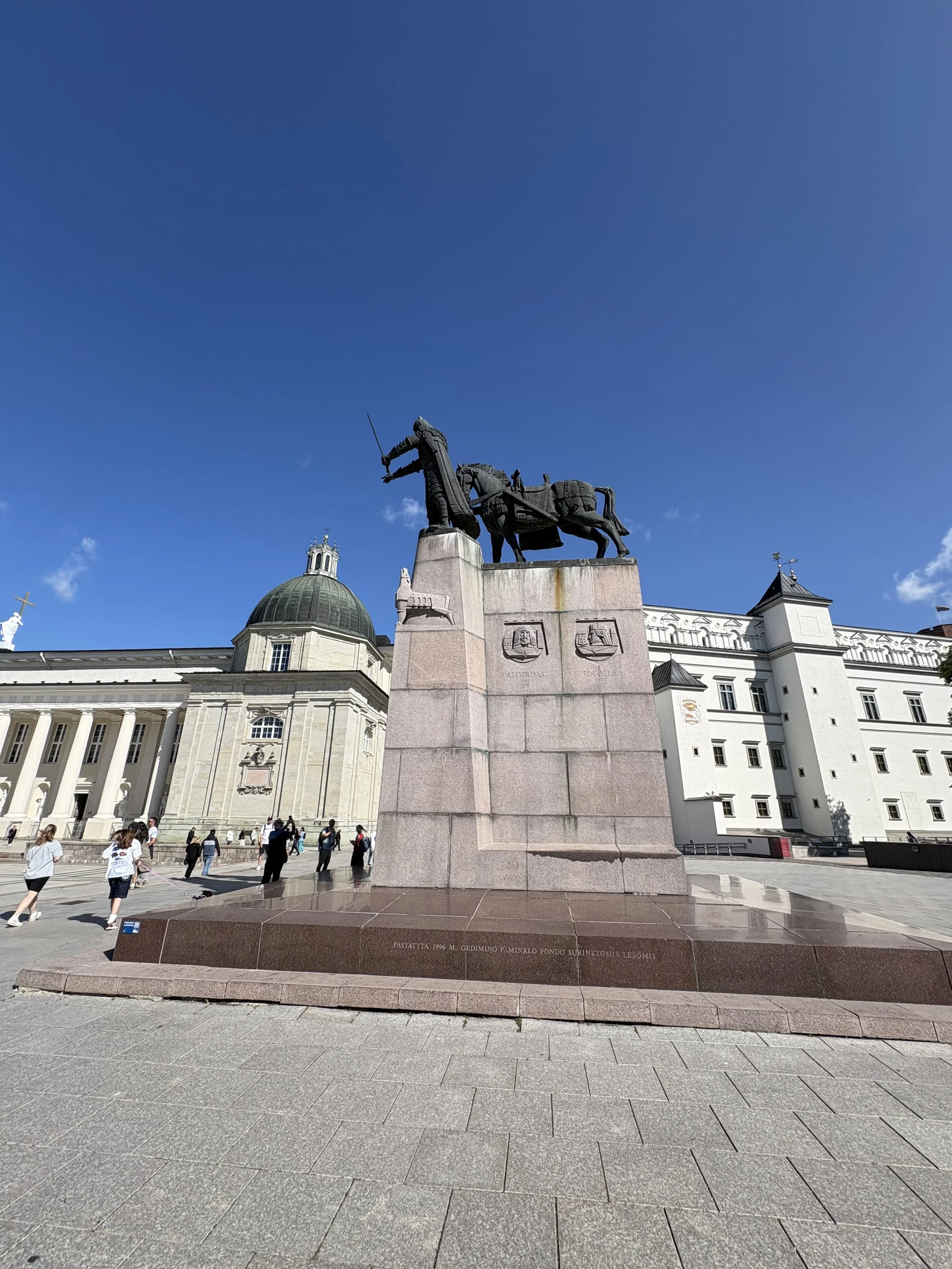
Next, we visit Kunigaikstis Gediminas Statue with war horse and baying wolf sits on a plaza next to the Vilinus Cathedral, on the spot of the original church. The story goes that Gediminas had a dream about a wolf in the nearby forest and the clergy pronounced this was a message from God to build a church on that site. Using our walking tour app, we begin a long walk towards old town, see photo’s
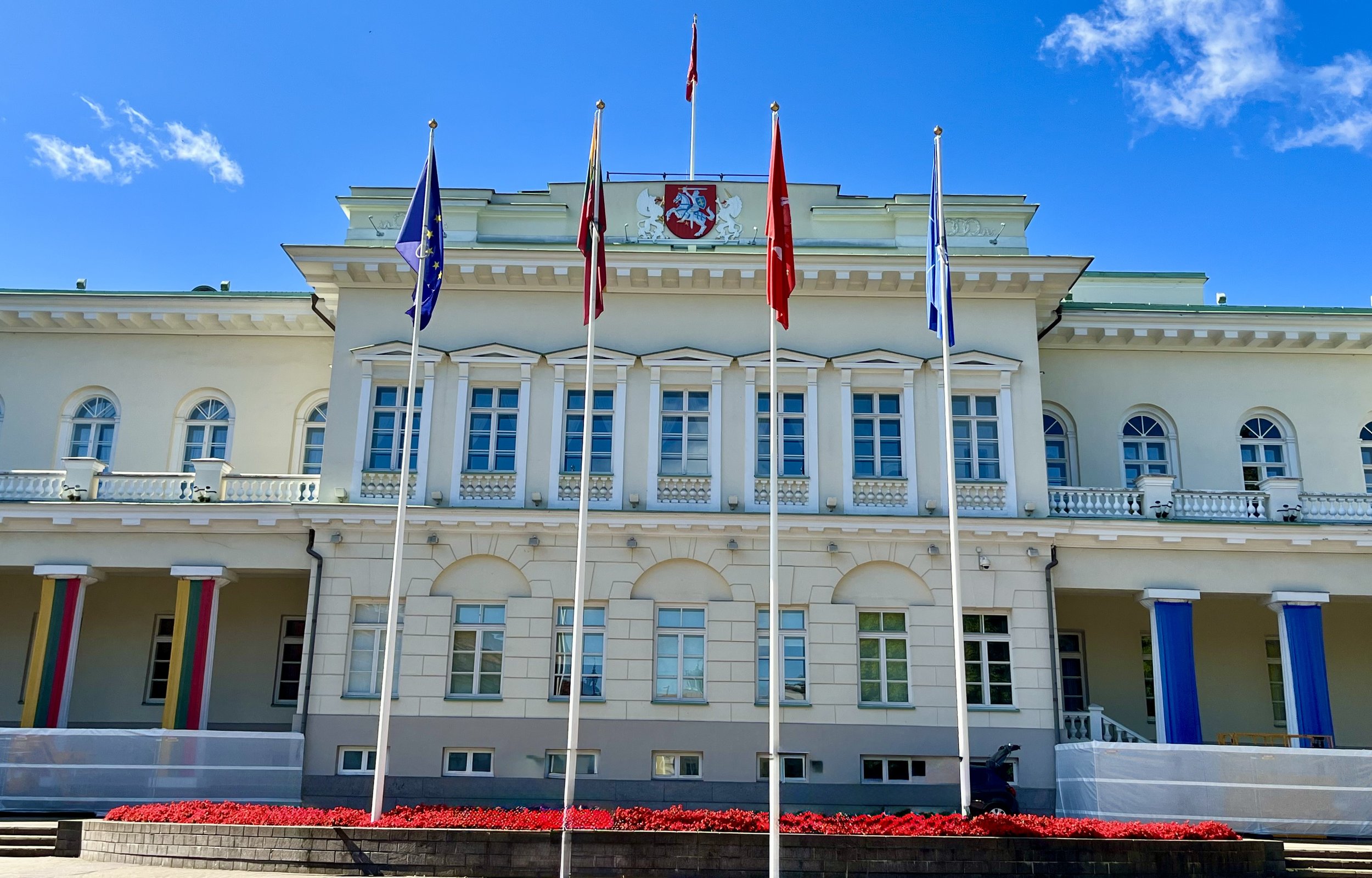
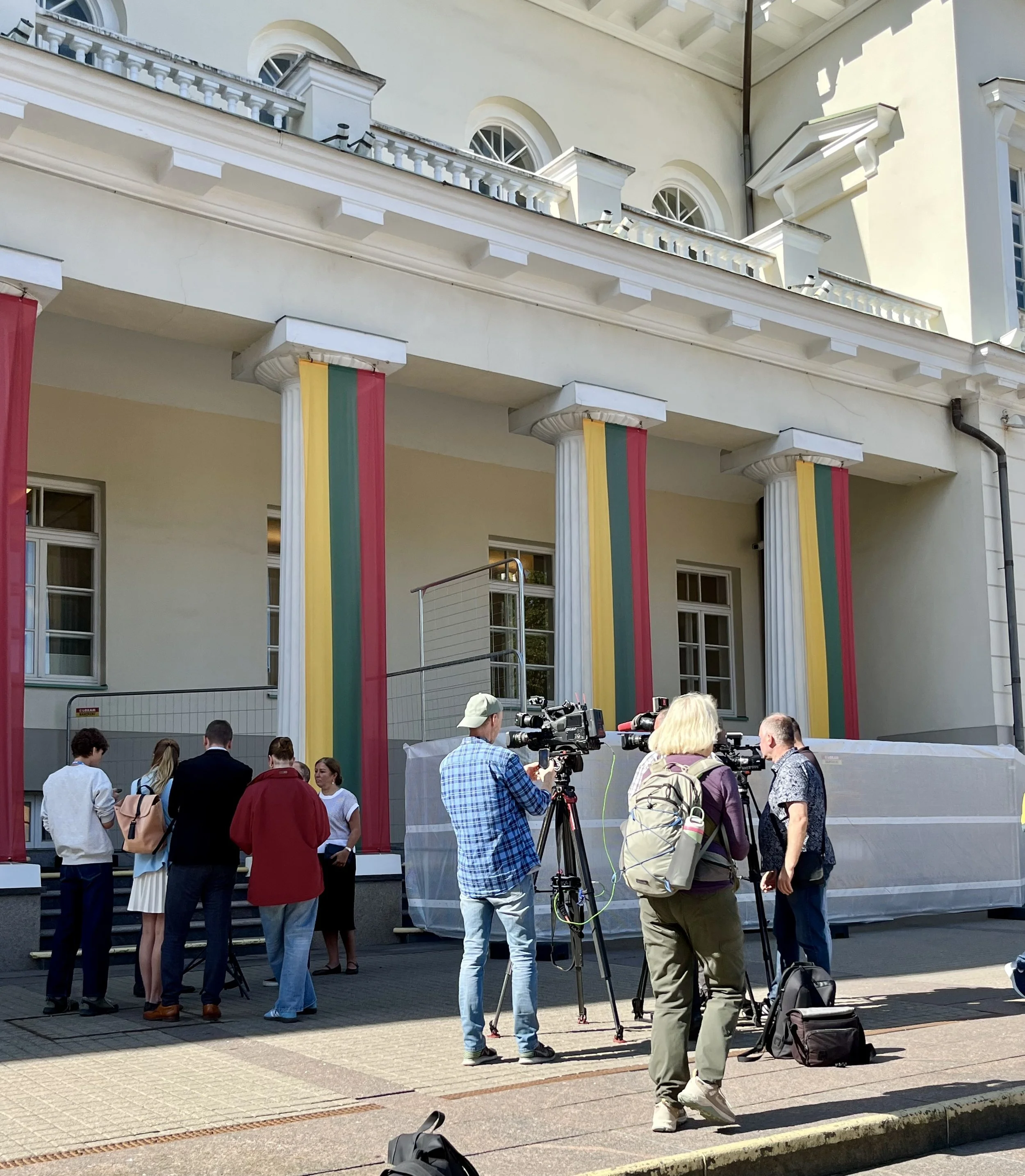
Our next major stop is the President’s residence.  It is a long two story mansion which flies the Lithuanian flag on the roof when he is in residence. Today the flag is up, along with the Lithuanian Code of Arms flag, plus the NATO, and European Union Flags. There is an interview taking place on the front steps with the press in place and look close, Janet is crashing the moment. The rear of the building has a large courtyard with columned auxiliary building and a stand-alone chess set. We continue to walk on “ Universiteto” Street and we pass by the main college building for the 4-story University of Vilnius, not fancy but functional.
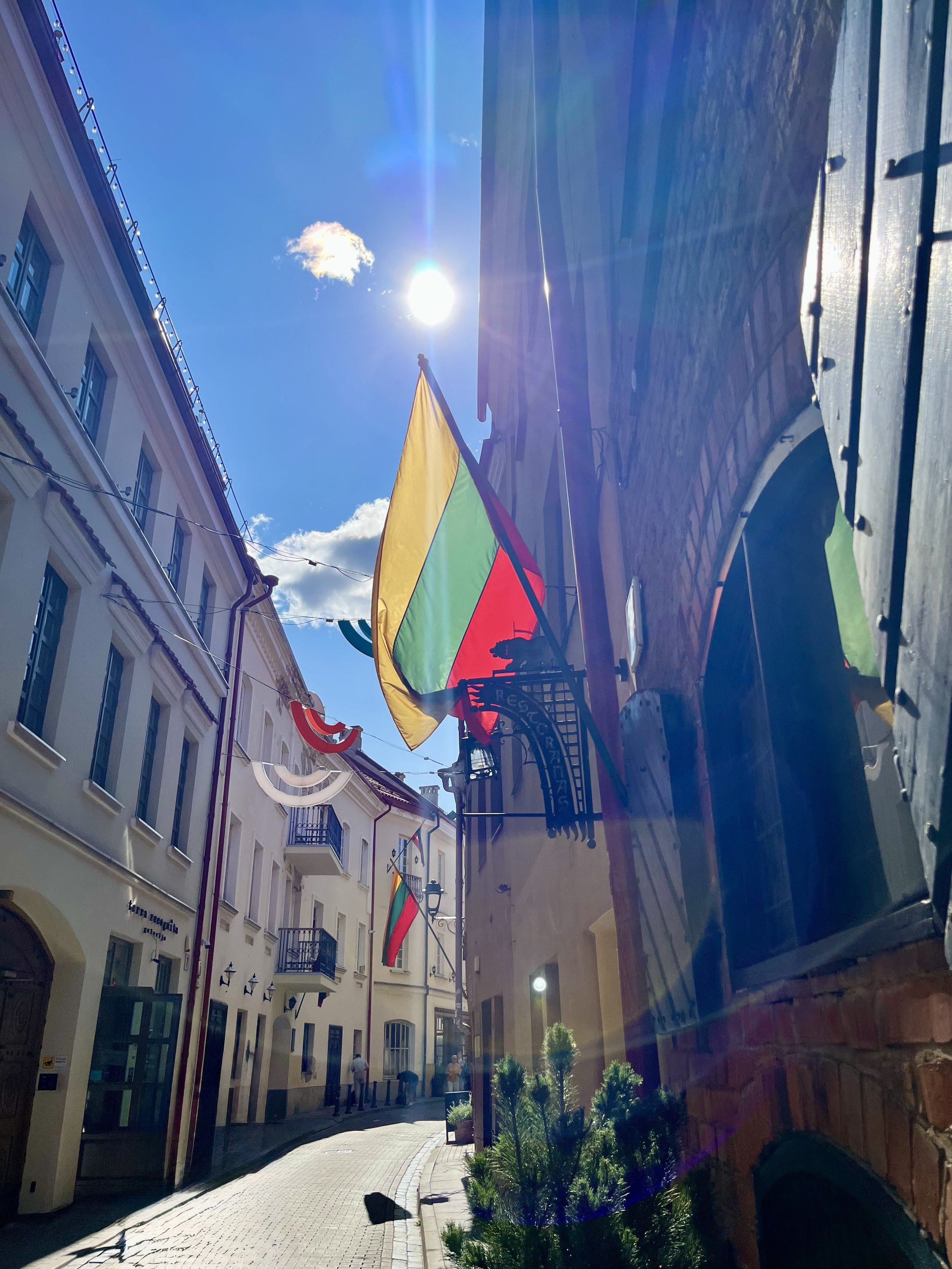
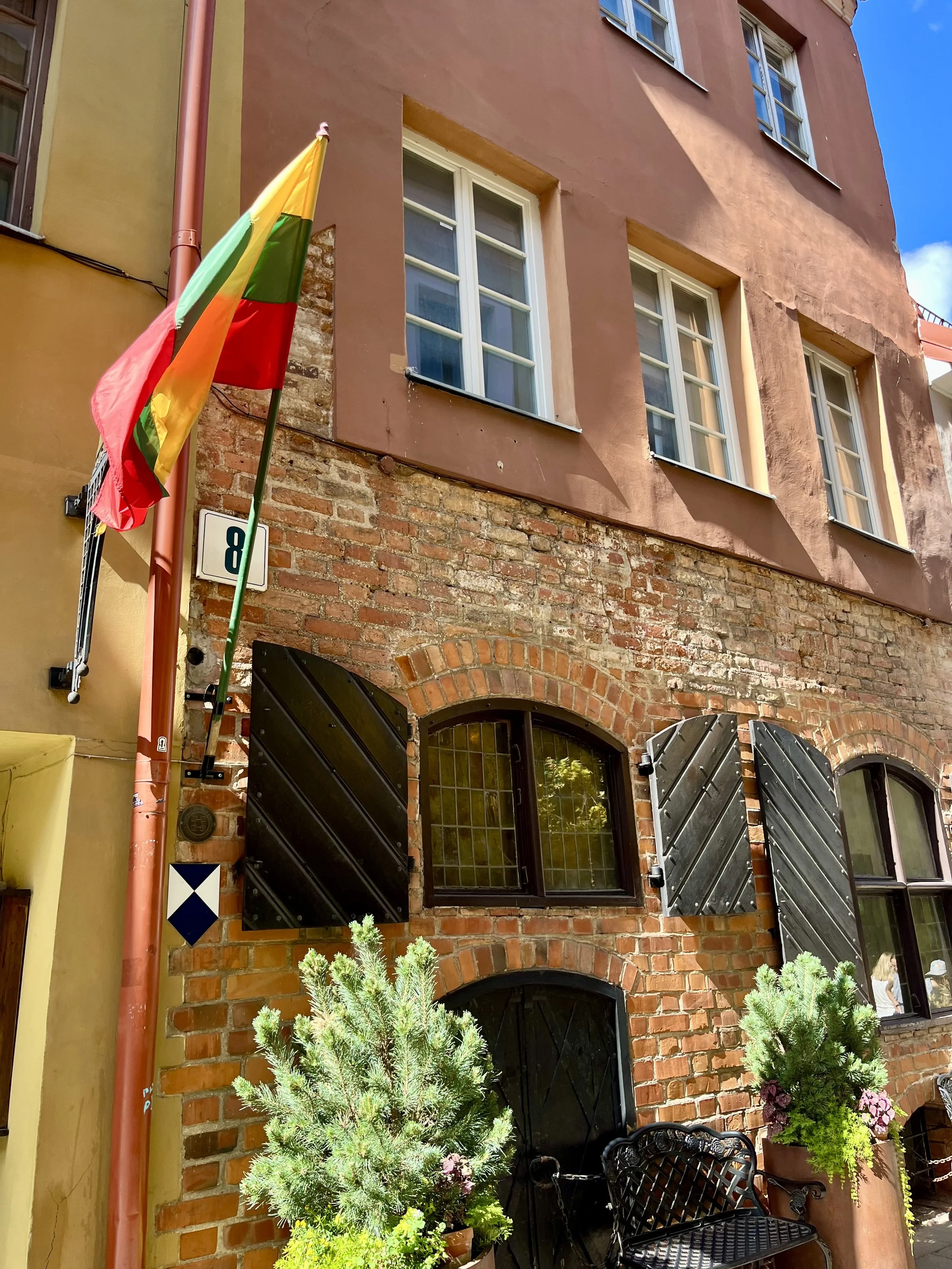
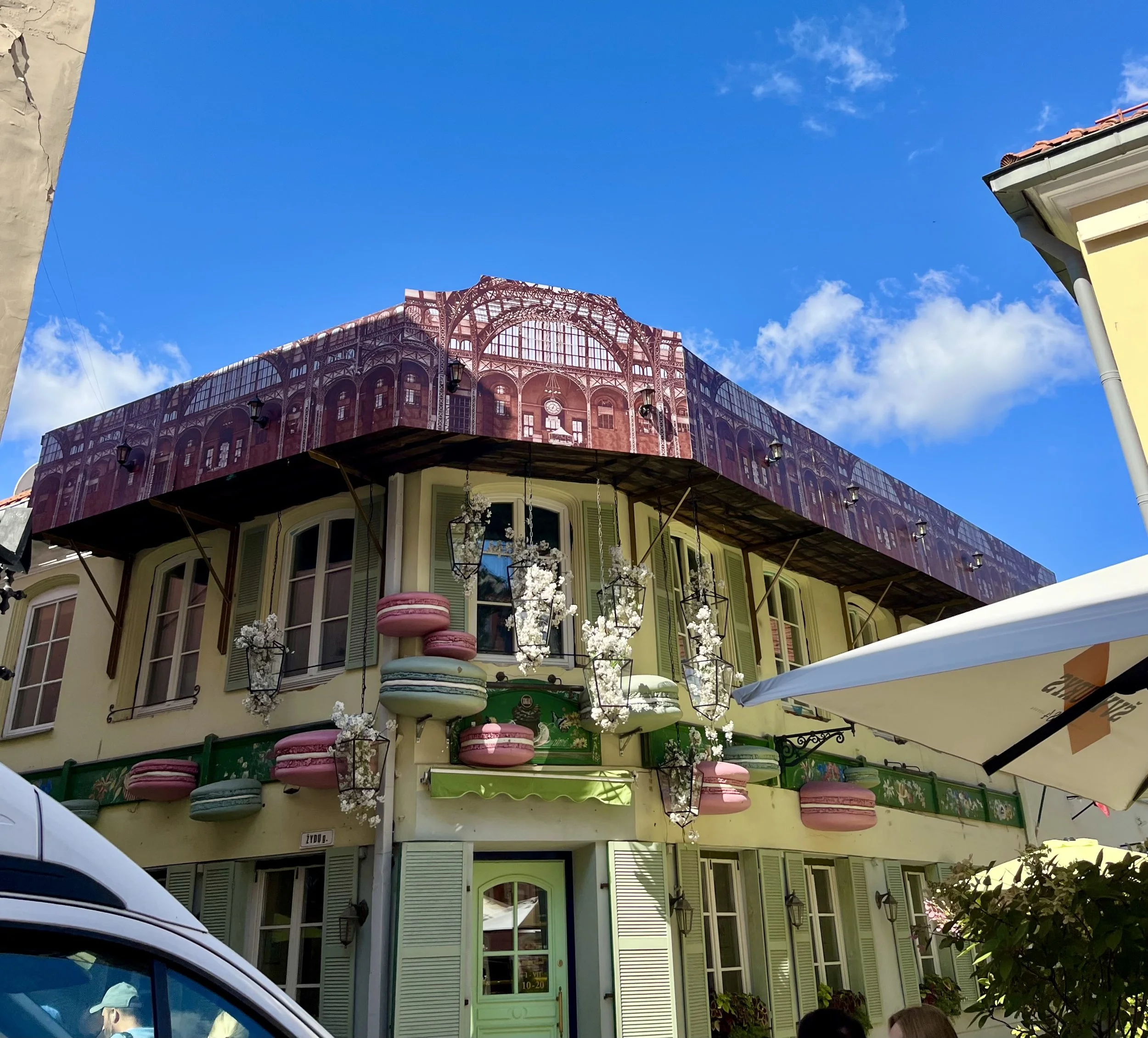
Next we enter the historic Jewish quarter. Historically, the Dukes of Vilnius had solicited the Jewish community of Europe to move to Lithuania to help grow the merchant business and build business acumen. Walking passed the University building, a plaque is found on a rather non-descript building stating, “ This building constructed in the 16th century served the Jewish community for 80 years prior to 1941as a house of prayer.”  A grey painting of a man marks this entrance of the Jewish quarter on “Stikliai” street. As well as residences and schools, the Stikliai Hotel of Vilnius stands and is lovingly still in use. The hotel displays interesting street art including two   blind-folded musicians dancing and then another painting over the entrance of the same musicians blowing with their instruments a huge bubble that hold pertinent images. Very unique. As we continue to walk, this old street displays flowered balconies and flags, certainly a neighborhood well loved. See Photos.
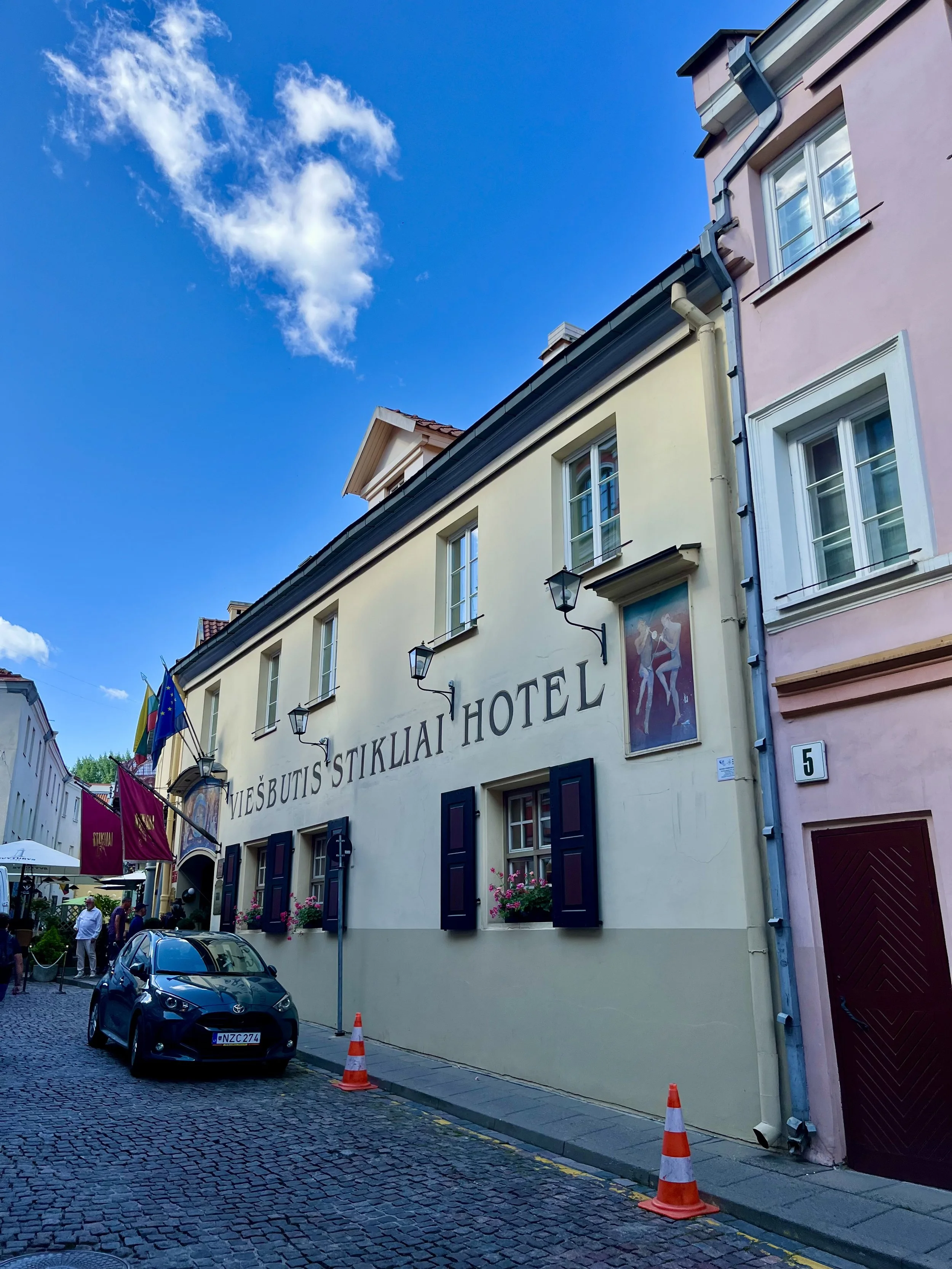
Then, another plaque comes into view, “VILNIUS GHETTO” with a map of the “Small Ghetto” 9/6/1941–10/2/1941(9,000) and “Large Ghetto” 9/6/1941-9/24/43 (30,000). The plaque reads:

“On 24 of June 1941, Vilnius was occupied by German troops and from the early days of Nazi occupation, the remaining Jews in the city were persecuted and murdered: by September 1941 several thousand Jews had already been murdered”.

“By the end of 1941…about 30,000 Vilnius Jews were killed in Panerial Forest, located outside the city. During the mass killing actions, all residence of the small Ghetto were killed and this ghetto ceased to exist. … In early July 1944, with the Red Army approaching Vilnius, however, the last remaining Jews in Vilnius were killed. Only about 2000-3000 Vilnius Jews of 58,000 survived the Nazi Occupation.”

All these Baltic states have faced one tyrannical regime after another spanning centuries. But they have endured, and most recently in 1991with the relinquishment of Soviet domination they all seem to be thriving as they smartly turn to the western democracies for economic opportunity, governmental stability, and national defense. Some of the Baltics, Estonia for sure, are from our brief experience more militant in their thinking and rhetoric against the Soviets before and the Russians now. Lithuania, however, seems more reserved as it has over 20% Russian speaking citizens that resulted from the Soviets encouraging the movement of Russians and that culture during their occupation. Does this not portend the same playbook of Russian aggression as in Ukraine with a high population of Russians in the Donbas Region? You don’t think its possible until it happens. The Baltics believe it and that’s why they have invested 5% of GDP in defense as NATO members and have mandatory military training. One more note, we have been told by other travelers that the KGB Museum in Lithuania is far more repugnant than the other exhibits we have visited—so we decided not to go there. 

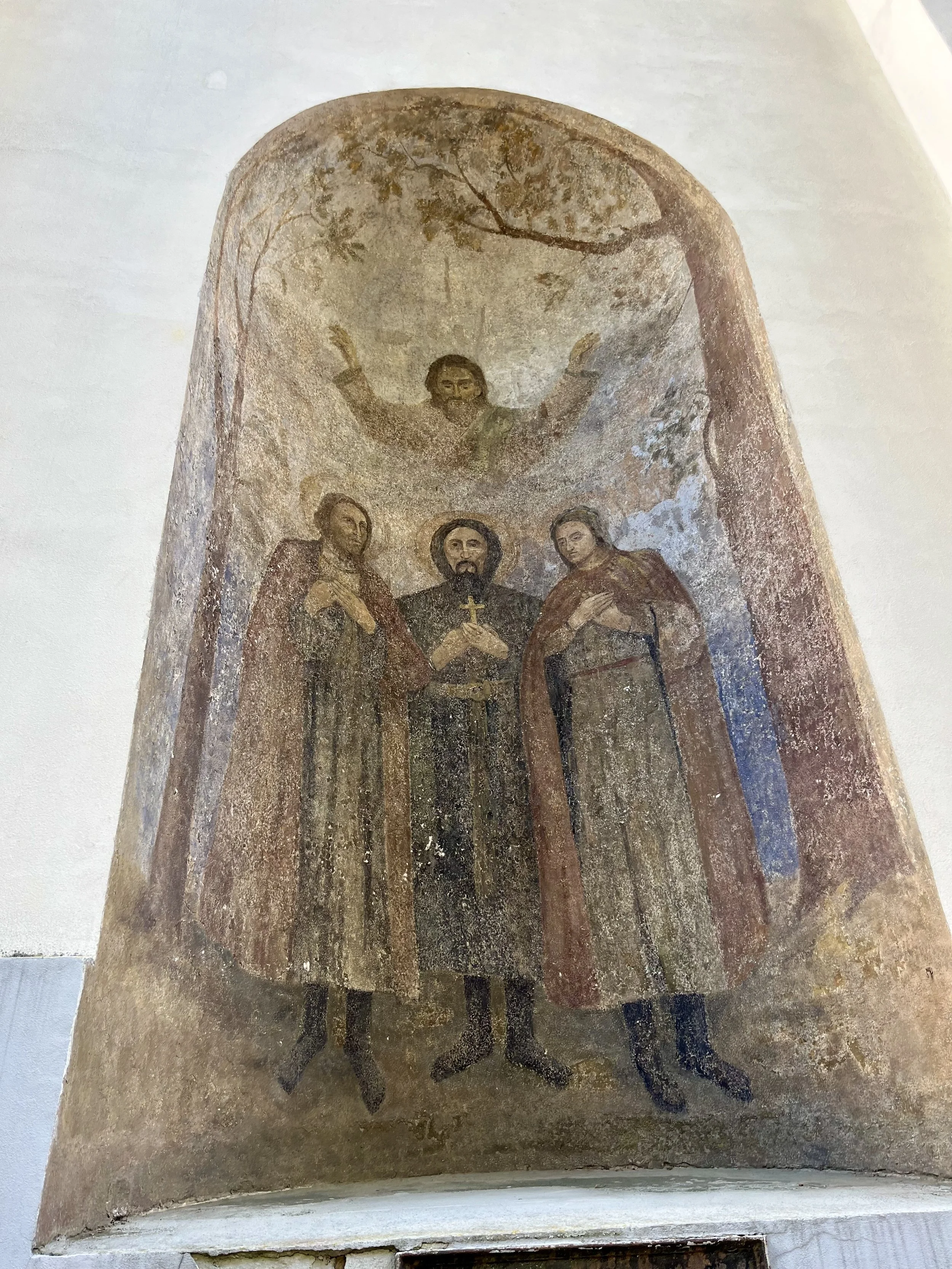
As we continued our walk we came across the “Greek Catholic Church of the Holy Trinity”, built in 1514 by the Grand Duchy of Lithuania in appreciation of the victory of the Polish-Lithuanian forces over the Muscovites (Russians). Interesting to us because Catholic not Greek Orthodox, and it was clear the interior was just getting restored, so we entered. See Photos.
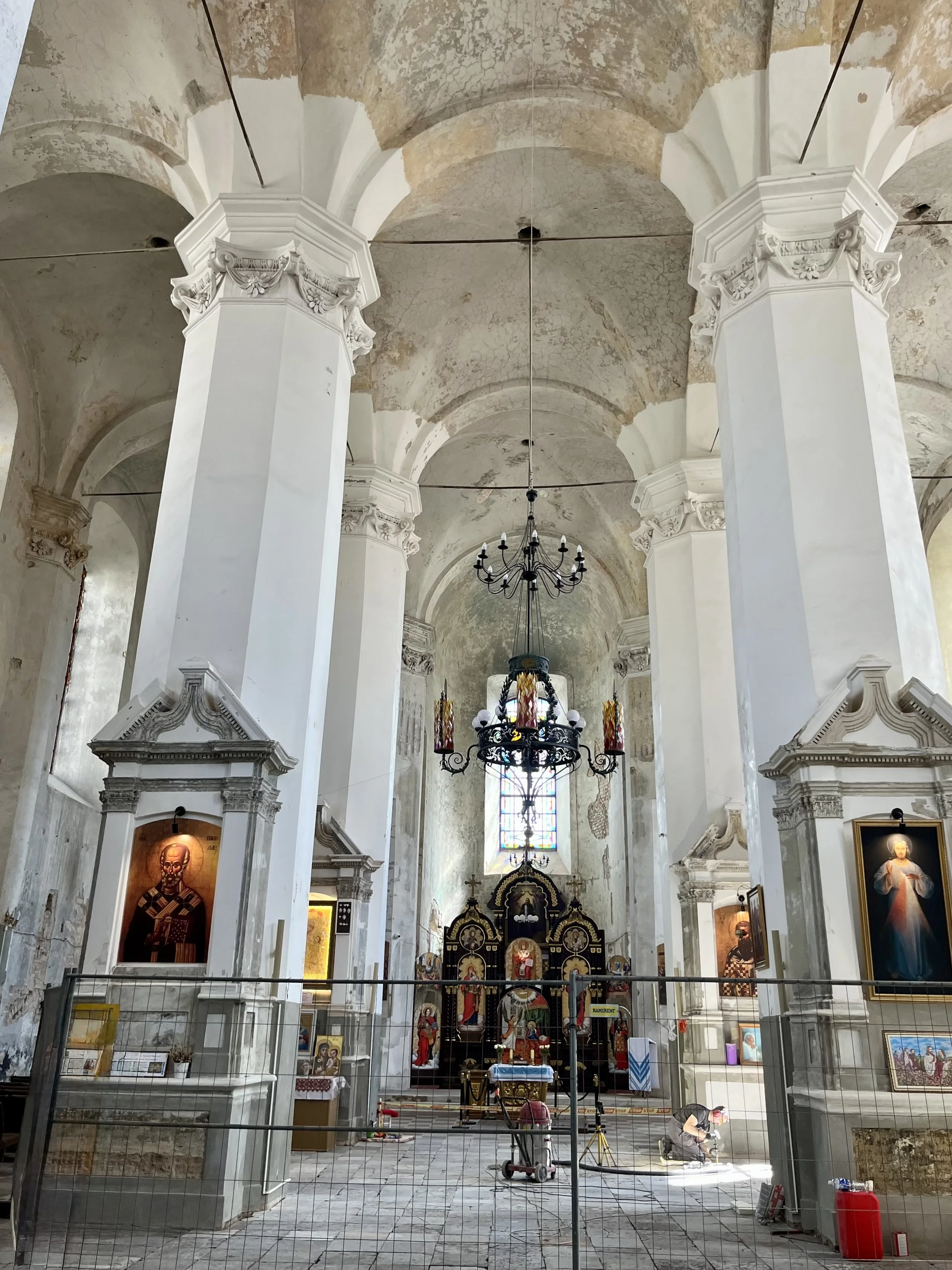
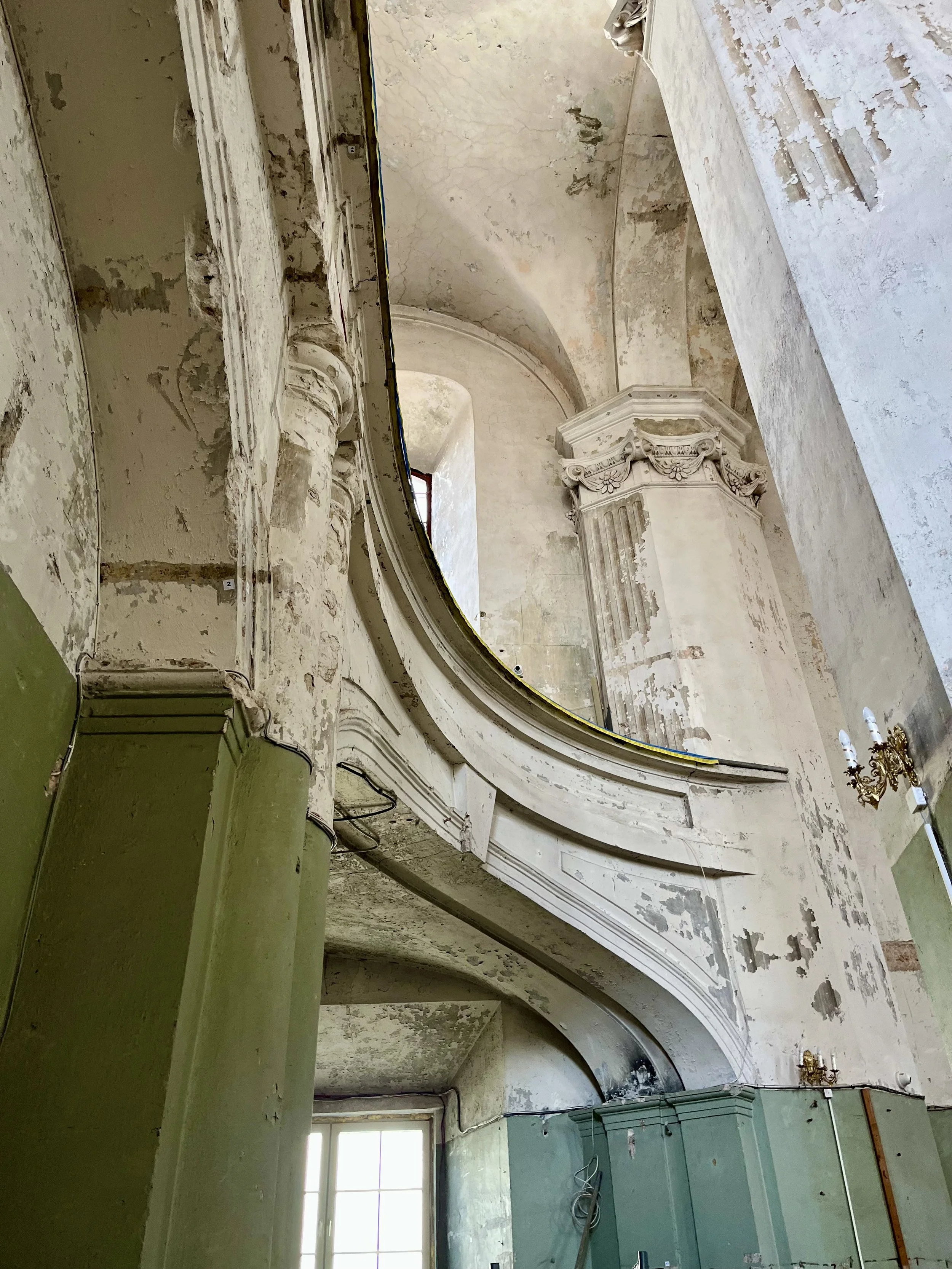
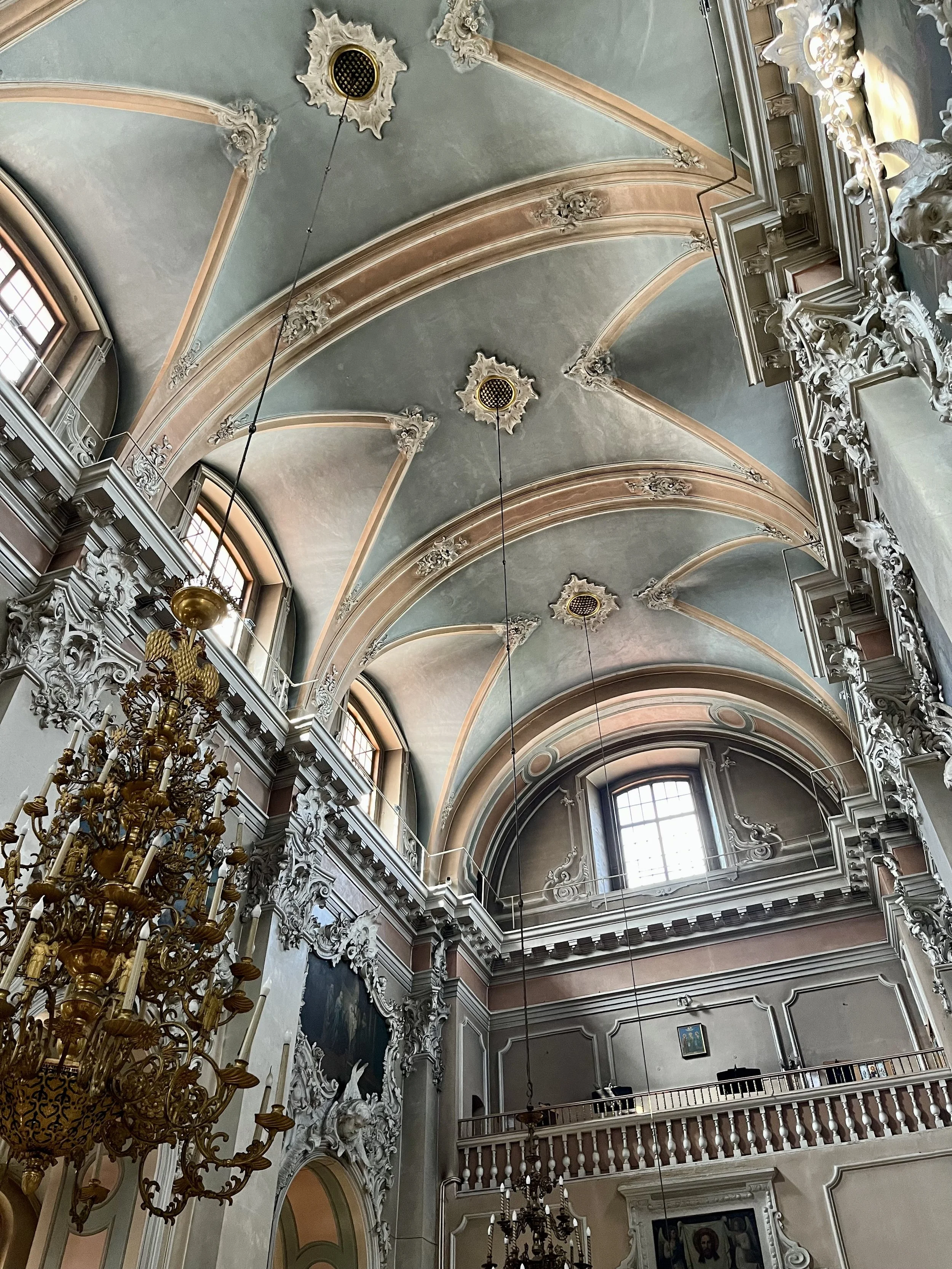
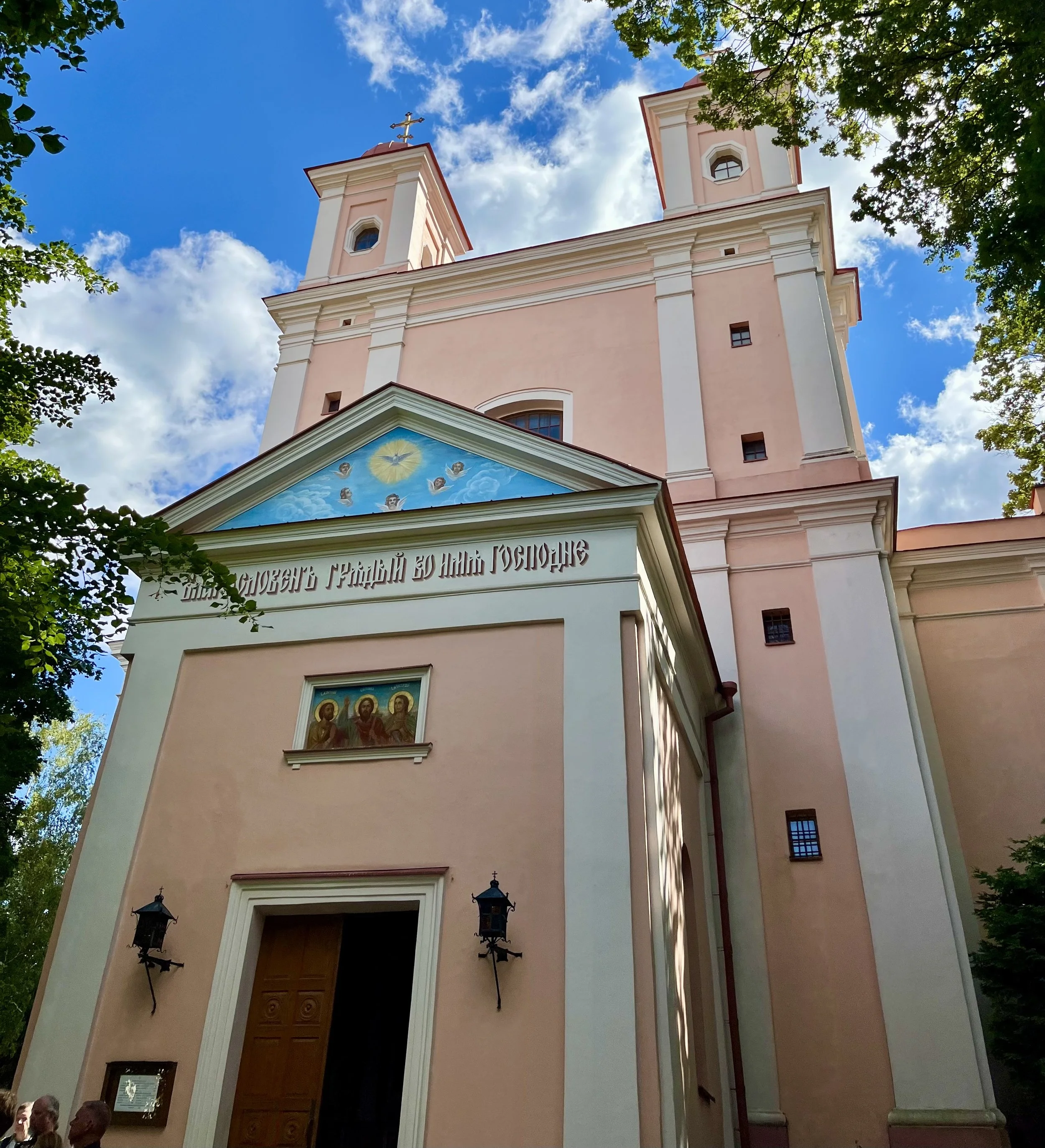
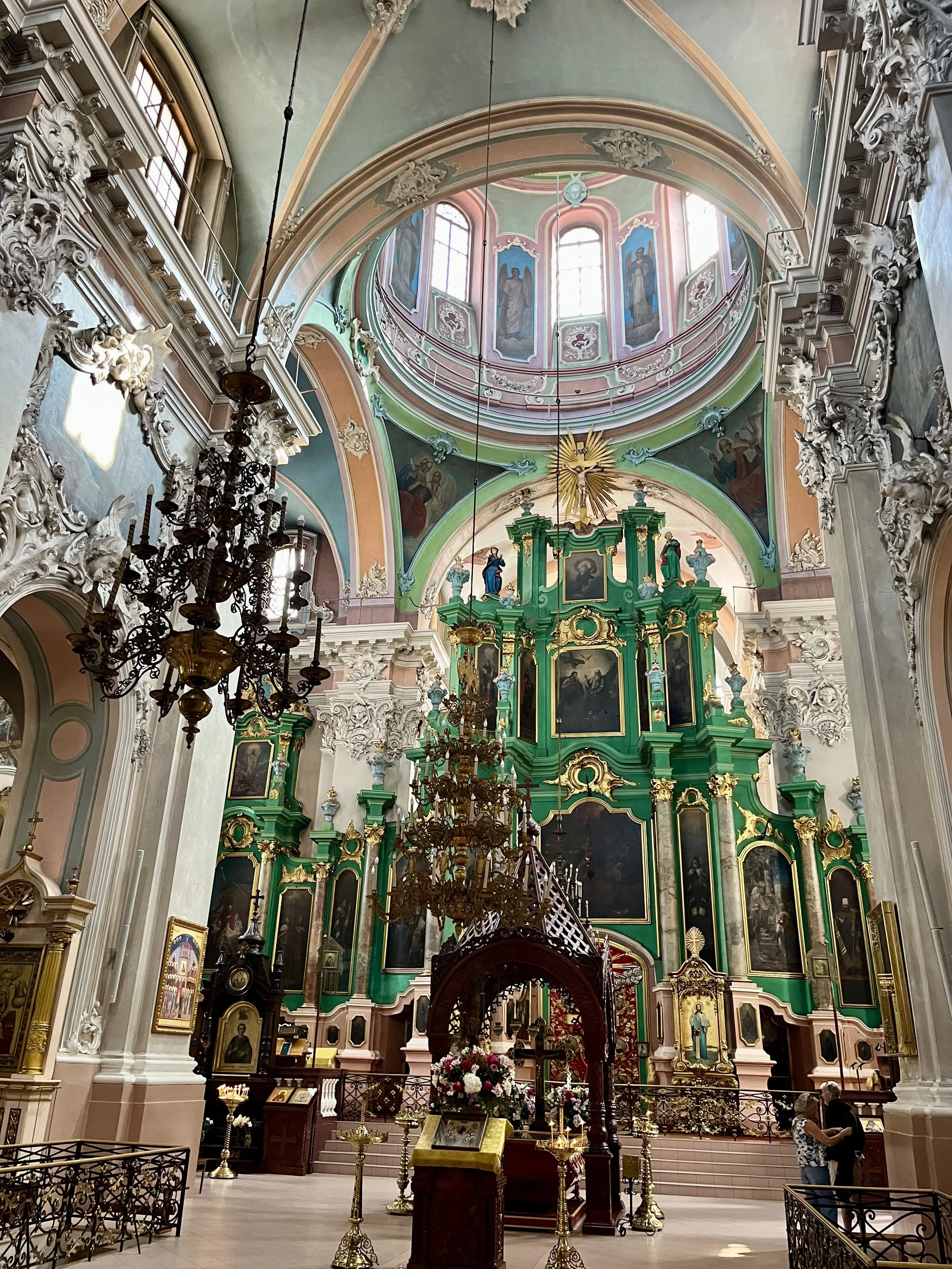
Around the corner another church had been built in 1638 named “The Orthodox Church of the Holy Spirit”. This church was Orthodox not Catholic and fell under the authority of the Patriarchate in Russia. The structure on site, subject to fires, was rebuilt in late 1700’s. It is very ornate with Baroque style columns, moldings, and sculptures. See Photos.
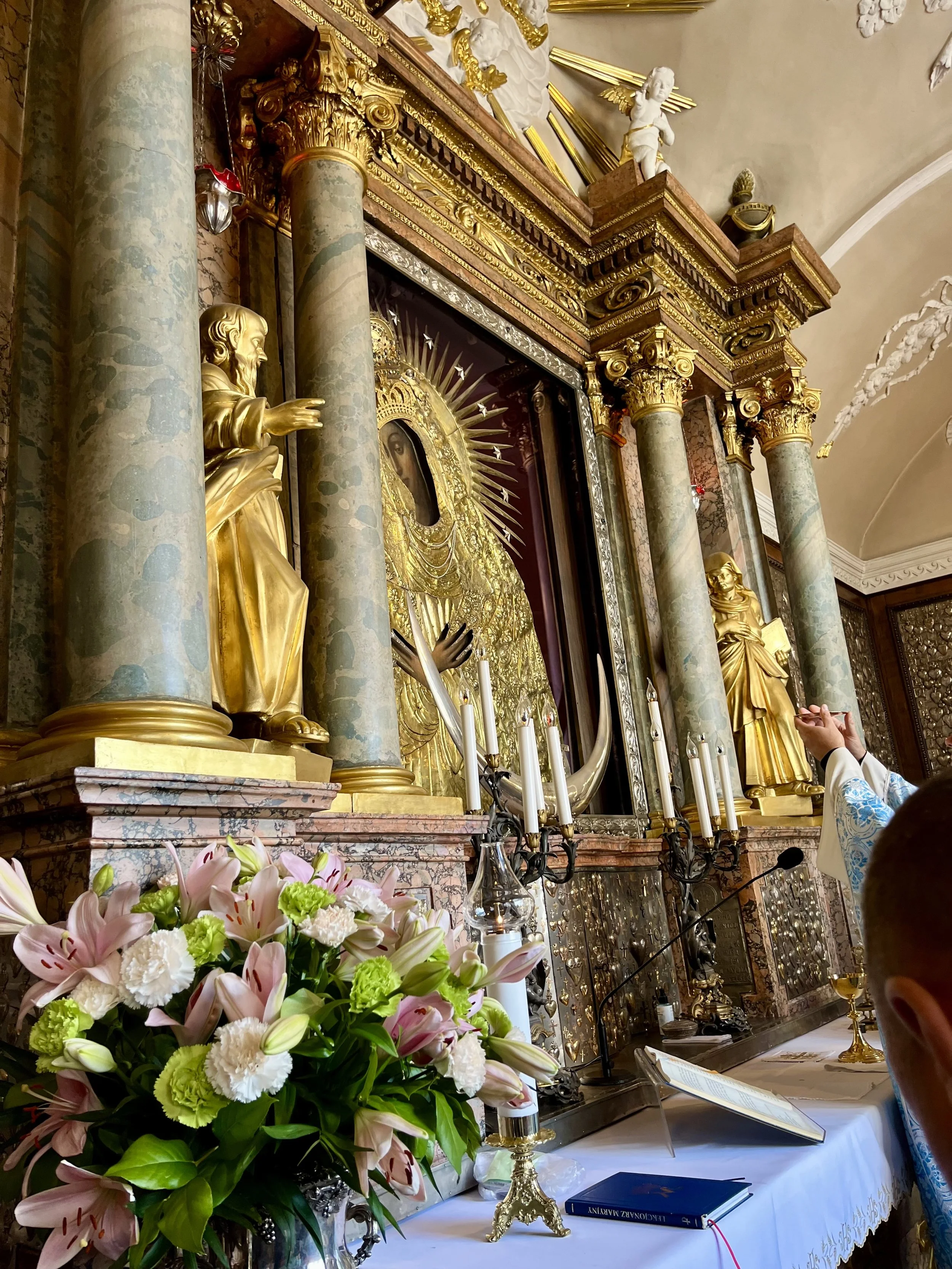
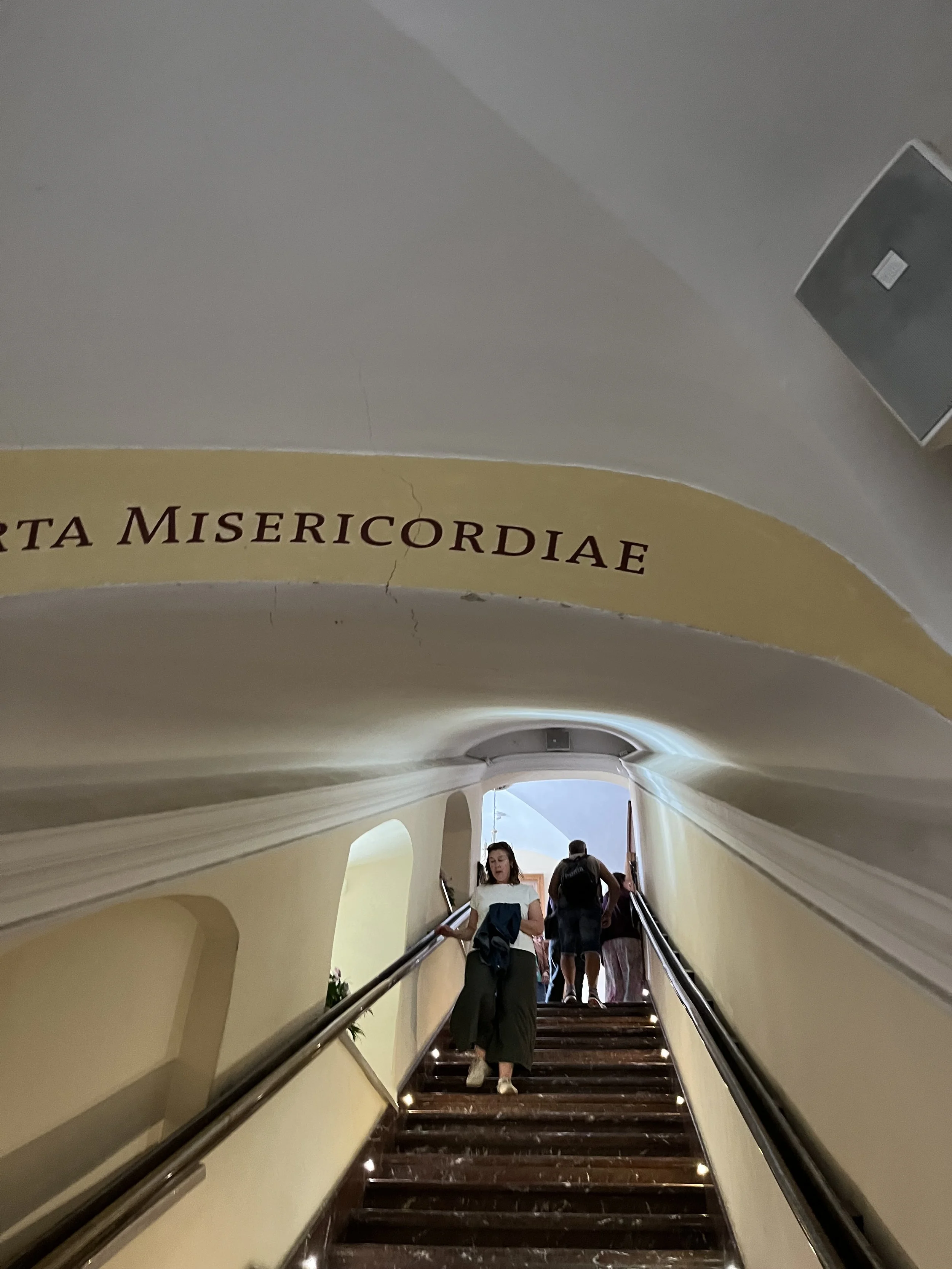
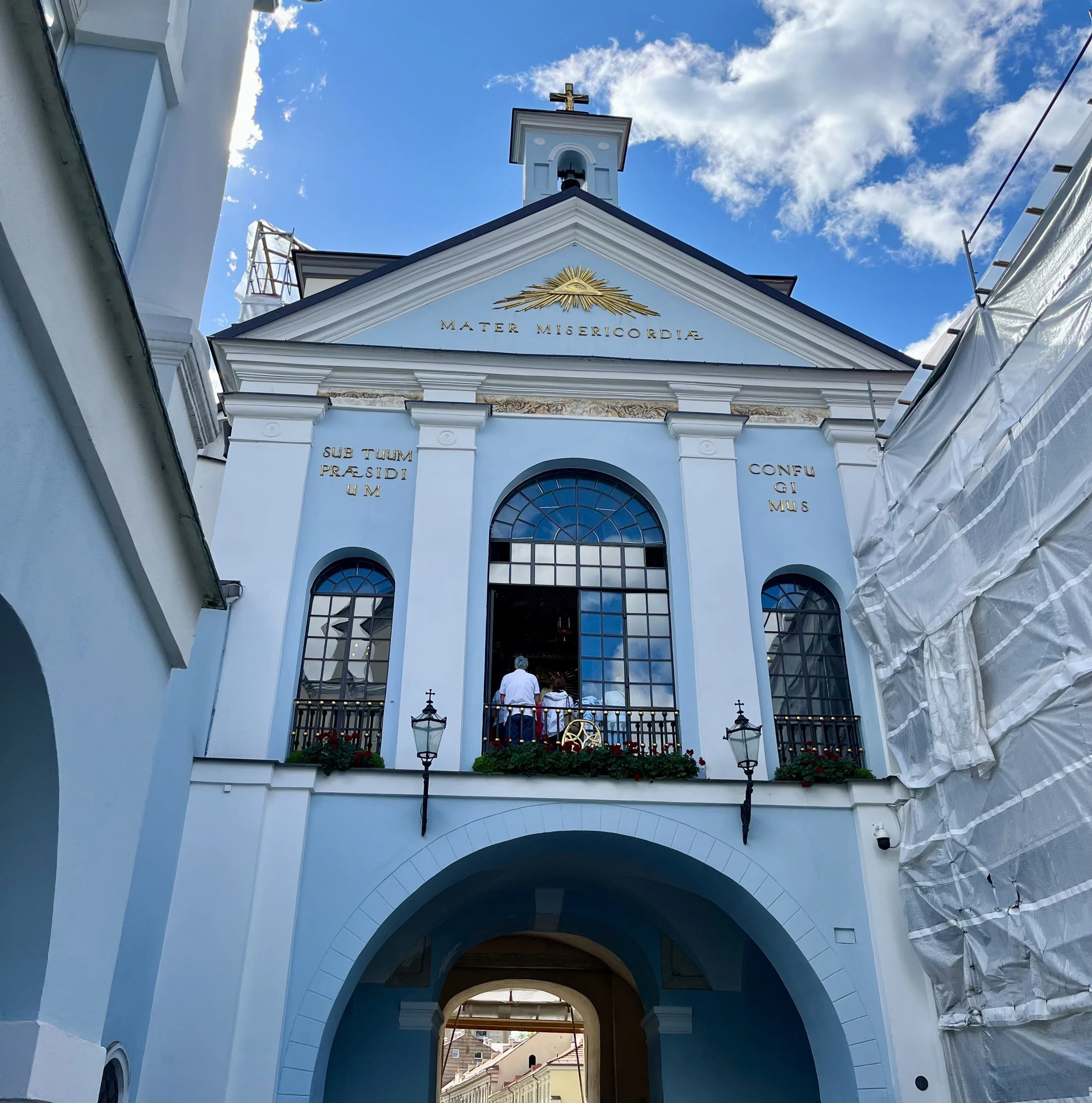
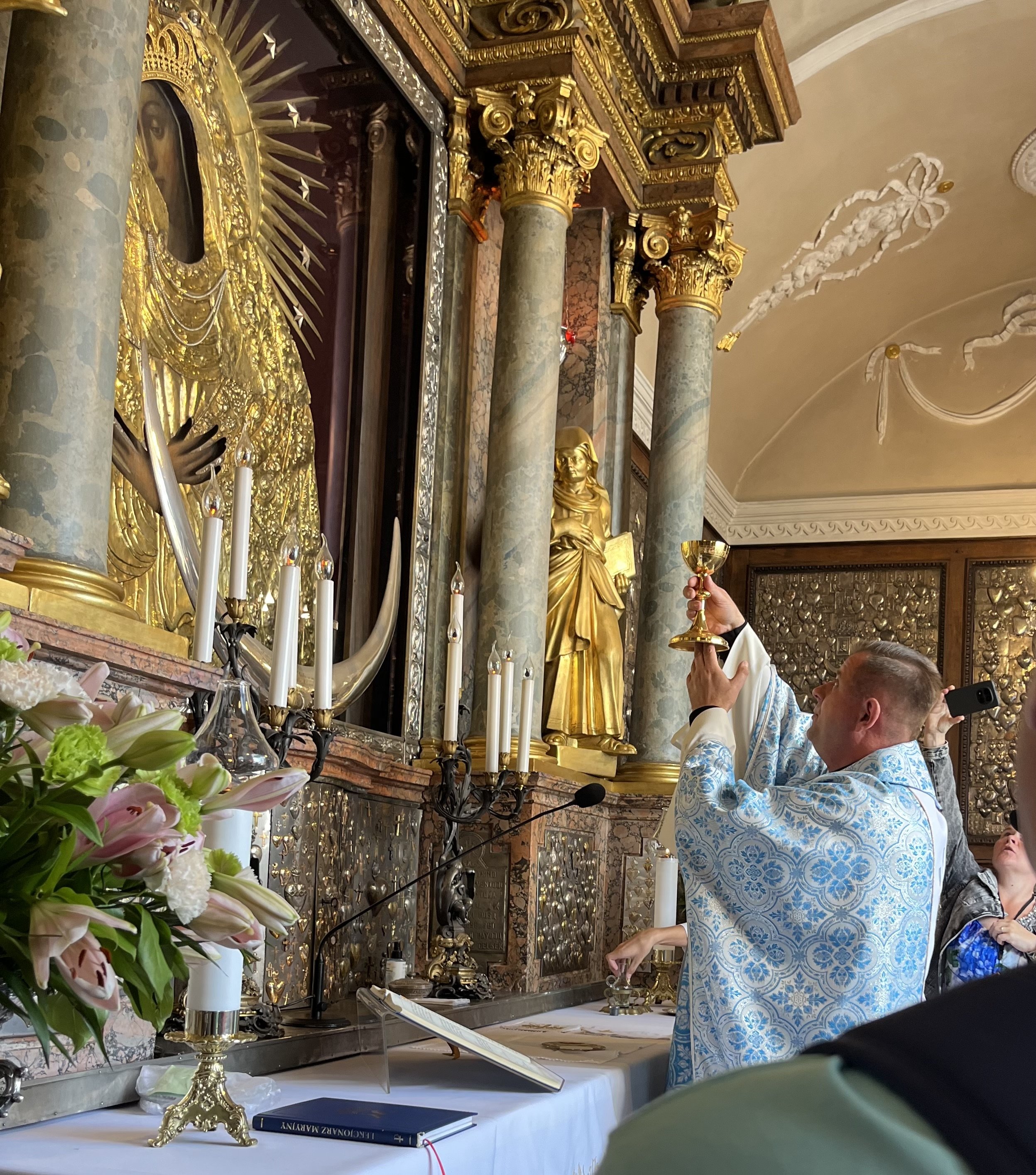
We visited one more chapel that was very special. “The Our Lady of the Gates of Dawn Chapel (The Mother of Mercy)” is located on the second floor atop a walkway between two buildings. From the street we heard singing coming from a large open window. We could not see in, but we knew this was the location of the Chapel that displays a large Portrait of the Virgin Mary, without infant Jesus, partially covered in gold and silver vestments. The portrait was painted about 1630. This Chapel became venerated after bombs dropped exploded and destroyed all the proximate buildings but not the Chapel. We entered a street level side door and walked the stairs up to the entry of the small Chapel. It was packed in with standing people, but we slide inside for awhile, and to our surprise the Priest was surrounded by parishioners all singing in their native language while he conducted mass. It was a beautiful, reverent experience to be in that place and time with all those pilgrims seeking grace. Really an unexpected highlight of the trip. See Photos
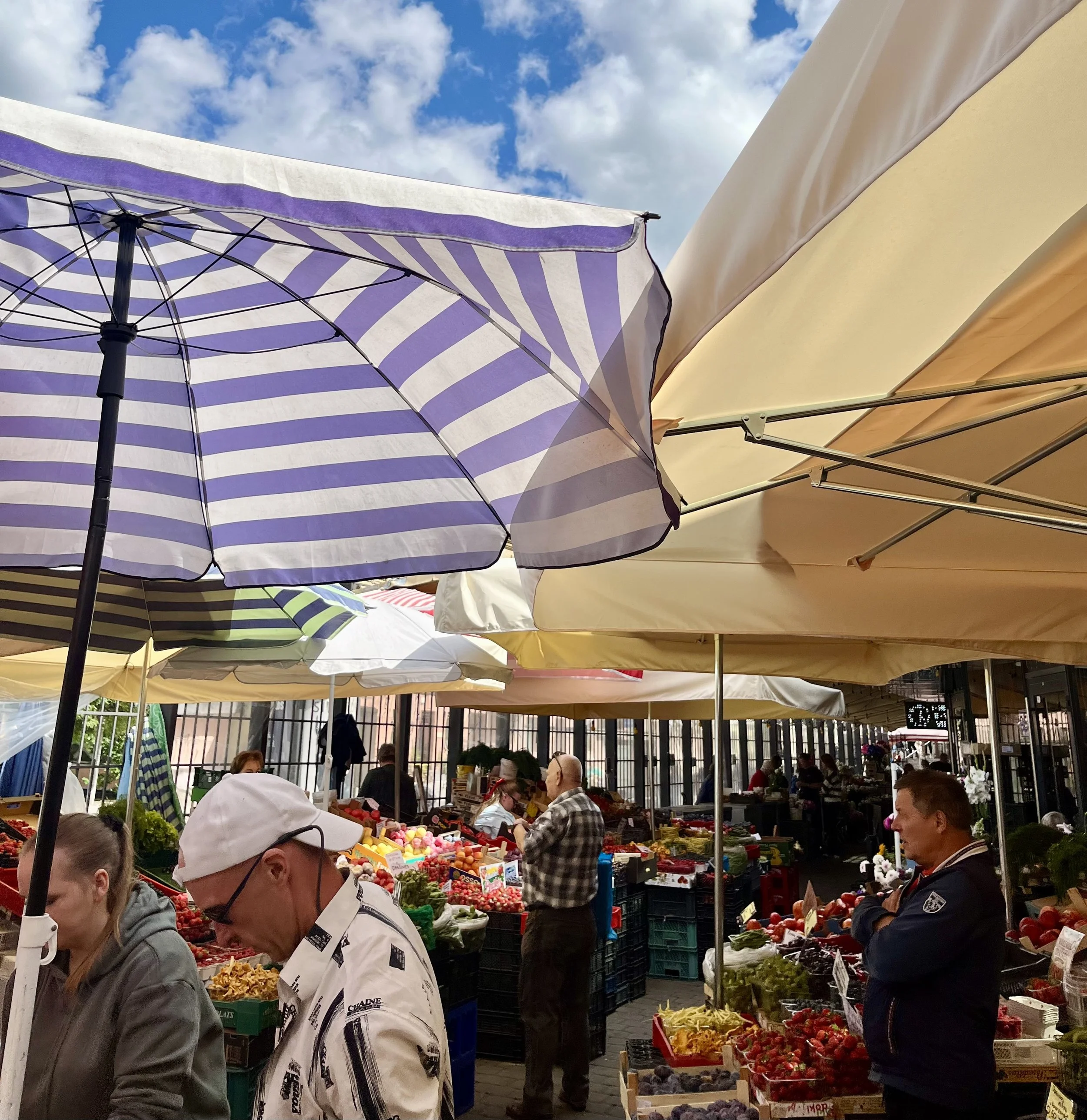
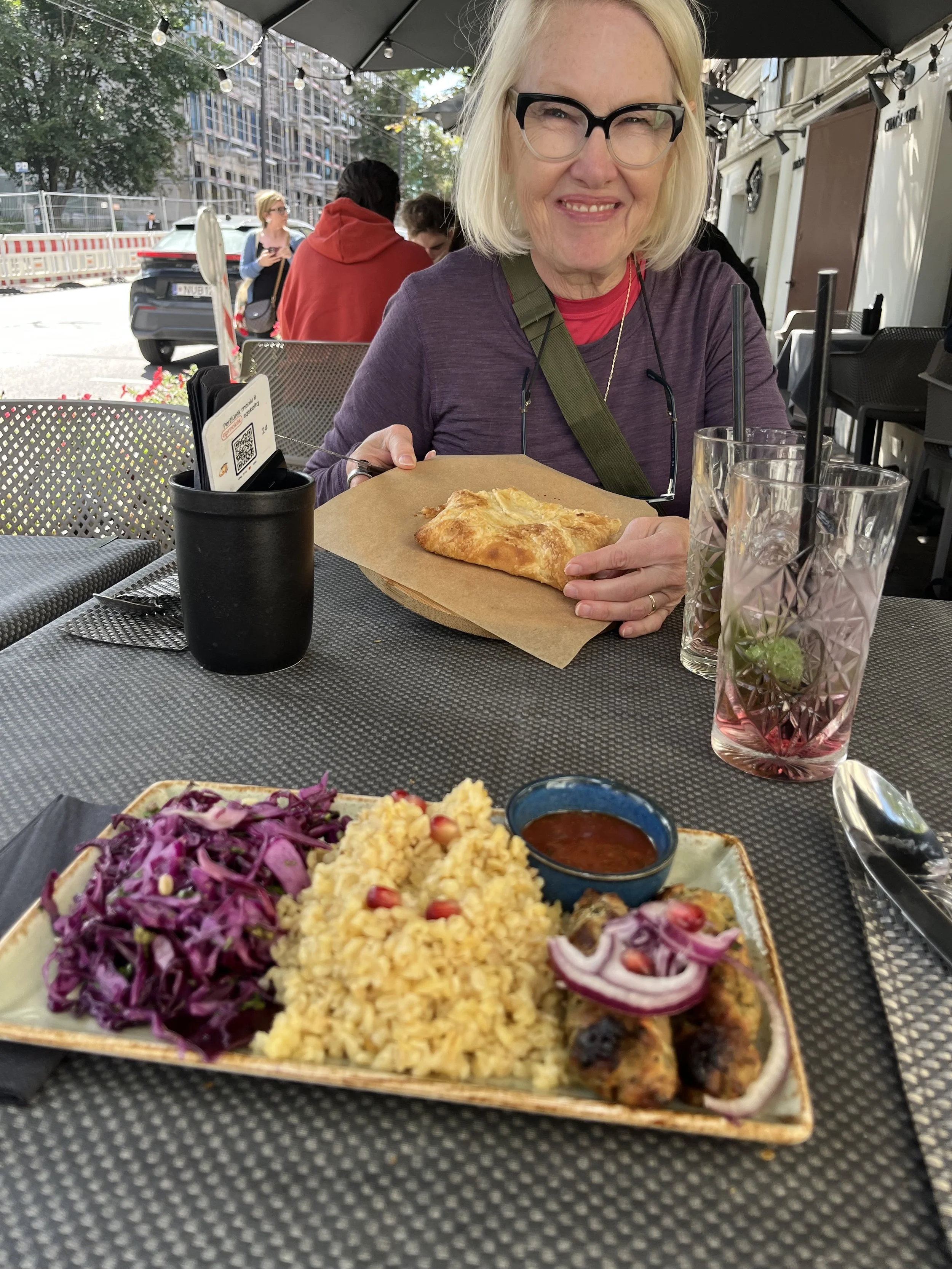
Our audio walking tour concludes and we are hungry. We walk a short way and enter an outdoor market. Set out is clothing and such, but the colorful stuff is in the fruits, veggies and other foods displayed. Now we are hungry for lunch and go to the nearby street side Chapapuri Restaurant that serves authentic Georgian food— a former and current satellite of Russia. Very enjoyable meal with the special dessert of Georgian Baklava, different and maybe better than Greek or Arabic versions.
The afternoon is winding down. We want to visit the National Museum that takes us back to the starting point of self-guided tour. As we approach, in the distance on a large hill is the Gediminas Castle Tower, one of the first forts in Vilnius. We do not visit, but it stands behind the National Museum building. See Photo.

We enter the museum and use handsets to hear numbered exhibits. The ancestors of the Lithuanians, (the Balts), were mentioned by Ancient Roman Scholars in 6-7 AD. In the eleventh century the Knights of the Crusading Teutonic Order often attacked the Balts tribes from the west. They needed to consolidate into a state.
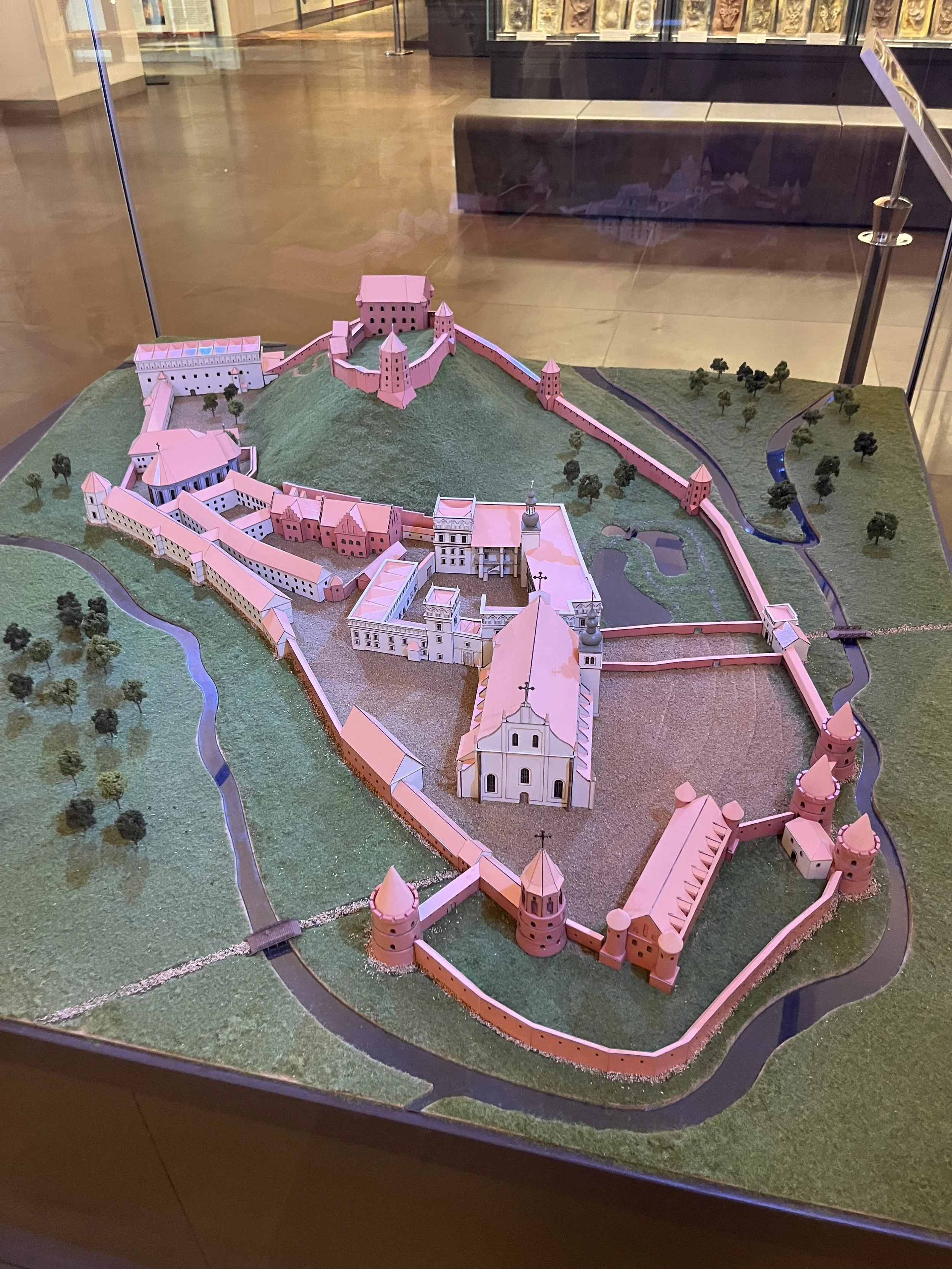
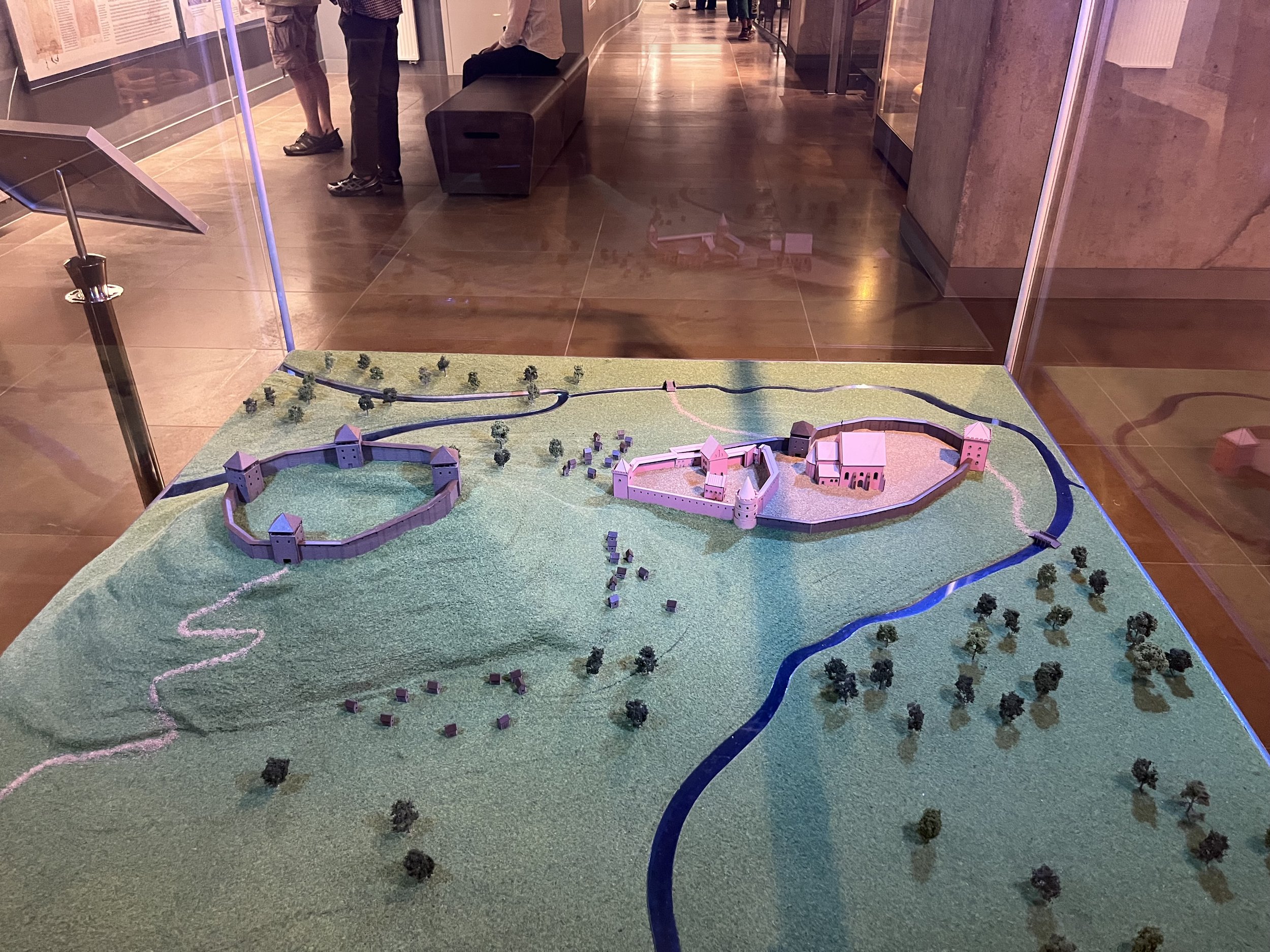
In the 13th century, Mindaugas completed the consolidation of the Baltic tribes into a consolidated state and accepted Christianity in year 1251. Then two years later at the behest of the Pope Innocent IV, he was crowned King. He expanded Lithuania into surrounding eastern Slavic lands. He was murdered in 1263 and bedlam erupted in the country. There were interim rulers, but in 1316 Gediminas became Grand Duke of Lithuanian. In 1323 he transferred his residence from his Upper Castle Tower we mentioned to a medieval brick castle, the first of its kind in Lithuania. That original brick structure is in ruins and displayed in the archeological exhibit within the museum with glass floors overtop. See photos of the displays that are high lighted in pink showing the progression of expansion of the Castle. In all, Gediminas’ Dynasty, including his successors in bloodline lasted until 1572, ruling over Lithuania and Poland.

As well we observed tapestries, art, and interior structures symbolic of this ruling Dynasty.

This is our last day. Tomorrow, we fly to Amsterdam then on to Detroit. We are at the bus stop for public transit to the airport at 6:30 am. See the photo of happy Janet. I’m happy too!  What a great trip!
Riga Lativa

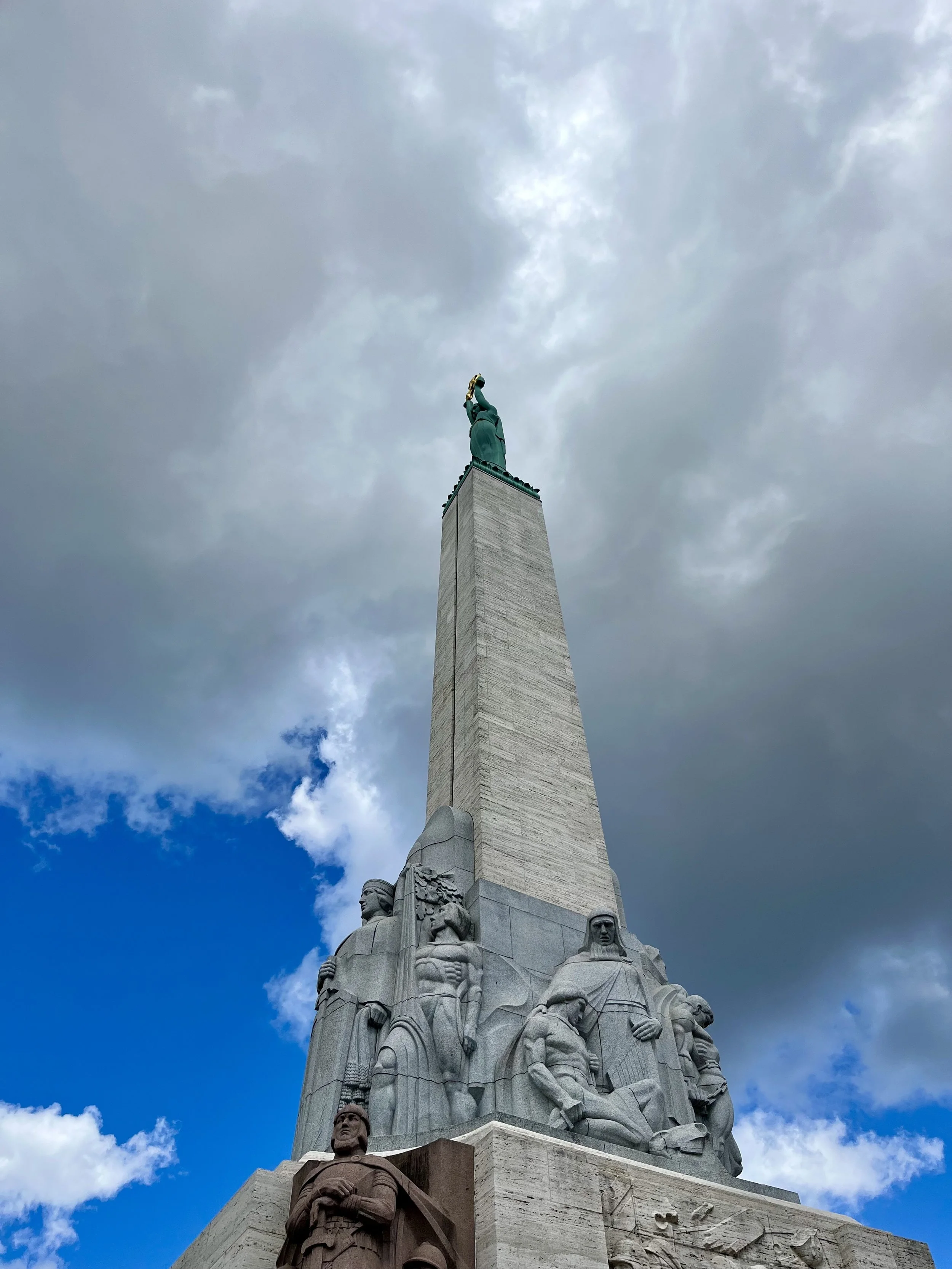
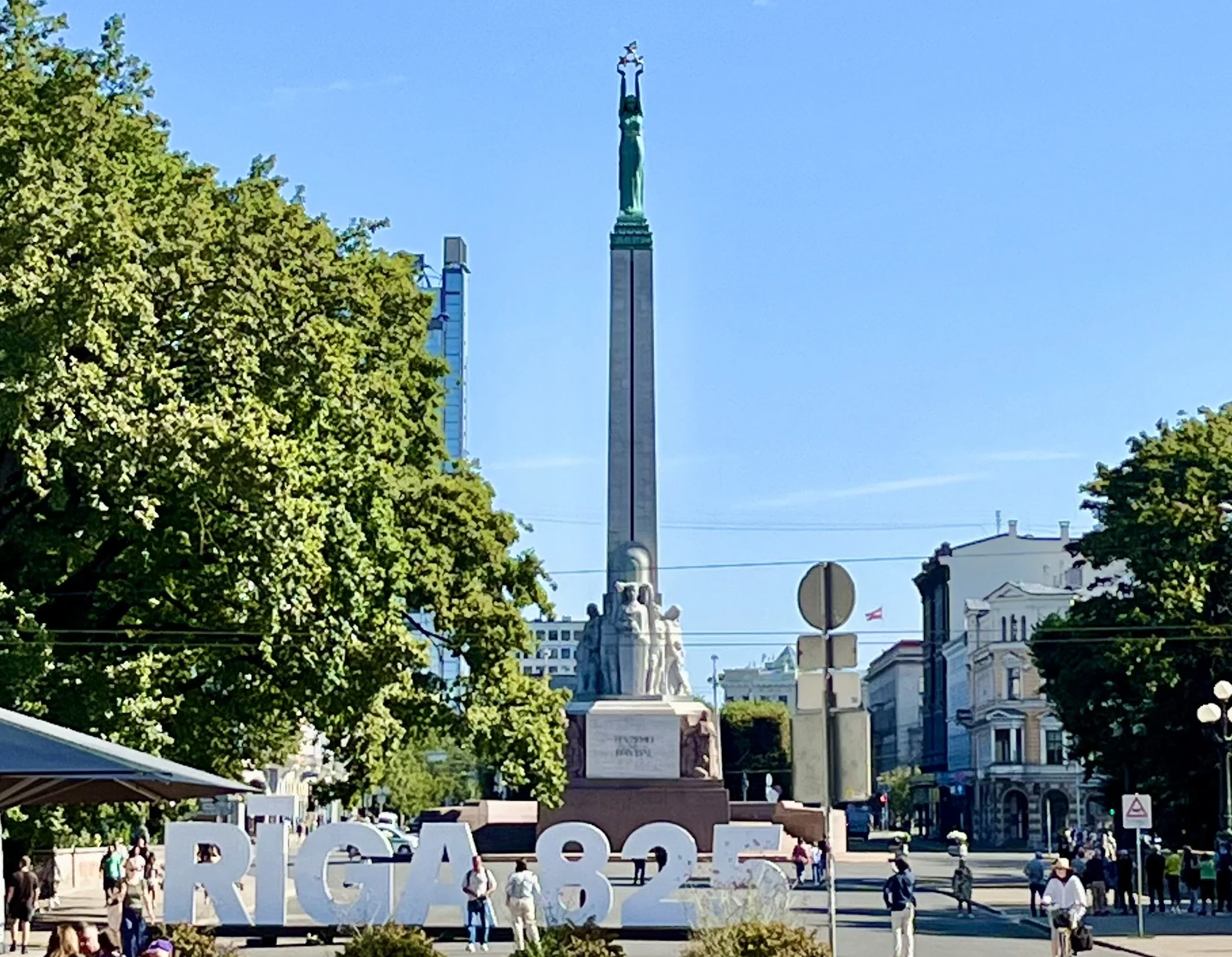
Freedom Monument

We traveled from Estonia to Lativa via bus, specifically, Flix bus.  It was a packed 4.5 hour ride, we passed the time binging Netflix shows.

View of market from bus stop

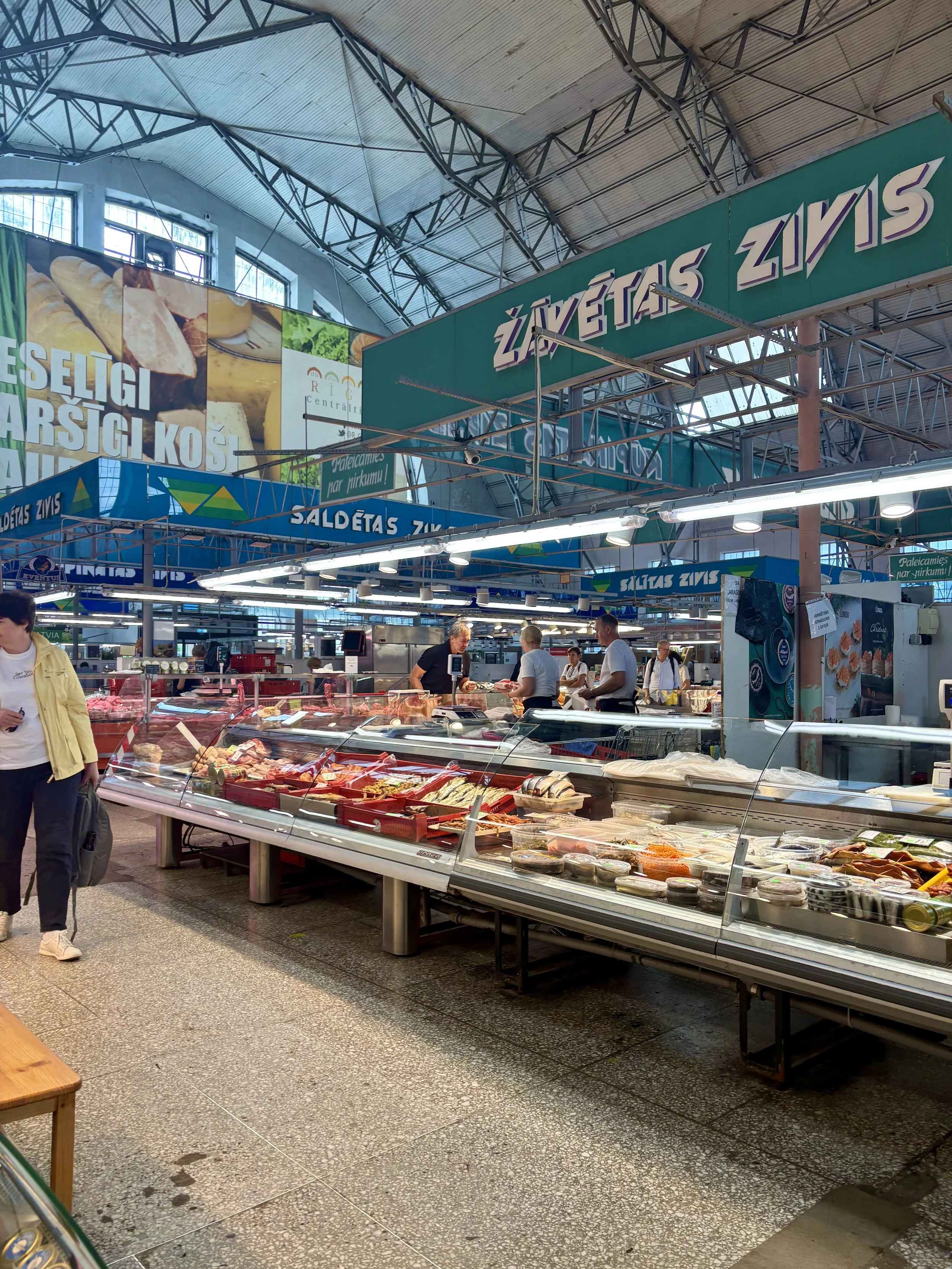
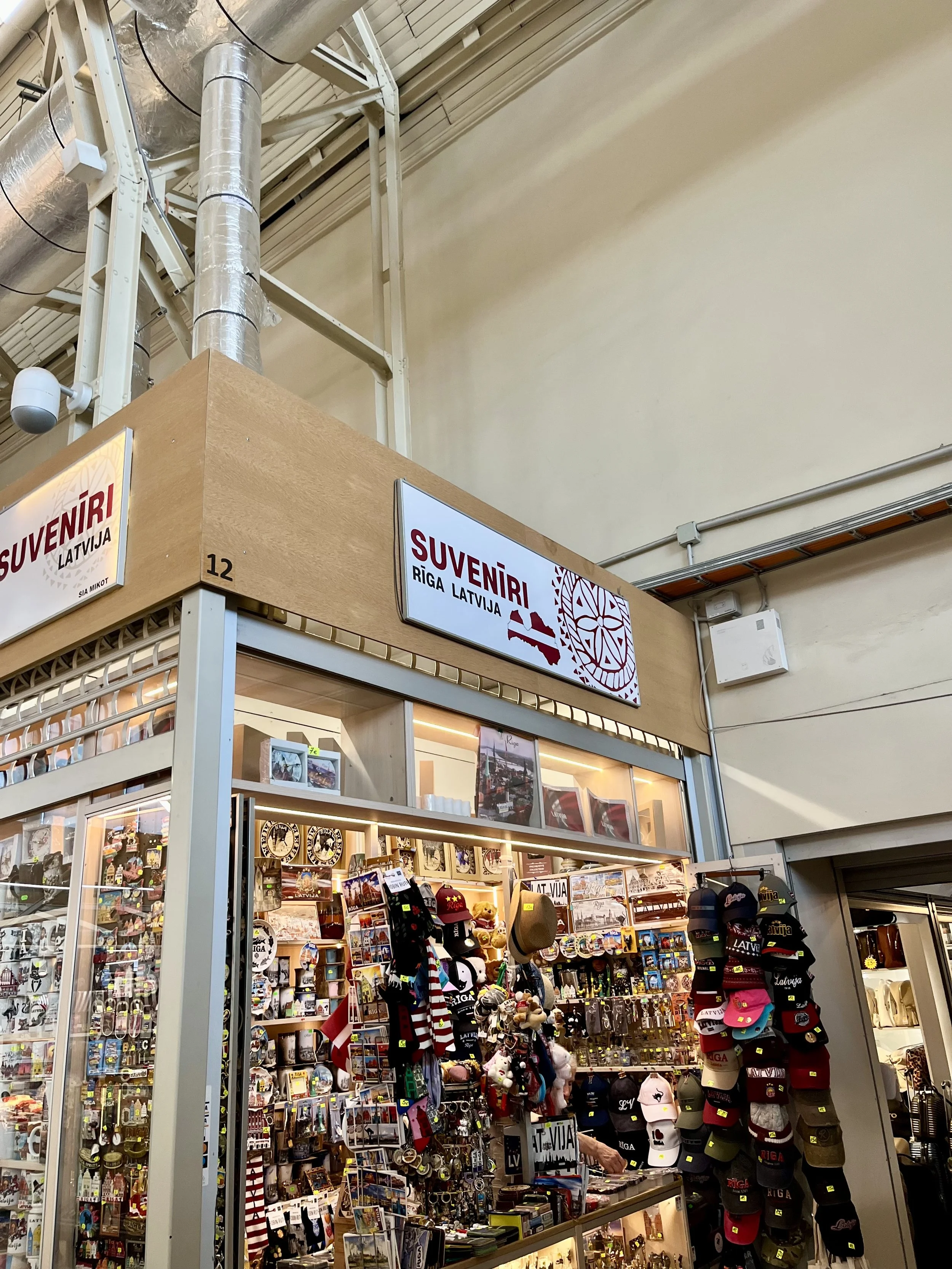
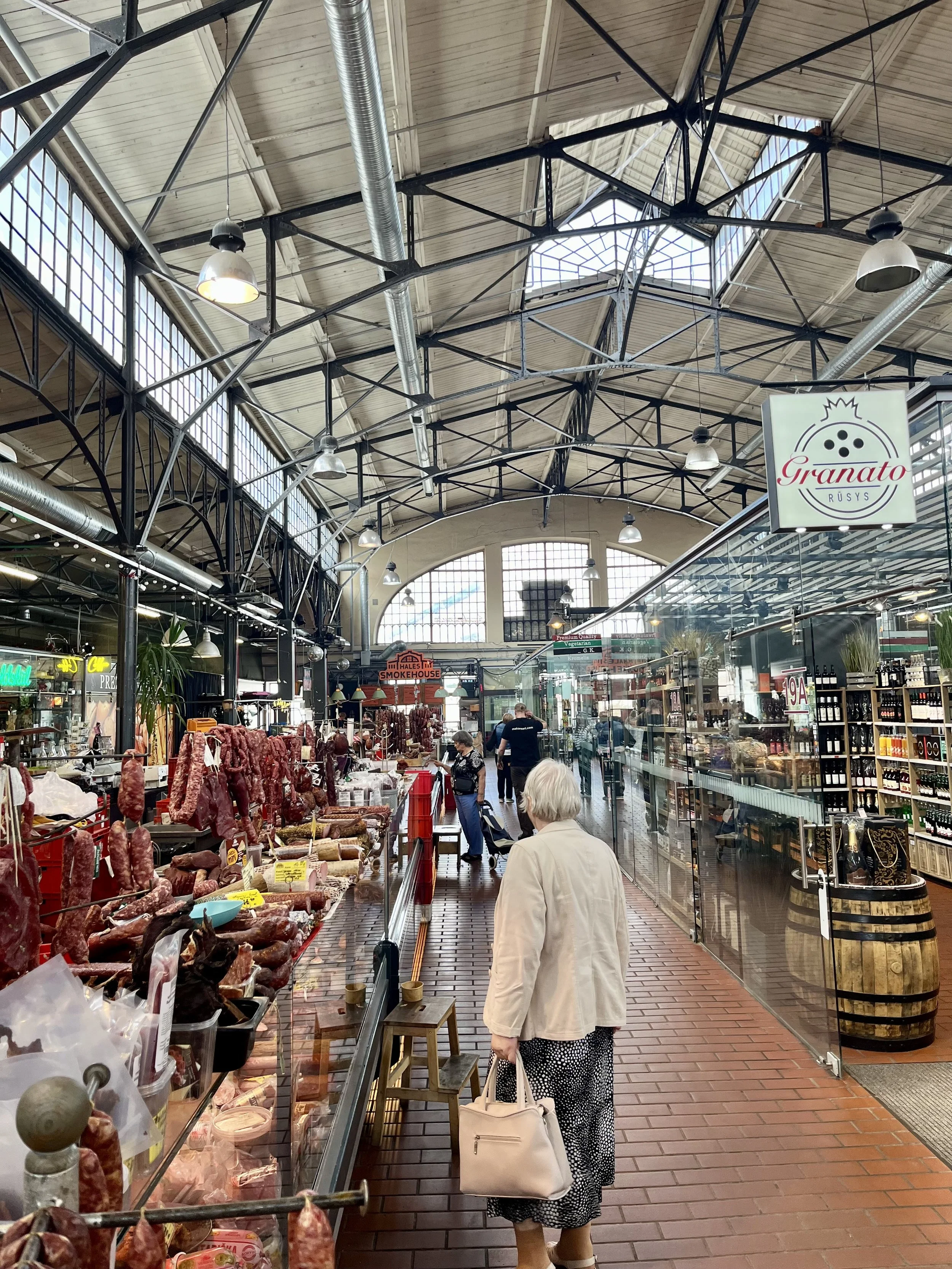
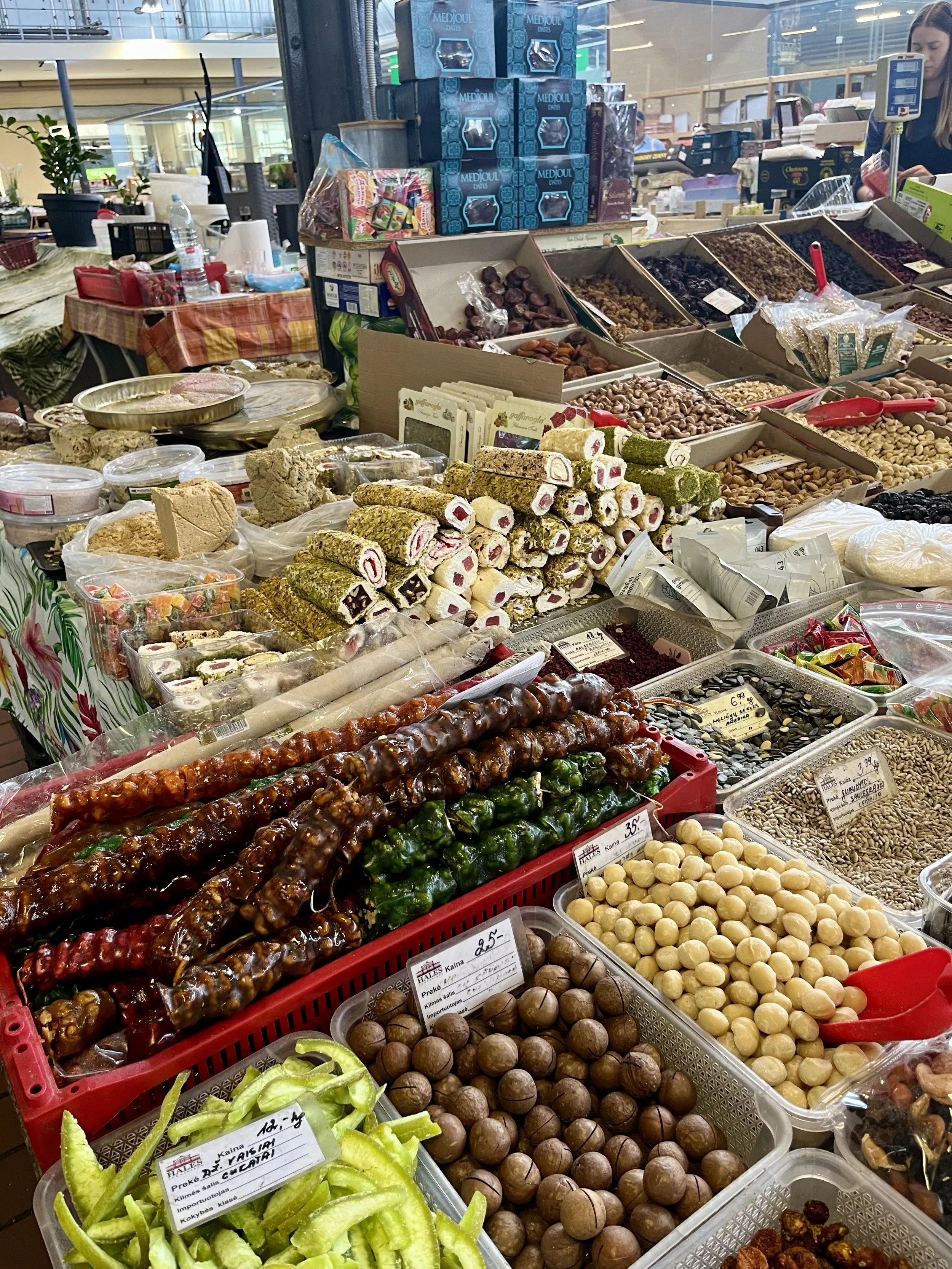
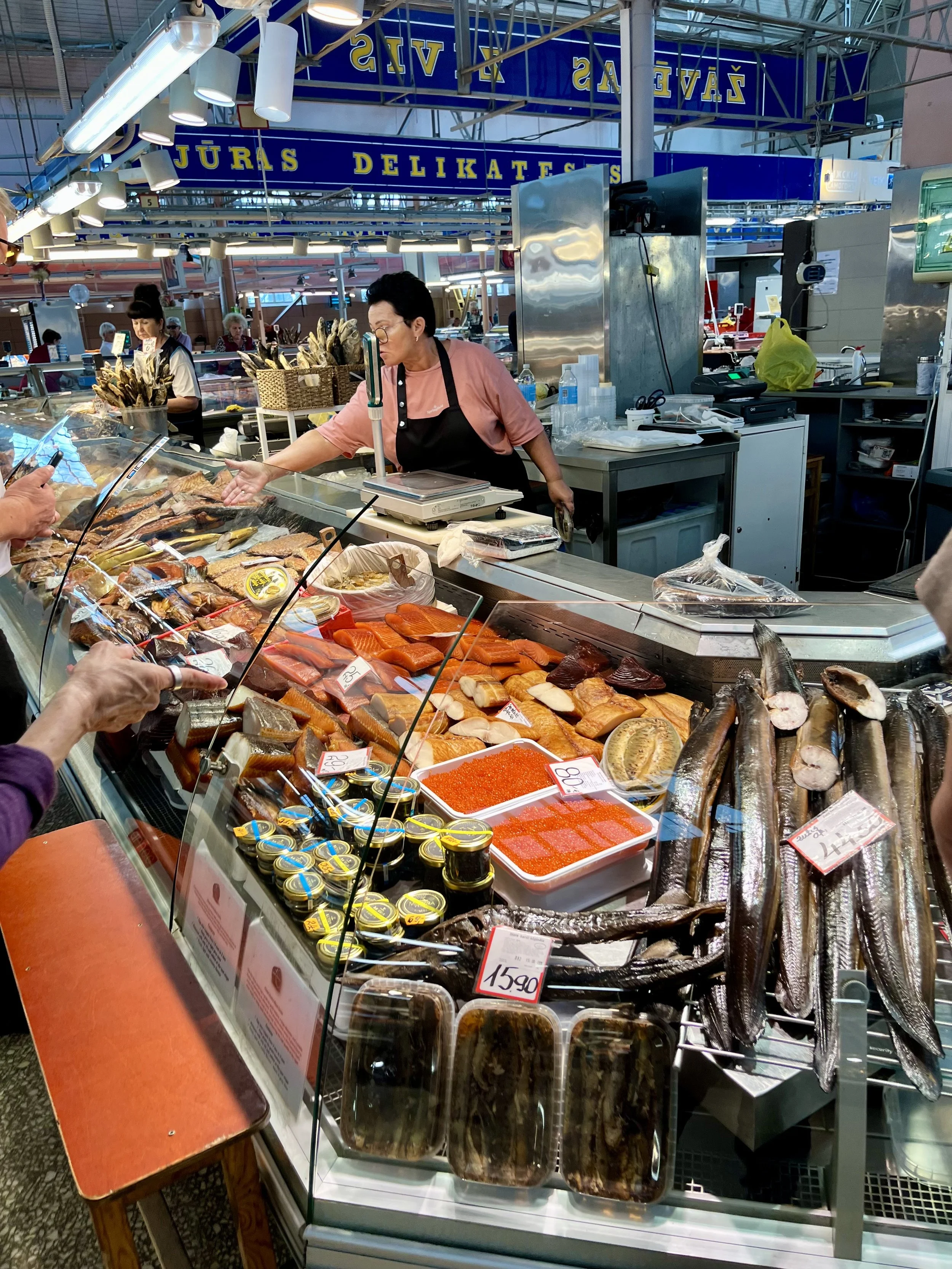
When arriving and parking at the bus station you see 5-6 buildings that make up the Central Market. These buildings were German built WW I zeppelin hangers and brought to Riga in 1920. These buildings are voluminous. After checking in at our hotel we went back to the market to buy dinner and supplies for lunch and snacks. The place is busy with many goods and food stalls, including smoked fish, cheeses, meats and sausages, breads, fruit, and our favorite choice, the meat dumplings. We walked through several hangers which had evolved into food courts, liquor stores, and merchandise businesses. We suppose the other hangers have all sorts of offerings.

Outside of our hotel

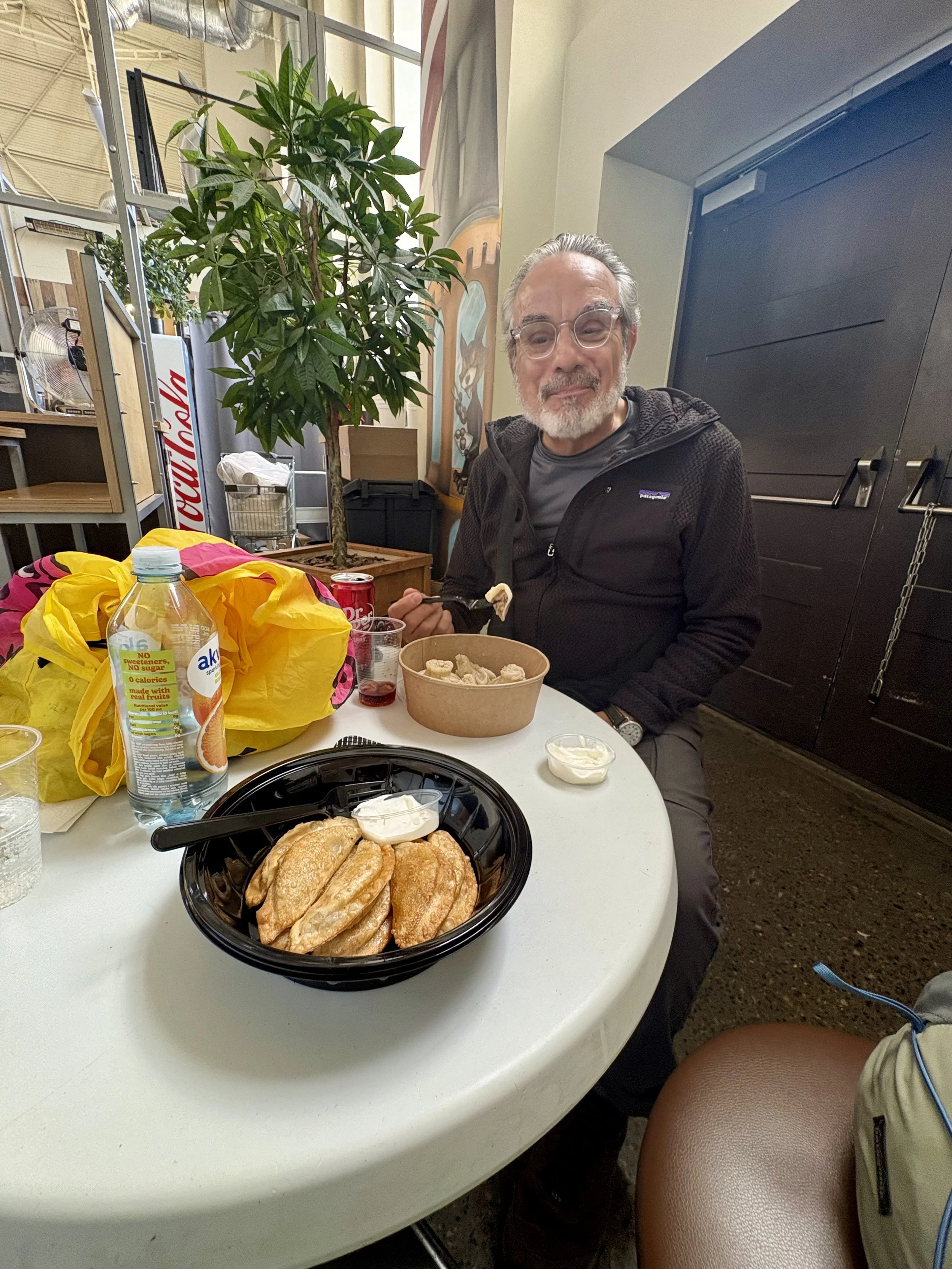
Between the market and the walkway to old town is the sunken cut where water sometimes flows; not today, but we walk over the foot bridge into the beginning of Old Town with all its narrow cobblestone streets and brick sidewalks. The wheels of our luggage rattled along as we go back and forth on the stones to our modern hotel. Turns out that the Central Market near the bus station means we are at the outside border of Old Town, and a first impression that— Old Town seems grittier than the other cities we have visited—may be wrong. The upcoming guided walking tour set for tomorrow will give us better insight. See photos of market and our dinner.

Our hotel is modern and the street is nice. At night we can hear happy people singing drinking songs as they pedal bar by our open window. This city and countryside for that matter display the influences of the former overlords. The tall spires and cobbled streets are a legacy of the Baltic German and Swedish rulers. The so-called Art Nouveau facades are from the Russian Empire. There are many “brutalist” structures and gloomy apartment blocks as a reminder of the Soviet era.

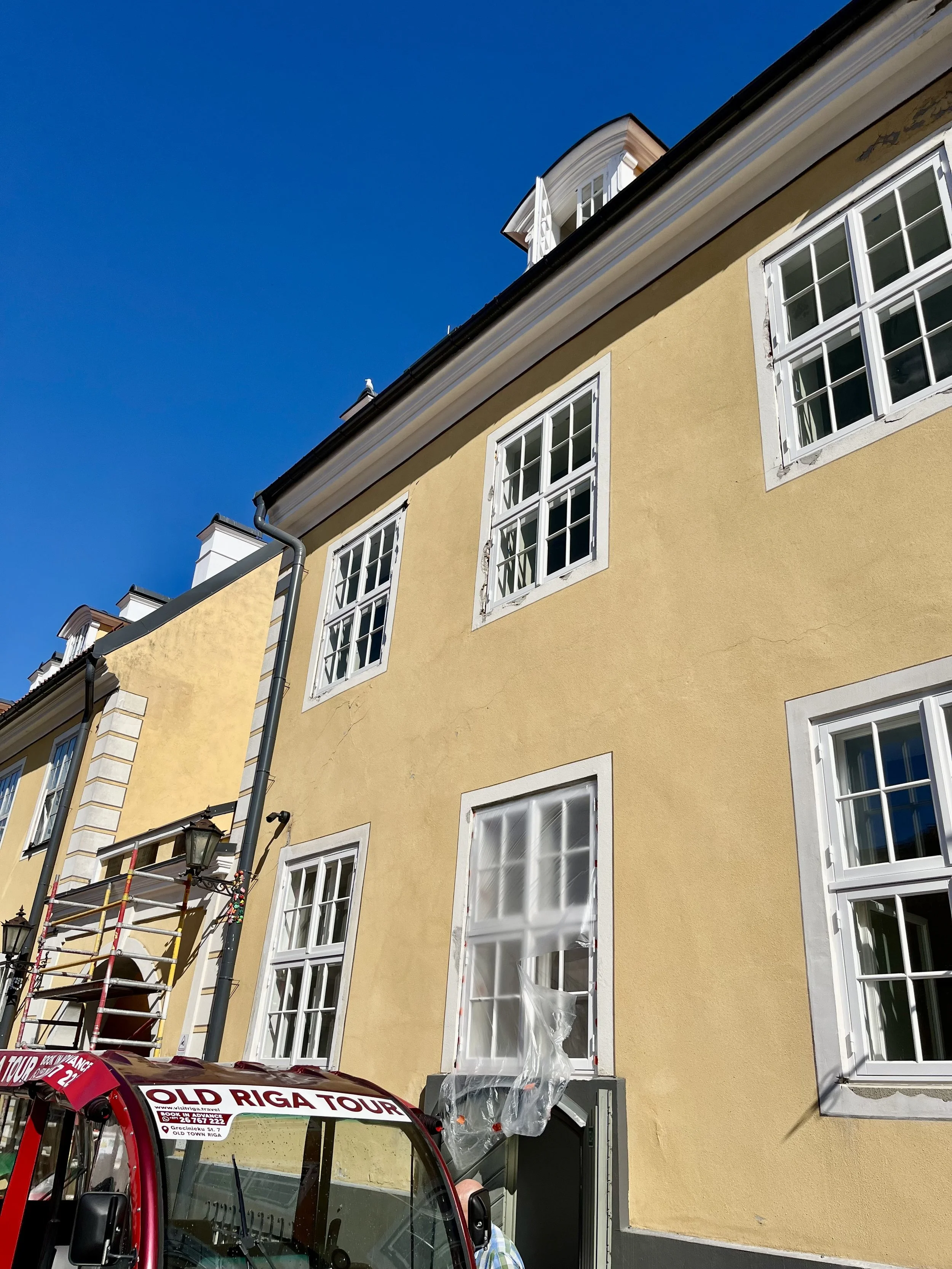
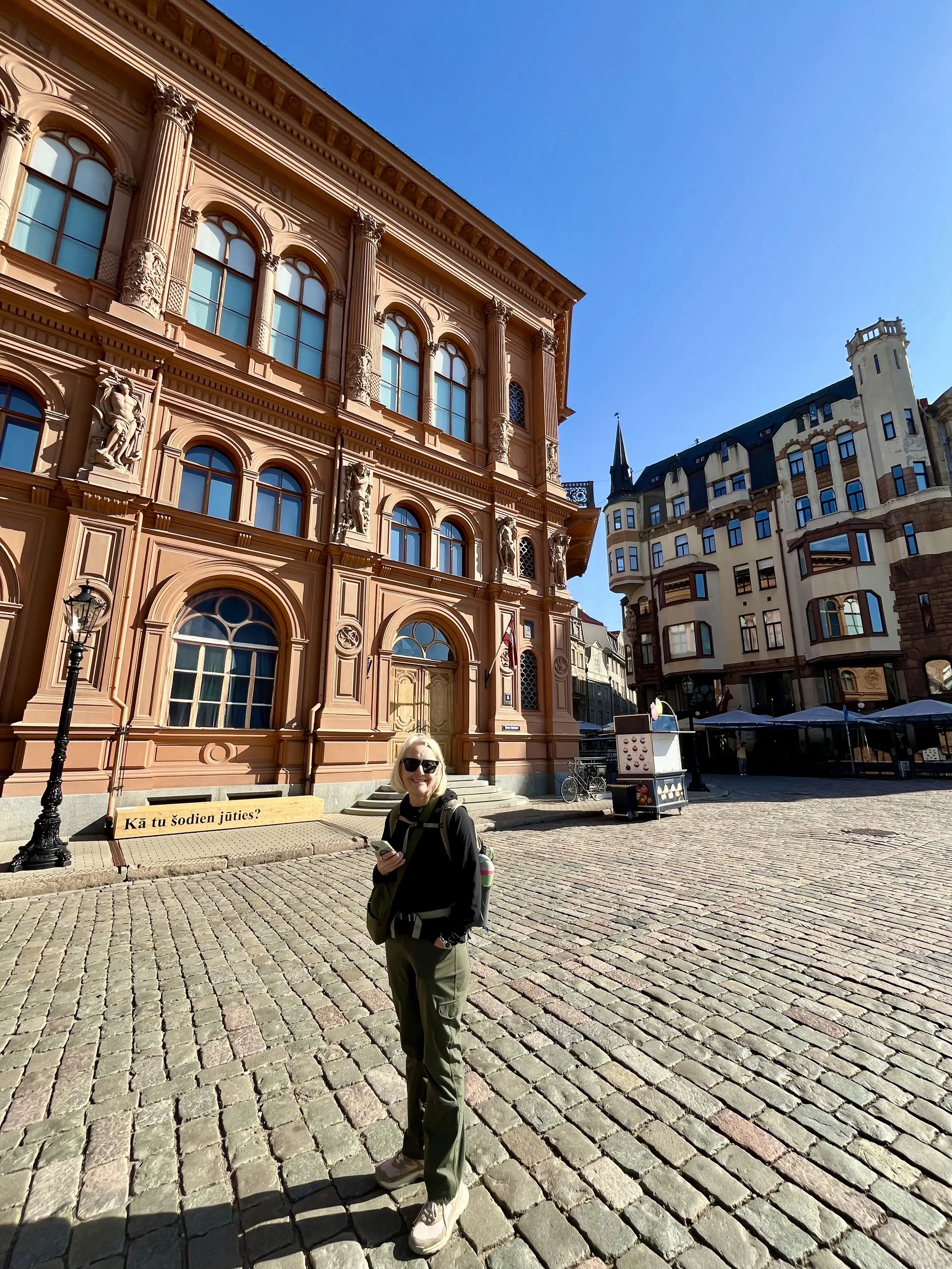
To get to the meeting point of our walking tour we start moving to the center and then pass closer to the other border. Our meeting point is next to the Old Town wall and arched entry portals. As we walked, we noticed far more elaborate structures and plaza, and fancier bars and restaurant facades, and merchandise store fronts. This part of Old Town was not gritty but polished and displayed lots of flowerbeds and potted plants. The polished look is due in part to the 825th birthday of the founding of Riga. We met our guide on “Tornu iela” Street, in front of the long 3 story structure built by Sweden for its soldier quarters directly across from Old Town’s protective wall and its entry portal. The structure has a plaster finish and well painted in mild yellow with white trim. This portends good things to come.

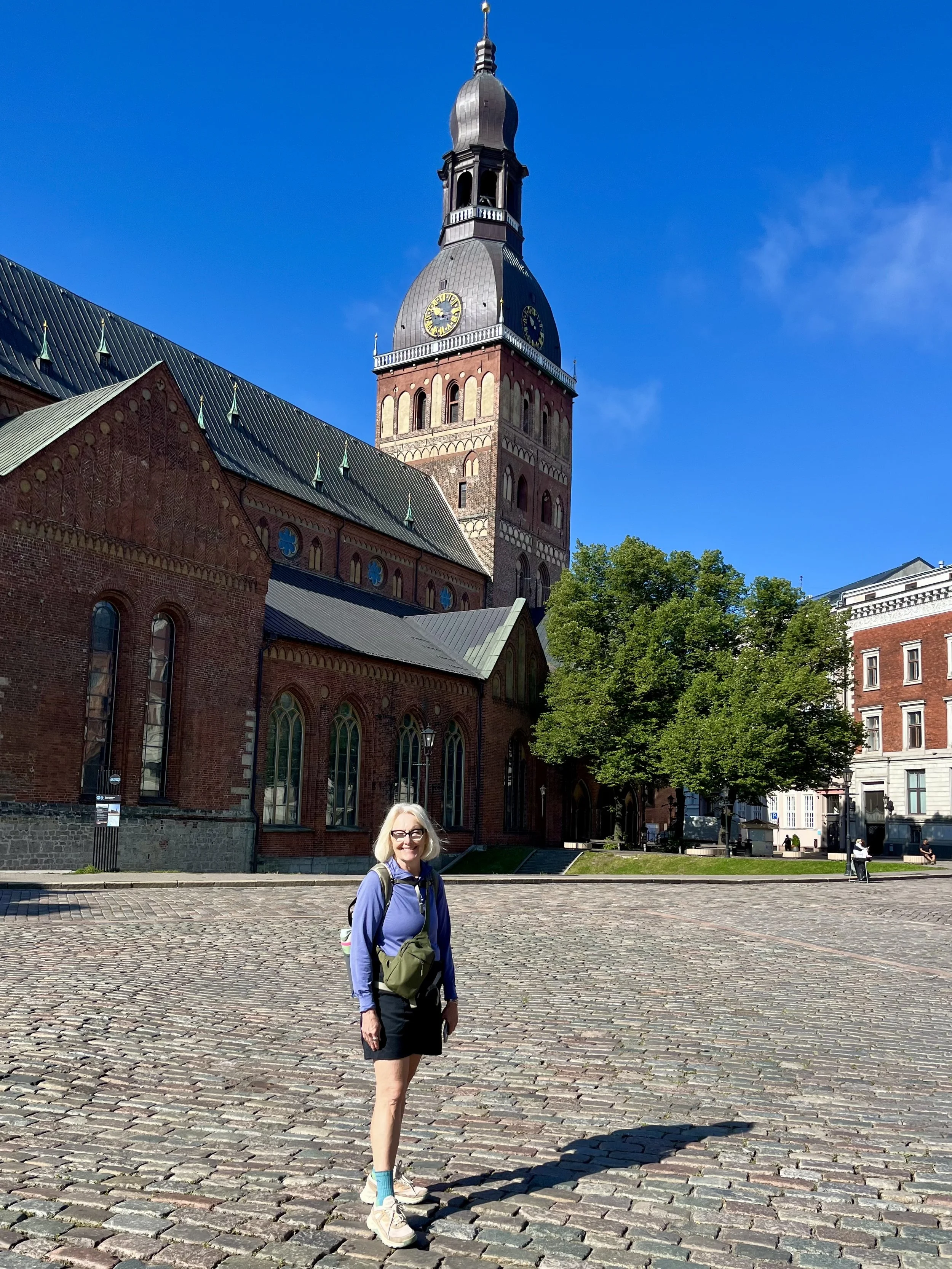
We enter the portal and come on to a large town square where the large Riga Cathedral is located. It is at this point that our impression of Riga begins to change.

The Old Town vibe is very upbeat. The streets and sidewalks are swept clean. They buildings, old and new, are highly maintained, including colorful paint, and flowers are blooming and for sale everywhere.

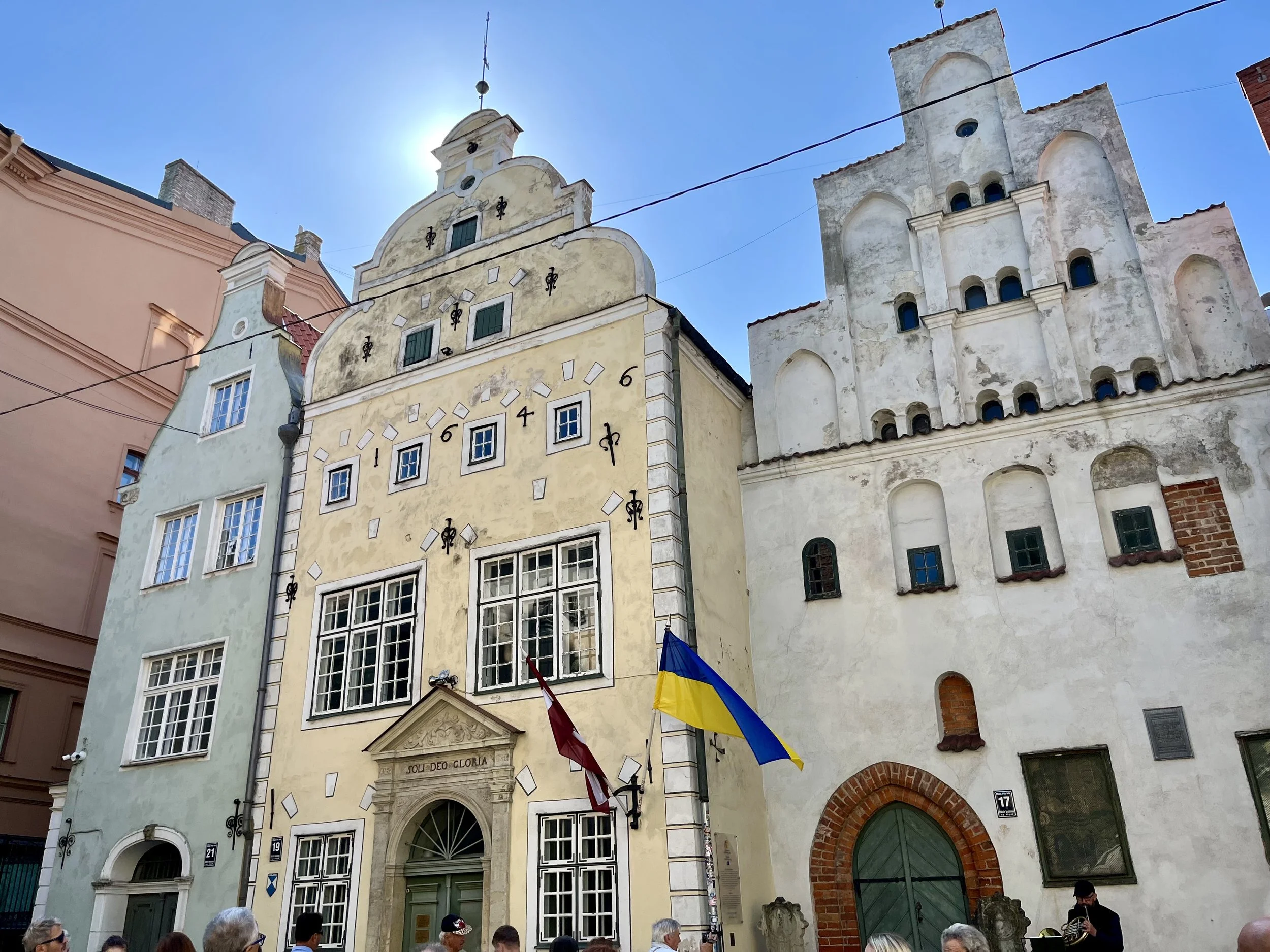
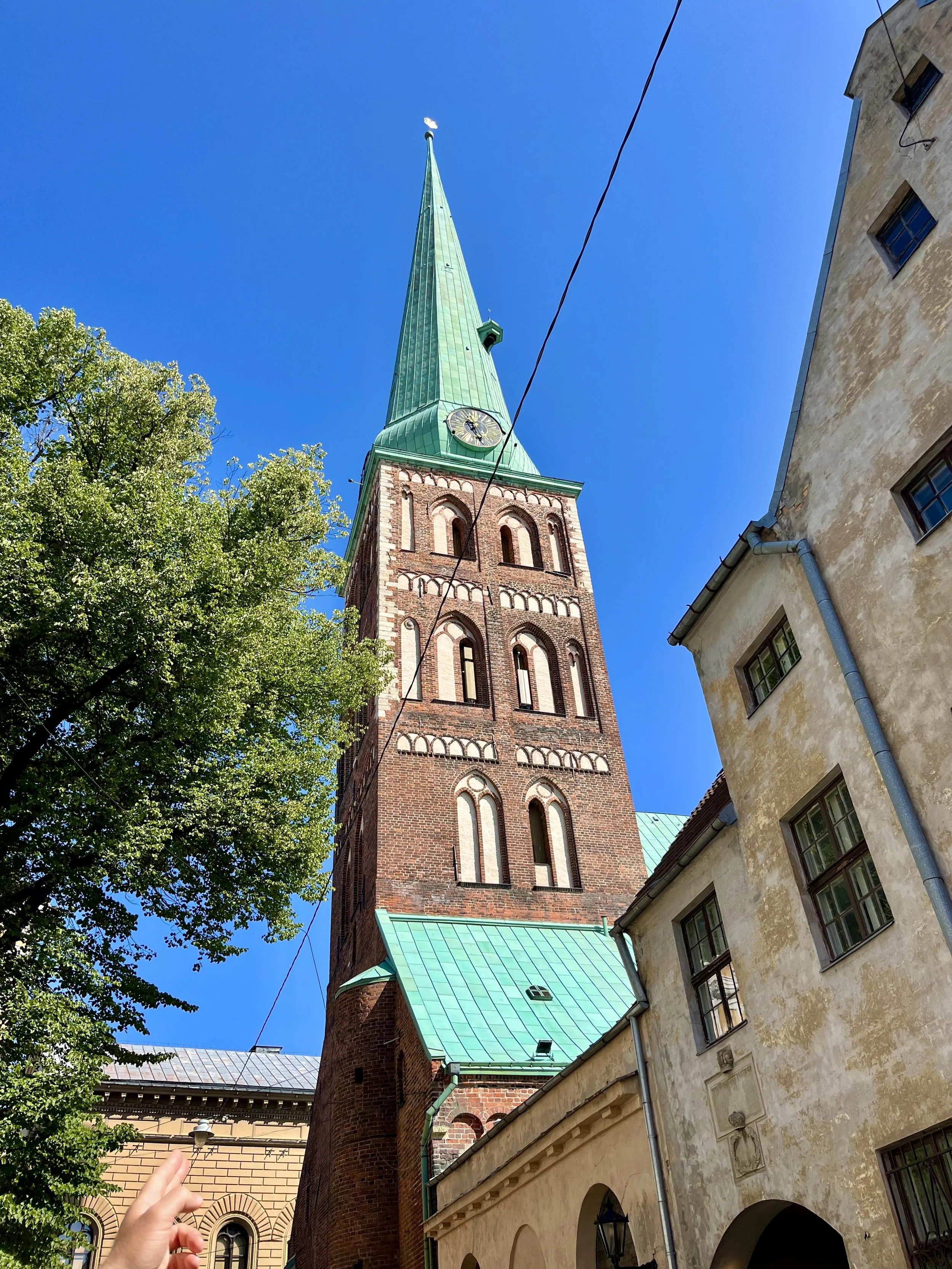
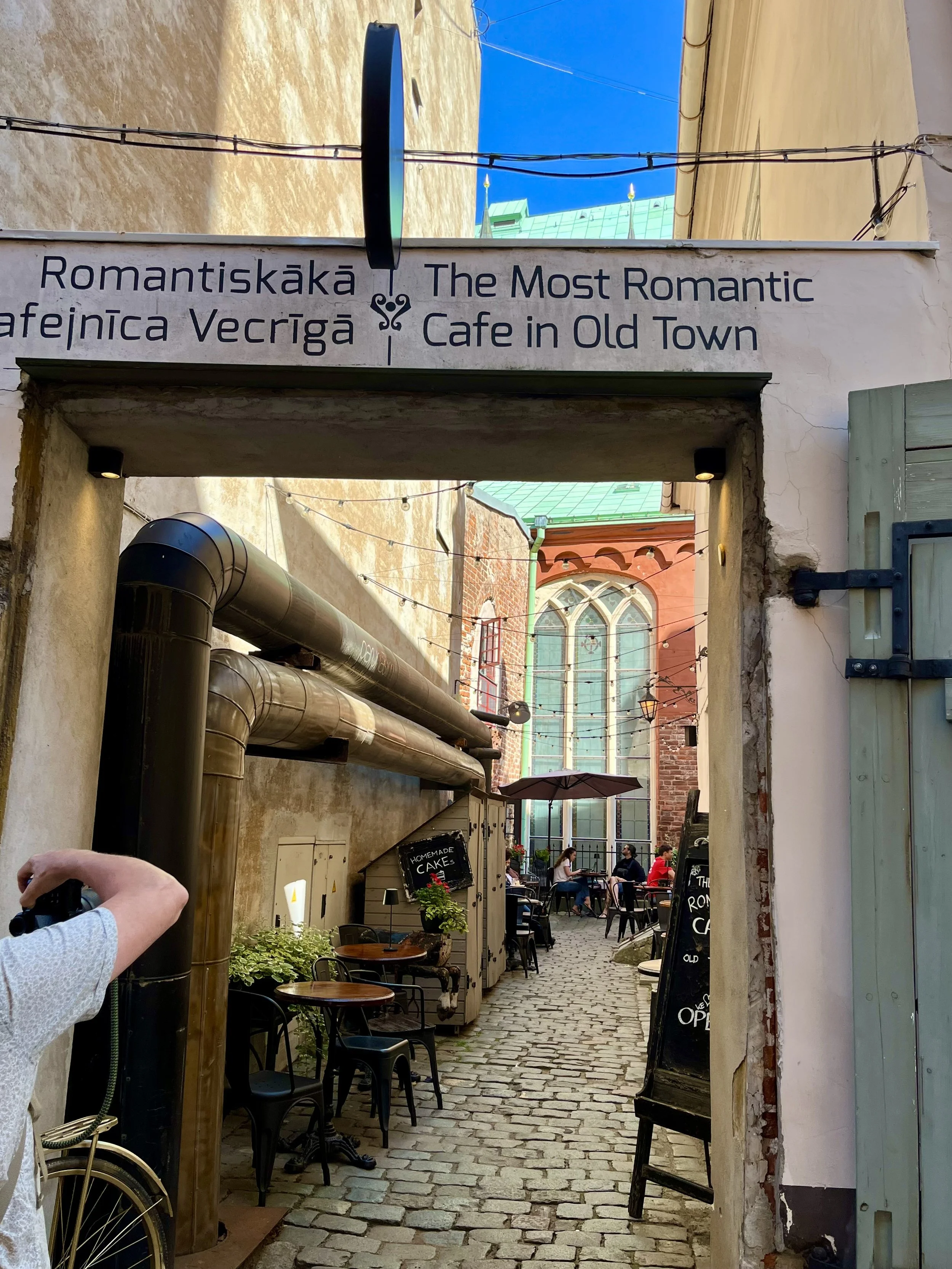
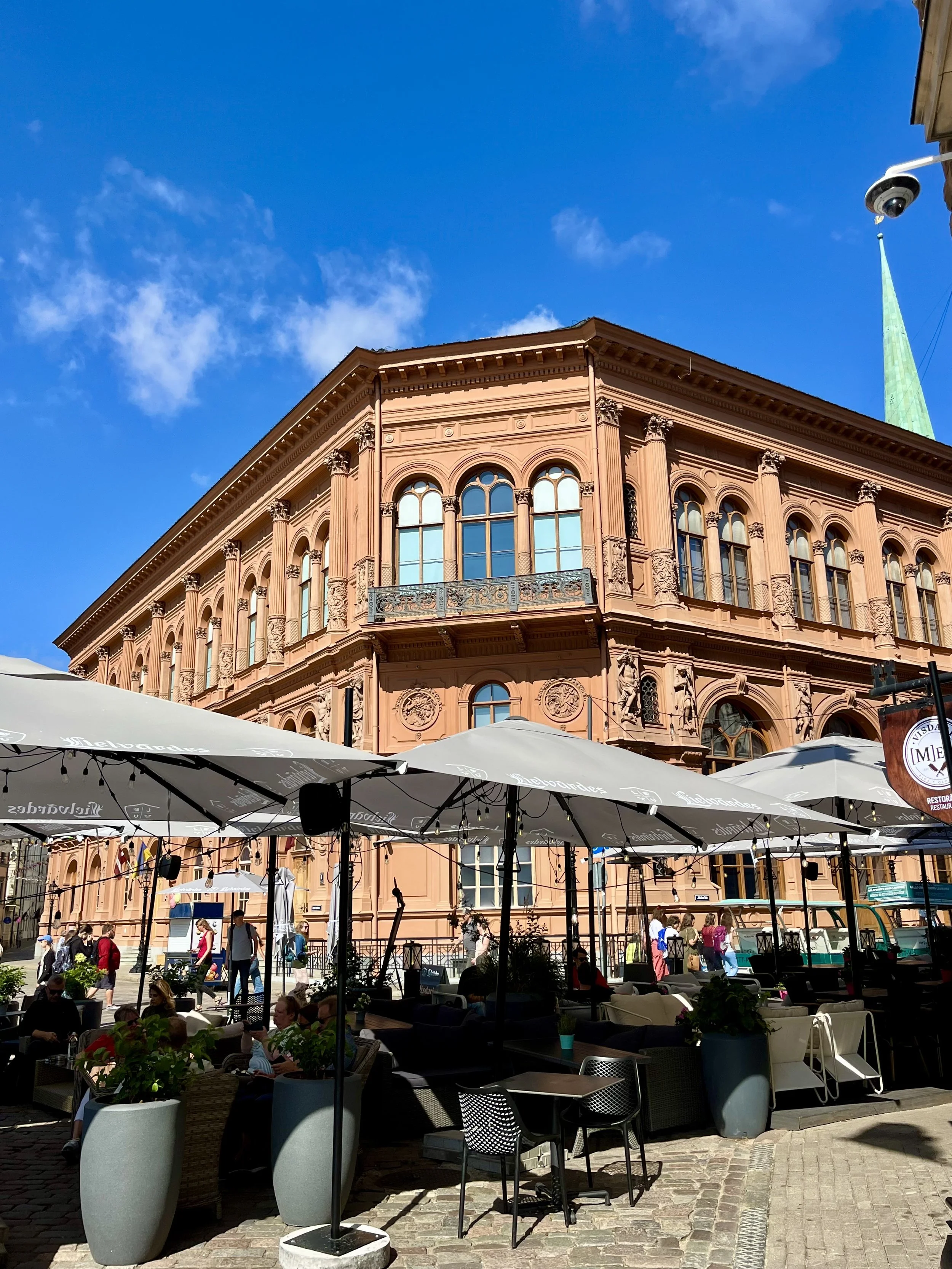
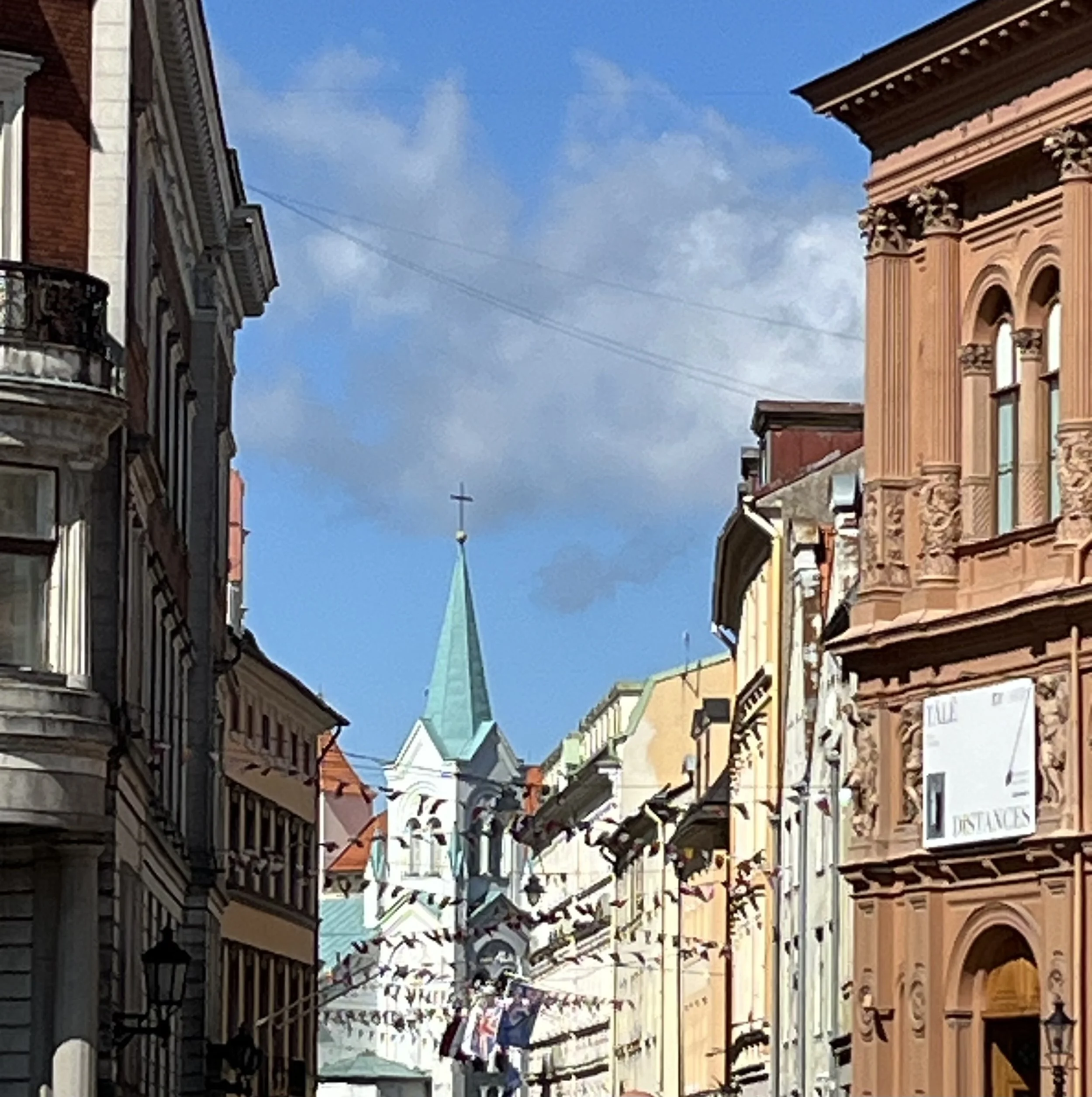
Over its history Riga was governed by Germany, Sweden, and Russia. The Hanseatic League of German merchants that were so powerful in Bergen Norway, also raised Riga into an important and wealthy shipping port for the eastern Baltic area. Because of the League’s economic reach, European visitors and businesses came to Riga and influenced the architecture of the town. You will see buildings side by side modeling Amsterdam, Belgium, and German styles. A certain trio of these houses from different eras are called “The Three Brothers.” You can easily turn and see other European baroque and French and Italian styles, all well kept. The guide boasted that Baltic people would come to Riga to experience Western Europe — “ Paris of Eastern Europe.”   See Photos for examples of the look of the city.

As well, any where you look church spires or tall statue comes into view. The main religion is Lutheran, with Russian Orthodox and then Catholic following. We entered the cathedrals of each. Latvians are not highly religious we are told. Nice churches though.

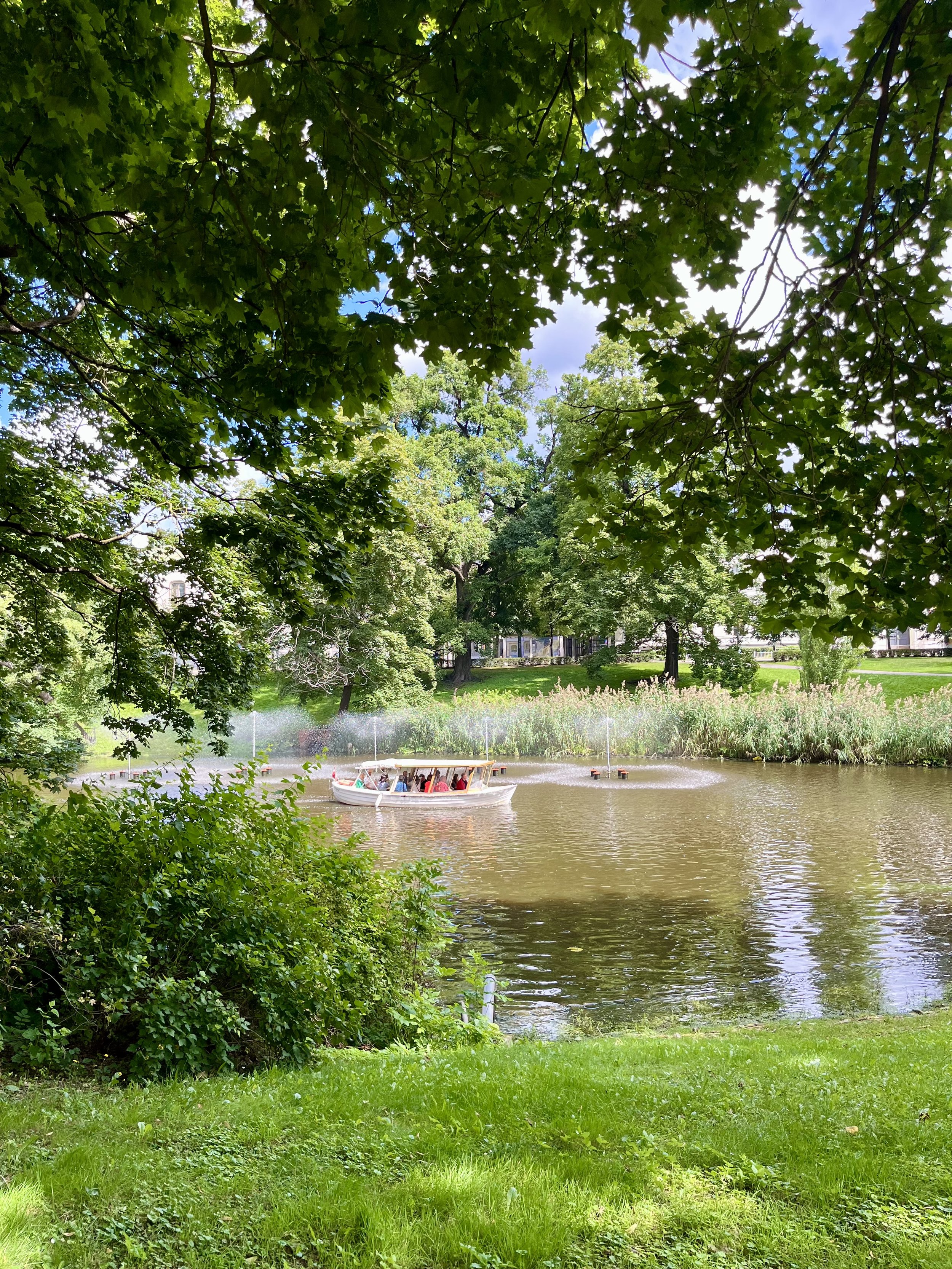
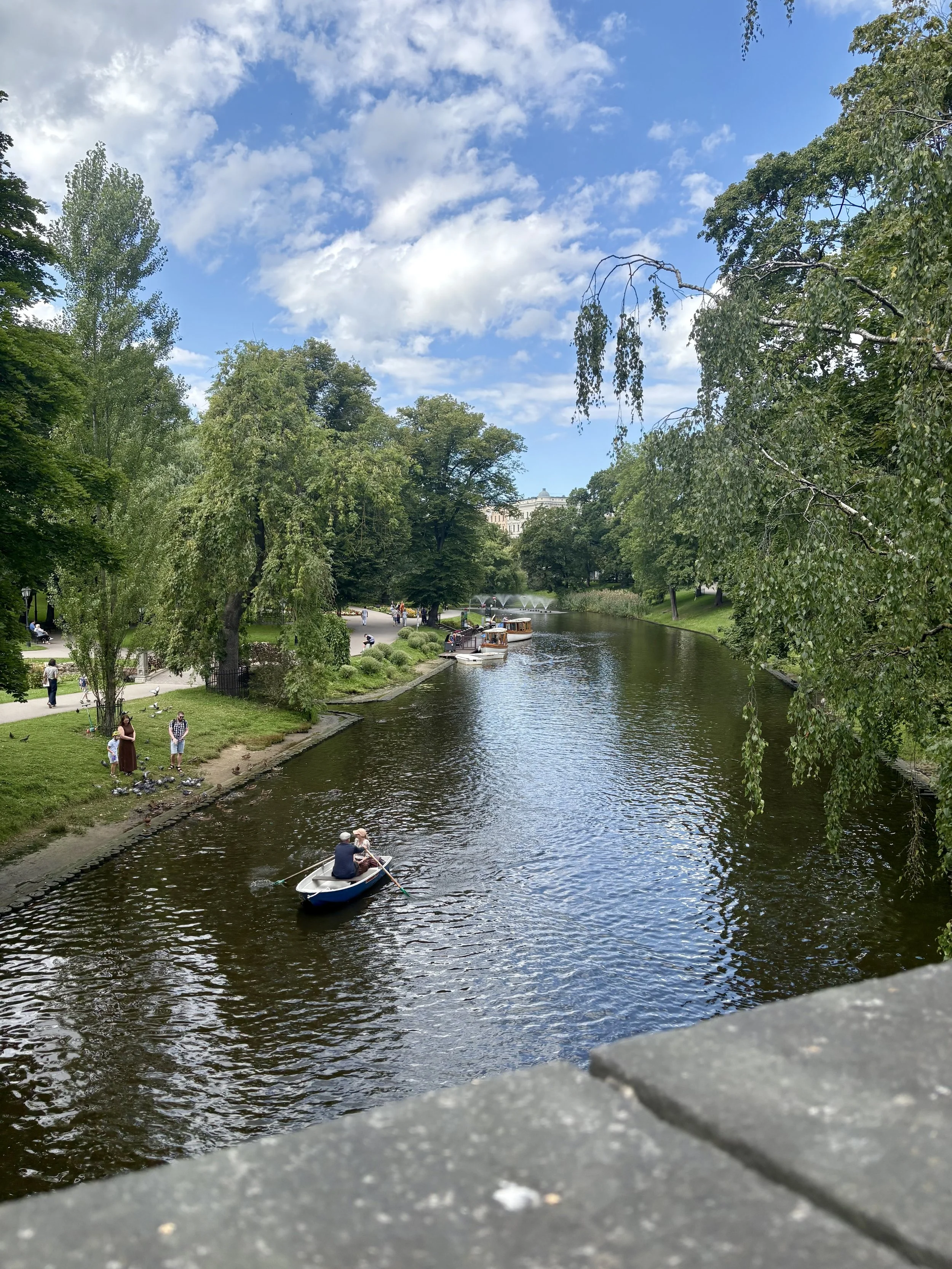
The Freedom Tower built in1935, honored their independence obtained in 1918. It is standing in a beautiful park that uses nature to mark division between the Old Town and the modern central city of Riga. The park has a nice river running through it, originally built as a Swedish defensive moat. When the Soviets took control of the country in 1940’s the Tower was retained. Rather then destroy it, the symbolism of the structure and statues were reimagined by propaganda. This Soviets purported the Tower to be a tribute to Russia.

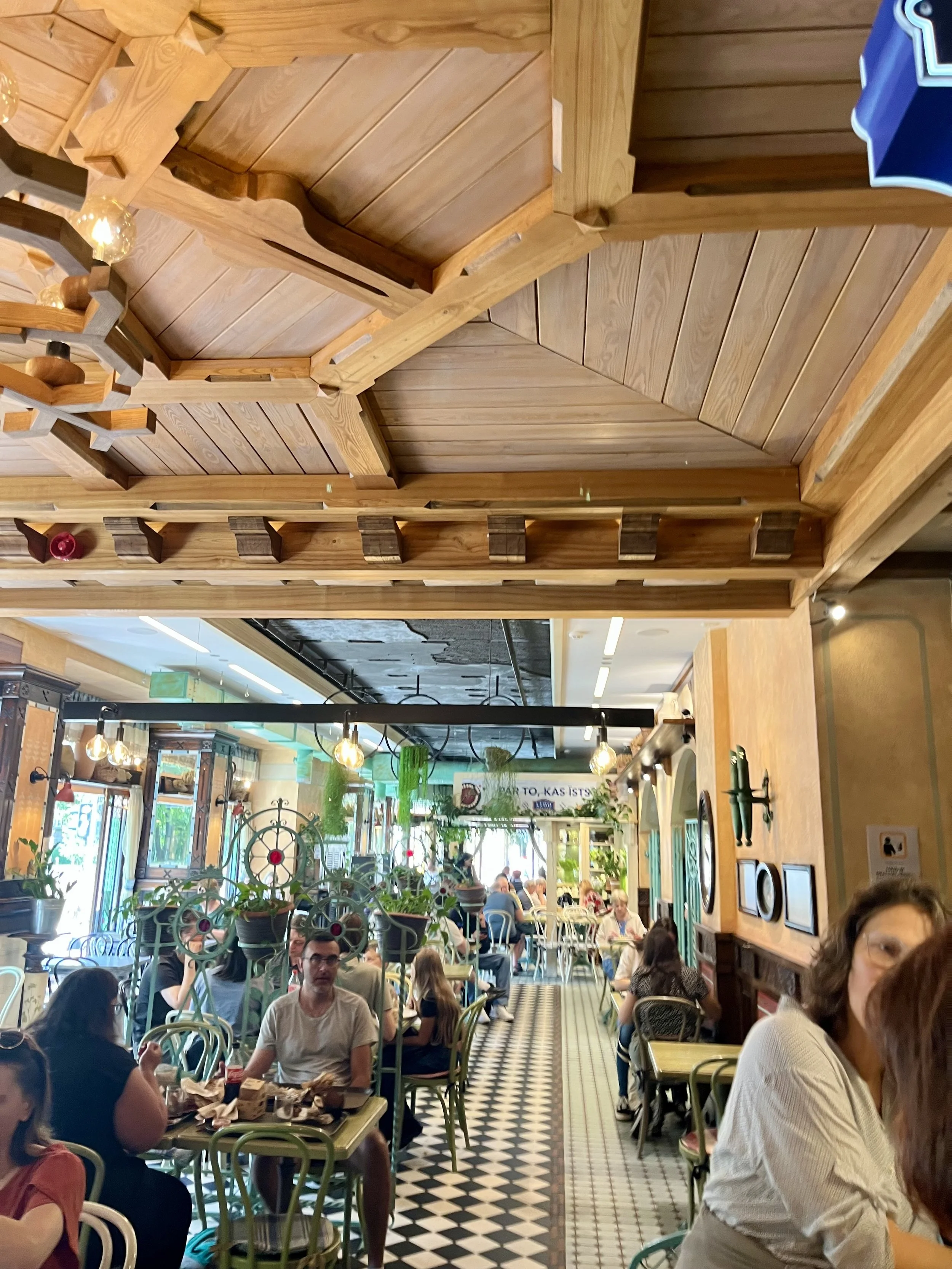
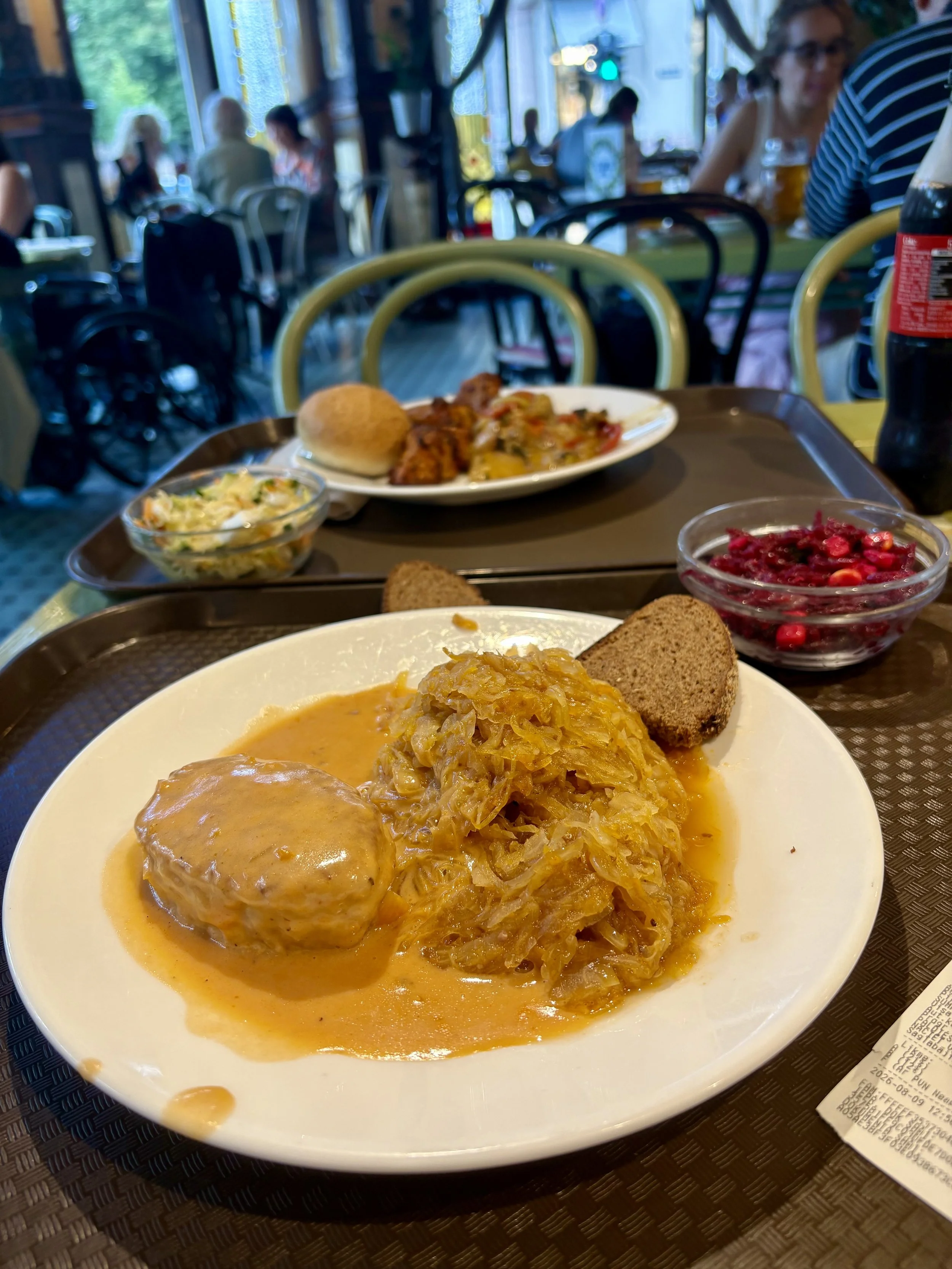
The next part of the day is visiting the KBG Prison Building in the heart of Center City. Our walk takes us down wide boulevards. There we see many high-end stores, modern high-rise structures, well maintained apartment buildings, and the beautiful Orthodox Cathedral surrounded by green park. The more modern City Center is the wealthy part of Riga. We have some time, so we stop for lunch, it turns out to be another cafeteria.  It is Sunday, the place was packed, all locals, all local foods.  The food is hot, hardy and very tasty.  A great stop and cultural emersion.

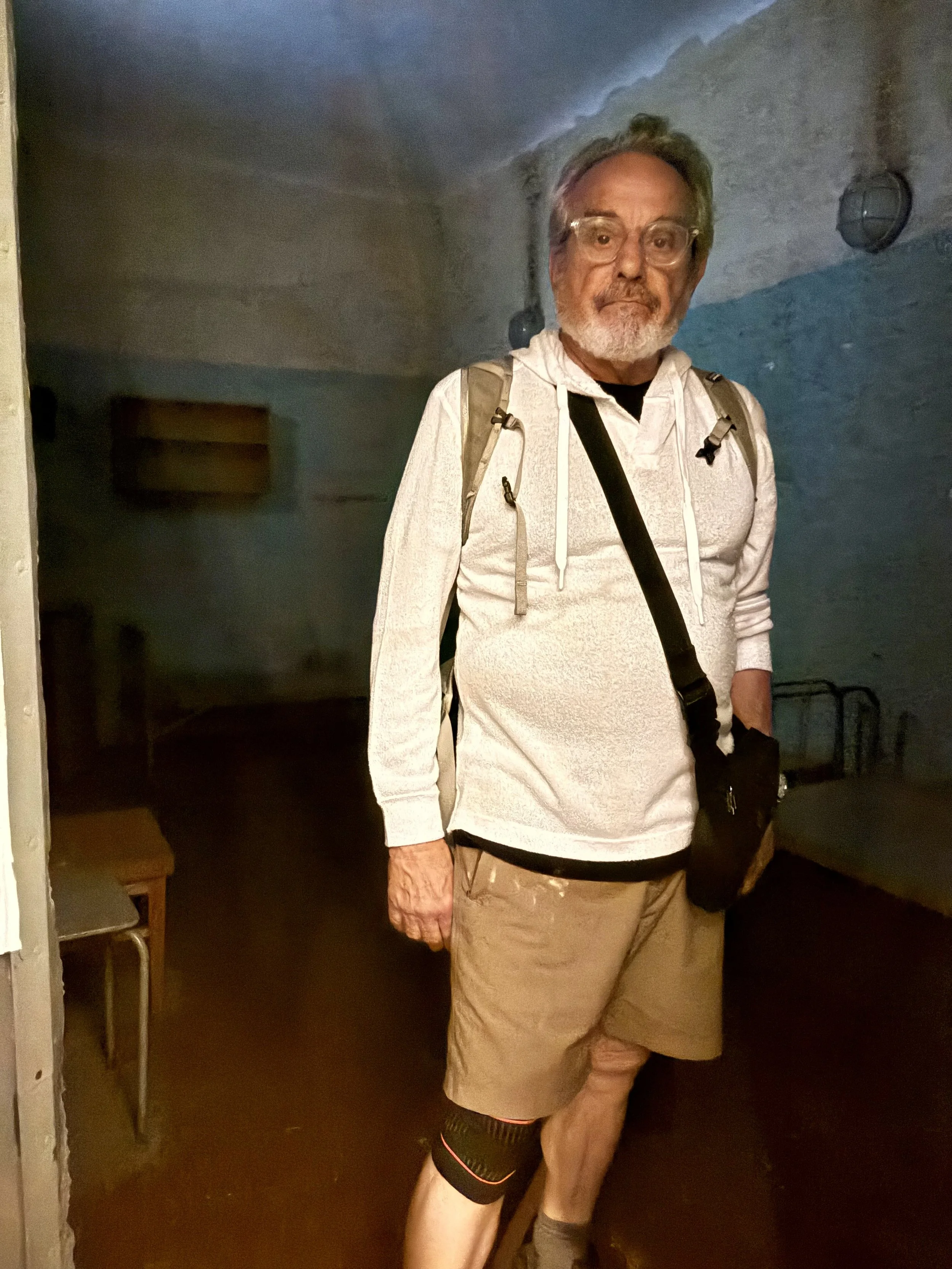
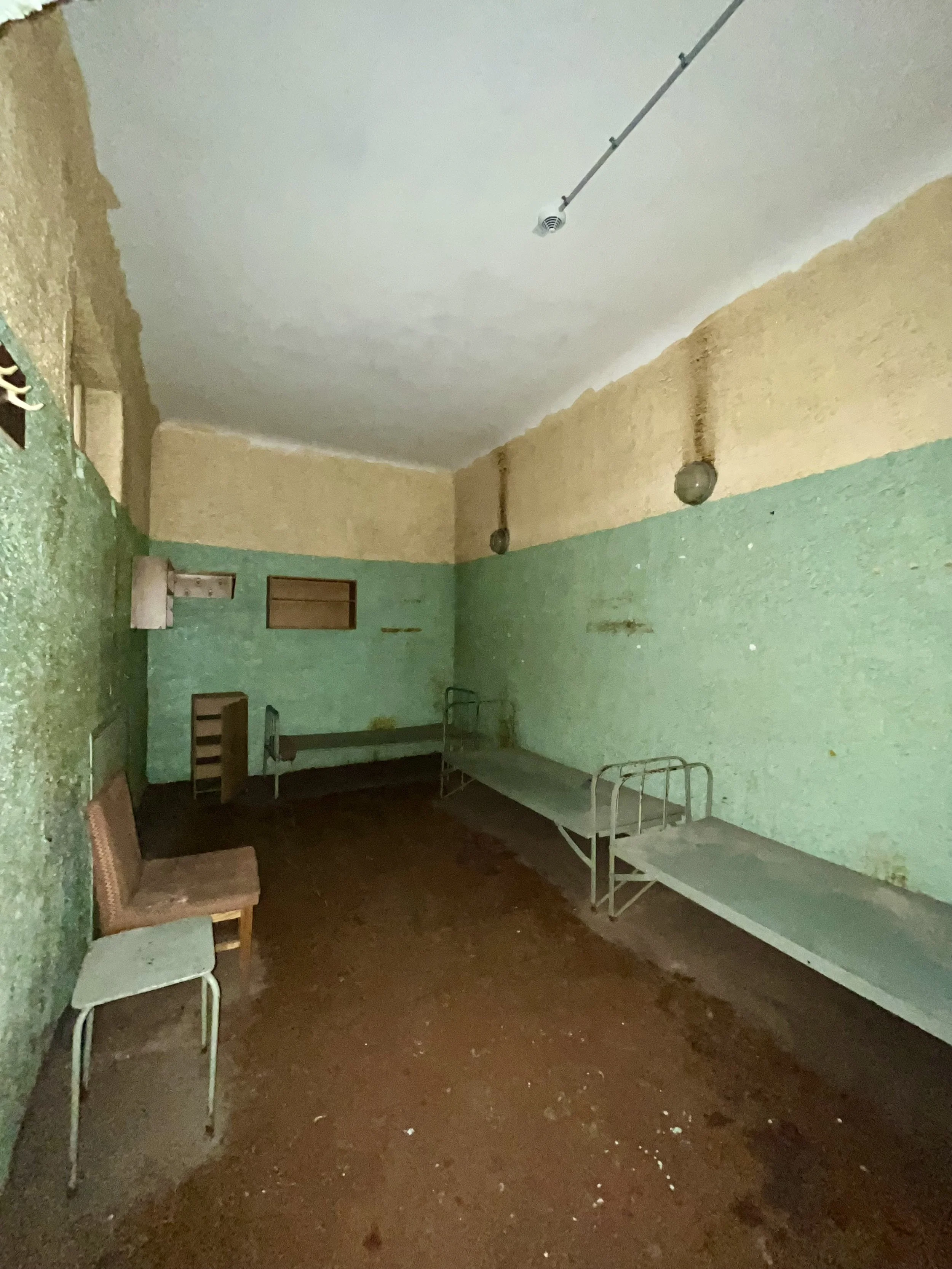
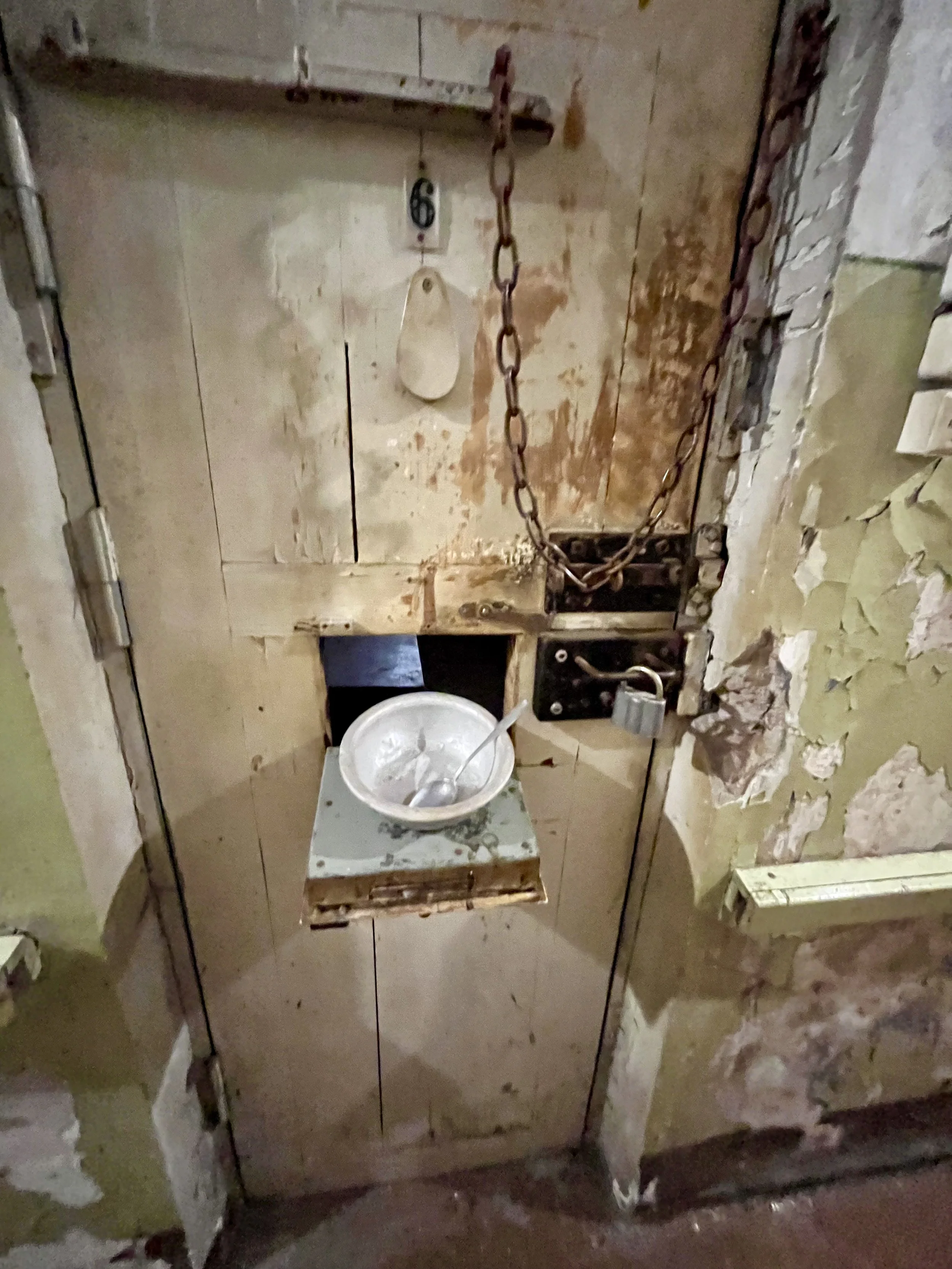
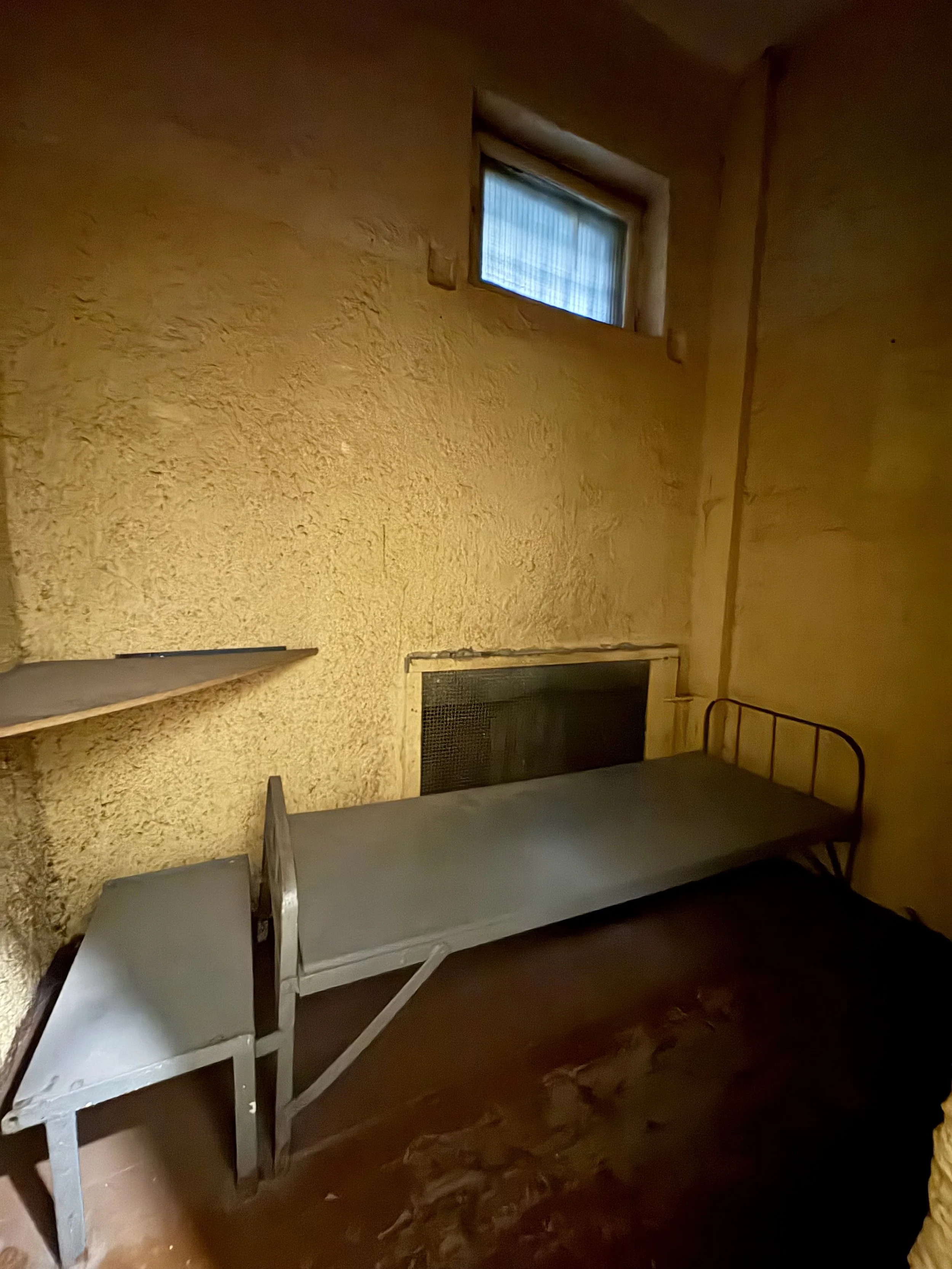
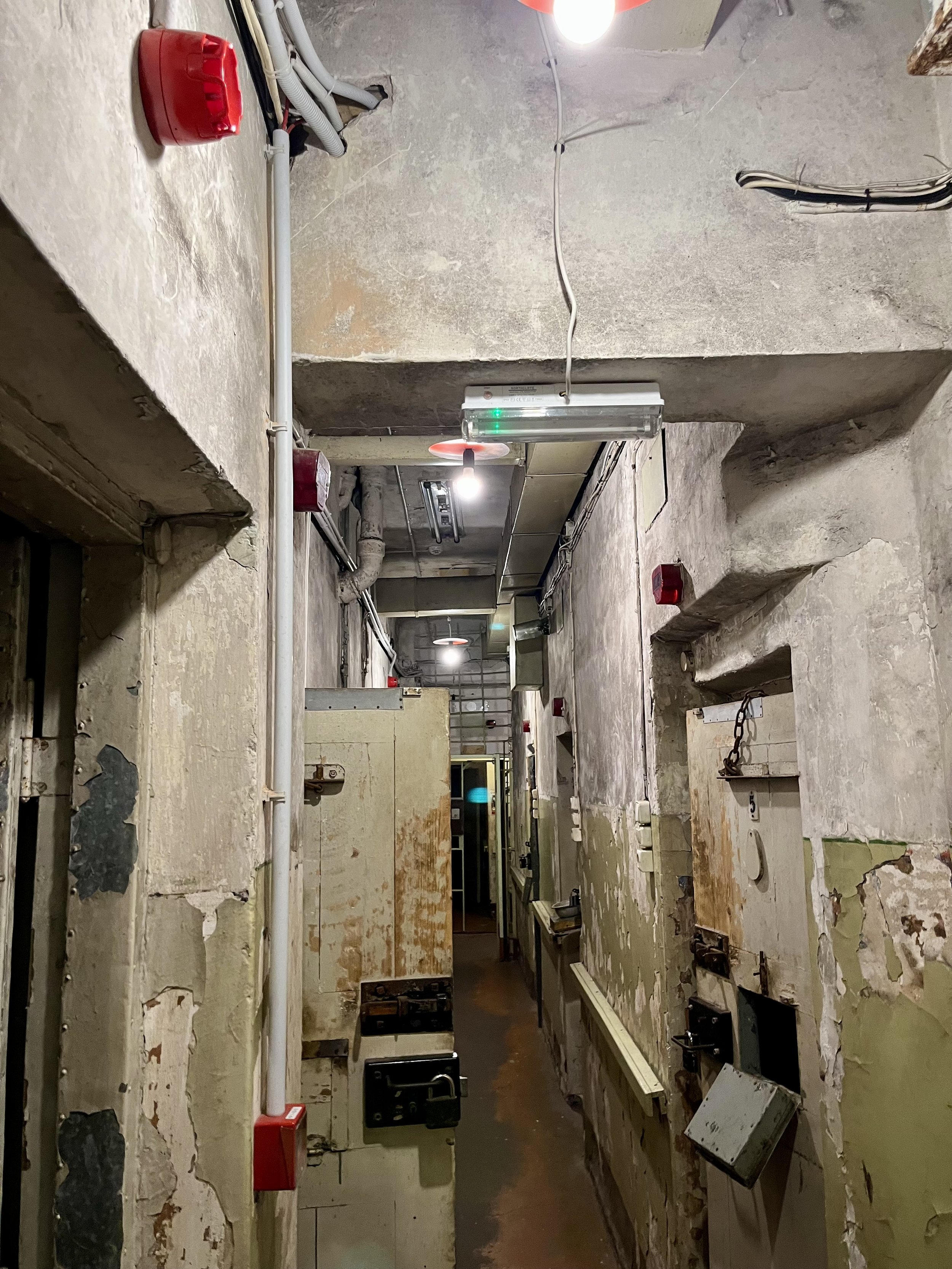
After lunch we find the KBG Prison Building enclosed between two modern buildings.  The building is nicknamed “the Corner”. The large interior runs multiple levels. Unlike the former Estonian cell exhibit and voice narrative, here the story recited by the stoic guide (in character) is crystalized by standing in the interrogation rooms, cells, exercise areas; and execution room. None of us sat down although invited to do so. This guide did provide descriptions of the tactics of persuasion or cruelty used. He did describe the punishment of death in a special room to many prisoners. (This was not clear at Estonia “Cells”). See photos below

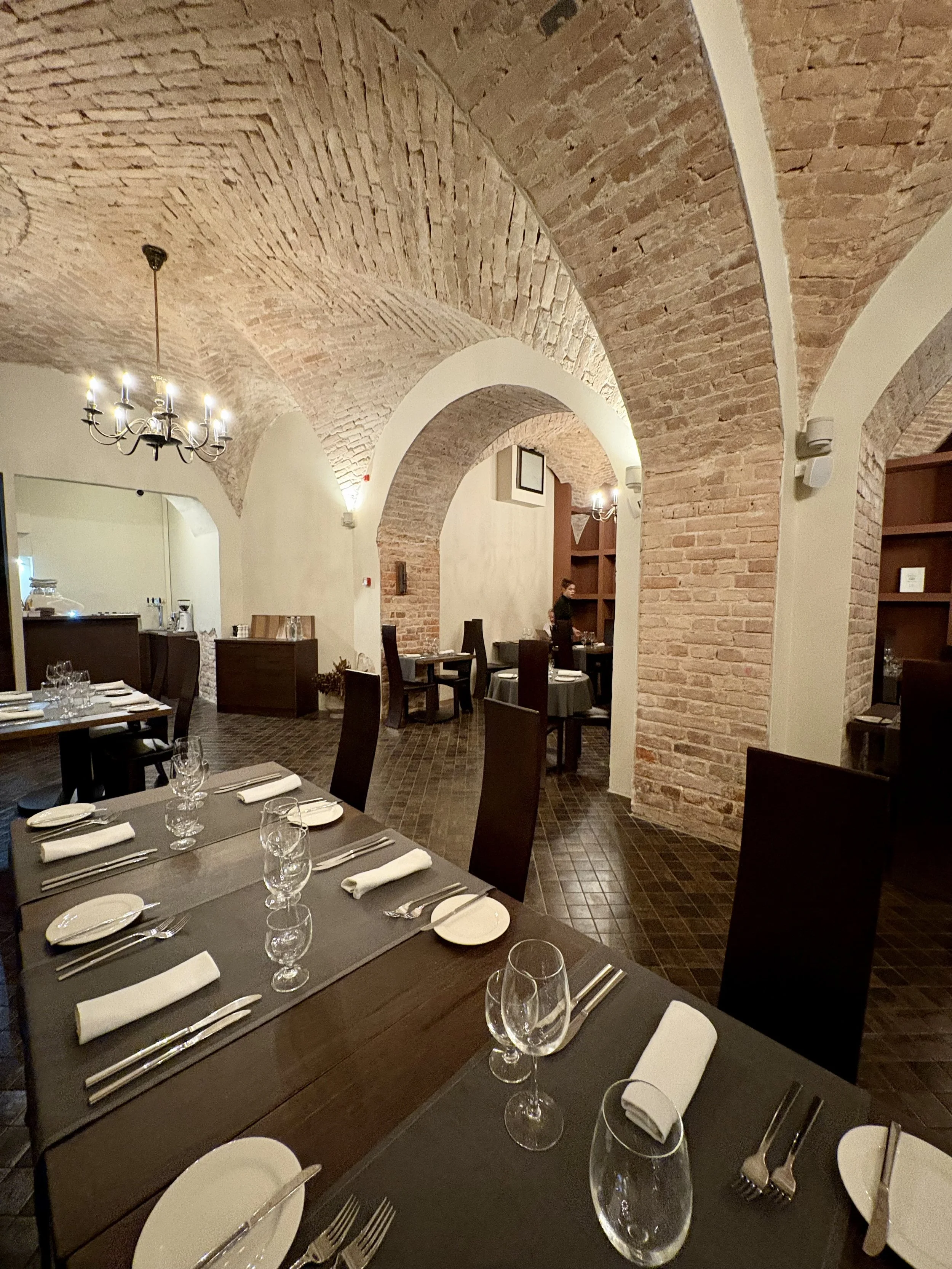
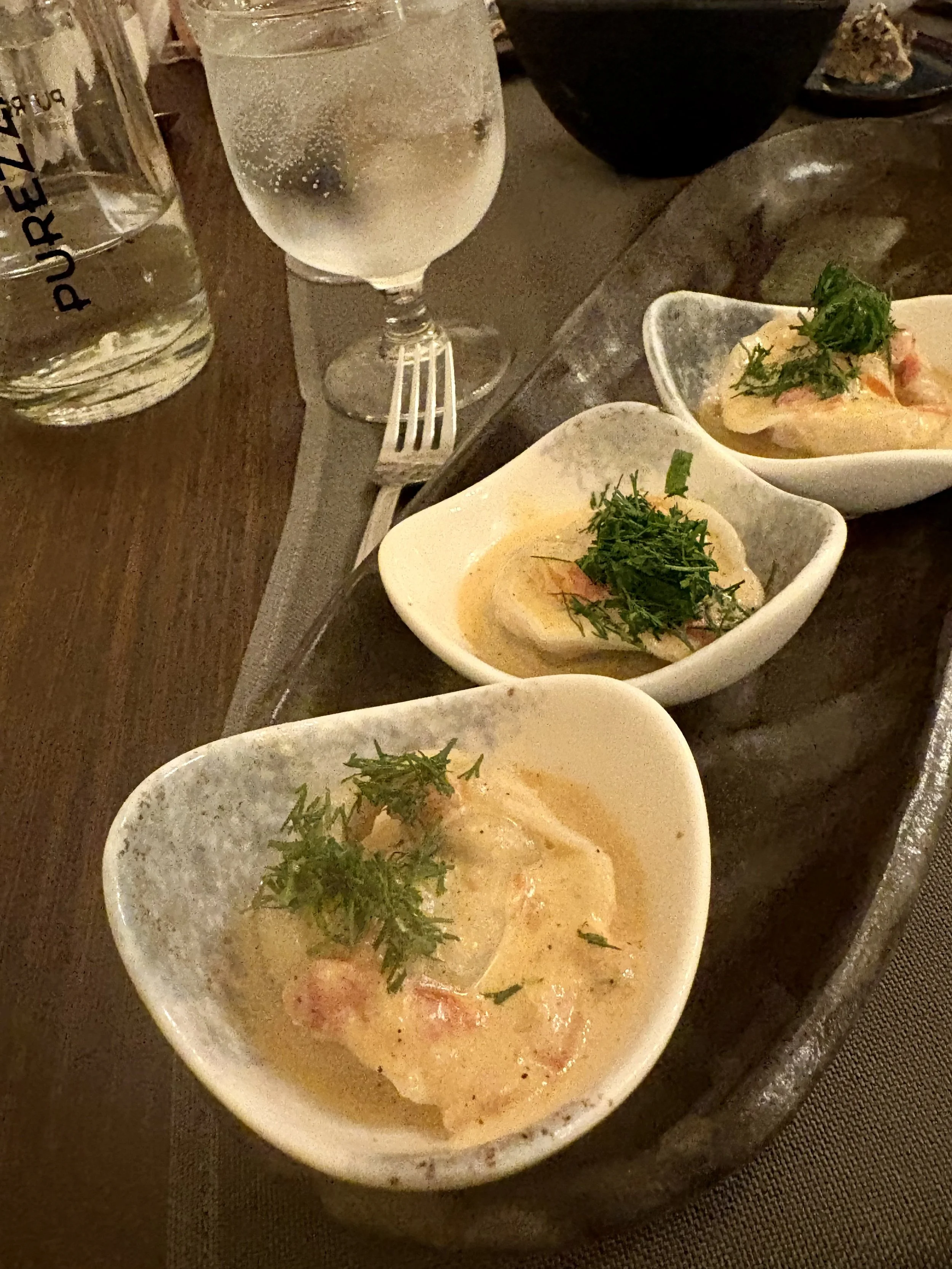
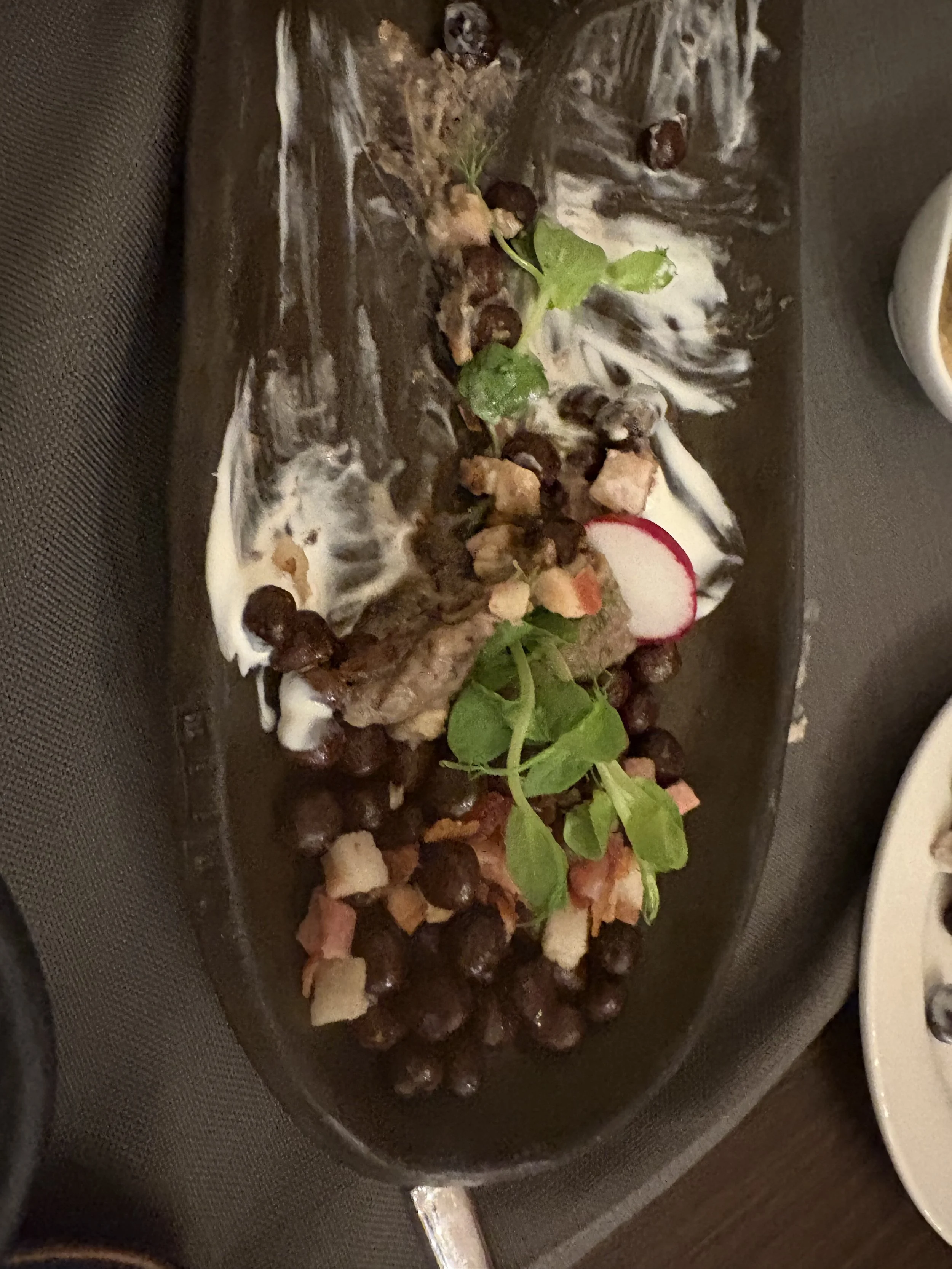
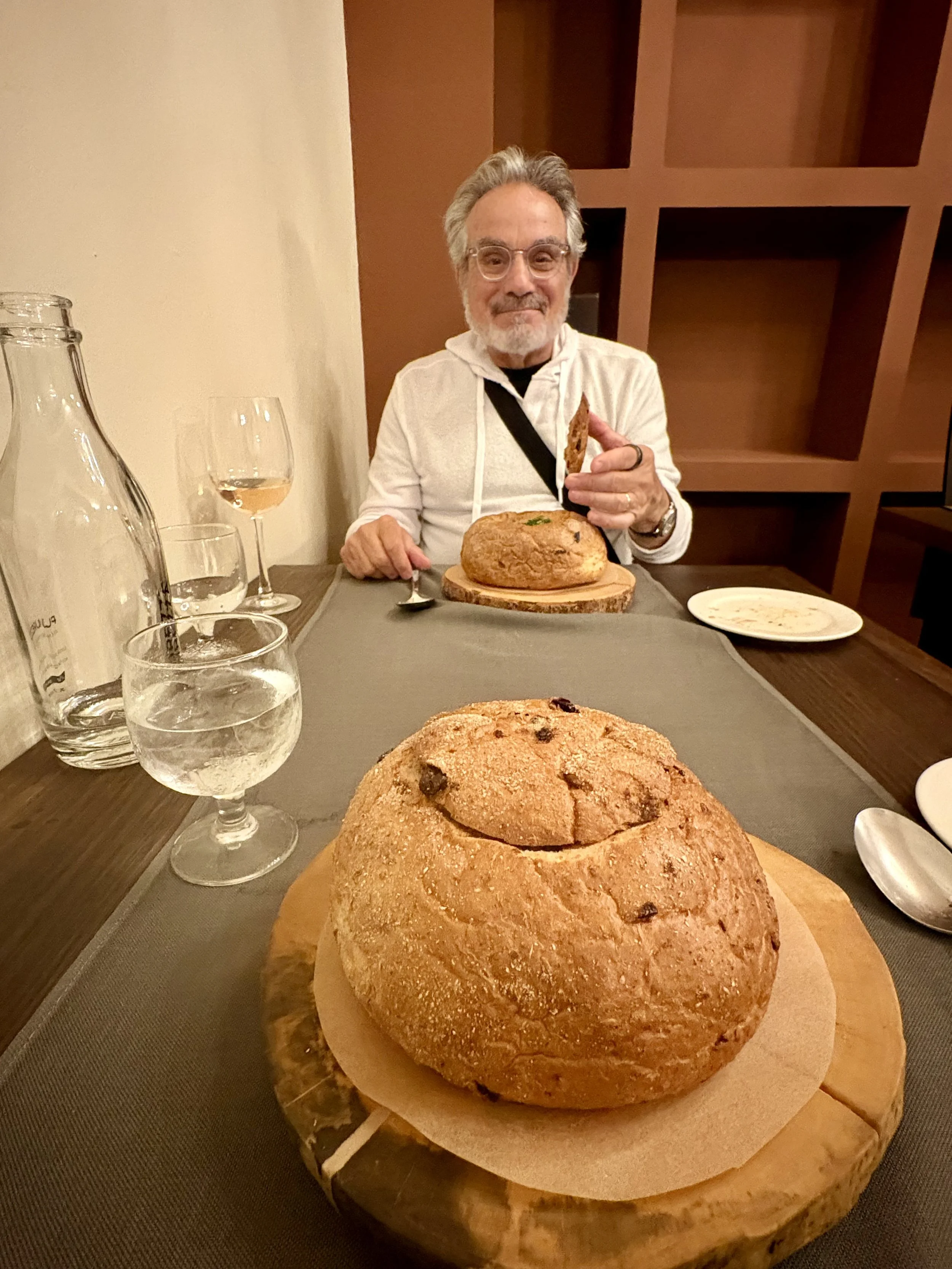
We ended the evening with dinner at a small elegant restaurant across from our hotel, called  “Mydol”, we ordered their special selections: dumplings, black peas and mushroom soup in toasted raspberry bread bowl.  It was served with liver pate spread with dark rye toast.  The food again is excellent and very different from any of our other travels.  The sparkling water, and Rose wine add the western touch!
House from the Russian version of Sherlock Holmes - very popular show here

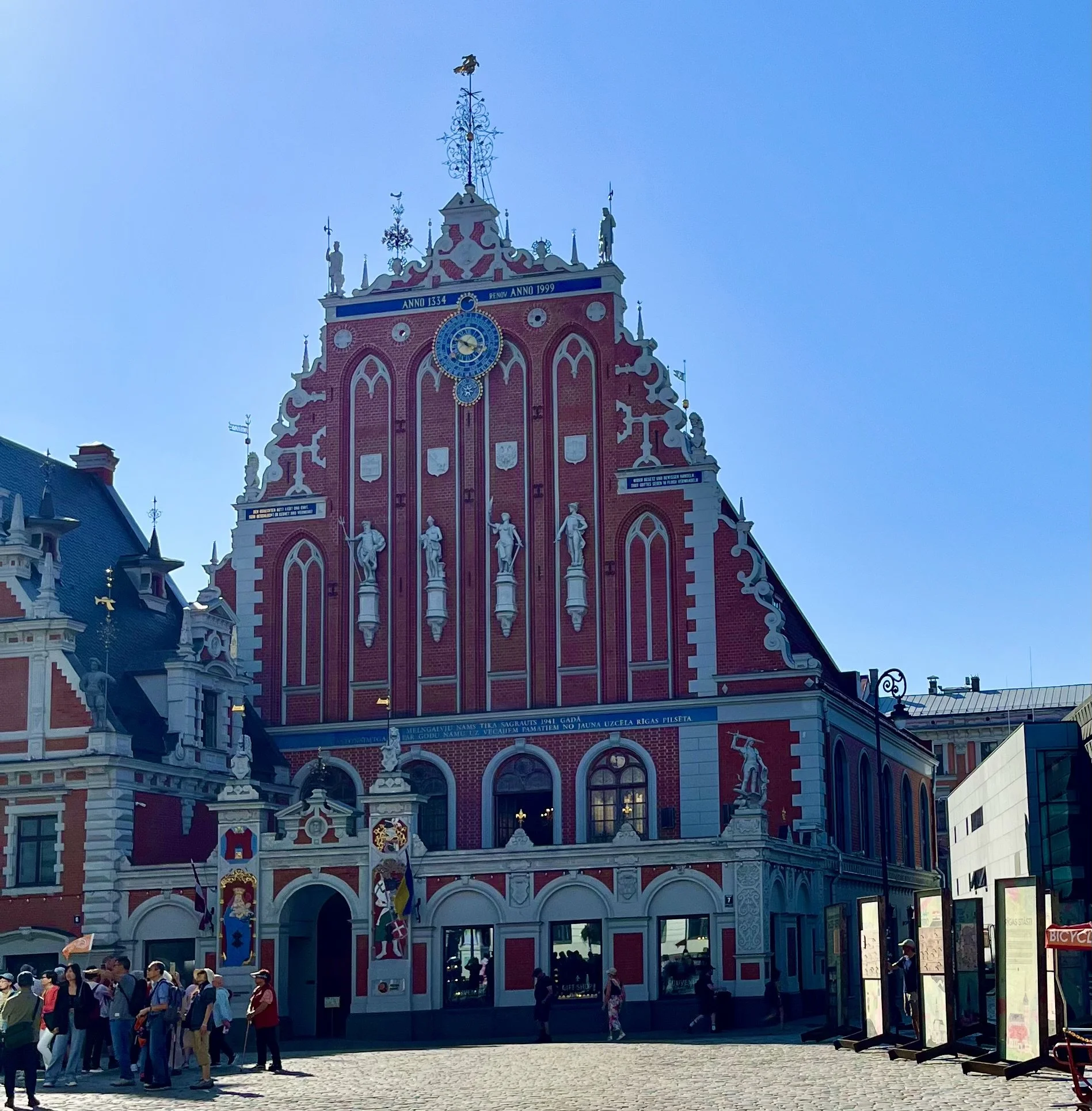
Our paid walking tour missed the mark so on final day in Riga we purchased another audio tour of old town.  After a quick breakfast, we are off again to explore this ancient city.   The tour was great, covering all our guide glossed over plus a history of the region.  It is a beautiful old town with original churches and some like the famous “House of Blackheads” building that was the residence of unmarried merchants, shipowners and foreigners, that had been reconstructed after being destroyed in WW II.  The app we have been using is called “Voice Map”, that we recommend for travelers like us that want the history and stories of the sites you visit. 

We are back by noon for hotel checkout.  We hang out in the lobby with lunch and some blog work before walking through the cobblestones to the bus stop for our 3:15 bus to Lithuania. 

Riga is outstanding, 2 days was just right for the city.  We are so glad we added this Baltic region on to our trip.

Inside the Nativity of Christ Cathedral (Russian Orthodox)

Tallinn Estonia

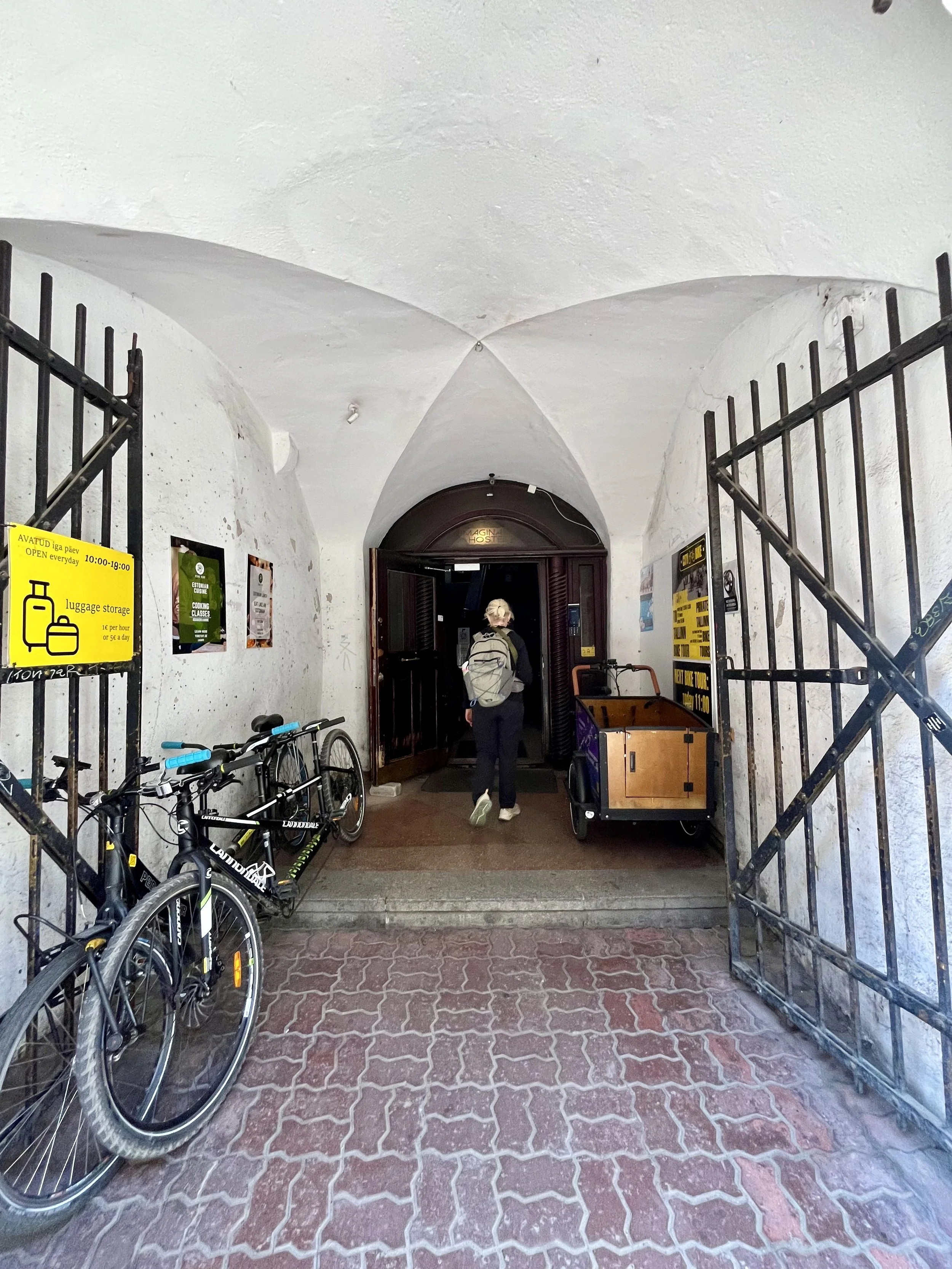
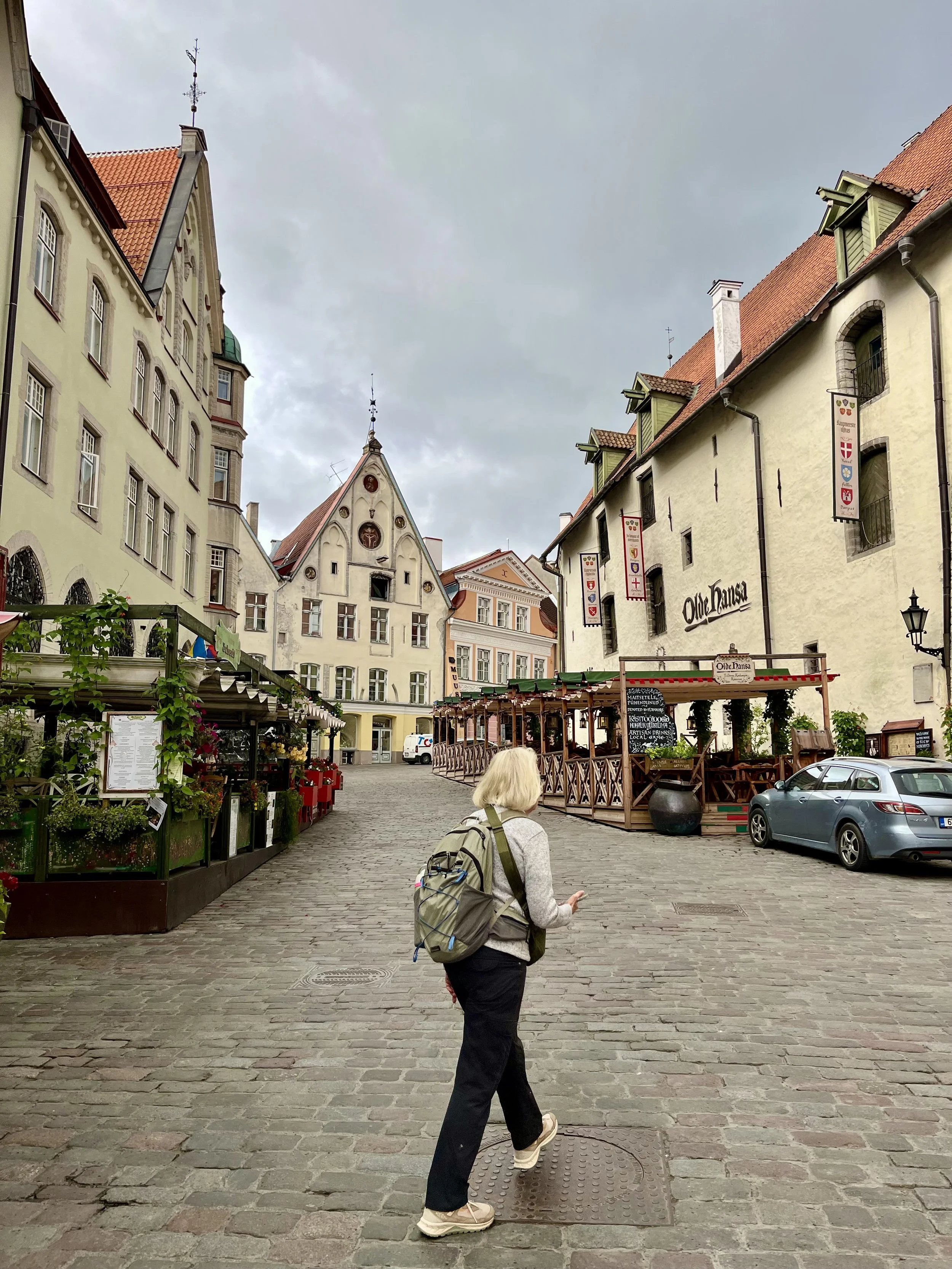
Entry to old town

Day 1

We arrive to Estonia in late morning on a quick ferry from Helsinki. It is the home to about 1.3 million people. The average Estonian is 42 years old. Most Estonians speak English.  Tallinn, the capital has about 450,000 people. Historically, in 1918 after WWI Estonia was independent but could not keep their independence from the USSR after WWII, resulting in a 50-year period of Soviet dominion and communist stagnation. They regained independence in 1991 after the Soviet Union collapsed. Now, the country is especially strong in electronics and telecommunications. It is a parliamentary democracy, and one of its main policies include the designation of internet access as a human right.

We leave the dock and navigate the local tram system to our hotel, outside the old town but with a convenient tram stop at its entrance. After a quick rest we are out again, on the tram to old town.

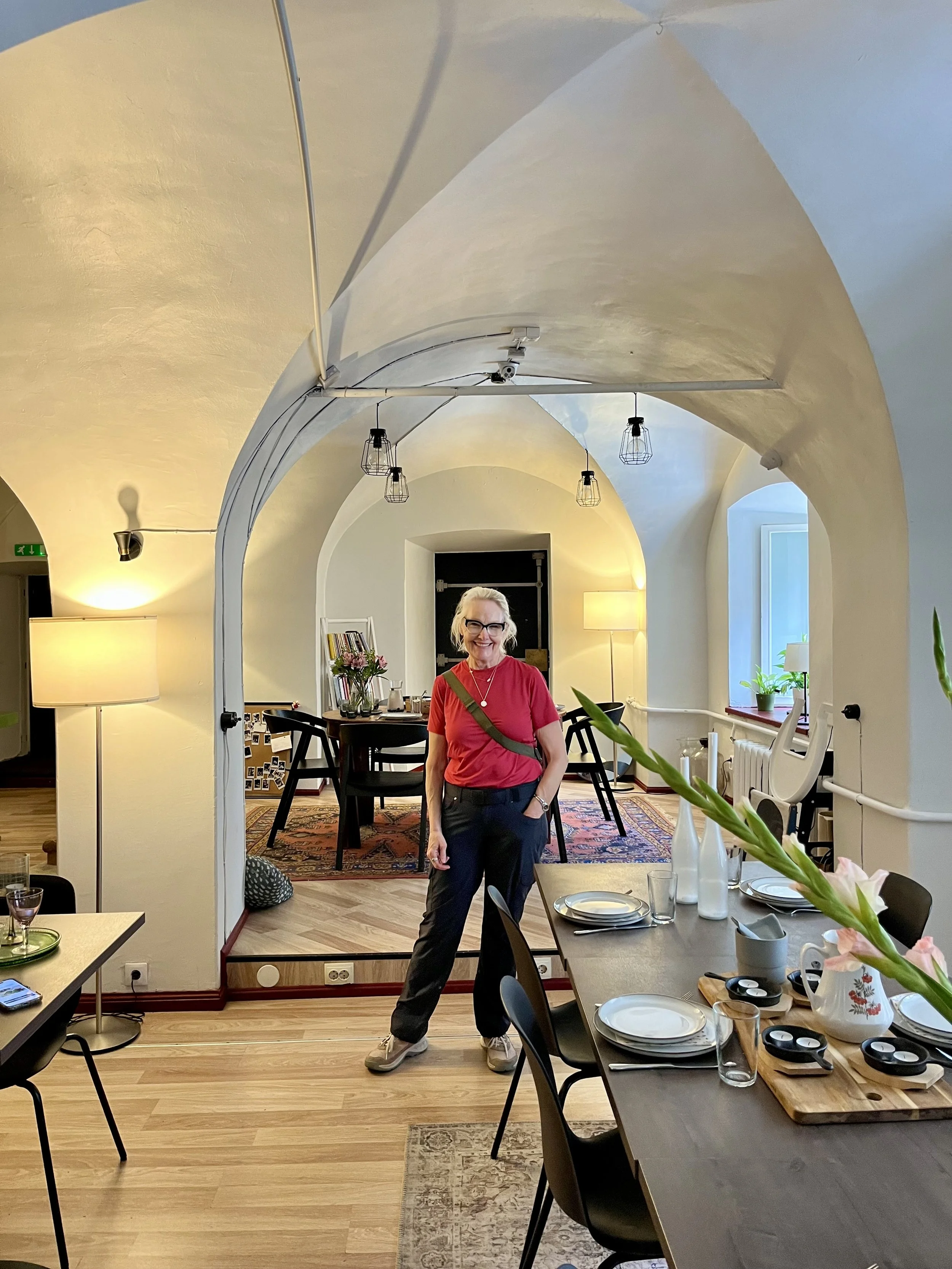
Janet has booked a late lunch entitled “Eating with an Estonian.” After navigating the narrow cobblestone streets we find our guides traditional home, up to the third floor of a private restaurant/cooking school that is lovely inside, set table with white table clothes under the supporting arches to the ceiling. For the next 2 hours we have a wonderful lunch with a German mom and her teenage son and our host.

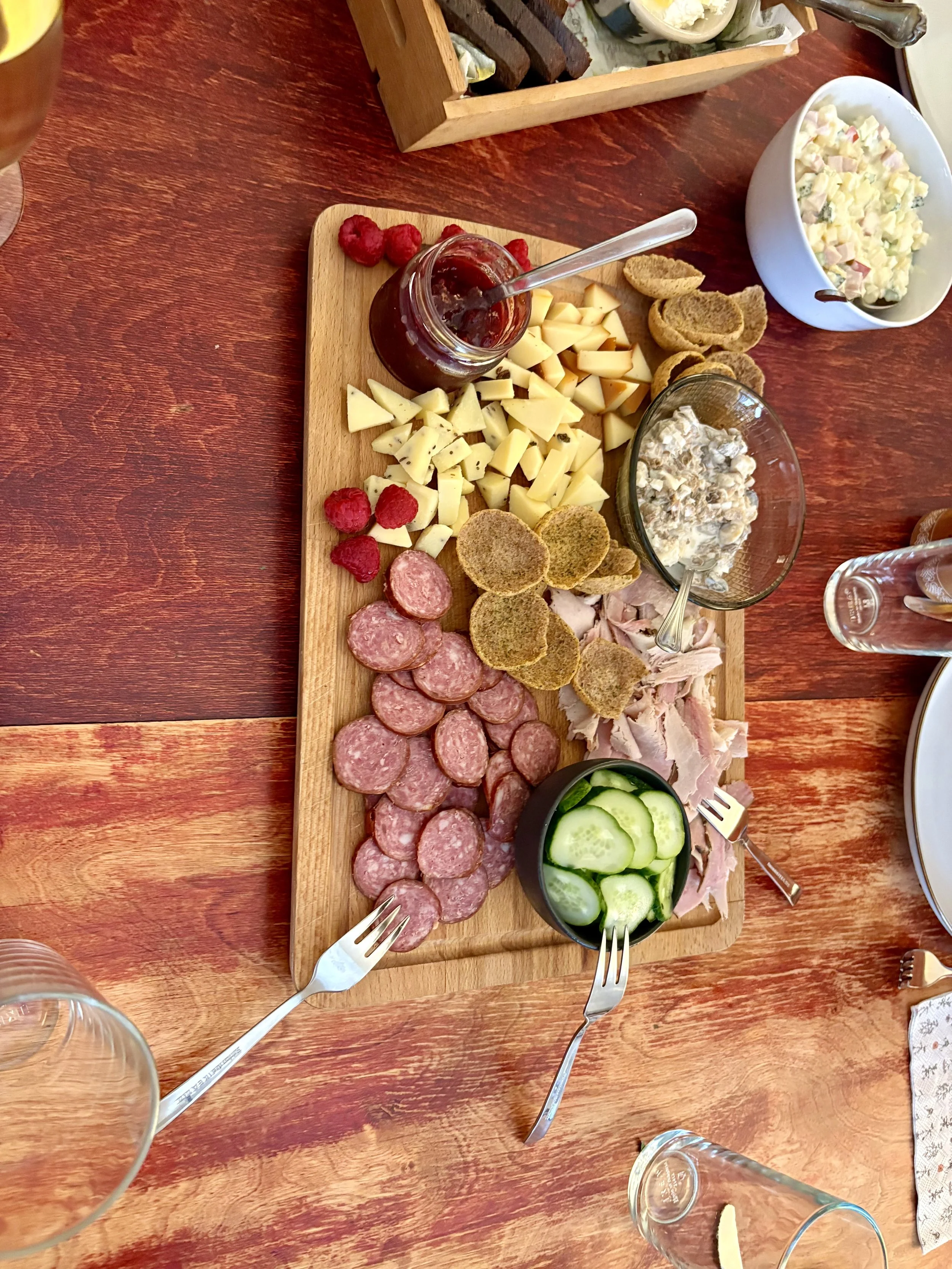
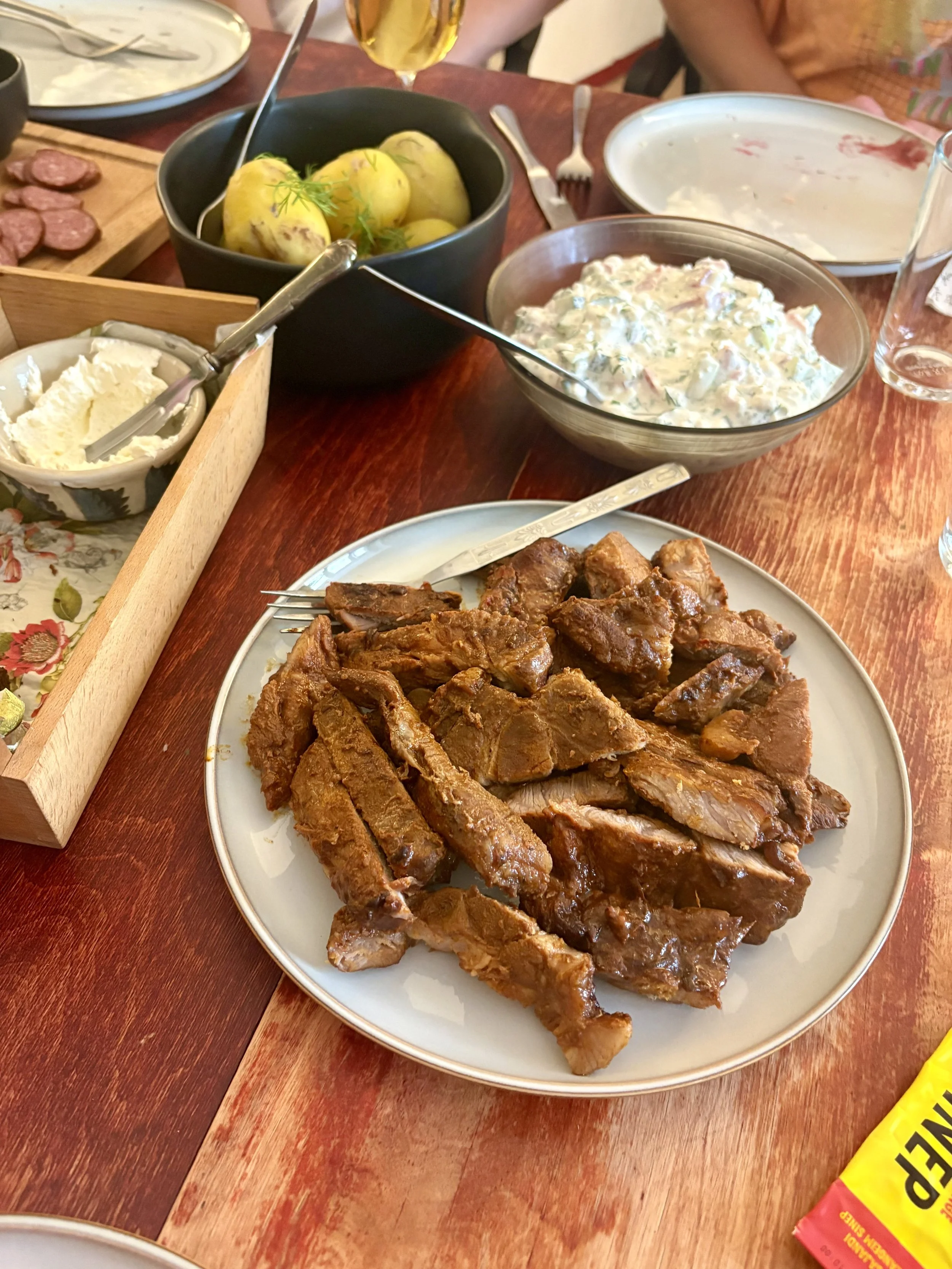
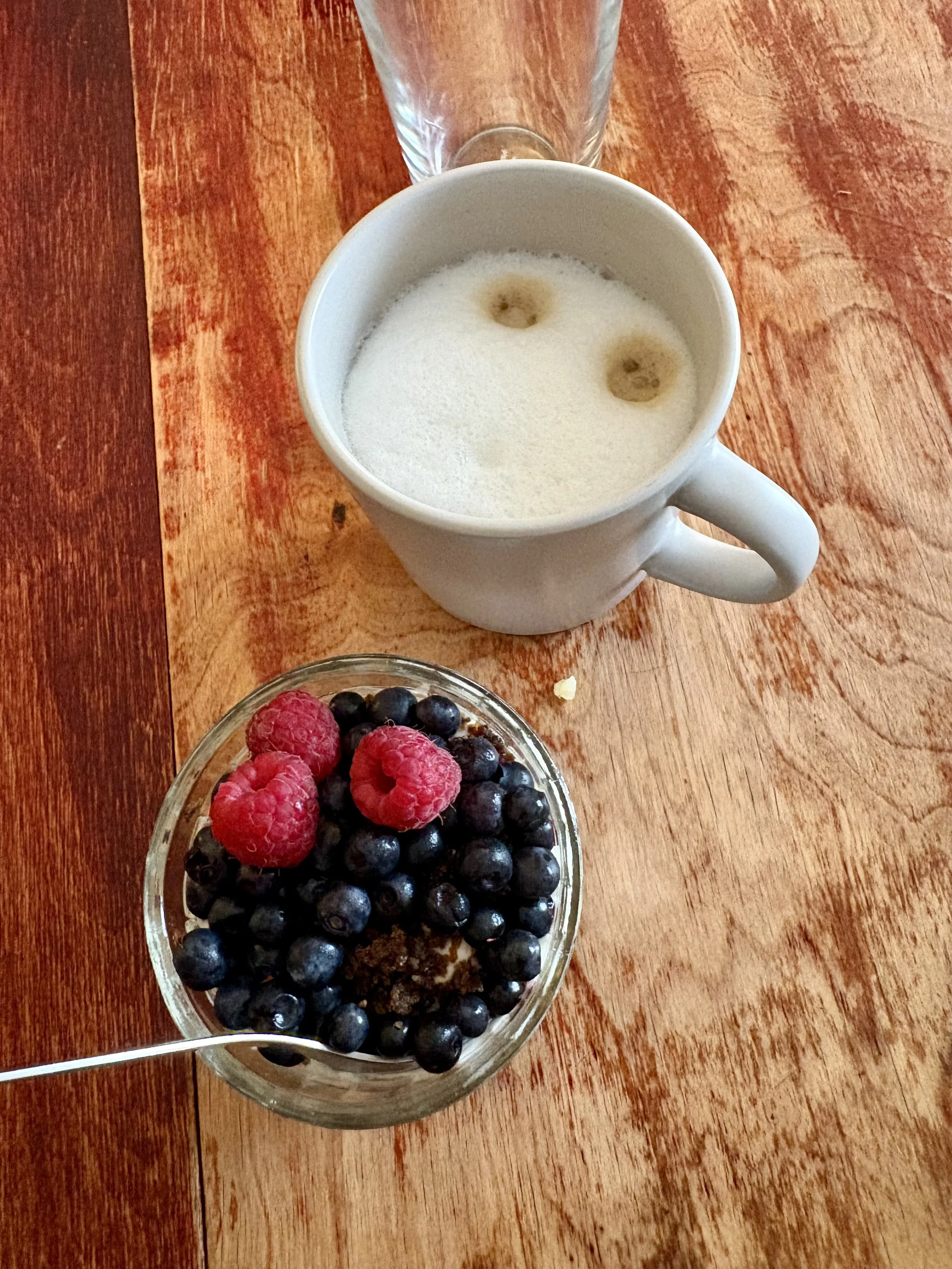
As we eat, she shares stories of Estonia, discusses the local foods, agriculture, her cooking methods and how and what she prepared for us. It is a wonderful experience; we really enjoyed it. See descriptions of our meal in the photos below.

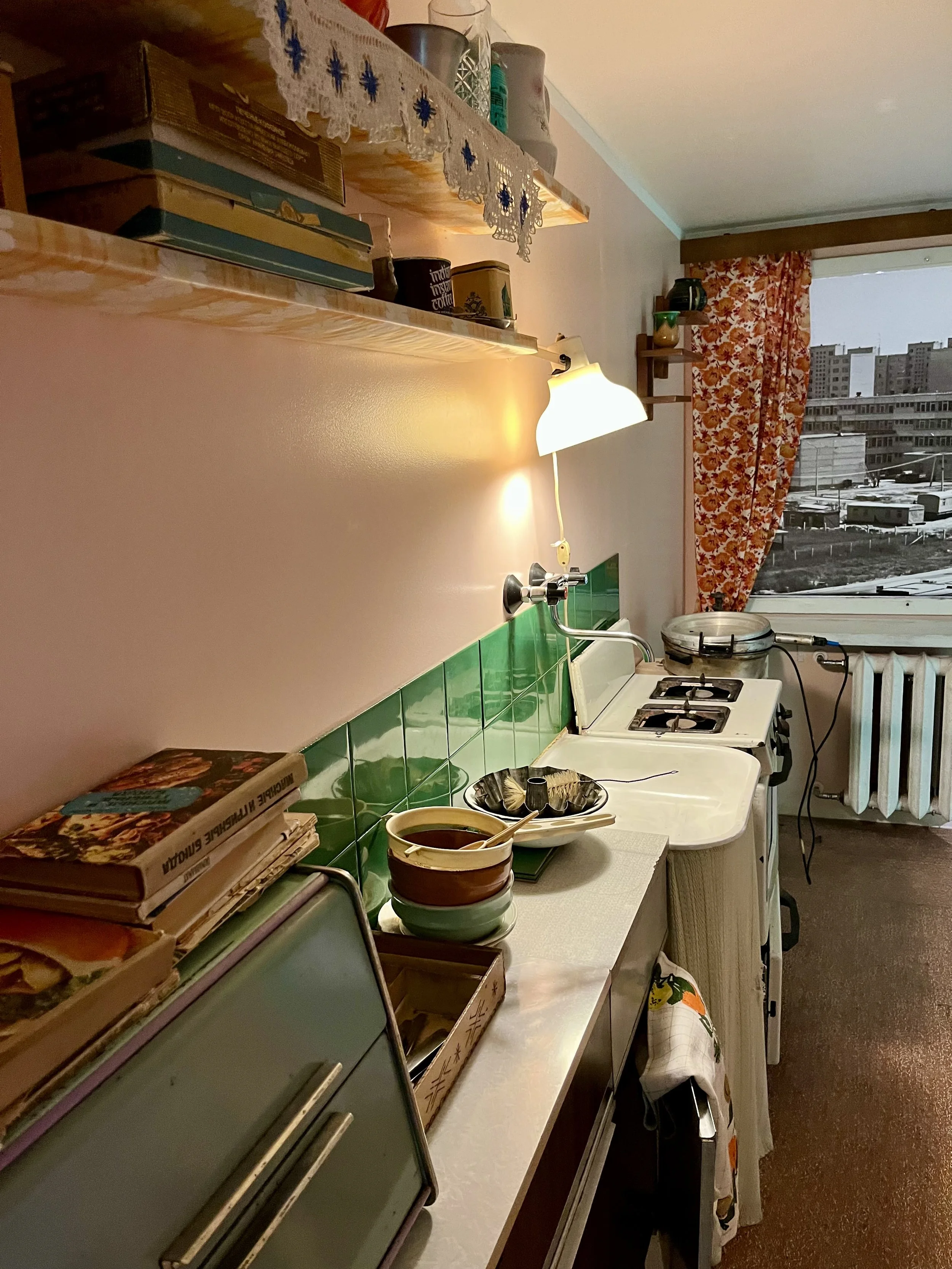
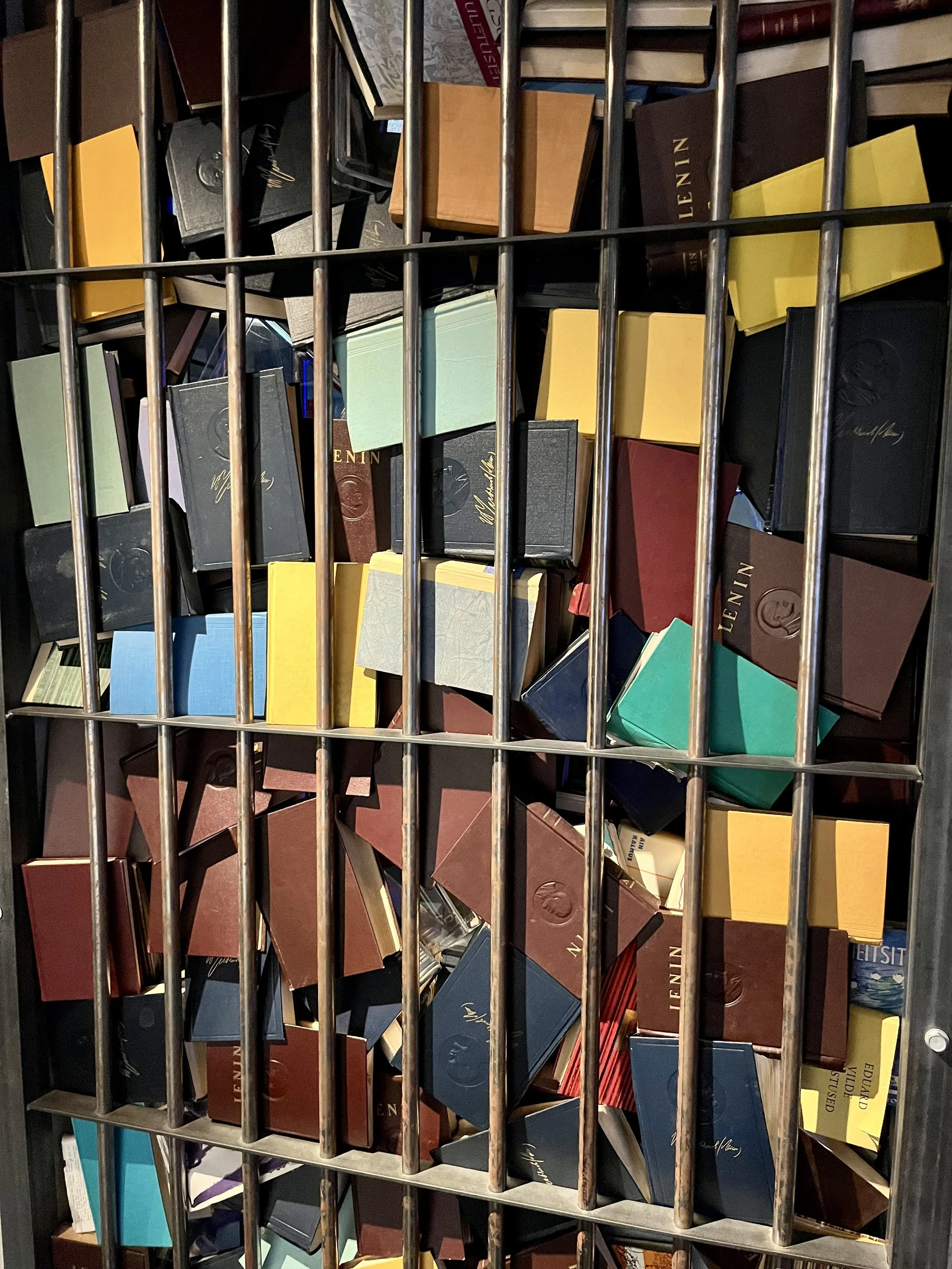
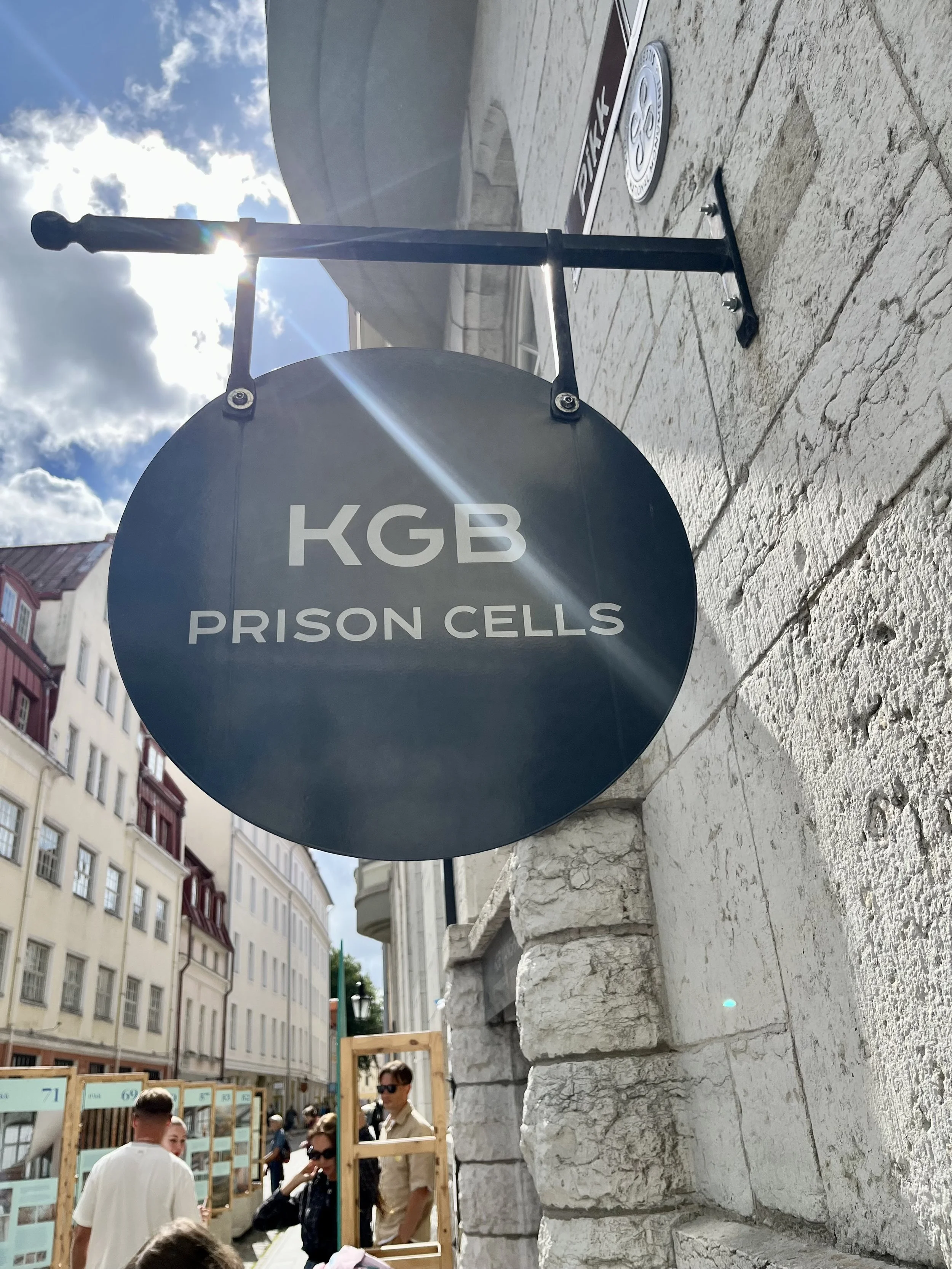
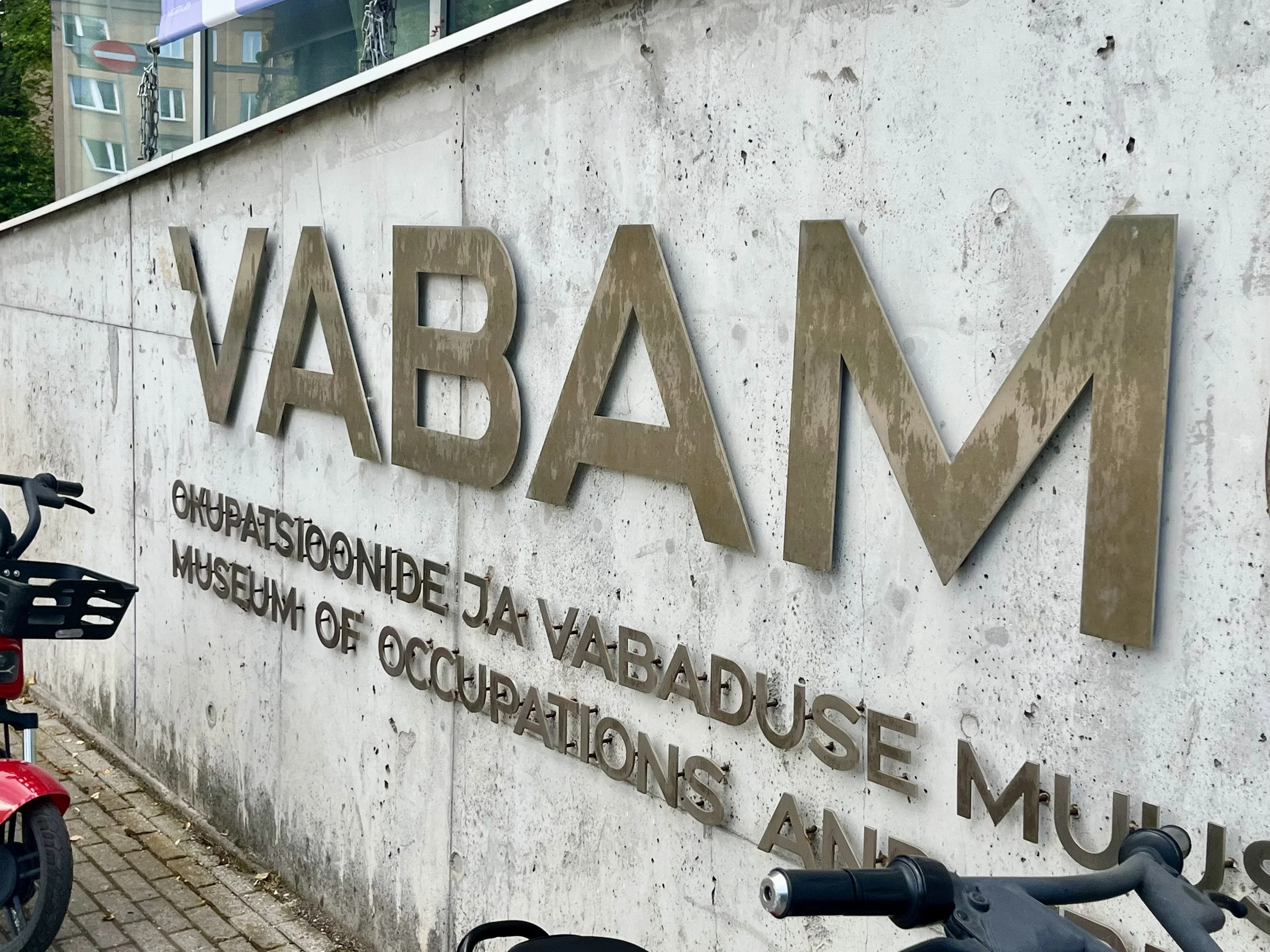
After our lunch we wander through old town and head to the Vabamu Museum of Occupation and the separate KGB Prison Cells. This was a humbling museum experience.  Using provided headphones we go room to room with narration about the occupation of Estonia by Russia from 1940 to 1991. We saw artifacts, recreations of apartments, actual jail cells and heard interviews of people exposed to treachery (ie. Man rolled up inside a Persian rug with legs hanging out beaten by leather covered baton, after confined in a chair and beaten on the face and shoulders) and those involved in the eventual freedom from tyranny and the process of building a democracy.

We navigate the local bus system back to our hotel for a break.  We venture out again for a late dinner at a local pub restaurant and have a truly Estonia experience.  Bosch soup with a charcuterie board. Contents of board? Cold sliced beef tongue, pork, lard curls, pickles, black bread, a dip that was like butter, pickled garlic, and cabbage. We really liked some and left others alone (lard!)

Frank’s home town in Michigan is Livonia

Day 2

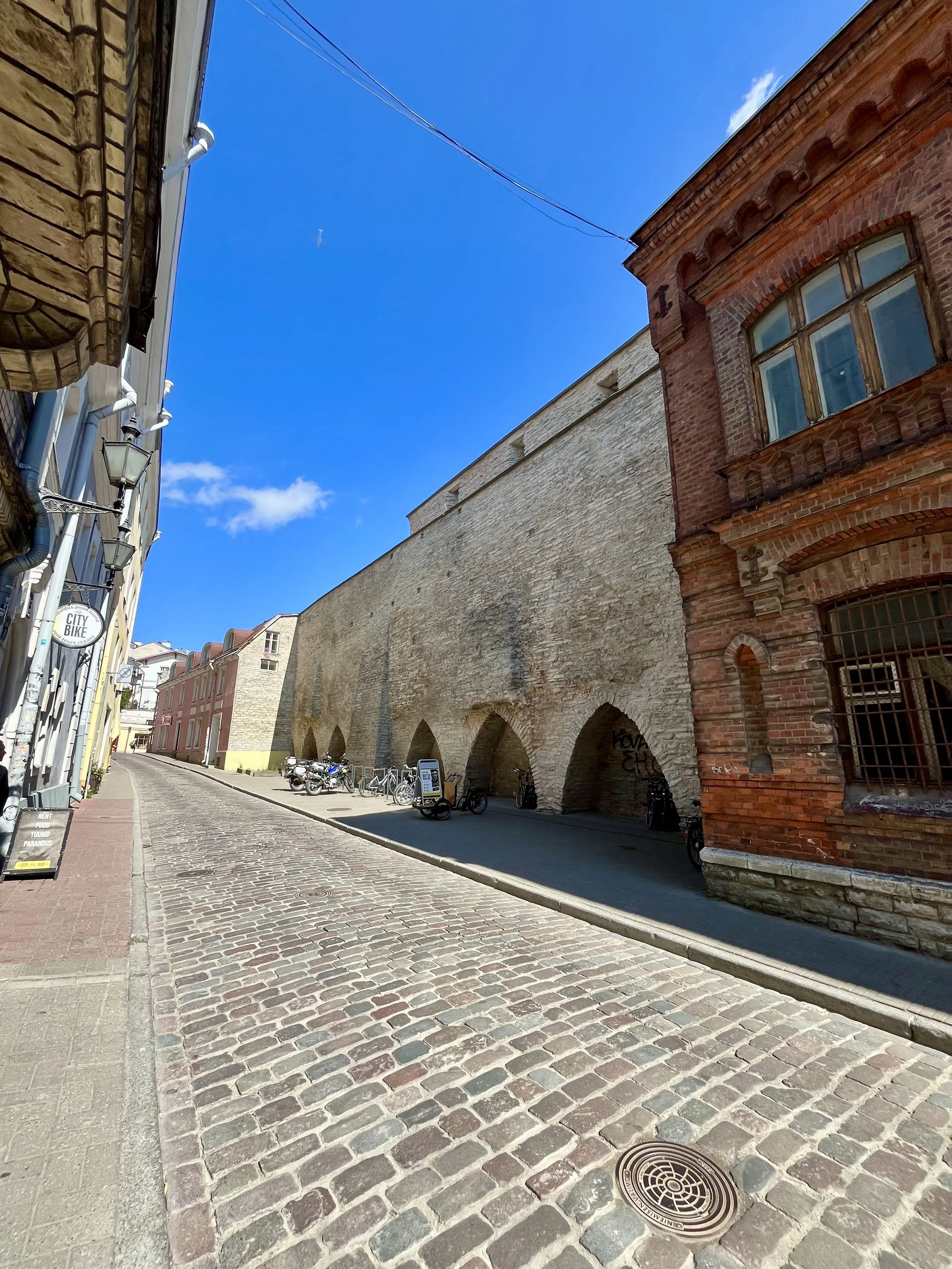
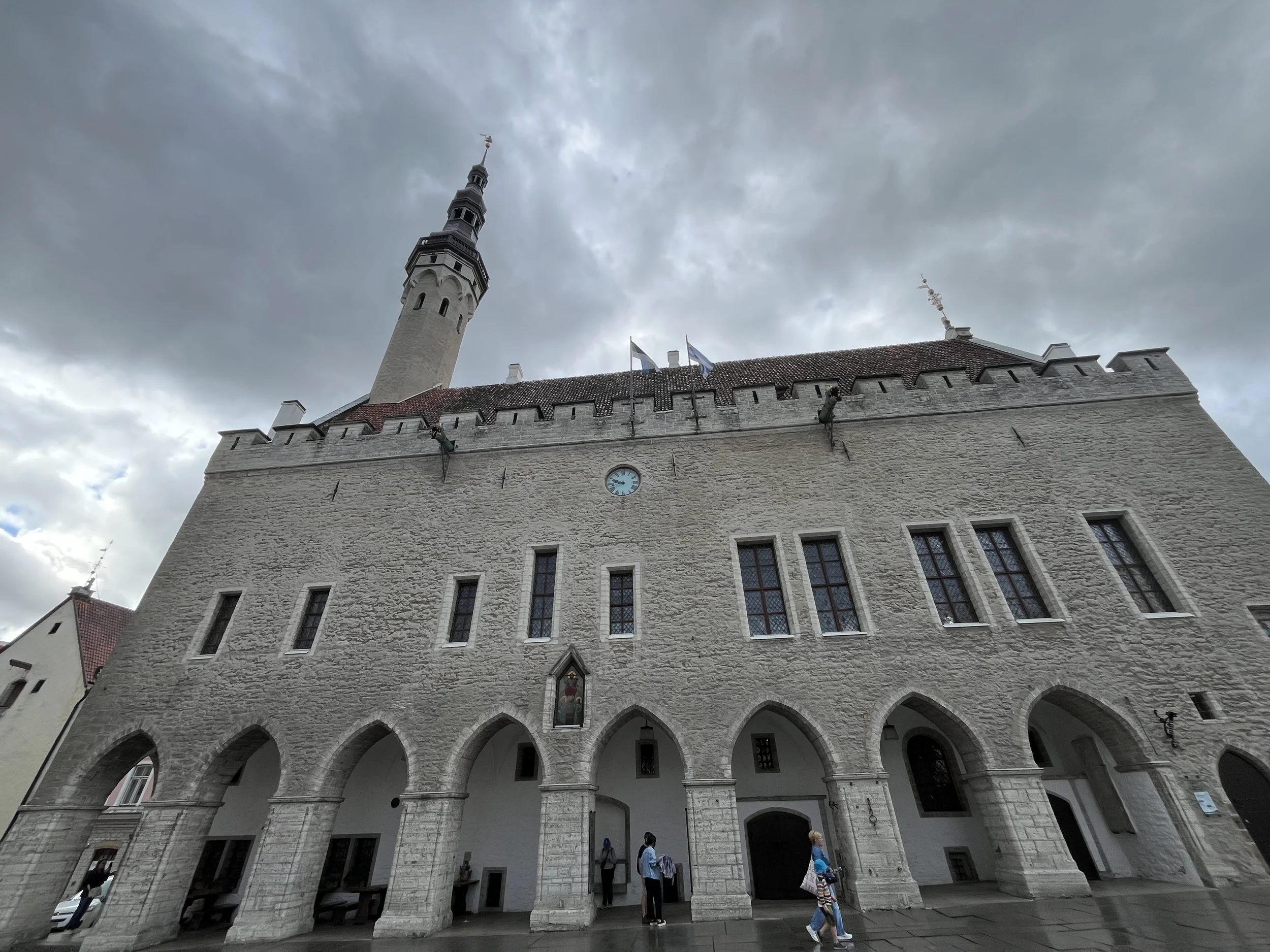
Out travel through the Baltics is just 7 days, so we have a packed day full day.  We are out early, back to old town for a 2-hour walking tour. We have a nice small group and good guide, the weather is sunny, mild and we enjoy a good walk through all the sites of old town; a very lovely area, including stores selling souvenirs of Livonia, another Baltic region. The highlights are the history of two cities, the lower city that controlled the trade through the Hanseatic League, and the upper city where the landowners lived. Both have original walls. We then saw both Lutheran and Russian Orthodox cathedrals, and a historic mid-century walk in pharmacy with the potions, herbs, and the equipment.

The entire square

After the tour we find a wonder place for lunch and a break. We continue to have excellent meals on this trip; this one was genuinely great. Janet is committed to making the Salmon soup served, this time does not have cream base, full of flavor with dill, potatoes, and tender fish. See photos.

Goat cheese salad for lunch

After lunch we are off for our next tour, a 3-hour 10 km biking tour outside the town. We are excited about getting a wider perspective about the culture of Estonia. Three other people join us and we are off with the guide. Very quickly we are out of the city and stop at our ferry port to view a large photo board of the mass of people that came together at their outdoor amphitheater and park for a patriotic outpouring of love of country. Our guide tells us the story of Estonia’s search for independence through song and peaceful demonstration, successfully convincing the Soviets to relinquish control.

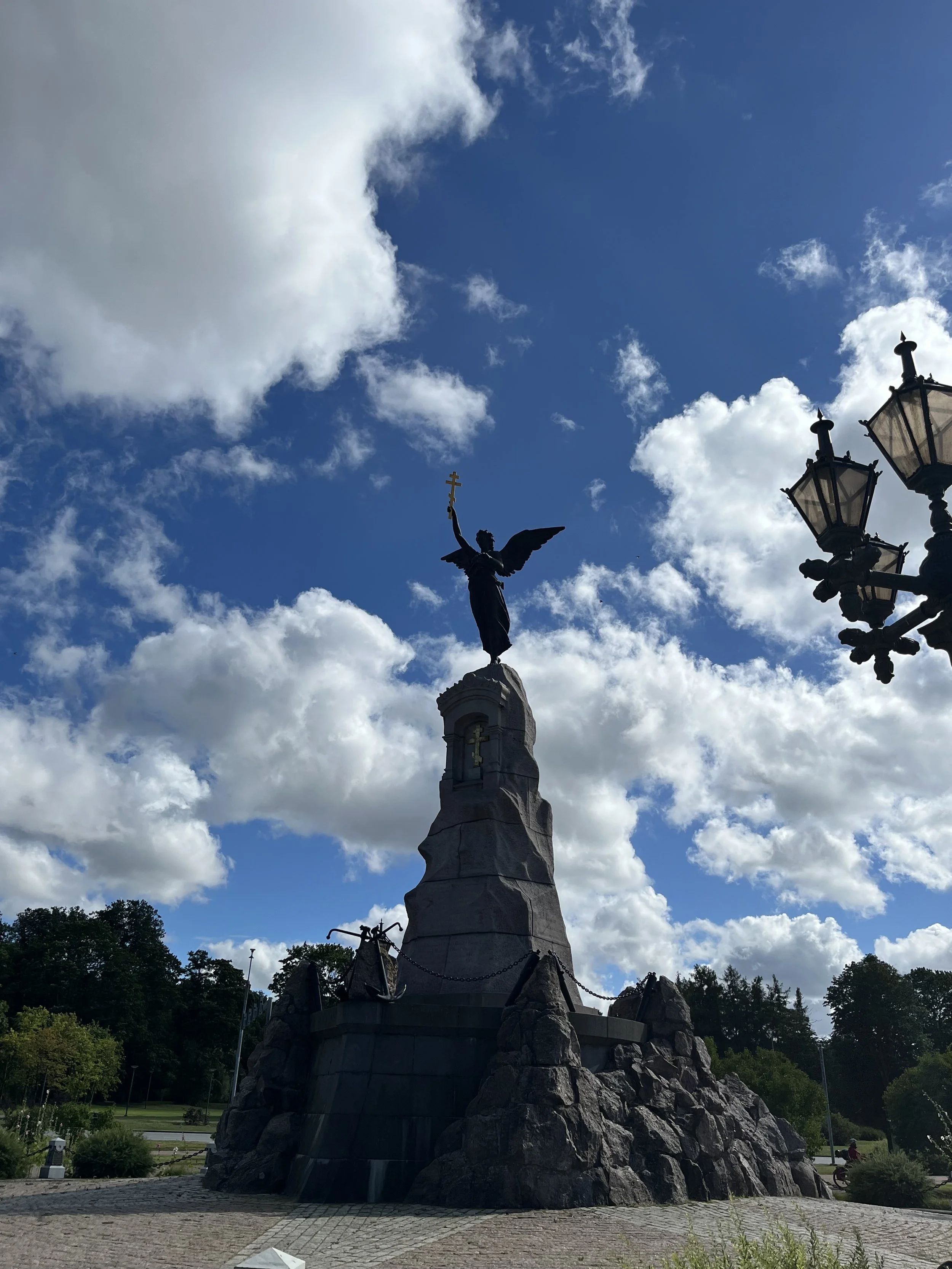
Next, we bike pass the open sea, the bike trails are large, new, and clean of debris. We are really enjoying being back on bikes. Next stop a memorial dedicated to 2 ships that sunk on the way to Helsinki due to the Russians insistence that they sail in dangerous weather; many lives lost.

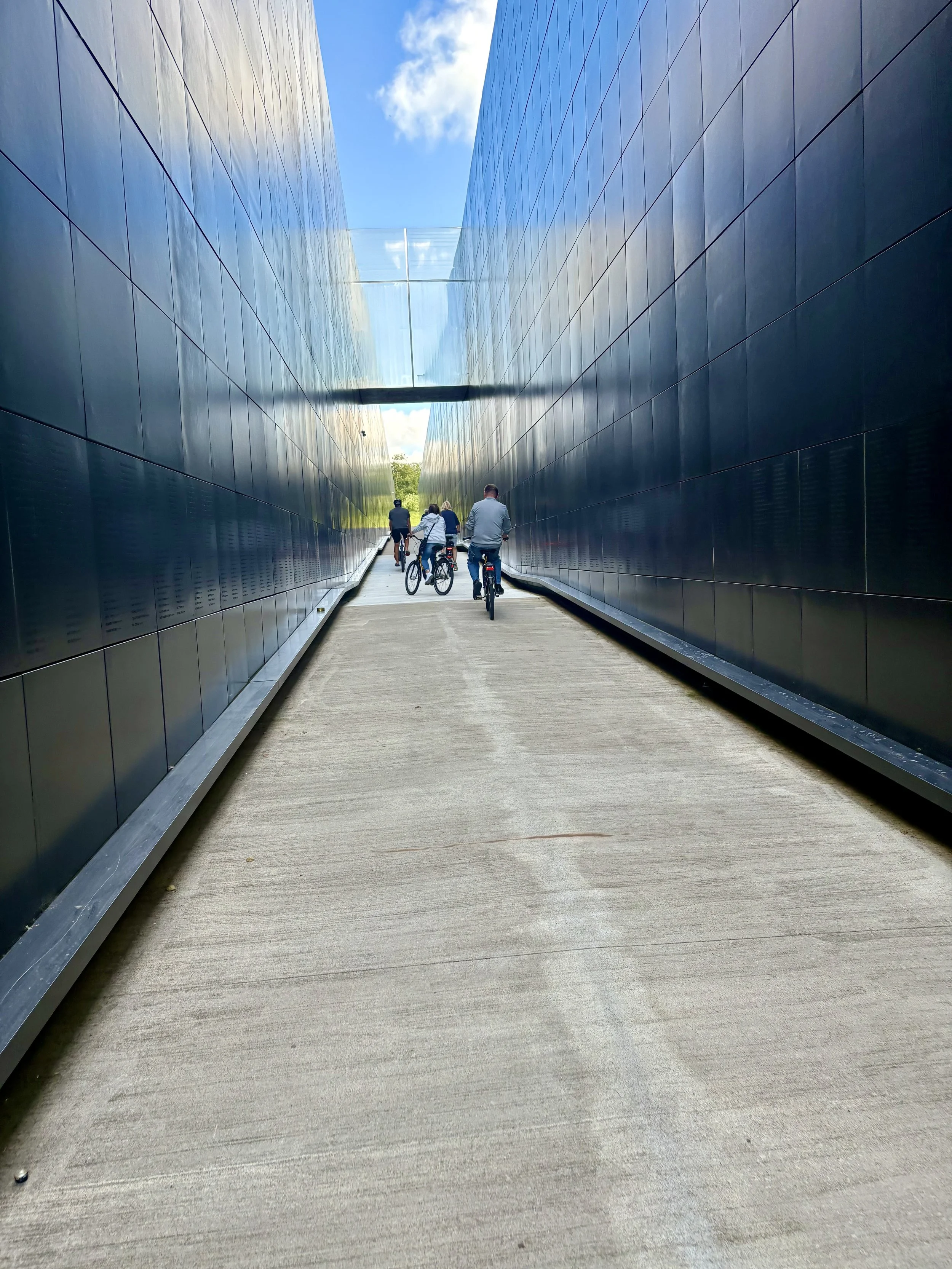
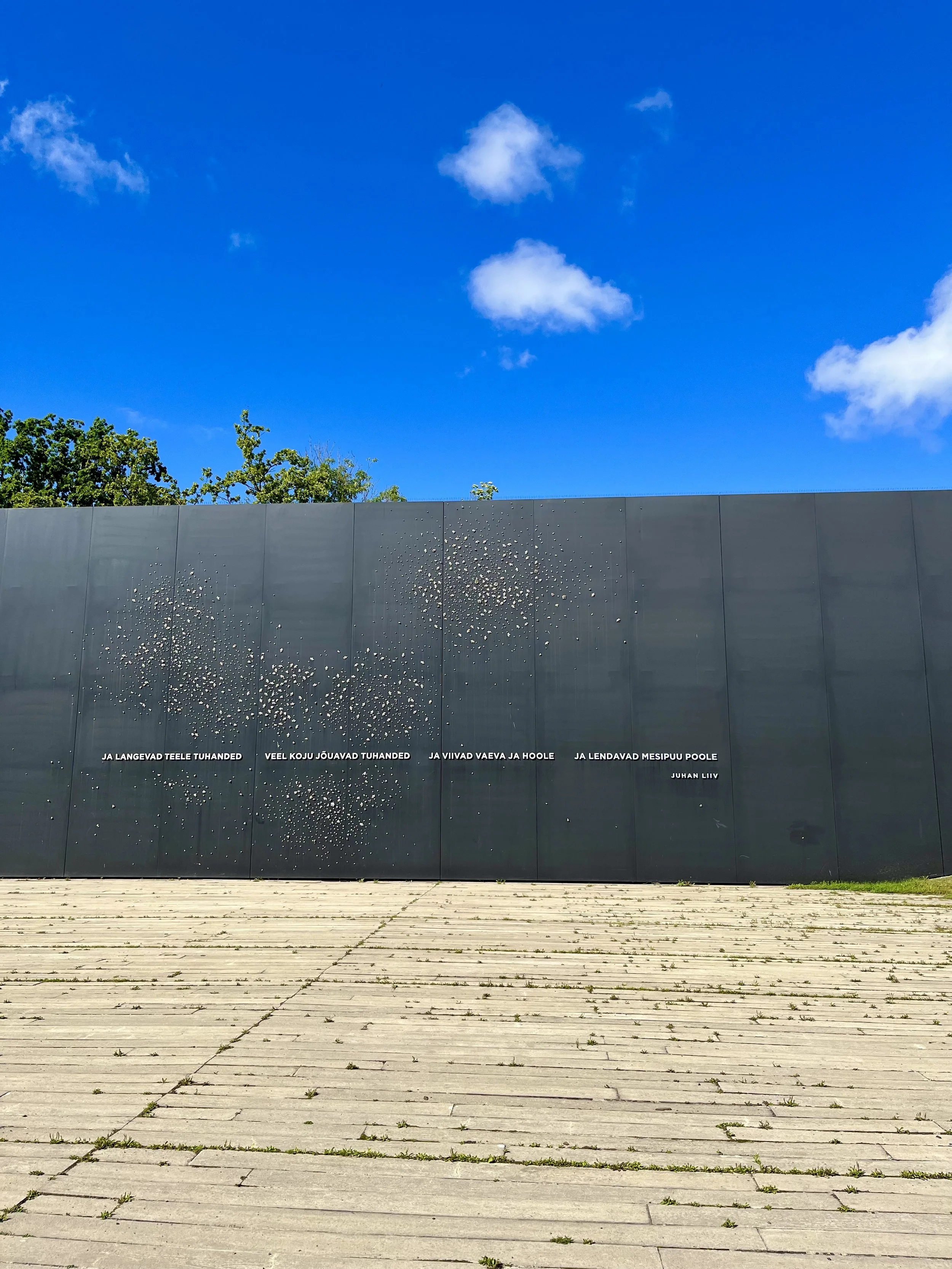
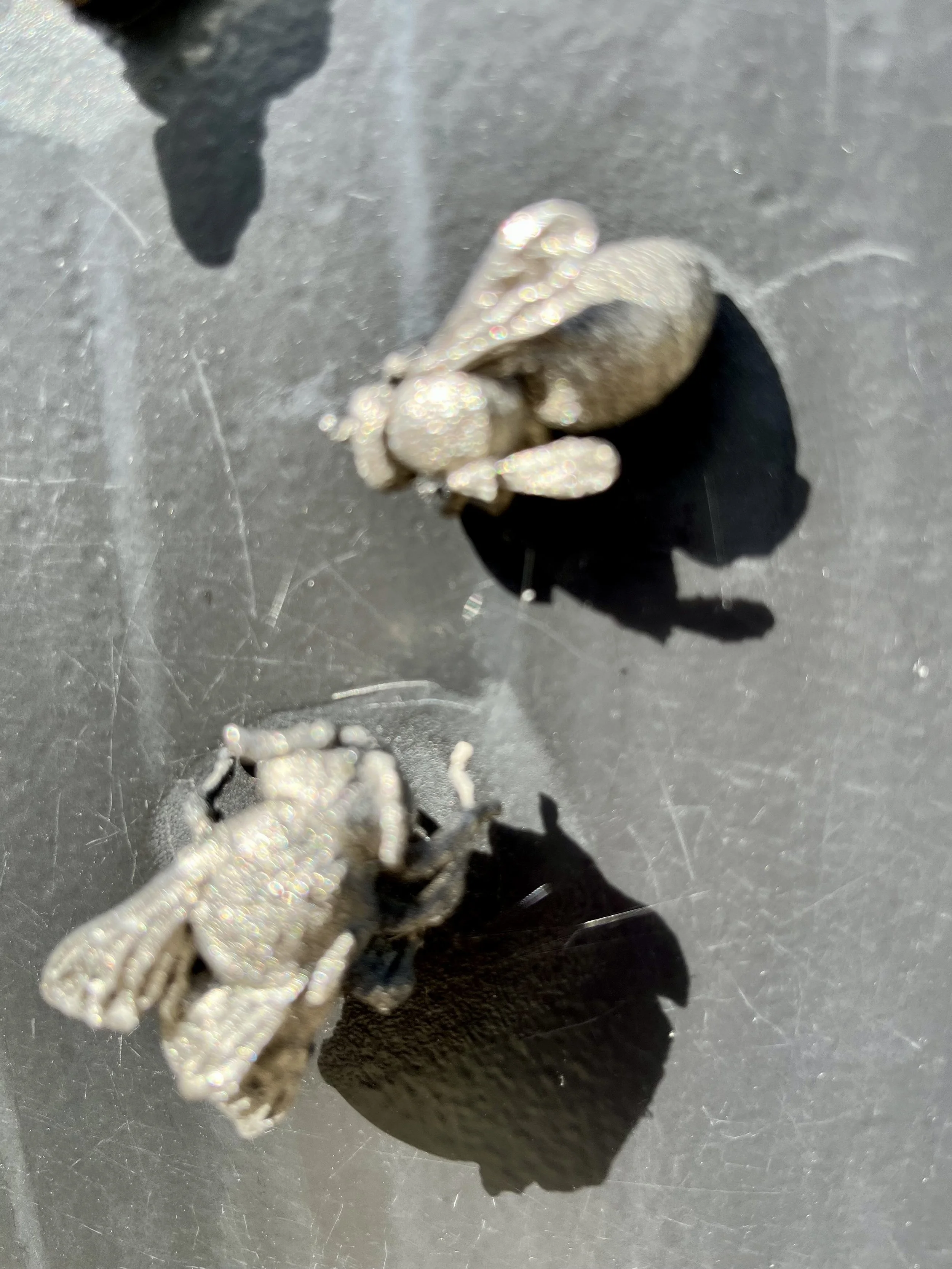
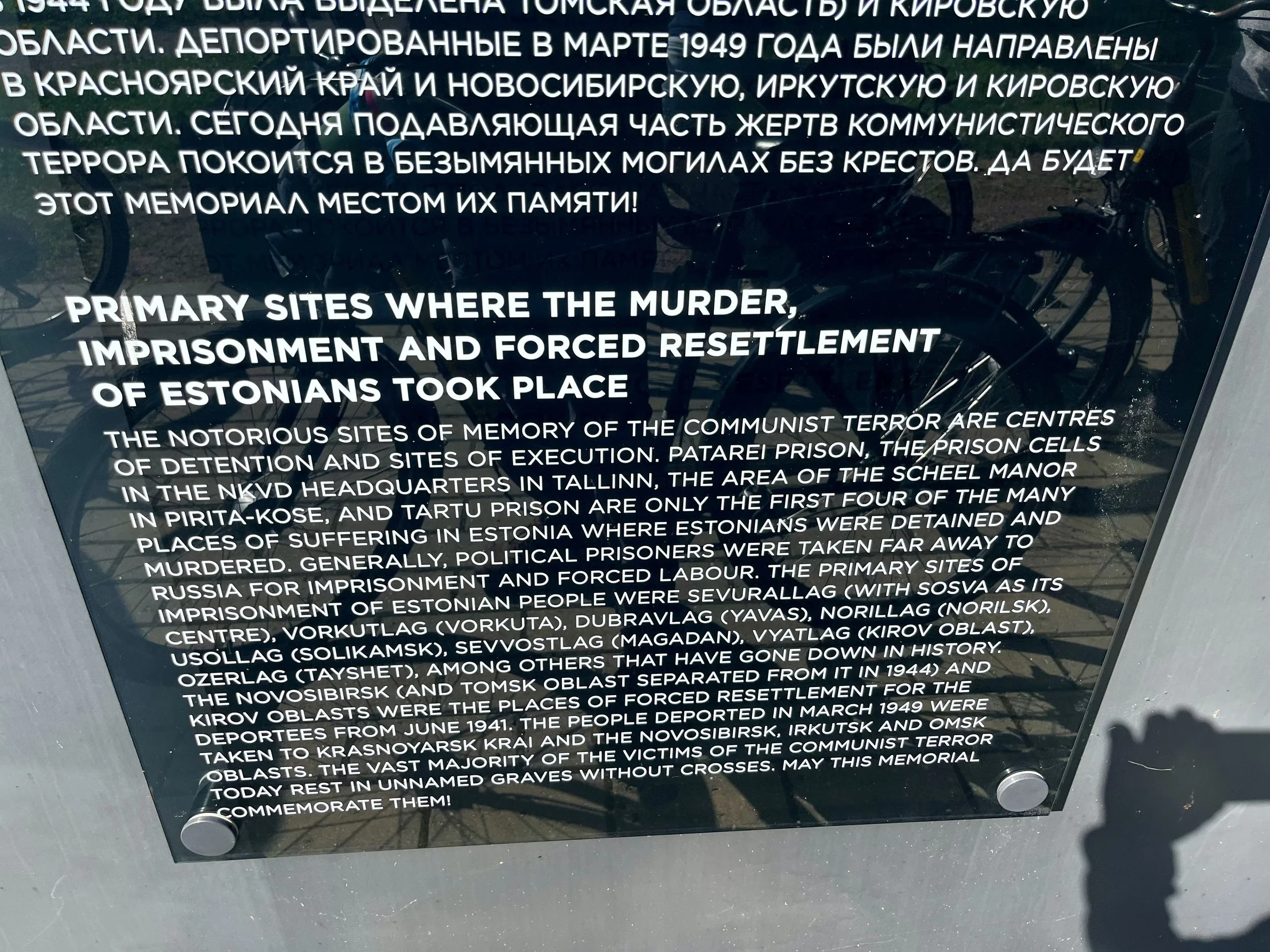
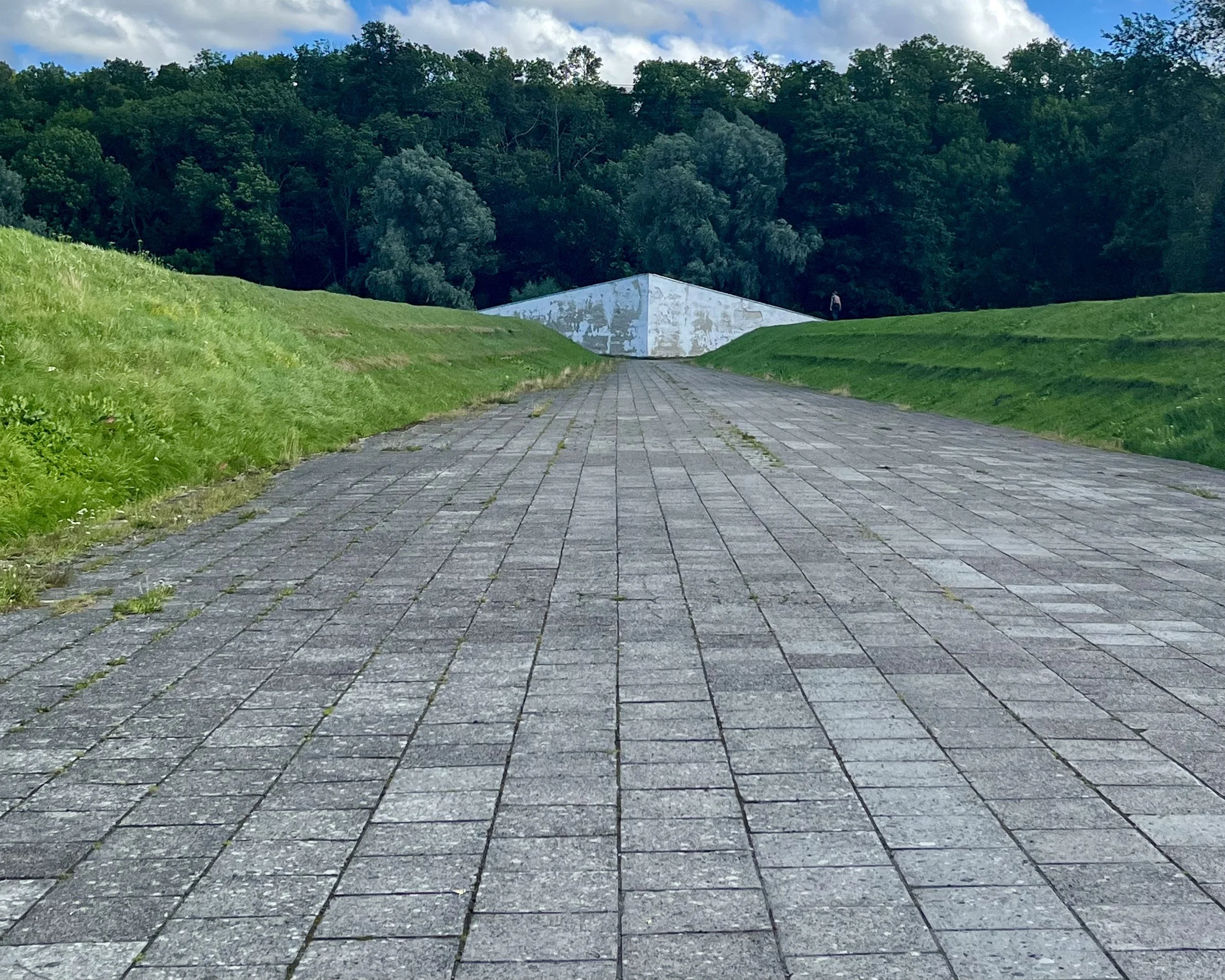
Next stop is the Estonia Memorial of the Dead honoring  those people who lost their lives to the Russians through torture, forced labor and prisons throughout Russia. This is an impactful memorial; Looks similar in concept to the US Vietnam Memorial. It is much larger having two (2) parallel 20-foot black metal walls etched with the names of the fallen, a single pathway between them, and a special Estonian twist—Sculptured metal bees and wasps of actual size affixed in swarms to the other sides of the panels. Significance—“Bees never stop trying to achieve their designated purpose”—just like Estonians fighting for independence according to our guide. Our guide shared a more personal story about his father, an academic, imprisoned for three years by the Soviets.

Pano of the memorial

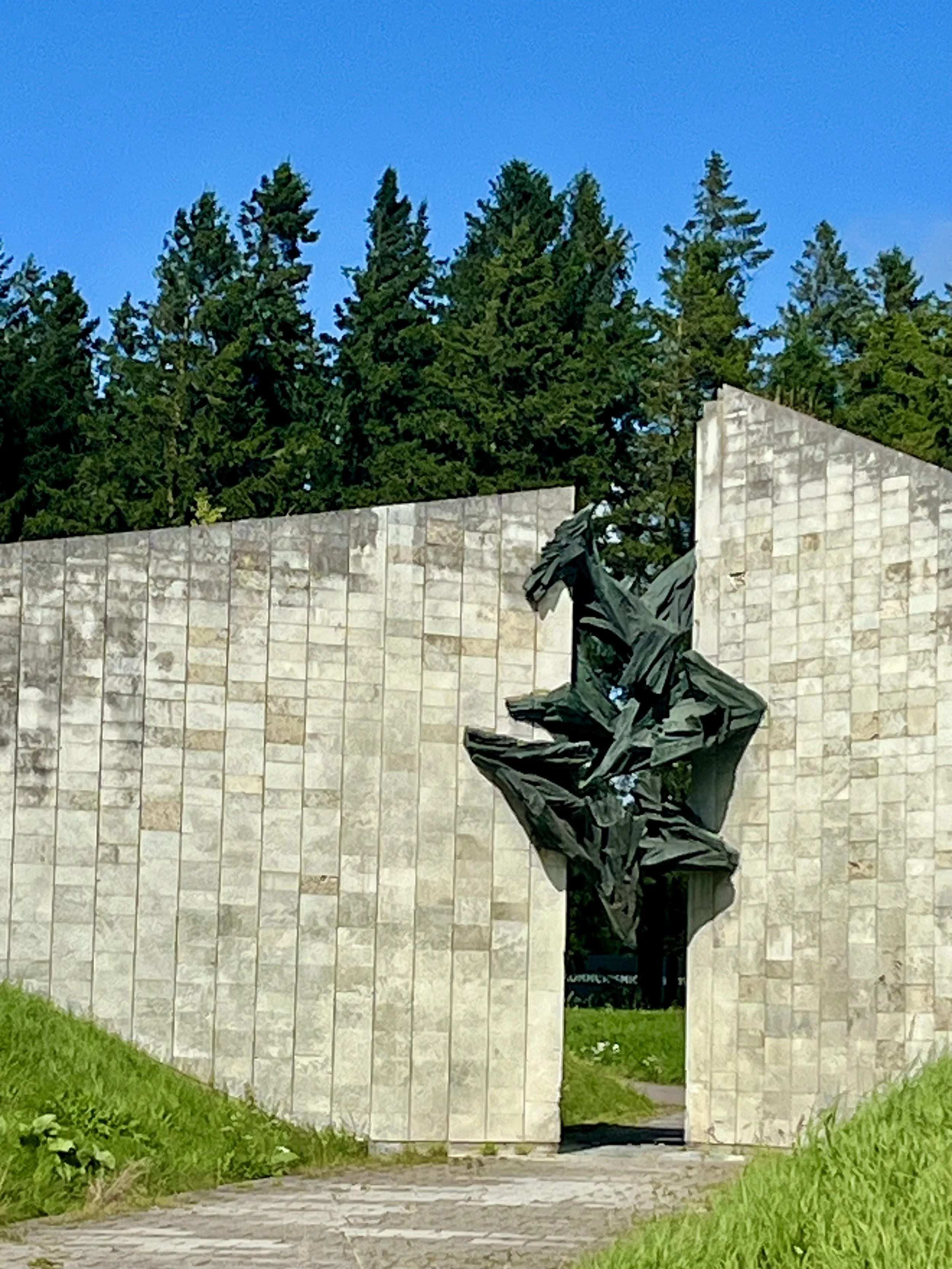
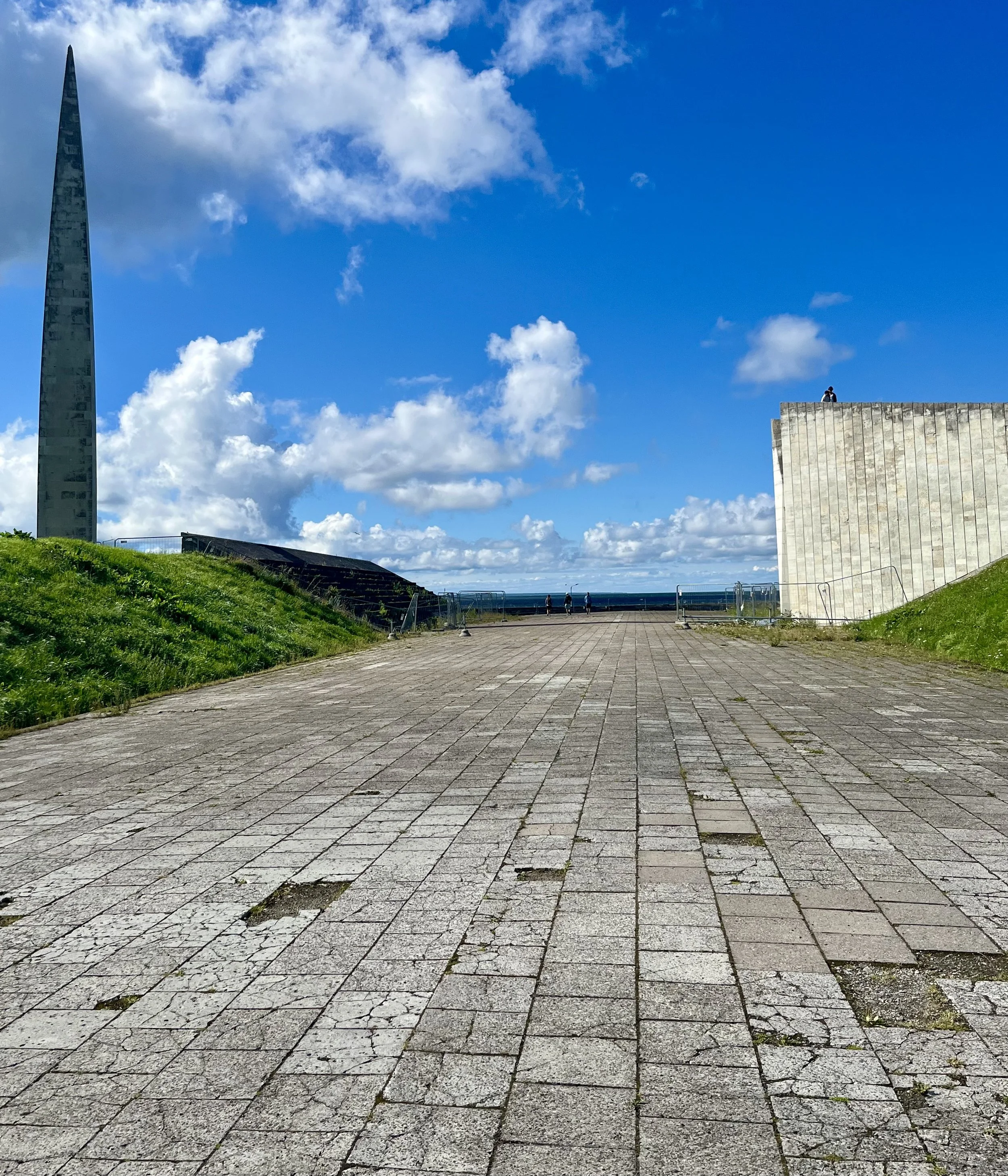
In the same area, we stopped to see a failed Russian Memorial for soldiers killed in WWII. They had placed a tall spire and then bulldozed all the tombstones of an existing German cemetery leaving the bodies covered then poured a long/wide cement tarmac over the space for a memorial, also creating side walls to place plaques. Russians stopped, did not finish the memorial. They had created an entrance of figures like seagulls (but it looked like “Death Eaters” of Harry Potter fame). We also saw a small statue garden of soviet leaders discarded from the city parks—Stalin, Lenin, and others standing in disorder. Our next stop was the outdoor amphitheater, where the singing protest was held and every four years, they hold a choir singing competition.

Pano of amptitheater

We then cycle through a wealthy area and see the largest estate of the US ambassador to Estonia, eventually arriving at the Estonian Presidential Palace and the much older Palace of Alexander the Great of Russia, built but never used by him.

Presidential Palace

Alexander the Great Palace

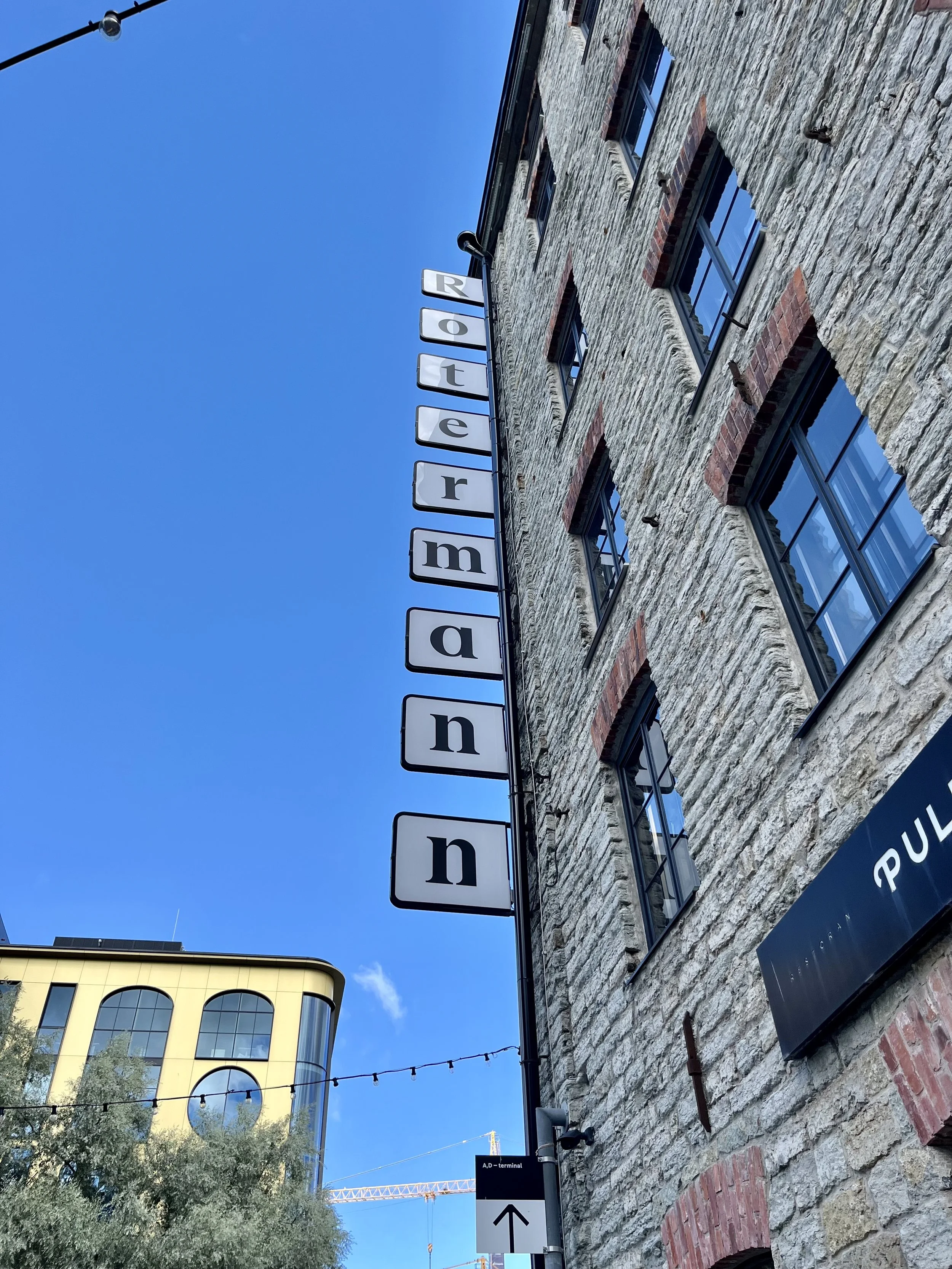
Our last stop is a thriving area of shops and restaurants called “Rotermann” that was once an old German factory. When the Russians seized control, they did not know how to run the complex German machinery and the buildings used as warehouses then abandoned. Now the area has been undated with a polished look, swanky, exceedingly popular with the citizens. Great urban gentrification.

We love Tallinn, the city and the people's spirit. We end our day back in old town, returning our bikes. The tram is quick and easy back to our hotel. We have some blog work and split a sandwich at the hotel, long day. Tomorrow we are heading to Riga Latvia.

Helsinki Finland

Day 1

We arrived in Helsinki via all night ferry, (Janet will review this trip in a separate post).  The boat is packed and once again it is a cattle call leaving.  We are in a hurry today, we have a walking tour starting soon, we breakdown and take one of the waiting taxi’s. 

We are huge fans of public transportation, and this taxi ride reinforces our support of the bus/train method of transport.   €50 for a short drive in a smelly van. We drop our bags and head out to the central square. 

Helsinki is a labor of love, the fourth of the Scandinavia countries.  Rick Steves calls it “sadly overlooked corner of Europe”.  We are here 2.5 days and we made the most of this poor step-child of Scandinavia countries. 

Our walking tour has a good guide. Our group large, but the guide had a microphone, was local, had a wealth of knowledge and had a good pace. 

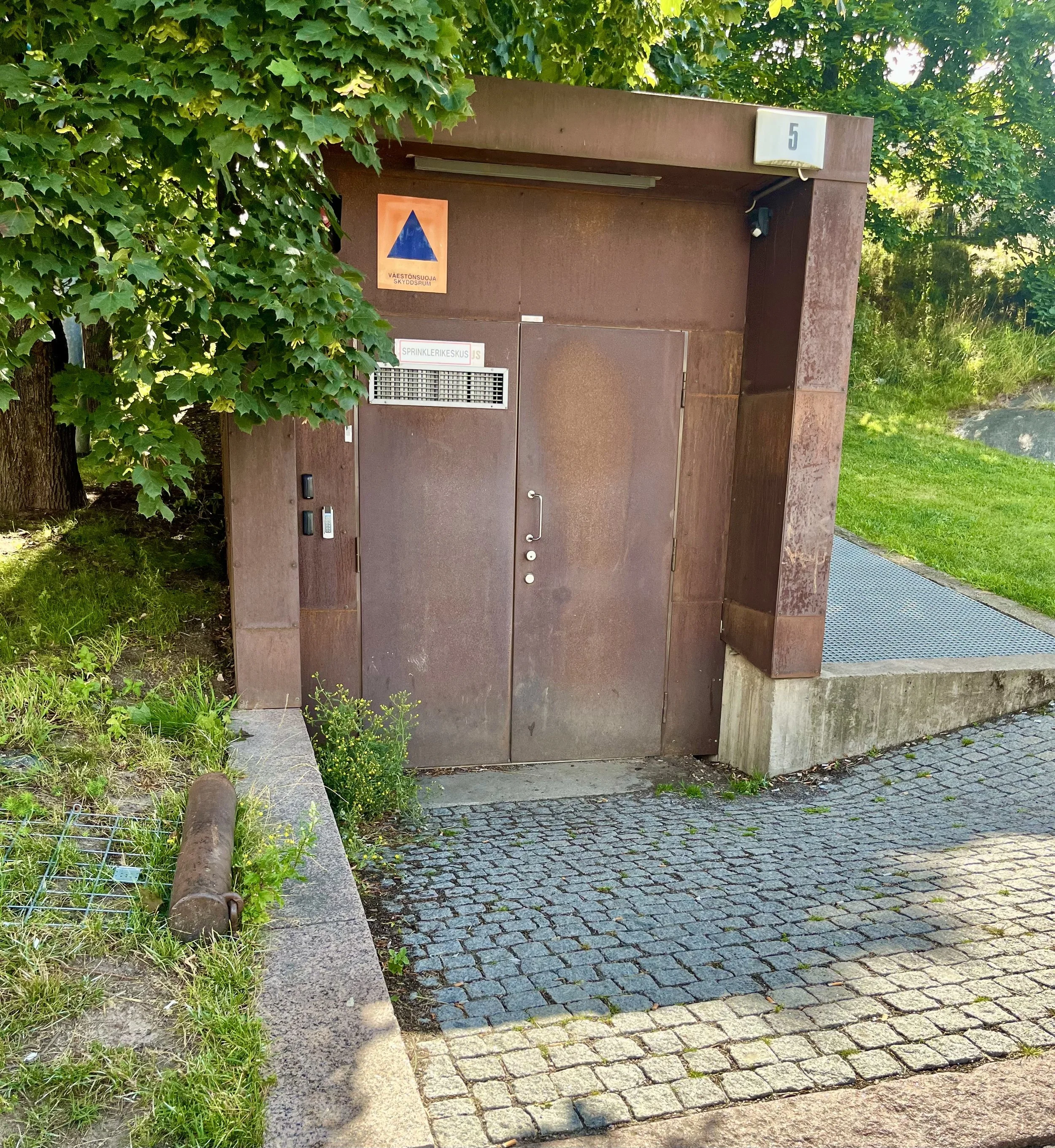
We see all the top sites, the National Cathedral, and Russian Cathedral, government building, statues, squares and many stories about the long history of occupation, resistance and independence.  The city has 100 miles of underground tunnels, the entire population can shelter. Military service is mandatory, this city remains prepared. Our guide talks about the people, they are happy, safe and keep their country clean.  Finland has been ranked the happiness country in the world for many years, and they are very proud of that. He attributes the happiness to a closeness to nature, family and the importance of a weekly sauna, there are 5 million people in Finland and 3 million saunas.  Parents start taking their children at age 2.  .See some photos with places named below.

After the tour we went to a late lunch/dinner at a local cafeteria, per our guide, the cafeteria is the most common lunch option. It was busy at 4:00. They list the mains at the door. As we people watched we see several people grab tables by leaving all personal belonging and 2 babies left in prams while the parents went for food. It does appear to be a very safe country!
The ferry boat

Day 2

Our day starts with a ride on the city ferry boat to Suomenllina Fortress, €6 including the entry, our best deal yet.

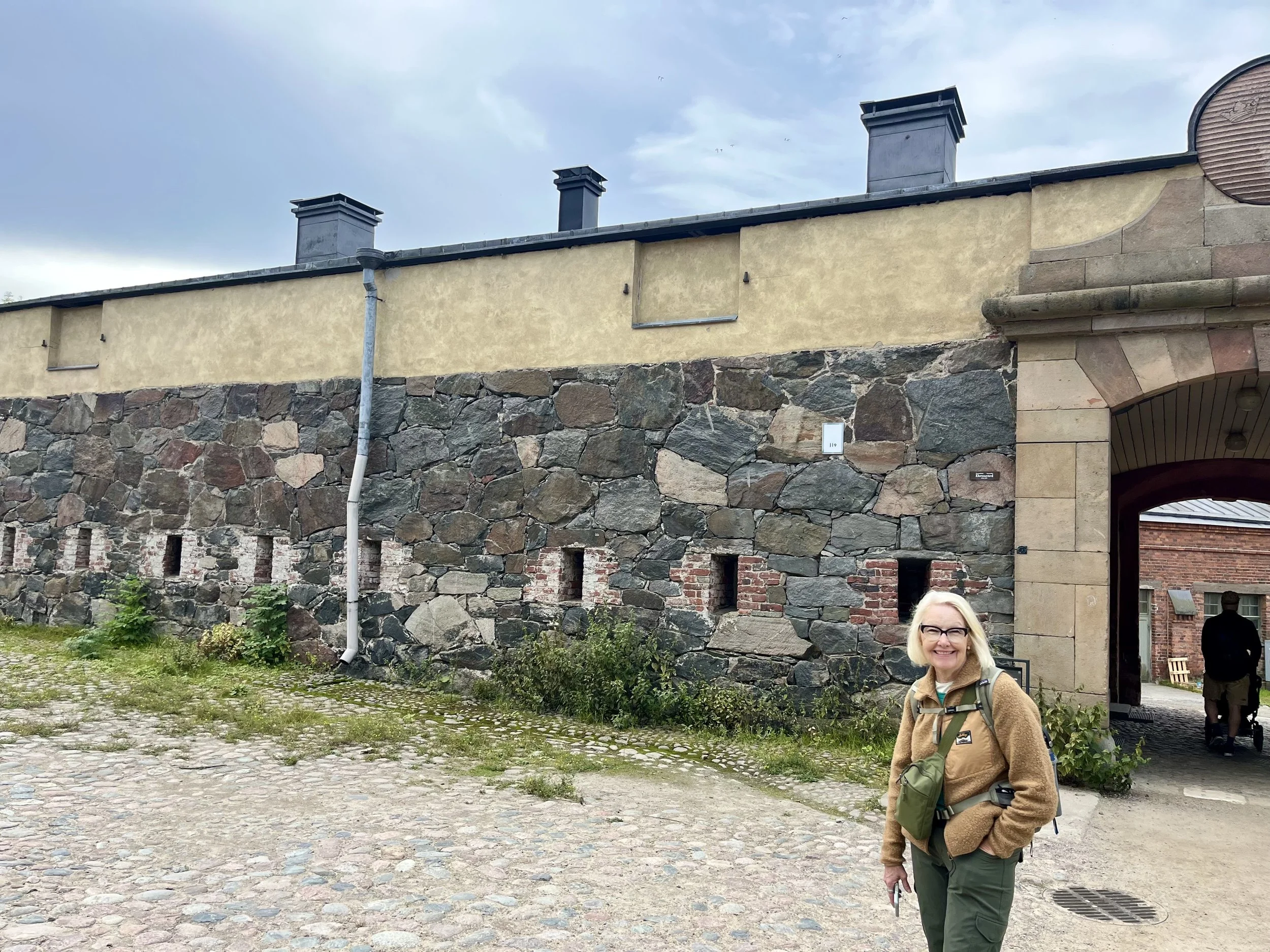
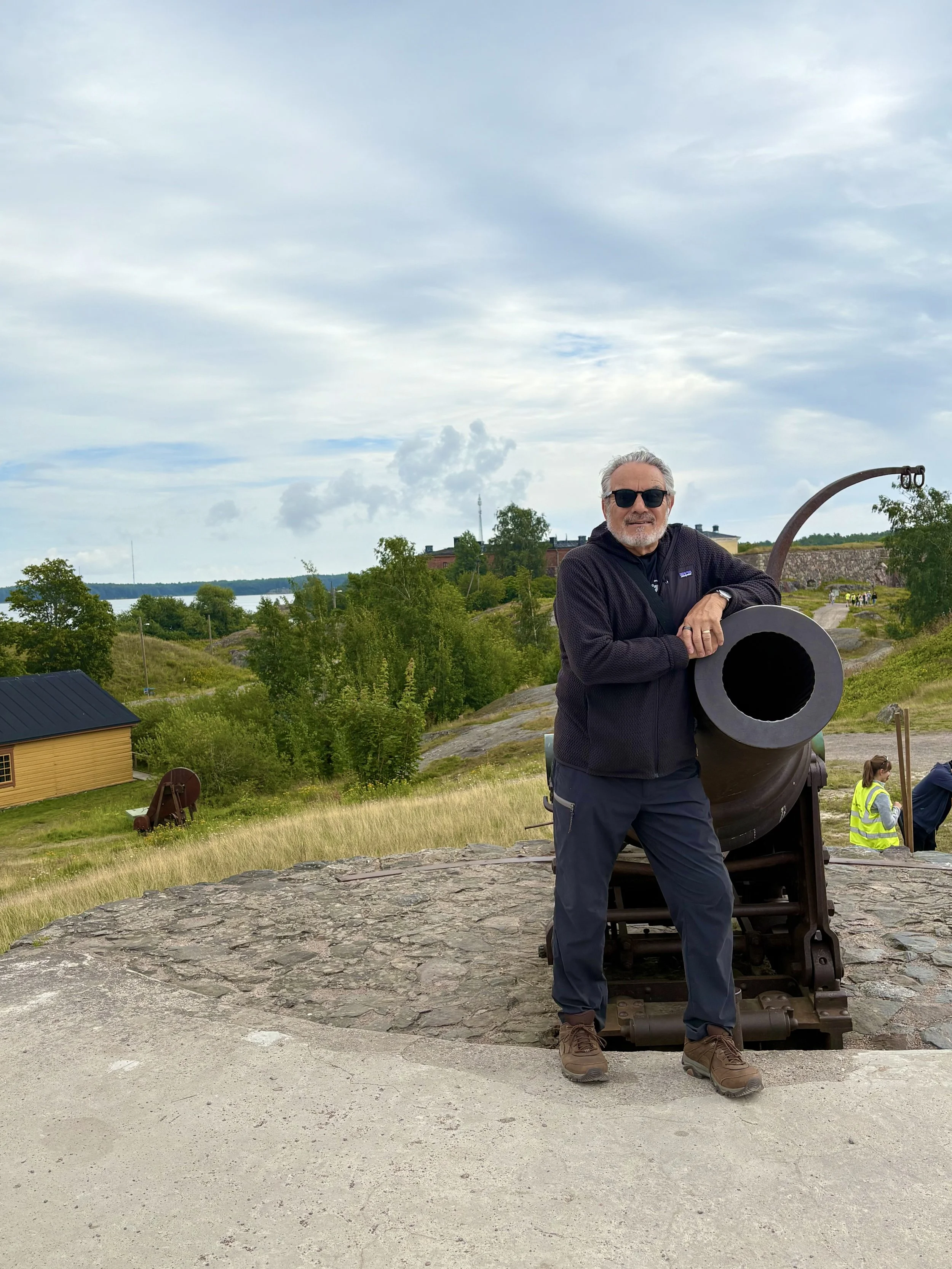
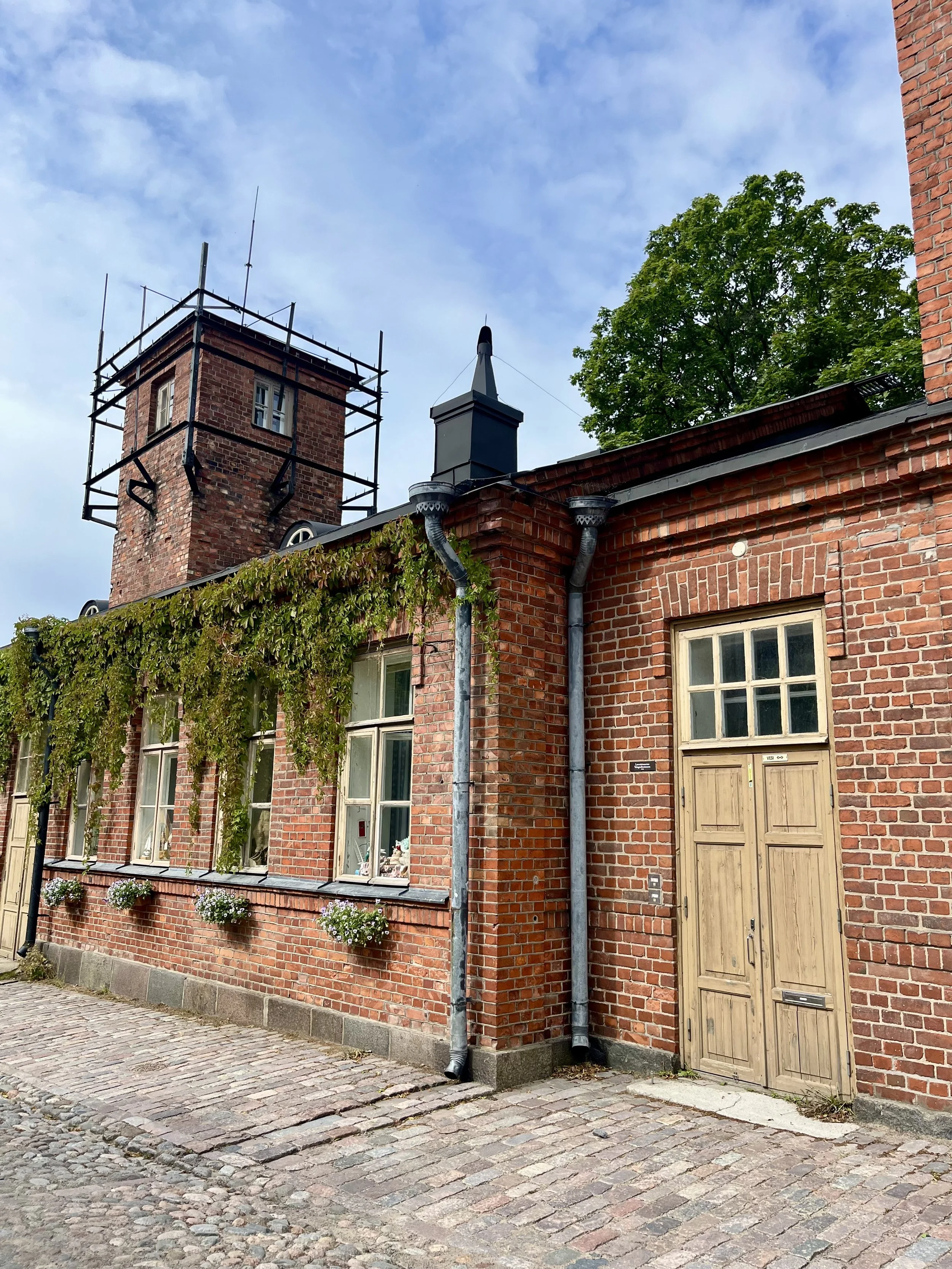
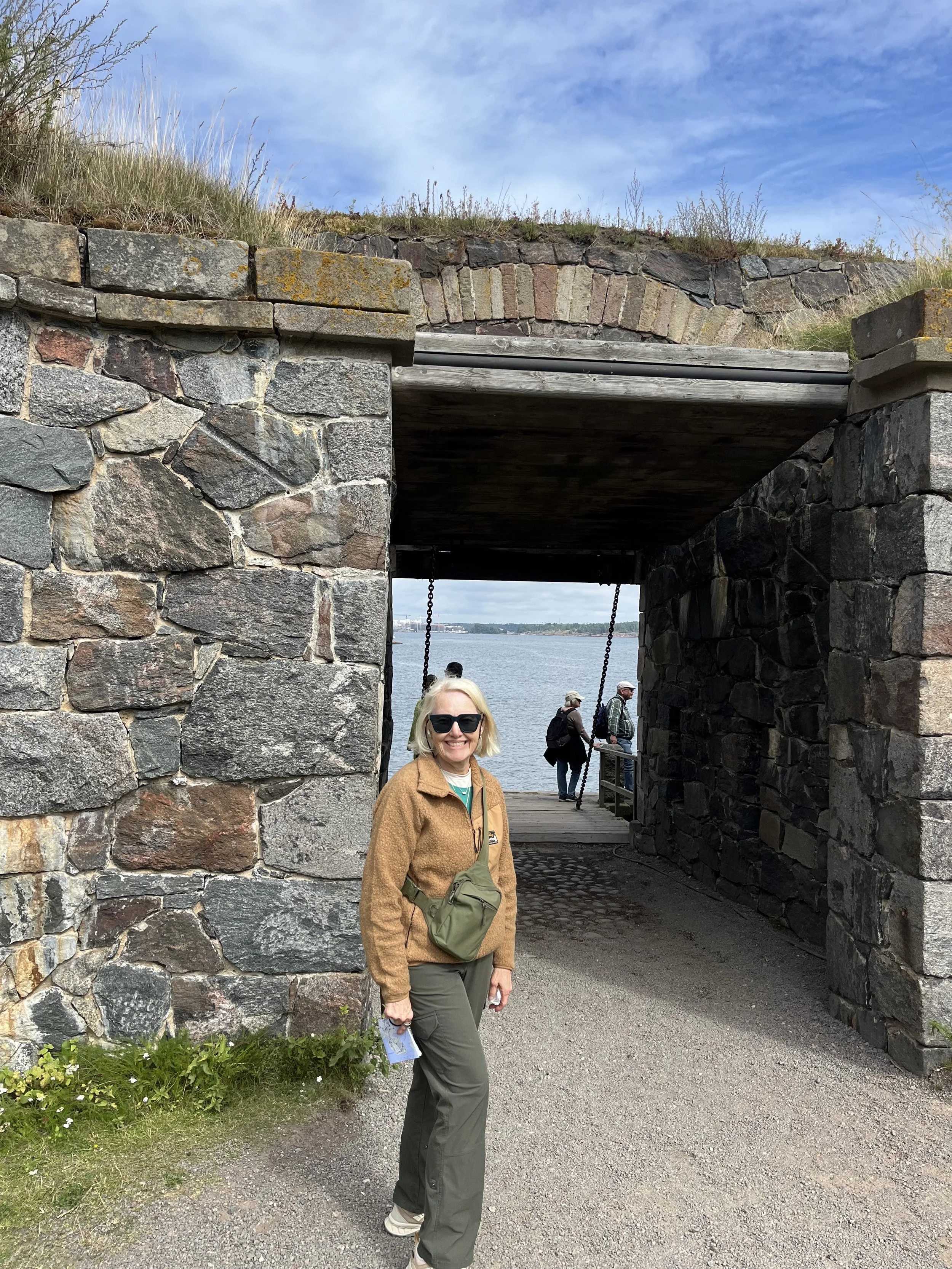
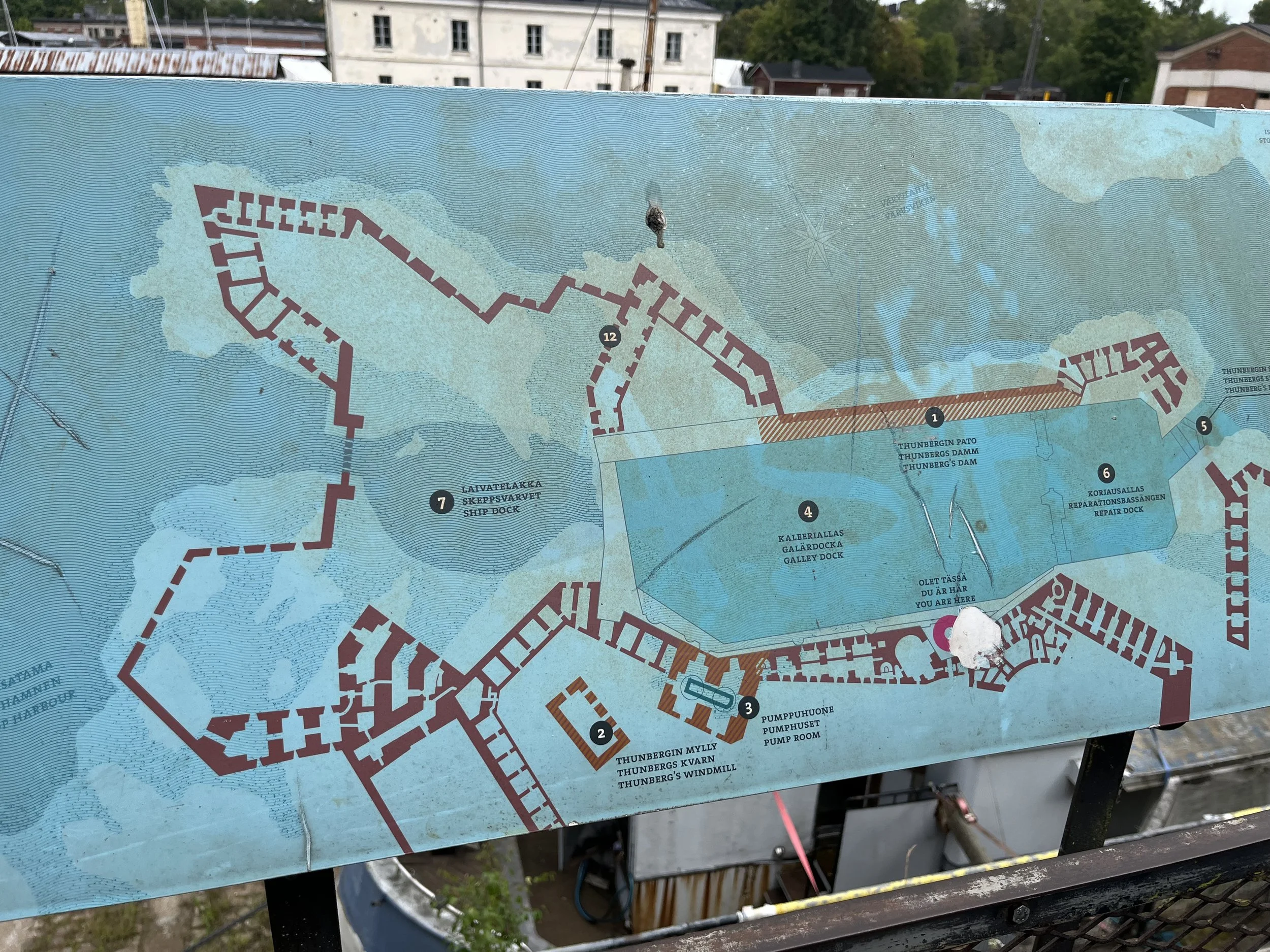
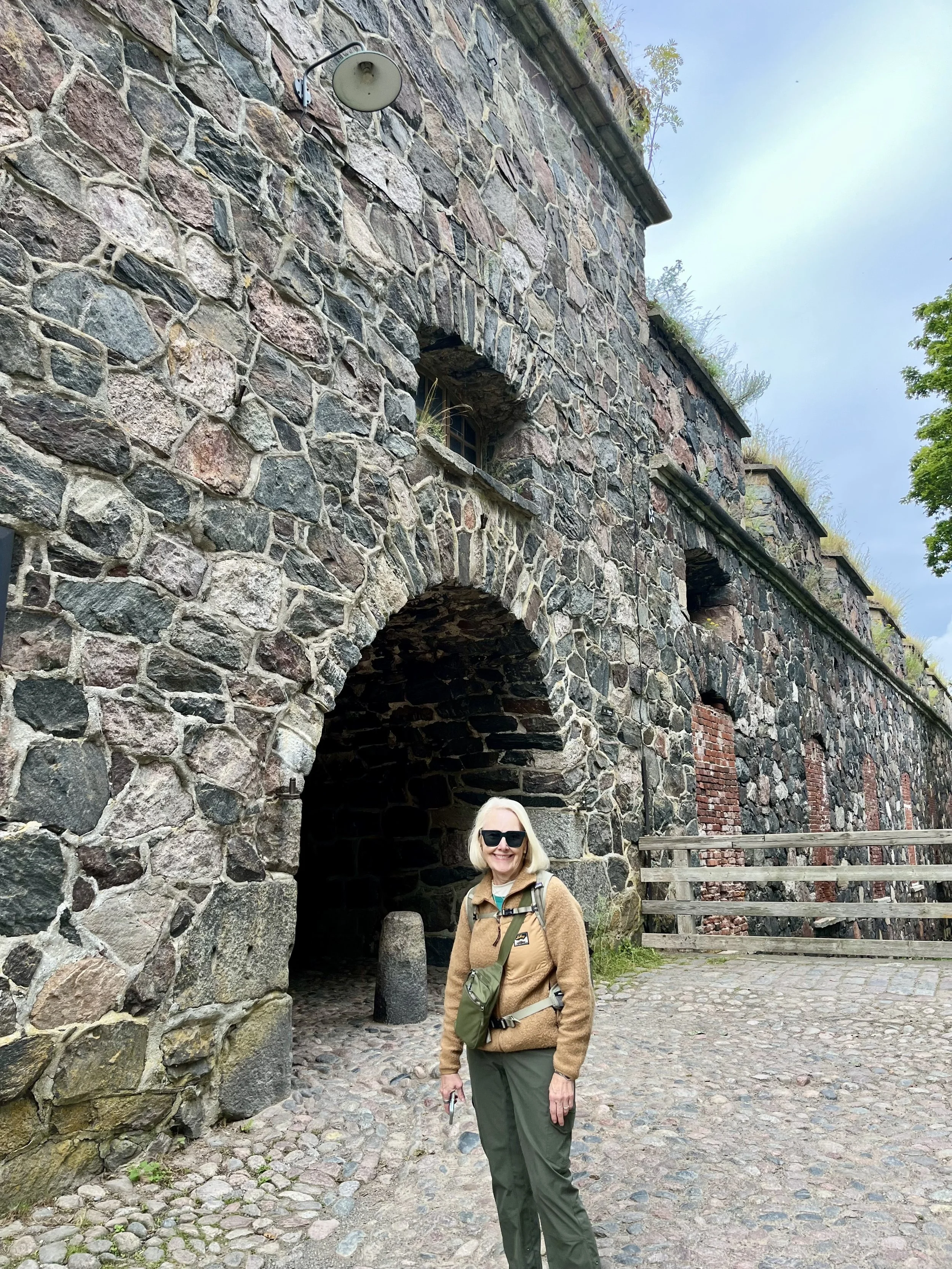
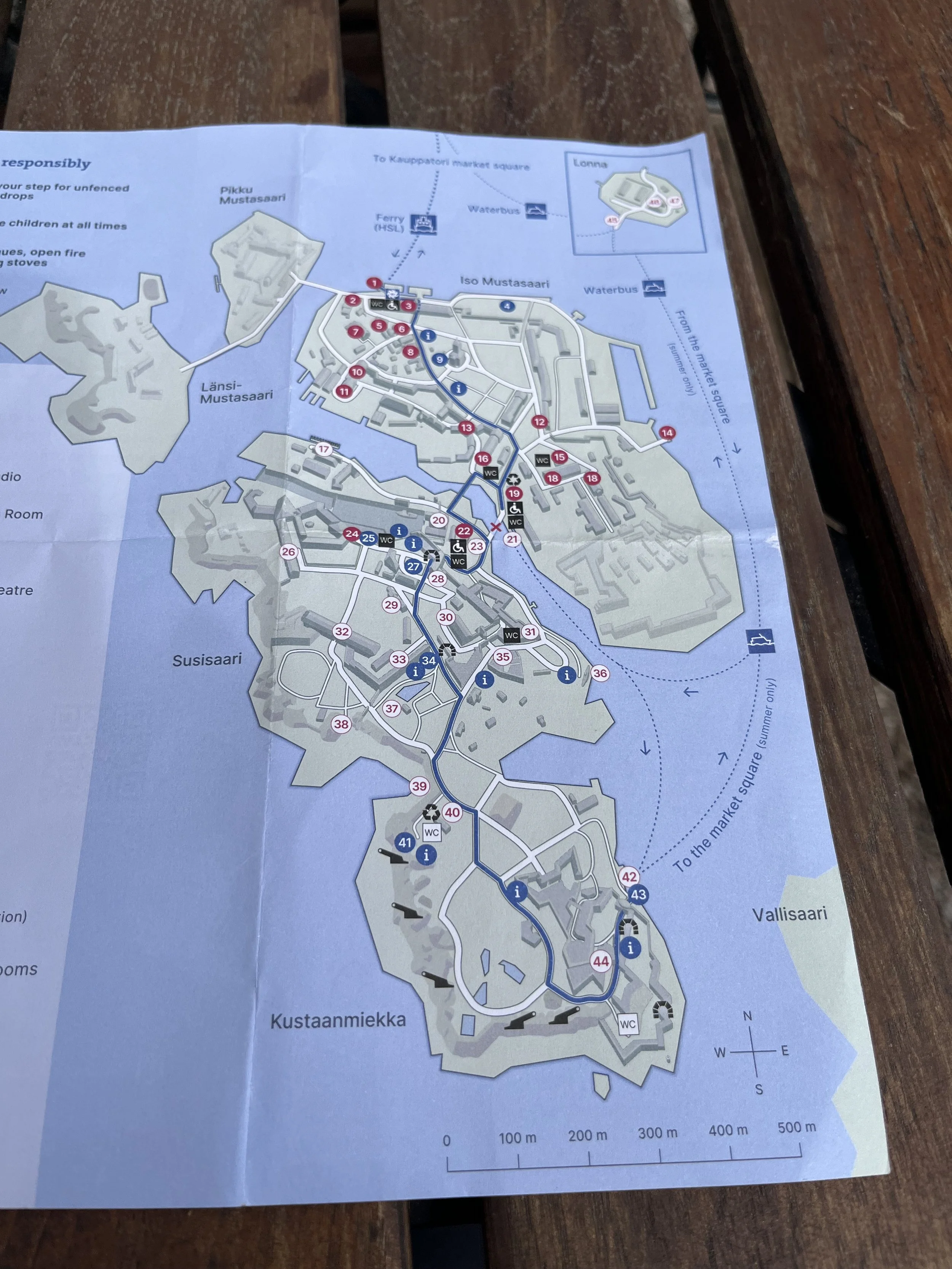
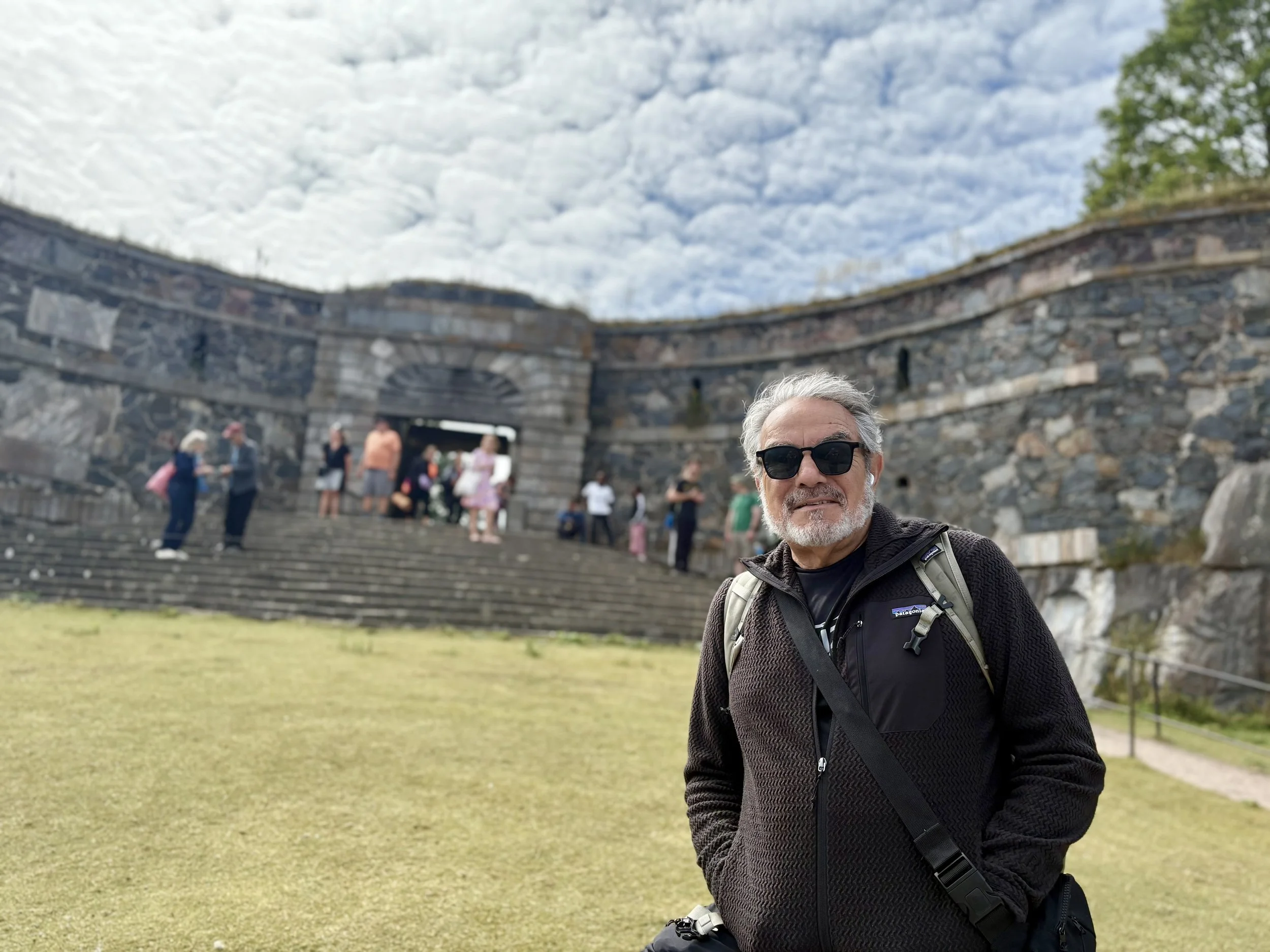
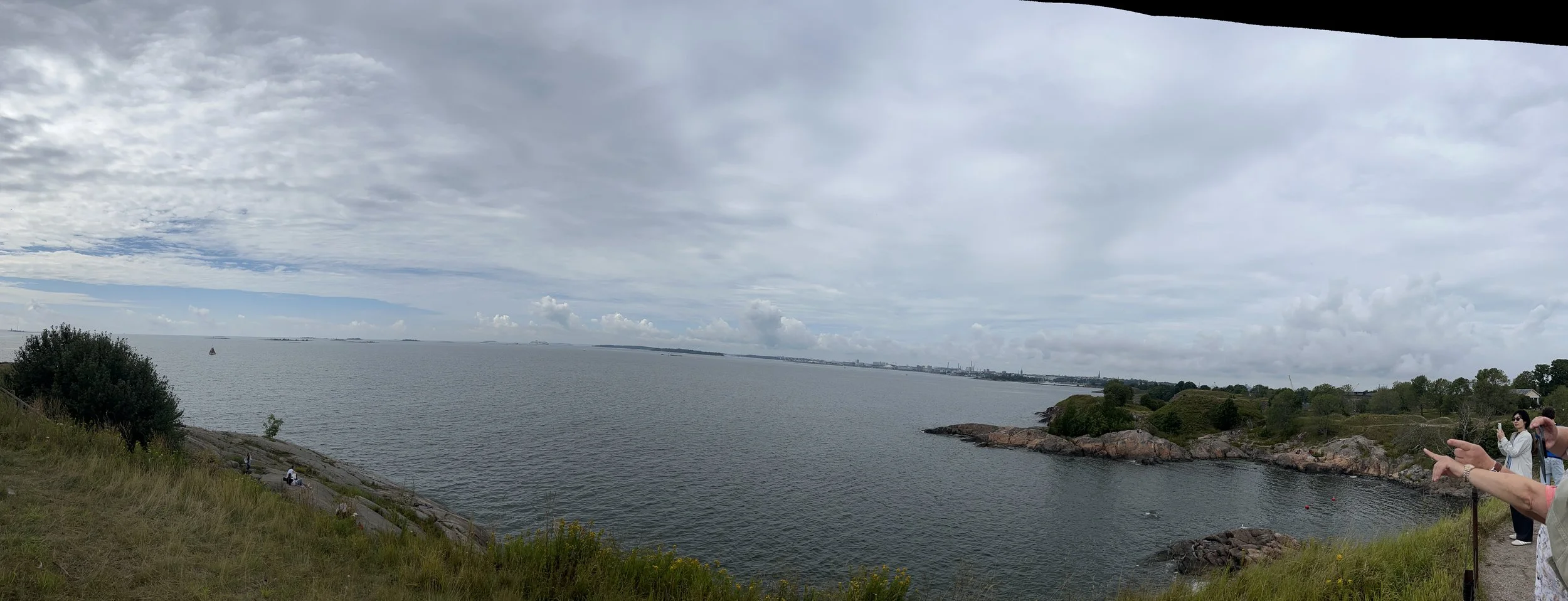
This is a massive military fortress spread out over two of the five islands that create this archipelago. There are several inlet bay areas around the island. The fortress has multiple castles, connected between ramparts and stone walls with a stone headquarters and soldier quarters, supply buildings, and residential homes for officers and supplying merchants.  The architechs and military planners kept on getting funds approved by the king, so they kept on building. This was the gift of generosity that keep on giving and giving. Having walked the entire grounds, my impression is that the fortress should have acted as a full-time military college, like West Point and Annapolis combined, since it had a dry dock and ship yard in one area. The King had ships built there and later, in WWII the ship yard was utilized to resupply, refuel, and repair German U-Boats. Finland had its issue in WW II. At first Germany took control, and then Russia’s counterattack against the 3rd Reich included Finland., and russia stayed in control through the cold war.

Dry Dock Ship yard

Historically, the Fort never was a successful battlefront compound, although put under siege often. One defense of an attack fell short because the cannons installed were never improved over the long history of the fort and thus under powered with poor range. The fort faced 77 enemy ships and was bombed continuously for 47 hours. The fort was set ablaze as ammunition storages exploded. Another siege defense was lost due to poor generalship. The commander had the men, ammunitions, food stores, and the fort walls to withstand a Russian army siege. But after several attacks that had done little damage, he had no stomach for more fighting-and surrendered the Fort. It was considered to be a great win by the Russian government. The Finnish Commander faced personal humiliation, from the government and his soldiers, for the rest of his life according to the museum information. The Museum on the base was particularly good with a short film setting out the the overall history.

Submarine

There was lots of walking –we simply got tired, but we found a Pizzaria inside one of the ramparts that had outside canopy seating. Pizza was not great, but the cold beverage in the shade was a nice respite. (the oven baked crust was thin and good, but tomato sause tasted like sweet ketchup.)

Walking back to the dock, we stopped at a moored Finnish Submarine of 1950’s vintage. Could have gone inside, but we were just too tired. It looked like a snub-nosed US WW II submarine; much shorter.

When we got back to our hotel it was take out sandwiches and salad in the room.

We did take advantage of the Finnish Saunas at the hotel, segregated between men and women. Nice set up, relaxing, we are happy.

One of the bays at the fort

Day 3

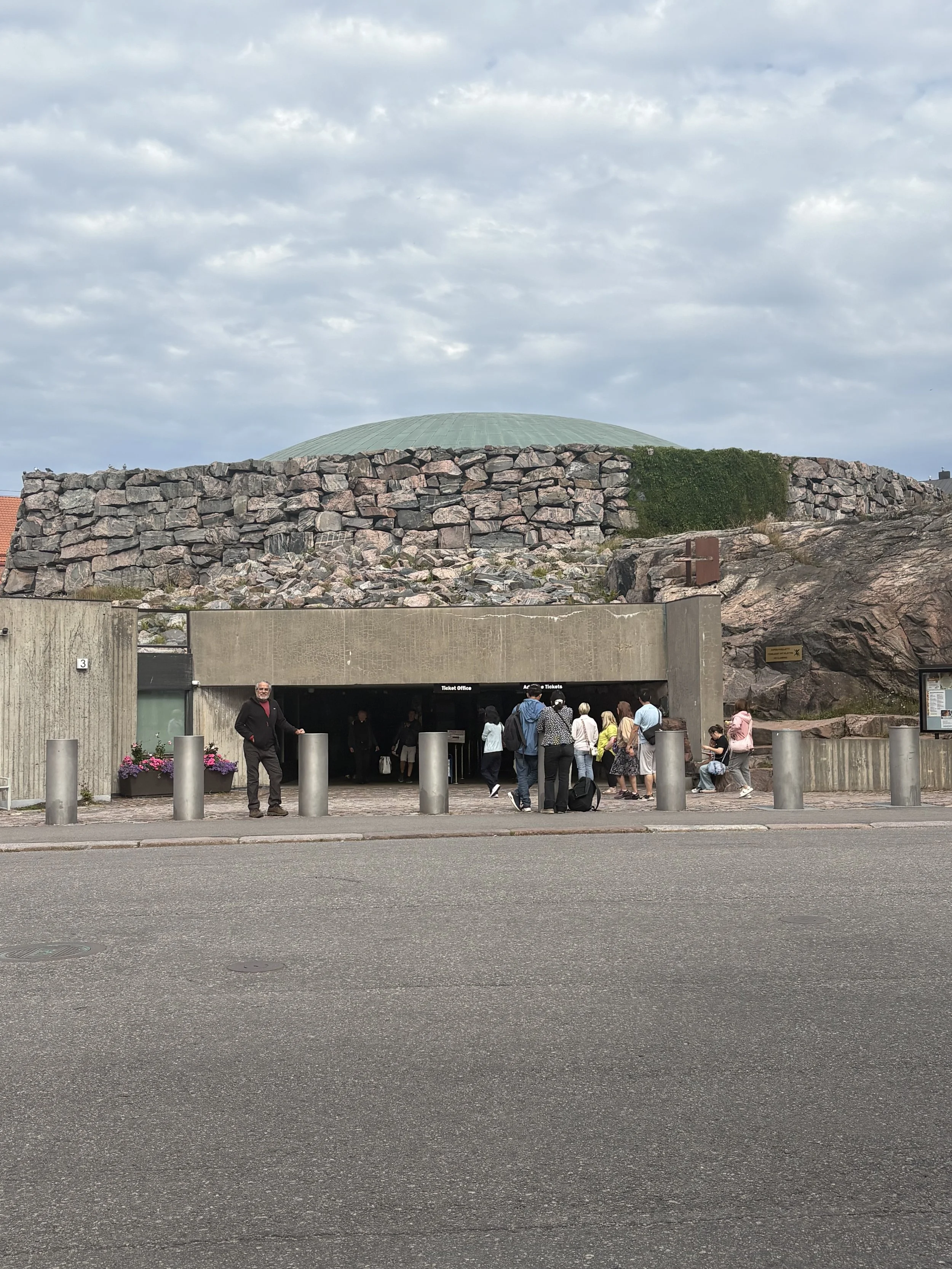
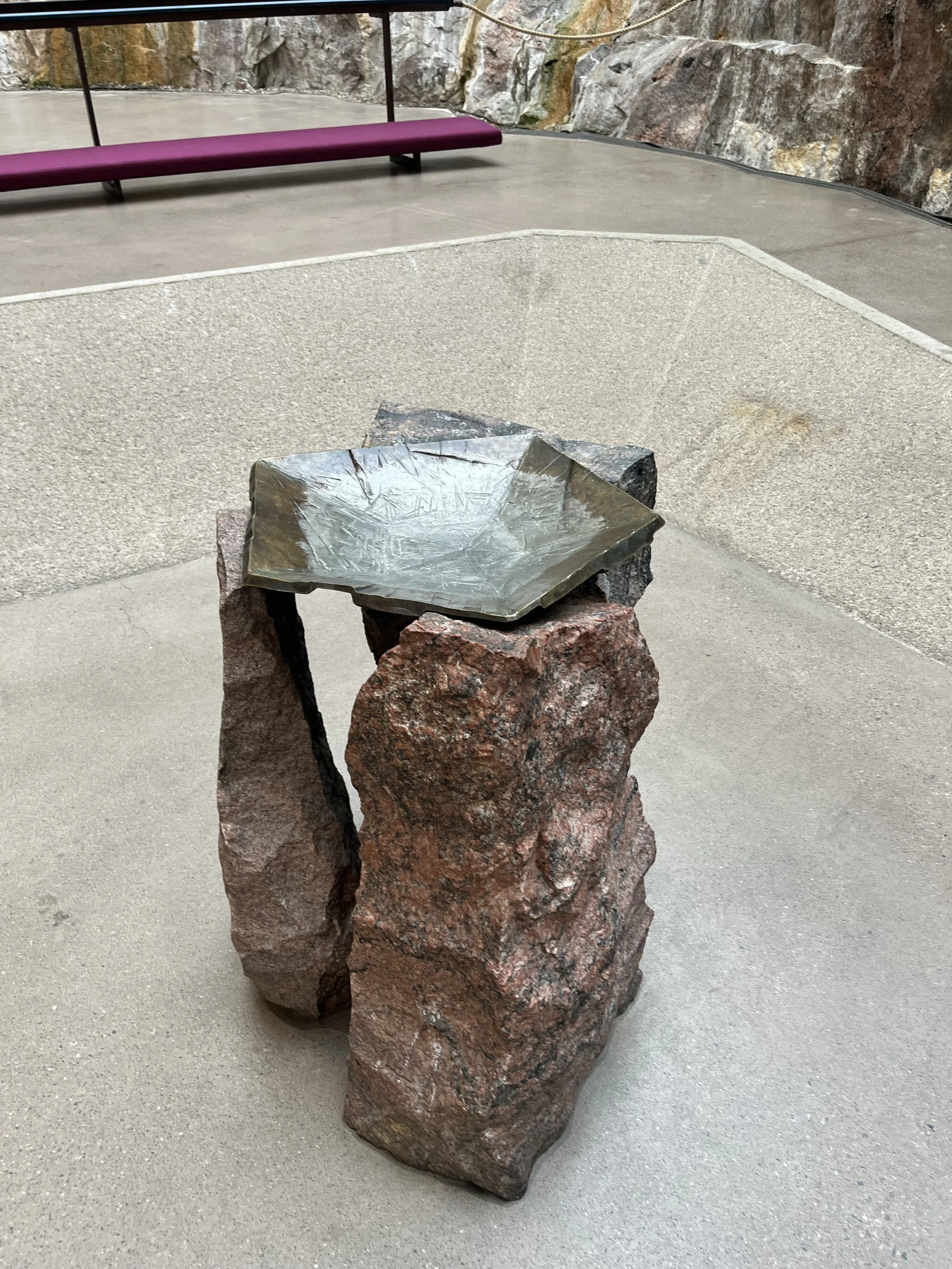
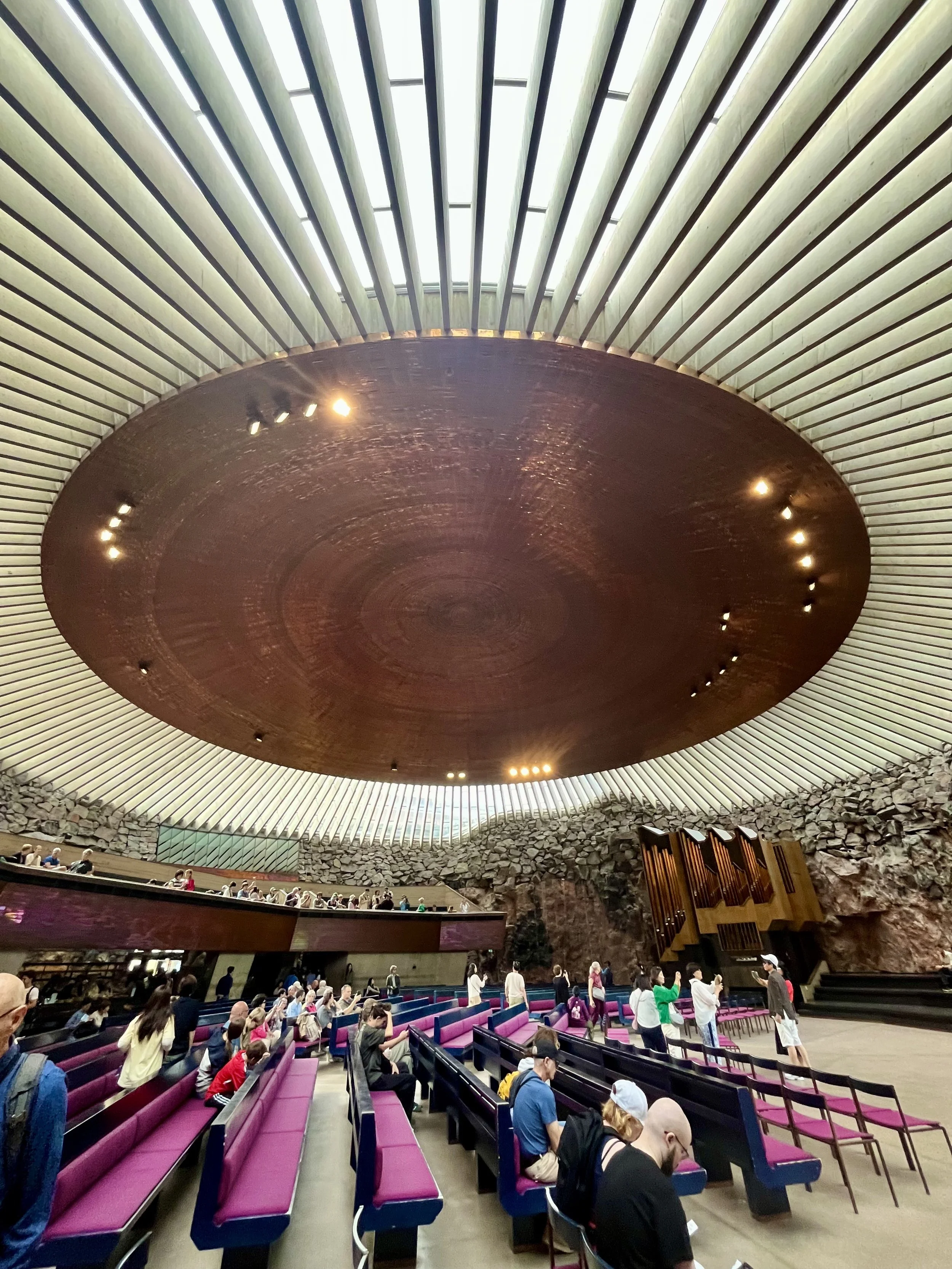
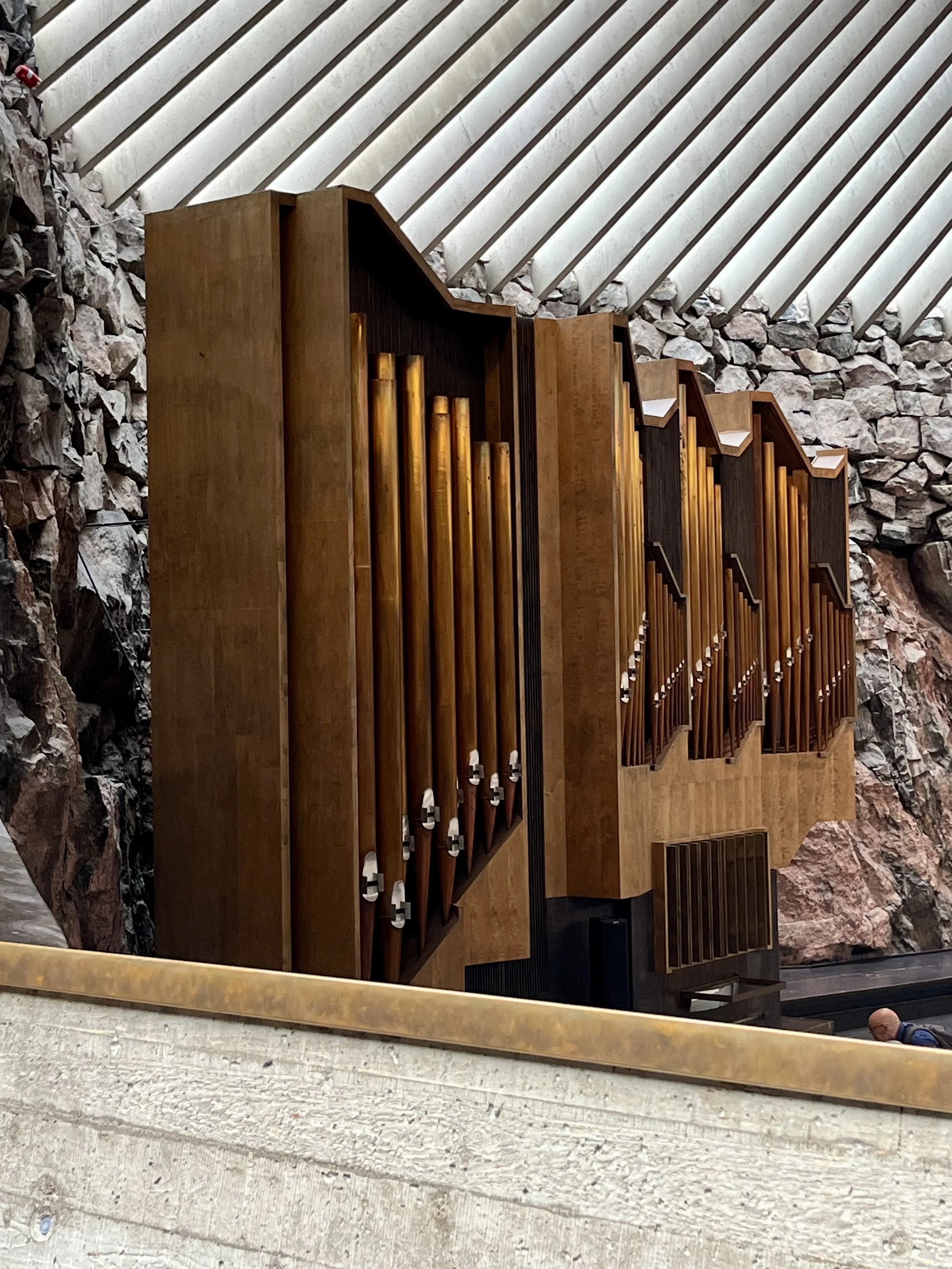
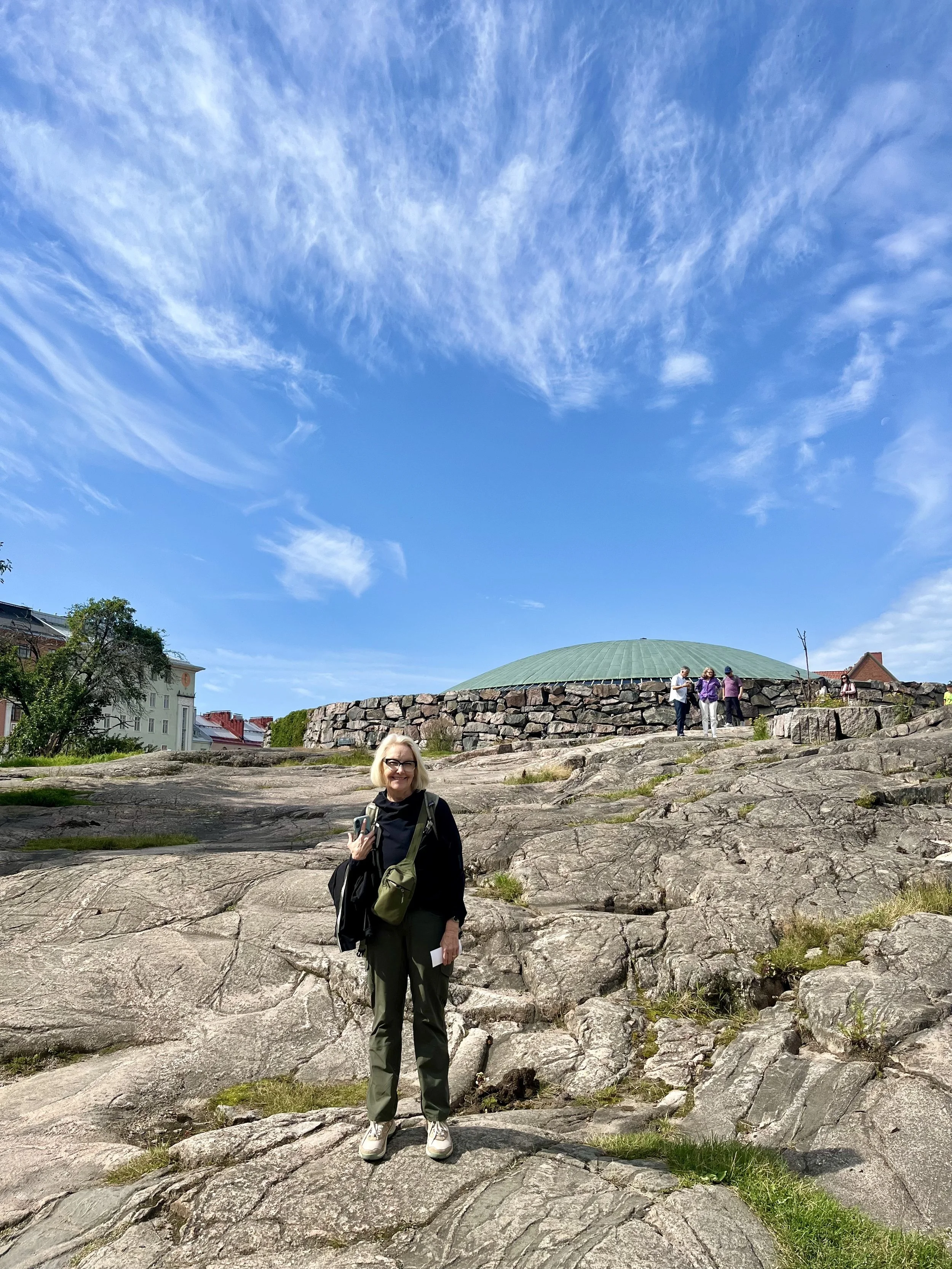
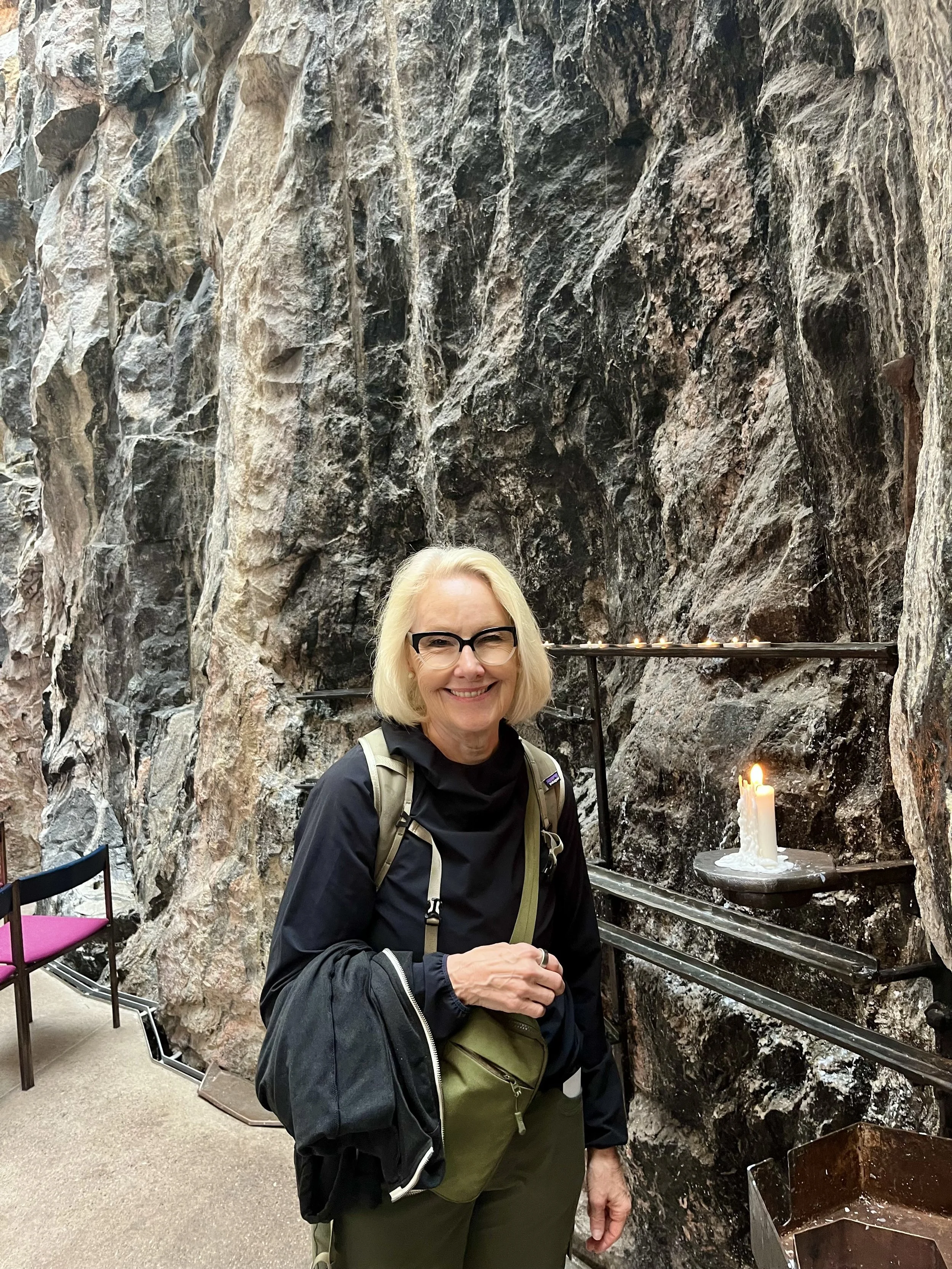
Our last day in Finland and we are up early to make the most of the day.  We start by walking to visit an inspiring architectural structure build within a smallish hill of granite. At one time the rock-hard site was to be the foundational support for a traditional Lutheran church but the architects offered a more creative vision. They designed and built their church, The Temppelliaukio, inside the granite mound. The circular structure is amazing. Part of the walls sculpture the existing rock where other walls curve with large cut granite blocks. The honor tob nature continues as the roof above is a circular structure with metal spines intersecting a middle point with glass windows and a huge copper disc affixed to the center of the room. Just spectacular. The church spirit arises from the rock. The only obvious holy artifact is a small, single cross made of wood set on the small altar table. You can walk on the exterior as you can hike a granite bolder. With trees and bushes growing out of the exterior rock you feel for a moment like you have set foot in the holy land. This was a really impressive church.

Great public transport

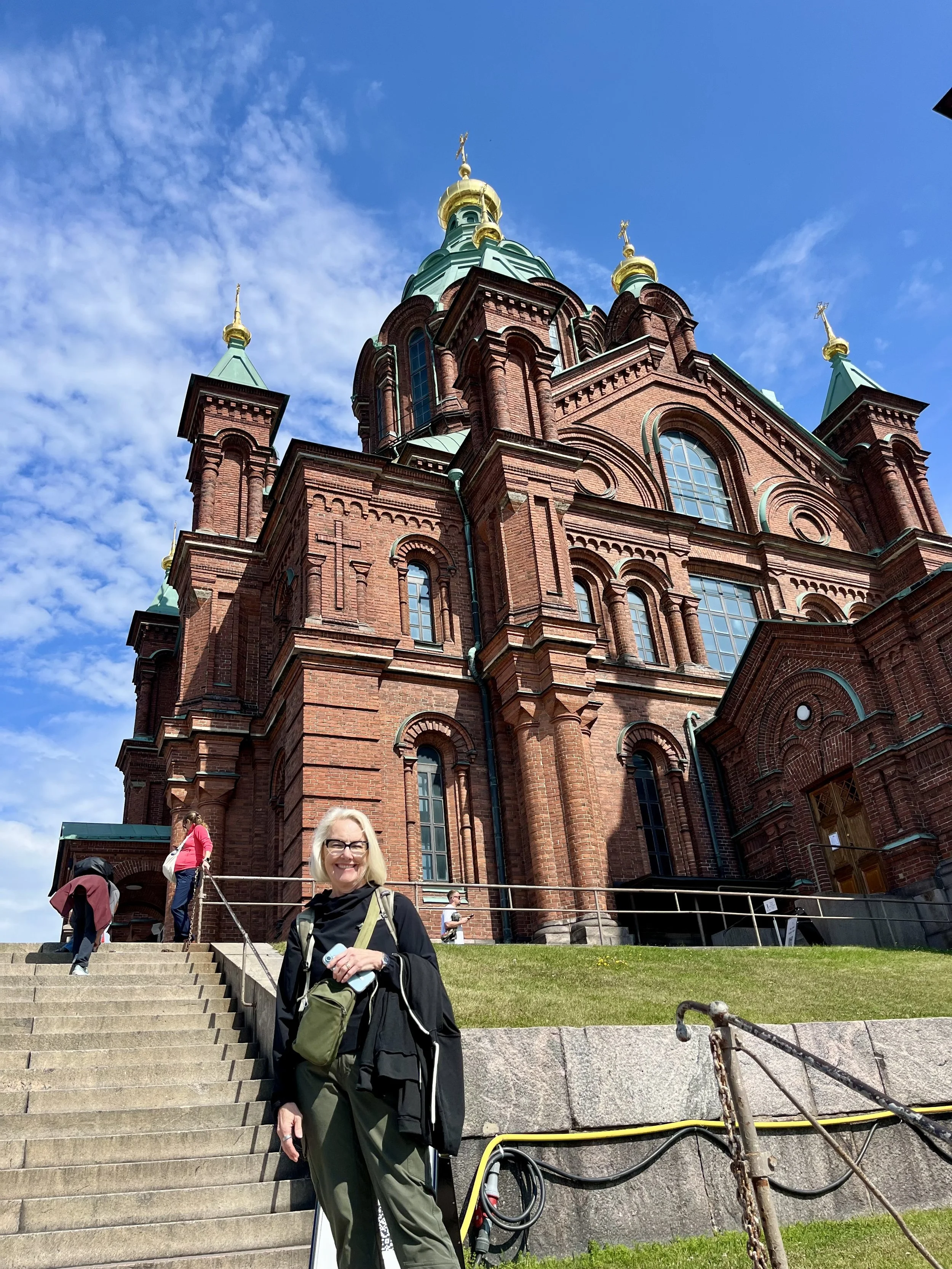
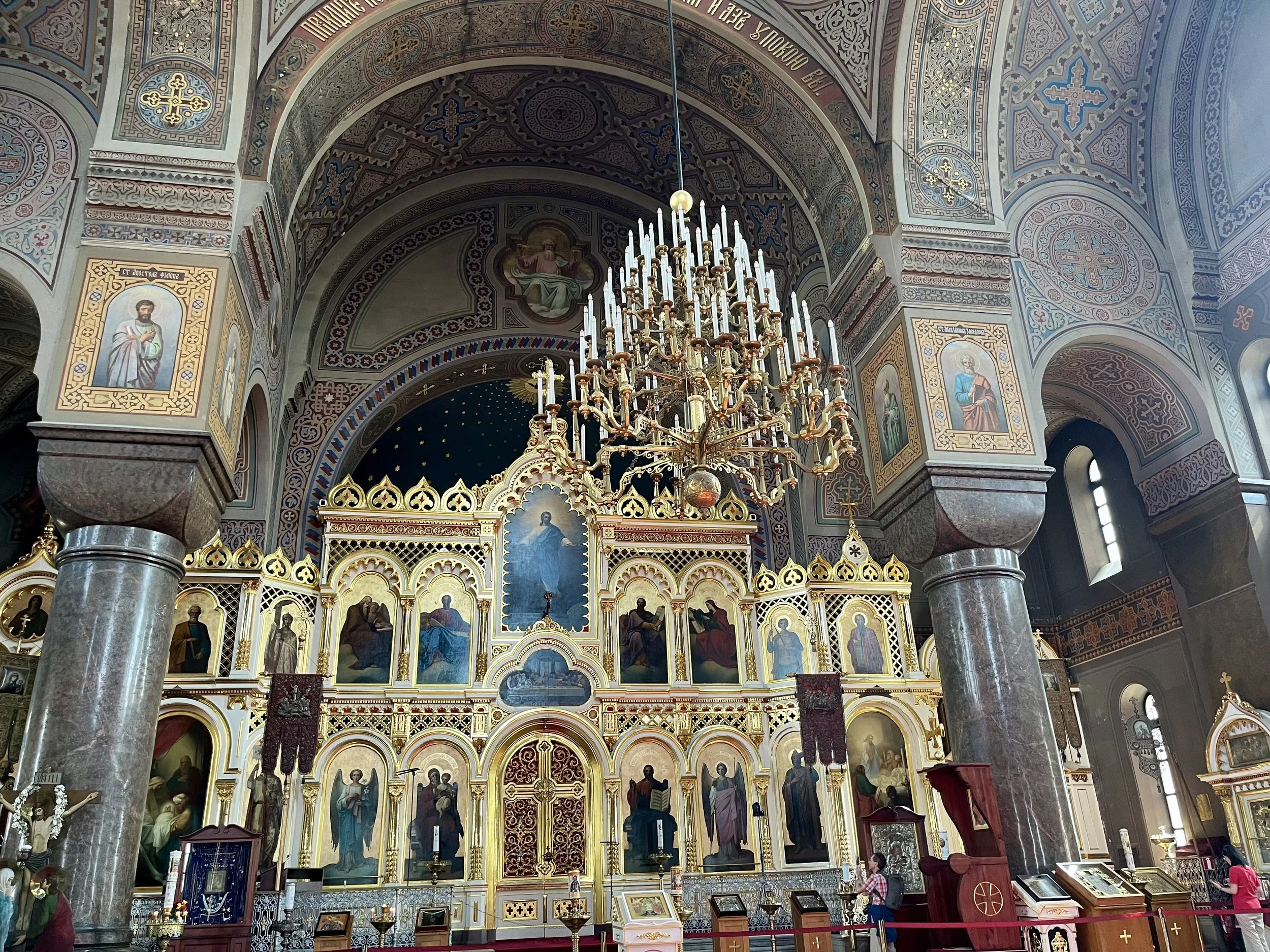
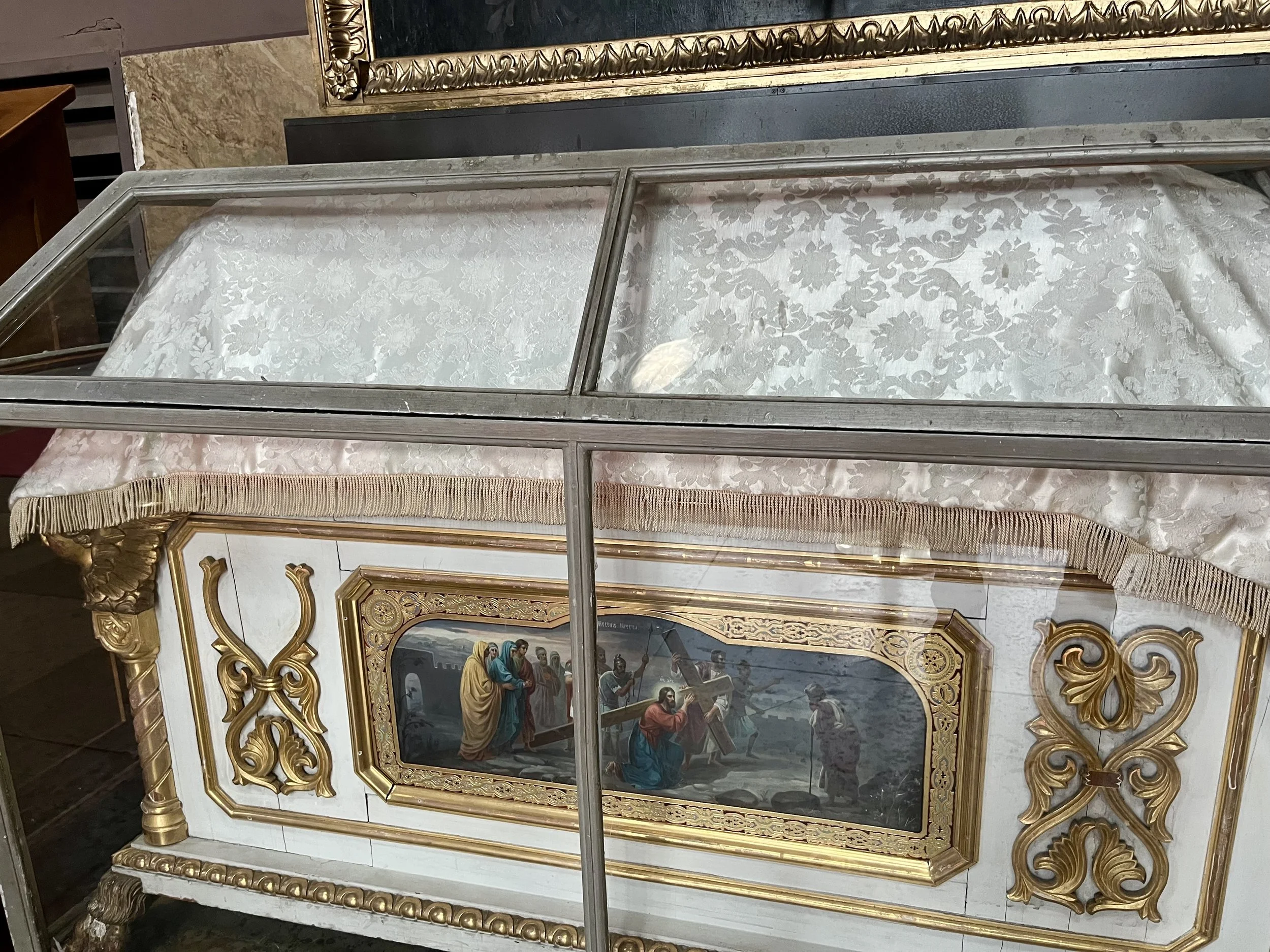
In a religious state of mind, we took the trolly to the Uspenski Cathedral, originally an Russian Orthodox Church that has traditional Byzantine form. When questioned, the caretaker of the church said this church had moved away from the Russian Orthodox Patriarchate of Moscow and now affiliated itself with the Constantinople Patriarchate, that formerly was in Istanbul, Turkeya. Interesting to me, as the Greek Orthodox faith was historically affiliated with Constantinople.

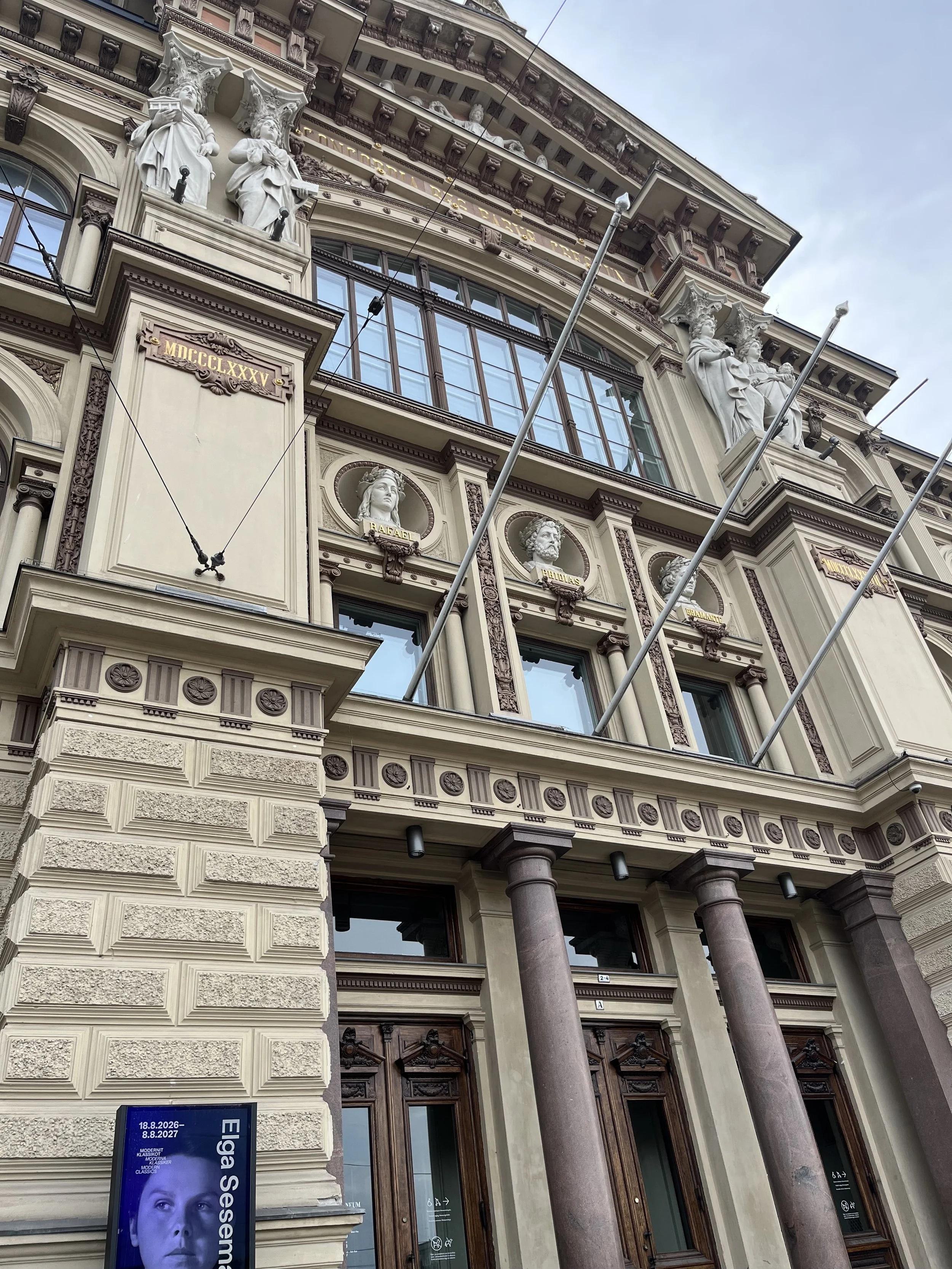
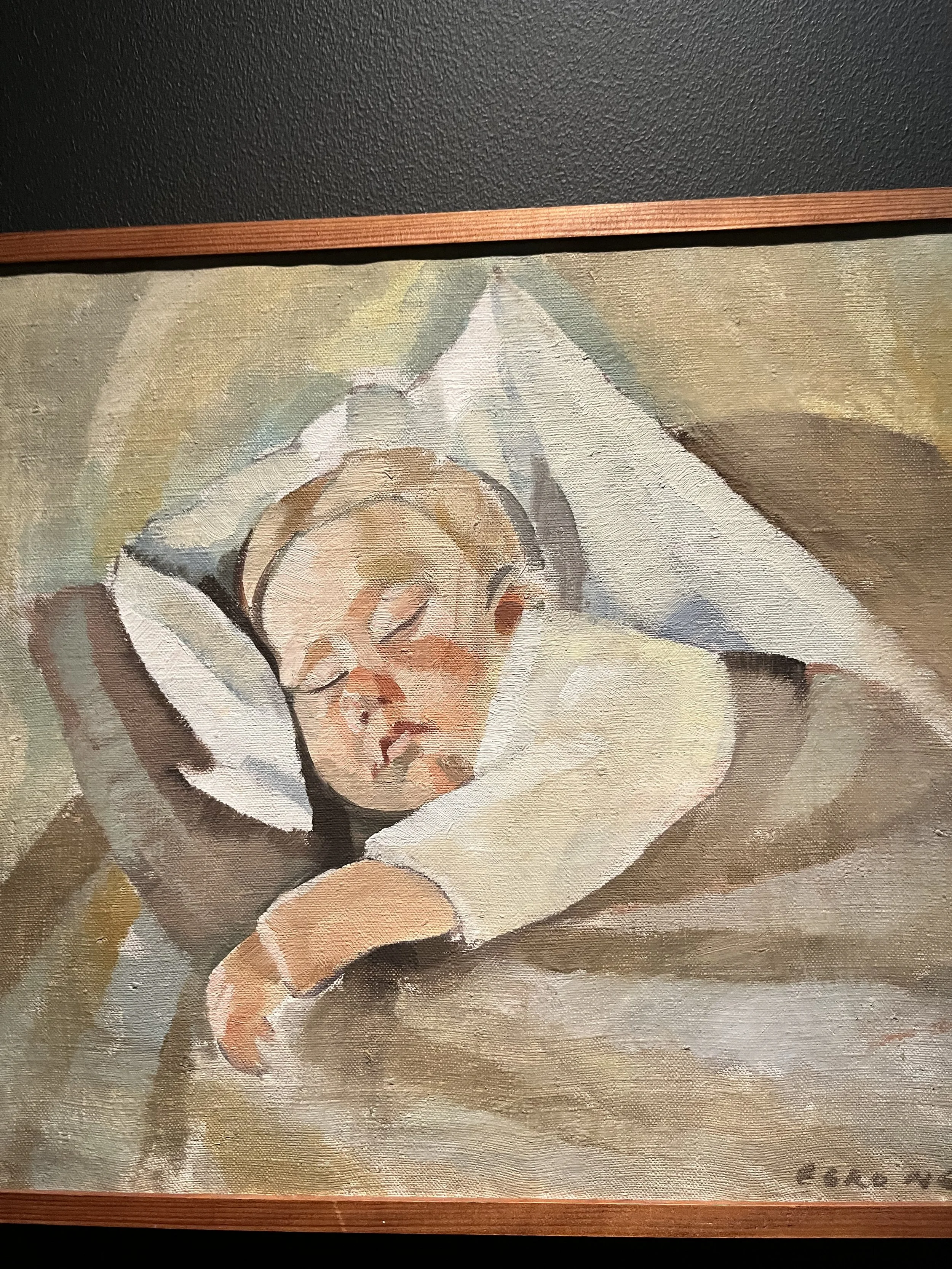
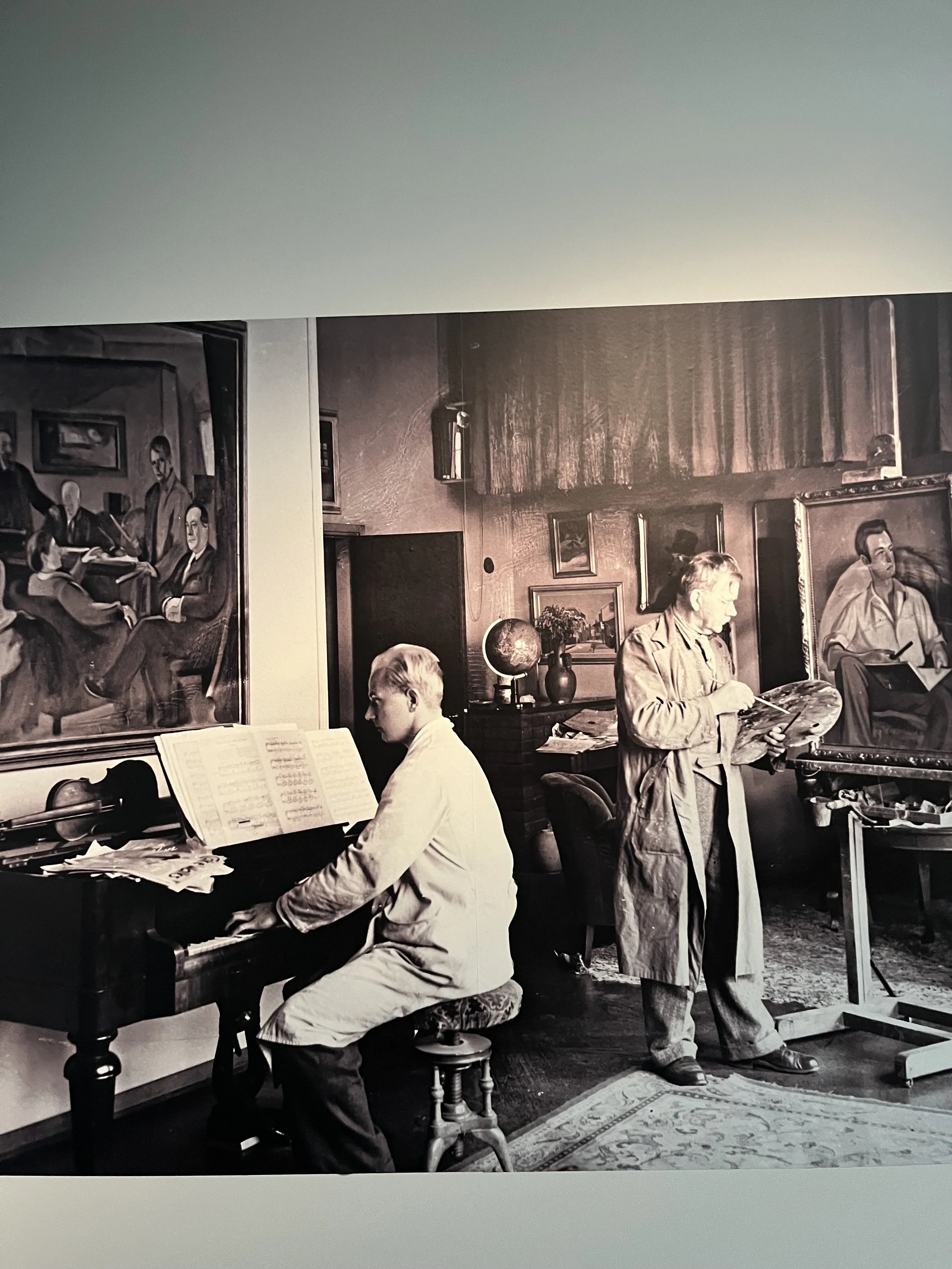
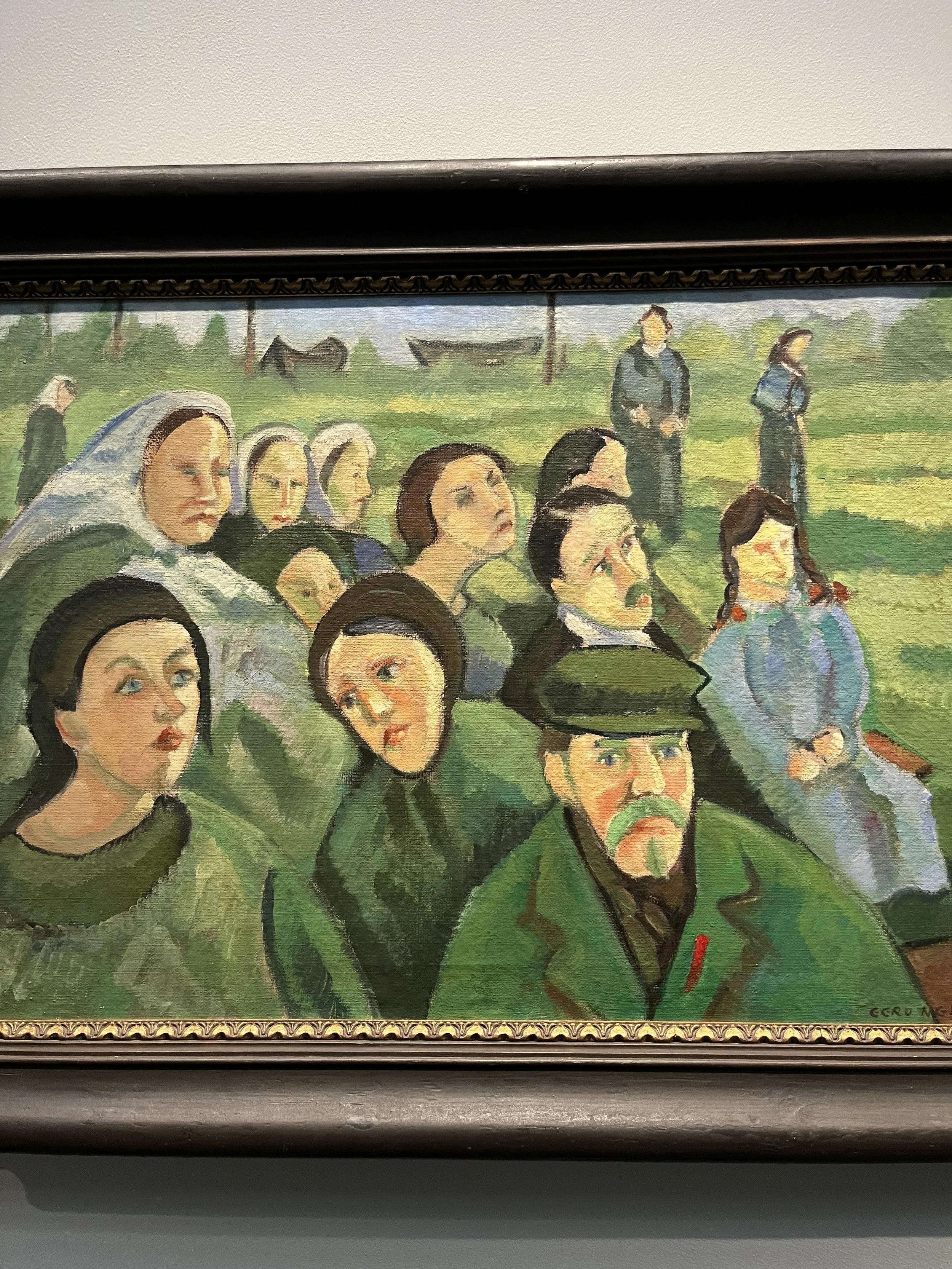
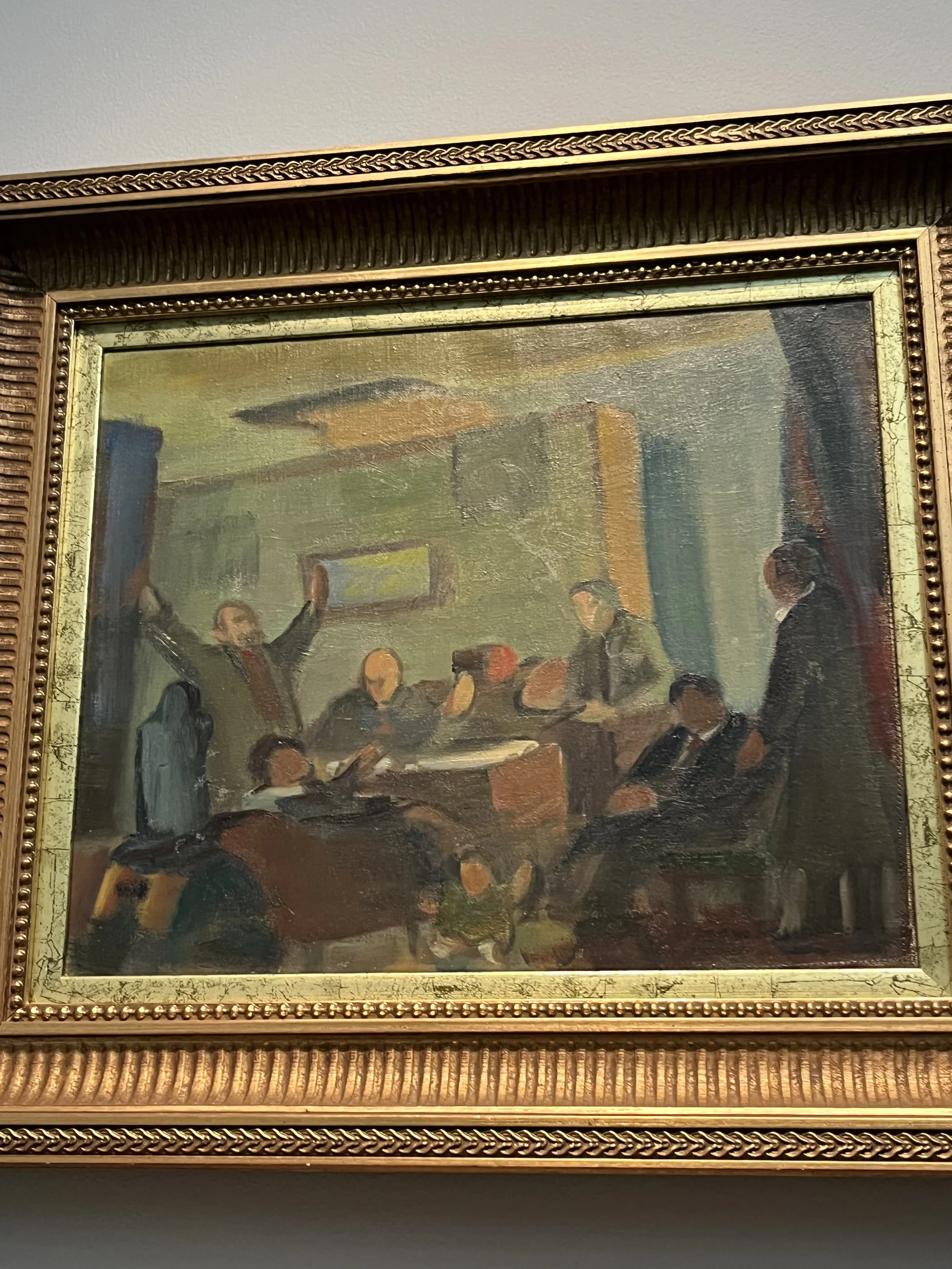
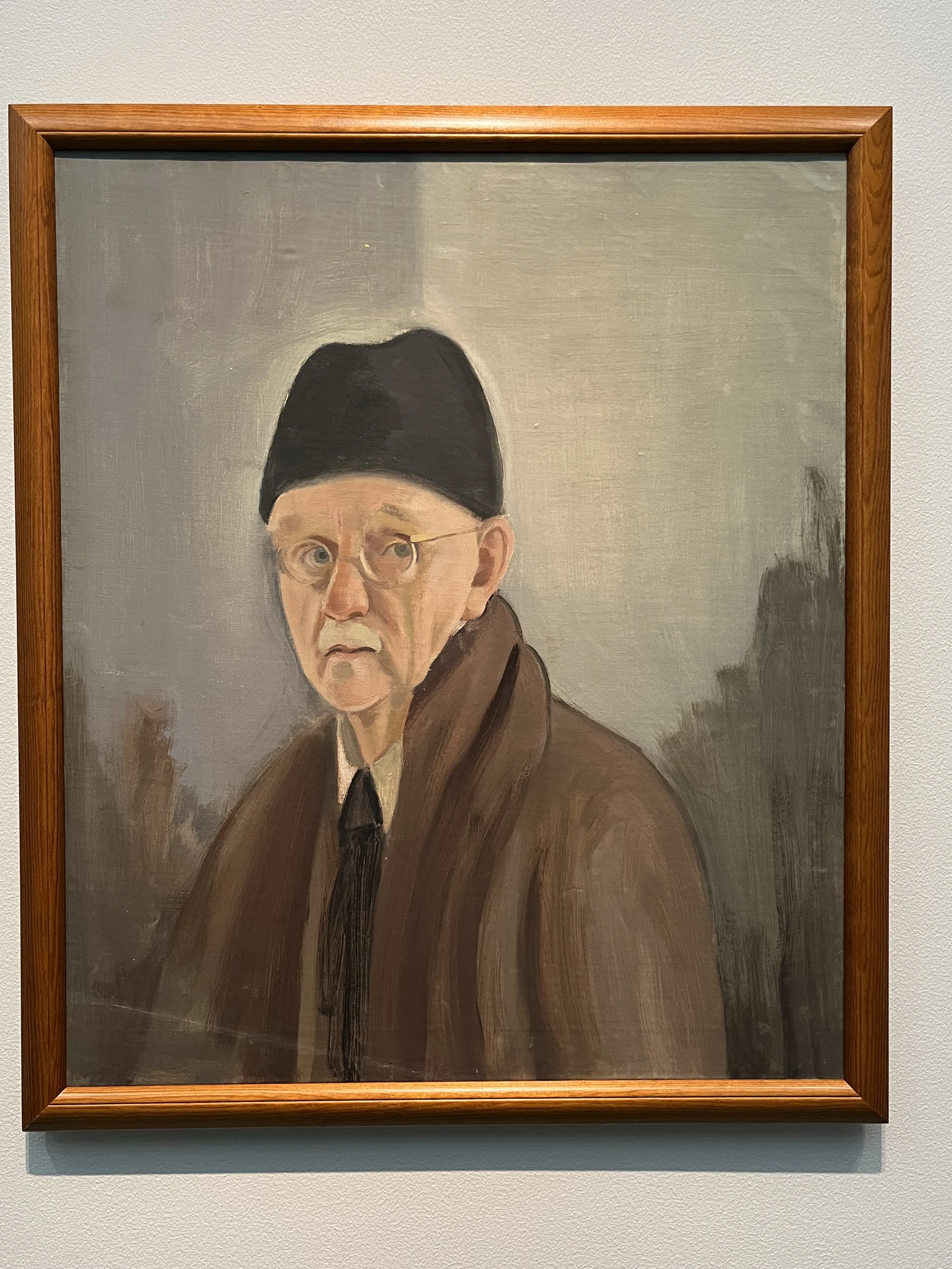
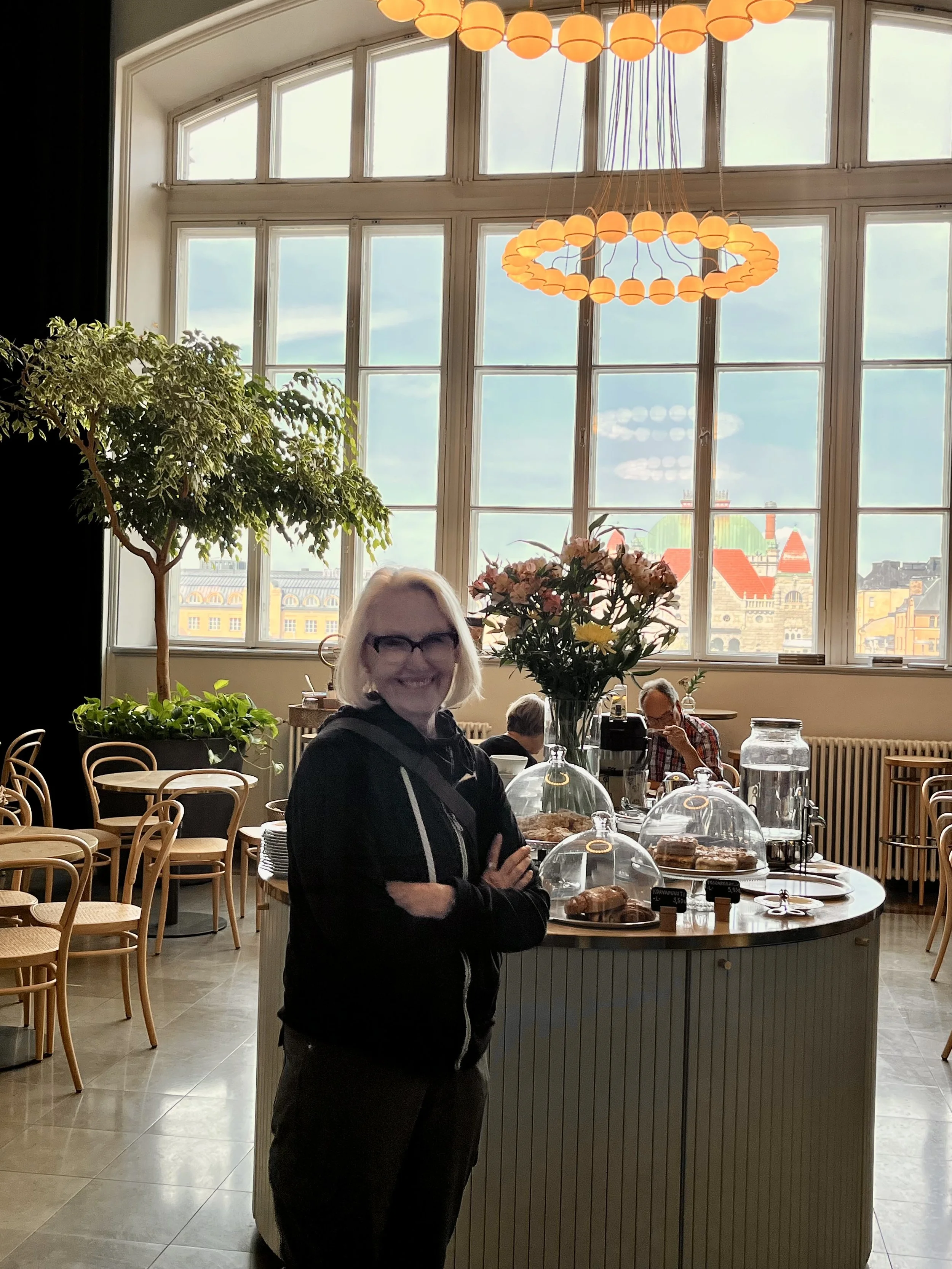
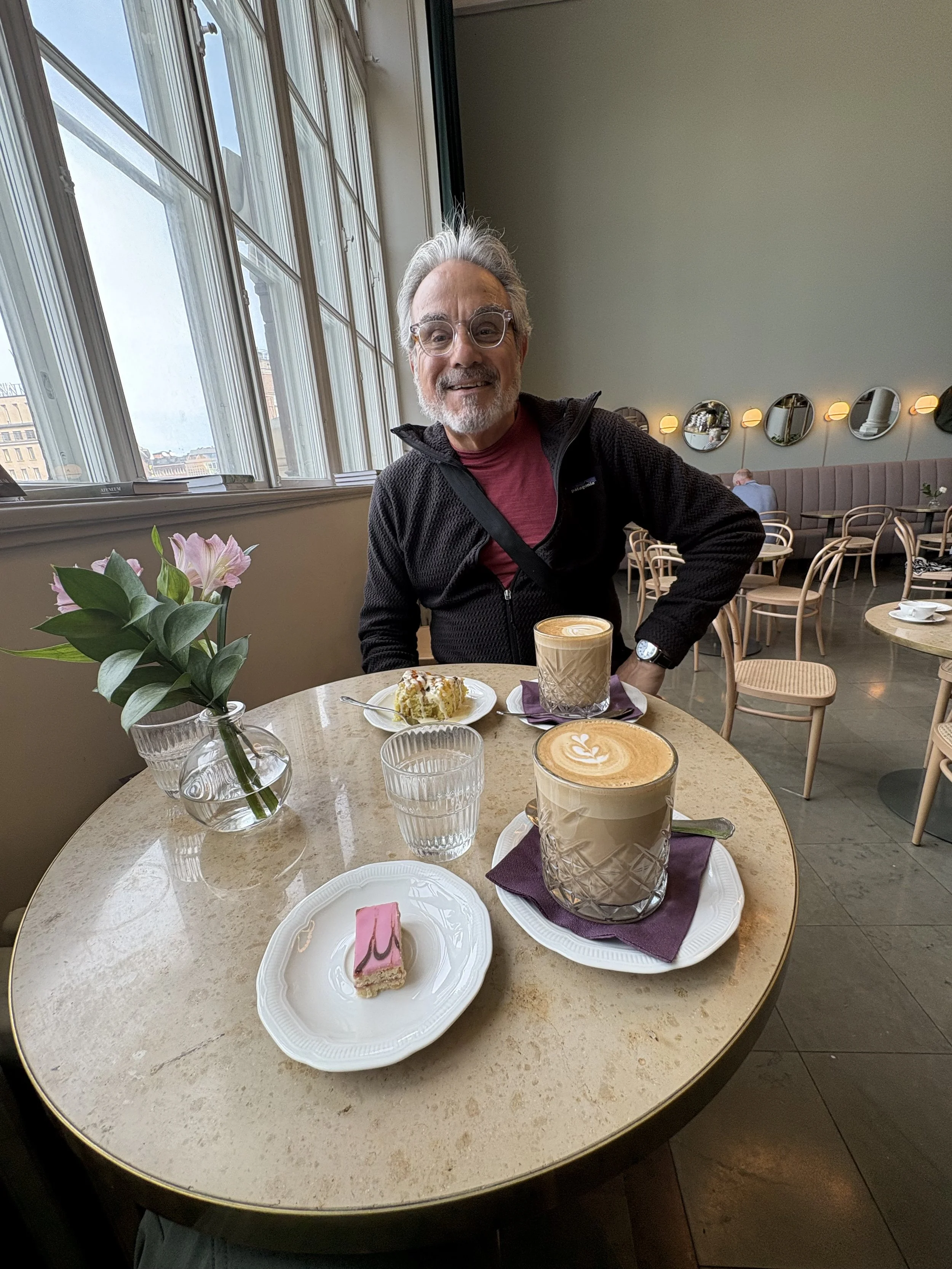
We finished the day by visiting the Helsinki National Art Museum. There was a special exhibit about Eero Nelimarkka, acclaimed artist and one of the country’s best painters. He flourished with rural landscapes but often depicted urban scenes. As his reputation grew, he painted more commissioned portraits. He traveled to France to study and spent time in Seattle, US. In his life he opened an Art Museum and an Art School for Painters. We end our day with cake and coffee in the lovey cafe. See Photos.

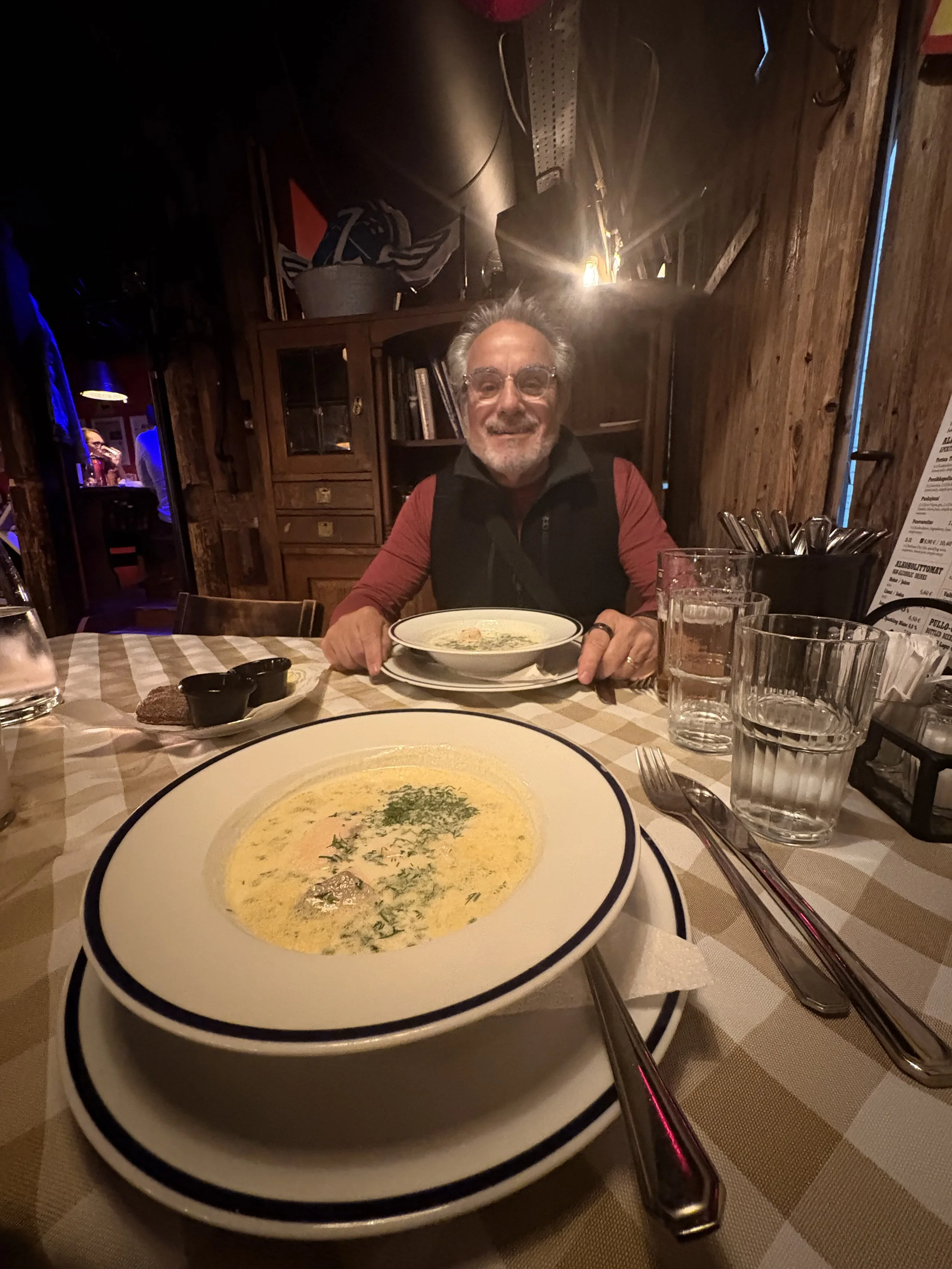
Back to our hotel for rest, then out again for bookstore perusing Moomin books in English for the grandkids, we find several great stores and our bags are now much heavier! Last on our list for Finland was to try the famous Salmon soup and Reindeer.  Our restaurant was more touristy than we like but the food was good and the Reindeer was just like American pot roast, but not as good.  In the end Finland; Helsinki did warm our hearts; we are glad we visited.

Salmon soup and black bread

Stockholm Sweden Part 2

Day 3

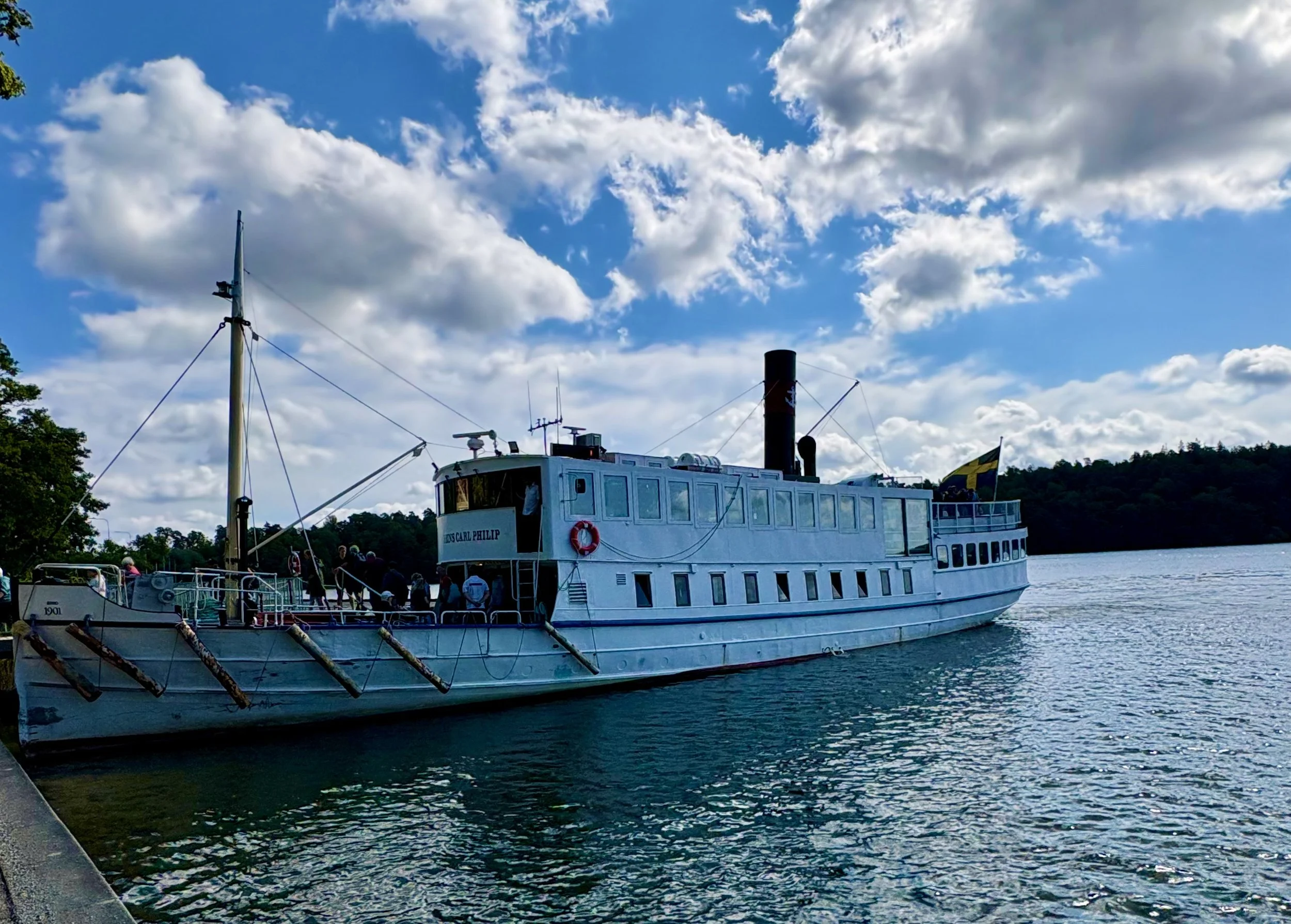
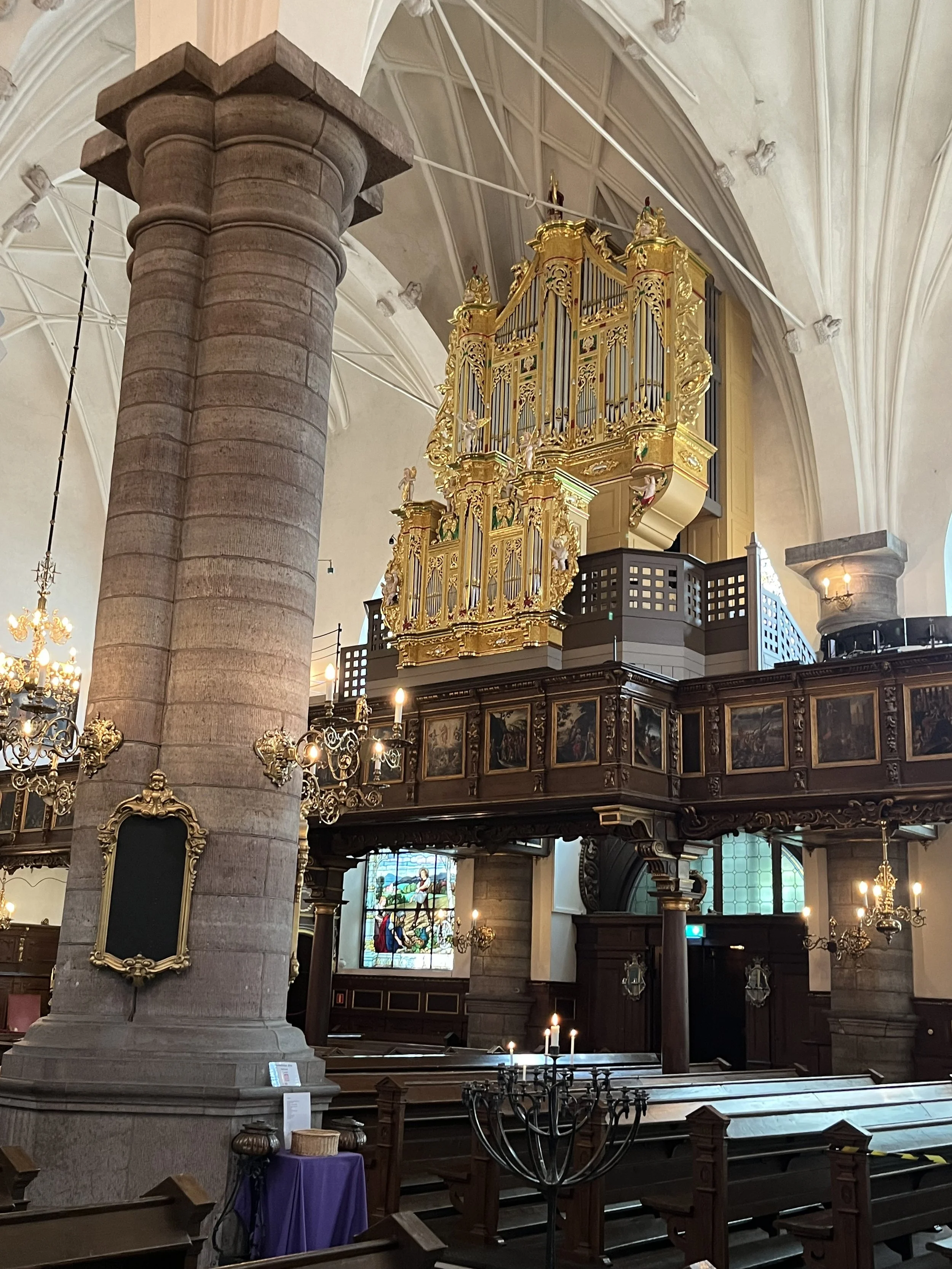
Another adventure awaits. We are taking the ferry to Drottningholms Palace, which was the summer home of many of Sweden’s Kings and Queen; now it’s all year around residence of King Carl XVI Gustaf and Queen Silvia,

The ship is packed in with passengers. We only managed to get inside seats on this sunny day. The trip is an hour from dock to dock. The location has three main attractions, the palace, the palace garden, and the palace theater.

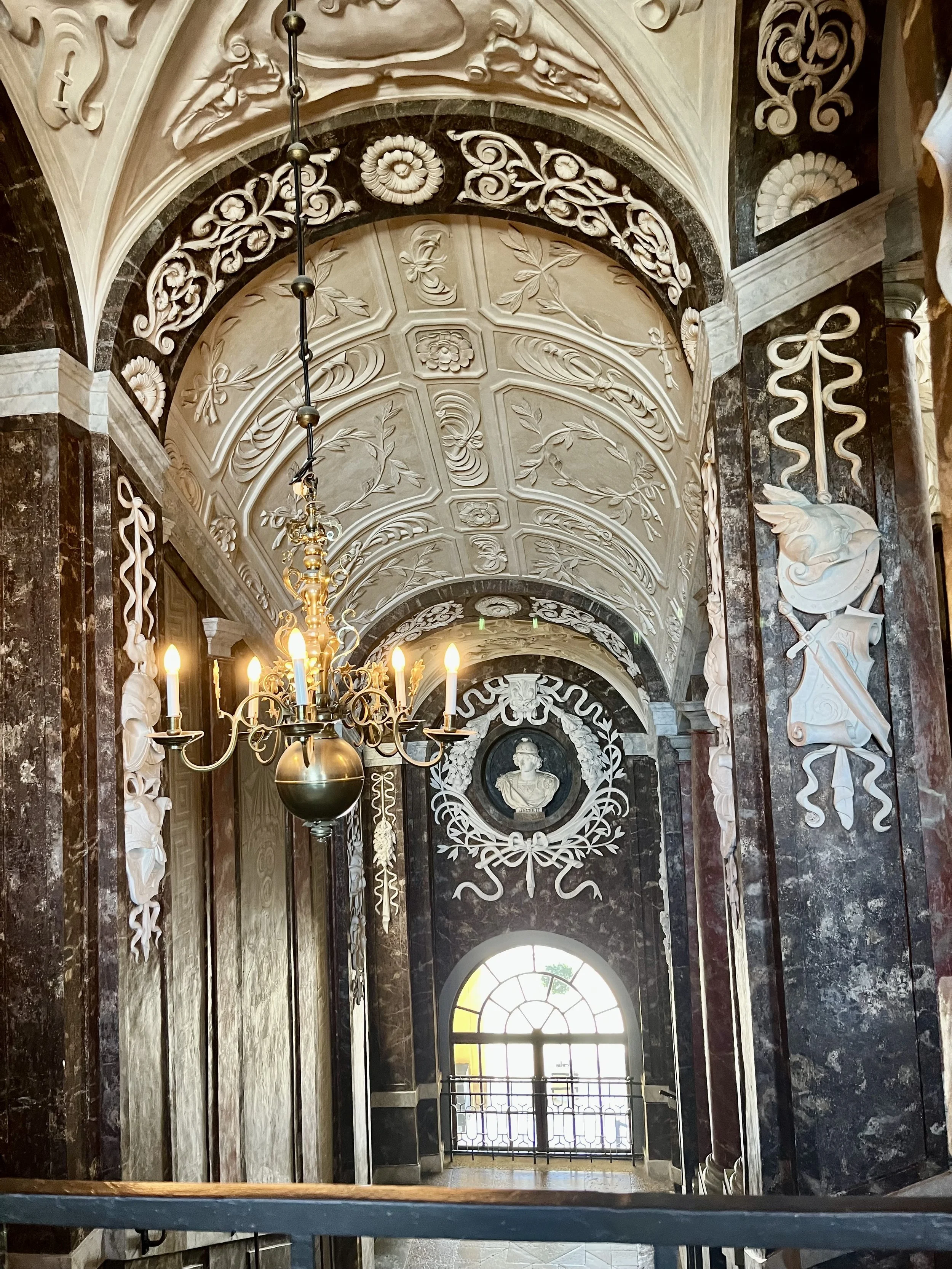
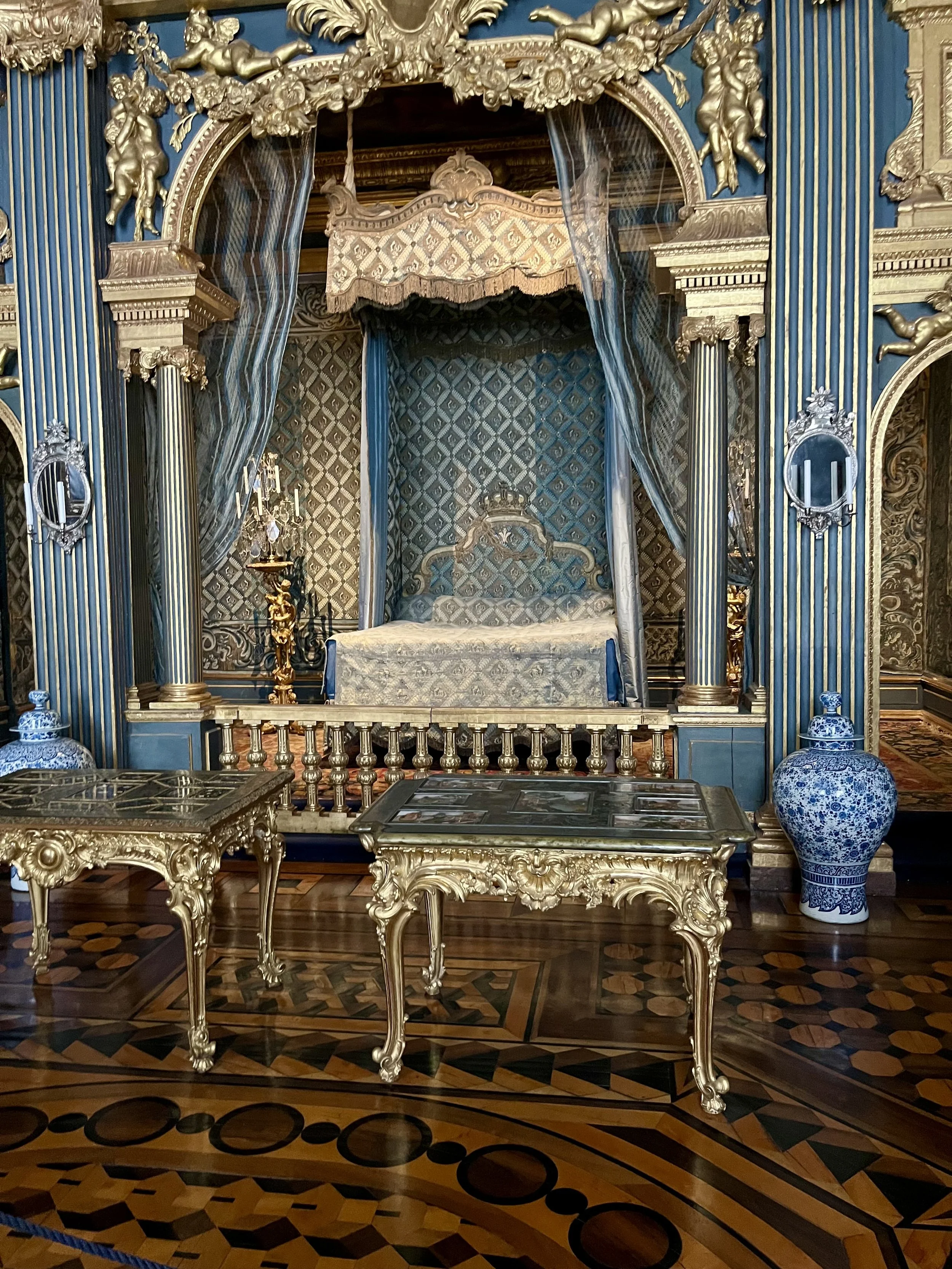
We head for the palace. Who’s not a sucker for a canopied bed? The splendid part of this palace is the two-story entry foyer where 2 separate marble staircases rise to the 2nd floor on each side, and the ceiling paintings in each major room we viewed. These items are impressive. As usual, we use an audio phone app for the tour. The palace is long from the front view, but a large part closed to the public. The bedrooms and open spaces are not fully furnished; none have canopied beds.

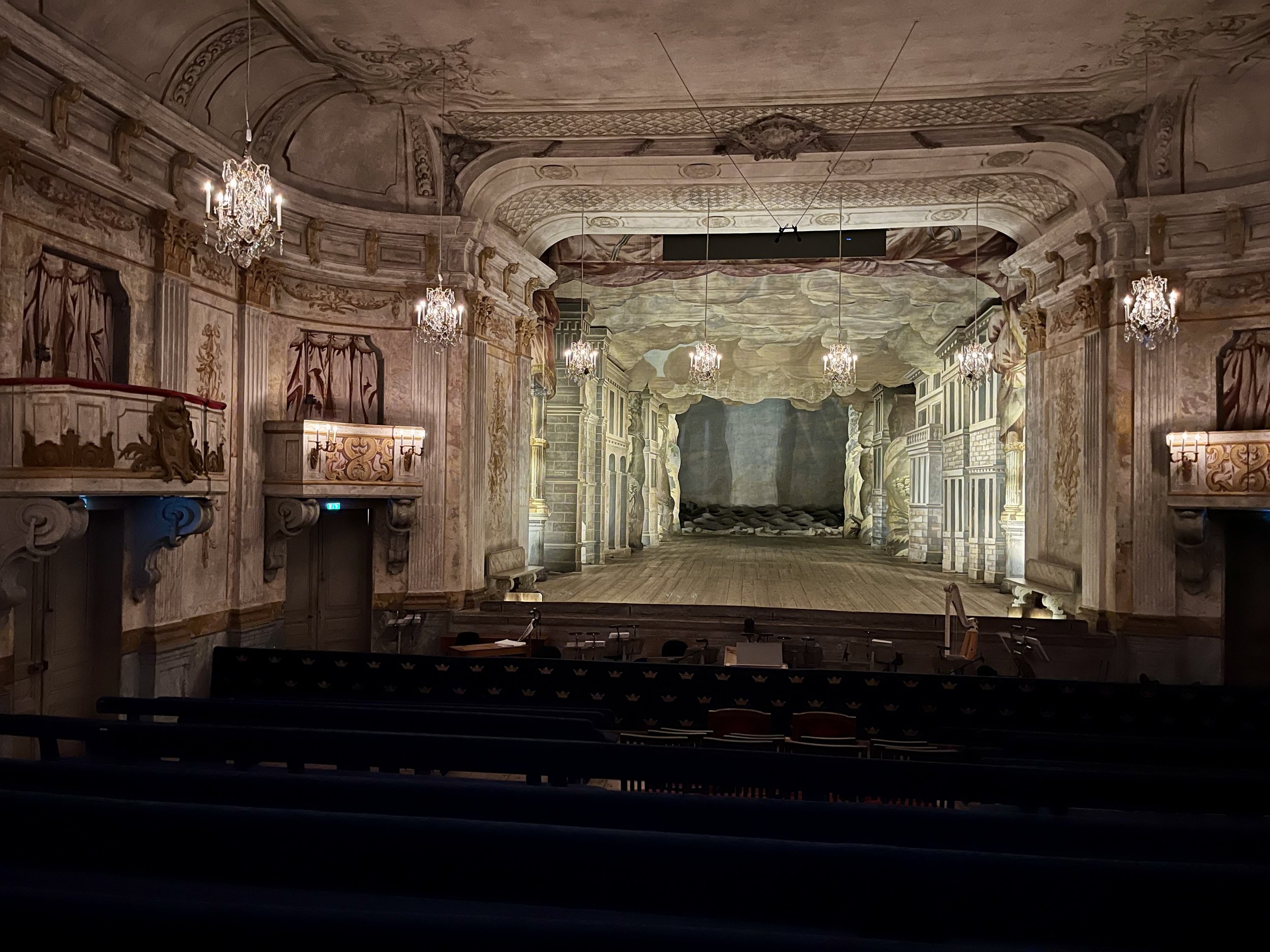
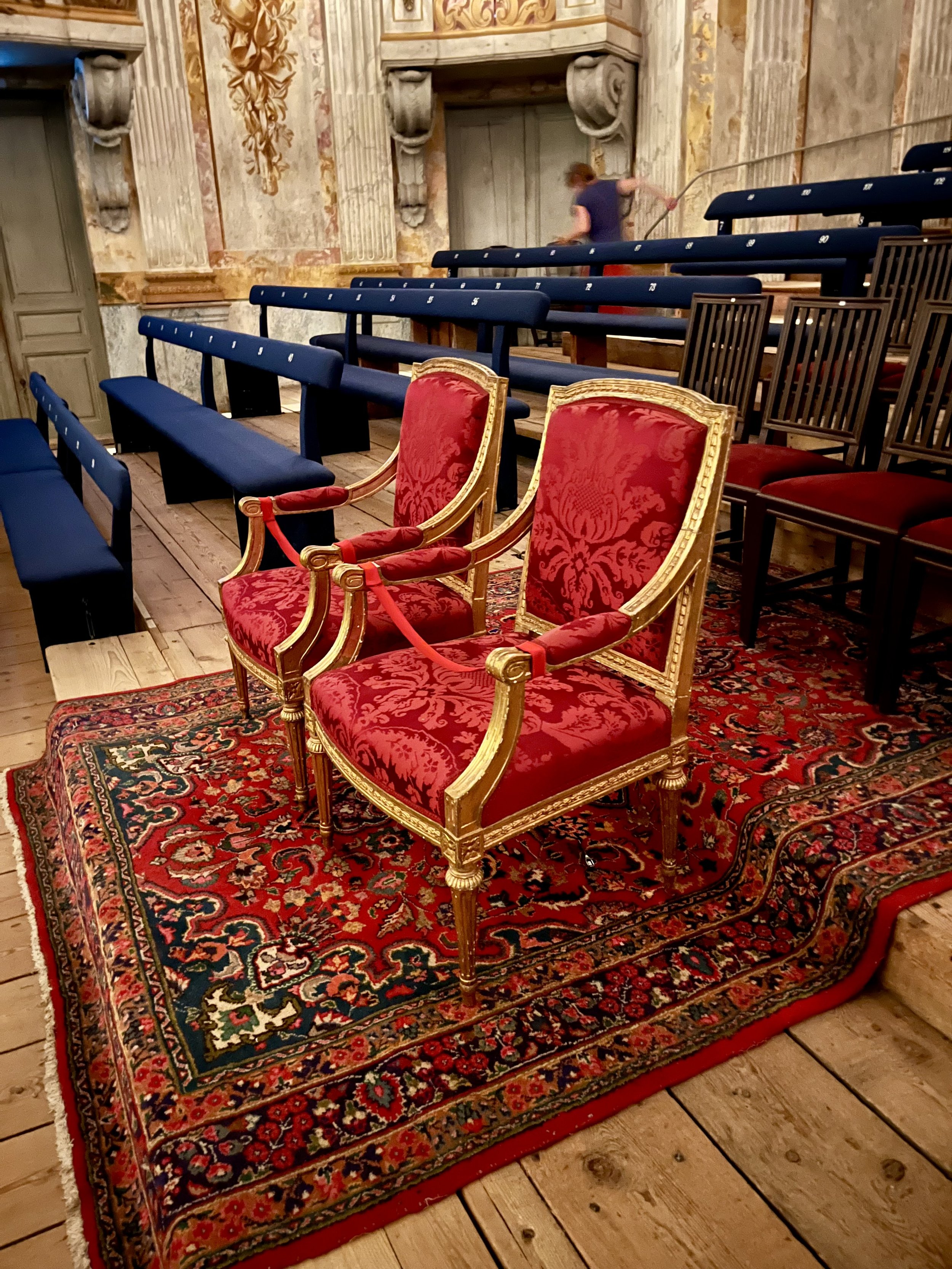
Turns out the real treat is the Royal Theater built in the 1700’s on the premises near the palace. The King Gustav III was a nice guy who was less interested in politics and more interested in theater generally and acting and playwriting. The financing to build the theater had major contribution from the Architect of the palace. He kept a large private room at the front of the theater; an apartment or large snack bar area to share with the King, maybe?

The entry into the seating area takes you to the second floor. When you step in your eyes at once go to the stage and the many side panels that are a series of painted props giving a magical aura to the entire area. You must sit down to fully enjoy and take in this vision.       

View of the gardens from the palace

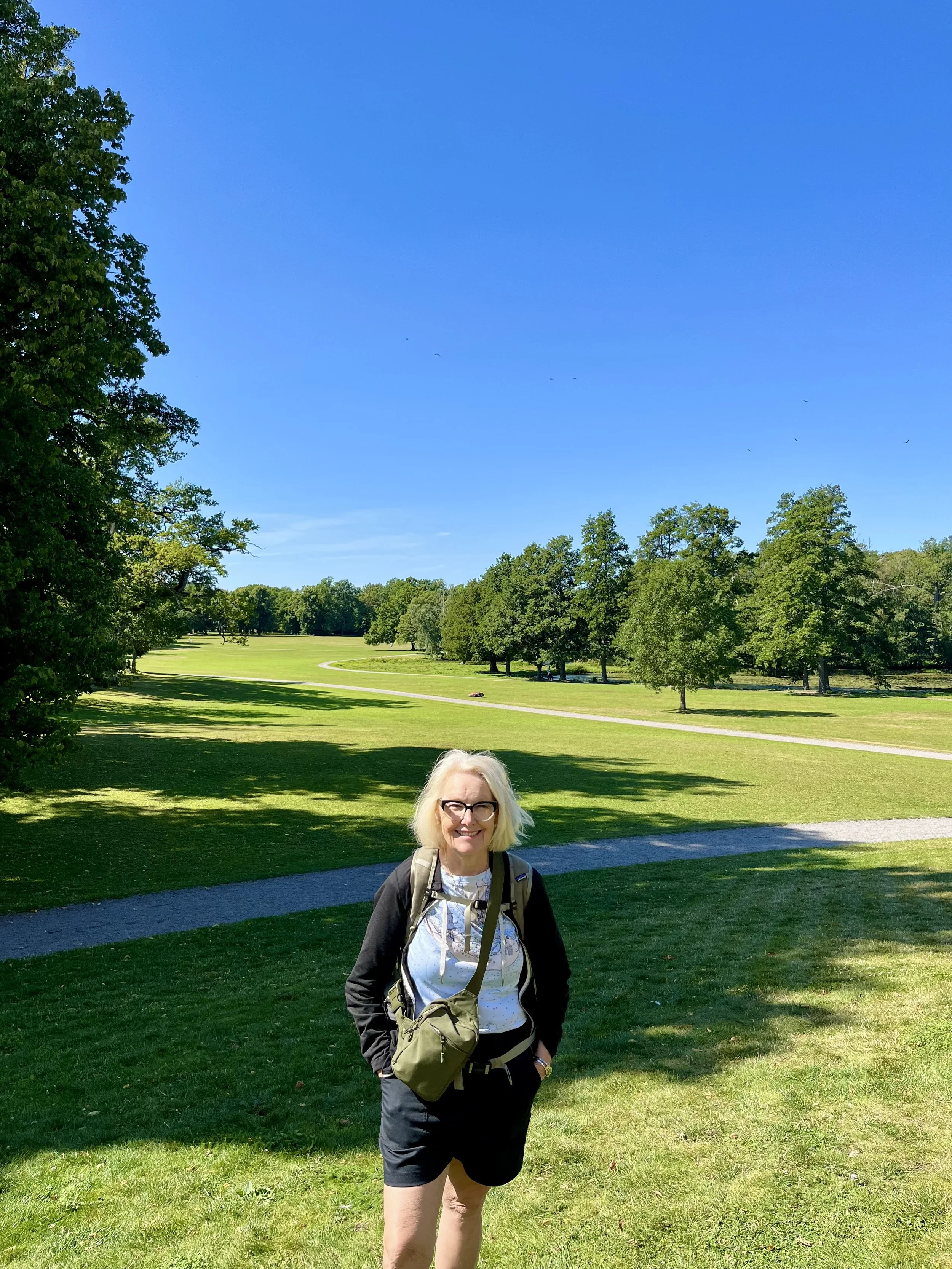
The garden surrounds the palace like an 18-hole golf course, long fairways of trimmed lawn sided by mature trees, not an abundance of flower gardens. We leave for the returning ferry that is just approaching the dock.

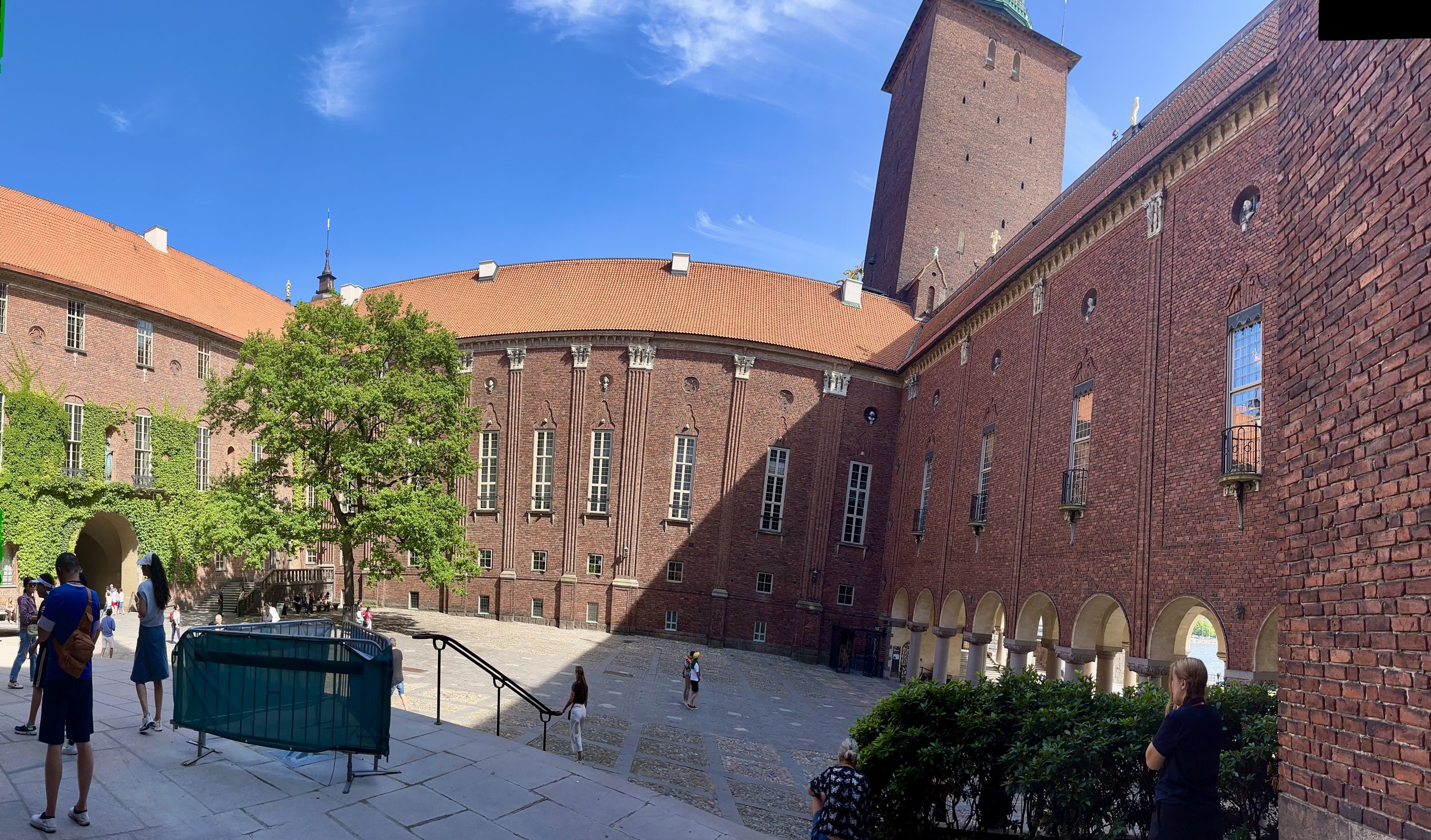
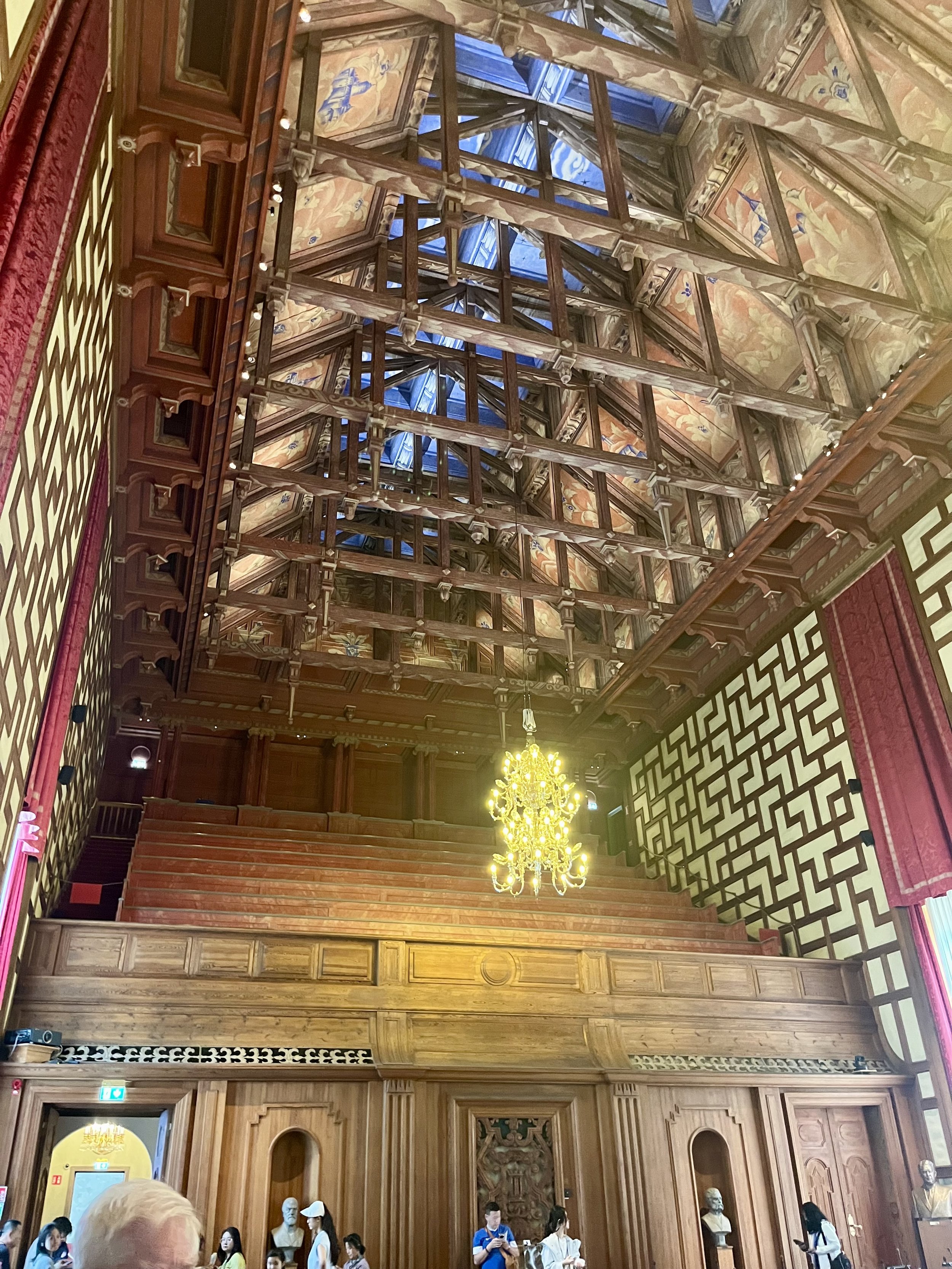
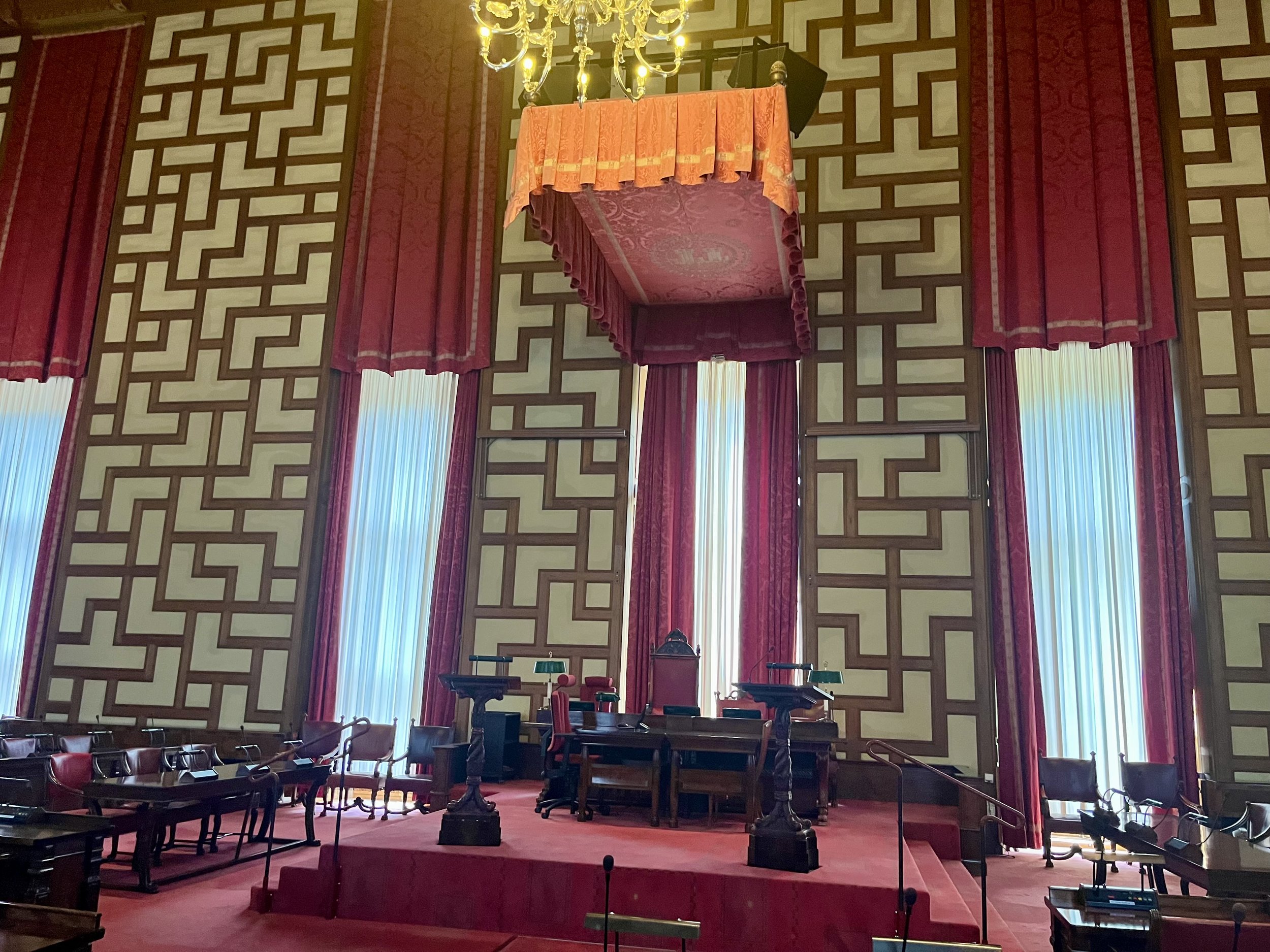
Upon docking, we at once walk to the Stockholm City Hall for the guided tour. This turns out to be a wonderful experience. The structure and exterior of the City Hall remind us of the church and square in Venice, Italy. The entry to the City Hall holds a courtyard with walls of multiple arches that allow a view of the waters edge. There is a large tower, and brown brick is the exterior finish of the building. Upon entry you walk into the impressive Grand Hall, where the Nobel Prize ceremonial dinner is held. A large staircase connects to a long balcony that runs over half of the sidewall where Nobel Nominees have their walk of fame.

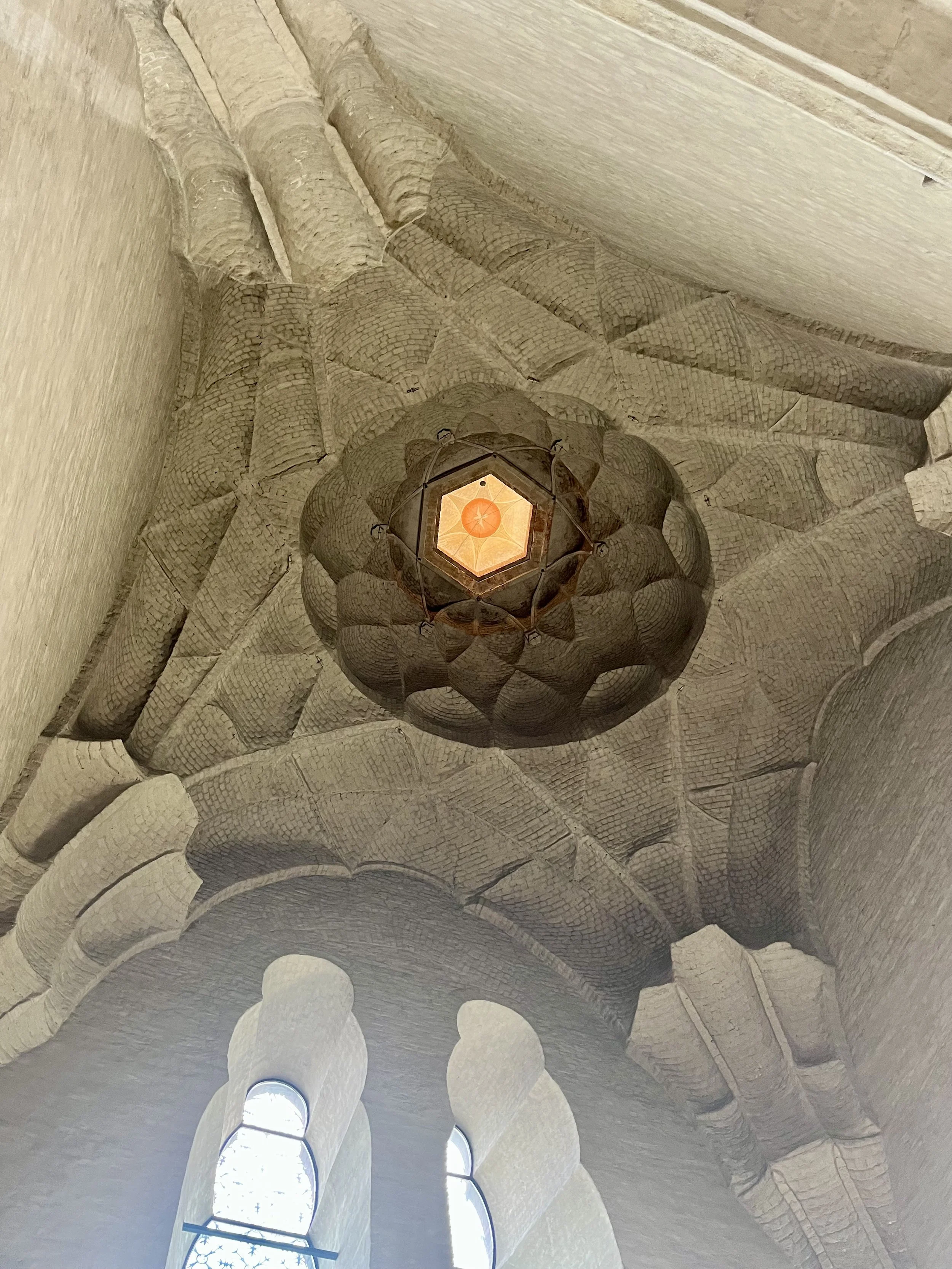
We next walk into a small 2 story tower room with leaded glass windows where curving spires meet at a point in the ceiling. This is striking, and a favorite location for civil marriages we hear; about 90 weddings every Saturday. Next, we directly move into a long beautifully adorned meeting room used for negotiations and state dinners. Finally, we move to a second ceremonial Grand Hall, not as large as the first hall, but the topper. All the walls are adorned with squares of gold leaf and colorful glass creating a fabulous mosaic over the entire room. (Note: the Oslo City Hall that we loved is a very similar structure to this big brother.)

Stockholm Concert Hall

We end the day by stopping at a local café for a late lunch and then jump into an “On-and- Off” Bus to get better bearings, check out other areas of the city and find the excursion locations for tomorrow. We never actually got off this bus but did listen to the audio. We do not use these buses much, but the price was part of our “Stockholm Pass,”so why not.

Last bus stop, we were tired from a long day. We just stopped at the local “Greens to Go” shop to take out fancy salads and went on our way home. Good night.


Nordiska Museet

Entry Hall

Day 4

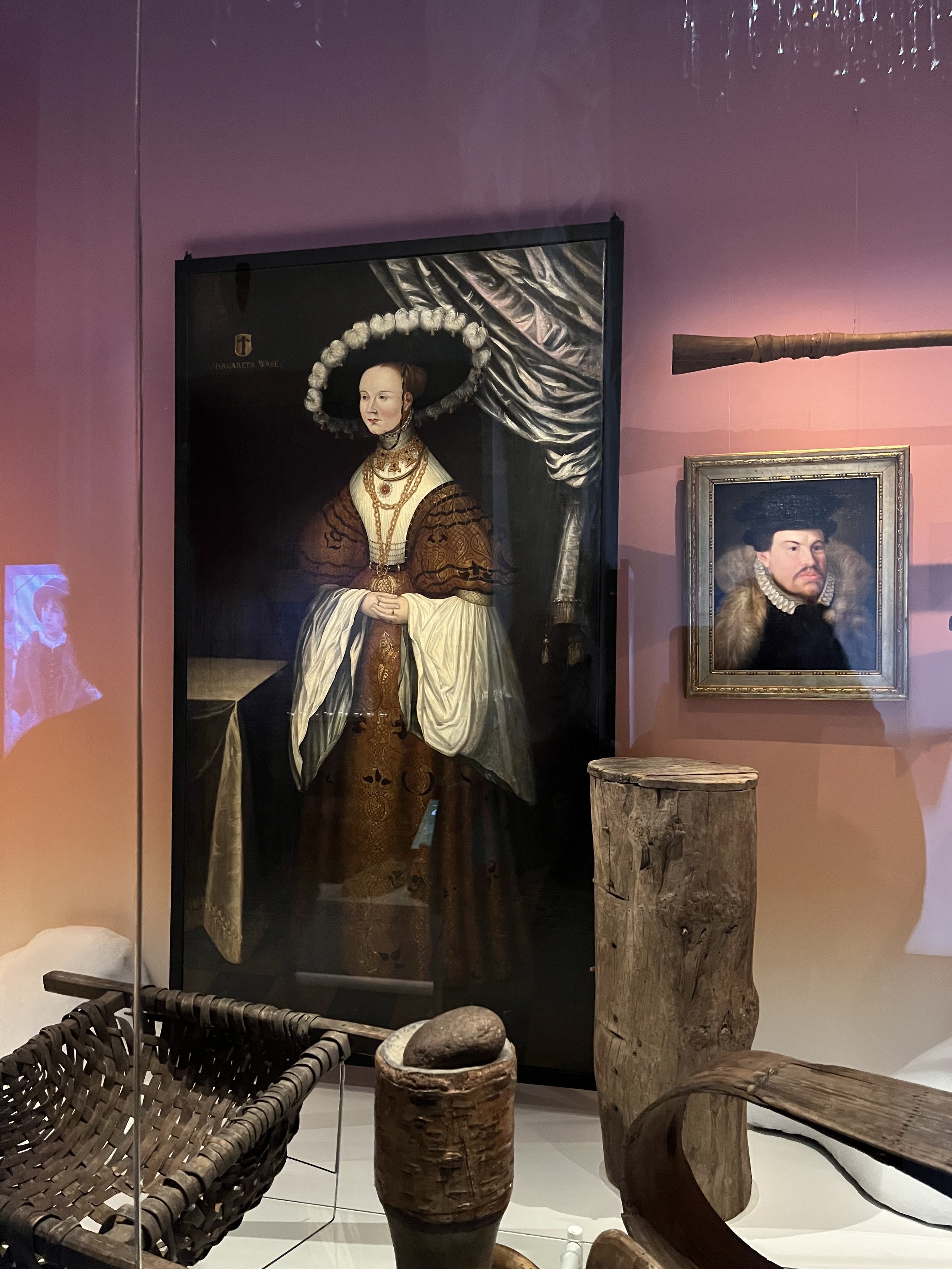
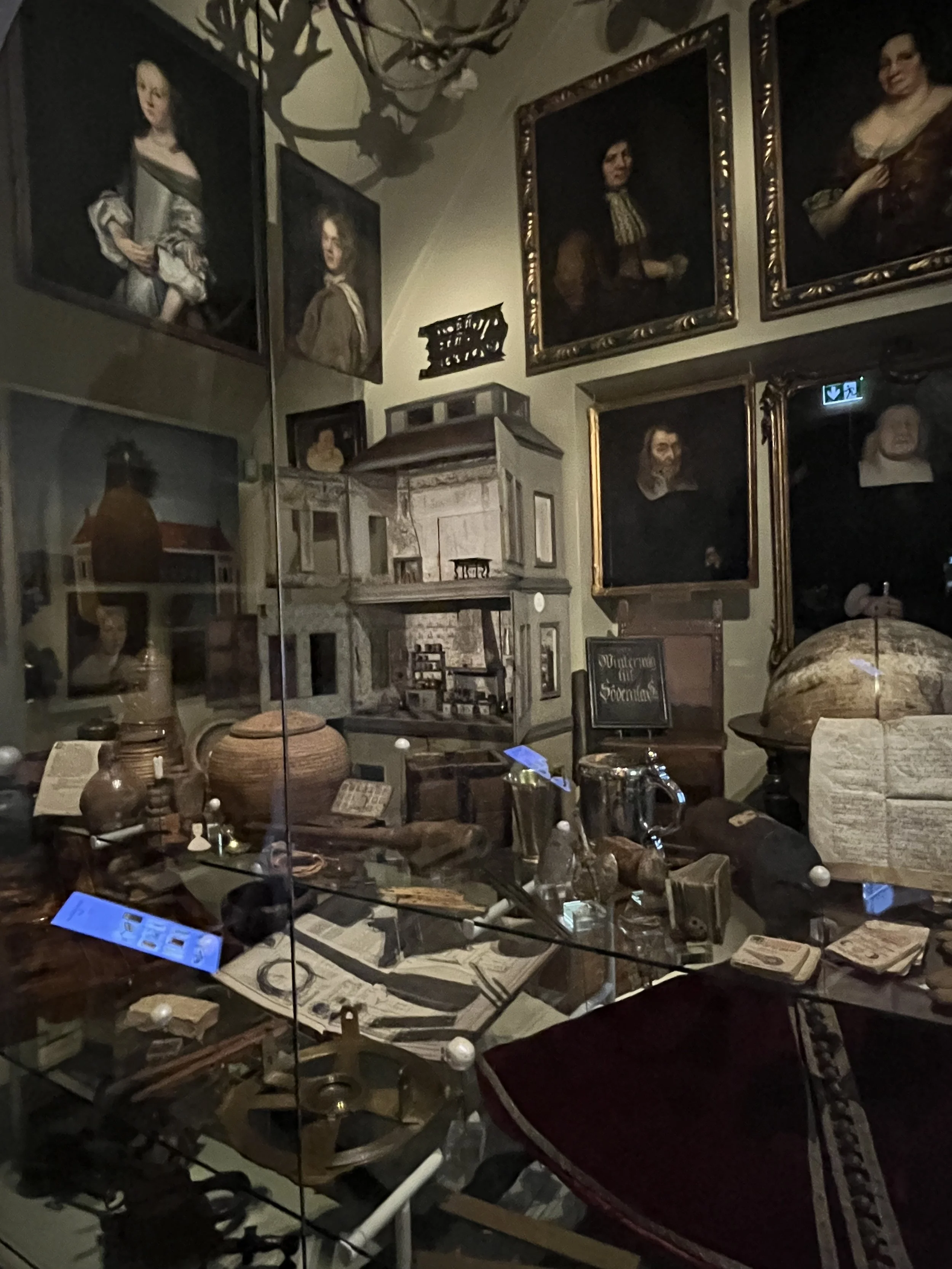
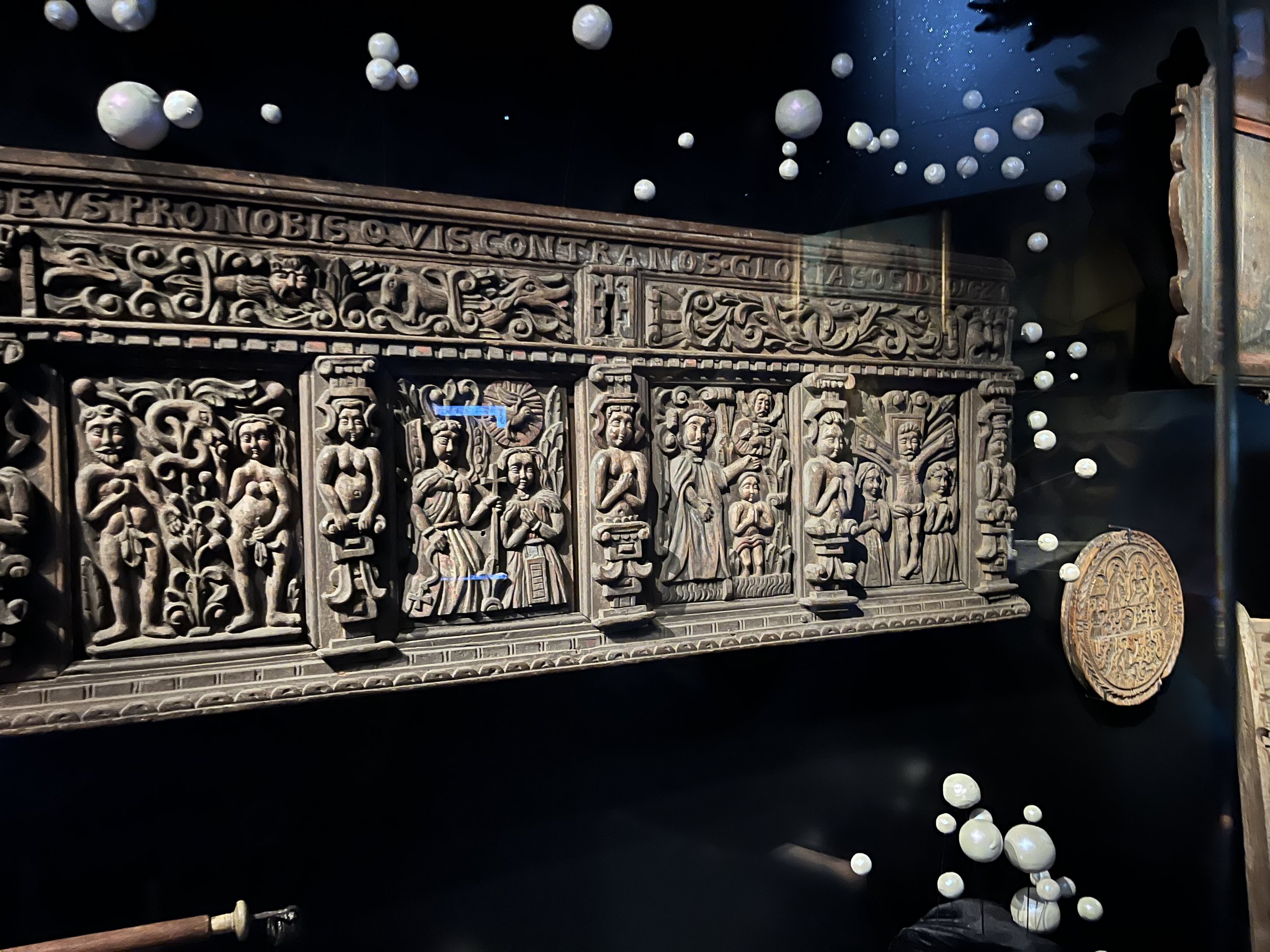
Today we visit the Nordiska Museet and another Viking Museum, both near the Vasa Museum. Since we know the location passes the harbor we decide to get in some extra steps and walk. The Nordic Museum is a massive building with high spires that you can see from afar. We enter the church like front doors into a completely open interior courtyard the length of the building with exhibit halls circling the space. The staff suggests we view  the new exhibit “Nordic Life -500 Years”. As they advertise-it is magnificent, especially with the audio tour that is provided. What makes the exhibit so clever is that each splendid section starts with a narrative story about a family or persons that are affected in the era, then intertwines the displayed artifacts into the storytelling. The exhibit continues around the entire circumference of the museum. See photos below of some of the display cases

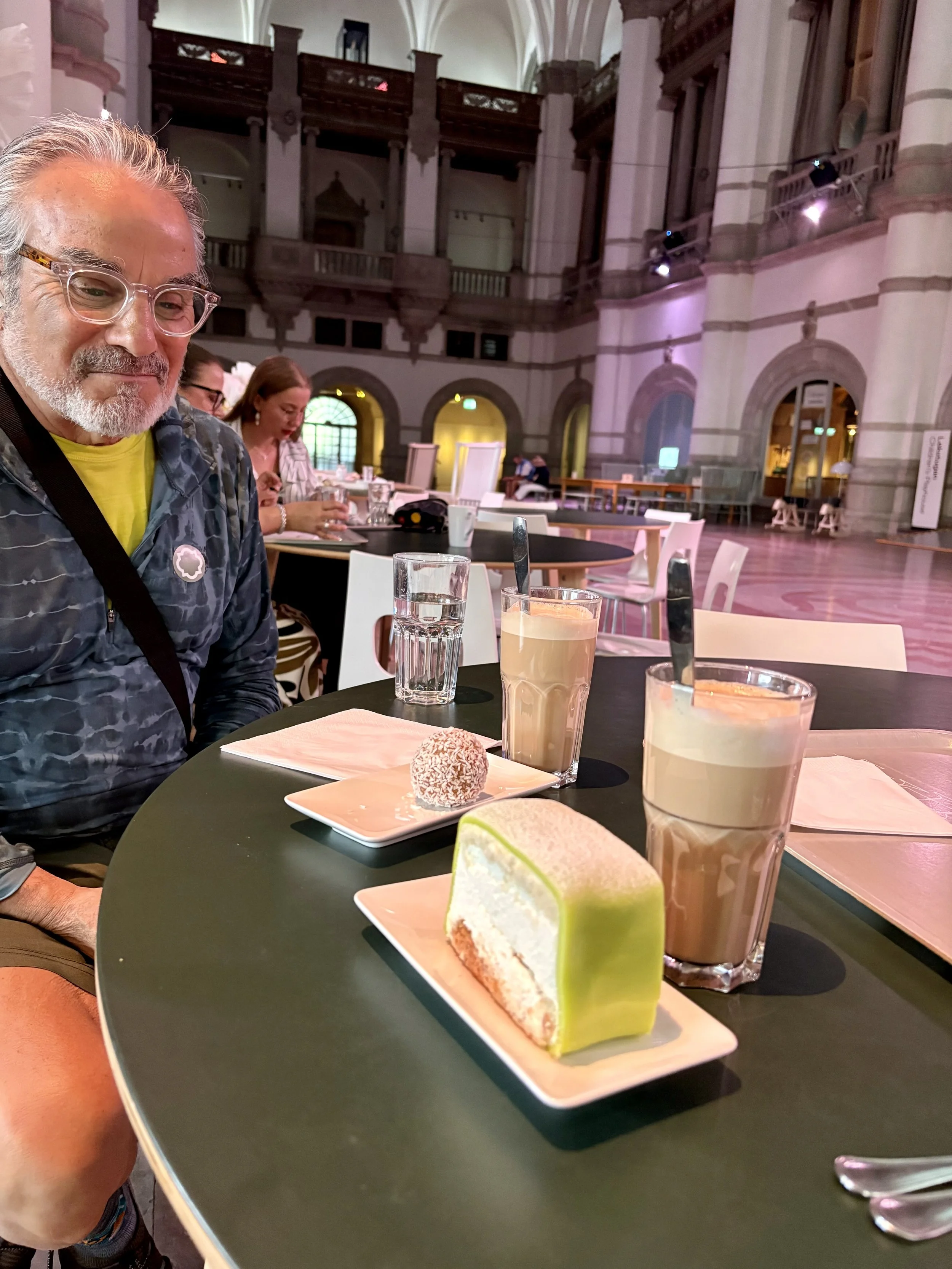
We take a break and try the famous “princess cake”, it was good but just cake and cream.

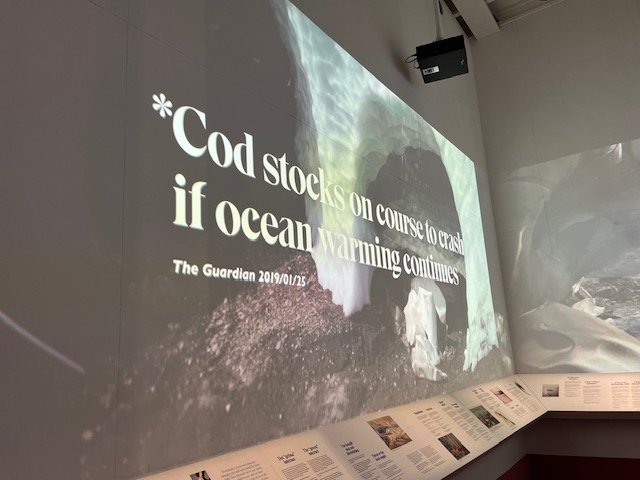
We next moved on to the main floor, another new “Artic Exhibit” was created within a modern freestanding set of connecting rooms that deal with the rapid changes to the Arctic and the factors that effect the change. The displays use innovative technology.

The Viking Museum uses a traditional format for displays with artifacts and storyboards. It is a compact exhibit and worth it to see if the Viking culture is an interest of yours. We like Viking stories but realize they are pirates. Their day job is farming, then they “go Viking” on the weekends. It was a good museum, but we think we are done with viking museums now! (no photos of this one)

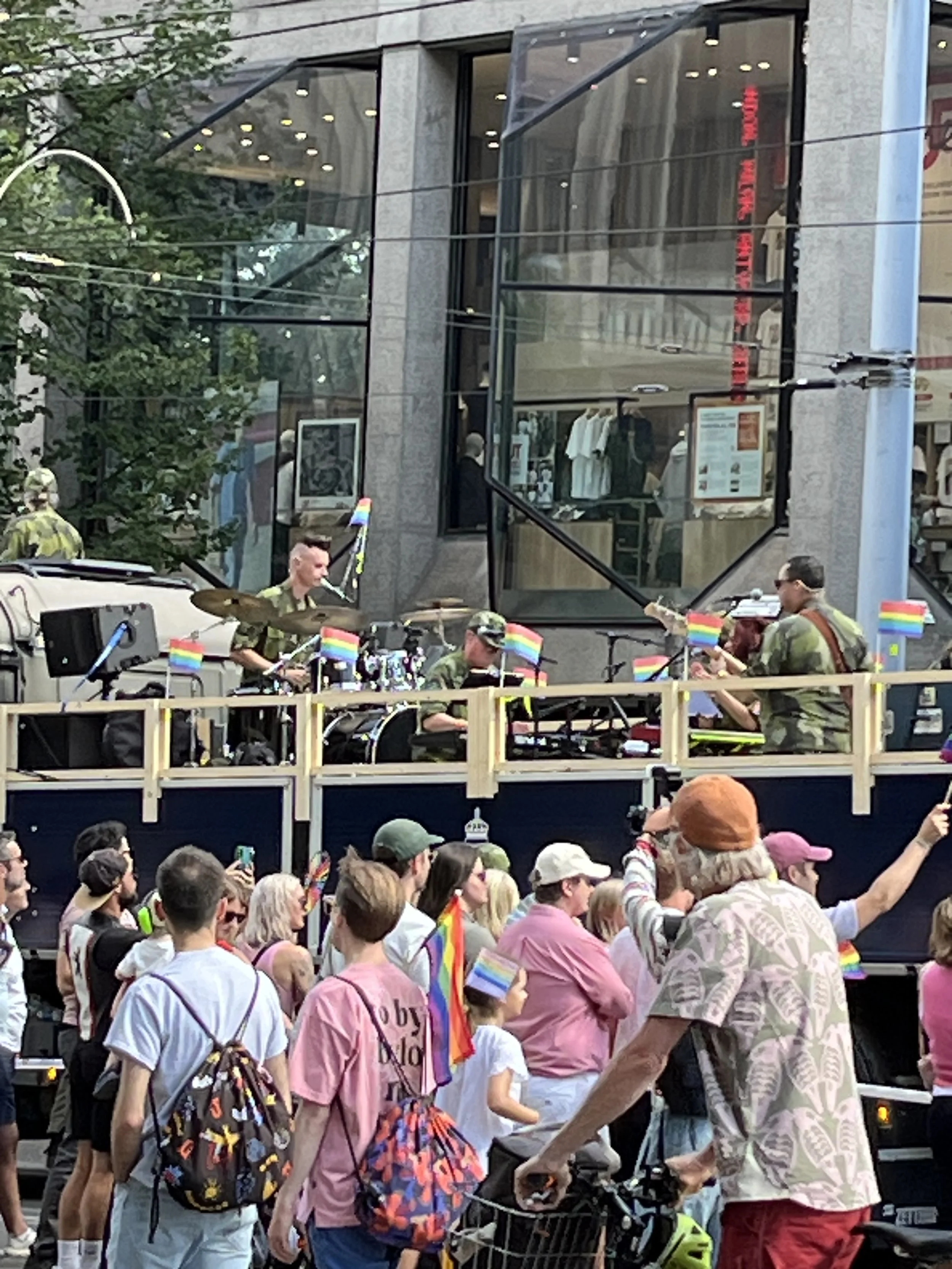
We now walk the full distance back to the hotel, stopping to watch the huge pride parade. More sunshine and blue skies, and more steps. We take a break and then visit this Giant Multiplex Movie Theater to watch “The Odessey” in English with Swedish subtitles. Every seat is taken. Good movie. We also noticed that the new Spider-Man movie had the most advertising and seemed packed too.

We are off to Finland tomorrow.

The National Theater (not movies)

Stockholm Sweden Part One

Day 1 - Arrival

We depart Norway by our first flight in Scandinavia. The plane is nice, Airbus 320, funny no tv monitors. Smooth ride high above the clouds. The view seemed like flying to the edge of the Arctic. Might be imagination.

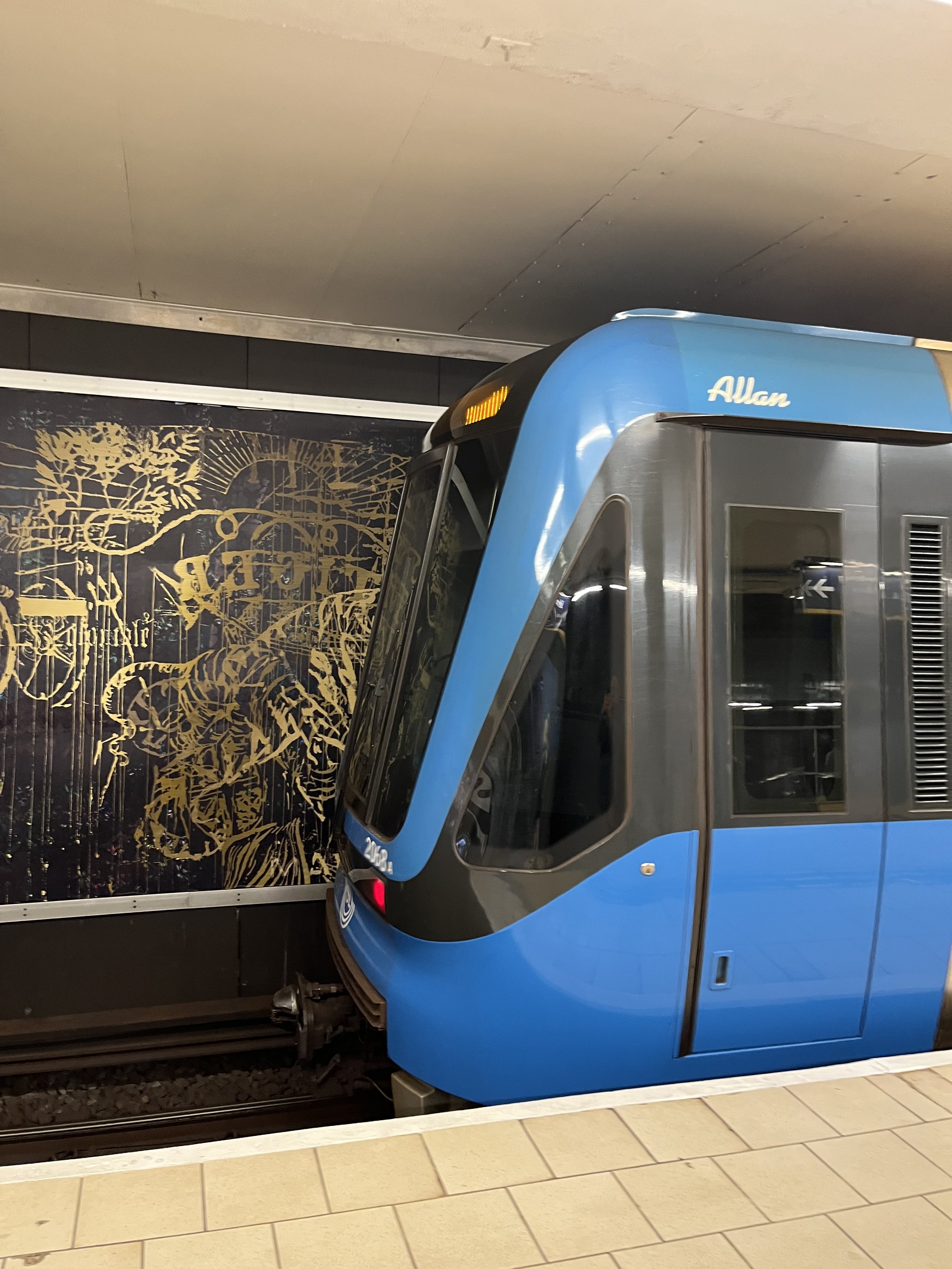
Upon landing at Stockholm, we follow directions to the Central Station Express train that is a high priced 17-minute trip to downtown, a monopoly locking up the market like the Heathrow express to London. Luggage present, no passport control because we are traveling between EU countries.

Immediately you notice from the train that Stockholm, Sweden is flat, not a hill, certainly not a mountain in sight. Must have been great for farming, past and present. Stockholm is the largest city by area and population. It was founded on La Gita island but has stretch over 5 surrounding islands connected by bridges and later by tunnels. Water is everywhere in wide channels, salty on the seaside and brackish on the lake side. These are not canals.

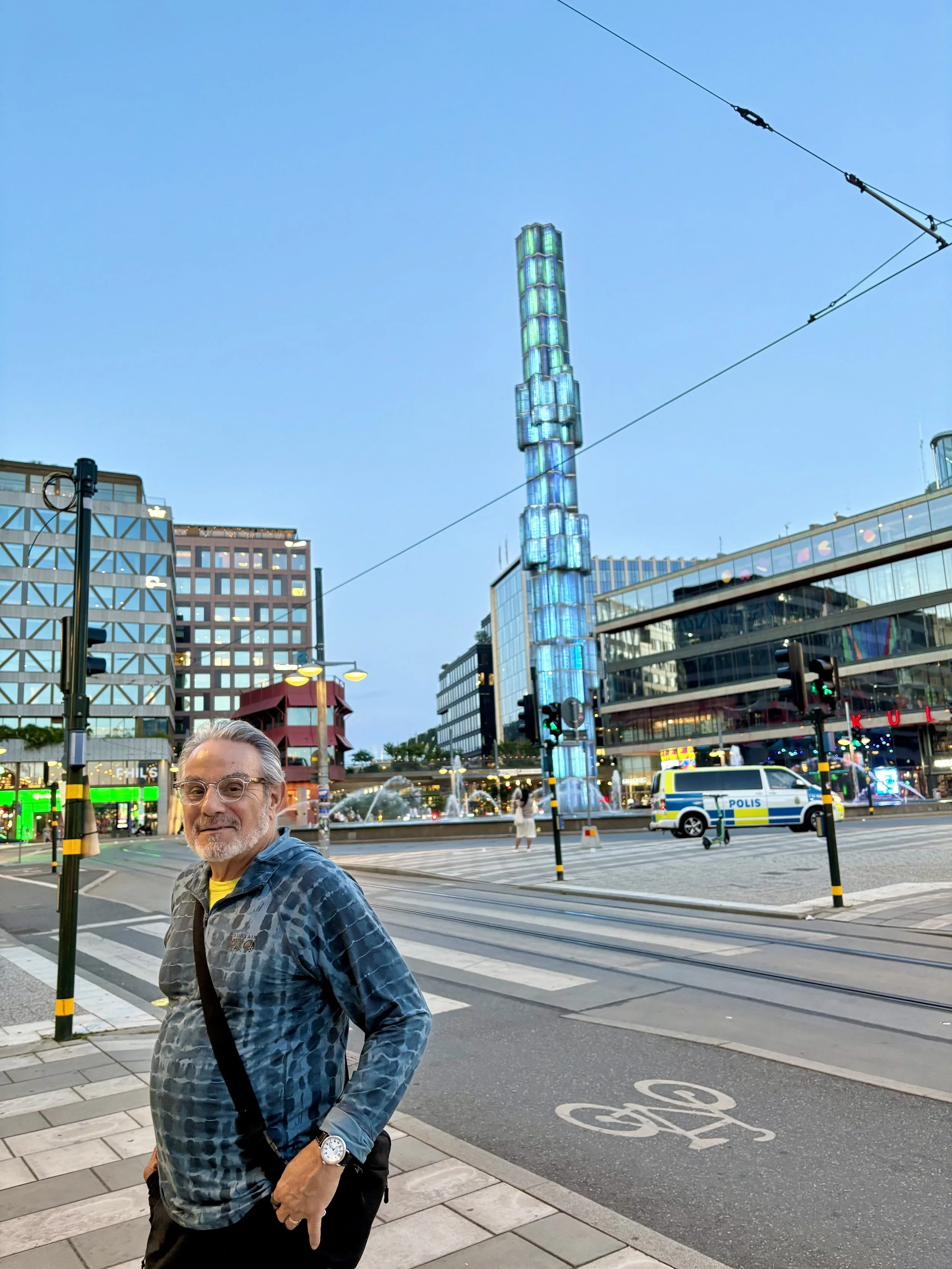
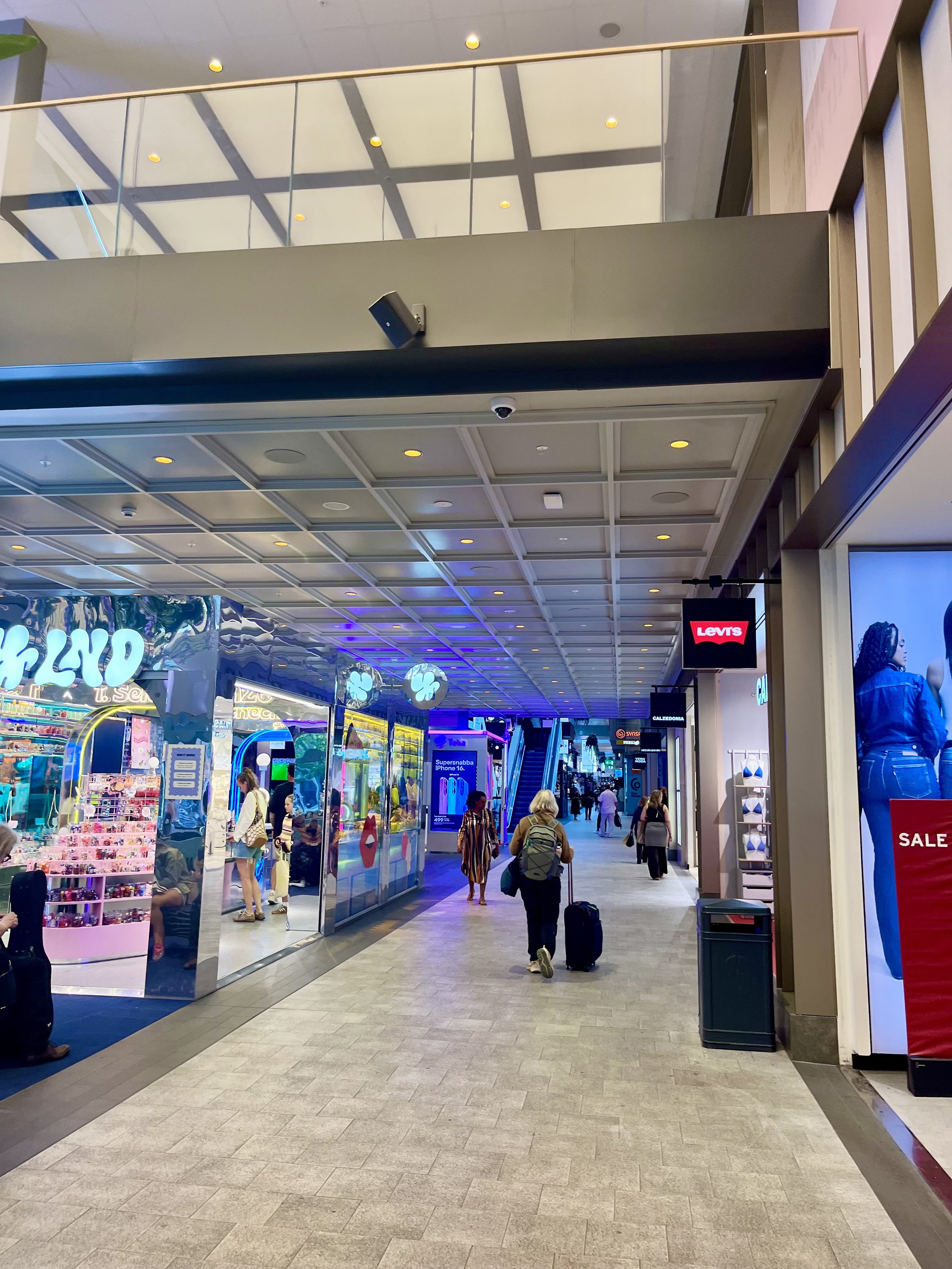
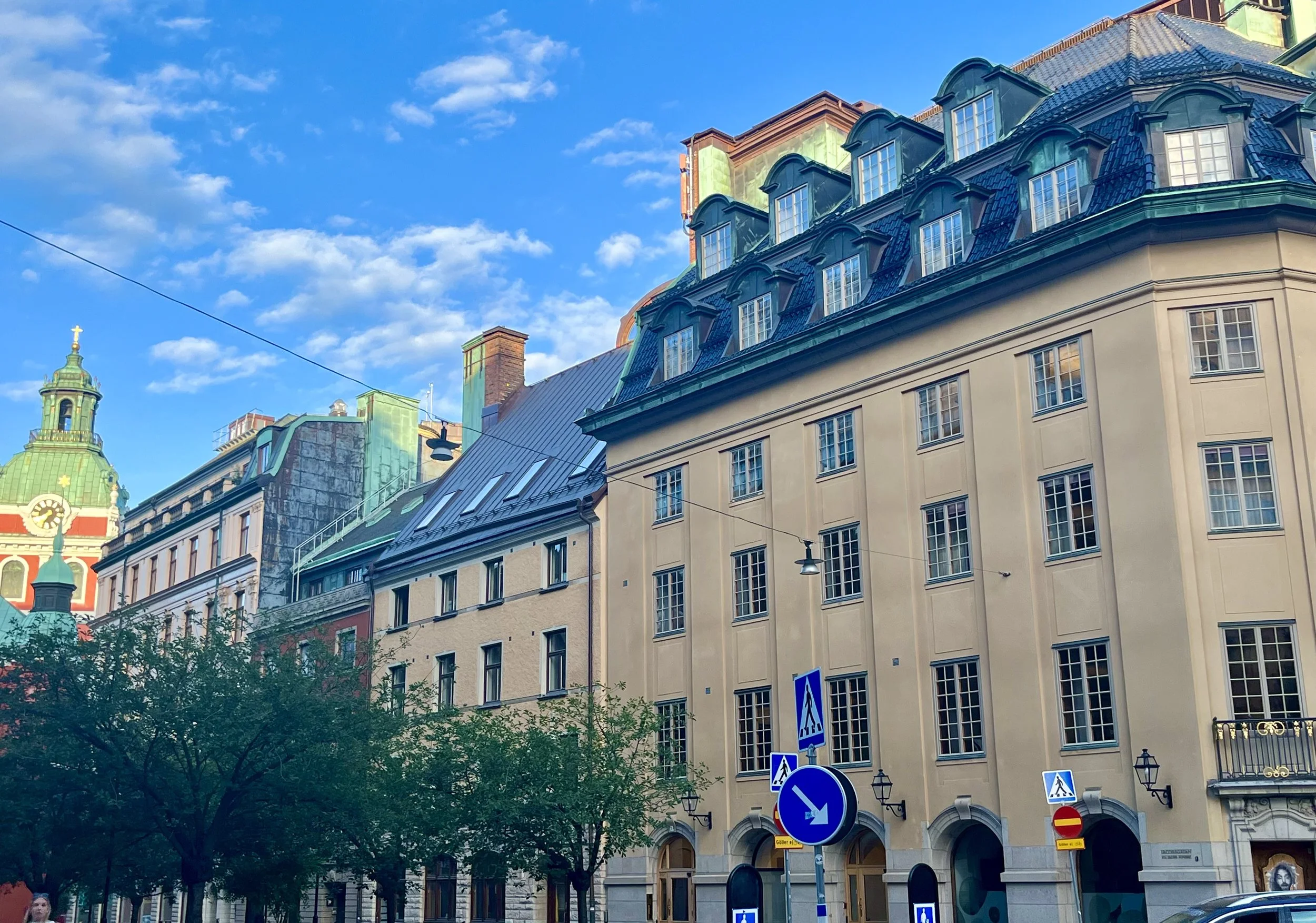
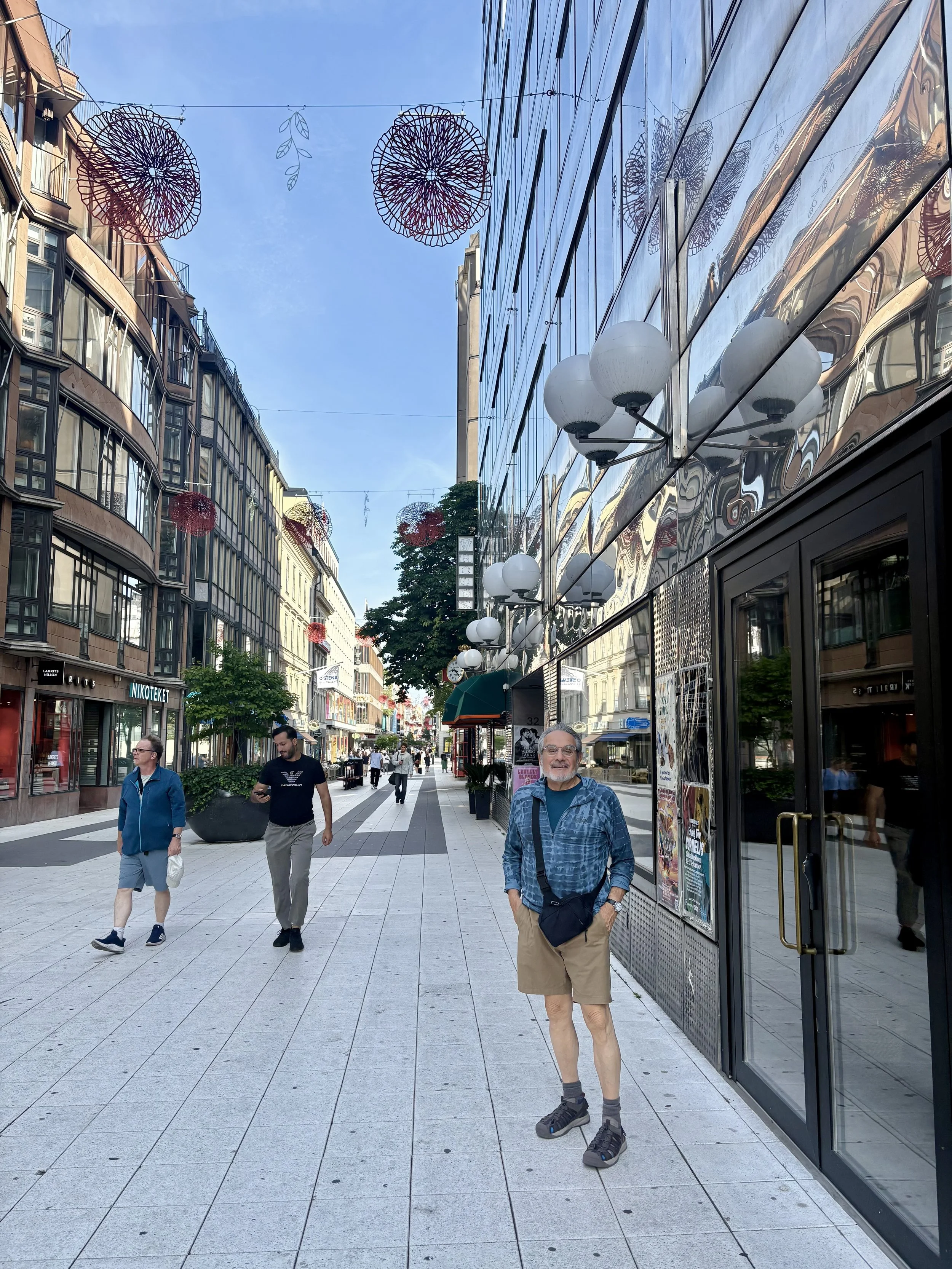
From Central Station we walk and wheel our small suitcases on some cobblestones but mostly cement, so Janet’s 3-wheeler + a peg is working rather well. We see the streets are bustling with people, but not many cars. There are several sub-level plazas where musicians are busking and people flowing. This is a clean city and seems well maintained. Downtown, most residential buildings are 6 stories with the baroque style architecture and other styles of old. But modern buildings and renovations of glass spring up in every corner. There are high rise cranes at many construction sites. Our google map takes us through a 3-story city block sized shopping mall called the Galleria, instead of street to street.  The hotel looks to be on the other side of the mall, but this first time we have trouble picking the exit. Back on the street we do find our hotel, “At Six”. Flashy, all glass and marble, with a striking modern statue inside the street entrance by reception (but on the 4th level of the mall). We mention these details because this is a really great hotel, with larger rooms, great dining, helpful staff, and active area. Janet picked a good one.  Our day is done.

Day 2

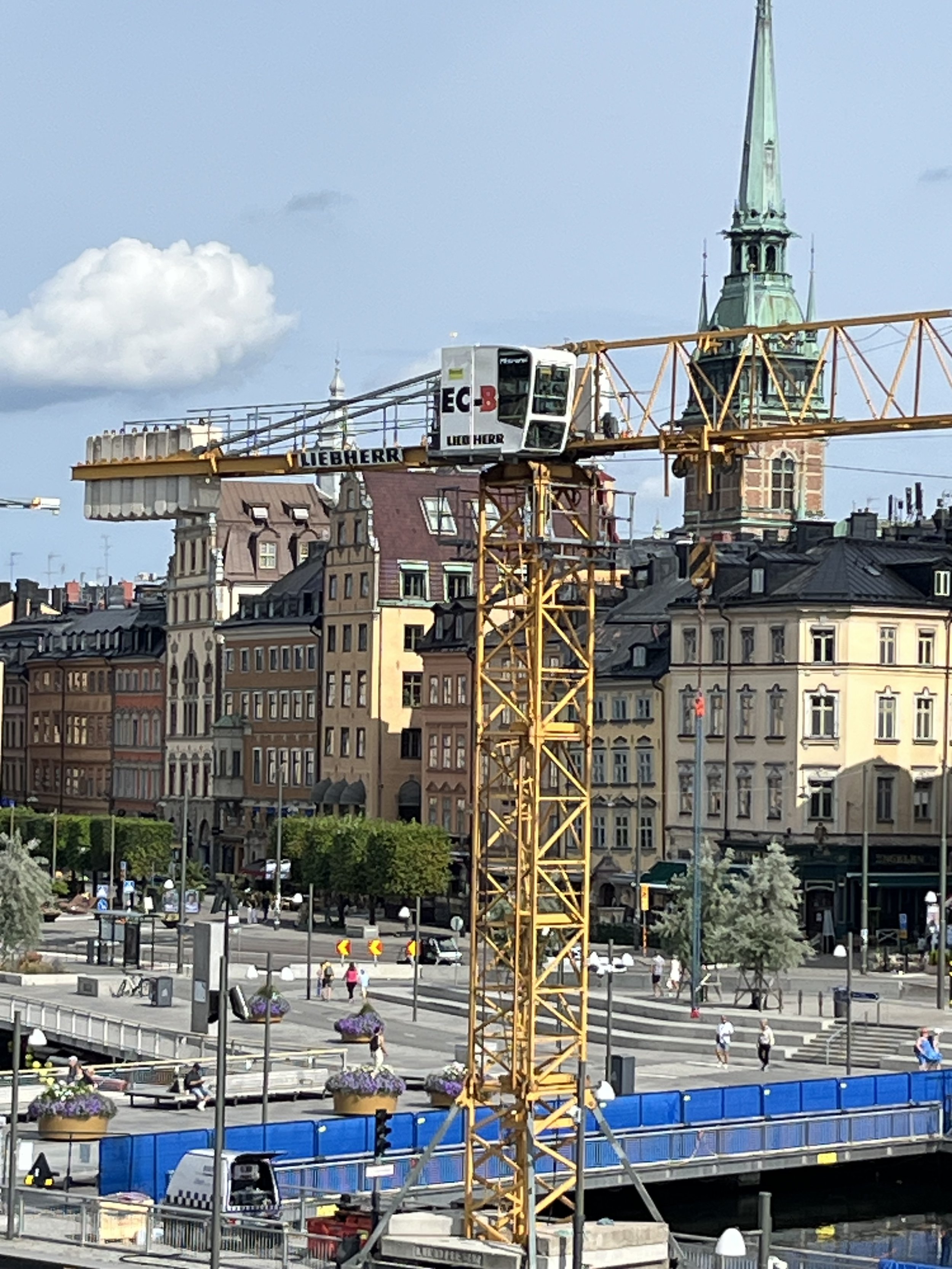
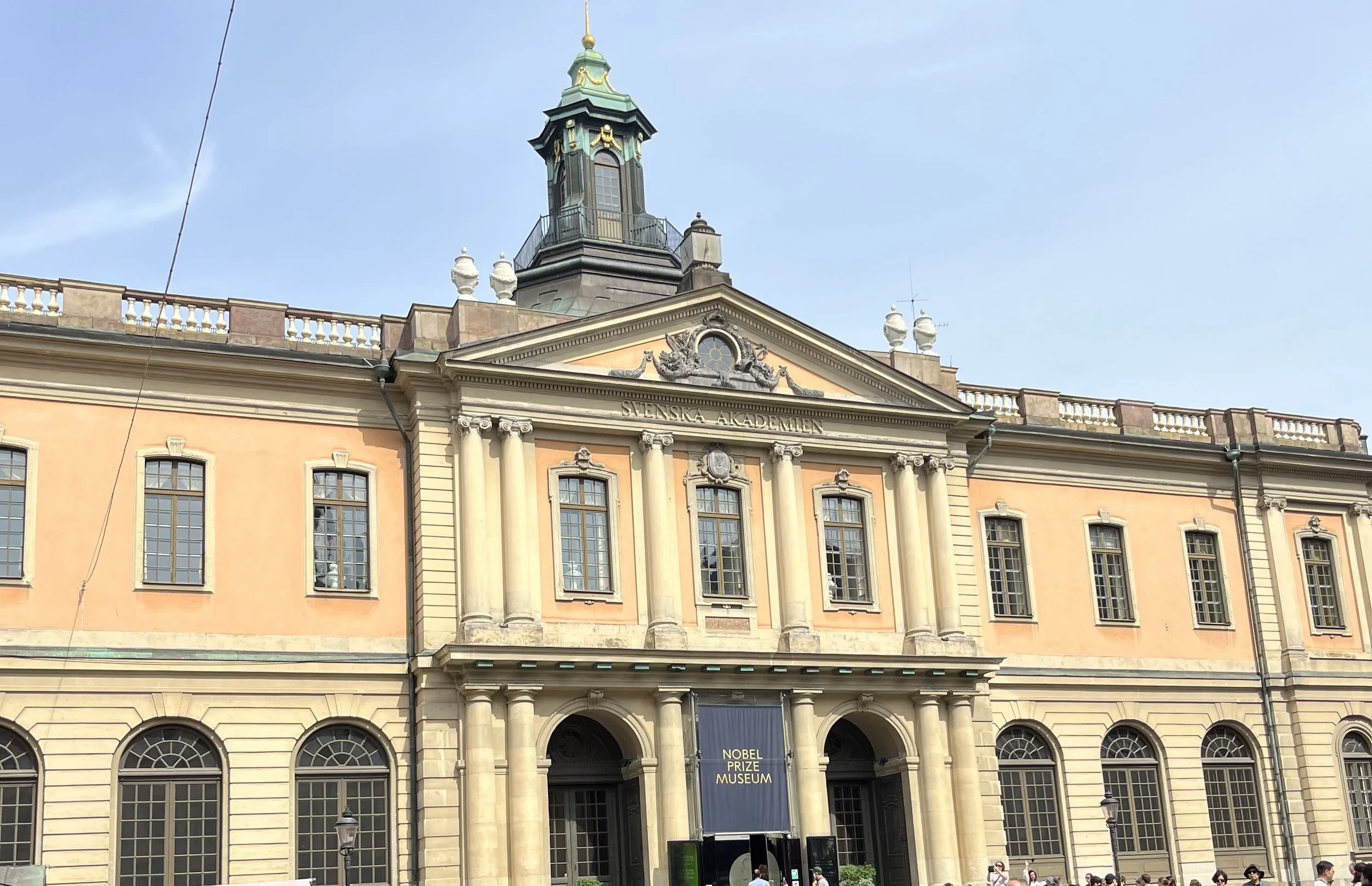
This morning we are signed up to a semi-private walking tour.  We share the local guide, Kenneth, with two serious lady travelers, both nice, from New Zealand. We start outside a construction site on waters edge where 2 high cranes sit. The project is to erect a new Alfred Nobel Center and Museum on the waterfront near the Parliament Building and Royal Palace, completion likely in 2030-35. Currently, the Nobel Prize organization and award ceremony is in a large 5 story historic pavilion made of wood and plaster painted blue and trimmed in black. The celebratory dinner is conducted at the beautiful Stockholm City Hall in its great hall.

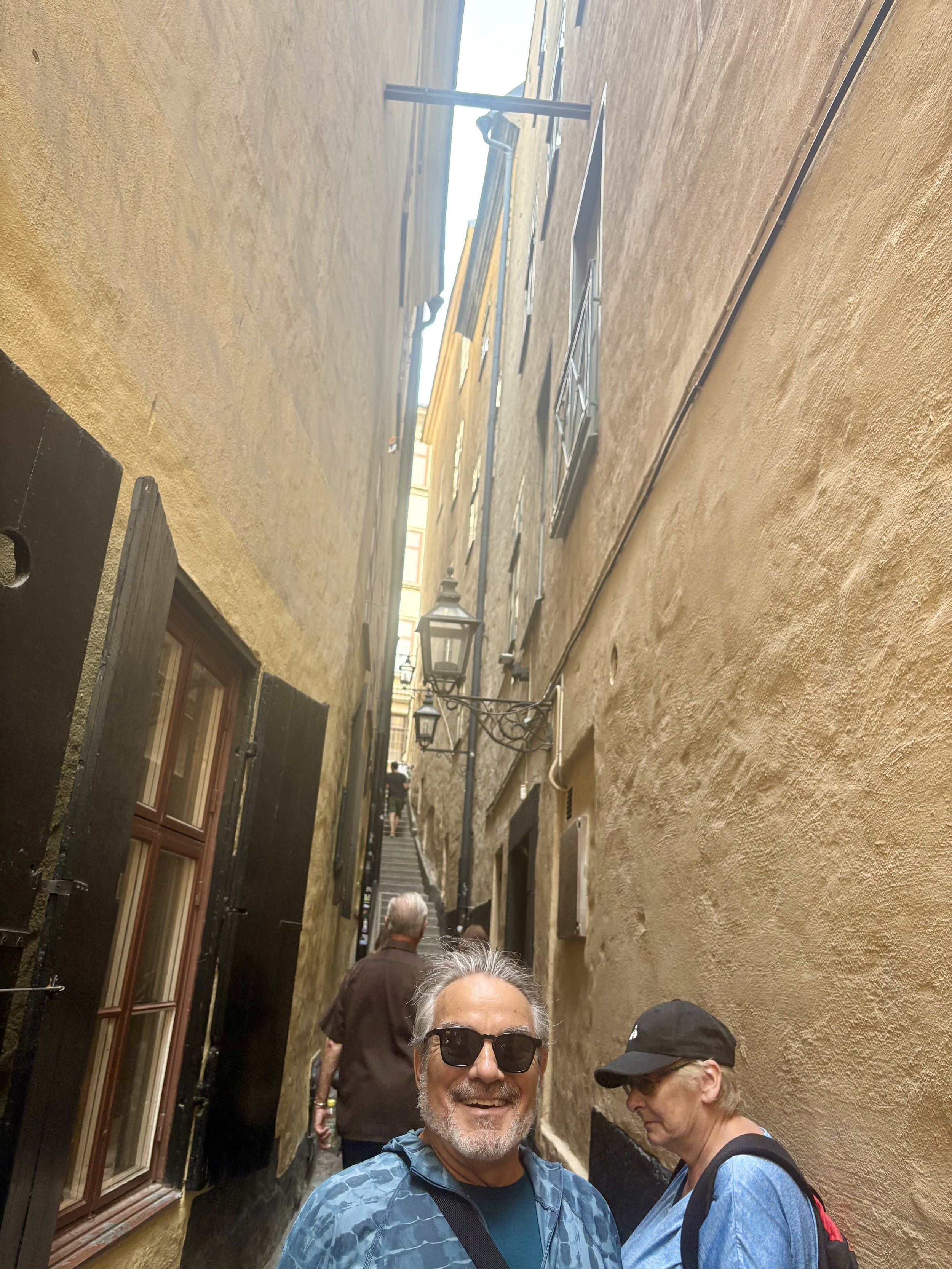
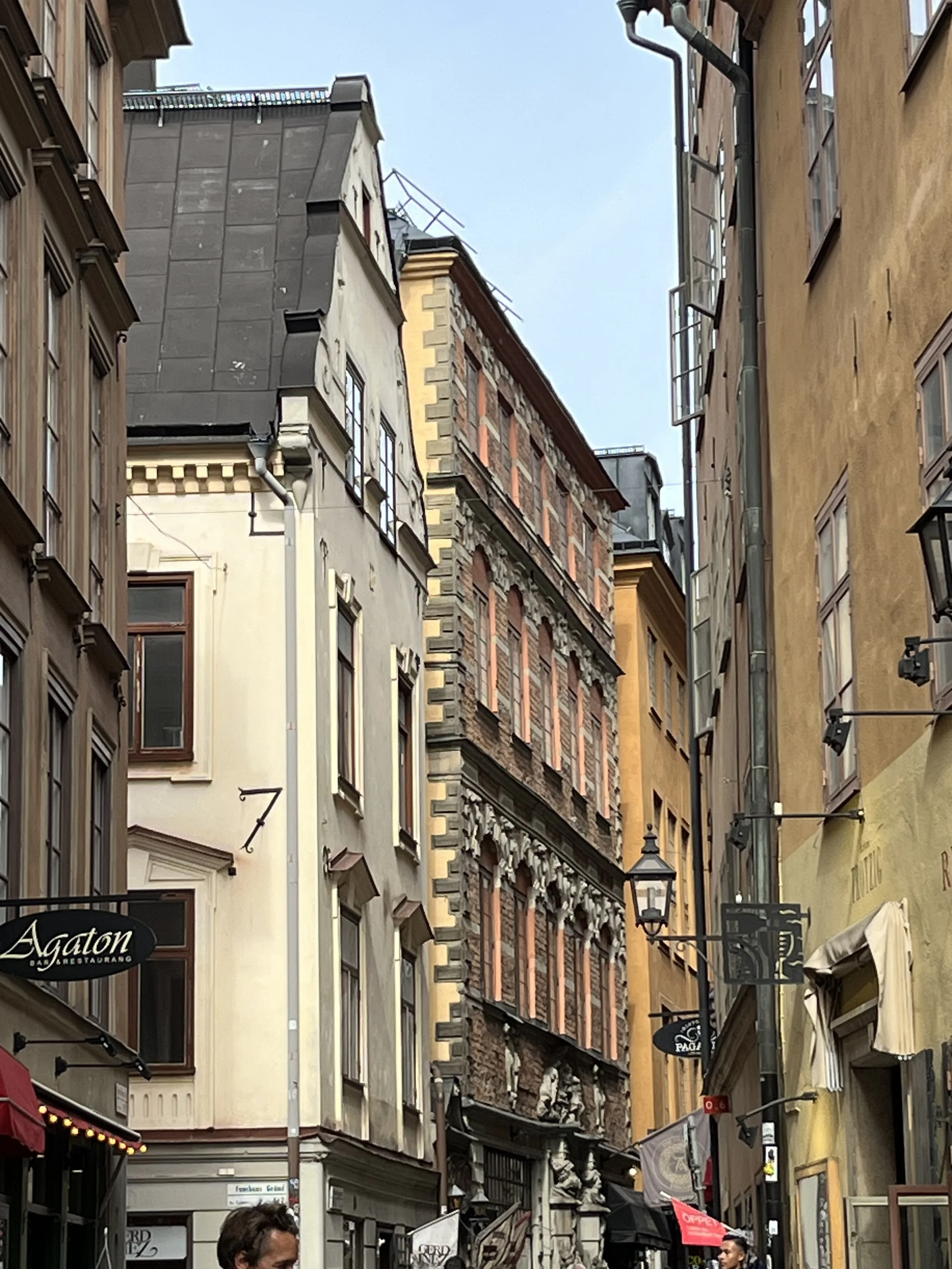
The most narrow of streets

We then move to the oldest part of the original Stockholm. At one time the government, its tax houses, and Royalty were seated near here and the population grew at this location.  As seems too common in all of  Scandinavia, fire destroyed a major portion of this old city. The 5-6 story buildings were made of wood and the new buildings are also made of wood, but the exteriors had to be covered with plaster to retard fire spread. The streets are narrow and fire suppression relied on hand-to-hand bucket brigades— extra measures retarding  fire for more time to get help was needed.  These structures still remain, for sale at times, but many are leaning forward or sideways due to the fact the foundations were built on top of years of settled trash dumps. We also note, installed iron support bars between floors to brace the wood framing and that fake windows were painted to avoid the “window tax.” Homes often had historic Badges of Insurance affixed above the door.

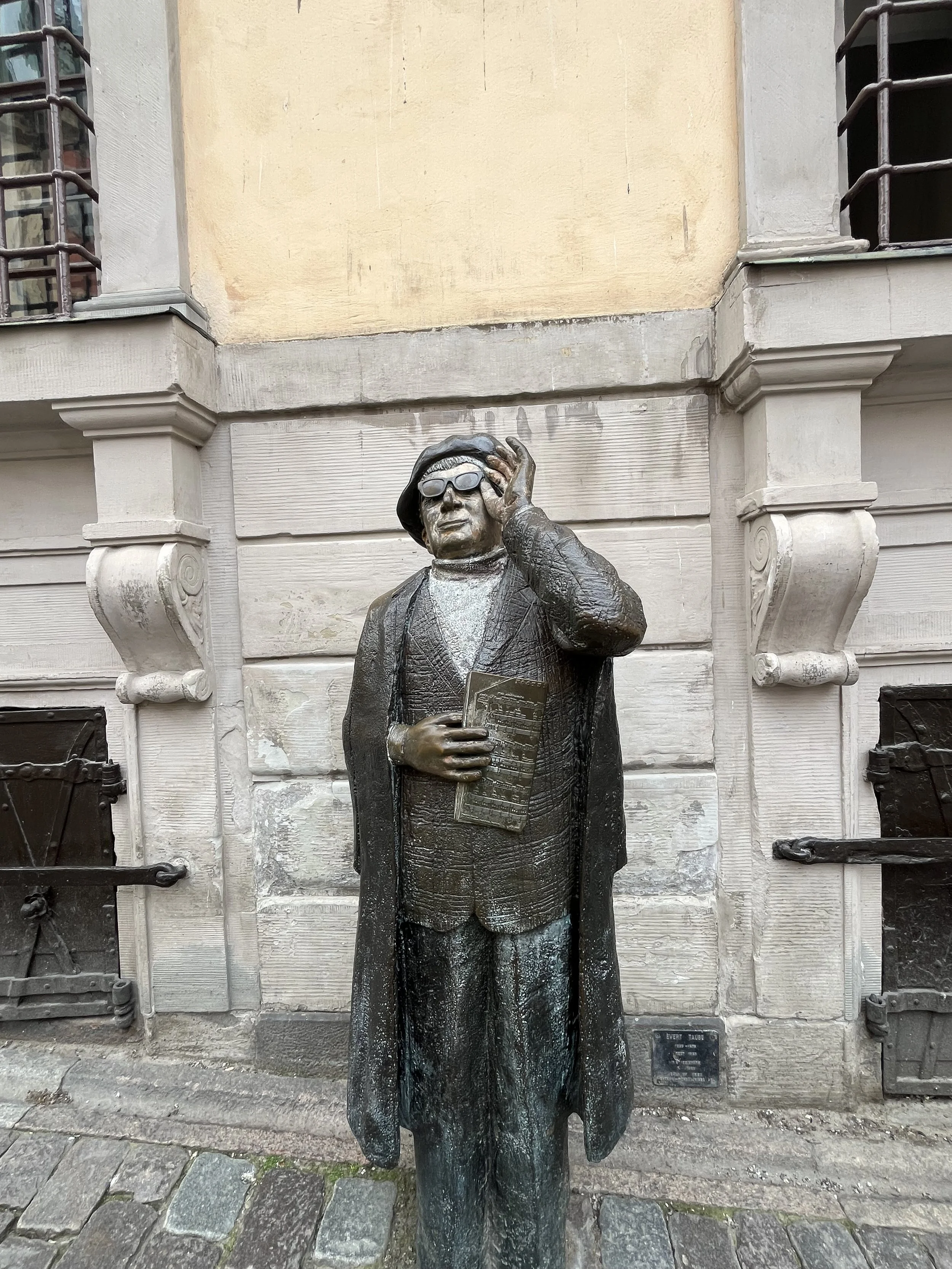
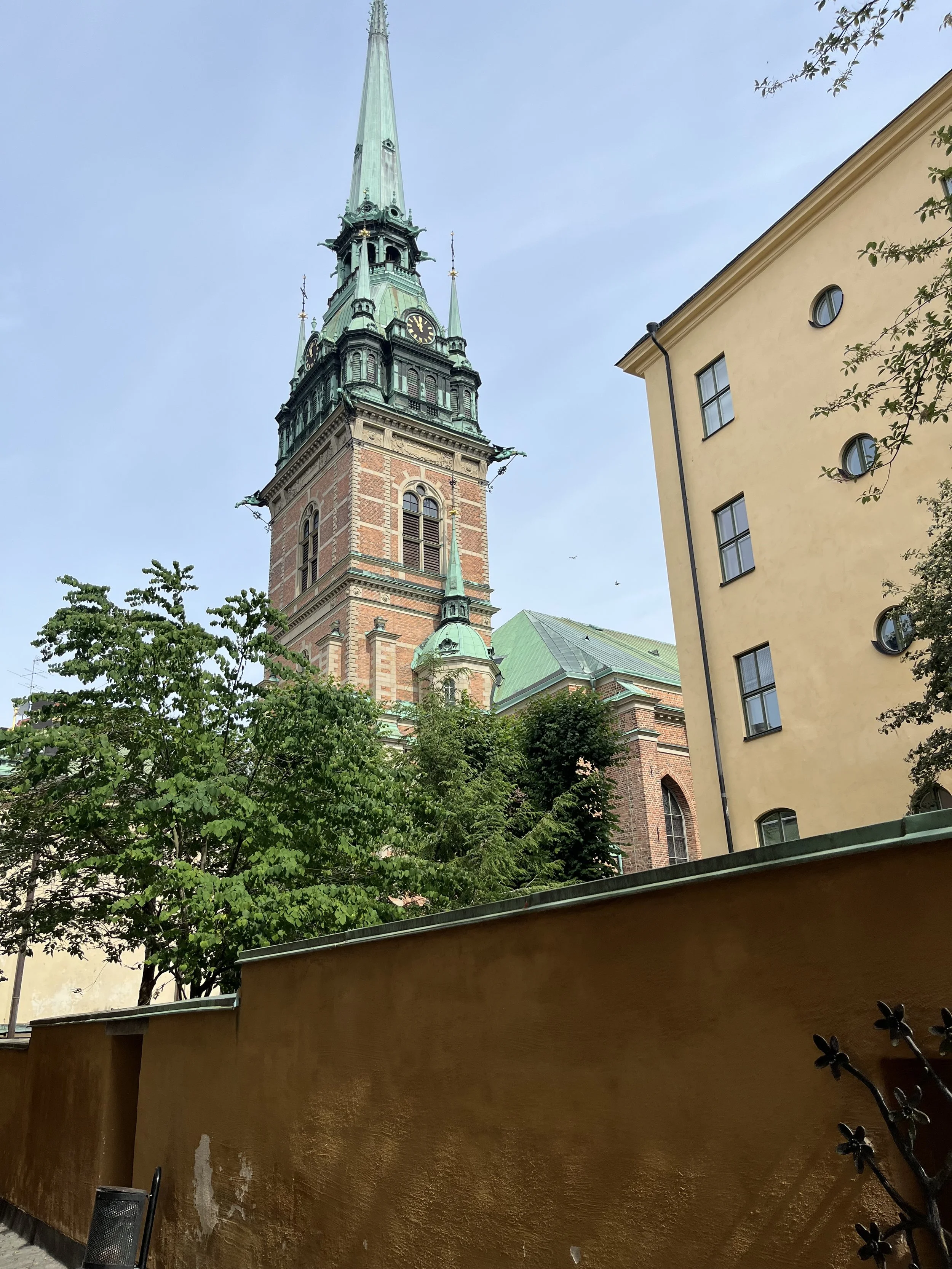
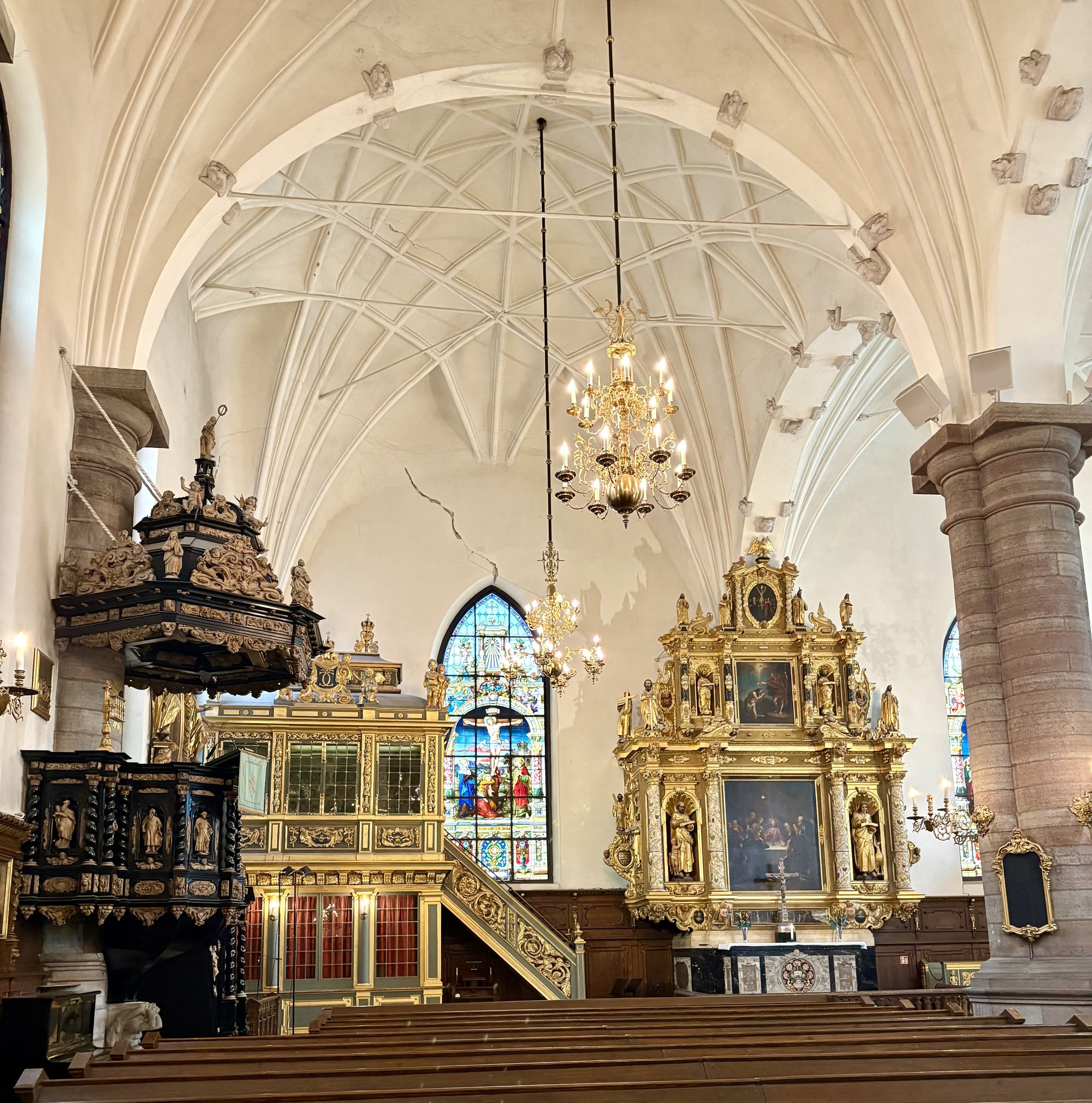
This area has a famous, if small, central plaza at the end of “Jurntoget” street that at one time housed the Treasury Building, the Customs House, and the home of favorite poet who conned the local pubs and bistros to entertain him for free. His bronze statute is affixed in the square. A few streets away sites a large Lutheran church, that was built by the Catholic King before the reformation and surprisingly keeps many of the trappings    A little further is the first Nobel Prize Museum, wood with plaster structure, on a small plaza where the nominees are first named to the press. No other ceremony.

This area was great to visit. Kenneth’s tour is not over.

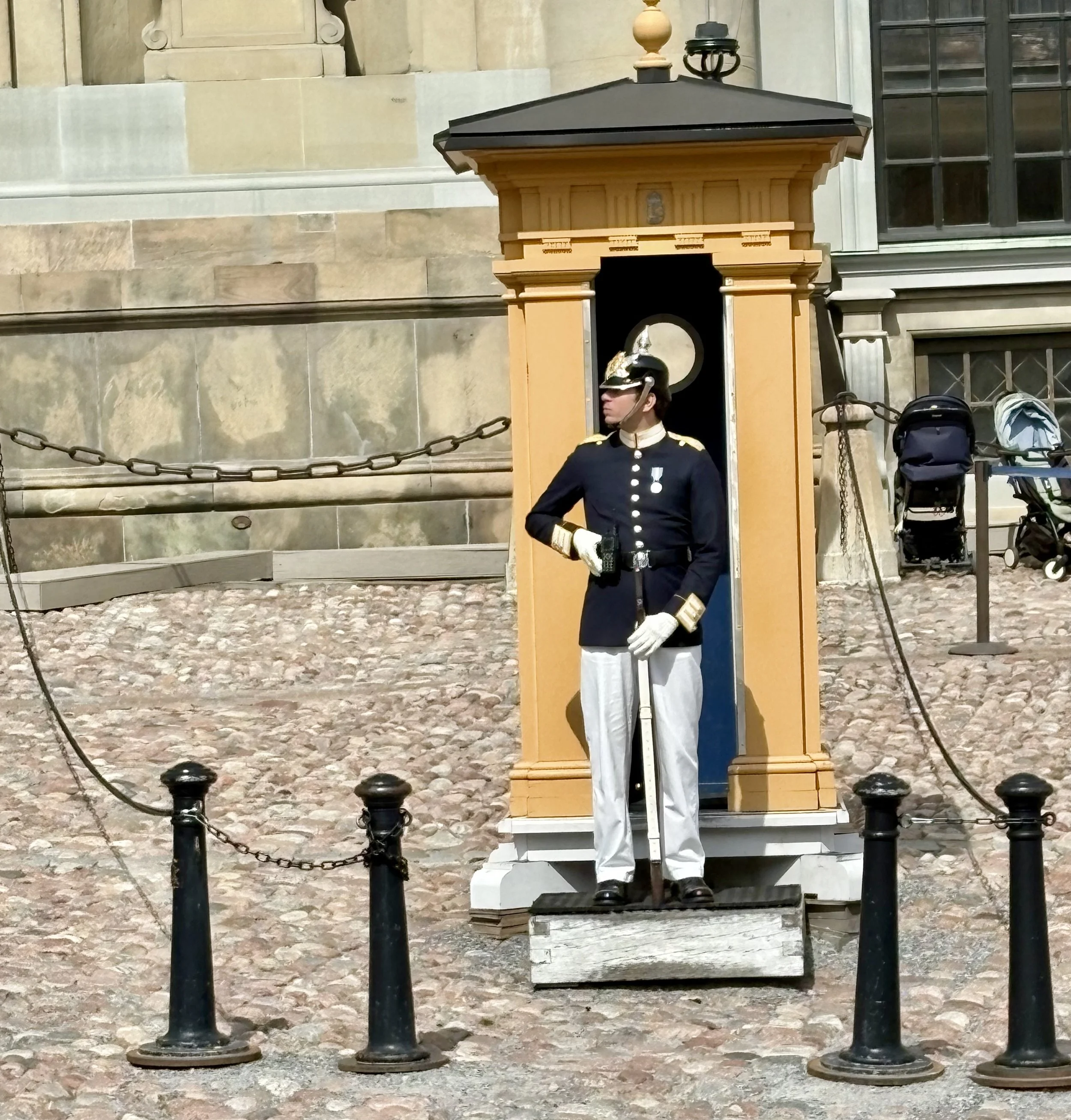
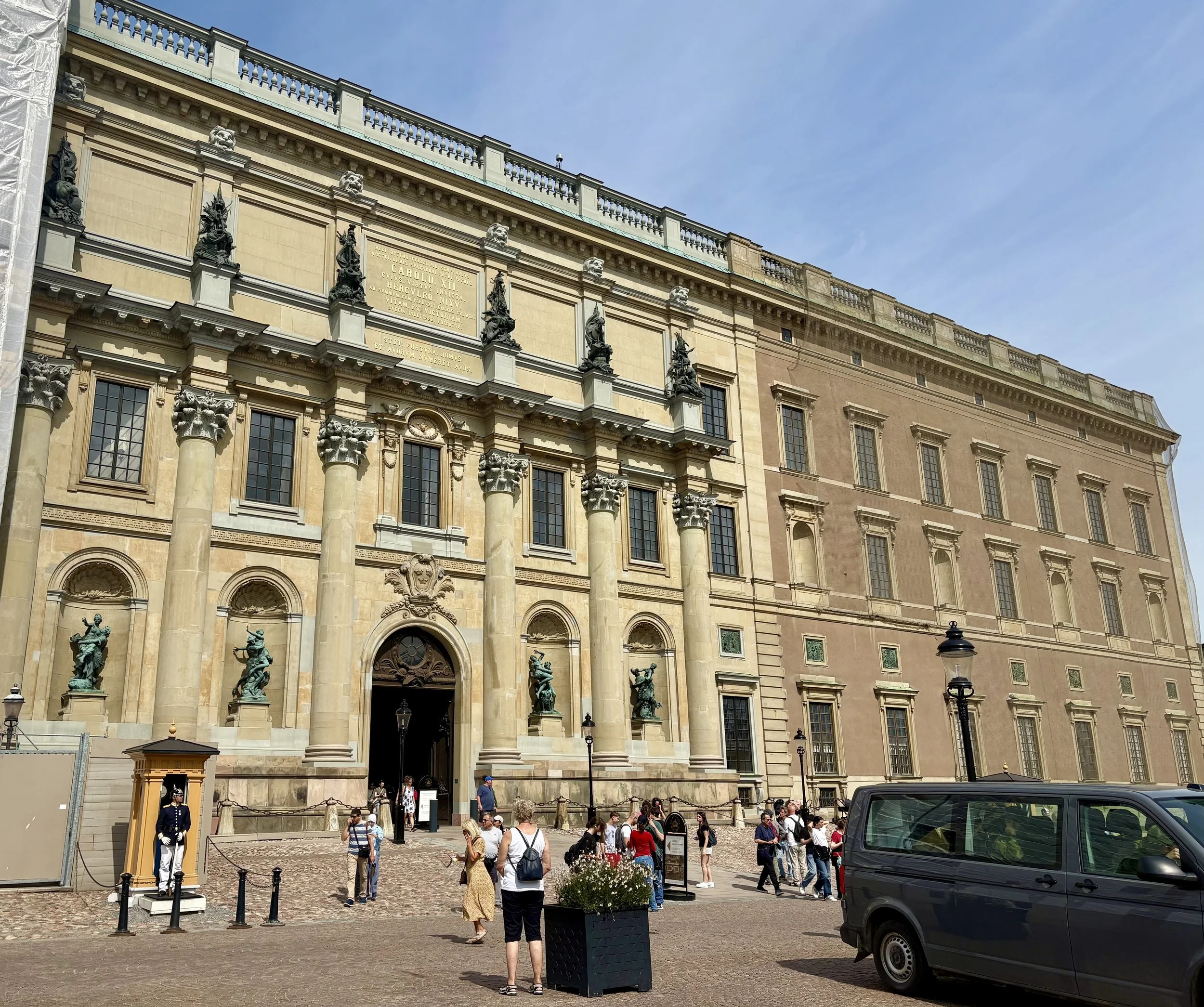
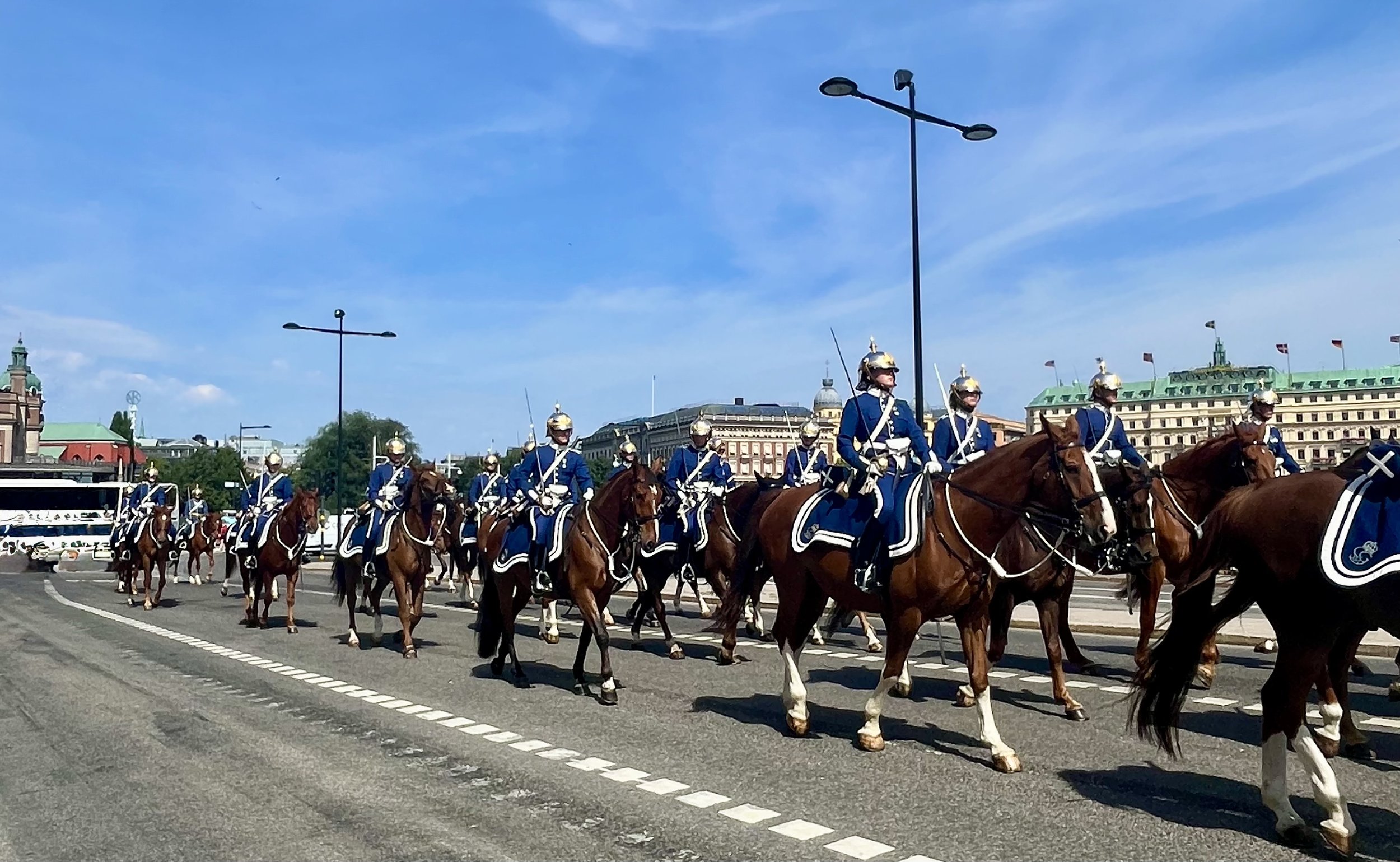
Our group passes over another bridge to walk toward the current Royal Palace. It is a massive structure seated at the main boulevard facing  another water channel. We were lucky enough to observe the changing of the Mounted Guards of the Palace, about 30 soldiers adorned in historic uniforms riding their horses in formation. Across the water channel is the House of Parliament another massive and amazing structure. That is the stopping point of the tour. We say farewell. But Kenneth stays long enough to direct us toward our next stop.

Parliament

Wonderful lunch

Next we jump on a tram to Djurgarden, breaking for lunch at a wonderful outdoor café for a taste of traditional food, then we are off to one of our most anticipated places, “The Vasa Museum.”

This is a spectacular historic exhibit. Background is helpful. In the early 17th century Sweden was constantly at war with its neighbors—Denmark, Poland, and Russia. The struggle was for the dominance of the Baltic Sea, its estuaries and trading ports.

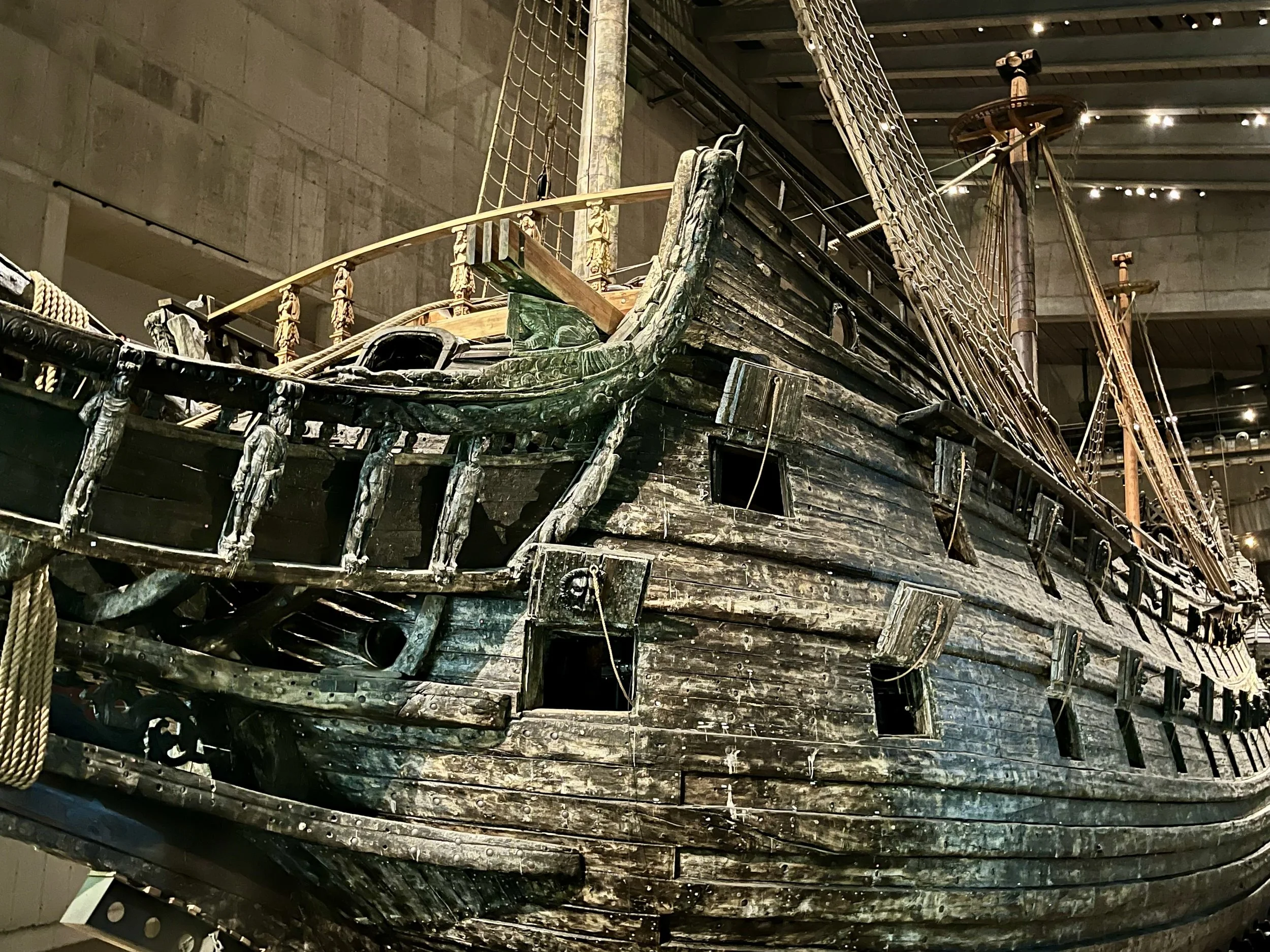
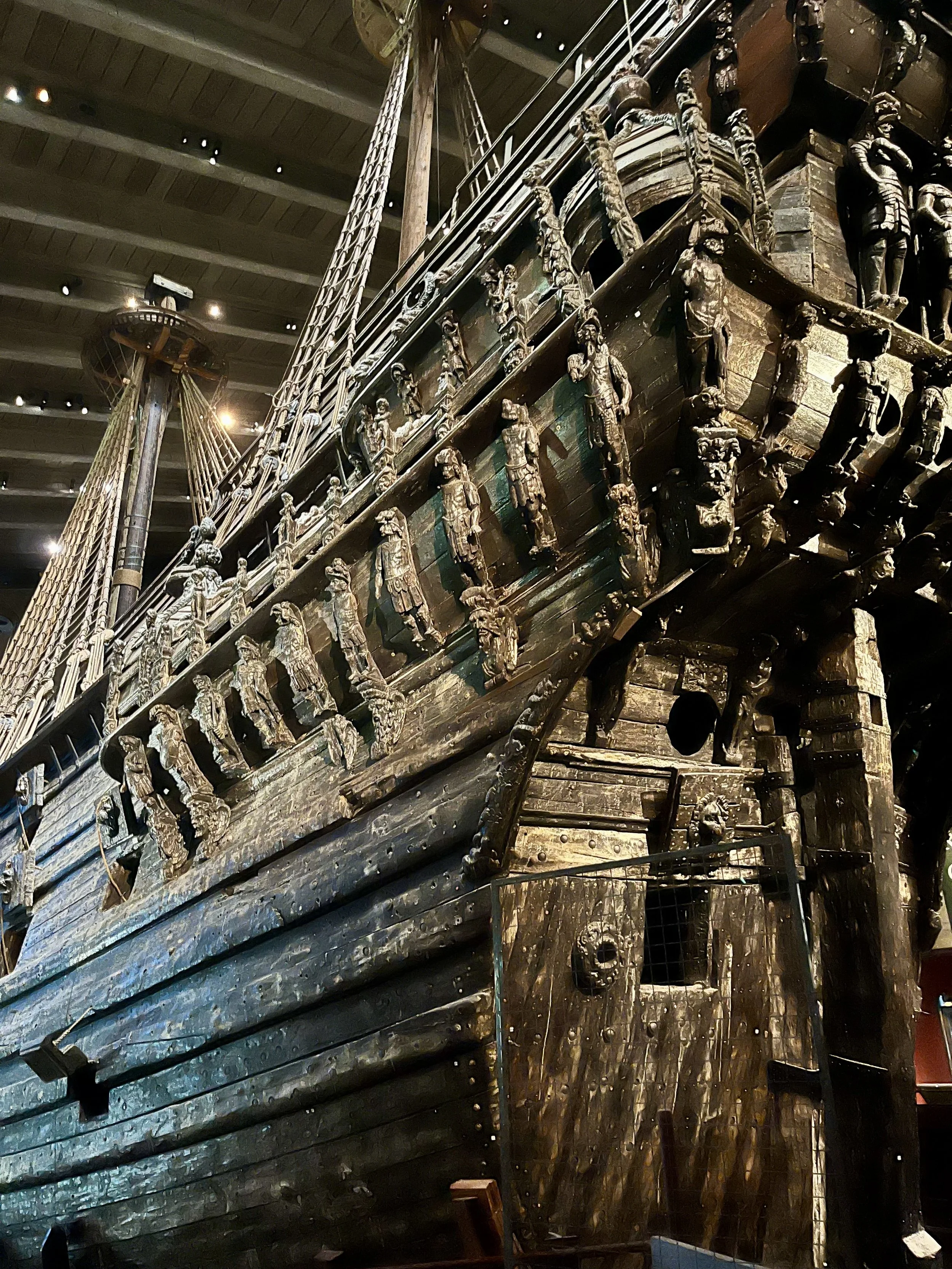
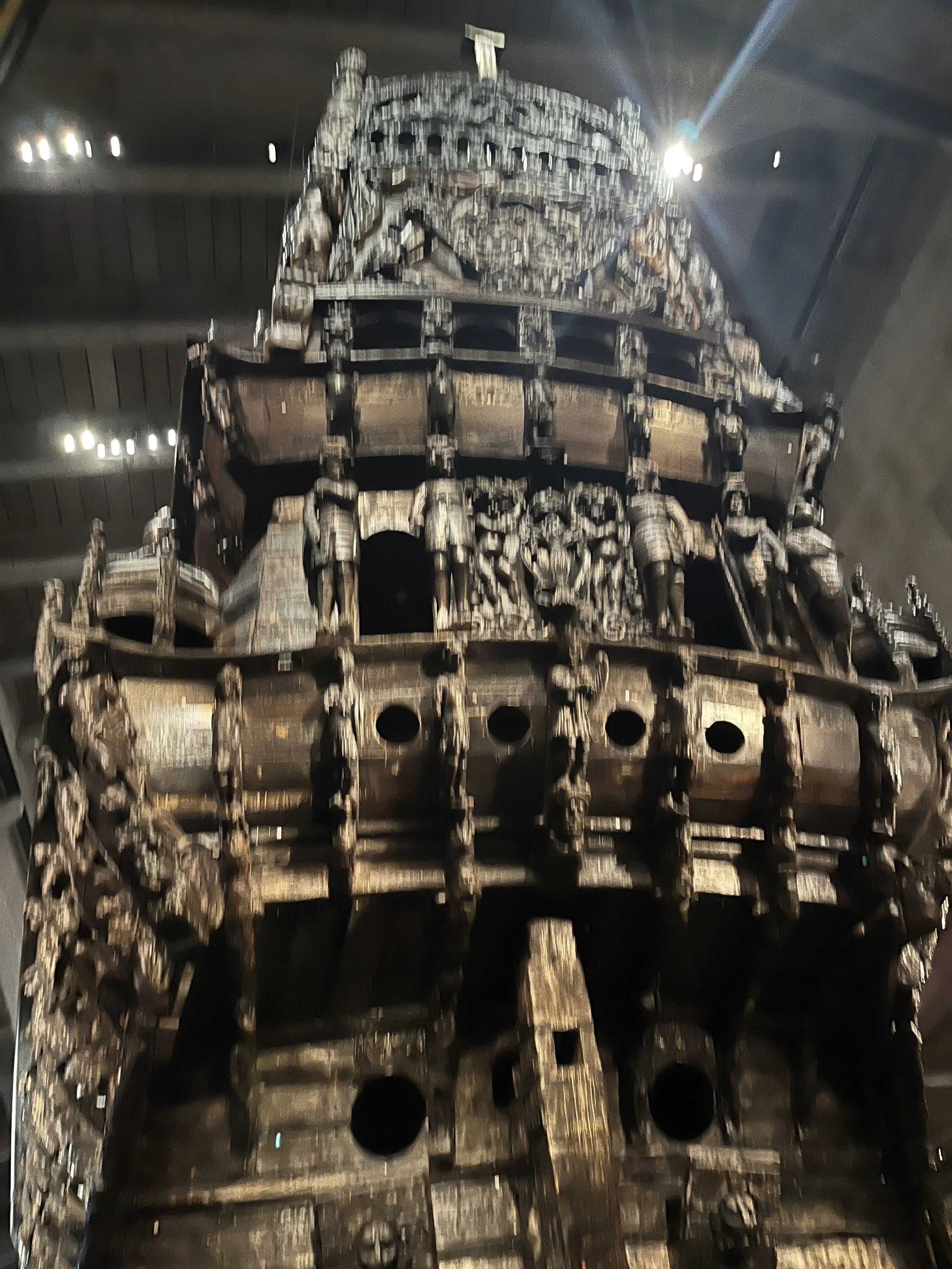
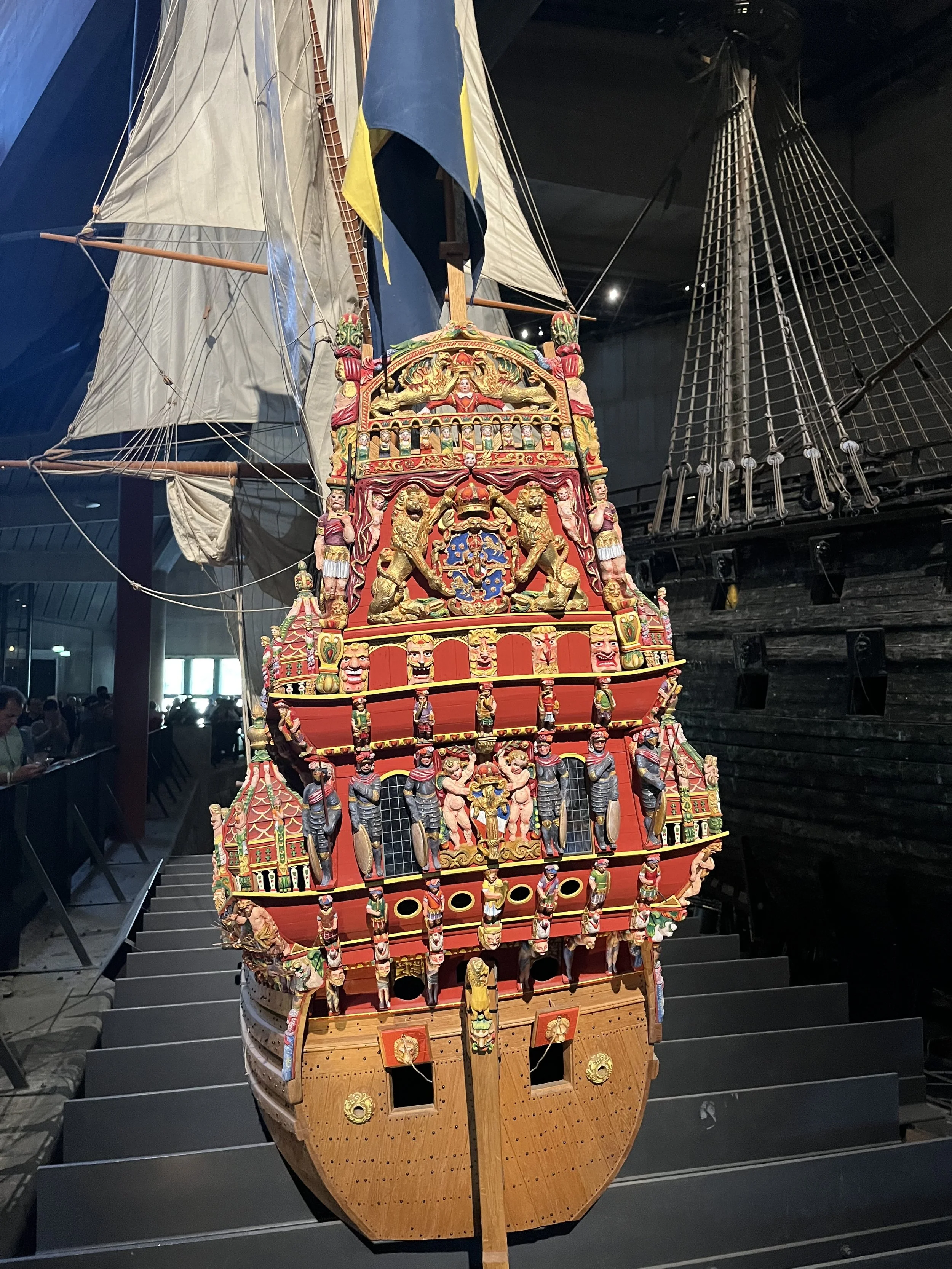
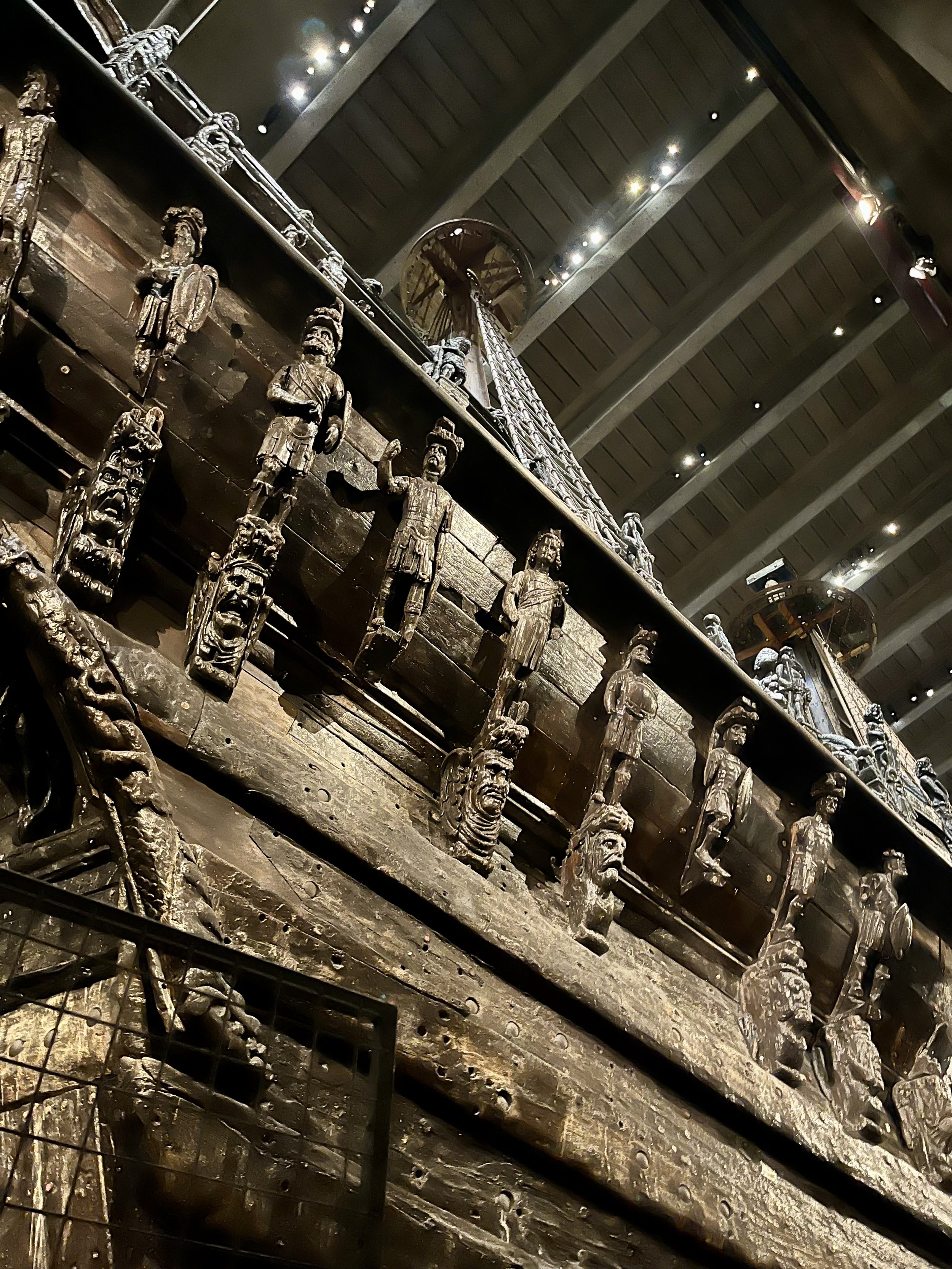
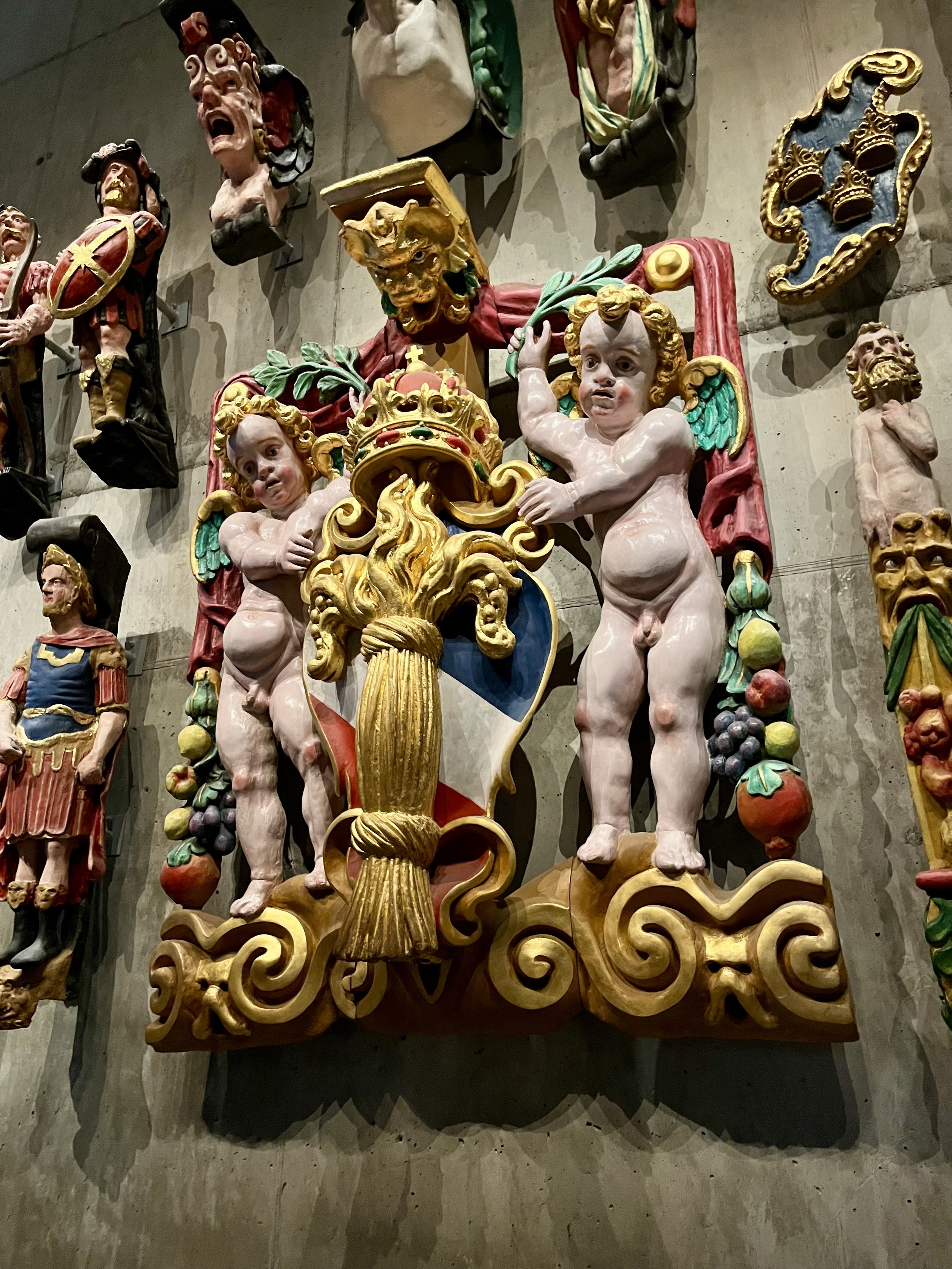
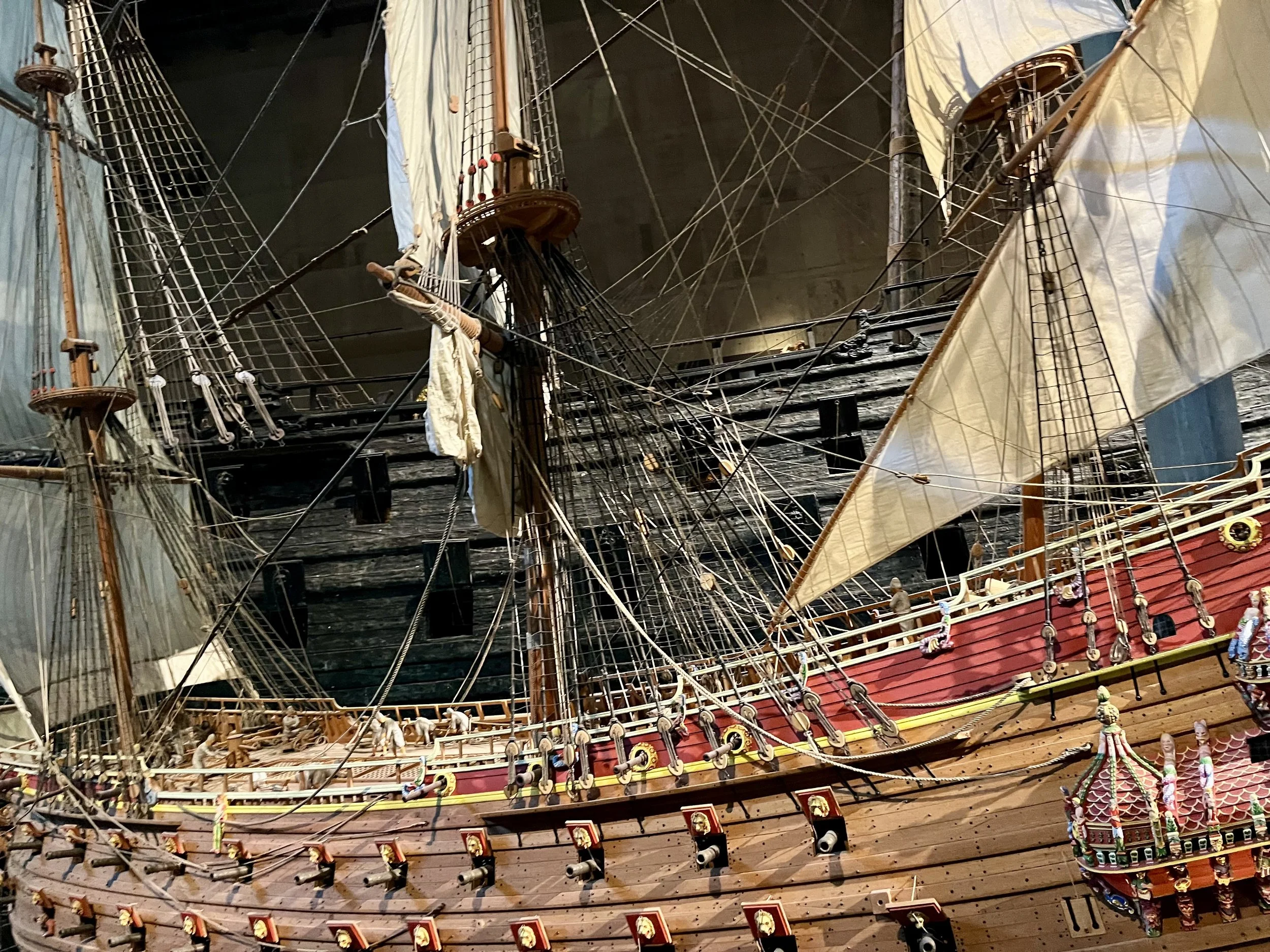
The King of Sweden commissioned the construction of several new war ships. The warship Vasa was the largest of the fleet with monstrous proportions and two full cannon decks. Moreover, the vessel was colorfully decorated with expansive carvings and sculptures, all to reflect the power and wealth of the Kingdom of Sweden. On August 10, 1628, the King and royal court were in attendance along with the curious masses to celebrate the launch of this war machine. On that date the Vasa would sink on its maiden voyage in Stockholm.

An inquiry was conducted by the Admiralty. The ship was ill designed. It found that the ship did not have enough ballast, so the ship was not able to withstand the light squall that raised up on launch. For stronger winds even more ballast was needed, but that weight would lower the ship waterline exposing the gunport to leakage. The ship should have been designed wider and taller to make room for more ballast. Troubling is the fact; the lower deck gun ports were open wide to display the cannon on the maiden voyage—water spilled in. As we understand it, the marine engineer, the ship builder, the construction company, the naval authorities on site, the appointed commander, and the government war department were all questioned and escaped serious penalty because their defense worked: “THE KING APPROVED THE PLANS!”  Crazy. See photos.

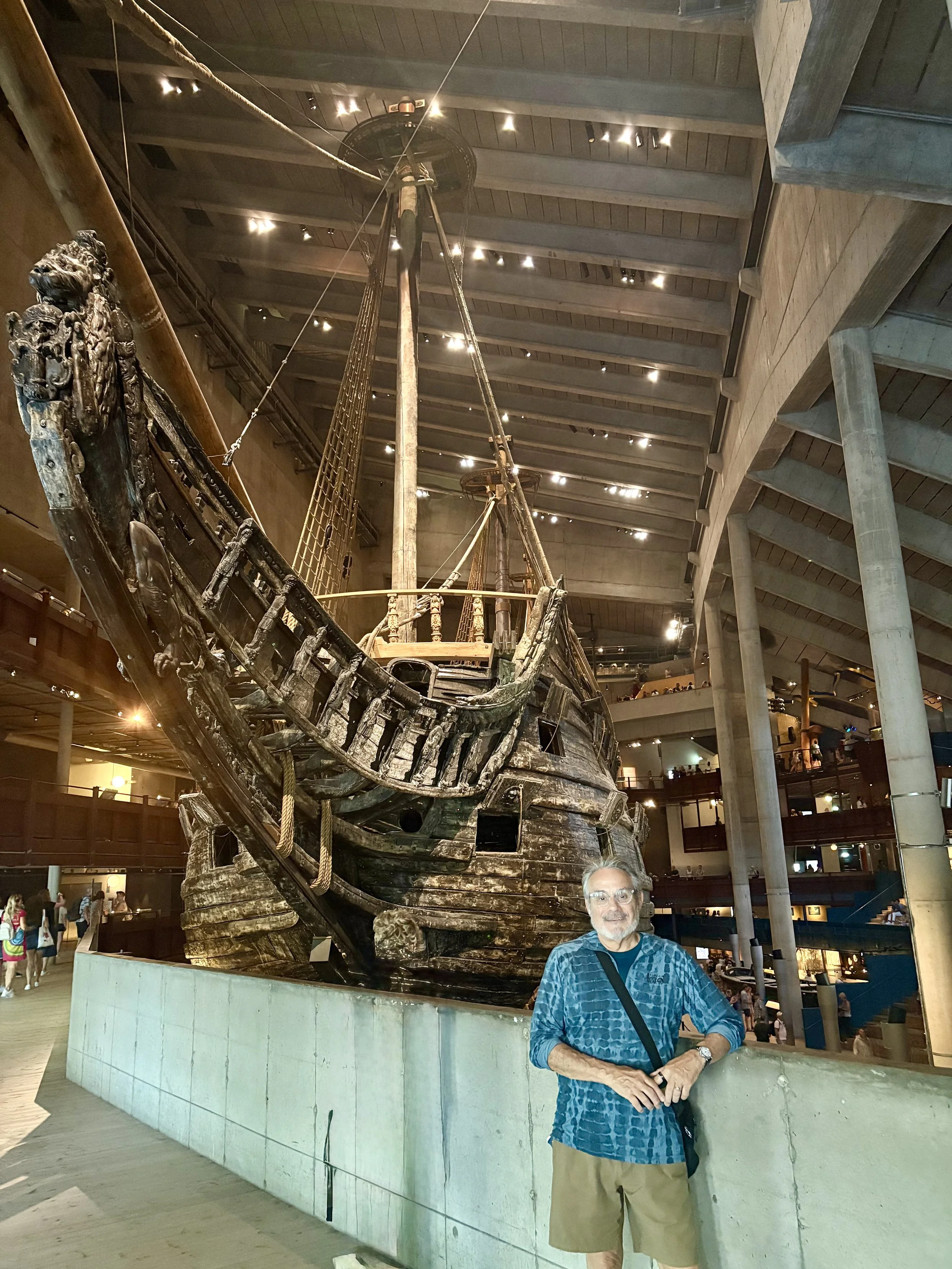
After 333 years on the seabed bathed in brackish waters the mighty ship is salvaged. It is claimed, 98% of the ship is preserved. This museum building is constructed by Sweden specifically for this sailing ship display. The ship is captivating.

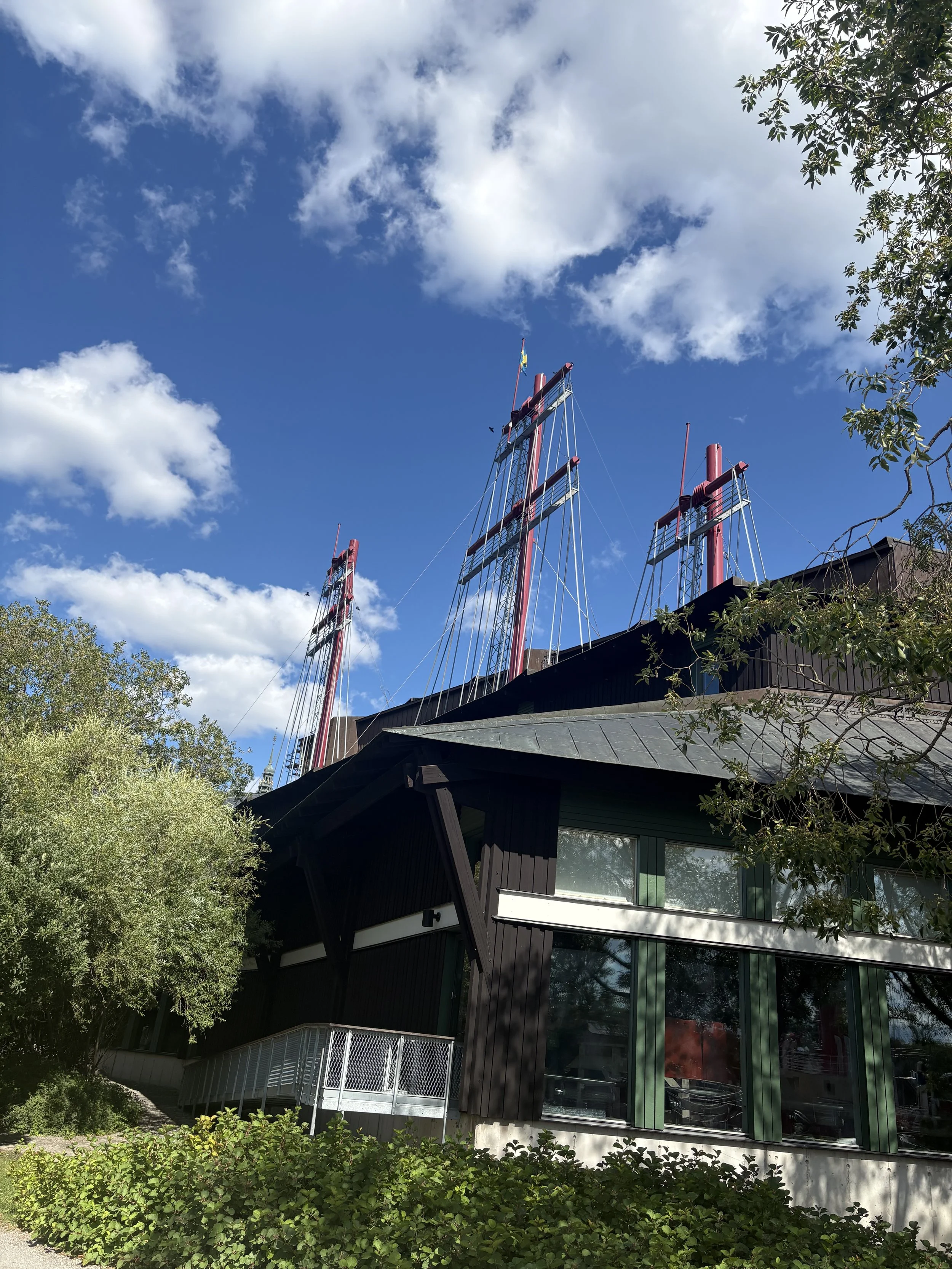
See photo’s below, summary; the original ship was painted bright vivid colors, see the model of how it looked. The building has replica masts that are the same height of the original ship

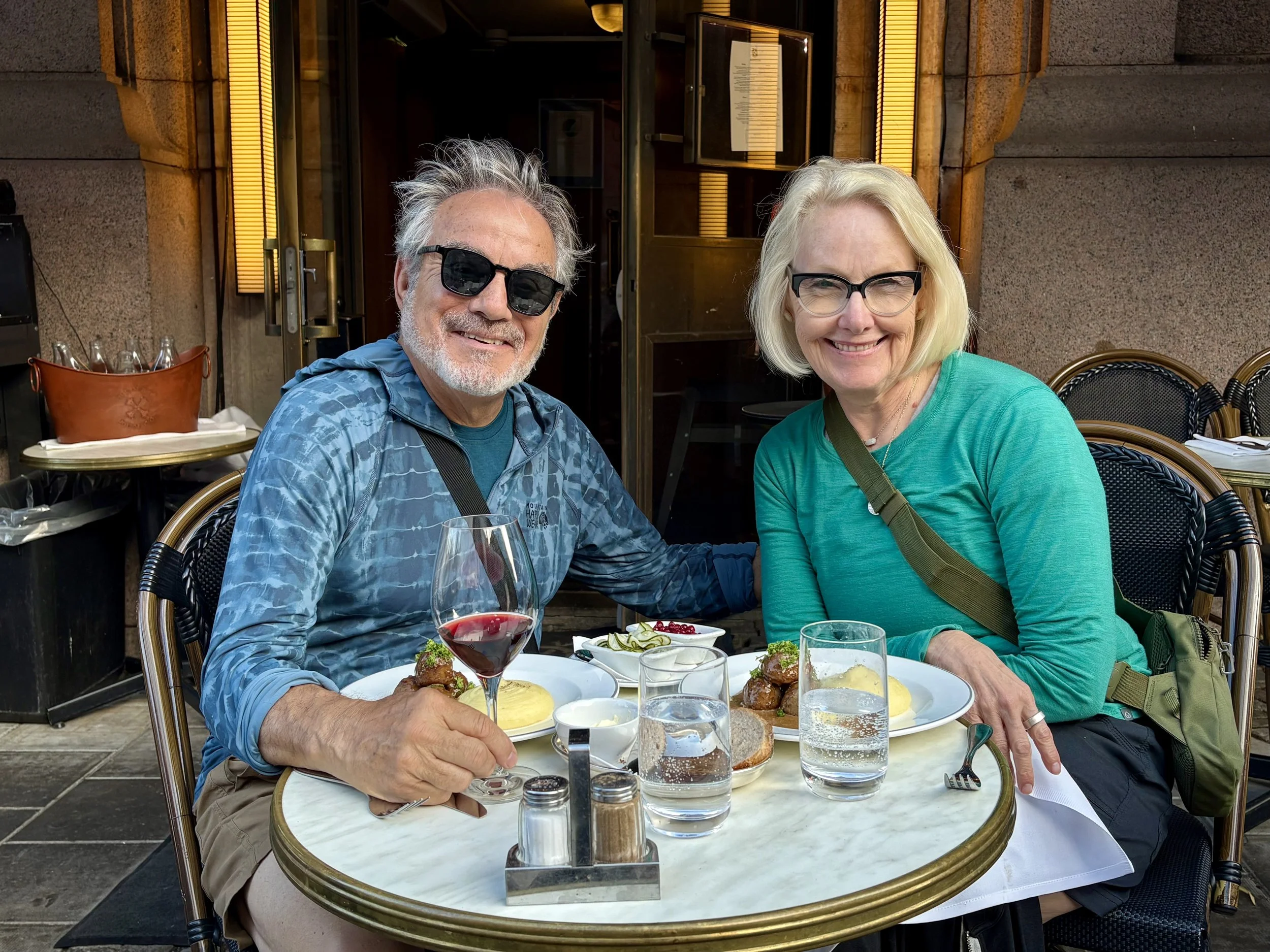
That evening we went to an outdoor bistro connected to the Stockholm Opera House. We sat surrounded by beautiful flowering plants viewing the Opera House and a large Lutheran church across the street. The entire street was quiet and calming. The food was traditional Swedish fare; a starter of pickled herring, Swedish meatballs with pickled cucumber and lingonberry, dark bread, sparkling water, rose wine, then latte and chocolate fondant for dessert. It was a fine meal.

We had such enjoyment this day.

Tromso Norway

Day 1 Tromsø

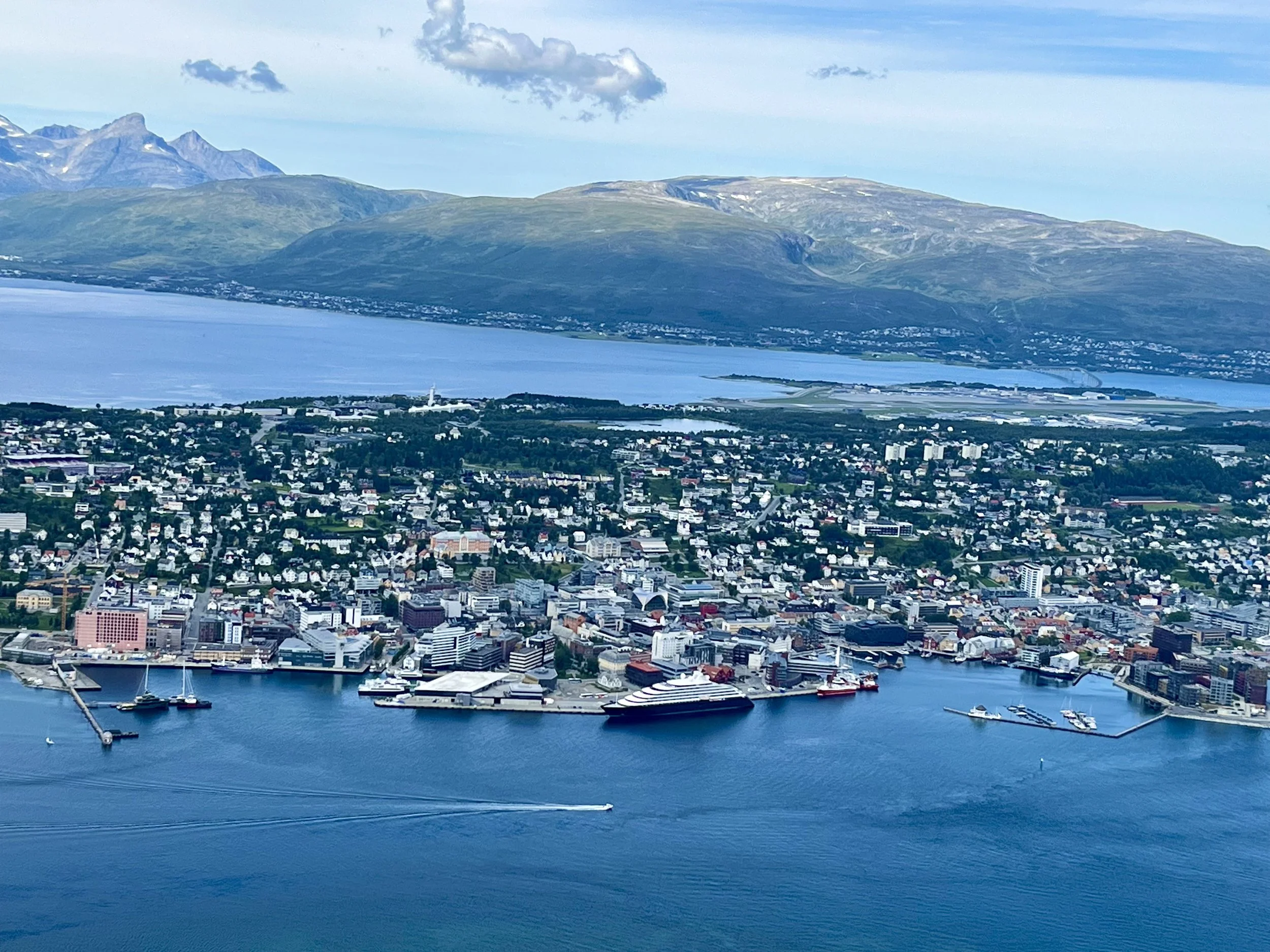
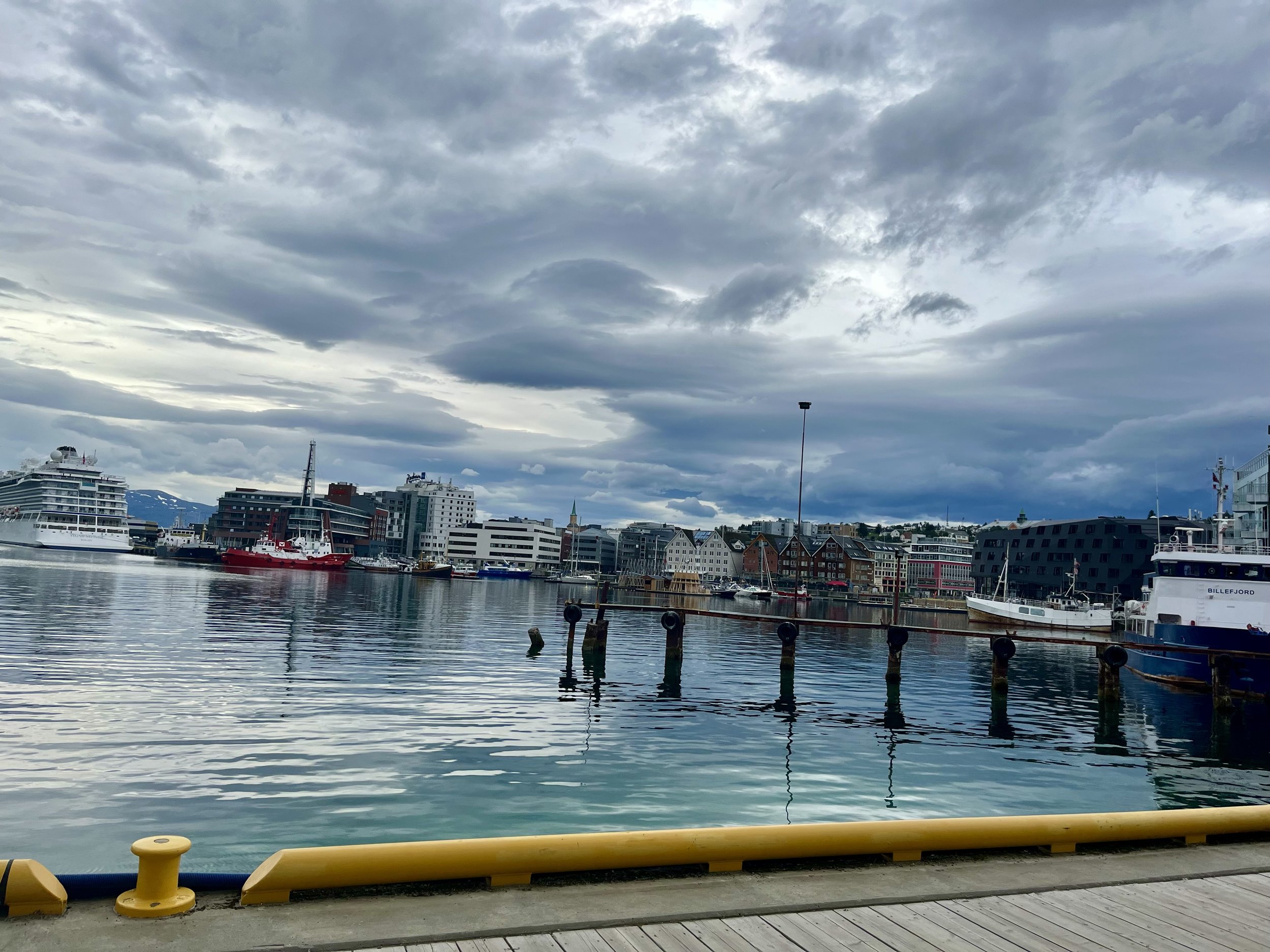
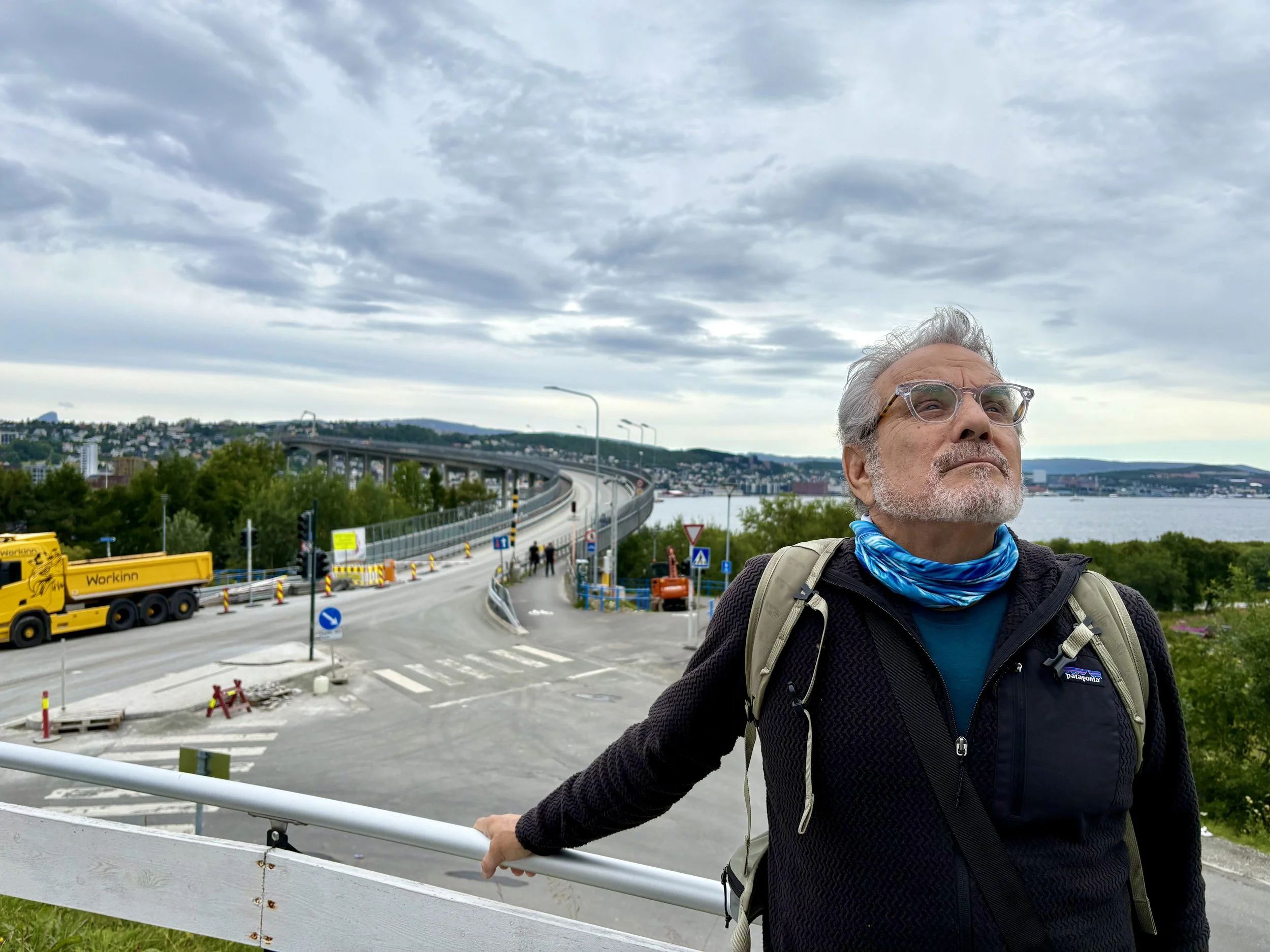
We traveled by boat through the fjord surrounded by mountains and arrived to City of Tromsø.  Our ship docked at 2:00 pm Sunday. From the bridge we observed the main city center, highly developed, and two high bridges spanning over the waterways connecting this location to the other developed areas and villages off both coasts of this island city. There are also 2 underwater tunnels connected to the mainland and 2nd island.

Tromsø will be the most northern city of our trip; we are now at nearly 70 degrees north.  The sun will set today at 12:34 am and rise at 1:04 am. The city is 217 miles north of the Arctic Circle.

After hotel check in, we quickly head out to the tourist information office, great service and some extra critiques of certain guides and tours. We decided to purchase the Classic ticket package allowing us to visit 5 main attractions at a discount. On the advice of the agent, we cancelled our pre-booked reindeer excursion.

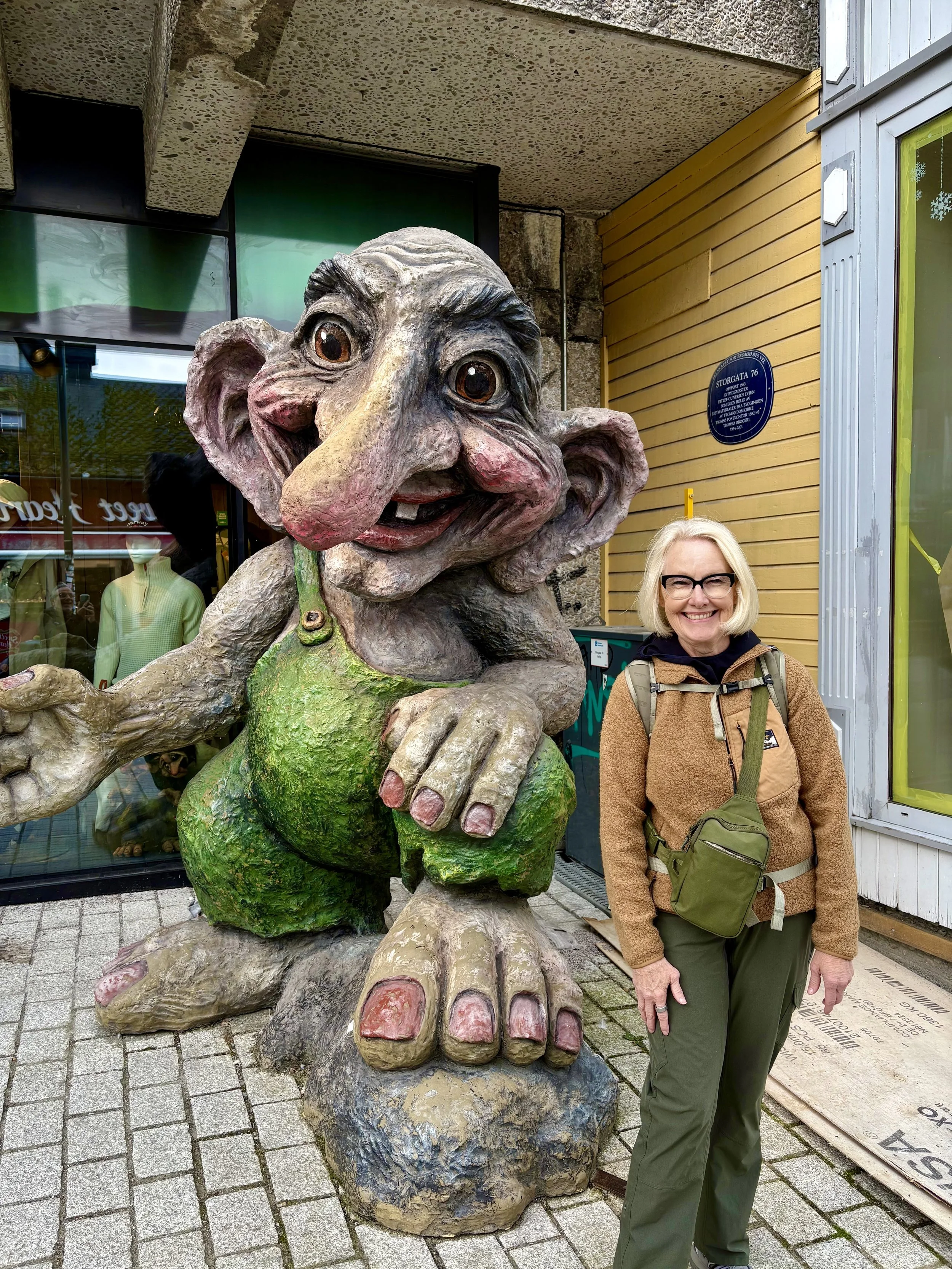
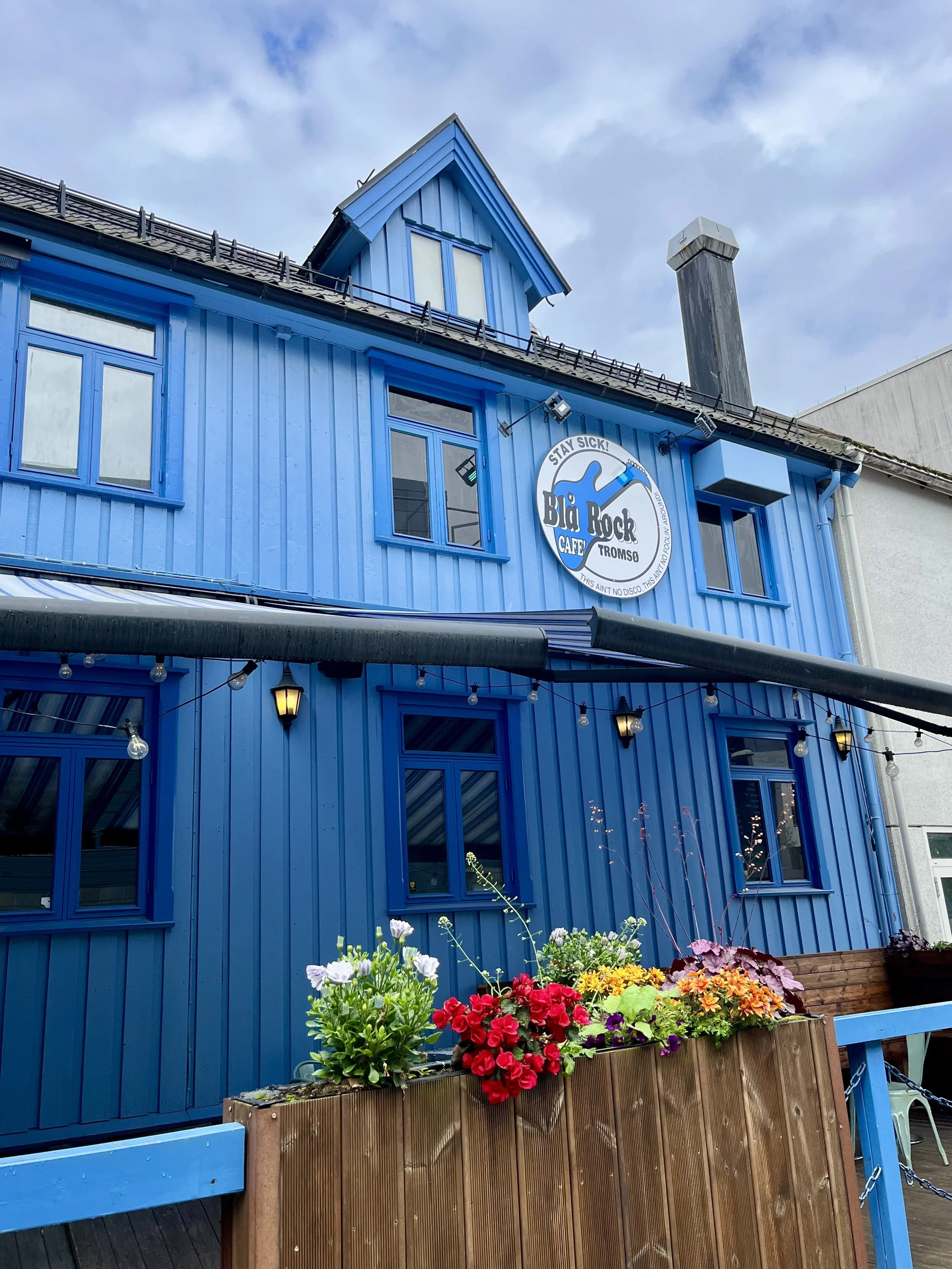
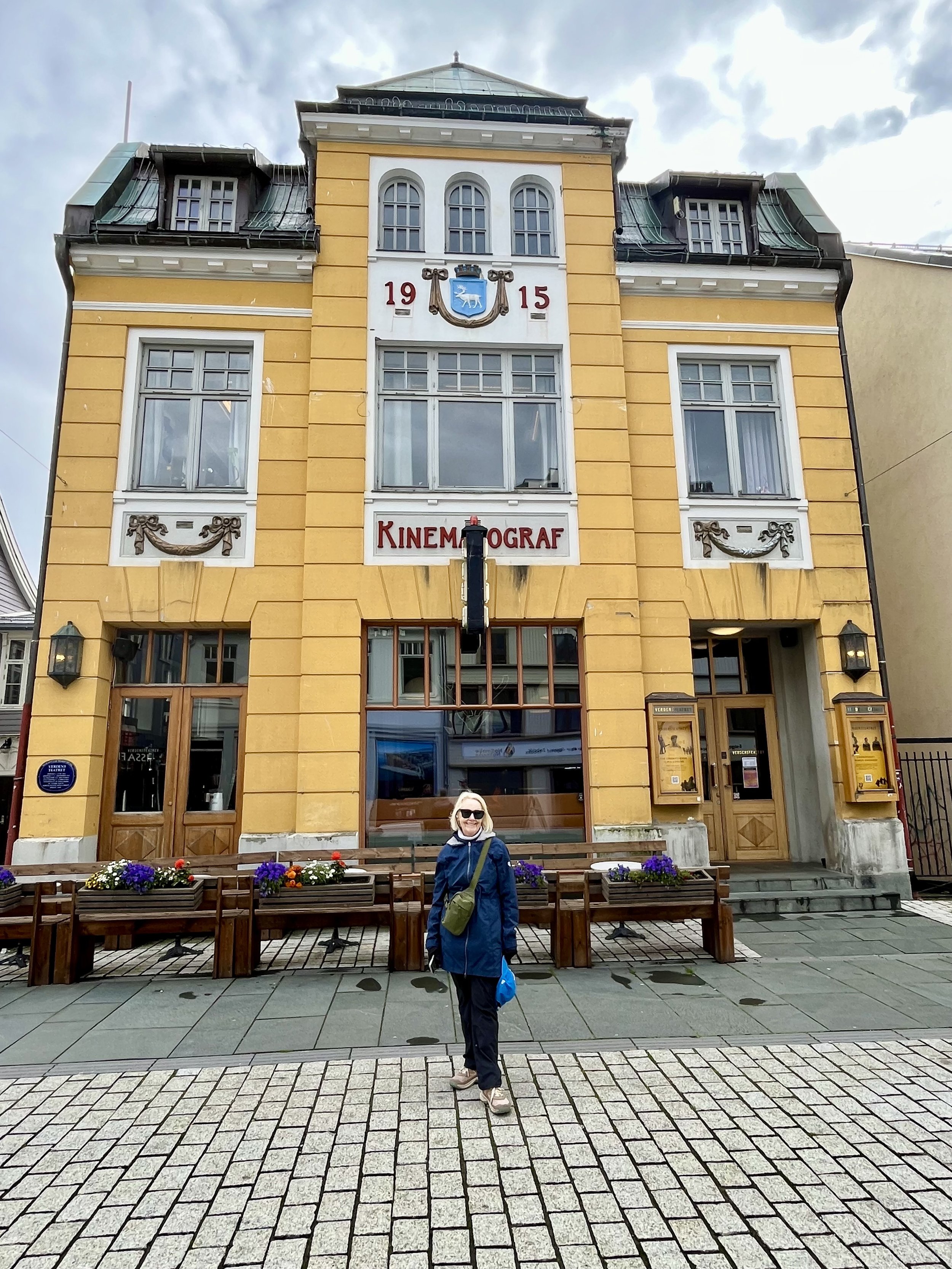
We then took a nice walk around the city center and nearby harbor area. The main street called, “Storgata” is a pedestrian only stone tiled 2 lane street and walkway with many fine shops, restaurants, and city squares accenting government buildings, churches, statues, and flower gardens. More on these sights later.  The harbor has been gentrified from ship building docks to multiple 10 storied modern apartments with balconies and eye catching exterior finishes. The local yacht club with extensive walkable breaker wall remains nearby. We enjoyed the breaker walk curving around the docked sailing boats and near to the in port Cruise ship. Such modernization may be perfect for the Detroit waterfront redevelopment announced last week- we think.  

Since it is Sunday, again we only see a few tourist out on the streets and most businesses are closed. We will revisit the area and head back to our hotel for simple soup dinner with fresh bread cooked up by Janet. We often cook for ourselves, coffee and breakfast for sure, but for other meals as the schedule and our will dictates. This hotel room offers full kitchen. Plus, tonight we are going to the “Midnight Concert” at the local Lutheran church. Doors open at 10:30.

Outside of church at 10:30 pm, no darkness this day

The alter

We were headed first in line but some tourist ladies sprinted ahead. This was a wonderful concert of Norwegian folk songs, organ pieces, and vocals. As you enter this rather large church your eyes are immediately drawn to the cascading blue lighting at the altar, with prominent grand piano and side grand pipe organ. As we comfortably settle into the frontal pews with the hand carried seat cushions, we notice something spectacular. An historic original oil painting 2 stories high towers over the center of the altar surrounded by that blue lighting. It is wonderfully unique, showing Jesus breaking out of his tomb terrifying two roman soldiers with an angelic figure standing to the side. We had not seen that biblical passage portrayed at the Alter in any church before—and we have been in Christian churches aground the world. Then, in two stained glass windows on either side of the painting we interpreted as Mary and Joesph holding the baby Jesus up to God affirming God’s plan to usurp the serpent. The other glass window displays Jesus on the cross with Mother Mary lovingly held by John, the Apostle; “behold thy mother.”  These were powerful images, and particularly impactful in this otherwise simple décor of the Lutheran church. As we gaze at the church the organist raises up the rumble of the bass pipes and proceeds to play the Norwegian song “The Last Spring”. He is joined by a superb female vocalist with an operatic range. They are joined by a wind instrument expert who plays saxophone and brass clarinet. They combine for nine pieces, with the organist moving to the grand piano. The performers are inspiring, the acoustics are wonderful, the surroundings were so reverent—Some of us shed a tear…Good night.

Day 2 Tromsø

Woke up to a message that our morning walking tour canceled. We did a quick pivot and found two self-guided tours on our app, so we are off— the narrators overlap sparingly, to mostly cover different sites and points of interest. We really love this city.

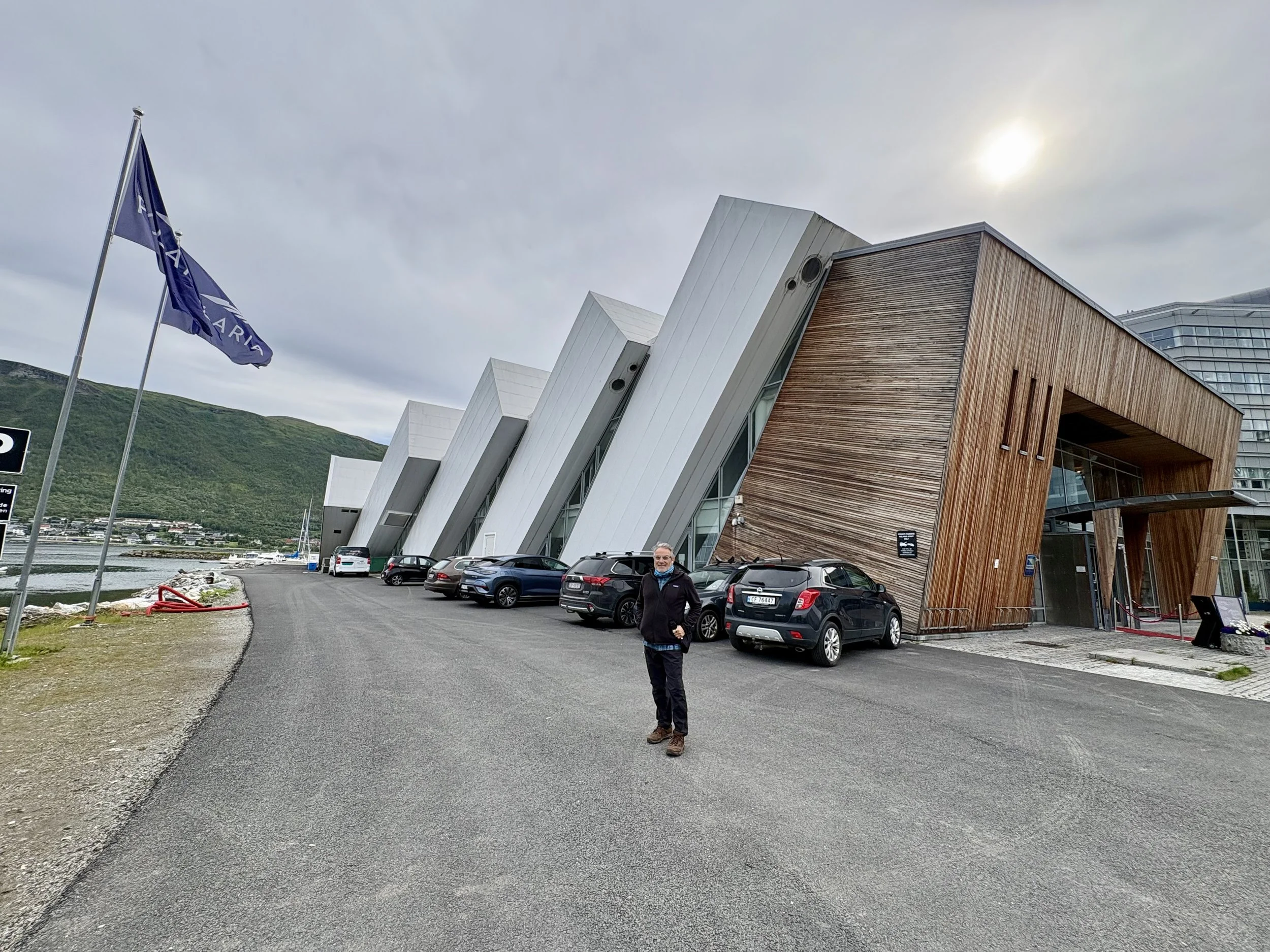
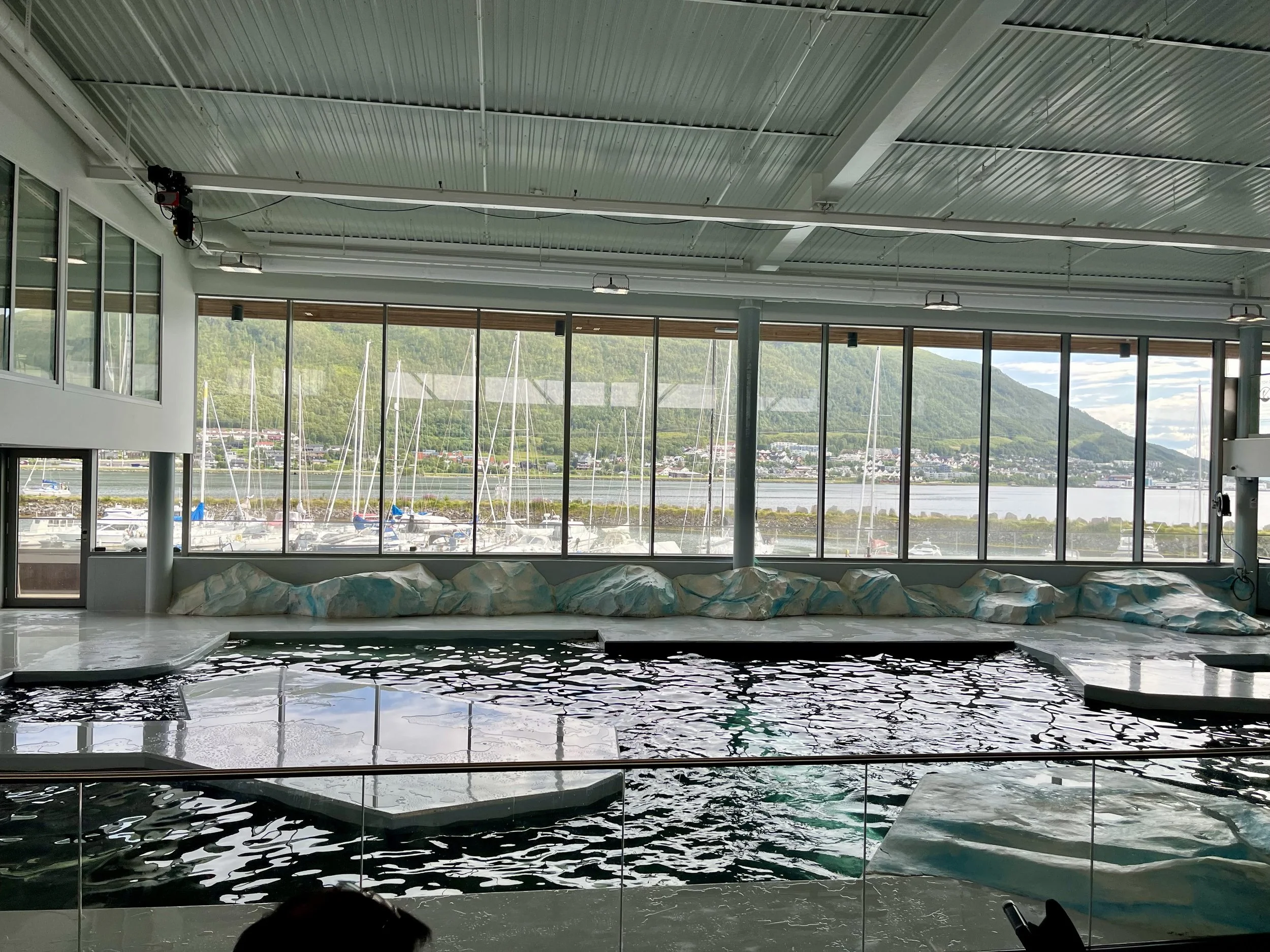
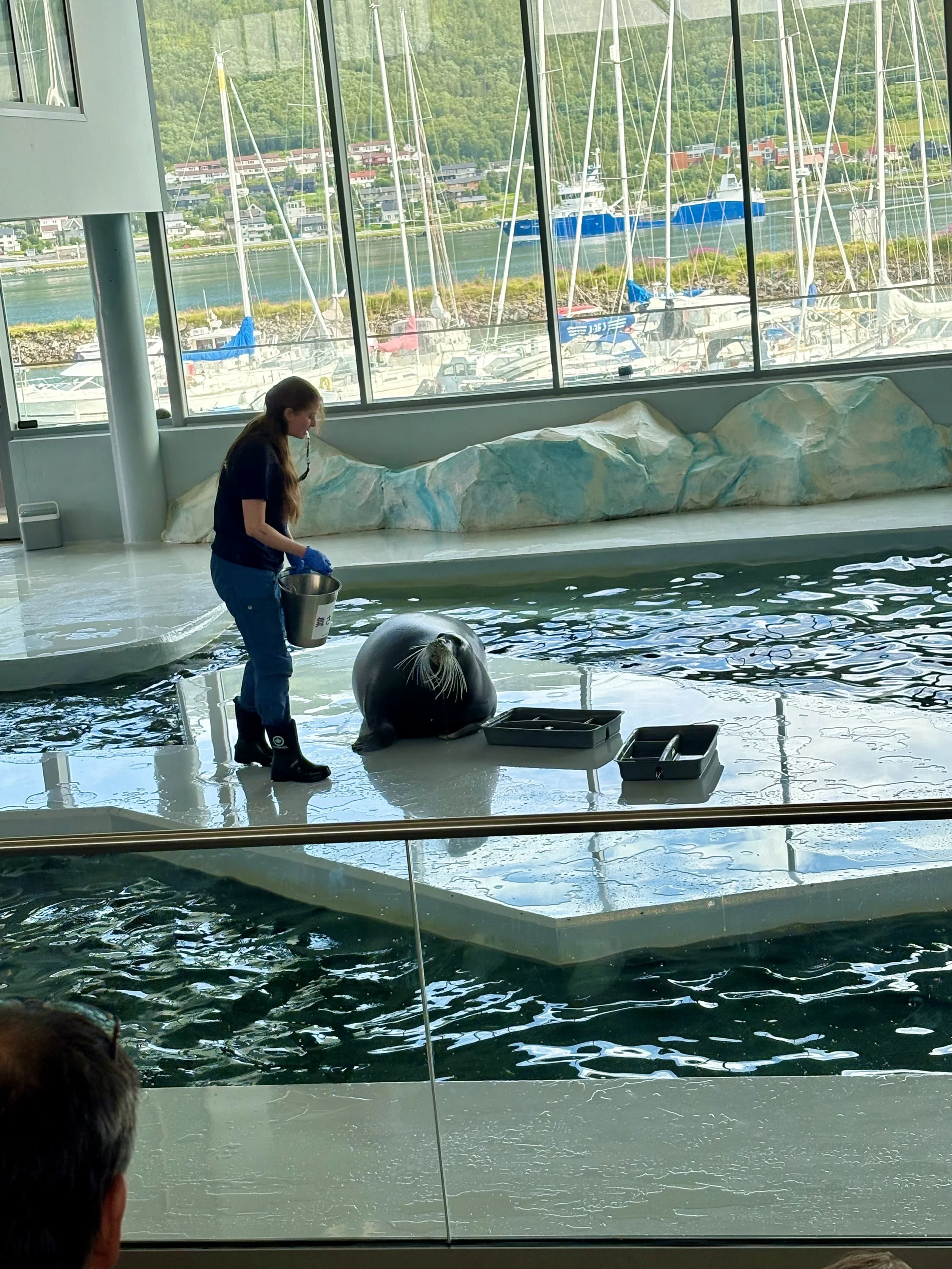
Next, a quick stop for food shopping, lunch and off again. The aquarium called The Polaria specialized in seal training, arctic fish and other critters. It is a very modern angular building with several transparent walking tunnels under the the seal exercise pool and other fish tanks. The six seals feeding presentation was stressed to be training, with the function to challenge and motivate the seals, not a carnival act—no high splashes here. The trainers were very professional.

The museum

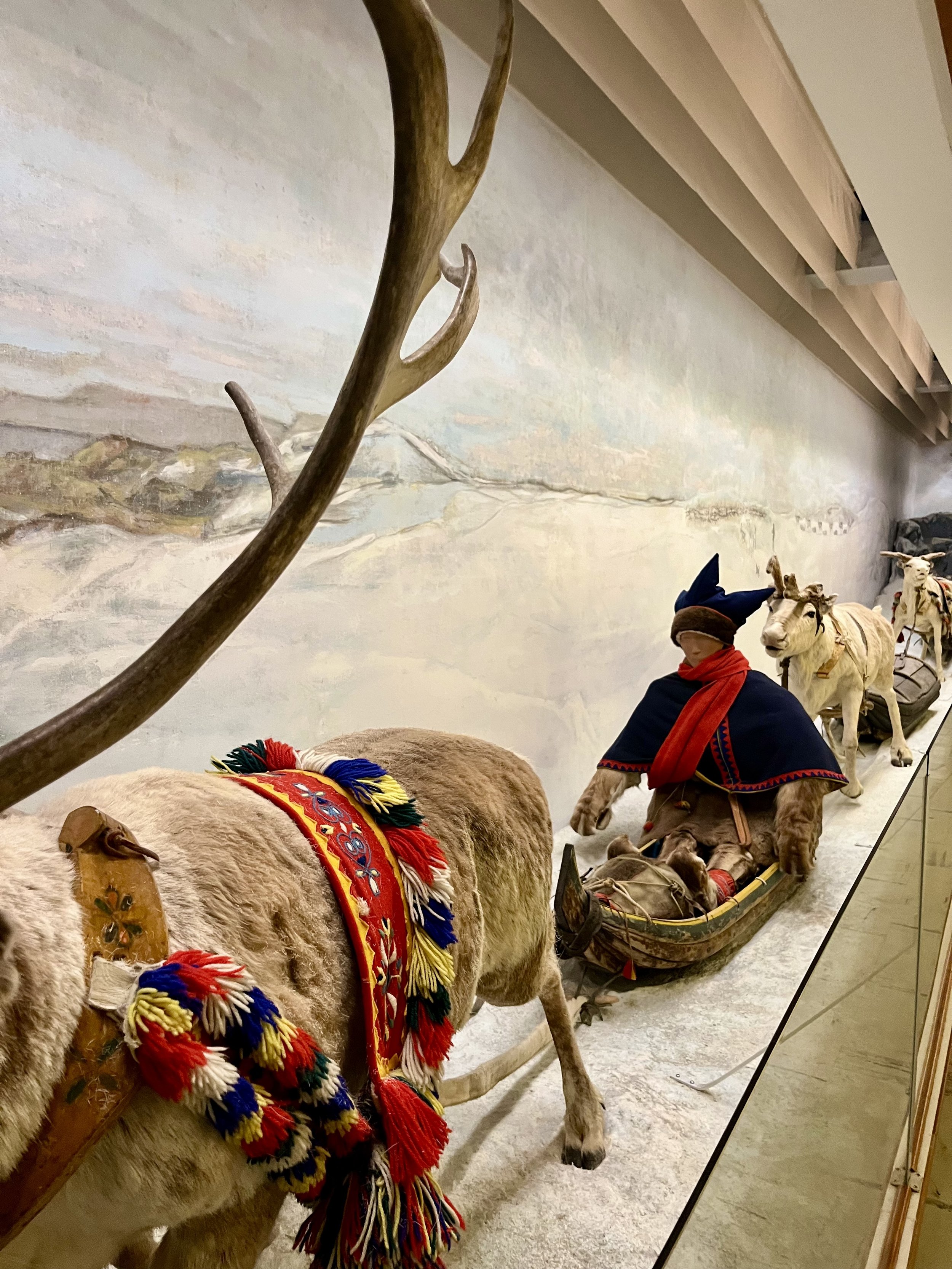
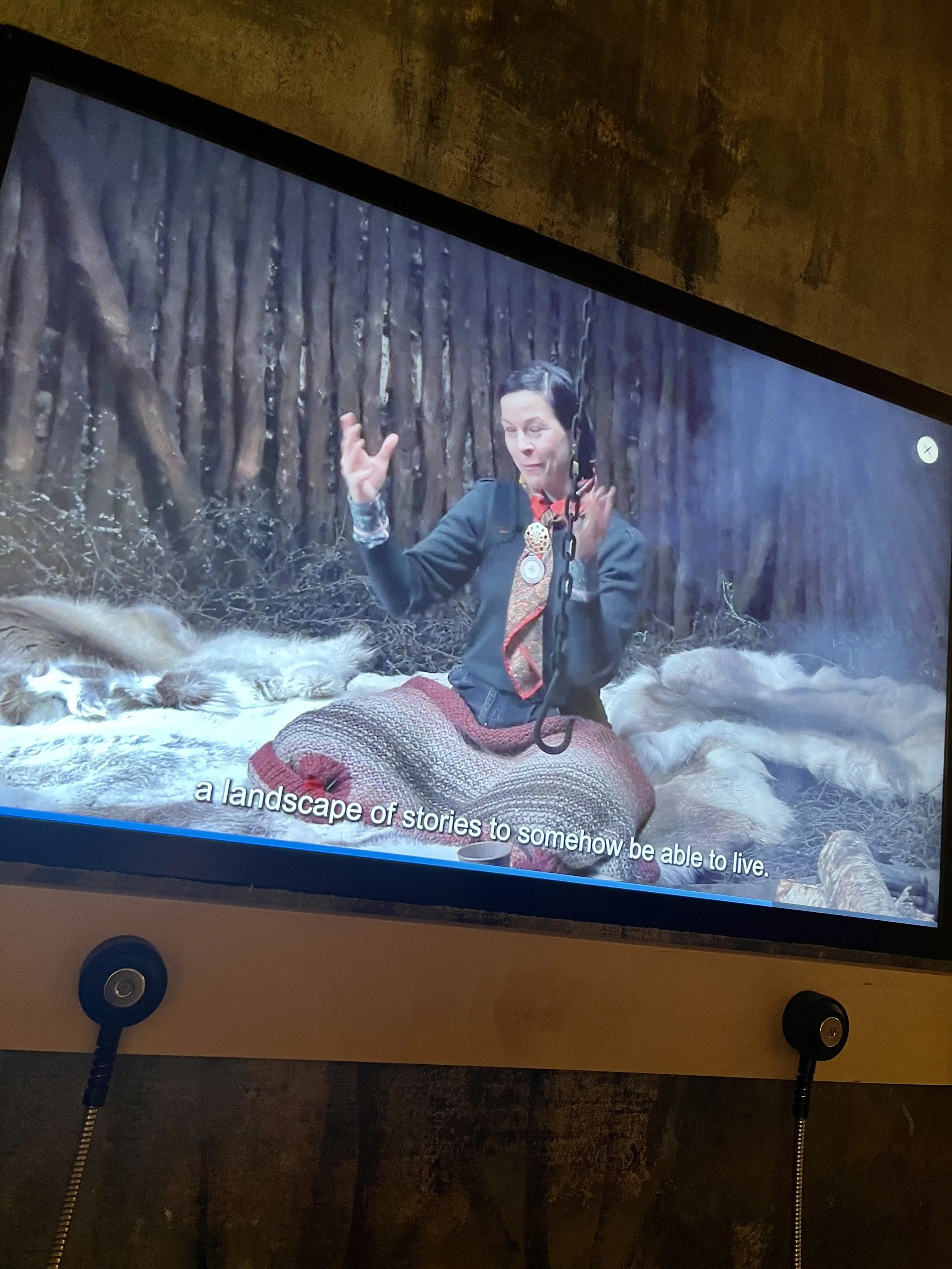
Our next stop was up the hill to the end of the island and the Arctic University Archeological Museum. The most important exhibits here dealt with the “Sami” culture, the indigenous most northern tribe of people. They have their own language and a flamboyant form of dress that that is fashionable. Having lived, worked, and survived in the frozen north for centuries without much contact with the southern Norwegians. The Sami tribe taught the Norge how to survive this land with new hunting/survival tactics and reindeer cultivating practices. The cultures have now merged. During the transition, these natives are described as ‘Sami language speaking Norwegians.”  The story of the Sami is complex, beyond anything we cover.

At this exhibit and the others we have toured, we are reminded of our own history of our Native American. We want to learn more of these proud people and have committed to do so.

By now we had exceeded our steps count challenge for the day.  We navigated the local bus back to hotel, nice local salmon prepared for dinner by Janet. Did some blogging. Watched some TV. Goodnight.

Day 3 Tromsø

Happy Birthday—It is Janet’s  birthday

We start the morning revisiting the tour apps and follow up on other sites. The most interesting was an elevated circular hill now covered with grass that acted as the barrier for the first Tromsø Fort overlooking the old harbor area, the same area where the yacht club sits. There were no ramparts. There had been a minor moat surrounding the hill. Cannon were displayed as part of the effect. This was more like a giant fox hole.

The Fort

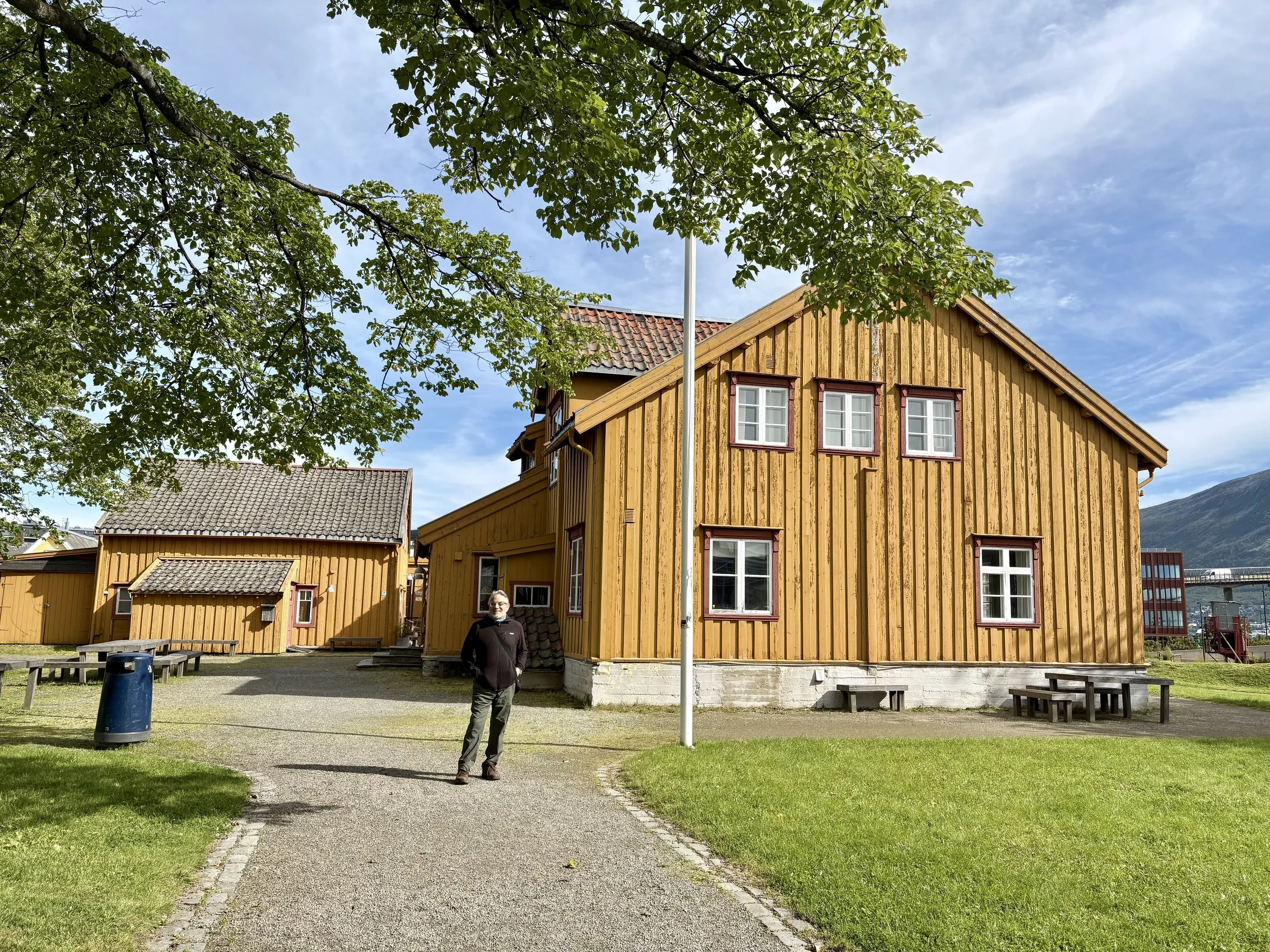
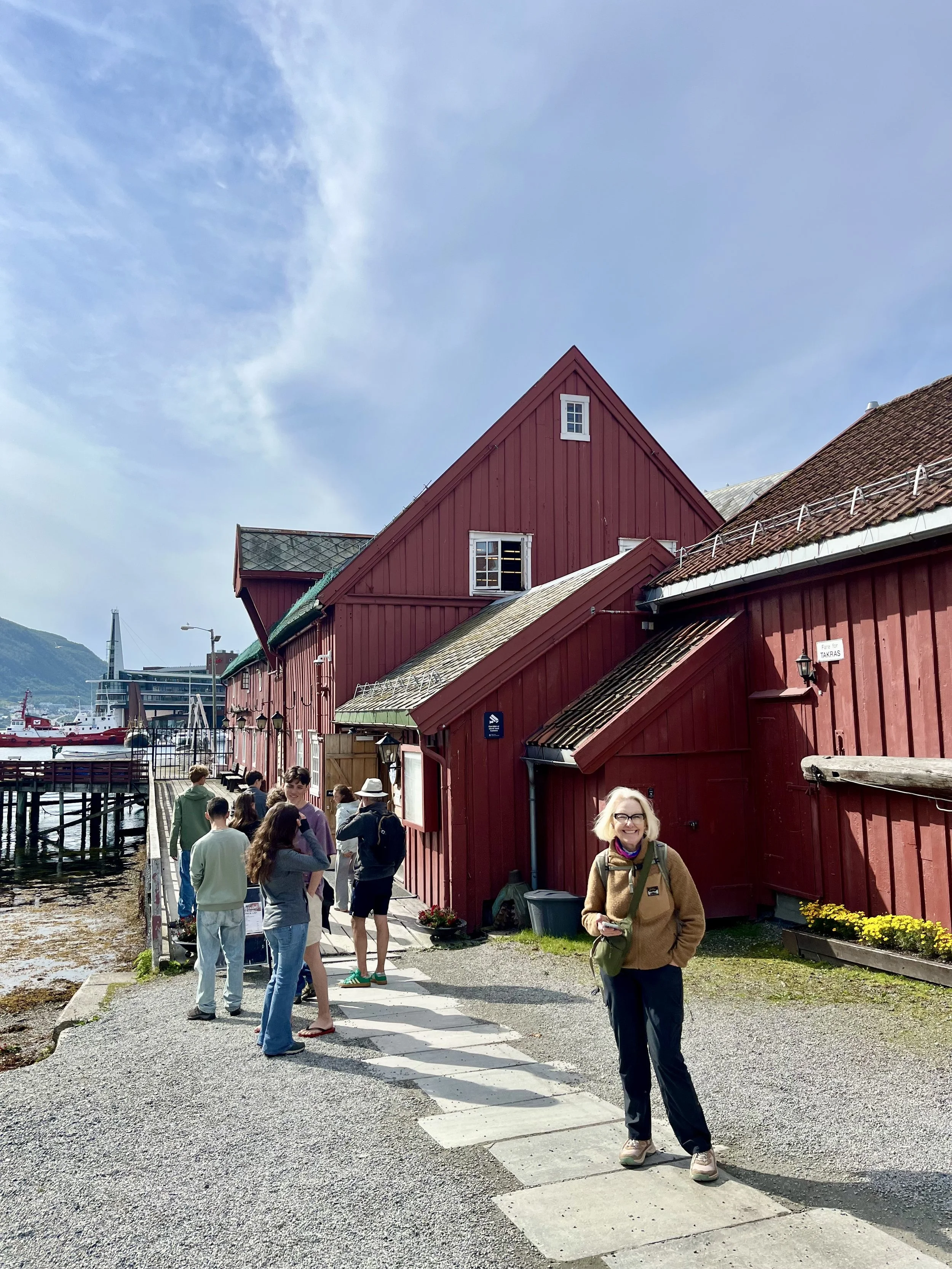
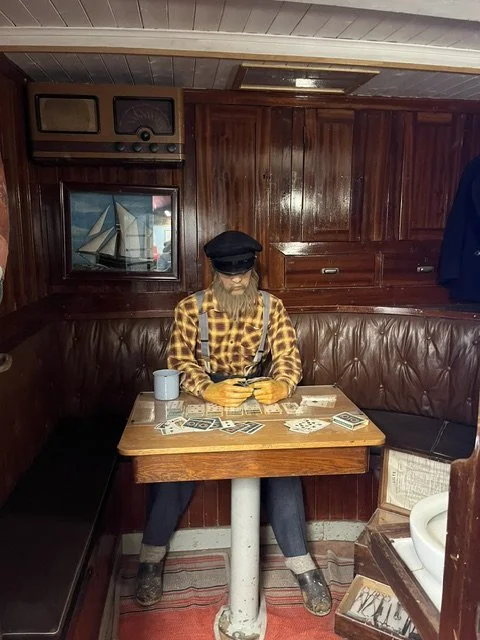
Across the street from the fort was the Tromsø Polar Museum, housed in a series of connected older wood buildings. As its name implied, the museum depicted all aspects of  life, adventure, survival, and history of discovery in the polar arctic circle. This turned out to be a magnificent little museum, be it only traditionally displayed and communicated. No electronics here. But every corner had another tidbit of information. The “Fram” ship and crew started their famous exploration of the Arctic Circle from the Tromsø harbor. Walk-in log huts for the stranded crew re-created. The Fram and other polar information, photos, and biographies are presented, with dog sleds, traps and weapons for hunting displayed too—maybe too vividly.

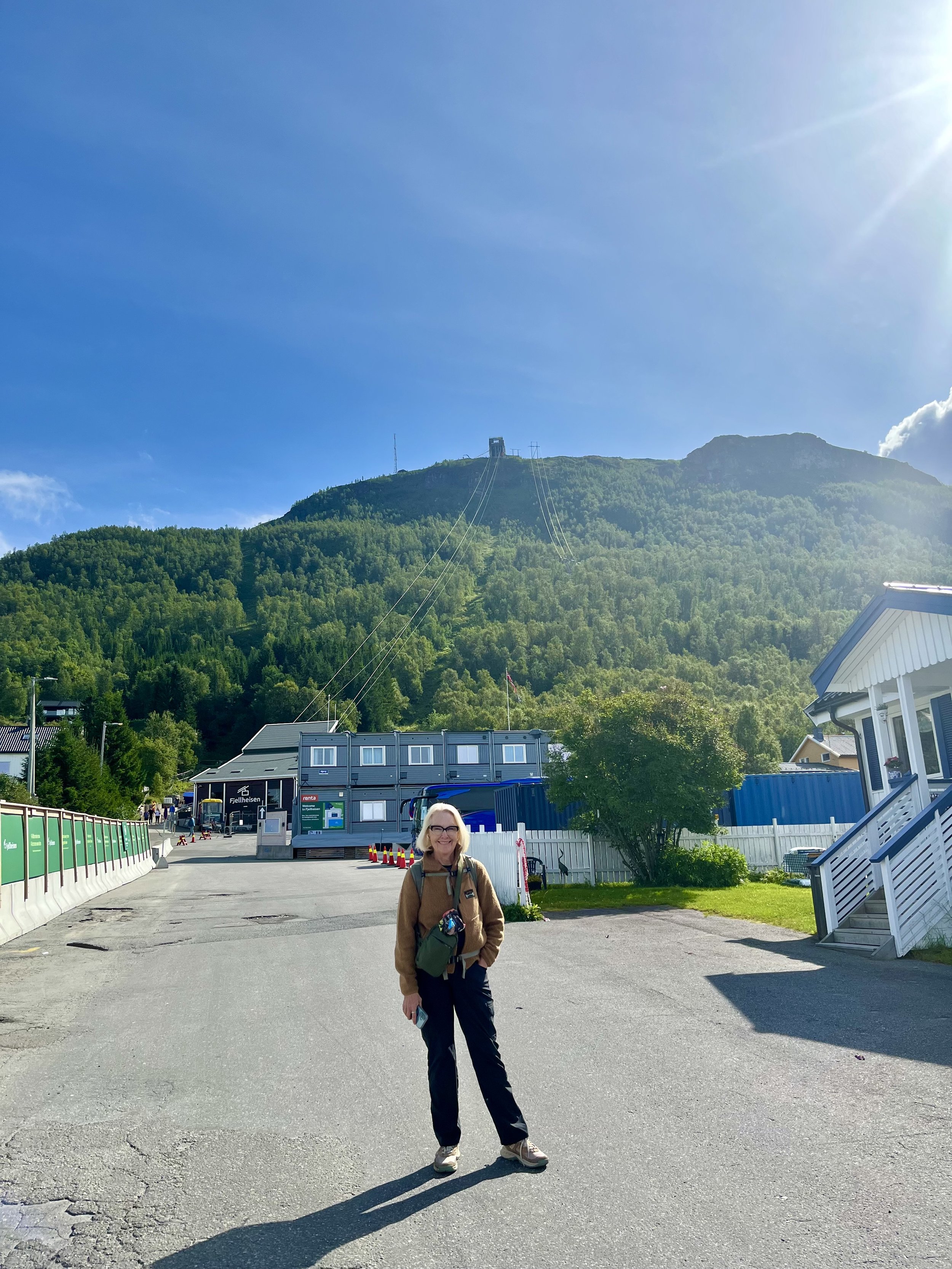
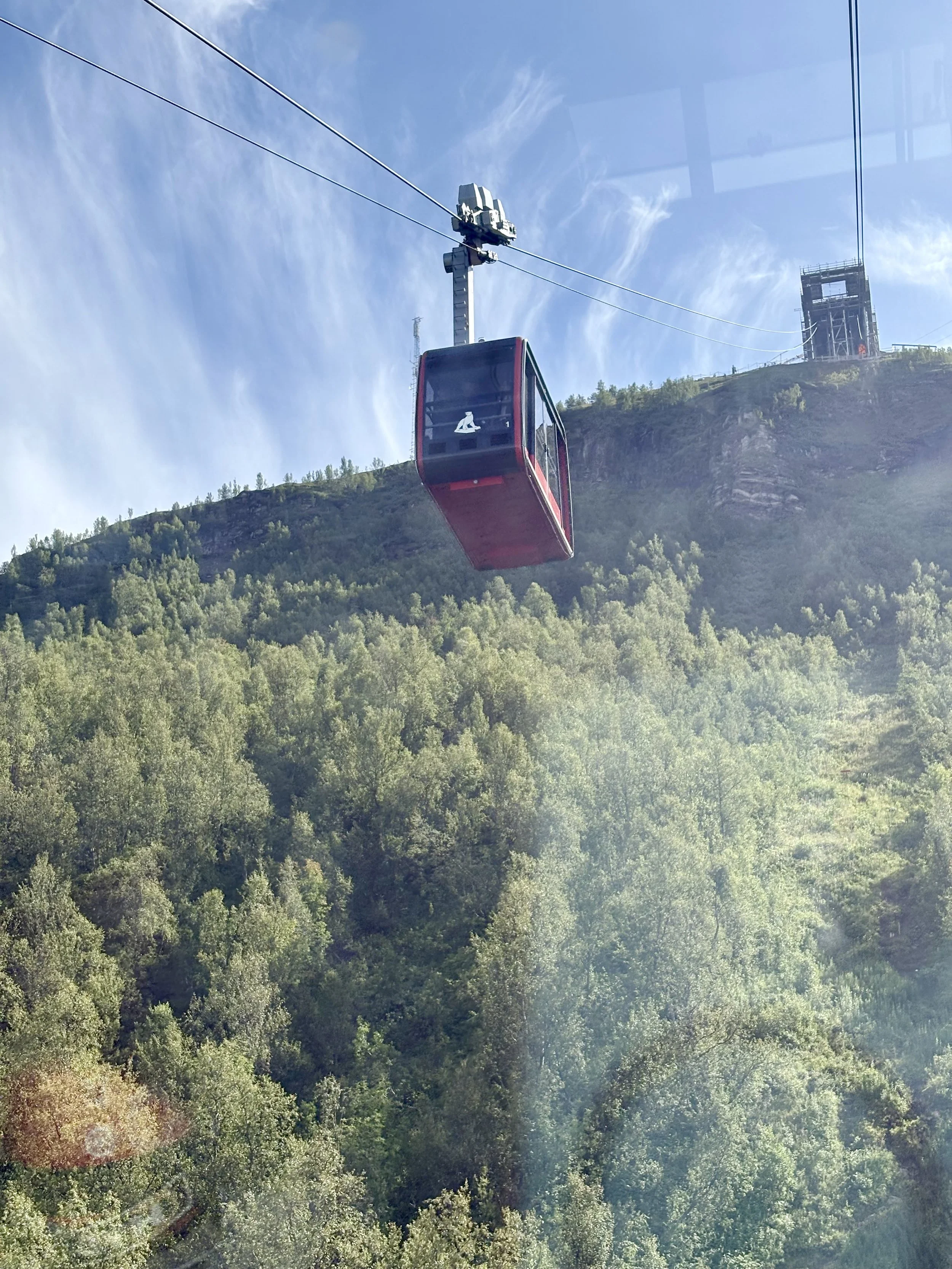
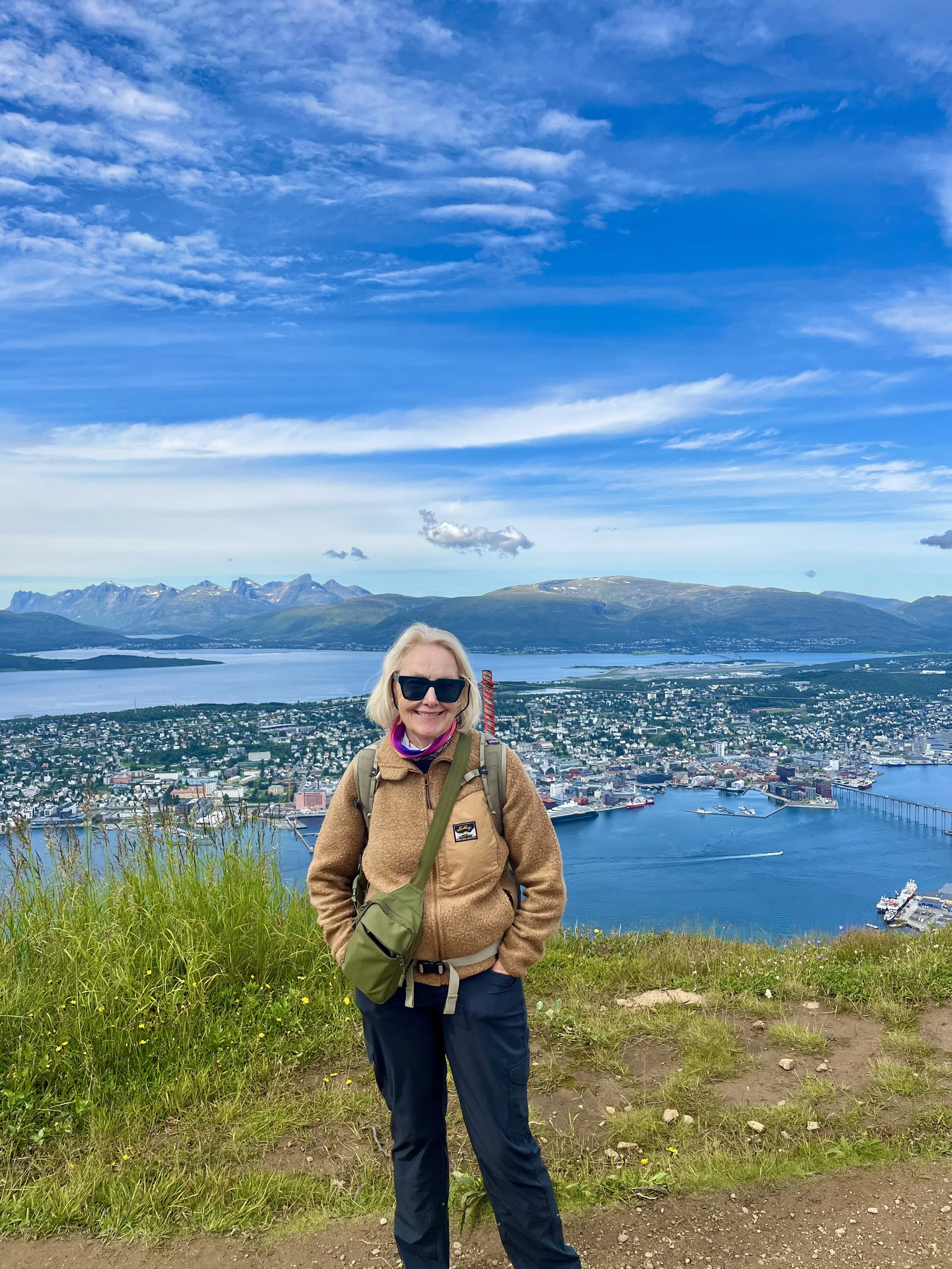
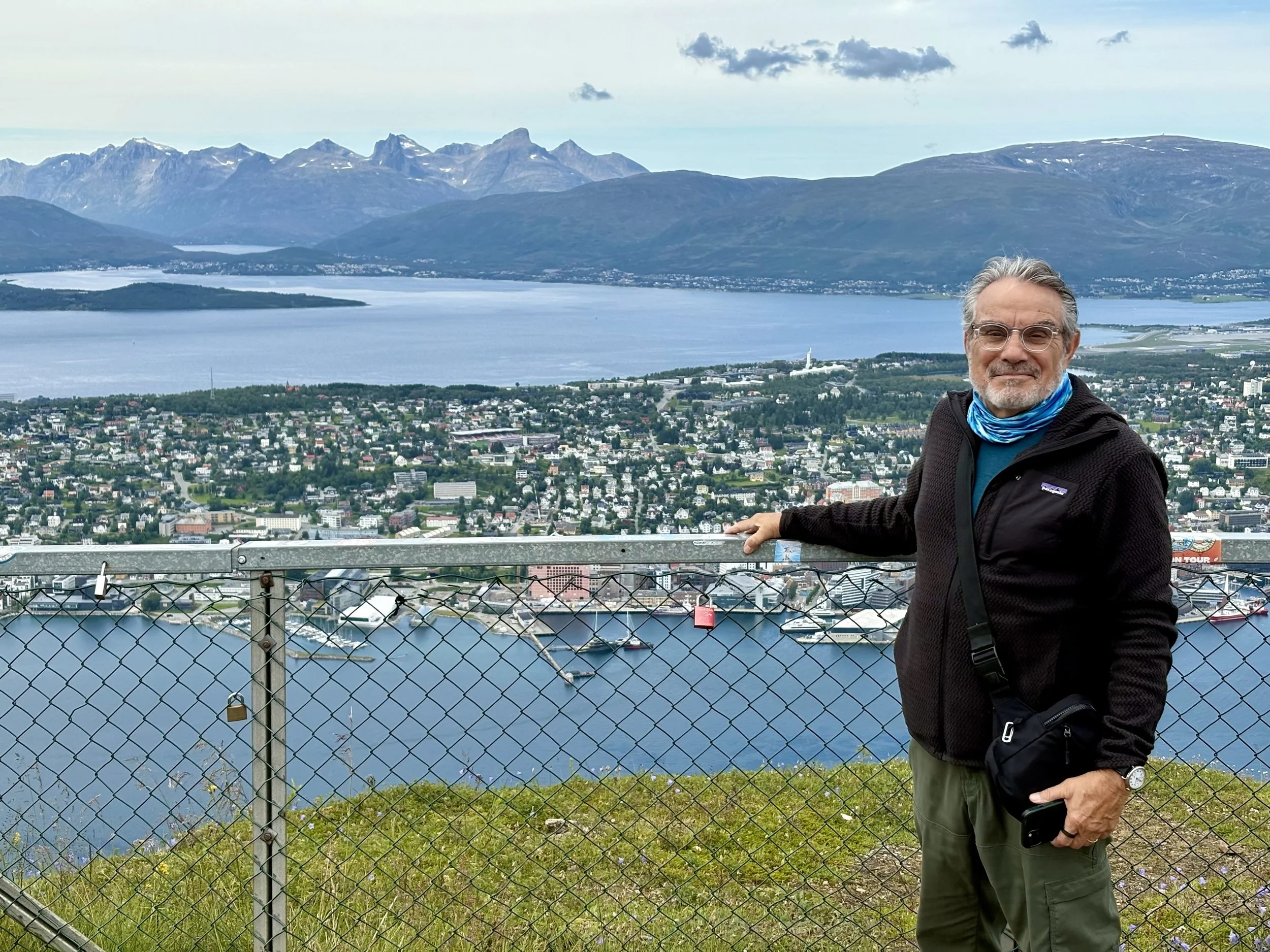
Next stop is the the cable car up the mountain across the fjord. We can see it from the city but the distance is too far to walk. We take the bus expecting to cross the fjord by the bridge, but instead this bus takes an underwater tunnel. We think we are going the wrong way. But, another nice bus driver, calms us and lets us know when to get off and to take the short walk to the cable car entry point. We have lunch with a seat at the window, what a view.

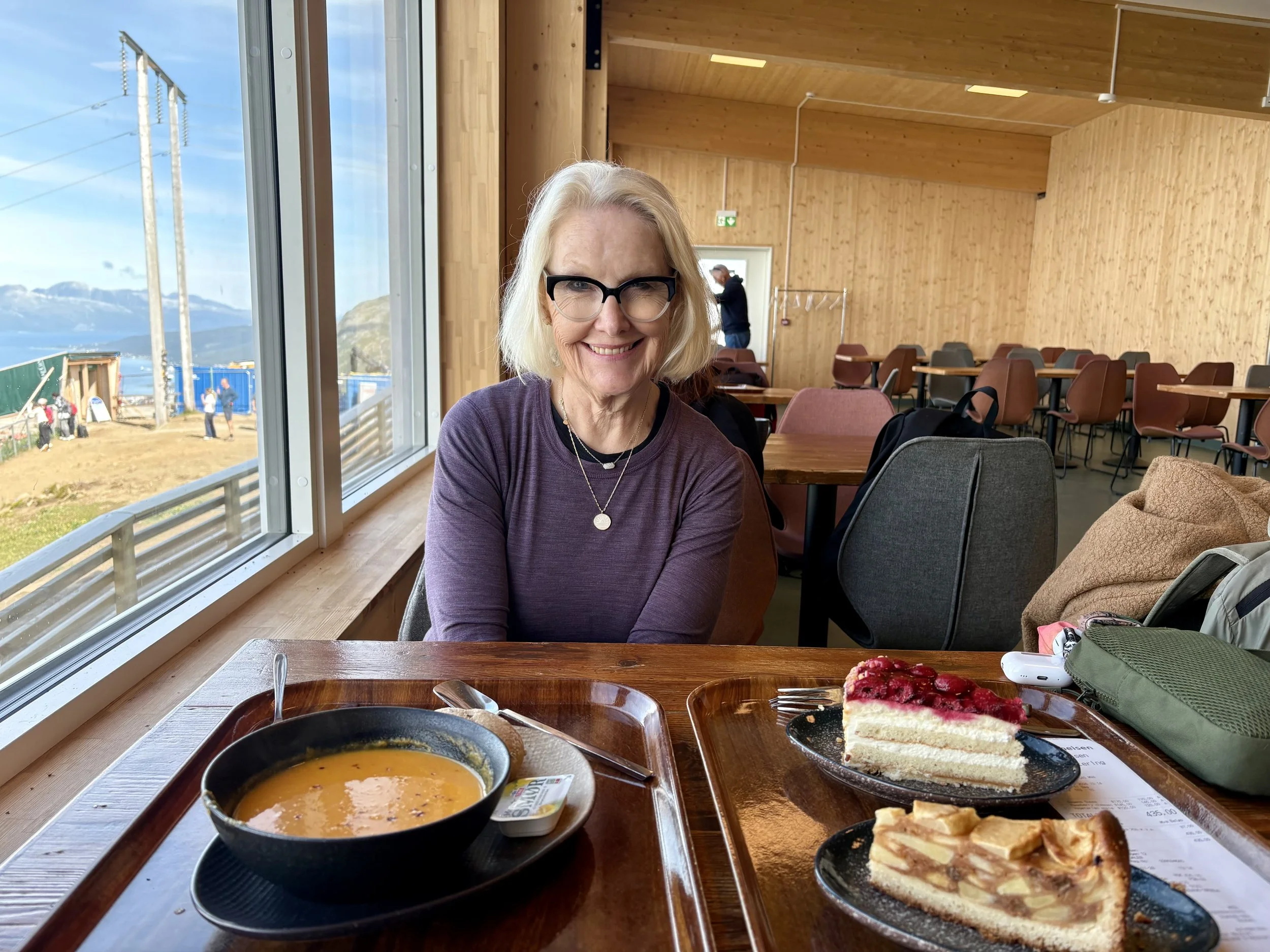
Happy Janet selects one soup, two desserts for lunch—white cake with raspberry and crème frosting and apple pie. Lunch with sweets for Janet’s birthday.

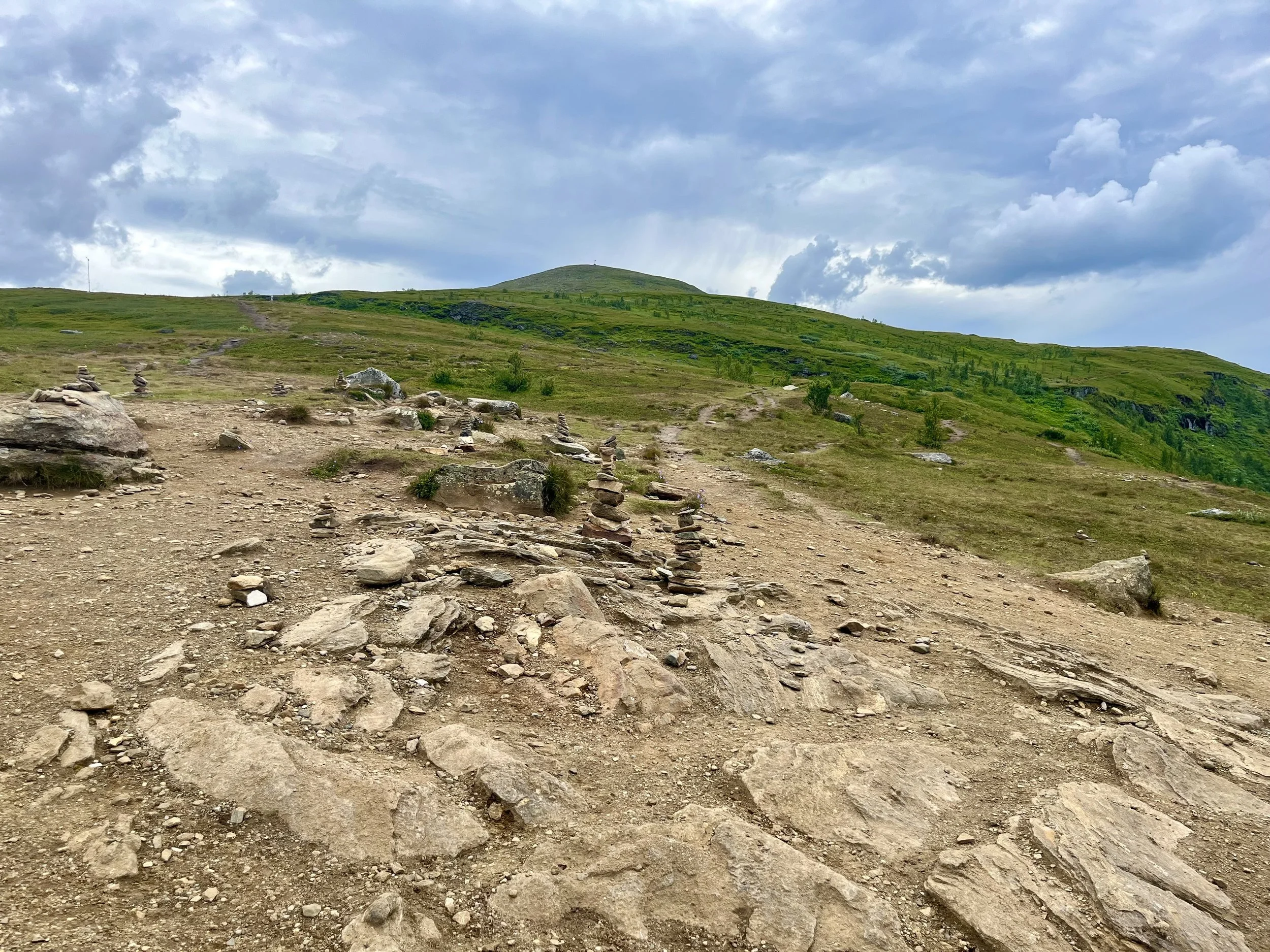
We go back outside and take a walk on the paths that move us higher and get different views including the massive down hill Ski Jump built in the distance.

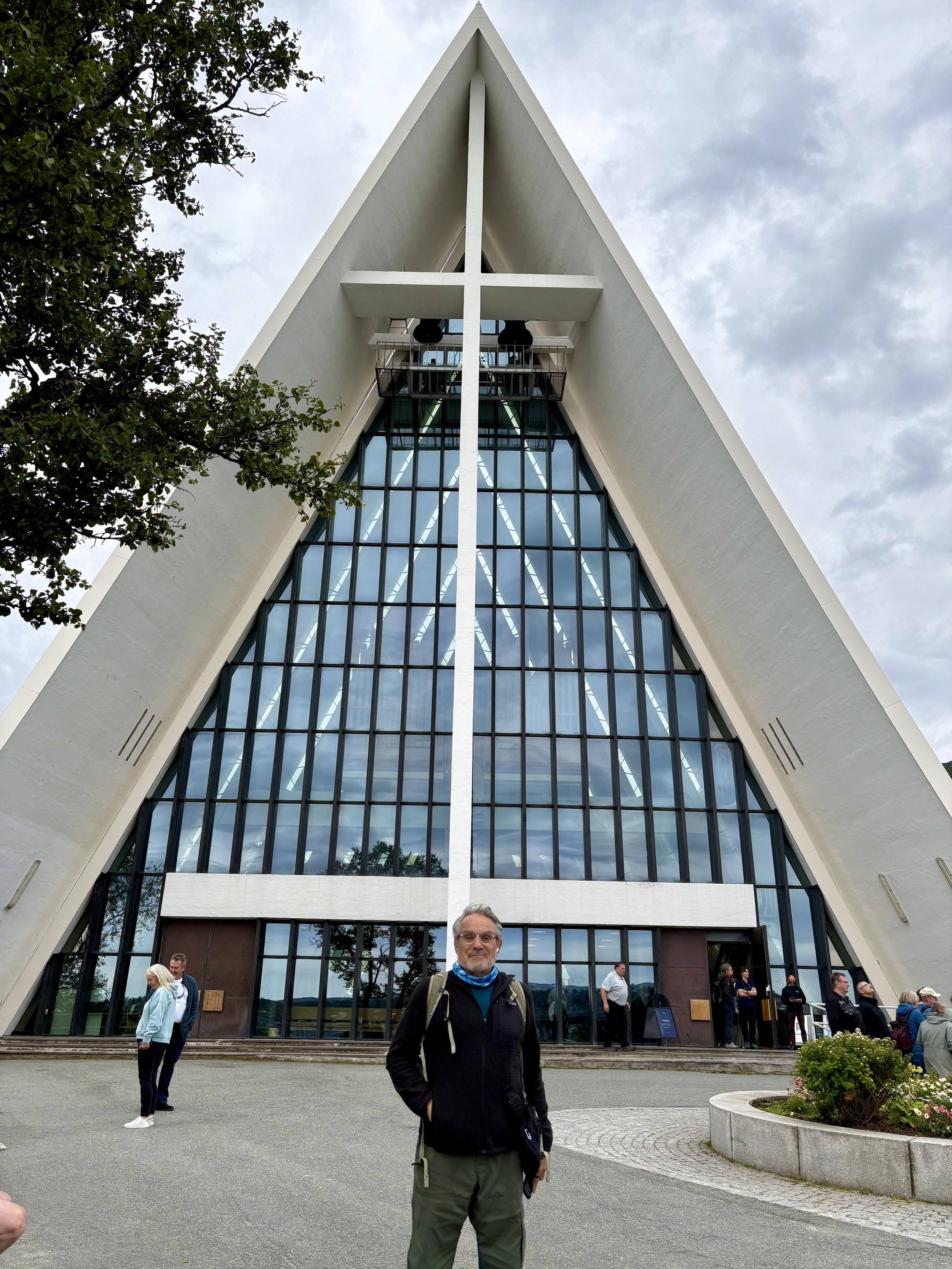
Down the cable car and return to ground level. We walk to the massive Arctic Cathedral of Tromsø. This is a stellar looking Lutheran Church that is a very modern ‘A’ framed structure with multiple peaks that harken to mountains. The ‘A’ framed entry wall is entirely of stain glass. Beautiful!

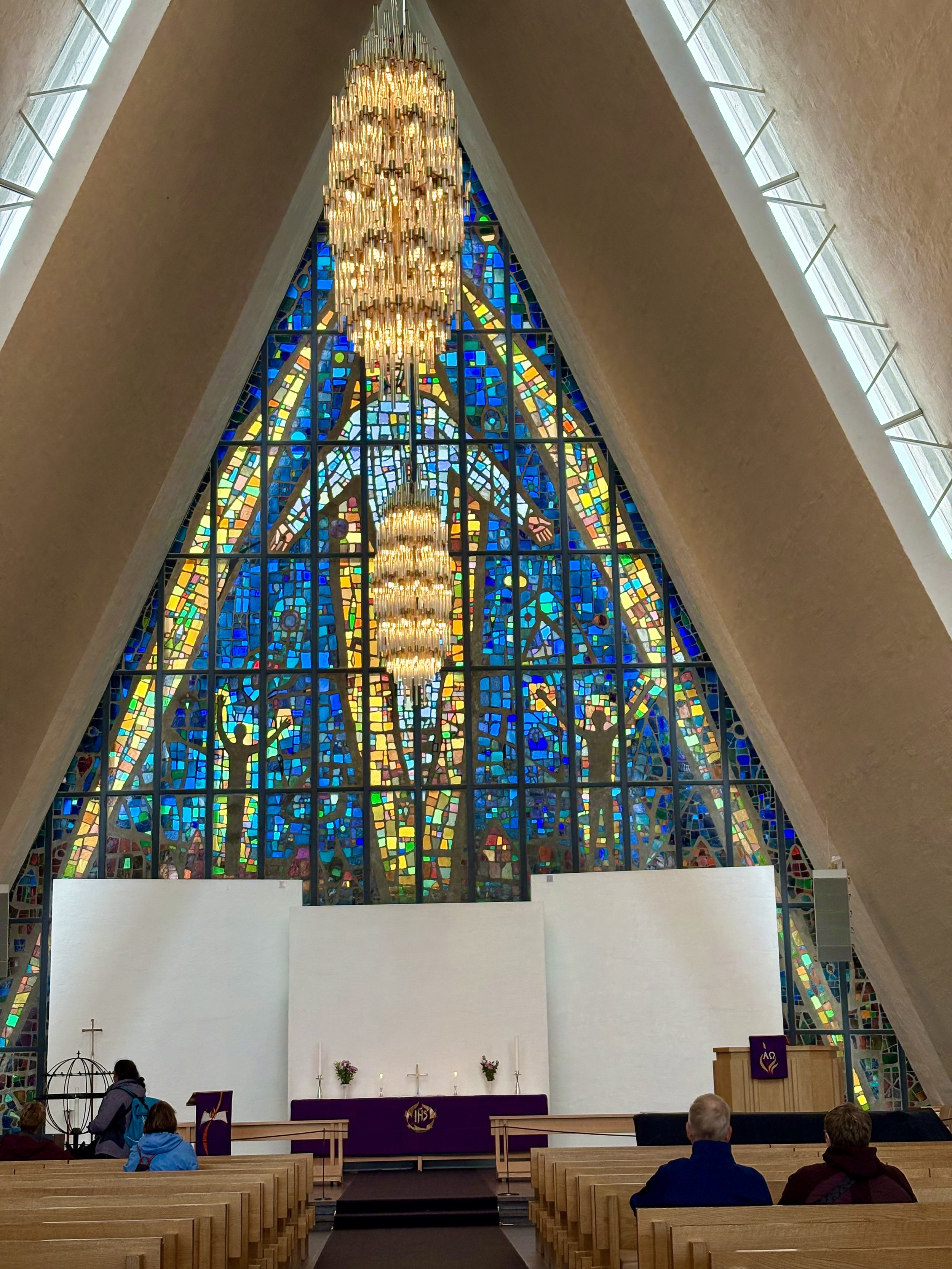
When entering the church your eye is engaged with another beautiful A-framed stained-glass window behind the alter, that offers an important theme. At the top, the “Hand of God” reaches down emitting three lightning bolts, one toward the crucified Jesus, two other bolts angle toward the figures of one-man and one-woman on each side of the Jesus on the Cross. It is spectacular. Finally, just as we turn to exit the church, we notice the massive pipe organ on the second level over the entry door and the organist in position. The gentleman organist has powered up the pipes and starts to play, and play he does for a long time. What we heard and witness is a professional organist visiting from Waco, Texas (yes-saw the sign) practicing a few hours before his scheduled recital that evening. What a treat!

We cross back over the river by walking on the high bridge that we find is closed to cars but open to pedestrians. Later, we head to Janet’s Birthday dinner at a flashy restaurant specializing in sushi dishes. Very nice-good food and good Saki, sorry forgot pictures

Day 4 Tromsø

The library

Nice late start. This has been a change from our first large trip, our new habit is later starts, so relaxing. Since the sun never really sets, we have flipped our internal clocks, staying up past midnight, out late, sleep in.

It is raining again and we make decision not to go to the last museum. We head to the local library. This is excellent library, not the first we have looked at in Norway, but our first visit. We had a guide tell us that the Norwegians invest heavy in their libraries, first to encourage learning and reading but also since the winters are so long, cold and dark, it is a meeting and gathering place for all ages, how fantastic.  This one was complete with indoor bike racks, great wi-fi, coffee/soda machines and a place to eat a meal.  Settled in, we do some blog work before heading to airport for Sweden. See you in Stockholm. 

Goodbye Norway, we love you, but ready to move on.

Arctic Cathedral