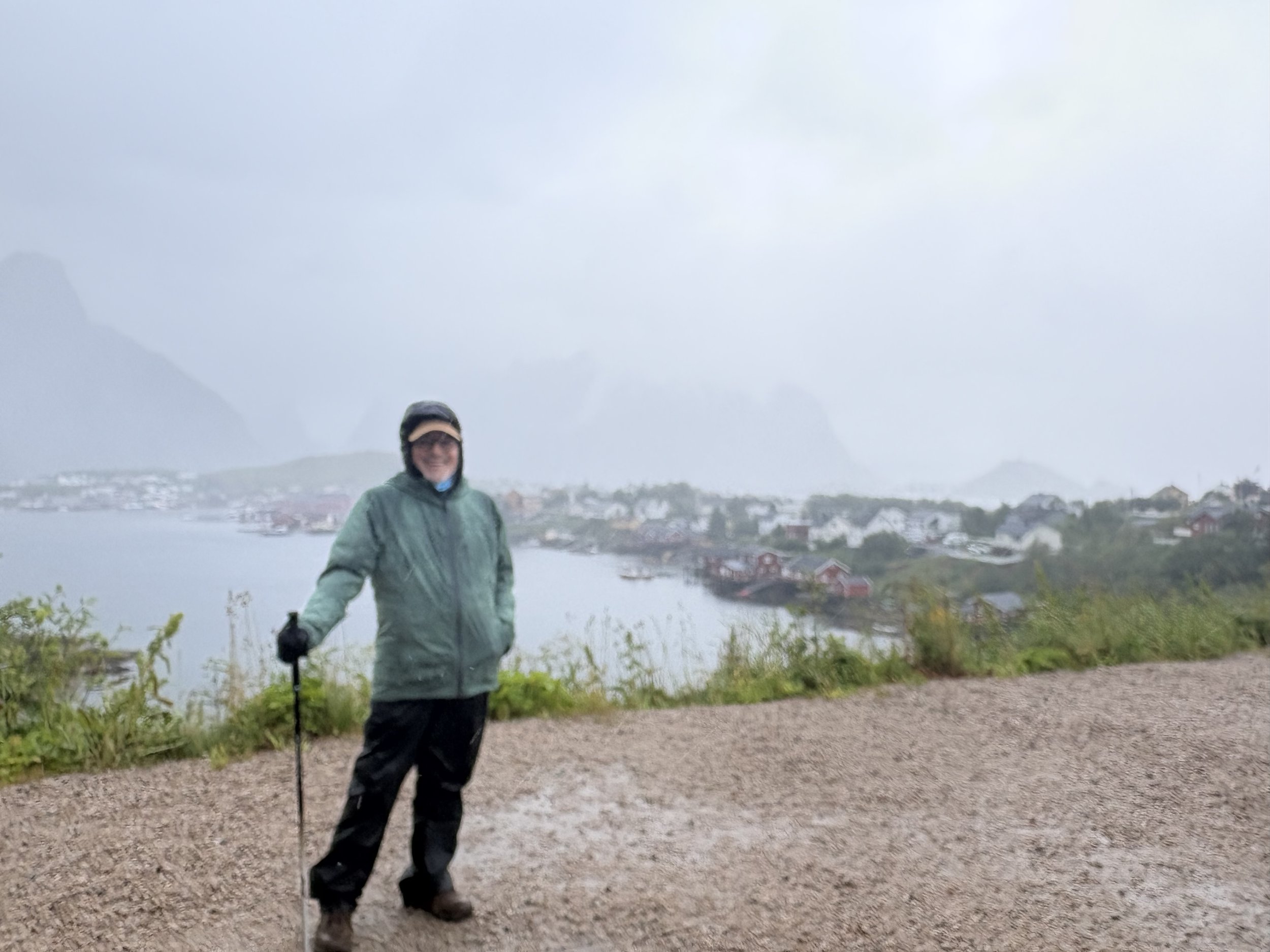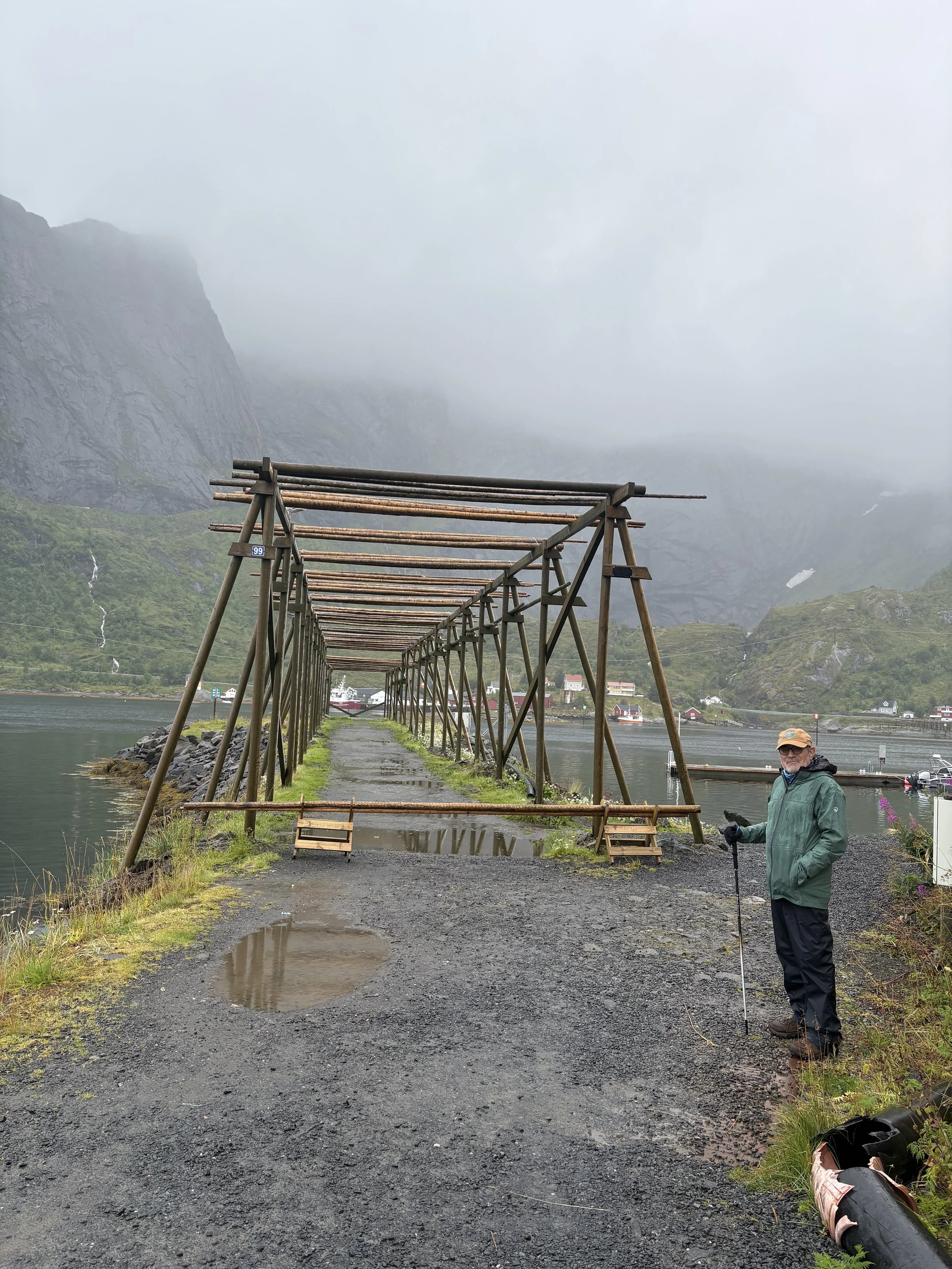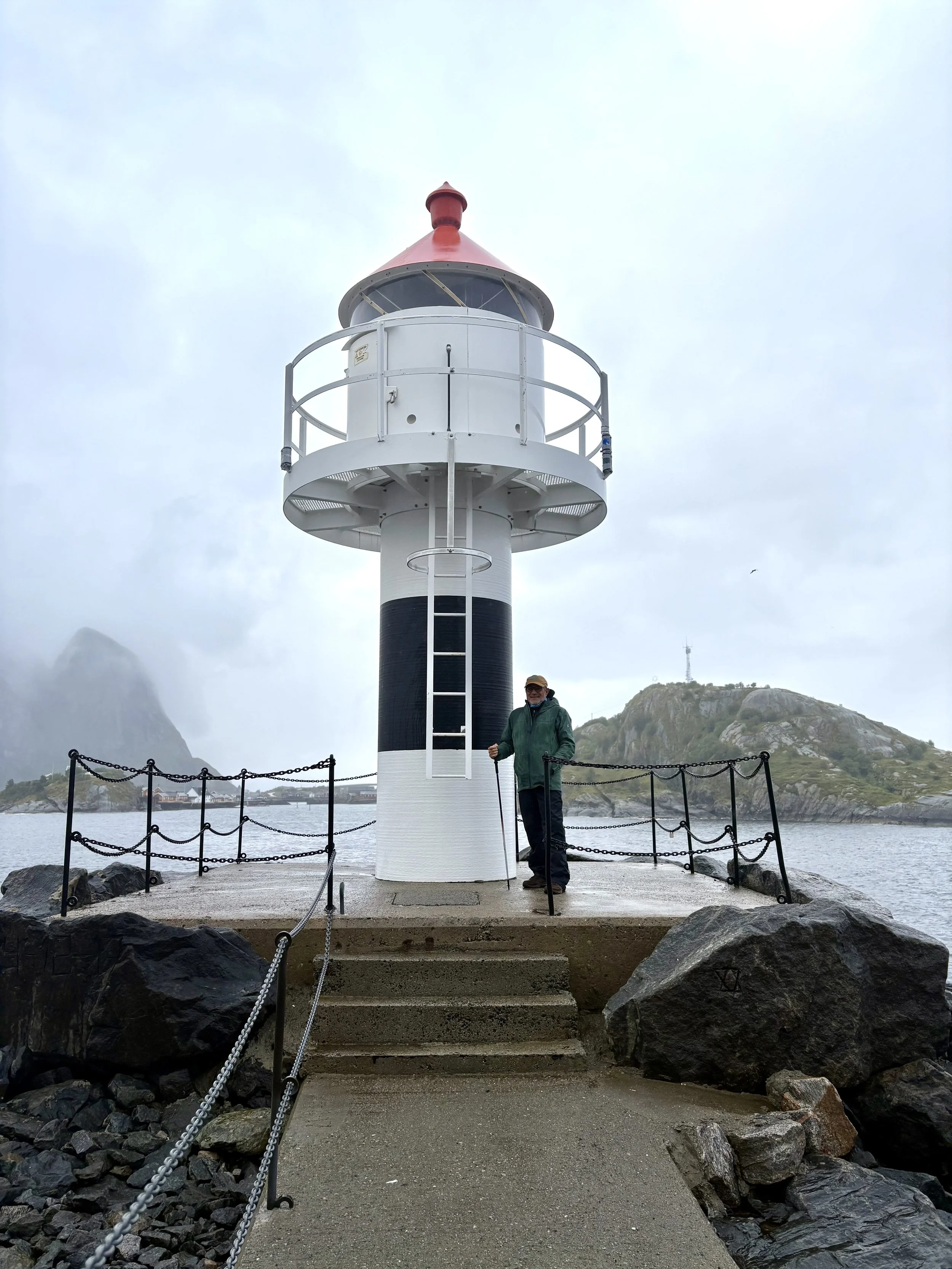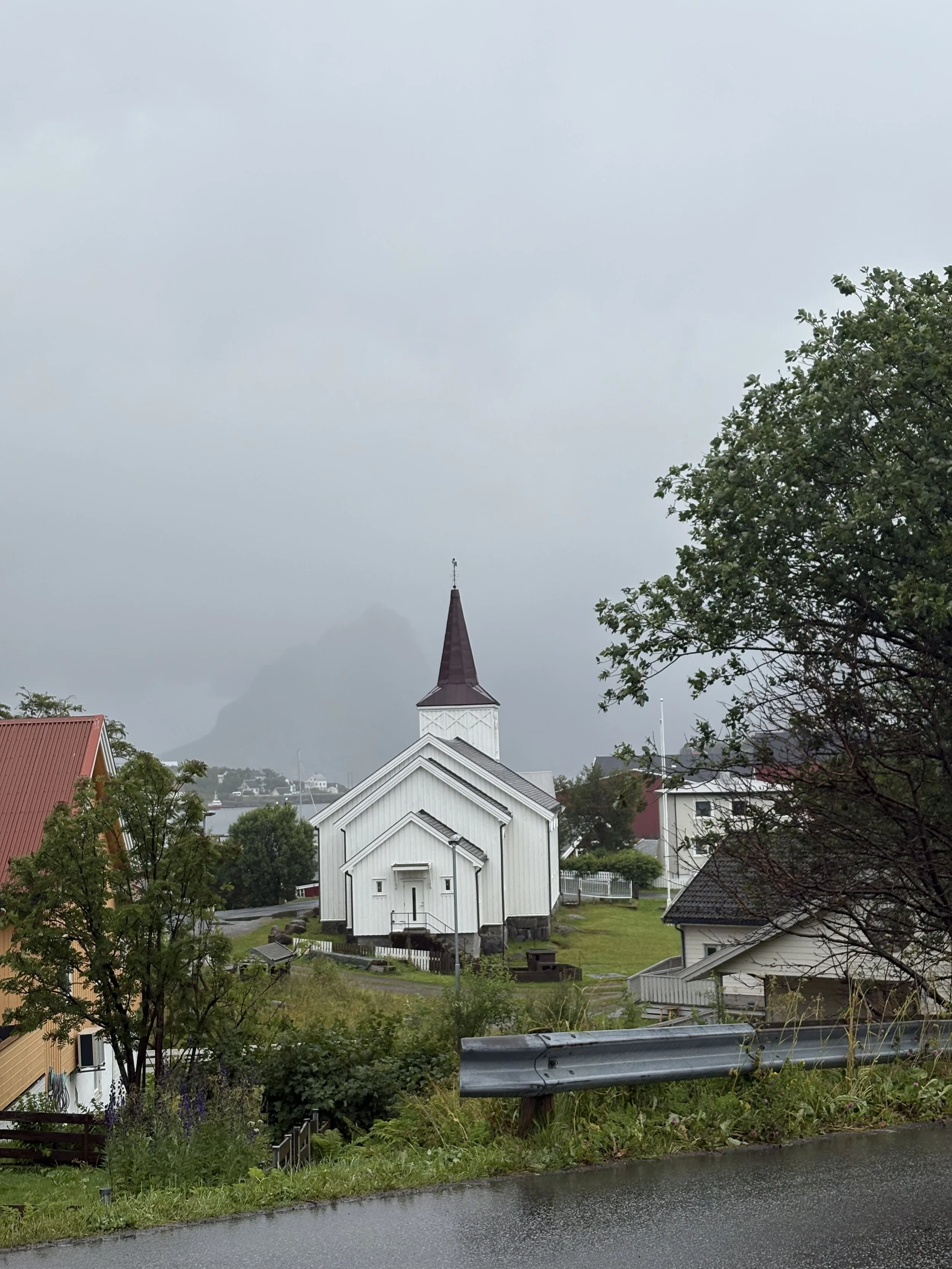
Boat Transport #4

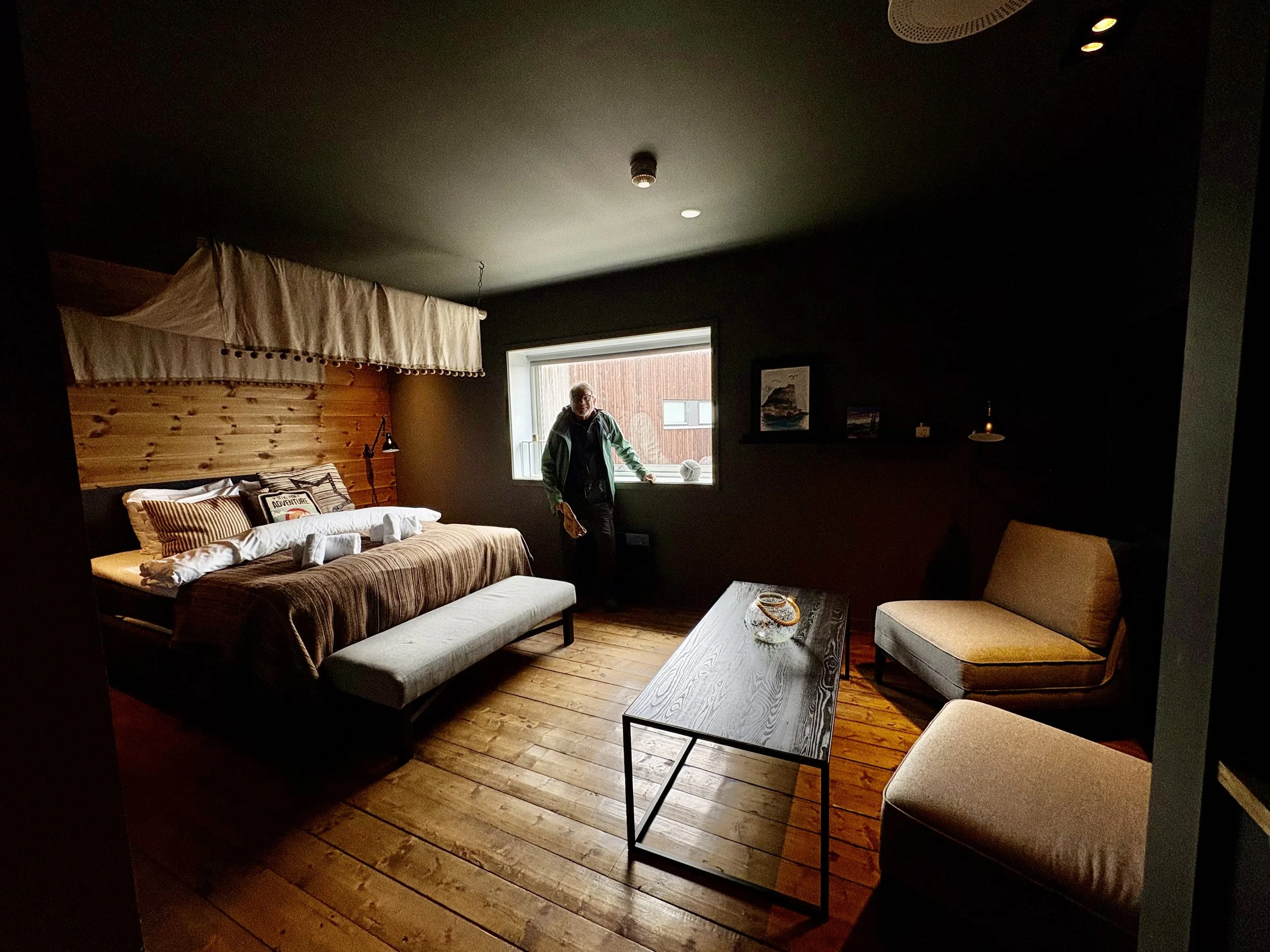
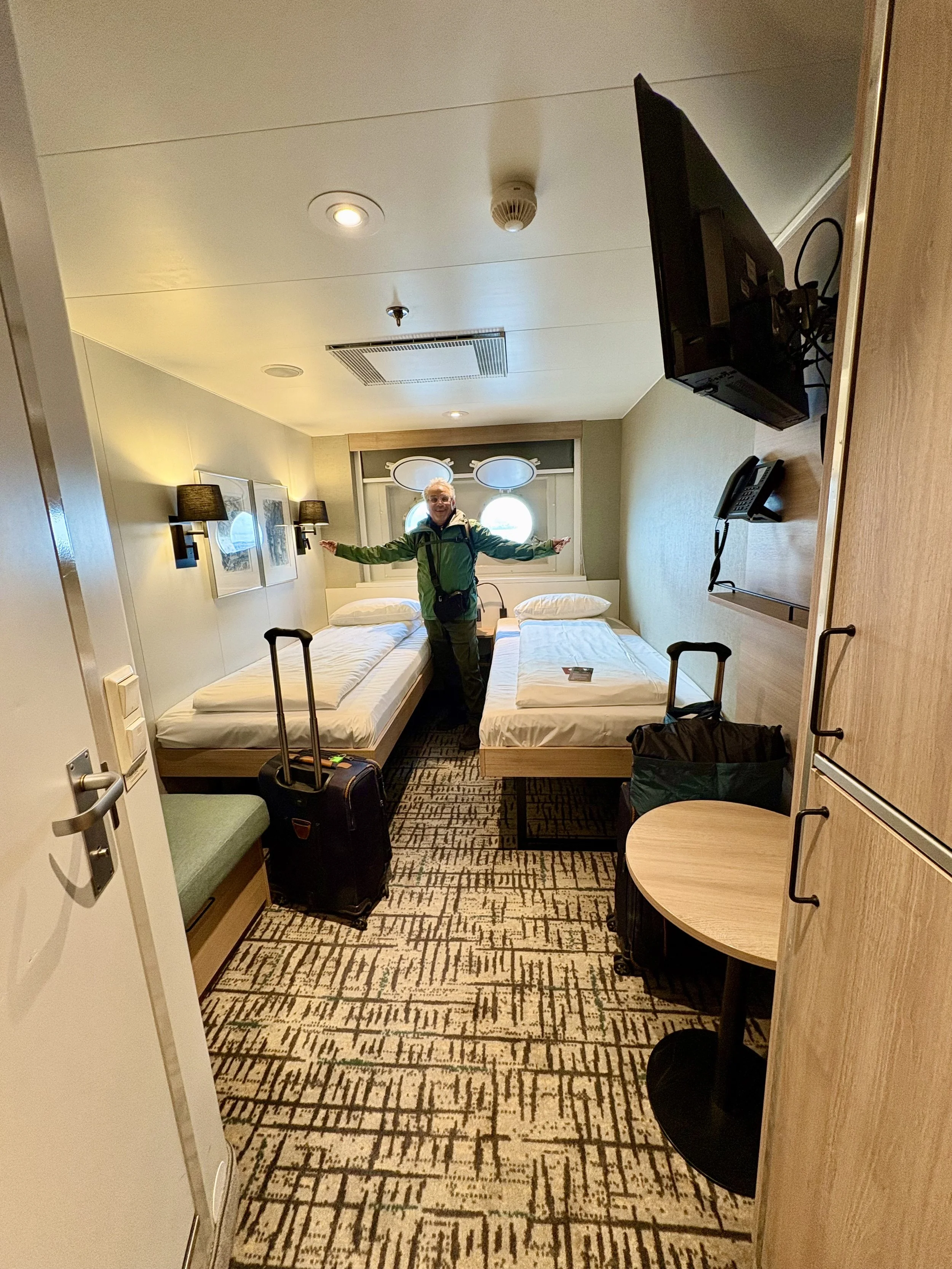
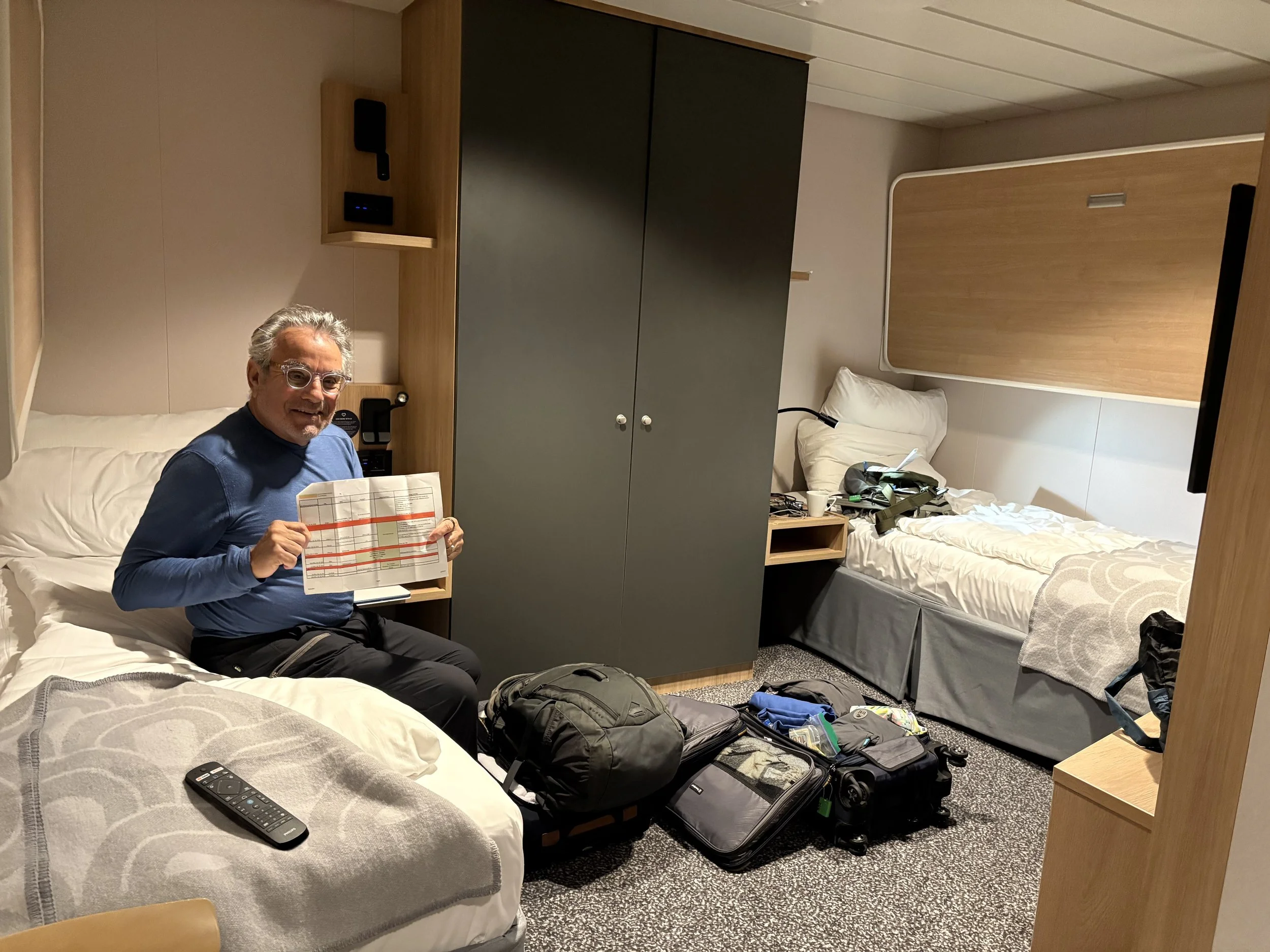
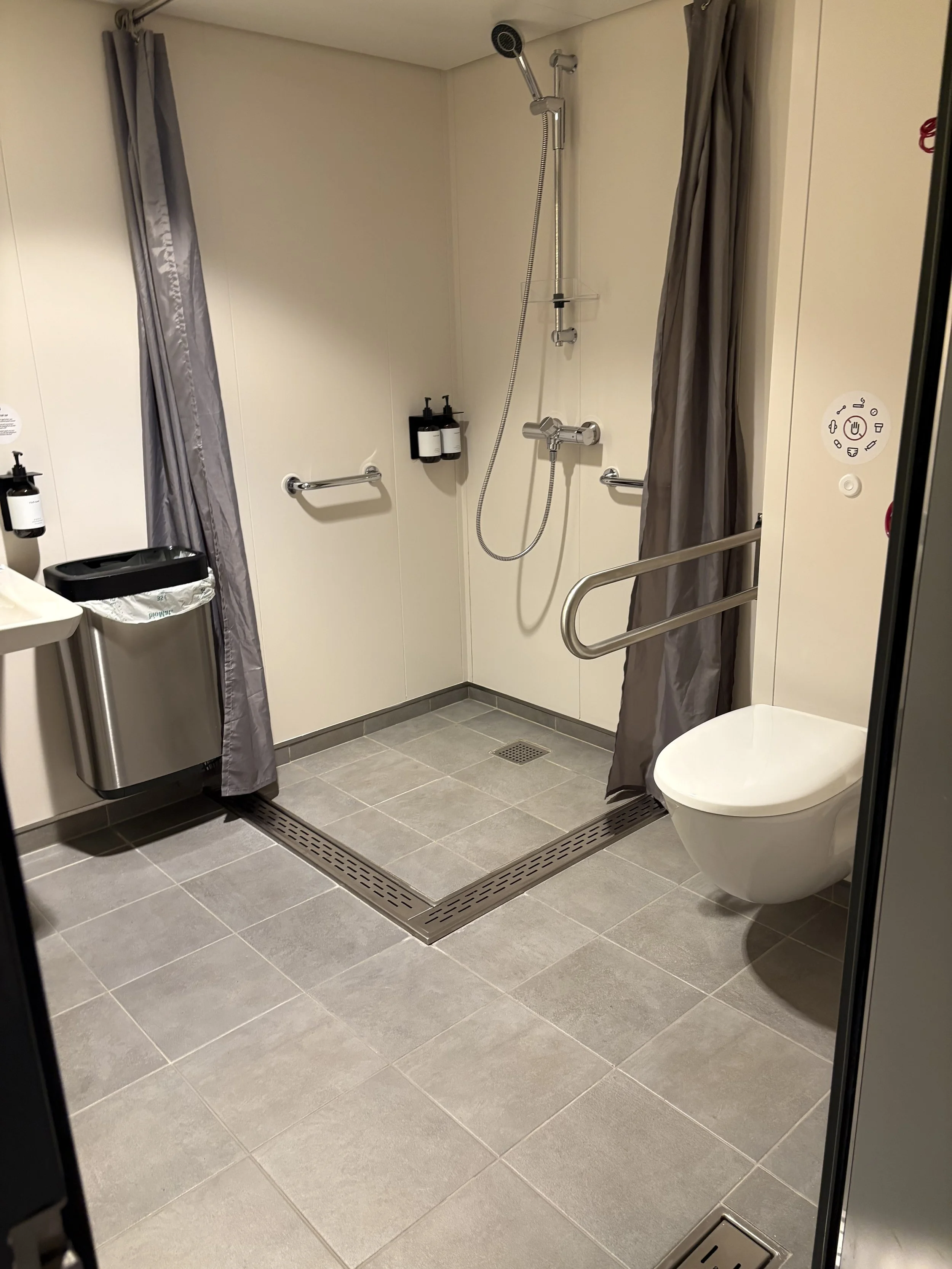
The “suite” room

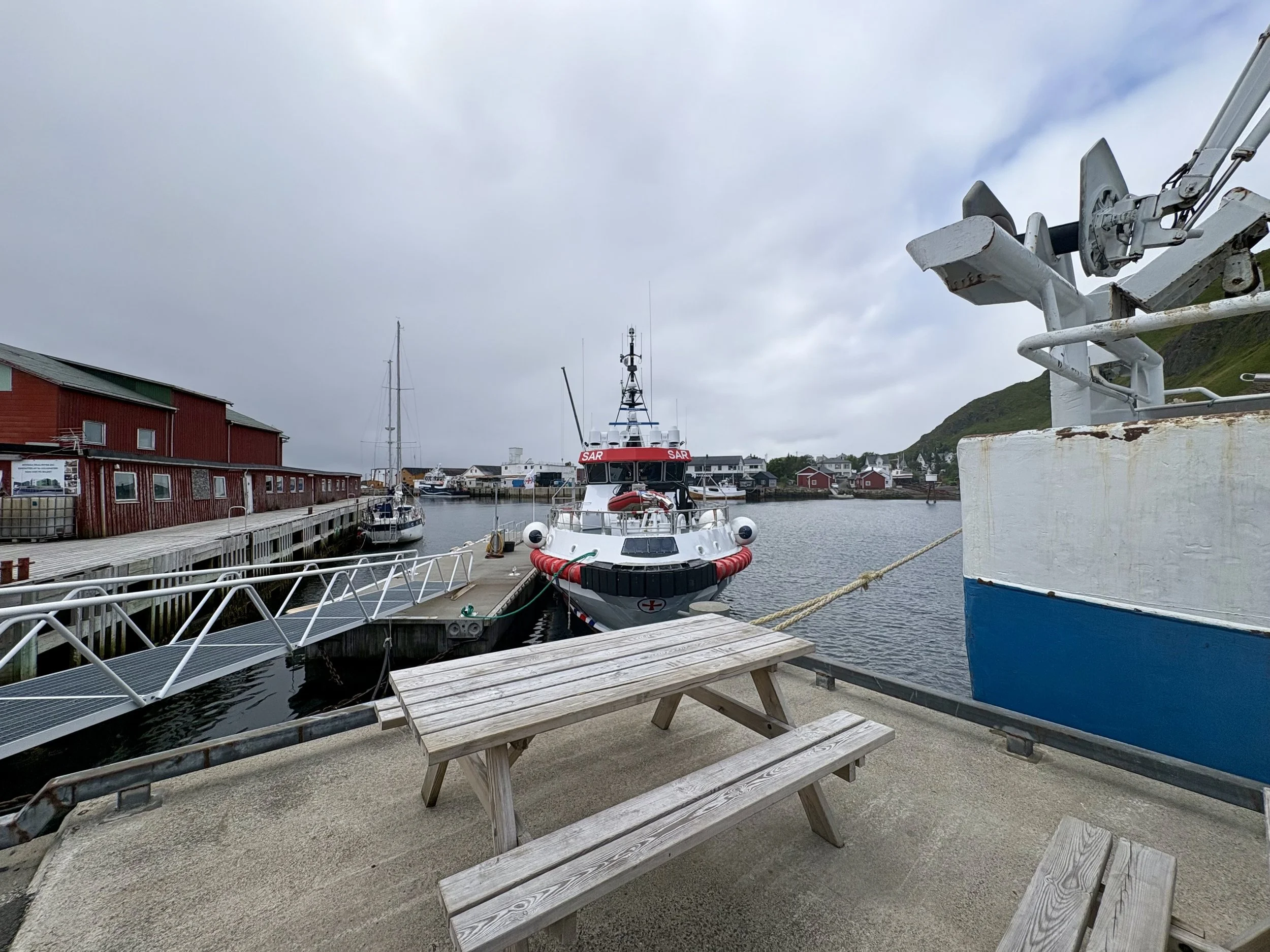
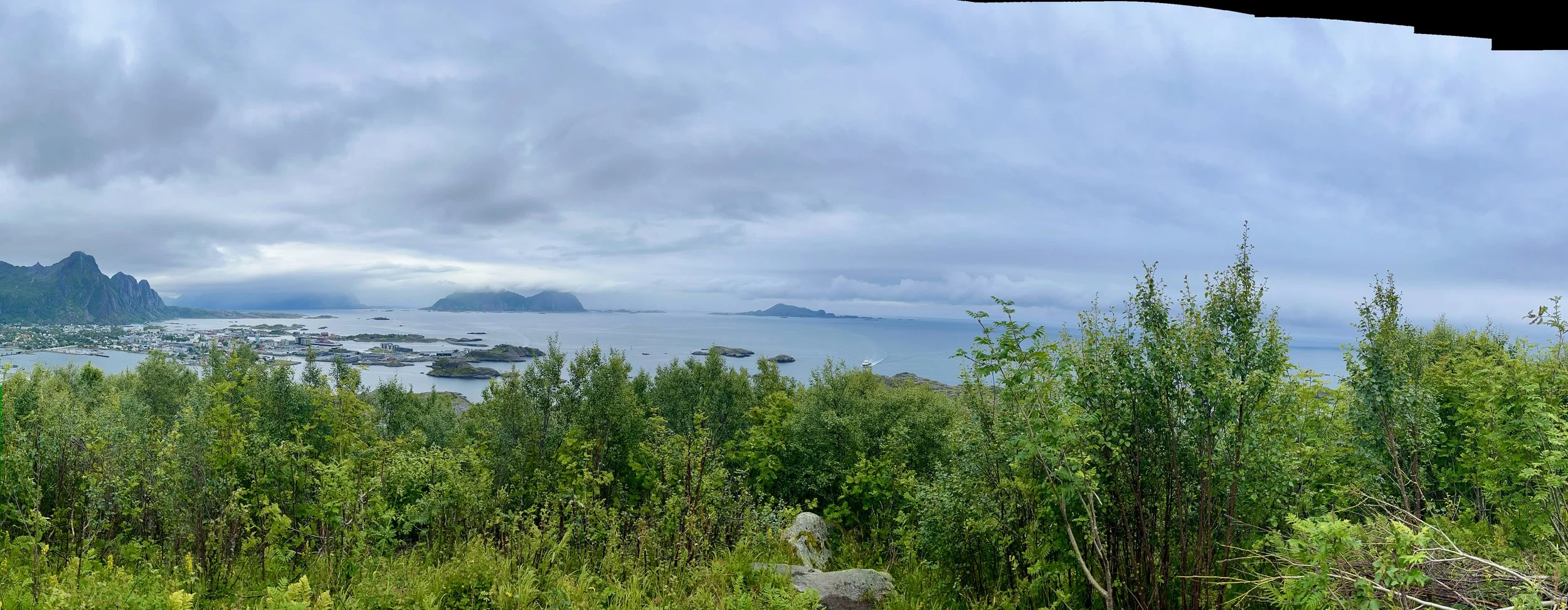
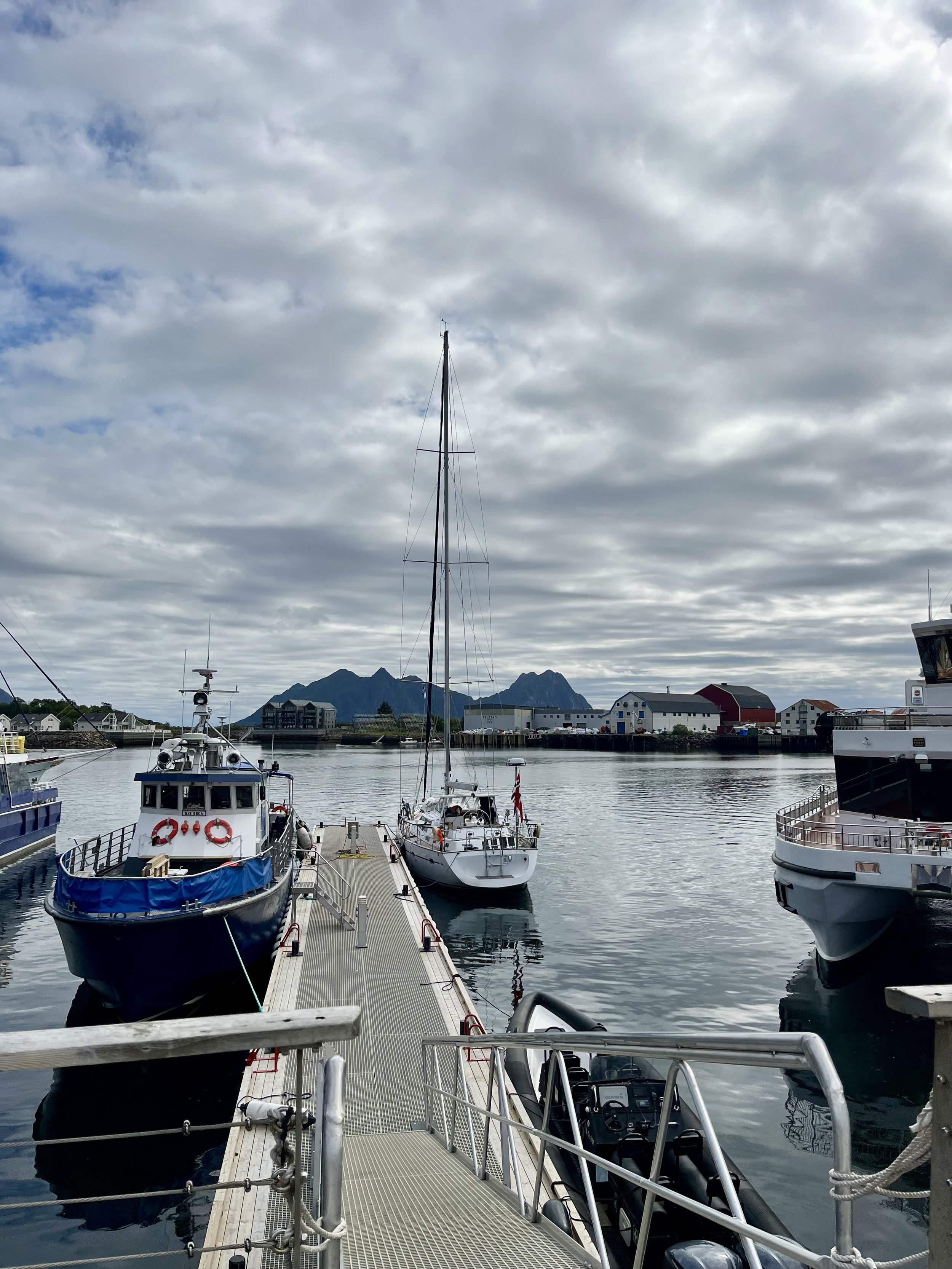
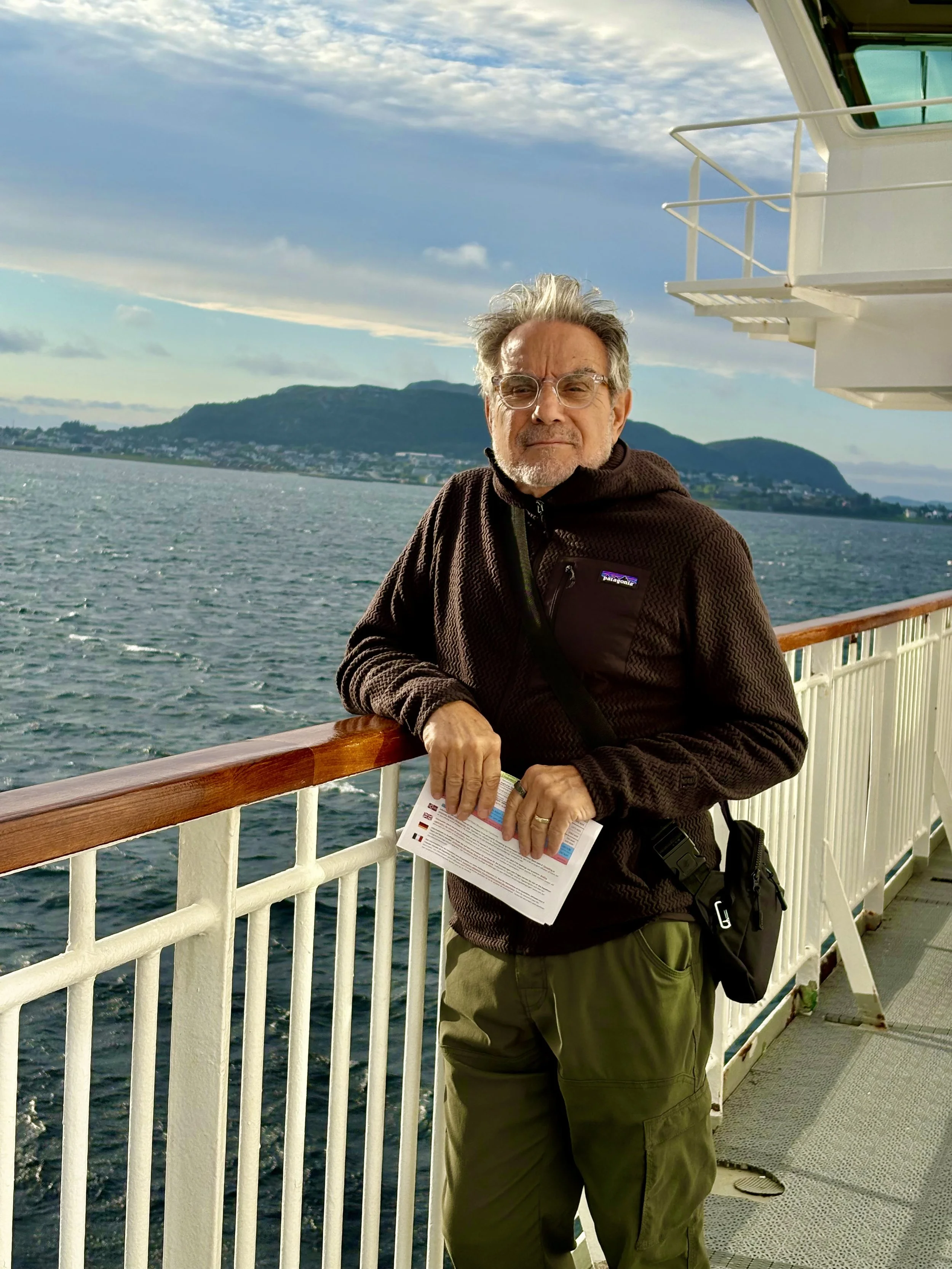
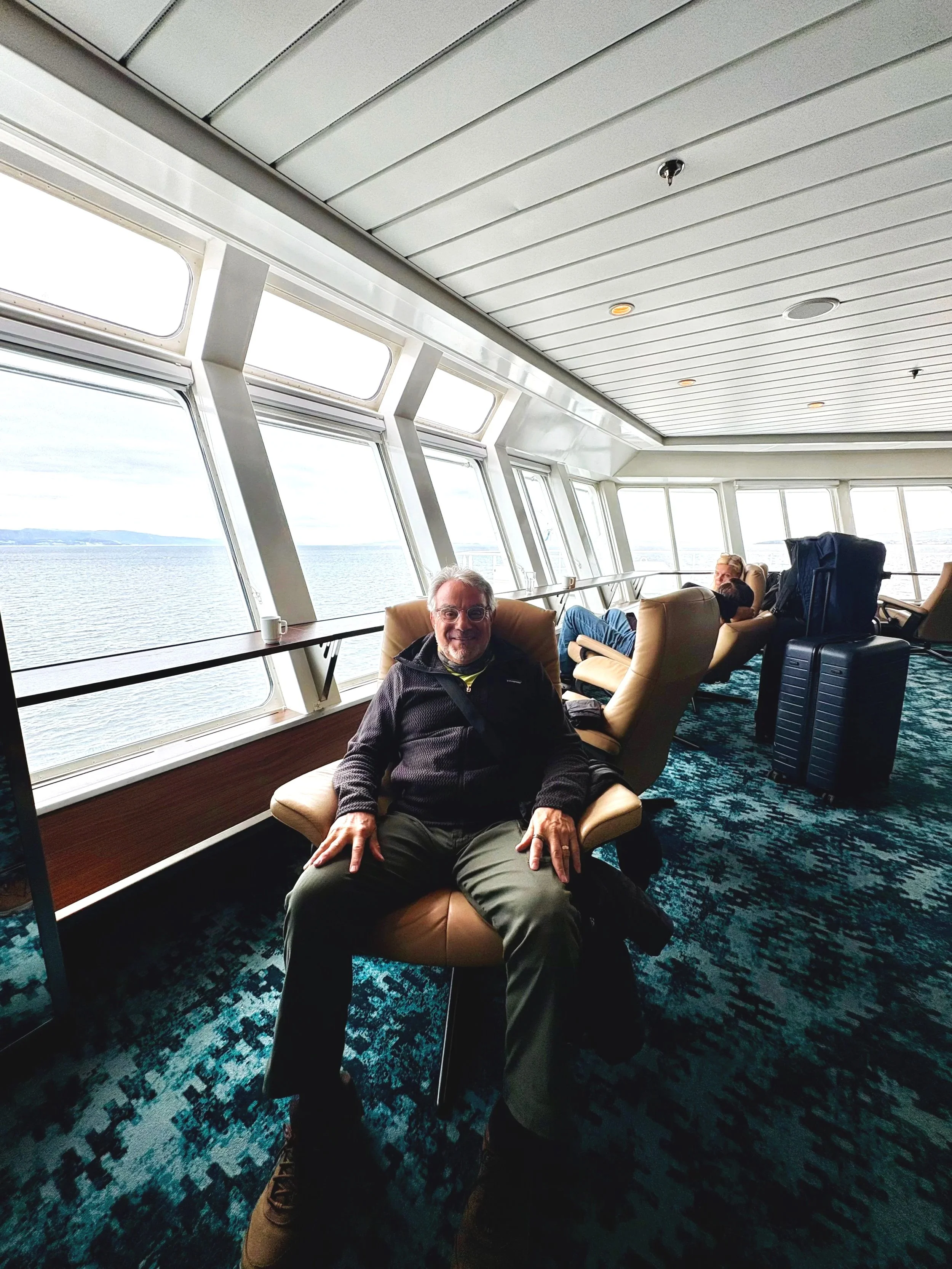
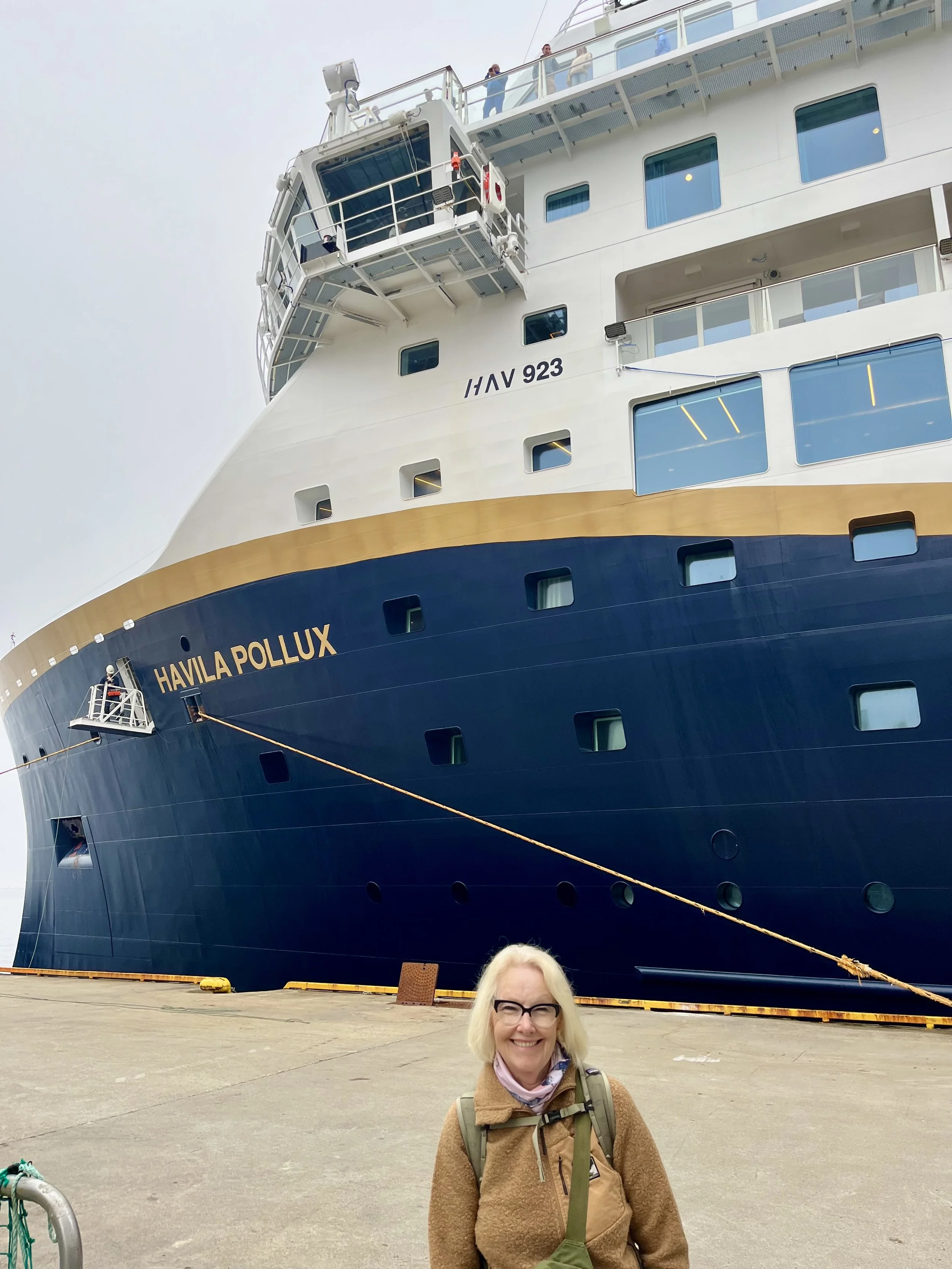
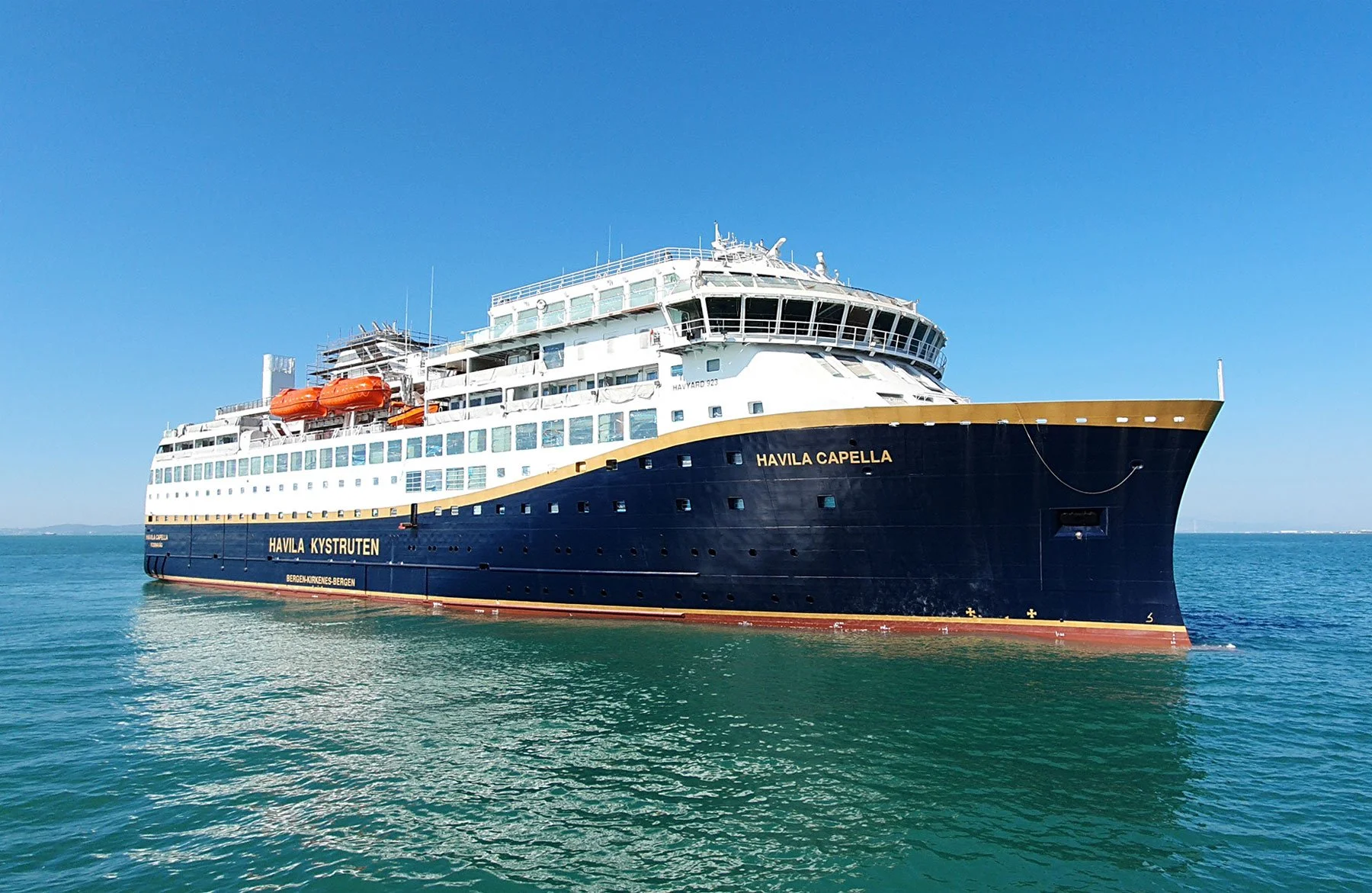
Our final boat trip in Norway is from Svolvaer to Tromsø.  Our departure is 10:10 pm and we are back on the Havila line.  Havila is the newer of the two Norwegian ferry lines, the boat we are on is the MS Havila Capella.  It looks like a newer ship; the differences shock our senses starting with great customer service at check in.  The agent informed us that our booking is for a small inside room with bunk beds.  When you book the port-to-port voyages, you do not have any options on rooms, hence the odd rooms we have had on the last three legs.  The agent offers us an upgrade to a suite, king size bed, robe and slippers, no need to check out until our departure at 2:00 pm the next day.

We are tired and have been wet and cold for 4 days, Frank and I look at each other and in a nano second both say yes together!! What is NOK 2,000 in the grand scheme anyways ($206).

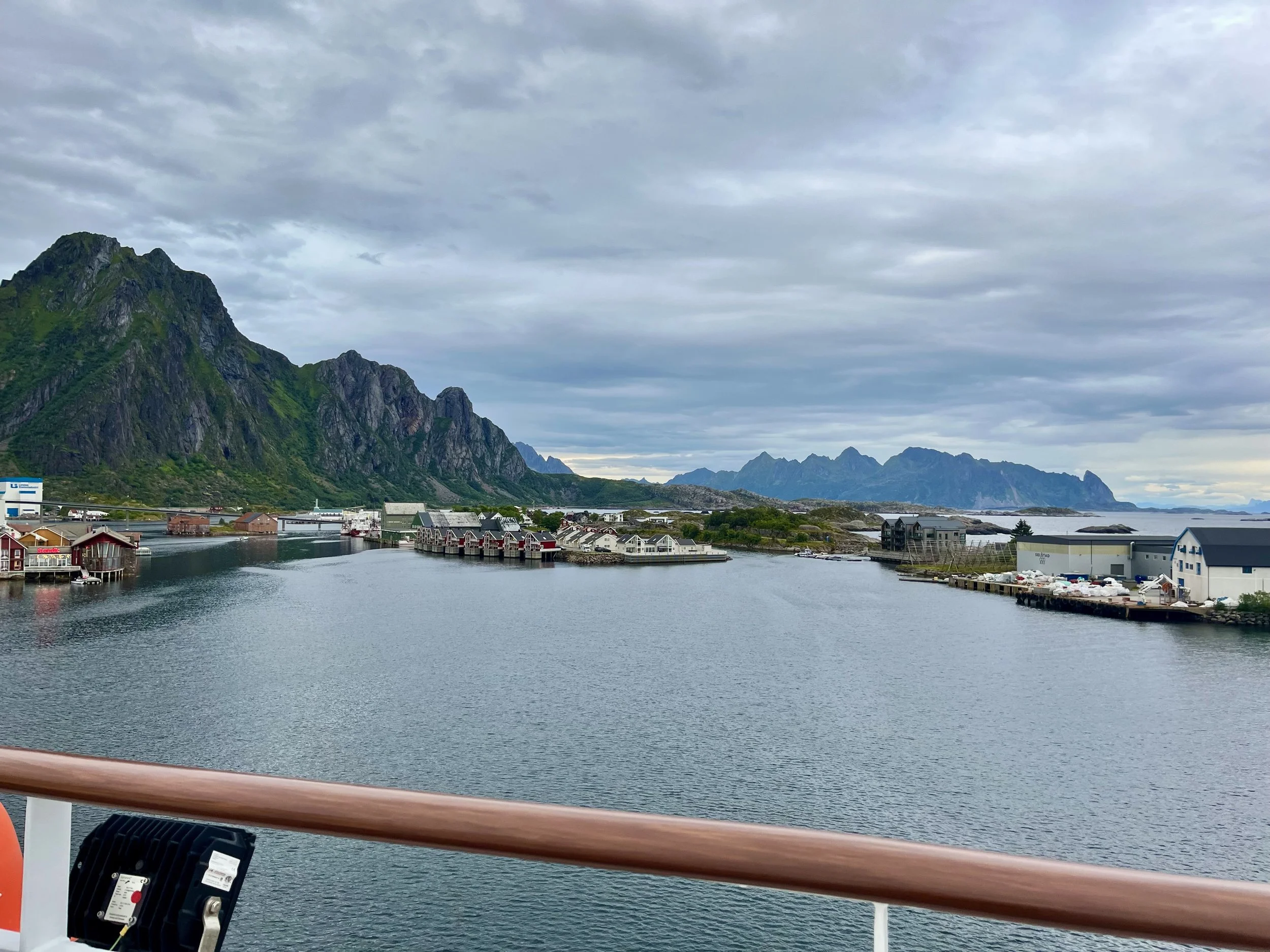
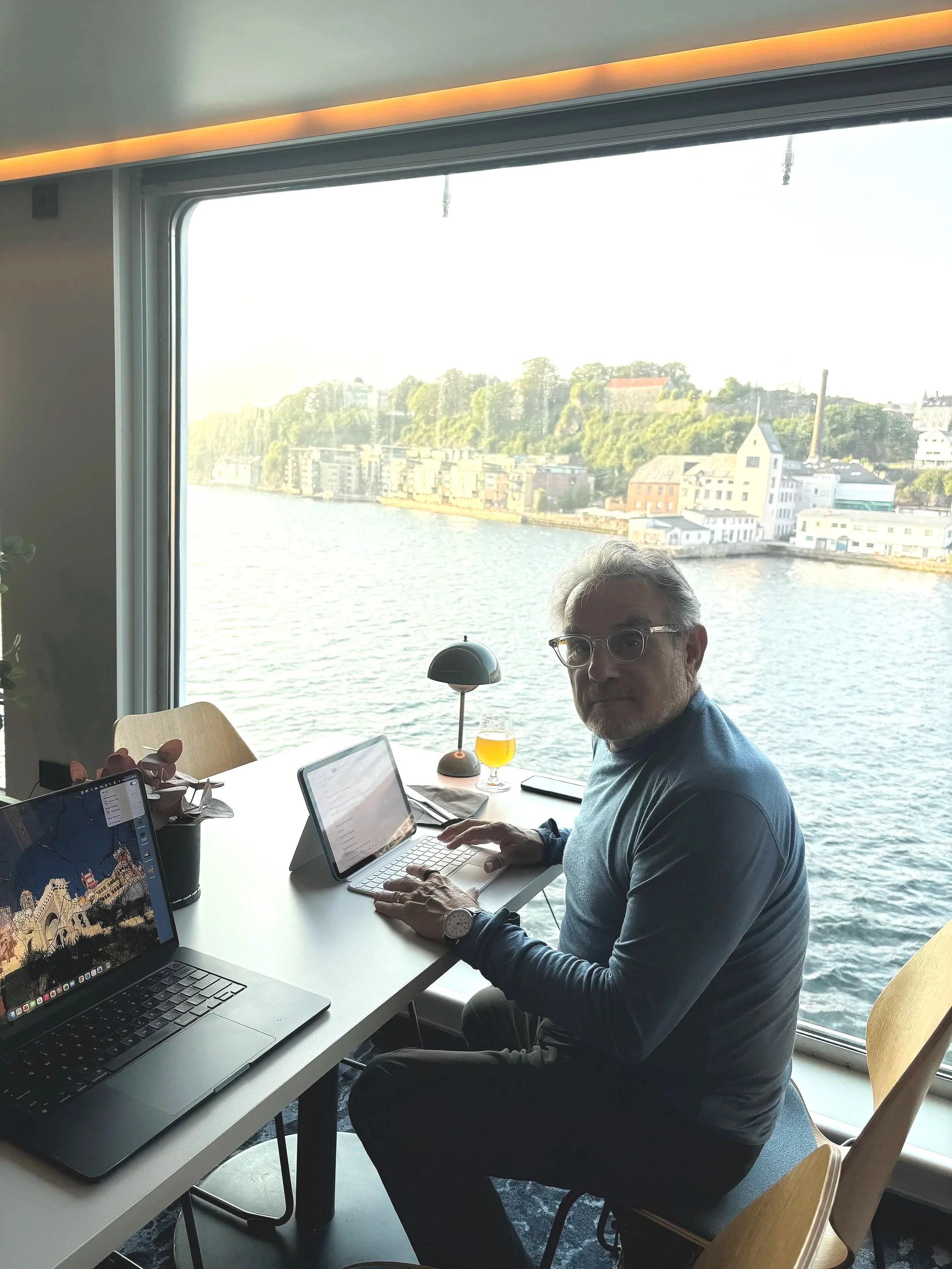
As nice as the room is the best part is the extra large window. The view is really nice and it has stopped raining. The route to Tromsø follows an inside passage, at times we are so close to land that we can see the details of the small settlements and individual farms. Even after 20 days in Norway we are still in awe of the beauty of this country, we stay up until 2:00 am watching the fjord go by.
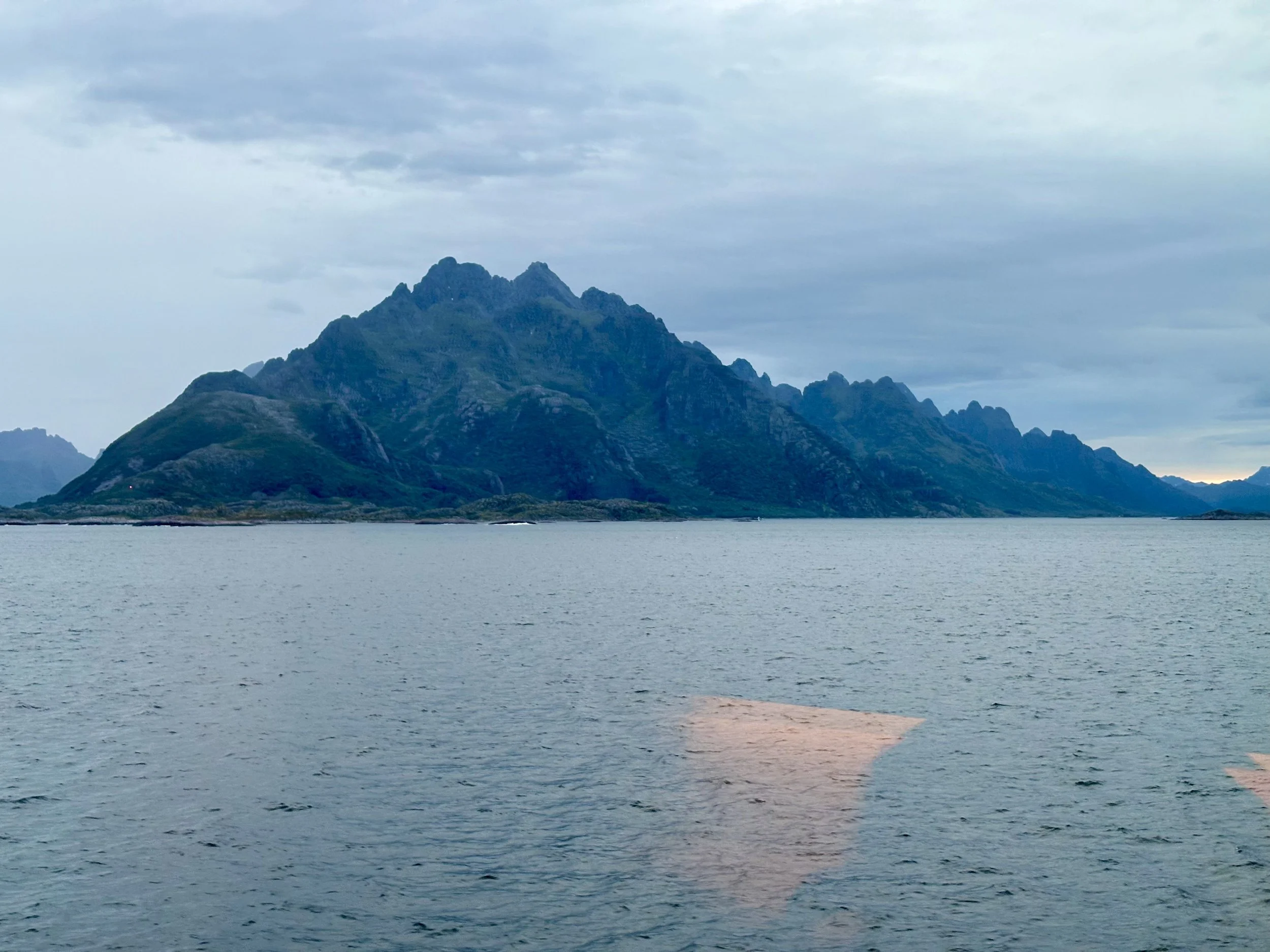
The view from the window

This is the map of the side passage we are taking

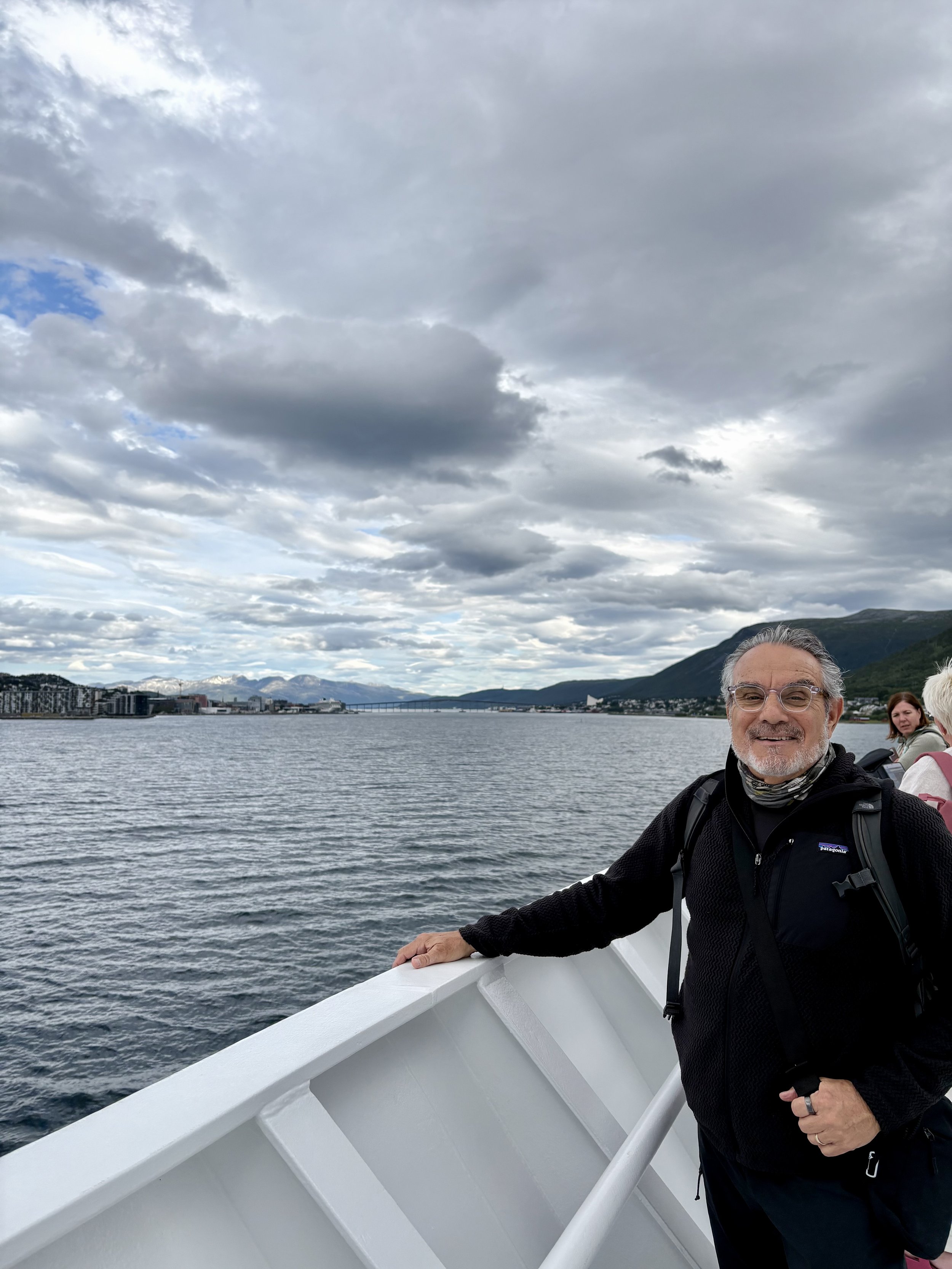
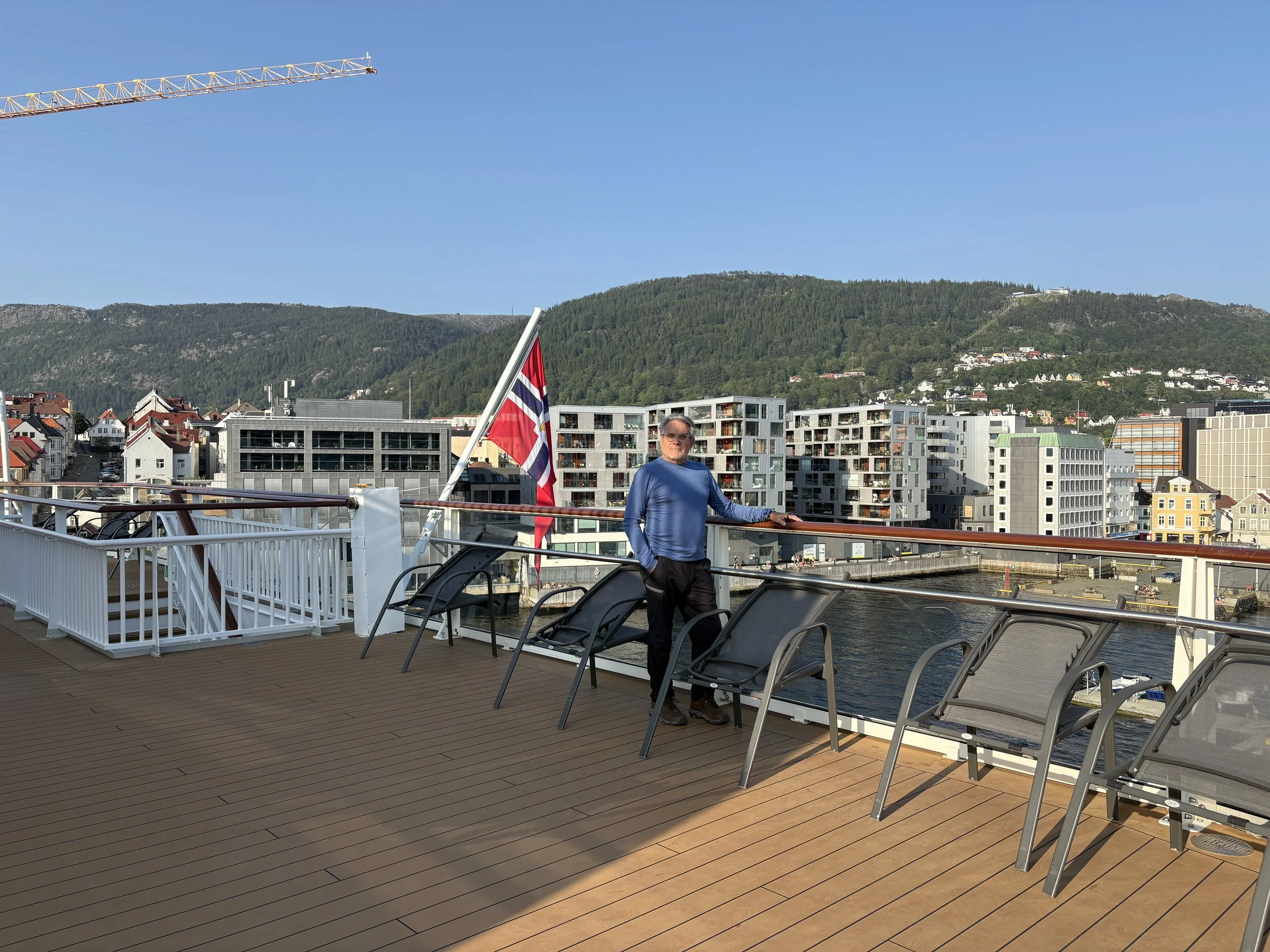
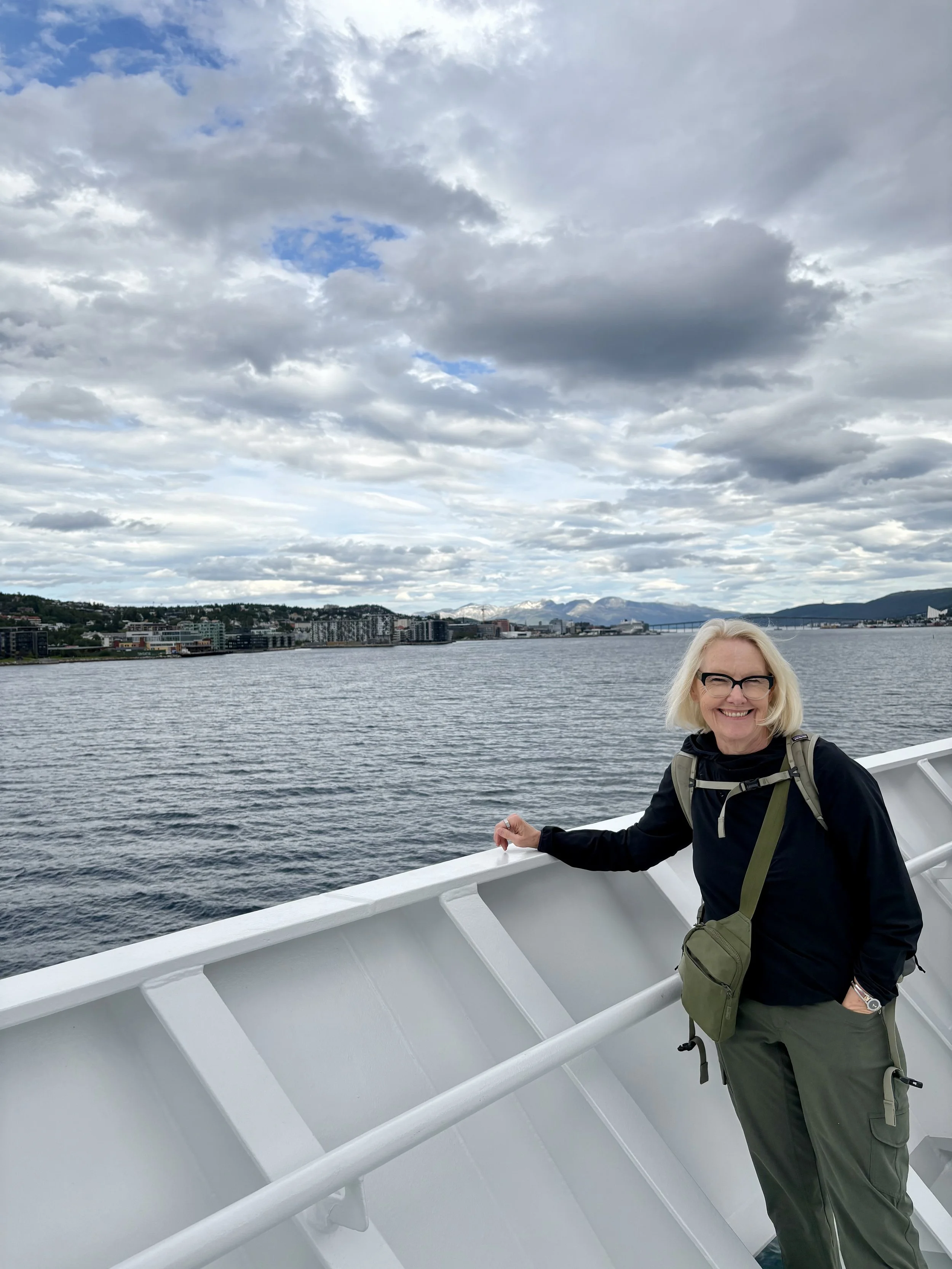
The next day we have a late start, the room includes coffee and a electric tea pot, this is a first on these voyages, there is also complementary coffee on several decks, what a change. Janet’s plan was to start the day in the very nice workout rooms, but they are jammed with people. It appears this ship also has a much younger crowd. On our last voyage we felt like the youngest passengers.  Janet opts for walk/run around the upper deck; it is warm and beautiful.  2:00 pm comes quickly and we go to the outside deck to watch the boat docking. 
This was a nice voyage, was it worth the price?  We have one more boat trip, from Stockholm to Helsinki, we will withhold our thoughts on this means of transport until the end.  For now, bon voyage Norway boat travel. 

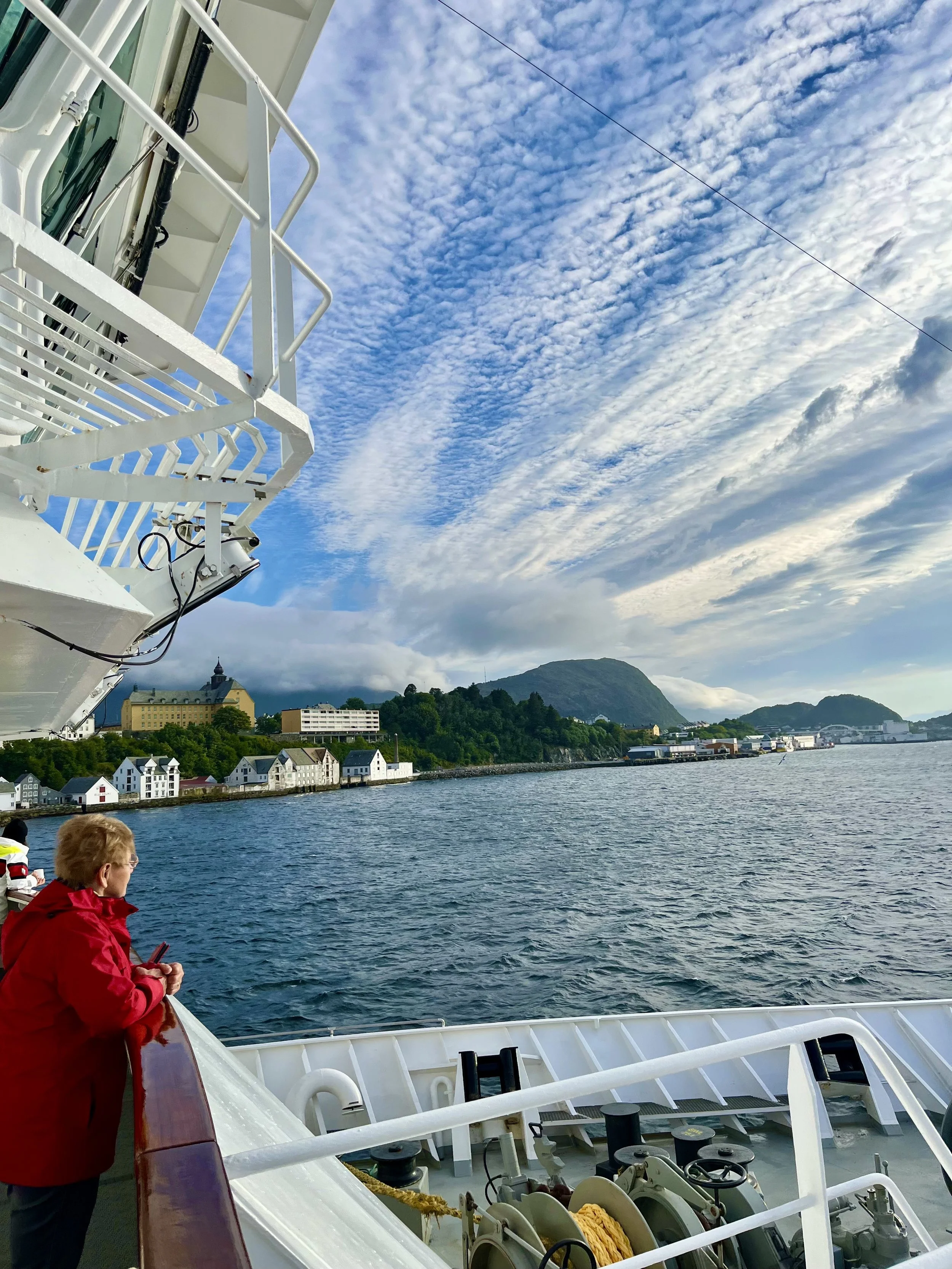
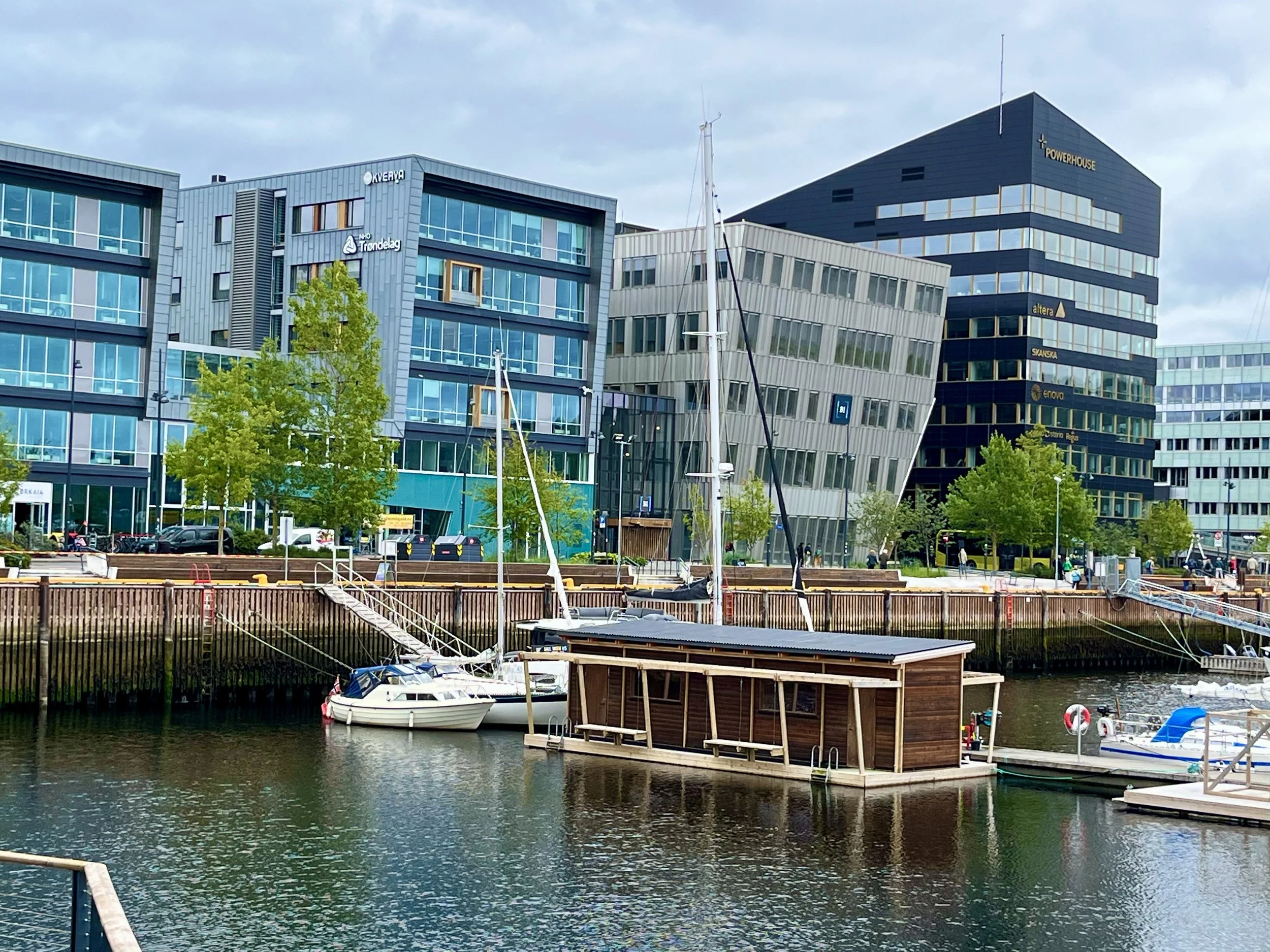
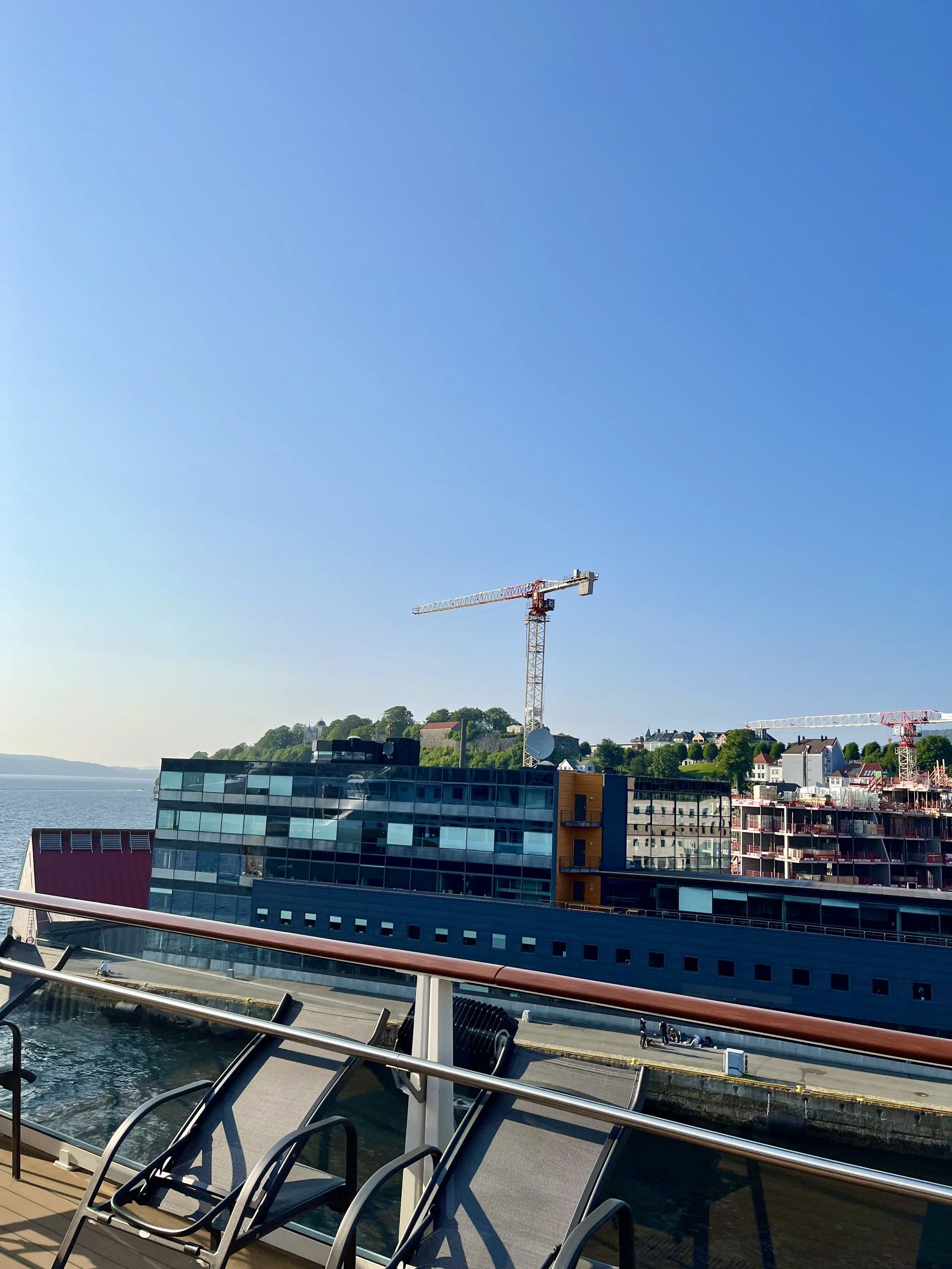
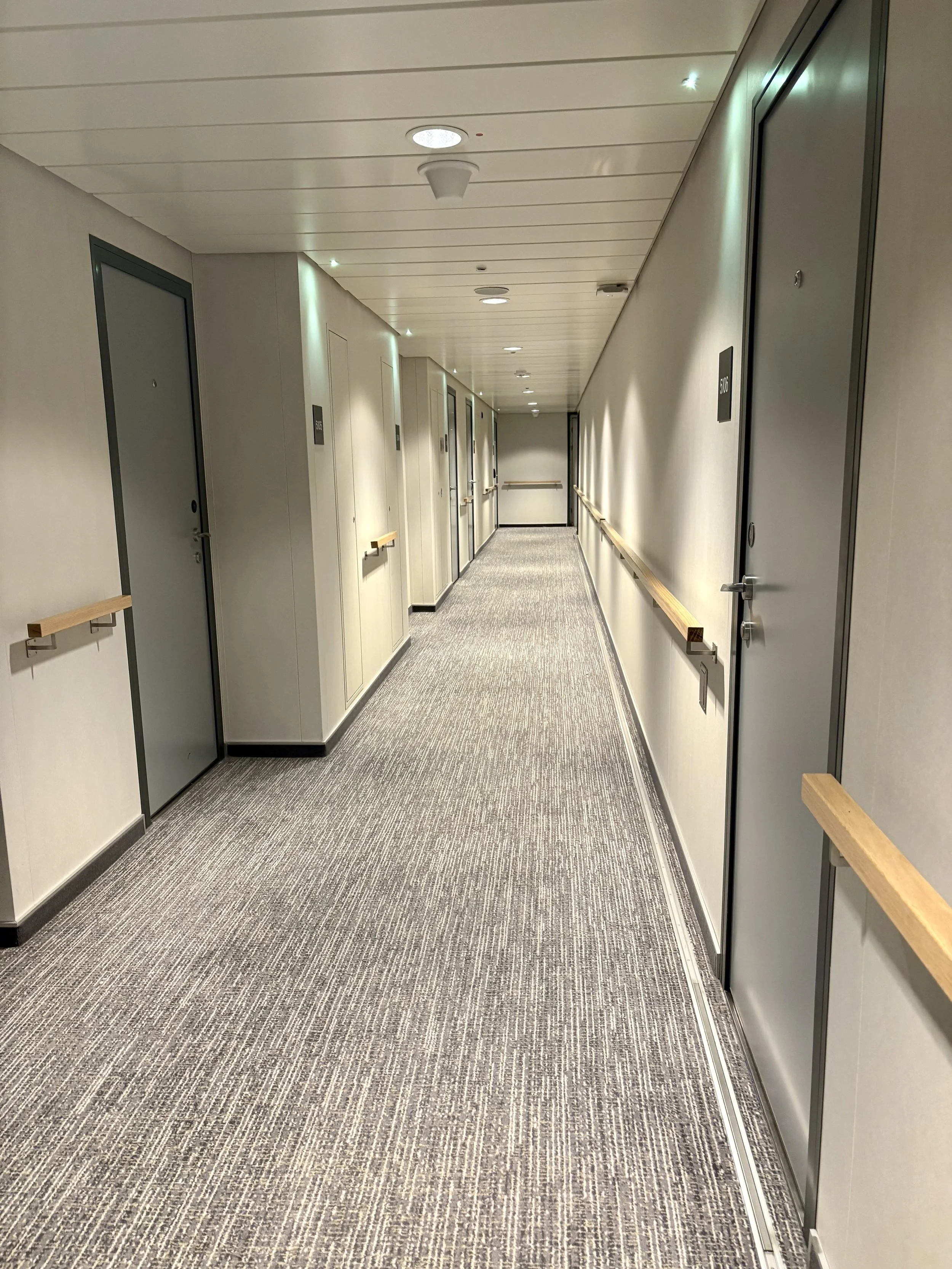
The view as we approach the harbor is below
Lofoten Archipelago Norway #3

Crazy formation, had to pull off for this photo

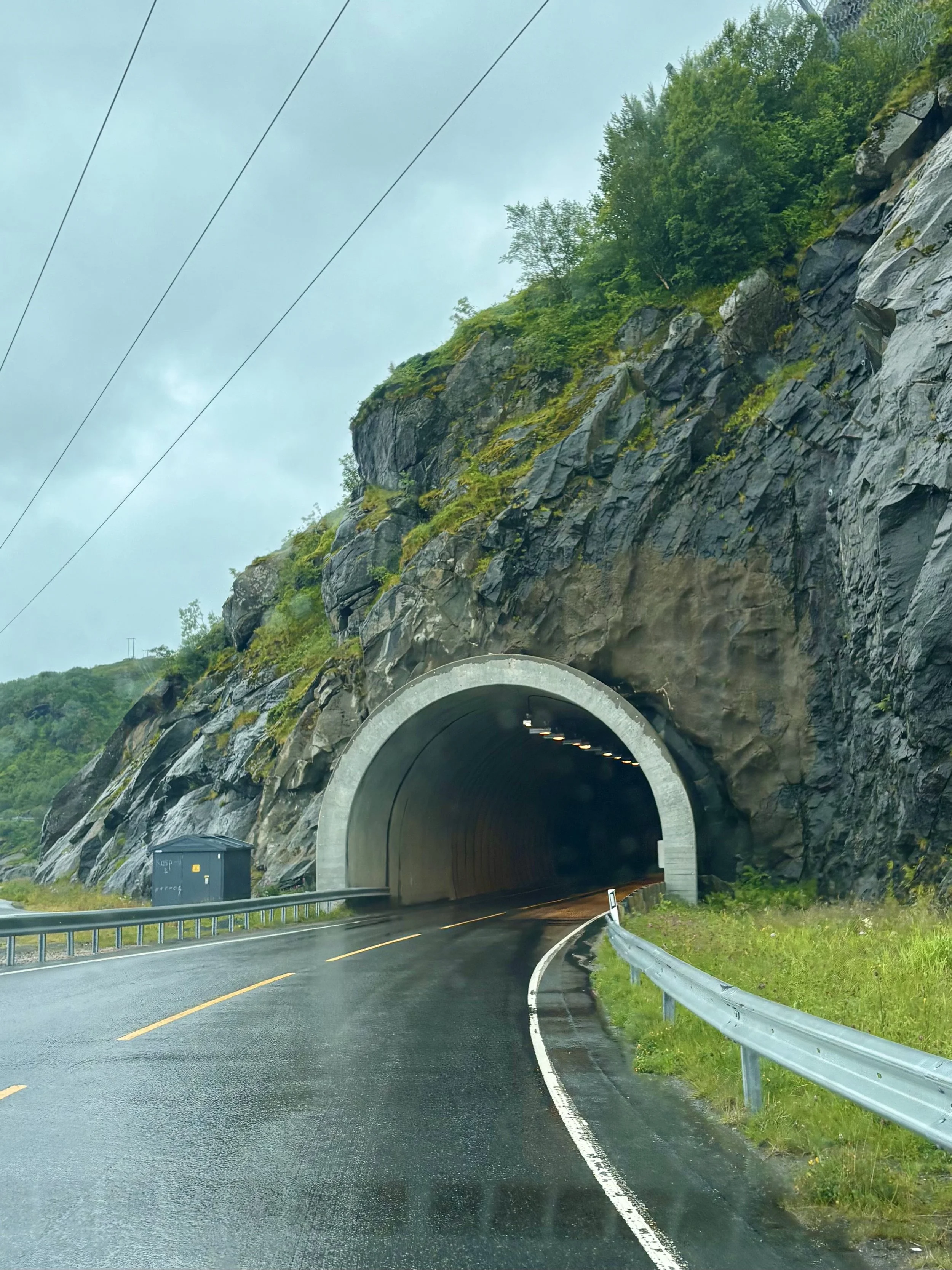
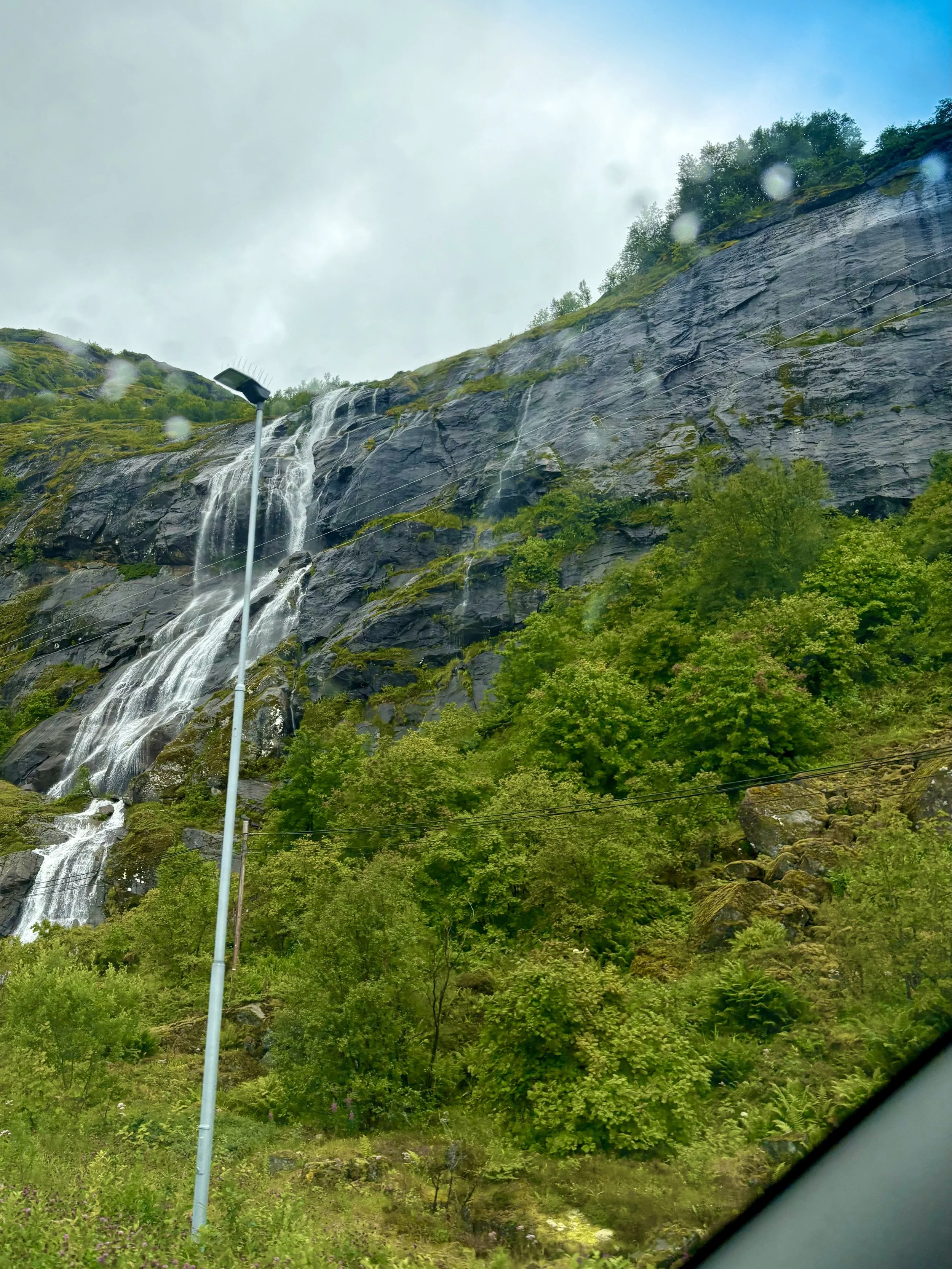
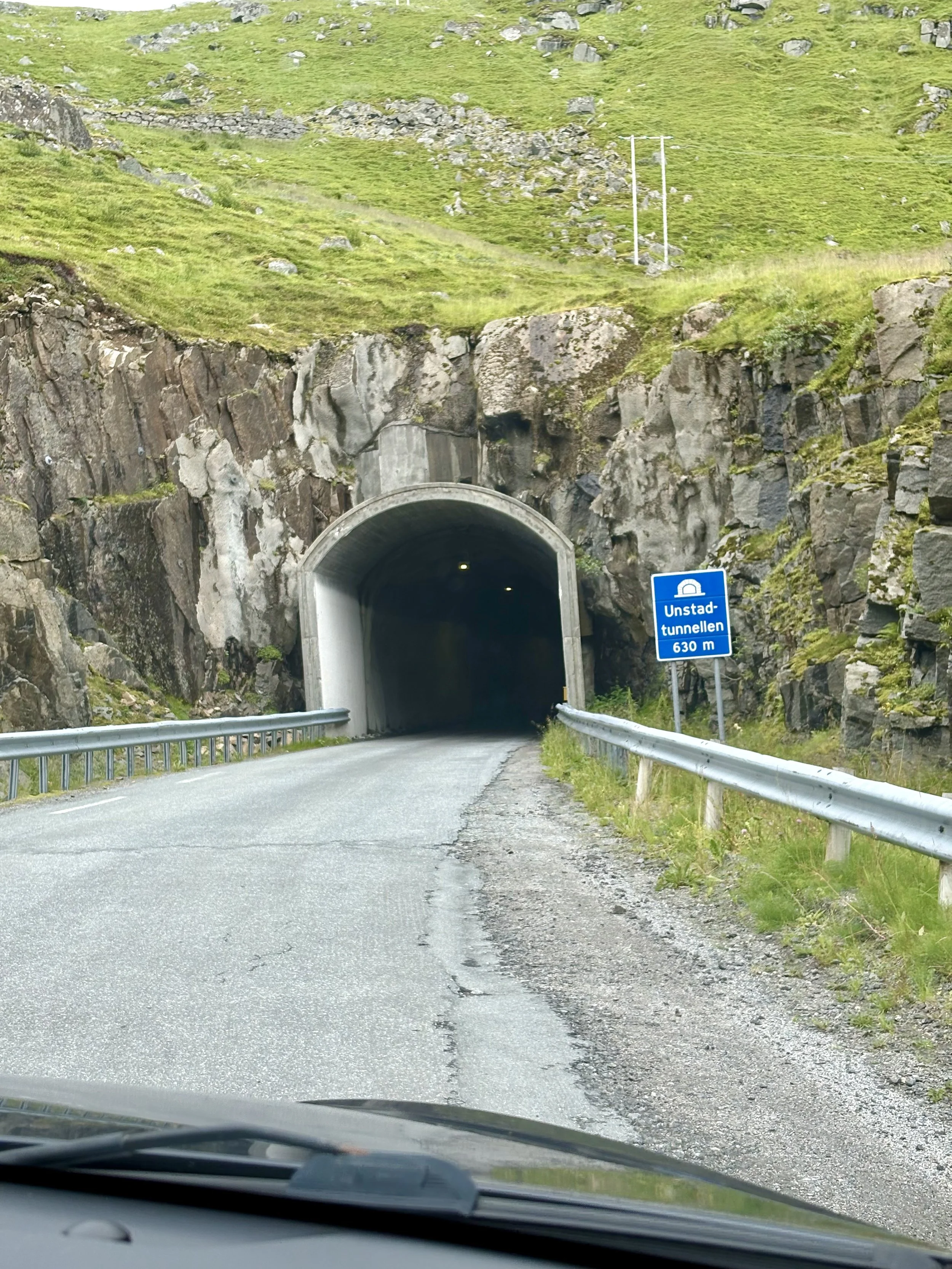
Our day will be all the prime tourist villages on the east coast. We start with Nusfjord.  To get to Nusfjord we once again have twisty and curvy driving around lakes, down valleys and through many tunnels. Traffic is heavy at times and we pull off for great photos and twice to allow the crazy 80 km+ commercial drivers to pass

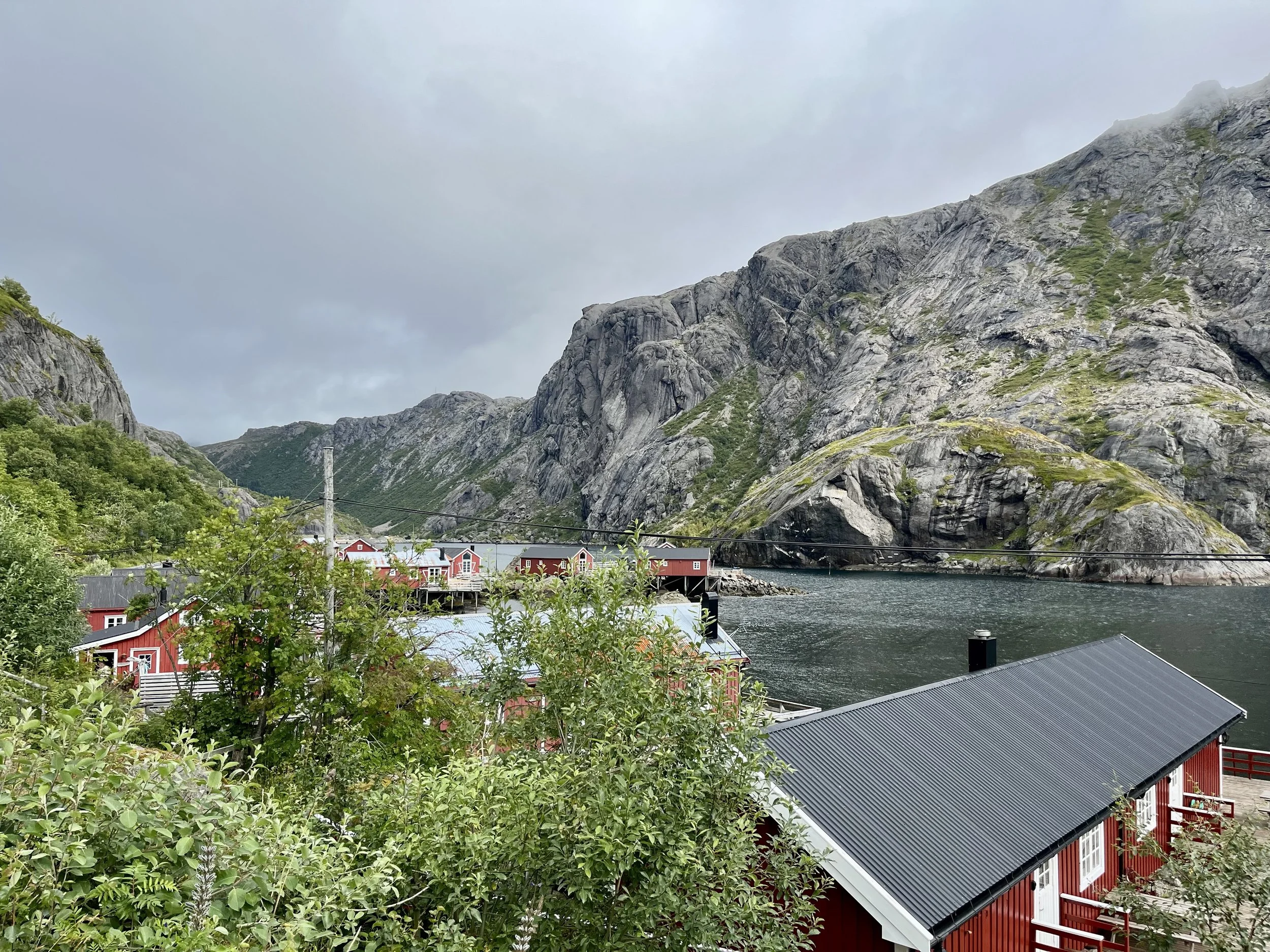
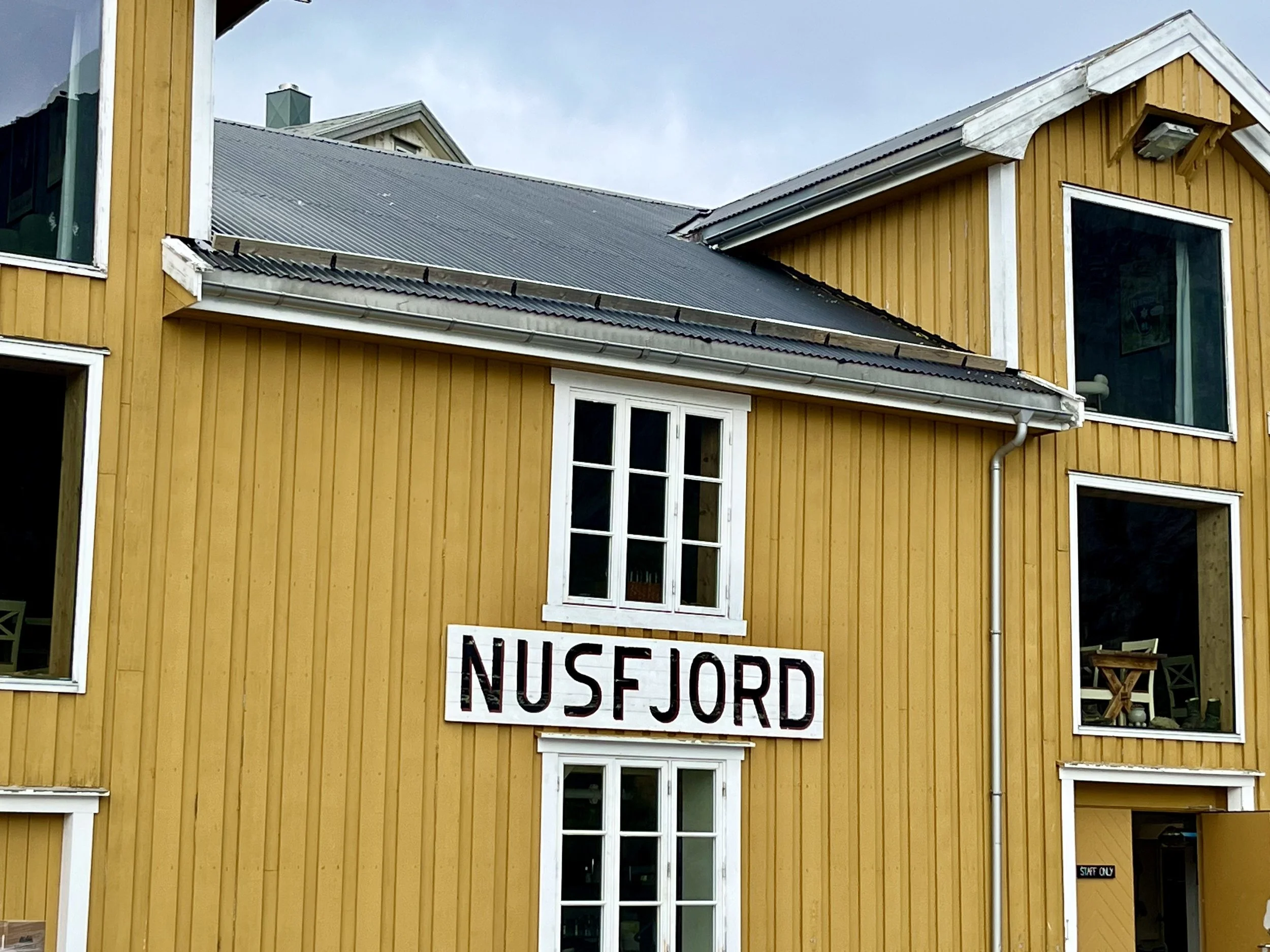
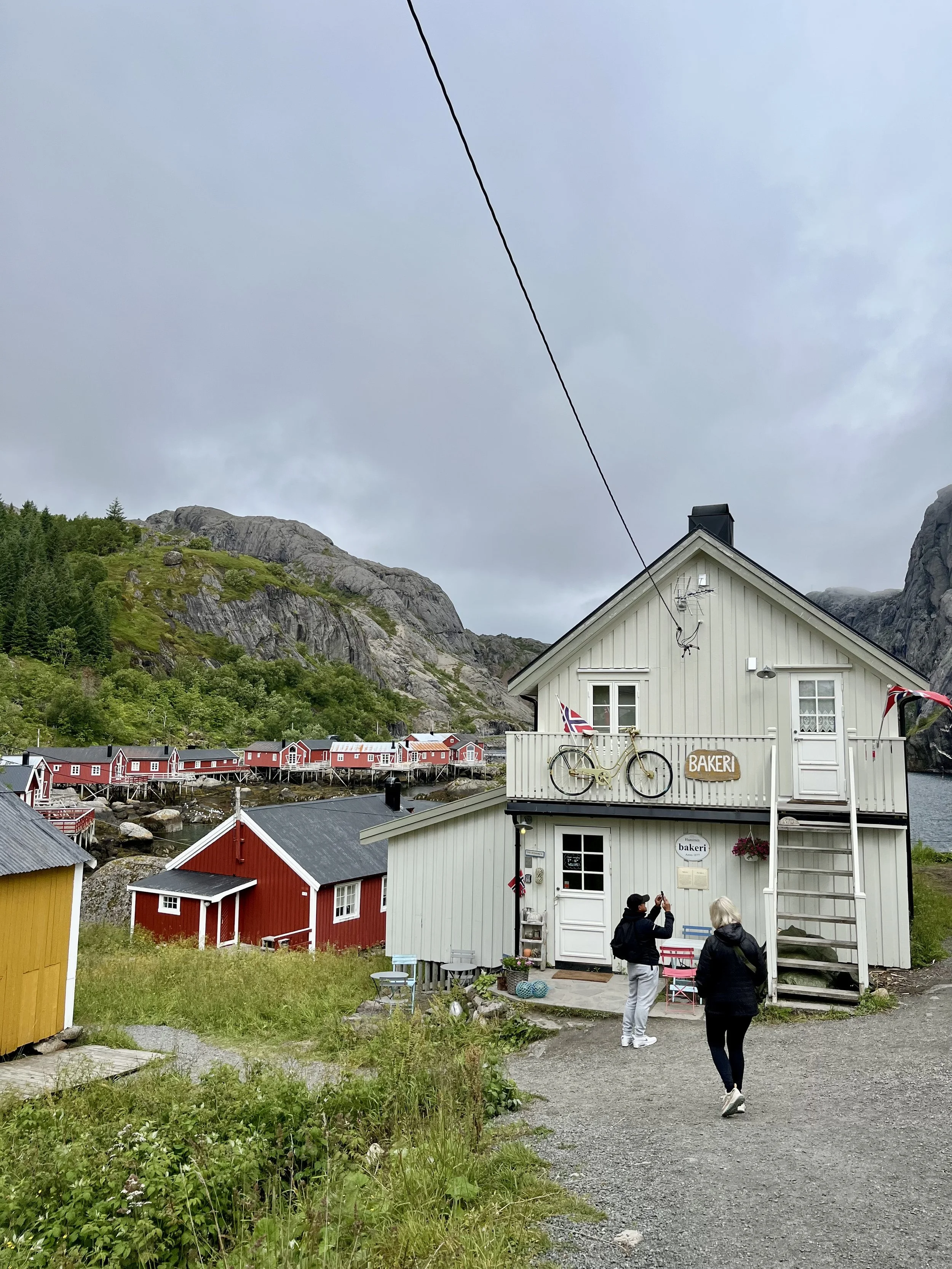
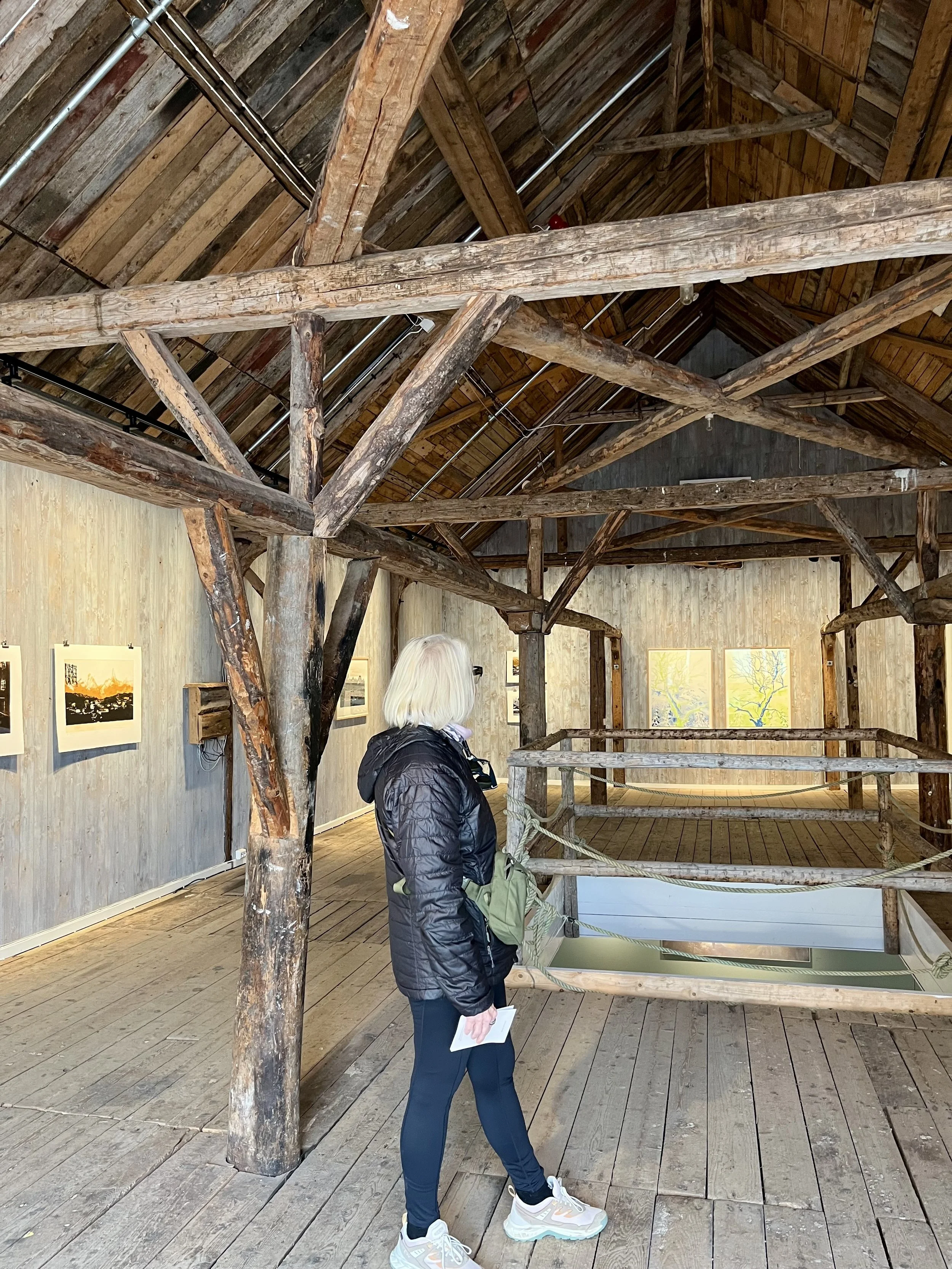
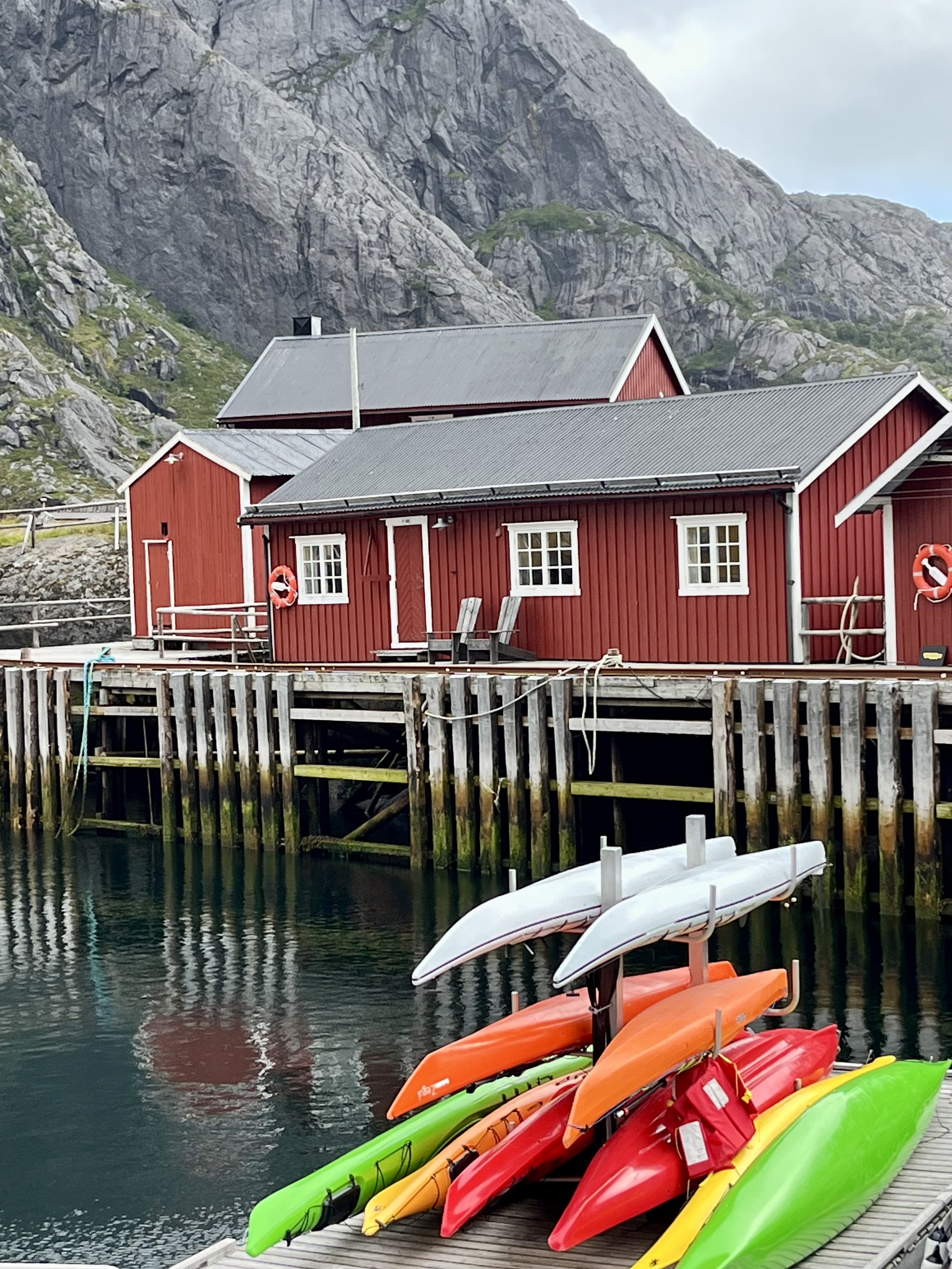
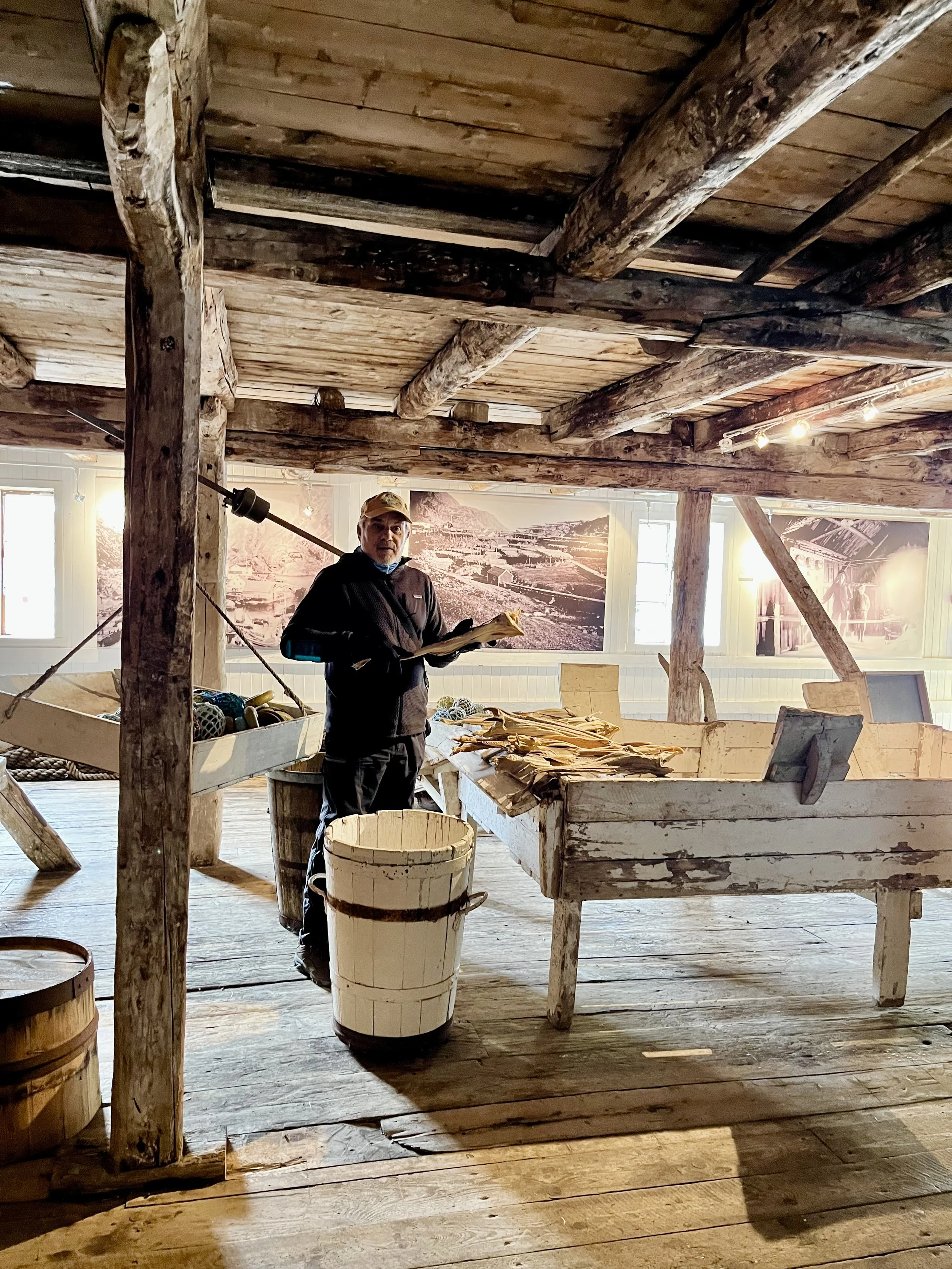
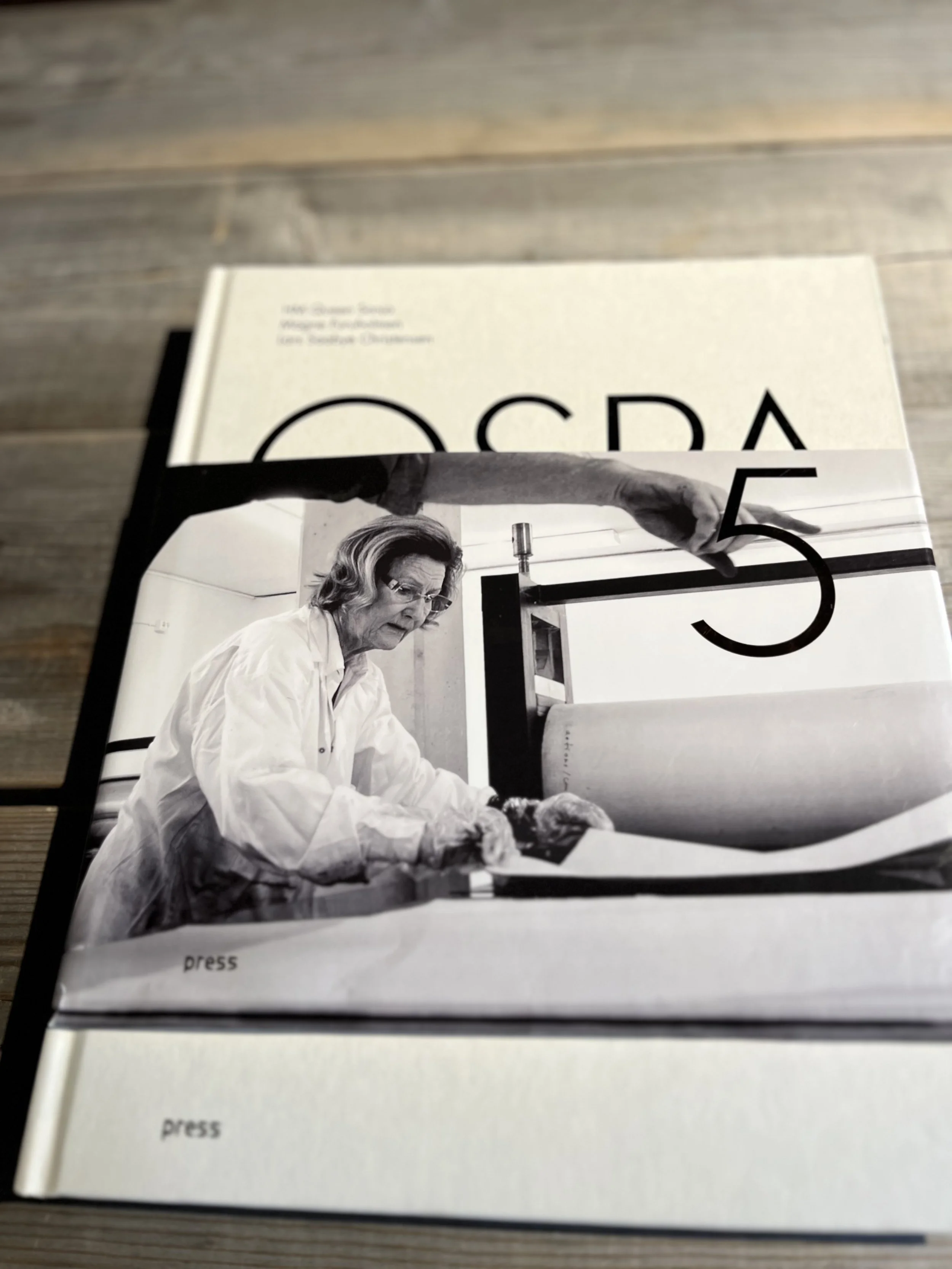
This village of Nusfjord is small, situated on a water inlet and hugged by the surrounding mountains on 3 sides. It is beautiful. We must pay a small fee to enter as it bills itself as an open-air museum of a small fishing village. The center of town has shops in the original buildings erected in 1800s. Several wood clad warehouses have been kept in original form displaying equipment, boats, and artifacts of the fishing industry. Other buildings and warehouses are modestly updated to use as art and photography galleries. Interestingly, the Queen Sonja of Norway had collaborated with local artists to encourage their creativity, and her own, to make art and publish works about the process. These books are available and open to visitors. Also, works of important Japanese photography are displayed. These presentations lend a special air to the town.

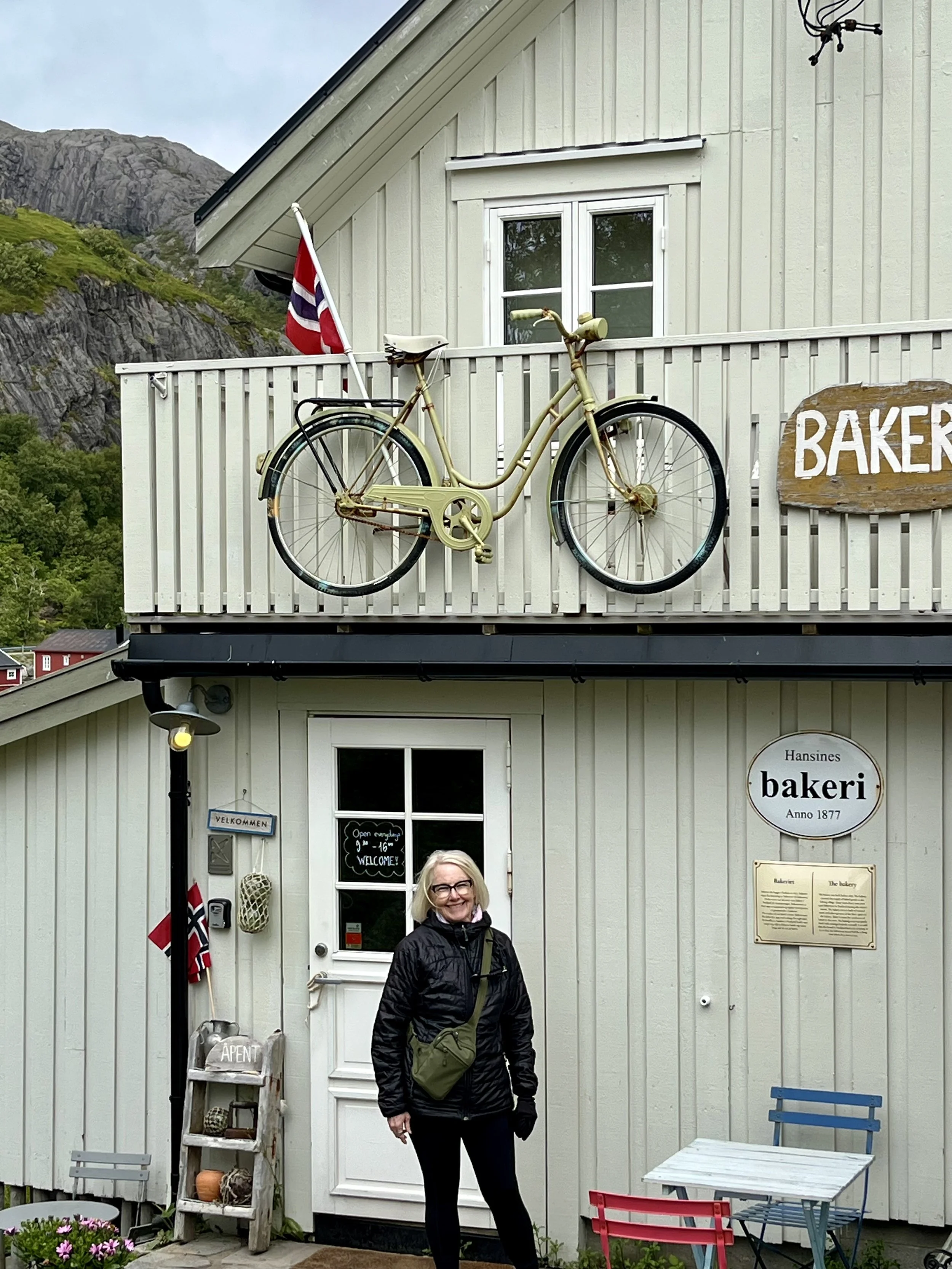
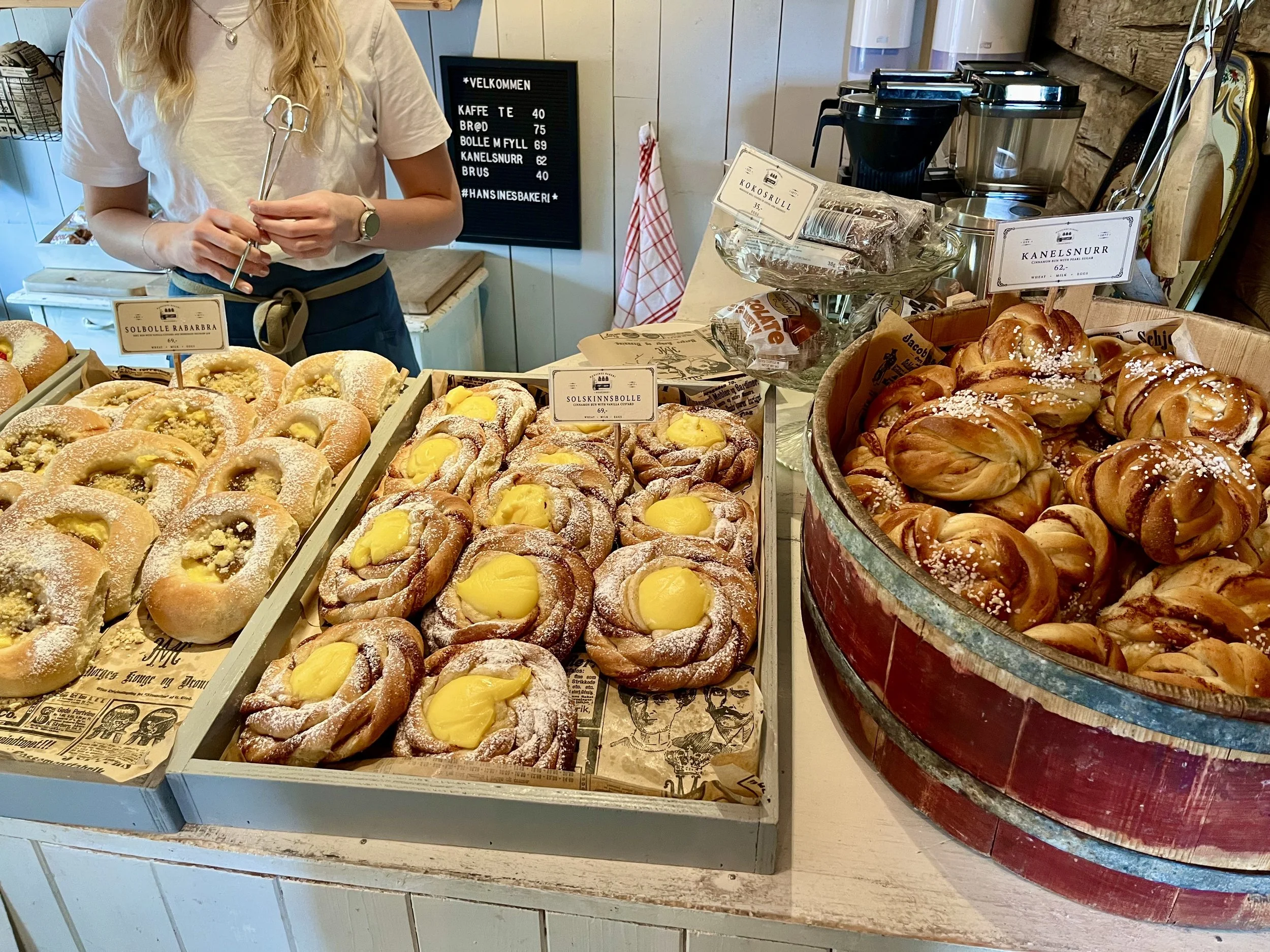
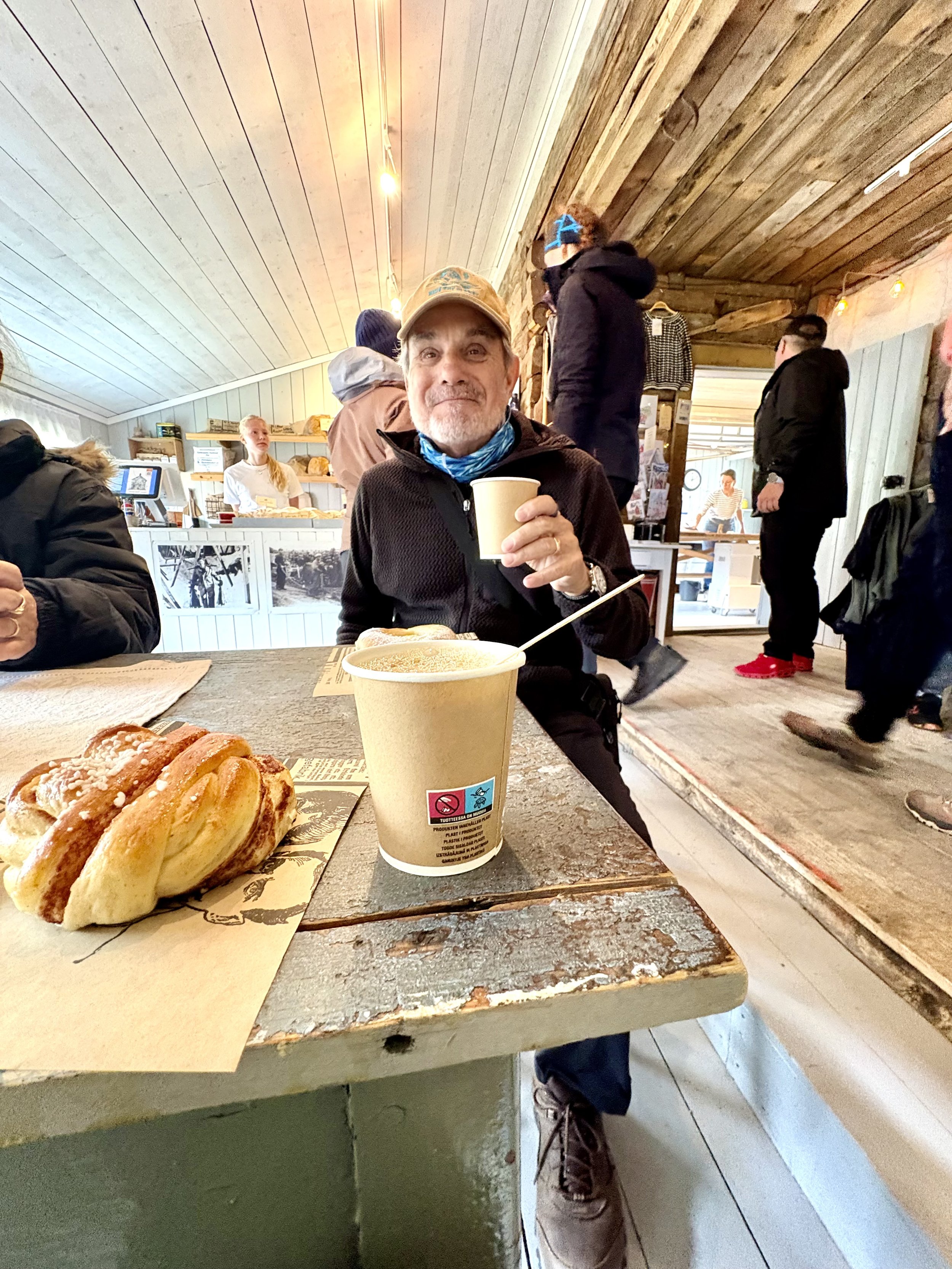
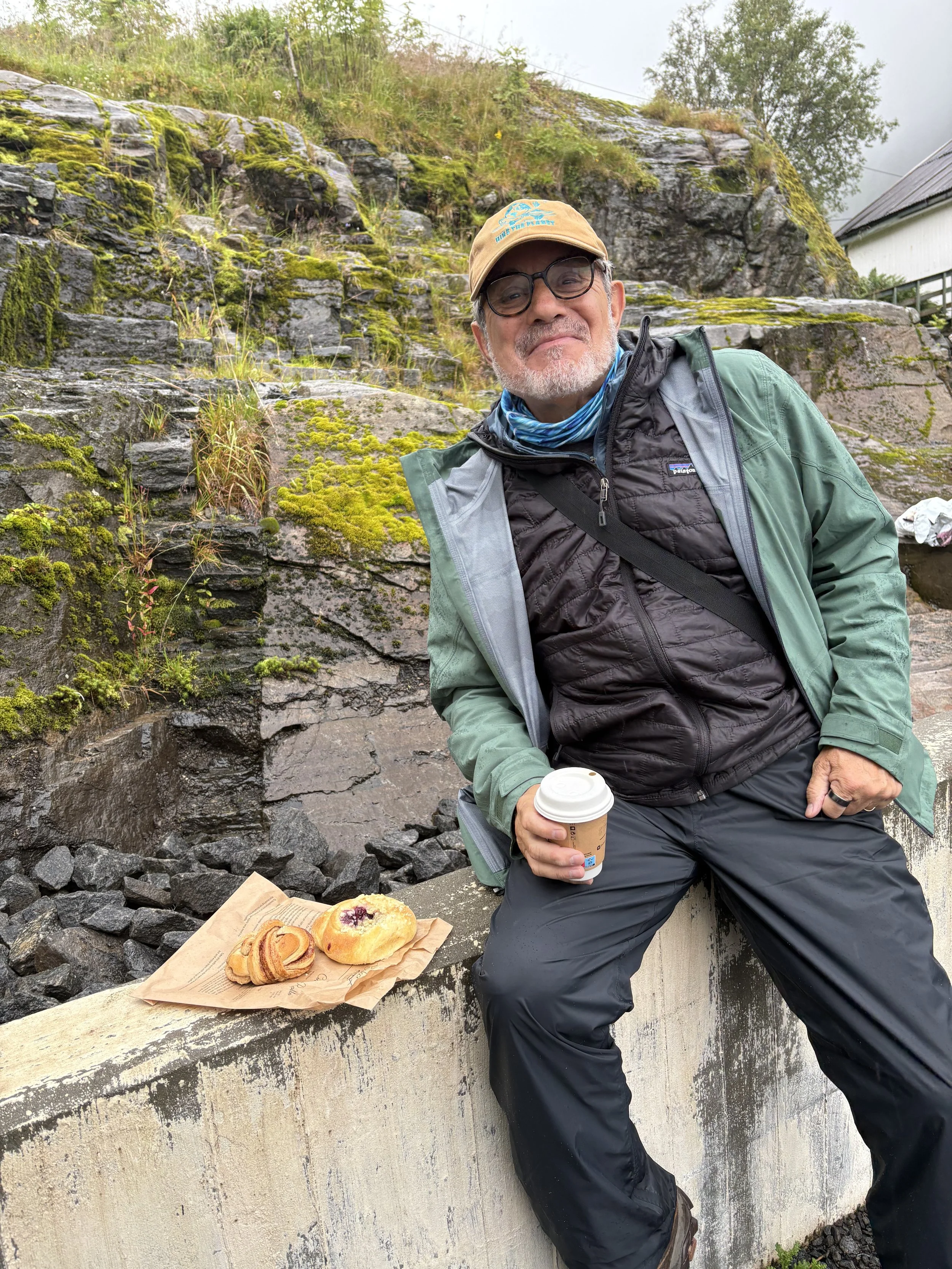
 Another treat for us was taking a break at the working bakery operating in its original building built in 1877. Here we had the best buns and coffee of the trip. We saw the baker kneading dough for her next batch. The pastry was so fresh and tasteful; we had cinnamon buns and cream filled danish with sweet rhubarb jam; just great and we feel nourished.

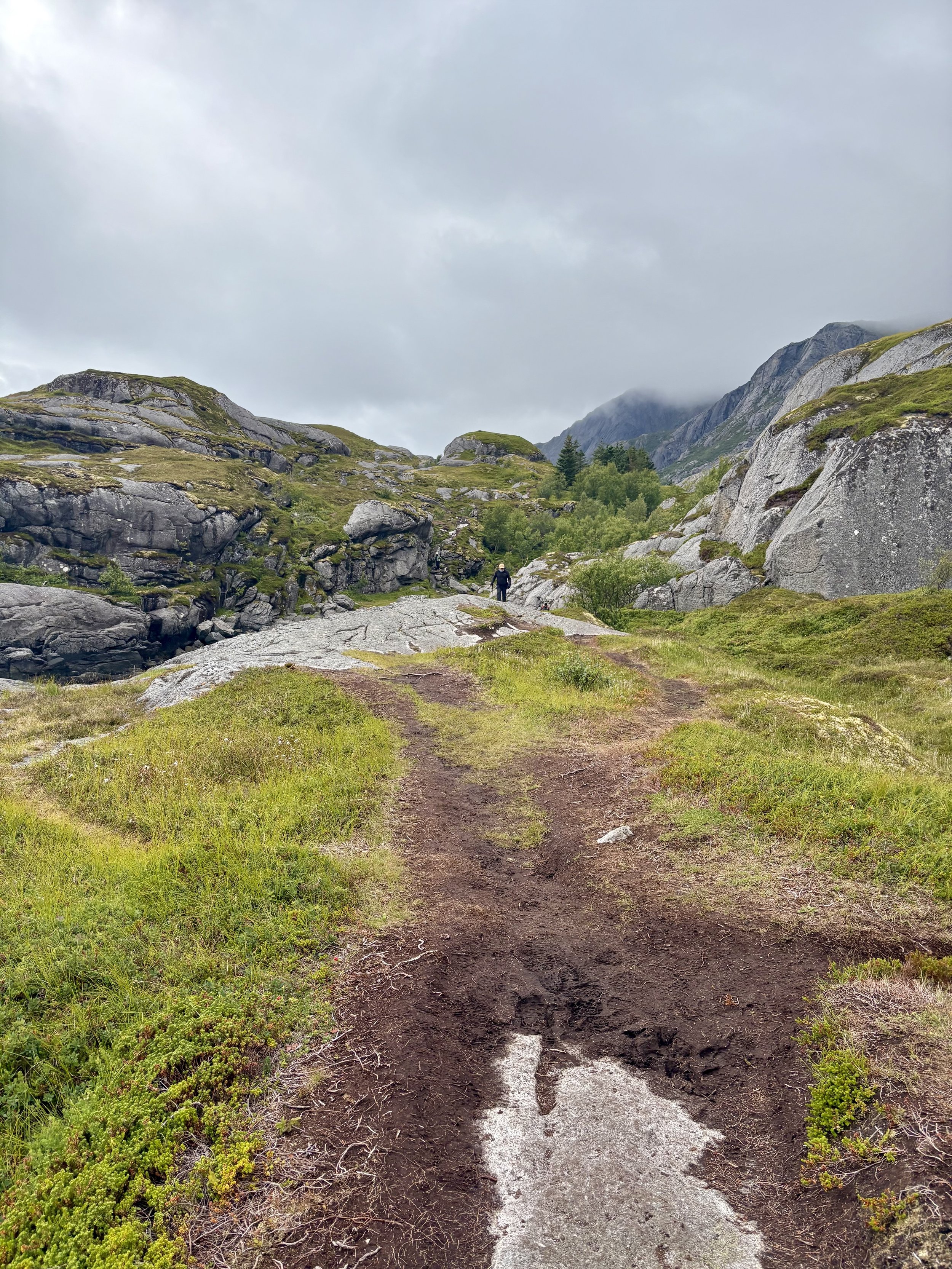
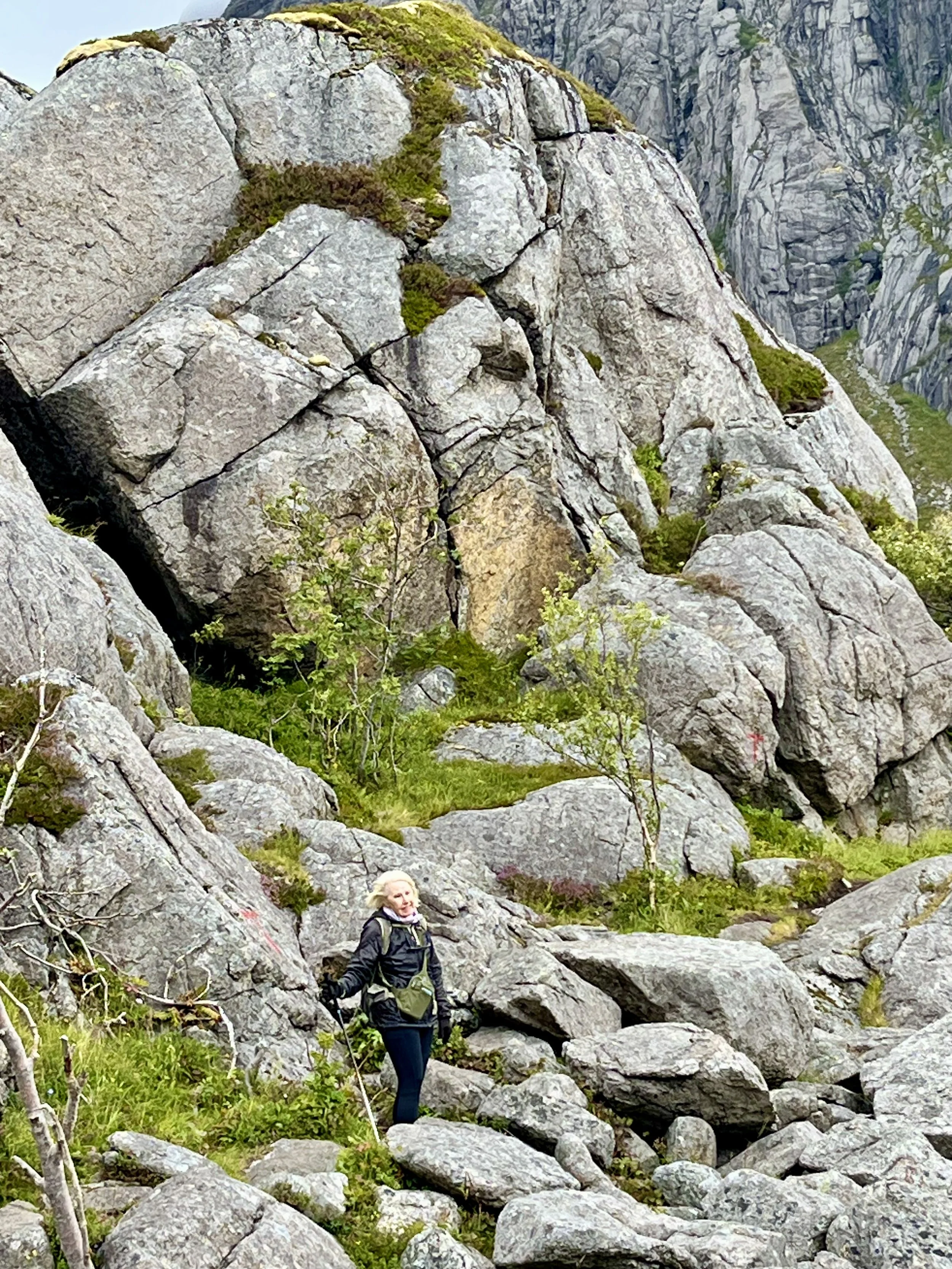
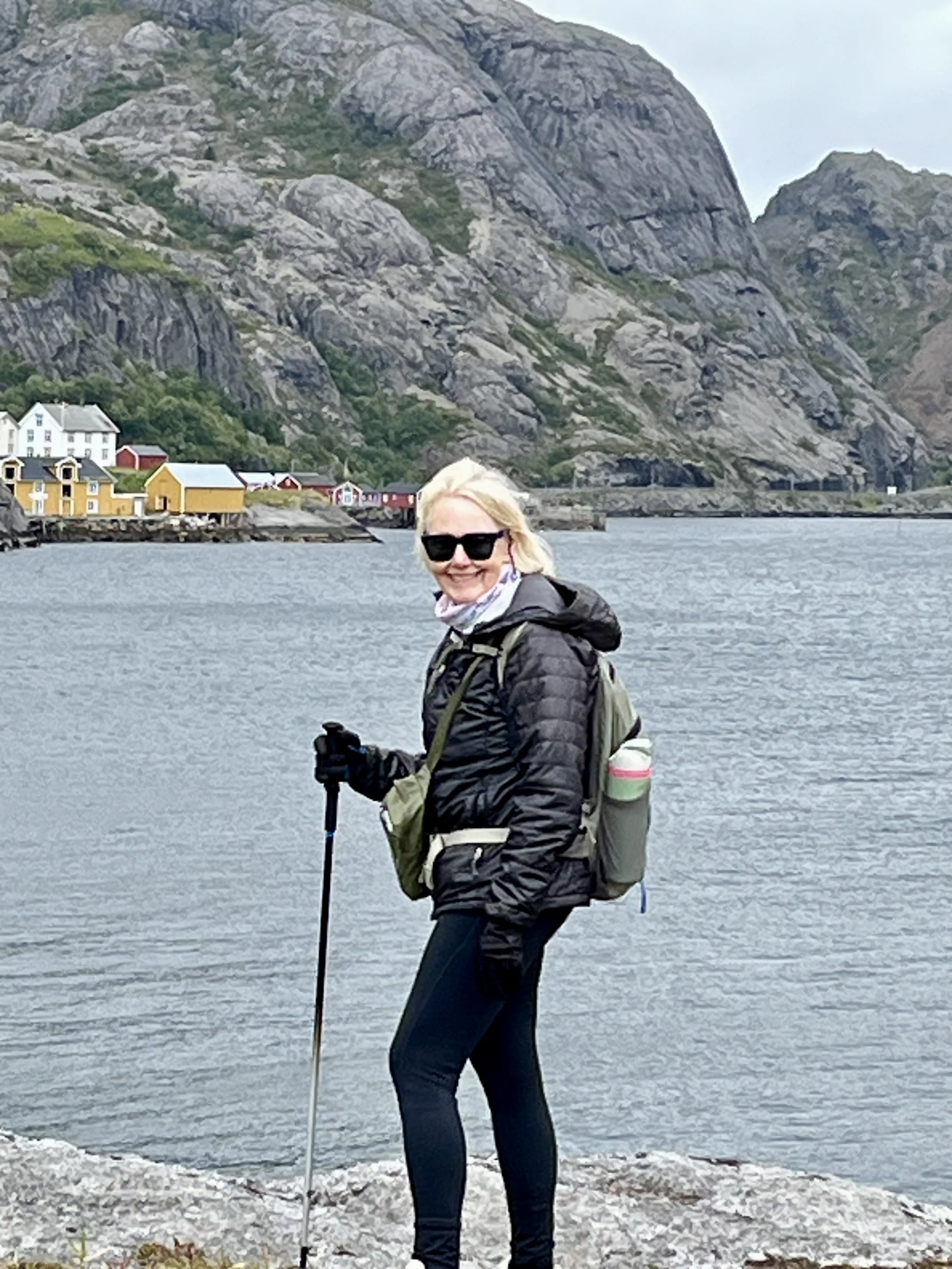
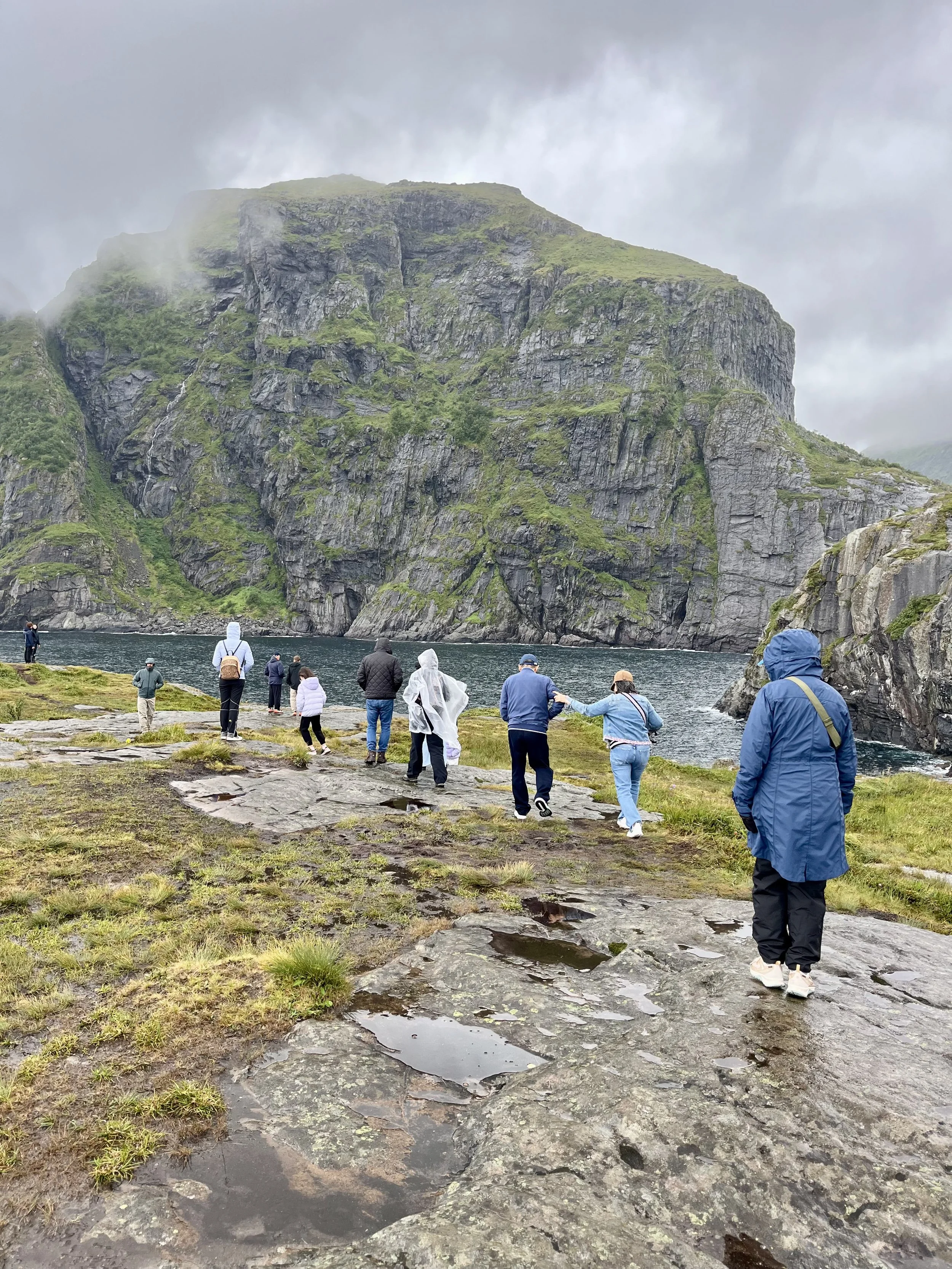
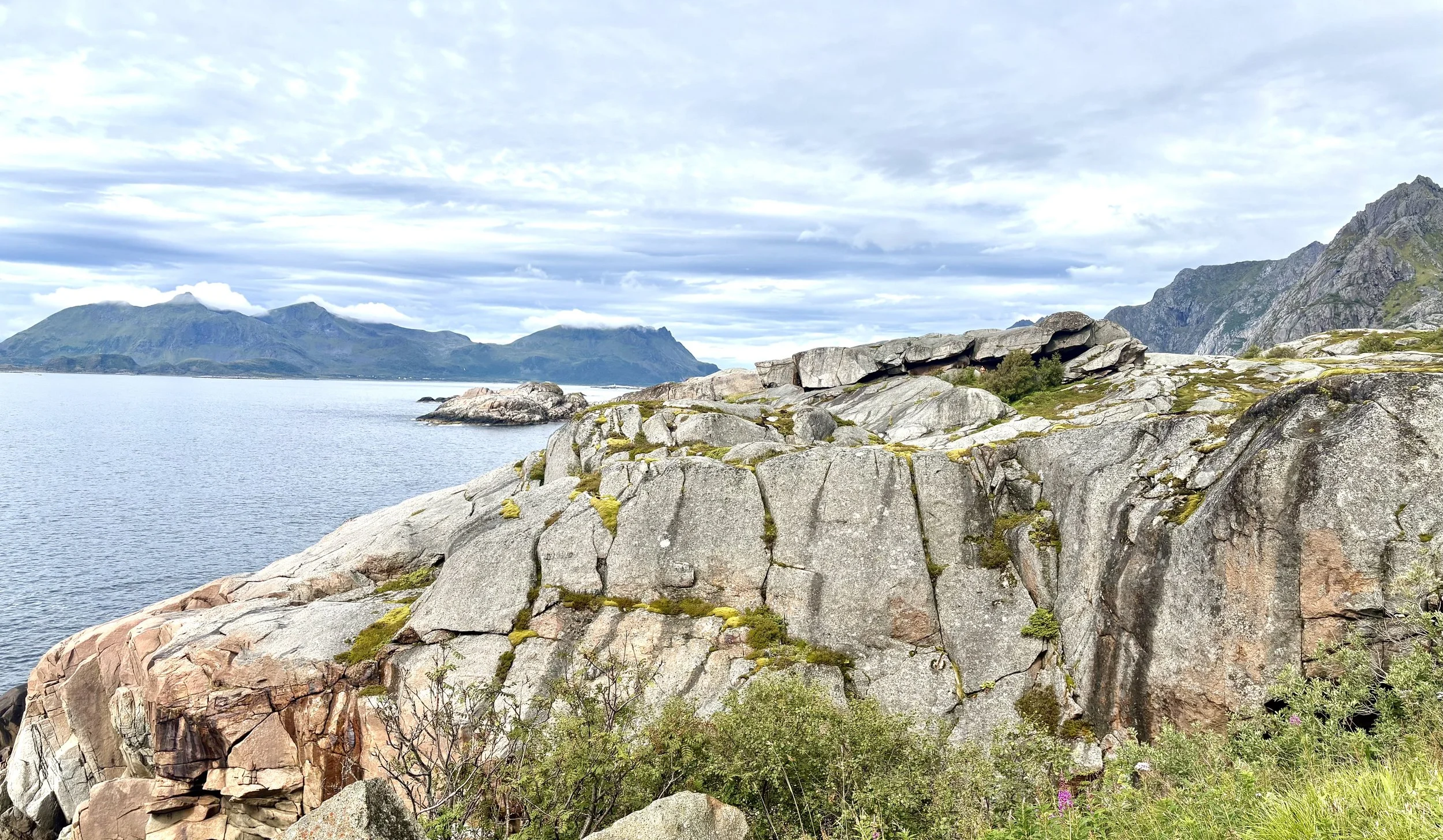
Now, lets do an easy hard hike, but wait, it is steep, very muddy between exposed stones and harder than expected. Glad we had walking sticks to gain extra stability and balance. But in the end the view is great. We are standing on a bluff at the entry of the inlet and harbor. We managed to get back without falling in the mud but Janet’s pink hiking shoes might never be the same.

The end of the hike

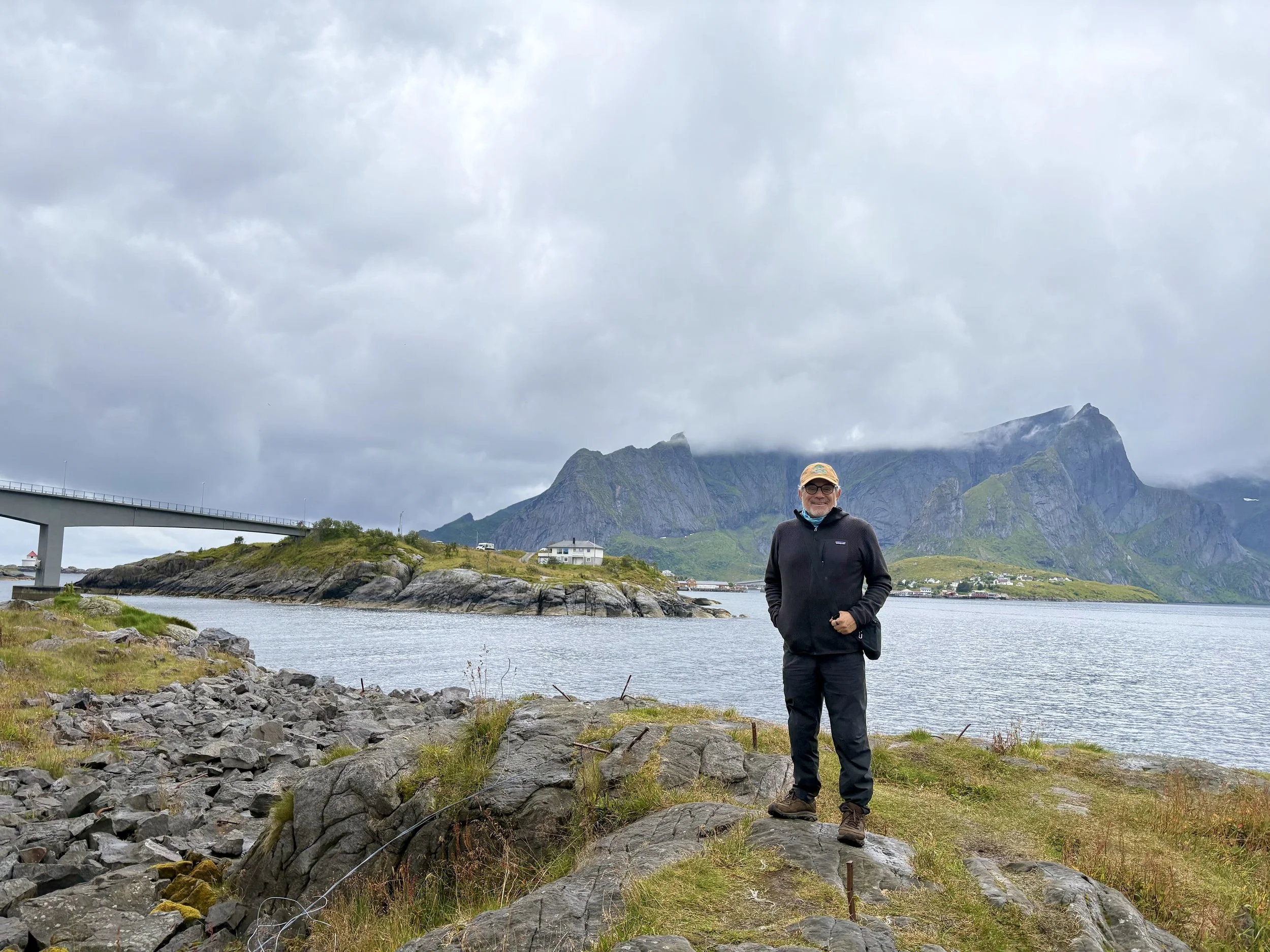
Our next village is Hamnoy, it is smaller and the prime attraction is the sweeping views of the bridges, the weather is foggy again, so we have a quick walk around and move on to village three, Reine.  Reine is also our next Airbnb.  We follow exact instructions and find that this location is new apartments above a warehouse, we have stayed in some odd places, and this one is now at the top of the list.  But it is new, warm, clean with a washing machine and the Co-op grocery is next store, so no complaints.  The rain is harder, we are tired so the tour of Reine will need to wait.

The famous photo from Hamnoy to Reine

Yummy again

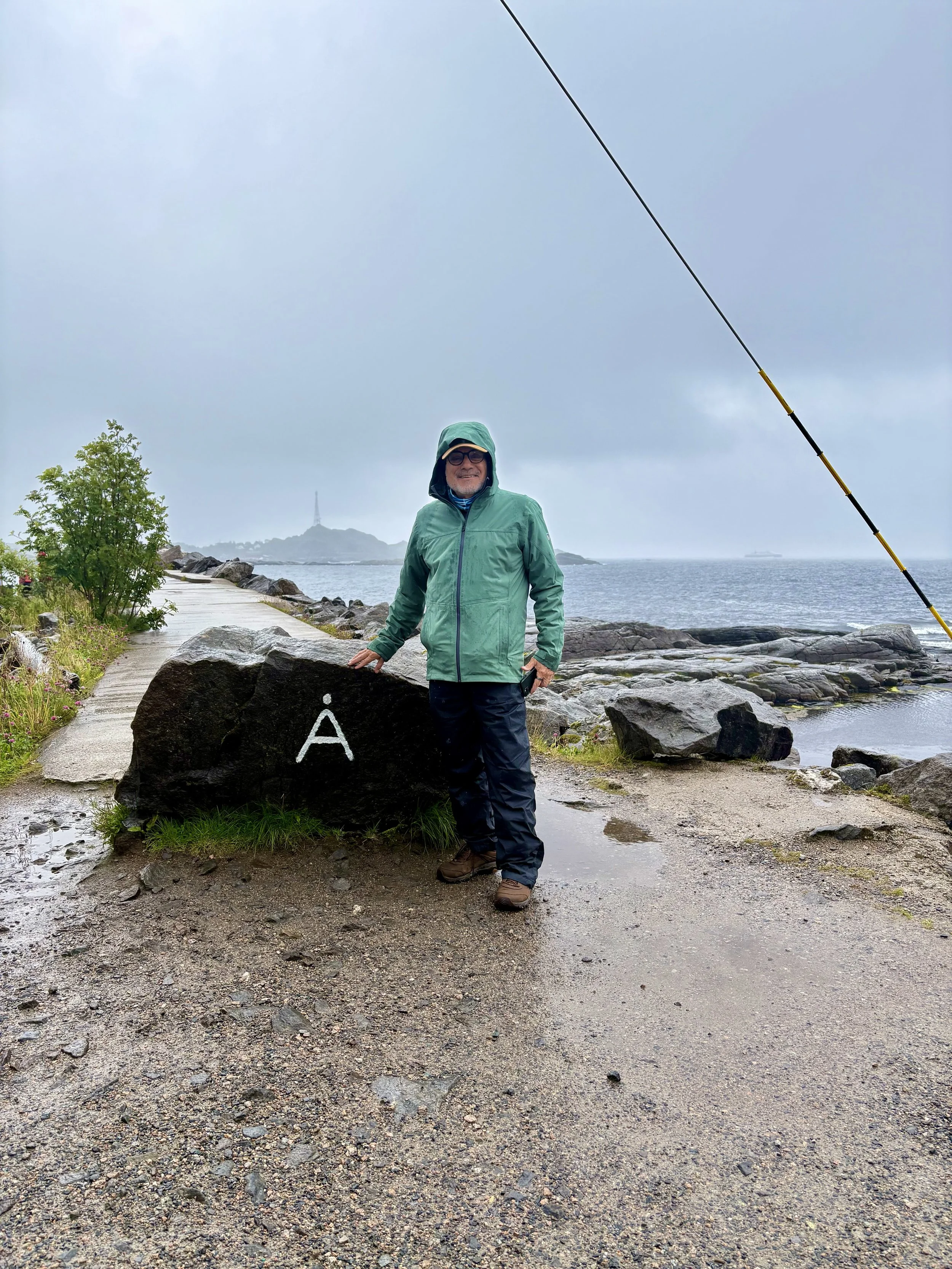
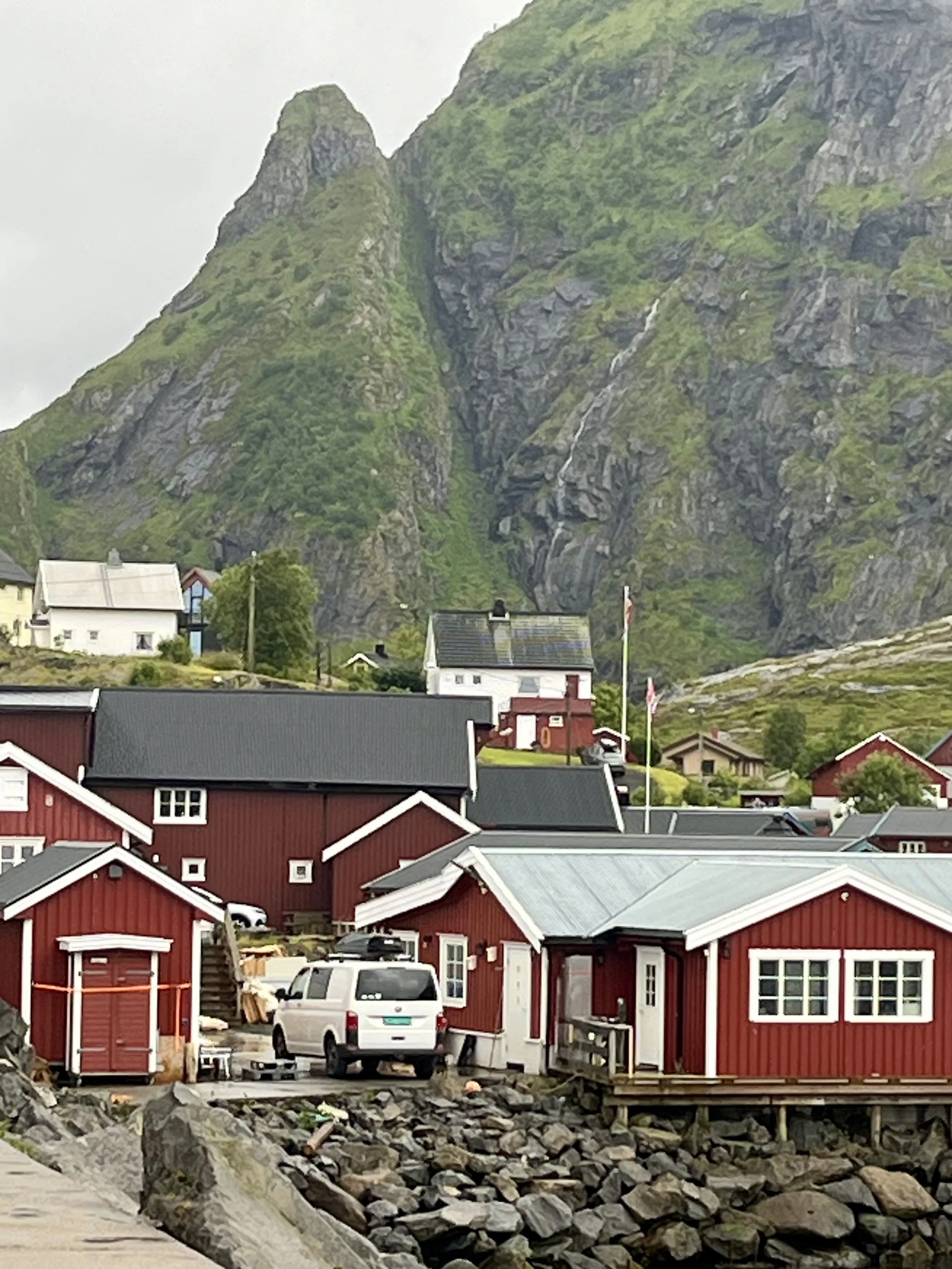
More rain today, constant and heavy, we put on all our gear and head out to the village of Å. The name reminds us of the last symbol in the movie “Stargate”. It is a curious one letter name. We asked the gift shop manager the origin of the name. He said it is historical as the descriptive of the location known as “small river”.

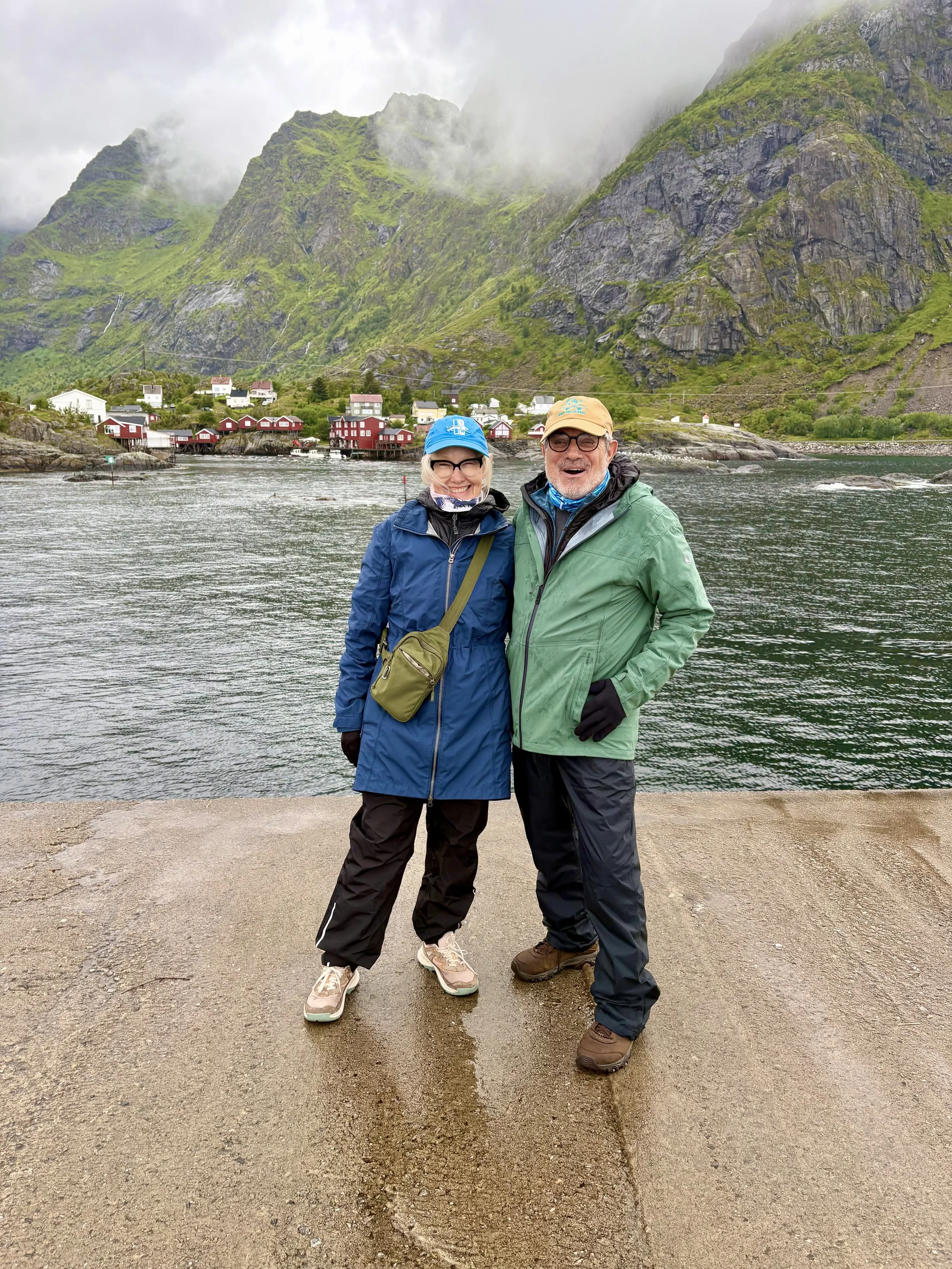
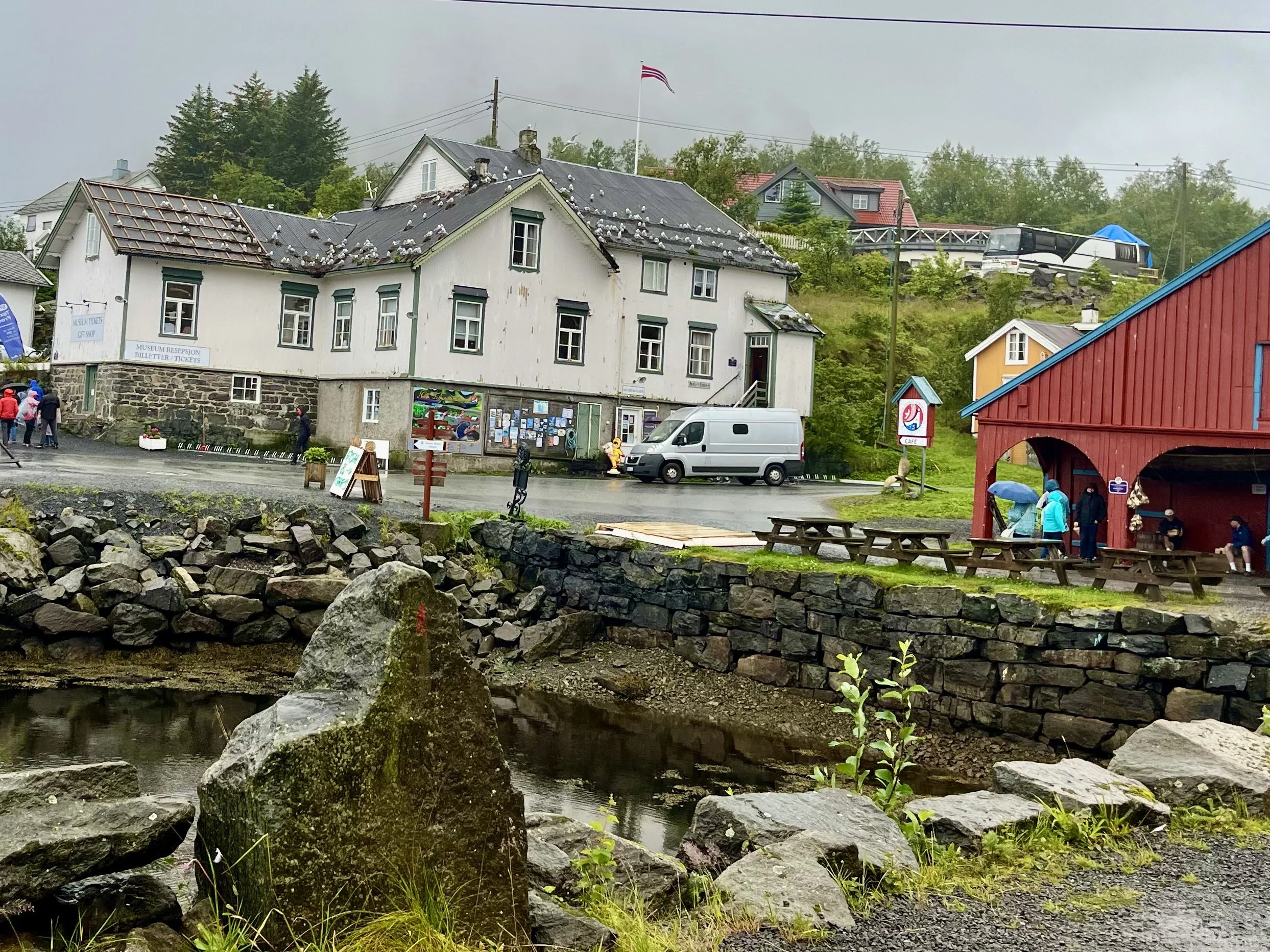
We walk around the harbor town with it Rorbuers and original buildings and then hike on the flat granite boulders that create a natural water breaker. We then move on to the long man-made water breaker that curves out around the harbor. Boulders nearby in the water are covered with landed sea birds squawking away. These birds are all over the place and roost on top of the building roofs as well

Time for snacks. We choose more cinnamon buns with coffee. Great, but second place to the bakery goods in Nusfjord.

We then joined a great guided tour. We were led into various fishers’ cabins and the boat houses displaying tackle, equipment, and several boats, getting information and stories from the guide.

Now, while in the islands of Lofoten we better understand the historic flow of commerce all around Norway to the City of Bergen and controlled by German merchants a/k/a Hanseatic League established in 1350 AD. The King of Denmark appointed them to oversee his business interests. We had visited the historic warehouses of the Hanseatic in Bergen.

We also can better visualize, understand, and appreciate the rigors facing the early fishers. In the village of “ Å” that is the southern most fishing town visitors can still reach by car, we had the luck to hire a resident guide who was familiar with the fishing history of the town and industry.

Guided tour

The guide answered questions we had long harbored about the historic processes. My synopsis of the talk. Historically, the fishers would team up @ 8 men to a 15 ft wood boat with sail and oars and upon common signal by the harbor master they would race off to the fishing areas. Most fishers could not swim. So, in a very coordinated effort to avoid rocking their boat they would deploy the large nets to snatch up the cod. The cods harvested would be spilling over the legs of rowing fishers. The fishers’ crews and living quarters, if provided, would be organized by their village identity and hierarchy so they would be more familiar and less likely to fight. As well, some fishers would bring their young sons to cook, clean and repair equipment while learning the business. Some companies would eventually provide limited grammar school teaching. Some fishers would turn their boats over like  wooden tents to sleep under.

After the catch, fishers will behead the cod and gut the entrails. Then, they will cut out the tongue to process as food and the liver processed for “cod liver oil”. The fish-heads are used for soup. The cods will be bound together in pairs, tail to tail and hung on the wood racks exposed to the best drying climate and temperature. Within about 3 weeks the cod will be dry and ready for packaging and shipment, usually to Bergen, the commercial center and capital of Norway in the past. The cod are now Stock Fish sold all around Europe and the Mediterranean (In 2000’s most popular locally and in Portugal and Italy). Other fish, like salmon and herring, are preserved in barrels by salting, not drying, before shipment.

HERE ARE THE MAJOR QUESTIONS: Q: How do you prepare stock fish for eating? Answer: The dry fish must be rehydrated in water for about 3 days or so and then cooked or stewed as desired.

Q: How long are the stock fish in dried state edible? Answer: Our guide said he has eaten stock fish at least 20 years old, he likes it better fresh but thinks 30 YEARS OLD is possible. We kinda cringe!

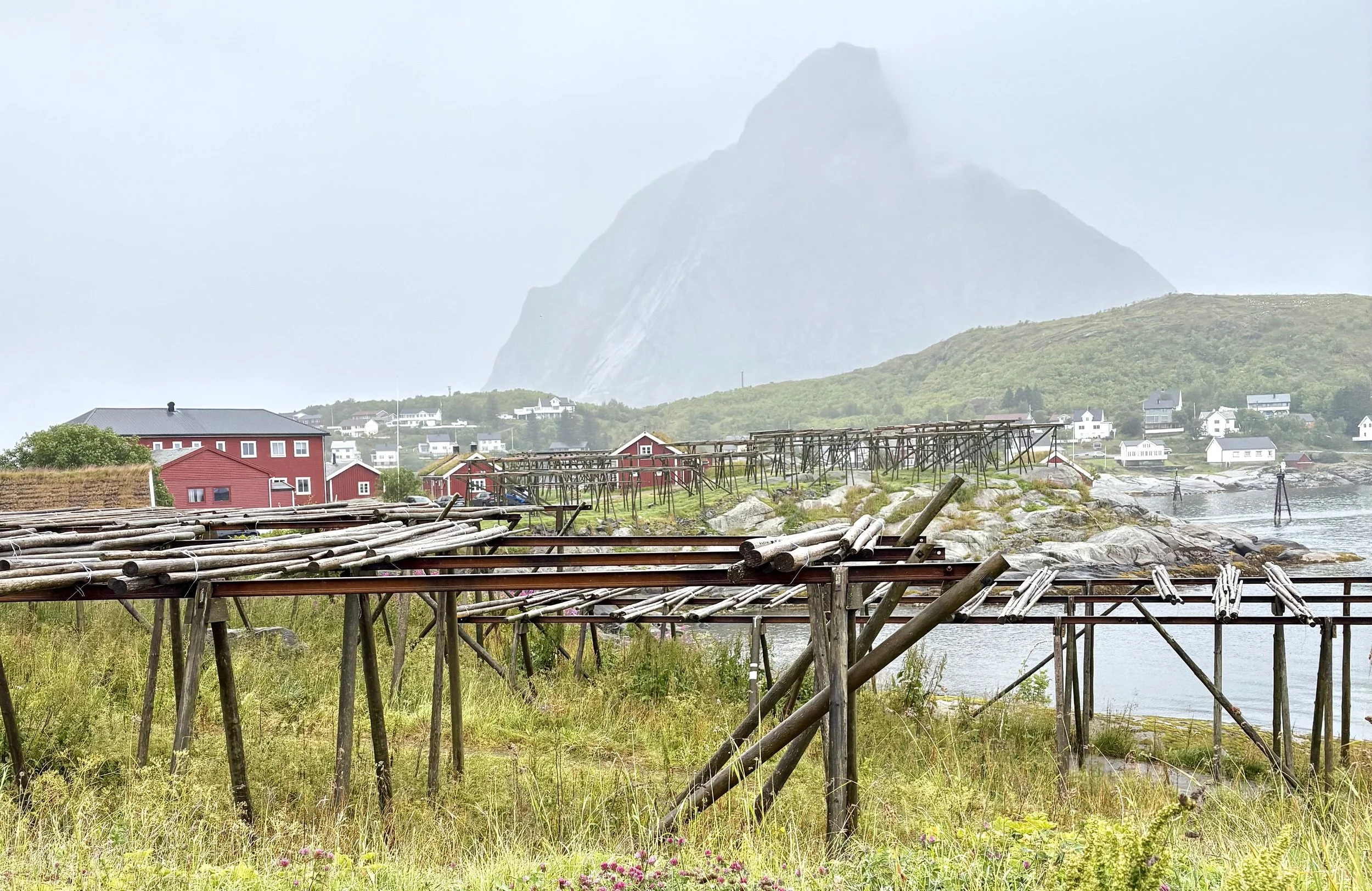
The production process has modernized and automated, but the use of drying racks continues. See photo below.

Norways’ seafood industry has exported to Europe for almost 1000 years. Now, the industry has expanded to more species of fish, including shellfish, wild fish, farmed fish, sea urchins, scallops, and kelp (sea weed), and uses advanced chemistry to create products, like paints and oils, from fish parts not eaten. We learned these products are worth over $100 billion NOK to the economy annually

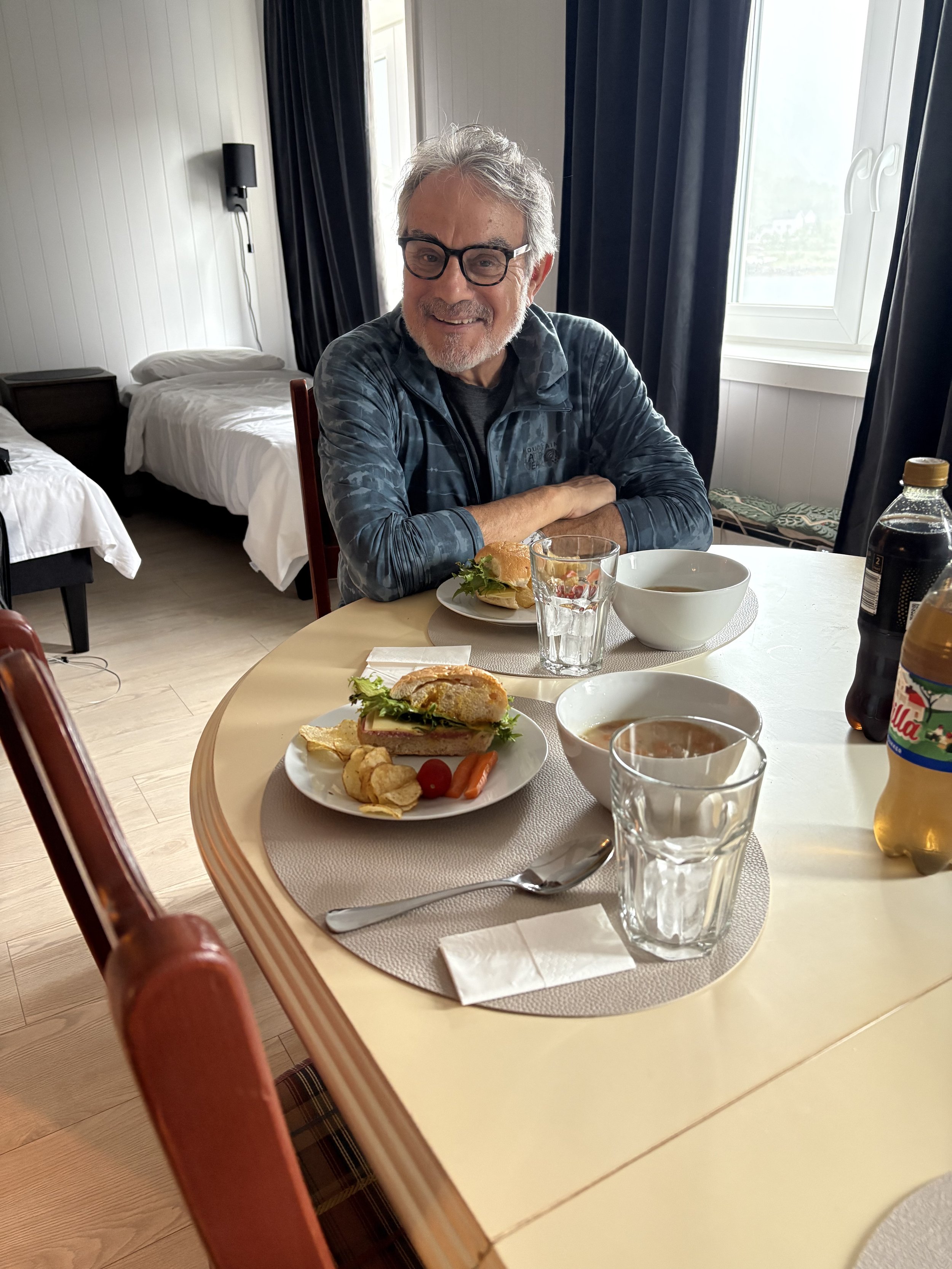
By the time the tour ended we were really wet, cold and hungry. Since the warehouse Airbnb was just 13 miles away we head back to dry out and have some soup. (see hour weird this place is)?

The rain finally stops and we walk into Reine, again more of a challenge than we thought, it is 2 miles on the side of road, not good paths, lots of traffic and it started raining again.  We trudge, get to the village which is now cloud covered, do a quick walk around and have some great coffee.  Looking across the square we see the bus stop and the bus is coming, we do a mad dash, and Janet talks the bus driver into driving us just to the Co-op, please, okay for $4.00, deal.  Back at warehouse, we dry out again, nice dinner.  Netflix time again. See foggy Reine photos below
Last day in Lofoten, time to back track. We originally left Svolvaer and drove to the farthest point of our exploration of Lofoten before reversing coarse. We have now driven past all the prior stops to head to the last stop-the village of Henningsvaer , before returning the rental car.

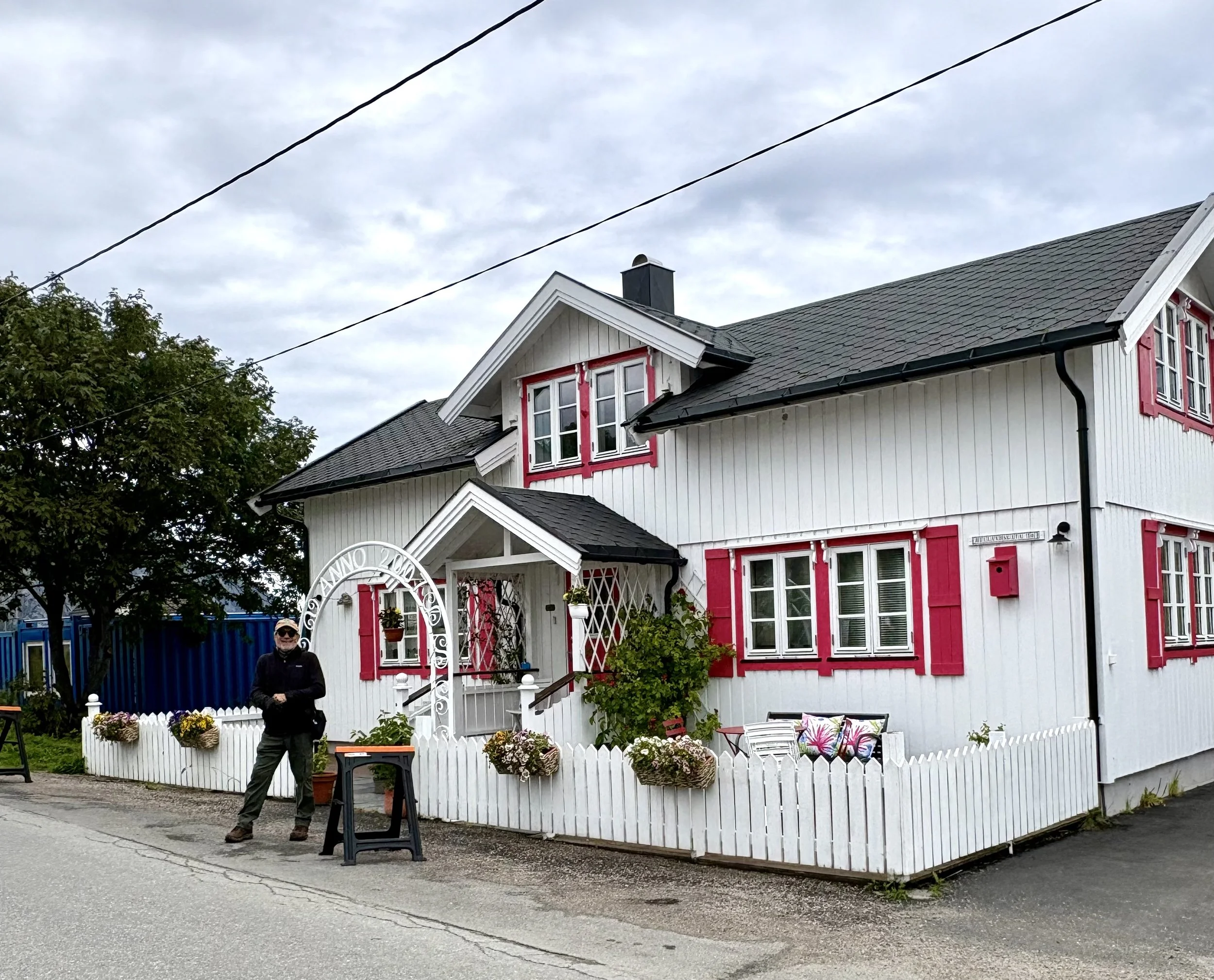
Henningsvaer is often noted for its illuminated soccer stadium etched into a plateau surrounded by craggy rocks and seawater, connected to the town center by a narrow winding road. This is an exciting, artful town-very busy with pedestrians walking shop to shop, boutique to boutique, art gallery to art gallery, to restaurants and cafes, to small hotels and of course, lines of cabins called “Rorbuers”, overlooking the surrounding waters and harbor. See photos.

The place was impressive. We did some serious, but unexpected shopping; so less photos. Walking around we visited several art galleries and clothiers displaying creativity and unique locally sourced items. We noted the locals were setting up for a music festival this evening; told it was a 3 nights event. A Hopping place, still a village but with multiple streets of stores to enjoy.

Thankfully, the car is still where we parked it. We jump in at about 5:00 pm and head back to the port of Svolvaer At 10:00 pm we will embark on our next cruise ship traveling north and going further into the Arctic Circle on our way to the village of Tromso.

Our photo of the football pitch

A stock drone photo so you can see the layout

Lofoten Archipelago Norway #2

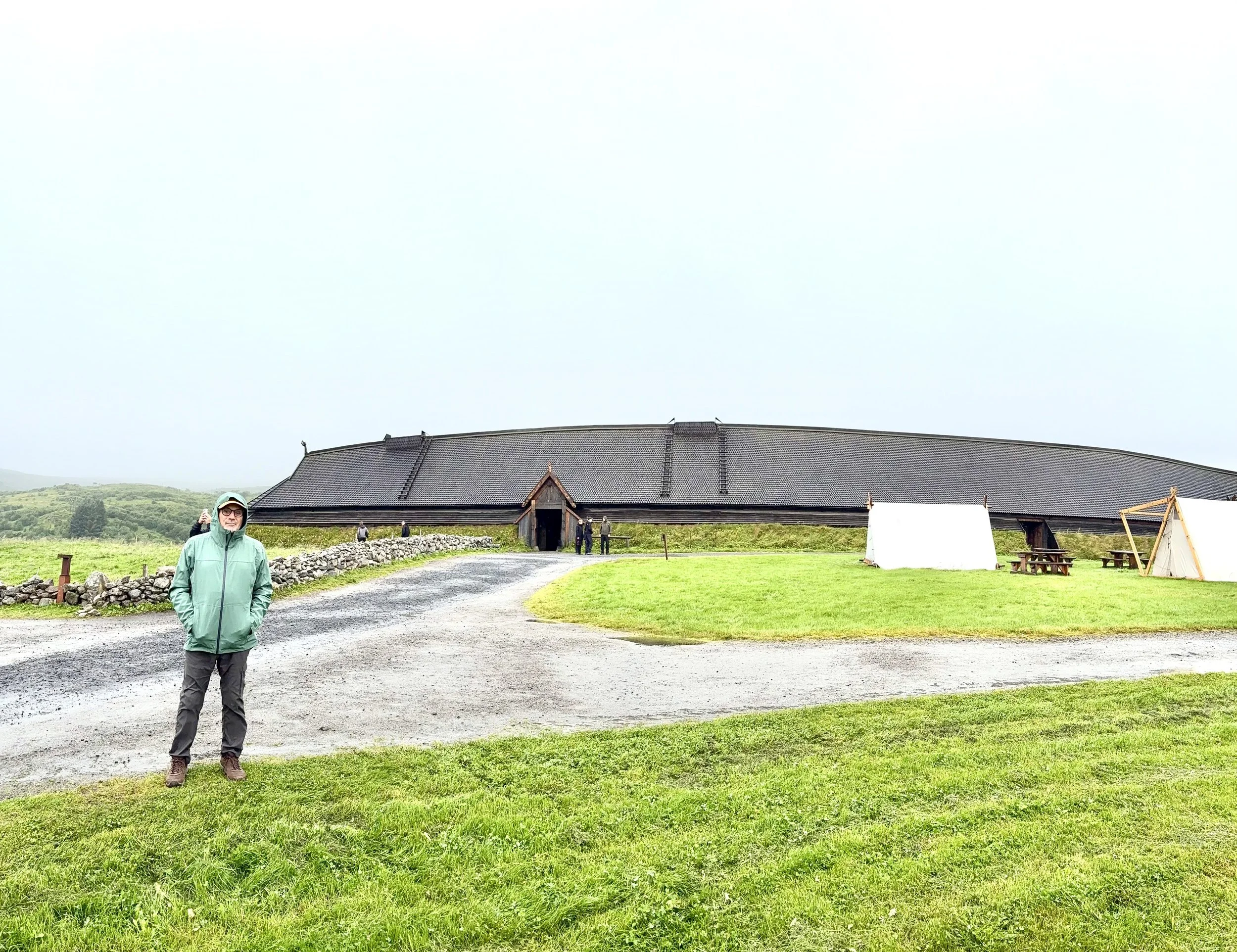
The long house at the Viking Museum

lots of sheep and lambs

It is a Rain Day. One of the few we have suffered thus far this entire trip. In fact, the Norge saying “there is no bad weather, just bad clothing”. Luckily, we have enjoyed straight sunshine with a few partly cloudy days the entire trip. But now, the rain will be here all day. This is the normal weather in Norway, and the Lofeton region.

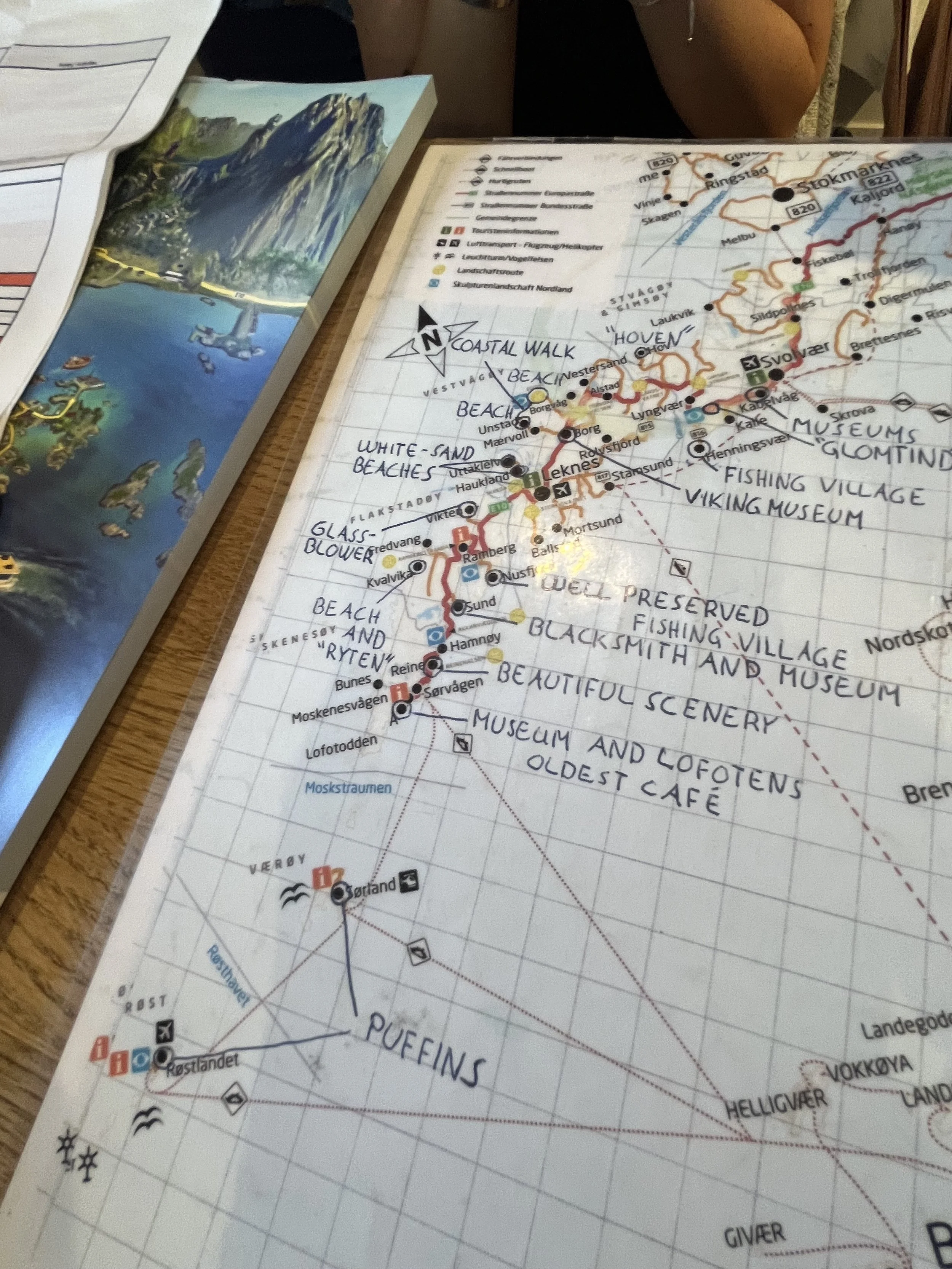
We check out of the nice Airbnb at noon.  We sleep in and take time cleaning up, packing, and stowing luggage. Frank gets to drive the diesel SUV to our first destination, another, “The Viking Museum,” and then south for 150 miles to the southern tip of peninsula tip of Lofoten.  The trip will take 4 days, staying in two locations.

In the car we check wiper controls, lights, heat and defrost controls, and heated seats. We have our rain gear handy. Off we go on the narrow streets and highways, E10 mostly, due northwest. Only some parts of E10 have painted center lines. It is a scenic drive. We keep to the posted driving speed on these wet curvy roads. The speed limit ranges from 60 km to 80 km, but we keep to 60 km most of the drive.  Only once did we get a flash-to-pass signal.

We make good time and as we approach the museum we see scores of others looking for a reprieve from the rain. The lots were full, we ended up crossing the road to park at the nearby Mom & Pop roadside café (or might have been the Road Warriors juke joint).

From the road the museum building(s) gives an incredible impression of extended length with class canopy.  Our first stop inside is theater to enjoy a 3-part dramatization of the life of the true tribal leader and his future wife who lived on the farm that was situated on this very parcel. That’s cool.

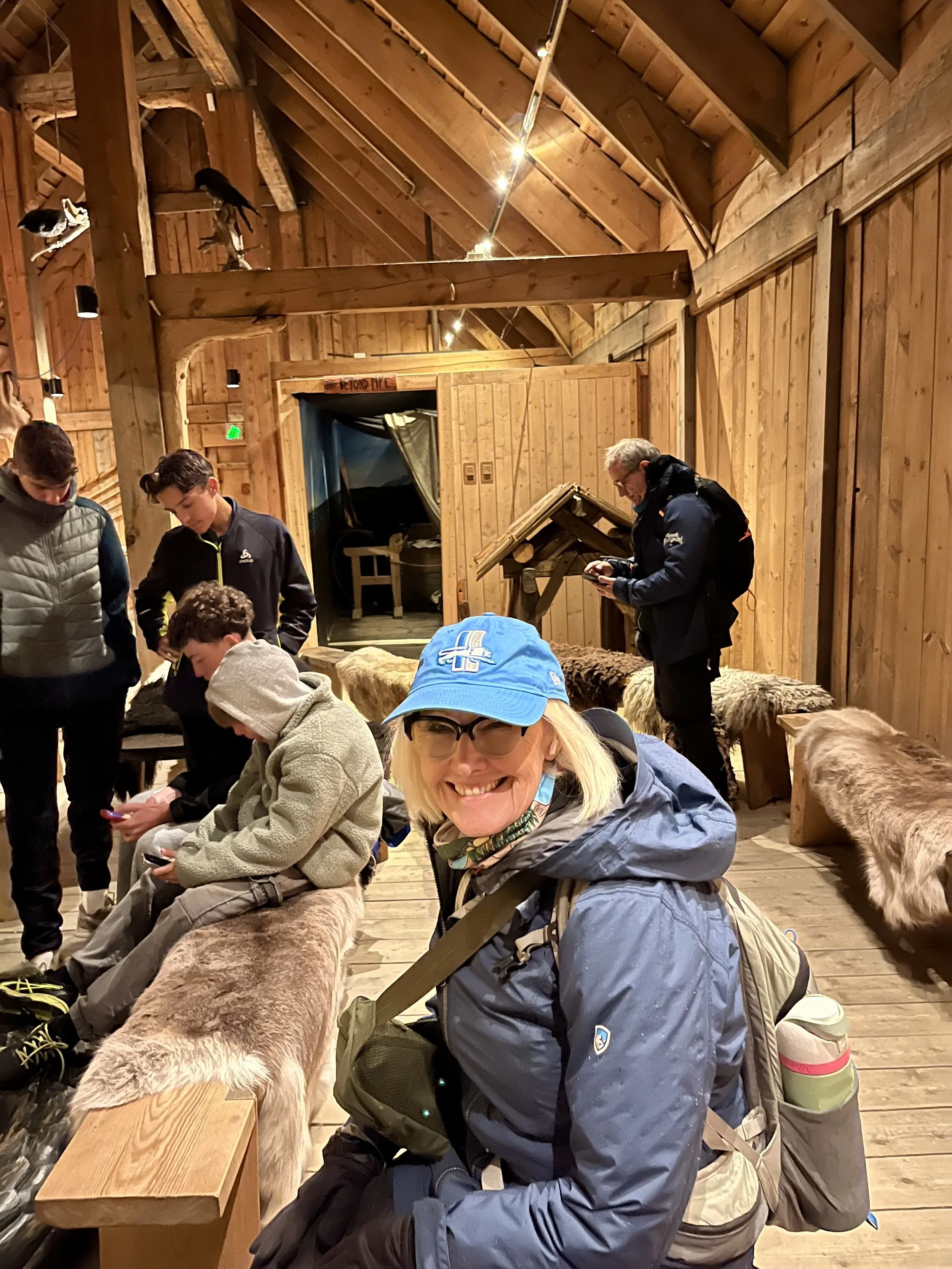
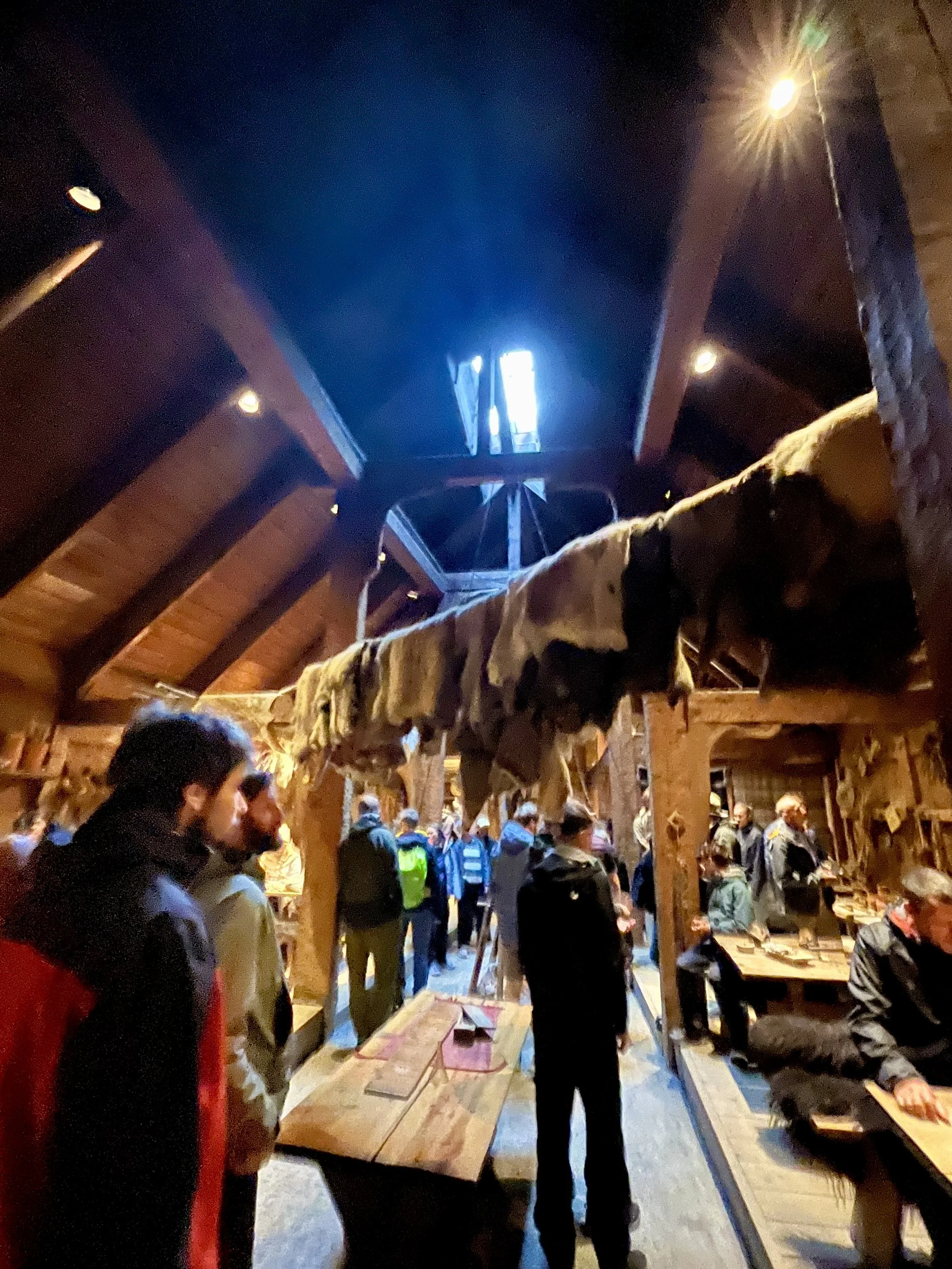
In the long house

Later, the Tribal Leader decides to leave Norway for political reasons and sail to Iceland for a new life. The politics of the time put each tribe under pressure to succumb to the strongest leaders who sought to be King of Norway. Our leader chose not to face such intimidation and abandoned the farm. The third part of the story comes to the late 20th century. A modern-day farmer is tilling the parcel soil with a tractor and blade when approached by an archeologist who the farmer grants the opportunity to mill around. Nothing uncovered. Later, as the farmer is tilling, he find artifacts and contacts scientists. What follows is an international archeological dig that leads to the discovery of the largest Viking long house found complete with artifacts. In the museum there are two rooms of displayed artifacts, tiny things like arrow heads, broken pots, etc, etc and 2 swords.

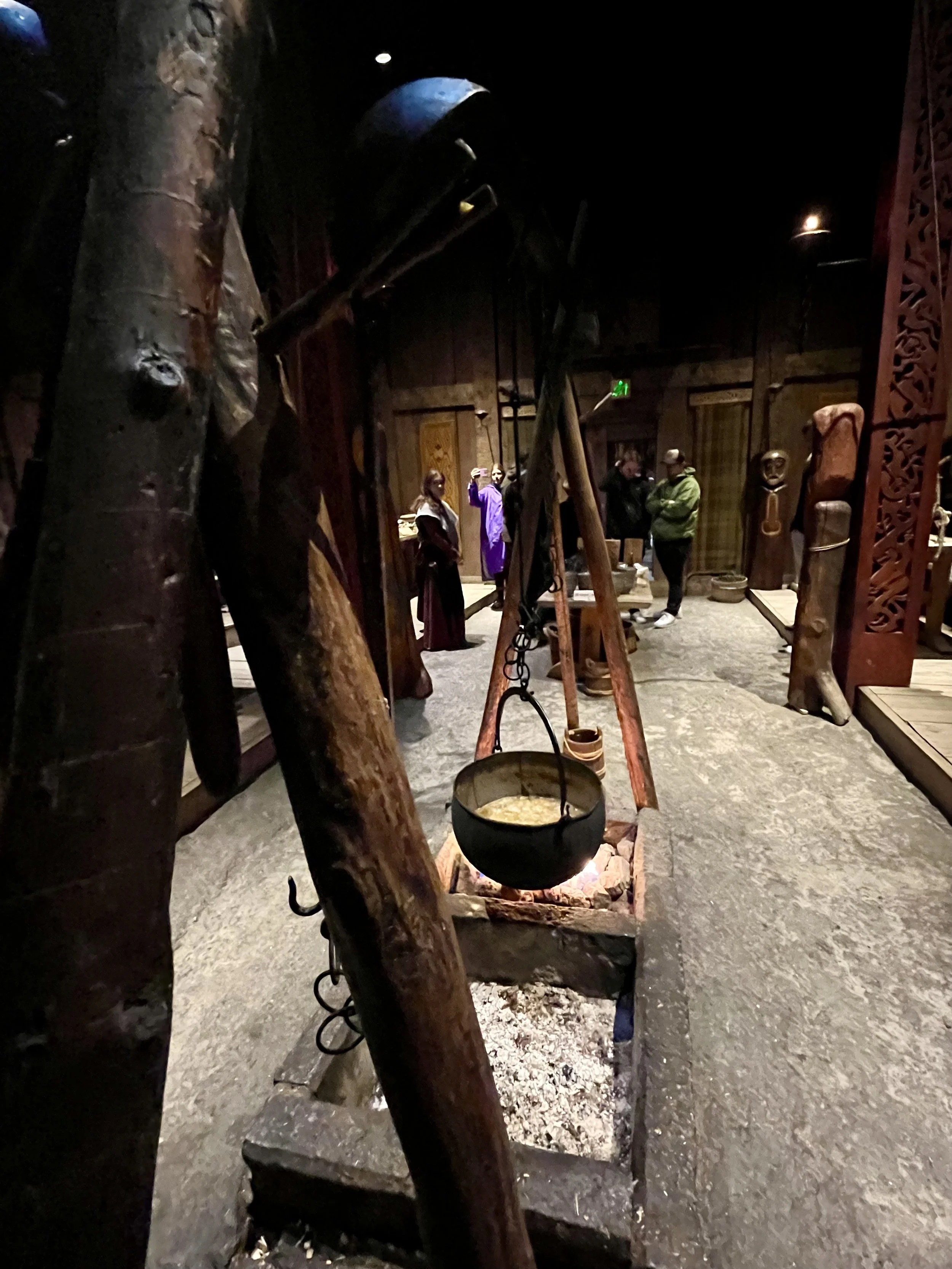
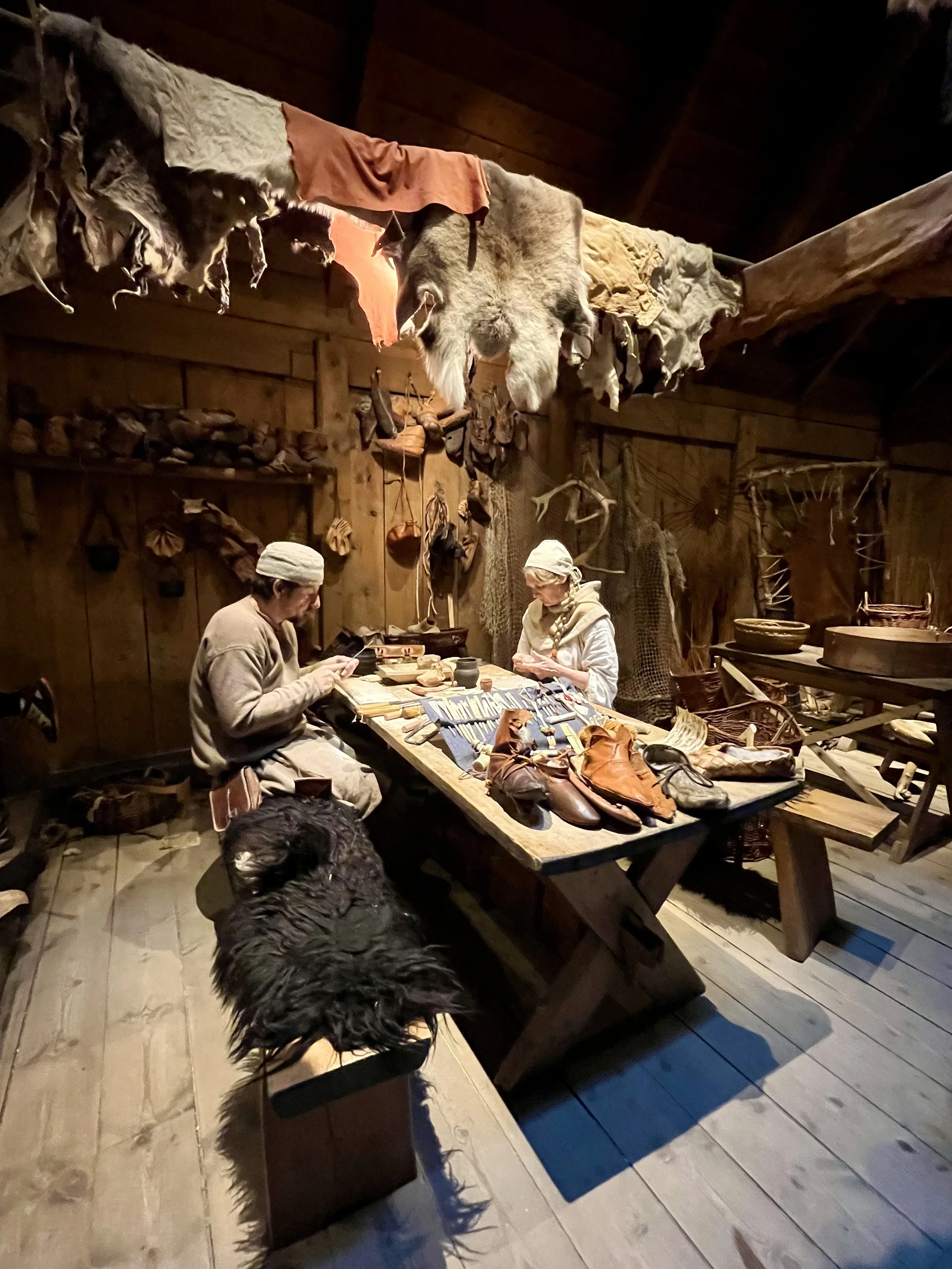
The dig continues for 20+ years and finally they make this replica “long house” and the museum.  We enter the long house, which is impressive and listened to a knowledgable guide, saw re-creators, and could see separated areas of the living quarters for cooking, weaving, bedrooms, and for meetings with leader.

Janet enjoyed the museum, full of information on how they lived and survived. Frank felt the presentations were informational as one would expect, and imaginative, but not awe inspiring.

Below photos are of the long house

Our room

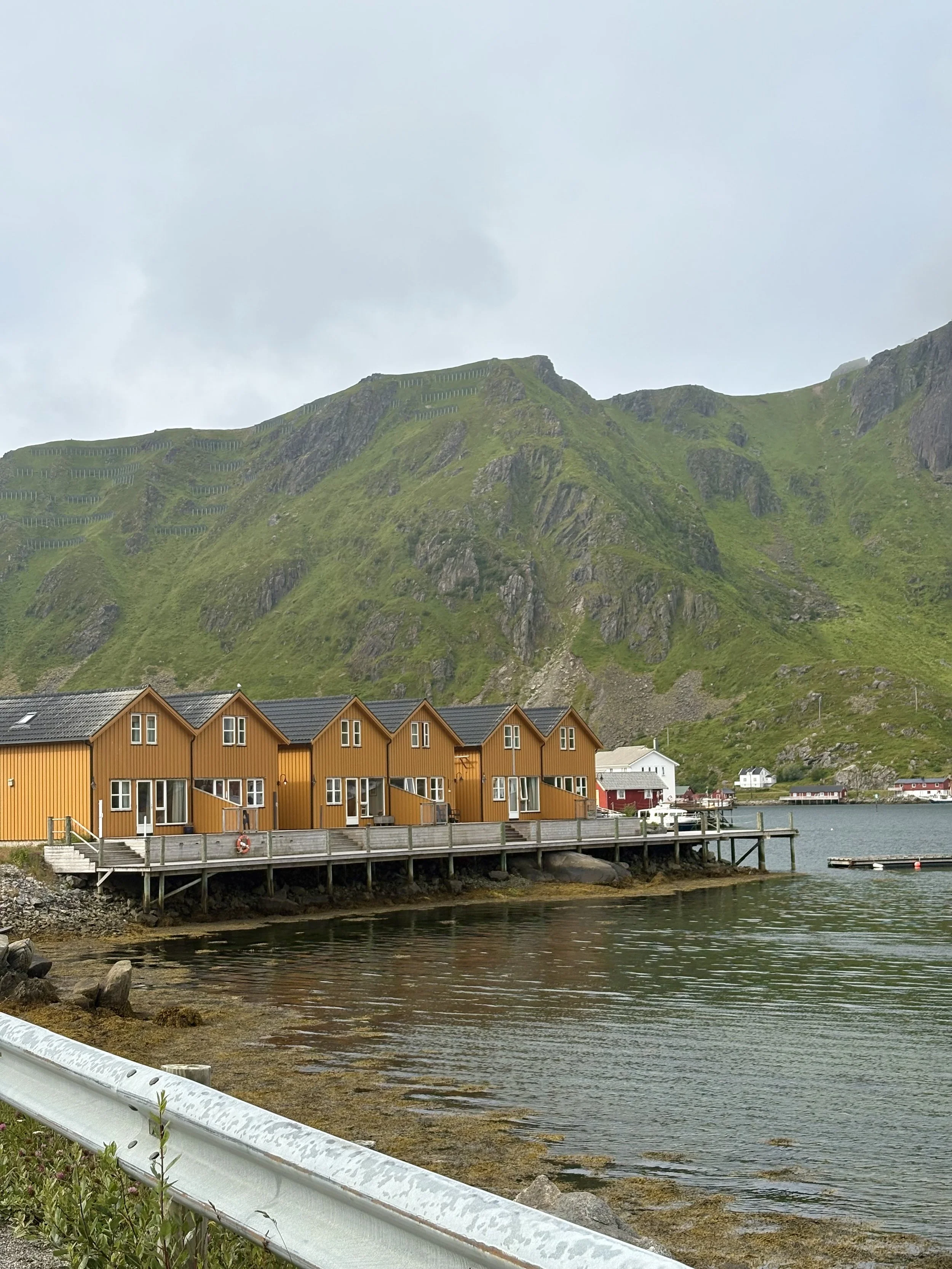
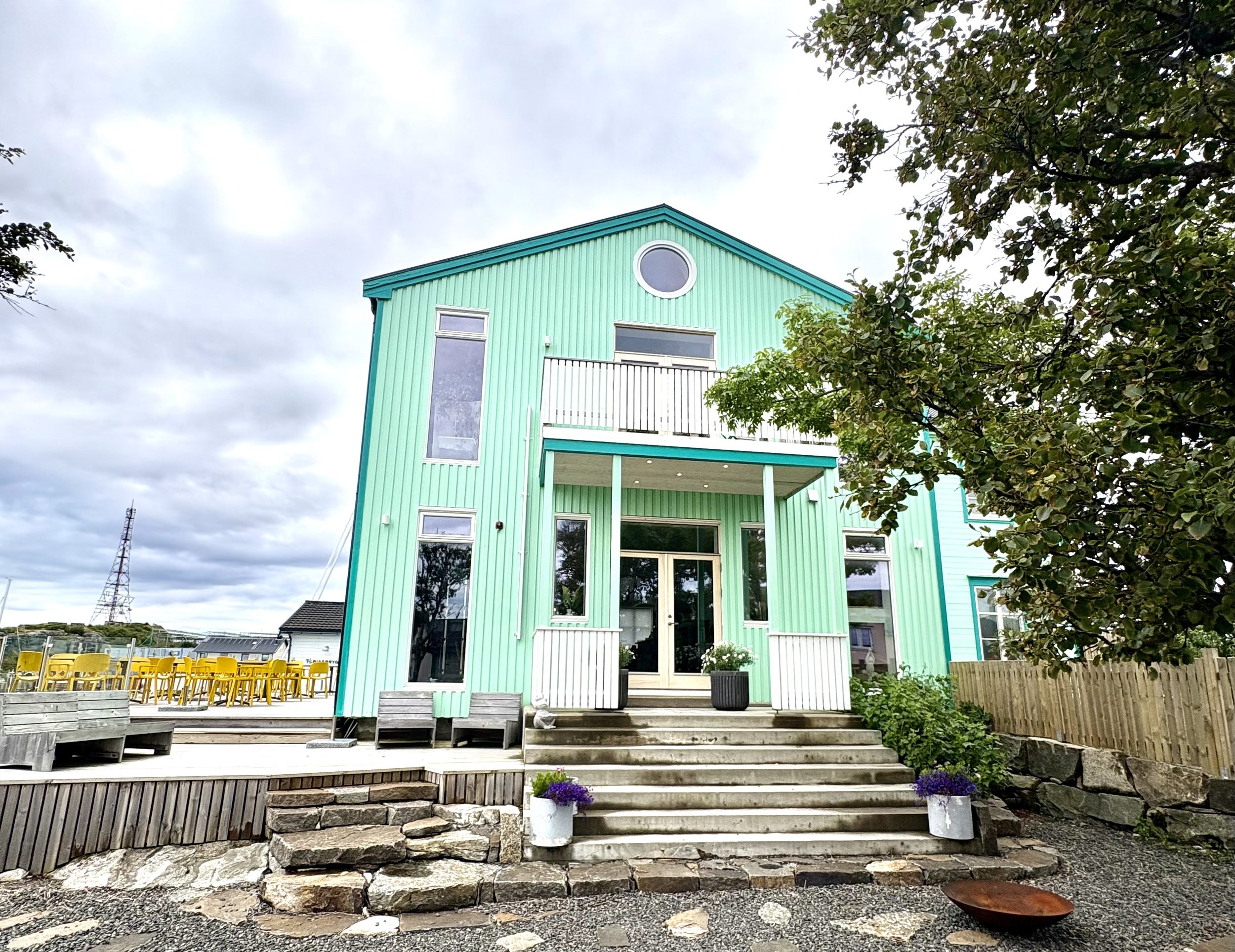
Next stop is the village of Ballstad. This small coastal town is on the coast of a small island nestled between two fjords and the North Sea. This is the launching point for our excursions in the south side of the Lofoten island. We are splurging on a wonderful hotel on the water with a 4-star restaurant. Ballstad is 190 acres with a population is 900. We are staying at the Sosiden Brygge Robuer a complex that is both hotel and Robuer, resting on a calm inlet lake, with some private boats on hand and with shoreside saunas. Our room is very modern with rustic chic décor.

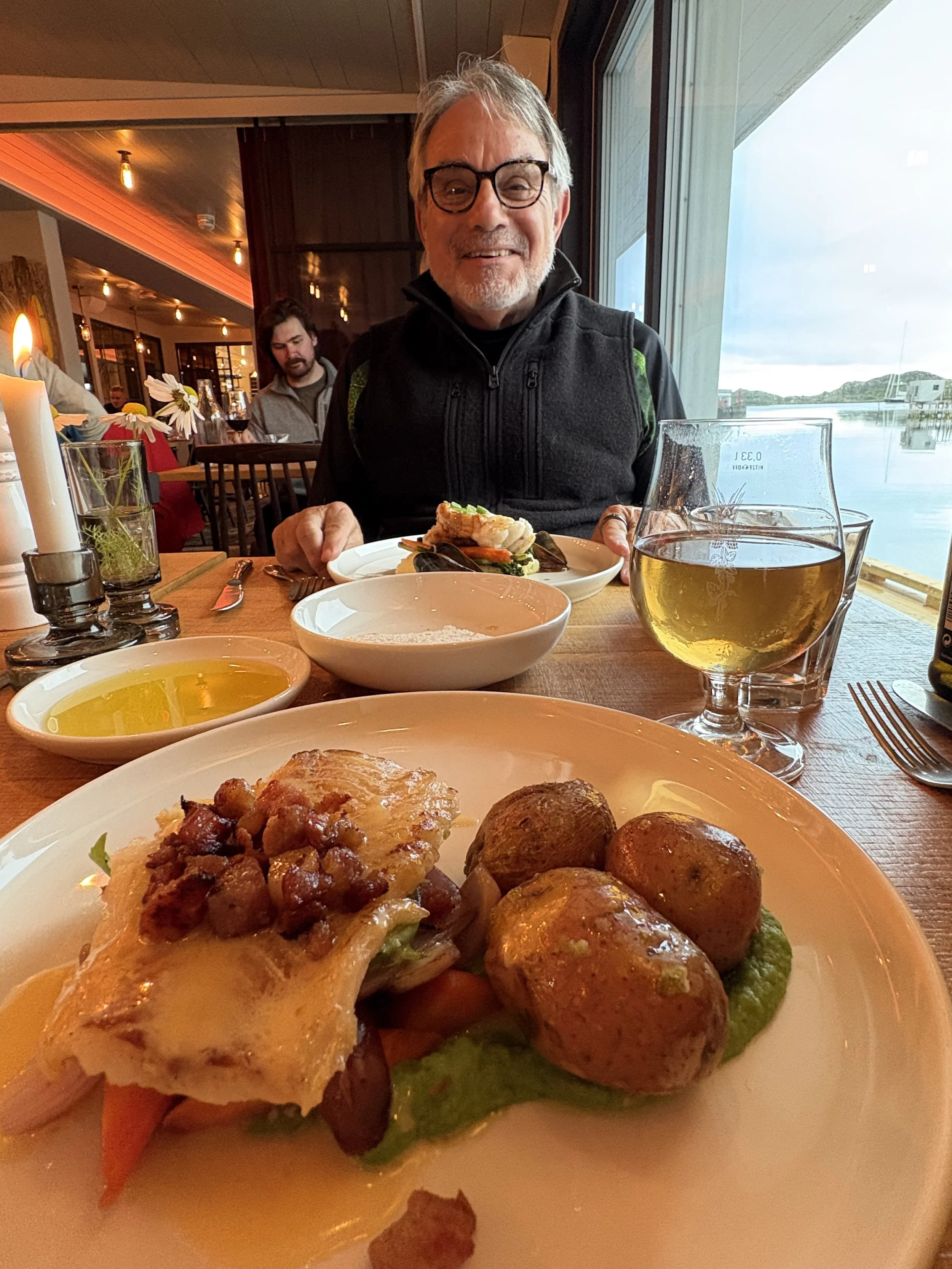
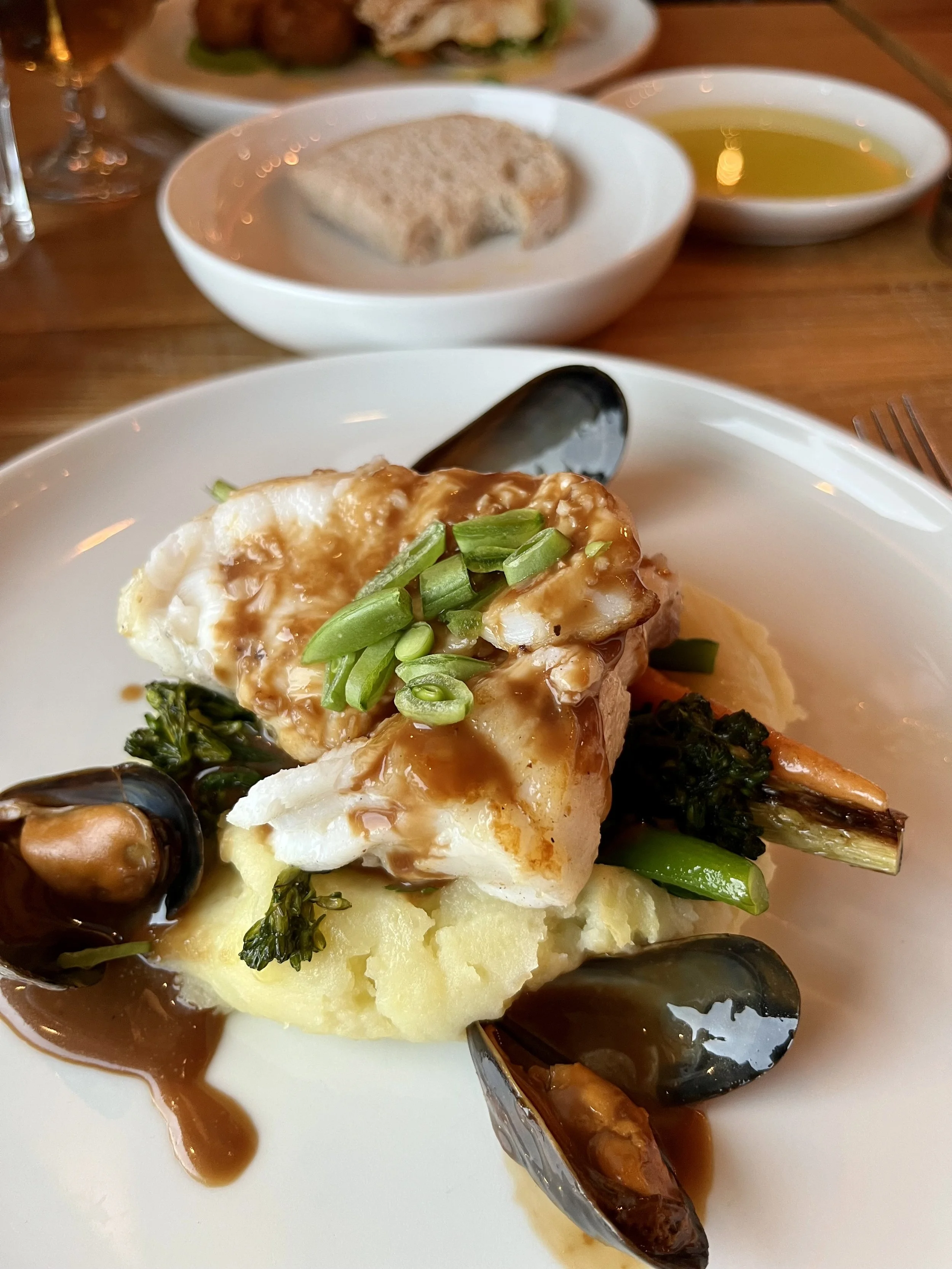
We arrived early evening, after freshened up we go to our formal dinner. The food is traditional Norwegian, mostly fish.  Frank ordered catch of the day, monk fish with sauce, veggies, and potato purée. An unusual choice served beautifully. We have seen monk at fish markets—ugly looking—had to try it along with a glass of Rose’ and really enjoyed. The fish was mild with the texture of lobster but not as flavorful.

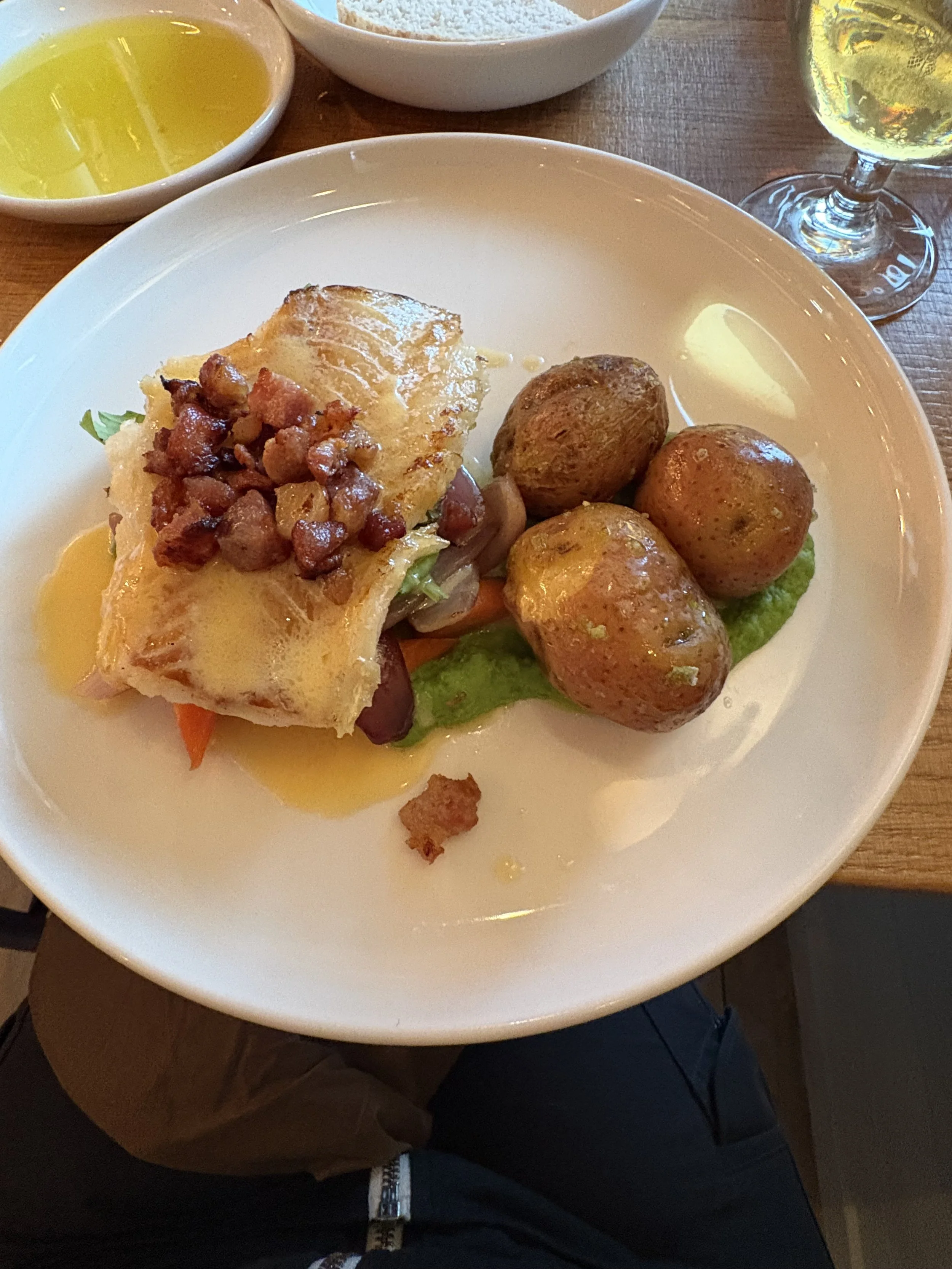
Janet challenged herself and ordered stockfish with veggies and potatoes. It was prepared beautifully, but clearly is an acquired taste, somewhat tough and chewy with a strong fish flavor. It was topped with bacon, which always helps!

We digress to Stockfish

Since arriving in Bergen, we have been hearing about stockfish, why? Because a major part of the economy of Norway, now and for centuries.  Stockfish is Cod.  Each year from January to April, the Cod return to the Norwegian coastal waters to spawn. Tens of thousands of fish come each season. The Cod is dried on racks and due to the climate, does not need salt to cure.   You can see hundreds of wood lattice drying racks near the water. Stockfish can last up to 30 years.  To eat you must soak for days.  Janet wonders just how old her Stockfish dinner was!

More to come about Stockfish..

Stockfish drying racks

WWII bunker

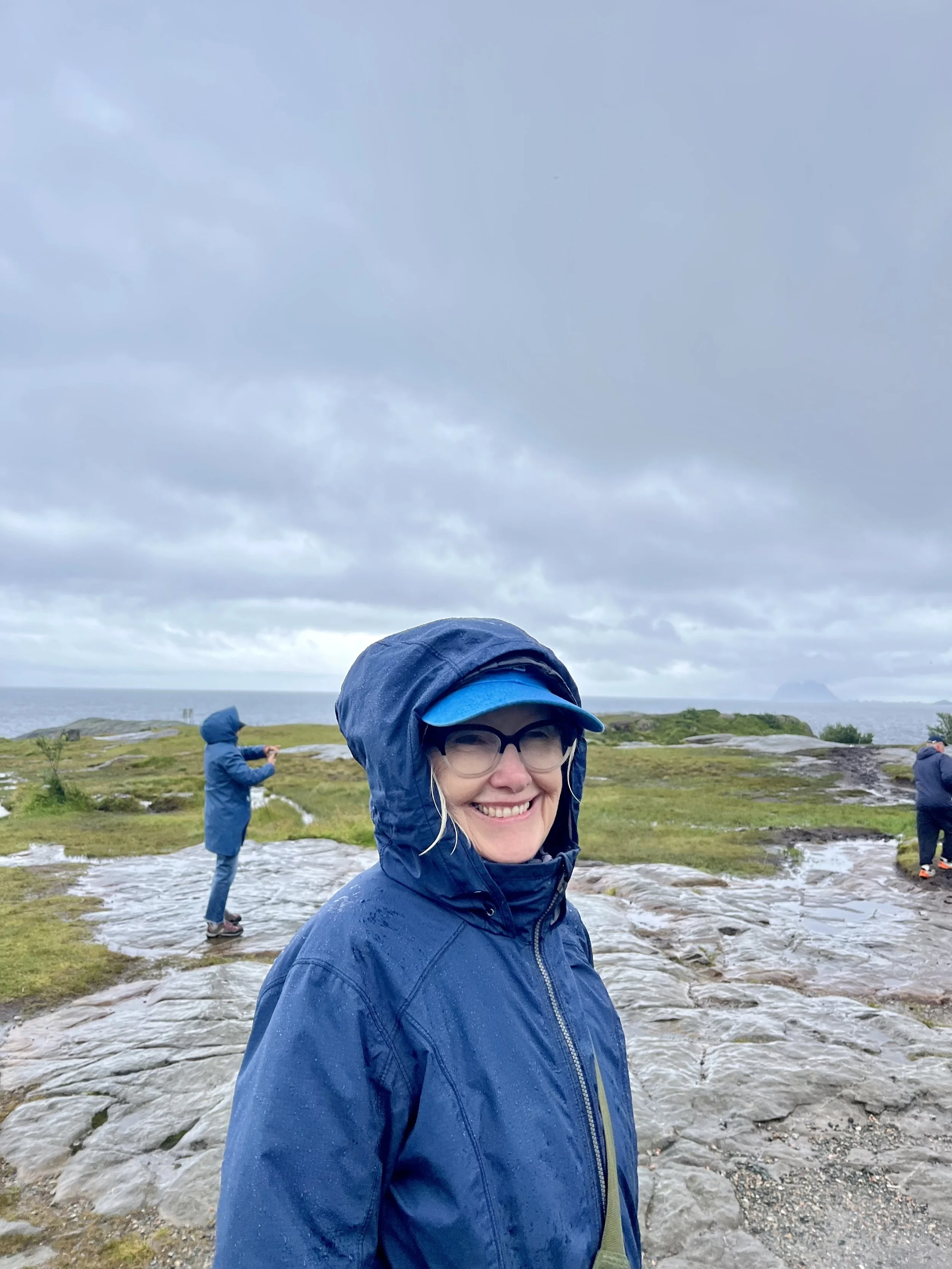
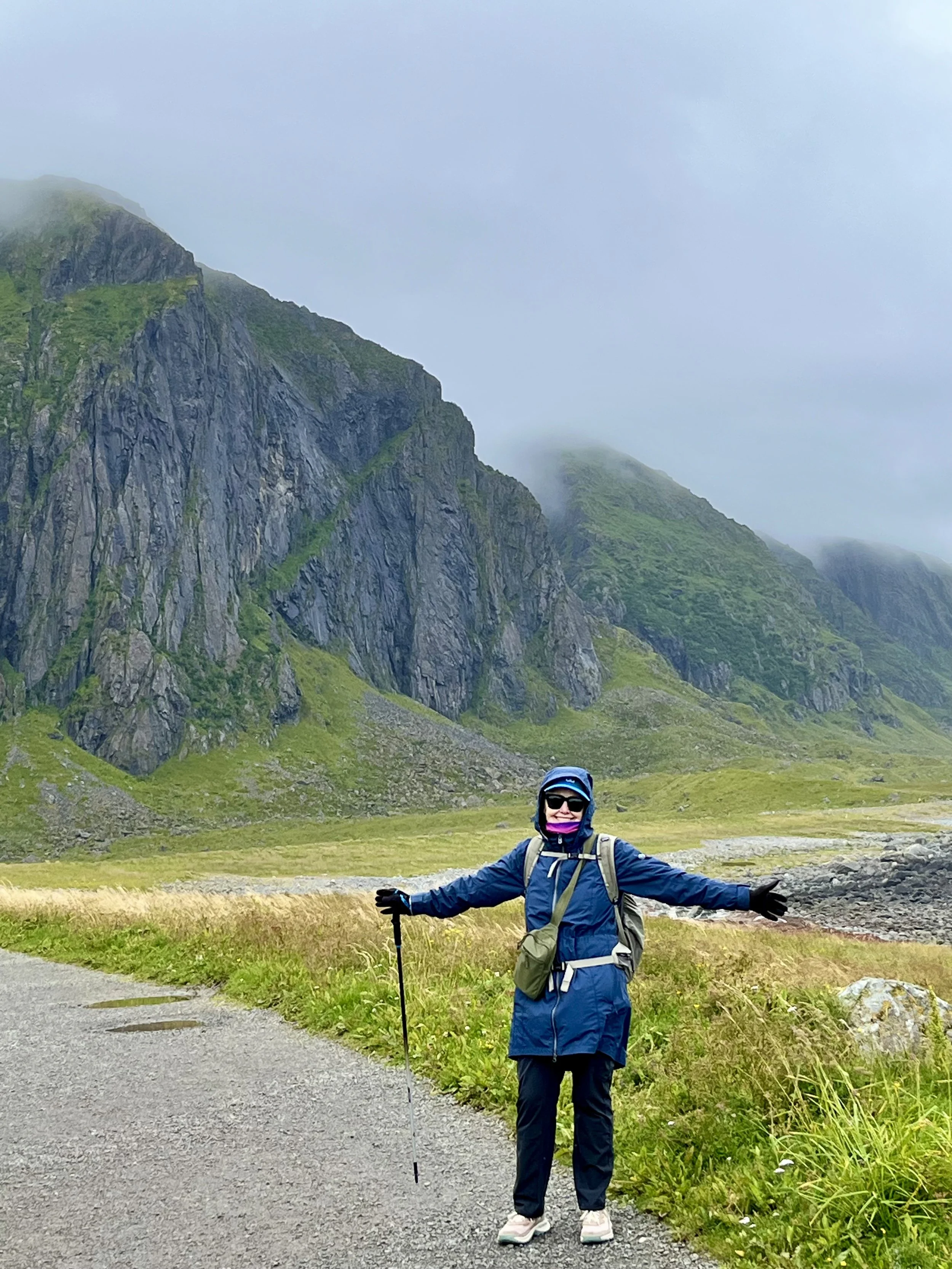
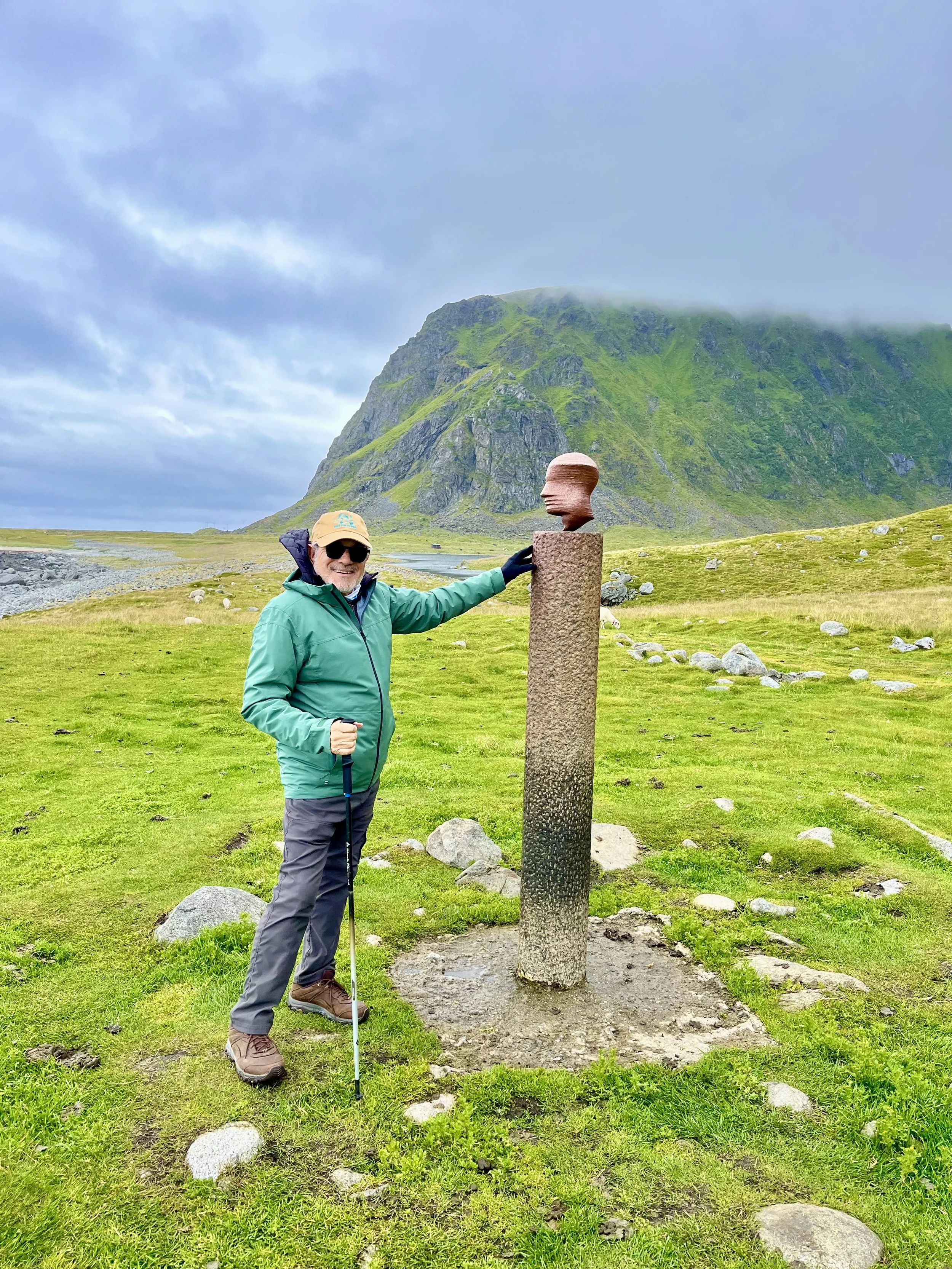
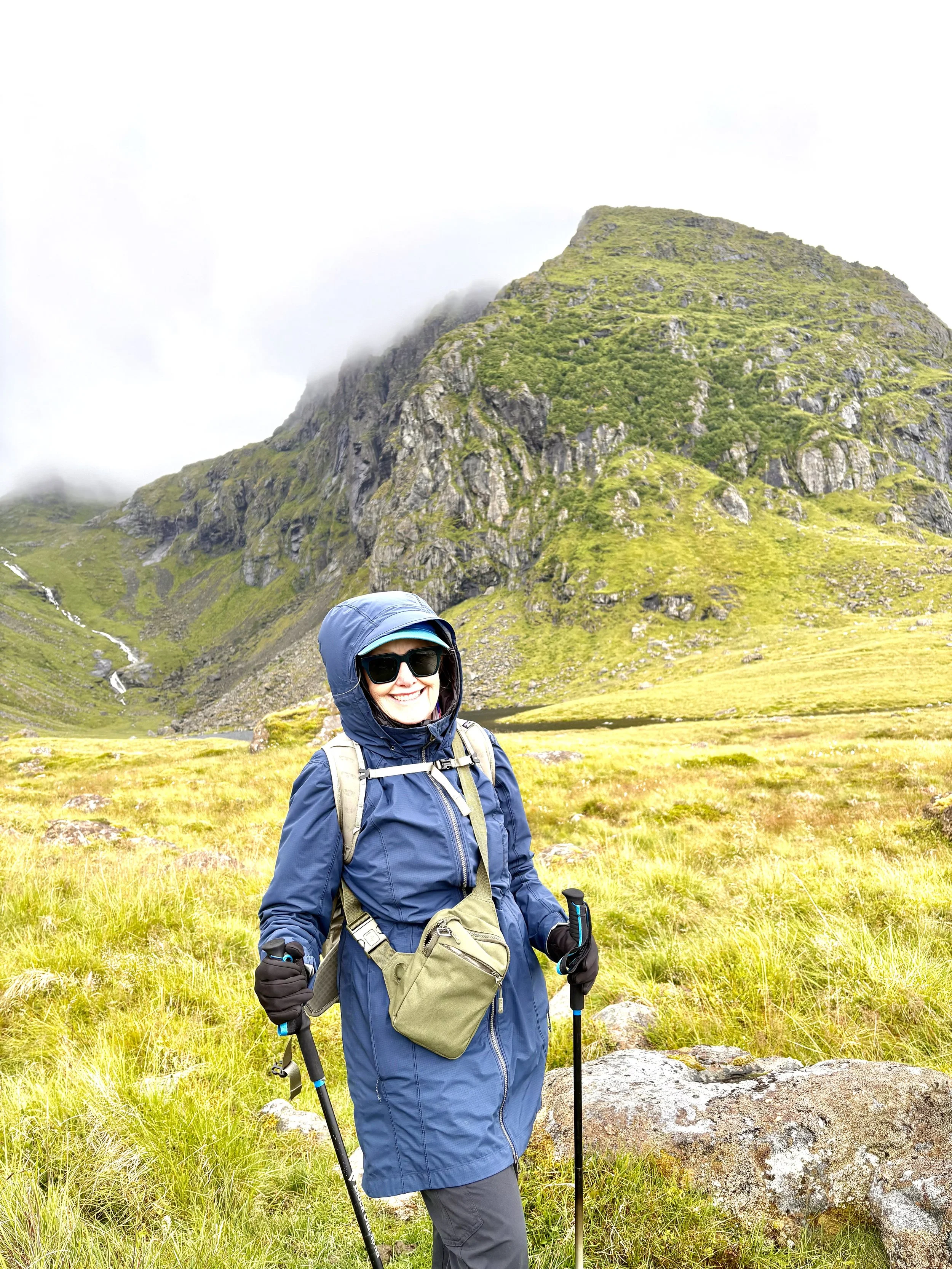
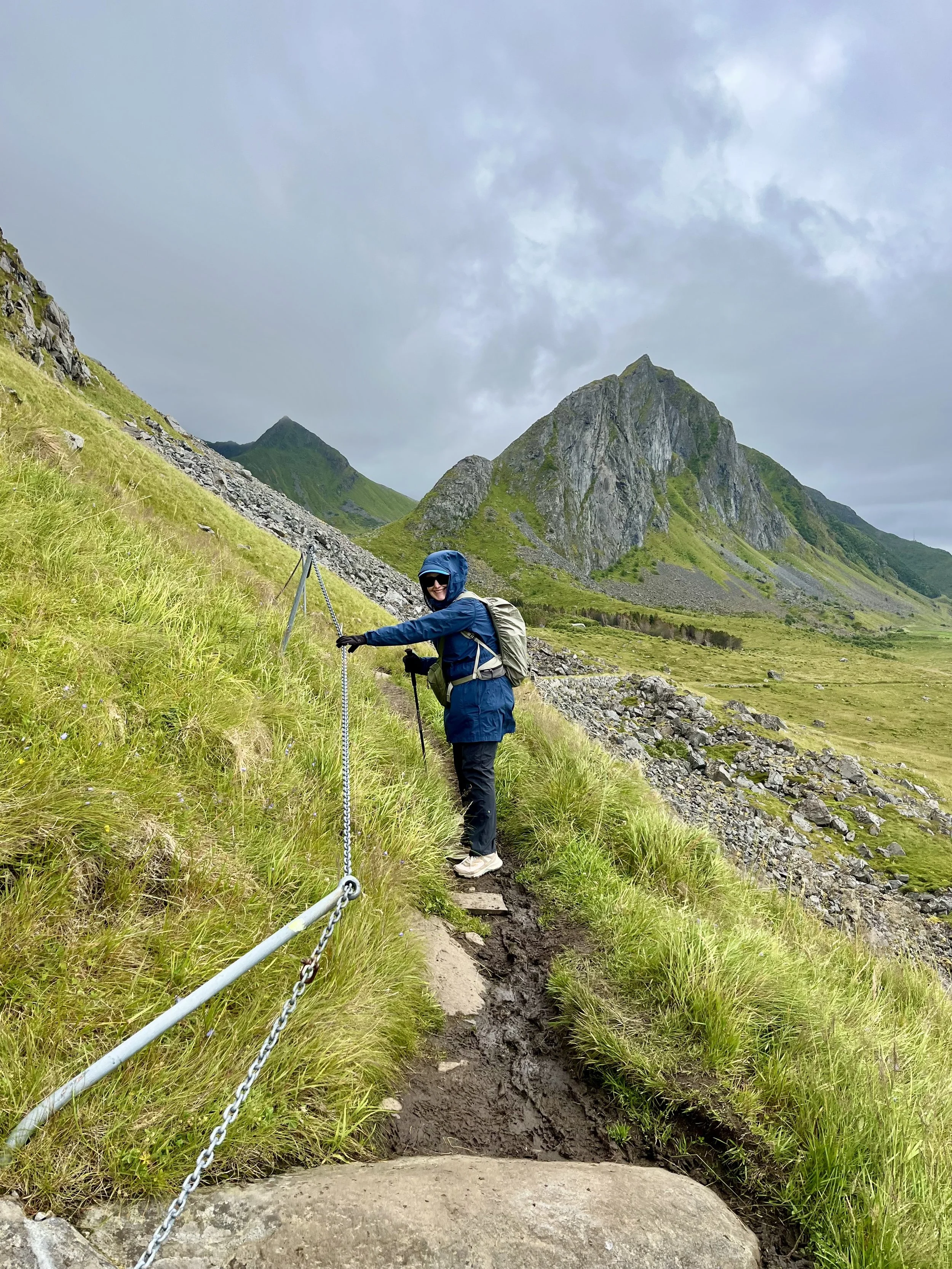
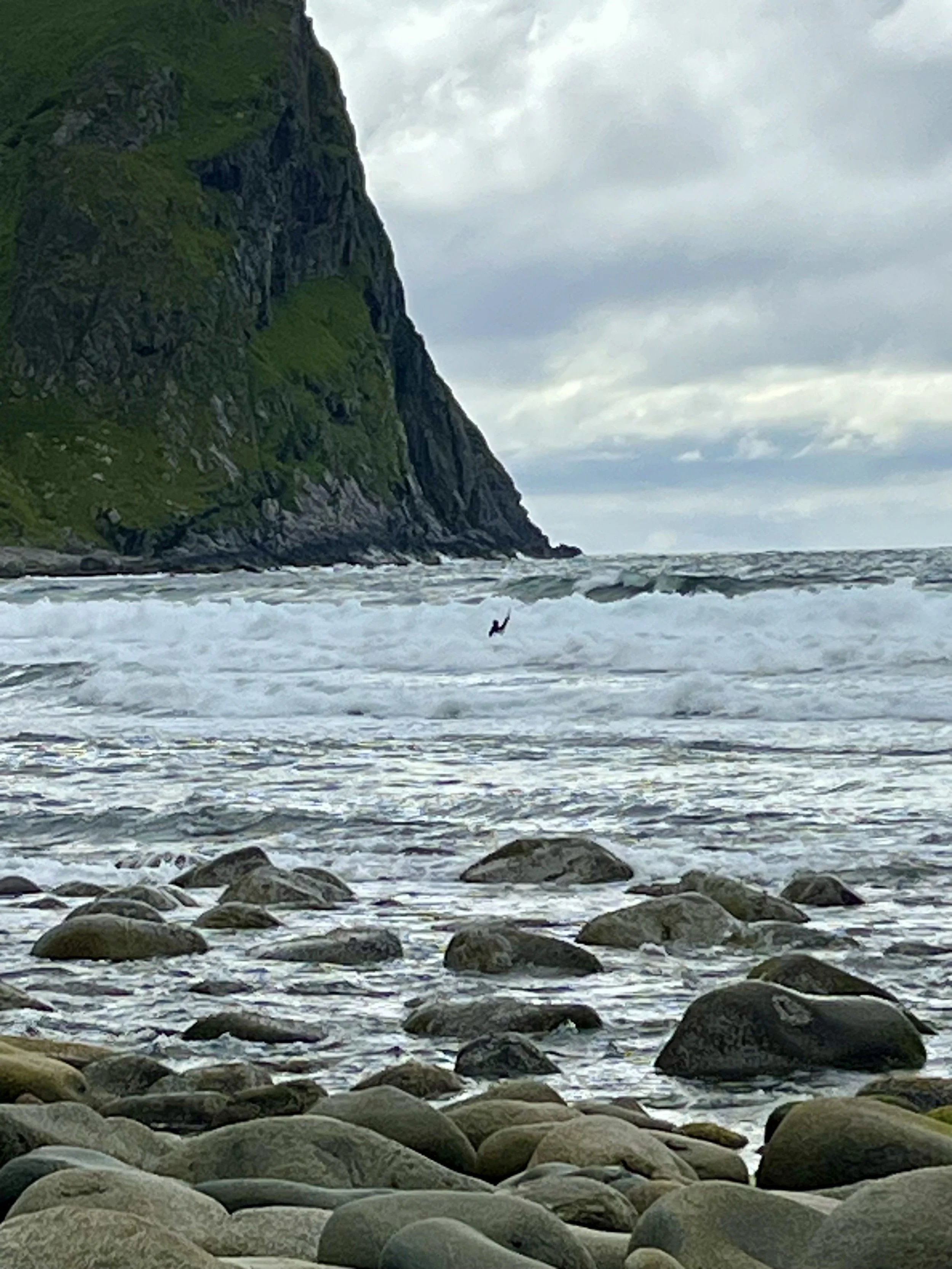
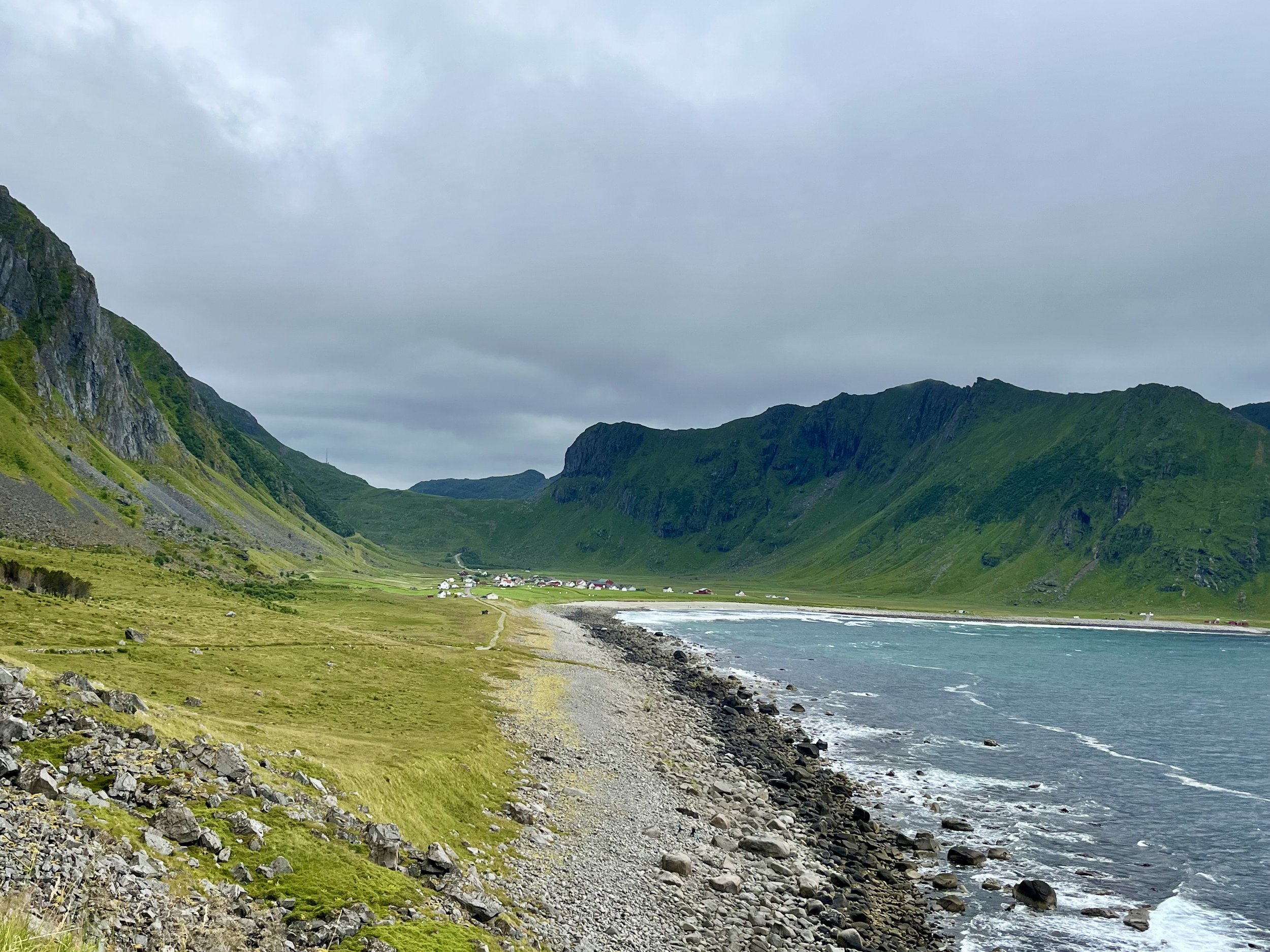
We wake early and after a great breakfast leave for a day of hiking.  This area is a top hiking destination, and the islands is full of hikers, campers and all sizes of motor homes with colorfully clad people trudging up and down the trails.  Most of the hikes are challenging with steep climbs, requiring hours to complete.  We decided early on that we would stick to the moderate or easy hikes.  We complete two beach hikes and travel to one other surfing beach by car, no hike here.  A total of 17,000 steps for the day, plenty for us.  The hikes are beautiful, muddy, lots of sheep and sheep dung.  The first hike also included an old German WWII bunker and a small monument of a head.

See photos below
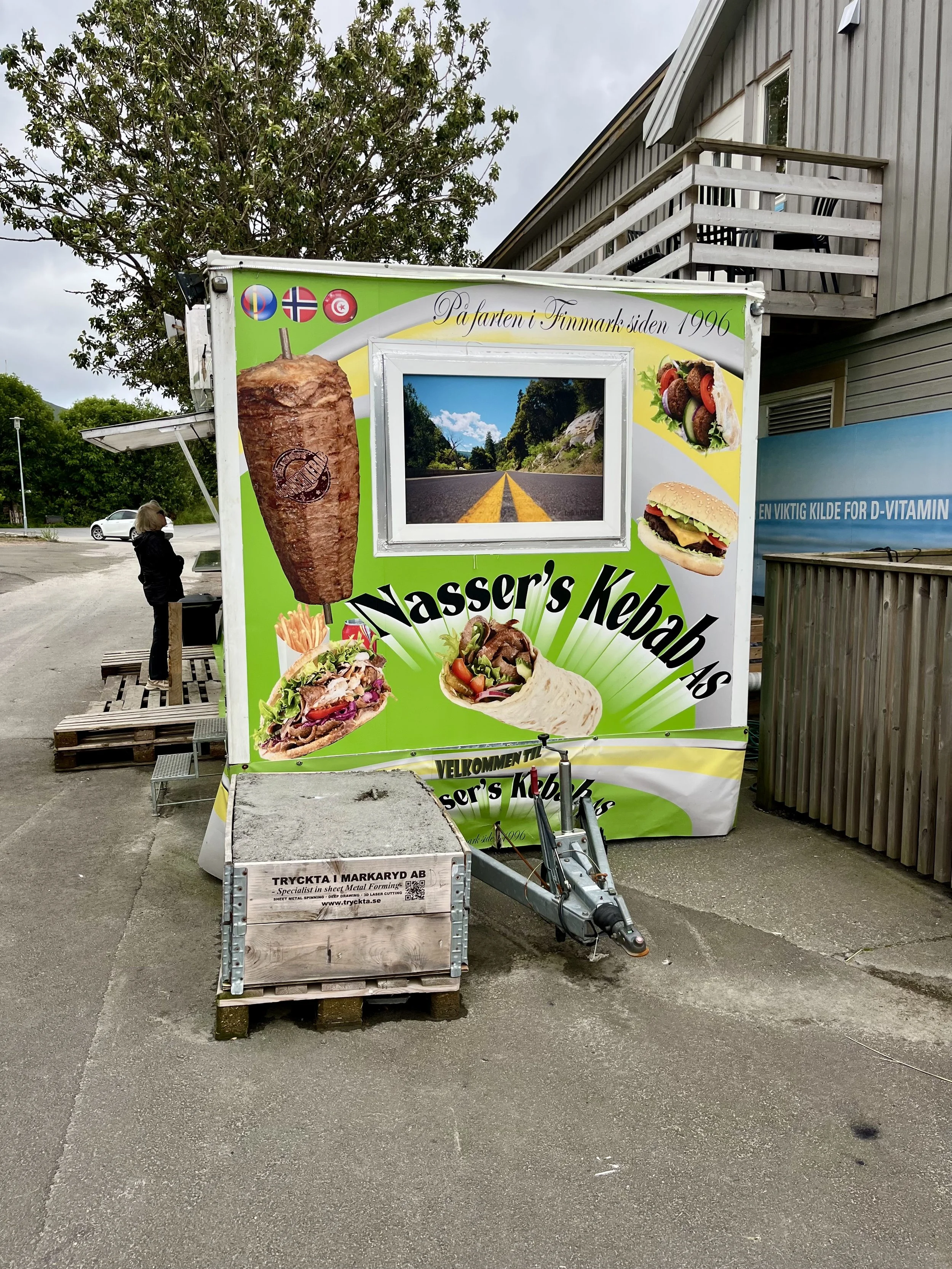
We head back through the tunnels and found a great kabob takeout for dinner, rest, blogging and some Netflix downtime.

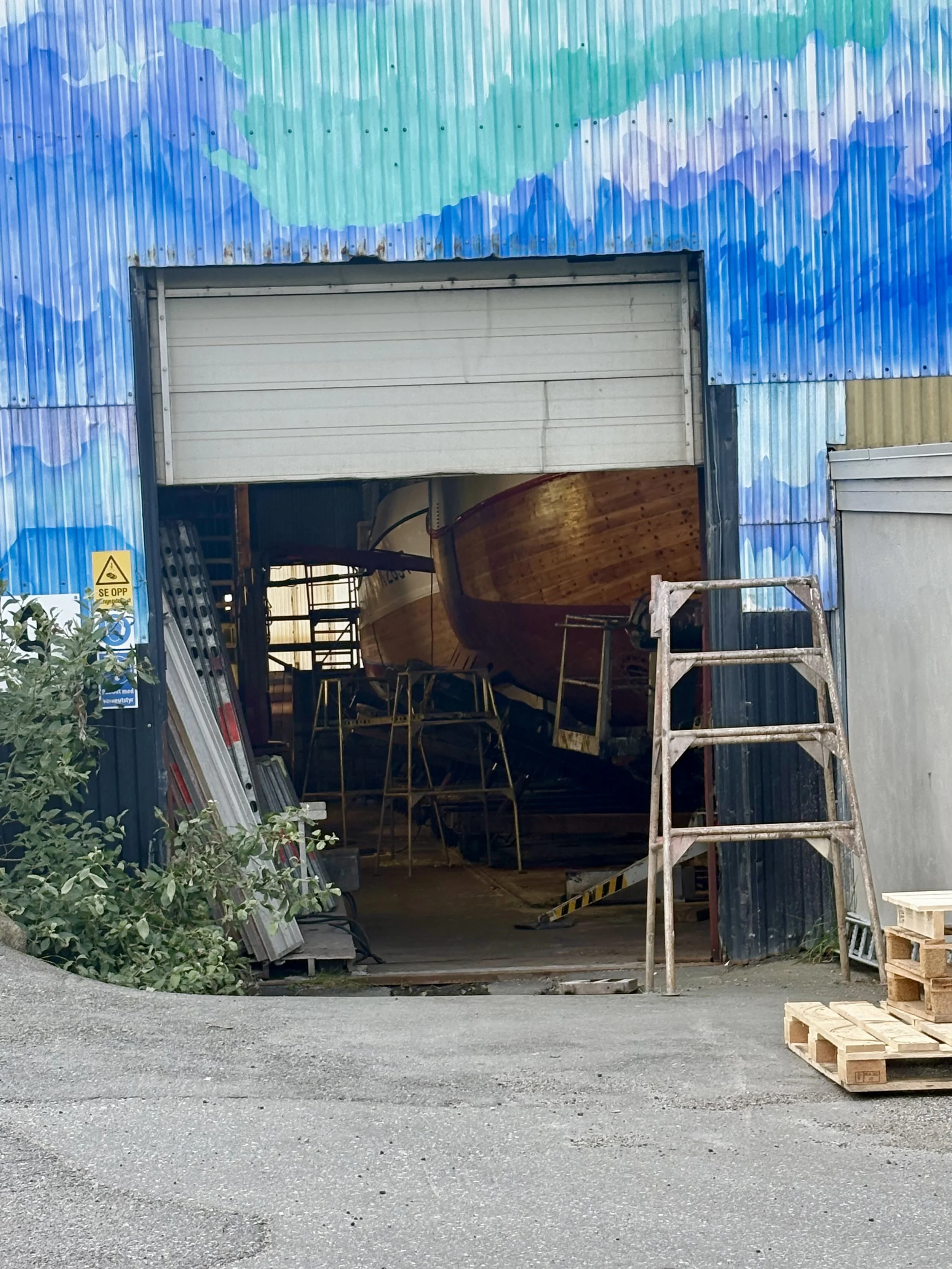
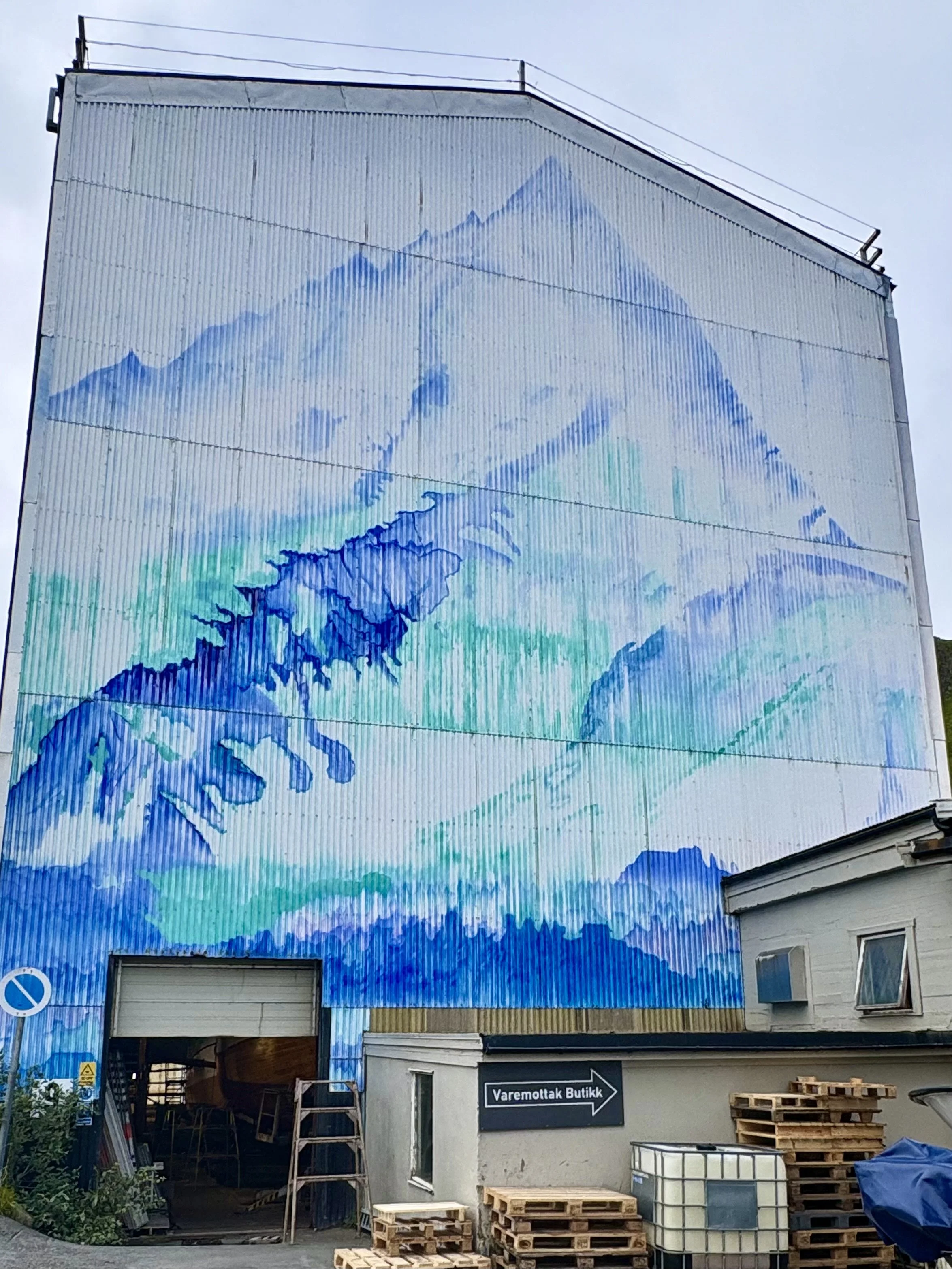
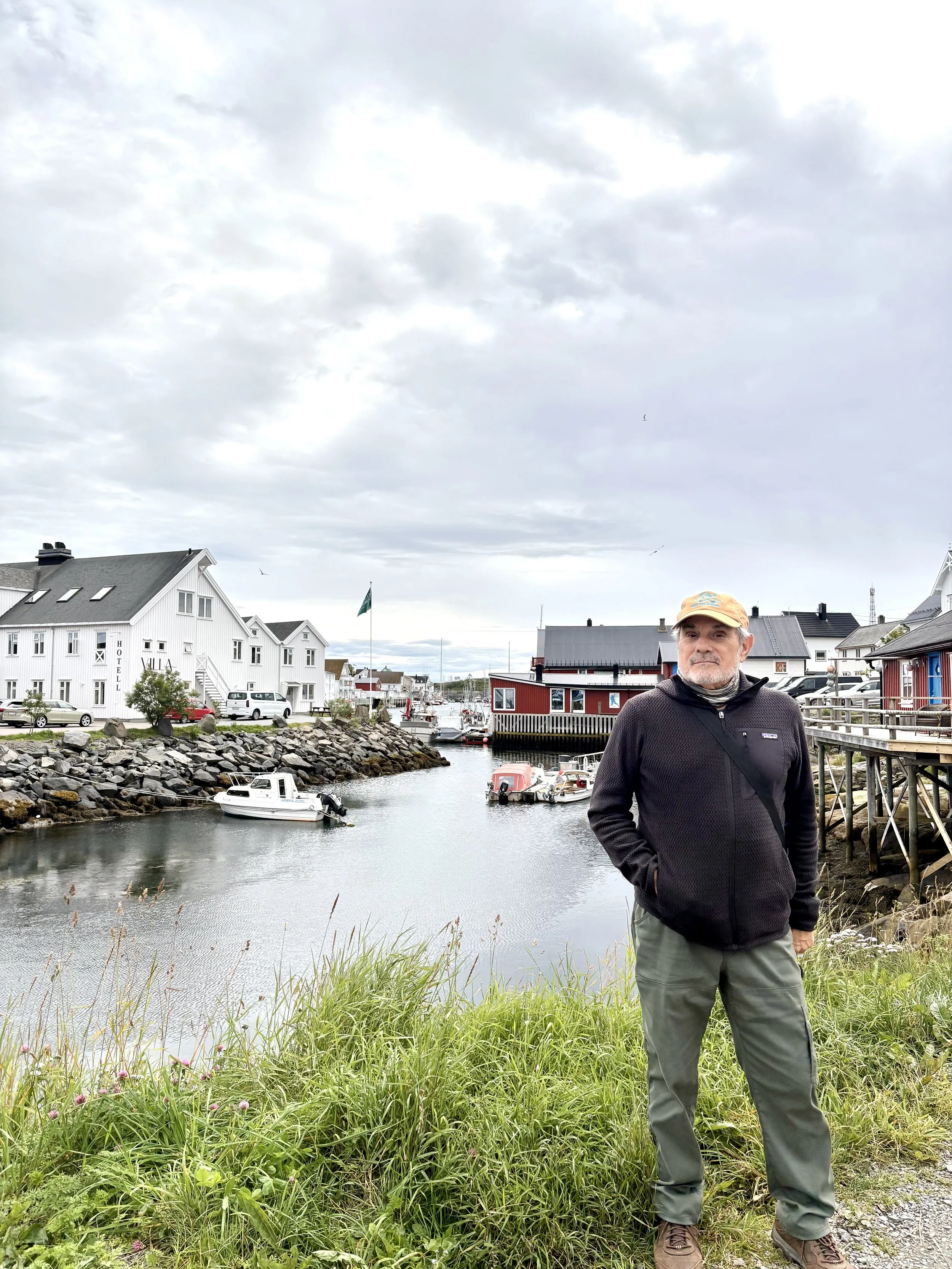
Next day, it is time to depart Ballstad and continue south. Before we leave, we do one last tour around the bay. This is really a beautiful place. In addition to the tourism, they have a a small working shipyard, below see a warehouse with 2 wooden boats being worked on.
Lofoten Archipelago Norway #1

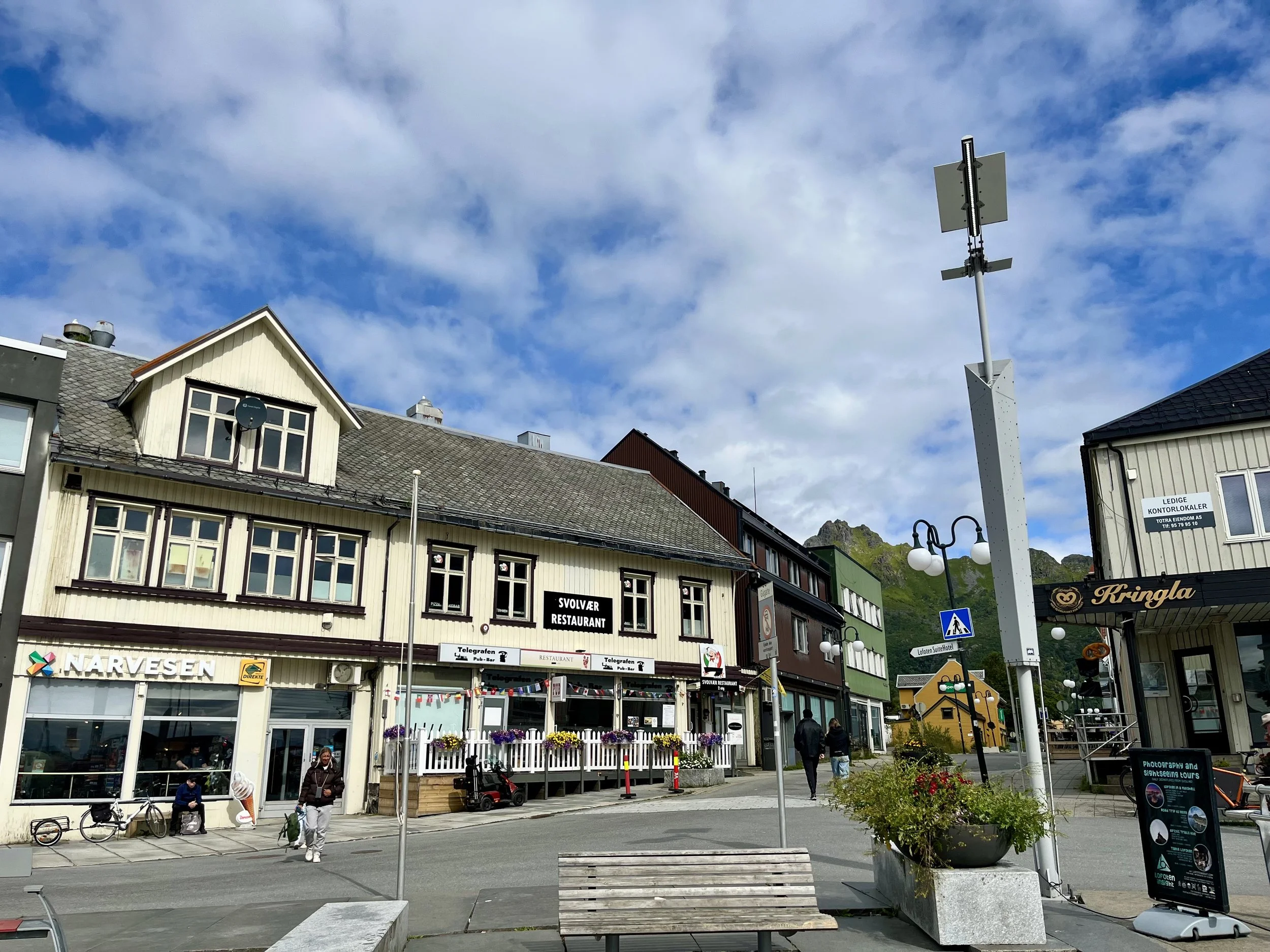
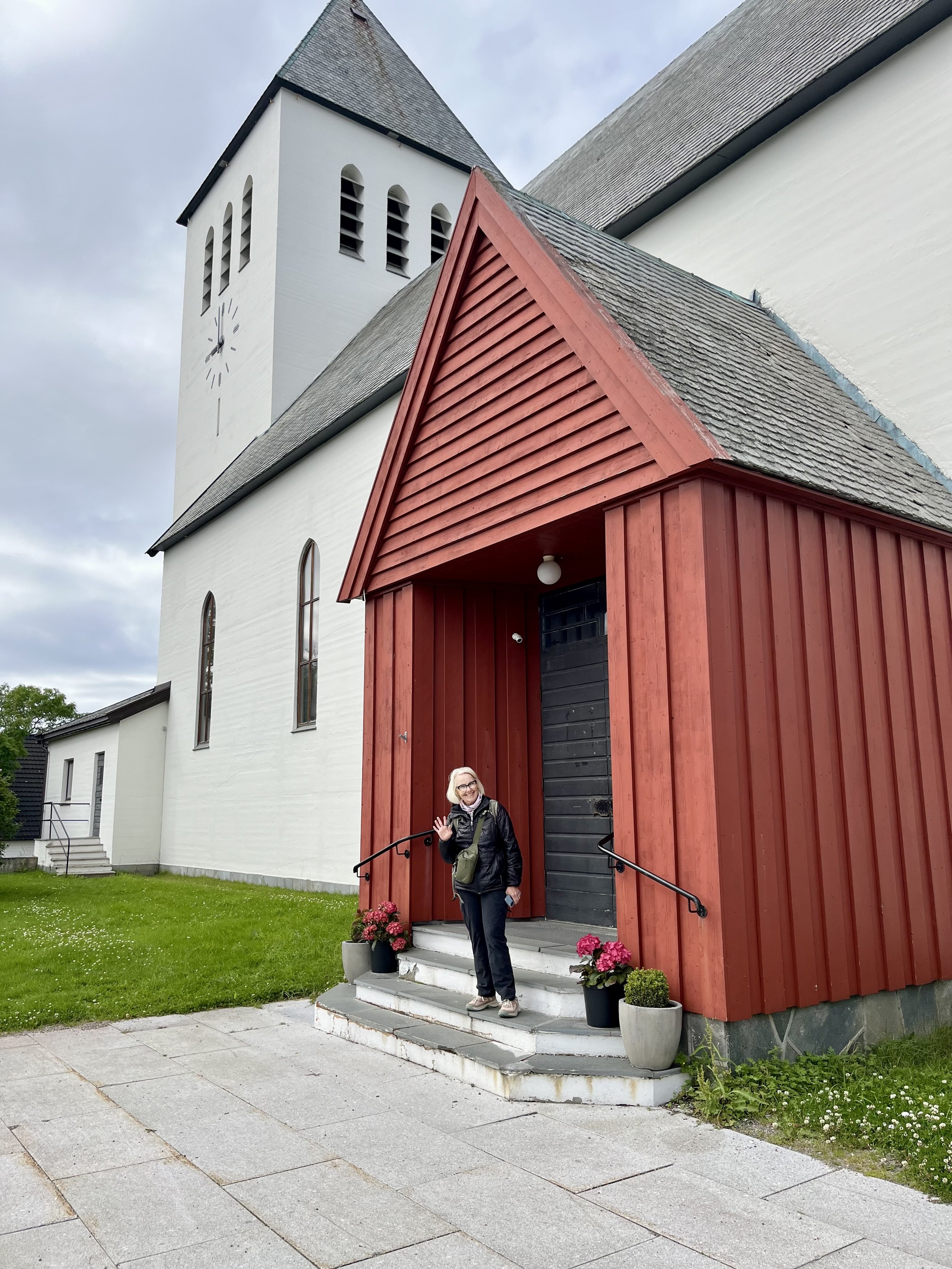
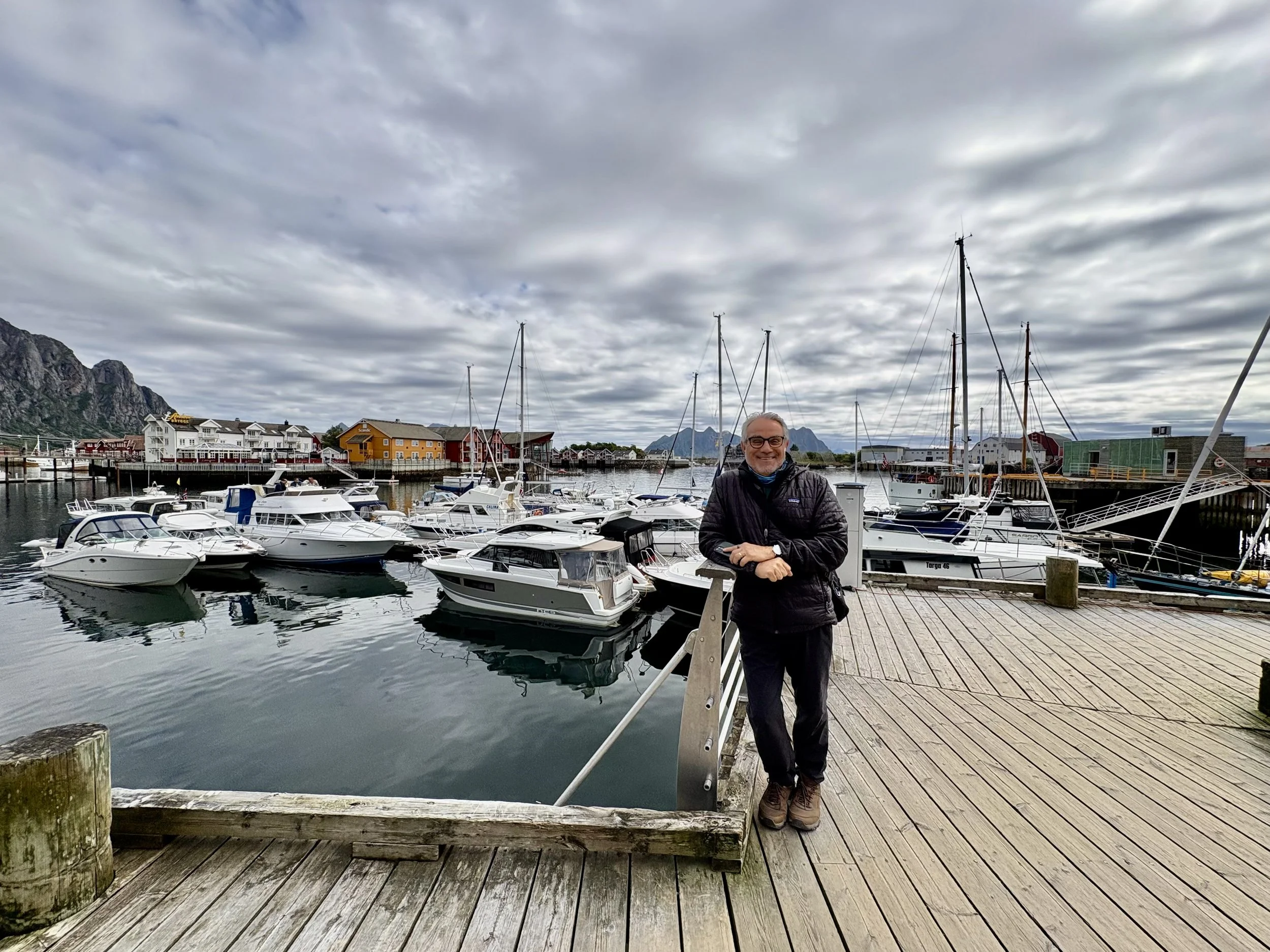
Our ship docked at Svolvær at 9:20 pm, on a quiet Sunday night. We walked out of the terminal, still light out and we first sighted the clock tower of the local Lutheran Church, all brick painted white with 2 operating clocks. Followed the Main Street toward the 7-23 Extra grocery turned into the near residential area and found our reserved Airbnb across from a canal. As we unlocked several large working boats travel passed us in the water across the street, perhaps they are done maybe for the night. In this town at this date sunset is at 12.30 am and sunrise is at 1:40 am, offering only one hour and 20 minutes of night. As we unpacked, another boat left for sea work. The day ends with late watch of the World Cup finals. Another long day.

Not a soul on the streets

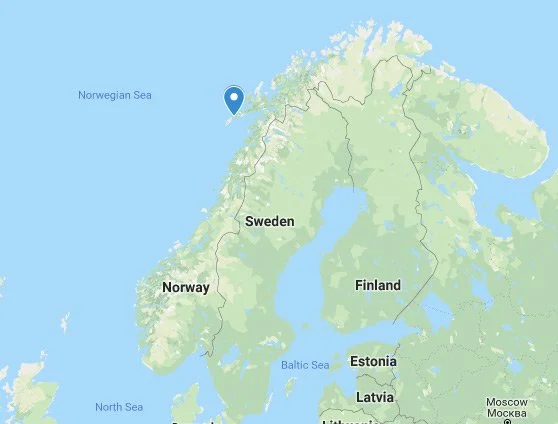
Svolvær is located on the island of Austvågøya in the Lofoten archipelago.  Lofoten is at the 68 and 69 parallels north of the Arctic Circle in northern Norway.  It has a with a population of 25,000 and an annual tourist population of million. It is famous for the midnight sun during summer and Northern Lights from September to April.  The archipelago has 4 primary islands in a crescent shape perpendicular to the mainland, the same as our home; Sanibel Island. With this location we feel our journey is changing, visiting the out of the way locations.  Back to being travelers, not just on a vacation

To travel the islands, we are renting a car. After a late breakfast, we walked to the rental center a day early to work out conflicts on return dates. We are going to drive to the far southern end of Lofoten Island with other stops in between and then return to Svolvaer. Our problem is the scheduled return time is too early for comfort, as 4 hours needed for the return trip. We calculated possible additional charges for extra hours. Arriving at the rental center we see the garage and office doors are wide open, but no one is home.

We phone and a man answers, “Getting gas for a car, be right there.” Guy arrives calls us over where we inform him of predicament wanting few extra hours. He nods,” if not reserved then no problem.” He played at the computer for a few seconds (for show)?, then said, “you can bring it back any time that last day, in fact I will let you take the car today, a day early, for no extra charges, less work for me tomorrow.”  The deal worked out for both sides, no need to over evaluate the motives.

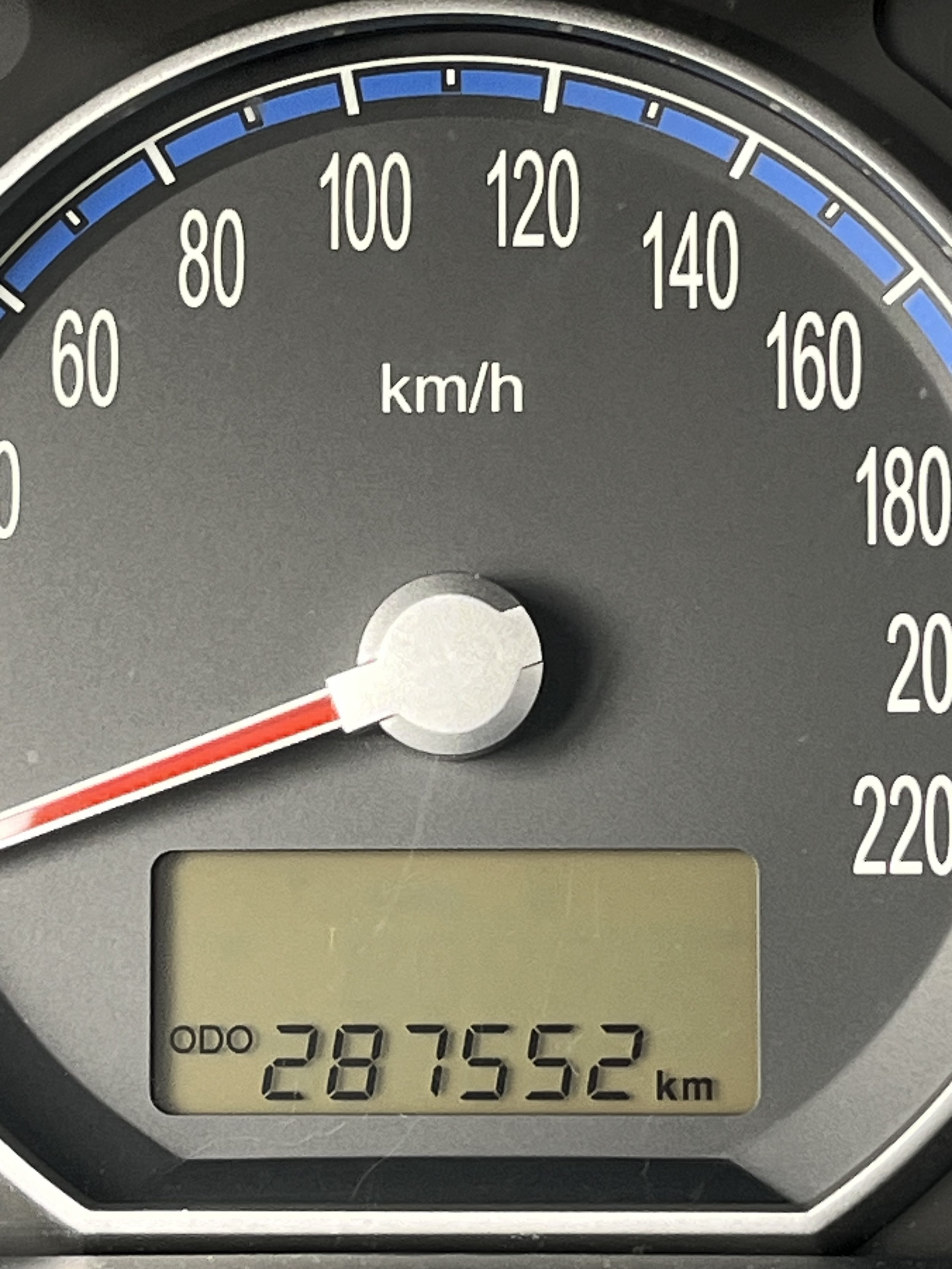
Maybe, we think the guy was afraid we would cancel the car and walk across the street to the competing Avis Rental. We accepted, and now have an older Korean diesel Santa Fe SUV, that we drove off the lot and that works simply fine, with mileage at 287,000 km. LOL.

We drove on the correct side of the road directly to the Tourist Information Center, used the city parking app, and then got expert help with fine tuning our travel and hiking plans.

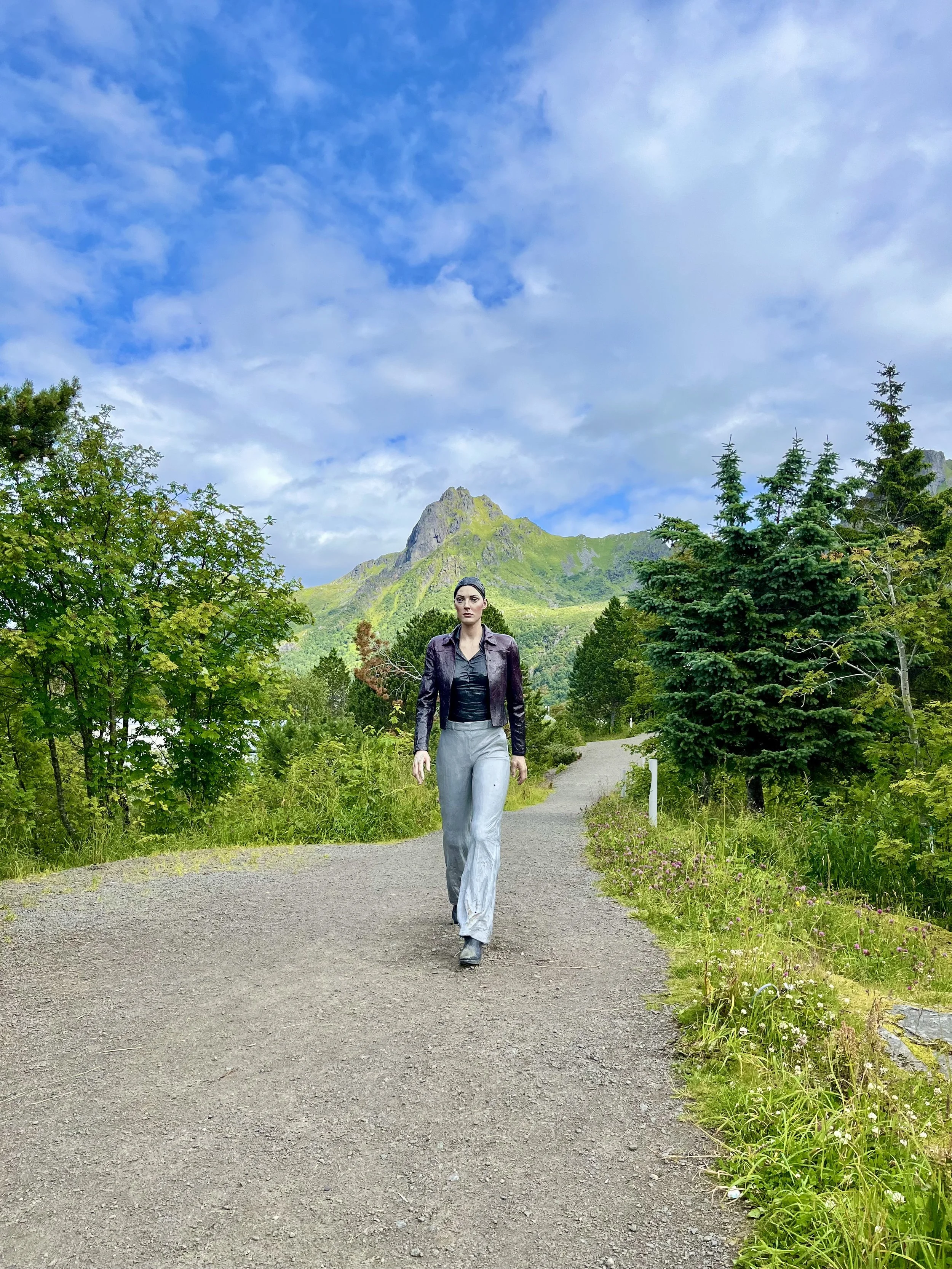
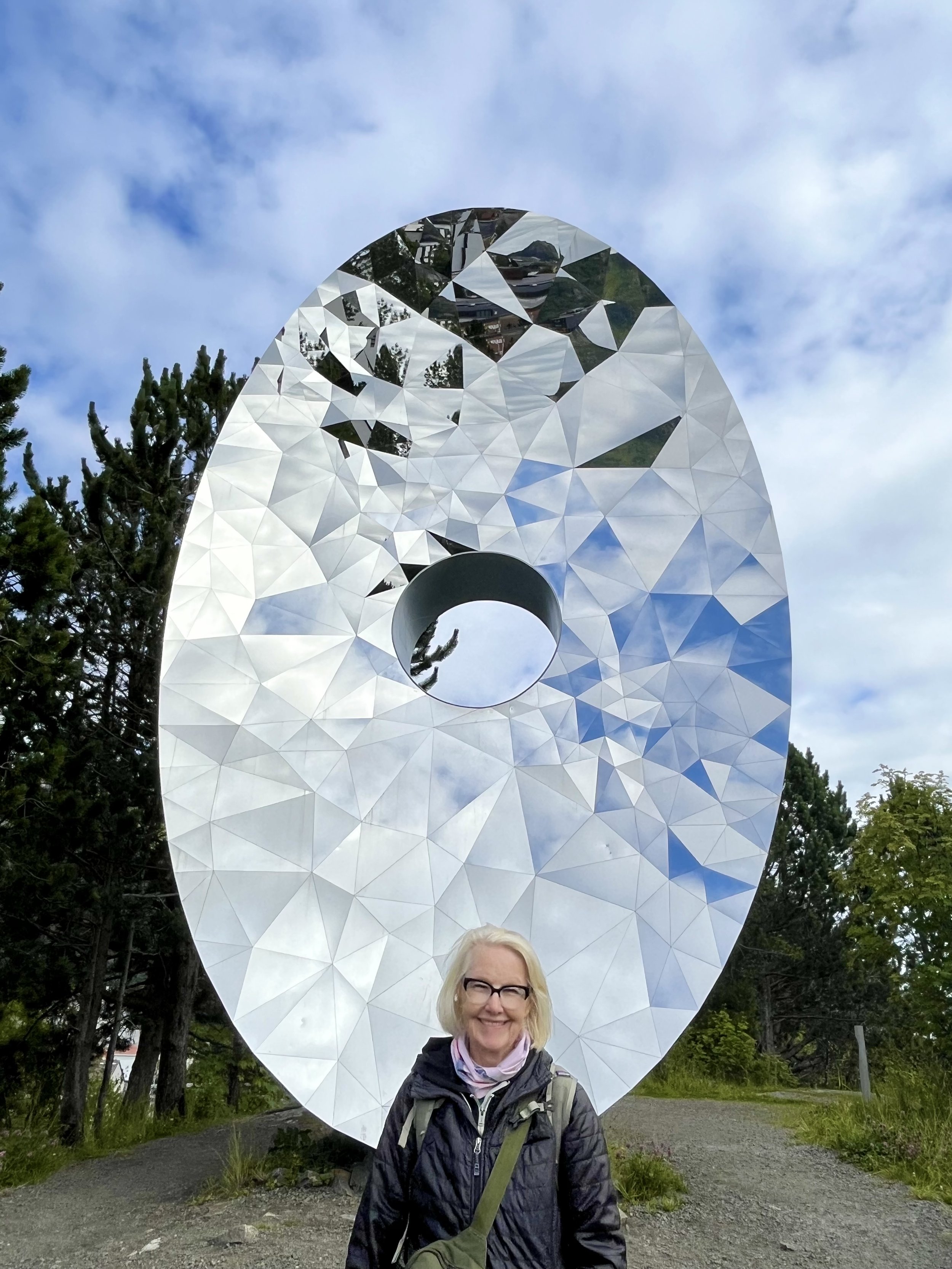
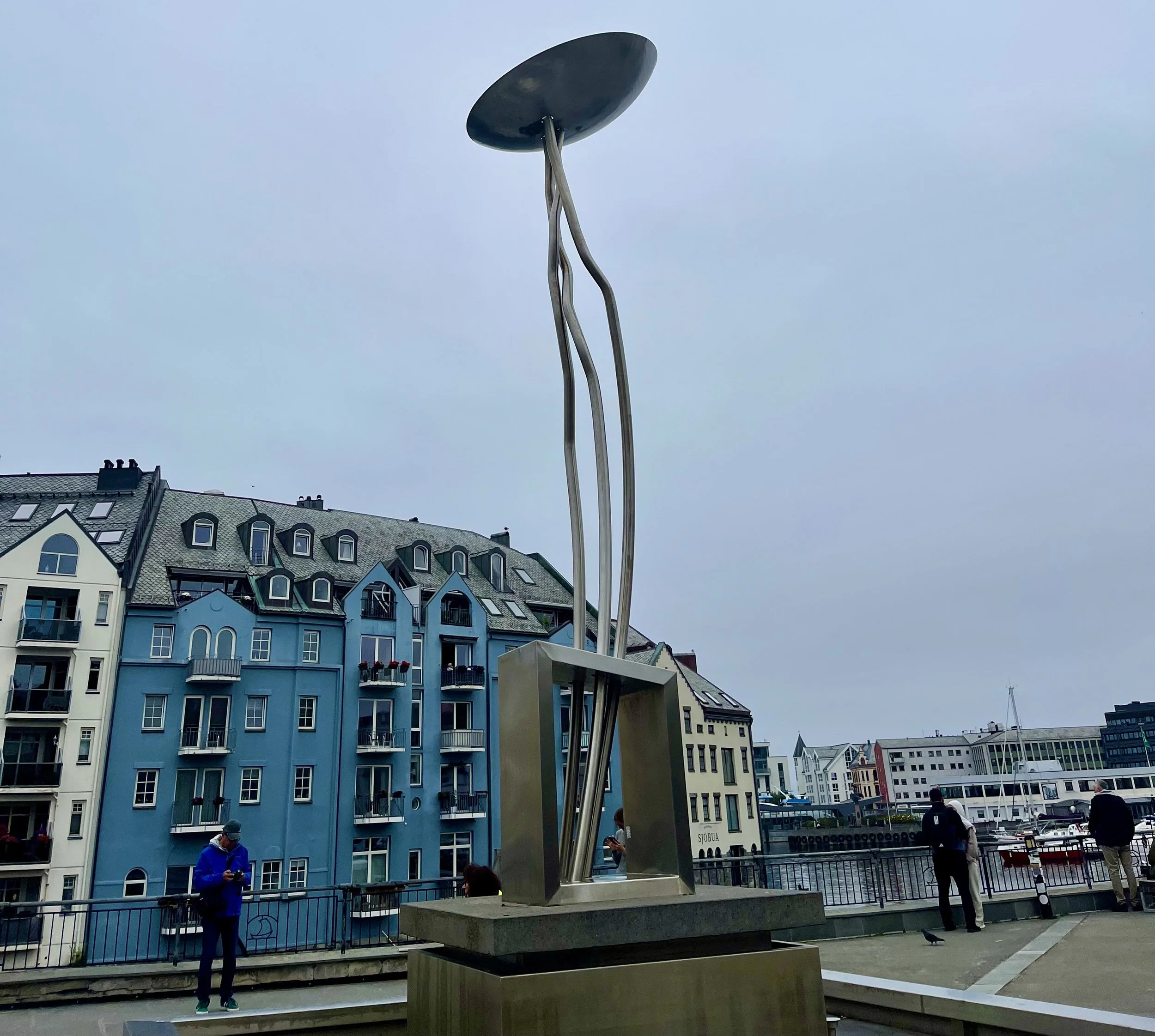
We then walked around the waterfront and city square, by the church, and a surprisingly interesting but small sculpture garden with 2 pieces. First, there was a full size, painted female hiker walking toward you on the path. She was so lifelike that we both separately declared, “that’s Creepy!” From a distance you think it is a real person either walking or in a frozen stance ready to shift and move. Second, ahead was a bright reflective glass sphere, of elongated oval shape with a viewing hole in the middle. The piece was about 2 stories high and composed of rectangular shaped mirrors. Both items were exceptional. See Photos.

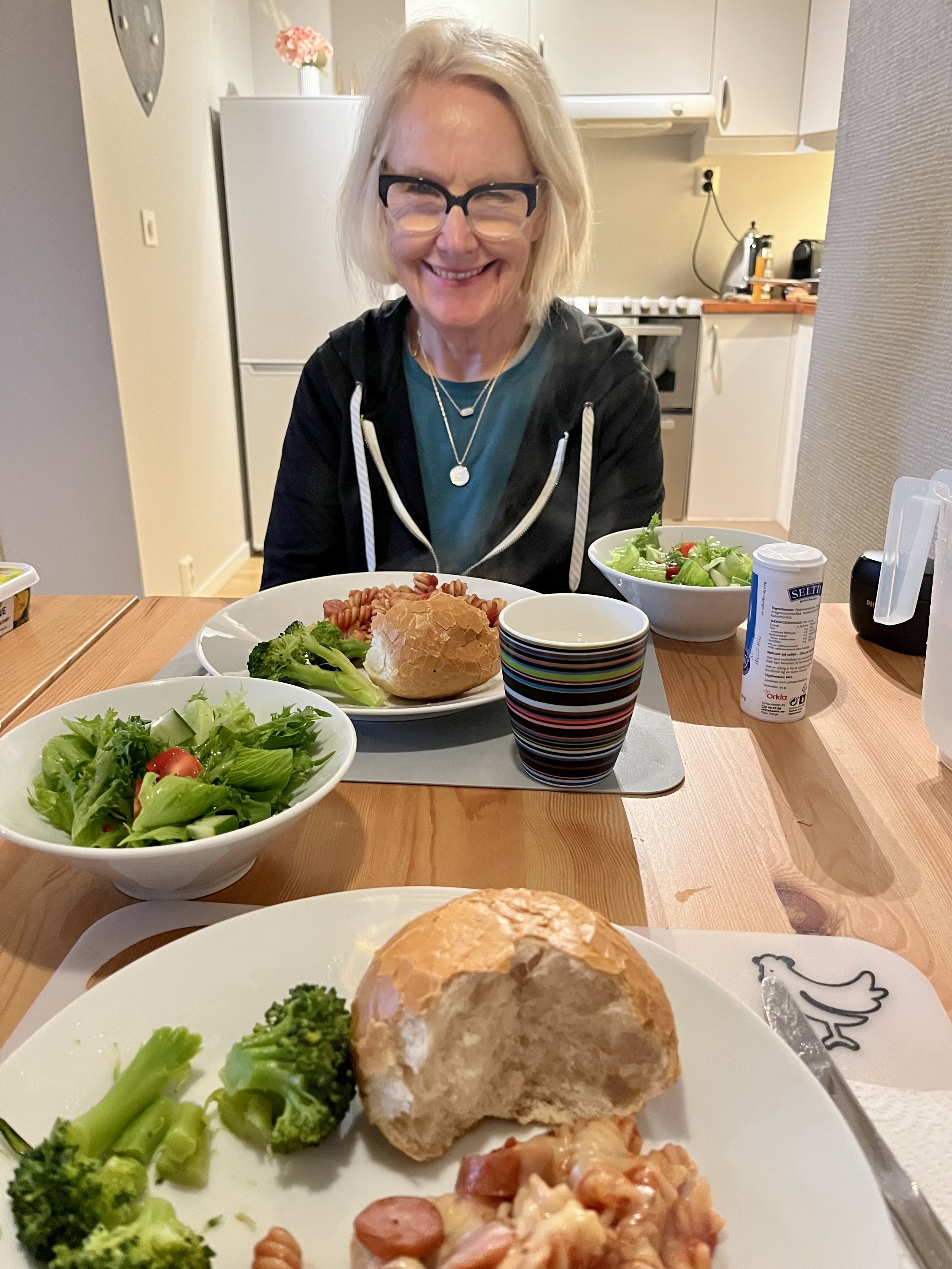
Our go-to dinner on the road

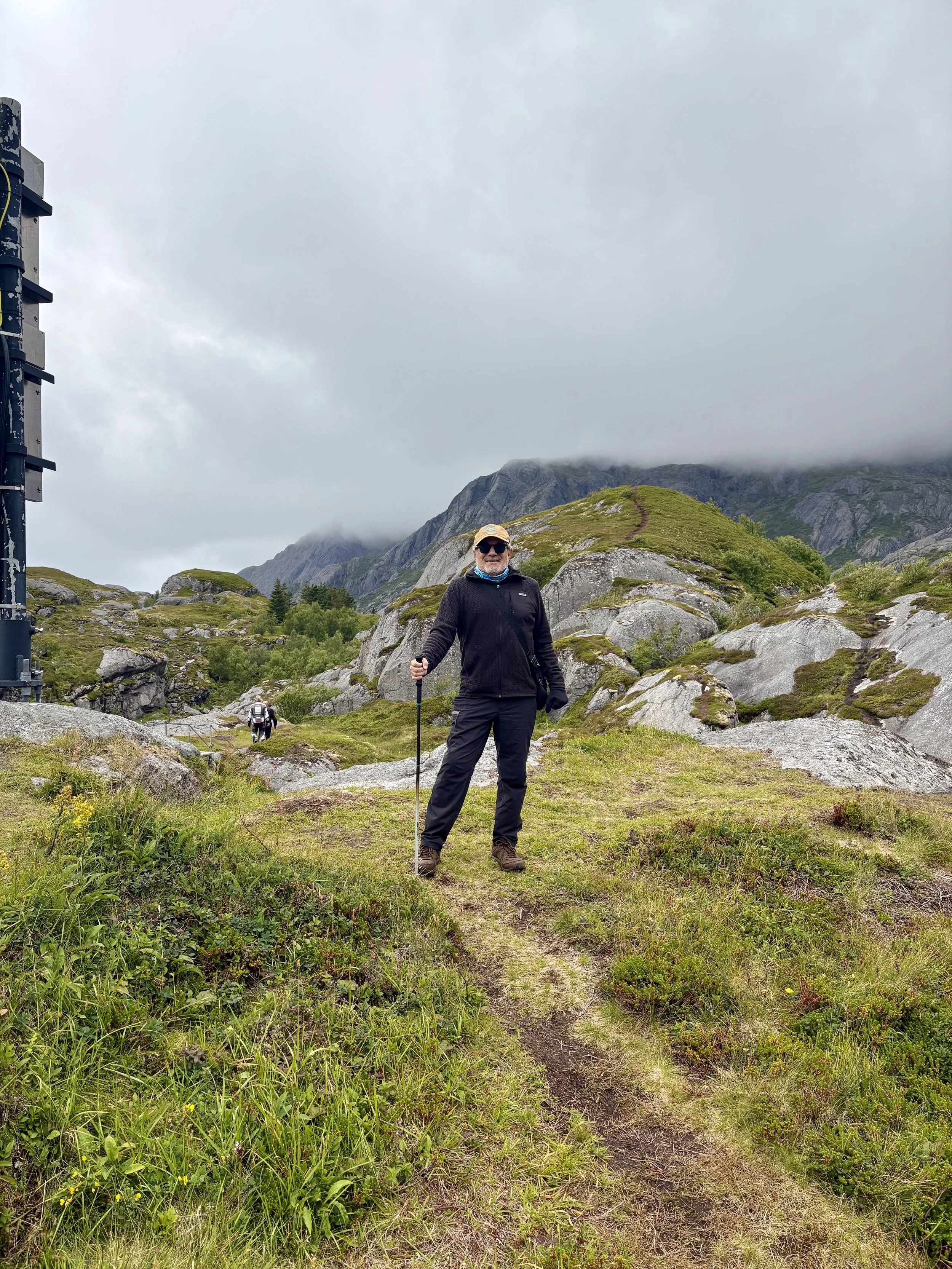
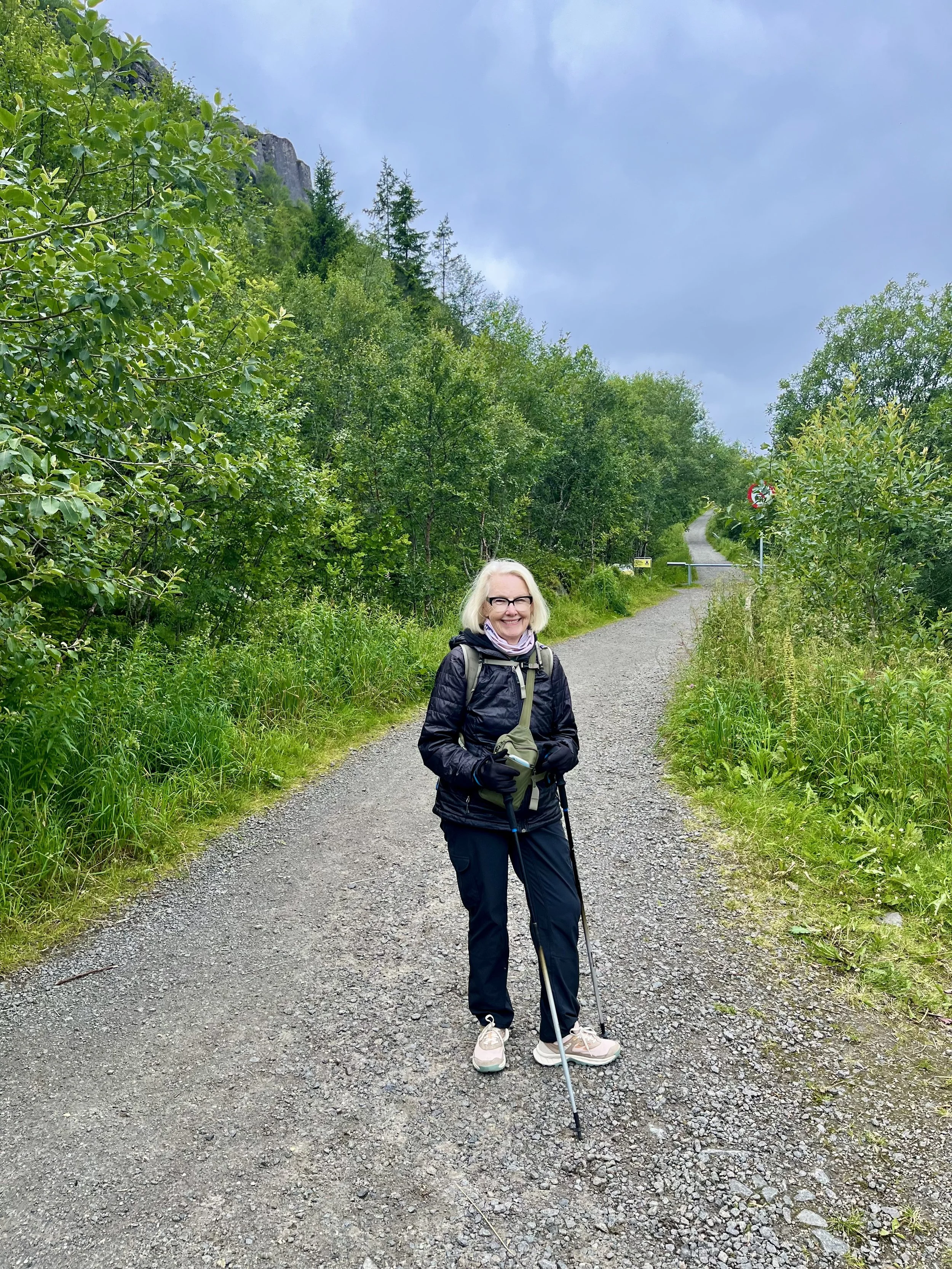
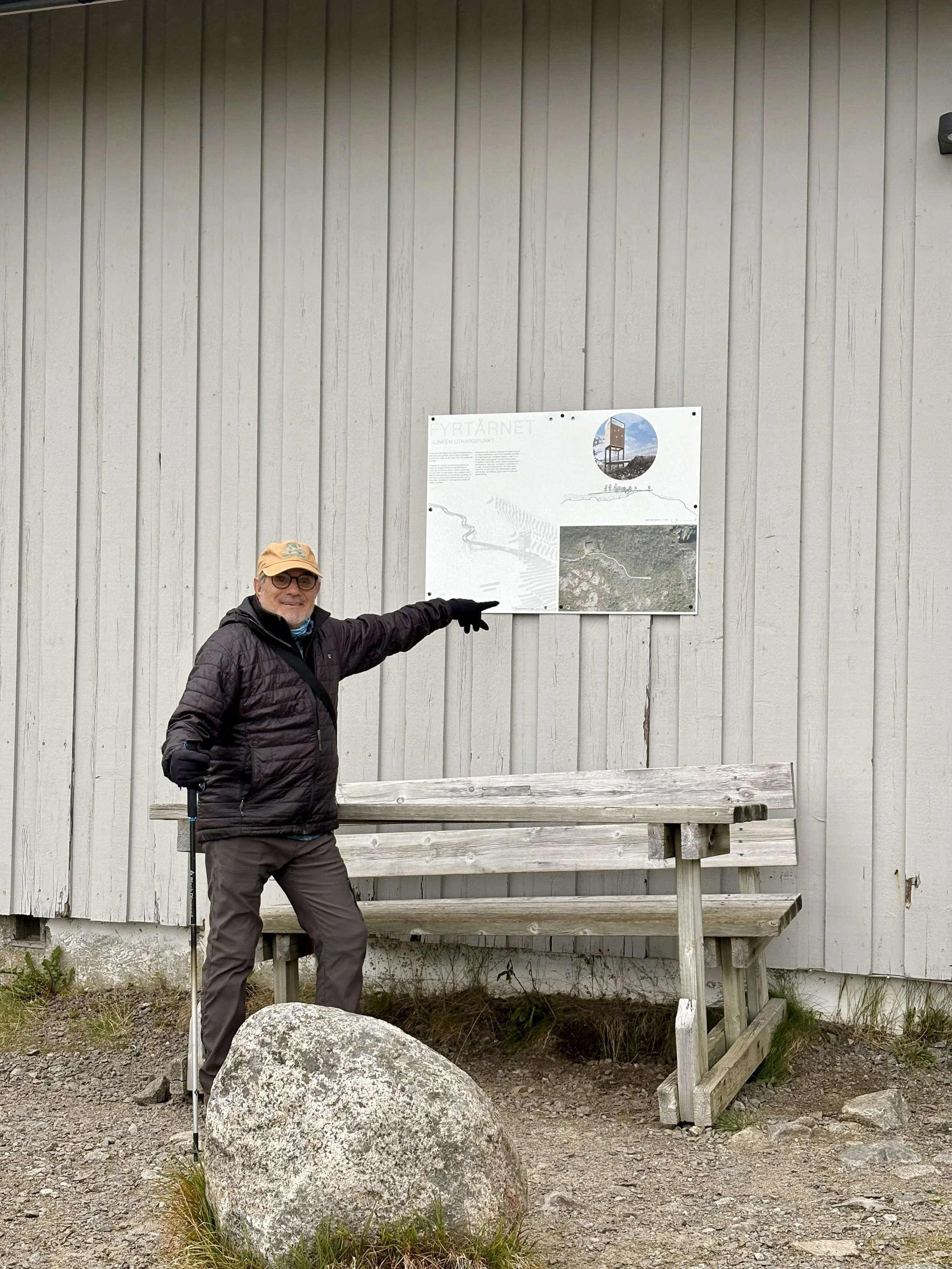
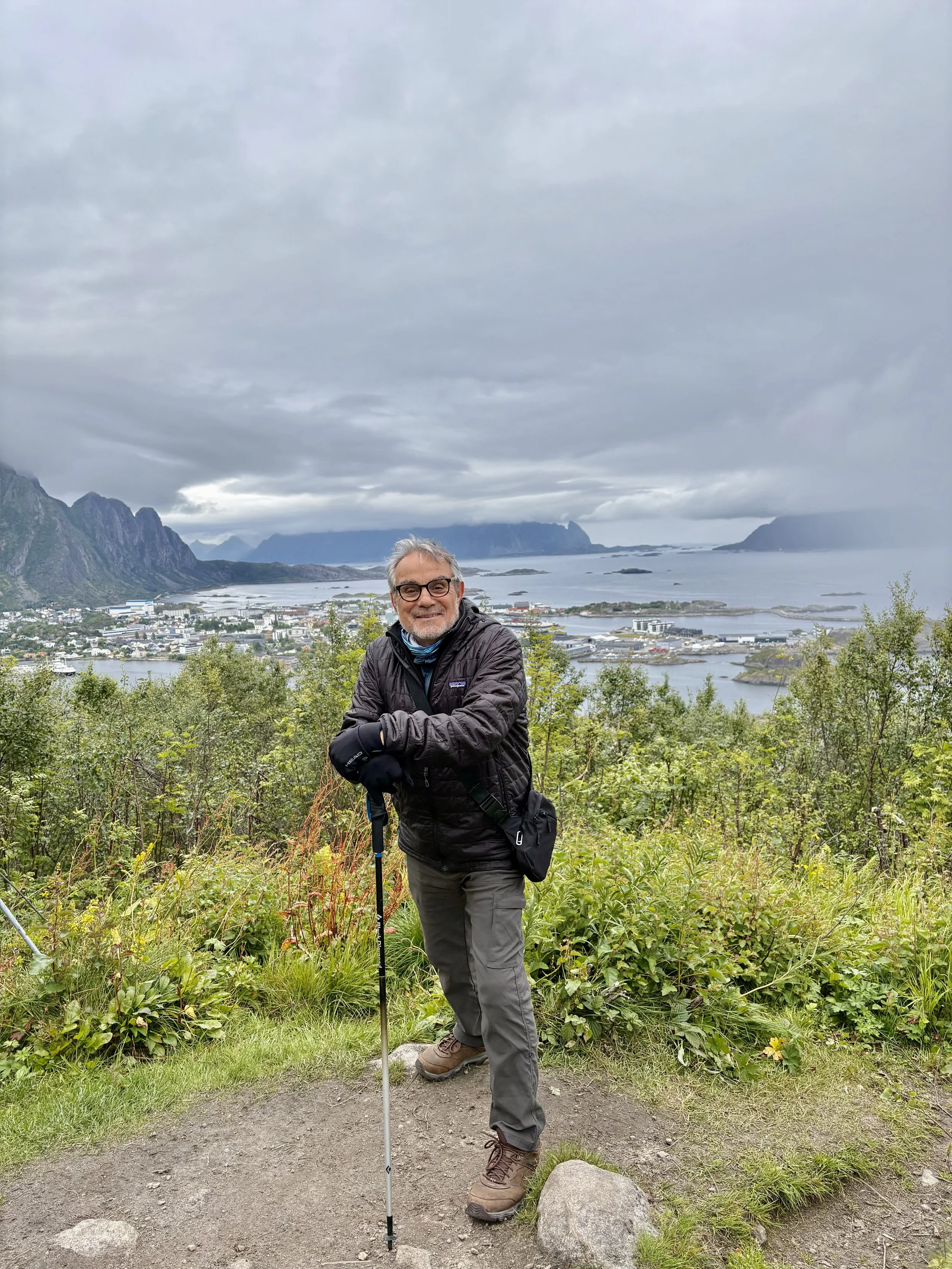
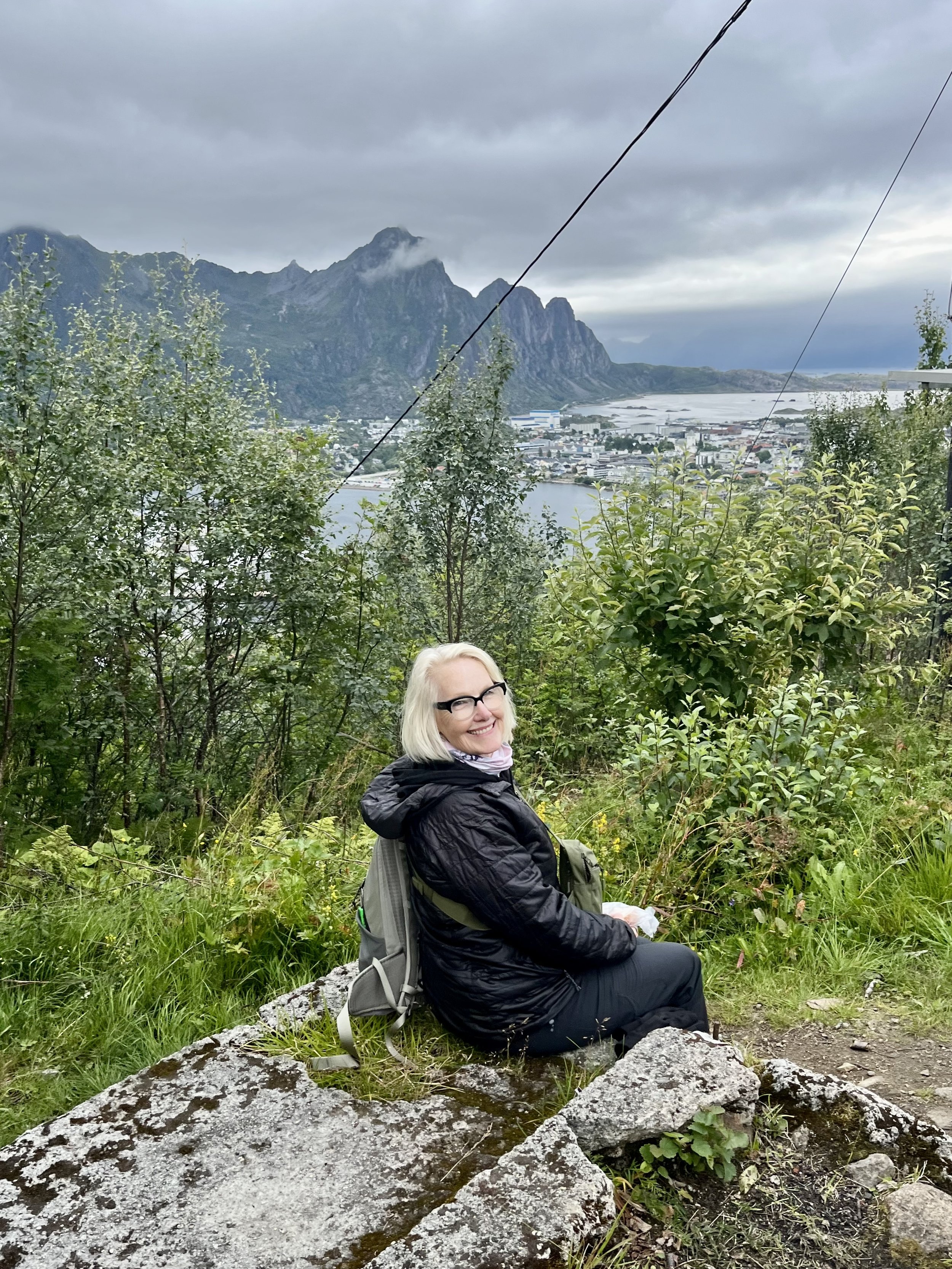
 Later this afternoon we will go for an abbreviated easy hike called Linken in Svolvaer, 5.4 km, 2-3 hours. We drive the SUV a short way out of town and parked as directed in the guidebook. We chose the the parking lot of Kiwi supermarket and not the Esso gas station (yes we did). The top point of this little jog is a cellular tower. We walk to the trail head and head up easily until the elevated ascent turns to a steep zig-zag path. We can see the small metropolis and a vista of the mainland, and the surroundings at that height display some beautiful mountains. This was a great hike for us. Back to the Airbnb before it started raining, dinner in with some Netflix, now that world cup is over. More to come later..

Boat Transport #3

Our third boat transport starts in Ålesund, 8:00 pm late departure.  We drag our luggage through the cobblestone streets, (it is very windy tonight) to the small dock and departure hall.  The boat blows it’s horns as it approaches the dock, it is an exciting sight.  The group in the lounge is small, some families and many people on biking vacations.  Norway is all on holiday now and most of the other passengers are local.

We are taking the boat up the coast to our next destination, Lofoton Island, it will take two days to arrive.  We are on the Hurtigruten line, it is the original ferry line, sailing this coast for 125 years.  We think the boat is not that old, but it was a shock of a difference from the Havila boat.  Our assigned room is on the bottom deck two. Walking down the hall Janet said “I feel like we are in steerage on the Titanic, where is Jack?

the hallway to our room

The university and original buiding

Trondheim Norway

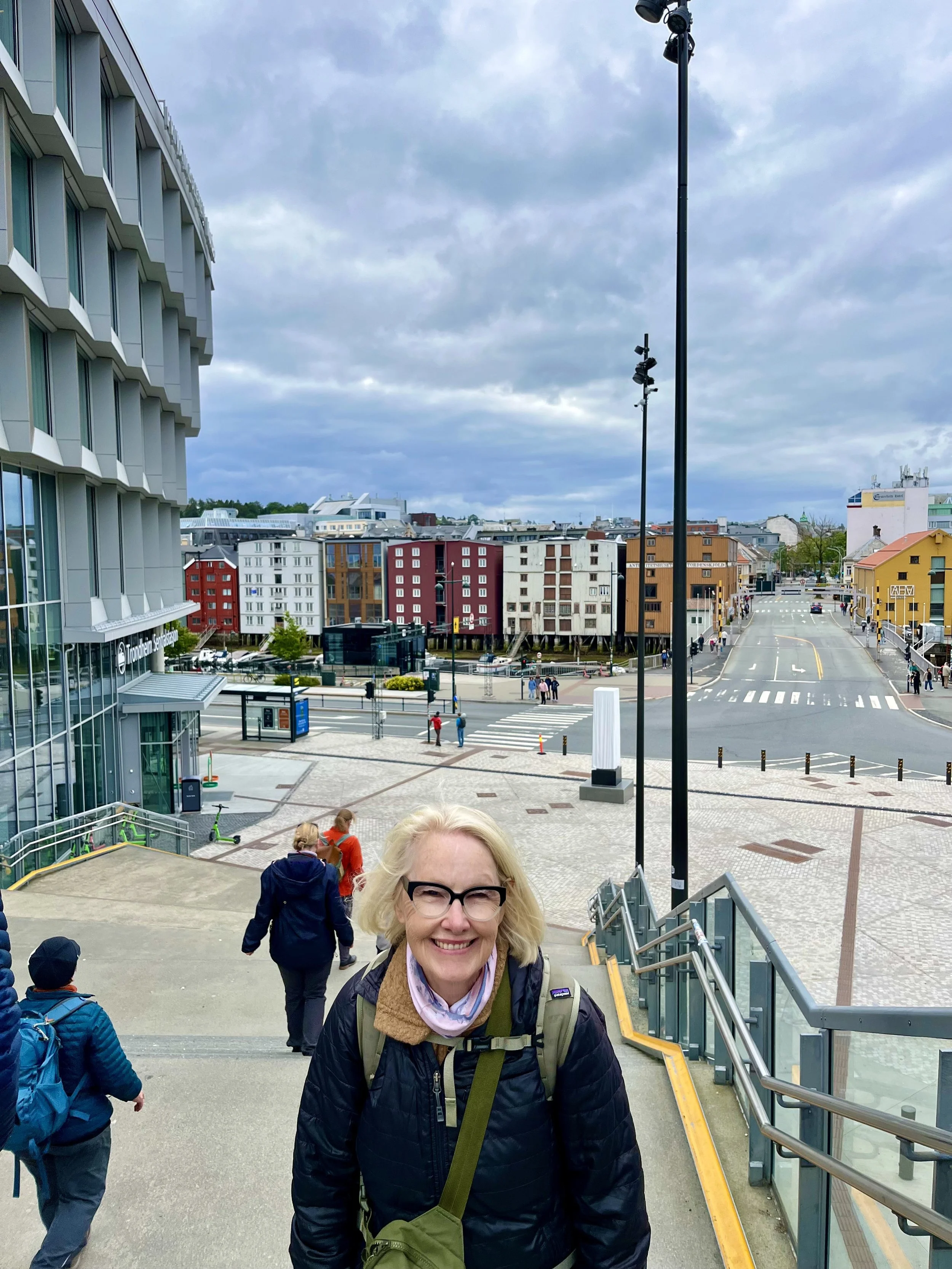
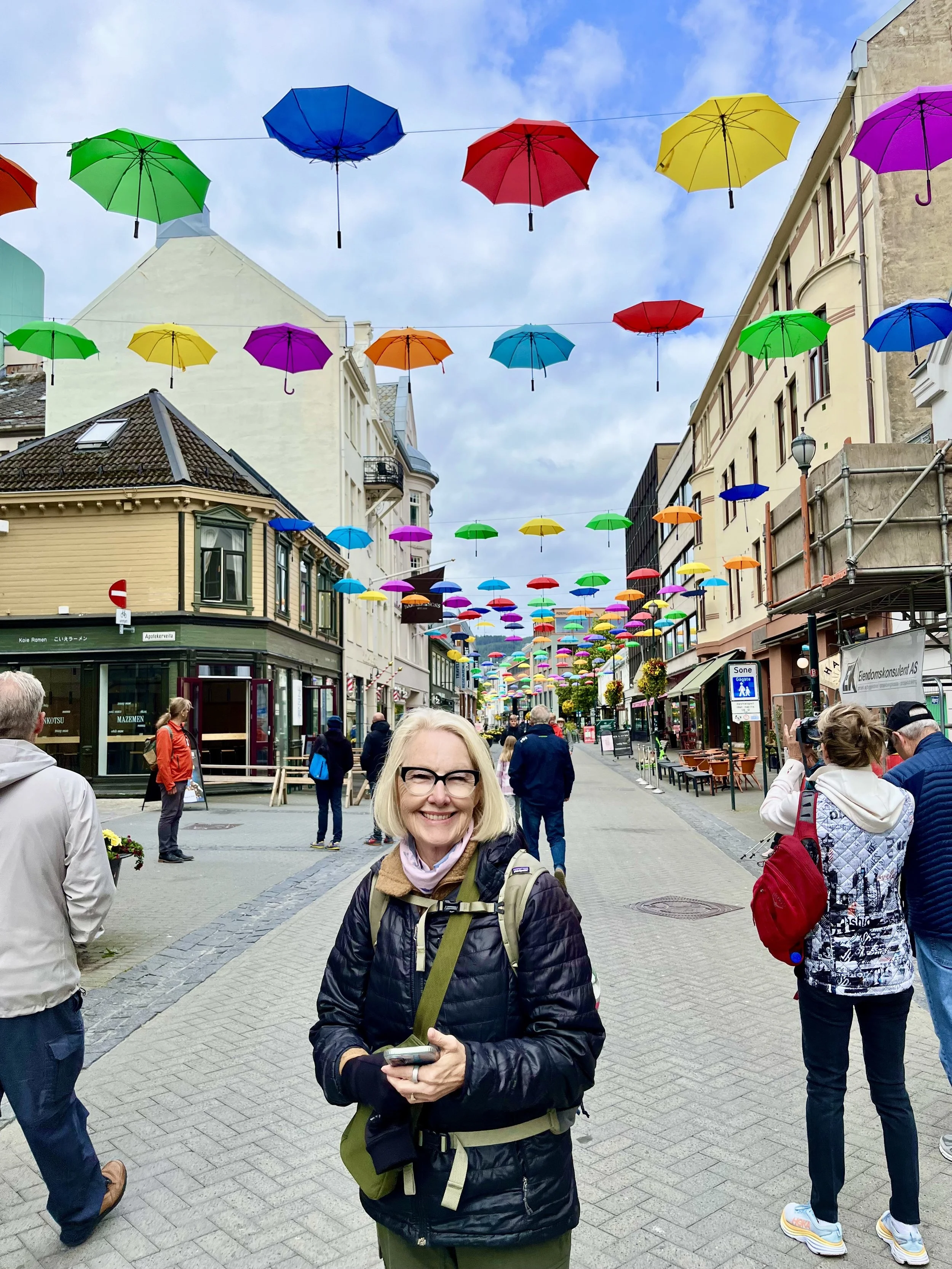
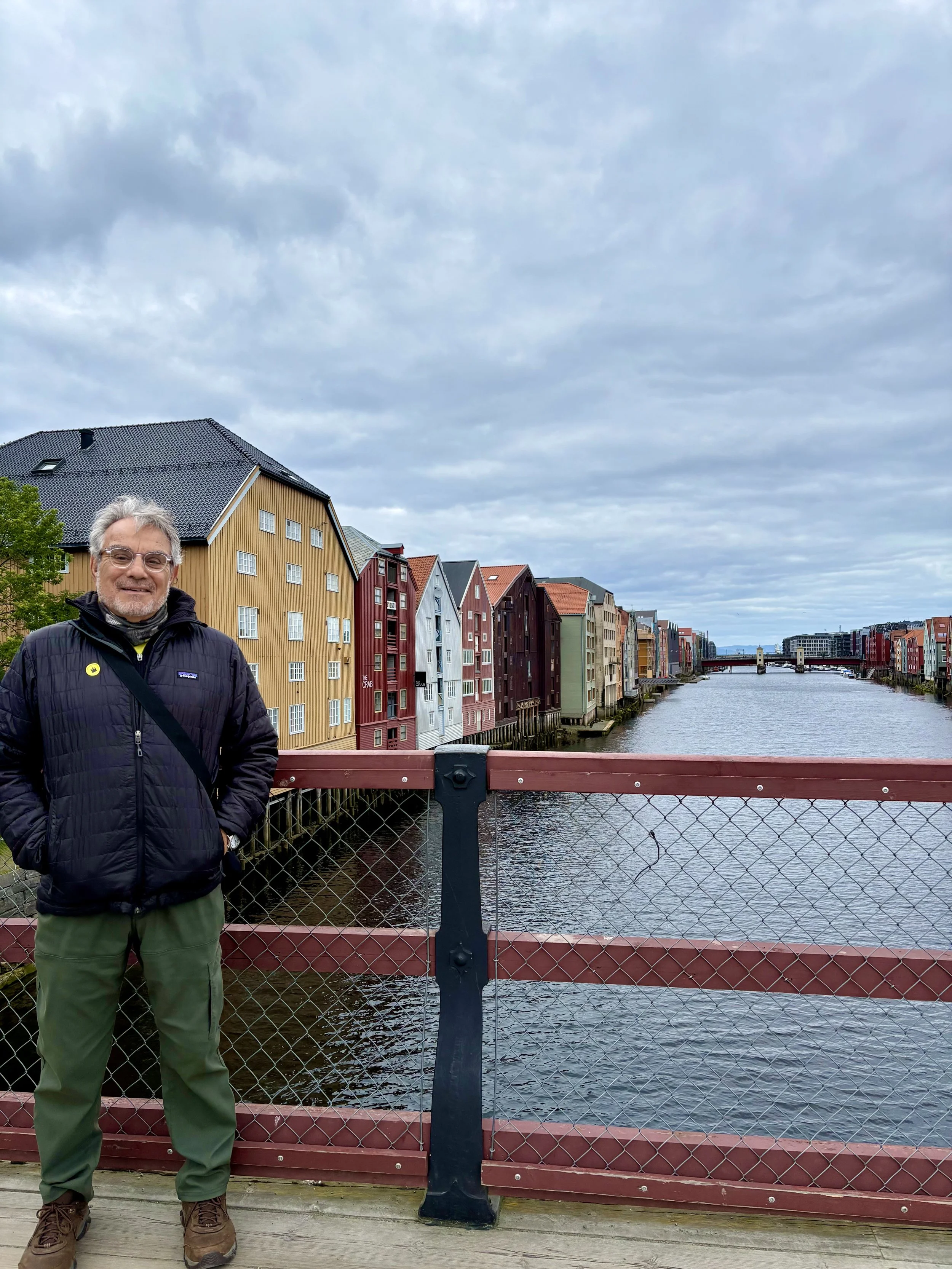
The ship docks for 4 hours at the city of Trondheim, shuffling passengers on and off and delivering   goods. We decided to take a shore excursion; a hustling 5 km loop. We are lead by a funny viking guide. This place had been on my mind since I ask a guide in Bergen about the university system in Norway. He says, “yes, there are big universities in Oslo and Bergen, the biggest cites, but the grand university is in Trondheim.” ( 3rd largest city). This place is the MIT / Harvard of Norway. There is cutting edge engineering, science, and medicine taught here. This is a college town on one half and then a high-rise corporate park with think tanks on the other half. Nice pedestrian friendly downtown shopping area too. Especially prominent are deep sea drilling and maritime robotics and other technical companies. Lots of major, well known, accounting firms around too. There is a narrow river that seems to divide the city between tech and academia. In the distance you can see the original 2 spire brick university building. The Royal family have the summer palace here, which is lovely but not pretentious. This palace is also the place for coronation ceremony. The King and Queen are 89 years old.

Royal palace

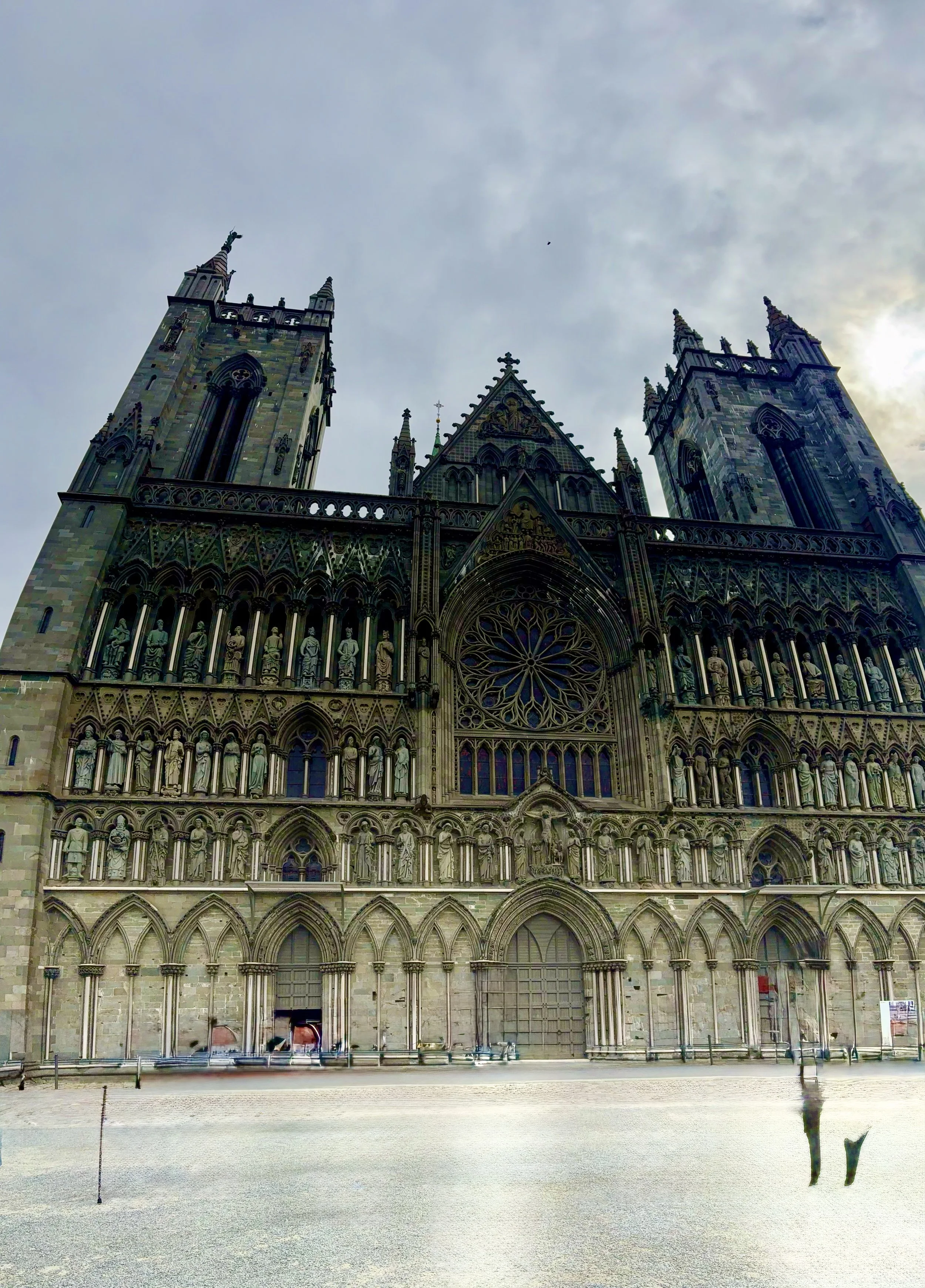
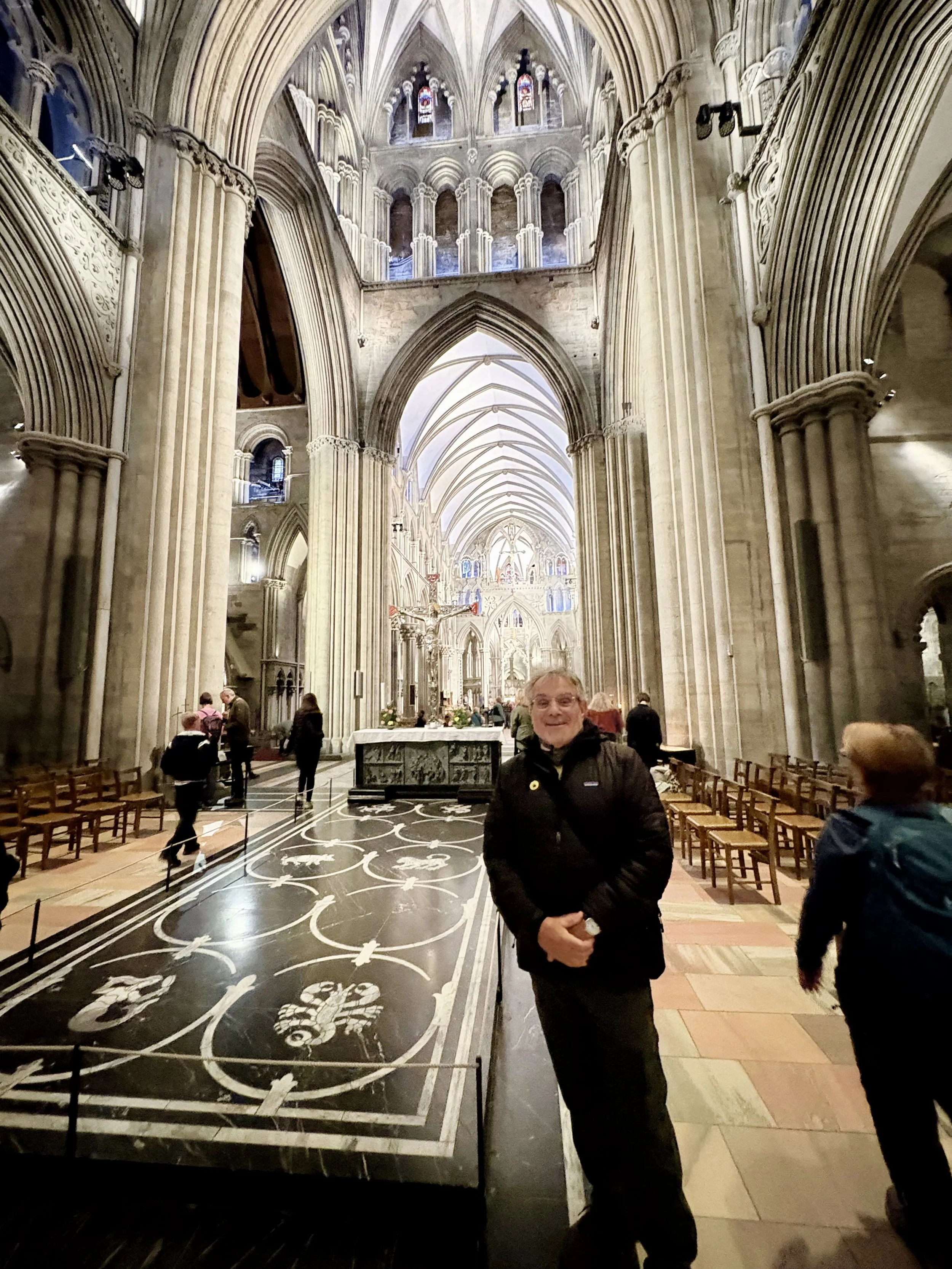
The city houses the largest Lutheran Cathedral with two side towers. The wide frontal façade has been adorned with hundreds of sculptured holy persons. The exterior is very impressive as is the cross shaped interior where at the center of the church stands a massive crucifix.

Time to hoof it back to the ship.

Yummy

Our last day on the ship starts with Frank delivering breakfast to the cabin.  They bake all the pastries on the ship and they are still warm.  The pastries in Norway and Denmark, so very delicious, you cannot compare them to the US, soft and flaky.  We have resisted many days since we would like to return from this trip without a change to the waistline.

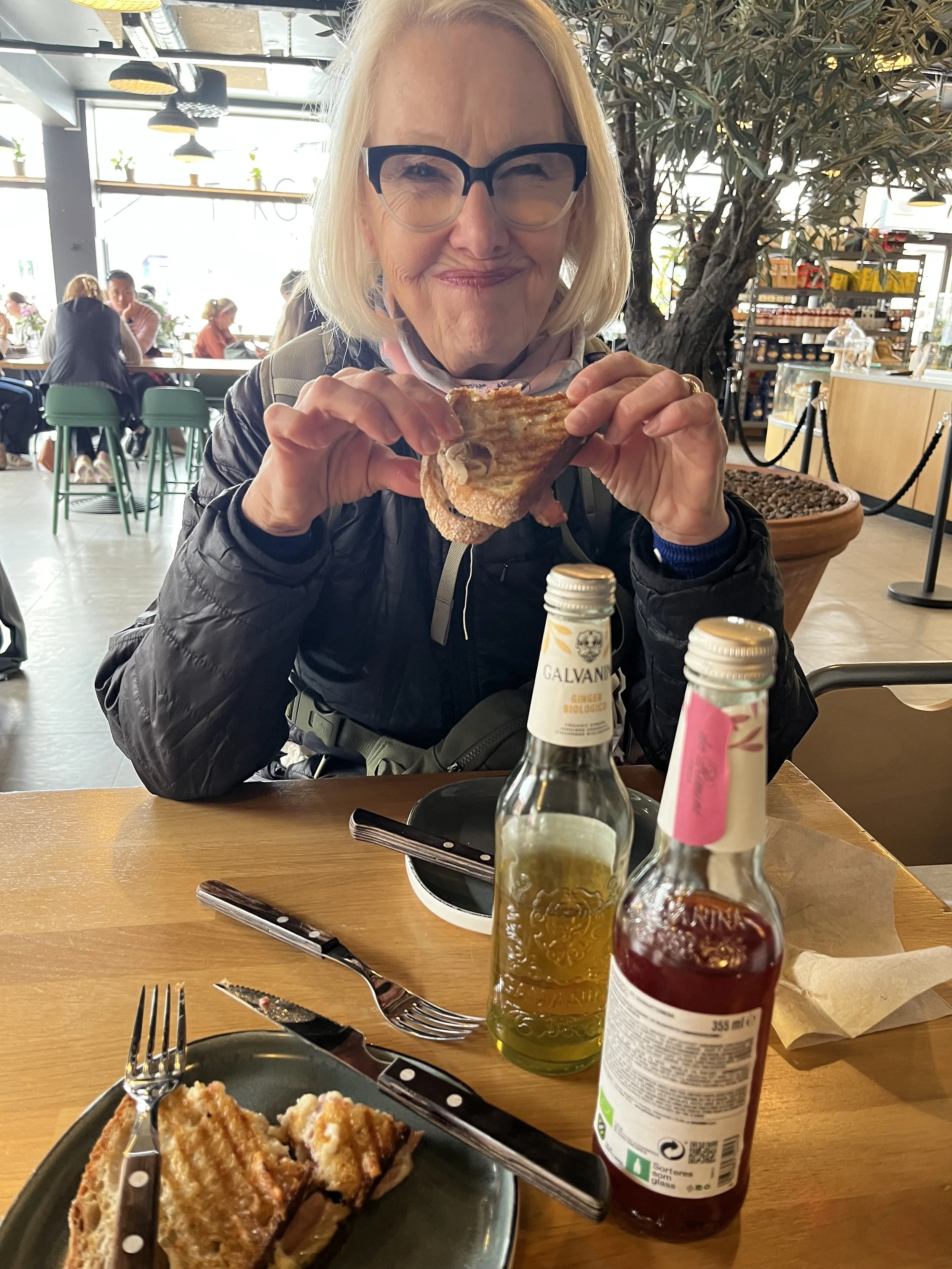
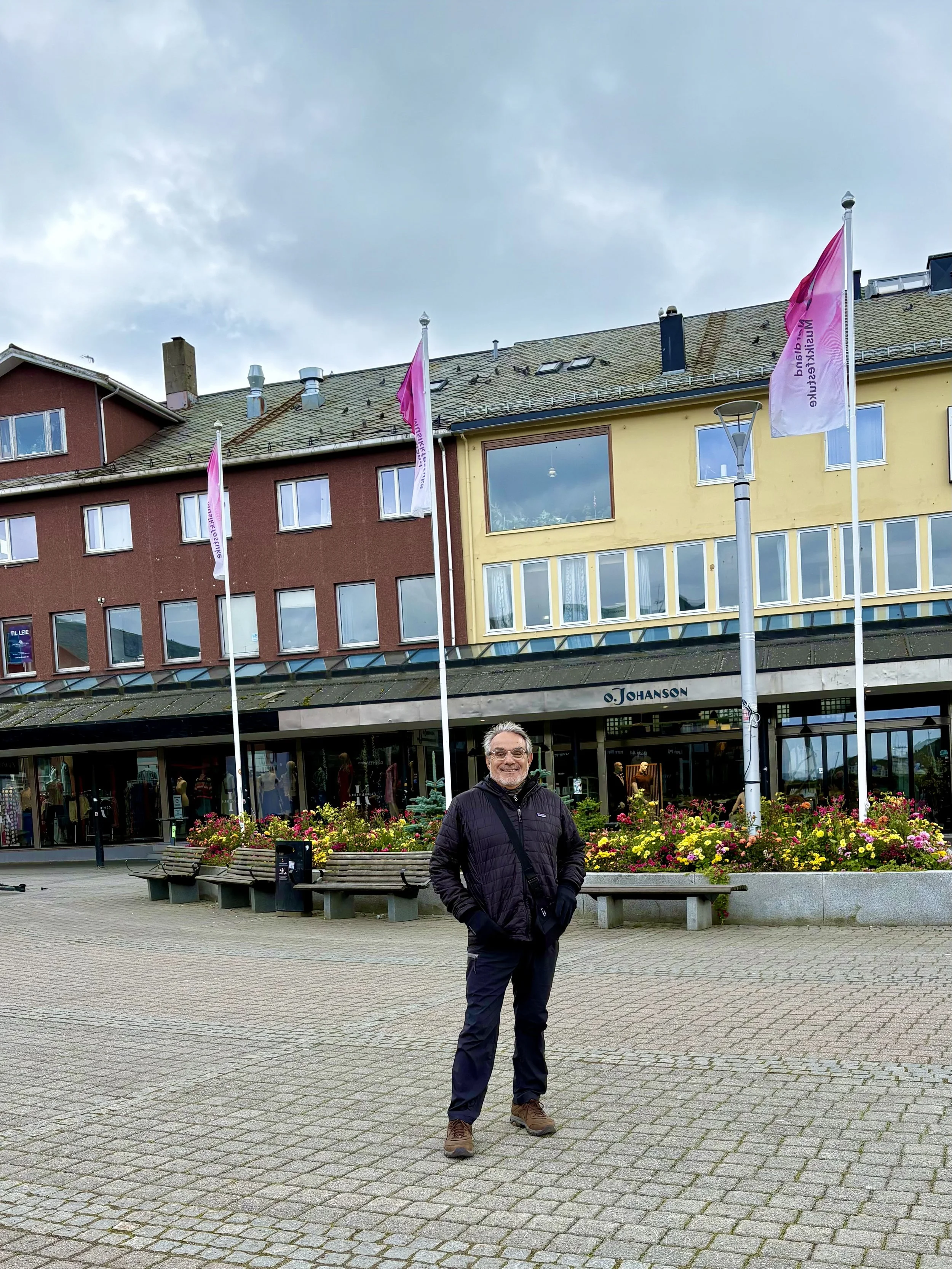
In the afternoon we dock again at the town of Bodø.  This is a short stop; 2 hours and we opt to get off the ship for lunch and a walk around the town.  Bodø is a working town, and it is Sunday.  We walked through an empty town, all restaurants and stores closed.  We forgot that in Europe, Sundays are for family, at home.  The large tourist towns still cater to us, but not Bodo.  We find the one coffee shop open and share a “toasty”, very common here, they are grilled meat and cheese, always on excellent bread, we love them.

Back to the ship we have 5 hours before our next stop.  Like a hotel we had to exit our room at noon.  We find a table with a view and chill out and do some blog work.  Next stop Lofoton Island.

Trondheim, such a nice city, we will miss you

Ålesund Norway

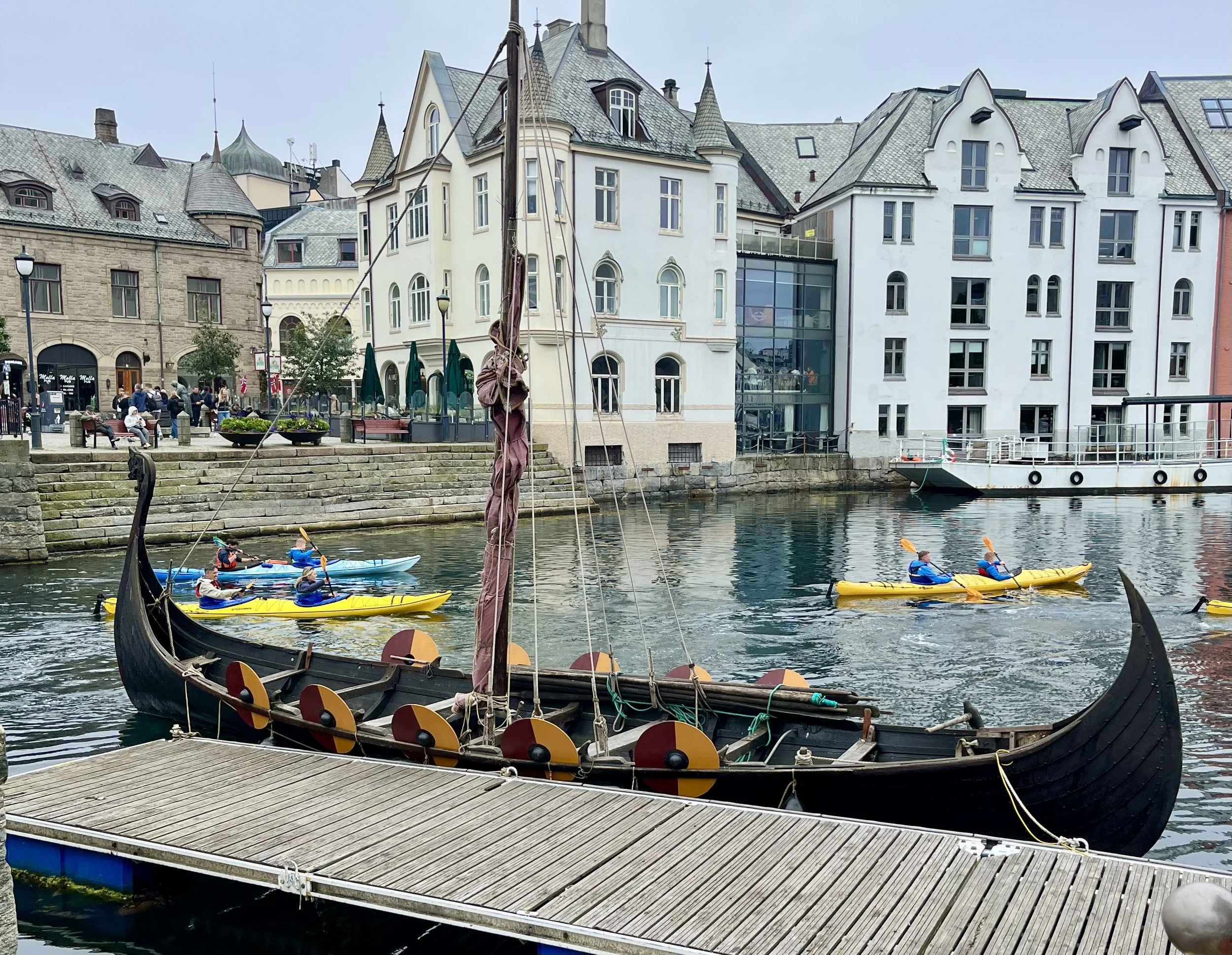
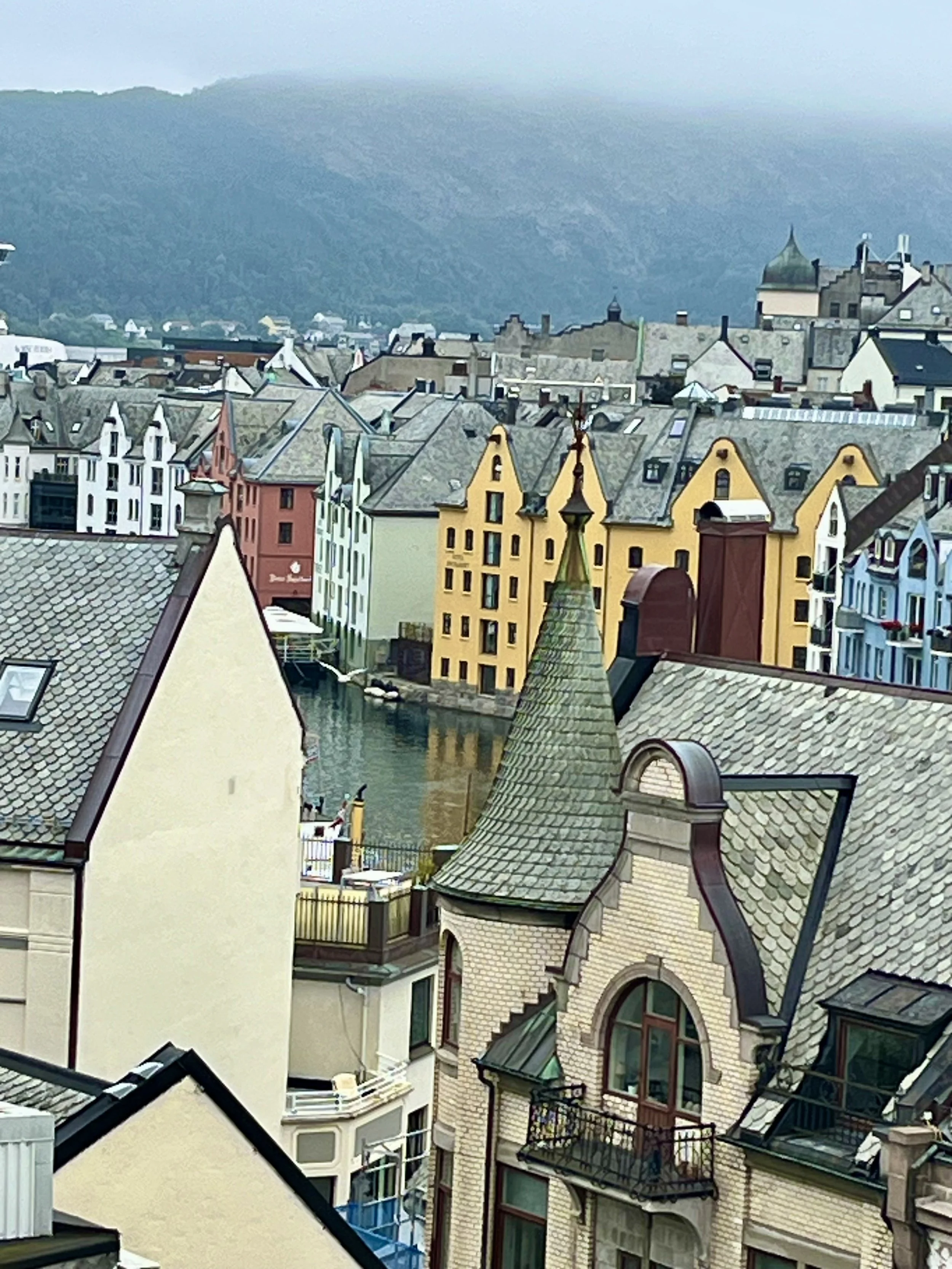
North of Bergen and in the Nutshell travel zone is the city of Alesund (OH-leh-soont), built on a scattering of islands connected by bridges and underwater tunnels and is extremely attractive. The population is 52,000. The busy streets do get crowded when multiple cruise ships dock. We spent most of our time in the compact town center that is divided by the waterway called “Bridge Straight.”

Great Breakfast

We arrive by ship at 10:00 am and head to another Thon Hotel. We wanted to just store our luggage until check in at 3:00 pm and go our way. But, what is a nice attribute of the Thon brand is they will early check you into an available room. This is the second time Thon has accommodated us on the trip. Not usually done in European hotels-them rules are the rules. Thon also directed us to a classy, nice café, Raccoon; where we had morning coffee and sweets, and the location of a luggage store. The cobble stone walkways won out, and Janet’s suitcase wheel is broken. We followed up with luggage repair store, no luck, then we decided to “MacGyver ” the wheel with superglue—another shopping spree for glue. This took some valuable time. In any event, moving on…

Alesund, like every Norge town it seems, has been subject to massive fires that destroy everything and the devastating 1904 fire forced almost complete rebuild. The development of this gorgeous small city followed the popular European Art Nouveau style. We enjoyed strolling the city core and waterfront embankments. We did join a group walking tour that was a bit disappointing but did introduce us to the neighborhood patterns of city and park.

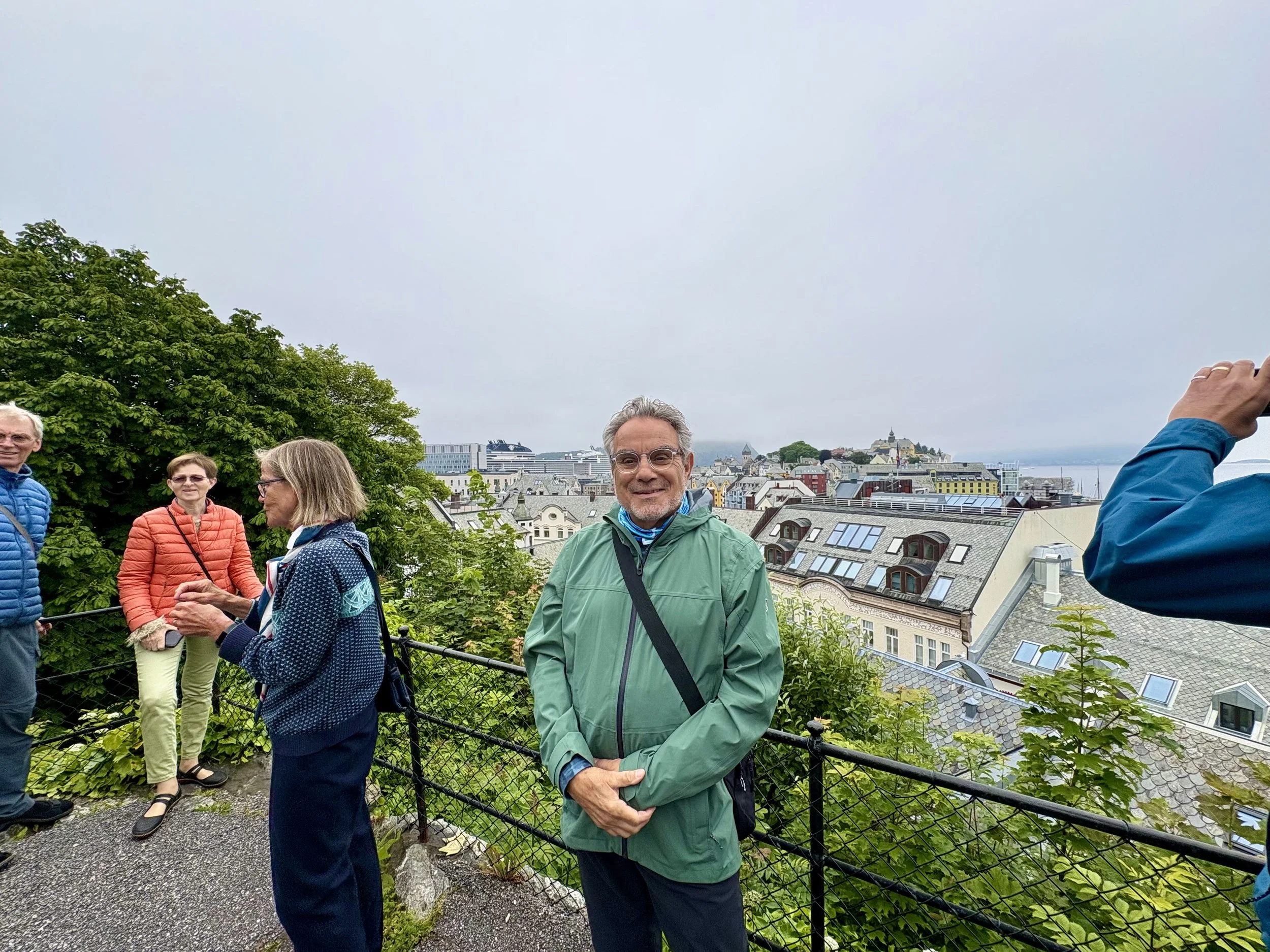
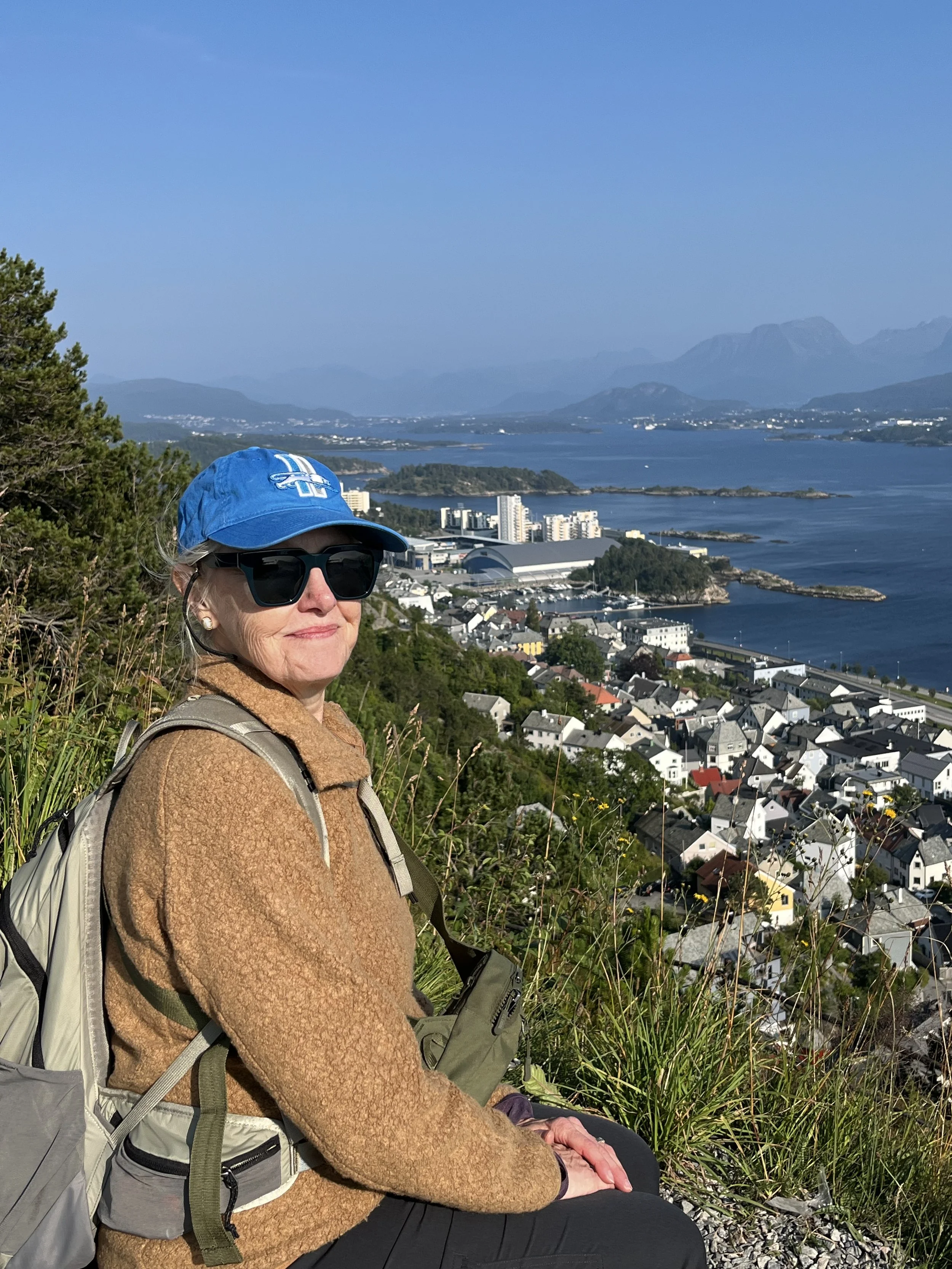
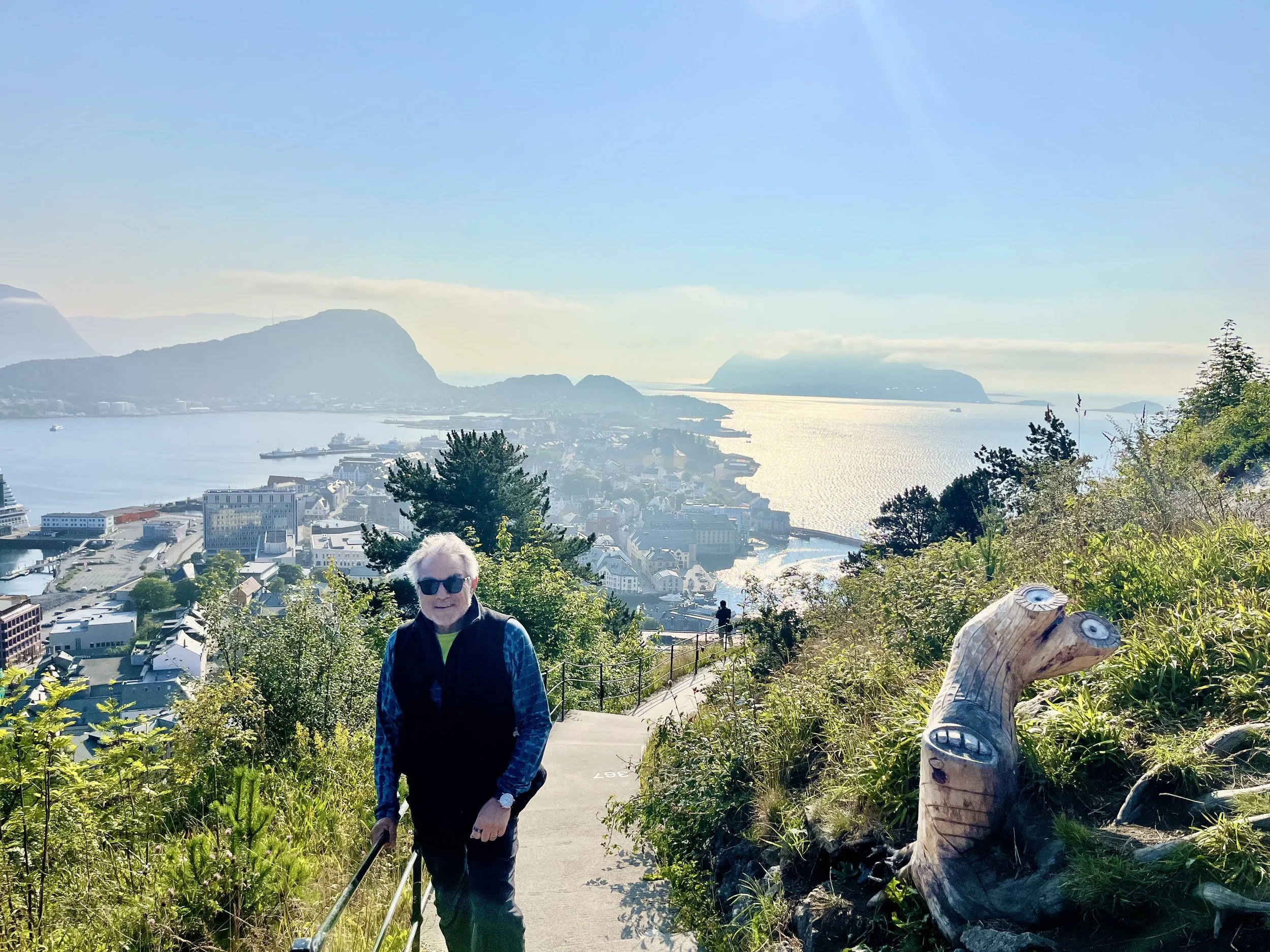
Later in the afternoon the sun shined, and we climbed the path leading through the park to the classic Mount Aksla viewpoint. Since the cruise ships had left the crowd was light, but we got tired ascending, until we caught our second breaths. Nice postcard views.

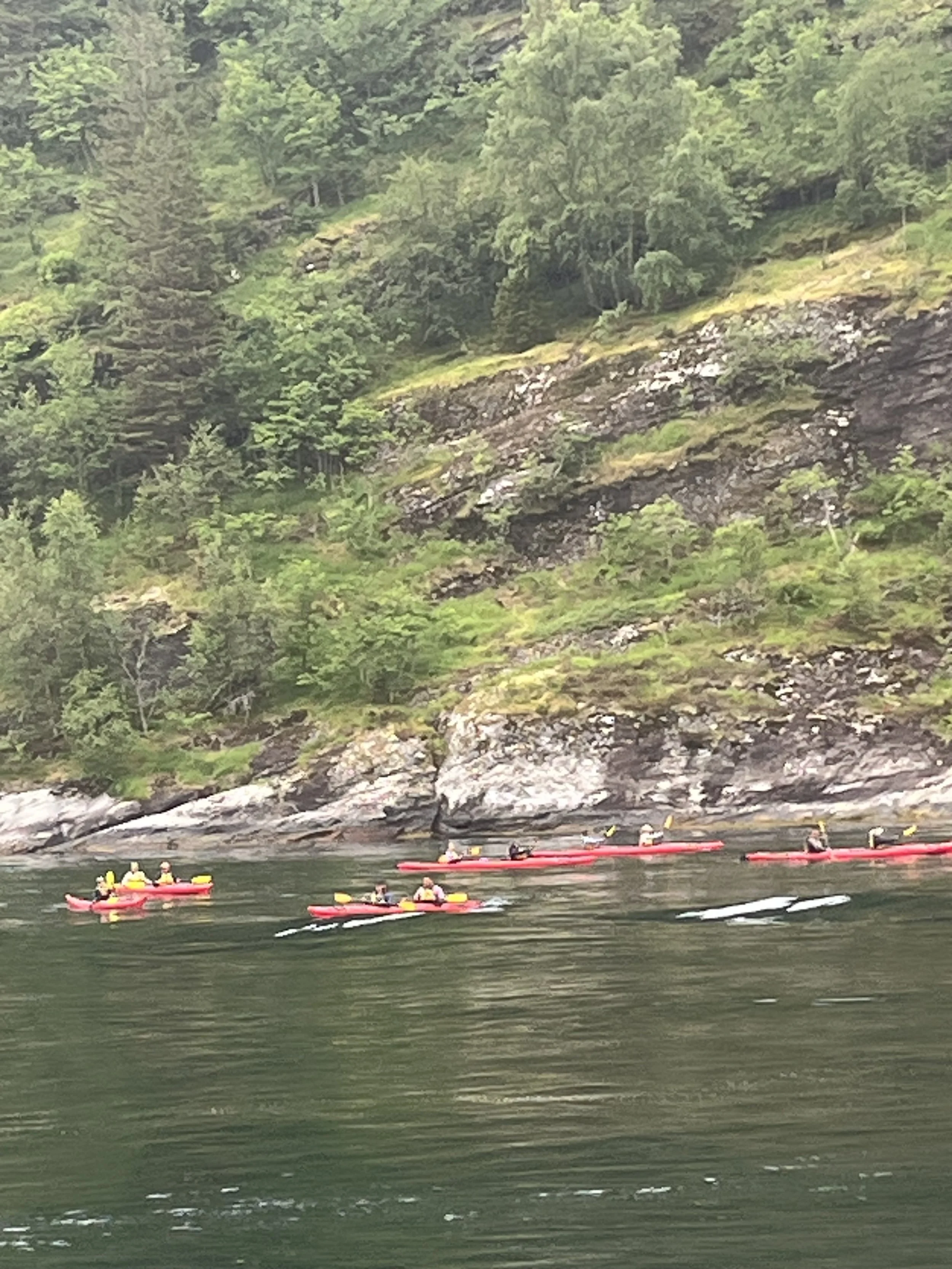
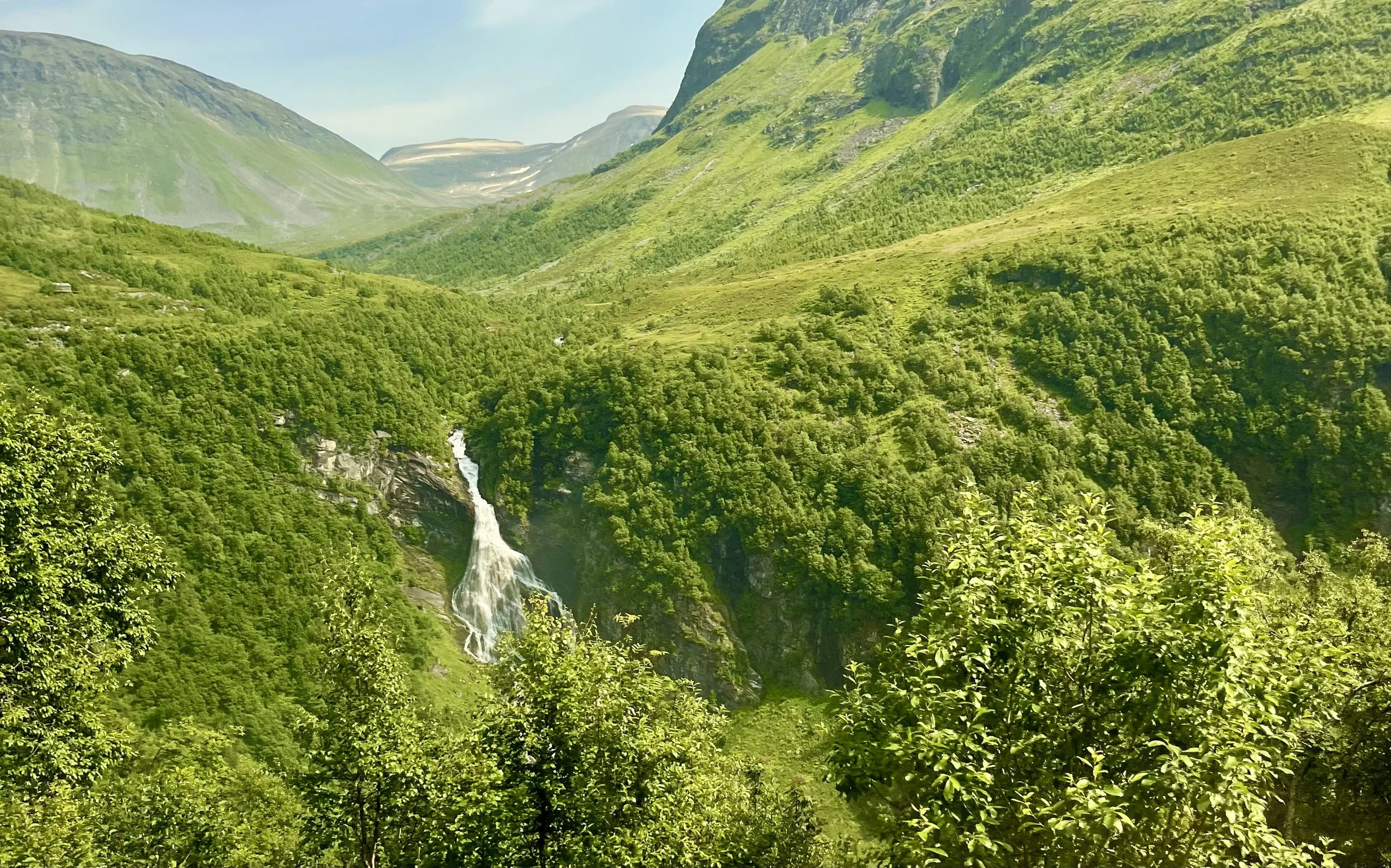
Next day, still in Alesund, we signed up for the “Norway in Nutshell” boat/bus tour with guide. We traveled to the famous Geirangerfjord, nine mile long and 2000-foot-deep fjord.It was beautiful, but our weather luck did not last and we had low hanging fog for most of the the trip, preventing us from seeing the full gorges. The crew did its best to explain the sights and points of interest, like the red shed fishing settlements, scattered farms or waterfalls. We passed groups of kayakers, and the flat boulders that past kayakers have etched with writings.

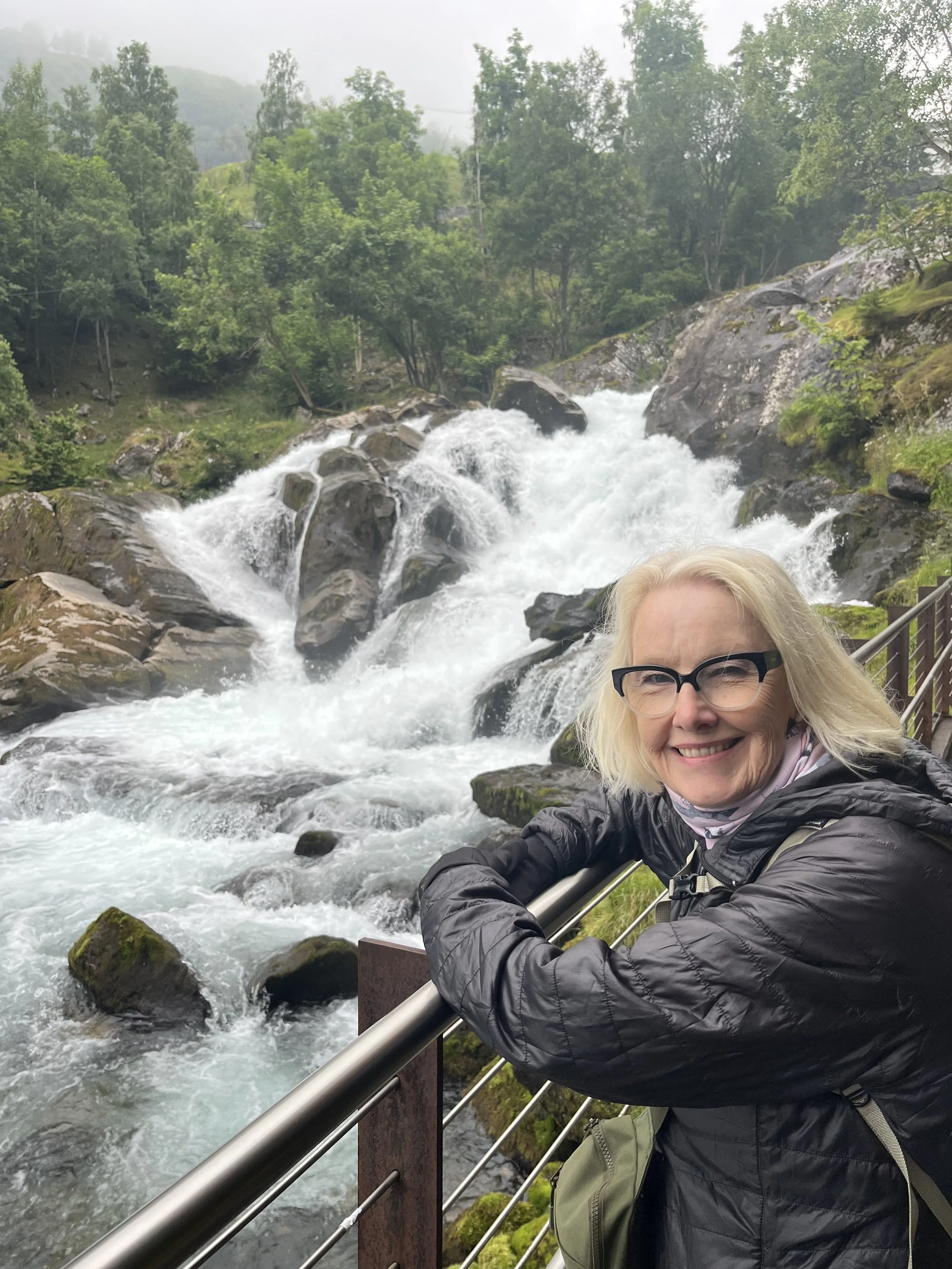
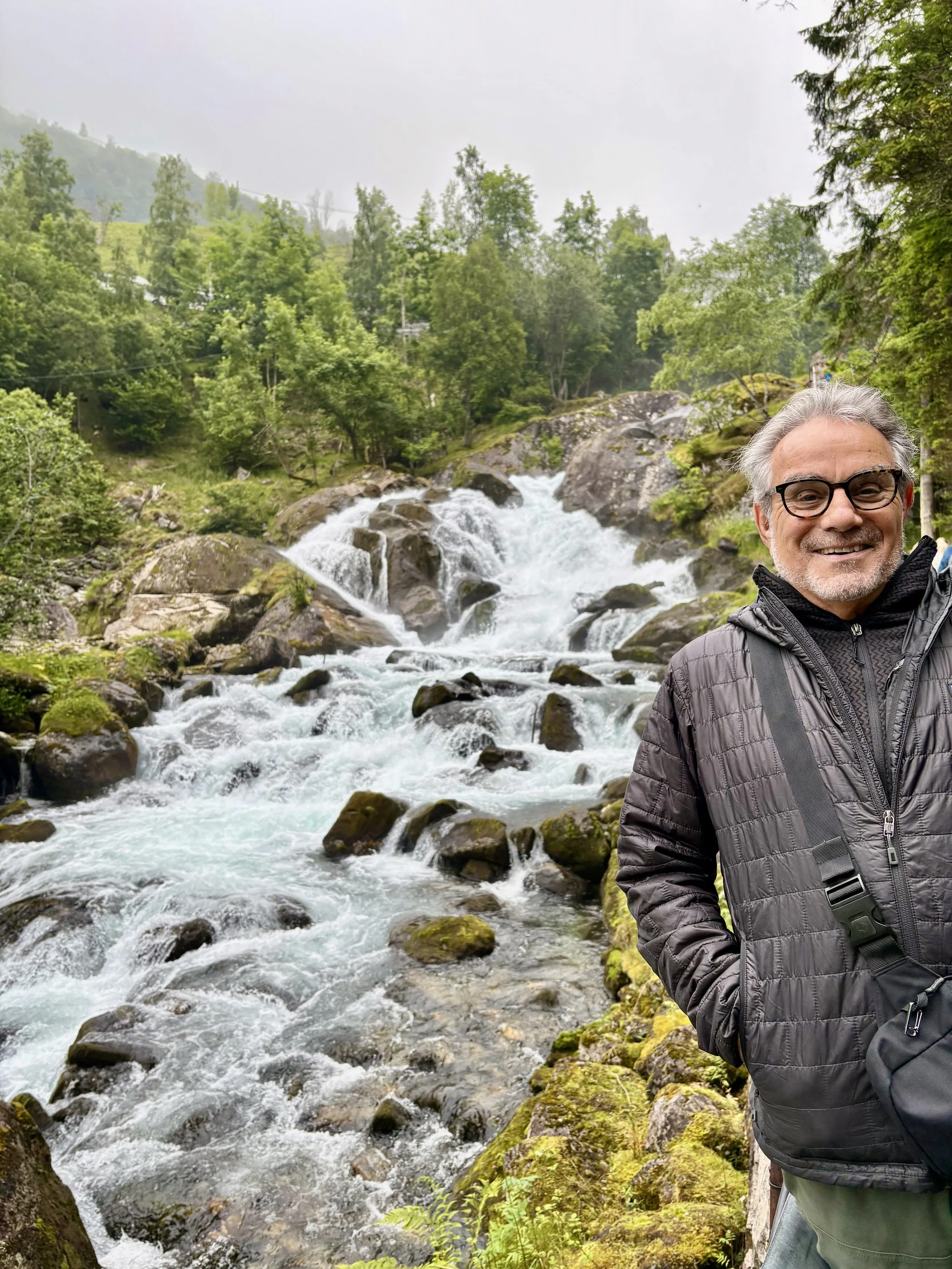
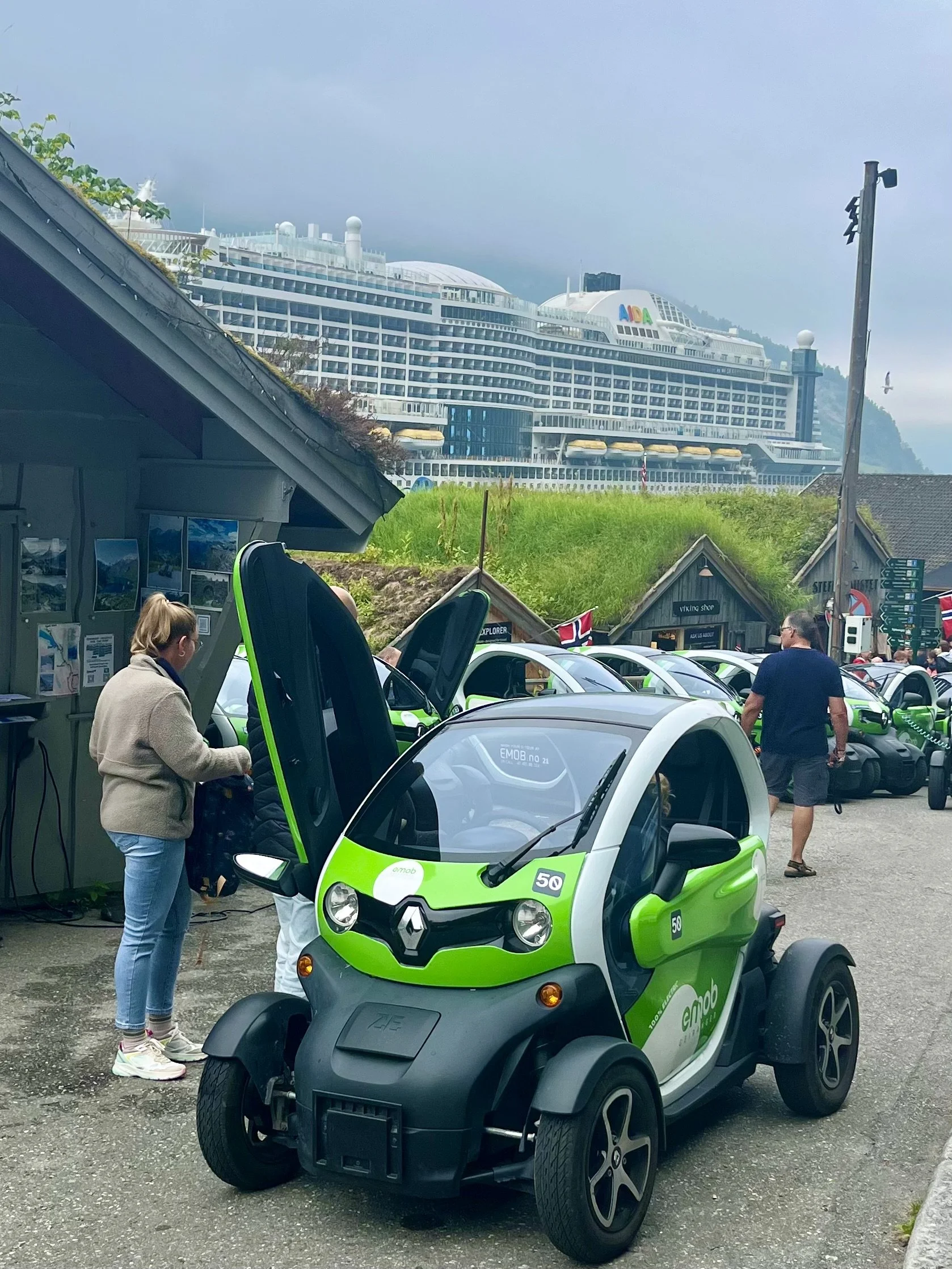
We docked in Geiranger Town, where its harbor front is bustling with crowds from a large cruise ship. As well, there seems to be a lot of vehicle traffic. It is a launch point for excursions and hiking. It is also a popular camping destination that sits beside a narrow, fast-moving river. We saw many young families and oldsters alike were parking trailers or pitching tents in the local campground. We do a quick hike to the local waterfall and then get snacks and wait to join the panoramic bus part of the experience

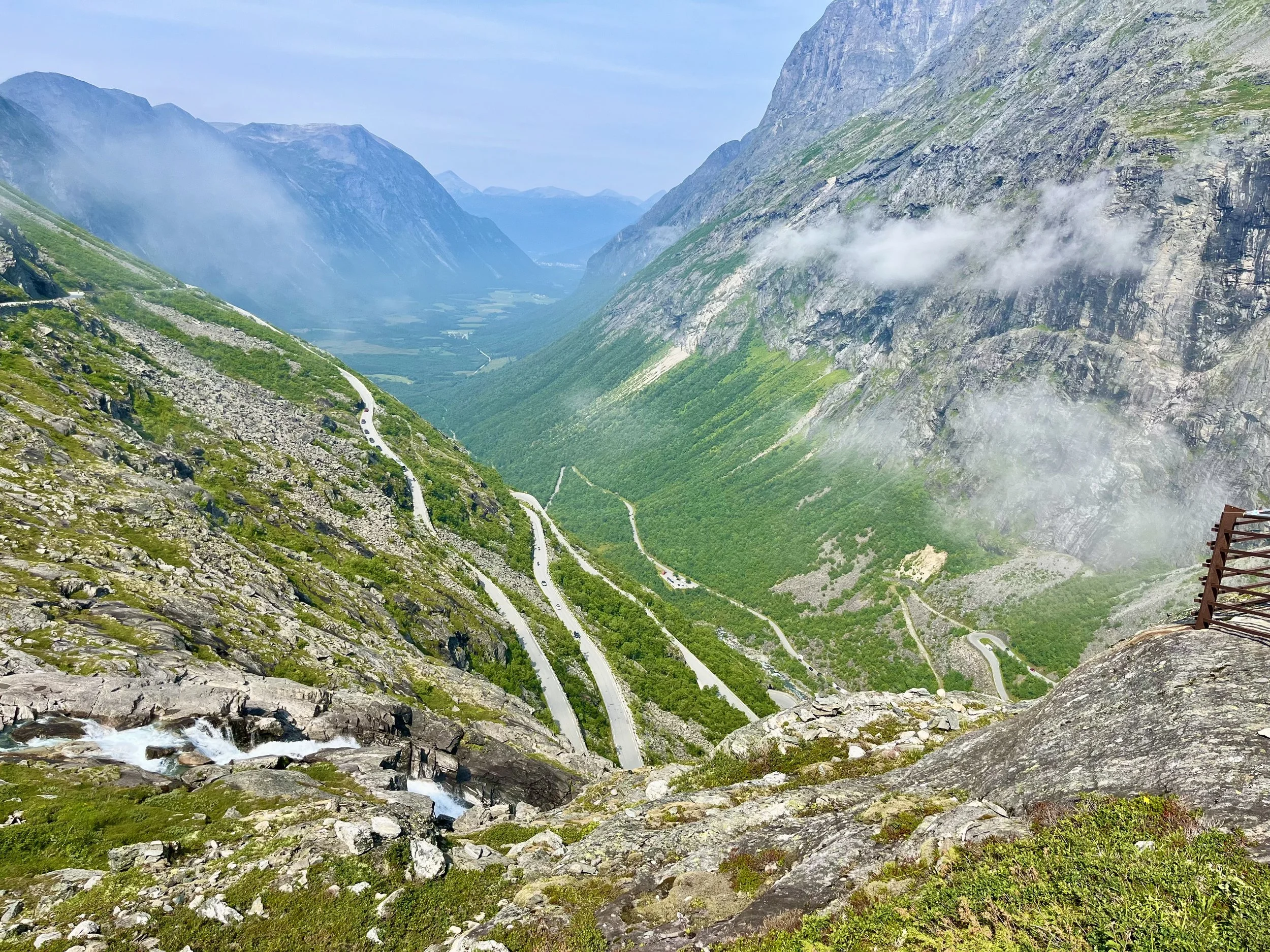
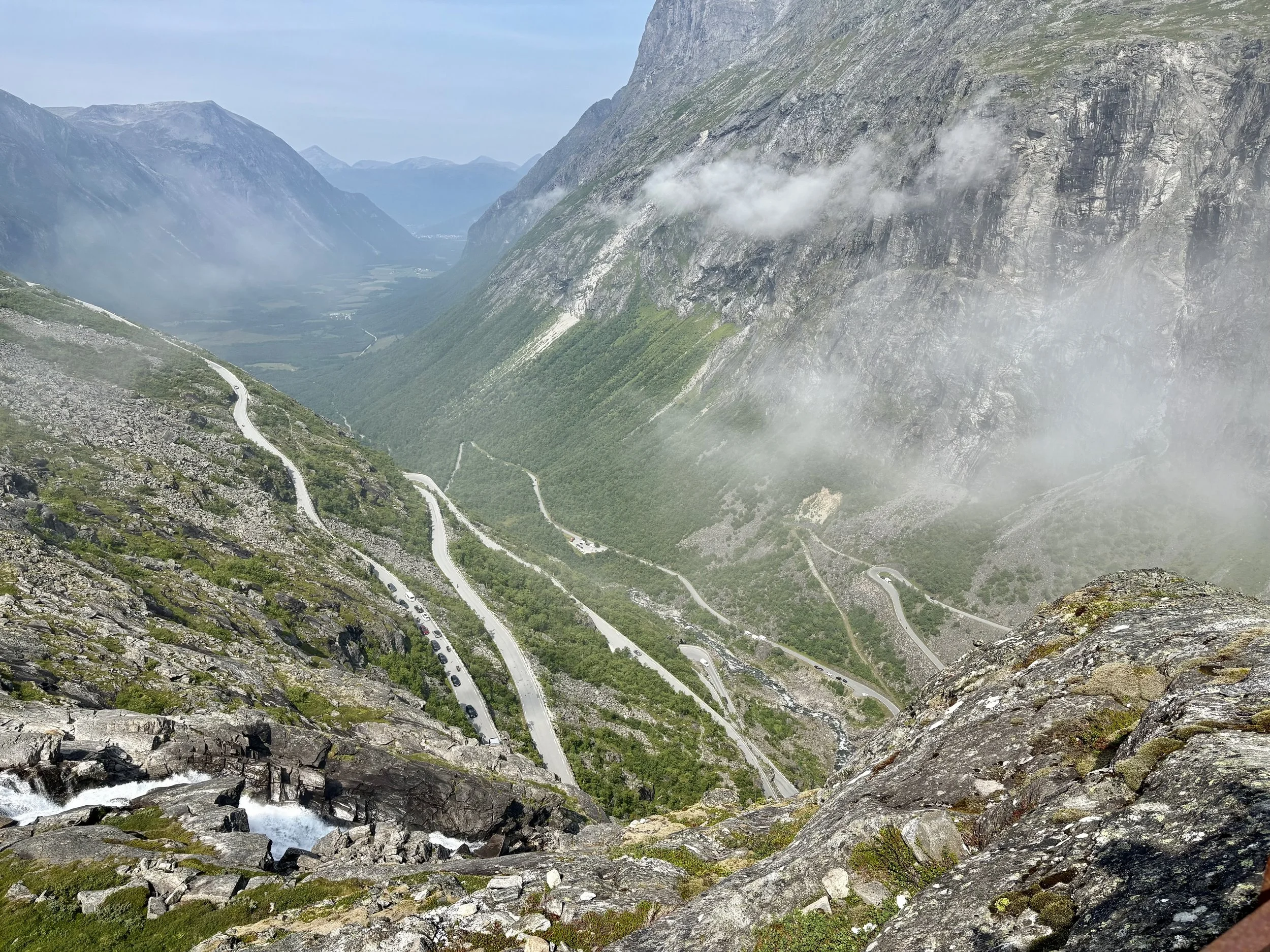
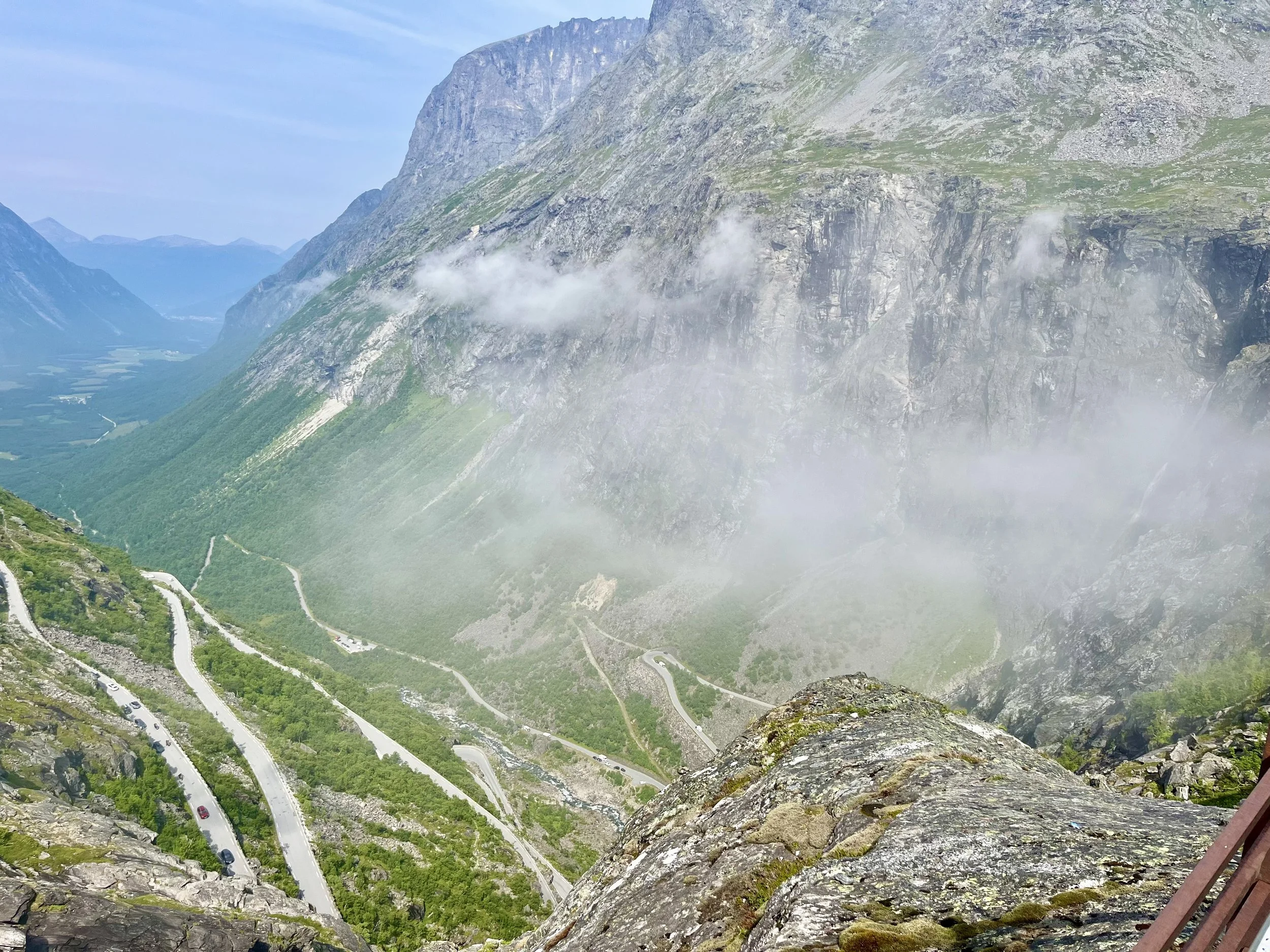
We board our large bus for the main attraction; the “Trollstigen” or Troll Ladder Road between Geirangerfjord and our return to Alesund. We agree, this road is in fact the unforgettably twisty stretch of corkscrew, hairpin switchbacks past sheer rock, and waterfalls to reach a stunning viewpoint that Guides talk about. Having a professional driver in “Troll Country” was not a bad Idea. We have admired several Kings of the Road protecting us and we arrived back safely in Alesund for the night. However, if you like the challenge of driving such a course, probably in an electric vehicle, have at it.

The weather can change quickly in Norway, the below photos were all taken in a matter of seconds, after the last one, the clouds had completely obstructed the view.
We are leaving from Alesund later today. We are scheduled for another Cruise Ship transport departing at 8:00 pm. This cruise will be for two nights, three days. It is cold and rainy so we relax in the morning at the hotel until noon then decided to spend the afternoon at the Alesund Aquarium. This is the largest saltwater aquarium in northern Europe, they say. So why not kill time. We like to stay with public transportation, but the bus to the aquarium was 90 minutes and still involved a .7 mile walk. The Uber (first of the trip) got to our destination in 9 minutes for $20. The aquarium building is modern with angular silhouette.

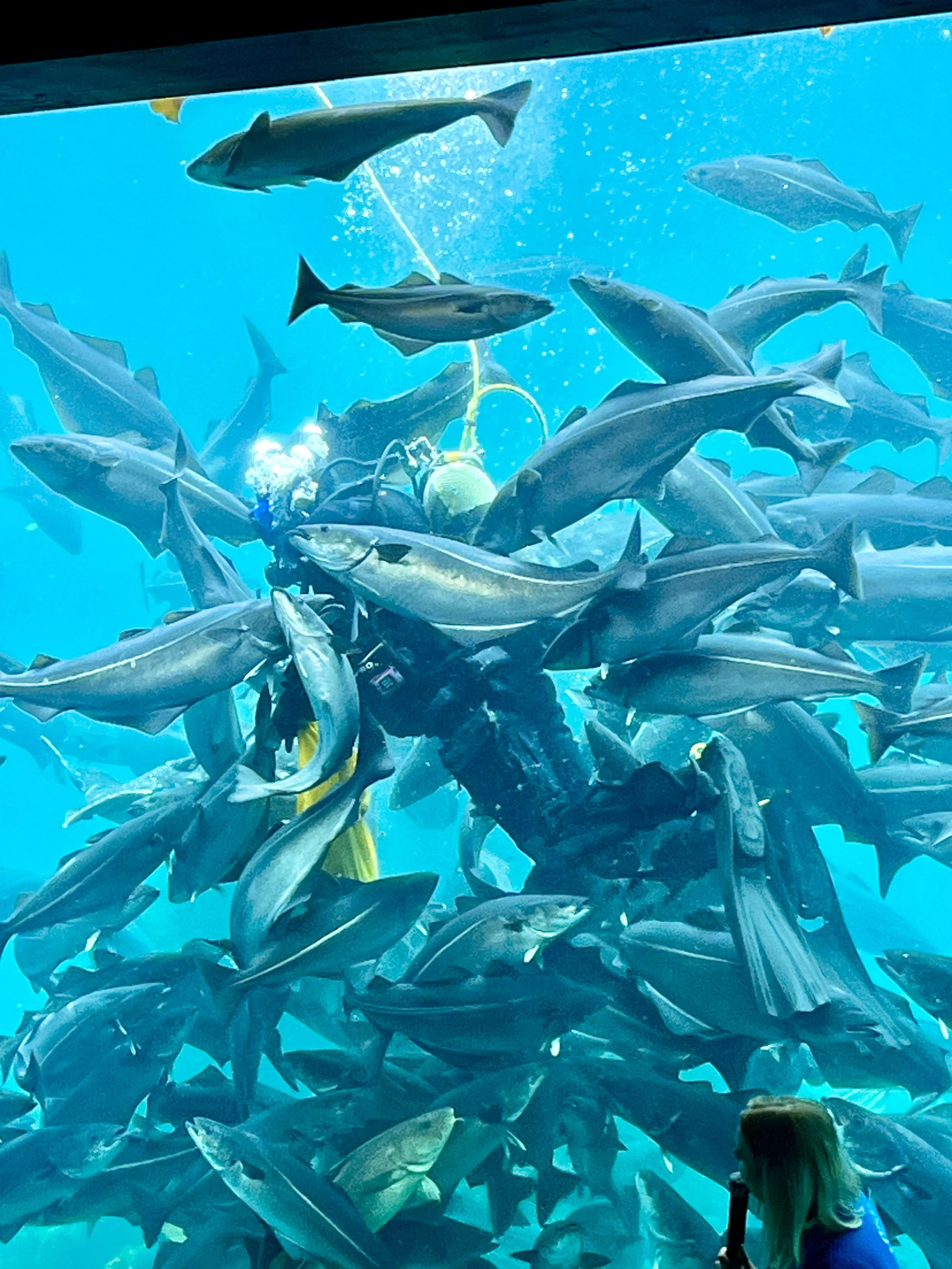
In the entry, the exterior wall forms over rounded granite rock exposed inside. Kids, not discouraged from climbing, no signs, no rules. You can view several areas from a single point, like a spoke. The most vivid is the full story glass tank that displays all sort of exceptionally large saltwater fish. These fish include Atlantic Wolfish (ugly mean), Cod, Cusk, Atlantic Halibut. Just as we walk in there is an amazing fish feeding demonstration with the scuba diver, made a hidden person by all the fish surrounding him.
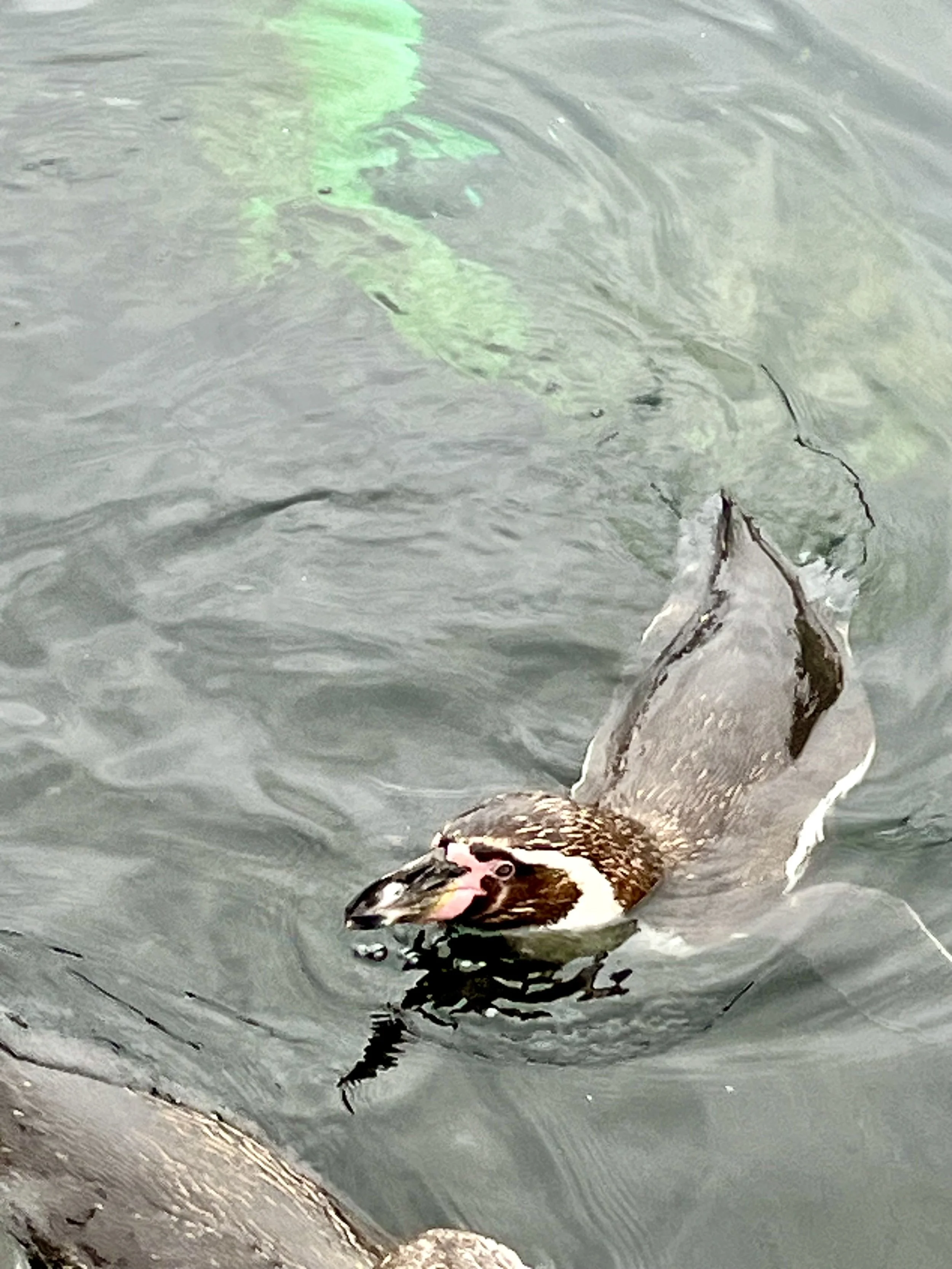
We also enjoyed feeding demonstrations for Penguins and Otters. But in separate tank exhibits there were some creepy giant crabs and lobsters, octopus, eels, rays, among others. We were surprised. The outing was most enjoyable, due to the types of creatures and presentations. BTW, called Uber, got the same driver. Bye. We picked up the luggage and backpacks, then walk to the cruise terminal; 15 of the16 luggage wheels worked; super glued wheel did hold break. Talk tomorrow.

Boat Transport #2

Our second boat transport starts in Bergen.  We are taking the boat up the coast to our next destination; Ålesund.  The cruise ships refer to this type of transport as port to port.  These boats are a crossover between a ferry and a cruise ship, smaller in size, none of the fancy amenities found on a traditional cruise ship.  There are 2 competing lines in Norway, Havila and Hurtigruten.  We are on Havila for this leg.  We arrived to the dock on a hot late afternoon day and could see the line out the terminal door from the distance.  We queued for an hour before finally getting on board.  You cannot enter the cabins until 6:00 pm so we enjoyed the great weather out on the decks.

The boat is very nice, a level above the Copenhagen ferry, nice decks, wide halls, no cattle call feeling on this boat.  Our room is inside, handicapped assessable.  Your choices on port to port are limited, this is a way for the cruise lines to fill all cabins so you are getting the bottom of the barrel.  Note here, Janet as a lifetime business traveler has been required to stay in many, many handicapped assessable rooms (cost savings forced by corporate travel agencies) and she has grown to hate them, so lots of groans upon entry. 

In comparison to the Copenhagen ferry, this is a nice ship, nice room and we had a good dinner with a super great staff member who provided Sweden travel tips (her native land).  We both got a great night sleep, off to Ålesund.