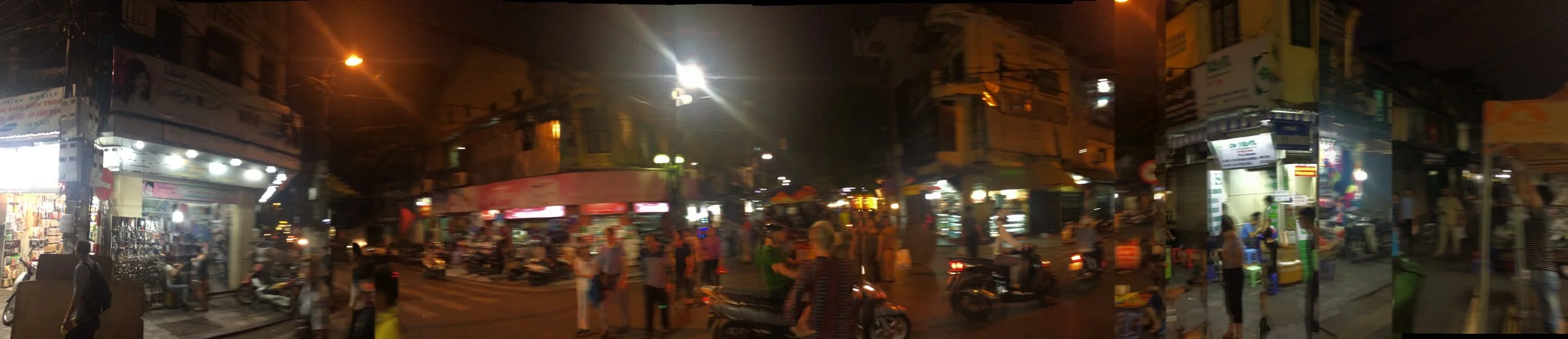
New Zealand North Island - Part One

Auckland

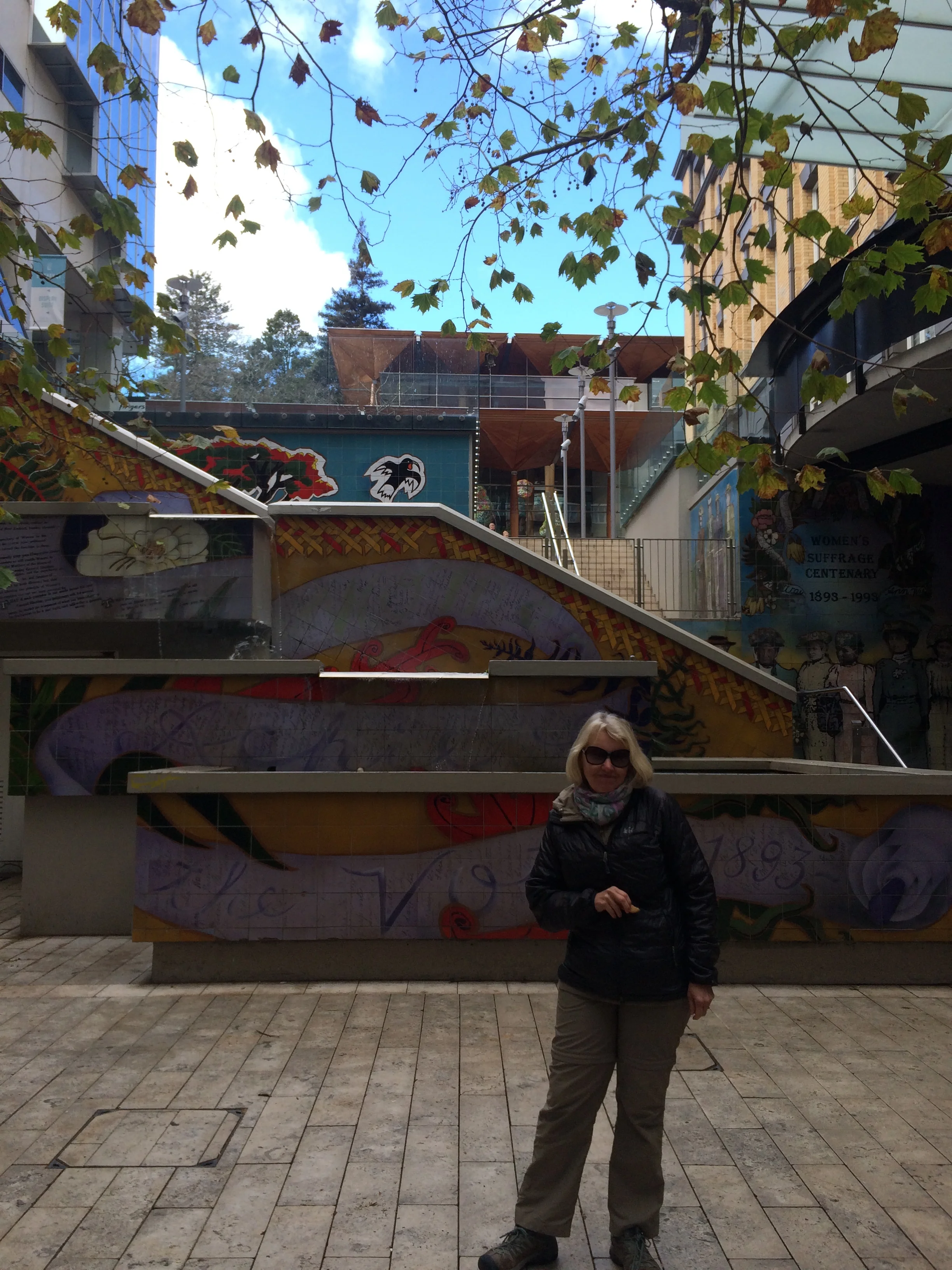
New Zealand is our final country to visit on this almost one year long journey. To our surprise or naivety,  upon landing in Auckland, north island, we first realized there is a very large Tribal population of indigenous peoples that first immigrated to NZ 1500 years ago from the islands of the Polynesian culture using large wood catamaran canoes, following stars and tide wave action. They are called Maori. These same Polynesians immigrated 1000 years ago to Rapa Nui (Easter Island) which was at the beginning of our adventure. You might remember, we flew 4000 miles from Santiago, Chile, to Easter Island to see the Maori culture and statues. Our trip and cultural experience has come full circle. We spent time at the Auckland Museum looking at the Maori history of habitation, culture, and society.

Frank at the Auckland Museum

Now in Auckland, we can enjoy another country that became part of the British Commonwealth at the urging of Queen Victoria who feared that France would claim the islands after a surge of missionaries and traders. It was the French that brought Catholicism to NZ; the Brits were Evangelicals. 

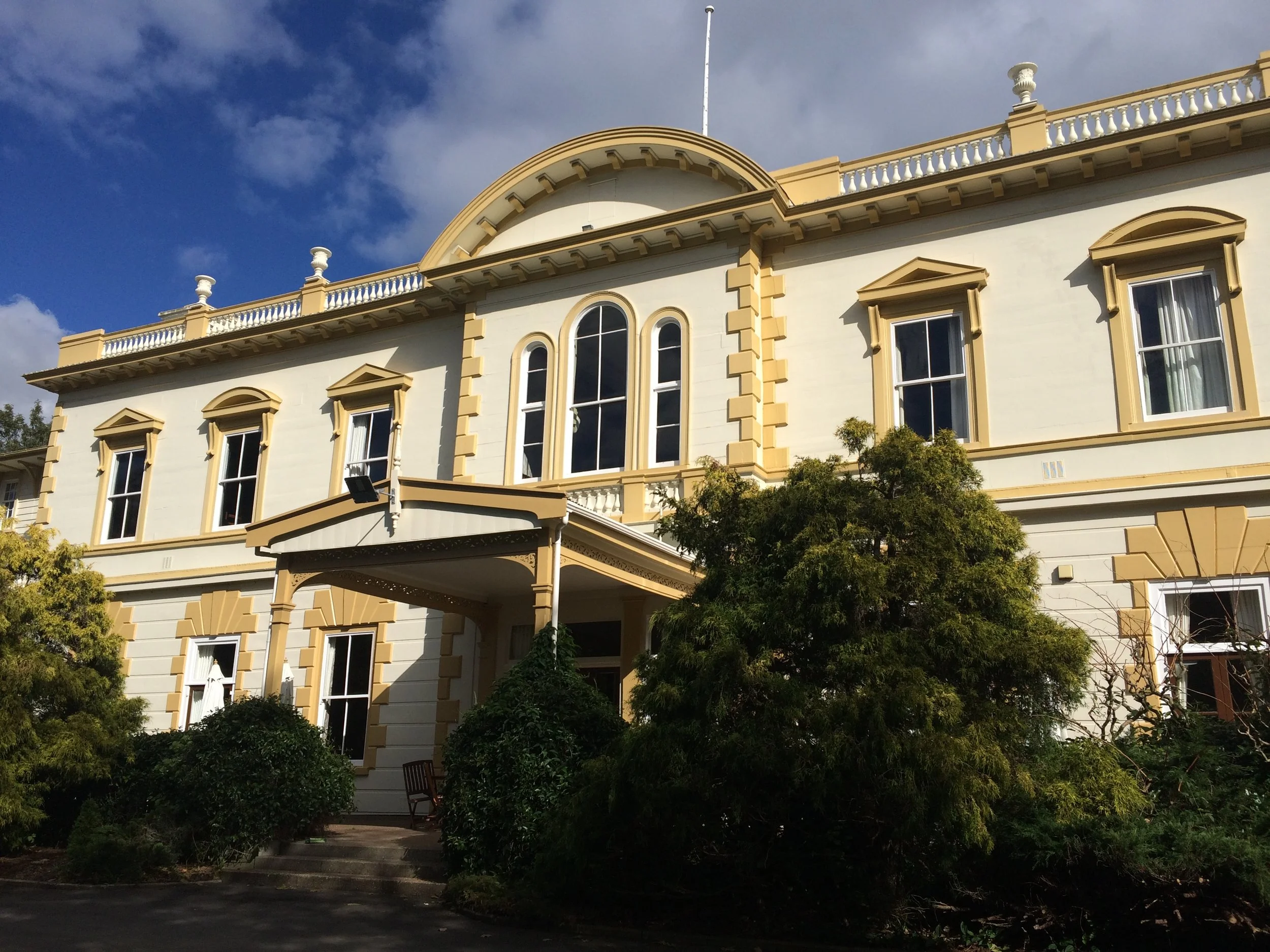
Frank at Price Albert park, Queen Victoria's statue in the background

Auckland is surrounded by bays; the greenery of the countryside can not be ignored. We first saw the criss cross patches of green from the plane. The city has a population of about 1.5 million and is spread out around the bay. Most living quarters are single or double storied. People strive to own their family dwelling. There are high rise buildings in the central business district interspersed among the traditional structures and historic streets. We chose to skip hotels and high tech living and return to more rustic accommodations.

View of the harbor from our Hostel

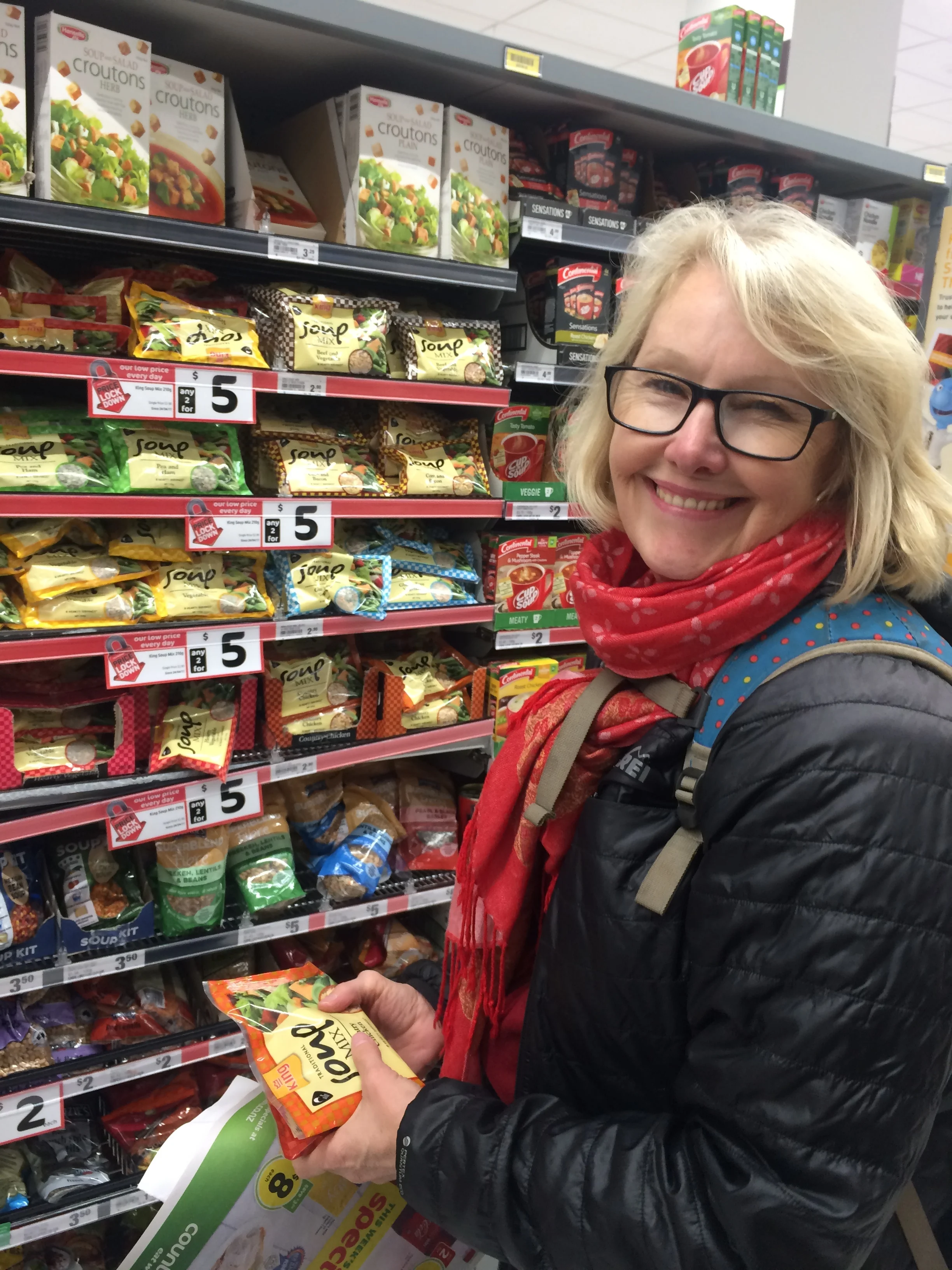
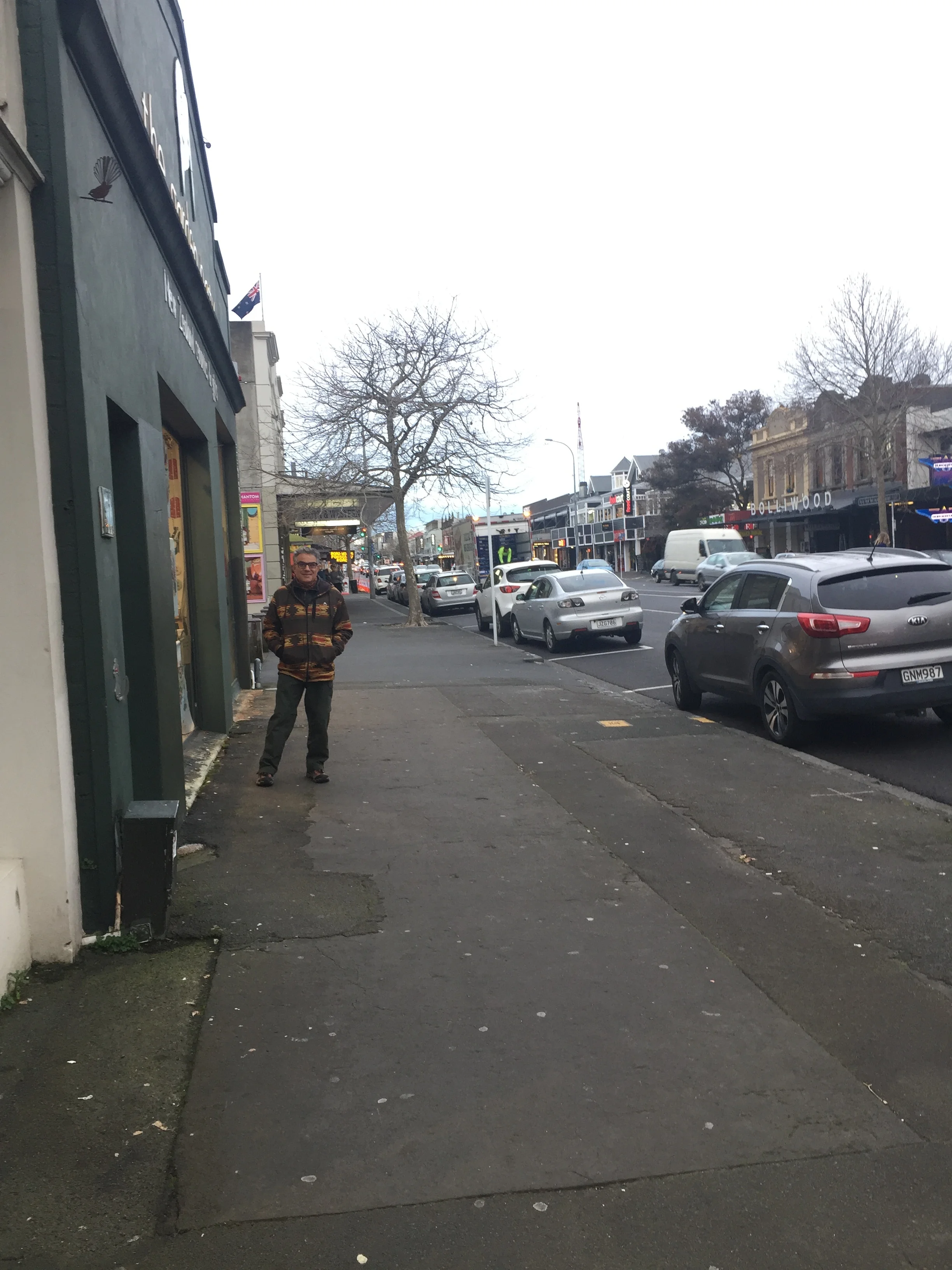
The Verandahs Backpacker Hostel was great; it was a throwback to the really great hostels we had in South America, except for the cost, $70 for a shared kitchen and bath.  Centrally located, we could walk around the University of Auckland and the Auckland University of Technology (AUT). We took the public bus to the waterfront to get our Free Walking Tour; not the cheapest transit, $7.50 one way. In fact, NZ is expensive for travelers—equal to Australia—and both are the most expensive places we have visited; more than France or Germany. 
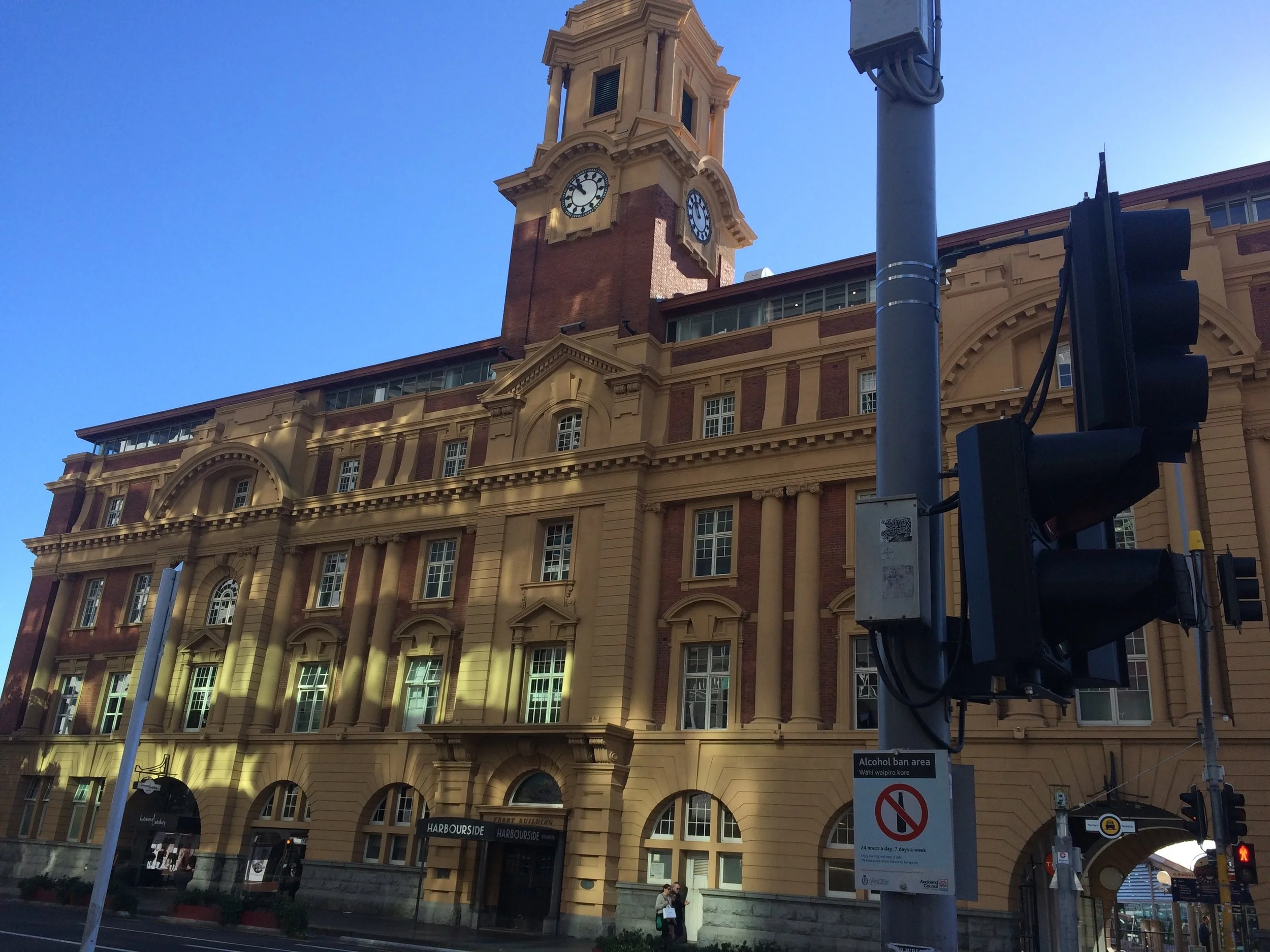
The walking tour was interesting; our guide Olivia was energetic and passionate about her city. Auckland works hard to preserve its older buildings, designating many for level 1 and level 2 protection; L1 = no changes, and L2 preserves the façade but allows interior changes.  Auckland also tries to protect the indigenous culture of the Maori, who were represented by about 400 separate tribes in NZ when they came to a treaty with the British. We are told 700,000 ancestral indigenous still live in NZ. Auckland is also has an ECO friendly “green”philosophy. The city is installing the first subway, admitting that everyone still has a car to travel the rural roads. The gardens and parks around the city are filled with the most incredible trees. But you can not imagine the splendor of the landscape until you drive into the countryside. 
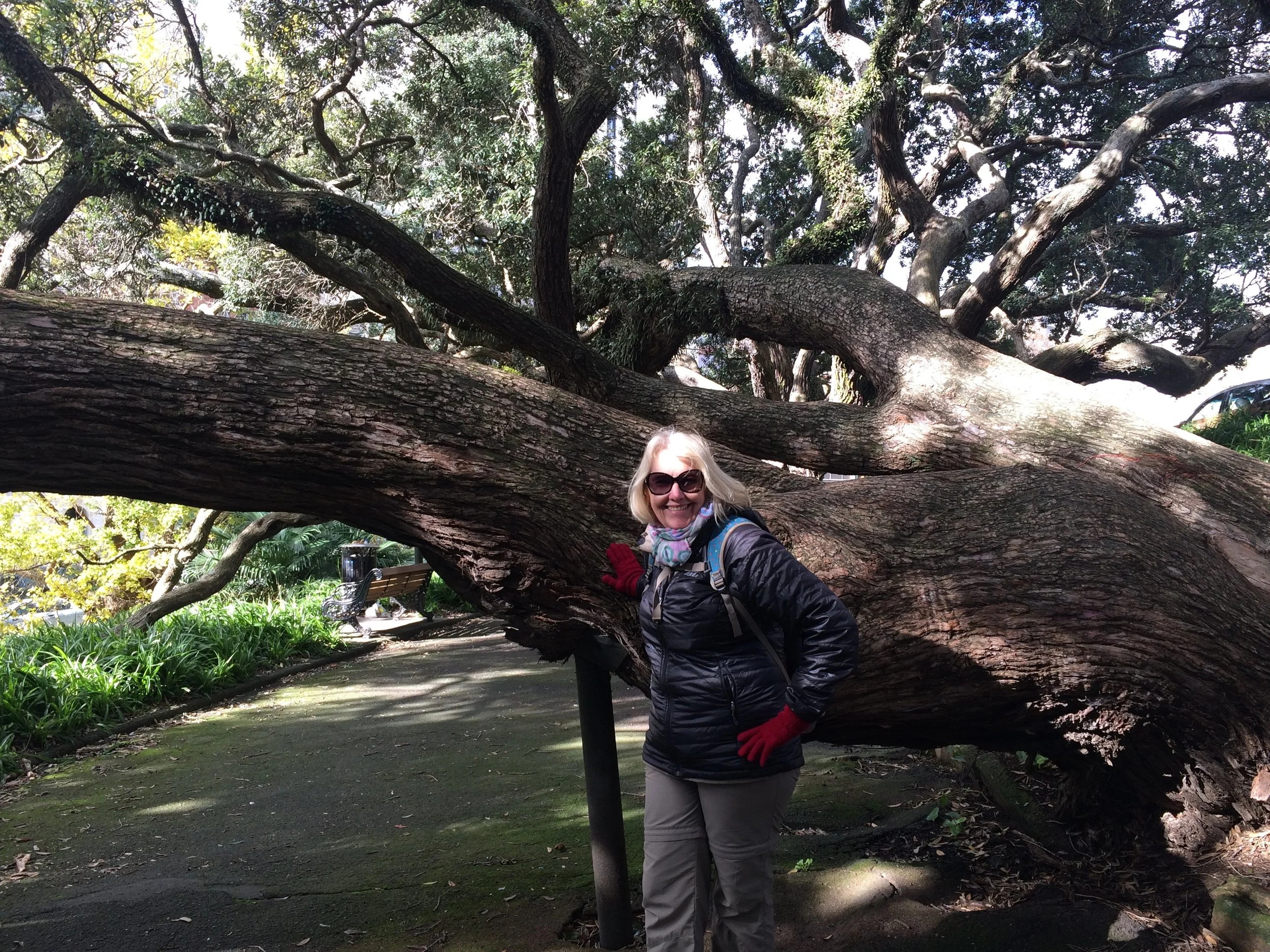
Rotorua

Frank driving our compact car on the "proper" side of the road

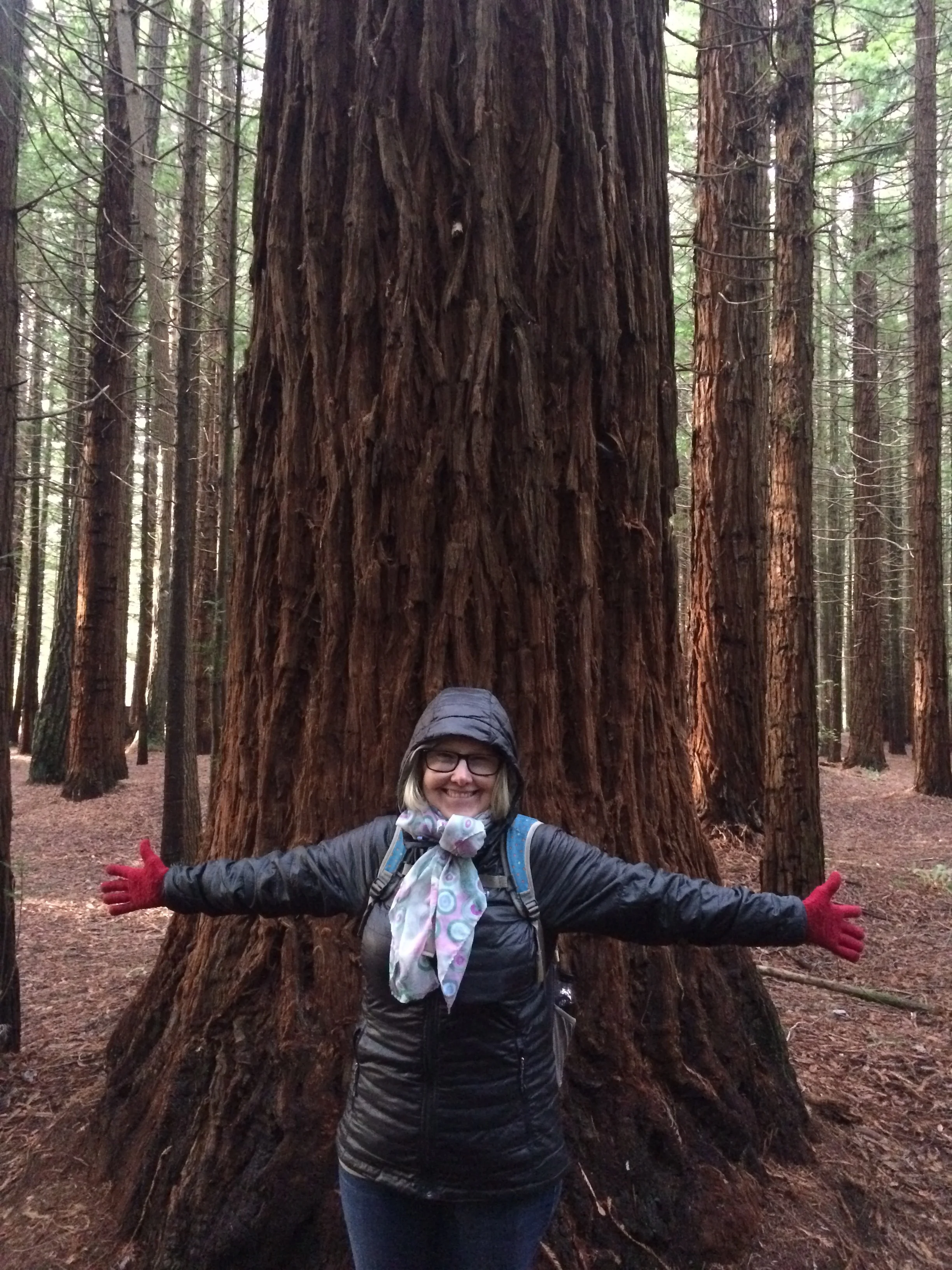
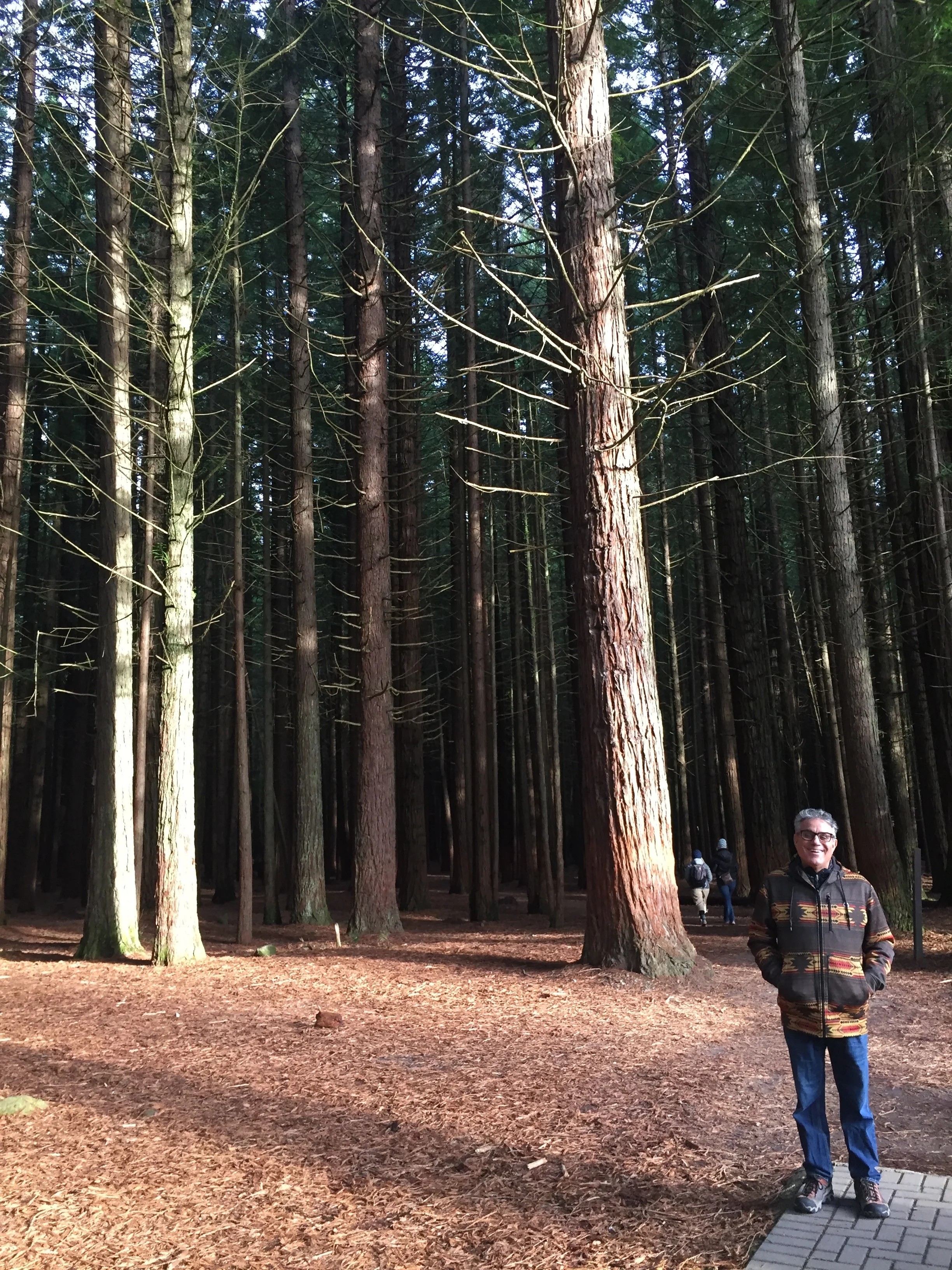
On our second full day in NZ we rented a small compact to drive around this country; first the Northern Island from Auckland to Wellington, then ferry across the sound to Picton and drive around the South Island to Christchurch. This is the first we have driven since back at Chiloe Island, Chile. Here, they drive on the left side so the steering wheel and shifter are on the reversed side. At first you have to pay close attention to their well marked signs and think about the turns, but after awhile you can be calm; noting that this country has a relatively small population and many miles of empty roads. Our first road trip was from Auckland to Rotorua. It was a five hour drive.  We stayed in town at the Rock Solid Backpacker Hostel, another good one.  As soon as we arrived we went to the Redwoods Forest, what a great place and hike, see our photos below.  We decided to stay an extra day to drive to some out of town sites. 
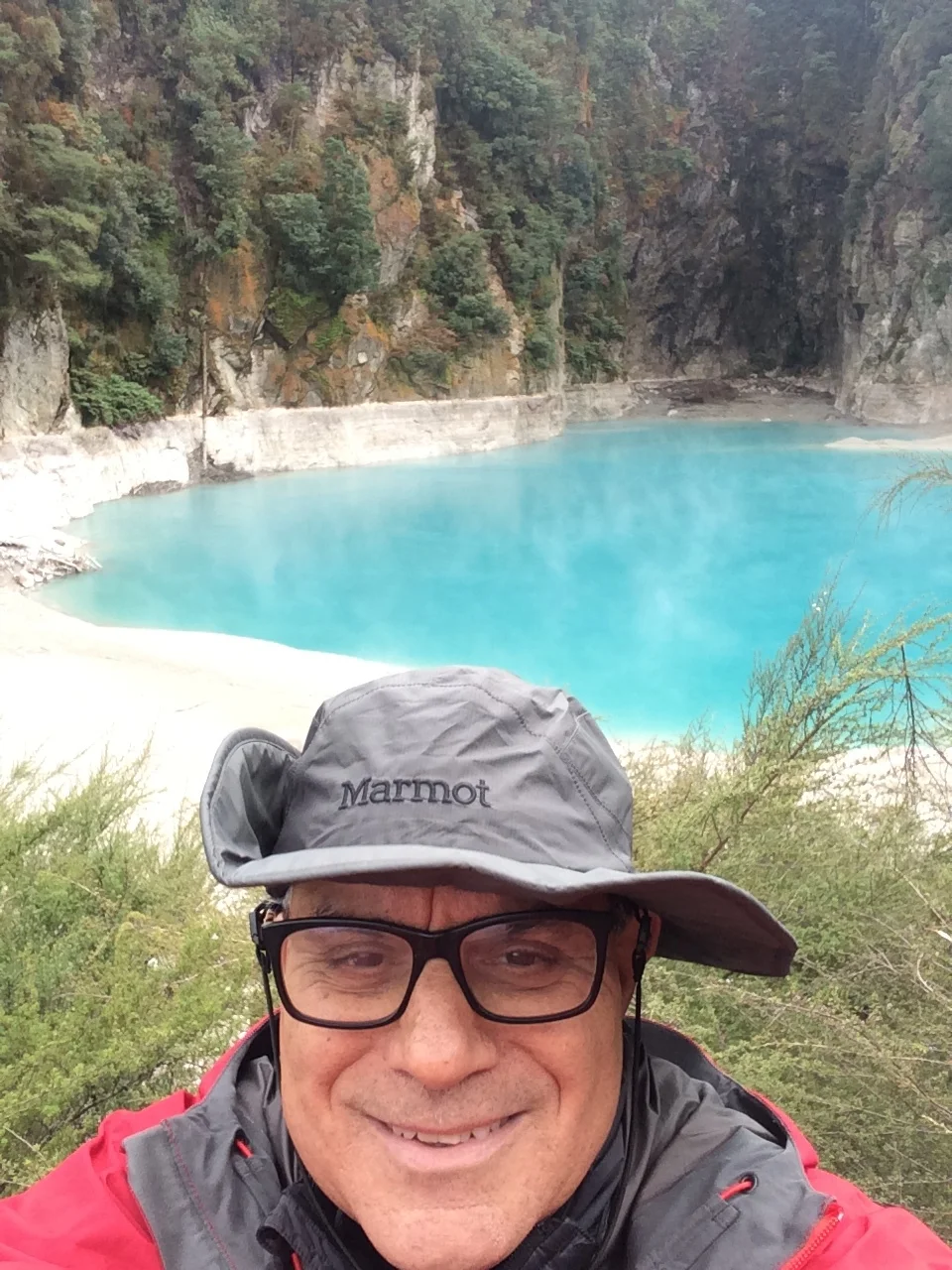
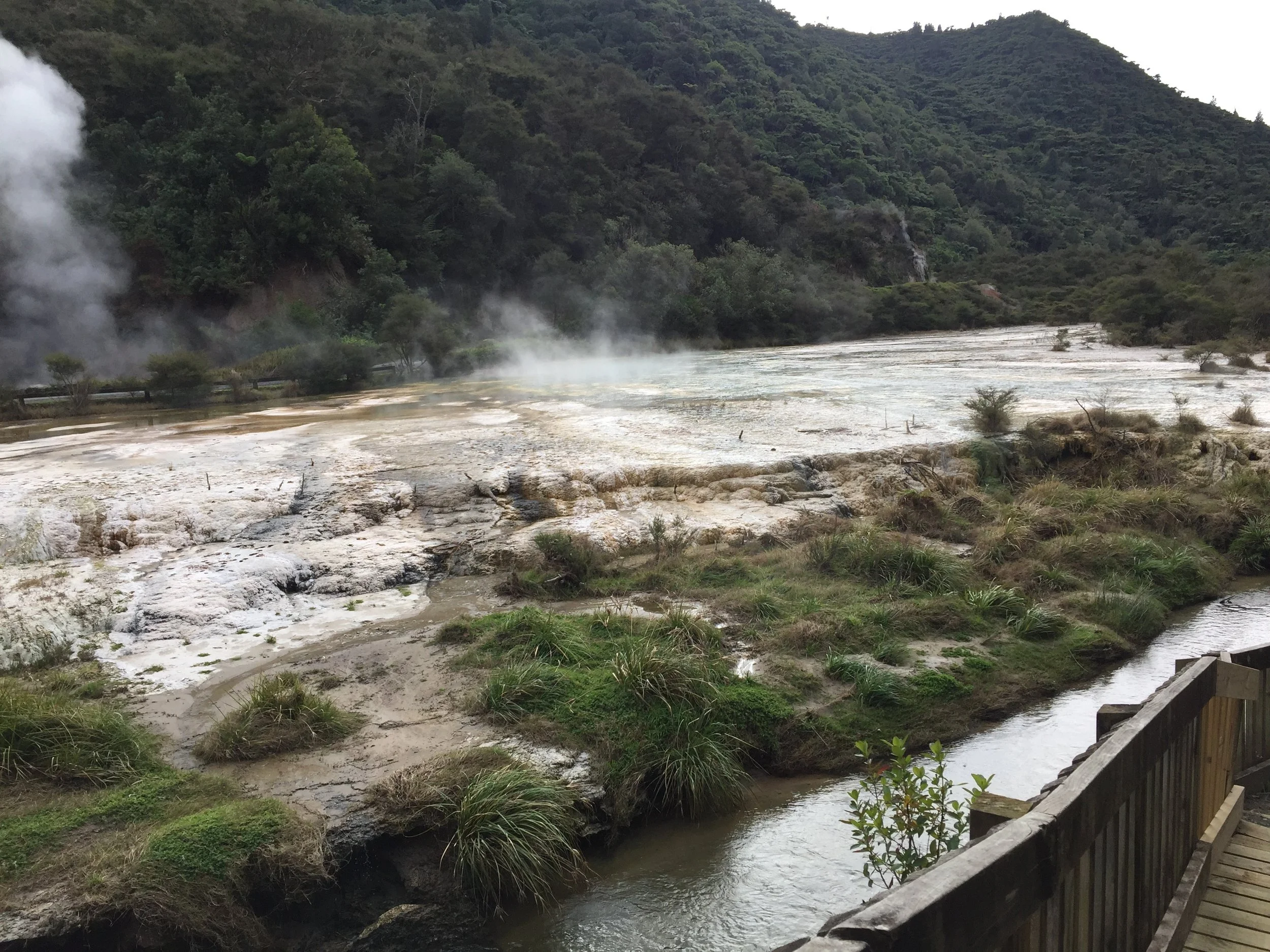
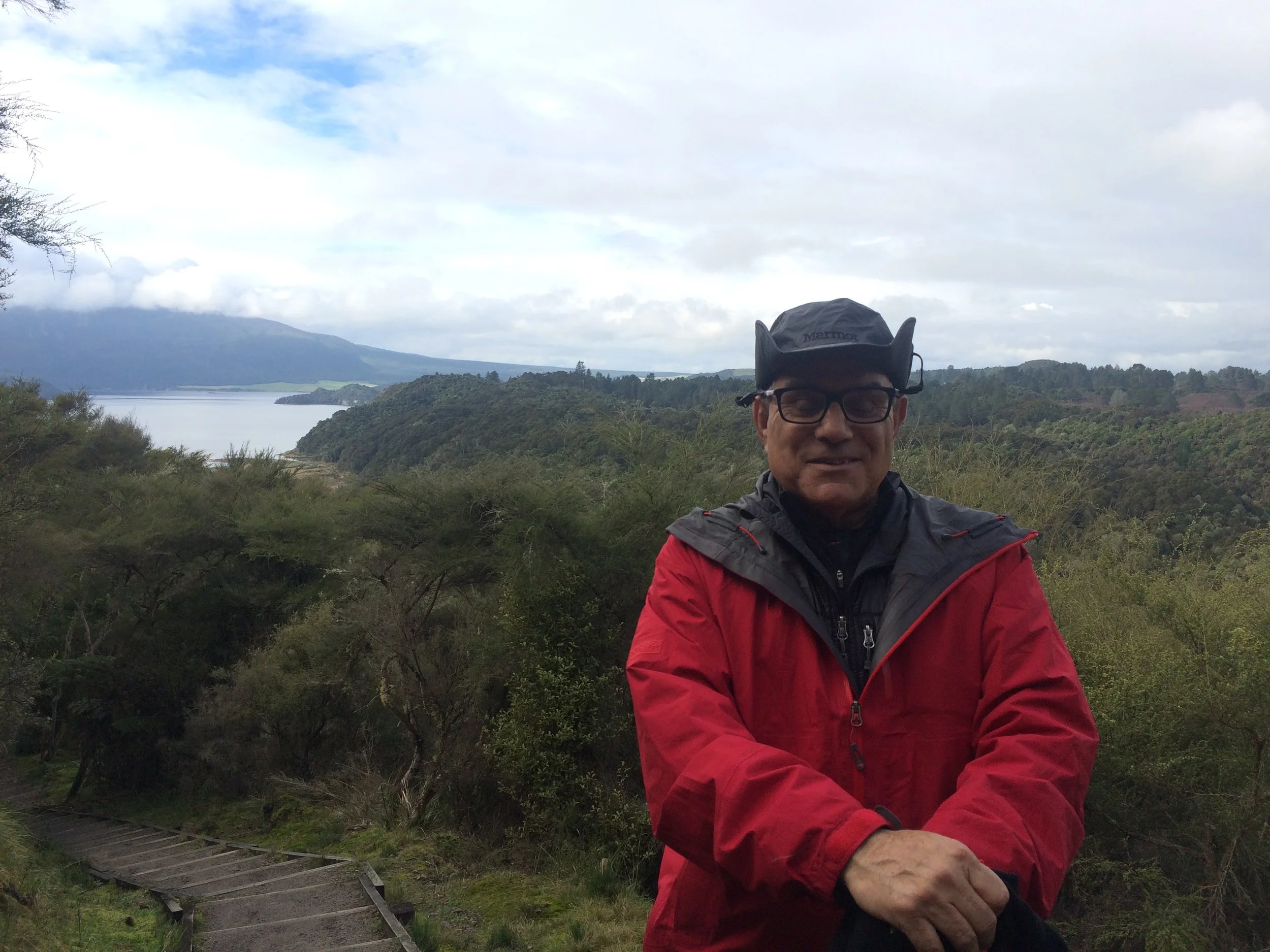
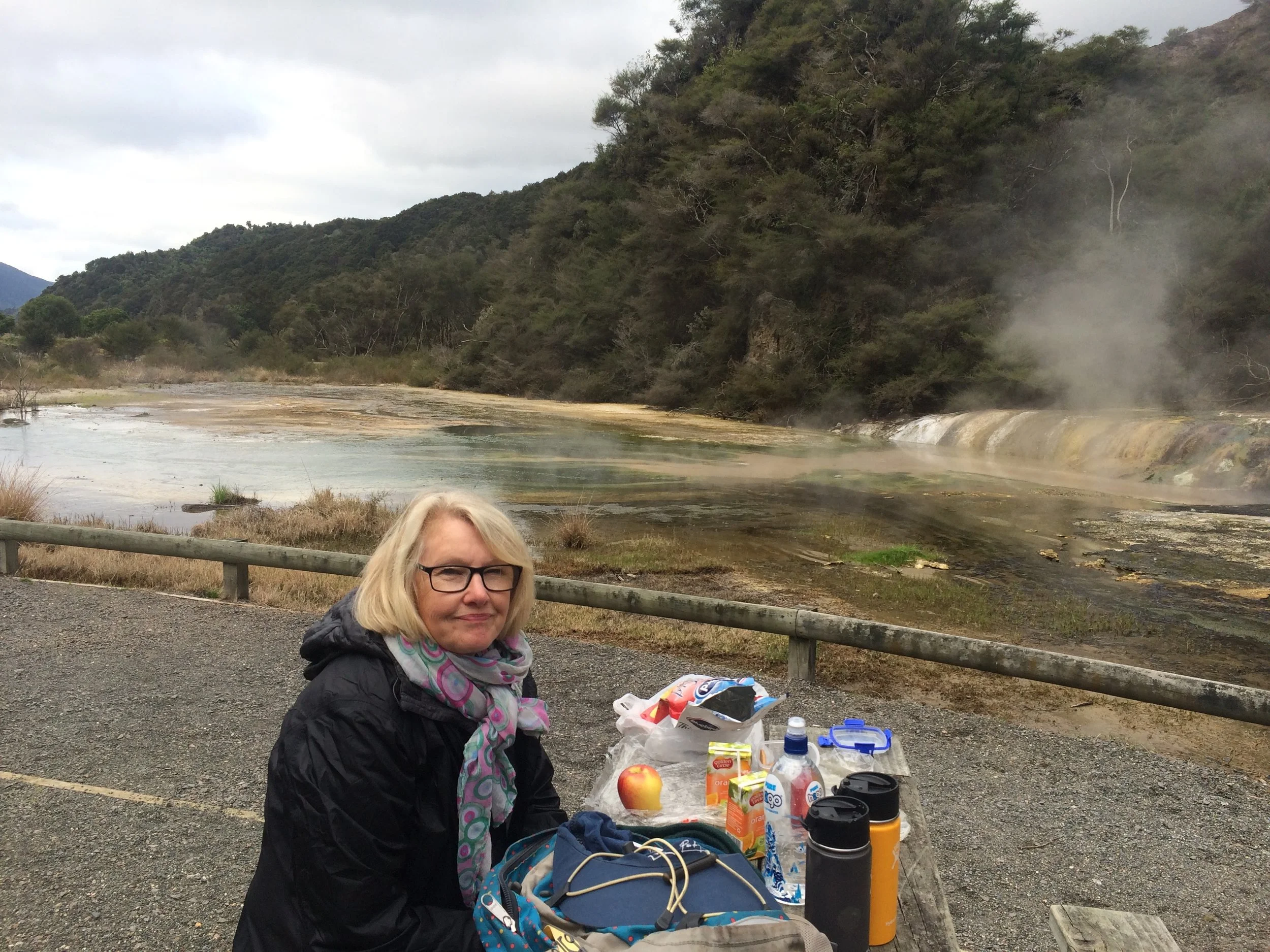
Our second excursion the next day was to trek the “Waimamgu” geothermal formations.  This is billed as the “youngest geothermal area in the world”. Don't know if that is true, but the volcanic activity last transpired in 1904. And the sulphuric water and hot ponds are very active. It was a great trek through the cathedral and valley with great scenery. Surprisingly, black swans were feeding in the stream near to the sulfur water—kind of like a drip drip drip of hot water into the Walmangu stream that runs to Lake Rotomakarira. Note the Maori names used everywhere in NZ. See our trek photos and lunch at the hot springs below
Te Kuit

The next day we arose at 6:00 am and left early for the drive to town of Te Kuit, and the world famous Glow Worm Caves of Waitomo. This drive was super scenic. The landscape is like a bright green carpet that is rolled out over the crest and troughs of the hills that extend to the horizon, with usually a grey shadow of volcanic mountains in the far distance.

A quick stop on the road to see one of many great views

At the Waitomo Caves area the Teutonic fault lines display sharp crevices, barred rock,  and sinkholes in the sides of the hills. These are the signs of cave formation.  Otherwise the land is rolling green pastures for cattle and sheep to graze. 

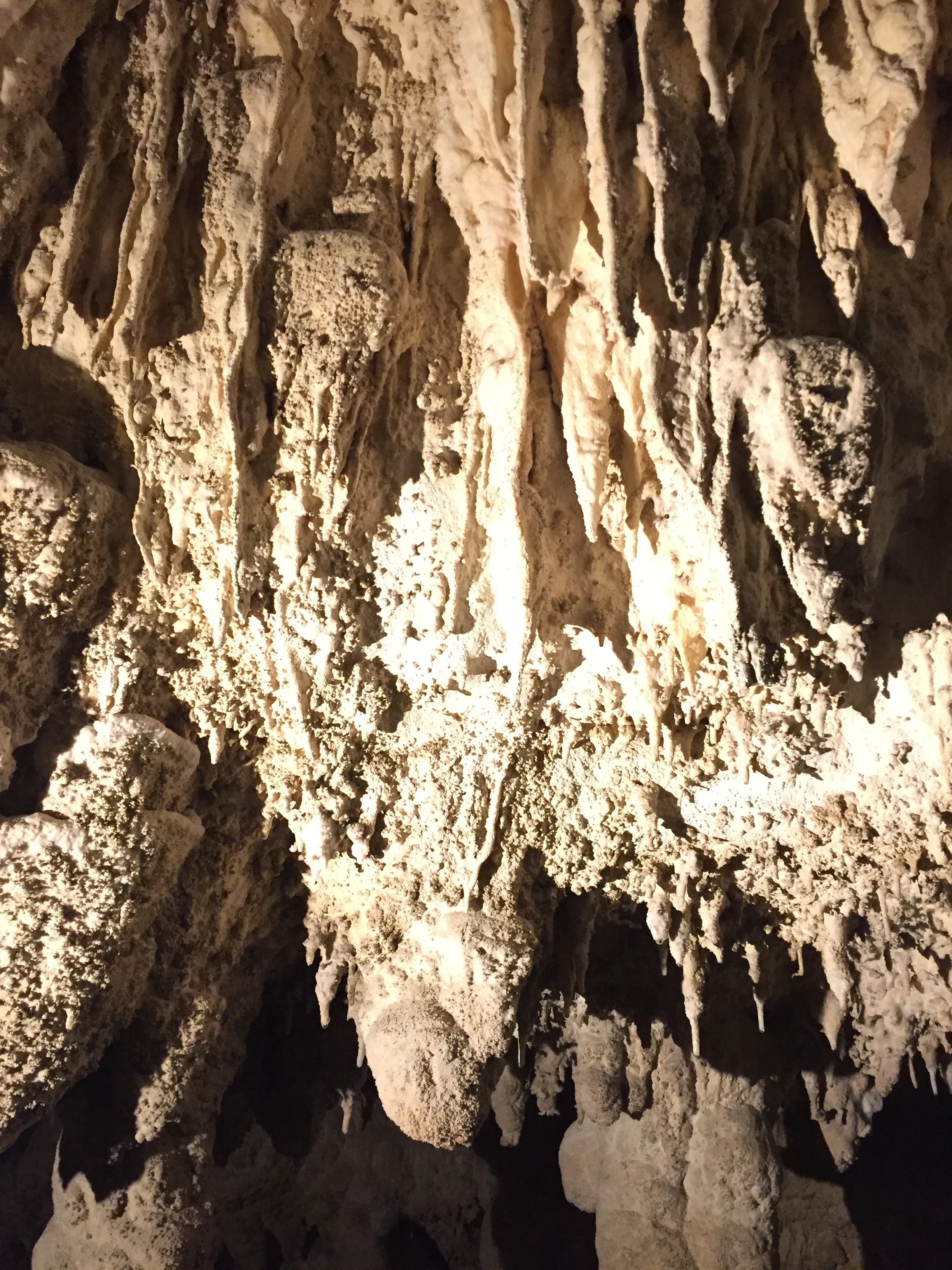
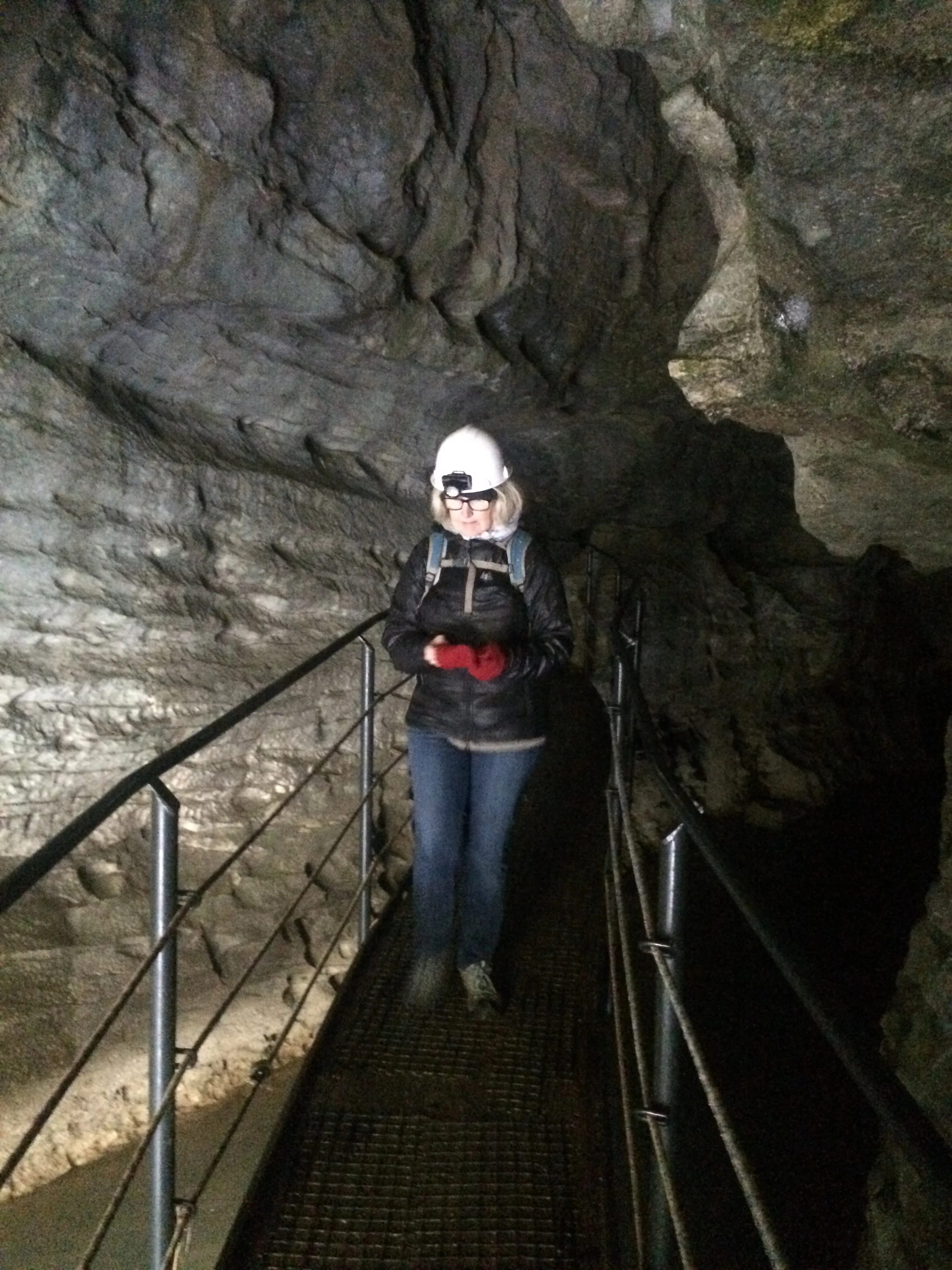
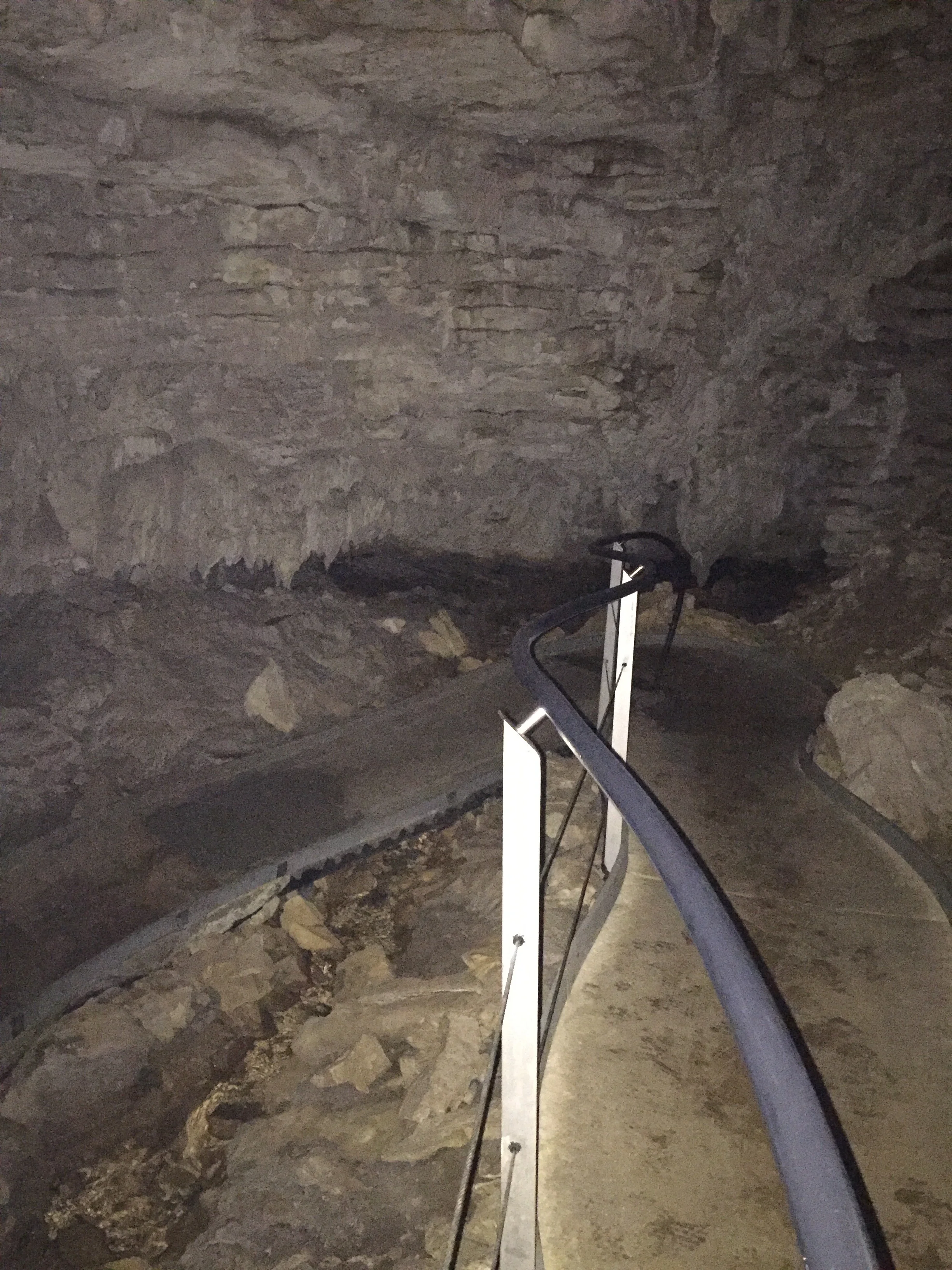
Our knowledgeable guide drove us to 2 cave sites. The first had stalactites and stalagmites . They were not straight up and down vertically, but often had curly cue shapes caused by wind flow. The Cathedral room opened into an open crevice to the surface that was about 20 feet long/wide, displaying the cave ceiling above us mere mortals. Here, water dripped and air flowed—but usually animals were blocked off by the Farmer’s fences or more likely his planted hedgerow. Seeing a hedgerow was a key indicator that a crevice or sink hole above the cave had been found. There were, however, bones of creatures—usually large birds in the cave. NZ had no mammals on the islands (except 3 kinds of Bats) until dogs and rats landed with the explorers. 
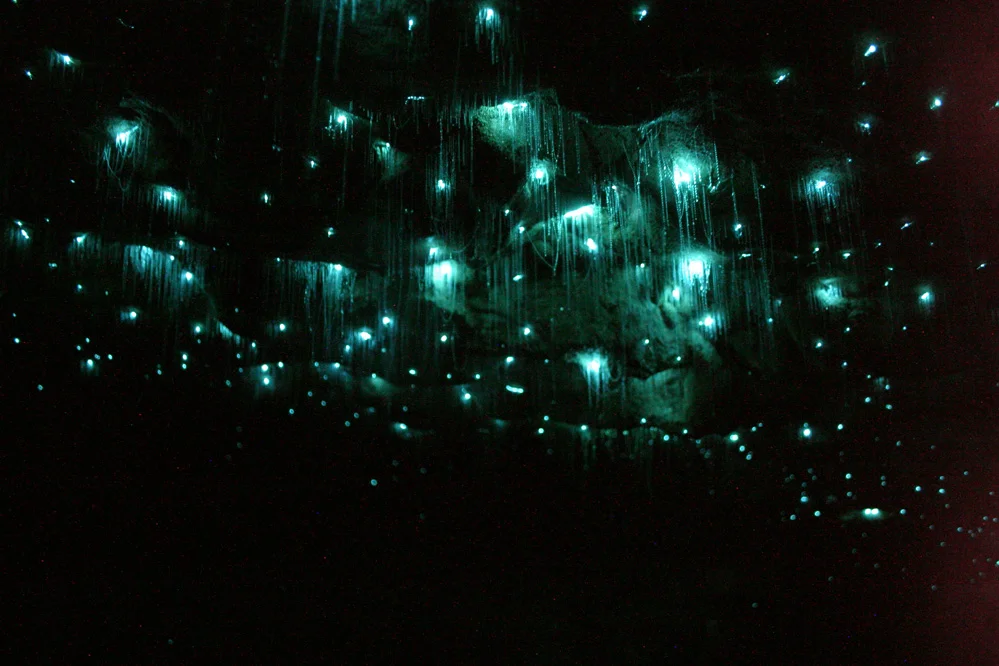
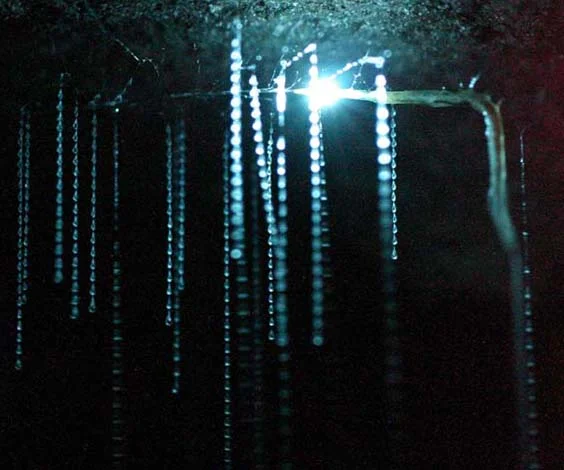
The second cave, which was black as a tomb, contained the Glow Worms. We rode in a small raft that was pulled over the water in the cave tunnel. Our layman’s explanation: These are the strangest tiny creatures that attach themselves to the ceiling in the thousands and lower single strands of goo, about 3-4 inches, with the goal of trapping food that may fly or float through the caves driven by the light wind. They are not sensitive to light, but rather to vibrations, which cause each of them to glow in order to attract prey. The higher the vibration the brighter they glow. In a dark cave the glow reminds you of the vast stars in Milky Way Galaxy. It is really a phenomenal experience.
Ps. We also experience seeing large river EELS (2-3 feet long) that wind there way through the outdoor streams from bank to bank where you might expect to see trout. Apparently they are edible and are eaten by the Moira and others. 

Taupo

We left the cave area and drove to our next destination of Taupo in the central north island. This was another road adventure with winding roads and steep edges. We arrived before dusk, thankfully, and crashed at Rainbow Hostel. As before in NZ, the first stop was a grocery store. We have used the kitchens in the hostels for most meals. This was another large place, but spread out on a single level. The other hostels we stayed at were multi storied. 


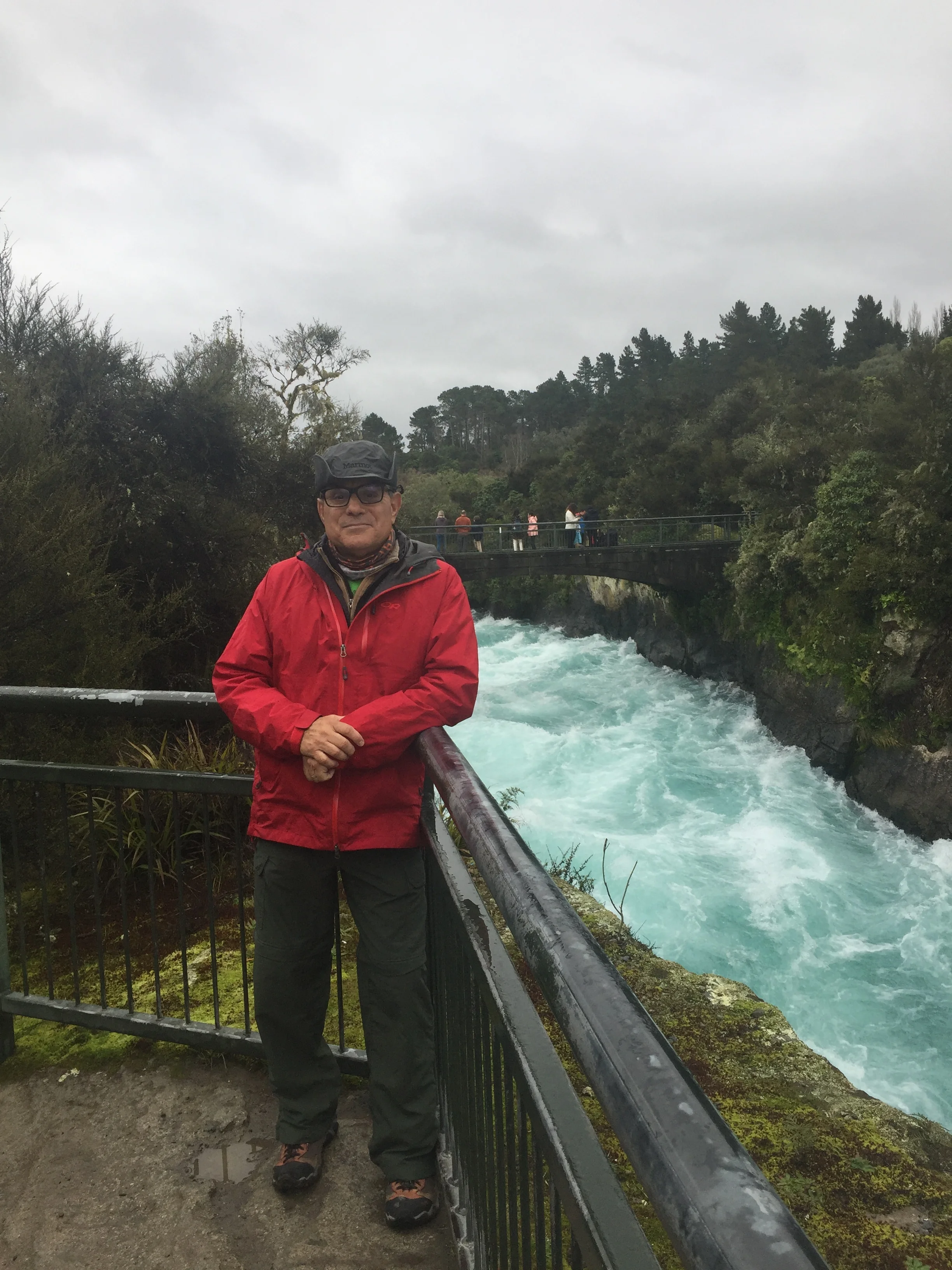
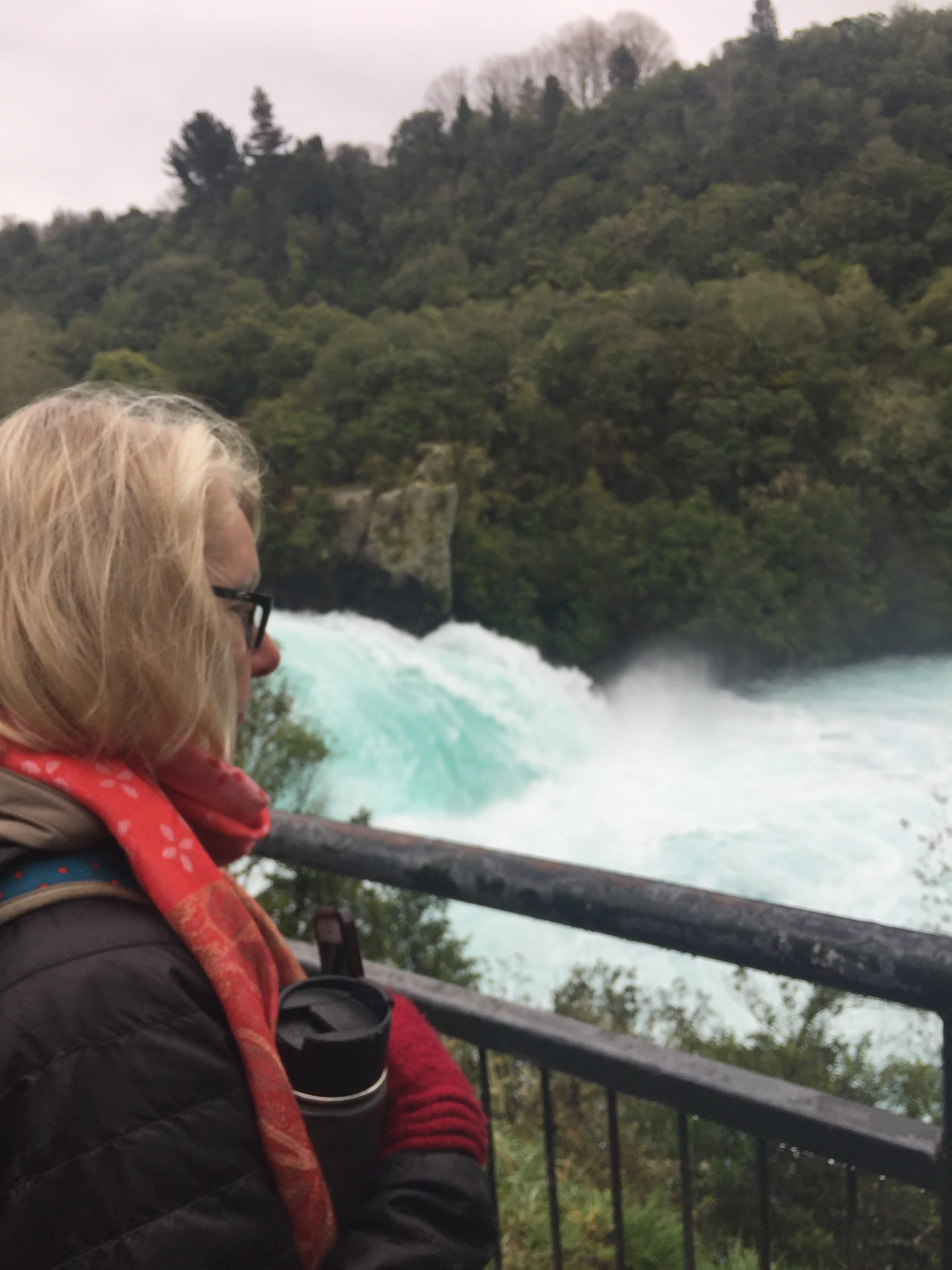
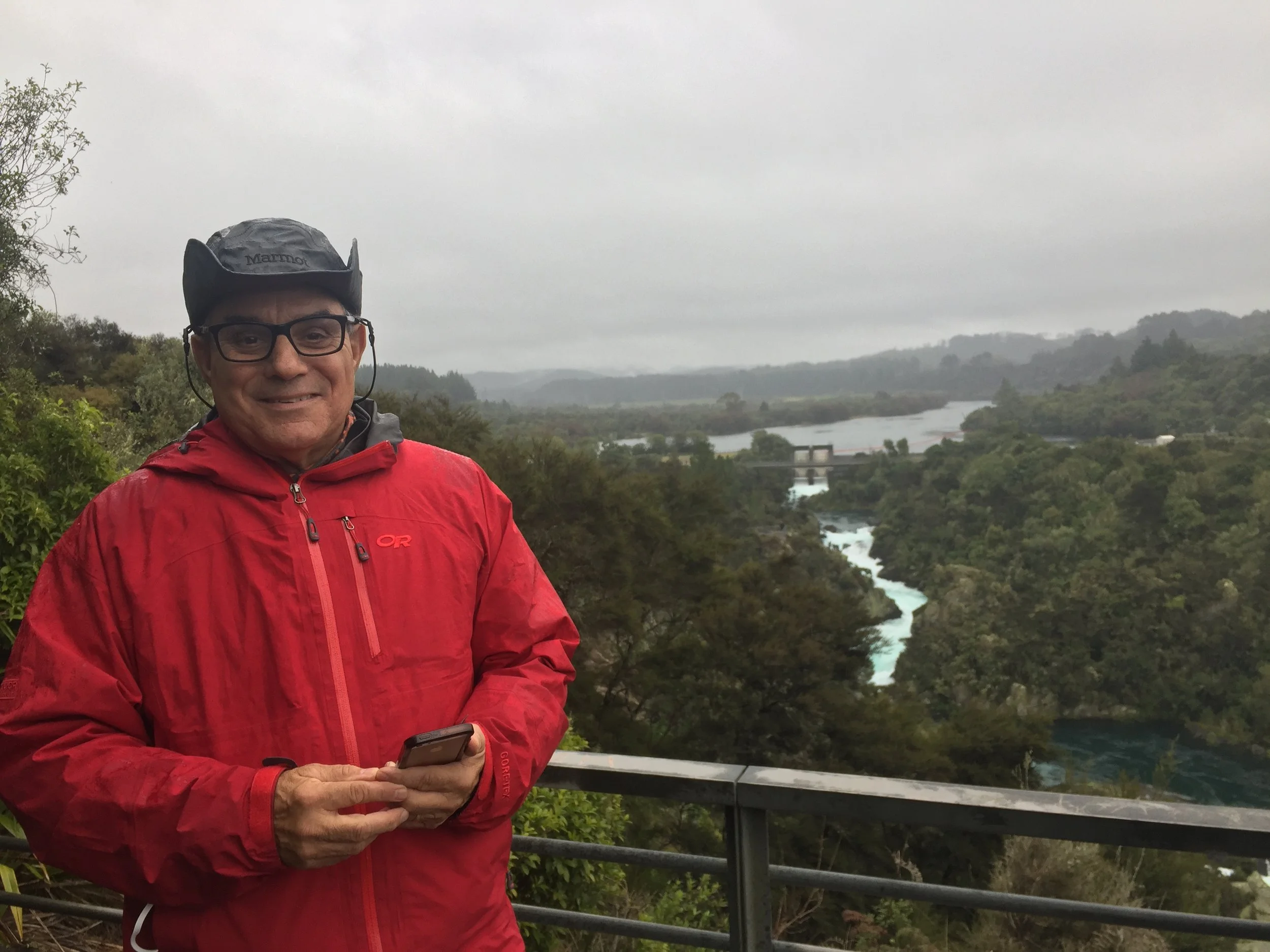
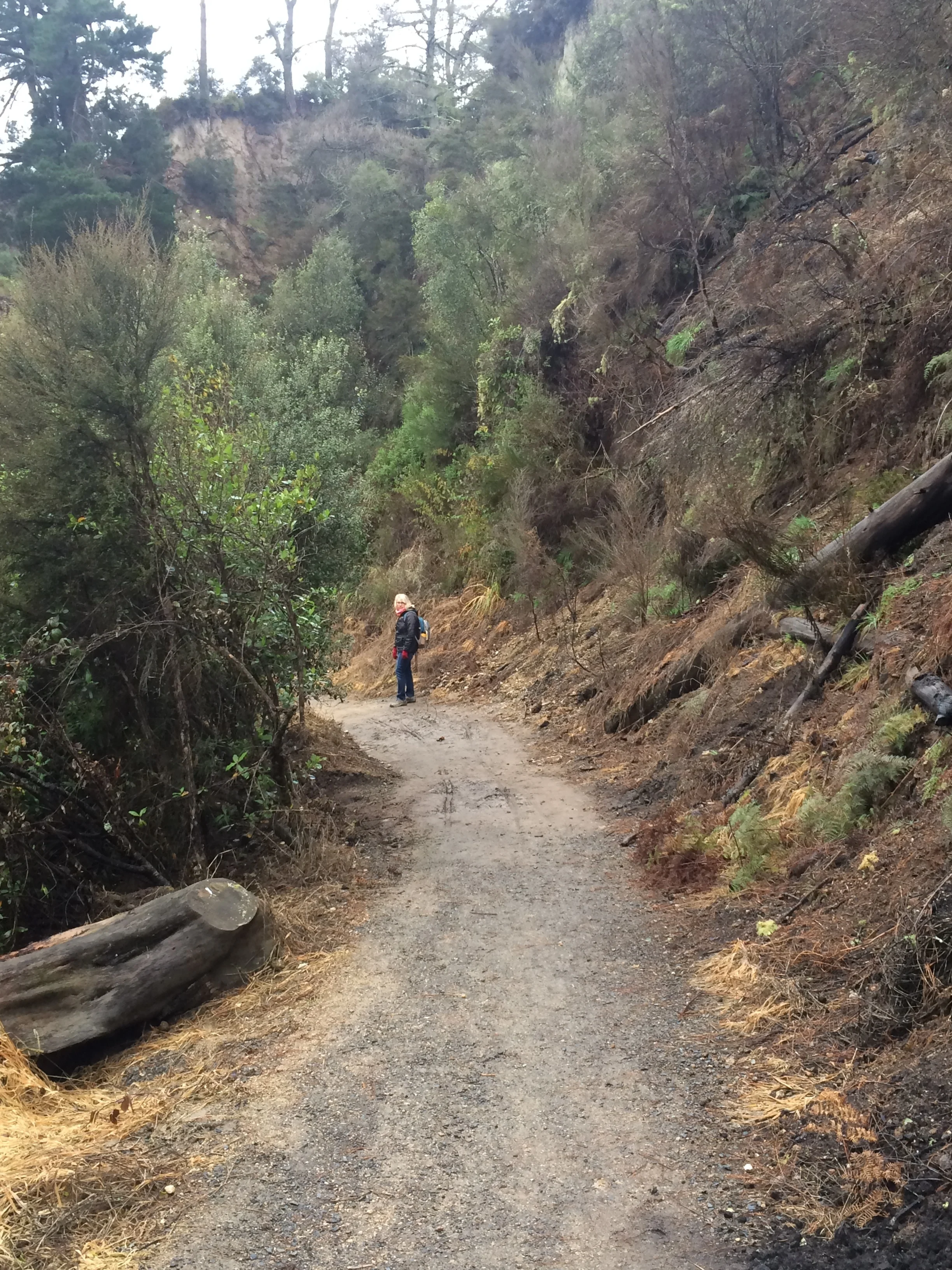
We planned three excursions in Taupo, but due to heavy rain settled on two sites. First, we trekked, or as NZ says-“tramped”, the River walk, about 3 km to the Huka Waterfall. The river has monstrously high banks covered with multi-colored green foliage. The rush of the clear turquoise water adds to the beauty. This wide river borders small geo-thermal ponds emitting steam that are open to bathers. The river current is fast and sports a competitive Kayak slalom course. The river narrows significantly and that is where the compression of the waterway makes the force of the falls so dramatic although not really high above the river. 
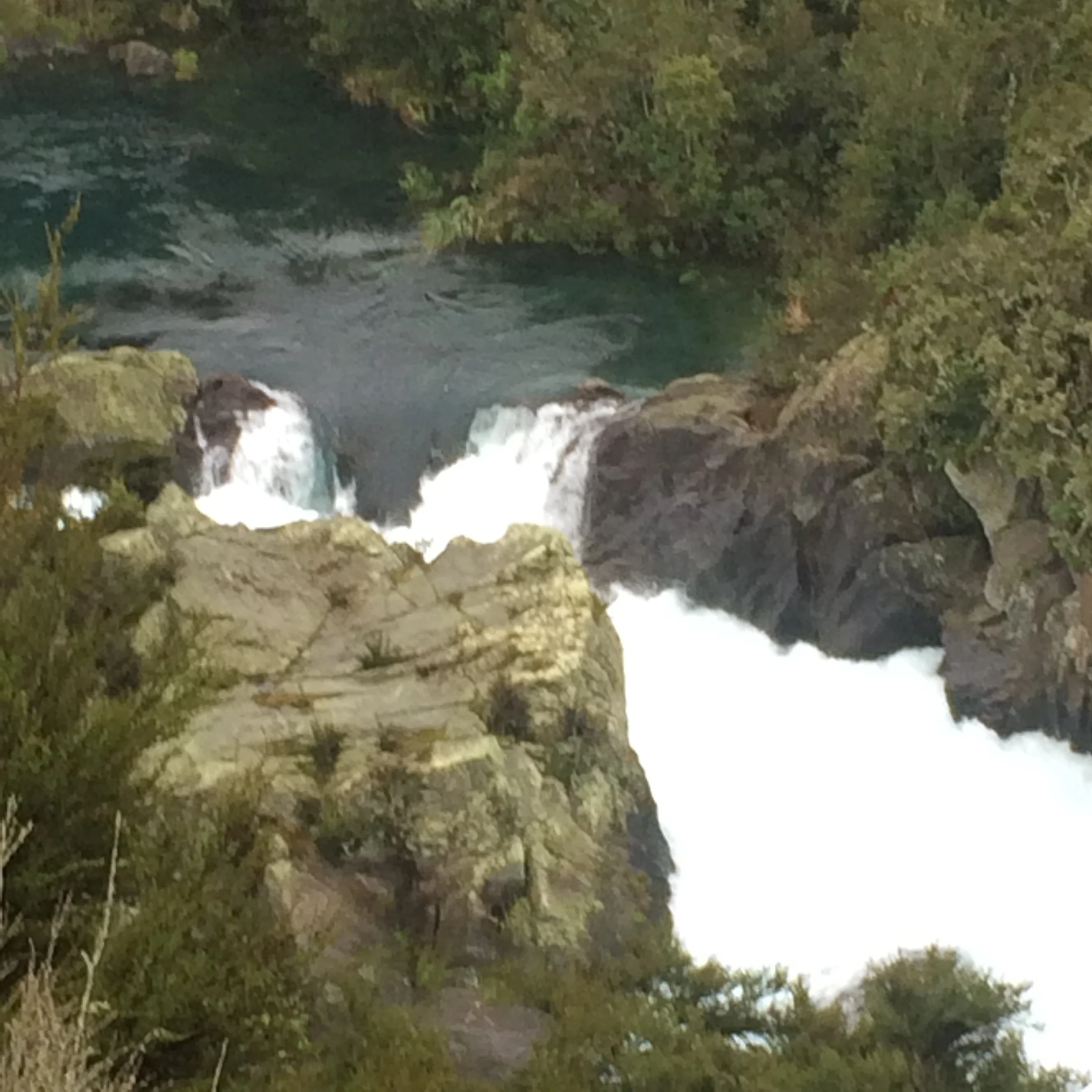
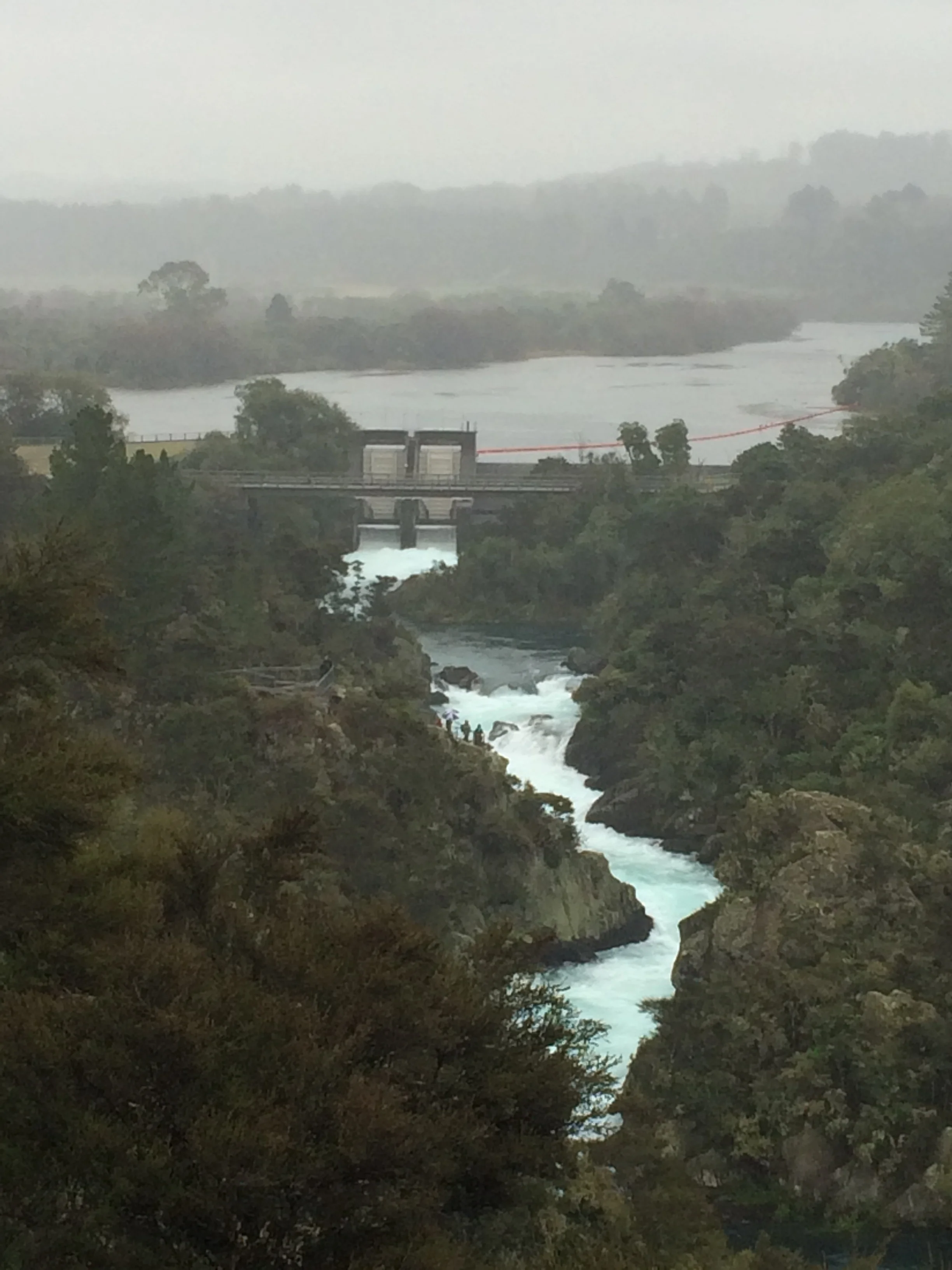
Then we went to the “Aratiatia Rapids”and walked to the high viewing stations.  These rapids were once natural, but now the course of the river is dammed for hydro-electric energy. However, lucky for us, the dam is opened three times per day which allows a great onslaught of water to pour into the ravine pools and create the moving rapids and smaller water falls. Watching the dam function was an unusual experience; an interesting interplay of technology and natural forces. 
We later stopped by “Moon Crater” geo-thermal walk and “Waikato” geo-thermal walk, but it was just too wet and raining to proceed. We like the steam of the thermal pools, but we have seen enough of them to avoid bad weather. Tomorrow, we are getting up early to drive to the Tongariro National Park. We will spend the day there and then drive 200 Km to the capital city of Wellington.

Great example of our treks and the vast landscapes
Brisbane Australia

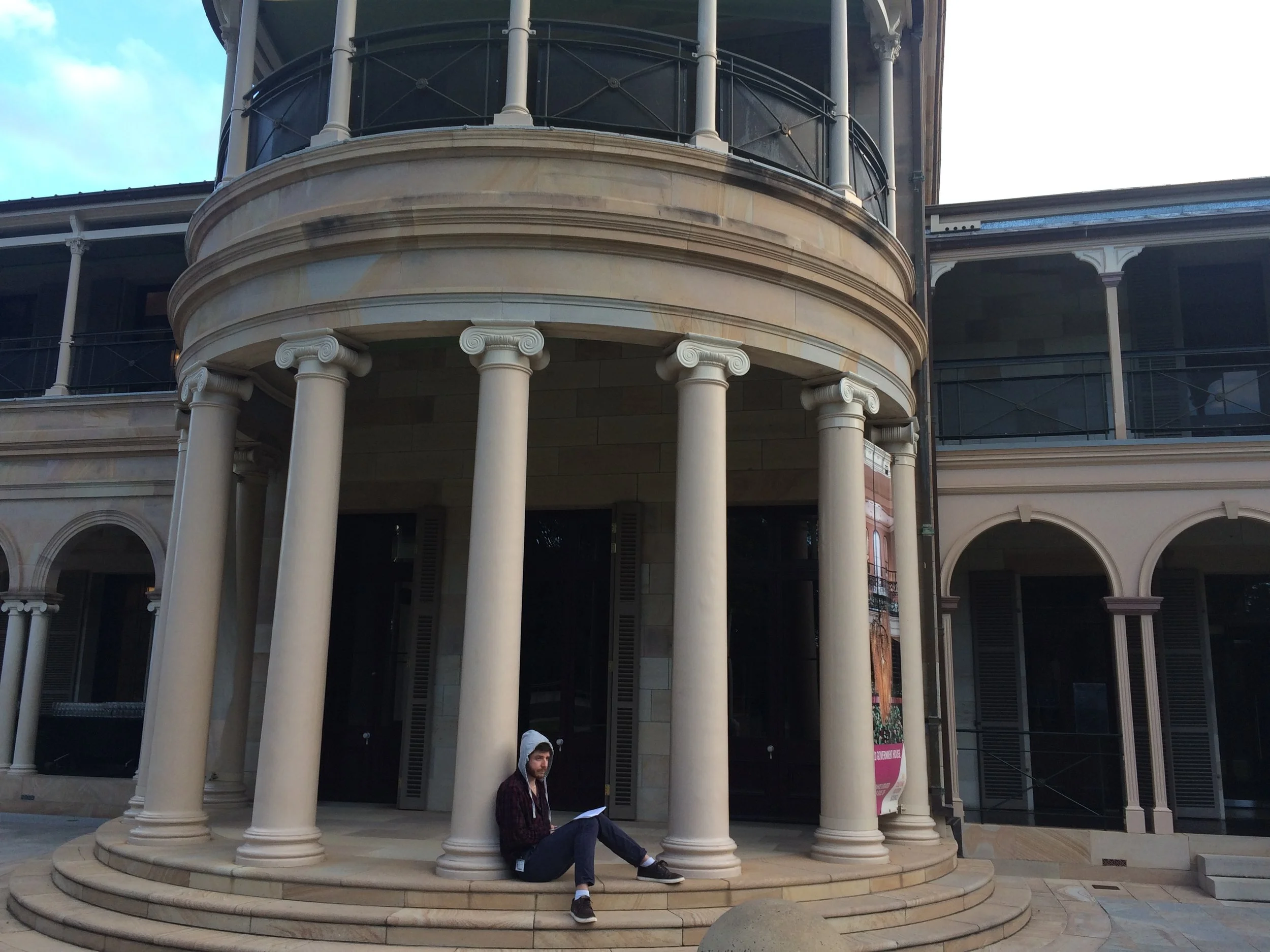
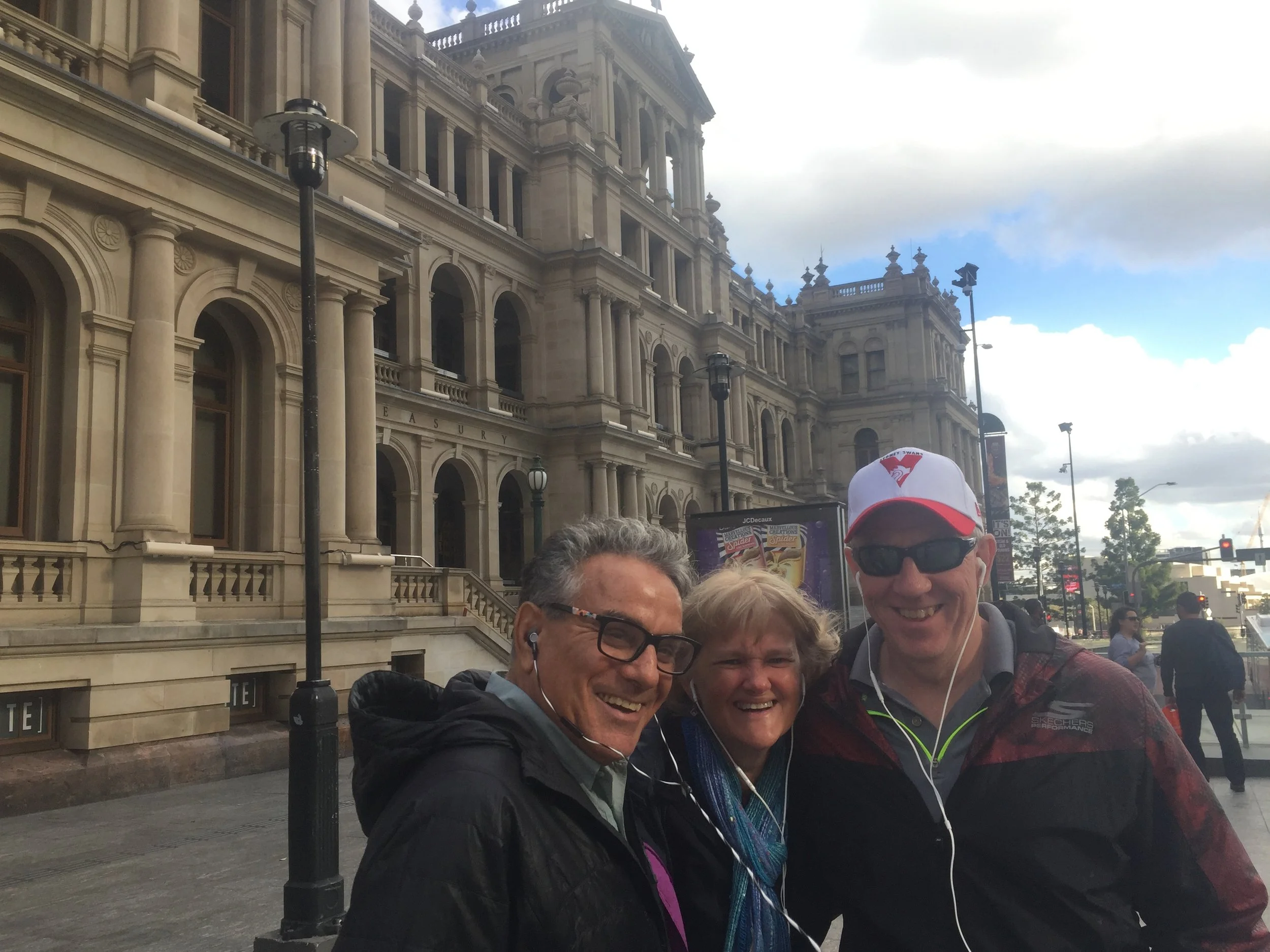
Our final destination is the city of Brisbane also in the Queensland Province, but required a 2 hour flight from Cairns.  We are bedding down on the 15th floor of a “serviced” apartment building that has a large balcony that overlooks a really marvelous city straddling both sides of the river  connected by pedestrian bridges as well as roadways. There are many modern high rises of exciting design, but we chose to start our self tour by visiting the historic Provincial Government District.

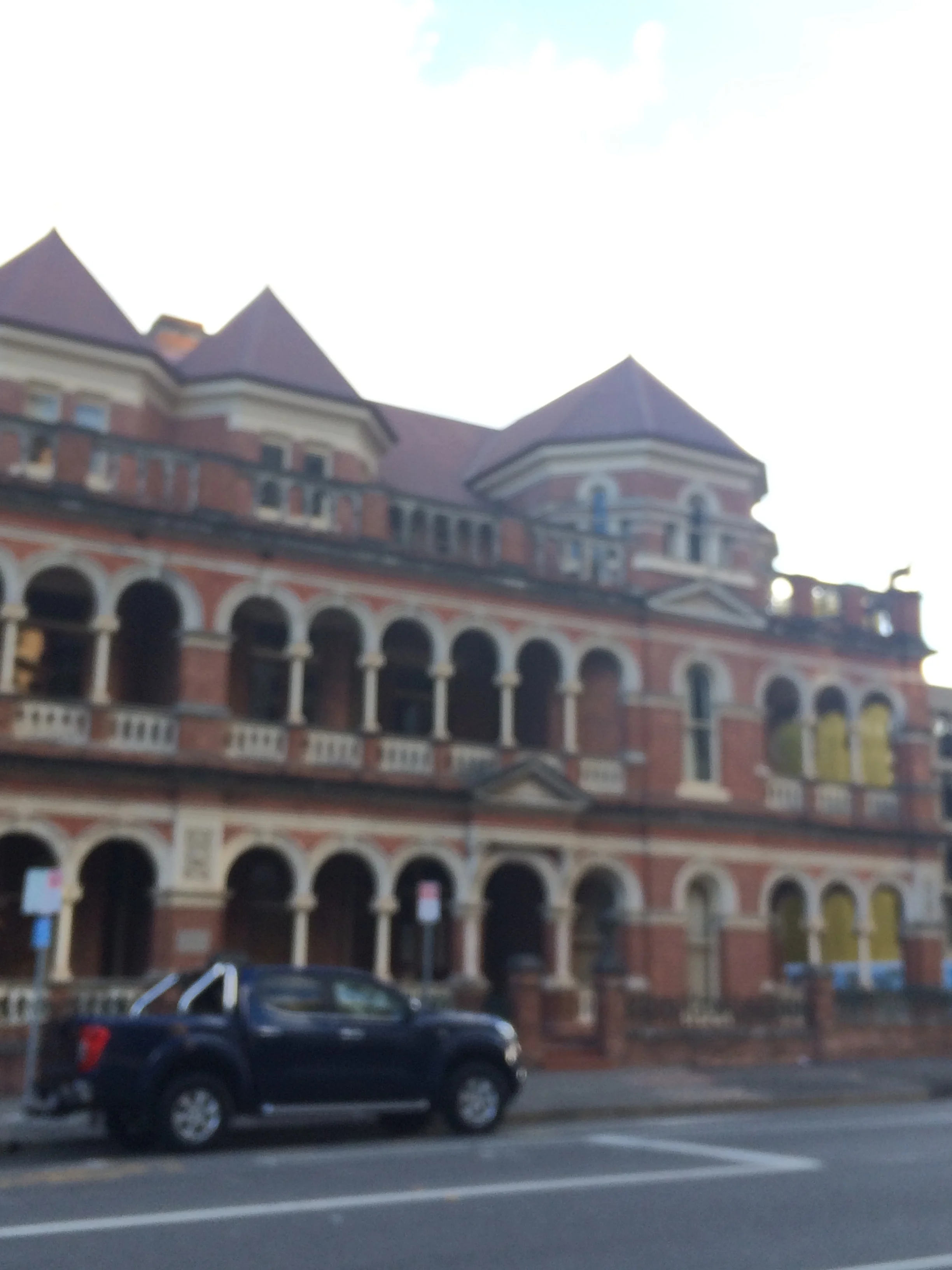
We had an audio guide that nicely explained the development of the City and its buildings from its penal colony days to being recognized by British Queen Victoria as the Capital of the newly formed province of Queensland (Sidney in New South Wales Province was not pleased). The older architecture and gardens have been restored and maintained, but the government functions have long been replaced by business offices and the “ Brisbane Casino”.

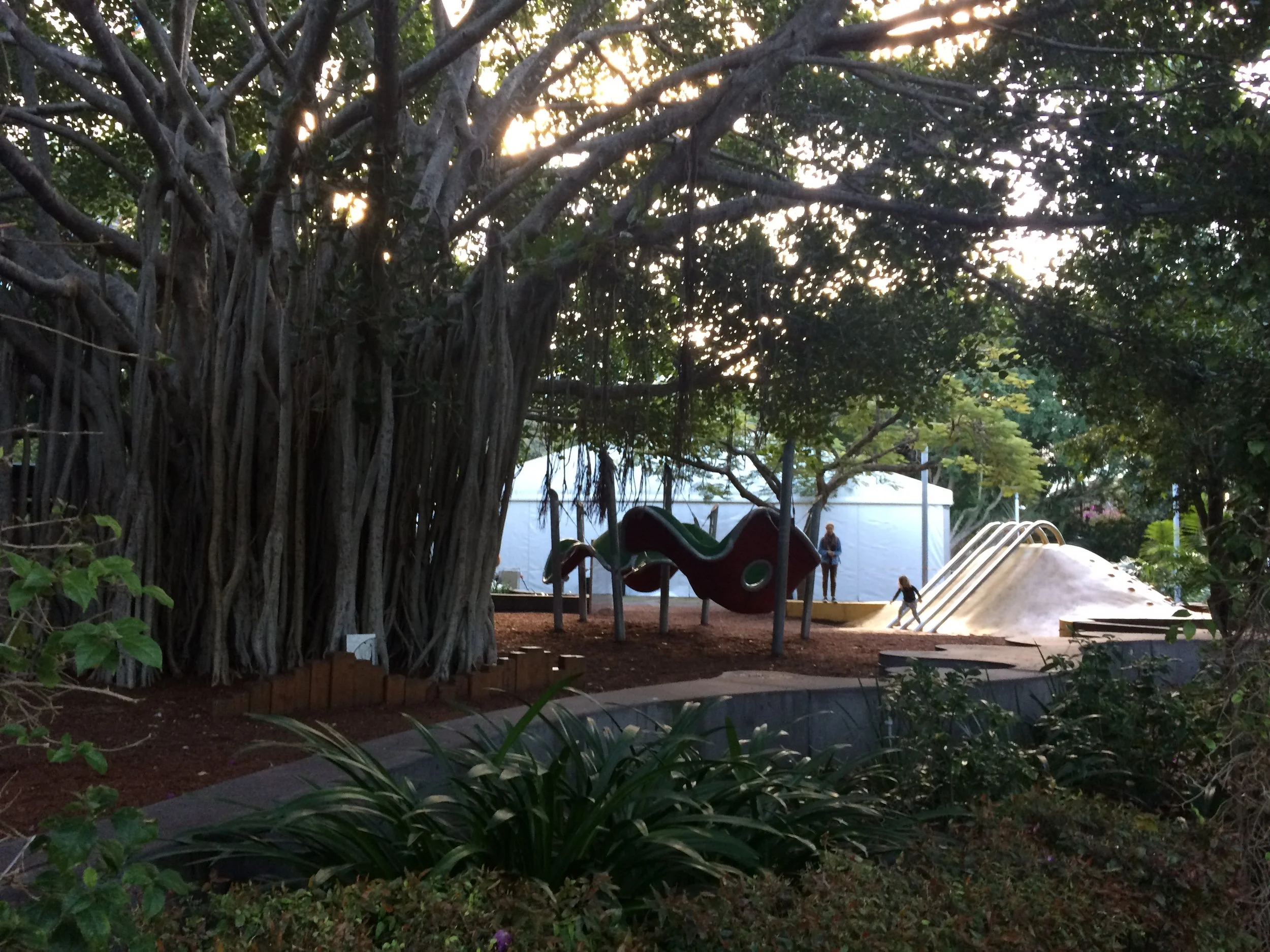
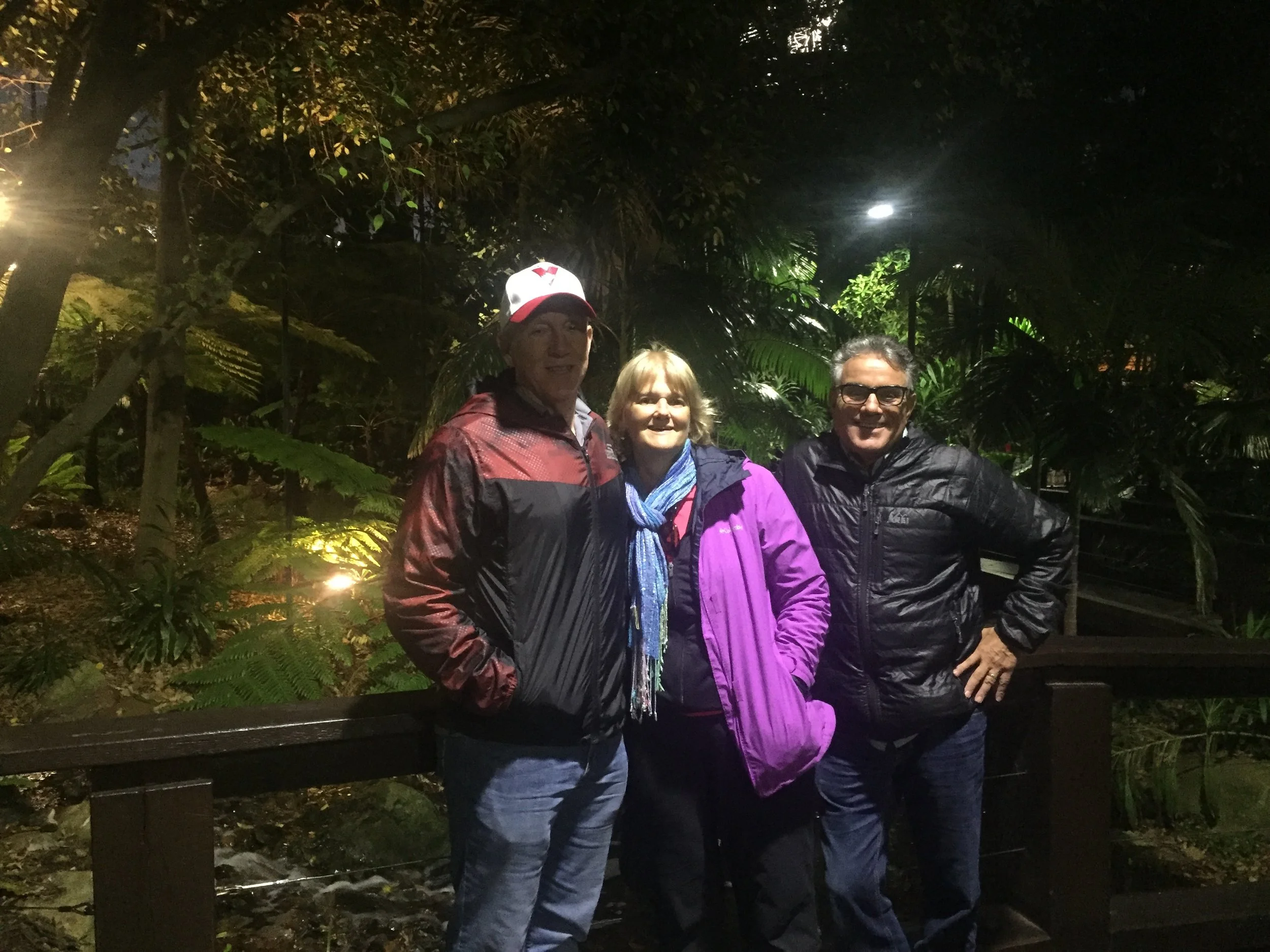
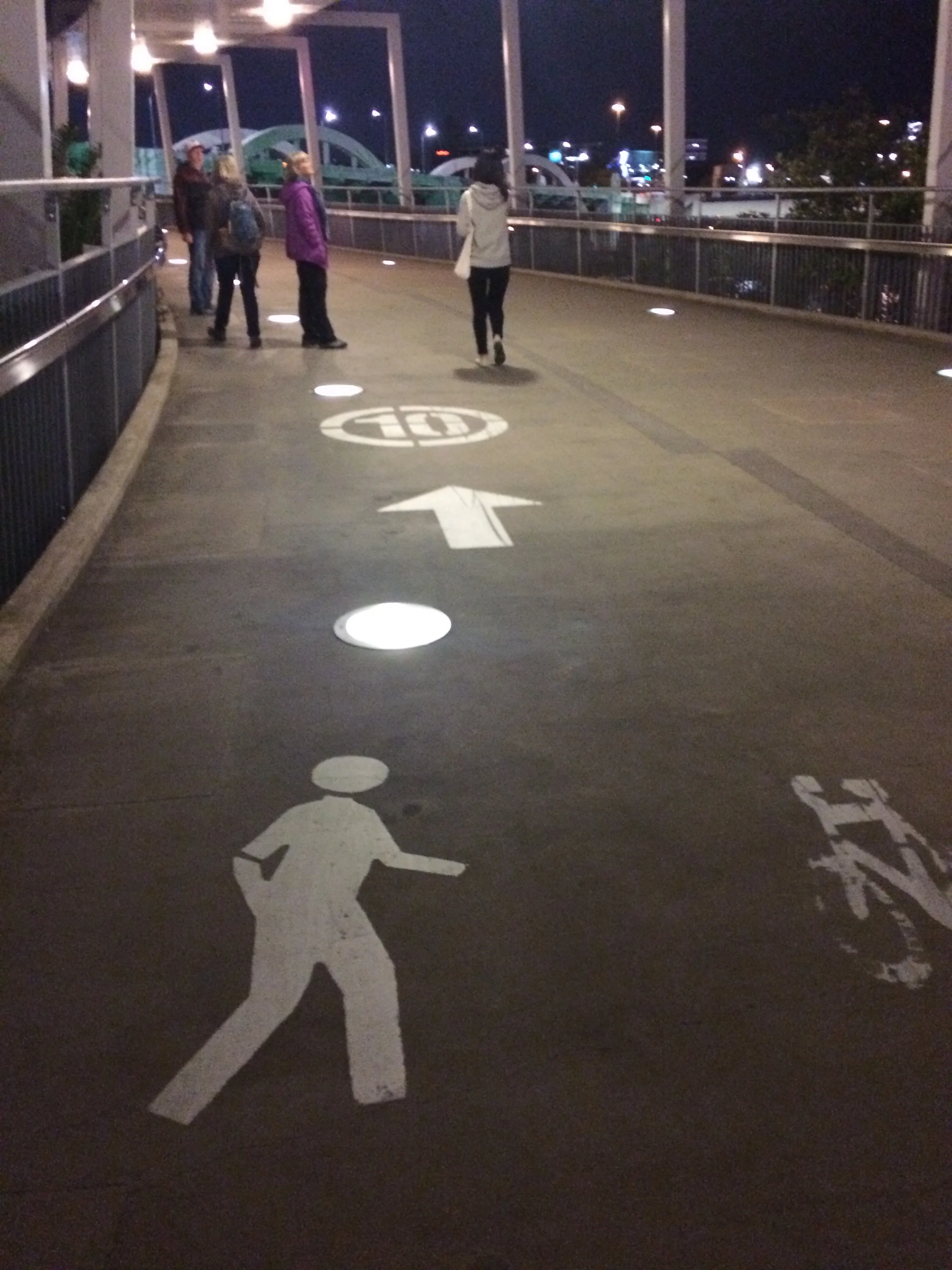
Across the river from our place was the arboretum, the QUT campus (Queensland University of Technology), outdoor theater, small water park, giant ferris wheel, and most importantly the bar and restaurant quarter, similar to the former “flats” of Cleveland. This was a great place to stroll, people watch, and imbibe in tasty delights—and we did just that into the evening. The walk home at night across the pedestrian bridge was scenic with multi colored light patterns on the many buildings and bridges along the river walk—just beautiful.

The next morning we took the train from Brisbane for about 1 ½ hours to the city of “Beerwah”, not to be confused with the earlier stop at “Beerburrow”. This is the home of the “Crocodile Hunter”, Steve Irwin. Here, he established his private zoo, now known as ‘Australian Zoo”, before his untimely and tragic death about 10 years ago-not by a Croc, but by a sting ray.

The ticket booth at the Australian Zoo

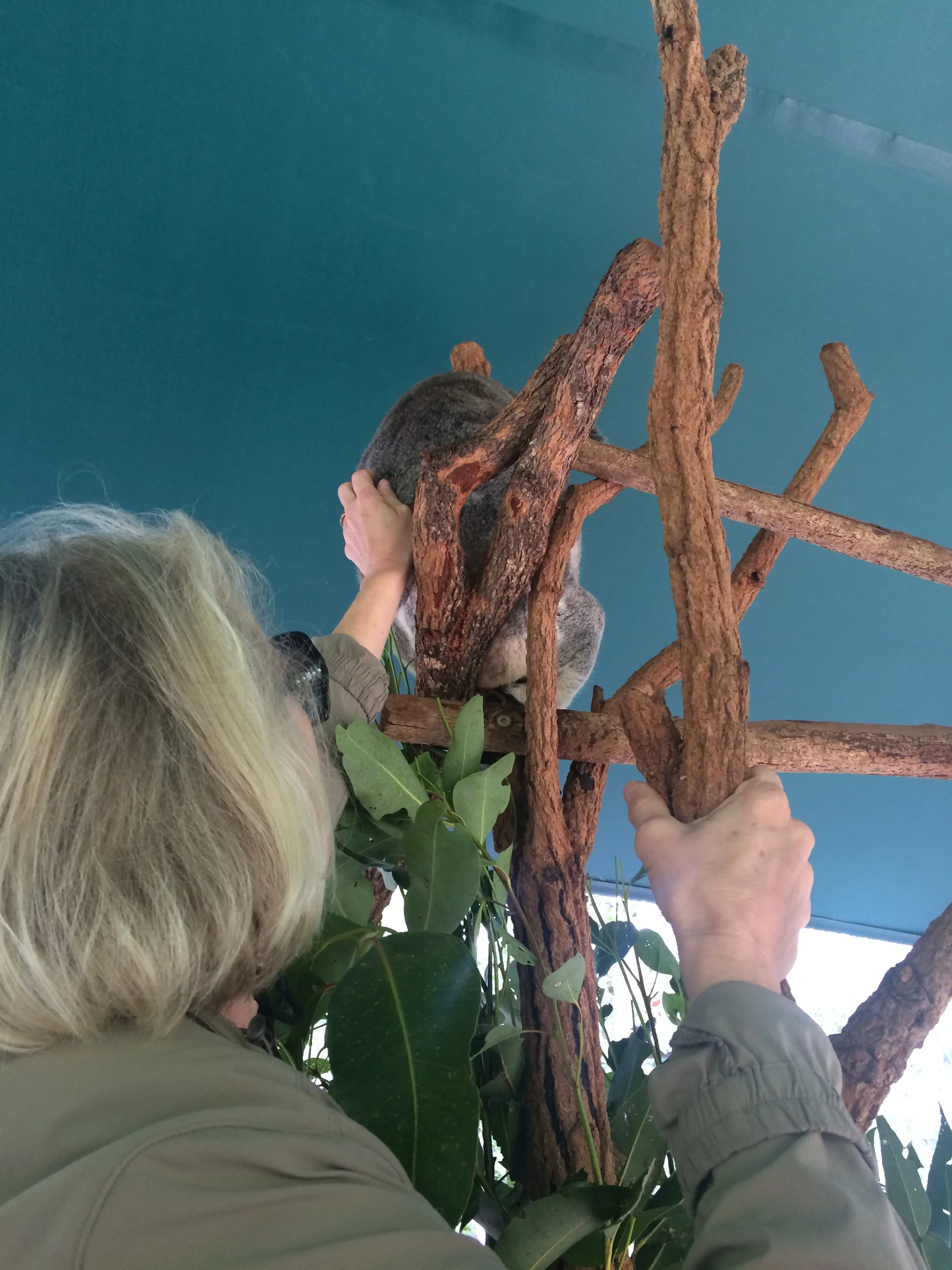
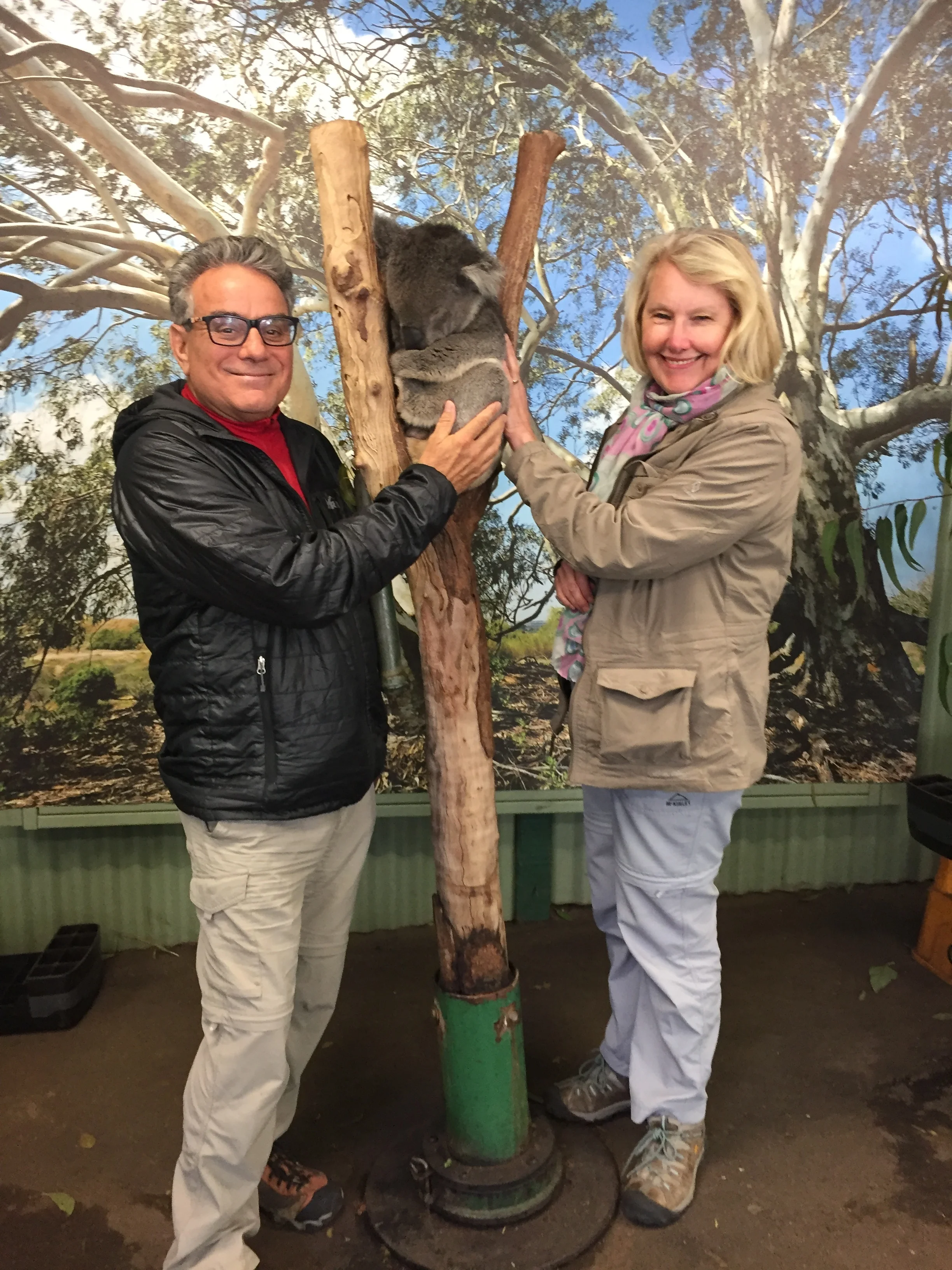
Jean and Chip with a Koala

Jean and Chip with a Koala

As you have guessed, we really like zoos—this being the third in less than 3 weeks—but they are so unique in theme and animals, and in presentation.

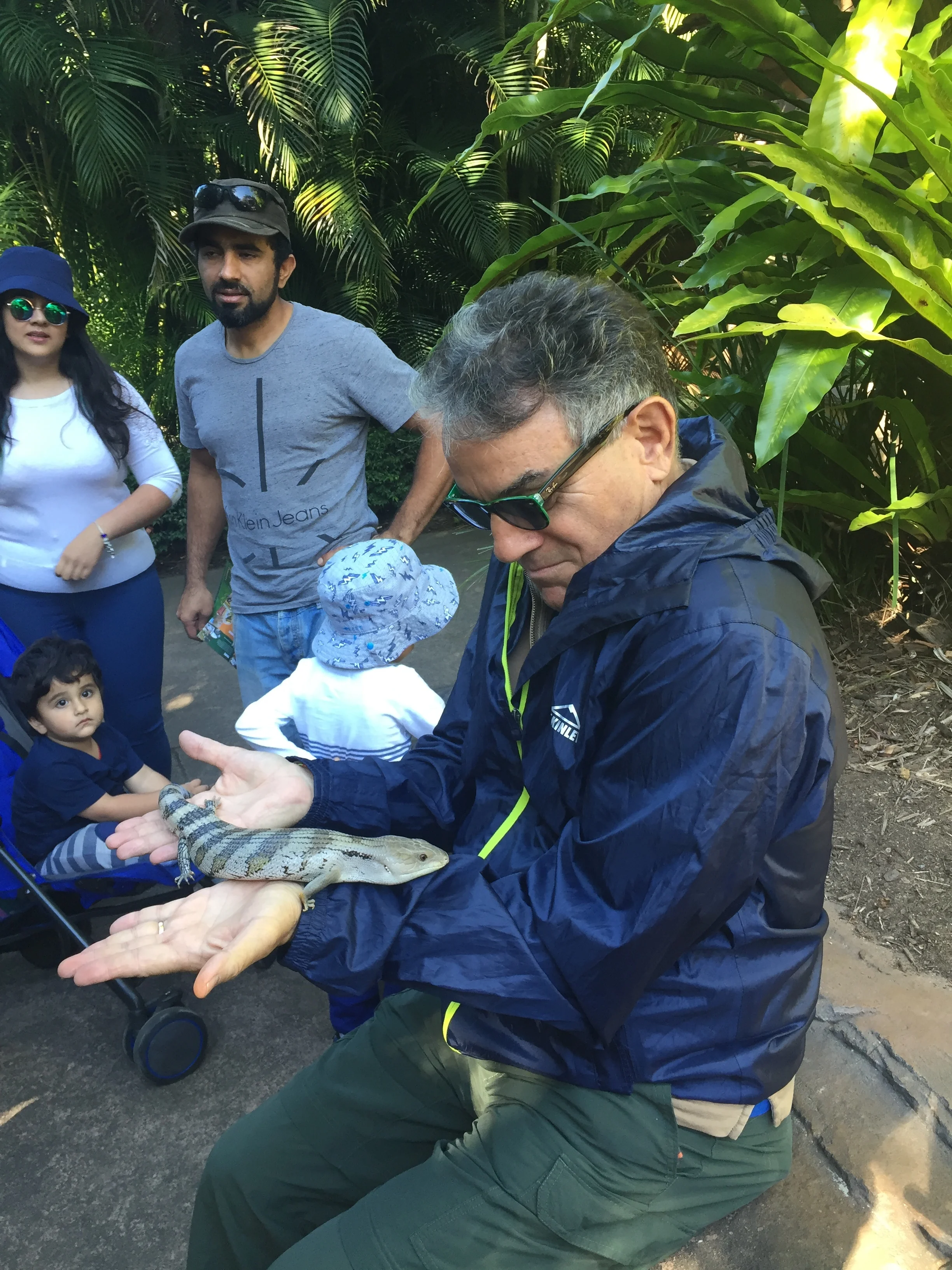
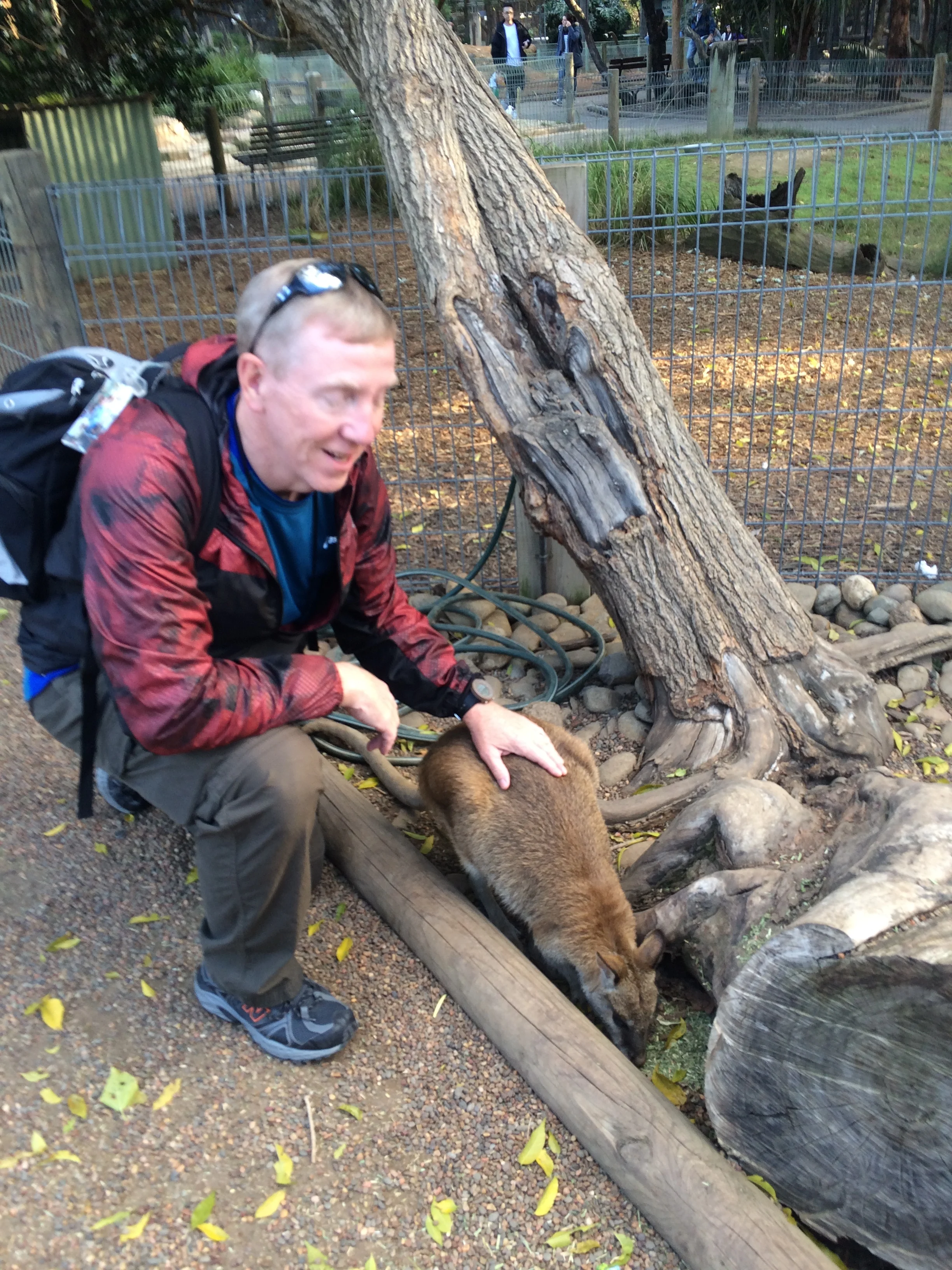
The Australian Zoo gives wonderful access to Koalas; you can hold these soft little creatures as well as pet them; Koala work time is limited to ½ hour on and 5-6 hours off. They are allowed to climb up their favorite trees right into the cafeteria area or overhang the walkways in Koala Retreat. The Zoo also allows unfettered access to Kangaroos; pet them right and they flip to their sides or back for tummy rubs. Roos fur is surprisingly soft.  See our pics below of all of us with animals, FYI, Frank's was not soft and fluffy!

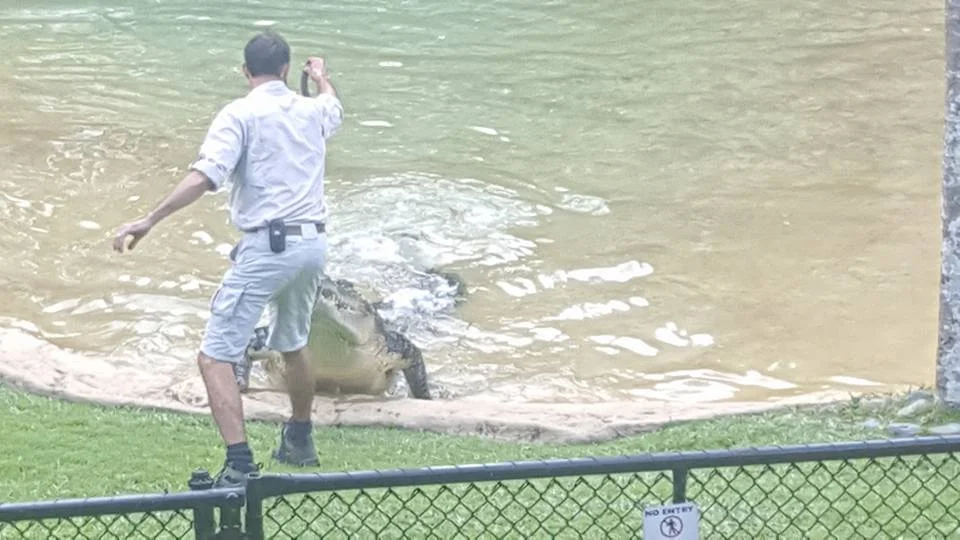
The Zoo also does a crocodile show where this gigantic animal, called Agro, 15 ft and 1,300 lbs.,  stalks the trainer from poolside to poolside and reacts to his every move waiting to be fed; the trainer is very careful as the crocodile raises up on its front legs with gapping jaws waiting for the food to drop. It is actually very exciting.

Hand feeding meat to a 15 foot croc

Hand feeding meat to a 15 foot croc


Finally, we were treated to the playful feeding of a yearling tiger cub. This cub was big. The two trainers, working in unison, would drip milk over the cat’s whiskers and lips---slurp, slurp, slurp—while touching his nose and he would follow them obediently around the pen for another treat. For us, this was the most amazing wild animal interaction.

hand feeding milk to the tiger cub

Chip at our last dinner with his favorite wings

We took the train back to Brisbane; returned to the nifty riverside bar area for dinner, packed up, and said our fair wells between great friends. We left at 5:30 am for the airport and our flight to New Zealand so we quietly slipped out leaving our friends with some extra sleep. We will miss them and hope to visit them in Denver soon.  We trust they had a wonderful time with us in Australia with us and will have an easy flight home.  See some of our photos of our great time together

Cairns & Port Douglas Australia


Cairns and Port Douglas are resort towns in the Queensland state of Australia and common launch points to see the Great Barrier Reef.  The entire “GBR” is actually as long as California and has 2700 reefs in the chain. Our flight was 2.5 hours from Sydney and we had a nice Airbnb just outside of the Cairns downtown and shoreline. Cairns reminds us of Florida, but 20 or so years ago. There are modern developments, but the roads and most buildings do indeed remind us of Florida past, except Cairns has a long waterfront with large marinas, but is rocky without beaches. The beaches are farther up the northern coast. Each day thousands of vacationers motor boat to the reefs for snorkeling and diving. We chose a double deck Catamaran motor sailer with the “Passion of Paradise” group. This was a first class outfit.

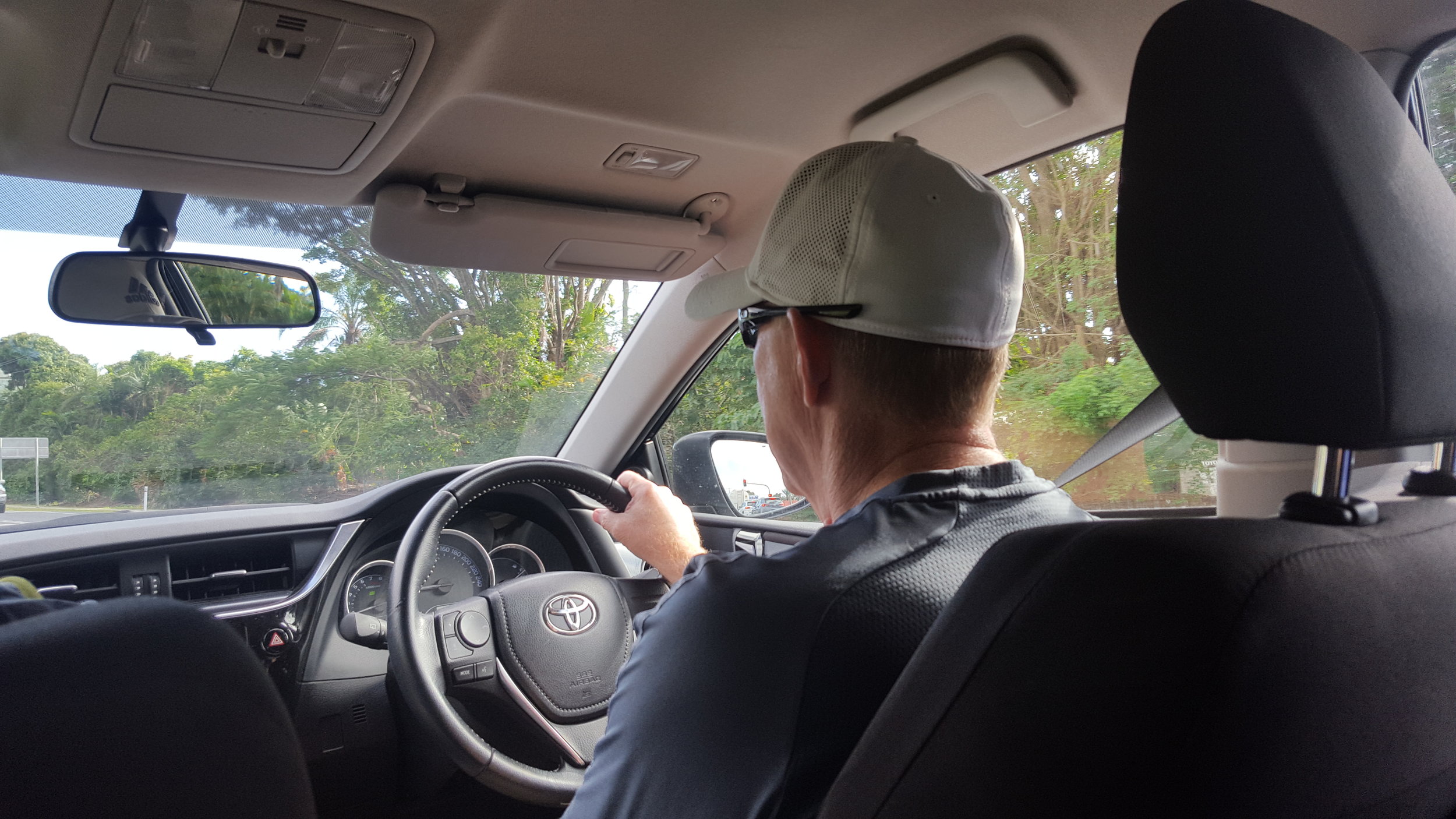
To get around we rented a car, just for the third time on the trip and our friend Chip was the designated driver.  Australia drives on the left and the city has an abundance of roundabout.  We had a good time zipping through the city and country side with the help of google map and Chip’s good nature and patience with three backseat drivers. 

Chip at the wheel on the right side 

Chip at the wheel on the right side 

Our boat for the day

We reserved our day trip to the reef prior to our arrival and on our first day we were up early and at the boat dock by 7:30 am.  We selected a company that has catamaran sailing boats that carry up to 100 passengers.  The day is warm and sunny and the ride out is smooth with breathtaking views.  After some instructions on how to snorkel in open water, and a quick stop to see a few Humpback Whales jumping for us, we reach the reef by 10:00 am.  We have all snorkeled in the Caribbean, Gulf of Mexico, Costa Rica and most recently in Phuket, but this open water is a totally different experience.

The humpback whale

The waves are high, not quite white water but moving fast.  We have good gear including fins and after going into the water you must swim hard not to get pushed back into or under the boat.  You can see where the reefs are by the dark areas of water, the aqua blue water is clear to a sand bottom. 

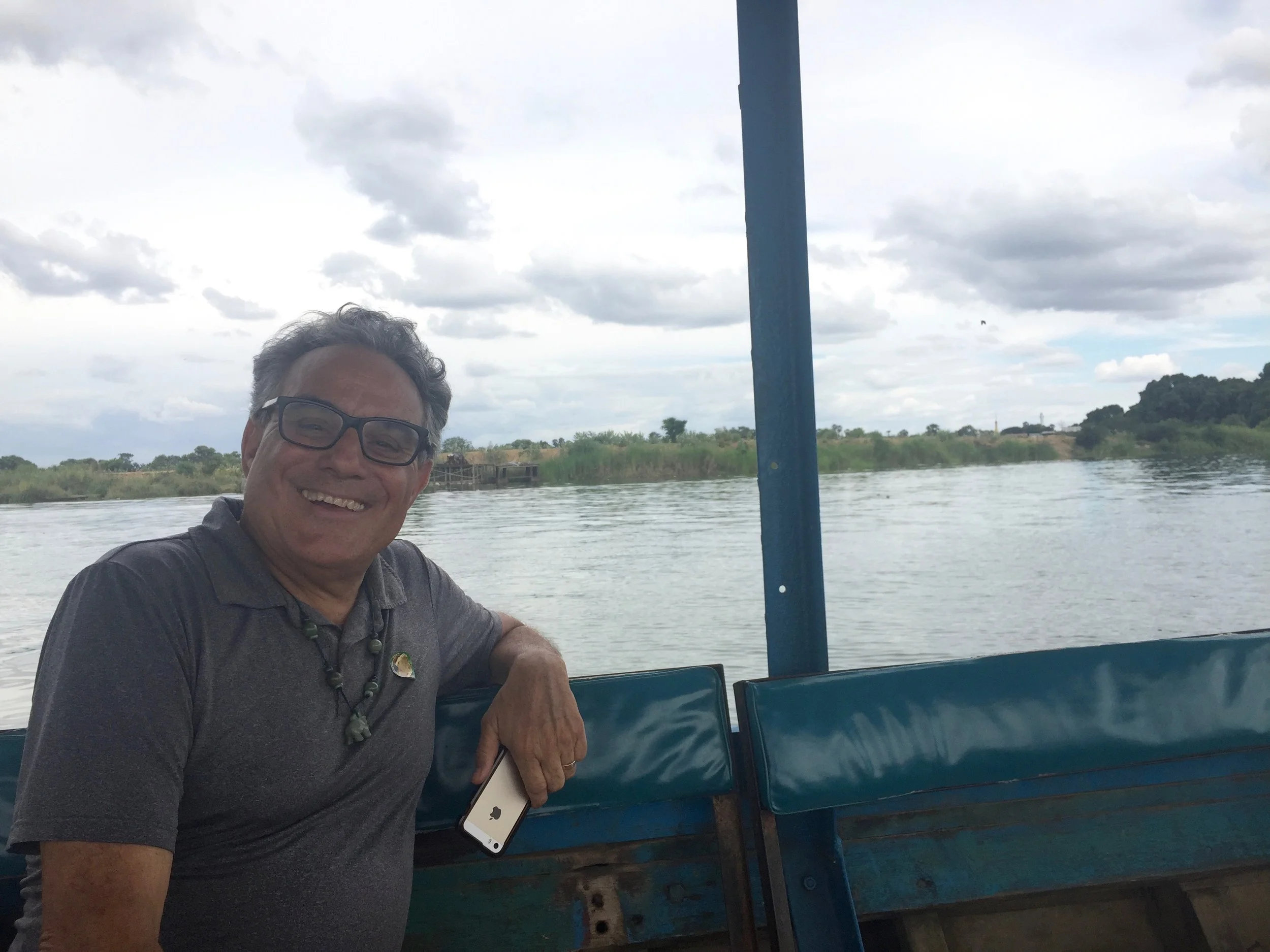
Our first challenge was Frank’s asthma.  Up to this point in the journey his breathing has been good with little or no issues.  As soon as we landing in Cairns he starting having problems and by the time he hit the water he was wheezing hard and could not get a deep breath.  So on dive one he quickly got out of the active water waves. He did paddle around the aft ladders trying to catch his breath, but mostly watched from the boat. This initial setback was disappointing as we had snorkeled in Thailand about 3 weeks ago.

For Jean, Chip and I the challenge of swimming and the waves were rewarded by the best reefs and coral we have ever seen.  The fish were bright colors, the coral was alive and moving.  We spent time watching huge conch shells “breathing” in and out and watched large and small fish feeding on the coral.  When the whistle blew, it was back on the boat for a nice lunch and we moved to a second location.  On the second dive, this time Frank went out with me and a life ring, we took it slow and he was able to stay out to see all the great sights at this UNESCO site.  What a great trip.  

Beer on the boat after both dives

Beer on the boat after both dives

The next day we take a road trip 90km passed Port Douglas and to the Dainetree National Rainforest.  The drive is longer than expected but beautiful views of the shoreline.  You enter the park with a small ferry that runs on a cable across a small river.  Very inefficient to us but the park lists this as an attraction.  We visit a beautiful secluded beach, walk trails in the rainforest and have a nice picnic lunch.  We also walked the rocky shoreline.At no time beforehand did we see or read the "Crocodile Warning Sign". On the way home, we stop in the town of Port Douglas for a great sunset dinner at the marina, watching boats at dusk arriving from the GBR.

Dinner in Port Douglas with the sunset

Our plan for our third day in Cairns was a cable car trip to a second rainforest, but Frank had his worst night yet so Frank and I went to the local hospital for a breathing treatment.  The hospital was great, quick and friendly.  It is sugar cane cutting season and the Doctors inform us that this area in Cairns has the highest pollen in Australia.  But thanks to their excellent care, Frank is on the mend and ready to go. Chip and Jean did make the outing and their guest blog is below.

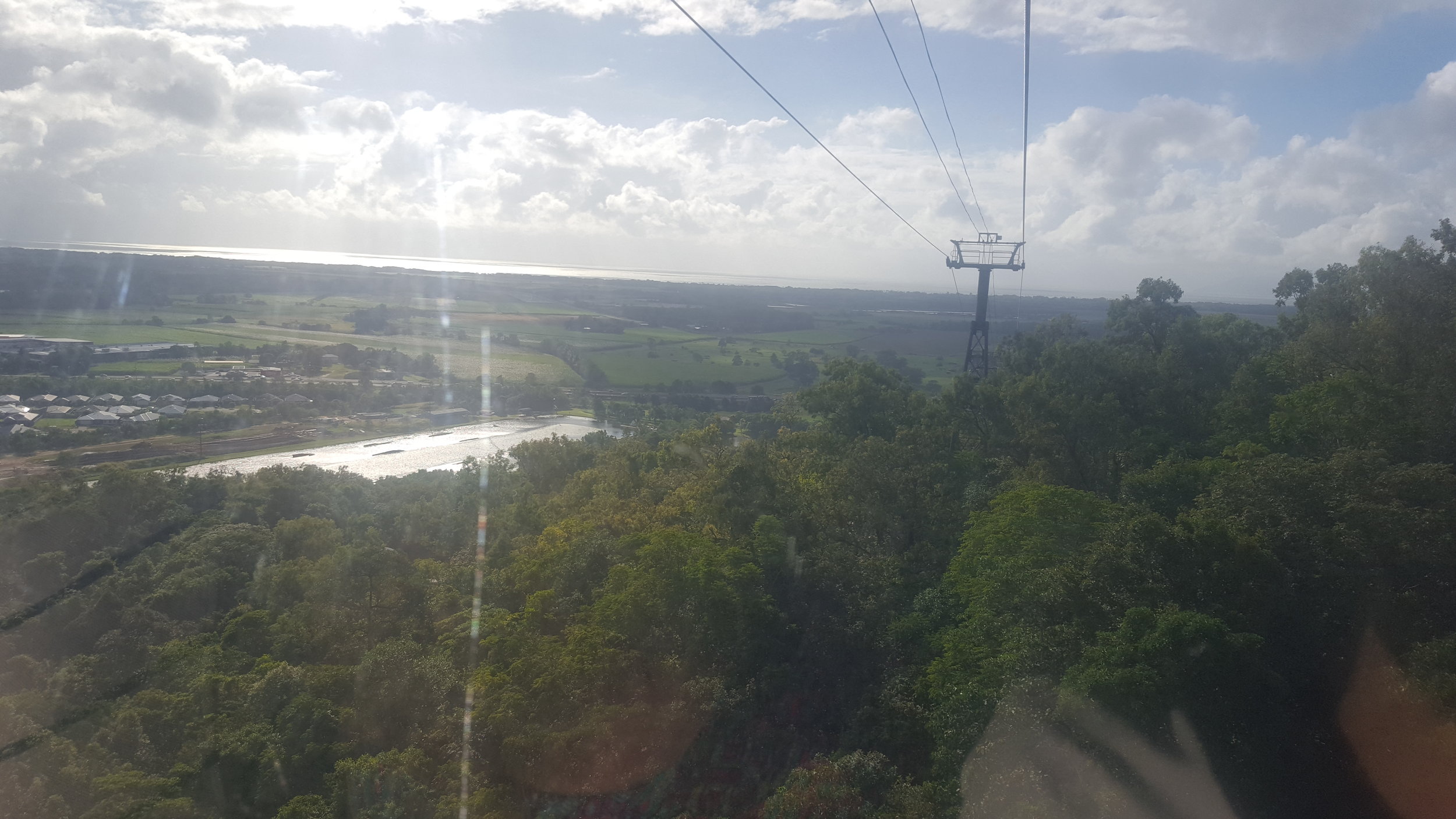
Wednesday, we (Chip and Jean) were on our own, navigating all the roadway roundabouts without Janet’s dependable Google Maps directions. They sure love their roundabouts in Cairns! Our destination …. the scenic Skyrail to Kuranda, a 5 mile gondola ride up to a small tourist village at the top of a mountain.  (Being from Colorado, we find it difficult to call these mountains. They are much more like the foothills of the Rocky Mountain Front Range, but much more lush.) This adventure was definitely more about the journey than the destination. The first stop was Red Peak station were the Ranger, Cameron, gave a great presentation of the symbiotic nature of life under the rainforest canopy. The second stop was Barron Falls, which was just a trickle of its usual mighty surge. Because winter in OZ is the dry season, not much was flowing. But it was a comfortable 70°, so we weren’t complaining. 


The trains of cut sugar cane line the roads

Like departing a cruise ship at a port of call,  the street that meets the Skyrail station is full of candy shops and souvenir shops. Get past all that and there is a lovely hiking trail that goes anywhere from 1.2K to 4.8K through the rainforest. We opted for the shorter hike “return trip” (as they say for there and back) and a quick lunch on the veranda of one of the many eateries. Again, more about the experience than the food. We were excited to once again float over the rainforest canopy on our way back down. And, we were anxious to hear how Frank and Janet‘s day had gone. 

While Cairns, and all it has to offer, was a fantastic experience, the sugar cane harvest played havoc on both Jean and Frank. The sugar cane pollen count is at its highest levels right now, causing respiratory distress for anyone with asthma or pollen allergies.  Hoping for clearer a air in Brisbane.

Sydney Australia - Part Two

We left our serviced apartment on Castlereigh Street this morning and walked over to the Radisson Hotel where we would spend the next several days. Our good friends Chip and Jean where scheduled to arrived at the Sydney airport that morning, so we wanted to be on hand to greet them at the new hotel. We would argue that Australia is the first country thus far on this entire trip where the official language is “English”. Now maybe Singapore sites English as its primary language thanks to British influence, but Mandarin, Bahamas's Malay, and Tamil seem to permeate the social interaction. Here, it is English, albeit a large Asian population lives here.

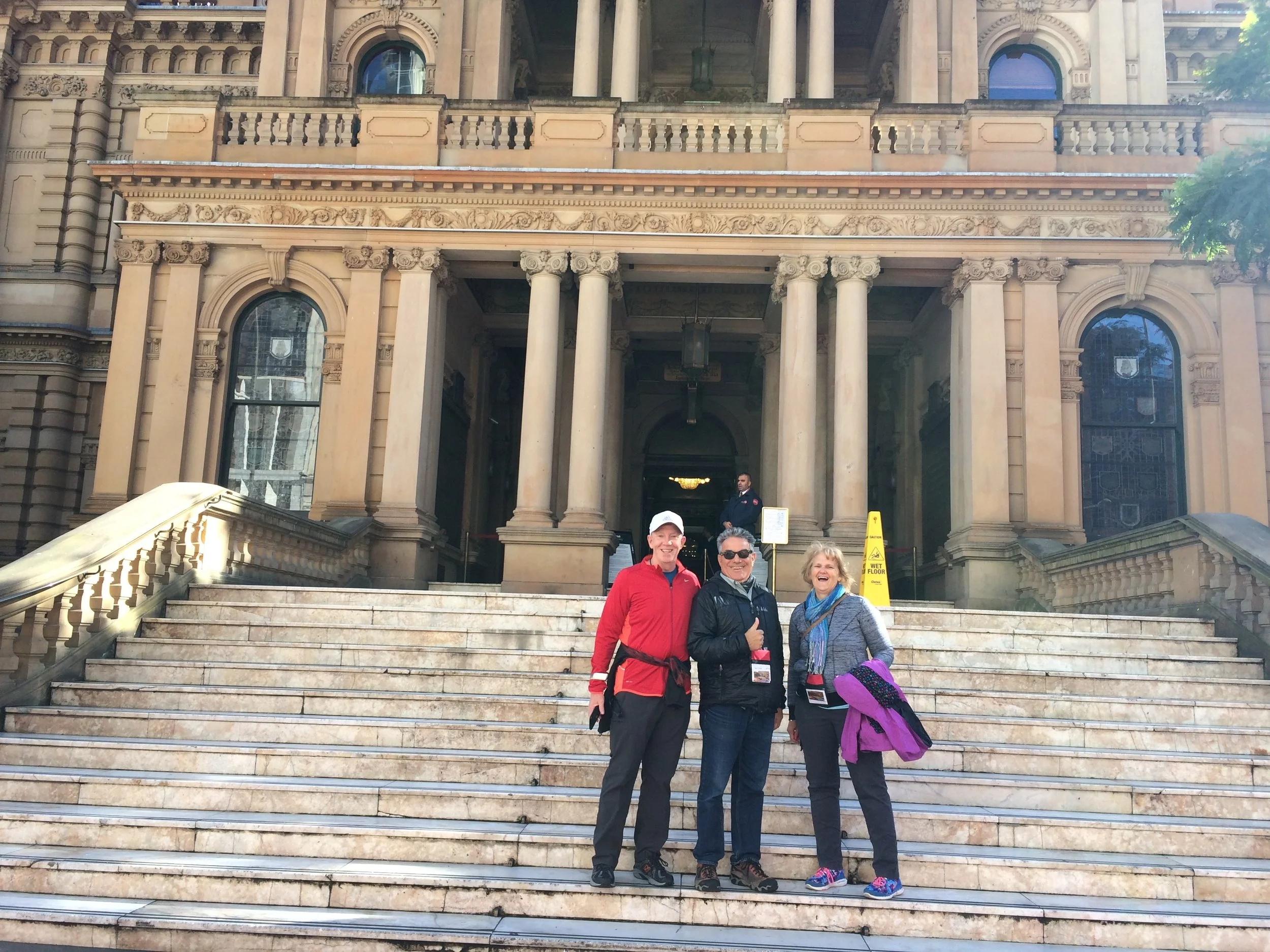
Sydney City Hall

Sydney City Hall

When Chip and Jean arrived, Janet was the tour guide and provided them her special red “Frank and Janet Around the Planet” lanyard with ID card and Ticket to the Sidney Opera House Tour and tickets to the Australian Football League (AFL) Game ( Sidney Swans -vs- Gold Coast Suns).  We wore our Lanyards too. After check in Janet lead the way through the parks and historic town streets on our way to the opera House. We passed the Parliament building , City Hall, the Historic Immigrant Barracks-now a must see museum, the St Mary Cathedral, and the Hyde City Park and Botanical Garden as we walked to the peninsula site of the Opera House. We are walking parallel to the wall to wall high rises of the the Central Business District. We say it again—this is a world class city. The weather was glorious, sunny and cool, more like a warm fall day in Michigan. 

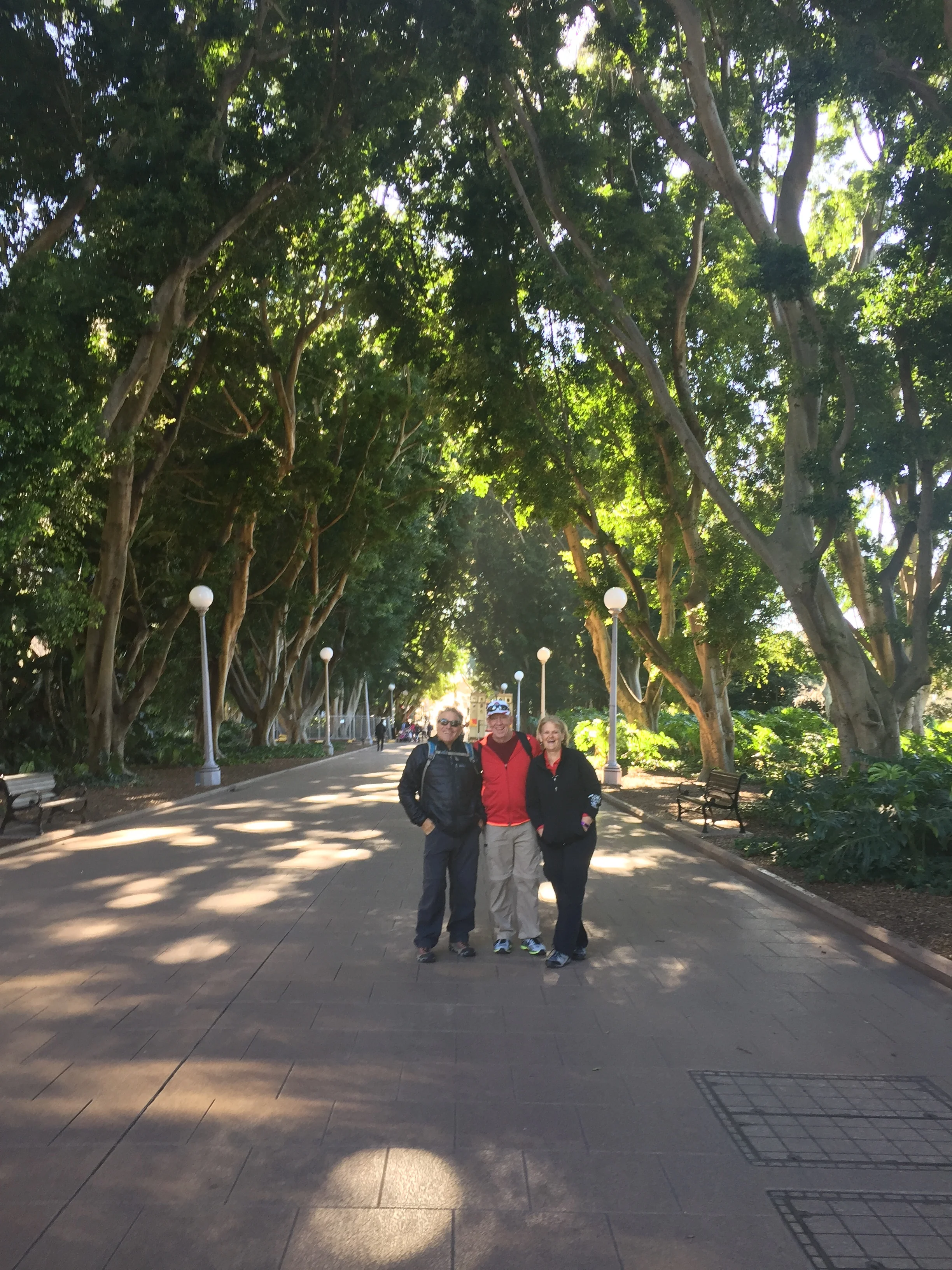
Hyde Park

Hyde Park

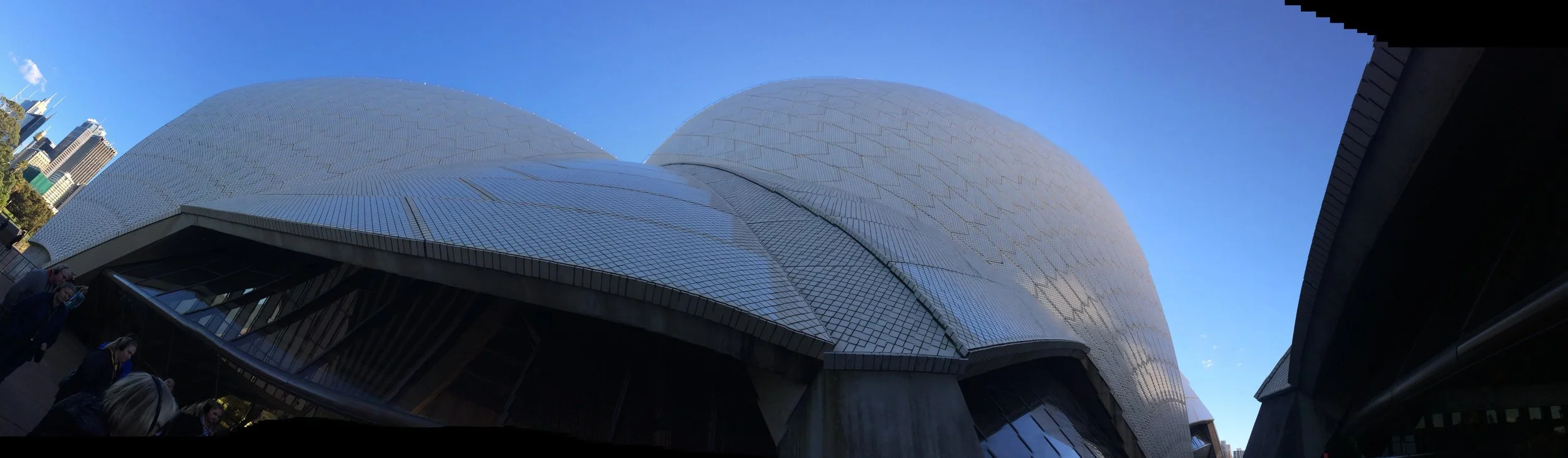
As we passed through the Circular Quay at the waterfront, the beauty of the large shimmering bay is breathtaking. There, to our left are the curved sweeping sails of the iconic Sydney Opera House.  The structure is surrounded by expansive stairways that lead to the second level Auditoriums and restaurants. Our tour, however, starts on the first level which is like a monolithic base that would be at home next to the Egyptian pyramids. We meet our spunky guide who hands us ear pieces that allows her to broadcast to us in reverent whispers that are easily heard and add a spirited effect when she wants to be dramatic.

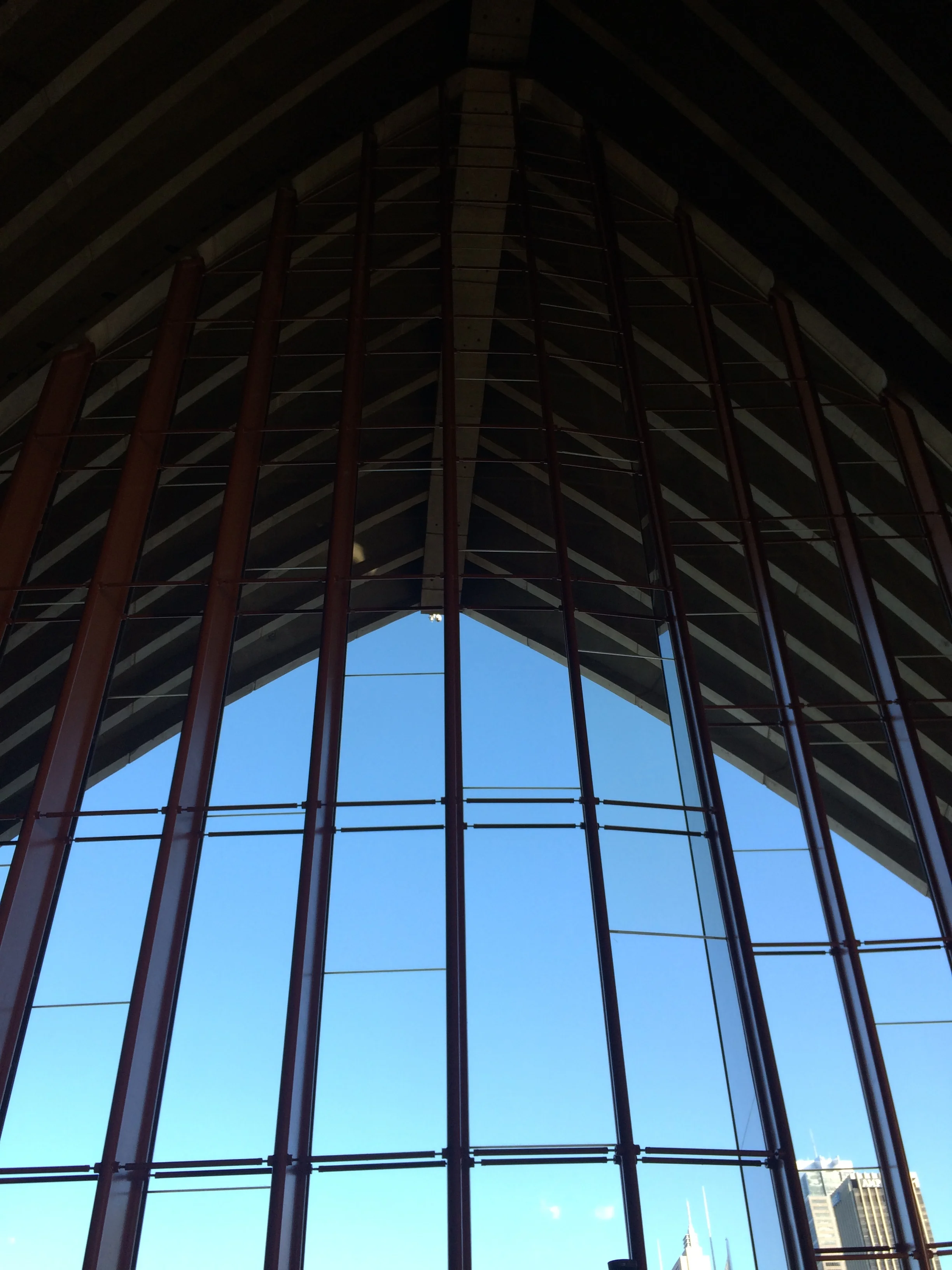
The Opera House has 6 auditoriums, and other useful interior spaces. The largest holds 3,000 patrons; others are slightly smaller and some are intimate at 300 people. These various sizes allow continuous presentations and production of all types and personality: Aboriginal dancing, Children's plays, modern theater, full orchestras, smaller bands and of course, Opera. The Opera House is always busy and inviting to the city’s population. Glass walls at 45 degrees to deflect blinding light open to the bay for receptions and weddings, especially in the “Purple Room”.
The construction methods and angles are just crazy cool. The sails, early on called shells, are formed concrete held up by metal girders and formed metal; the mechanical systems, Air Con, and electrical are placed and hidden between the concrete sails and the interior infrastructure of ceilings and walls. The interior is covered and decorated with Teak slats and other special woods on the walls and ceiling which abut the large opaque windows that rest below each sail.   


Outside, as you walk up to these billowing sails, you are amazed that the “Mosaic Tiles” of white and tan, some flat, some glazed, cover every inch of the surfaces. Up close the Sails shimmer as would the sun light off the waves in the Bay. As well, the multi-toned tiles retard the reflection of the suns blinding rays—which would be bleach white at full sun. The opera house is a stunning place, but not seen completed by its Dutch architect, Jorn Utzon. Currently, his son is working with the Opera Authority to plan and execute updates that his father had envisioned, but did not complete due to    in-fighting and dismissal.

This was a great excursion.

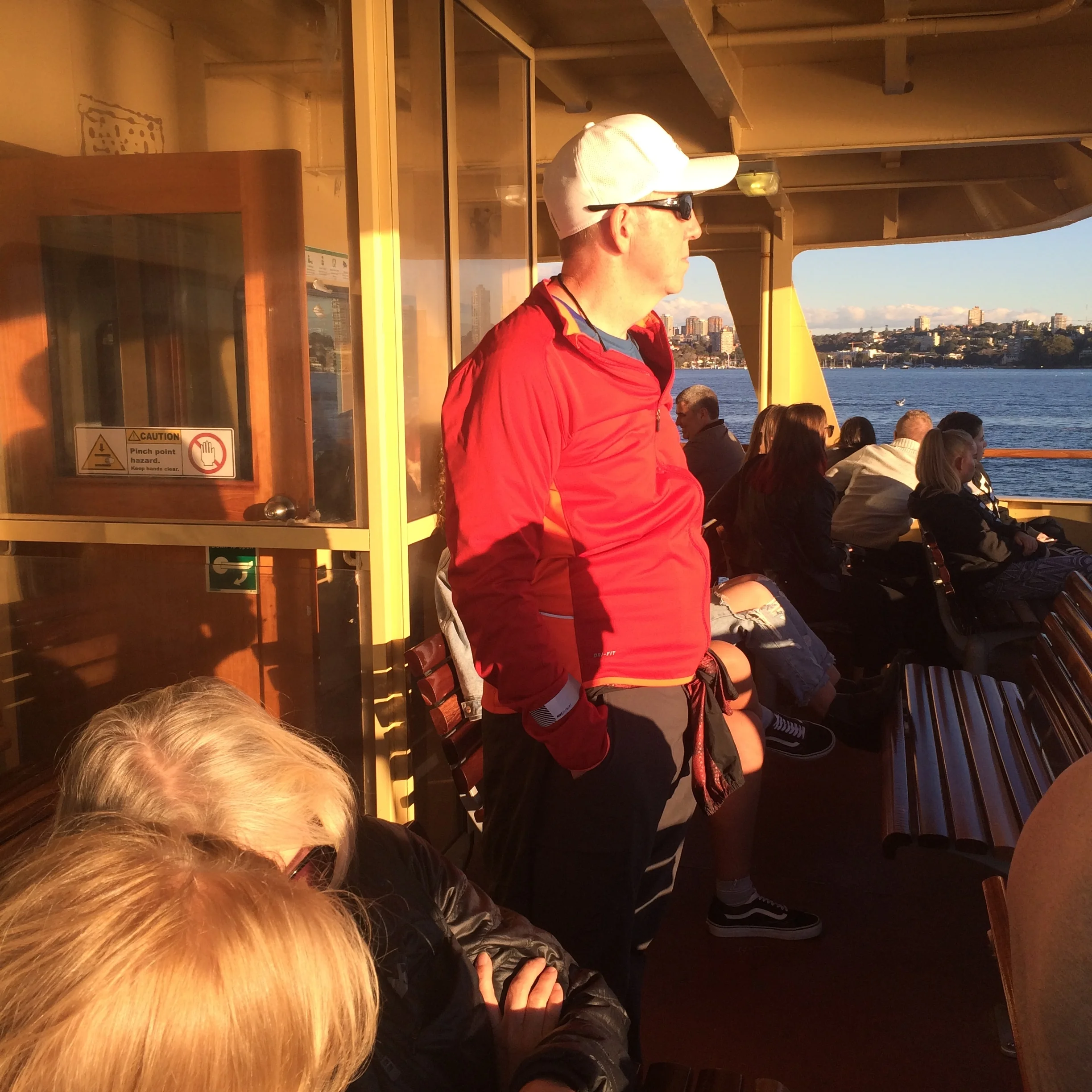
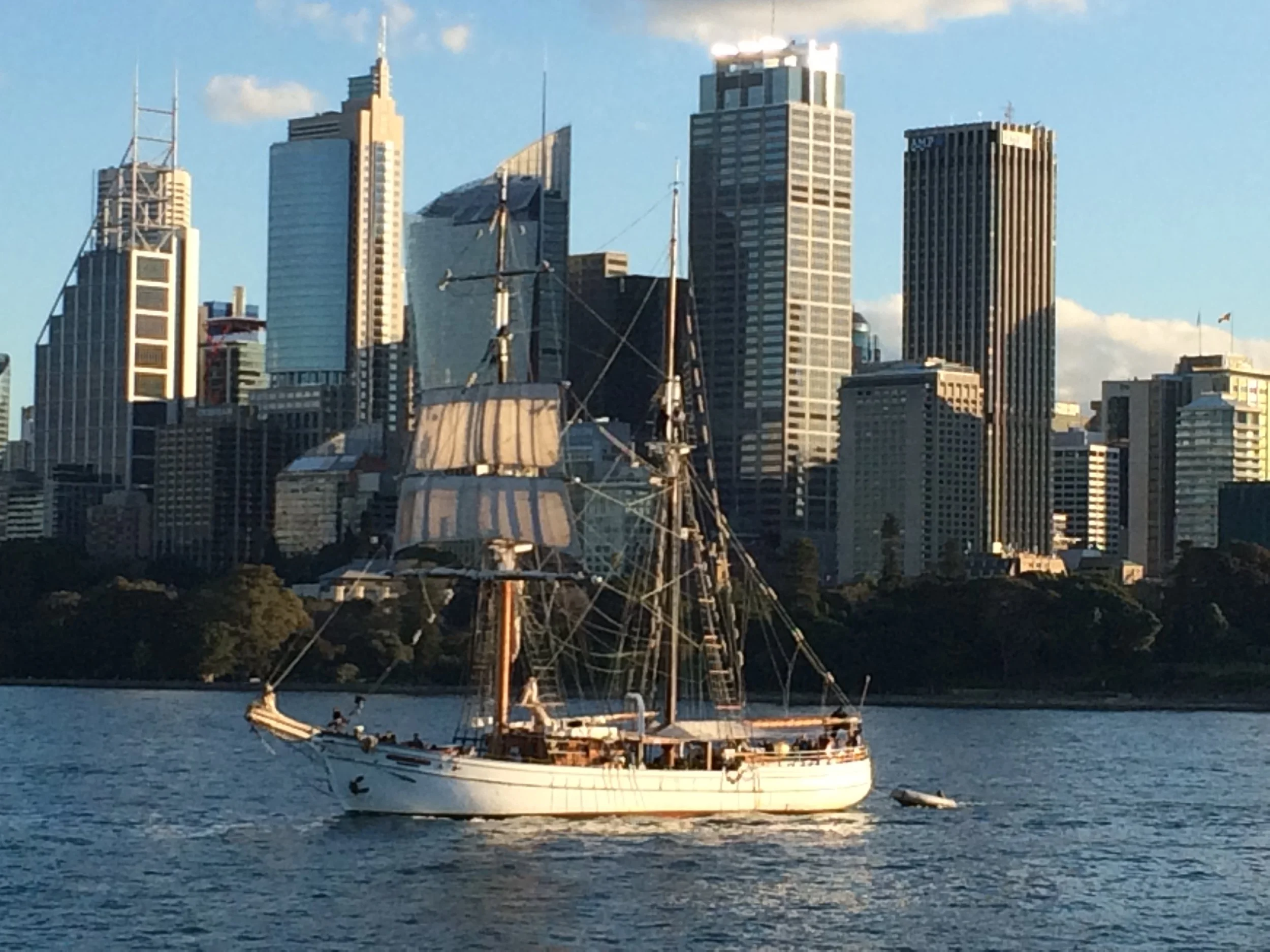
We walked rapidly from the the Opera peninsula toward Circular Quay where we purchased our tickets at A$7.90 each to ride the large ferry across the bay to another hot spot called Manly Beach. This boat ride takes us to the other side of the Opera House Peninsula, passed Fort Denison on Pinchgut Island, and on toward the Manly Beach dock; the ride is about ½ hour. The city of Manly Beach stretches from the dock across the narrow land to the actual beachhead. We walked through the main streets, with stores, restaurants and bars to the large expansive beach that faces the ocean, not a bay.  See our photos from and on the ferry below.

Sunset on Manly Beach

For dinner we try out the Four Pines IPA Brewery for special brew and a variety of seafood or burgers. The fried chips were great, especially with Australian “Tomato Sauce”  aka US ketchup; Aussie Ketchup here is like barbecue sauce. After a fine meal, and long day, we returned on the ferry, paid another fare, to Circular Quay. From here we walked down “Pitt Street”, a pedestrian-only avenue where the most glamorous shops in the world are open for business, ie. Gucci, Louis Vitton, etc., etc., and also some local favorites like Myers and Zara. Bars and restaurants flourish, street musicians and actors display their craft and the streets are crowded. It is worth repeating that Aussies drive on the left, so walking follows the same pattern—avoid pedestrian jams by walking the correct way on the sidewalks. This is a big time city. But, they too are just completing a trolley line similar to the M-1 of Detroit, MI; some blocked walkways to navigate.

The main street at Manly Beach

The main street at Manly Beach

Blue Mountain Wildlife Park Excursion. The next morning, we where up early and picked up our bus at 7:00 a.m. We where traveling 100 KM to the Blue Mountain National Park; famous for its splendid views and landscapes. The drive was smooth enough as we passed through the suburbs and jumped on the main expressway out of town. 

Our first stop and look at the Blue Mountains

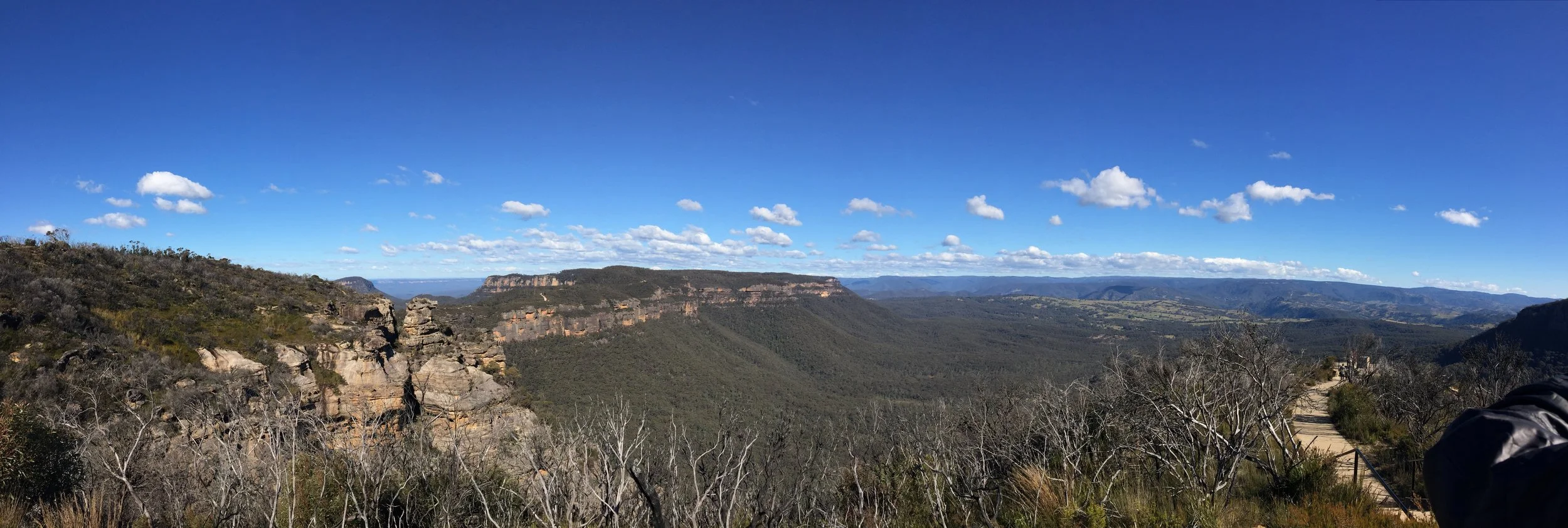
The signature site is the rock formation of the Three Sisters; spires of rock at Echo Point that sit in a row next to each other. We, however, believe the vast canyon behind the Sisters is the real star. We did see a certain singular rock tower, shaped like a “V”, thin at the bottom, wide at top, which had for many years been connected by a rope and slat bridge to the cliffs. This Pillar had apparently been the star of the show until safety concerns closed it off; but again the canyon vista and cliffs from the windy overlooks are just great. This area has been subject forest fires that have enveloped many of the homes in the past At the Scenic World pavilion you have options to visit the canyon floor. We chose to take the 84 person“Cableway” gondola and descend 545 meters to the Jamison Valley. Once to the bottom we walked the 2.4 km elevated boardwalk through the ancient, temperate rainforest. After completing the trek, we locked down in the Scenic Railway and rode the track at 52 degrees to the top of the escarpment. Historically, this track was used to lift coal from the valley mines. It now boasts that it is the steepest running passenger train in the WORLD!? Thankfully it's been modernized.

We took a quick side trip to the cascade waterfalls. The area was pretty, but the season was dry so water thin. We left and stopped for a café lunch at the cute Blue Mountain town of Katoomba. Here, we had Aussie style seafood lasagna that came in large, noodle stacked squares with tossed side salad. Nice change from common burgers.

The Cascades

After lunch and an opportunity to walk around this quaint mountain town and buy special coffee, we left on the van for a simply wonderful site. The “Featherland Park” is a remarkable boutique Zoo of Aussie animals, with hands on opportunities. We handle Kowala--soft, furry and cute with large black claws; we handle and feed kangaroos—the young ones at least,  we see the weirdest large birds called Cassowary, known to be mean in the wild; we see a family of Dingo wild dogs—very handsome, not like mangy cayote; we see penguins getting hand fed along with the Keepers presentation; we see some ugly lizard too. It was a great experience.

On the way home, we detour through the Australian National Olympic Park, with its multiple stadiums, practice facilities, and housing. The entire area is being developed into a residential low rise neighborhoods that borders the Park the parallel to the river.  Nice and new and reasonably priced compared to the Sidney offerings. Lucky for us, at the river there is a ferry stop for our quicker ride back to Circular Quay at the center of Sidney’s waterfront. Lucky for us, this boat trip saved us from grueling rush hour traffic through Sidney.  Once landed, we simply walked to the “Rocks” area to another fine Brewery of craft beers and ribs and burgers. The “Rocks” surround the Circular Quay and short waterside streets and are best described as two story granite walls that were cut by early settlers to make space for the ferry docks, housing, trading houses, warehouses and eventually overhead train tracks. The area had an early reputation for unsavory activities, especially with the neighborhood gangs and all the sailors landing there, but now it is a fun place with pubs, stores and eateries.

The walk home from Circular Quay was familiar. We would travel different streets to take in the atmosphere and culture of this lively metropolitan city. Of course, we took another look over our shoulders to see the lighted sails of the Opera House—never get tired of that view.


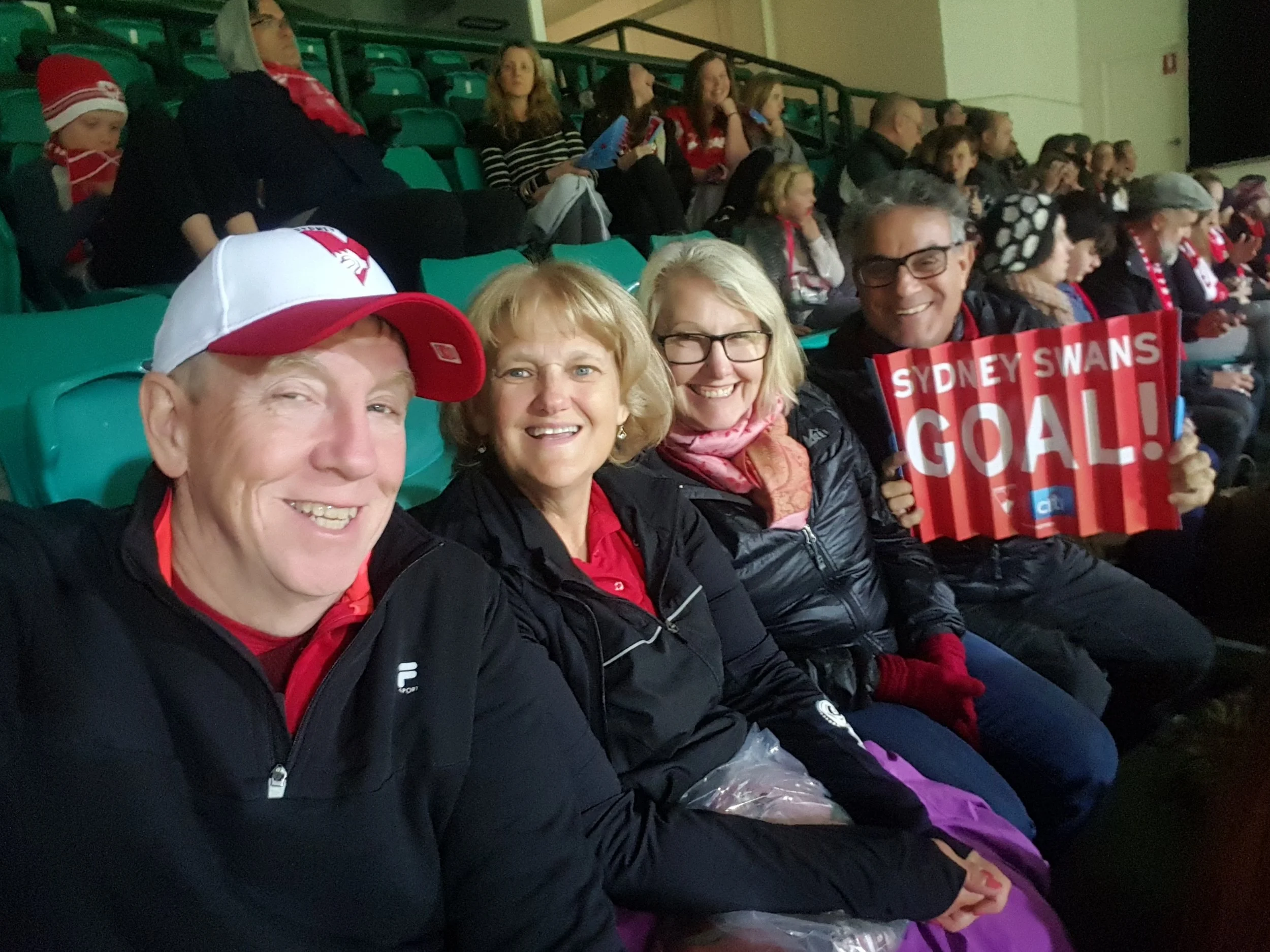
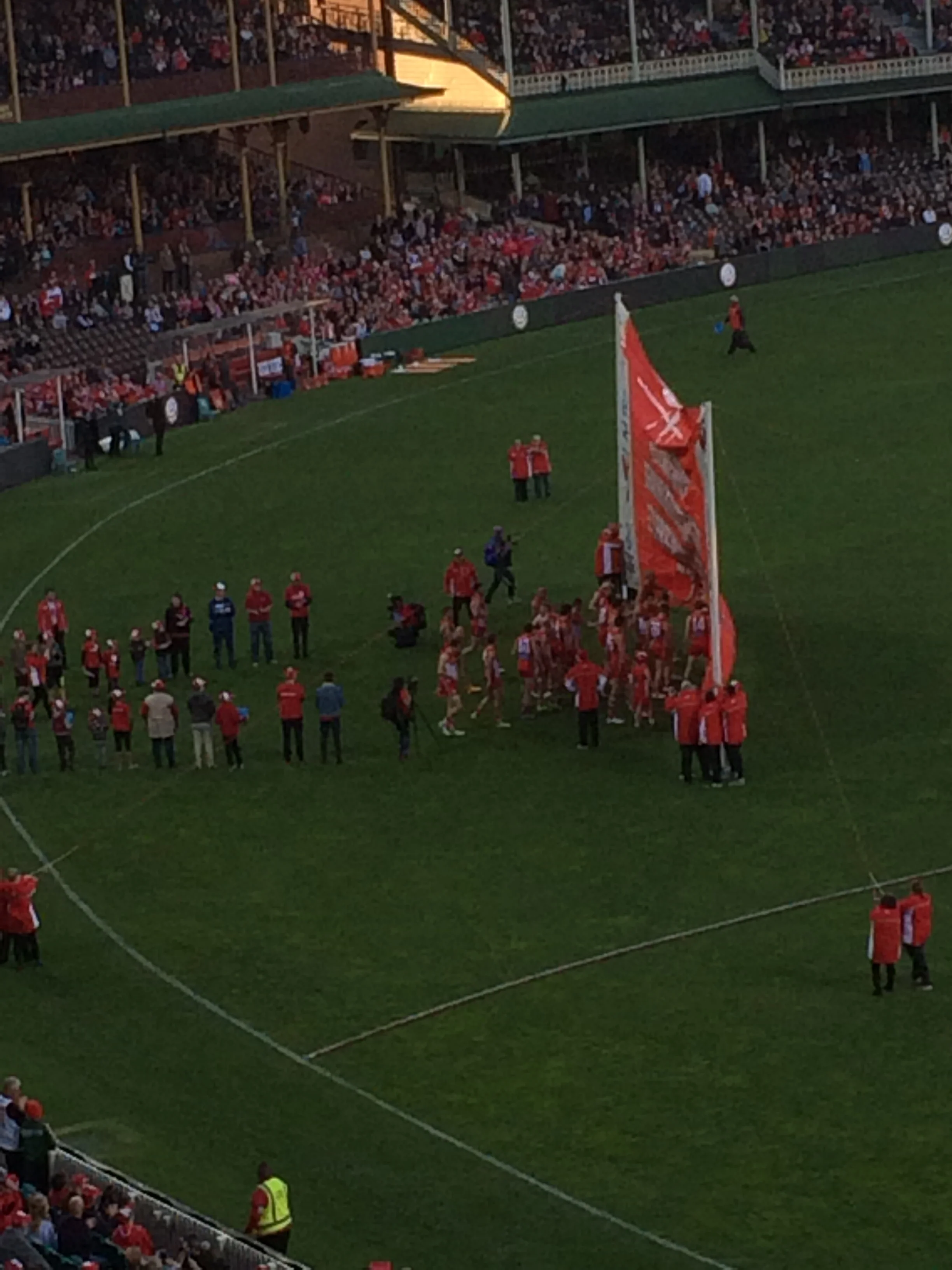
The next day, after some brief sightseeing, we capped off our final day by going to an Australian Football League Game. We joined 36,000 other blokes and gals at the Sidney Cricket Stadium to watch the Sidney Swans -vs- Cold Coast Suns. The field is a large oval extending to the bleachers, giving the 36 players plenty of space to kick and pass the large oblong ball directly to their teammates. Running is limited to 15 meters, so it is not like Rugby. The game is more like jump ball chaos, skillful played, with long kicks through the double uprights. The scoring is usually competitive and high. Here, the Suns folded and the Swans won 109 to 42, which was alright for the the boisterously friendly local fans. We think half time Marching Bands may be a big hit here, it just seems like that kind of crowd. The pitch is certainly big enough.

The end to Sydney came at our 5:00 am transfer pick-up to the airport. The Radisson nicely gave us box breakfasts and we had made up coffee in the room for our thermos. This was a great stay.

Sydney Australia - Part One

We arrived in Sydney early morning after an all-night flight and checked into our serviced apartment.  As we near the end of our trip we decide to have a much needed down day, it might be our last.  Our good friends, Jean and Chip will be meeting us in Sydney at the end of the week so we are also waiting to see the big sites until they arrive.  At night go to the local super cinema and see “The Mummy”.  Frank and I love going to the movies, but this is just our third show since September.  Now that we are in an English speaking country we were excited to pick any movie and not have any subtitles. 

The next day we feel refreshed and ready to tackle our 32nd country.  We start with a free walking tour.  We cover all the sites of Sydney ending at the harbor and with the great view of the famous opera house.  

On our third day in Sydney we book much needed haircuts for both of us.  It was fun being together again for our beauty treatment but after our months in SE Asia we had major sticker shock of the price of 2 simple cuts, wow Sydney CBD is really expensive, A$180.  We wonder how the Aussies manage.  Our afternoon is spent walking the city and a visit to the Hyde Park Barracks Museum.  This museum provided a great audio with a complete explanation of how Australia was founded as a penal colony by convicts from the UK.  There were eleven (11) formal penal colonies established throughout the nation. Aussies are now embracing the heritage through data bases that often reveal the "trivial infractions" that lead to arrest and deportation--cheap labor may have been the main goal. Our last stop was St. Mary’s Cathedral.  A nice Gothic cathedral, the most interested fact was the church was building began in 1868 but was never finished until 2000 when the 2 spires were added in time for Sydney to host the Olympics.

That night we had a great treat.  We met a couple for dinner that we made friends with in Morocco.  We have written about all the wonderful people we have met, shared meals with and gotten to know over the last year.  Spending time with these people has truly been the best part of our journey.  It was fantastic to meet Matt and Miri again.  We had laughs about our time together in Morocco and we shared our separate but similar experience of traveling through Egypt.  Matt and Miri share our passion for travel and adventure and we had a great time with drinks at the Opera House and dinner at a local burger bar discussing where we have been and where we will go on our next adventure. 

Our night out with Matt and Miri

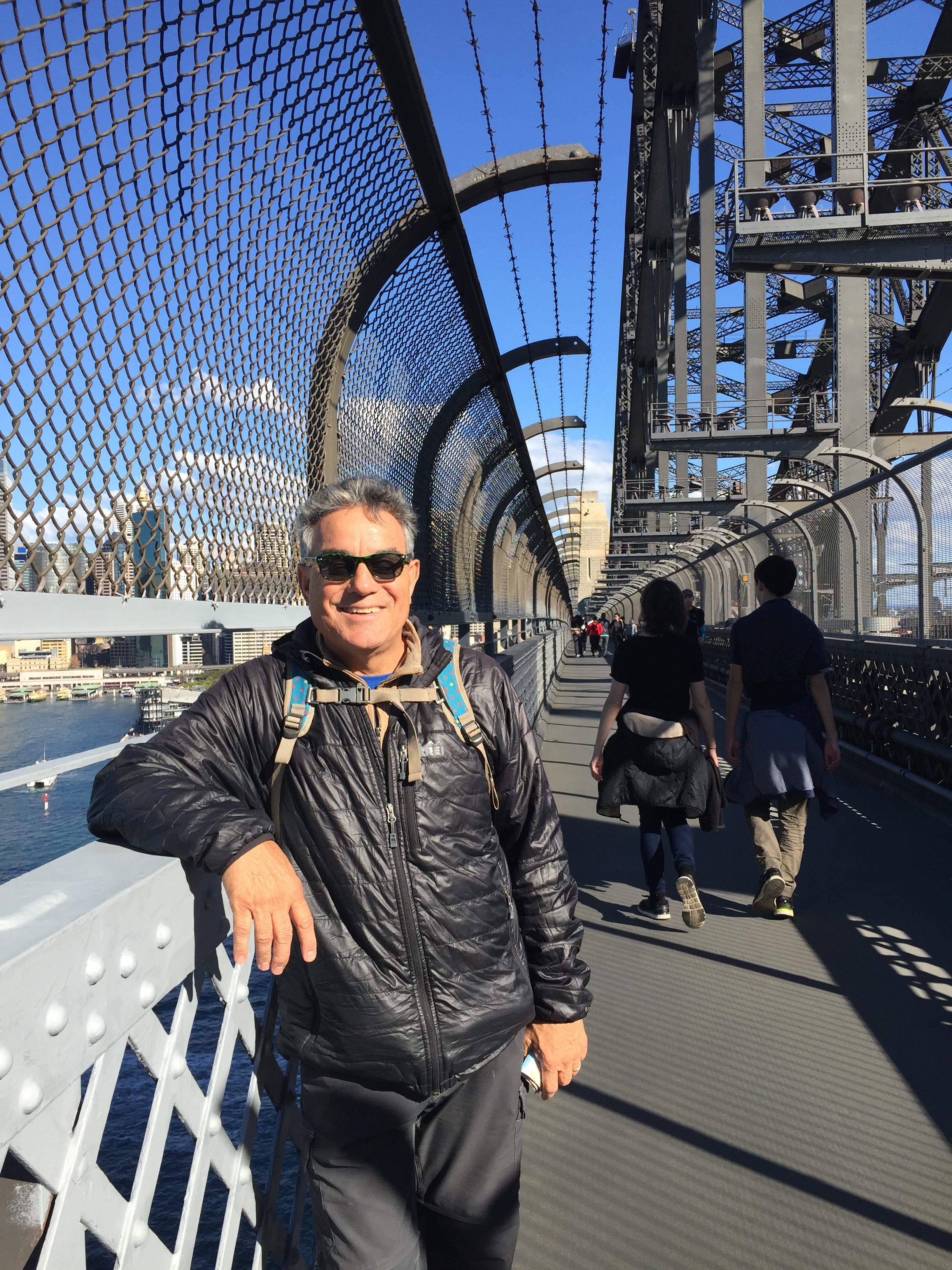
On our last day alone we walk the Sydney harbor bridge.  It was a beautiful day; the walk was easy and the views were breathtaking.  In SE Asia, we traveled by tuk-tuk and taxi most days, it felt good to be walking again. 


Around the corner from our apartment was one of Sydney’s theaters that was playing “Kinky Boots”. They sell tickets for half price 60 minutes before show time and Frank was lucky to score two tickets in the prime section for us.  Another fun night in Sydney.  The musical is fast and funny with great actors.   So far, we love Australia.  Tomorrow we move to a traditional hotel and wait for our friends to arrive.   See some other great night photos of Sydney below.


The sky is pink at night

The Harbor Bridge

Singapore, The City-State

The prospective flights from Myanmar to Australia all had a stop over in either Singapore, the city-state, or Kuala Lumpur, Malaysia. We decided we wanted to visit Singapore, but for a little more time than a stopover. We booked the hotel for 3 nights, which gave us 2 days to visit.

We knew Singapore was an advanced and civilized destination, but we were unsure how affluent and high-tech. We thought that Singapore would make a perfect pit stop to recover from the rough-and-tumble escapades we had in the rest of Southeast Asia.

It certainly was that and more.  After 2 months in SE Asia Singapore was a culture shock to the senses.  No trash in the streets, no blaring motor bikes with a family of 4 riding on them.  Paved roads and best of all the hotel room did not smell like an open sewer.  We have had this sewer smell throughout Asia and Eastern Europe.  One hotel in Myanmar had moth balls over every drain in the bathroom.  That did work but the overwhelming smell of moth balls made us kind of sick.

After a quick fresh up, we joined a half day bus tour of the city and got introduced to this seductive place. Clearly, this is a wealthy place, also expansive. It is a multi cultural nation

Our tour started in the Colonial district displaying the classic British governmental buildings and architecture. We moved to the the “mad swirl of skyscrapers” in the central business district that also abuts the districts Harbor. Here is some of the most incredible architecture you could imagine. There is a giant three tower high rise with a gondola/cigar shaped structure connecting the towers like a top hat, with a lotus flowers shaped exhaust structure at ground level. It is just amazing.  There are also elevated pedestrian walkways and fountains to experience.

We moved from hi-tech to “Little India”, a market and restaurant area,  and then to the flashy glamor of Orchard Road where Gucci and D&C reside.  The entire city/state is landscaped and immaculately clean. Probably doesn't hurt that it rains often and the financial penalties for even minor infractions of litter or traffic disobedience are severe. The urban planning in this city is comprehensive with bus lines, bus only lanes, underground MRT, bike lanes, and wide boulevards. Business districts adjoin high rise residential complexes, some with amazing crosswalks between structures, but seemingly all are well maintained and have some flair. An urban center as populated as here needs parks and green spaces; there are plenty of those.


Little India with the high rises in the background

We visited the Botanical Gardens, which is a botanists dream, maybe florist too, and is a UNESCO World Heritage site. We especially liked the National Orchid Garden. See a couple of photos beflow

Of note on our tour was the congregation of Army recruits near the waterfront dressed in matching track and field uniforms to enhance “espre de corp”.

The recruits are training for Singapore's national day in August

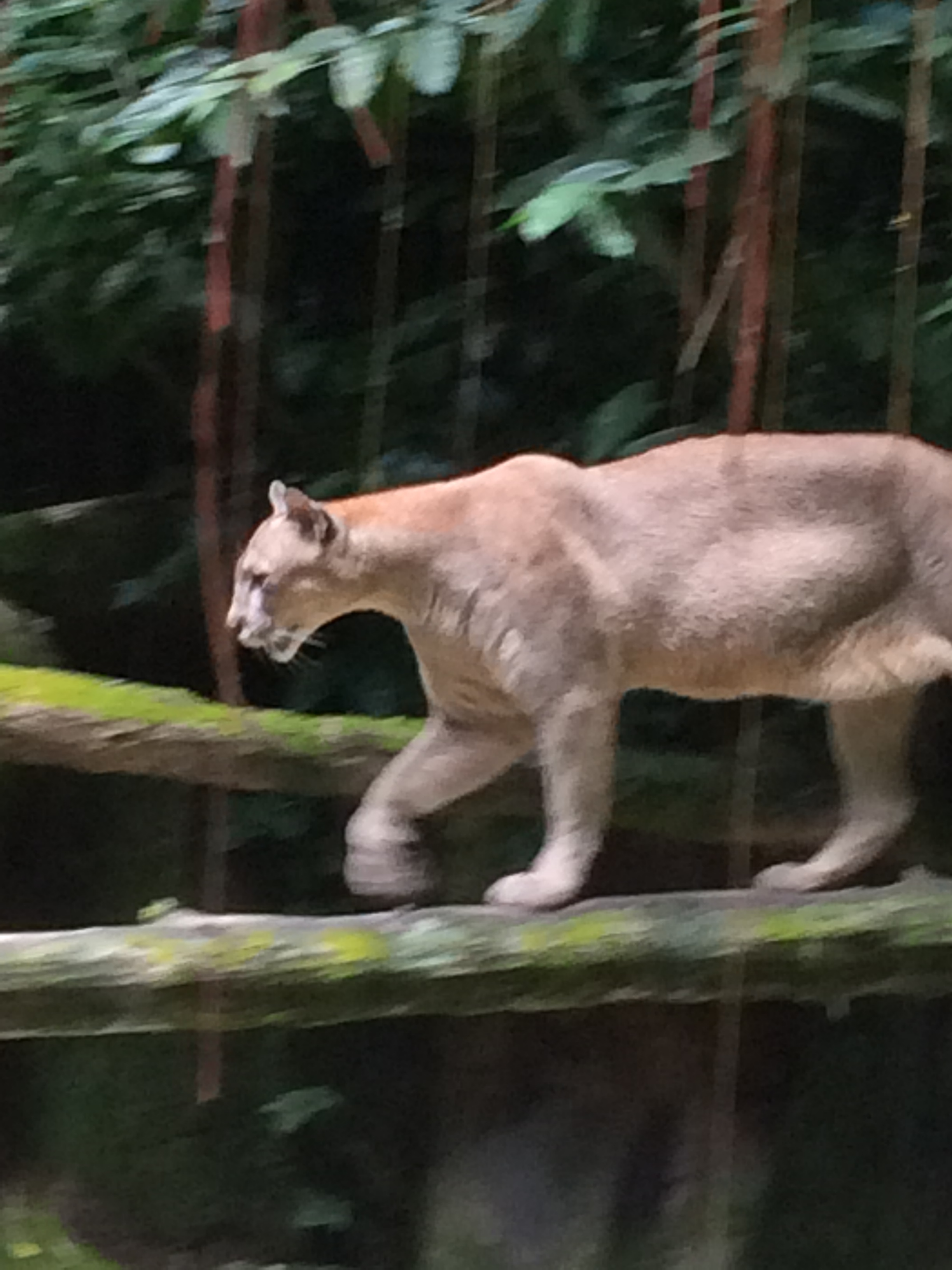
Singapore is known for its world class zoo and some consider this zoo the best of in the world.  After reading up on the other city options we decided to spend the time at the zoo complex.  It is so large that they ofter 4 day tickets, with our limited time we buy a 2 day pass.  In the afternoon we started with the River Safari.  It is the most amazing Aquarium and river ride. The theme was fresh water animals from around the world, including the USA.  The highlight of this park is the pair of pandas and the tigers.  We were lucky to see both of active.  See some photos 

The next day we returned early for a full day at the open concept primary Zoological Park. It was hot, but we felt like kids again watching the various animal shows, honestly, seeing animal foreign to us, such as several species of alligator type reptiles/amphibians. A few other animals we enjoyed: White Tiger, Jaguars, Manatees, Fox Bats, Orangoutangs, and others. The lay out of the parks, attention to detail, and combination of animals is just fantastic.

After a full day at the parks, we enjoyed getting eats at the “ Hawker” area, where a gathering of stalls sell their special foods for cheap; cheap for Singapore, $12 for both of us, over double a street food in the other SE Asian counties we visited.

We really enjoyed Singapore. We did not like the fact our flight to Australia was at 1:45 am. We got to the airport before midnight, ate a small snack and then waited for the crowd crush to get on the flight. We flew “Scoot Air” the discount arm of TigerAir, which is already a discount.  This is our first flight on a one of these discount air companies, after the pampering of the other airlines in SE Asia it was a shock.  They charge for everything including

  • Blanket - $5
  • An eye patch - $5
  • The electric socket to charge - $5
  • All drinks including water
  • Any type of movies, there is no screen on the seat like normal planes, you can buy internet and use your own device for movies - $8

We slept pretty well and by 11:00 am Aussie time we had landed in Sydney. We are done with SE Asia. We are on the home stretch now, only 2 more countries and 30 days left.  

Mandalay Myanmar

Mandalay is the second biggest city in Myanmar with a population of 1 million. It is booming economically and is culturally vibrant.  It became the capital of the Burmese empire in 1861 but that was short lived after British occupation in 1886. On our bus ride into town we passed the Mandalay Royal Palace which is fantastically large with high walls and wide surrounding moat. This will have to be one of our first attractions. The Triumph Hotel is very nice. We are in a connected bungalow type room across from the pool and restaurant. The staff is very chipper, quick to smile and say hello. They were very helpful in putting together our 30th wedding anniversary celebration: flowers, massage and spa trip, transports, fancy dinner, and hotel store of nice clothing.

The best sights in Mandalay are spread out around town and in the surrounding areas which where the historic locations of the country’s capital. We hired a driver Mr. Winn, for 2 days. He was great, both following our itinerary and making good suggestions to enhance the experience.  

On our first, we left at 8:30 am to hit the main sites starting with “Starving Buddha” pavilion. This represented the time when Buddha apparently fasted for 6 years to challenge his spirituality. Then we went to the huge “Reclining Buddha” figure with holy symbols carved into the feet of the Buddha.  

Next we made a quick stop to see and understand how gold leaf is made.  Is is an important tradition for the men to purchase packets of gold leaf and add it to the Buddha temples.  Making the leaf is done by hand and is hot hard work

Pounding gold leaf by hand.  The bowl of water is a type of timing when the smaller bowl sinks the pounding time is up

Next went to the famous “ Mahamuni Pagoda where the 13 ft tall main Buddha figure believed to be 2000 years old and is covered each day with more Gold Leaf,  

Our next stop was the large royal palace.  All but 2 building burned down in WWII but the grounds are very nice and there is a newer replica palace.

Replica of the Palace

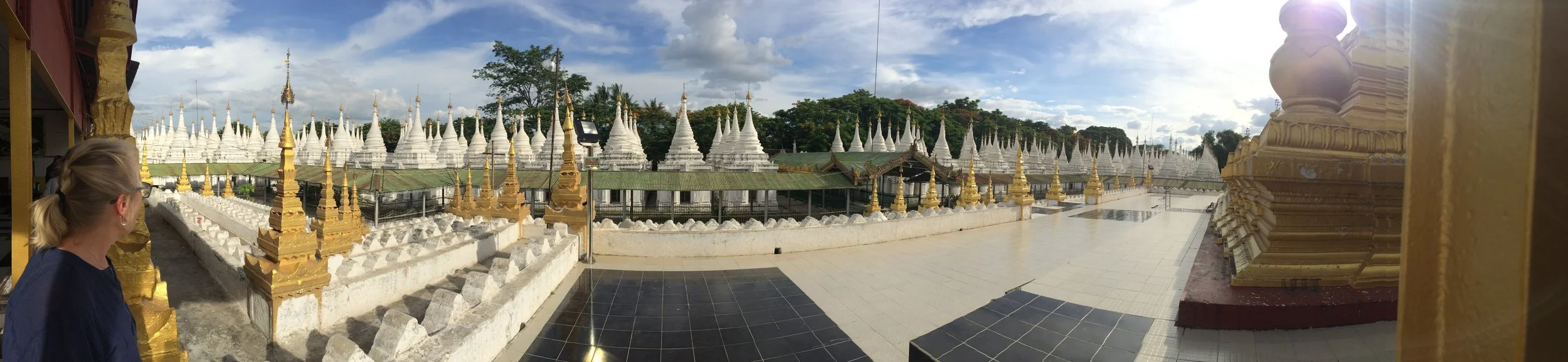
Next we went to the temple of the “largest Book in the world”, called Sandra Muni Paya. This is a complex of hundreds of one story pagoda set out in straight rows each containing carved stone tablets setting forth the teachings of Buddha. The sitting King of Siam thought the British invaders would burn the paper books of Buddha’s teachings but that they would appreciate the architecture of this site and spare it from ruin; It worked—the teachings were cleverly preserved. 

Each Pagoda has a stone carved tablet, the grounds are huge, this is just one side of it

Each Pagoda has a stone carved tablet, the grounds are huge, this is just one side of it

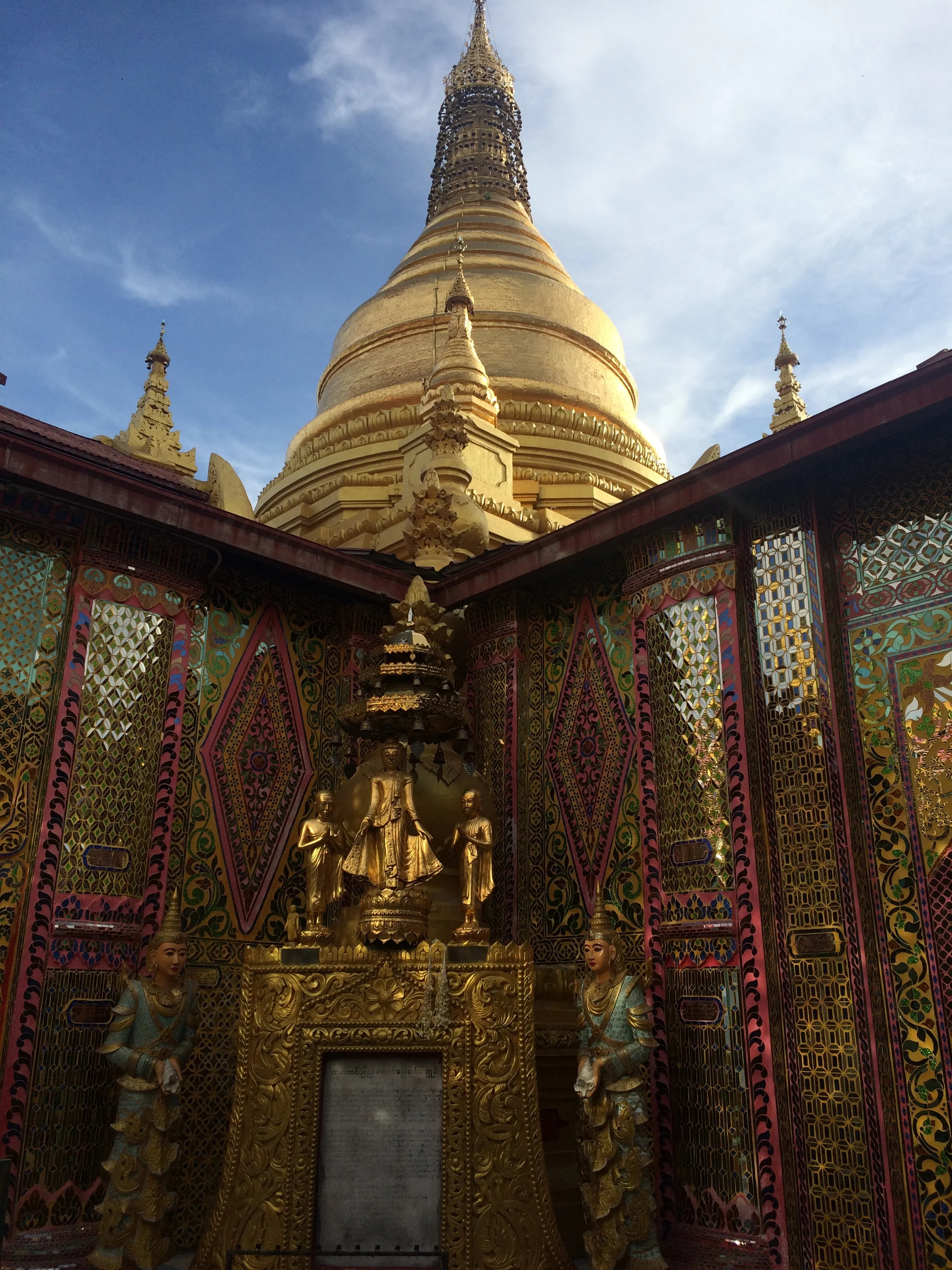
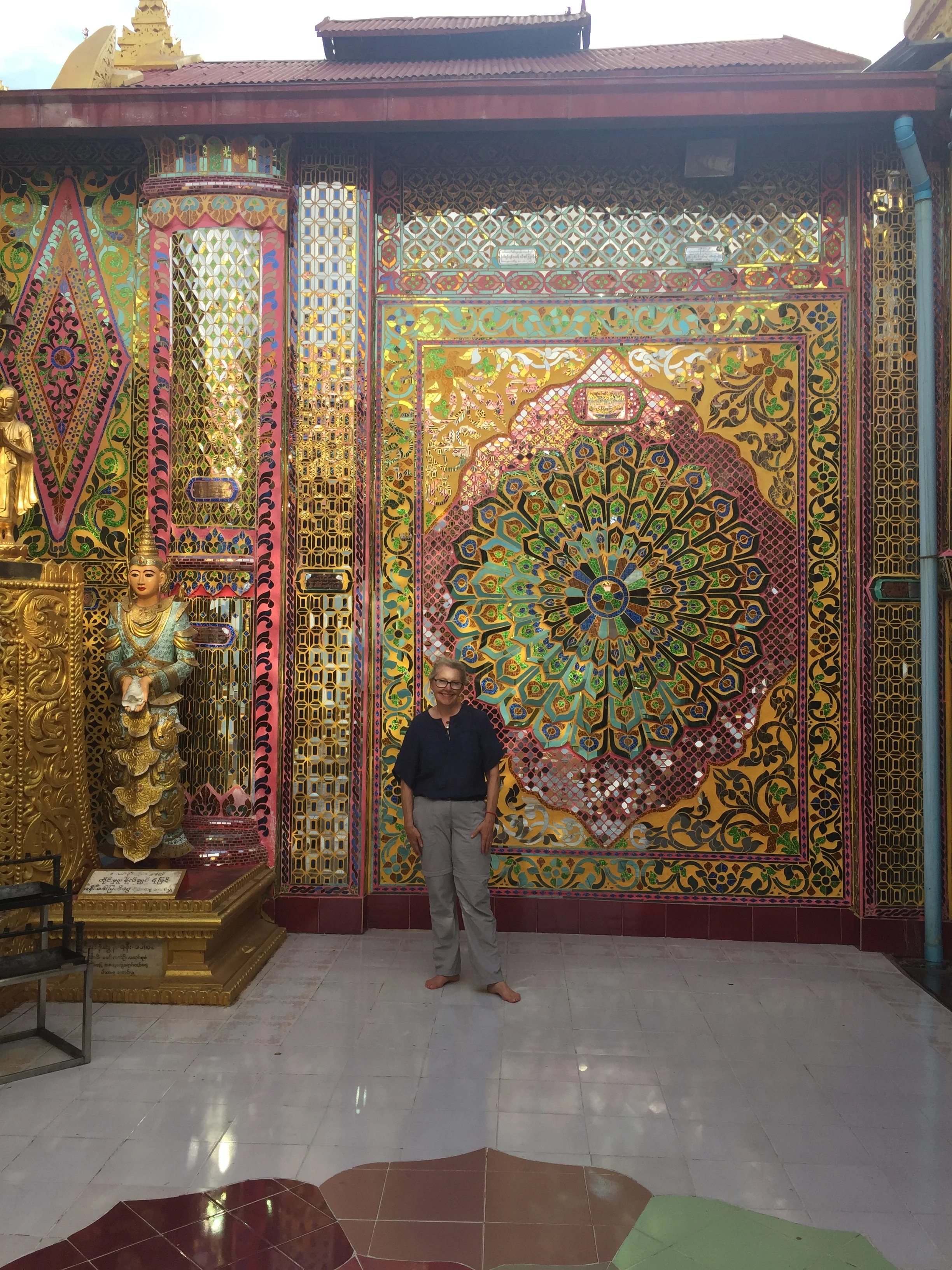
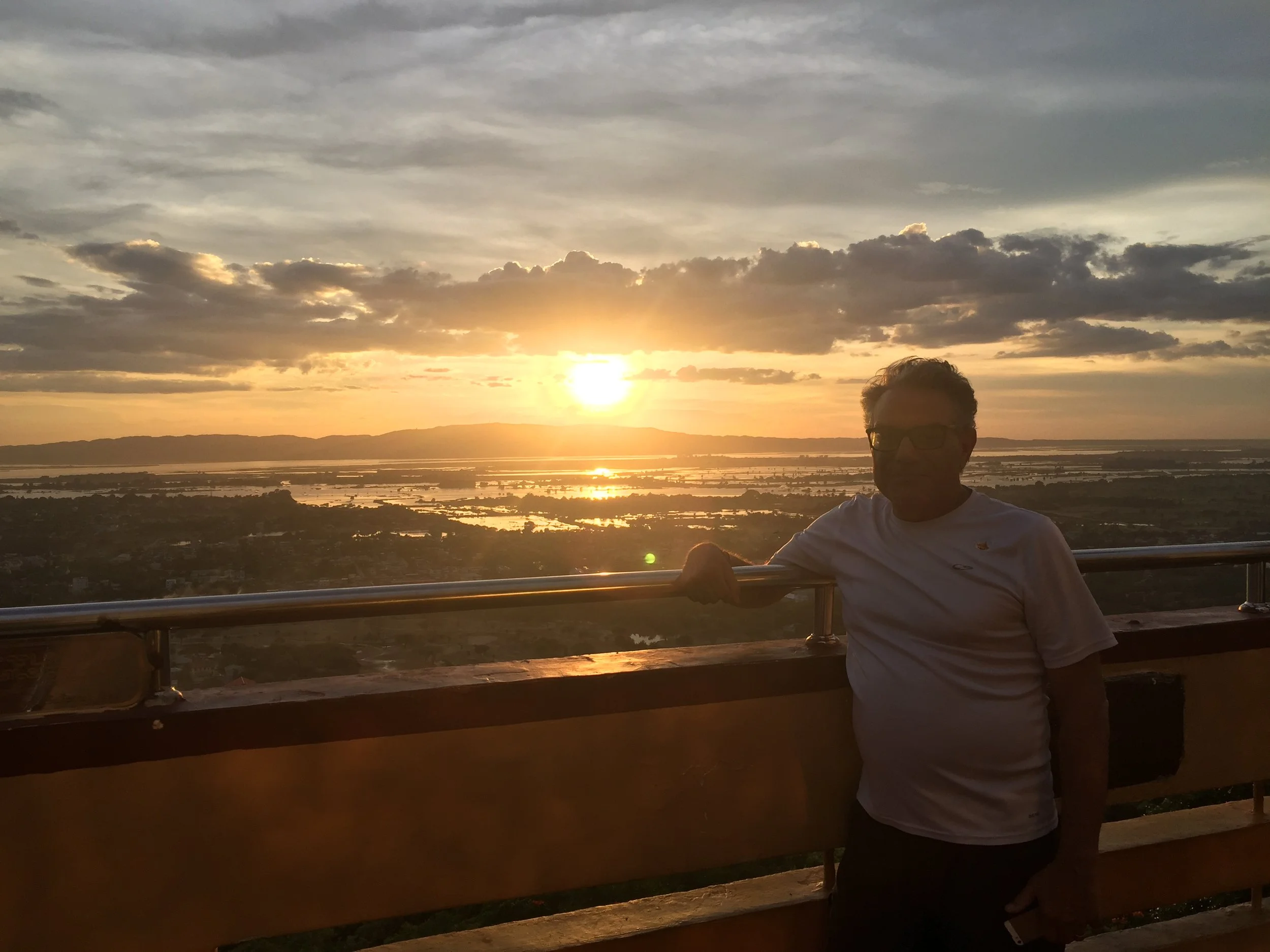
By lunch is is over 100 degrees again and we head back for a rest.  After our siesta, we drove to the top of Mandalay Hill, the 760 ft high site overlooking the sprawl of Mandalay. We enjoyed overlooking the countryside and watching the sunset from the  the summit and did converse with a young monk who wanted to practice his English speaking skills. He was actually a very good speaker.  We headed home at dusk and decided on eating at the hotel. Check out the photos.

On the 2nd day we left the city and took a day trip to the 4 ancient cities close to Mandalay.

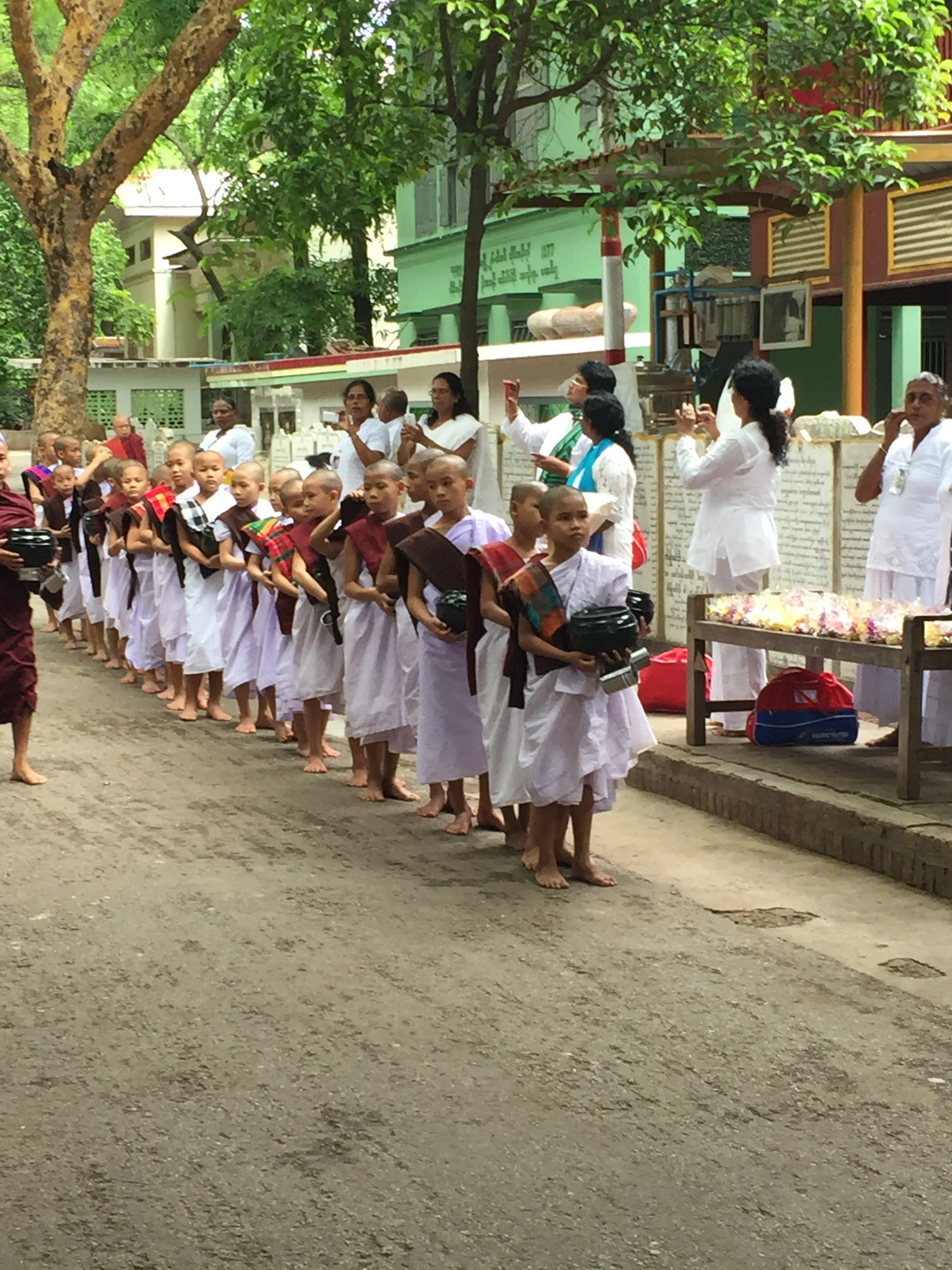
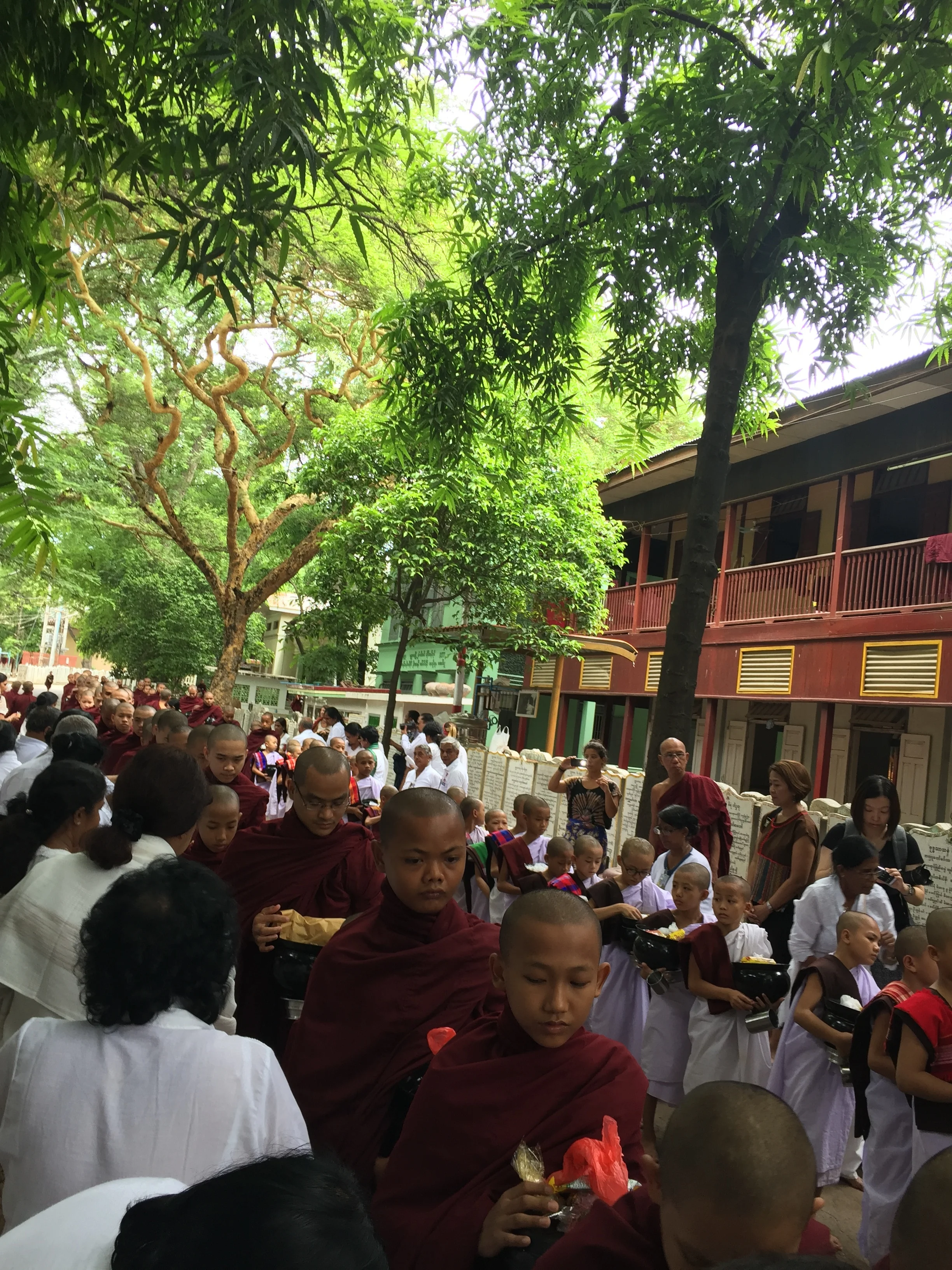
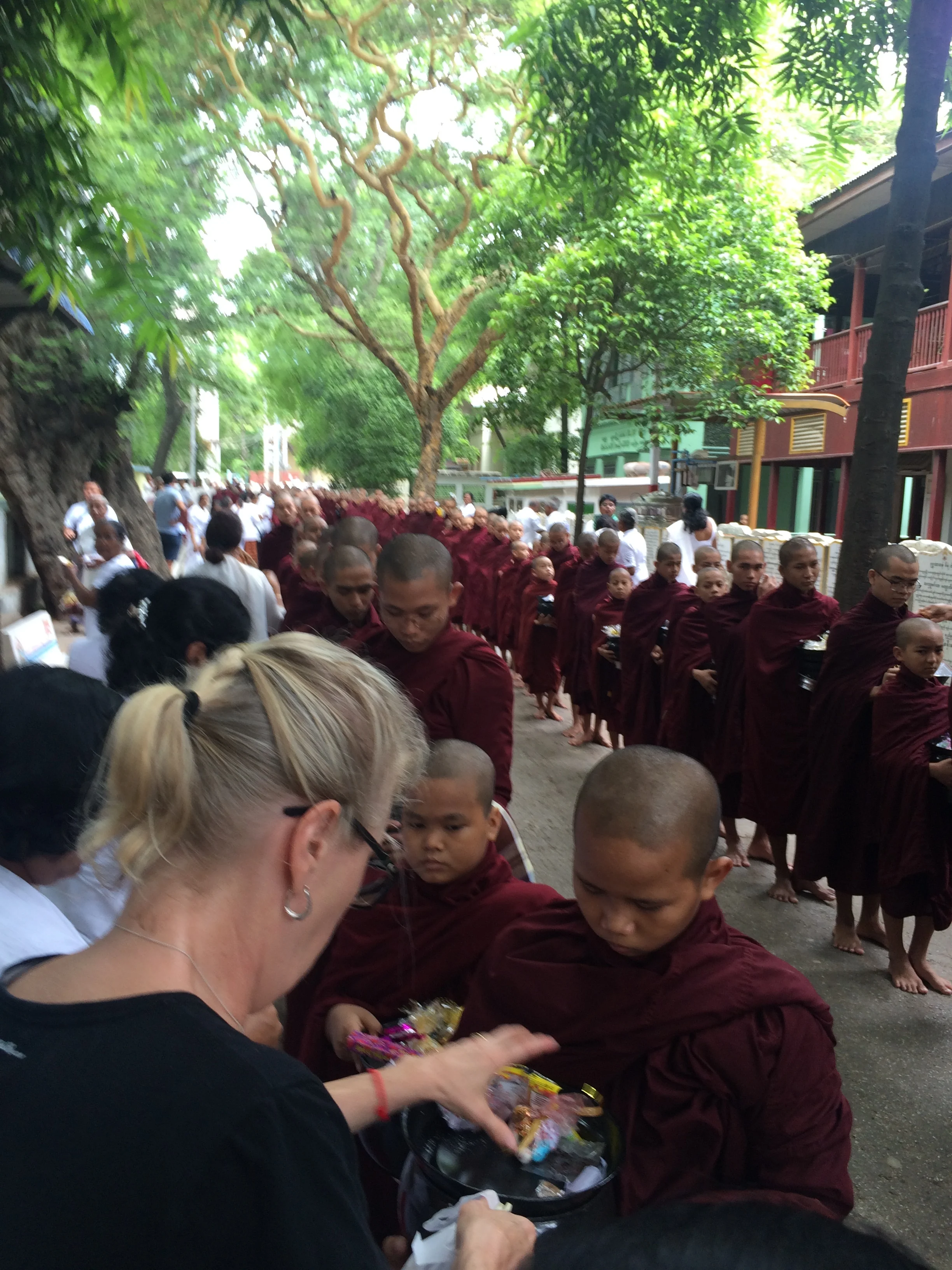
We started and ended in “Amarapura’ aka the “City of Immortality”. First stop is a visit to the prestigious monastery “Maha Ganayon Kyaung. Here, we see an inspiring sight where hundreds of the brightest young novices and student monks breakfast at 10:30 am by walking with their bowls through a gauntlet of visitors who give offerings to each monk as they proceed to the mess tables. They are all wrapped in purple robes, with shaved heads and bare feet. It is hard to explain the emotional shock that overwhelms when you realize the depth of spirituality that is surrounding you. Imagine, for example how you would feel if hundreds of young men, Christian priests or ministers to be, walked passed relying on your generosity for food and sustenance. We where invited to stand with a group of lovely ladies from Sri Lanka, all dressed in white, who allowed us to share their offerings with the monks. Their obvious reverence for these young men added to our respect and spirit.  Just a beautiful experience. 

During the late morning and early afternoon we traveled to Mingun and Sagaing.

Mingun: The trip to the riverside village of Mingun requires roller coasting along the rural roads through small, longstanding hamlets of bamboo houses, where farm animals roam on the streets. The draw here is the “what it could have been” inquiry. The Mingun Paya is the remains of a gigantic brick structure that was a planned 492 ft Stupa that suffered multiple earthquakes; the entrance walkway from the river was guarded by 2, three story high lions that also suffered damage. To understand the size of this broken structure, know that the displayed Mingun Bell is the world’s largest uncracked bell. 


Next to Sagaing: Across the Ava Bridge is the Stupa laden hilltops where Burmese Buddhists come to meditate and relax. The key Monasteries are on Sagaing Hill. Here the views are so stunning that we just sat at the top for an hour and overlooked the rolling hills

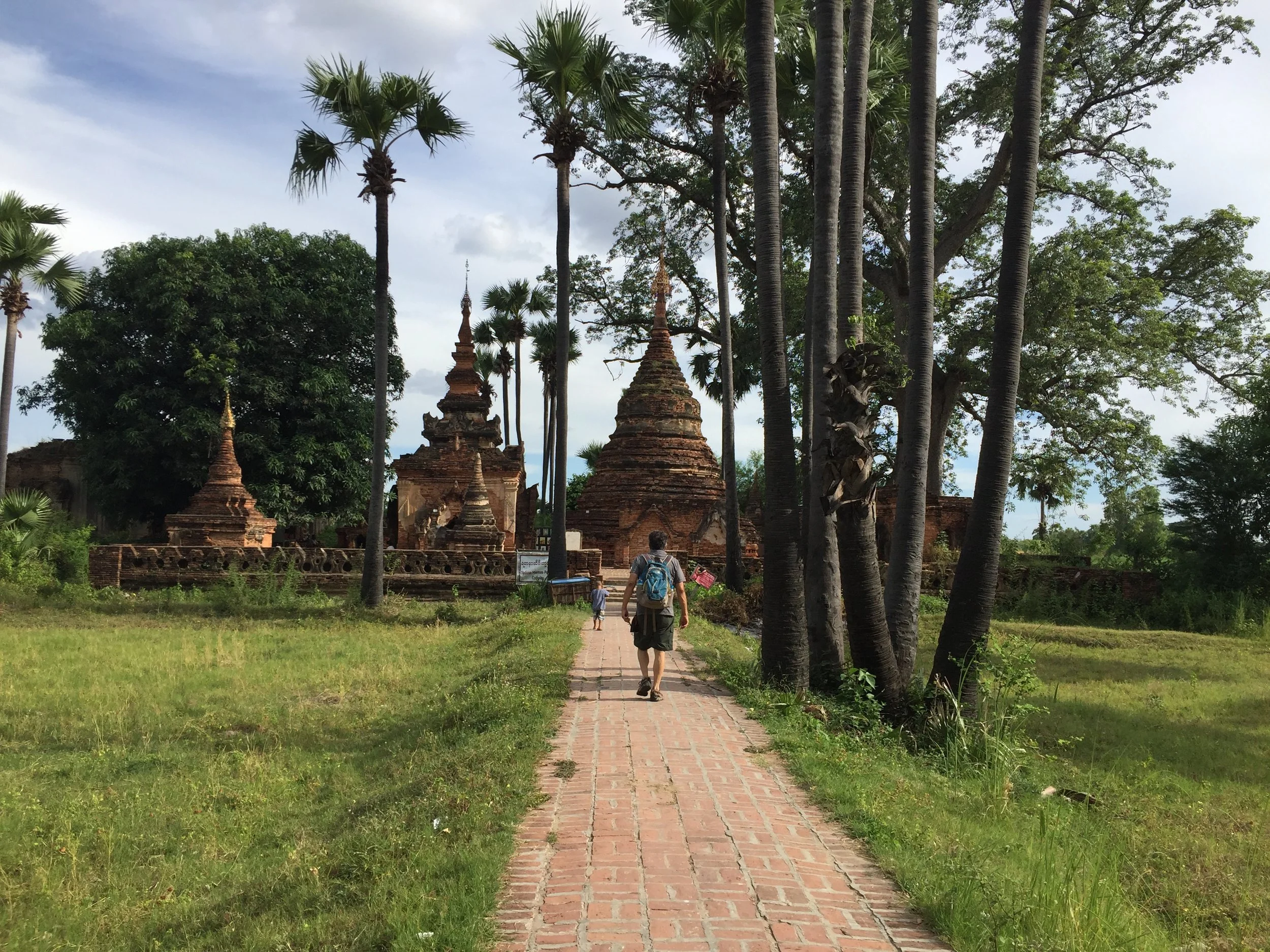
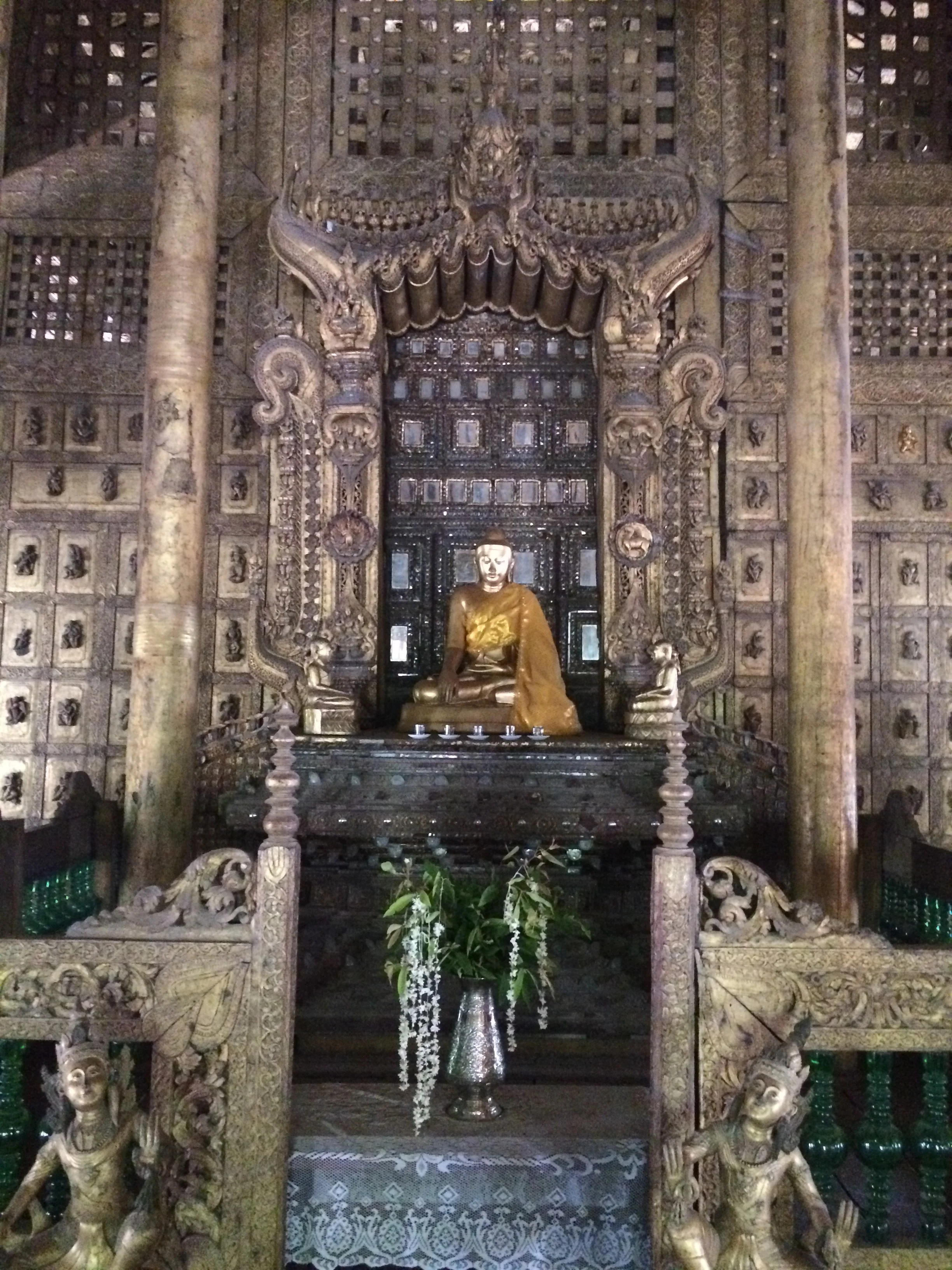
In the later afternoon we traveled to Inwa (called Ava by the Brits). This area is cutoff by rivers and canals, but was the capital of the country for 4 centuries. Our driver dropped us at a jetty where we took a small boat across to the river to the remaining village. Upon arrival we hired a horse cart to make a two hour loop around Inwa’s beaten two track dirt roads to visit the crumbling ancient sites, including the towering 1834 Teak monastery supported by 267 posts and covered by intricate carved figures. This structure was really an unexpected treasure to see. 

Another "Tomb Raider" site

Another "Tomb Raider" site

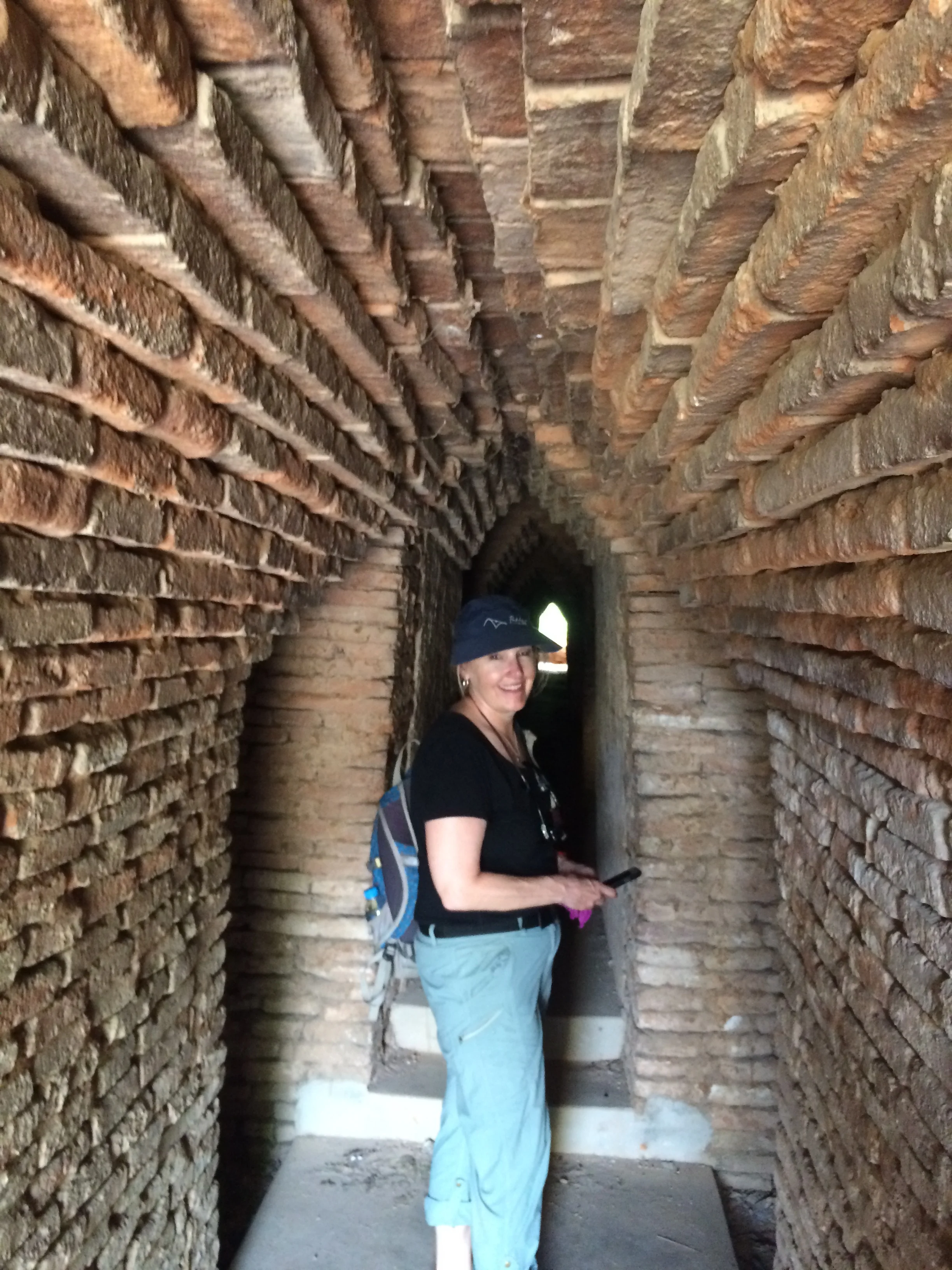
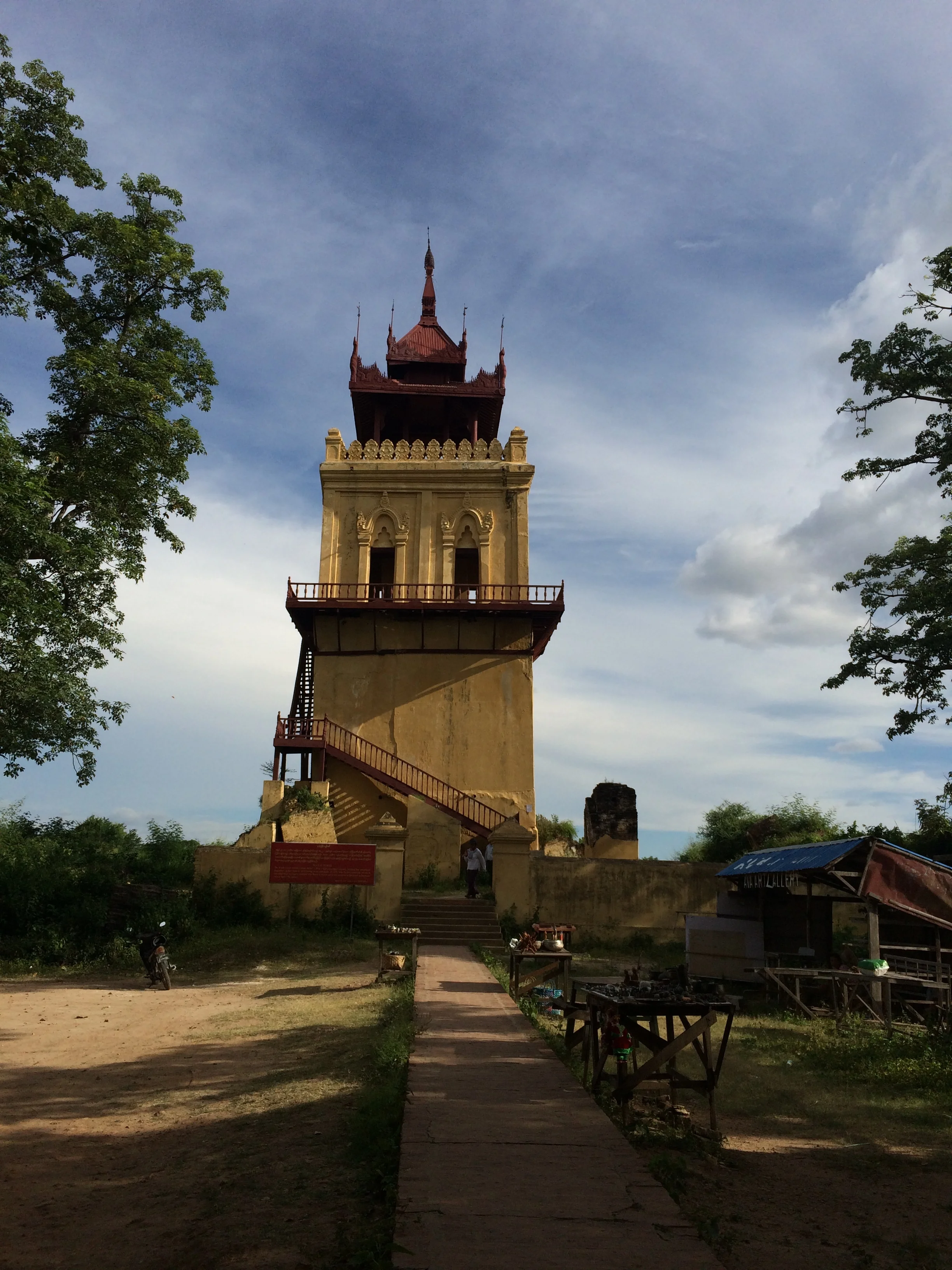
We also enjoyed the 1822 “Ok Kyaung” brick and stucco monastery that was in disrepair but beautiful anyway—we felt like tomb raiders again. Finally we saw the 88 ft “Nanmyin” watch tower that was once simply a corner of a great palace that no longer exists. It leans badly, so climbing up the stairs is prohibited. The bumpy, swaying  road took us through the banana fields and small villages lined with platform houses, and cattle, horses, and chickens, finally reaching the jetty.  As we waited for our boat, we noticed that another boat dragging a dead cow carcass, stiff with legs straight up, as it passed the dock where women where washing clothes and bathing children. That was weird. In any event, we rejoined our driver to go to the teak bridge for sunset. 

At the end of the day we returned to Amarapura to view the sunset from the “U Bein” bridge, apparently the world’s longest teak wood bridge at 1300 yards. The solar reflection off the river filled with small transport boats was another treat. At the end of the long day, we were hot and tired but greatly inspired by the excursion.

The next day we celebrated our 30th wedding anniversary by relaxing at the pool and spa, eating a creamy cake ordered from the hotel, smelling the roses, with a great dinner after dressing  up.    

Sunset at the bamboo bridge